Last updated 29.8.2026
Close your eyes and picture Mallorca. Turquoise coves, the scent of wild lavender, crumbling stone villages tucked away in the Serra de Tramuntana, a glass of local wine on the terrace as the sun goes down… This is the Mallorca vibe that pulls in millions of visitors every single year. And then it happens. A friend forwards you a link to an article with a headline about snakes, and all of a sudden your dream holiday starts to feel like an adrenaline expedition. Is it really that dramatic? Are there venomous snakes in Mallorca, or is there nothing to worry about?
In a Nutshell
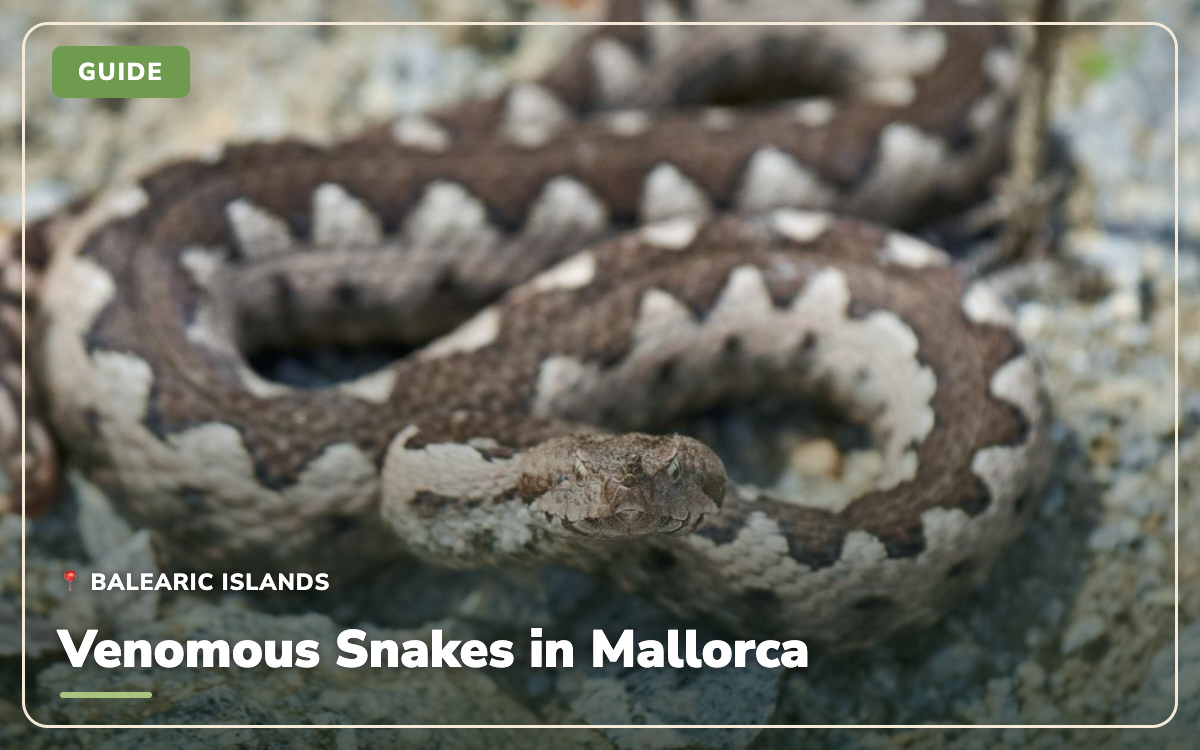
- No snake dangerous to humans lives in Mallorca — what you may meet are colubrids: the invasive horseshoe whip snake, the viperine water snake and the small nocturnal false smooth snake (Macroprotodon mauritanicus). Lataste’s viper, the venomous species the island is so often linked with, lives on the Iberian mainland and in North Africa, not on the Balearics.
- The snake “invasion” is real, but it mainly affects the countryside, the olive groves and the uninhabited island of Sa Dragonera — not the busy tourist beaches.
- If you do meet a snake: stay calm, keep your distance, don’t provoke it and don’t block its path. Even a bite from a non-venomous snake should be seen by a doctor.
- Out in nature, wear closed shoes, stick to the marked trails and take care when climbing over dry-stone walls or shifting logs and rocks.
- Despite the snake headlines, Mallorca is still a stunning destination with unique wildlife, gorgeous beaches and a rich culture — and it is absolutely worth the trip.
TIP: 51 breathtaking places to see in Mallorca
Are There Venomous Snakes in Mallorca?
The truth sits somewhere in the middle. Venomous snakes do exist in Mallorca, but they are rare. Invasive snake species really are on the rise across the island, yet they threaten the local ecosystem far more than they threaten holidaymakers. So that you arrive prepared rather than petrified, here’s everything you actually need to know — from the species you might encounter and how to behave if you meet one, right through to where to stay and what to do so you can enjoy your holiday to the full.
Snakes in Mallorca: How Did It All Start?
If you imagine that the snakes in Mallorca are some mysterious natural phenomenon that appeared overnight, the reality is a good deal more down to earth — and, to a large extent, of our own making. Mallorca is the largest of the Balearic Islands, and just a few decades ago visitors barely came across snakes at all. As far as reptiles went, the island was a pretty quiet place. Then came the gardening boom.
Over the past couple of decades, the island has seen an explosion in private gardens, landscaped hotel grounds and farms planted with Mediterranean greenery. And along with the olive and carob trees shipped over from mainland Spain, snake eggs and hatchlings quietly hitched a ride, hidden in the hollows of the root balls or in the surrounding soil.
Mild winters, an increasingly hot and dry climate and the complete absence of natural predators turned the island into a literal paradise for them. Snakes bred undisturbed and spread into ever more corners of Mallorca like a quiet, scaly wave.

Venomous Snakes in Mallorca and the Invasive Species Taking Over the Island
In recent years the local organic farming association, Apaema, and COFIB (the Balearic Islands’ wildlife recovery consortium) have been sounding the alarm. Two species in particular are spreading fast: the horseshoe whip snake (Hemorrhois hippocrepis), which reached the island in the early 2000s inside imported olive trees from the mainland, and the viperine water snake (Natrix maura). The third snake of the Balearics is the small, nocturnal false smooth snake (Macroprotodon mauritanicus), a lizard specialist. Neither is dangerous to humans, but that doesn’t make them harmless — for the local ecosystem they pose a serious threat. They decimate lizards, nestlings and endangered endemic species such as the Lilford’s wall lizard (Podarcis lilfordi), which lives nowhere else on Earth.
Particularly worrying was the discovery of the horseshoe whip snake on the uninhabited neighbouring islet of Sa Dragonera, a refuge for rare species. Working with volunteers, experts have set out almost a hundred traps there and document every find. In the first few months of a single year alone, several hundred snakes were caught — in private gardens, log piles and even under solar panels.
TIP: Heading to Mallorca? We can wholeheartedly recommend this lovely place to stay in the Palma Nova area, where we had a genuinely great time and were within easy reach of most of the places we wanted to see.
Are Venomous Snakes in Mallorca Actually Dangerous?
The answer is refreshingly simple: no snake whose bite would seriously endanger a human lives in Mallorca. Lataste’s viper (Vipera latastei), the species the island is most often associated with, is not at home here — its range covers mainland Portugal and Spain plus North Africa. The only Balearic population was the Ibizan subspecies (Vipera latastei ebusitana), and that one is extinct. The viperine water snake does have a mild venom at the back of its jaw, but it has no effect on people and the snake does not use it in defence.
TIP: 23 brilliant seaside spots in Europe for April
When and Where You’re Most Likely to Meet a Snake
Mallorca is not a jungle, and there isn’t a snake lurking around every corner. Even so, there are certain times and places where an encounter is more likely. Know them in advance and nothing will catch you off guard.
Spring and Summer: Peak Season for Tourists and Snakes Alike
Snakes are cold-blooded, and their activity ramps up sharply with the temperature. The spring months — March, April, May — are when snakes wake from hibernation and start moving around the island in search of food and a mate. Spring is precisely when the local authorities log the most snake sightings. Summer brings the biggest crowds, but also the highest temperatures — in the fiercest heat snakes retreat into the shade and are most active in the early morning and evening.
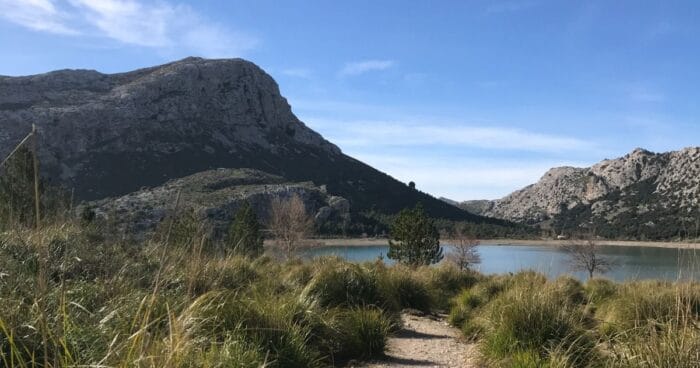
Snakes are most often spotted in olive and almond groves, around rural farms, and in the dry-stone walls and hedges so typical of the Mallorcan interior, as well as along the edges of the hiking trails in the Tramuntana mountains. On packed beaches like Alcúdia or Magaluf the risk of an encounter is virtually nil — no self-respecting snake would head there of its own accord anyway.
Autumn and Winter
September and October are quieter months when it comes to snake encounters: the temperatures drop, snakes get ready to hibernate and their activity winds down. In November and December the snakes hole up in a hideaway where they spend two to four months. That doesn’t mean an encounter is impossible in autumn — the horseshoe whip snake stays active later into the season — but the overall risk is far lower. For hikers and cyclists, autumn in Mallorca is actually ideal: fewer crowds, fewer snakes and gorgeous colours across the landscape.
TIP: We even headed to Mallorca in January. What is Mallorca like in January and what should you expect?
Snakes in Mallorca: Fact vs. Myth
Let’s sort out what’s true and what’s just a scare story.
The Horseshoe Whip Snake: The Island’s Biggest Bogeyman
The horseshoe whip snake (Hemorrhois hippocrepis) is, at up to 175 centimetres, the largest snake you’re likely to meet in Mallorca. It’s fast, agile and, unlike many other snakes, can be surprisingly bitey. It isn’t venomous, but a bite from a snake pushing two metres long is hardly pleasant. The wound can become infected and needs to be seen by a doctor. That’s why experts flag it as a species to be wary of — not because of venom, but because of its size and its readiness to snap.
The horseshoe whip snake favours olive groves, dry-stone walls and arid slopes. On the uninhabited islet of Sa Dragonera it was first spotted in late April and has been spreading rapidly ever since. The advice for visitors is simple: if you see a large snake, give it a wide berth and don’t stand there gawping at it like it’s the telly.
The Viperine Water Snake and Macroprotodon: The Quiet Neighbours
The viperine water snake (Natrix maura) is smaller, shyer and far more reliable about avoiding people. It sticks to water — reservoirs, streams and irrigation channels — and feeds mainly on amphibians and fish. Its mild venom helps it handle prey, it is harmless to humans and bites are rare. Just as inconspicuous is the false smooth snake (Macroprotodon mauritanicus) — a nocturnal snake barely half a metre long, whose rear fangs serve to subdue lizards but are harmless to people. The water snake is not native here either, and ecologists watch it with concern — not for the safety of tourists, but because it competes for food with native species and chips away at the island’s fragile biodiversity.
Lataste’s Viper: Why You Won’t Find It in Mallorca
And now for the star that scare stories about Mallorca lean on the most: Lataste’s viper is venomous, but it does not live in Mallorca. Its home is mainland Iberia and North Africa, where it inhabits rocky landscapes, hillsides and sparse woodland. It’s small, discreet and unmistakable thanks to that distinctive little snout horn. Its only tie to the Balearics is historical: the subspecies Vipera latastei ebusitana was endemic to Ibiza and is now extinct.
For your holiday that’s good news: the real danger from snakes in Mallorca is very small. Still, if you’re heading into wilder country, watch where you tread, where you put your hands and what you climb over — even a non-venomous bite can get infected.
TIP: The Caves of Drach in Mallorca are an absolute must. How to get there and what to expect
What to Do If You Meet a Snake in Mallorca
Right, theory is all well and good. But what do you actually do the moment a snake is lying across the trail in front of you?
How to React When You See a Snake
The first and most important rule is to stay calm. A snake hears your footsteps long before you arrive and usually slips away before you ever catch sight of it. If an encounter does happen, stop, don’t provoke it, don’t touch it and back away slowly. No sudden movements, and no picking snakes up out of curiosity — even a non-venomous snake will bite in self-defence if it feels threatened.
Pay particular attention to children. Little explorers are naturally curious and fearless — a wonderful trait, but one that can be dangerous around a snake. Explain to them beforehand that snakes are wild animals to be respected and definitely not touched.
If a snake does strike and bite, stay calm — panic speeds up the spread of venom (if it’s a viper) or infection (if it’s a non-venomous species). Don’t try to suck out the wound or cauterise it. Immobilise the affected part of the body, keep it below heart level if you can, and seek medical help as soon as possible.
If you spot a snake, the Mallorcan authorities want to hear about it — contact COFIB or the local police. Every documented sighting helps to map the spread of the invasive species more accurately.
When to See a Doctor
The answer is simple: after any snake bite, whether the snake was venomous or not. Even a seemingly harmless bite can lead to a wound infection, an allergic reaction or complications — especially in children, older people and anyone with a weakened immune system. The hospitals in Palma de Mallorca are fully equipped to treat snake bites.
TIP: Not sure what to pack? We’ve put together the ultimate holiday packing list, wherever you’re headed.
Where to Stay in Mallorca (Well Away from the Snakes)
Mallorca is an incredibly varied island, and it really comes down to the kind of holiday you’re after. A couple looking for peace and nature will experience it very differently from a family with children, or from those who are all about the beaches and nightlife. As a rule, the south-west and south of the island are the most popular, while the north and the interior feel more authentic and laid-back. If you want to get to know Mallorca properly, we’d recommend hiring a car, because so many of the loveliest spots lie well away from the main resorts.
We usually book our accommodation through Booking. We stayed in the Palma Nova area, which we loved, and we were within easy reach of most of the places we wanted to visit.
- Palma de Mallorca: If you love cities, Palma is a safe bet. Expect a beautiful historic centre, narrow lanes, the cathedral and superb restaurants and bars. We recommend Puro Grand Hotel – a hotel right in the centre – and Protur Naisa Palma Hotel – a modern hotel with a spa.
- Palma Nova and Magaluf: Two neighbouring spots, each with its own character. Palma Nova offers a calmer, family-friendly holiday, while Magaluf is best known for its nightlife and buzz. What they share is lovely beaches and good facilities. We stayed in Palma Nova HERE and it was one of the best places we’ve stayed.
- Playa de Palma / Can Pastilla: This is your classic seaside holiday. A long sandy beach, a promenade lined with restaurants, cafés and bars, everything close by and just a few minutes from the airport.
We recommend Hipotels Playa de Palma Palace & Spa. - Alcúdia / Playa de Muro: One of the most popular areas, especially for families. The beaches here are wide, with fine sand and a gentle slope into the sea, so they’re ideal for children too. Iberostar Selection Playa de Muro Village and Hotel Astoria Playa – a popular adults-only hotel.
- Cala d’Or: A smaller, pretty resort on the south-east of the island. Instead of long beaches, you’ll find smaller coves with turquoise water that are perfect for a swim. Inturotel Cala Esmeralda is a great choice.
- Port de Sóller: If you’re after peace, beautiful scenery and a slightly different side of Mallorca, Port de Sóller is ideal. TryHotel Esplendido.
Compare current prices and availability through accommodation options in Mallorca.
Days Out and Activities: How to Explore Nature Safely
Mallorca is a paradise for hiking, cycling and exploring mountain villages. To keep your day out enjoyable and safe, a few simple rules apply. Always wear closed shoes on hikes — sandals are fine on the beach, but they’ve no place on a mountain trail. Stick to the marked routes and take care when climbing over dry-stone walls, bending back branches or shifting rocks and logs — those are exactly the places snakes like to shelter. On the beaches the risk of an encounter is minimal, and the sheer joy of Mallorca’s wild landscapes far outweighs any theoretical threat.
The UNESCO-listed Serra de Tramuntana mountains serve up breathtaking panoramas and winding lanes through villages like Valldemossa, Deià and Sóller. A trip to the Sa Calobra cove or out to the Cap de Formentor headland is among the island’s absolute highlights — and, with a bit of basic care, the venomous snakes in Mallorca certainly won’t spoil it for you.

Food, Shopping and Souvenirs: Mallorca Beyond the Snake Stories
It would be a terrible shame to let a mention of snakes spoil your journey into the very best of Mallorcan culture. And there’s plenty of it. On the island, Spanish, Catalan and Mediterranean traditions blend into a unique culinary mix that will bring even the fussiest foodie to their knees.
Start at the Mercat de l’Olivar in Palma — a covered market piled high with fresh fish, local cheeses, cured meats, pastries and Mallorcan delicacies. Try some tapas, order a glass of local wine from the Binissalem region and soak up the atmosphere of a lively market. Among the local specialities, be sure to try the ensaïmada — a delicate coiled pastry dusted with icing sugar that’s a symbol of Mallorca — and pa amb oli, a beautifully simple slice of bread with olive oil and salt that has become an island icon. In Valldemossa, sample the coca de patata, a potato bun that’s a local speciality and sends its aroma the length of the street.
For souvenirs, head to the traditional market in Alcúdia, held every Tuesday and Sunday. There you’ll find local produce, ceramics, cold-pressed olive oil and the famous Mallorcan sea salt from the Es Trenc salt flats near the beach. If you’re after something truly original, drop by one of the family wineries in the Binissalem or Llevant regions and bring home a bottle of red made from the Manto Negro grape, which rarely grows anywhere else in the world.

TIP: Pico del Teide on Tenerife – tickets, permits and practical tips for making the most of it
Trips Further Afield and What Else Mallorca Offers
For all its relatively modest size (just 3,684 km²), Mallorca is a surprisingly diverse destination. Hiring a car is easily the best way to explore it in depth.
The Serra de Tramuntana mountains offer winding mountain roads with panoramic views and stone villages such as Fornalutx — often called the prettiest village in Spain — or romantic Deià, where artists from all over the world have long sought and found their inspiration. The historic town of Alcúdia, with its medieval walls, will win over history lovers, while Es Trenc beach in the south, with its turquoise water and white sand, feels more like the Caribbean than the Mediterranean.
If you love a bit of adventure, don’t miss the coves of the Mondragó nature park in the south-east, or a walk through the Torrent de Pareis gorge — a physically demanding but unforgettable route that ends right at the sea. And for the boldest of all: the winding road down to Sa Calobra, with its more than forty hairpin bends, is a drive you won’t forget in a hurry.

Practical Tips for Your Trip to Mallorca
Before you travel, it’s well worth sorting out travel insurance — in the event of a snake bite or any other mishap, you’ll be grateful for swift, hassle-free medical care without worrying about the bill. Direct flights to Palma de Mallorca run year-round from most major European airports, the flight from the UK takes roughly two to two and a half hours, and it pays to book your tickets well in advance.
On the island, we’d recommend hiring a car — ideally for your whole stay. You can manage Palma and its immediate surroundings without one, but the real soul of Mallorca hides in the mountains and rural corners where no bus goes. Offline map apps are invaluable in the mountains, where the signal can be unreliable. And while the tap water is technically drinkable, its high mineral content means bottled or filtered water is the better choice.
TIP: Albania – Vlora and 21 of the most beautiful places in and around Vlora
Frequently Asked Questions (FAQ)
Are venomous snakes in Mallorca really dangerous for tourists?
No snake dangerous to humans lives in Mallorca. Lataste’s viper, the species the island is most often linked with, inhabits mainland Iberia and North Africa. The risk to visitors is therefore minimal — keep to the marked trails and follow a few basic common-sense rules out in nature.
What should I do if a snake bites me in Mallorca?
Stay calm, immobilise the affected part of the body, and don’t suck or cauterise the wound. Seek medical help as soon as possible — the hospitals in Palma de Mallorca are well prepared to treat snake bites.
Where are you most likely to see snakes in Mallorca?
Snakes are most often found in olive and almond groves, by dry-stone walls, in log piles and on dry mountain slopes. On tourist beaches and in the towns, sightings are practically non-existent.
Can I take my children to Mallorca without worrying?
Yes — Mallorca is a wonderful family destination. Parents should explain to children in advance that snakes are wild animals and must not be touched. On the beaches and in the resorts, the risk of an encounter is negligible.
How do invasive snakes differ from venomous species?
The invasive horseshoe whip snake and viperine water snake are not dangerous to humans, but they can bite and cause an infection. No seriously venomous snake lives in Mallorca. Even so, every snake bite should be seen by a doctor.
What time of year are snakes most active in Mallorca?
Snakes are most active in spring (March to May) and in summer (in the early morning and evening, when they avoid the fiercest heat). In winter, with lower temperatures, they retreat to their hibernation shelters and their activity drops sharply.
How do I report a snake sighting in Mallorca?
You can report a sighting to COFIB (the Balearic Islands’ wildlife recovery consortium) or to the local police. Every report helps to map the spread of the invasive species.
Are Mallorca’s beaches safe when it comes to snakes?
Yes. On the popular tourist beaches, snakes are an absolute rarity. The risk of encountering one on the beach is minimal.
Is it worth paying for special insurance because of snakes?
There’s no need for special snake insurance — a good standard travel insurance policy that covers medical care for any injury or illness, including a snake bite, is all you need.
What should I pack for Mallorca because of the snakes?
Sturdy closed shoes for mountain walks are an absolute must. It’s a good idea to carry a first-aid kit with sterile dressings and to know the local emergency number (112). On trips into nature, wear longer trousers and take care around rocks and log piles.
Potřebujete pomoct s cestováním?
-
Ubytování 🏨
Vyberte si to nejlepší ubytování, ať už jste kdekoliv, přes Booking.com. -
Půjčení auta 🚗
Auto si snadno najdete přes Booking.com, kde máte často slevu díky ubytování, nebo Rentalcars.com, kde porovnáte nabídky většiny půjčoven. -
Zážitky 🎟️
Přes GetYourGuide.com si vyberete z nejrůznějších výletů i zážitků po celém světě, navíc se zrušením zdarma do 24 h předem.