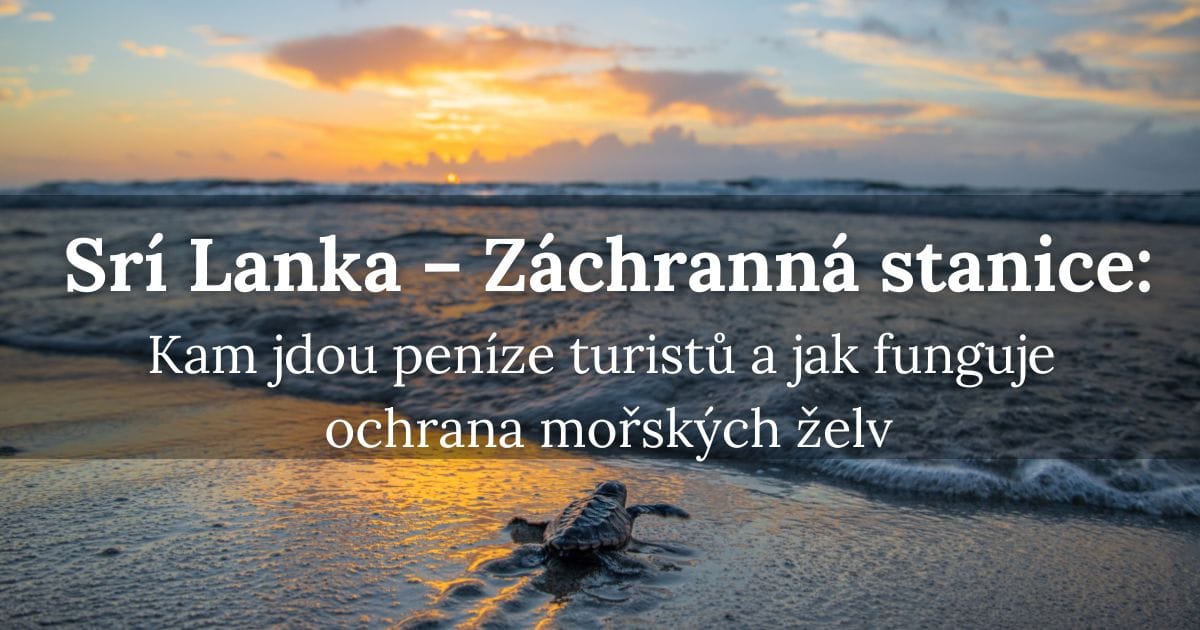
Sea turtles are among the oldest inhabitants of our planet, who have been sailing through the ocean for 100 million years. Their population has recently decreased by up to 90% in some places. Unfortunately, we travelers sometimes unconsciously contribute to this. An animal rescue station abroad is a popular place where people can see sea turtles and other fascinating animals up close and contribute to their protection at the same time. But did you know that many stations actually buy turtle eggs from poachers – or even harm the little turtles?
Why sea turtles need our help
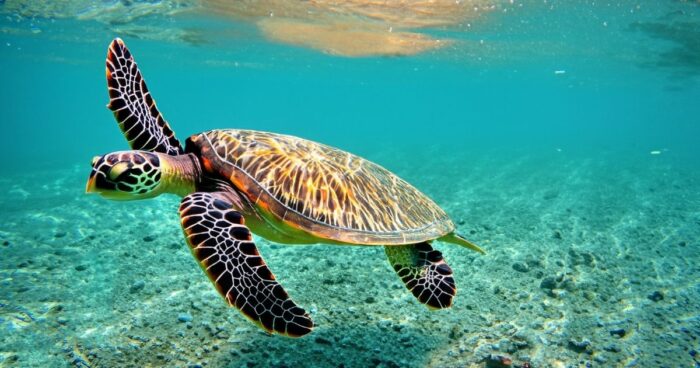
Of the seven species of sea turtles, six are endangered. For example, the hawksbill turtle (Eretmochelys imbricata) is on the verge of extinction due to illegal trade in her shells. green turtle (Chelonia mydas) again They suffer from mass egg collection and ocean pollution.
More than 250,000 sea turtles lose their lives each year to fishing gear – sea turtles often get caught in nets as bycatch. Thousands more turtles die over plastic waste they confuse with food (Normally they feed on jellyfish, so it’s no wonder that they confuse them with plastic bags, for example). A significant threat is also the destruction of nesting sites on beaches where people build hotels and resorts.
Poachers and the dark side of turtle rescue stations
There are many rescue centers around the world that deal with the protection of sea turtles and many other endangered animals (elephants, orangutans, koalas, etc.). But not every animal rescue station really helps them. Some are doing a great job (such as We protect sea turtles z.s.), however, others tend to use turtles as a tourist attraction. Unfortunately, how often does it work in rescue stations and what won’t they tell you?
Turtles as a tourist attraction
As a tourist or traveler, you pay to enter the rescue station for animals with the excitement of learning something new about them, see them up close, and most importantly, that the money for the entrance fee goes to a good cause. But unfortunately, it works quite the opposite on many stations.
In many developing countries, environmental awareness is low, which you can notice, for example, through mountains of garbage on every corner. They go to the beaches and pick turtle eggs, which they then sell to rescue stations (and they often only have them in a plastic bag hung on a motorcycle) that buy them.
The poaching-rescue cycle
The fact that turtle rescue stations buy eggs only supports this trade and illegal egg collection. Moreover, because of that is then Most of the eggs are very damaged and only a fraction of the turtles hatch. The little turtles are then kept in the pools, where tourists can let them into the sea for a fee. But even that is a catch.
Little turtles sentenced to death
When the little turtle hatches, it goes into the pool and waits for its liberator. But when the turtle has been in the pool for more than 2 days, it will be stunted by its muscles and this greatly reduces the chance of its survival in the sea. In addition, they are usually released into the sea during the day, when there is hot sand on the beach. A small turtle has a very sensitive body and hot sand can even harm it.
Such a situation is, for example, in Sri Lanka or Mexico, where the trade in turtle eggs is illegal, yet thousands of units are sold every year on the black market, which are mainly sponsored by animal rescue stations.
Tip: What are the beaches of Sri Lanka like? 14 most beautiful beaches

How to recognize a good turtle rescue station
Don’t worry. Although this is the sad reality facing animal rescue stations, it’s up to us. On tourists and travelers who pay attention to where the money from tourism goes. It’s up to us whether we look up information before going to the rescue station and whether we’re wondering what we’re actually supporting. We have some tips for you, how to recognize a good rescue station for animals and also where you can find a few of them.
- There are only sick and injured turtles in the pools: In the turtle rescue station, which really helps, you will mainly see injured and sick turtles who are being treated there and have a chance to return to nature (for example, in an accident with a boat).
- Little turtles are released into the sea immediately: Little turtles should never be kept in pools so that tourists can release them into the sea themselves for a fee. Such turtles quickly lose their muscles and lose their orientation instinct (for example, to return to the same place to lay eggs in adulthood). So this is the main measure that the animal rescue station has and by which you can tell.
- No cuddling with turtles: Who wouldn’t want to play with turtles, cuddle them or take pictures with them. But this behavior is not very good for animals. Animal rescue stations do not have pets, but they try to save and help them when needed.
- Releasing little turtles only in the evening and at night: Real organizations release small turtles into the sea as quickly as possible, especially in the evening or at night, when the safest environment is for them. If somewhere they organize a mass daily ‘ceremony’ of releasing turtles for money, it is more of a show for tourists than a real help.
- Education of local residents: The education and education of local residents, especially children, is really very important. It is necessary to teach them that we must protect nature so that there is no illegal trade in animals, environmental pollution or perhaps the use of turtle shells to make souvenirs.
TIP: Are you attracted to a holiday in Sri Lanka and a rescue station for turtles? We loved it so much we stayed for a month – and we’ve put together 12 top things to see in Sri Lanka.

10 most important places where sea turtles lay eggs 🌍🐢
Sea turtles make incredible trips across the ocean to return to the beaches where they were born and lay their eggs there. Some locations are essential to their survival, and if you want to see turtles or support their protection, this is where you should focus your attention.
Tortuguero, Costa Rica – the kingdom of huge cards
Tortuguero is one of the most important nesting grounds for sea turtles in the Caribbean. Every year from June to October, thousands of huge cards arrive here, to lay eggs in fine dark sand. The beaches are strictly protected, so Entry is only possible with a guide. Night tours will allow you to experience a miracle of nature – a female who digs a nest and lays dozens of eggs with great effort.
Rekawa Island, Sri Lanka
Rekawa is one of the few places in Sri Lanka where the protection of sea turtles is taken seriously. Every evening you can watch the females lay their eggs, but unlike other rescue centers, no turtles are kept in captivity here. Local conservationists are making sure that the little turtle gets safely into the sea without the intervention of tourists. But in Sri Lanka there are many more turtle areas like Dikwell and Matara on the southern coastí.
Tip: What is the weather like in Sri Lanka and when to go?

Raine Island, Australia – the largest nesting site in the world
Raine Island is literally a sea turtle metropolis. Every season, up to 60,000 giant cards go to this tiny island, making it one of the largest lowlands of its kind in the world. Unfortunately, turtles face danger here – due to the rising sea level, some nests are flooded with water. Large conservation projects are taking place here to protect turtles, Including moving eggs to safer places.
Ascension Island, Atlantic Ocean – Turtle Oasis in the middle of the ocean
This uninhabited island between South America and Africa is an unexpected paradise for giant cards. Here, British authorities carefully monitor each nest and protect the turtles from poachers. Ascension is one of the few places where the turtle population is growing, which is rare good news these days!
Poilão Island, Guinea-Bissau – holy place of turtles
Poilão is a sacred island of local residents and at the same time One of the largest nesting grounds for large leatherbacks. 30,000 females come here every year, which is quite a lot. Local residents believed for many years that turtle hunting brought misfortune, which paradoxically helped them survive in large numbers.
Sipadan Island, Malaysia – a coral paradise with turtles
Sipadan is known as one of the best diving spots in the world, but in addition to divers, sea turtles are also popular. In addition to nesting females, dozens of sea turtles swim here in crystal clear water. As the island is strictly protected, tourists are not even allowed to spend the night here, Which helps to minimize the human impact on the local ecosystem.
Lamu Island, Kenya
This wonderful destination is home to three species of sea turtles: giant cards, true turtles and green turtles. Organizations such as the Local Ocean Conservation are actively fighting poaching and the illegal trade in turtle eggs here. If you visit here, you can join the volunteer programs to protect sea turtles.
Chagar Hutang Island, Malaysia – a hidden treasure for scientists
Chagar Hutang is completely cut off from civilization and only scientists and conservationists have access here. Every year, giant cards and genuine cards come here to lay their eggs in white sand. If you want to help, you can participate in a scientific program and participate in the monitoring of turtle populations.
Florida, US
Florida beaches host over 100,000 sea turtle nests a year, making it one of the most important places in North America. Common cards, giant cards and even rare great leatherbacks nest here. Organizations like the Sea Turtle Conservancy help protect the turtles here and organize awareness among tourists.
The island of São Tomé, São Tomé and Príncipe
The small island nation off the coast of Africa is home to four species of sea turtles, including the critically endangered cardiac. Thanks to conservation initiatives, the number of turtles here is slowly increasing. Local communities play a vital role in protecting them as they replace traditional turtle hunting with ecotourism.
TIP: You will see much more in Sri Lanka besides the turtles. In the Mediterranean are Tea plantations, waterfalls and mountains, but also hidden rock fortresses as sigiriya.
FAQ
Where to see sea turtles?
Sea turtles can be seen in tropical and subtropical seas around the world. Top destinations include Sri Lanka, Indonesia, Maldives, Hawaii, Australia (Great Barrier Reef), Costa Rica, Mexico and the Seychelles. These areas are home to several species of sea turtles and offer amazing opportunities for snorkeling or diving.
When do sea turtles hatch?
Female sea turtles lay eggs several times during the season, which usually lasts from two to three months. Each clutch can contain 80-120 eggs, which are buried in the sand where they develop for approximately 45 to 70 days, depending on the temperature. The baby turtles then hatch. Unfortunately, the egg nests are often robbed by poachers.
Where can I swim with turtles?
You can swim with sea turtles in many places around the world, including Europe (here you can swim with them in Greece, for example). Among the most famous are Sri Lanka, Indonesia, Malaysia, Hawaii, Costa Rica and Mexico.
How do sea turtles sleep?
Sea turtles breathe through their lungs, so they have to come to the surface regularly to breathe. During sleep, their metabolism slows down significantly, allowing them to stay underwater for up to several hours. They most often sleep hidden among corals, in caves or under overhangs, where they are protected from predators and sea currents.
What is the name of the sea turtle conservation organization?
There are many organisations dedicated to the conservation of sea turtles. Among the best known are:
Turtle Foundation – focuses on turtle conservation in different parts of the world.
Sea Turtle Conservancy – one of the oldest organizations, founded in 1959.
WWF (World Wildlife Fund) – a globally known organization that protects not only sea turtles but also other endangered species.
Protecting Sea Turtles (Hana Svobodová) – Czech organization helping turtles in Indonesia and Sri Lanka.
Resources
Mazaris, A.D., Schofield, G., Gkazinou, C., Almpanidou, V. and Hays, G.C., 2017. Global Sea Turtle Conservation Successes. Science Advances, 3(9), P.E1600730.
Campbell, L.M., 2007. Local Conservation Practice and Global Discourse: A Political Ecology of Sea Turtle Conservation. Annals of the Association of American Geographers, 97(2), pp.313-334.
Campbell, L.M., 2010. Studying Sea Turtle Conservation and Learning About the World: Insights from Social Science. Conservation and Society, 8(1), pp.1-4.
Potřebujete pomoct s cestováním?
-
Ubytování 🏨
Vyberte si to nejlepší ubytování, ať už jste kdekoliv, přes Booking.com. -
Půjčení auta 🚗
Auto si snadno najdete přes Booking.com, kde máte často slevu díky ubytování, nebo Rentalcars.com, kde porovnáte nabídky většiny půjčoven. -
Zážitky 🎟️
Přes GetYourGuide.com si vyberete z nejrůznějších výletů i zážitků po celém světě, navíc se zrušením zdarma do 24 h předem.