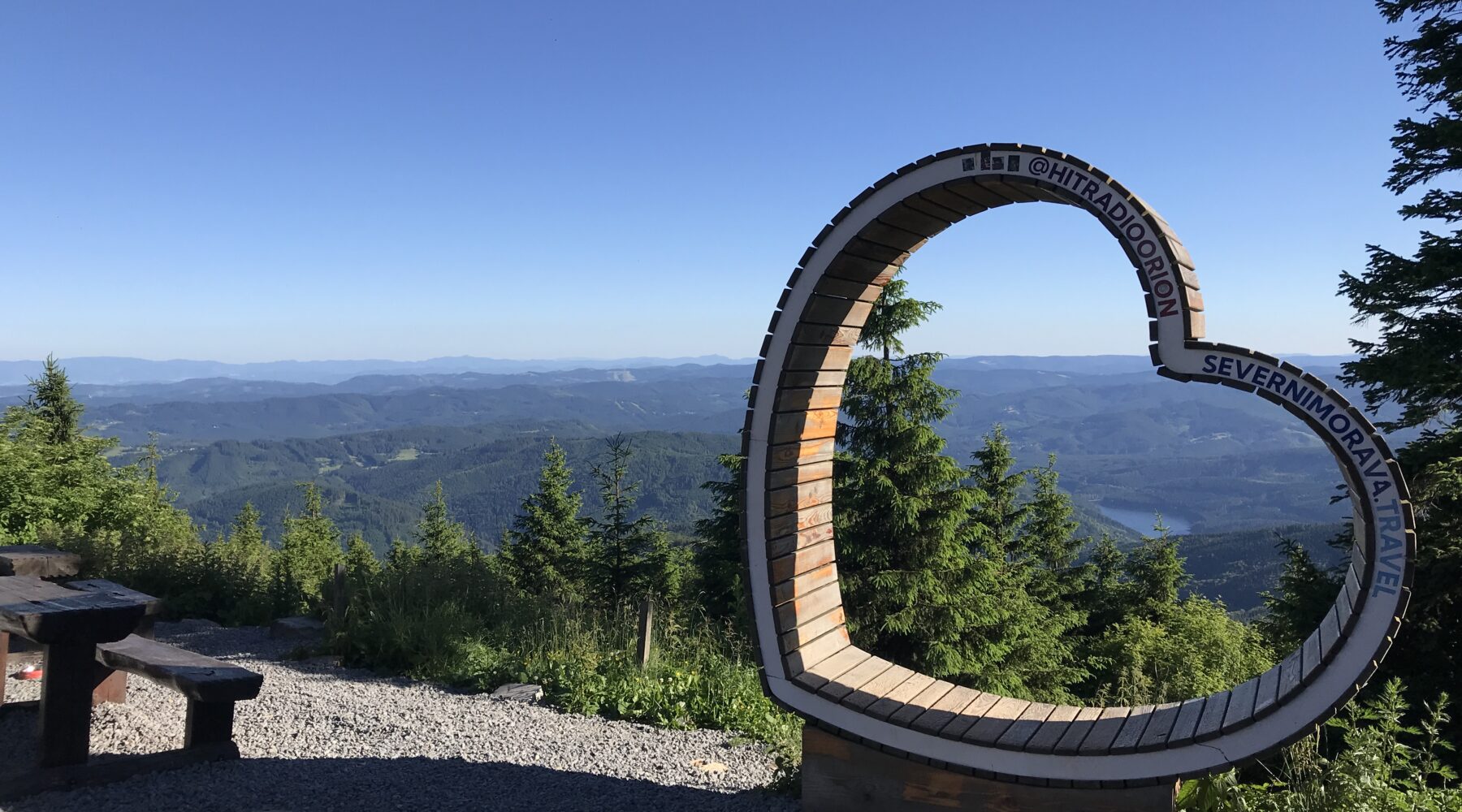
Last updated 5.11.2026
The Czech Republic has no four-thousanders and no glaciers, yet for such a compact country there is a surprising amount of mountain air to breathe. The mountains in the Czech Republic trace almost the entire border — from the granite ridges of the Giant Mountains through the misty Bohemian Forest to the rolling Beskids, where you can still meet grazing sheep. We keep coming back to them, and the best part is that most ranges are only a couple of hours’ drive apart, so a proper day in the hills never feels far away.
In this guide we’ve gathered all fifteen of the country’s major mountain ranges and upland areas, and for each one we explain what makes it special, where to hike, where you can ski and who it suits best. There are also separate sections on the mountains in winter and on where to go with children. Our aim is simple: by the end you’ll know exactly which range is right for you.
Czech mountains at a glance
- Highest ranges: three top 1,400 m — the Giant Mountains (Sněžka, 1,603 m), the Jeseníky (Praděd, 1,491 m) and Králický Sněžník (1,424 m).
- For proper hikes and ridge walks: the Giant Mountains, the Jeseníky, the Bohemian Forest and the Beskids.
- For peace and quiet: the Eagle Mountains, the Bohemian Forest borderland (Český les), the Novohradské Mountains and the Lusatian Mountains.
- Closest to Prague: the Brdy Highlands, the Central Bohemian Uplands and the Ore Mountains.
- For skiing: the Giant Mountains (Špindlerův Mlýn, Pec pod Sněžkou), the Jeseníky (Praděd), the Beskids and the Ore Mountains (Klínovec).
- With kids: cable cars, lookout towers and treetop walkways — the Giant Mountains, Lipno (Bohemian Forest) and the Beskids.
How to Choose a Czech Mountain Range and When to Go
Choosing a range really comes down to three things: how far you’re willing to travel, what you want from the trip and when you’re going. For the highest ridges and long walks above the treeline, head for the Giant Mountains or the Jeseníky; if you’re chasing solitude, you’ll find it in the Bohemian Forest borderland (Český les) or the Novohradské Mountains. And if you only have a single free day near the capital, the Brdy Highlands or the Central Bohemian Uplands will do the job nicely.
The season depends on what you’re after. Summer and early autumn (June to October) are best for hiking — the weather is at its most settled, the days are long, and by September the crowds and the midges have thinned out. Winter (December to March) belongs to downhill and cross-country skiing, but reliable snow tends to lie only at higher elevations. Spring is lovely lower down, when the orchards of the Central Bohemian Uplands are in blossom, though snow can still linger on the ridges well into May.
💡 Tip: Mountain weather changes fast — even in summer, pack a windproof jacket and something warm. On Sněžka or Praděd it can be 10–15 °C colder than down in the valley, and the wind hardly ever stops.
15 of the Most Beautiful Mountains in the Czech Republic
We’ve roughly ordered them from the highest and best known to the more low-key, quieter ranges. So which are the most beautiful mountains in the Czech Republic?
1. The Giant Mountains (Krkonoše) — the Highest Range, with Sněžka
Highest peak: Sněžka, 1,603 m — also the highest mountain in the entire country.
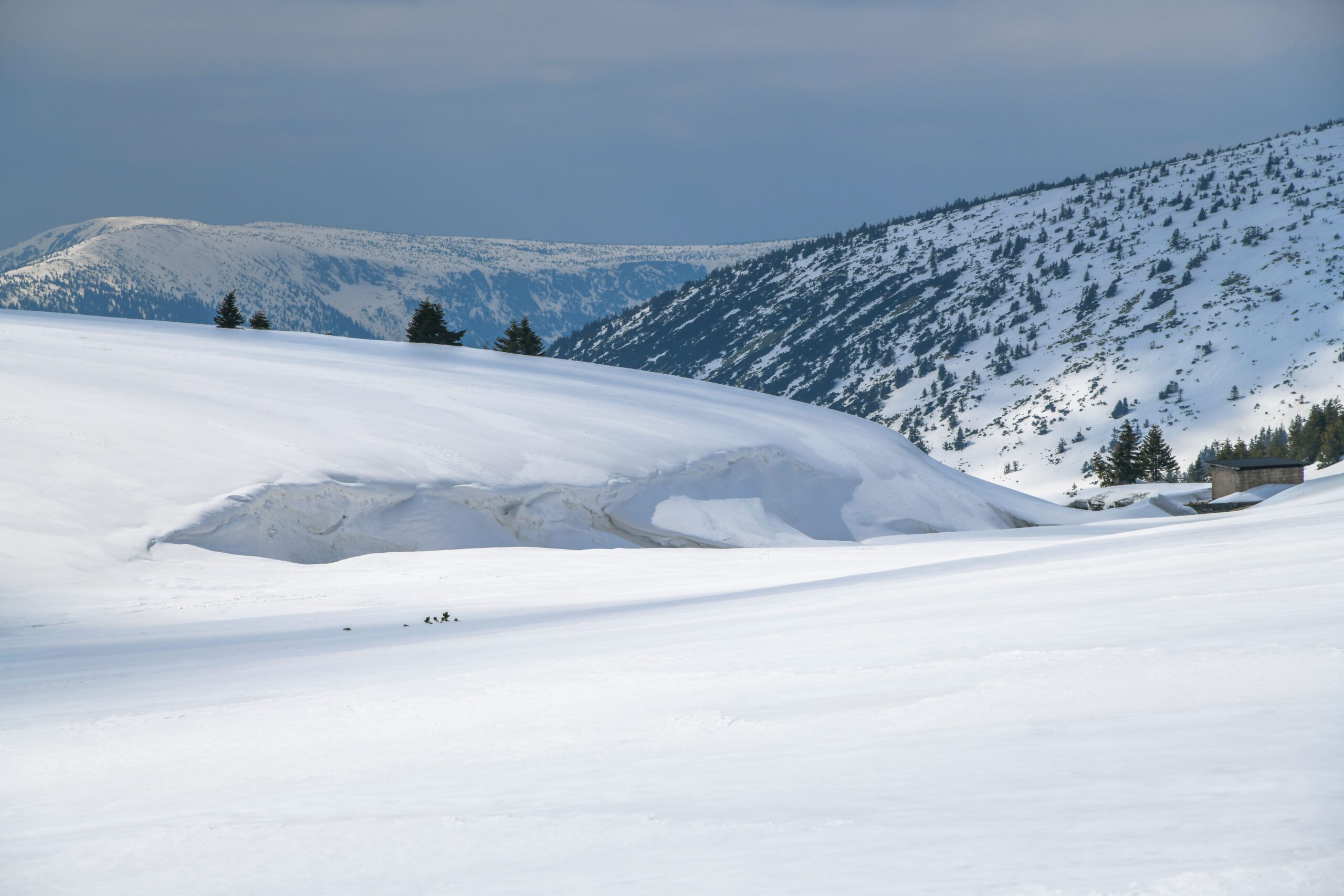
The Giant Mountains are the queen of the Czech ranges. This is the only range that climbs above 1,500 m, and the only one with genuine alpine tundra, dwarf pine, glacial cirques and peat bogs. The classic outing is the climb to Sněžka — either on foot from Pec pod Sněžkou, or by cable car if you’d rather save your legs. Just as rewarding is the ridge walk over Luční hora and Studniční hora, the source of the River Elbe, or the Pančava Falls, the highest waterfall in the country.
For skiing, most people head to Špindlerův Mlýn and Pec pod Sněžkou — the largest and best-equipped resorts in the country. Who it’s for: anyone after “real” mountains, from families to seasoned hikers and skiers.
💡 Tip: Set off for Sněžka early in the morning. After ten, crowds pour off the cable car and the queues for the lookout tower — and for a dumpling in the mountain hut — become endless. Accommodation in the Giant Mountains →
2. The Jeseníky — the Second-Highest Range, with Praděd
Highest peak: Praděd, 1,491 m (the Hrubý Jeseník range).
The Jeseníky are the “Moravian Giant Mountains” — the country’s second-highest range and, in many people’s eyes, wilder and less crowded. They’re dominated by Praděd, with its distinctive television transmitter and lookout, from which, on a clear day, you can see all the way to the Tatras. Unforgettable is the walk up the Bílá Opava valley, with its waterfalls and ladders, the summit of Vysoká hole, or the rocky rampart of Petrovy kameny.
Skiing centres on Karlov pod Pradědem (the Praděd–Ovčárna ski area) and Kouty nad Desnou. Who it’s for: hikers who want high mountains with a little less of the crush you get in the Giant Mountains.
3. Králický Sněžník — the Third-Highest, and Source of the Morava
Highest peak: Králický Sněžník, 1,424 m.
A small but lofty massif on the Czech–Polish border, whose namesake summit is the third-highest in the country and the only one besides the Giant Mountains and the Jeseníky to top 1,400 metres. Just below the summit, about 300 metres down the slope, the River Morava — Moravia’s largest river — has its source. On the way up you’ll pass a stone statue of an elephant, a favourite landmark and photo stop. On the Polish side of the ridge stands a modern lookout tower with far-reaching views into both countries. The usual approaches climb from the Návrší hut or from Dolní Morava.
Who it’s for: fitter walkers who want a high summit without the crowds, plus the geographical curiosity of the Morava’s source.
💡 Tip: Below the mountain in Dolní Morava runs the Sky Walk, a viewing tower with a slide that kids in particular love. It pairs nicely with the walk up to the source of the Morava. Accommodation in Dolní Morava →
4. The Bohemian Forest (Šumava) — Woods, Peat Bogs and Glacial Lakes
Highest peak: Plechý, 1,378 m (on the Czech side).
The Bohemian Forest is the largest unbroken forest in Central Europe and the country’s most extensive national park. Don’t expect sharp peaks — the magic of Šumava lies in its long wooded ridges, peat bogs and mysterious glacial lakes such as Černé and Čertovo jezero, or Plešné below Plechý. There’s a wonderful lookout and treetop walkway at Lipno, the source of the River Vltava, and the traverse over Boubín with its ancient primeval forest.
Skiing here is more of a family affair — Lipno, Zadov or Špičák near Železná Ruda. Who it’s for: lovers of quiet, forest and longer, gentle walks; ideal for cycling and for families too.
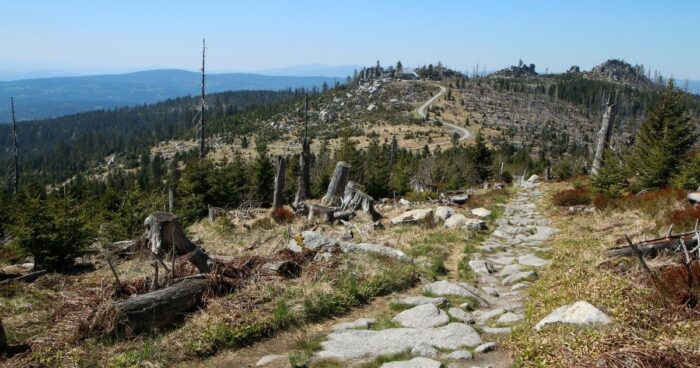
5. The Beskids (Beskydy) — Mountain Huts, Sheep Farms and Lysá hora
Highest peak: Lysá hora, 1,323 m (the Moravian-Silesian Beskids).
The Beskids have real soul — alongside the wooded ridges you’ll find timber huts, sheep farms and warm Wallachian hospitality. The most-climbed summit is Lysá hora, the “queen of the Beskids”, followed by the pilgrimage peak of Radhošť with its statue of the god Radegast, and neighbouring Pustevny with its stunning Art Nouveau huts, Libušín and Maměnka. The Valaška treetop walkway is well worth a look too.
Skiing centres on Pustevny, Bílá and Mosty u Jablunkova. Who it’s for: those who want mountains with atmosphere, good food and a hut on every ridge. We’ve got more ideas in our article What to See in the Beskids (2026).
💡 Tip: You can ride up to Pustevny on the chairlift from Trojanovice — brilliant if you’re walking with children or want to spare your knees on the way back down. Accommodation in the Beskids →
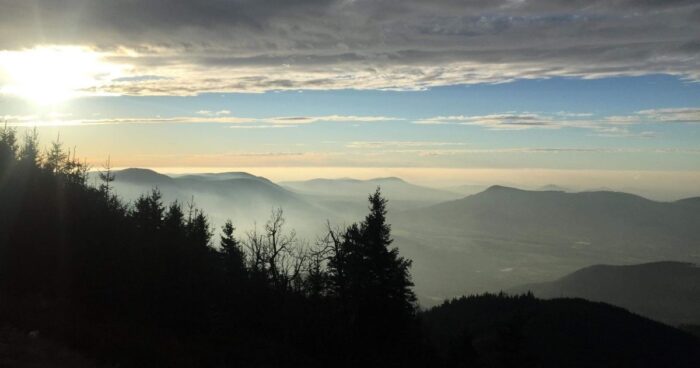
6. The Eagle Mountains (Orlické hory) — a Quiet Ridge by the Polish Border
Highest peak: Velká Deštná, 1,115 m.
The Eagle Mountains are a long wooded ridge running along the Polish border that has kept its calm, intimate feel. Along the crest runs the Jirásek Trail — an easygoing walk with views, well suited even to less confident hikers. The highest point, Velká Deštná, has a small lookout tower on top, and on a clear day you can see all the way to Sněžka; the usual starting point for the ridge is the Šerlich pass with its Masaryk hut. In winter there’s skiing at the small, family-friendly resorts of Deštné v Orlických horách (Šerlišský mlýn) and Říčky. Who it’s for: walkers who want mountains without the crowds or the queue for the lift.
7. The Ore Mountains (Krušné hory) — a Long Ridge and Klínovec
Highest peak: Klínovec, 1,244 m.
The Ore Mountains stretch for more than 130 kilometres along the German border, and their mining landscape is even on the UNESCO list. A great starting point is the mountain town of Boží Dar below Klínovec, from which wooden boardwalks lead through the Boží Dar peat bog (a nature trail of about 3 km). The mining past comes alive around the UNESCO sites near Jáchymov, Abertamy and Horní Blatná, and you can also visit the spa town of Jáchymov. Klínovec is the largest ski resort in the area and in winter links up with German Oberwiesenthal across the border. Who it’s for: downhill and cross-country skiers (the cross-country trails here are among the best in the country) and anyone within easy reach of north-west Bohemia.
8. The Jizera Mountains (Jizerské hory) — a Cross-Country Skiers’ Paradise
Highest peak: Smrk, 1,124 m.
The Jizera Mountains are home to the country’s most famous cross-country route — the Jizera Ski Trail — and the annual Jizera 50 race. The trail is most often joined from the cross-country stadium in Bedřichov, which also makes a good summer base. In summer the draws are the peat bogs, the waterfall on the Černá Nisa and granite summits with rocky outcrops such as Bukovec; the highest peak, Smrk, has a modern steel lookout tower with views over both the Czech and Polish sides. The Souš reservoir is close by too. Who it’s for: cross-country skiers above all, but also walkers and families with a pram on the surfaced paths.
9. Ještěd — the Silhouette Above Liberec
Highest peak: Ještěd, 1,012 m (the Ještěd–Kozákov ridge).
Ještěd is probably the most photogenic mountain in the country, even if it’s far from the highest. It’s crowned by the iconic hotel and transmitter shaped like a hyperboloid of revolution, designed by the architect Karel Hubáček, completed in 1973 and honoured with the prestigious Perret Prize. The ridge rises straight up above Liberec, so the views reach across to the Jizera Mountains, the Giant Mountains and into Lusatia. In winter there’s skiing at the Ještěd ski area. Note: the cable car has been out of service since an accident in 2021 and a replacement is still awaited, so the way up is on foot or by cycle path.
Who it’s for: lovers of architecture and of easily reached views just outside Liberec.
10. Český les — the Quietest Border Mountains
Highest peak: Čerchov, 1,042 m.
Český les — the Bohemian Forest borderland to the north of Šumava — may be the least discovered range in the country. For decades it lay off-limits behind the Iron Curtain, and so genuinely wild, empty nature survived here — abandoned villages, deep forests and almost no people. The main goal is the highest point, Čerchov (1,042 m), with its stone lookout, the Kurz Tower of 1904–1905, from which the view takes in Šumava and Bavaria. You’ll usually climb up from Capartice or from Klenčí pod Čerchovem in the Chodsko region. Who it’s for: solitary souls and lovers of silence who need no attractions or cable cars.
11. The Brdy Highlands (Brdy) — Wilderness Within Reach of Prague
Highest peak: Tok, 865 m.
For decades the Brdy were a military training area, which turned them into an unexpectedly wild protected landscape — and the closest “mountains” to Prague of all. You’ll find deep forests, heaths on former impact zones, reservoirs and quiet. The highest point is Tok (865 m), also the highest point in Central Bohemia, with heather covering a former artillery range; another favourite is the Padrť Ponds, whose landscape recalls the moors of the Bohemian Forest. Don’t expect high peaks or resorts, more relaxed forest walks. Who it’s for: Praguers and Central Bohemians who want nature without a long drive.
12. The Central Bohemian Uplands (České středohoří) — Volcanic Cones Above the Elbe
Highest peak: Milešovka, 837 m.
The Central Bohemian Uplands look like no other Czech range — dozens of solitary volcanic cones scattered above the valley of the Elbe. The best known is Milešovka, the windiest place in the country, with a weather station and a lookout tower, and there’s the romantic twin-towered castle of Hazmburk. In spring the orchards here burst into blossom. Who it’s for: shorter trips in search of views and lookout towers, and great for cycling too.
13. The Lusatian Mountains (Lužické hory) — Rocks, Volcanoes and Lookouts
Highest peak: Luž, 793 m.
The Lusatian Mountains are a picturesque blend of sandstone rocks and volcanic peaks in the north of Bohemia. They draw you in with rock castles, caves and lookout towers — the cult favourite is the columnar basalt of Panská skála near Kamenický Šenov (you’ll recognise it from fairy-tale films), and the summit of Klíč with views over the whole area. Who it’s for: photogenic half-day walks; Bohemian Switzerland is close by too.
14. The Novohradské Mountains (Novohradské hory) — a Forgotten Corner of the South
Highest peak: Kamenec, 1,072 m (on the Czech side).
The Novohradské Mountains on the border with Austria are quiet, wooded and overlooked by tourists — which is precisely their charm. Here you’ll find primeval-forest reserves: the Žofín primeval forest and the nearby Hojná Voda forest are among the oldest in Europe (protected since as far back as 1838). Add peat bogs, waterfalls on the Stropnice and the Dobrá Voda monastery. The usual gateway is the little town of Nové Hrady with its spa woodland park, Terčino údolí. Who it’s for: seekers of calm and untouched nature far from the crowds.
15. The Žďár Hills (Žďárské vrchy) — Gentle Uplands with Peat Bogs
Highest peak: Devět skal, 836 m.
The Žďár Hills are the heart of the Vysočina region — a soft, rolling landscape of meadows, ponds, peat bogs and rock formations. They aren’t high mountains, but for easygoing hiking, cross-country skiing and cycling they’re ideal. The draws are rocky summits such as the highest, Devět skal (836 m), and the romantic Čtyři palice, or the source of the River Svratka; a good base is Sněžné right below the rocks, or the larger Žďár nad Sázavou with its church on Zelená hora. Who it’s for: families, cyclists and cross-country skiers who like gentler terrain.
The Mountains in Winter (Skiing and Cross-Country)
In winter the Czech mountains are transformed, and every range offers something a little different. Snow becomes more reliable the higher you go, so it lasts longest in the Giant Mountains and the Jeseníky. Here’s a quick guide to where to go for what:
- Downhill: Špindlerův Mlýn and Pec pod Sněžkou (Giant Mountains) are the largest and most demanding. Klínovec (Ore Mountains) and Praděd–Ovčárna (Jeseníky) make excellent alternatives.
- Family skiing: Lipno (Bohemian Forest), Bílá (Beskids) or Říčky (Eagle Mountains) — gentler slopes, kids’ parks and shorter queues.
- Cross-country: the finest trails are on the Jizera Ski Trail, in the Ore Mountains around Boží Dar, and in the Bohemian Forest (Kvilda, Modrava). The Žďár Hills are lovely for cross-country too.
💡 Tip: Before you head out, always check the current conditions and the state of the trails via the resorts’ webcams and snow reports — at lower elevations (the Brdy Highlands, the Central Bohemian Uplands, the Lusatian Mountains) snow has been unreliable in recent winters. Looking for specific trails? Have a look at our guide Where to Go Cross-Country Skiing (2026).
The Mountains with Kids
With smaller children it pays to choose a range where you don’t have to walk all day to earn a view and a bit of adventure. Some tried-and-tested ideas:
- Cable cars instead of a long climb: up Sněžka (Giant Mountains), up to Pustevny (Beskids) or up Černá hora, where the top station has a treetop walkway with a slide back down.
- Treetop walkways and lookout towers: Lipno in the Bohemian Forest, the Valaška walkway in the Beskids — comfortable, step-free and fun for children.
- Shorter loops with a reward: the Bílá Opava valley in the Jeseníky (waterfalls and ladders), Panská skála in the Lusatian Mountains, or the fairy-tale rocks of the Žďár Hills.
With a pram you’ll manage the surfaced paths in the Jizera Mountains (around Bedřichov), in the Brdy Highlands or at Lipno. The golden rule is this: keep the route short, the goal clear, and something tasty in the rucksack.
💡 Tip: Planning a longer mountain stay and want things to do beyond the trails? Cable cars, walkways and other experiences can be booked ahead via GetYourGuide → — and you’ll skip the queues at the ticket desk.
Where to Next
- The Highest Mountains in the Czech Republic (2026)
- What to See in the Beskids (2026)
- Where to Go Cross-Country Skiing (2026)
- Best Nature Escapes in Czechia (2026)
Frequently Asked Questions
What mountains are there in the Czech Republic? The main mountains in the Czech Republic are the Giant Mountains (Krkonoše), the Jeseníky, Králický Sněžník, the Bohemian Forest (Šumava), the Beskids, the Eagle Mountains, the Ore Mountains, the Jizera Mountains, Ještěd, Český les, the Brdy Highlands, the Central Bohemian Uplands, the Lusatian Mountains, the Novohradské Mountains and the Žďár Hills. The highest are the Giant Mountains, with Sněžka (1,603 m).
Which Czech mountains are the most beautiful? It’s a matter of taste, but the ones most often called the most beautiful are the Giant Mountains (alpine tundra, Sněžka), the Jeseníky (Praděd, Bílá Opava) and the Bohemian Forest (lakes, peat bogs). If you’re after peace and quiet, you’ll love the Novohradské Mountains, Český les or the Lusatian Mountains with their rocks and lookout towers.
What is the highest mountain in the Czech Republic? The highest mountain in the Czech Republic is Sněžka in the Giant Mountains, at 1,603 m above sea level. The second-highest peak is Praděd in the Jeseníky (1,491 m).
How many mountain ranges does the Czech Republic have? It depends on how finely you divide the geomorphological units — experts count more than eighty. In practice, walkers usually distinguish around 15 main mountain ranges and upland areas, which are the ones we cover in this article.
Where can I go for mountains without the crowds? For peace and solitude we recommend Český les, the Novohradské Mountains, the Eagle Mountains or the Žďár Hills. You’ll avoid the queues for the cable cars and the packed ridges you’ll meet in the Giant Mountains on a fine day.
Which mountains are closest to Prague? The closest are the Brdy Highlands (a protected landscape and former military area) and the Central Bohemian Uplands with their volcanic cones and lookout towers. Both work as a full day trip without an overnight stay. Further out, but still accessible, are the Ore Mountains and the Lusatian Mountains.
Where is the best skiing in the Czech Republic? The largest and most demanding resorts are Špindlerův Mlýn and Pec pod Sněžkou in the Giant Mountains. Klínovec in the Ore Mountains and Praděd–Ovčárna in the Jeseníky are excellent too. Families will love Lipno in the Bohemian Forest or Bílá in the Beskids.
Where are the best cross-country ski trails in the Czech Republic? The legendary one is the Jizera Ski Trail in the Jizera Mountains. Conditions are also superb in the Ore Mountains around Boží Dar, at Kvilda and Modrava in the Bohemian Forest, and in the Žďár Hills.
Where should I go in the mountains with children? Bet on cable cars and shorter routes with a reward: Sněžka and the treetop walkway on Černá hora (Giant Mountains), Pustevny and the Valaška walkway (Beskids), or the treetop walkway at Lipno (Bohemian Forest). With a pram, the surfaced paths in the Jizera Mountains or the Brdy Highlands are ideal.
When is the best time to visit the mountains in the Czech Republic? For hiking, June to October is best, when the weather is most settled and the crowds thin out in September. For downhill and cross-country skiing, head out from December to March, though reliable snow tends to lie mainly at the higher elevations of the Giant Mountains and the Jeseníky.
Can you see tundra in the Czech mountains? Yes. Genuine arctic-alpine tundra, with dwarf pine and glacial cirques, has survived in the Czech Republic in the highest reaches of the Giant Mountains and, to a lesser extent, the Jeseníky — you won’t find anything like it anywhere else in the country.
Potřebujete pomoct s cestováním?
-
Ubytování 🏨
Vyberte si to nejlepší ubytování, ať už jste kdekoliv, přes Booking.com. -
Půjčení auta 🚗
Auto si snadno najdete přes Booking.com, kde máte často slevu díky ubytování, nebo Rentalcars.com, kde porovnáte nabídky většiny půjčoven. -
Zážitky 🎟️
Přes GetYourGuide.com si vyberete z nejrůznějších výletů i zážitků po celém světě, navíc se zrušením zdarma do 24 h předem.