Last updated 1.9.2026
Ask most British travellers to name Europe’s great lake countries and you will hear Finland, Sweden and Switzerland long before anyone says Poland. And yet Poland holds more than 2,700 lakes, spread from the Tatra ridges in the south to sandy coastal lagoons on the Baltic. There are glacial tarns under bare rock walls, Masurian sheets of water so wide they behave like an inland sea, quiet reservoirs a few minutes from the Czech border, and flooded limestone quarries with water the colour of a swimming pool.
Poland’s lakes are also refreshingly unpretentious. They work for families, for sailors, for cyclists, for anglers, and for anyone who simply wants a stretch of water to sit beside without paying resort prices for the privilege. This guide runs through 24 of them, grouped by region, with what each one is actually good for and where to base yourself.
Poland’s lakes in short
- The country’s lakes cluster in three very different places: the Masurian Lake District in the north-east, the Baltic and north-western lakelands, and the glacial tarns of the Polish Tatras in the south.
- Masuria alone holds more than 2,000 lakes linked by canals and rivers, which is why it is Poland’s sailing and kayaking heartland. Think Norfolk Broads, but on a scale you could spend a fortnight crossing.
- Śniardwy is the largest at 114 km², and Hańcza is the deepest at over 108 metres.
- The best months are June to August, when lake water reaches 22 to 25 °C. September is the quiet-season sweet spot: fewer people, lower prices, water still warm enough to swim.
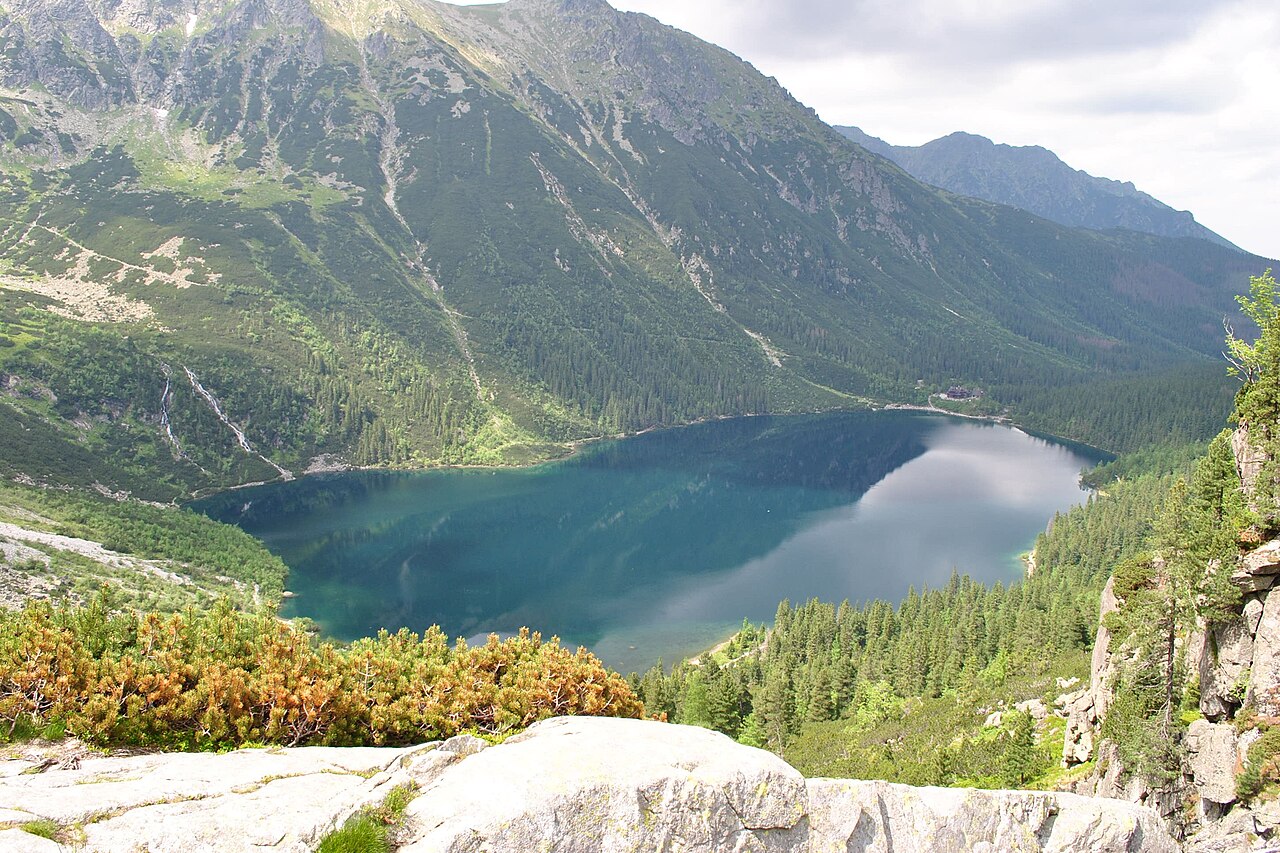
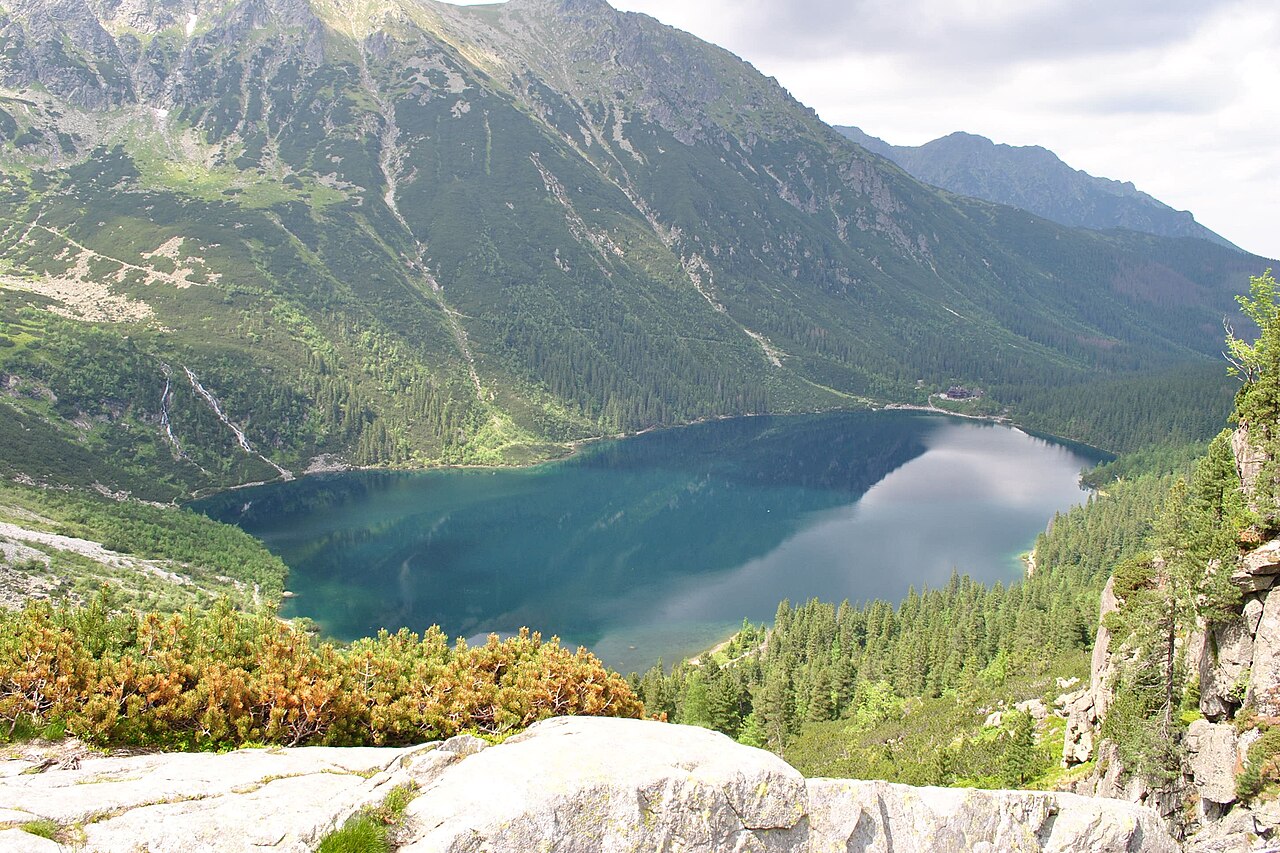
- Swimming in Morskie Oko is strictly forbidden and the national park enforces it. Poland’s most photographed mountain lake is for looking at, not for wild swimming.
- You will want a car. Public transport around the lakelands is patchy and, in the more remote spots, effectively non-existent.
- Poland is not in the eurozone. You pay in Polish złoty (PLN), and roughly 5 zł works out at about £1.
Why Poland’s lakes are worth the journey
Poland is a genuine lake superpower and almost nobody outside the country talks about it. Swedish and Finnish lakes fill the front pages of the guidebooks while the Polish ones sit in comfortable shade, which for a traveller is excellent news: fewer crowds, lower prices and scenery that gives away very little to its northern cousins.
Each region delivers something quite different. The Masurian lakes in the north-east are the water-sports and birdwatching country. The Tatra tarns in the south sit in hard, dramatic mountain scenery closer to the Alps than to anything in Britain. The border reservoirs in Silesia and Opole are the easy option, a day out rather than a holiday. Add Polish hospitality, generous food and prices that will genuinely surprise you, and you have a trip that punches well above what you paid for it.
If you need a British reference point: the Masurian Lake District is what you would get if you crossed the Lake District with the Norfolk Broads and then multiplied the water by twenty. It has the sailing culture and the interconnected navigable channels of the Broads, but with pine forest instead of reed-fringed farmland, and with room to disappear. Wild swimming, incidentally, needs no explaining to a British reader, but in Poland it is simply called swimming: lake beaches with lifeguards are normal, not niche.
When to go
The Polish summer season gets going at the end of May and peaks in August, when air temperatures push 28 to 30 °C and lake water warms to a swimmable 22 to 25 °C. July and August are also the busiest weeks by a distance. If you want quiet without gambling on the weather, go in September: the crowds thin out sharply, accommodation prices drop and the water is still warm enough to get into. Winter has its own following, too. Masuria is one of the few places in Europe where ice yachting is a real sport, with three blades in place of a keel and the wind pushing you across a frozen lake.
Getting there, and why you will want a car
Most visitors fly in. Warsaw is the obvious gateway, with Chopin (WAW) and Modlin (WMI) both served from the UK, and it is the natural start for Masuria: the lakes begin roughly 200 to 250 km north of the city, around three hours by road. Gdańsk (GDN) is the better arrival airport for the coastal lakes and the northern lakelands, and Kraków (KRK) is the one you want for the Tatra tarns and the quarry lakes.
Then the honest part: getting around the lakelands without a car is genuinely awkward. Trains from Warsaw will take you as far as Olsztyn and Ełk, which are useful bases in their own right, and there are buses onward to the bigger towns such as Giżycko and Mikołajki. But the smaller lakes, the campsites and the quiet shorelines sit at the end of country roads with a couple of buses a day, or none at weekends. Hire a car at the airport and the whole region opens up. Do not plan a Masurian holiday around timetables.
Money: Poland uses the złoty, not the euro
This catches out more visitors than it should. Poland is in the EU but not in the eurozone, and the currency is the Polish złoty, written zł or PLN. Cafés and campsite offices near the border will sometimes take euros, but at a rate designed to punish you.
The useful mental shortcut is that 5 zł is roughly £1, so 100 zł is about £19.50 and 500 zł is close to £97. Cards work almost everywhere in towns and marinas, but carry some cash for smaller campsites, car parks and lakeside kiosks in the remoter areas, where the card terminal is more of an aspiration than a certainty. When you pay by card or use an ATM, always decline the offer to be charged in pounds, because that “helpful” conversion is where the bad rate hides.
The Masurian Lake District: the heart of Poland’s lake country
If you only have one week, spend it here. Masuria (Mazury in Polish, roughly “ma-ZOO-rih”) is the one Polish lakeland with an international name, and it earns it: more than 2,000 lakes joined by canals and rivers, marinas in every second town, and a sailing culture that runs from serious racing crews to families pottering about on a hired houseboat. Nine of the 24 lakes in this guide sit in this one region.
One quick disambiguation, because search engines make a mess of it: the Battle of the Masurian Lakes was a First World War engagement fought across this landscape in 1914. Fascinating history, entirely different holiday. Everything below is about the water.
1. Śniardwy, the inland sea
Stand on the shore of Śniardwy (say it “SHNYARD-vy”) and it takes a moment to accept that you are not looking at the sea. Poland’s largest lake covers 114 km² and runs more than 22 km end to end, and in a decent blow the waves can build to a metre. For sailors it is one of the best cruising grounds in Central Europe, and when you add the pine forest along the shoreline and a sunset that turns the whole surface orange, you get the kind of scene that photographs badly and stays with you anyway. The easiest way to grasp the sheer size of it is from the deck of a passenger boat: the cruise out of Mikołajki across the lake is the single most popular trip in Masuria. Tucked along the shores are campsites and small beaches with a gentle, shelving entry into the water, which makes them workable with young children.
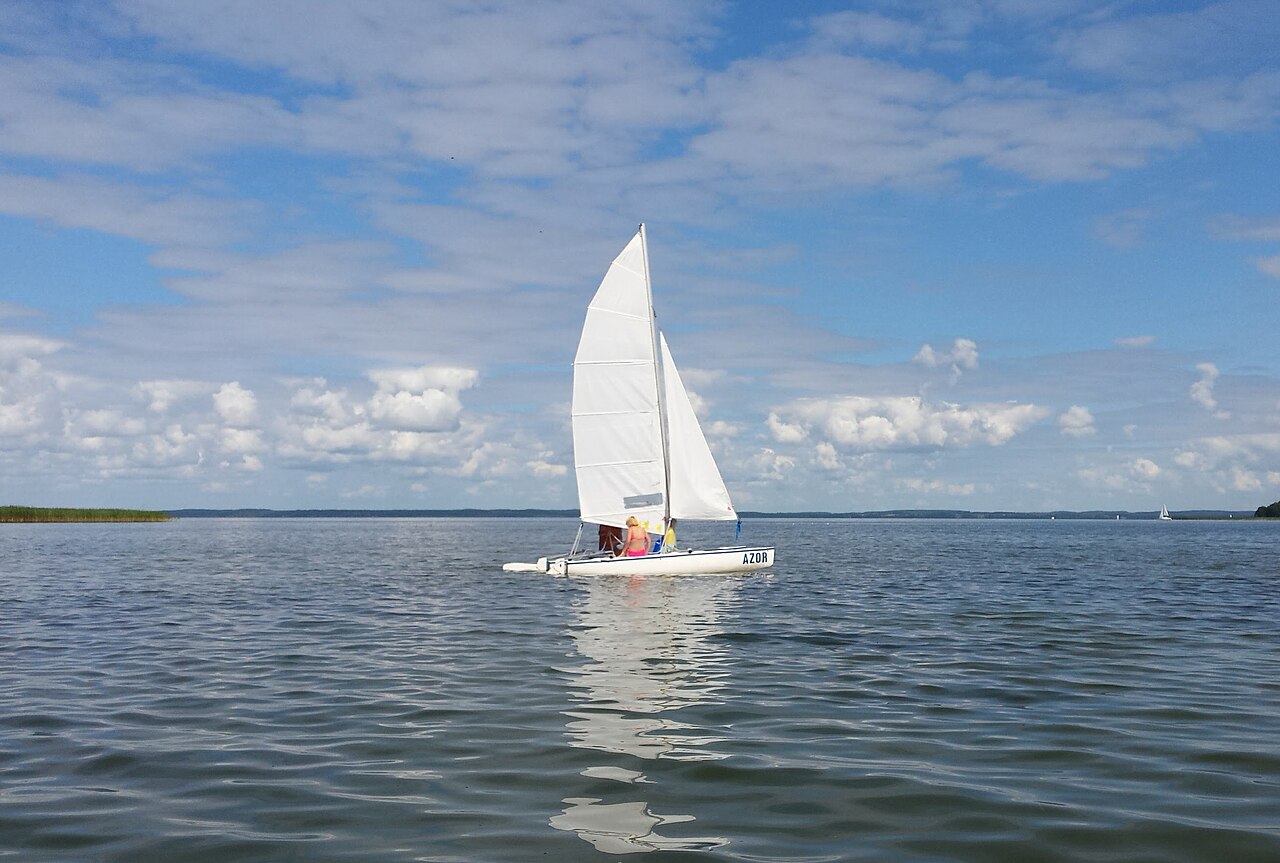
💡 Where to stay: Base yourself in picture-postcard Mikołajki or in quieter Pisz. Both have hotels, guesthouses and houseboats for hire right on the water. See places to stay →
2. Mamry, 33 islands and the clearest water in Masuria
Poland’s second-largest lake covers 104 km² and is the one where nature is still setting the terms. There are 33 islands on Mamry, several of them ornithological reserves holding rare breeding birds, so binoculars belong in the bag alongside your swimming things. Mamry runs a little wilder than neighbouring Śniardwy: the access points to the water are sometimes hidden in shoreline scrub and there are no big sandy beaches, which is precisely why it suits anyone after real contact with nature rather than mass tourism. The water clarity is among the best in the whole Masurian region, and sailors return here year after year for good reason. Swap the sound system for birdsong and you have the sort of holiday that actually recharges you.
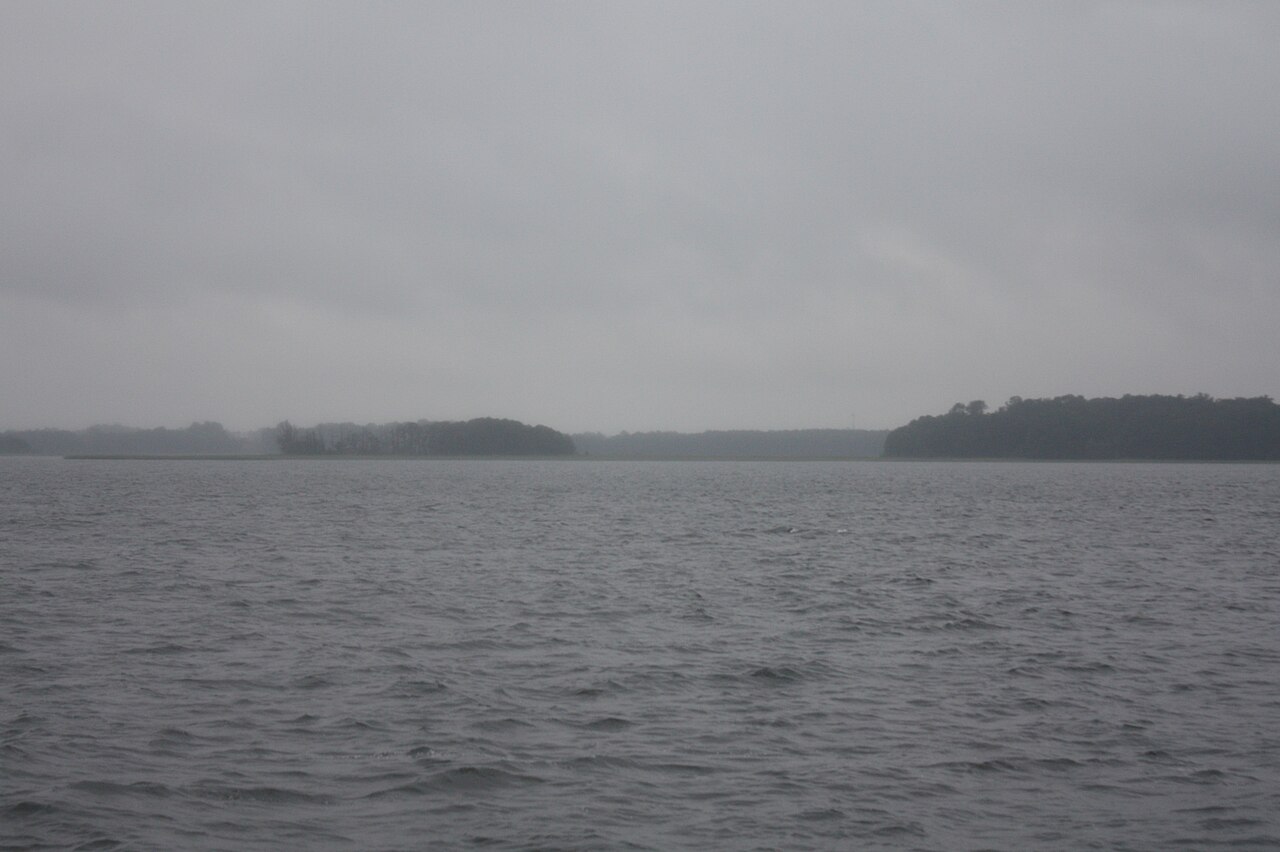
💡 Where to stay: The closest base is the marina town of Giżycko, nicknamed the “heart of the Masurian lakes”, where we rate Hotel St. Bruno for its location and lake access. See places to stay →
3. Niegocin, the best place in Poland to learn to sail
Lake Niegocin sits at Giżycko (“ghee-ZHITS-ko”) and in summer the atmosphere is good enough that you will start querying your return date. Running through it is the famous Masurian “sailing motorway”, the main cruising route where families on hired houseboats share the water with experienced racing crews, and because Niegocin is shallower and calmer than its neighbours it is the natural place to learn to sail rather than survive it. Ashore in Giżycko there is plenty to fill a rainy afternoon: the 19th-century Boyen Fortress, laid out as a six-pointed star, a unique hand-operated swing bridge over the Łuczański Canal, and an old water tower converted into a viewing platform. The sandy beaches at the nearby resorts of Grajwo and Wilkasy are the reward after a day on the water. Niegocin is a lake for everyone, and that is its strength.
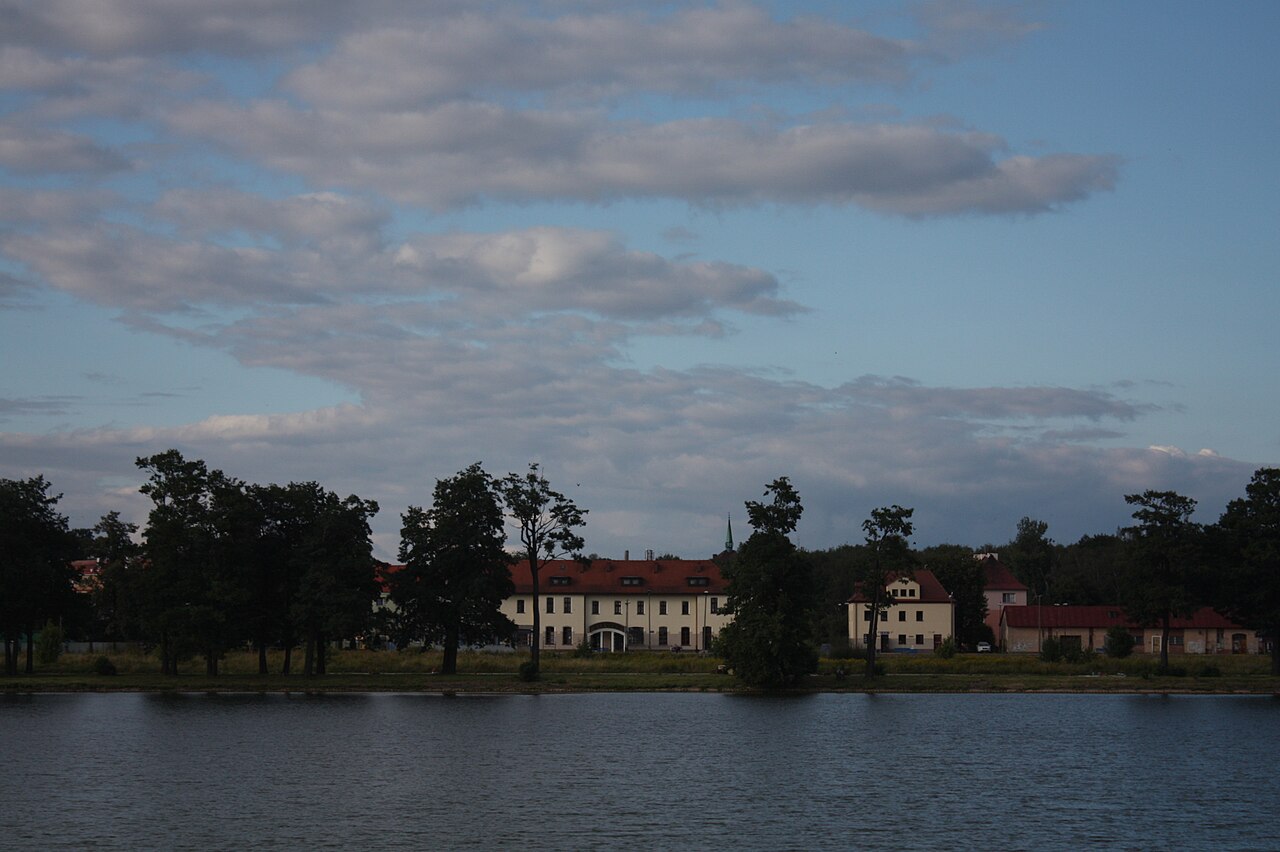
💡 Where to stay: In Giżycko itself we would point you at Hotel St. Bruno or the Stranda guesthouse, both close to the lake and to everything you need. See places to stay →
4. Lake Mikołajskie, the busy, likeable centre of it all
Arrive in Mikołajki (“mee-ko-WY-kee”) and you understand immediately why people call this the capital of Masuria. Lake Mikołajskie is full of yachts rocking gently at their moorings, and in the evening the waterfront restaurants send the smell of grilled fish along the whole promenade. During the day you can hire a boat, or simply sit on the jetty and watch other people manoeuvre theirs, which is its own form of entertainment. The mood is lively but still properly on holiday rather than frantic. The boat trip across the lake and out onto open Śniardwy was pulling visitors to Mikołajki long before anybody thought of the place as fashionable.
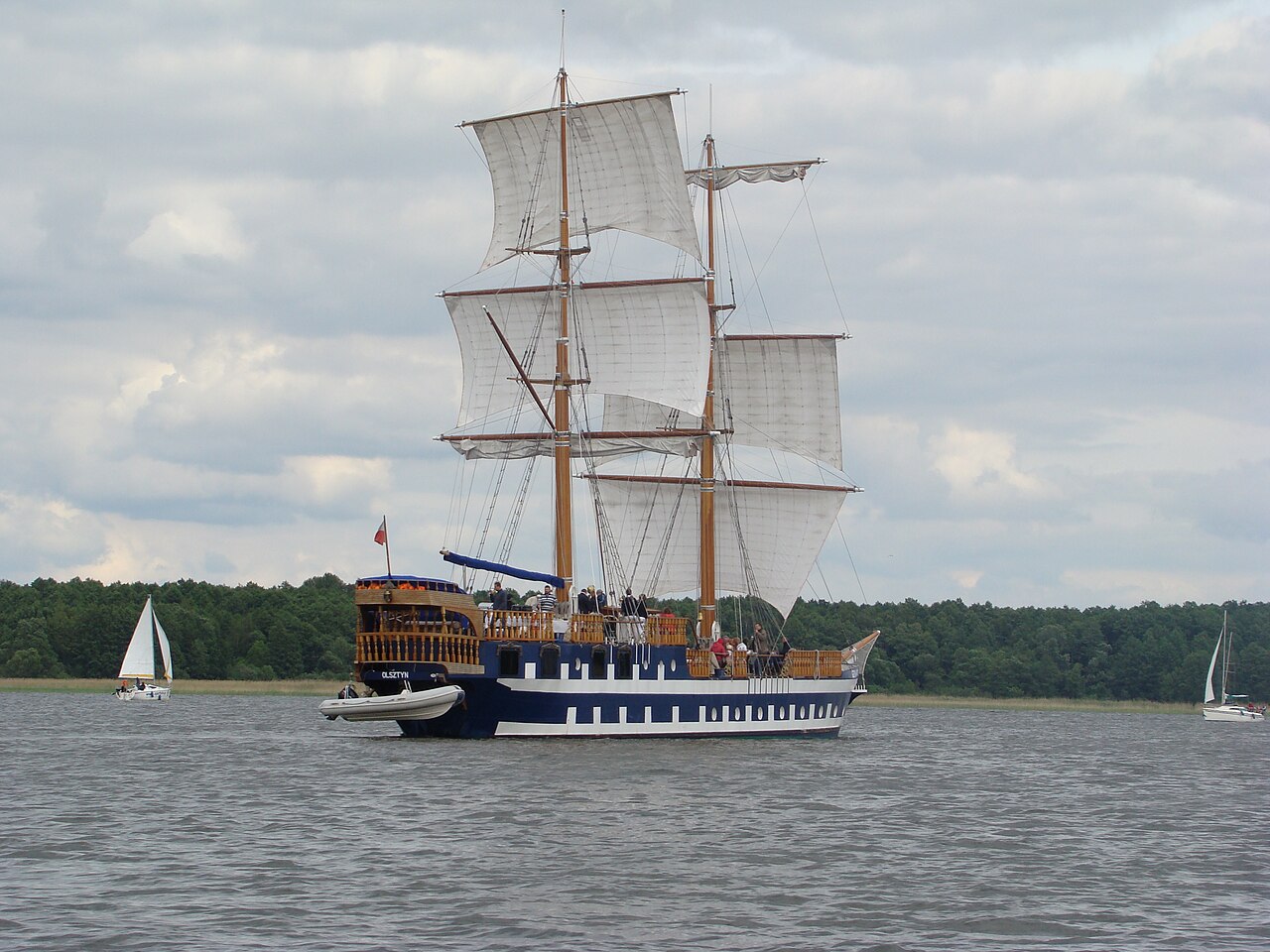
💡 Where to stay: Stay in Mikołajki itself. The choice runs from small guesthouses above the water to larger hotels with a spa, which you will appreciate after a day in the sun. See places to stay →
5. Łuknajno, quiet please
Łuknajno (“wook-NIGH-no”) is a different world from the busy Masurian marinas, and that is entirely deliberate. The lake is a UNESCO biosphere reserve and home to hundreds of swans and other rare birds, which you watch from hides and viewpoints around the shore. No bars, no jet skis, no music from a speaker: just wind in the reeds, the sound of wingbeats and the sense of having stepped somewhere that runs on a different clock. If you are looking for a place to switch off properly, Łuknajno is one of the best in Poland. It sits close to Mikołajki, so it slots in easily as the calm counterweight to a noisier day on the bigger lakes.
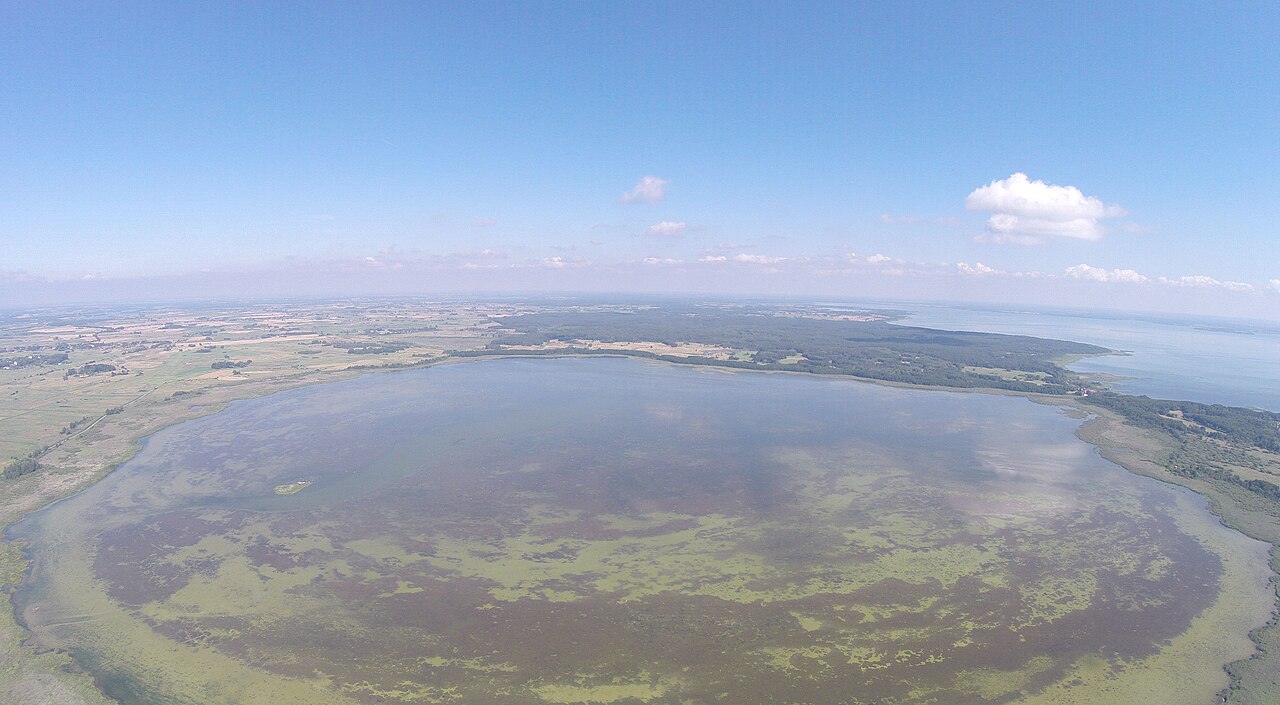
💡 Where to stay: Use Mikołajki as your base. The reserve is a short hop away and there is enough choice across every price bracket. See places to stay →
6. Roś, the quiet one that regulars keep to themselves
Roś is something of a hidden corner of Masuria, and that is exactly where its charm lives. It has none of the fame of Śniardwy, no crowds and no packed marinas, which is the whole point. The shores are calm, the water is clean and the evenings are surprisingly silent, broken only by a fish rising or a duck taking off. It is the lake to pick if you want to hire a kayak and paddle without traffic around you and without any need to care whose yacht is bigger. Roś lies beside the town of Pisz, whose surrounding forests are thick with mushrooms and bilberries in season, which gives even the non-swimmers in the party something to do.
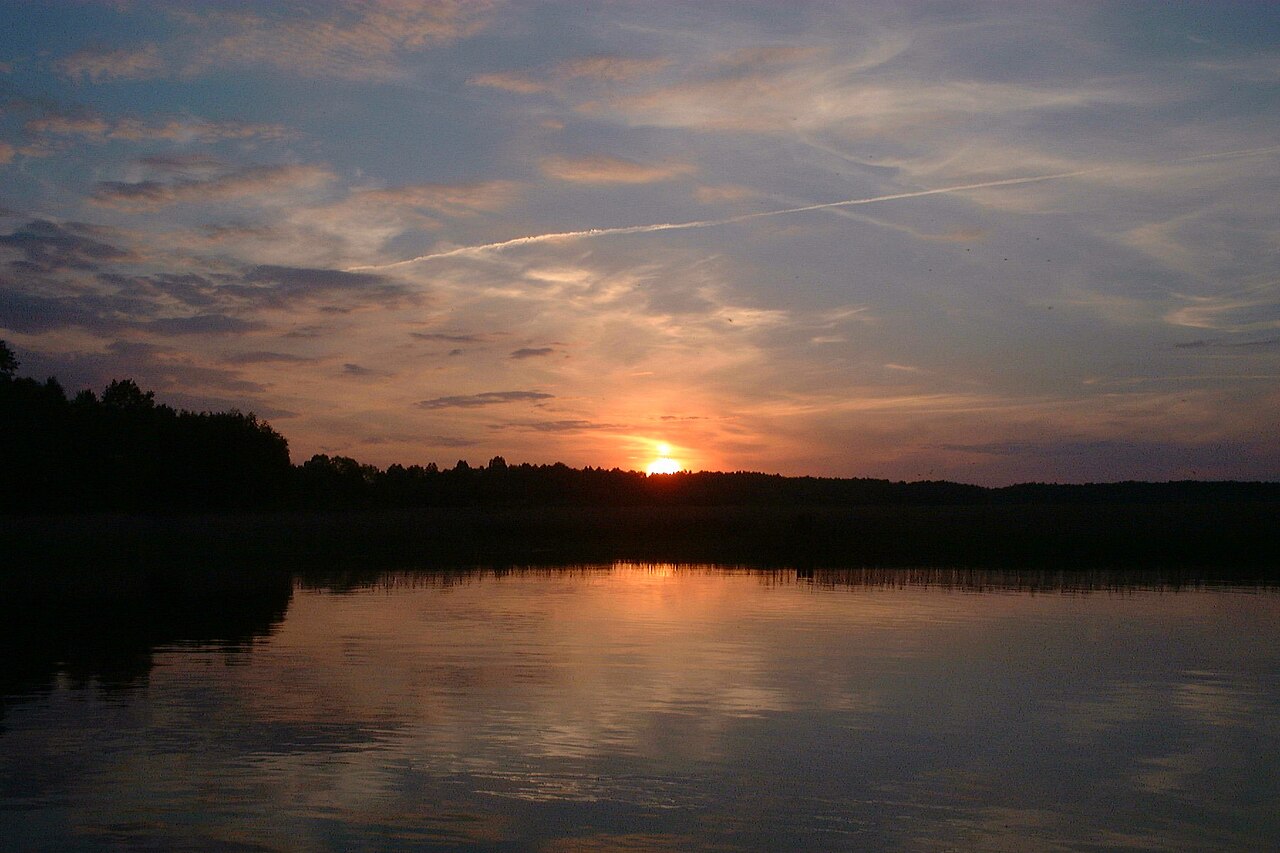
💡 Where to stay: Small guesthouses and campsites around Pisz come in noticeably cheaper than Mikołajki or Giżycko, and the setting is calmer and more genuine for it. See places to stay →
7. Lake Ełckie, a proper town on a proper lake
Ełk (“ELK”, with the Ł sounded like a w) proves that a lake and a town need not be in conflict. You swim off a maintained sandy beach in the morning, have a coffee on the promenade in the afternoon and finish the evening at a gig or over a beer at a bar by the water. The two main beaches, Miejska plaża and Nowa plaża a kilometre further south, both shelve gently into the water, which makes them straightforward with small children. A bridge crosses the lake and on the island in the middle stand the romantic ruins of a castle, which makes the view from a rowing boat or kayak unexpectedly dramatic. With around 60,000 residents, Ełk has enough of a historic centre to keep you occupied if the rain drives you off the water. Trains from Warsaw run here too, which makes Ełk one of the few Masurian bases you can reach without driving.
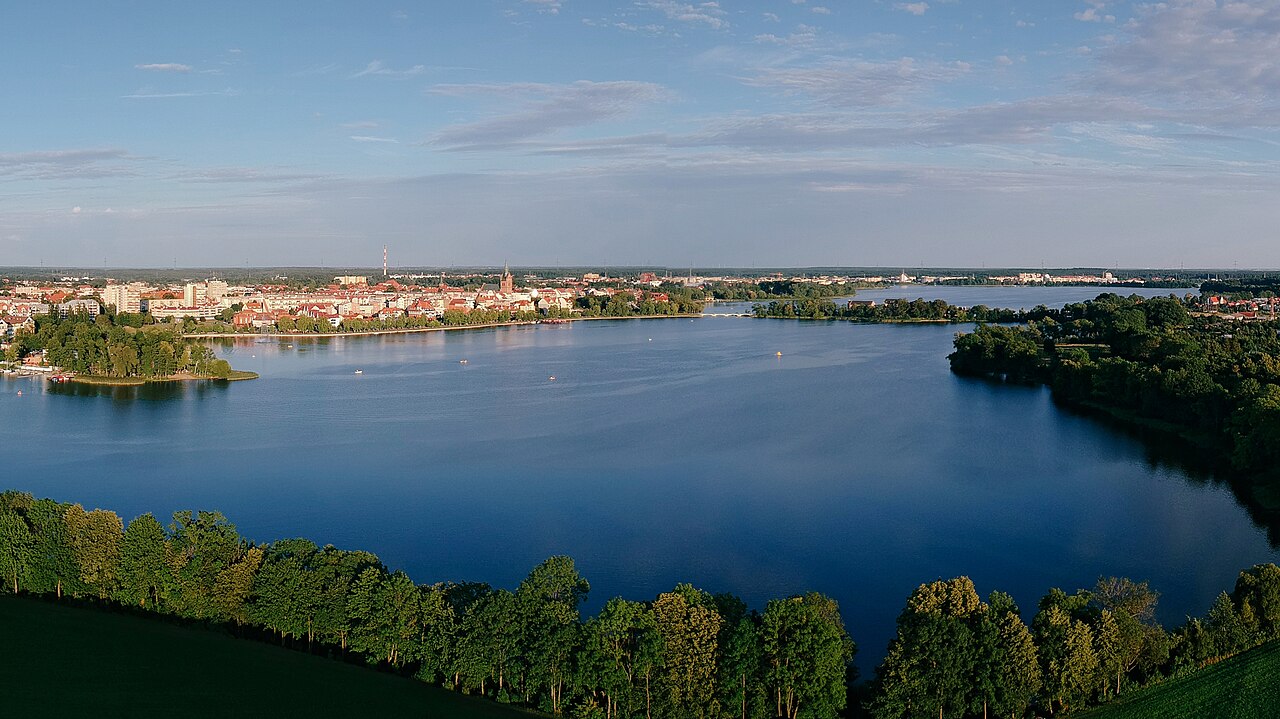
💡 Where to stay: Ełk has hotels across every category and carries far less tourist pressure than Mikołajki or Giżycko, with the easy feel of a small lakeside town. See places to stay →
8. Ukiel, proof that a city lake can still be beautiful
Ukiel, also known as the Crooked Lake (Jezioro Krzywe), lies right on the edge of Olsztyn (“ol-SHTIN”), and its winding shape, full of corners and inlets, means you never quite see the whole of it at once. That is the trick that keeps you exploring. Modern beaches with a gentle entry into the water, jetties, sports facilities and boat or paddleboard hire are all standard here. Even so, you can always find a quieter spot under the trees to lie down with a book and let the day go by. Olsztyn itself is a likeable historic city, so combining a swim with a wander round the old town fills a day nicely. This is the safe bet for anyone who wants comfort without compromise, and since Olsztyn is served by direct trains from Warsaw, it is one of the easiest lakes on this list to reach without a car.
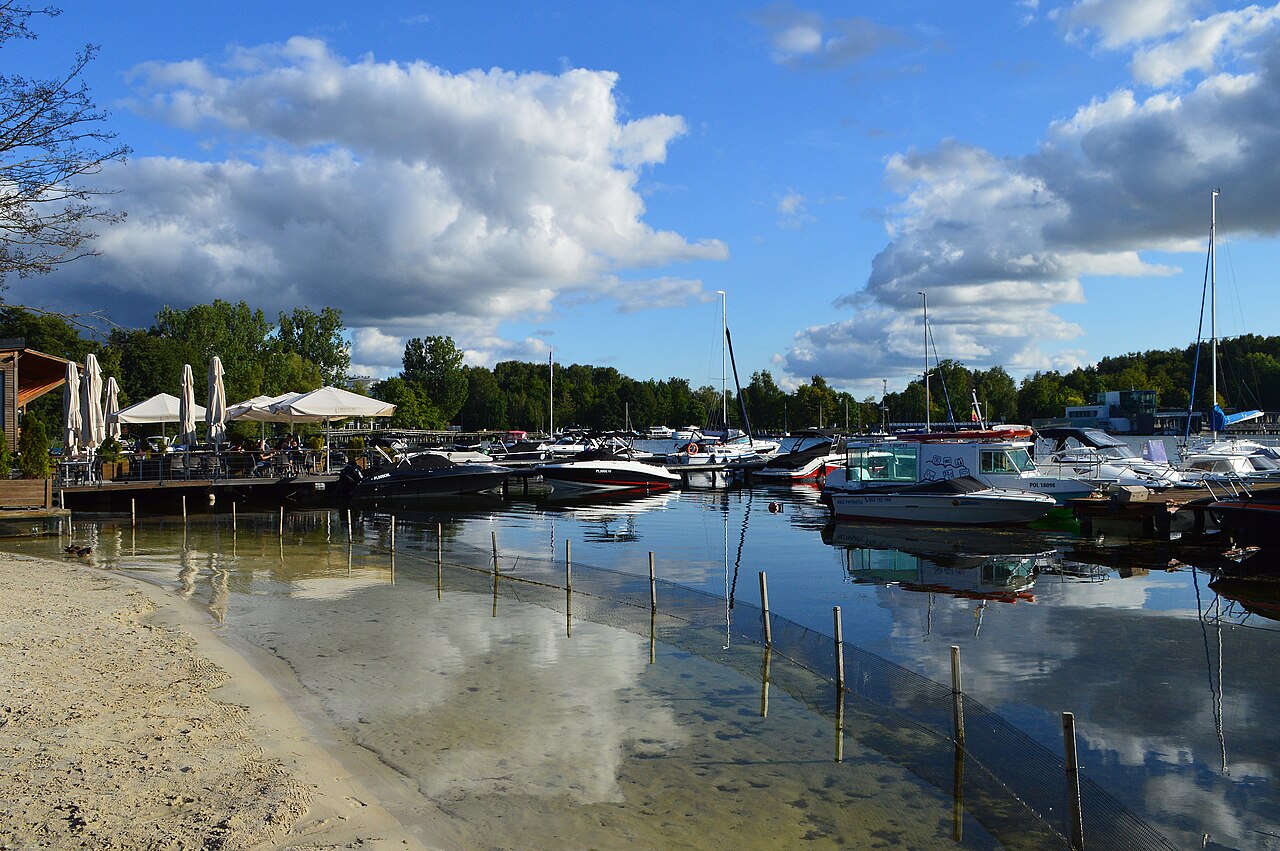
💡 Where to stay: Olsztyn has a deep hotel scene at every price point and works as an excellent base for reaching several Masurian lakes in a single trip. See places to stay →
9. Narie, 23 islands and a sky full of stars
Lake Narie, near Ostróda on the western edge of the region, is one you grow fonder of the more slowly you explore it. Its unusual, almost chaotic outline holds 23 small islands and creates a beautifully broken-up landscape where every bay opens a new view and a slightly different mood. You see it properly only from the water, in a small sailing dinghy or a kayak, because from the bank you never get a sense of its real scale. There are rarely many visitors, evenings are quiet, and with no light pollution over the water the star show is part of the programme. The flat country around it is made for cycling, so you can ride the whole way round and still take in a few Masurian farming villages on the way.
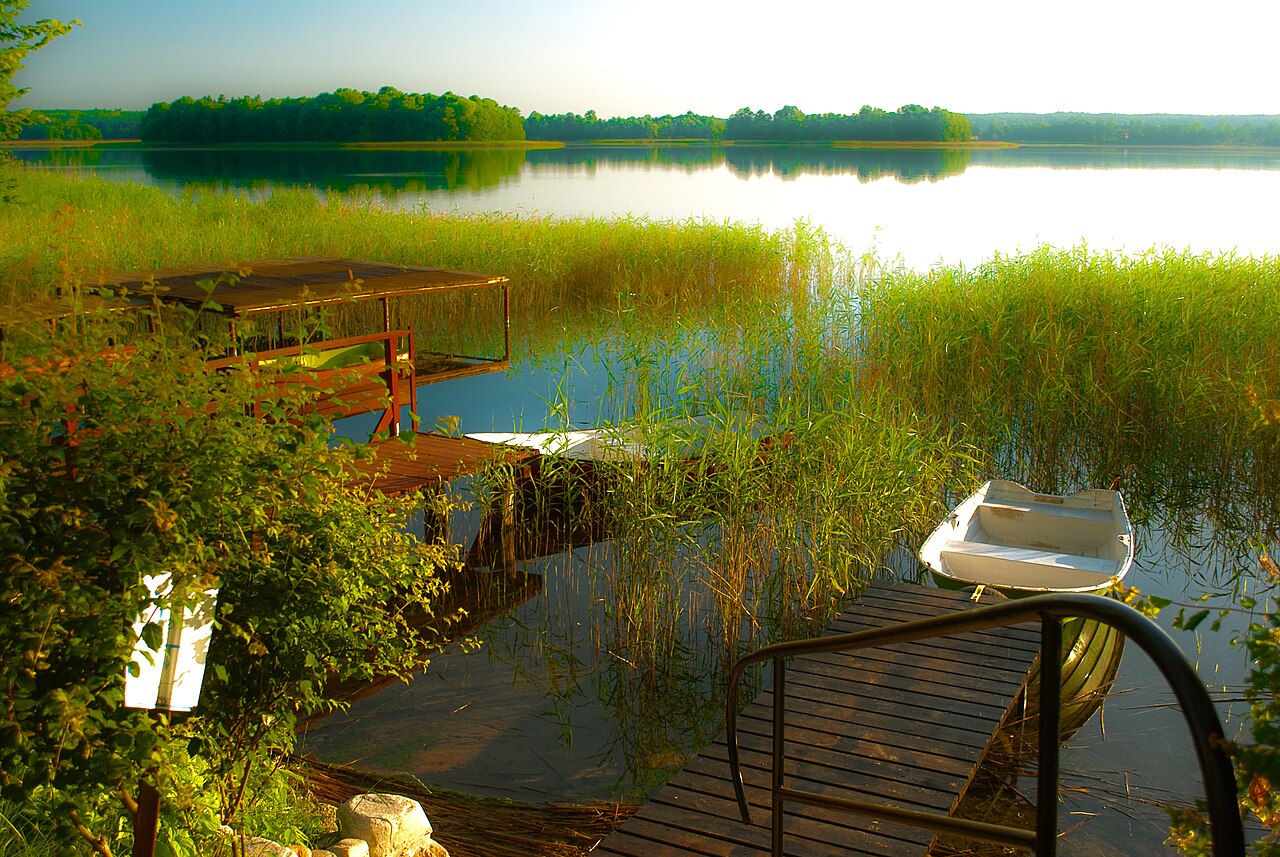
💡 Where to stay: The farmhouse B&Bs around Ostróda are authentic, very reasonably priced, and a slice of rural Poland comes bundled in with the room. See places to stay →
The Suwałki region: Poland’s deepest and clearest water
North-east of Masuria, up towards the Lithuanian border, the landscape turns hillier, emptier and colder. This is the Suwałki region, and it holds two lakes that are national records rather than just pretty views. Both sit in what Polish law calls a “quiet zone”, where motorboats are banned outright. If you have ever tried to swim in a British reservoir with a speedboat on it, that will sound like a very good idea.
10. Wigry, where you slow down without noticing
Some places slow you down before you have decided to let them. Wigry is one of them. Above the water rises the silhouette of a historic monastery, national park forest runs down to the shoreline on all sides, and you will hear almost no motorboats at all, just paddles. The lake sits inside a quiet zone where engines are prohibited, and the resulting atmosphere is close to meditative. At over 2,100 hectares, with genuinely clear water, Wigry is a paradise for canoeists and kayakers who work their way along the ragged shoreline and into the bays you simply cannot reach from land. The nearest town, Suwałki, is about 10 km away, but most visitors deliberately choose to stay right by the water instead.
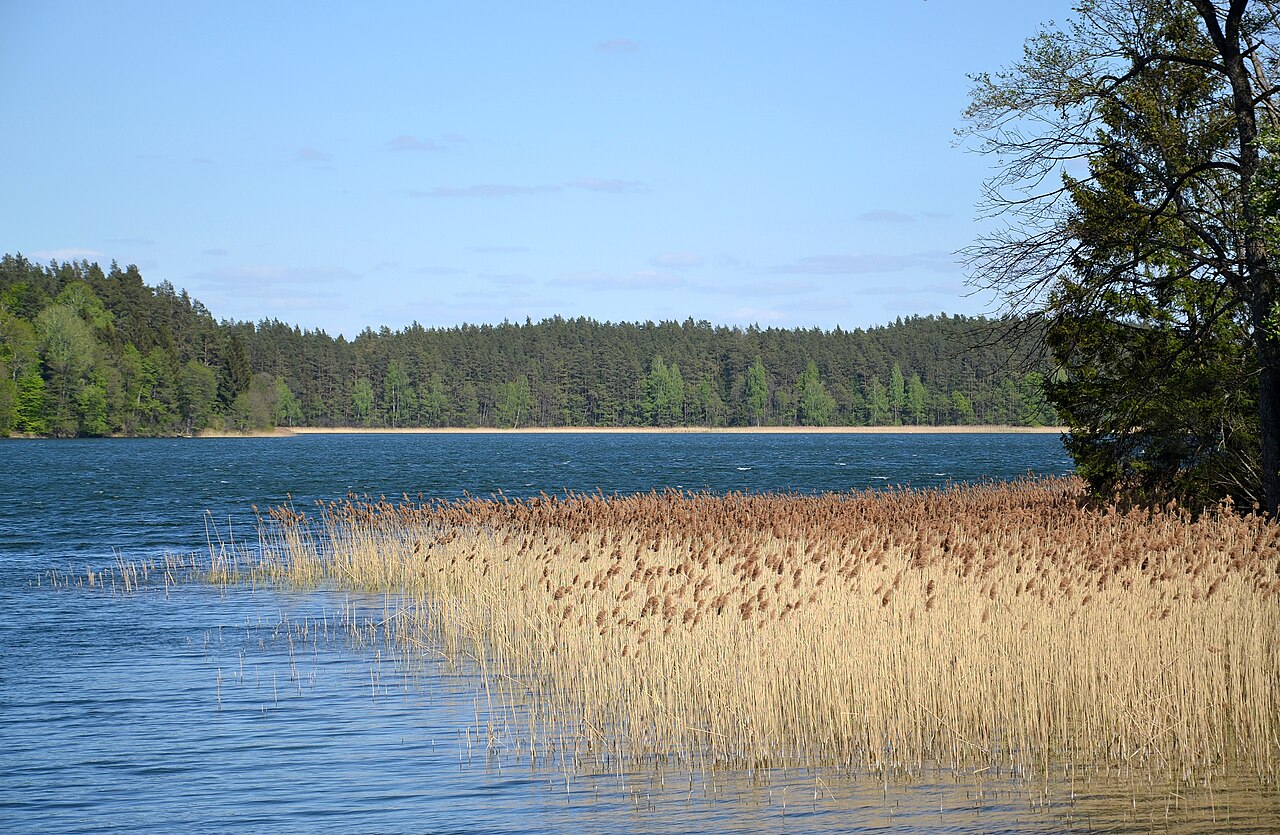
💡 Where to stay: Campsites and small guesthouses right on Lake Wigry are the right call here: less money, more peace and a far more genuine stay than in the tourist-heavy centres. See places to stay →
11. Hańcza, the deepest lake in Poland and almost empty
Hańcza (“HAHN-cha”) is deep and mysterious in both the literal and the figurative sense. At more than 108 metres it is the deepest lake in Poland, and the water carries a darker, denser shade that gives it an almost mystical character. Divers travel here specifically for the underwater visibility, but even snorkelling in the shallows will surprise you with how clean it is. Hańcza lies a long way from the main tourist routes in the far north-east, and as a result you will not find a crowded beach here even in July: quiet and wild country are the default setting. It is another quiet-zone lake, so there are no motorboats to hear either, only wind and water.
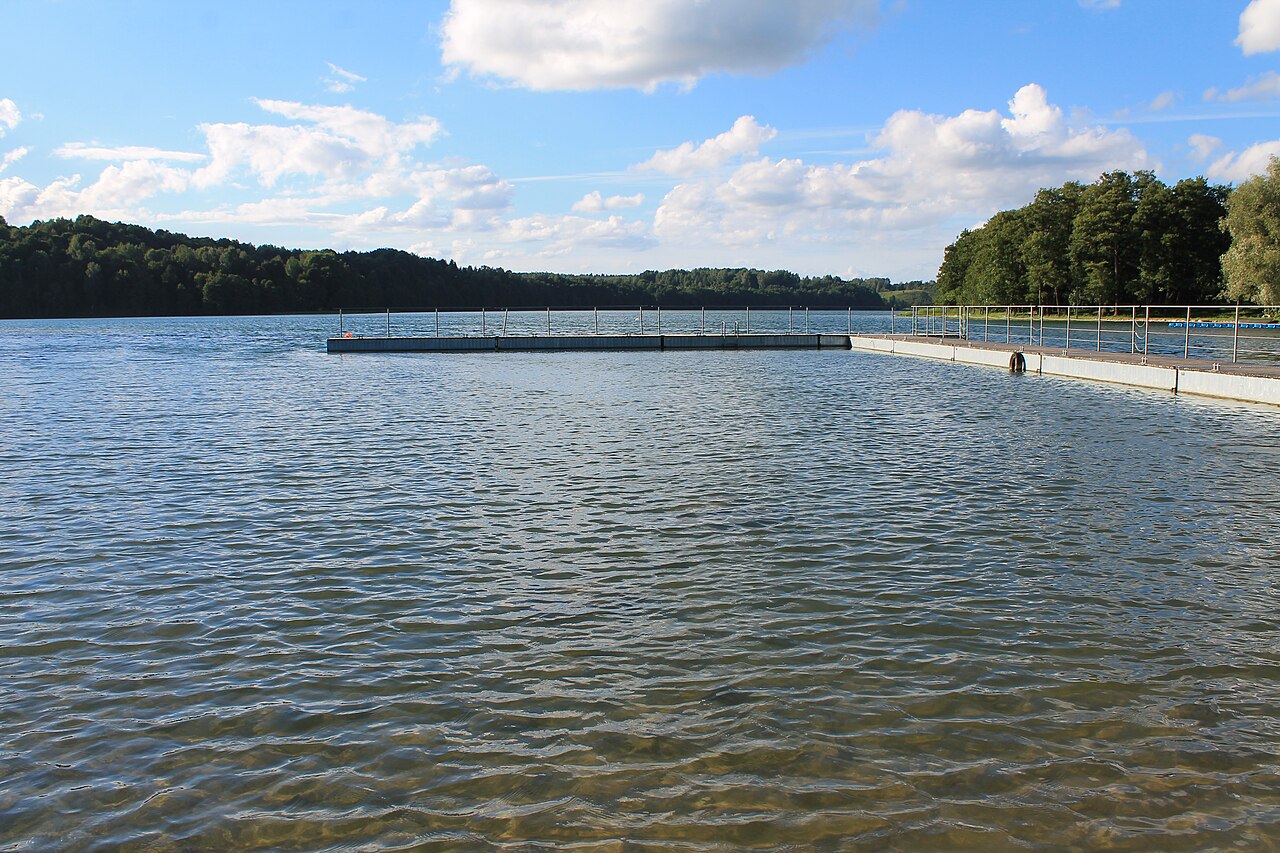
💡 Where to stay: Accommodation nearby means campsites or small guesthouses in the surrounding villages. Take the rustic character as part of the experience, or pick a different lake. See places to stay →
Coastal lakes on the Baltic: sand dunes and swimming both ways
Poland has roughly 500 km of Baltic coastline, and along it sit lakes that were once bays, cut off from the sea by sandbars. They are shallow, windy, and separated from open water by nothing more than a strip of dune, which makes for a strange and rather brilliant kind of holiday: freshwater on one side, sea on the other, ten minutes apart on foot. Gdańsk (GDN) is the airport for this stretch.
12. Łebsko, the Polish Sahara and the third-largest lake in the country
Łebsko (“WEB-sko”) is unlike anything else on this list, and you feel it the moment you step out of the car. Between the lake and the Baltic runs a belt of enormous shifting dunes nicknamed the Polish Sahara, and the 40-metre-high Łącka dune gives a view over a bare, empty landscape with very few parallels in Europe. At over 7,000 hectares, Łebsko is Poland’s third-largest lake and lies entirely within the protected Słowiński National Park. The wind here blows reliably and hard, which has made the lake a magnet for windsurfers from across the continent. Lake, pine forest, moving dunes and the sea within reach: the combination is genuinely hard to forget.
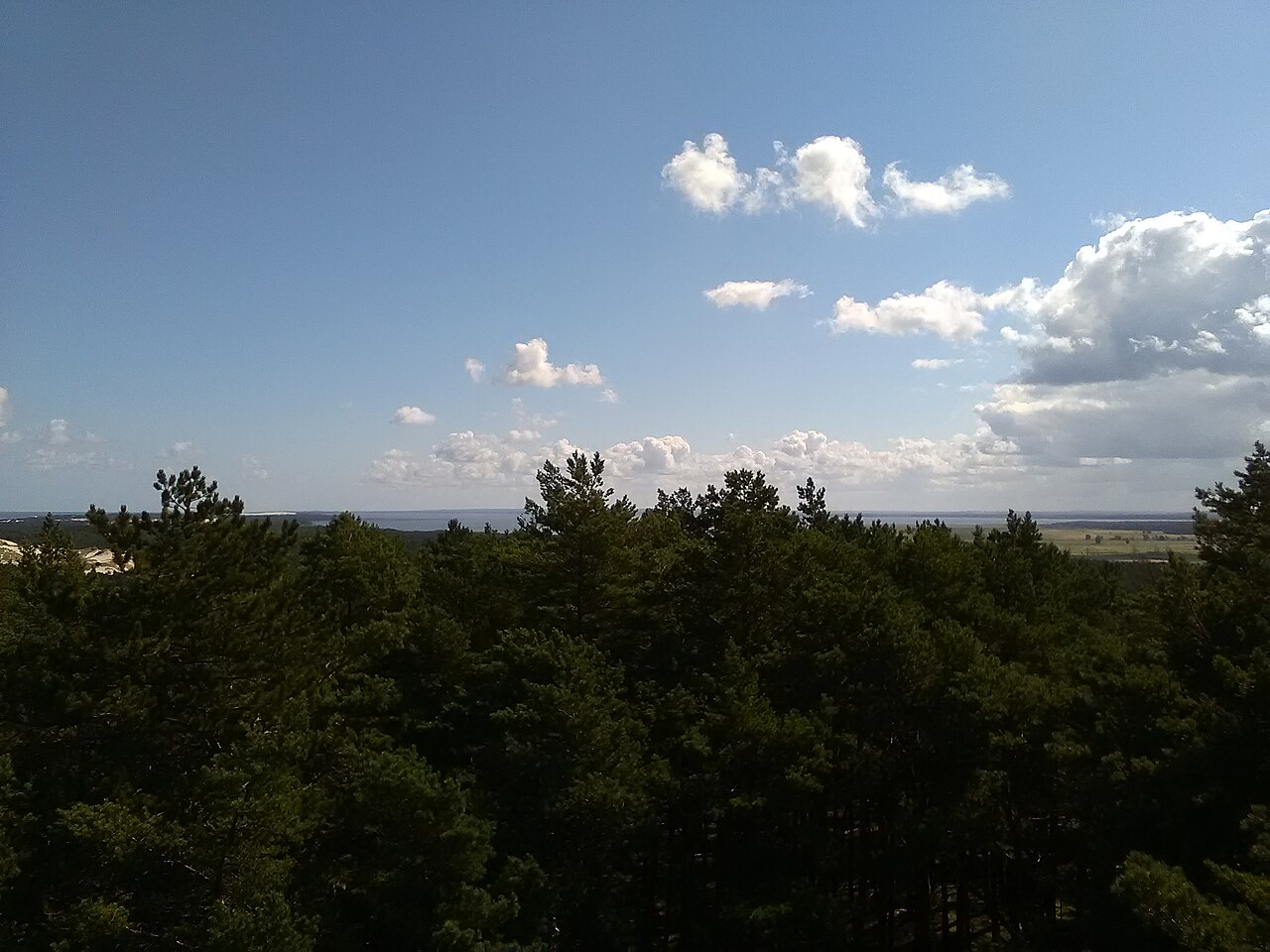
💡 Where to stay: Base yourself in the seaside resort of Łeba (always written with the Ł, and pronounced “WEH-ba”), which has a solid range of guesthouses and hotels, with the dunes reachable on foot or by bike from the front. See places to stay →
13. Jamno, when you cannot choose between lake and sea
Jamno is the answer for anyone who loves being in the water but cannot decide between a calm lagoon and a proper sea. This lake beside the resort of Mielno gives you both at once: swim in the quieter lake water in the morning, then walk a few minutes across the sand and straight into the Baltic in the afternoon. In summer the mood is busy but relaxed, closer to a holiday camp than an overstuffed resort. Around it you will find cycle paths, small harbours with boats for hire and pleasant pine woods for an afternoon walk. Jamno works well for families and for groups of friends who want everything within arm’s reach.
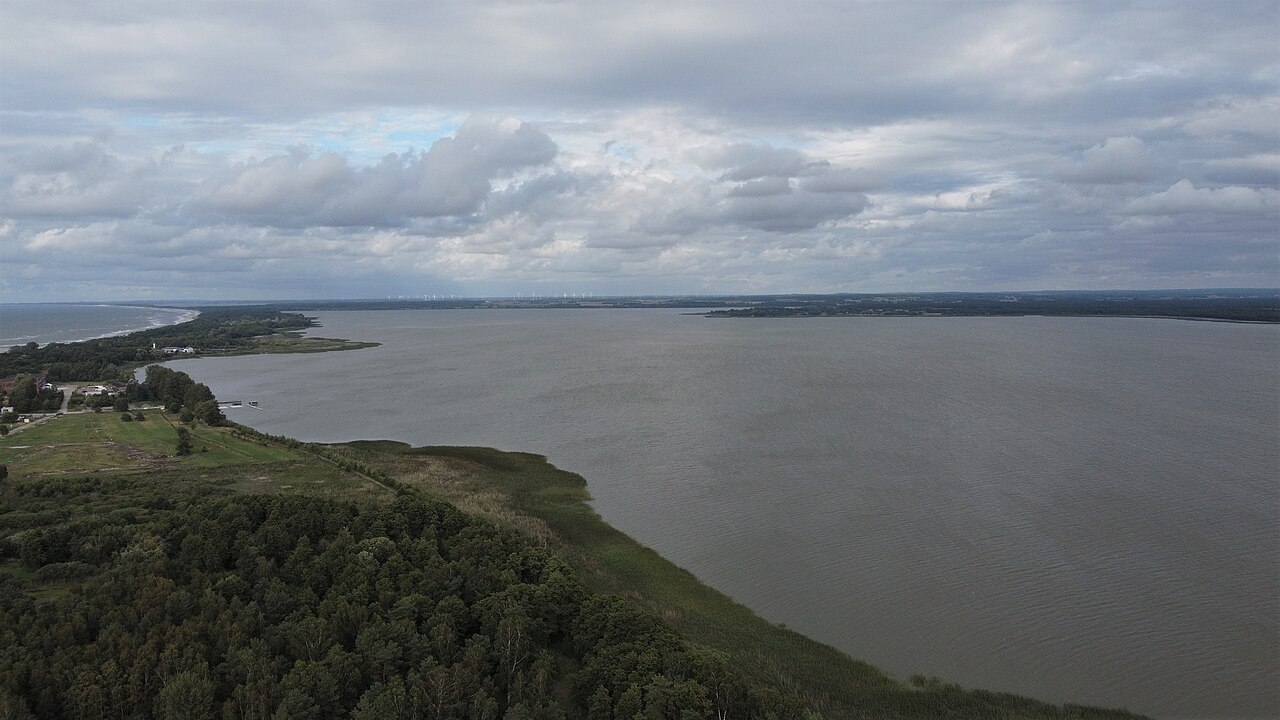
💡 Where to stay: In Mielno itself you will find hotels and apartments within walking distance of both bodies of water. Demand is high in summer, so book well ahead. See places to stay →
The north-west: Scandinavian moods, Polish prices
Between the Baltic and the German border lies a lakeland that Polish holidaymakers know well and foreign visitors barely touch. The forests are darker, the water is deeper, and the whole area feels more northern than the rest of the country.
14. Drawsko, Scandinavia in the middle of Poland
The first time you see the colour of the water at Drawsko, you may wonder whether you have taken a wrong turn into Sweden. The lake is remarkably deep, more than 79 metres, and clear with it, ringed by forest that lends the whole place a slightly northern, secretive feel. There is no mass tourism here, just smaller campsites, wooden cabins and very few crowds. Mornings often come with mist lying on the surface, and evenings with total silence, which is precisely the combination that so many of us are after and so rarely find. It lies in the protected Drawsko landscape park in north-west Poland and is easily reached from the little harbour town of Czaplinek.
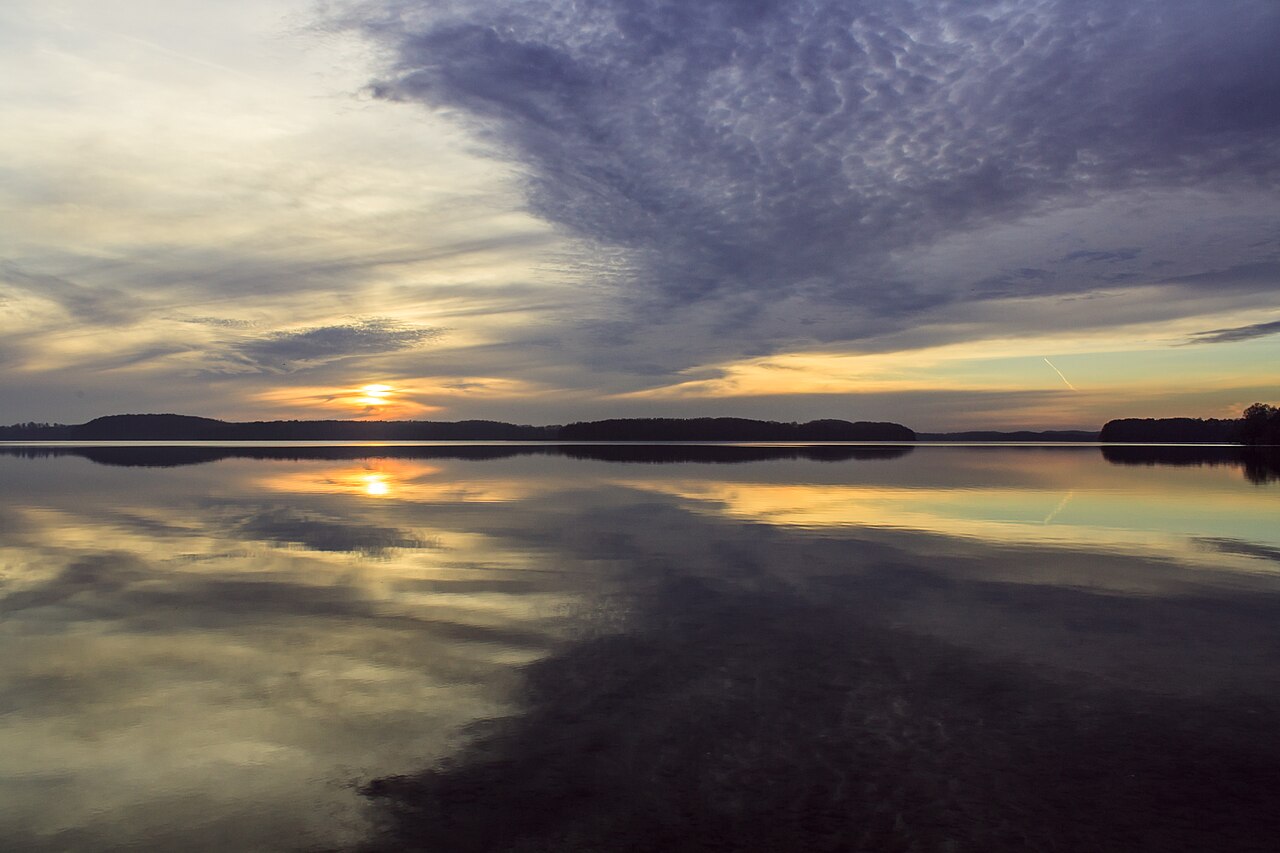
💡 Where to stay: Campsites on the lake give you direct access to the water at very sensible prices; the alternative is a guesthouse in Czaplinek with restaurants and services on the doorstep. See places to stay →
15. Karwowo, the secret spot where time stops
Karwowo is not a lake you reach by accident, but if you do, you will feel as though you have found somewhere you would rather not tell anyone about. It sits in a quiet zone near the Polish-German border, motorboats are banned, and the resulting stillness feels almost surreal in an age of permanent connectivity. Simple cabins right on the bank give the stay a proper camp-holiday flavour, the sort of thing people remember from childhood summers, and that feeling is really the whole appeal. No large resorts, no crowds, just nature, water and possibly a fishing rod. The nearest sizeable city is Szczecin, with its colourful townhouses, and from there it is an easy hop across into Germany.
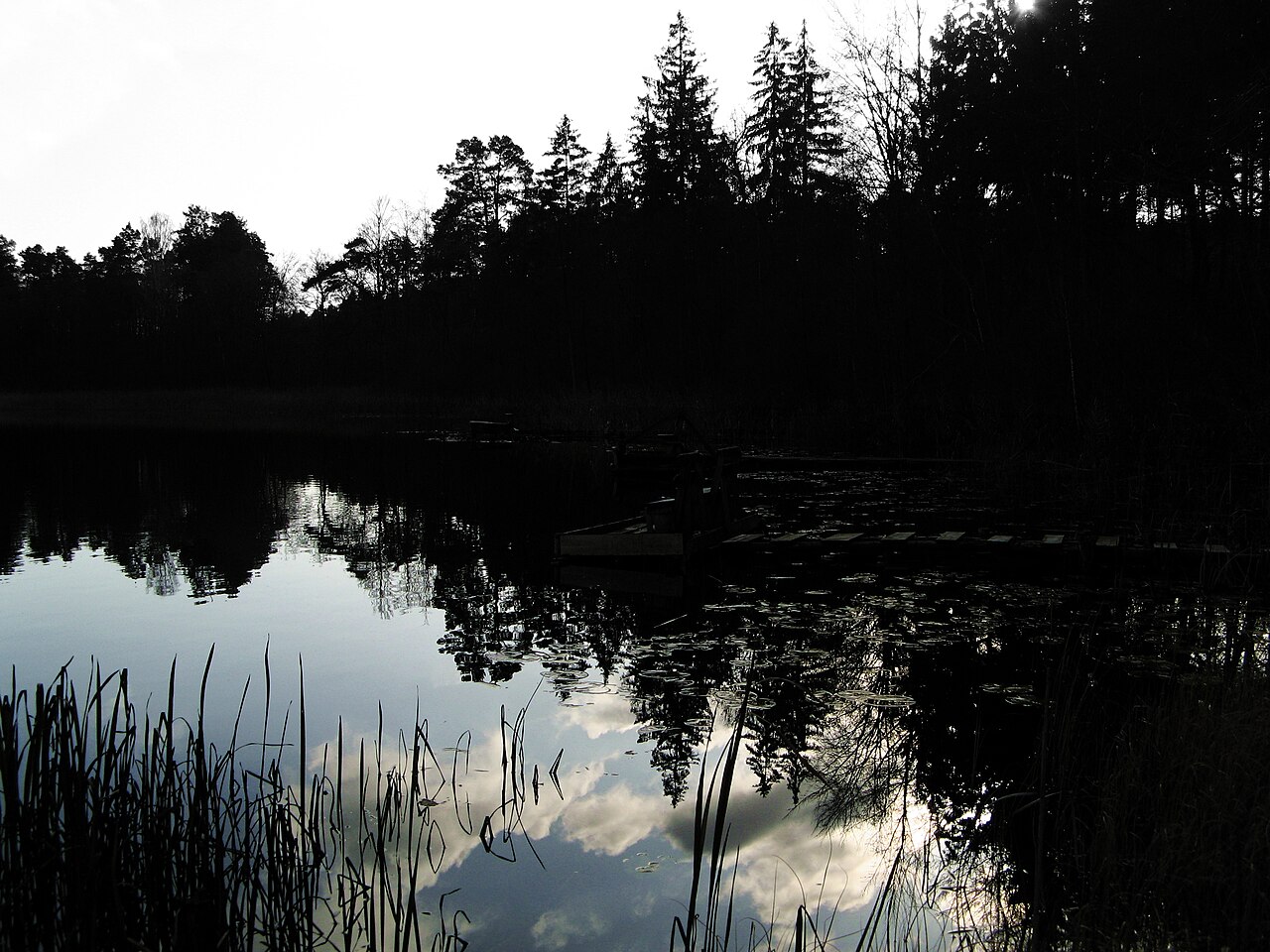
💡 Where to stay: The cabins on Lake Karwowo itself are limited in number, so book a long way ahead for the summer season or you will have made the drive for nothing. See places to stay →
Mountain lakes in the Polish Tatras
Poland’s southern border runs along the ridge of the Tatra mountains, and the lakes up here have nothing in common with the ones in the north. They are glacial tarns, cold, small and set beneath bare rock walls, and the walking is closer to Snowdonia than to the Broads. Kraków (KRK) is the airport, Zakopane the base town, and one rule matters more than any other: swimming in the Tatra tarns is not allowed.
16. Morskie Oko, the lake that stops the conversation
If we had to pick a single spot in the whole of Poland that will take your breath away, it would be Morskie Oko (“MOR-skyeh OH-koh”, meaning “eye of the sea”). The largest lake in the Tatras sits ringed by rocky peaks that mirror themselves perfectly on the surface on a still day, and the effect is magical enough that local legend gives it an underground connection to the sea. The lake is reached by an easy surfaced track that is genuinely accessible to almost anyone, so you can bring grandparents or small children along without a second thought. At the northern end stands a mountain hut with a restaurant serving a proper lunch with a view that many places would charge a fortune for. Swimming is strictly forbidden, the Tatra National Park does check, and the fines are not symbolic.
💡 Where to stay: The base for the Polish Tatras is Zakopane, which covers everything from traditional highland cottages and family guesthouses to modern spa hotels with a mountain view. See places to stay →
17. Czarny Staw pod Rysami, the tarn for anyone willing to climb higher
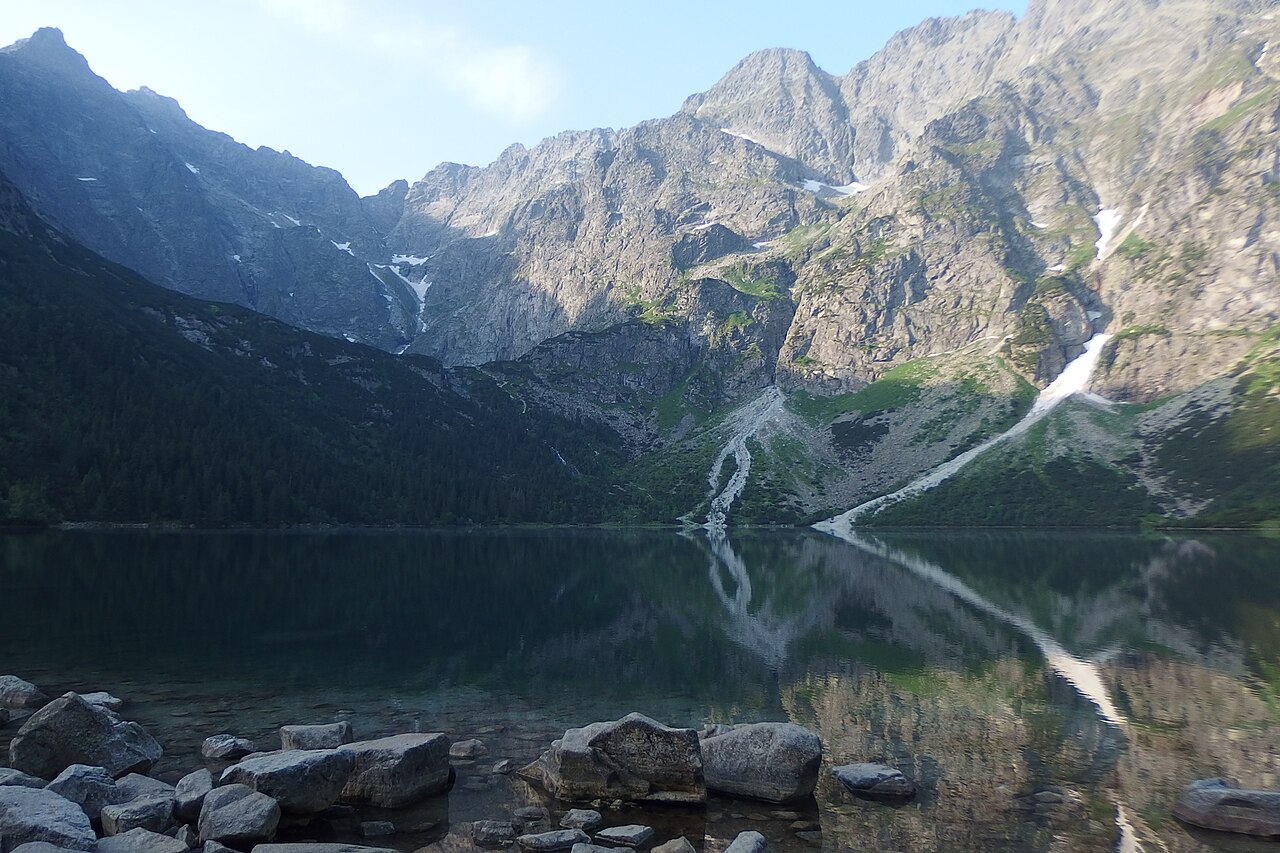
Few people realise that a short climb above famous Morskie Oko lies its darker, more secretive sibling. Czarny Staw (the Black Tarn) owes its name to algae and to the shadows of the surrounding rock faces, which give the surface a deep, saturated tone, and it is breathtaking in an entirely different way from the crystalline Morskie Oko. It lies on the route up Rysy, at 2,503 metres the highest mountain in Poland, so you pass it naturally on the way to the top. A stop on the boulders by the shore, a handful of nuts and the Tatra panorama all around is a combination that stays with you. Because it takes more effort to reach, this is where you get the mountain quiet that Morskie Oko no longer offers.
💡 Where to stay: As with Morskie Oko, the base is Zakopane. Book early, because in high season the popular guesthouses fill up fast. See places to stay →
Southern Poland: quarry water and hill country near Kraków
If you are flying into Kraków for the city and the Tatras, there is water within easy reach that most visitors never hear about. One is a flooded quarry inside the city limits; the other is a reservoir in the green hills of Lesser Poland.
18. Zakrzówek, the turquoise quarry ten minutes from Kraków’s Old Town
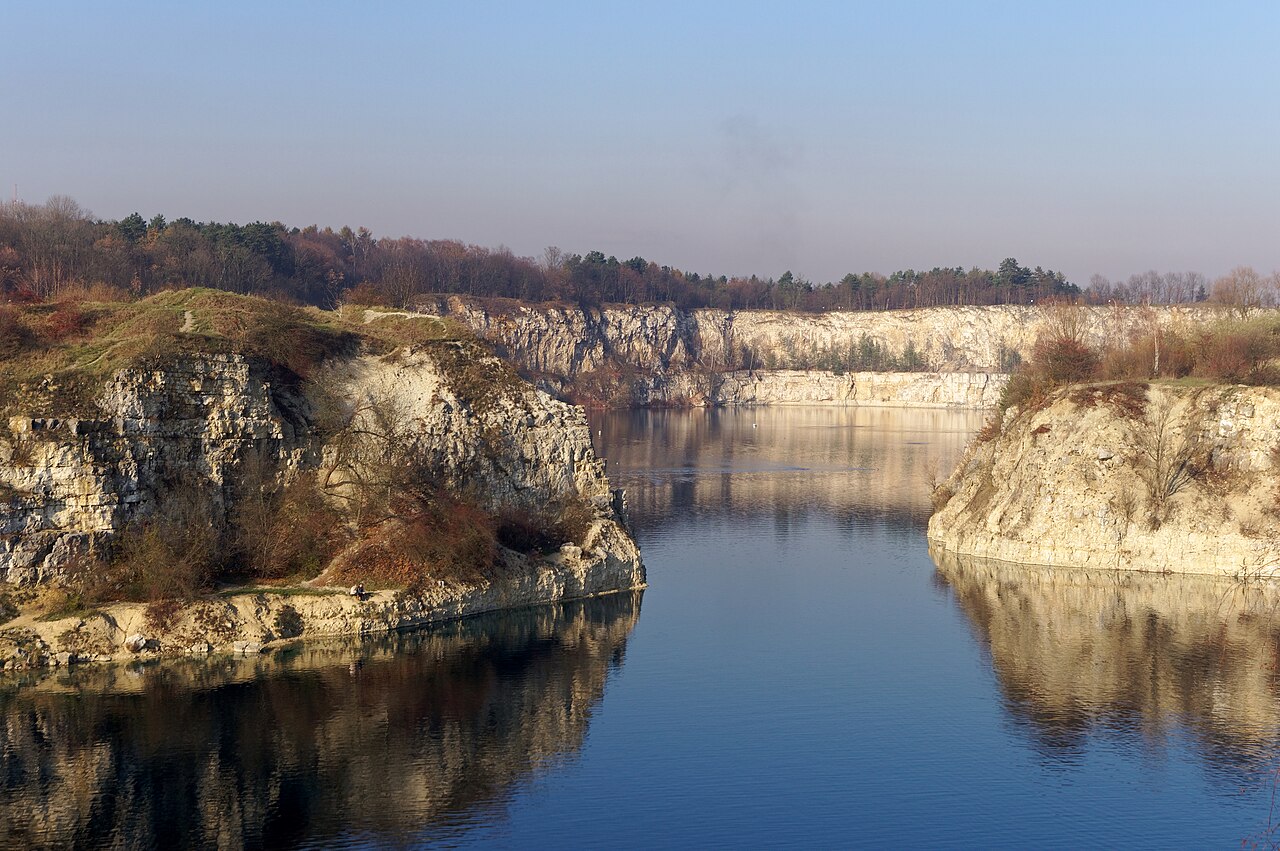
Zakrzówek (“za-KSHOO-vek”) surprises people in a way they were not expecting. The turquoise water of this flooded limestone quarry looks so improbable that you would take it for a shot from the Pacific, and yet you are only three kilometres from Kraków’s historic centre. Five interconnected pools sit in a setting of rock walls, with wooden walkways above the water, a climbing wall, table tennis and Wawel Castle on the skyline, a backdrop that comes into its own at sunset. Polish media sometimes file places like this under the “Polish Maldives” tag, though locals mostly just call it Zakrzówek. Either way, it is the easiest wow moment in the country: no long drive, and a day in Kraków builds itself around it.
💡 Where to stay: Stay in Kraków itself. The choice runs from hostels to luxury design hotels, prices are friendly and the bathing site is only a few minutes away. See places to stay →
19. Rożnów, castles, hills and thermal baths in one trip
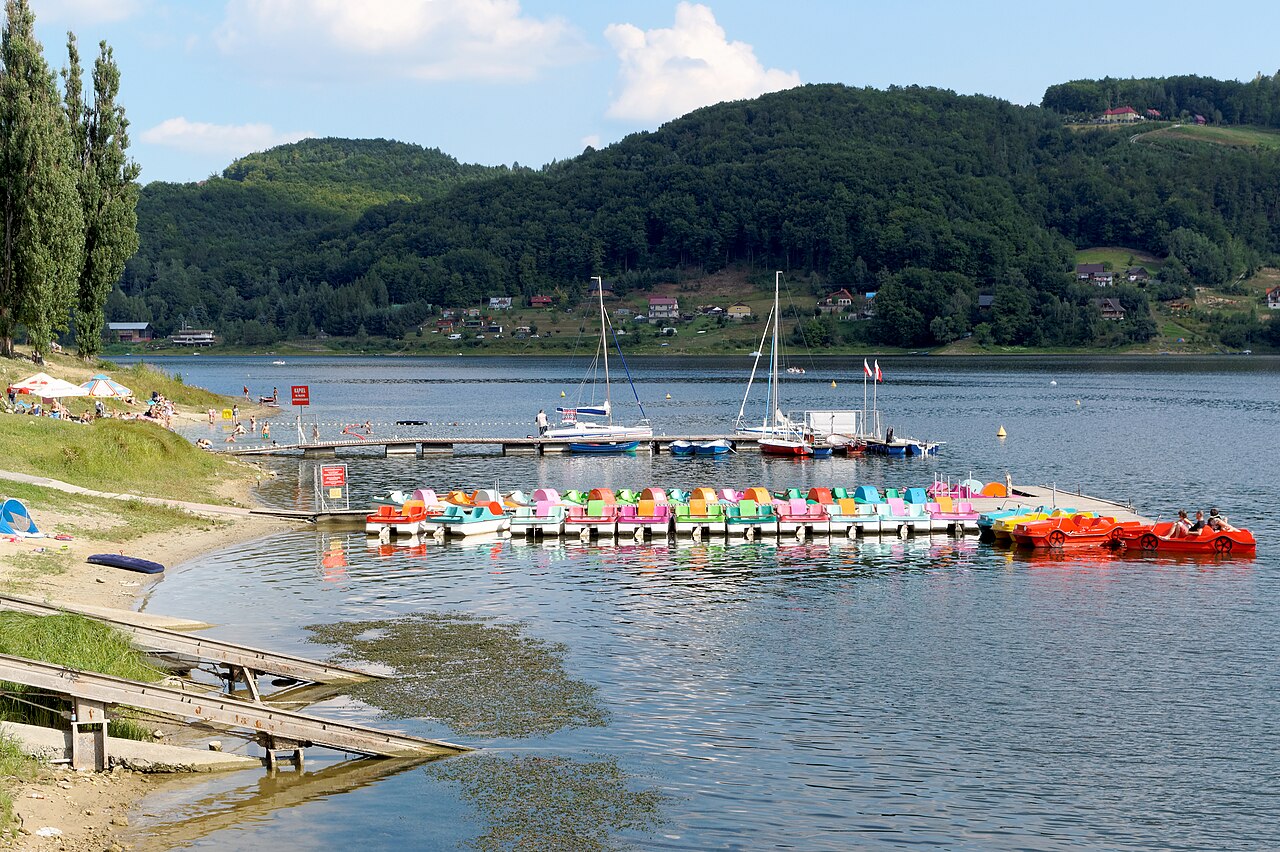
Lake Rożnów lies in hilly country in southern Poland, in Lesser Poland Voivodeship, and it feels nothing like Masuria: greener, more folded, with a gentler Central European charm. Nearby stand the castles of Tropsztyn and Czchów, a wooden milling hamlet from the early 20th century at Roztoka-Brzeziny, and castle ruins in Rożnów village itself. In summer the water is pleasantly warm and the nicest beach is at the resort of Gródek nad Dunajcem. Lesser Poland is also rich in thermal spas, so pairing a lake holiday with a few hours in hot mineral water is the obvious move here. Add views over green hills and you have a break people go home talking about.
💡 Where to stay: On Lake Rożnów we rate Hotel Heron ***** for five-star service, half board and a pool overlooking the lake, or the more intimate Lemon Resort SPA and NOI Resort close by. See places to stay →
On the Czech border: reservoirs in Silesia and Opole
The last five lakes sit in a band along Poland’s southern frontier with Czechia, within 20 to 30 minutes of the Czech Jeseníky mountains. They are reservoirs rather than natural lakes, and none of them will be the reason you booked a flight. But if you are combining Poland with Prague, driving up from Vienna or Budapest, or just want a swim on a long transfer day, this is the stretch to know about.
20. Lake Nyskie, the Polish Copacabana
If you want a good day by the water without spending it all in the car, Lake Nyskie is your best bet on this section of the border: it is 20 minutes from the Czech Jeseníky range. The reservoir spreads across more than 2,000 hectares and its fine sandy beaches have earned it the nickname “the Polish Copacabana”, and the most popular beach, Skorochów, will show you why. You swim under the eye of lifeguards, hire paddleboards, pedalos and rowing boats, and the children work off their energy on inflatables. Every August the lake hosts the popular Festival of Fire and Water, with a laser show and fireworks that draw thousands. The surroundings deliver on culture as well: historic Nysa, the fairy-tale castle at Moszna and the Jurassic park at Krasiejów all make good half-day outings if you stay longer.
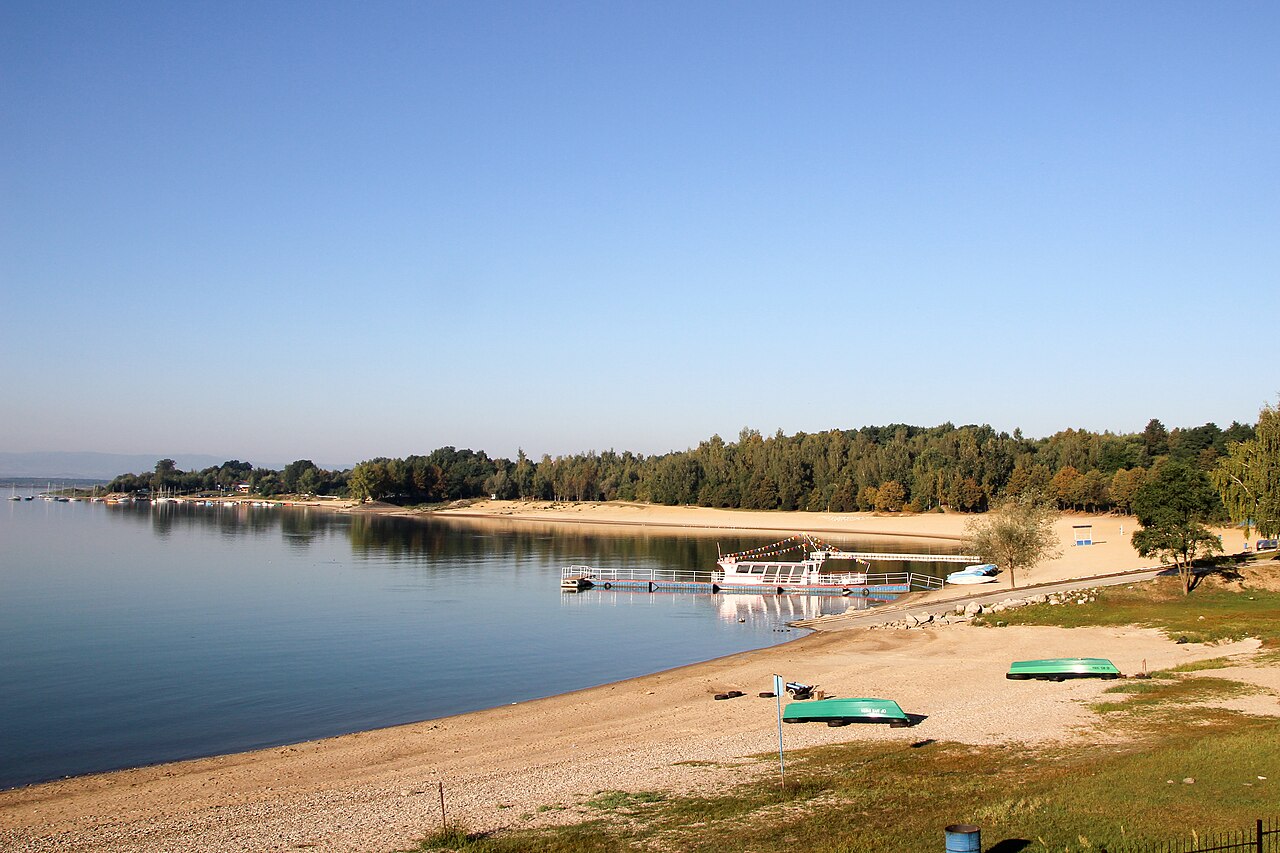
💡 Where to stay: Look for a hotel in Nysa itself or in nearby Głuchołazy, where four-star spa hotels come at excellent value and the lake is only a few minutes away by car. See places to stay →
21. Lake Otmuchowskie, fewer people, more peace
A few kilometres from Lake Nyskie lies the Otmuchów reservoir, which is noticeably calmer, and for many people that is its greatest asset. It is a haven for windsurfers, sailors and jet-ski riders who get to enjoy open water without a crowded beach behind them. Anglers do well here too: the water holds zander, pike, grass carp and eel, and a sport fishing permit can be arranged directly at the campsites. Around the lake there are cycle routes, good viewpoints and the historic town of Otmuchów with its castle, which is worth stopping for. Paired with Lake Nyskie, this reservoir makes an ideal weekend double act: beaches and bustle in the morning, quiet and a fishing rod in the afternoon.
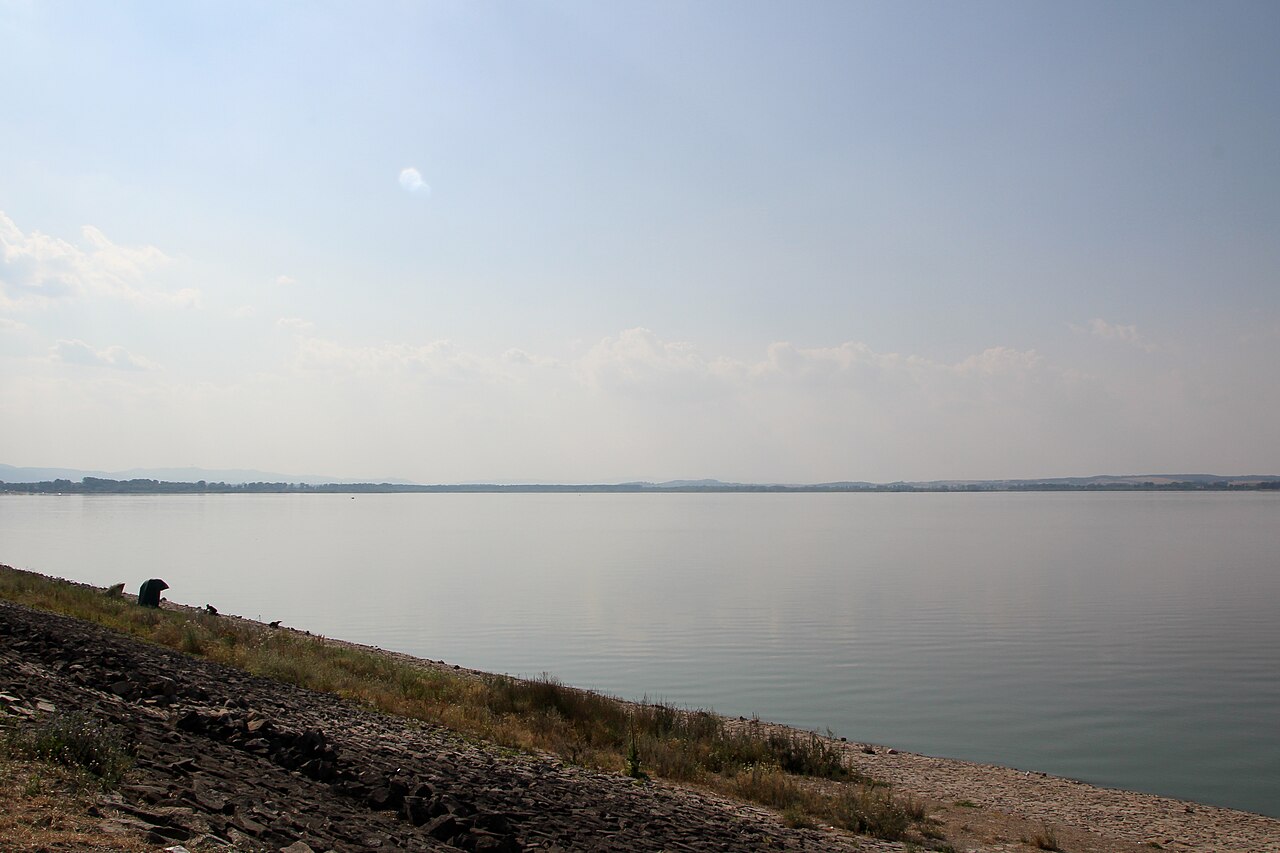
💡 Where to stay: We would look for a room right by Lake Nyskie, which puts both reservoirs within a few minutes’ drive. See places to stay →
22. Lake Paczkowskie, free, unfussy and empty
This one is for anyone who has had enough of packed beaches and entry fees. Lake Paczkowskie is free and comes with almost no facilities, which is sometimes exactly what is needed. It is made up of two basins: Topola is popular with anglers, while Kozielno offers pleasant swimming in a calm natural setting. Families spread a blanket on the grass, dogs get a happy swim and nobody hurries you along. It is the sort of place that reminds you how little a good day out actually requires. Round the trip off in Kłodzko, 30 minutes away by car, a historic town that is not called “Little Prague” for nothing.
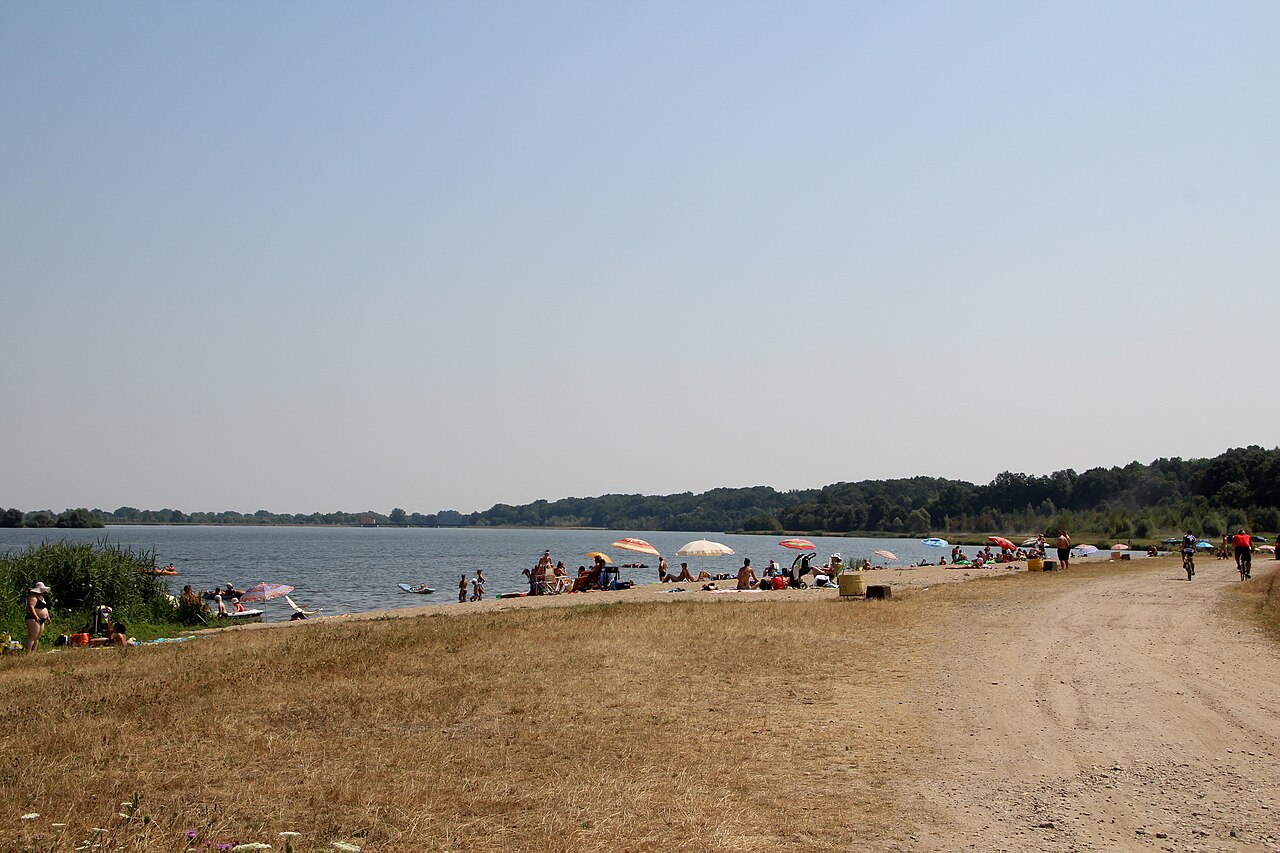
💡 Where to stay: Combine the trip with a room by Lake Nyskie or around Kłodzko. Both areas have a decent spread of guesthouses and hotels at friendly prices. See places to stay →
23. Lake Czerniańskie, beauty you walk round rather than swim in
This lake will not invite you in for a swim, but it offers something else: a walk, a view and the feeling of having reached somewhere genuinely special. The mountain reservoir in the Silesian Beskids supplies drinking water, so bathing is prohibited, but the path around the full perimeter pays you back with lovely views and real quiet. Above the lake stands the Presidential Castle, where you can have a coffee looking out over the water. It is only 40 minutes from the Czech border, which makes it a perfect afternoon outing on a driving day. Keener walkers carry on up Barania Góra, the highest peak of the range, on well-marked trails past the Rodło waterfall cascades.
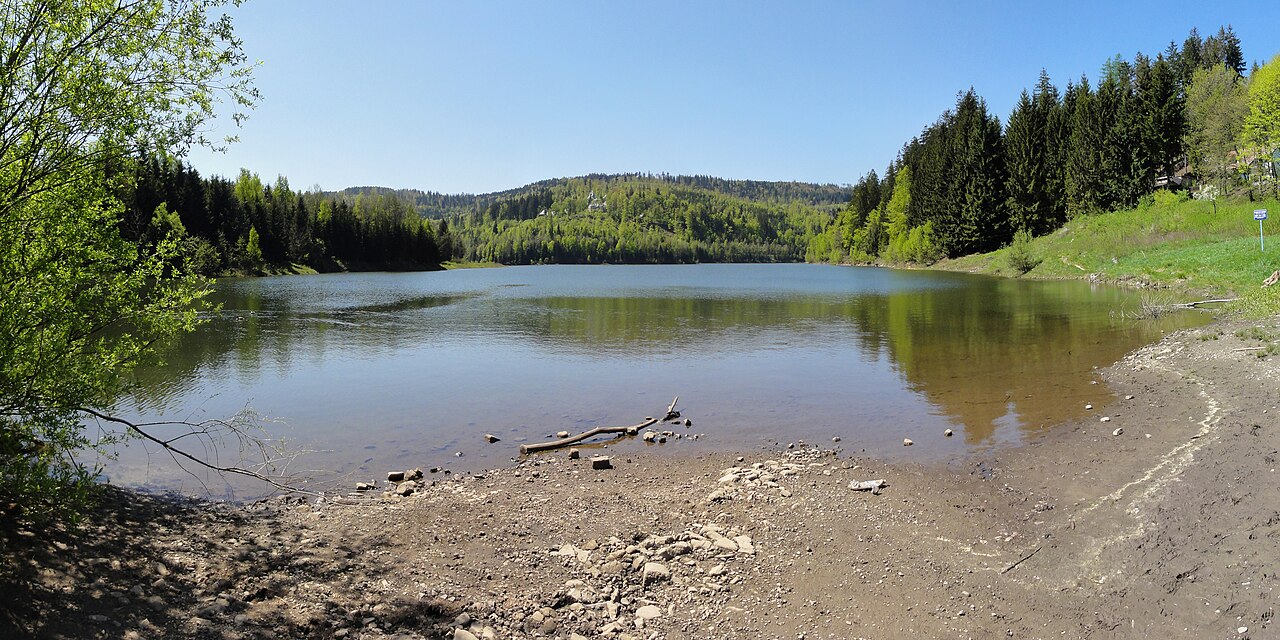
💡 Where to stay: The base for the lake is Wisła itself, a pleasant Polish mountain resort with everything from campsites to comfortable hotels. See places to stay →
24. Lake Bystrzyckie, forest, water and a castle on the skyline
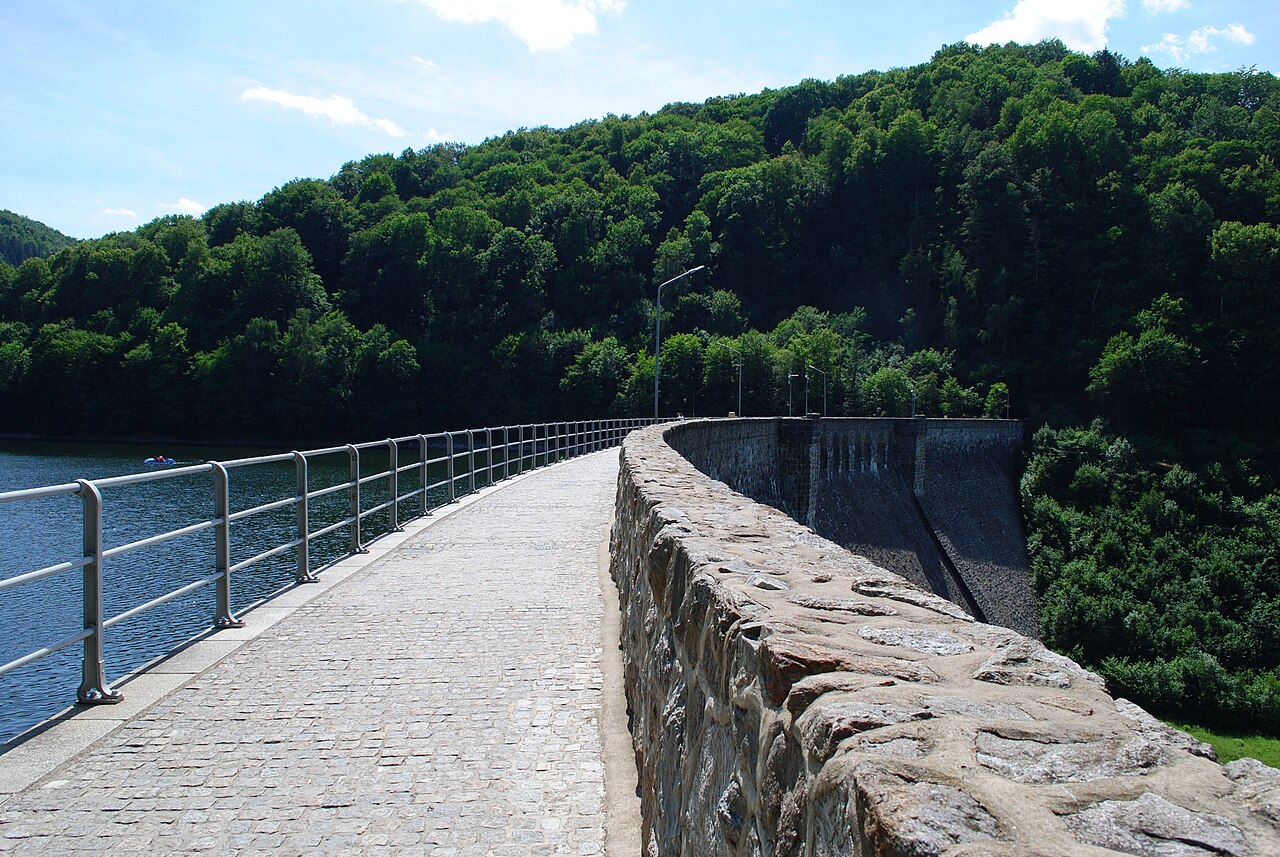
If you like the places where nature does not have to try and the beauty simply arrives, Bystrzyckie is for you. This pretty reservoir in the forests of Lower Silesia, close to the small town of Walim, surrounds you with quiet pine woods and clean water that is fine for swimming and fishing. Reflected on the surface is the silhouette of Grodno Castle on Choina hill; the walk up to it along a forest path is undemanding and the view over the surrounding nature reserve is worth the climb. It sits roughly an hour’s drive from the Czech border, which makes Bystrzyckie a good stop on the way deeper into Poland. Extend the trip to Wrocław, the city of the dwarf statues and one of the most beautiful town halls in the country, about an hour and 40 minutes away.
💡 Where to stay: Around Walim and Bystrzyca Kłodzka you will find mountain-style guesthouses at very agreeable prices, a quiet and authentic alternative to the crowded resorts. See places to stay →
Practical things to sort before you go
You pay in Polish złoty (PLN), and in the more remote areas and smaller campsites cash is still a necessity rather than a courtesy, because card terminals are not reliable everywhere. A card with no foreign transaction fees is worth having; Revolut is the usual choice and will save you the worst of the exchange spread. Pack insect repellent without fail, because Masurian forests are mosquito country in summer, especially at dawn and dusk. A waterproof will save your evening when a Polish thunderstorm arrives out of nowhere, trainers or walking shoes earn their place on any of the trails, and a basic first aid kit is standard on any trip.
The most comfortable way to travel around the lakelands is unquestionably your own or a hired car. Public transport at weekends is thin on the ground and the more remote lakes are effectively unreachable by bus.
💡 Driving in Poland: Cars are not charged on state-run motorway sections, so there is no vignette to buy in the way there is in Czechia, Slovakia or Austria. A handful of concession-operated stretches do still charge at toll gates, including the A1 between Gdańsk and Toruń, which is the exact road you take to the north, and the A4 between Katowice and Kraków. Rates and the extent of the charged sections change, so check the official e-TOLL and GDDKiA websites shortly before you travel, and keep a card and some cash within reach of the driver’s seat.
Where to go next
- The Baltic coast: Gdańsk, Sopot and Gdynia, the Hel Peninsula and the shifting dunes of Słowiński National Park
- Camping in Poland: campsites by the sea and by the lakes, and what the wild camping rules actually say
- The Polish Tatras: Zakopane, Morskie Oko and the walk up Rysy
- Kraków and Lesser Poland: the old town, Wieliczka salt mine and the thermal baths of the Podhale region
- Wrocław and Lower Silesia: the dwarf statues, the market square and the castles of the Kłodzko valley
Frequently asked questions about Poland’s lakes
Can you swim in Poland’s lakes?
Yes. The overwhelming majority of recreational lakes in Poland are monitored for water quality on a regular schedule. The Masurian lakes, Wigry and Hańcza are famous for how clean they are. At reservoirs such as Nyskie or Otmuchowskie the same hygiene rules apply as anywhere else in the EU, with marked bathing zones and lifeguards during the season. It is worth checking the current status on the relevant voivodeship website before you set off. The main exceptions are the Tatra tarns and drinking-water reservoirs such as Czerniańskie, where swimming is banned outright.
Which is the largest lake in Poland, and which is the deepest?
The largest is Śniardwy in Masuria, at 114 km² and more than 22 km from end to end, big enough to raise metre-high waves in a strong wind. The deepest is Hańcza in the far north-east, at over 108 metres, which is also why divers travel there specifically. Third-largest is Łebsko on the Baltic coast, at over 7,000 hectares.
Can you swim in Morskie Oko?
No. Swimming in Morskie Oko is strictly forbidden and the Tatra National Park does enforce it, with fines that are not symbolic. Enjoy the lake by looking at it, then carry on higher to Czarny Staw or up Rysy.
When is the best time to visit Poland’s lakes?
The main season runs from late May to the end of August, when the water sits at 22 to 25 °C. September gives the best balance of weather and peace: fewer visitors, lower accommodation prices and water that is still warm enough to swim in.
How do you get to the Masurian Lake District from Warsaw?
By car it is roughly 200 to 250 km north of the city, about three hours. By train you can reach Olsztyn and Ełk directly, with buses onward to towns such as Giżycko and Mikołajki. Beyond those towns, though, public transport thins out fast and at weekends it can disappear altogether, so hiring a car at the airport is the sensible plan for a lake holiday.
Are Poland’s lakes good for families with children?
Very much so. The best equipped for a family holiday are Lake Nyskie, Niegocin and Lake Malta in Poznań, with sandy beaches, a gentle entry into the water, lifeguards and proper facilities. The Tatra tarns are better suited to older and fitter children who can manage a longer walk.
Does Poland use the euro?
No. Poland is in the EU but not in the eurozone, and the currency is the Polish złoty (PLN). As a rough guide, 5 zł is about £1, so 100 zł comes to roughly £19.50. Pay by card where you can, but always decline the offer to be charged in pounds at the terminal or the cash machine, and carry some cash for campsites, car parks and lakeside kiosks.
Do you need travel insurance for a trip to Poland?
Yes, we would strongly recommend it. A UK GHIC, or an EHIC for EU visitors, covers state healthcare only. It will not cover cancellation, lost luggage or an injury from water sports, which is exactly the sort of thing that turns a good holiday into an expensive one.
The last word
Poland’s lakes are one of the great travel surprises of Central Europe, and with any luck they will stay a surprise for a while longer. They offer varied landscapes, clean water, affordable prices and far fewer people than the Alps or the crowded Adriatic. Whether you are drawn to the calm of the Masurian water at dusk, the hard mountain drama of the Tatra tarns or the improbable turquoise of a flooded quarry on the edge of Kraków, all it really takes is a swimming costume, a set of car keys and a free week. Poland’s lakes are waiting, and this is the year to stop putting them off.
Potřebujete pomoct s cestováním?
-
Ubytování 🏨
Vyberte si to nejlepší ubytování, ať už jste kdekoliv, přes Booking.com. -
Půjčení auta 🚗
Auto si snadno najdete přes Booking.com, kde máte často slevu díky ubytování, nebo Rentalcars.com, kde porovnáte nabídky většiny půjčoven. -
Zážitky 🎟️
Přes GetYourGuide.com si vyberete z nejrůznějších výletů i zážitků po celém světě, navíc se zrušením zdarma do 24 h předem.