Last updated 29.8.2026
Everyone seems to be going to Bali right now, but hardly anyone checks what the beaches are actually like before they book. The coast of this Indonesian island is far more varied than the postcards suggest. Bali has black beaches and white ones, waves for surfers and shin deep water for toddlers, beach clubs and stretches where you will not meet a soul. Which is exactly why it is easy to get it wrong: turn up in Uluwatu with small children, or in Sanur with a surfboard, and you will spend the holiday wishing you were somewhere else. This is our pick of the 25 best beaches in Bali, grouped by what you want from the sea, with notes on where the sand is white, where it is safe to swim and which stretches to skip in certain months.
The best beaches in Bali in short:
- Most beaches have dark volcanic sand. White sand is found mainly in the south and on the neighbouring islands.
- The south means waves, while the east coast and Nusa Dua have calm water with no shore break.
- With small children, head for Sanur or Nusa Dua, where the water is shallow and there are no waves.
- The best surf is at Uluwatu and Canggu, but it breaks over coral and it is for experienced surfers.
- Watch out for strong currents. They are common on the southern beaches and drowning tends to be the most frequent serious accident among tourists.
- In the rainy season the sea washes up rubbish, above all on the west coast.
- The most beautiful beaches are not on Bali itself, but on Nusa Penida and the Gili Islands.
Why the sand in Bali is dark
A lot of people do not realise that Bali is a volcanic island and that most of its beaches were formed from ground down volcanic rock. The sand is therefore not white but grey to black, which comes as a surprise to anyone who pictured Bali from Maldives photos. It also heats up in the sun to the point where you cannot walk on it barefoot.
White sand only occurs where the base material is coral: on the southern tip of the Bukit Peninsula, in Nusa Dua and on the surrounding islands.
The 25 best beaches in Bali, sorted by what you want
Wherever you base yourself in Bali, there will be a beach nearby. Not all of them suit everyone, though, and some have strong ocean currents.
Best beaches in Bali for families and calm swimming
1. Sanur Beach: A long beach on the east coast sheltered by a reef, so the water is shallow and waveless. A promenade runs along it that works fine with a pushchair. The best choice for families with small children.
2. Nusa Dua Beach: Groomed white sand beaches in front of the big resorts, calm water and full service. Safe, if a little sterile.
3. Jimbaran Beach: A wide bay with gentle waves and fish restaurants set out on the sand itself, where dinner is served as the sun goes down.
4. Pandawa Beach: A beach below a cliff face cut through with a road on the Bukit, with white sand and sheltered water. Access is easy, which in the south is not a given.
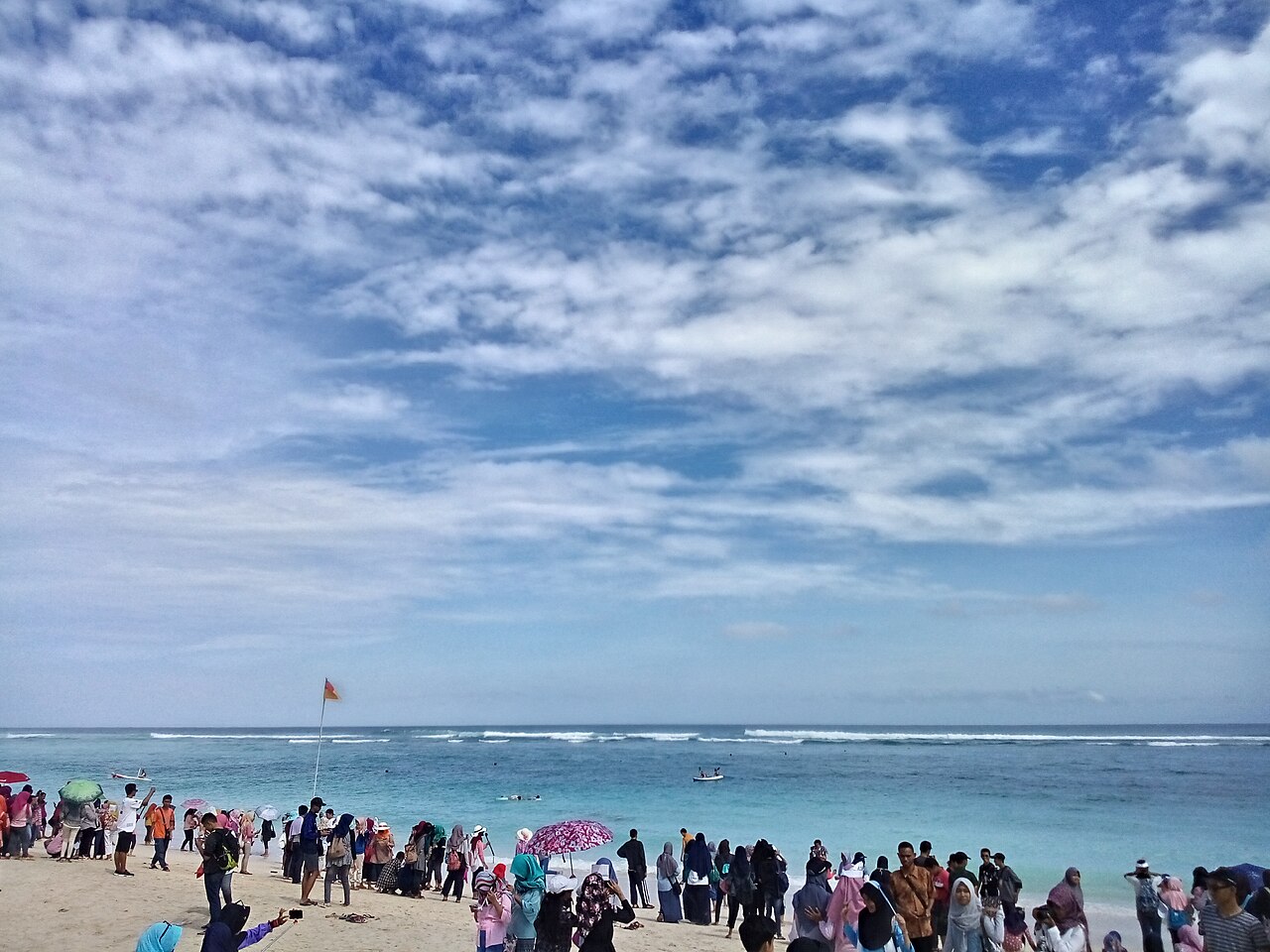
5. Geger Beach: A quiet beach next to Nusa Dua with a shallow lagoon the swell never reaches.
Where to stay near the family beaches
For families with small children the two best bases are Sanur and Nusa Dua. Both sit on the eastern side of southern Bali, where the reef breaks the waves, so the water is shallow and calm. Sanur feels more like a real place, with a five kilometre promenade, cafes and prices that are not resort prices. Nusa Dua is an enclosed hotel estate with manicured beaches and a security gate, but there is nothing beyond the hotel fence, so eating outside your hotel means getting in a car.
- Backpackers and families on a budget: a room in a guesthouse or homestay in Sanur from roughly 350,000 to 550,000 IDR (about £14 to £22) a night. Most have a pool and breakfast included.
- Mid range: a three star hotel or a villa with a pool in Sanur from roughly 800,000 to 1,500,000 IDR (about £32 to £60) a night.
- Beachfront resort: a five star resort right on the beach in Nusa Dua from roughly 2,500,000 to 5,000,000 IDR (about £100 to £200) a night. What you pay for is direct access to a private stretch of sand and the kids’ clubs.
Practical advice: in Sanur it pays to stay as close to the promenade as you can, because the Jalan Danau Tamblingan road is noisy and it is over ten minutes from there down to the sea. Compare current prices and availability through places to stay in Sanur and Nusa Dua.
Best surf beaches in Bali
So which beaches in Bali can you actually surf? The answer depends almost entirely on how long you have been standing on a board.
6. Uluwatu Beach: A legendary wave over a coral reef, one of the best in Asia and definitely not for beginners.
7. Padang Padang Beach: A short but perfect wave, plus a small beach in a cleft that you reach by squeezing through a gap in the rock.
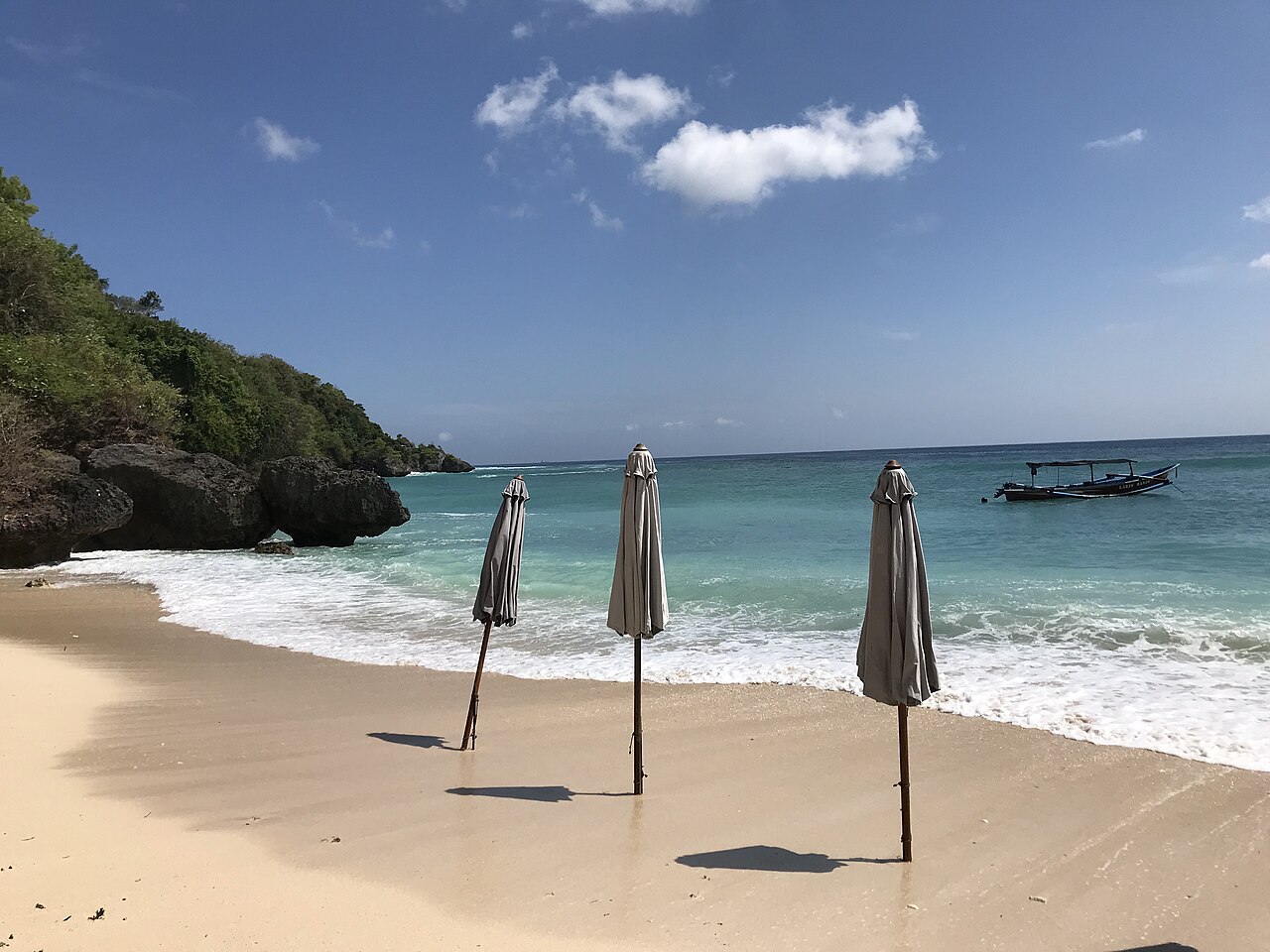
8. Bingin Beach: A cove beneath a steep slope with a long descent down to it. The wave is for experienced surfers and the atmosphere is the best on the Bukit.
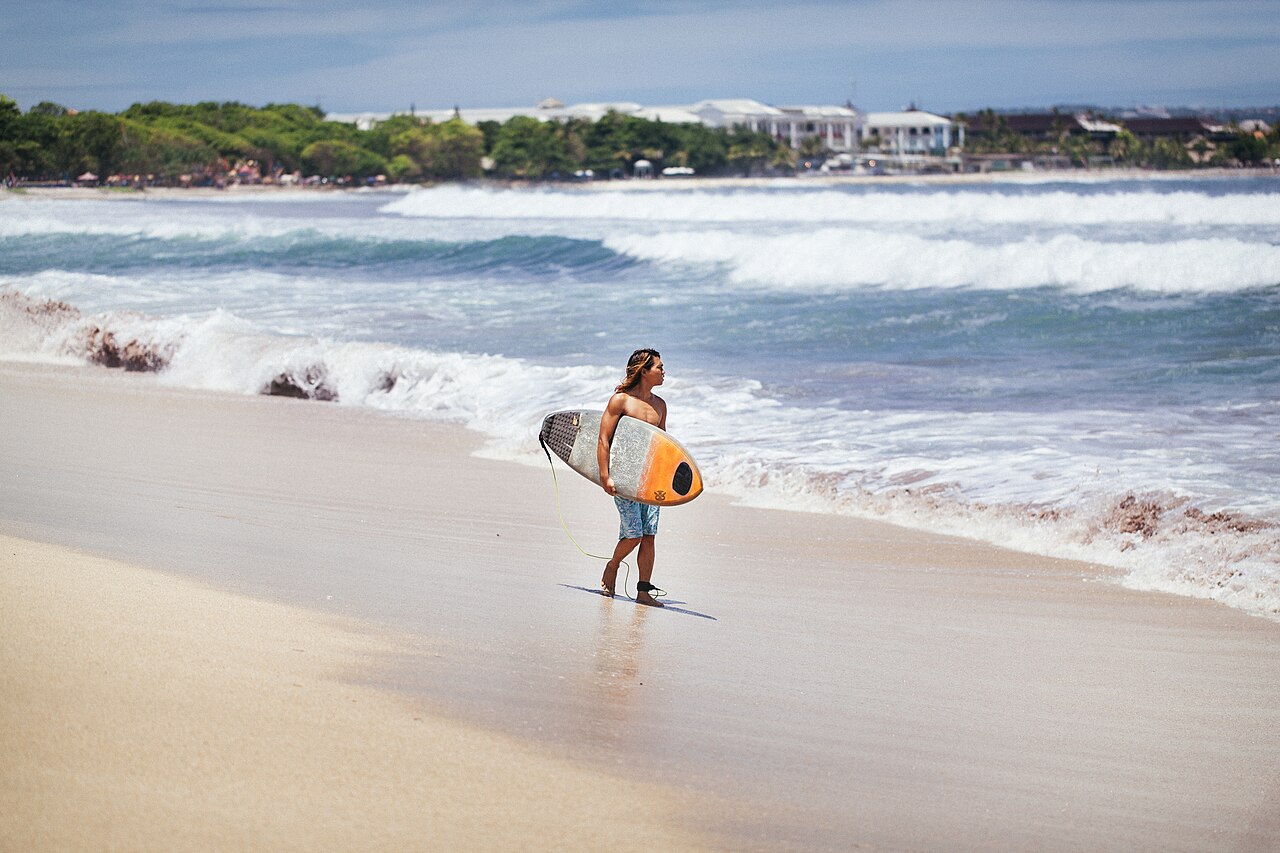
9. Canggu, Echo Beach and Batu Bolong: The centre of the surf scene, with black sand, cafes and beach clubs. Batu Bolong is the most beginner friendly of the three.
10. Kuta Beach: The easiest place to learn to surf: a sandy bottom, gentle waves and hundreds of instructors. Also the busiest beach on the island.
11. Medewi Beach: A long left hander on the west coast, far away from the crowds.
12. Keramas Beach: The east coast, with a wave that works during the rainy season, in other words when the west side is flat.
Where to stay near the surf beaches
The choice comes down to three areas. Canggu is the hub of surfing Bali these days: cafes, coworking spaces, long stay visitors and waves suited to improvers. Kuta and Legian are the cheapest and have the easiest waves for absolute beginners, but also the worst reputation thanks to the nightlife and the crowds. Uluwatu and the Bukit belong to experienced surfers, because the waves break over coral, and in exchange you get the best scenery on the island.
- Backpackers: a bed in a surf hostel in Canggu or Kuta from roughly 150,000 to 300,000 IDR (about £6 to £12) per person per night. In Canggu a pool is usually included and board hire is sorted round the corner.
- Mid range: a room in a villa with a pool in Canggu from roughly 700,000 to 1,400,000 IDR (about £28 to £55) a night. This is the best value for money anywhere on the island.
- Upper end: a clifftop resort in Uluwatu overlooking the waves from roughly 2,000,000 to 6,000,000 IDR (about £80 to £240) a night.
What to watch out for: in high season Canggu means sitting in traffic on a scooter, and the run to the airport can take an hour and a half. If you land late in the evening, spend the first night closer to the airport. Compare places to stay through accommodation in Canggu and Uluwatu.
Best beaches in Bali for diving and snorkelling
The underwater life around Bali is genuinely varied, and on several beaches a mask and fins are all the kit you need.
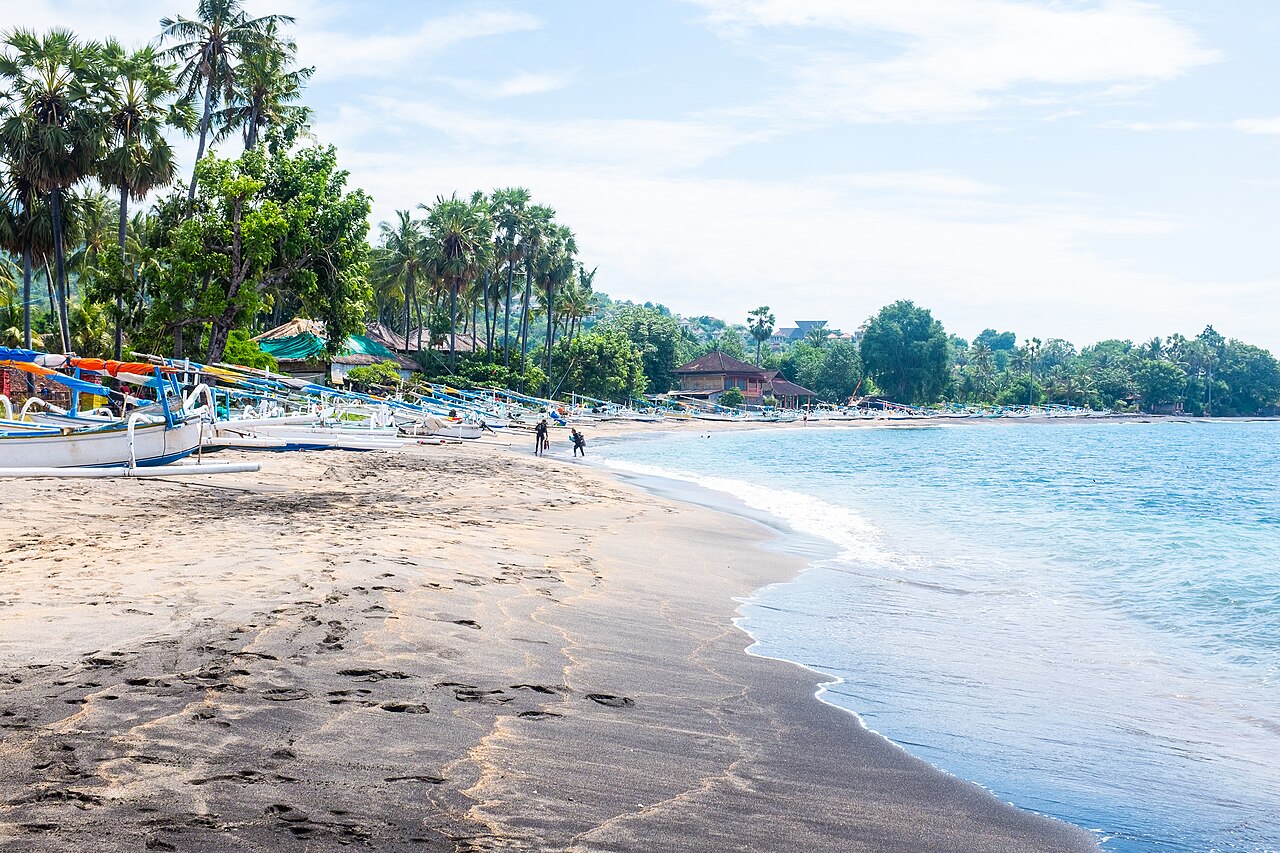
13. Amed Beach: Black beaches on the east coast with a calm sea and coral gardens right off the shore. The best balance of quiet and underwater life.
14. Tulamben Beach: Next door to Amed, the wreck of the USAT Liberty lies at twenty metres and can even be snorkelled from the shore. One of the best known dive sites in Asia.
15. Menjangan Beach: An island inside a national park in the north west, with the best visibility in Bali and a wall covered in coral.
16. Blue Lagoon Beach at Padangbai: A small cove with calm water and fish right by the shore, ideal for a first go at snorkelling.
Where to stay near the diving beaches
The diving areas sit at the opposite end of the island from the airport, so nobody comes here for a day trip. Amed is a chain of fishing villages strung along the coast with the widest choice of accommodation and dive centres, and you can snorkel straight off the beach. Tulamben is smaller and essentially exists because of the Liberty wreck lying thirty metres offshore. Padangbai is a port with ferries to Lombok, so it is noisier, but it is the easiest of the three to reach.
- Backpackers: a homestay in Amed from roughly 200,000 to 400,000 IDR (about £8 to £16) a night. Family run guesthouses here tend to be cheaper than hostels in the south.
- Mid range: a hotel with a pool and a view of Mount Agung from roughly 600,000 to 1,200,000 IDR (about £24 to £48) a night.
- Dive resorts: a room attached to a dive centre with a package of dives from roughly 1,500,000 IDR (about £60) a night. Worth it if you plan to dive several days in a row.
Practical advice: stay as close as you can to where you intend to dive. Amed stretches over seven kilometres and getting from one end to the other takes twenty minutes on a scooter along a hilly road. Compare places to stay through accommodation in Amed and Tulamben.
Quiet beaches in Bali
Sometimes all you want is a quiet spot to lie down and listen to the waves.
17. Nyang Nyang Beach: A long, empty beach on the Bukit reached by over five hundred steps. Which is precisely why nobody is here.
18. Suluban Beach: A beach entered through a cave in the rock that disappears under water at high tide. The most photogenic spot on the south coast.
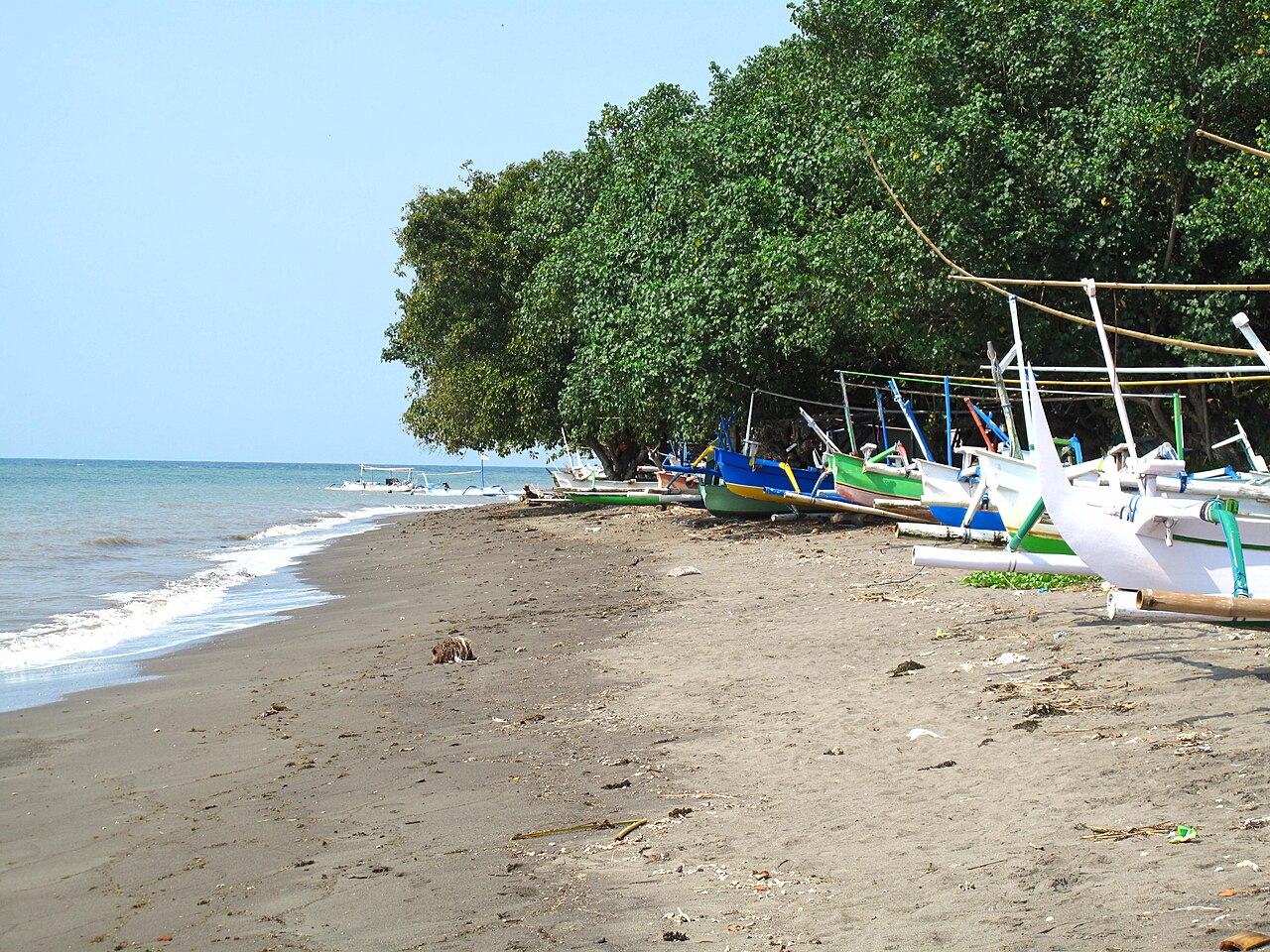
19. Lovina Beach: Black beaches in the north, a calm sea and early morning boat trips out to see dolphins. The least touristy part of the island.
20. Balangan Beach: A cove under a cliff with white sand and simple bars on the slope above. A compromise between the wildness of Bingin and the comfort of Pandawa.
The most beautiful beaches are not in Bali at all. Kelingking, Diamond Beach and Crystal Bay are on Nusa Penida, and the whitest sand, with turtles, is on the Gili Islands. We compare the differences between them in our guide to the islands near Bali.
21. Seminyak Beach: A wide, dark beach known for its sunsets and its row of beach clubs. The waves are stronger here than in Sanur and the currents are treacherous, so people come for a drink and the sunset rather than a swim. The liveliest part of the south coast after Kuta.
22. Melasti Beach: A beach below a tall white limestone cliff, reached by a road carved into the rock. Wide, with fine sand and a shallow entry, so it works for families too. Come in the morning, as it fills up in the afternoon.
23. Green Bowl Beach: A small cove at the southern tip of the peninsula, reached by around three hundred steps. Which is why it is usually quiet. At low tide caves open up in the rock, at high tide there is almost no beach left, so check the tide times before you go.
24. Gunung Payung Beach: An even more remote cove not far from Green Bowl, known for a long time only to locals. Access is down a steep path and steps, but the view of the cliffs has not a single building in it.
25. Dreamland Beach: Once a wild beach, now surrounded by a resort and a golf complex. The waves are strong and suited to more experienced surfers, but the sand is pale and the facilities complete. A good choice if you want comfort without the crowds of Kuta.
Where to stay near the quiet and remote beaches
This category splits in two. The remote beaches on the Bukit Peninsula, meaning Nyang Nyang, Suluban, Green Bowl and Gunung Payung, have no accommodation of their own, so people stay in Uluwatu or Ungasan and travel out to them. Lovina in the north, on the other hand, is a self contained area with its own hotels, where people come for several nights for the quiet and the early morning dolphin trips.
- Backpackers: a guesthouse in Lovina from roughly 200,000 to 400,000 IDR (about £8 to £16) a night, and in Ungasan on the Bukit from 300,000 IDR (about £12).
- Mid range: a hotel or a villa with a pool in Lovina from roughly 600,000 to 1,100,000 IDR (about £24 to £44) a night. The north is markedly cheaper than the south of the island.
- Upper end: a clifftop villa with a pool in Ungasan or a boutique resort in Lovina from roughly 1,800,000 to 4,000,000 IDR (about £72 to £160) a night.
What to watch out for: at the remote beaches on the Bukit, count on several hundred steps down to the water and on there being nothing at all once it gets dark. Lovina is a three hour drive from the airport across the mountains, so it is not somewhere you go for one night. Compare places to stay through accommodation in Lovina and on the Bukit.
Is it safe to swim in Bali? Beaches and sea safety
This is the part most guides skim over, and it is the most important one.
- Ocean currents: They are common on the southern beaches and are the most frequent cause of serious accidents among tourists. If a current is carrying you away from the shore, do not swim against it, but parallel to the coast until you are out of it.
- Lifeguards and flags: They operate on the main beaches and nowhere else. A red flag is a ban, not a suggestion.
- Coral bottom: At the surf beaches you do not go into the water barefoot, because coral cuts heal badly in the tropics.
- Sea urchins and sea snakes: Water shoes are worth having even where the bottom looks smooth.
- Do not underestimate the swell at the reefs: A wave that looks manageable from the beach looks different from the water.
When Bali beaches are at their best
During the dry season from April to October the sea is calmer, the visibility is better and there is less debris on the beaches. In the rainy season the sea washes rubbish up onto the west coast, which is most noticeable in Kuta and Seminyak, while the east and north of the island stay clean.
Where to stay by beach: the quick version
The detail and the prices are with each category above. This is the summary that fits on one screen:
| What you are after | Where to stay | Why |
|---|---|---|
| Family with small children | Sanur, Nusa Dua | Shallow water behind the reef, no waves, promenade |
| First time on a board | Kuta, Legian | Sandy bottom, cheapest lessons, easiest waves |
| Surf and cafes | Canggu | Best value villas, ready made community |
| Advanced surf and scenery | Uluwatu, Bukit | Waves over coral, cliffs, sunsets |
| Diving | Amed, Tulamben | Reef access from the beach, the Liberty wreck, quiet |
| Quiet and low prices | Lovina | North coast with no waves and no crowds, dolphins at dawn |
| Last night before flying home | Jimbaran, Kuta | Under 20 minutes to the airport |
If it is your first trip and you want to see more than one part of the island, split the stay between two bases: one in the south for the beaches and one in the east or north for the quiet. Getting around Bali takes twice as long as the map suggests.
Getting there and getting between beaches. Flights land at Denpasar (DPS) in the south of the island, and from Europe that means at least one connection, usually in the Gulf or in Asia, so plan the first night close to the airport. On the island itself you choose between a scooter, which is cheap and by far the fastest in traffic but demands confidence on unfamiliar roads, and a car with a driver or a ride hailing app, which makes more sense for longer transfers, for luggage and for anyone travelling with children.
Frequently asked questions about beaches in Bali
Does Bali have white sand beaches?Only in places. Most beaches have dark volcanic sand, because Bali is a volcanic island. White sand is found on the southern tip of the Bukit Peninsula, in Nusa Dua and above all on the surrounding islands, meaning Nusa Penida and the Gilis.
Which beach in Bali is best with children?Sanur, because it is sheltered by a reef, so the water is shallow and waveless, and a promenade runs along the beach that works even with a pushchair. The second good option is Nusa Dua, with its groomed beaches and calm water.
Where can you learn to surf in Bali?In Kuta or at Batu Bolong in Canggu, where the bottom is sand and the waves are gentler. Uluwatu, Padang Padang and Bingin are waves over a coral reef and are meant for experienced surfers.
Is it safe to swim in Bali?On sheltered beaches such as Sanur or Nusa Dua, yes. On the south coast rip currents are common and tend to be the most frequent cause of serious accidents among tourists. If a current is carrying you away from the shore, do not swim against it but parallel to the coast.
Why is there rubbish on the beach in Bali?In the rainy season from November to March the sea washes debris up onto the west coast, most of all in Kuta and Seminyak. The east and north of the island stay clean, as does the whole island through the dry season.
Where is the best snorkelling in Bali?In Amed and Tulamben on the east coast, where the coral starts right by the shore and the wreck of the USAT Liberty lies at twenty metres. The best visibility is around Menjangan island in the north west.
Do you need water shoes in Bali?On the surf and coral beaches, yes. You do not go into the water barefoot there, because coral cuts heal badly in the tropics and there are sea urchins as well. On sandy beaches such as Sanur you will not need them.
When are the beaches in Bali at their best?In the dry season from April to October, when the sea is calmer, the underwater visibility is better and there is less debris on the beaches.
Potřebujete pomoct s cestováním?
-
Ubytování 🏨
Vyberte si to nejlepší ubytování, ať už jste kdekoliv, přes Booking.com. -
Půjčení auta 🚗
Auto si snadno najdete přes Booking.com, kde máte často slevu díky ubytování, nebo Rentalcars.com, kde porovnáte nabídky většiny půjčoven. -
Zážitky 🎟️
Přes GetYourGuide.com si vyberete z nejrůznějších výletů i zážitků po celém světě, navíc se zrušením zdarma do 24 h předem.