Last updated 2.10.2026
Clifftop temples, rice terraces run by a water system that is centuries old, volcanoes people climb in the dark, and beaches that work for surfers and for families with small children. Bali is a small island that behaves like an entire country, which is exactly why you can spend a fortnight here and still miss half of it. We have put together 40 ideas for what to see in Bali, sorted by area, with itineraries, costs and transport, plus the one thing most guidebooks leave out: the island will wear you down if you divide it up badly.
In short: what to see in Bali
- The 40 places in this article are grouped by area, because moving around the island eats far more time than the map promises.
- Bali covers 5,590 km² and around 4.5 million people live here. It is a small island carrying the sights of a much bigger one.
- 86 % of the population is Hindu, which makes Bali an exception in mostly Muslim Indonesia and explains why there is a temple on nearly every corner.
- The highest mountain is Gunung Agung, 3,031 metres. The better known climb is the lower Batur, which people walk up for sunrise.
- The rice terraces and the subak system have been UNESCO listed since 6 July 2012.
- The best bases are Ubud and the south of the island. Ubud for culture and the interior, Canggu and Uluwatu for beaches and surf.
- Do not underestimate the transfers. Fifty kilometres can mean two hours of driving, because the roads are narrow and full of scooters.
How to divide Bali up so the driving does not ruin your holiday
This is the most important paragraph in the whole article. Bali looks tiny on a map, but the roads are narrow, twisting and busy, so your average speed works out at somewhere around thirty kilometres an hour. Driving from Ubud to the north coast takes half a day, even though it looks like nothing on the map.
The sensible approach is to split the island into two or three bases and run day trips out of each one:
- Ubud and the centre for temples, rice terraces, waterfalls and jungle.
- The south, meaning Canggu, Seminyak or Uluwatu, for beaches, surf, beach clubs and sunsets.
- The north or the east, if you have days to spare and want quiet, diving and fewer tourists.
Anyone who tries to stay in one place and drive the whole island will spend their holiday in a car.
What to see in Bali: 40 places by area
Want to see the whole island and every place worth stopping at? Then you will need a bit more time than a standard week off. We came here without a return ticket on purpose, simply so we could stay for as long as we felt like it. So what is there to see in Bali, and what stayed with us the most?
Ubud and the centre of the island
Everyone who is not glued to a beach ends up in Ubud. Yes, there are plenty of tourists, and yes, it is still brilliant. The surrounding countryside is full of rice terraces, temples and community projects.
1. Ubud town centre. The spiritual and cultural heart of the island, where traditional temples sit next door to coffee shops and yoga studios. It also makes the best base for the whole interior.
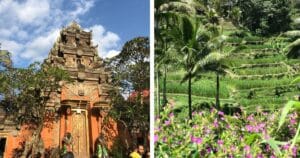
2. Monkey Forest. A temple forest in the middle of Ubud where macaques live among moss covered statues. They are bold and they take anything you are holding, so put your sunglasses and phone away.
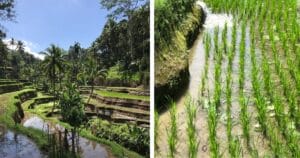
3. Tegallalang rice terraces. The most photographed terraces on the island, just above Ubud. Come early in the morning, because after nine there is a queue even to get onto the walkway.
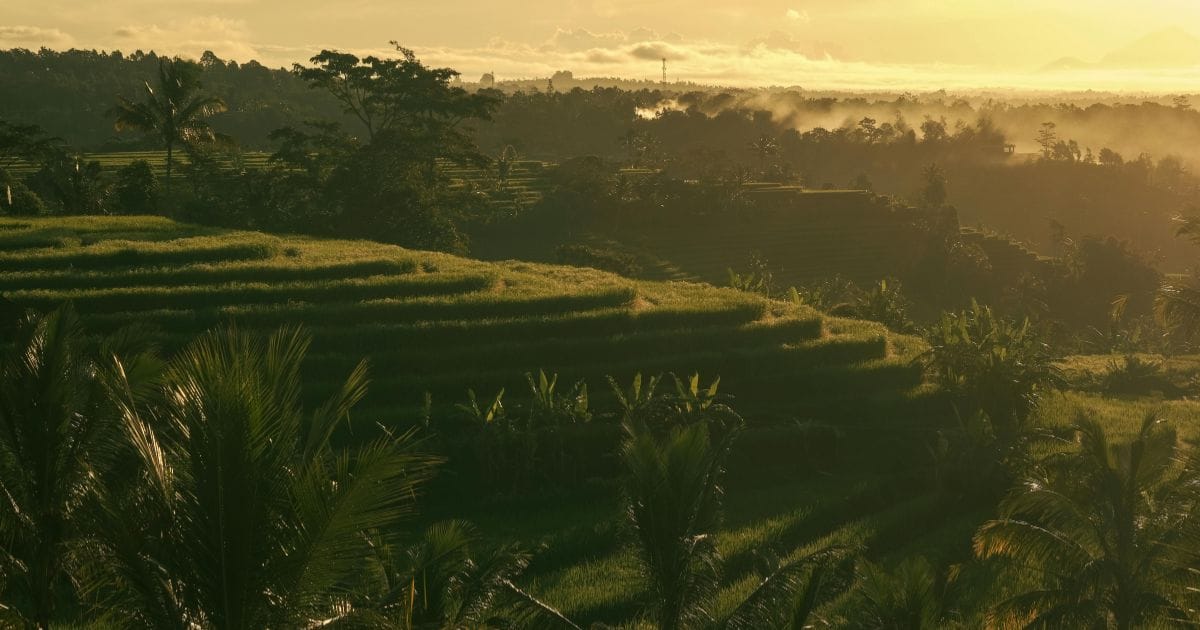
4. Jatiluwih rice terraces. Considerably bigger and calmer terraces west of Ubud, part of the site inscribed on the UNESCO list on 6 July 2012. This is a landscape shaped by subak, the traditional way of managing water, in which groups of fifty to four hundred farmers jointly run the irrigation and synchronise planting. It is not just a nice view, it is a working system that is centuries old.
5. Tegenungan waterfall. The easiest waterfall to reach from Ubud and one you can swim under. Which is also why it has the biggest crowds.
6. Tibumana, Kanto Lampo and Tukad Cepung waterfalls. Three smaller falls in the area around Ubud. Tukad Cepung is the odd one out: it drops into a cave, and in the late morning a shaft of light comes through the opening above.
7. Sekumpul. The most beautiful waterfall on the island, up in the north, reached by a demanding descent and climb on steps. A half day trip that pays you back.
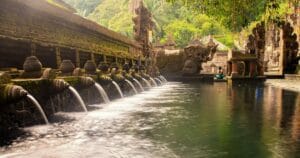
8. Tirta Empul temple. Sacred springs where Balinese people bathe for purification under a row of stone spouts. Visitors can join the ritual, but there are rules about clothing and about the order you follow.
9. Goa Gajah, the Elephant Cave. An archaeological site whose cave entrance is carved into the face of a demon.
10. Gunung Kawi temple. Rock cut shrines carved into the walls of a valley, reached by walking down between rice fields. One of the calmest sacred places on the island.
11. Coffee plantations and luwak. Coffee and tea tastings are everywhere in the interior. If the way civets are kept for luwak coffee bothers you, ask in advance whether the animals are caged.
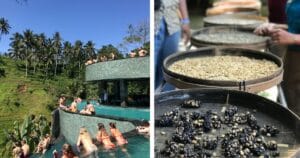
12. Courses and workshops in Ubud. Cooking, batik, painting, woodcarving, yoga. Ubud is the sort of place where you can happily spend a whole day learning something.
We wrote about the town and its surroundings in more detail in our separate guide to Ubud.
Volcanoes and mountains
Honestly, the volcanoes and the mountains were the part of Bali we looked forward to the most. It was absolutely brilliant and we would love to come back.
13. Gunung Batur. The most visited volcano on the island. You set off at two in the morning to be at the top for first light. The climb is short, but steep, and cold at night.
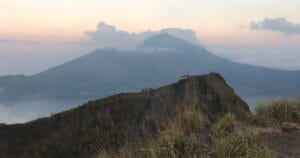
14. Gunung Agung. At 3,031 metres the highest mountain in Bali and the most sacred place on the island at the same time. The climb is far harder than Batur and you need a guide. It is an active volcano, so ascents are closed when the situation calls for it.
15. Lake Batur. The crater lake below the volcano of the same name, part of the UNESCO listed landscape. There are hot springs on the shore, which is where people head after coming down.
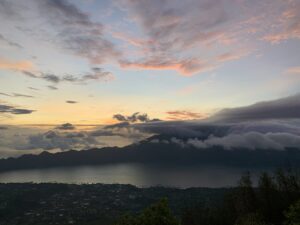
16. Lakes Bratan, Buyan and Tamblingan. Three lakes in the mountains north of Ubud, noticeably cooler and often wrapped in mist. It feels far more like an upland lake district than the tropics.
17. Munduk and around. A mountain village among lakes and waterfalls, and the best base for anyone who wants to get away from the beaches completely.
Tip: pack a fleece or a light jacket. At two in the morning on Batur, and in the hills around Munduk and the lakes, it is genuinely cold, and almost nobody arrives in Bali expecting that.
Temples worth the detour
There is a temple on almost every corner in Bali, but a handful of them are in a different league.
18. Tanah Lot. A temple on a rock that the sea surrounds at high tide. The most photographed spot in Bali and the most crowded one at sunset. Arrive in the afternoon rather than at the last minute.
19. Ulun Danu Beratan. The temple on the shore of Lake Bratan, which looks as if it is floating when the water is high. This is the one you know from Indonesian banknotes.
20. Pura Ulun Danu Batur. A temple above the Batur crater lake, part of the UNESCO inscription.
21. Pura Taman Ayun. A royal temple surrounded by a moat, also part of the UNESCO site. Peaceful, and with hardly anyone there.
22. Pura Luhur Uluwatu. The clifftop temple on the southern tip of the island, where the kecak dance is performed at sunset.
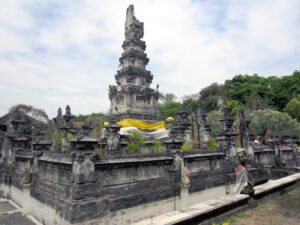
23. Lempuyang and the Gates of Heaven. A temple in the east with the most famous photograph in Bali, where the mountain appears reflected between the two halves of the gate. The reflection is actually a piece of glass held under the lens by the photographer, and the wait can run to several hours.
Beaches in Bali and the south of the island
24. Canggu. The hub for surfers and remote workers, with beach clubs, coffee shops and black volcanic sand.
25. Seminyak and Kuta. The busiest part of the island, with a long beach, shops and nightlife. Kuta is the cheapest and the loudest, Seminyak the pricier and tidier of the two.
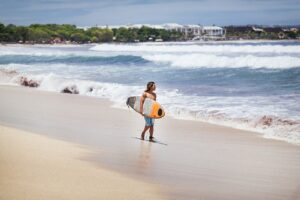
26. Uluwatu and its beaches. Coves below the cliffs, reached down flights of steps, and the best surf on the island.
27. Nusa Dua and Sanur. The quieter, family side of the island: shallow water, groomed beaches, no waves and no noise.
28. Jimbaran and dinner on the sand. Fish restaurants set up directly on the beach, where you eat as the sun goes down. Touristy, and it works anyway.
29. Amed and Tulamben in the east. Black beaches, quiet, and the best diving in Bali. The wreck of the USAT Liberty lies in twenty metres of water off Tulamben and you can even snorkel it.
30. Lovina in the north. Calm black sand beaches where boats head out early in the morning to look for dolphins.
There is a full rundown in our separate guide to the beaches of Bali.
Islands near Bali
It will not surprise you that Indonesia is full of islands, and there are plenty around Bali that make for a good boat trip.
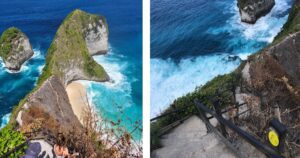
31. Nusa Penida. A wild island of cliffs, visited mainly for Kelingking Beach and Angel’s Billabong. The roads are poor and the drives are long, so a single day is not enough.
32. Nusa Lembongan and Ceningan. Smaller, quieter and much easier to get around than Penida, and joined by the yellow bridge.
33. The Gili Islands. Three car free islets off Lombok, where you get about by bike or in a pony cart. The best snorkelling with turtles.
34. Lombok. The neighbouring island, with Mount Rinjani and emptier beaches, reachable by fast boat.
We compare the differences between them in our guide to the islands near Bali.
Experiences and things to do in Bali
35. Kecak at sunset. A traditional dance with a male chorus instead of instruments, best seen at Uluwatu with the sea behind it.
36. Nyepi, the day of silence. Balinese New Year, when everything on the island stops: the airport closes, lights stay off and nobody goes outside, tourists in hotels included. The evening before, processions carry giant ogoh-ogoh figures through the streets. It is the strongest experience you can have in Bali, but plan your flights with room to spare.
37. Snorkelling and diving. The best spots are Menjangan in the north west, Amed and Tulamben in the east, and the waters around Nusa Penida, where in the right season you can meet manta rays.

38. Rafting on the Ayung river. A half day trip from Ubud that works with older children too.
39. Balinese massage and spas. It costs a fraction of what you would pay in Europe, and after a day on a scooter it is worth every penny.
40. Waterbom and the water parks. Your safety net with children, once the family has had enough of temples. Waterbom in Kuta is one of the best in Asia.
Itineraries: what fits into one week and into two
One week in Bali
- Days 1 to 3, Ubud: Monkey Forest, Tegallalang, waterfalls, Tirta Empul, one course or a massage.
- Day 4: the night climb up Batur and the hot springs in the afternoon.
- Days 5 to 7, the south: move to Canggu or Uluwatu, beaches, kecak at sunset, one day of doing nothing.
Two weeks
- The week above, just at a gentler pace.
- Days 8 to 10: Nusa Penida or the Gili Islands.
- Days 11 to 13: the east of the island, meaning Amed and Tulamben, diving and Lempuyang.
- Day 14: back to the south and the flight home.
The most common mistake: planning a different part of the island for every single day. The transfers are slow and the driving swallows the day. Better to cut a few places and gain the experiences.
Getting around Bali
So what is the simplest way to move around Bali? If there are two of you, a scooter wins hands down. In a bigger group a car makes sense and a taxi is worth it, but accept that in some places it will simply take a long time because of the traffic, Ubud being the classic example.
- A scooter is the most common and the cheapest option. You need an international driving permit with the right category on it, otherwise your insurer will pay nothing if you crash. Helmets are compulsory.
- A driver for the day is the most comfortable choice for families and for longer loops. You agree it for the whole day and it is surprisingly affordable.
- Ride hailing apps work in the towns, but in some areas locals restrict where they can operate.
- A hire car only makes sense for confident drivers. The traffic is dense, they drive on the left and scooters are everywhere.
How much it costs
- A meal in a local warung comes to the equivalent of a pound or two, while the same meal in a tourist restaurant costs several times that.
- Entry to temples and waterfalls is paid separately at each one. The individual amounts are small, but they add up over a fortnight.
- A scooter for the day is the cheapest way to travel, while a driver for a full day comes to the equivalent of a few tens of pounds.
- Accommodation starts at the equivalent of around ten pounds a night in a simple guesthouse and runs to well over a hundred for a villa with a pool.
Where to stay in Bali
Choose your base according to what you actually want to do. Ubud is the best for culture, the interior and day trips, Canggu for surf, coffee shops and remote work, Uluwatu for cliffs and quiet, Sanur and Nusa Dua for families with small children and shallow water.
- Backpackers: a hostel bed or a guesthouse room runs roughly from 150,000 to 300,000 IDR (around £8 to £15) per person per night.
- Mid range: a hotel room or a villa with a pool from 500,000 to 1,200,000 IDR (around £25 to £60).
- A villa with a private pool: more affordable in Bali than almost anywhere else, count on 1,500,000 IDR (around £75) and up for the whole property.
- A practical note: check the distance to the beach. Plenty of places in Canggu advertise themselves as seaside and are twenty minutes away by scooter.
Compare current prices and availability through accommodation in Bali.
What to know before you go
- Getting there. There are no direct flights from Europe. Most routes reach Denpasar with one stop, usually in the Gulf or in Singapore, and you should count on the best part of a day in transit each way.
- Visas. Travellers from most countries, the UK included, get a visa on arrival, which is paid at the airport or online before you fly. Check the current rules for your own passport.
- Temple dress code. Shoulders and knees covered. You can borrow or buy a sarong on the spot.
- Do not drink the tap water. It is connected to what people call Bali belly, the stomach trouble that catches out a large share of visitors.
- The tourist levy. Bali charges foreign visitors an entry fee, paid online or after you land.
- Haggling is normal at markets, but not in shops or restaurants.
- They drive on the left. Familiar if you are coming from the UK, and still confusing when you are crossing a road full of scooters.
Frequently asked questions about what to see in Bali
How many days in Bali is enough?A week is the minimum and a fortnight is the sweet spot. In a week you can cover Ubud and its surroundings, one volcano and a few days by the sea in the south. Two weeks leaves room for Nusa Penida or the Gili Islands and the east of the island with its diving.
What is the best area to stay in Bali for first timers?Split your stay between two bases. Ubud for culture, temples, rice terraces and waterfalls, and the south of the island, meaning Canggu or Uluwatu, for beaches and surf. Staying in one place and driving around the whole island means spending your holiday in a car.
What is the subak system?The traditional Balinese way of managing water for rice fields, in which groups of fifty to four hundred farmers jointly run the irrigation and synchronise planting, which naturally keeps pests down. The landscape shaped by subak has been on the UNESCO list since 6 July 2012, and the best known part of it is the Jatiluwih terraces.
What is the highest mountain in Bali?Gunung Agung, at 3,031 metres, which is also the most sacred place on the island. The better known climb among visitors is the lower volcano Batur, walked at night for sunrise, which is considerably easier.
What is Nyepi and how will it affect my trip?Balinese New Year and the day of silence, when everything on the island stops. The airport closes, lights stay off and nobody goes outside, and that applies to tourists in hotels as well. The evening before, processions with ogoh-ogoh figures move through the streets. It is an enormous experience, but book your flights with room to spare.
Is Bali Hindu?Yes, Hindus make up roughly 86 percent of the population, which is an exception in mostly Muslim Indonesia. That is exactly why the island is full of temples and religious ceremonies, and they are part of everyday life rather than a tourist attraction.
Is renting a scooter in Bali worth it?It is the cheapest and most flexible way to travel, but you need an international driving permit with the right category on it. Without one your insurer will pay nothing if you have an accident. For families and longer loops, a hired driver for the day is more comfortable.
How long does it take to get around Bali?Longer than the map suggests. The roads are narrow and full of scooters, so your average speed sits at around thirty kilometres an hour. Fifty kilometres can mean two hours of driving, and that has to go into your planning.
Potřebujete pomoct s cestováním?
-
Ubytování 🏨
Vyberte si to nejlepší ubytování, ať už jste kdekoliv, přes Booking.com. -
Půjčení auta 🚗
Auto si snadno najdete přes Booking.com, kde máte často slevu díky ubytování, nebo Rentalcars.com, kde porovnáte nabídky většiny půjčoven. -
Zážitky 🎟️
Přes GetYourGuide.com si vyberete z nejrůznějších výletů i zážitků po celém světě, navíc se zrušením zdarma do 24 h předem.