Last updated 13.10.2026
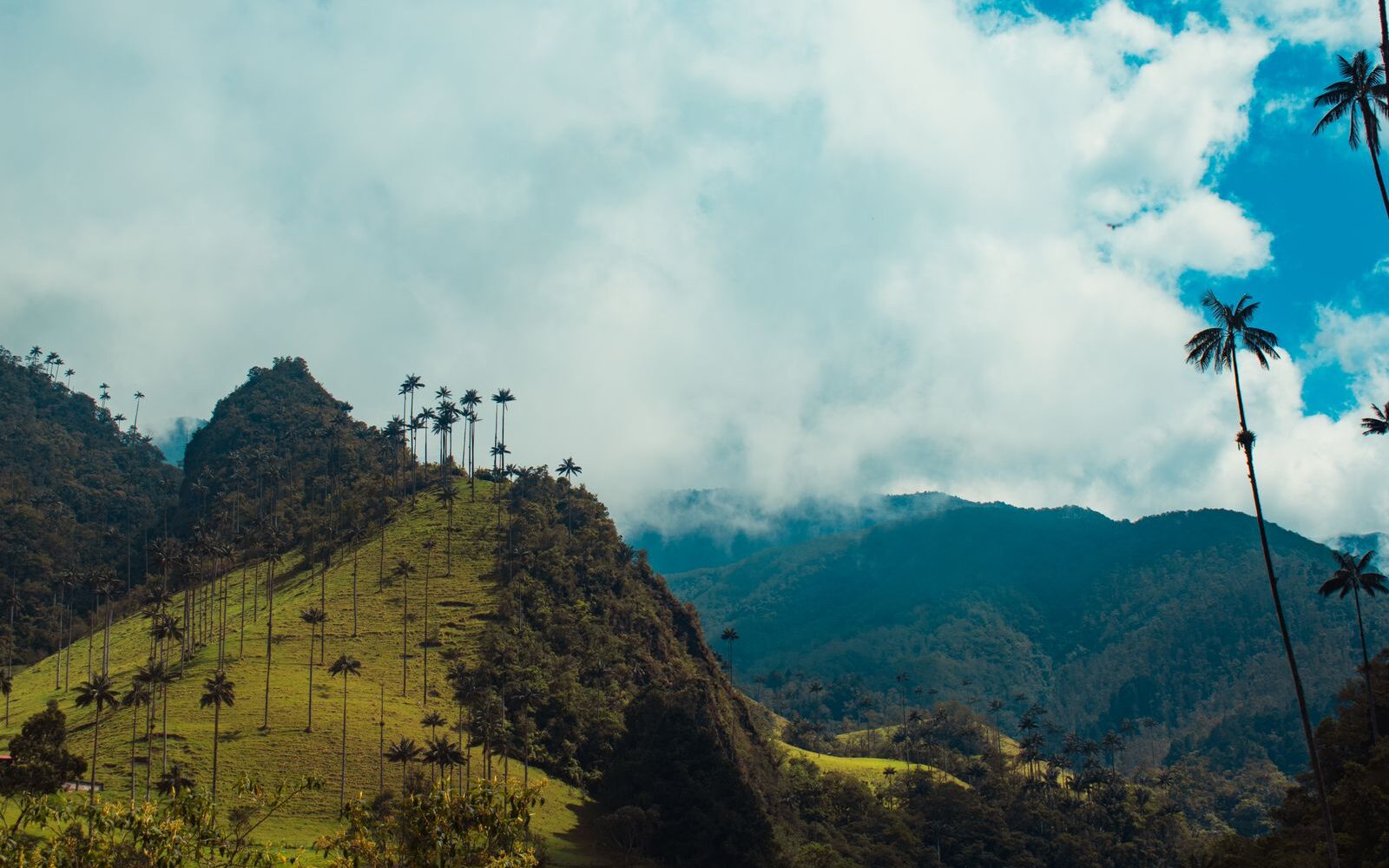
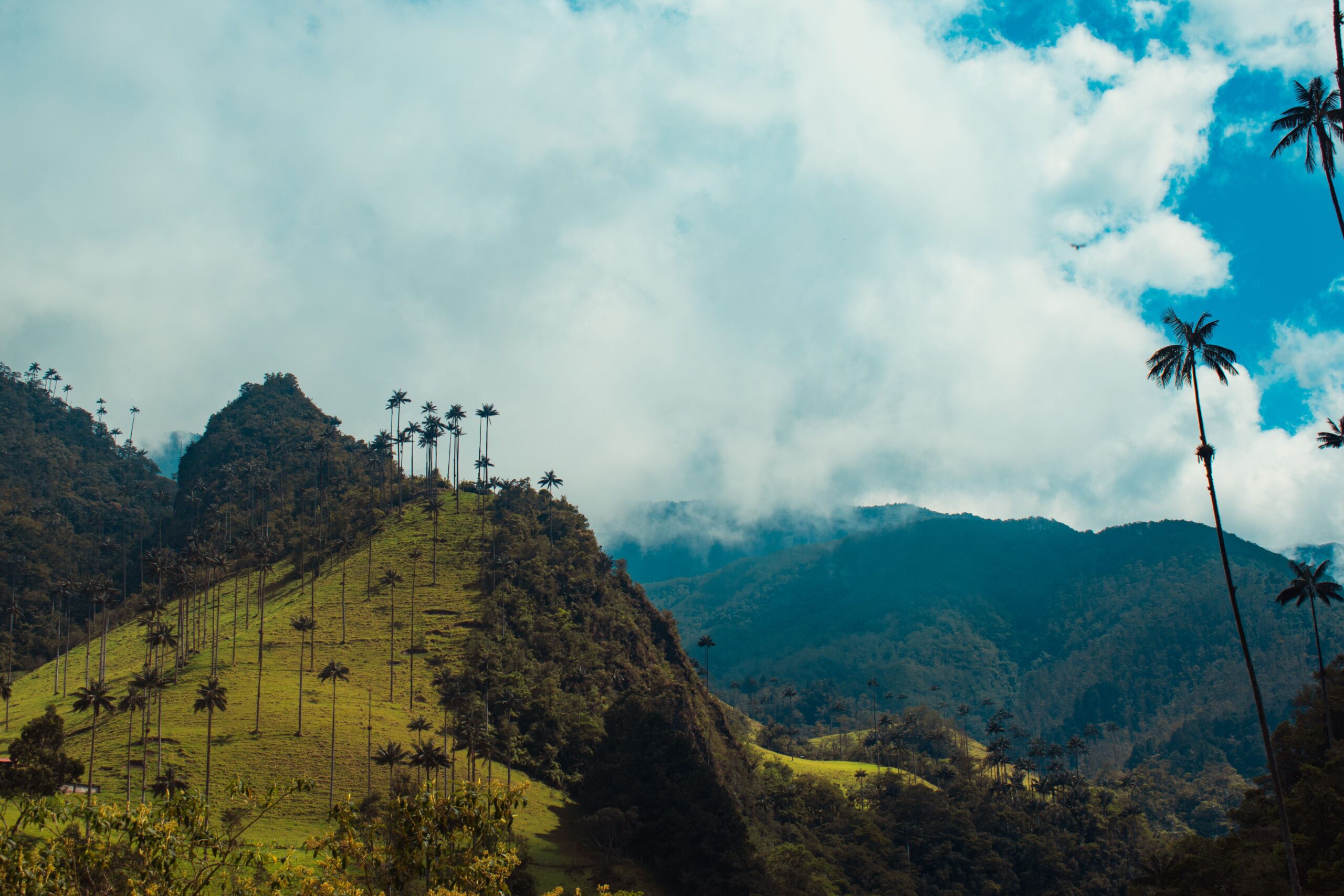
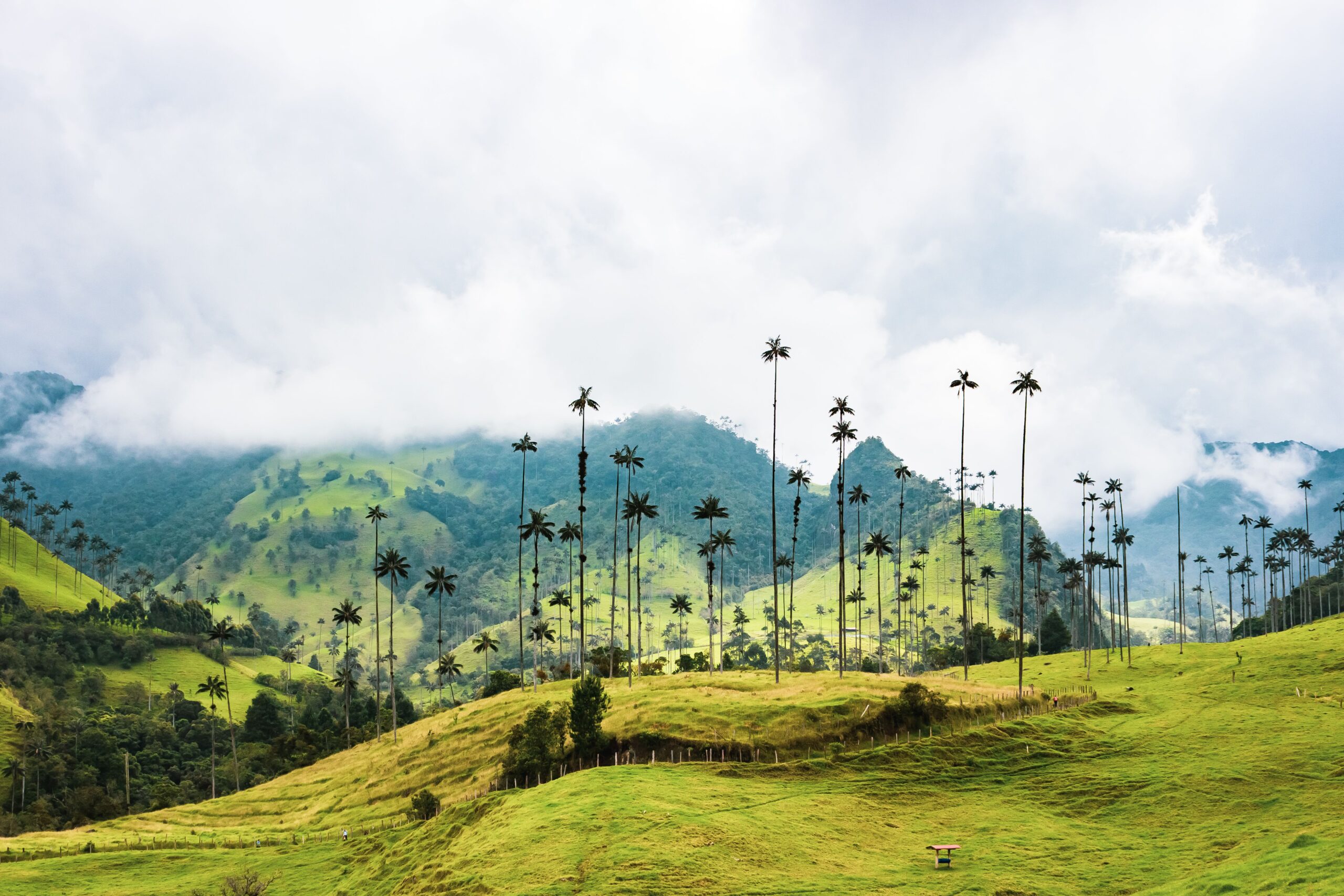
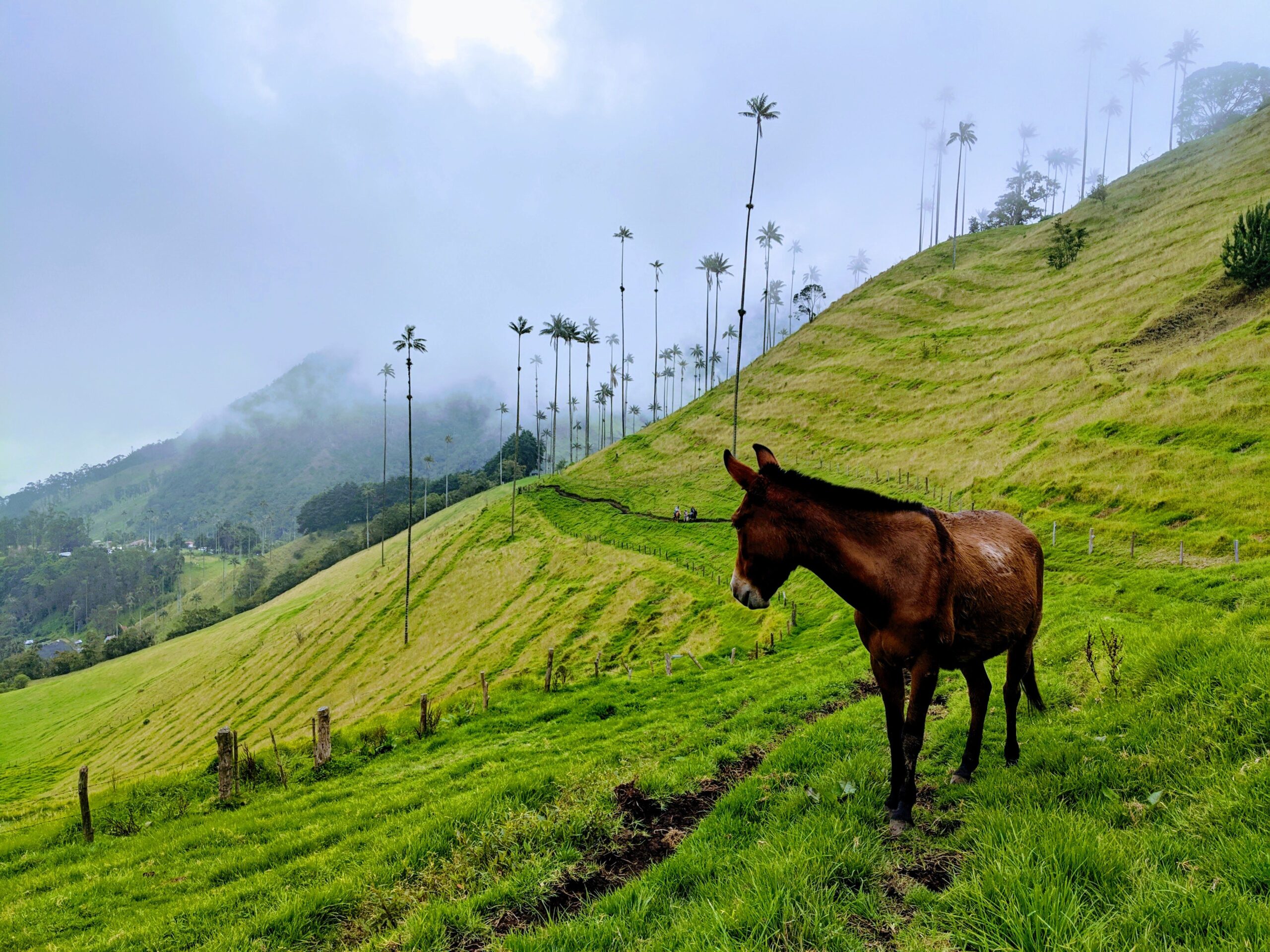
The Cocora Valley hike is the reason plenty of people put Colombia on their list in the first place. Green hills wrapped in cloud, and rising out of them, palms as tall as a ten-storey building. Quindío wax palms grow here at around 2,500 metres above sea level, an absurd altitude for any palm, and they are the tallest palms on the planet.
Valle de Cocora sits just outside the small town of Salento in Colombia’s coffee region, the Zona Cafetera, and you can explore it in several ways: a one-hour stroll to the first viewpoint, or a full-day loop through cloud forest, past a hummingbird reserve and up to a ridge at almost 2,900 metres. Below you’ll find how to get there, what you pay and where, which direction to walk the loop, where to stay and what to pack so the weather doesn’t catch you out. Up here it can change three times in a single morning.
Cocora Valley hike at a glance
- Where: Quindío department, about 11 km from Salento and roughly 24 km from Armenia. The valley floor lies between 1,800 and 2,400 m.
- Why go: the largest natural stand of Quindío wax palms, the tallest palms in the world. They can reach 60 metres.
- Main loop: 12 to 13 km, 5 to 7 hours, roughly 600 to 760 m of ascent. The high point, Finca La Montaña, sits at around 2,860 m.
- Short version: out to the palm forest and back takes 2 to 3 hours on an easy path that works for families with children.
- Getting there from Salento: vintage Willys jeeps from the main square, Plaza de Bolívar. The ride takes 20 to 30 minutes and a return ticket costs roughly 12,000 to 13,000 COP.
- Entrance fees: there is no single ticket. You pay at the private farms along the trail, cash only. The palm forest currently costs 30,000 COP, and the full loop including Acaime comes to 56,000 to 70,000 COP (about £12 to £15) before transport. Children under 4 go free.
- Opening hours: the trails are open daily from about 7 am to 6 pm, public holidays included.
- When to go: December to March and June to August tend to be driest. Whatever the weather, an early start on a weekday pays off.
- Exchange rate for budgeting: 1,000 COP is roughly £0.22 (€0.26), based on late-September rates.
Where is the Cocora Valley and what exactly is it?
The valley runs along the upper reaches of the Quindío River, in the department of the same name. The entry hamlet, simply called Cocora, sits at the end of the road about 11 kilometres from Salento. That’s where you’ll find the car parks, a handful of trout restaurants, snack stalls and stables. Beyond it, you continue on foot or on horseback.
You’ll often read that the Cocora Valley is part of Los Nevados National Park. Strictly speaking it lies in the park’s buffer zone and acts as its main gateway. On the ground, something else matters more: much of the land the trails cross belongs to private farms. That’s why you pay separately at several points along the way, and why prices shift every so often. This isn’t a managed park with one ticket office, more a network of paths running across other people’s pastures.
The valley itself lies at 1,800 to 2,400 metres, but the loop takes you up to almost 2,900 metres, and you’ll feel it in your legs and lungs. If you’re arriving straight from the coast, give yourself a day or two to acclimatise, ideally in Salento or Armenia.
Best time to visit the Cocora Valley
Close to the equator, Colombia doesn’t have summer and winter, just drier and wetter spells. In Cocora, December to March and then June to August are usually the driest months. April and May, along with October and November, are the muddiest, and the mud here is more than a cosmetic issue: a waterlogged trail can turn a five-hour loop into a seven-hour slog.
Keep an eye on the Colombian calendar, too. At weekends, on long weekends around public holidays (known as puentes), at Easter and from Christmas until mid-January, whole families drive in from Bogotá, Medellín and Cali. The jeep queue on Salento’s square gets long and the suspension bridges near the palm forest back up. If you can, save Cocora for a weekday.
Even more important than the month, though, is the time of day. Mornings are often clear and the palms stand out sharply; around midday the valley usually clouds over, and afternoons often bring rain. That’s why people leave Salento early: the first jeeps go from about 6:30 to 7:30 am. Turn up at 11 and there’s a fair chance you’ll mostly be looking at fog.
💡 Tip: The mountain forecast here almost always promises rain all day. In reality it’s mostly short showers. Don’t let it put you off, just bring a decent waterproof jacket. An umbrella is useless on the narrow trails.
How to get to the Cocora Valley
The journey always comes in two stages: first to Salento, then from Salento by jeep into the valley.
Getting to Salento
The nearest airports are Armenia (about 45 to 75 minutes by road) and Pereira (one to two hours). Both have flights to Bogotá and Medellín. From the UK, the simplest route is to fly from London to Bogotá, or to Medellín with a connection, and then take a short domestic flight on to Armenia or Pereira. Overland, the trip from Medellín takes 6 to 8 hours, and from Bogotá it can easily take 7 to 10 hours because the road crosses the mountains.
Direct buses run from Medellín’s southern bus station (Terminal del Sur) to Salento; from Bogotá you usually change in Armenia. Regular buses and minibuses connect both Armenia and Pereira with Salento, and the ride is cheap and straightforward. If you’re travelling around Colombia independently, have a look at Bogotá and the area around it or at Medellín, both of which combine easily with Cocora.
It’s worth comparing international and domestic flights well ahead: compare flights to Armenia and Pereira →
From Salento to Cocora Valley by jeep
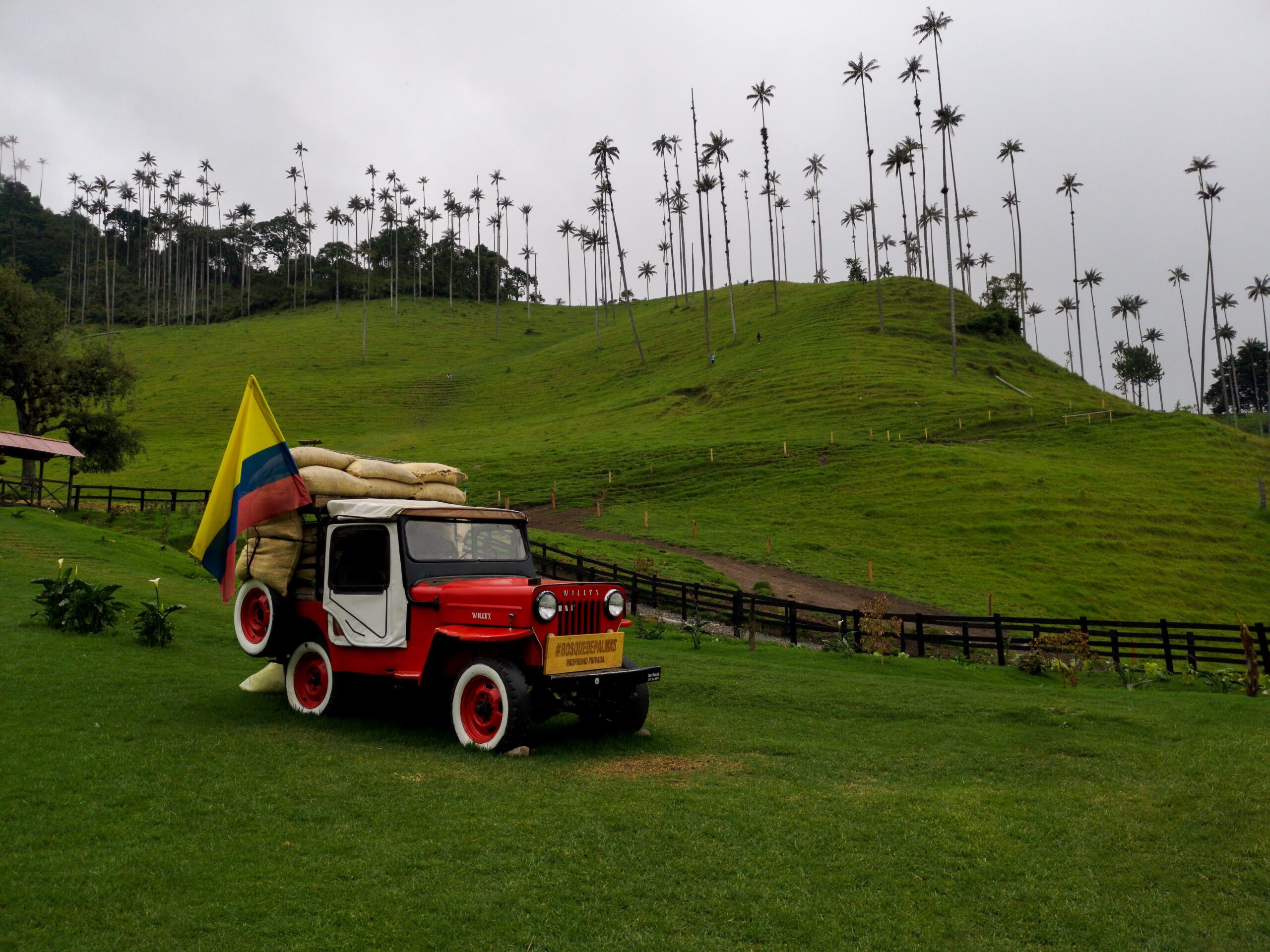
The Salento to Cocora Valley run is done in Willys jeeps, vintage off-roaders that still serve as everyday transport across the coffee region. They leave from the main square, Plaza de Bolívar, and you buy tickets at the kiosk right on the square. Each jeep goes as soon as it’s full, with the first departures from about 6:30 to 7:30 am. In high season, when the square is packed, the jeeps leave a little further on, from the corner of Calle 3 and Carrera 3.
The ride takes 20 to 30 minutes and costs roughly 5,000 to 7,000 COP each way; a return ticket is currently 12,000 to 13,000 COP (about £3 or €3). Buy a return and you’ll get two tickets: keep the second one and show it to the driver on the way back. The last jeeps back to Salento leave roughly between 5:30 and 6:30 pm, but check the time with your driver in the morning, as it changes outside the high season. It’s best to join the queue for the return jeep by about 4 pm at the latest.
💡 Tip: If you’re the last to squeeze in, you can ride standing on the rear step, holding on to the grab bar. It’s a local classic known as “jeepao”. On the dusty track it’s good fun, but don’t try it with a big backpack on.
Taxi, your own car and guided tours
If you miss a jeep or there are several of you, you can take a taxi from Salento for roughly 25,000 to 35,000 COP (about £6 to £8) per car, one way. Agree the fare up front and arrange a pickup time for the way back at the same time. The road into the valley is mostly paved, so you can also drive in with your own or a hire car. There are several private car parks at the entrance charging a flat 15,000 to 20,000 COP (about £3.50 to £4.50) for the day. At weekends they fill quickly, and don’t leave anything valuable in the car.
The third option is an organised tour from Armenia, Pereira or Salento, often combined with a coffee farm. Before you pay, find out which route the tour takes, whether entrance fees and Acaime are included, and how big the groups tend to be. You don’t need a guide for the standard loop.
Cocora Valley entrance fee: what you pay and where
This tends to be the biggest surprise. There is no single entrance ticket. You pay as you go at the gates of the individual farms the trail crosses, and only in cash. There’s no usable cash machine at the valley entrance, so take out money in Salento. The trails are open daily from about 7 am to 6 pm, and prices apply to everyone aged 4 and over.
| Where you pay | Approx. cost | What it covers |
|---|---|---|
| Finca El Portón | 6,000 to 10,000 COP (~£1.30 to £2.20) | access across a private farm on the lower part of the loop; only paid by those doing the full loop |
| Finca La Esperanza / Bosque de Palmas | 30,000 COP (~£6.60) | entry to the palm forest with two viewpoints (Mirador 1 and 2) |
| Acaime (hummingbird house) | 20,000 to 30,000 COP (~£4.40 to £6.60) | side trip to the reserve, hot drink included |
| La Vida Bella and La Mano photo parks | 15,000 to 20,000 COP (~£3.30 to £4.40) each | optional, photo props by the road |
| Willys jeep, return | 12,000 to 13,000 COP (~£2.70 to £2.90) | transport from Salento and back |
Including the jeep, the full loop without Acaime comes to roughly 48,000 to 53,000 COP (about £11 to £12), or 68,000 to 83,000 COP (about £15 to £18, €18 to €22) with Acaime. If you only walk to the palm forest and back, you’ll pay 30,000 COP plus transport. Each farm sets its prices independently and different sources quote different figures, especially for Acaime and El Portón. So treat the numbers as a guide and carry a buffer, ideally 100,000 to 120,000 COP (about £22 to £26) per person. Small notes come in handy too, as the toilets at the entrance are paid separately.
You can see the valley itself for free. The palms are visible from the road and from the pastures by the car park; you only pay to use the private trails and viewpoints.
The Cocora Valley hike: the loop step by step
The classic loop is 12 to 13 kilometres long, takes 5 to 7 hours and involves 600 to 760 metres of climbing. It crosses suspension bridges over the Quindío River, climbs through cloud forest up to the ridge and then drops down an open hillside where the most photographed palms stand.
Clockwise or anticlockwise?
You can walk the loop either way, and each direction has its advantages:
- Clockwise (palms first, forest second): you see the palms early, while the sky is still clear, and you avoid the steep climb up from Acaime. A good choice if you’re short on time or want to be sure of your photos.
- Anticlockwise (forest first, palms last): you get the harder climbing out of the way early and the day ends among the palms. After rain, though, the descent down the muddy hillside is unpleasant.
If it has been raining, we’d recommend the direction where you climb the muddy section rather than descend it. You’ll end up in the mud in Cocora either way.
For the anticlockwise route, go through the blue gate to the right of the car park, where there’s a sign with information about the trek. For the clockwise route, follow the road to the left towards the palm forest. At junctions, follow the signs for Finca La Montaña, not Estrella de Agua.
Suspension bridges and mud
In the forest section you cross the Quindío River on several narrow suspension bridges. Guides give different numbers because old bridges keep being replaced, so expect somewhere between five and eight. Cross them one at a time: wait until the person ahead of you reaches the other side, and hold on to the cables. After heavy rain the river rises and the stretches next to the water can be dangerous, in which case it’s better to stick to the short route.
Mud on the Cocora Valley hike is almost a given. The stables by the car park and several hostels in Salento rent out wellies for a few thousand pesos, and if it has rained in the days before, they’re a sensible choice. Hiking boots will get soaked in deep mud anyway. There are toilets at the entrance and then not again until Finca La Montaña up on the ridge.
Acaime, the hummingbird house
A side trail leads off the main route to the Acaime reserve, where feeders hang from the eaves and hummingbirds arrive in numbers that are hard to describe. The detour adds about 4 kilometres and 2 hours. Your entry includes a hot drink, usually coffee, hot chocolate or agua de panela con queso, a drink made from unrefined cane sugar into which you dunk a chunk of cheese. It sounds odd and tastes surprisingly good.
Finca La Montaña and the viewpoints
The highest point of the loop is at the Finca La Montaña farmstead, at about 2,860 metres. From here the whole valley opens up below you, and the descent begins past the viewpoints (miradores), the second of which lies at around 2,500 metres. This is the stretch where the palms tower highest above you, and where all the guidebook photos are taken.
💡 Tip: Not up to the full loop, or short on time? From the car park in Cocora you can walk to the palm forest and back in 2 to 3 hours on an easy path. You’ll see the highlights, and it’s manageable for children and less experienced walkers.
The short walk and the photo parks
If you’re not doing the whole loop, head uphill from the car park along the road to the entrance of the Bosque de Palmas (Finca La Esperanza). Past the ticket gate, a circuit leads through the palm forest via two viewpoints. The lower one, Mirador 1, is home to the well-known blue wooden hand; the upper Mirador 2 is about a quarter of an hour’s extra climb and well worth it, as the palms are closest there and there are far fewer people. Many visitors follow the tarmac straight to the restaurant; you should keep going up the dirt track instead.
Right by the road you’ll pass two photo parks, La Vida Bella and La Mano, with wings, frames, decorated jeeps and giant hands to pose with. They’re separate paid attractions and have little to do with the natural side of the valley. We preferred the palms without the props a little higher up, but if you want the classic Instagram shot, this is where you’ll get it.
Further into the mountains: Estrella de Agua and Los Nevados
Beyond the Acaime junction, trails continue deeper into the cloud forest to the Estrella de Agua farm and on into the páramo, the high-altitude grassland of Los Nevados National Park. This is no longer a day walk but a multi-day mountain trek. Under the rules of Colombia’s national parks authority, you can only enter the park itself with a certified guide, and access conditions change, so check them directly with Parques Nacionales Naturales de Colombia or with local agencies in Salento. None of this applies to the standard Cocora loop.
Cocora Valley wax palms: why they’re so special
The Quindío wax palm (Ceroxylon quindiuense) is Colombia’s national tree and the tallest palm in the world. It grows up to sixty metres tall at altitudes between 2,000 and 3,000 metres, exactly where nobody would expect to find a palm. According to the sources, it lives for roughly one to two hundred years and only reaches its full height after decades of slow growth.
Its name comes from the layer of wax coating the trunk. That wax is precisely why the palms used to be felled: it was used for candles, and the fronds for Palm Sunday. The population suffered so badly that in 1985 a Colombian law declared the palm the national tree and banned felling it.
The battle isn’t won, though. Most of the mature palms stand in pastures where cattle nibble the young shoots, so the stand is ageing without renewing itself. If you see small fenced-off plots around the palms, those are protected seedlings. Leave them alone and don’t walk among them.
A little history of the valley
The valley’s name comes from the language of the Quimbaya, the indigenous people who lived in this part of the Andes before the Spanish arrived. According to tradition, Cocora was the daughter of the chief Acaime, and her name means “star of water”. Both names live on locally: the hummingbird reserve is called Acaime, and the farm deeper in the mountains is Estrella de Agua.
From colonial times, the Camino del Quindío ran past Salento, a mountain trail across the Central Cordillera linking Bogotá with the south-west of the country. Alexander von Humboldt and Aimé Bonpland travelled along it, as did Simón Bolívar in 1830, who then ordered the route to be repaired and widened. Salento itself was founded in 1842 as a penal colony whose inhabitants were to maintain the trail. It is the oldest town in Quindío department.
Farmers began settling the upper Quindío valley at the end of the 19th century. The first fincas appeared around 1890, and since 1900 the valley has officially been called Cocora. The pastures that now form the famous image of lone palms on bare hills are the result of clearing the montane forest in which the palms originally grew among other trees.
The turning point came on 16 September 1985, when the Colombian Congress passed Law No. 61, declaring the wax palm the national tree and banning its felling. In 2011, UNESCO added the landscape of the coffee region, including the area around Salento, to the World Heritage List as the Coffee Cultural Landscape of Colombia (Paisaje Cultural Cafetero). The Willys jeeps that now carry visitors are a legacy of the post-war years, when they were the most reliable way to move coffee and people around these hills.
What to combine with your visit
Salento
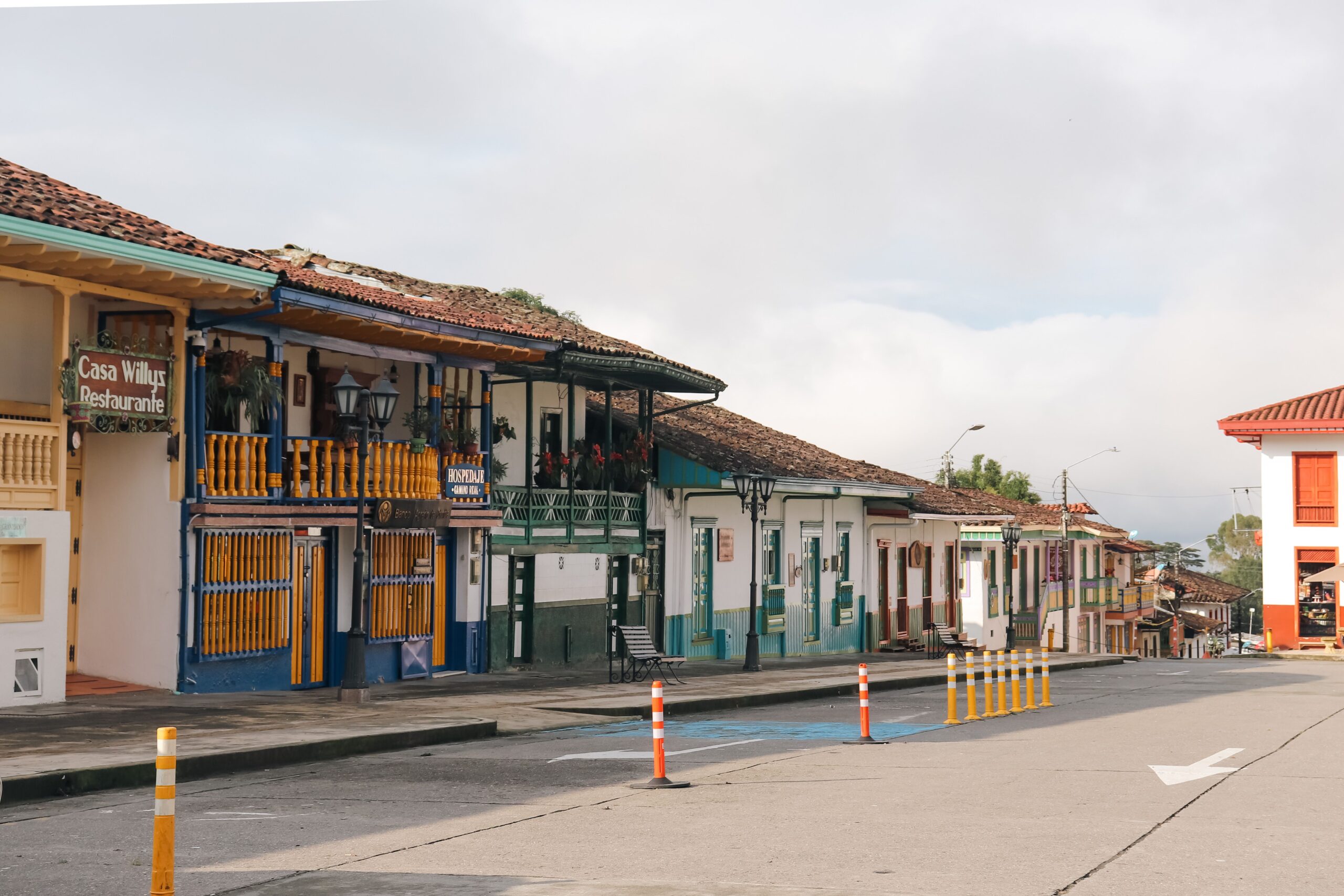
The town you set off from for Cocora is worth a day in its own right. The main street, Calle Real, is lined with white-fronted houses and brightly painted shutters, and at its end more than 250 steps climb to the Alto de la Cruz viewpoint, looking out over the surrounding hills. Around the square people play tejo, a Colombian game in which you throw metal discs at a target fitted with small explosive caps.
For more ideas in and around town, see our guide to things to do in Salento, Colombia.
Coffee farms
Salento lies at the heart of the Zona Cafetera, the coffee region on the UNESCO list. For a plantation tour, people head to fincas such as El Ocaso, Don Elías or Las Acacias, usually again by jeep from the square. A tour takes about two to three hours and walks you through the whole process, from picking the ripe cherries to roasting and tasting.
Trout and Colombian food
The local speciality is trucha, trout raised in ponds right at the entrance to the valley. It’s served dozens of ways, often with a patacón, a flattened, fried disc of green plantain. For what else to try in Colombia, read our article on Colombian food.
You can book activities and tours in the area in advance: browse tours from Salento →
Where to stay near the Cocora Valley
Your base will almost always be Salento. It has hostels with dorm beds for around £10 a night, family-run guesthouses and more comfortable hotels, plus restaurants, cash machines and the jeep departures, all on one square. If you’d rather have peace and quiet, you can stay on a coffee farm nearby, but bear in mind that getting around is harder without a car or taxi.
Alternatives are Filandia, a slightly less touristy town a little to the north, or Armenia itself if you’re landing late in the evening. In peak season around Christmas and New Year you need to book well ahead, as Salento fills up with Colombian families.
Where to stay in Salento and near the valley
- Viajero Salento Hostel: the budget option for backpackers. Garden, terrace, bar and a restaurant serving local food, a shared kitchen and a 24-hour front desk, so you can head out for the first morning jeep.
- Hotel Salento Real Eje Cafetero: mid-range, a short walk from the centre, with breakfast and free parking. Handy if you’re arriving by car. The hotel can also arrange horse rides and birdwatching.
- Villa Salento Boutique Apartments & Spa: apartments with a kitchenette and a terrace overlooking the town. A good pick for a longer stay when you fancy cooking for yourself now and then.
- Sazagua Hotel Reserve: a pricier hotel in the countryside near the Cocora Valley, with its own palm forest, waterfall and trails, a restaurant and a bar. For those who want to sleep outside town with the palms close by.
Where to stay in Filandia
- Monte Pueblo Hotel Boutique: a three-star hotel with a terrace looking out to the mountains, a restaurant, a bar and breakfast.
- Hotel Boutique Santa María: a smaller hotel with a garden; the front desk can help with trips and arrange transport.
Find accommodation in Salento →
What to pack for the Cocora Valley hike
- Shoes with soles that grip. Sturdy trainers are fine for the short walk; for the full loop after rain you’ll be glad of ankle boots.
- A waterproof jacket or poncho. It rains here even in the dry season.
- Cash in pesos. The farm gates don’t take cards and there’s no cash machine at the entrance.
- Water, ideally one and a half to two litres, and some food. Refreshments are only available at the start and at Acaime.
- Layers. Down in the valley it’s usually around 20 °C; up on the ridge the wind picks up and it’s noticeably colder.
- Sun protection and insect repellent. At 2,500 metres you’ll burn even under cloud, and mosquitoes bite by the river.
- Wellies, if it has been raining. You can rent them by the car park in Cocora and in Salento; in deep mud they beat hiking boots.
- Small change for the toilets and some tissues, as you pay to use the loo at the entrance.
- An offline map. Phone signal in the valley is weak to non-existent.
Daily budget for the Cocora Valley
| Item | COP | £ (approx.) |
|---|---|---|
| Return jeep | 12,000 to 13,000 | 2.70 to 2.90 |
| Fees on the loop (palm forest, plus El Portón if doing the full loop) | 30,000 to 40,000 | 6.60 to 8.80 |
| Acaime (optional) | 20,000 to 30,000 | 4.40 to 6.60 |
| Lunch (trout) | 25,000 to 45,000 | 5.50 to 10 |
| Accommodation in Salento (hostel to guesthouse) | 50,000 to 250,000 | 11 to 55 |
The day trip to the valley itself, lunch included, therefore costs roughly £15 to £28 (about €18 to €33) per person, which is still very reasonable for Colombia’s headline attraction.
What we’d do differently
Cocora tempts you to tick off everything: the full loop, Acaime, both viewpoints and a photo park, then sprint for the last jeep at five in the afternoon. But the best moments in the valley are the slow ones: when the morning mist breaks up and the palms emerge from it one by one, or when you’re sitting on the ridge by Finca La Montaña with nowhere to rush off to. Next time we’d give Cocora a whole day and stop chasing the times on the map.
We’d go up to Mirador 2 again, but we’d happily skip the photo parks by the road. The dirt track above them is far more striking, and suddenly you find yourself almost alone among the palms. And if it were pouring in the morning, we wouldn’t be afraid to flip the plan: walk only to the palm forest and spend the afternoon on a coffee farm or in a café in Salento.
On the ridge, we’d leave the phone in our pocket for longer. Everyone who has ever been here has photos of palms in the mist, but the silence of the cloud forest, the rush of the Quindío beneath the bridges and the hummingbirds at Acaime won’t fit on your phone anyway. And we’d have our trout at the plainest little place by the car park, the kind without an English menu. Agua de panela with cheese is worth trying too, even if it sounds strange.
Where to next
- Things to do in Salento, Colombia
- Colombia holiday: the best places to visit
- Is Colombia safe? Tips on what (not) to do
- Bogotá: what to see in the capital and around
- Medellín: places to see and what to watch out for
- Tayrona National Park: the complete guide
Cocora Valley FAQs
How long is the Cocora Valley hike?
Allow 5 to 7 hours for the full loop plus travel time, so in practice a whole day. The shorter walk to the palm forest and back takes 2 to 3 hours. It makes sense to spend at least two nights in Salento so you can fit in a coffee farm as well.
Is the Cocora Valley hike difficult? Can children do it?
Yes, children and less experienced walkers can manage it, just not the full loop. The shorter path from the car park to the palms is wide and easy. The full loop has steep climbs, muddy sections and suspension bridges, so you need a reasonable level of fitness.
Do you need a guide for the Cocora Valley?
No, the trail is signposted and plenty of people walk it. A guide is more useful for birdwatching or if you want to learn more about the cloud forest ecosystem. A downloaded offline map is more useful than a guide.
Can you pay by card in the Cocora Valley?
No. The individual farm gates only accept cash, and there’s no cash machine at the valley entrance. Take out money in Salento, ideally with a buffer of 100,000 to 120,000 COP (about £22 to £26) per person.
When is the best time to visit the Cocora Valley?
The driest periods are December to March and June to August. An early start matters even more, though, because around midday the valley usually clouds over and afternoons often bring rain.
How tall are the wax palms in the Cocora Valley?
The Quindío wax palm grows up to 60 metres tall, making it the tallest palm in the world. It grows at 2,000 to 3,000 metres above sea level and has been Colombia’s national tree since 1985.
Can you go horse riding in the Cocora Valley?
Yes, there are stables at the Cocora entrance and a ride is a popular option. You can’t reach everywhere you can on foot, though, and horses don’t go up to the ridge at Finca La Montaña. Before you ride, take a look at what condition the horses are in and choose stables that clearly look after their animals.
How much is the Cocora Valley entrance fee?
There’s no single entrance fee. The Bosque de Palmas palm forest costs 30,000 COP (about £6.60 or €8); on the full loop you also pay 6,000 to 10,000 COP to cross the El Portón farm, and 20,000 to 30,000 COP for the side trip to Acaime. Children under 4 go free, and it’s cash only.
Can you do the Cocora Valley as a day trip from Medellín or Bogotá?
In theory, yes, on an organised tour, but we don’t recommend it. Medellín to Salento takes 6 to 8 hours by road and Bogotá even longer, so you’d spend most of the day on a bus and reach the valley just as the clouds come in. It’s better to spend at least two nights in Salento, or to fly into Armenia or Pereira.
What time is the first and last jeep to the Cocora Valley?
The first Willys jeeps leave Salento from about 6:30 am and go as soon as they’re full. The last ones back from the valley leave roughly between 5:30 and 6:30 pm, earlier outside the high season. Check the time with your driver in the morning and join the queue by about 4 pm at the latest.
Potřebujete pomoct s cestováním?
-
Ubytování 🏨
Vyberte si to nejlepší ubytování, ať už jste kdekoliv, přes Booking.com. -
Půjčení auta 🚗
Auto si snadno najdete přes Booking.com, kde máte často slevu díky ubytování, nebo Rentalcars.com, kde porovnáte nabídky většiny půjčoven. -
Zážitky 🎟️
Přes GetYourGuide.com si vyberete z nejrůznějších výletů i zážitků po celém světě, navíc se zrušením zdarma do 24 h předem.