
Last updated 16.11.2026
This guide is about camping in Poland the country, in central Europe, between Germany and Ukraine. That sounds like an absurd thing to spell out, but search for “camping in Poland” in English and half the results come back about Poland in Maine, so it is worth settling in the first line. The Poland meant here has 500 km of Baltic coastline, a lake district in Masuria with more than a thousand lakes, and a share of the Tatra mountains, and it is one of the cheapest places in the European Union to spend a fortnight sleeping under canvas.
Two practical things before anything else. First, Poland is not in the eurozone and does not use the euro. Everything is priced in Polish złoty (PLN, written zł), at roughly 4.3 zł to the euro, which works out at a convenient 5 zł to the pound. Every figure below is given in złoty with an approximate sterling equivalent. Second, and this is the question British visitors get wrong most often: Poland has no right-to-roam law of the Scottish kind. The Land Reform (Scotland) Act does not have a Polish equivalent, and pitching a tent wherever you fancy is not a right here. There is, however, a genuinely surprising legal workaround run by the state forestry service, and that is the first section below.
After that, this guide covers how Polish campsites actually work, what a pitch, a caravan and a rented cabin cost, the four regions worth choosing between (the Baltic coast, Masuria, the Tatras, and the quieter Karkonosze and Bieszczady), six specific sites by name, and whether you can reach any of it without a car. Poland has five airports that make sense as a starting point and a cheap, functional railway, so the answer to that last question is more often yes than you would expect.
Camping in Poland at a glance
- How many campsites: around 360 officially registered sites, concentrated on the Baltic coast and in Masuria.
- Cost of a tent pitch: a tent, two people and a car on the Baltic coast in high season comes to roughly 130 to 150 zł a night (about £26 to £30).
- Cabin or mobile home: roughly 200 to 500 zł a night (about £40 to £100), depending on fittings and location.
- Season: July and August are the peak. June and September are quieter and cheaper.
- Wild camping: not permitted outside designated places, and banned outright in national parks. The legal alternative is the state forestry programme “Zanocuj w lesie”, which allows up to two free nights in marked forest areas.
- Currency: Polish złoty, not euros. Roughly 5 zł to the pound.
- Driving: cars do not need a motorway vignette. Tolls apply only on selected sections of the A1, A2 and A4.
- Without a car: workable. Fly into Gdańsk for the coast, Kraków for the mountains, Warsaw for Masuria, then use the trains.
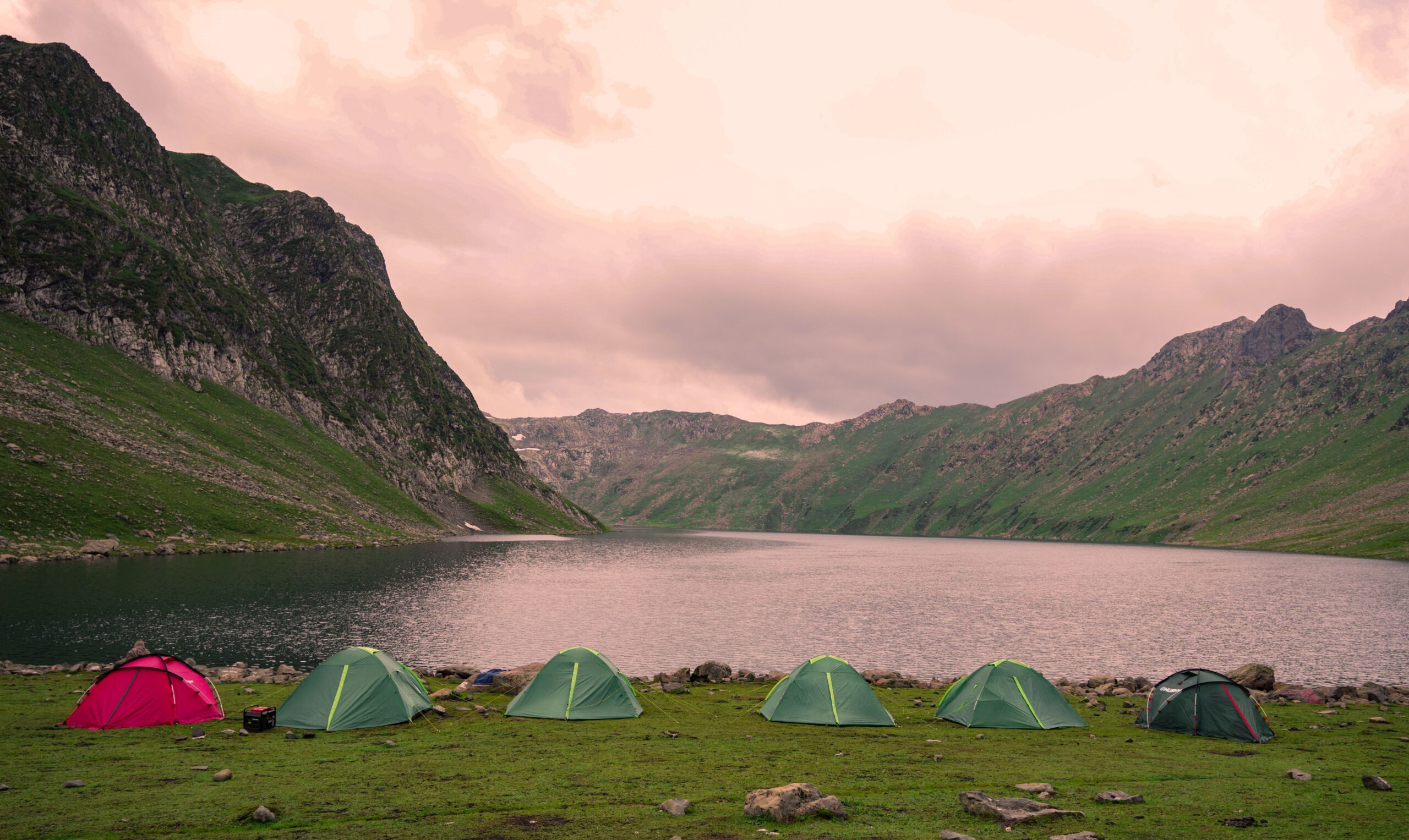
Is wild camping in Poland legal? The short answer and the useful exception
No, not in the way it is legal in Scotland or Scandinavia. Sleeping rough outside a designated place is not an established right in Poland, and in the country’s national parks and nature reserves it is explicitly against the law rather than merely frowned upon. In practice a discreet single night in an ordinary patch of countryside is often tolerated, but tolerance is not permission, and it evaporates completely the moment you cross into a protected area.
The legal basis is worth knowing because it tells you exactly where the hard line sits. Poland’s Nature Conservation Act lists the activities banned in national parks and nature reserves, and bivouacking appears on that list, with a single exception: places specifically designated by the director of the national park, or by the regional director for environmental protection in the case of a reserve. Breaking that prohibition is a punishable offence carrying either detention or a fine.
So the honest summary is this. You cannot treat Poland like the Highlands, but you are not restricted to commercial campsites either, because the state forestry service has opened a very large amount of ordinary forest for exactly this purpose.
“Zanocuj w lesie”: the programme almost no English guide mentions
The reliable legal route to a night in a Polish forest is a scheme called “Zanocuj w lesie”, which translates as “spend the night in the forest”. It is run by Lasy Państwowe, the State Forests, the body that manages most of Poland’s woodland, and it was made permanent in 2021 after a pilot. The forestry service has designated more than 600,000 hectares across more than 400 forest districts where you may legally sleep out, in marked areas, outside the national parks. The rules are short:
- Up to two consecutive nights, for a maximum of nine people in one spot, with no paperwork at all. You just turn up.
- For a longer stay or a group of more than nine, you email the local forest district at least two working days ahead and wait for their written confirmation. That confirmation is the permission.
- It is free. There is no fee and no booking system.
- Hammocks and tarps are preferred to tents. If you do pitch a tent, do it on firm ground without scraping away the forest floor.
- Open fires only in spots the forest district has marked for them, and bring your own wood. Gas stoves are allowed at the discretion of the district and are banned when the fire risk reaches level 3.
- No driving into the forest. This is a walk-in or cycle-in arrangement, not a place to park a camper.
- The current map of eligible areas is published by Lasy Państwowe and in the Bank Danych o Lasach forest data portal, including its mobile app. Check it before you go, because individual areas open and close for forestry work.
Beyond the programme, you can also camp on private rural land with the owner’s consent, and spending a night in a car or camper on a public car park is generally left alone, provided you do not unfold the awning, chairs and barbecue. That last bit is what turns parking into camping in the eyes of Polish councils, and in towns it is not tolerated.
Where you definitely cannot pitch a tent
Here good behaviour is not a defence. The prohibitions are real and they are enforced:
- National parks and nature reserves. Camping and bivouacking are banned by law, not by park etiquette. This covers the Tatras, Słowiński, Wolin, Bieszczady, Karkonosze and every other park you might actually want to sleep in.
- Beaches, dunes and cliffs. Sleeping on them is prohibited, and on the coast this is checked.
- Forest outside the marked “Zanocuj w lesie” zones, without the forest district’s consent.
- Private land without the owner’s agreement.
Break the ban in a protected area and you face a fine and being ordered to move on, with figures of up to around 120 € (roughly 500 zł, about £100) commonly quoted. Rangers do patrol the national parks in season. It is not worth the gamble when a legal forest pitch is free and a campsite costs the price of a pub lunch.
💡 Tip: Wherever you sleep, follow the camper’s code and leave no trace. Carry out every scrap of rubbish, light no fire outside a designated ring, and keep the noise down. Poland’s tolerance of informal camping rests entirely on how the people before and after you behave.
How Polish campsites work
The great virtue of a Polish campsite is that it is flexible and cheap. You can arrive with your own tent, roll up in a caravan or motorhome, or leave the kit at home entirely and rent a cabin or a mobile home on site. Almost every site has washblocks, electric hook-ups, a washing-up area and often a small shop or a snack bar; the larger ones on the coast and in Masuria add a swimming pool, a playground or a boat hire desk.
For a British or American visitor the closest mental model is a French municipal campsite: functional rather than glossy, a mixture of tents, caravans and small wooden chalets, and priced so low that it barely registers next to the flights.
How many Polish campsites there are, and where
Poland has around 360 officially registered campsites. They cluster where the visitors go:
- Pomeranian voivodeship (about 64 sites) covers the Baltic coast from Świnoujście across to Gdańsk. This is the busiest camping region in the country.
- Warmian-Masurian voivodeship (about 60 sites) is the lake district, and the natural choice for paddlers, sailors and anglers.
- Lesser Poland (about 28 sites) means the Tatras, the Podhale highlands and Zakopane.
- Silesia and Greater Poland have fewer and smaller sites, useful mainly as a staging post if you are driving through.
The season, and what the weather actually does
The camping season runs from June to September, peaking in July and August. On the coast, the Baltic warms to 20 to 22 °C, most reliably in August, so if swimming matters to you, aim for the height of summer rather than the shoulders. If what you want is quiet and a lower bill, June and September are lovely: the sites are half empty, the landscape is fresh, and you can easily save a third. Outside the season proper, in April, May and October, a good number of smaller sites simply do not open, so check before you commit to a route.
Booking, and what turning up on spec is like
For a tent and a car at a popular site in high season, book ahead. The best coastal and Masurian campsites fill up for the school holidays as early as spring, and the cabins and mobile homes go first of all. Outside the peak you can usually arrive unannounced and be fine, but do not try it on a summer weekend anywhere near the Baltic.
💡 Tip: Want a roof over your head without hauling a tent through an airport? Look for a site with cabins or glamping pods, which you will find around the Masurian lakes → and along the Baltic coast alike.
What camping in Poland costs, in złoty
Poland is still cheap, though August on the coast is the one moment when the prices bite. A tent pitch is usually assembled from separate line items: you pay per person, then for the tent, then for the car. To put a number on it, in the 2025 season a coastal site charged roughly 137 to 147 zł a night for a tent, two adults and a car, made up of about 33 zł per person, about 35 zł for a small tent and about 36 zł for the vehicle. Across the country the average overnight charge at a Polish campsite works out at something like 20 to 26 € (about £17 to £22).
Remember the currency point from the top: you will be paying in złoty. Cards are accepted almost everywhere, including at most campsite receptions, but if a terminal offers to charge you in pounds or euros, decline it and pay in złoty. The same applies at cash machines. Avoid the standalone currency kiosks on seaside promenades, whose rates are poor by design.
| Type of pitch or unit | Roughly per night |
|---|---|
| Tent + 2 people + car | 130–150 zł (about £26–30) |
| Caravan or motorhome + 2 people + hook-up | 140–200 zł (about £28–40) |
| Simple cabin, sleeps 2 to 4 | 200–350 zł (about £40–70) |
| Fitted mobile home, sleeps 4 to 6 | 300–500 zł (about £60–100) |
These are high-season figures and they vary a lot by location. The coast and Zakopane cost more than a little-known inland lake, and outside the peak everything drops noticeably. On top of the pitch, budget for the small extras: showers, electricity, and in spa towns a local visitor levy.
💡 Tip: Travelling by campervan or motorhome? You will save a lot by using the Polish parkingi and stellplätze, which are plain overnight stops with water and a waste point and nothing else, often for a fraction of a full campsite pitch.

Where to camp: the four regions worth choosing between
Poland can serve a beach holiday and a mountain one with equal conviction, and the regions are far enough apart that you really do have to pick. Here is how they differ, and how to reach each one if you are not driving.
The Baltic coast: campsites from Świnoujście to the Hel Peninsula
This is the most popular choice for camping in Poland, and the one most likely to surprise a visitor who did not know the country had a seaside at all. The coast is lined with wide sandy beaches that shelve gently into the water, which makes it genuinely good for families with small children, and the sand is backed by pine forest rather than concrete for long stretches. Campsites run the whole length: from Świnoujście and Międzyzdroje in the west, through Kołobrzeg and Mielno, to Łeba, the Hel Peninsula and the Tricity of Gdańsk, Sopot and Gdynia in the east. Two that rate consistently well are CAMP na wydmie in Łeba itself and Camping Alexa at Chłapowo, which cyclists in particular rave about.
Getting there without a car: this is the easiest region of the lot. Fly into Gdańsk (GDN), which is the natural gateway to the whole eastern coast, and use the local SKM commuter trains and regional services along the shore. The Hel Peninsula has its own railway line and summer ferries from Gdańsk and Gdynia. For the western coast, Szczecin and the Świnoujście line are the way in.
Best for: families with children, beach people, and cyclists following the coastal route.
Find campsites and places to stay near Gdańsk →
Camping in Masuria: the lake district for paddlers and anglers
A word of warning before anything else, because English search results are confusing on this point: the Masurian Lakes are also the name of a First World War battle, and half of what comes back if you search the phrase is military history. The place is the Masurian Lake District, in the north-east of the country, and it is one of the great camping landscapes of Europe.
It is a region of more than a thousand lakes linked by canals, and it is heaven for kayakers, sailors and anglers. Campsites here often sit directly on the shoreline, so you crawl out of the tent and you are at the water, with the jetty a few steps further. Masuria is quieter and greener than the crowded coast, which makes it the right call if what you are after is space, birdsong and evenings by a fire. Giżycko and Mikołajki are the two towns everything revolves around.
The other advantage of Masuria is that the days combine well. A morning on the water in a boat or a kayak, an afternoon swimming in the lake, a fish on the fire in the evening. And the lakes are warmer and far calmer than the cold, choppy Baltic, which parents of small children notice immediately.
Getting there without a car: harder than the coast, but perfectly possible. Fly into Warsaw (WAW or WMI) and take a train north-east towards Olsztyn, Giżycko or Ełk. Giżycko and Mikołajki are both reachable by rail or by the connecting buses, and once you are in the lake district itself the boats do a good deal of the moving about for you.
Best for: paddlers, anglers, and couples and families who want quiet water.
Find campsites and places to stay in Masuria →
Camping in the Tatras and the Podhale
The Polish side of the Tatras is the wildest mountain range in the country, and Zakopane is its obvious base. Campsites and motorhome stops here work as a launchpad for the classic walks: up to Morskie Oko, the lake below the high peaks, onto Kasprowy Wierch by cable car, or into the valleys. One that earns its reviews is Camp Gorący Potok at Szaflary, a short hop from Zakopane, which has thermal pools on site. After a long day on rock, that turns out to matter more than you would think.
Remember that the Tatra National Park itself is off limits for wild camping, without exception. In the mountains you sleep at a site or in one of the staffed mountain huts.
Getting there without a car: straightforward. Fly into Kraków (KRK) or Katowice (KTW), then take the train or one of the frequent coaches to Zakopane, a journey of roughly two to two and a half hours from Kraków. Local buses run from Zakopane to the trailheads.
Best for: hikers, mountain people, and anyone who likes a thermal pool at the end of the day.
Find campsites and places to stay in Zakopane →
The Karkonosze and the Bieszczady: for people who want to be left alone
The Polish side of the Karkonosze, the range the Czechs call the Krkonoše and the Germans the Riesengebirge, sits around Karpacz and Szklarska Poręba on the south-western border. It gives you proper mountains without the Tatra crowds, and it is the right size for a long weekend with a map.
The Bieszczady, in the far south-east where Poland meets Ukraine and Slovakia, are a different world altogether. This is one of the most sparsely populated corners of Europe: rolling grassy ridges the Poles call połoniny, wild bison in the forests, and a quality of silence that is genuinely rare on this continent. There are few campsites and they are basic. The landscape more than compensates.
Getting there without a car: the Karkonosze are easy, via Wrocław (WRO) and the trains to Jelenia Góra, from where buses reach Karpacz and Szklarska Poręba. The Bieszczady are the hardest region in this guide to reach without your own wheels: expect a train to Sanok or Ustrzyki Dolne and then a rural bus, and check the timetable before you rely on it.
Best for: solo walkers, wildlife watchers, and anyone whose idea of a holiday involves meeting nobody.
Six Polish campsites worth considering by name
Once you have settled on a region, here are six sites that turn up again and again in Polish rankings and in campers’ recommendations. Treat them as a starting point rather than a definitive list, because Poland has a great many good ones.
1. Camping Tramp, Wolin island, near Międzyzdroje
An award-winning family campsite on the island of Wolin, a short way from Międzyzdroje, sitting between the pines of Wolin National Park and the Baltic beach. In 2023 it won Mister Camping, the Polish title for campsite of the year. Alongside tent and caravan pitches it has cabins and apartments, and the facilities are modern. The pick if you want the sea and the forest in the same place.
Getting there without a car: yes. Międzyzdroje is on the railway line from Szczecin to Świnoujście, and the site is a manageable walk or a short local bus from the station.
Best for: families who want the beach and the shade of a pine wood.
2. Camping Baltic, Kołobrzeg
The classic of the Polish coast, in the spa town of Kołobrzeg: a campsite in a pine park roughly 500 metres from a wide sandy beach, right beside the municipal amphitheatre and the spa promenade. As well as tent and caravan pitches there are bungalows, a bike hire and a restaurant. The draw is that you have a full spa town, promenade and wellness included, immediately outside the gate.
Getting there without a car: easily. Kołobrzeg has a railway station with direct services from Poznań, Szczecin and Warsaw, and the site is close to the centre.
Find campsites and places to stay in Kołobrzeg →
3. Campsites in Łeba and beside Słowiński National Park
Note the spelling: the town is Łeba, with a barred Ł, and typing it without the diacritic will send you to Lebanon. It is one of the best-loved seaside resorts on the coast and the base for a trip to the shifting dunes of Słowiński National Park. In the town itself, CAMP na wydmie sits by the beach, and Camping Rafael stays open all year and has a small harbour for boats a short way from the sea. Further east, next to the park, Camping Przymorze in the village of Rowy is the quieter option.
Getting there without a car: possible but plan it. Łeba has a seasonal railway service and year-round buses from Lębork, which is on the main line from Gdańsk. In summer the connection is decent; out of season it thins out.
💡 Tip: Walk out to the Łeba dunes, one of the few genuinely mobile sand dune systems in Europe. The sand travels several metres a year, and the effect is a slice of desert sitting on the Baltic.
4. Chałupy on the Hel Peninsula
The narrow Hel Peninsula, with open sea on one side and a sheltered bay on the other, is Poland’s watersports capital. Always write it as the Hel Peninsula rather than just “Hel”, incidentally, or English search engines will assume you meant something else entirely. The campsites at Chałupy are famous as the centre of windsurfing and kitesurfing: the shallow bay on the southern side is ideal for beginners, while the northern side gives you the open Baltic. If wind and water appeal more than lying on a towel, this is where to go.
Getting there without a car: very easy, and a car is arguably a liability here in August. A railway line runs the length of the peninsula from Gdynia via Władysławowo to Hel, with a stop at Chałupy, and passenger ferries cross from Gdańsk, Sopot and Gdynia in summer.
Best for: surfers, kiters and anyone who wants an active holiday on the water.
5. Camping Wagabunda, Mikołajki, Masuria
A large site on the shore of Lake Mikołajskie in the heart of the Masurian lake district, surrounded by trees and with its own access to the water. Besides the tent meadow there are wooden cabins, so it is easy to mix camping with a bit of comfort. Mikołajki is often called the summer capital of Masuria, which means boats, restaurants and lake excursions are all on the doorstep.
Getting there without a car: workable. Mikołajki is served by buses from Olsztyn, Giżycko and Warsaw, and in summer by boat connections across the lakes. It is the one site here where a bicycle earns its keep.
Find campsites and places to stay in Mikołajki →
6. Kemping pod Krokwią, Zakopane, the Tatras
A campsite on the southern edge of Zakopane, right beside the famous Wielka Krokiew ski jumps and within sight of the Tatra National Park. It is a practical base both for walks into the mountains and for wandering around Zakopane itself. Next door there is a sports complex with an indoor pool, which is a welcome thing after a full day on the hill.
Getting there without a car: yes. It is a walk or a short local bus from Zakopane’s shared railway and coach station, which has frequent services from Kraków.
Best for: walkers and mountain people who want to sleep as close to the Tatras as the law allows.

Getting to Polish campsites without a car
Poland is one of the easier countries in Europe to camp in without driving, which matters if you are flying in rather than crossing a land border. Five airports cover everything in this guide: Warsaw (WAW, plus Warsaw Modlin, WMI) for Masuria and the centre, Gdańsk (GDN) for the entire Baltic coast, Kraków (KRK) and Katowice (KTW) for the Tatras and the south, and Wrocław (WRO) for the Karkonosze.
From there, use the trains. PKP, the Polish railway, is cheap and it works, and it is the single biggest reason a car is optional here. Warsaw to Gdańsk on the fast Pendolino service takes under three hours, the coastal SKM commuter network strings the seaside towns together, and a railway runs the whole length of the Hel Peninsula. Book intercity tickets a few days ahead and the fares are lower still. Where the railway stops, regional buses generally carry on, though in the Bieszczady and parts of Masuria they run to a rural timetable rather than a tourist one, so check before you commit.
The obvious practical catch is kit. If you are flying, a small tent, a sleeping mat and a bag will fit in hold luggage, but gas canisters will not, so buy those on arrival at a Polish outdoor shop or a supermarket. The alternative is to rent a cabin or a mobile home and bring nothing at all.
What to pack, and a few practical notes
The basic camping kit is the basic camping kit, but a handful of things are worth a thought for Poland specifically:
- A warmer sleeping bag and layers than you expect. Even in high summer, mornings on the Baltic and in the mountains can be cold, and the evenings turn fresh quickly.
- Proper waterproofs. The weather on the coast and in the Tatras changes fast, and a shower here is not the fine drizzle you may be used to.
- Insect repellent. Around the Masurian lakes and in the forests the mosquitoes are relentless.
- Some cash in złoty. Cards work almost everywhere, but small campsites, market stalls and beach kiosks are happier with coins and notes.
- A travel adapter, if you are coming from the UK or the US. Poland runs on 230 V with type C and E sockets, the standard two-round-pin European plug, so a British three-pin plug will not fit and American appliances may need a converter as well as an adapter.
A few more small things that catch visitors out. Most shops are shut on Sundays under Poland’s Sunday trading restrictions, apart from a handful of designated trading Sundays, so plan the big food shop for Saturday. Museums are usually closed on Mondays. And there is good news for drivers: cars in Poland do not need a motorway vignette, unlike in the Czech Republic, Slovakia, Austria or Hungary. Tolls are charged only on selected sections of the A1, A2 and A4 motorways, paid at barriers or electronically. Vehicles over 3.5 tonnes, which includes larger motorhomes, do have to register with the e-TOLL system.
When to go camping in Poland
It depends what you want from the trip:
- July and August. The warmest sea, 20 to 22 °C in the Baltic, everything open, and also the most people and the highest prices. The right choice if swimming with children is the point of the holiday.
- June and September. Our favourite window. Pleasantly warm, calm, cheaper, and in September the sea is still tolerable. Excellent for the mountains and the lakes.
- May and October. For hardier swimmers and for walkers. Some of the smaller campsites will be shut, so confirm before you drive.
In the mountains, the Tatras and the Karkonosze, the season is shorter and the weather less predictable. September is the best month to walk, with more settled conditions and fewer people on the trails.
Where to next
- The Polish Baltic: a guide to the coast
- The Polish Tatras: what to see and do
- The most beautiful places in Poland
- Theme parks in Poland
Camping in Poland: frequently asked questions
Is wild camping in Poland legal?
Not in the sense that it is legal in Scotland, because Poland has no right-to-roam law. In national parks and nature reserves, bivouacking is prohibited outright by the Nature Conservation Act, with the only exception being spots specifically designated by the park director. What Poland does have instead is the state forestry programme “Zanocuj w lesie”, which opens more than 600,000 hectares of ordinary forest, in more than 400 forest districts and outside the national parks, where you may legally sleep out for up to two consecutive nights, free of charge. Beaches, dunes and cliffs are always off limits.
What is the “Zanocuj w lesie” programme and how does it work?
It is a scheme run by Lasy Państwowe, the Polish State Forests, made permanent in 2021. Inside the marked areas you can stay up to two consecutive nights with a maximum of nine people in one spot, with no booking and no notification of any kind. For longer stays or bigger groups you email the local forest district at least two working days ahead and wait for their confirmation. It costs nothing. Hammocks and tarps are preferred to tents, fires are allowed only where the forest district has marked a place for them, and you cannot drive into the forest. The map of eligible areas is published by Lasy Państwowe and in the Bank Danych o Lasach portal.
How much does camping in Poland cost?
A tent, two adults and a car at a Baltic coast site in high season comes to roughly 130 to 150 zł a night, about £26 to £30. A caravan pitch runs 140 to 200 zł, a simple cabin 200 to 350 zł, and a fitted mobile home 300 to 500 zł. Outside the peak the prices drop noticeably. The country-wide average overnight charge works out at around 20 to 26 €, about £17 to £22.
Does Poland use the euro?
No. Poland is in the European Union but not in the eurozone, and the currency is the Polish złoty, PLN or zł, at roughly 4.3 zł to the euro and about 5 zł to the pound. Cards are accepted at most campsites and shops, but if a card terminal or a cash machine offers to convert the amount into pounds or euros, decline and pay in złoty. Avoid the standalone exchange kiosks on seaside promenades.
How many campsites are there in Poland?
Around 360 officially registered ones. The largest concentration is in the Pomeranian voivodeship on the Baltic coast, with about 64, followed by the Warmian-Masurian lake district with about 60. Mountainous Lesser Poland, around the Tatras, has about 28.
Where is the best camping in Poland?
For families and the sea, the Baltic coast around Łeba, Mielno and Świnoujście. For paddlers and quiet water, the Masurian Lake District. For hikers, the Tatras and the Podhale around Zakopane. The Karkonosze on the south-western border are the easiest mountains to reach, and for wilderness without crowds you want the Bieszczady in the far south-east.
Can you go camping in Poland without a car?
Yes, more easily than in most of central Europe. Fly into Gdańsk for the coast, Kraków or Katowice for the Tatras, Warsaw for Masuria and Wrocław for the Karkonosze, then use PKP, the Polish railway, which is cheap and reliable. Warsaw to Gdańsk on the Pendolino takes under three hours, commuter trains link the coastal resorts, and a line runs the length of the Hel Peninsula. The Bieszczady are the one region where a car genuinely helps.
Do you need to book a Polish campsite in advance?
In July and August, at the popular sites on the coast and in Masuria, yes. The best pitches and all the cabins are taken by spring. Outside the peak you can generally just arrive, with the one exception of a summer weekend anywhere near the Baltic.
How warm is the Baltic Sea in Poland?
The Baltic is at its warmest in August, when the water reaches roughly 20 to 22 °C. In June and September it is colder. If swimming is the point of the trip, aim for the height of summer; for a camping holiday built around walks along the beach, the start and end of the season are fine, and much quieter.
Can you rent a cabin instead of pitching a tent at a Polish campsite?
Yes. Most of the larger sites on the coast, in Masuria and in the Tatras offer cabins, mobile homes or glamping units. They cost more than a tent pitch, roughly 200 to 500 zł a night, but you carry nothing, which is the deciding factor if you are flying in. Book them well ahead in season.
Is camping in Poland good with children?
Very. The Baltic beaches are wide and shelve gently into the water, and a lot of campsites have pools, playgrounds and organised activities. The Masurian lakes are the calmer alternative, with warmer water than the sea. Look for a site with a supervised stretch of beach and proper family facilities.
Do you need a motorway vignette to drive to a campsite in Poland?
Not in a car. Poland does not sell a vignette for vehicles up to 3.5 tonnes, unlike its neighbours. Tolls apply only on selected sections of the A1, A2 and A4 motorways, paid at the barrier by cash or card, or electronically through the e-TOLL system. Vehicles over 3.5 tonnes, which includes bigger motorhomes, must register with e-TOLL.
Potřebujete pomoct s cestováním?
-
Ubytování 🏨
Vyberte si to nejlepší ubytování, ať už jste kdekoliv, přes Booking.com. -
Půjčení auta 🚗
Auto si snadno najdete přes Booking.com, kde máte často slevu díky ubytování, nebo Rentalcars.com, kde porovnáte nabídky většiny půjčoven. -
Zážitky 🎟️
Přes GetYourGuide.com si vyberete z nejrůznějších výletů i zážitků po celém světě, navíc se zrušením zdarma do 24 h předem.