Last updated 29.8.2026
Ibiza is famous for its parties and its beaches, but there is one thing plenty of people underestimate: timing. The Ibiza weather shifts dramatically across the year, from a cool, rainy January when swimming is unthinkable, to a scorching August when the sea holds a lovely 26 °C well into the evening. We have travelled to Ibiza in winter, in spring and in high summer, so here are a few pointers on what to expect whenever you go.
Ibiza weather at a glance
- Climate: classic Mediterranean — mild, damp winters, hot dry summers and plenty of sunshine.
- Hottest months: July and August, with daytime highs around 30 °C.
- Swimming season: roughly June to October, when the sea holds 21–26 °C.
- Warmest sea: August (~26 °C); coldest is February (~14 °C).
- Wettest spell: autumn — mainly October and November; summer, by contrast, is dry.
- Main season: mid-May to mid-October; outside it the island is peaceful but cool, with many venues closed.
What is Ibiza’s climate like
Ibiza sits in the Balearic Islands, in the western Mediterranean, and has a classic Mediterranean climate — mild, fairly rainy winters and hot, sunny, dry summers. In practice that means a long, glorious summer season with barely any rain, but also a winter that is far from tropical: in January and February daytime highs hover around 15–16 °C and nights drop towards 8 °C.
Two things set Ibiza apart from mainland Spain: the sea, which acts as a giant heat store and keeps the island’s temperatures milder (which is why autumn here tends to feel warmer than spring), and the wind. The island is exposed, so even in summer a breeze can pick up and evenings by the water can turn fresh. Snow is virtually unheard of, and frost is rare.
Ibiza weather month by month
The table below sums up the long-term averages — air temperature (overnight low and daytime high), sea temperature, rainfall and hours of sunshine. Treat them as a rough guide; any given year can differ. So what is the weather in Ibiza actually like?
| Month | Air min–max (°C) | Sea (°C) | Rainfall (mm / days) | Sunshine (h/day) |
|---|---|---|---|---|
| January | 8–16 | 15 | 40 / 6 | 5 |
| February | 8–16 | 14 | 30 / 5 | 6 |
| March | 10–18 | 15 | 40 / 6 | 7 |
| April | 12–20 | 16 | 40 / 6 | 8 |
| May | 15–23 | 18 | 25 / 5 | 9 |
| June | 18–27 | 21 | 15 / 3 | 10 |
| July | 22–30 | 24 | 5 / 1 | 11 |
| August | 22–30 | 26 | 25 / 3 | 10 |
| September | 20–28 | 24 | 45 / 4 | 8 |
| October | 16–24 | 22 | 70 / 5 | 6.5 |
| November | 12–20 | 19 | 55 / 6 | 5 |
| December | 9–17 | 16 | 60 / 6 | 5 |
💡 Tip: Notice how the sea lags behind the air. By May the daytime air is a pleasant 23 °C, yet the water is still only 18 °C — bracing for a swim. In October it is the other way round: cooler air, but the sea is still holding 22 °C. The island simply warms up slowly and cools down slowly too.
Sea temperature in Ibiza — when can you swim
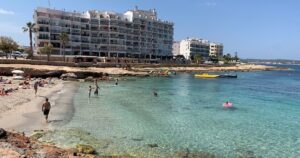
For most of us it is the sea temperature that really decides when to go (though, like us, you may just dive in whatever the weather). The water around Ibiza ranges over the year from roughly 14 °C in February to 26 °C in August. Comfortably warm for swimming usually means 22 °C or more — and the sea reaches that from about June to October.
- May (~18 °C): hardy swimmers will manage; most visitors just dip their toes.
- June (~21 °C): swimming is pleasant now, the sea is getting going.
- July to September (~24–26 °C): the sweet spot — the water is warm even at dusk.
- October (~22 °C): still fine for a swim, but the crowds have gone.
- November (~19 °C): too chilly to swim, but perfect for a walk along the shore.
The sea is at its coldest, paradoxically, at the tail end of winter — in February — because it has been gradually cooling all season. It is warmest in August and into early September.
When is Ibiza at its hottest
The peak of summer belongs to July and August. Daytime highs regularly climb towards 30 °C and overnight the temperature rarely drops below 22 °C — the so-called tropical nights, when sleeping without air conditioning or a fan is hard work. August tends to be a touch hotter and muggier than July, as the heat of the whole summer builds up and the sea reaches its warmest.
In summer the sun shines for 10–11 hours a day and the sky is mostly cloudless. If you struggle in the heat, you may prefer June or September, when the days are still warm (around 27–28 °C) and sunny but without the fierce August glare. September is widely reckoned to strike the best balance between heat and comfort.
💡 Tip: In the height of summer, expect harsh sun and little shade on the beaches. Bring a hat, high-factor sun cream and plenty of water — and save the hottest hours, roughly midday to three o’clock, for a shady spot or a siesta. That is what the locals do.
When does it rain in Ibiza
Summer in Ibiza is strikingly dry — July averages just around 5 mm of rain across the whole month, so a washout is all but impossible. Most of the rain falls in autumn and winter, with October the wettest month (around 70 mm), followed by November and December.
It is not the steady, all-day drizzle you might know from home, though. Typically a short, heavy shower or a thunderstorm rolls in, dumps a lot of water at once and then clears. Even in the wetter months there are plenty of sunny days. Spring (March to April) sees the odd downpour too, but usually less than autumn.
The Ibiza season (May–October)
The tourist season in Ibiza runs roughly from mid-May to mid-October, peaking from June to September. Within that window the island is in full swing — beaches with sunbeds, restaurants, clubs, boat trips and public transport all running at full tilt. The weather is dependable: warm, dry and a warm sea.
- May and early June: warm and sunny, the sea still fresh, but far fewer people and lower prices — the island’s calmer side.
- July and August: the peak of everything — hottest, busiest, priciest. The best sea, but packed beaches and heaving clubs.
- September: for many the best compromise — the warmest sea of the year, still summery weather, with the crowds and prices already easing.
- October: you can still swim, but the season is winding down and the odds of rain are rising.
Which of these months suits you — for peace, for partying or for your budget — is something we unpack in our guide to a holiday in Ibiza. And if you are only planning a quick escape, take a look at a weekend in Ibiza.

Ibiza off-season (November–April)
Out of season Ibiza is a completely different island — quiet, empty and cheap, but also noticeably cooler. From November to March daytime temperatures sit around 15–18 °C, it is too cold to swim, and some hotels, restaurants and clubs in the resorts close. What stays open is mainly Ibiza Town (Eivissa) and the larger centres.
That does not mean it is not worth going, though. Winter and early spring are ideal for hiking, cycling and sightseeing — the countryside is green after the rains, you have the old town and the backcountry almost to yourself, and the sun often shines even in January. Just pack a jumper and a light jacket for the windy, cooler evenings. For ideas beyond the beach, see our guide to what to see in Ibiza.
💡 Tip: Spring versus autumn? At first glance they look similar, but there is a catch — in autumn the sea is warm (still 22 °C in October), whereas in spring the air is just as warm but the water is cold (only 16 °C in April). If you want to get in the water, autumn wins.
The Ibiza club season (May–October)
Ibiza is not only about the weather — it is about the clubs, and they follow their own calendar, which largely overlaps with the tourist one. The big clubs such as Pacha, Amnesia, Hï and Ushuaïa run seasonally: they are shut through winter and reopen as the warm weather arrives. If you are coming for the nightlife, plan your dates around them.
- Opening parties (late April to May): the season kicks off with big opening events. Most of the main clubs open in the last week of April or during May.
- Peak (June to September): the clubs run at full pelt every night, with the strongest line-ups and the highest prices for both entry and accommodation. It is also the hottest stretch, with the sea at its best.
- Closing parties (first half of October): the season wraps up with emotional closing events, after which the big clubs shut for winter.
Outside this window, roughly November to April, clubbing Ibiza is effectively out of action. So the weather and the nightlife point the same way: the heart of the action runs from May to October, peaking in summer. For tips on timing your trip by the kind of holiday you want, see our guide to a holiday in Ibiza.
💡 Tip: If the club scene is your priority, check your chosen club’s programme for the exact date before you book flights. Line-ups and resident nights change every season, and even in peak season there is a difference between a weeknight and a weekend.

What to pack for Ibiza by season
What goes in your case depends mostly on the month. Because the weather swings from a hot, dry summer to a cooler, rainier winter, so does what you will find useful.
Summer (June–September)
- Light, airy clothing, swimwear (two sets is no bad idea, so they can dry), sandals and water shoes for the rocky coves.
- Serious sun protection: high-factor sun cream, a hat and sunglasses. The sun is fierce and shade on the beaches is scarce.
- A light jumper or a scarf for the evening. Even in summer the sea breeze can pick up and evenings turn fresh.
- Plenty of water for the day, and your own shade (a blanket, a beach parasol) if you are heading for wild coves with no facilities.
Spring and autumn (April, May, October)
- Layers: warm by day, cooler morning and evening. Add a jumper and a light jacket.
- A rain poncho or a small umbrella, mainly in autumn when short showers and storms are more likely.
- Comfortable footwear for hikes and walks. The countryside is green after the rains and it is a great time to explore.
- Packing swimwear makes sense mainly in autumn, when the sea is still around 22 °C in October.
Winter (November–March)
- Warmer clothing for layering, a jumper, a jacket and a windproof for chilly evenings.
- A waterproof layer and sturdy shoes. Winter is the rainiest part of the year.
- Give swimming a miss — the sea is cold. You will be glad of your hiking and cycling kit instead.
Where to next
Frequently asked questions about Ibiza weather
What is the weather like in Ibiza?
Ibiza has a classic Mediterranean climate — mild, fairly rainy winters and hot, dry, sunny summers. In summer daytime temperatures sit around 28–30 °C with barely any rain; in winter they are around 15–16 °C, with most of the rain falling in autumn and winter.
When is Ibiza at its hottest?
It is hottest in July and August, when daytime highs regularly reach 30 °C and nights stay tropical (above 22 °C). August tends to be a little hotter and muggier than July, and the sea is at its warmest of the whole year.
What is the sea temperature in Ibiza?
The sea ranges over the year from about 14 °C in February to 26 °C in August. For comfortable swimming (22 °C and up) the best stretch is June to October, with the water warmest in August and early September.
When can you swim in Ibiza?
The swimming season runs roughly from June to October, when the sea holds 21–26 °C. Hardy swimmers will get in as early as May (~18 °C), but that is bracing for most visitors. By November the water drops towards 19 °C and it is too chilly for a swim.
Does it rain in Ibiza in summer?
Barely. Summer is very dry — July averages just around 5 mm of rain across the whole month. Most rain falls in autumn and winter, mostly in October, and it comes as short showers and thunderstorms rather than steady all-day rain.
When is the Ibiza season?
The main tourist season runs from mid-May to mid-October, peaking from June to September. During this period the weather is most reliable, the sea is warm and the island is in full swing. Off-season it is quiet, but cool, and some venues close.
Is it worth visiting Ibiza in winter?
Yes, but with a different aim than swimming. Winter temperatures around 15 °C are ideal for hiking, cycling and exploring old Eivissa without the crowds. The sea is cold and some resorts are shut, so pack warmer clothing for chilly evenings.
When is the best time for a quiet holiday in Ibiza?
Weather-wise, September: the sea is at its warmest of the year, the days are still summery and sunny, but the crowds and prices are already easing. Late May and early June are great too — warm and calm, though the sea has not fully warmed up yet.
When do the clubs open in Ibiza?
The club season runs roughly from May to October. The big clubs open with opening parties in late April and May, run at full tilt from June to September, and bid farewell with closing parties in the first half of October. In winter the main clubs are shut.
What should you pack for Ibiza?
It depends on the month. In summer, light clothing, swimwear, strong sun protection and a jumper for fresh evenings by the sea. In spring and autumn add a light jacket and a rain poncho; in winter, warmer layers and a waterproof jacket for the cooler, rainier days.
Potřebujete pomoct s cestováním?
-
Ubytování 🏨
Vyberte si to nejlepší ubytování, ať už jste kdekoliv, přes Booking.com. -
Půjčení auta 🚗
Auto si snadno najdete přes Booking.com, kde máte často slevu díky ubytování, nebo Rentalcars.com, kde porovnáte nabídky většiny půjčoven. -
Zážitky 🎟️
Přes GetYourGuide.com si vyberete z nejrůznějších výletů i zážitků po celém světě, navíc se zrušením zdarma do 24 h předem.