20 Most Beautiful Places in Poland: A Complete Travel Guide
Last updated 30.8.2026
Plenty of people still file Poland under “cheap shopping and grey suburbs” and have no idea what they’re missing. In reality, the most beautiful places in Poland hold their own against far more famous corners of Europe: turquoise mountain lakes cradled beneath the Tatra peaks, the grassy ridges of the Bieszczady where you can walk for hours without meeting a soul, storybook old towns like Krakow and Gdańsk, an underground cathedral carved entirely from salt, and even a slice of proper desert with shifting dunes on the Baltic coast. We’ve pulled together 20 places that make Poland well worth the trip.
The most beautiful places in Poland at a glance
For scenery and nature: Morskie Oko and the Tatras, Śnieżka, the Stołowe (Table) Mountains, the Bieszczady, rafting the Dunajec in the Pieniny, the colourful lakes of the Rudawy, the dunes near Łeba and the Masurian Lakes.
For cities and heritage: Krakow, Wrocław, Gdańsk, Warsaw, Toruń, Kazimierz Dolny, Malbork Castle, the Wieliczka Salt Mine and the painted village of Zalipie.
For wildlife: Białowieża Forest (European bison) and the Bieszczady (bears and wolves in genuine wilderness).
Best time to go: May to September; the mountains are loveliest in September, while cities and underground sights are worthwhile all year.
National park entry: usually a token 9–15 PLN; Malbork Castle and Wieliczka run to around 80–130 PLN.
Currency: the Polish złoty (PLN); 1 PLN ≈ €0.23 / £0.20.
When Is the Best Time to Visit Poland?
For the outdoors there’s one simple rule: the deeper into the mountains you go, the more it pays to wait for summer and early autumn. The Tatras, the Bieszczady and the Karkonosze are at their best from June to October, and September is our secret weapon — clear views, comfortable temperatures and far fewer people than in August. National park entry and seasonal attractions (the Dunajec rafts, the electric buggies out to the dunes) generally run from around April or May until October.Cities like Krakow, Wrocław and Gdańsk, along with underground sights such as Wieliczka, are a joy year-round. Summer is lively and warm, but the Christmas markets and snow-dusted market squares have a magic all of their own. If you can’t bear crowds, steer clear of the big cities on long weekends and at the height of summer.Getting around is easier than you’d expect. Poland is well connected by air — Krakow, Warsaw, Gdańsk and Wrocław all have busy international airports — and the country’s south, where most of the mountains sit, is an easy hop from the Czech and Slovak borders. Drivers will be glad to hear that private cars don’t need a motorway vignette in Poland; tolls apply only on a few stretches of motorway. Without a car, the train is your friend: the direct Baltic Express links Prague with Wrocław, Poznań and Gdańsk, and fast domestic services connect all the major cities.
The 20 Most Beautiful Places in Poland
We’ve ordered them from natural wonders through to urban gems. For each one you’ll find where it is, what makes it special, how much entry costs or how to get there — plus one tip from experience.
1. Morskie Oko and the Polish Tatras
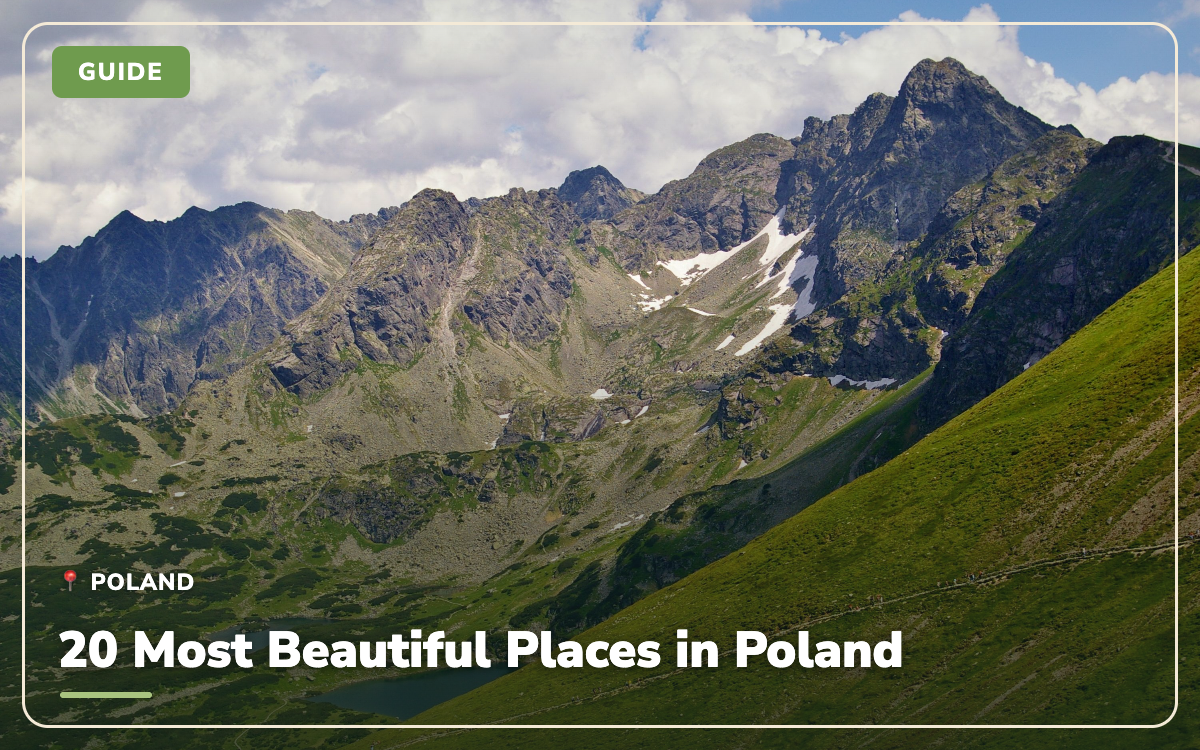
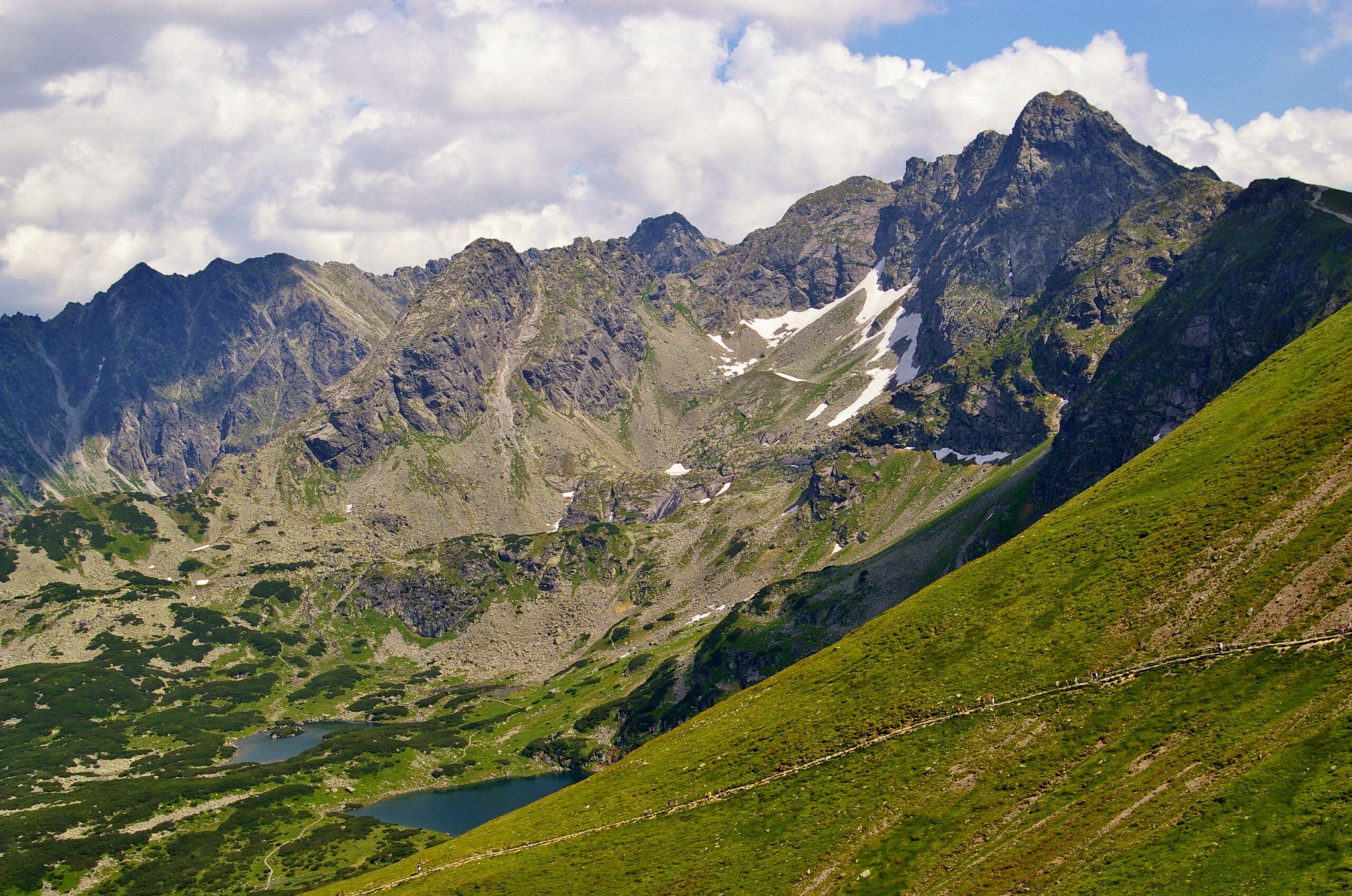
The Tatra lake Morskie Oko may just be the single most photogenic spot in all of Poland. A sheet of turquoise water hemmed in by a wall of peaks — the Mięguszowieckie summits and Rysy (2,499 m, the highest point in Poland) — it looks like something out of a fairy tale, the mountains mirrored perfectly on its surface. Where: southern Poland, in Tatra National Park above Zakopane. A comfortable paved road of roughly 8 km leads up from the Palenica Białczańska car park (about a 2-hour walk uphill). Entry to the park is 11 PLN (≈ €2.50). We’ve gathered more routes and tips in our dedicated guide to the Polish Tatras.
💡 Tip: Set off on the trail just after seven in the morning. The car park fills up early in season, and by ten you’ll be walking in an unbroken line of people. You can stay right in Zakopane →, just a few minutes’ drive from the car park.
2. Śnieżka and the Polish Karkonosze (Giant Mountains)
The Karkonosze aren’t only Czech. On the Polish side, the ascent of Śnieżka (1,603 m) starts from the resort of Karpacz, and on the way you’ll pass glacial cirques, tarns and the highest waterfall of the Polish Giant Mountains — the Kamieńczyk Waterfall (about 27 m) tucked away in a gorge. Where: south-western Poland, Karkonosze National Park (Karkonoski Park Narodowy). Entry to the park is 11 PLN, with a separate fee of around 16 PLN for the waterfall. A chairlift whisks you up to Kopa, from where it’s about an hour on foot to the summit of Śnieżka. All the details are in our guide to the Polish Karkonosze.
3. The Stołowe Mountains — Szczeliniec and the Errant Rocks
Just over the border by the spa town of Kudowa-Zdrój lie the Góry Stołowe — flat-topped sandstone “table” mountains riddled with rock labyrinths. Szczeliniec Wielki (919 m) is a maze of towers, chasms and stone staircases, while Błędne Skały (the Errant Rocks) are narrow clefts between giant boulders that you squeeze through like alleyways. Where: south-western Poland, in Stołowe Mountains National Park. Entry to each attraction is around 15 PLN. This is the most accessible Polish mountain range of all, an easy drive from the Czech frontier.
💡 Tip: In season, both the Errant Rocks and Szczeliniec use timed entry slots to manage numbers. At weekends, buy your ticket online in advance and reach the Errant Rocks by car early in the morning — the narrow access road clogs up by midday and runs one-way for a while.
4. The Bieszczady — Wild Grassy Ridges
The south-eastern tip of Poland is one of the wildest corners of Central Europe. The połoniny — the treeless grassy ridges of the Bieszczady — serve up 360-degree views and the feeling that you have the world to yourself. The highest peak, Tarnica (1,346 m), and neighbouring Połonina Caryńska are among the finest walks in the country. Where: the far south-east, near the borders with Slovakia and Ukraine, in Bieszczady National Park. Entry to the park is just around 9–10 PLN. Bears, wolves and lynx roam here, and the sky is so dark that the area forms part of a cross-border dark-sky reserve.It’s remote, so treat the Bieszczady as somewhere to settle in for a longer stay. The reward is a peace and wildness that’s hard to find anywhere else in Europe.
5. The Pieniny and Rafting the Dunajec
The Dunajec River cuts through the limestone massif of the Pieniny to create one of the most picturesque gorges in Central Europe. You can float down it on traditional wooden rafts lashed together and steered by local raftsmen (flisacy) in folk costume, while the Three Crowns (Trzy Korony) crag rears up overhead. Where: southern Poland near the Slovak border, in Pieniny National Park; the trip sets off from the wharf at Sromowce Wyżne (Kąty). The classic route down to Szczawnica is about 18 km and takes roughly two hours. Entry: the ride costs in the region of 105 PLN for an adult, less for children, with the season running roughly from April to October. It pairs beautifully with a trip to the Tatras and Morskie Oko.
💡 Tip: You can make the return journey easier. For a small surcharge you can buy a ticket that includes a bus back to Sromowce, or you can cycle the trail that follows the river through the gorge and offers views from the other side.
6. Ojców National Park and Pieskowa Skała
A short way north of Krakow lies Poland’s smallest national park, squeezed into the narrow limestone valley of the Prądnik stream. Along the way you’ll pass the King Łokietek Cave, bizarre rock towers and — above all — Maczuga Herkulesa (Hercules’s Club), a lone rock pinnacle around 25 metres tall that looks as though it could topple at any moment. Above it rises the fairy-tale Renaissance castle of Pieskowa Skała. Where: Lesser Poland, about 20 km north of Krakow. Walks through the valley are free; the castle museum costs around 20 PLN, and the courtyard is usually open to wander.
7. The Colourful Lakes of the Rudawy Janowickie
Few people expect to stumble on lakes the colour of turquoise, copper and ochre in Polish Silesia. The Kolorowe Jeziorka near the village of Wieściszowice are four small lakes in flooded pyrite mines: yellow, purple, blue and green. The shades come from dissolved iron and copper in the rock, and they shift with the light and the seasons. Where: Lower Silesia, in the Rudawy Janowickie, not far from the Karkonosze or Wrocław. Entry is free, and you can loop around all the lakes in about an hour and a half. It slots easily into a trip to the Stołowe Mountains or the Polish Karkonosze.
8. The Shifting Dunes near Łeba (Słowiński National Park)
A patch of desert by the Baltic Sea? In Słowiński National Park, near the little town of Łeba, you’ll find some of the largest shifting sand dunes in Europe. The wind nudges them along by several metres a year, and from the crest of the tallest, the Łącka dune (over 40 m), you have the sea on one side and a lake on the other. Where: the northern Baltic coast, north of Łeba. Entry to the park is around 10 PLN. From the Rąbka car park it’s about 3.5 km to the dunes — on foot, by bike, by electric buggy or by boat across the lake. We cover the dunes and the other resorts in our guide to the Polish seaside.What to see in Poland – Łeba
💡 Tip: Head out to the dunes in the late afternoon — the light is softer, the heat eases off and the sand no longer burns underfoot. You won’t need hiking boots; sandals are fine in the sand, but do take water.
9. The Masurian Lakes
More than twenty lakes strung together into a waterway over a hundred kilometres long, sailing boats stretching to the horizon and endless sunsets over the water — this is Masuria. The largest lake, Śniardwy (over 110 km²), is so vast it’s nicknamed the “Masurian Sea”. Where: north-eastern Poland. The resorts of Mikołajki and Giżycko are at the heart of the action, and this is where you hire sailing boats and houseboats. It’s a paradise for sailors, but also a calm spot for cycling and lakeside strolls. If you can’t sail, you can hire a boat with a skipper or simply take a pleasure cruise. Masuria wouldn’t be Masuria without grilled fish by the harbour and a quiet that’s broken only by waves lapping against the hulls at dusk.
💡 Tip: Houseboats (pływające domki), which you can pilot without a licence, are a wonderful way to experience Masuria from the inside — you sleep on the water and wake up to coffee with a lake view. Book well ahead, though; in summer they go fast, sometimes half a year in advance.
10. Krakow — Royal Elegance
For us, Krakow is the most beautiful city in Poland. A UNESCO-listed medieval core, one of the largest market squares in Europe (Rynek Główny) with the Renaissance Sukiennice cloth hall, St Mary’s Basilica — from whose tower a trumpeter sounds the hejnał every hour — and the royal Wawel castle above the Vistula. Add to that the bohemian Jewish quarter of Kazimierz. Where: southern Poland, an easy drive from the Czech and Slovak borders. Wandering the square and the streets is free; you only pay for individual monuments and towers.
💡 Tip: Climb the tower of St Mary’s Basilica for the view over the square — and time it for the top of the hour, when the trumpeter plays the hejnał. Look for a room right in the Old Town of Krakow → so everything is within walking distance.
11. Wrocław — A City of Islands and Gnomes
Wrocław sits on a dozen islands linked by more than a hundred bridges and boasts one of the largest market squares in Europe, complete with a magnificent Gothic town hall. Its oldest district, Ostrów Tumski, with its cathedral and antique gas lamps, is at its most romantic at dusk, when a lamplighter still lights them by hand. And then there are the gnomes — more than a thousand little bronze figures scattered across the city, which children love to hunt down. Where: south-western Poland, an easy reach from the Czech border. Both the stroll and the gnome hunt are free. Don’t miss the panoramic Racławice Panorama (a huge circular painting of the battle) and a beer on the square — Wrocław is a student city and stays lively well into the night. It combines beautifully into a single weekend with the Stołowe Mountains or the Karkonosze on the way back.
12. Gdańsk and the Tricity
Rainbow-coloured merchant houses along the Długi Targ, the Gothic harbour crane Żuraw over the Motława River and the atmospheric Mariacka lane with its terraces and stone gargoyles — Gdańsk is the most beautiful coastal city in Poland. Together with the spa town of Sopot (home to the longest wooden pier in Europe) and the port city of Gdynia, it forms the Tricity, which you can travel between easily on the SKM suburban railway. Where: the northern Baltic coast. Early in the morning, before the crowds arrive, the Motława waterfront is a picture-perfect postcard.What to see in Poland? Gdańsk
13. Warsaw — A Capital Risen from the Ashes
Warsaw lay largely in ruins after the Second World War, which makes today’s Old Town (Starówka) all the more remarkable: faithfully rebuilt down to the last detail and UNESCO-listed precisely as an exceptional reconstruction. Colourful squares, the Royal Castle and the Vistula embankment contrast with modern skyscrapers and the socialist-era Palace of Culture and Science. Where: central Poland. For calm, head to Łazienki park with its peacocks and summer palace over the water. Strolling the Old Town is free; you only pay for individual monuments and viewpoints.
14. Toruń — Copernicus’s Gothic City
One of the few Polish cities to come through the wars largely unscathed, so its Gothic Old Town on the banks of the Vistula is the real thing, not a reconstruction (UNESCO). The astronomer Nicolaus Copernicus was born here, and the city still bakes its famous Toruń gingerbread (pierniki), a tradition going back centuries. Where: northern Poland, roughly halfway between Warsaw and Gdańsk. The brick churches, the leaning tower and the riverbank with its view of the city skyline are among the loveliest in the country. Wandering the centre is free.
15. Kazimierz Dolny — The Painters’ Town
A picturesque Renaissance town on the banks of the Vistula that painters, photographers and day-trippers have adored for well over a century. Ornate merchant houses ring the triangular market square, and a ruined castle and a steep lookout tower stand above the town. Where: eastern Poland, in the Lublin region. The surrounding loess ravines (wąwozy), laced with footpaths, are made for walking, and in season pleasure boats call here along the Vistula. Entry to the town is free; you only pay for the castle ruins and some galleries.
16. Malbork Castle — The Largest Brick Castle in the World
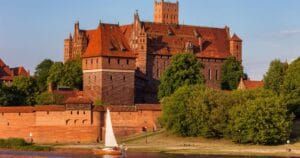
The monumental Malbork, above the Nogat River, is the largest Gothic brick castle in the world and the former seat of the Grand Master of the Teutonic Knights (UNESCO). Where: northern Poland, about 60 km from Gdańsk — perfect to combine into one trip.Entry to the main circuit with an audio guide costs around 80 PLN (≈ €19), less at a concession rate; on Mondays the outer courtyard is often open free of charge. The complex is so vast that a visit can easily take three hours — you’ll walk through refectories, the chapter house and defensive corridors. The evening floodlighting, mirrored in the river, is one of the finest sights in the whole country; the best view is from the opposite bank of the Nogat or from the bridge.
17. The Wieliczka Salt Mine — An Underground Cathedral
Just outside Krakow you descend into one of the oldest salt mines in the world (UNESCO). Nine levels of galleries, lakes in the salt, sculptures carved from rock salt and the magnificent Chapel of St Kinga — an entire underground cathedral hewn from pure salt, where mass is still held today. Where: Wieliczka, about 15 km from Krakow. Entry to the tourist route costs roughly 130 PLN (≈ €30), always with a guide; the route runs for more than 3 km and you’ll go down over 350 steps. It’s well worth it — even in summer it’s a cool few degrees down there, so take an extra layer.
💡 Tip: Tickets and tours for Wieliczka, Auschwitz-Birkenau and other trips from Krakow sell out ahead in season. Book them in advance through GetYourGuide → so you skip the queues and lock in your time slot.
18. Zalipie — The Painted Village
One of the most unusual places in Poland. In the small village of Zalipie, the women have been painting colourful floral patterns on house fronts, fences, sheds, wells — even interior walls and crockery — for more than a hundred years. The tradition began as a way to hide soot stains on the plaster and grew into a living folk art. Where: south-east of Krakow (about 80 km). Entry to the village is free, but do be considerate — these are private homes. It’s worth calling in at the “House of the Women Painters” (Dom Malarek).
19. Białowieża Forest — In Search of Bison
Białowieża Forest is the last remnant of the primeval woodland that once blanketed lowland Europe, and home to the largest free-roaming population of European bison (UNESCO). Where: eastern Poland, near the Belarusian border. You can only enter the strictly protected core zone with a licensed guide; with a little luck you’ll glimpse bison in the reserve or in the surrounding meadows at dawn. It’s a destination for lovers of nature and quiet, not for travellers in a hurry.
20. The Beskids from the Polish Side
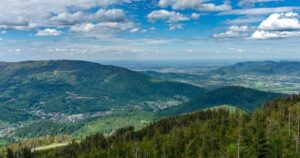
The gentlest of Poland’s mountains. The Silesian and Żywiec Beskids offer mellow forested ridges, wooden churches, shepherds’ huts selling ewe’s-milk cheese and easygoing walks without the crowds. Where: southern Poland right by the border, around the resort of Szczyrk and the peak of Skrzyczne (1,257 m). Ideal for an undemanding weekend, and for skiing in winter. You’ll find specific route ideas in our guide to the Polish Beskids.
Suggested Routes: How to String the Places Together
Most of the finest places fall into logical loops depending on how much time you have and which part of the country you start from.
Long weekend in the south-west: the Stołowe Mountains → the Errant Rocks → Wrocław → the Polish Karkonosze. Everything sits close together near the Czech border, ideal for 3–4 days.
Long weekend in the south (Krakow base): Krakow → the Wieliczka Salt Mine → Ojców park with Pieskowa Skała → a day out to Zalipie or south to the Tatras, Morskie Oko and the Dunajec rafts. Base yourself in Krakow.
A week in the north: Gdańsk and the Tricity → Malbork Castle → the dunes near Łeba → and on to the Masurian Lakes if time allows. Here a car and a slower pace really pay off.
The grand nature loop (7–10 days): the Tatras and Morskie Oko → the Bieszczady → Białowieża Forest → Masuria. A lot of kilometres, but the reward is Poland at its wildest.
💡 Tip: Don’t try to mix north and south in one short trip — Poland is a big country, and the drive from Krakow to Gdańsk can easily take 6 hours. Pick one region and get to know it properly.
Practical Info: Getting Around, Currency, When to Go
By car: southern Poland (the Stołowe Mountains, the Karkonosze, the Beskids, Krakow, the Tatras) is an easy weekend destination from the Czech and Slovak borders. The north (Gdańsk, Malbork, the dunes, Masuria) is a longer haul, so treat it as a proper holiday. Private cars don’t need a motorway vignette; tolls apply only on selected stretches of the A1, A2 and A4 motorways.Without a car: the direct Baltic Express train runs from Prague via Wrocław and Poznań to Gdańsk and Gdynia, and comfortable direct services connect Krakow and Wrocław. Within the cities, public transport is cheap and easy.Currency and prices: the Polish złoty (PLN) is the currency, with 1 PLN ≈ €0.23 / £0.20. Poland remains one of the most affordable destinations in Central Europe — national park entry is a token 9–15 PLN, and a meal at an everyday spot (a bar mleczny milk bar or a pizzeria) is easy on the wallet. Only the big attractions like Malbork and Wieliczka, and accommodation at peak times, cost noticeably more.
Item
Approximate cost
National park entry
9–15 PLN (≈ €2–3.50)
Malbork Castle (main circuit)
around 80 PLN (≈ €19)
Wieliczka Salt Mine (tourist route)
around 130 PLN (≈ €30)
Accommodation (guesthouse / apartment, 2 people)
from ~250 PLN/night (≈ €58)
Lunch at a bistro / milk bar
30–60 PLN (≈ €7–14)
When to go: the mountains and countryside from June to October (September is best), cities and underground sights all year round. The Baltic swimming season runs from July to mid-September.
Where to stay in Poland
Poland is big and prices vary a lot by region. Kraków and Wrocław are the priciest, Masuria and the east the cheapest, and Zakopane and the Baltic have a short but very expensive season.
Budget: a hostel bed or a private room roughly PLN 80 to 150 per person per night.
Mid-range: a double room in a big-city hotel PLN 300 to 450 with breakfast.
Mountains and coast: in Zakopane and on the Baltic peak-season prices double and rooms sell out months ahead.
Best value: smaller cities such as Toruń, Lublin or Przemyśl, where beds are cheap and the old town is just as good.
Prices and ratings are indicative (source: GetYourGuide); you’ll see the latest once you click through.
Which is the most beautiful place in Poland?
It comes down to taste, but the Tatra lake Morskie Oko is most often named the most photogenic natural spot, and Krakow the most beautiful city. Other contenders for the most beautiful places in Poland include the Bieszczady, the Stołowe Mountains, the Wieliczka Salt Mine and the old cores of Gdańsk and Wrocław.What are the best places to visit in Poland for a first trip?
For a first visit, base yourself in Krakow — it puts the Old Town, the Wieliczka Salt Mine, the Tatras and Morskie Oko all within reach. In the south-west, the Stołowe Mountains, the Errant Rocks, Wrocław and the Polish Karkonosze cluster together nicely, while the north pairs Gdańsk with Malbork Castle and the Baltic dunes. A long weekend is enough for any one of these clusters.Which Polish city is the most beautiful?
For many, Krakow is the most beautiful Polish city, with its vast market square, Wawel Castle and the Kazimierz quarter. Wrocław runs it close, though — a city built across a dozen islands, with a grand market square, the romantic Ostrów Tumski island and more than a thousand little gnomes to hunt down. Both make ideal weekend breaks.How much does the Wieliczka Salt Mine cost?
The guided tourist route works out at around 130 PLN (≈ €30) for an adult, with concessions cheaper. The route runs for more than 3 kilometres, you’ll go down over 350 steps, and it’s a cool few degrees underground — so take an extra layer. Book your tickets in advance.Where are the shifting sand dunes in Poland?
In Słowiński National Park, near the town of Łeba on the Baltic coast. They’re among the largest shifting dunes in Europe, with the tallest, the Łącka dune, topping 40 metres. Entry to the park is around 10 PLN, and from the Rąbka car park you can reach the dunes on foot, by electric buggy or by boat.Where can I see European bison in Poland?
In Białowieża Forest, near the Belarusian border, home to the largest free-roaming population of European bison. You can only enter the strictly protected zone with a licensed guide; you may also spot bison in the reserve or in the surrounding meadows, best of all at dawn.When is the best time to visit the Polish mountains?
Best of all from June to October. Our favourite is September — the views tend to be clear, the weather is still pleasant and there are far fewer tourists than in August. The season for park entry and seasonal attractions runs from roughly April or May to October.What is Zalipie and is it worth visiting?
Zalipie is a village south-east of Krakow where locals have been painting colourful floral patterns on house fronts, fences and wells for over a hundred years. It’s a living folk art and one of the most unusual places in Poland. Entry is free — just be considerate, as these are private homes.Do you need a motorway vignette in Poland?
Not for private cars. Tolls apply only on selected stretches of the A1, A2 and A4 motorways — paid either at toll gates by cash or card, or electronically via the e-TOLL system, which is optional for private cars.Is Poland worth visiting?
Absolutely. It offers wild nature (the Tatras, the Bieszczady, dunes by the sea), gorgeous historic cities (Krakow, Gdańsk, Wrocław), unique sights like Wieliczka and Malbork, and some of the lowest prices in Central Europe. Much of the best of it is also easy to reach for a weekend from neighbouring countries.
Potřebujete pomoct s cestováním?
Ubytování 🏨
Vyberte si to nejlepší ubytování, ať už jste kdekoliv, přes Booking.com.
Půjčení auta 🚗
Auto si snadno najdete přes Booking.com, kde máte často slevu díky ubytování, nebo Rentalcars.com, kde porovnáte nabídky většiny půjčoven.
Zážitky 🎟️
Přes GetYourGuide.com si vyberete z nejrůznějších výletů i zážitků po celém světě, navíc se zrušením zdarma do 24 h předem.
Abychom poskytli co nejlepší služby, používáme k ukládání a/nebo přístupu k informacím o zařízení, technologie jako jsou soubory cookies. Souhlas s těmito technologiemi nám umožní zpracovávat údaje, jako je chování při procházení nebo jedinečná ID na tomto webu. Nesouhlas nebo odvolání souhlasu může nepříznivě ovlivnit určité vlastnosti a funkce.
Funkční
Always active
Technické uložení nebo přístup je nezbytně nutný pro legitimní účel umožnění použití konkrétní služby, kterou si odběratel nebo uživatel výslovně vyžádal, nebo pouze za účelem provedení přenosu sdělení prostřednictvím sítě elektronických komunikací.
Předvolby
Technické uložení nebo přístup je nezbytný pro legitimní účel ukládání preferencí, které nejsou požadovány odběratelem nebo uživatelem.
Statistiky
Technické uložení nebo přístup, který se používá výhradně pro statistické účely.Technické uložení nebo přístup, který se používá výhradně pro anonymní statistické účely. Bez předvolání, dobrovolného plnění ze strany vašeho Poskytovatele internetových služeb nebo dalších záznamů od třetí strany nelze informace, uložené nebo získané pouze pro tento účel, obvykle použít k vaší identifikaci.
Marketing
Technické uložení nebo přístup je nutný k vytvoření uživatelských profilů za účelem zasílání reklamy nebo sledování uživatele na webových stránkách nebo několika webových stránkách pro podobné marketingové účely.