Last updated 30.8.2026
The Polish Tatras pack proper, jagged high mountains into a surprisingly small corner of southern Poland — and they are far easier to reach than you might think. The gateway is Zakopane, Poland’s self-styled “mountain capital”, where the busy Krupówki promenade hums with life, grilled oscypek cheese scents the air, and trails fan out in every direction towards scenery that draws crowds year after year. We love these mountains, so here is how to plan a trip to the Polish Tatras and actually enjoy them.
The Polish Tatras in a nutshell
- What it is: the Polish side of the Tatra Mountains, with Zakopane as your base — busier than the Slovak side, but cheaper food and lodging and a lively Highlander (Górale) culture.
- When to go: summer for hiking, late March into early April for the flowering crocuses, and April or September for the cheapest beds.
- How to get there: fly or take the train to Kraków, then a bus to Zakopane (~2 hours, from ~27 PLN); direct coaches also run from several European cities.
- The icon: Morskie Oko — the largest lake in the Tatras; 9 km on an easy paved road from the car park.
- Budget: a dorm bed from ~30–60 PLN a night, lunch in a milk bar ~18–25 PLN, park entry to the Tatra National Park 11 PLN.
- Book ahead: the e-ticket for the Morskie Oko car park (at least 3 days in advance) and online tickets for the PKL cable car.
- How long: a long weekend (3 days) gives you a taste; for a relaxed trip allow 4–5 days — one for Morskie Oko, one for the cable car, one for a quieter valley and one for the thermal baths or a rainy day.
When to visit the Polish Tatras
The Polish Tatras are beautiful all year round, but every season has its own character (and its own crowds). The main hiking season is summer, from late June to September, when the trails are clear of snow and the weather is at its most settled. Bear in mind, though, that mountain weather changes fast and afternoon thunderstorms are common in summer, so it pays to set off early in the morning.
Spring has one real showstopper: from late March into early April the crocuses bloom in the Chochołowska Valley and the whole valley turns into a carpet of purple. It is a glorious sight, but at weekends up to 50,000 people a day arrive, and the car park at Siwa Polana is full well before eight in the morning. If you want peace and the lowest room rates, aim for April or September, outside the main rush.
💡 Tip: Wherever you are heading, go early. The crowds and the cable-car queues build through the morning — set off at first light and you get the first half of the trail to yourself, and make it back before the afternoon storms roll in.
How to get to the Polish Tatras
Reaching the Polish Tatras is easier than most people expect. There are two straightforward options:
- Via Kraków: usually the cheapest and most flexible route. Fly or take the train to Kraków, then carry on by bus to Zakopane — roughly 2 hours, with tickets from ~27 PLN. Kraków is well worth a stop in its own right.
- Direct by coach: operators such as FlixBus run direct services to Zakopane from several Central European cities. Handy if you would rather not change along the way.
If you are sorting out the journey via Kraków, you can compare connections and any flights here: transport and flights via Kraków →
Driving works too, but be warned that parking at Morskie Oko has to be booked as an e-ticket in advance, and in high season traffic and parking in Zakopane are a real headache. In any case, most places can be reached from Zakopane by regional buses and shared minibuses (busiki).
How to get around the Tatras without a car
This is the secret to an easy trip. From the bus station in Zakopane (a short walk from Krupówki), shared minibuses (busiki) run to practically every trailhead — to Palenica Białczańska below Morskie Oko, to Kuźnice below the Kasprowy cable car, and into the Kościelisko and Chochołowska valleys. They run frequently, you pay the driver in cash, and a one-way ride costs roughly 10–15 PLN (≈ £2–3) depending on distance.
Around Zakopane itself there are town buses — the most useful is the line to Kuźnice, where the cable car starts. For Morskie Oko, the national park also trials electric buses (usually from late April into summer) that carry you part of the way along the paved road; tickets are bought online in advance on the TPN website. In winter these same town services and shuttles to the individual ski areas do the job of a ski bus.
💡 Tip: If you are heading to Morskie Oko or the Kościelisko Valley without a car, take a busik — you skip the hassle of the parking e-ticket and the stress of full car parks. On the way back, expect a queue for the minibus in the afternoon, so it pays to start down early.
Where to stay in Zakopane
Zakopane is the natural base for the whole of the Polish Tatras — everything, from the big hikes to the cable cars, starts from here. You can choose from three broad approaches:
- Hostels and dorms — ideal for backpackers. A dorm bed goes for roughly 30–60 PLN a night, often just a short walk from the centre.
- Guesthouses and Highlander rooms — private rooms in traditional wooden houses, great value for money and atmosphere, often with a home-cooked breakfast.
- Apartments — best if there are a few of you, or if you want your own kitchen to save on eating out.
Whatever you choose, it is worth being within walking distance of Krupówki, or at least of the bus stops for the trails. Browse places to stay in Zakopane here: accommodation in Zakopane →
💡 Tip: Beds in Zakopane are cheapest in April and September. Whenever you go, book ahead — in high season and on the crocus weekends the best places sell out fast and prices then shoot up.
The Polish Tatras: 17 of the most beautiful places to see
Not sure what the Polish Tatras have to offer? Rest assured, it is quite a lot.
1. Morskie Oko — the icon you simply have to see
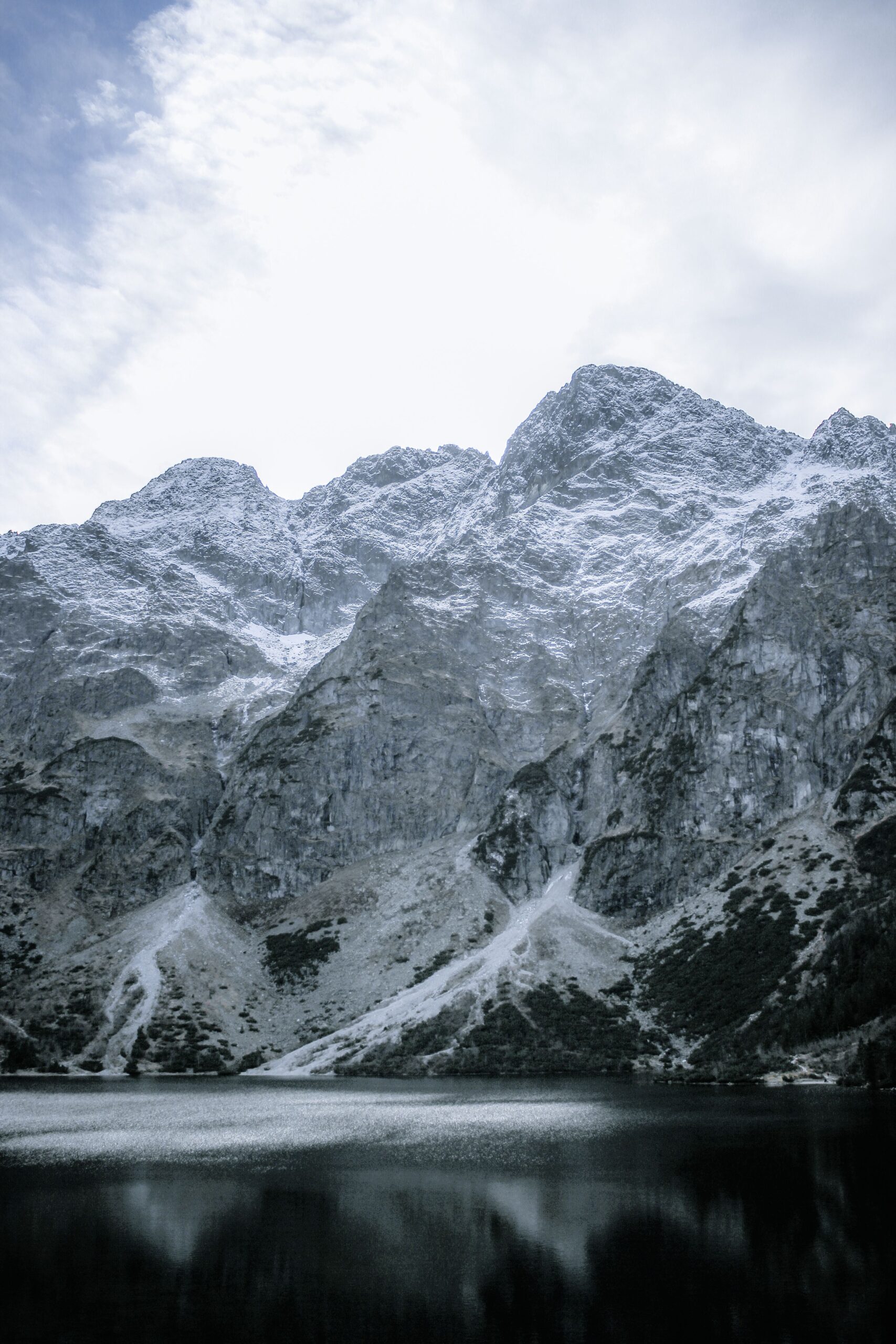
Morskie Oko (1,395 m) is the largest lake in the Tatras and the biggest draw in the Polish range. A 9 km paved road leads up to it from the Palenica Białczańska car park — easy enough for a pushchair, and about 2 to 2.5 hours on foot. Cars are banned from the final stretch. If you would rather not walk the whole way, there is a horse-drawn cart (fasiąg) — around 100 PLN up and roughly 70 PLN down, though it does not take you all the way to the lake. The park also runs trial electric buses along the same road.
💡 Tip: Buy the Palenica Białczańska parking as an e-ticket in advance at tpn.gov.pl, ideally at least 3 days ahead — the price is dynamic, roughly 36–75 PLN per car. Note that walking the trails at night is not allowed.
2. Czarny Staw pod Rysami — the reward for going further
Most people turn back at Morskie Oko, which is all the better for you. Add just about 50 minutes of walking up from the hut and you reach Czarny Staw pod Rysami (1,580 m), a higher tarn with noticeably fewer people around it. It is a little more effort, but it is well worth it.
3. Rysy — Poland’s highest peak (for experienced hikers only)
Rysy (2,499 m) is the highest mountain in Poland and the dream of many a hiker. But let’s be honest: from the Polish side the ascent is technically demanding — you’ll face chains, exposure and a full day of around 13 hours out and back. Attempt it only if you are experienced and only in good weather. This is no gentle stroll, and mountain rescue here has its hands full every season.
4. Dolina Pięciu Stawów (Valley of Five Lakes) — the finest high-mountain valley
The Valley of Five Lakes is among the loveliest scenery the Polish Tatras have to offer. It is harder to reach than Morskie Oko, but the reward is a string of glacial lakes in raw high-mountain surroundings. Many people combine it into a loop with Morskie Oko — a demanding but sensational full-day walk.
5. Dolina Gąsienicowa — a hike to the tarn below Kasprowy
When you want a proper high-mountain walk but Rysy is a step too far, Dolina Gąsienicowa is the ideal compromise. From Kuźnice, the easier yellow trail climbs gently for about 2 hours to the Murowaniec hut, where the paths meet and you can refuel. From there it is only a short way to the glacial tarn Czarny Staw Gąsienicowy, set in wild scenery below Kasprowy Wierch — allow roughly 30 minutes on foot from the hut.
Stronger walkers have their pick of tougher variants with chains (Świnica, for instance), or you can turn the valley into a longer loop back to Kuźnice — a full day of around 20 km. It’s a superb alternative when you want the high mountains without the Morskie Oko crowds.
6. Kościelisko Valley (Dolina Kościeliska) — a limestone valley with caves
For beauty without the exhaustion, head here. The Kościelisko Valley is an easy walk along the floor of a limestone valley, following the Kirowa Woda stream up to the Ornak hut — about 5 km with a gentle climb of around 180 m, so it is doable with children or even a pushchair on the surfaced path. Add the side trips and you can easily rack up 18 km, but the key thing is that there are far fewer people here than at the famous spots.
The bonus is the limestone caves. The best known is Jaskinia Mroźna — a walk-through passage about 500 m long, entry 10 PLN (≈ £2), and you’ll need a head torch. Freely accessible are Smocza Jama, with an iron ladder and via-ferrata footholds, and the low, wet Jaskinia Obłazkowa. A perfect day when you just want to switch off and stroll.
💡 Tip: Never enter any of the caves without a light — it is pitch black inside. A head torch beats your phone, because you’ll need both hands free for the ladders and rock footholds.
7. Dolina Chochołowska and the purple crocuses
The Chochołowska Valley is the longest valley in the Tatras, and from late March into early April it turns into one giant photo opportunity — flowering crocuses blanket the meadows in purple. The beauty comes at a price, though: at weekends up to 50,000 people a day arrive, and the car park at Siwa Polana is full before eight in the morning. To enjoy it in peace, come on a weekday and come early.
8. Giewont — the “national mountain” and its cross
Giewont (1,895 m) is Poland’s “national mountain”, crowned by a fifteen-metre cross. The final section of the ascent follows chains and is hugely popular — but take care: you must not go up in a storm, as there is a real risk of a lightning strike, and every year there are accidents here for exactly that reason. Watch the forecast, and if a storm threatens, abandon the climb.
9. Kasprowy Wierch — almost to the summit by cable car
If you would rather not slog uphill, the PKL cable car from Kuźnice carries you almost to the summit of Kasprowy Wierch (1,987 m). It’s the easiest way to gain height in the area — and the queues reflect that. Buy tickets online in advance: a one-way ride is roughly 119 PLN, a return 129–165 PLN. In May the cable car is often closed for maintenance.
10. Gubałówka — a panorama even in poor weather
When the tops are clouded in and hiking makes no sense, Gubałówka is a safe bet. A funicular carries you up above Zakopane, where you get a panorama of the whole Tatra range and plenty of food and souvenir stalls. Great with children, too. A return ticket costs around 44 PLN online.
11. Krupówki, oscypek and Highlander cuisine
The Polish Tatras aren’t only about the mountains — they’re about the food and the culture as well. On the Krupówki promenade you can try oscypek, a smoked sheep’s cheese grilled at a stall for ~20–28 PLN, along with kwaśnica (a sour cabbage soup) or a “brigand’s” potato pancake. For the cheapest and most authentic meal, head to the milk bars (bary mleczne) — soup, a main and a fruit compote come to ~18–25 PLN.
12. Dolina Strążyska and the Siklawica waterfall
For a real slice of nature straight out of Zakopane and with no cable cars, make for Dolina Strążyska. An easy path brings you in about 45 minutes to the Polana Strążyska clearing, facing the north wall of Giewont, and from there it is only a short way to the Siklawica waterfall, which drops in two tiers (roughly 20 m in all). The valley is ideal for families, as the climb is gentle and the path easy to follow.
13. Sarnia Skała: a viewpoint over Giewont
The unassuming summit of Sarnia Skała (1,377 m) offers one of the finest views of Giewont and Zakopane, yet it isn’t at all demanding. A loop from Dolina Strążyska or Dolina Białego takes around three hours. It’s a great choice when you want a mountain panorama but not a full-day hike.
14. Wielka Siklawa: Poland’s tallest waterfall
Wielka Siklawa, at around 70 m, is the tallest waterfall in the Polish Tatras. Here the water tumbles down from the Valley of Five Lakes into the Roztoka Valley, along which a trail runs from Palenica Białczańska. Most people combine it with the climb up to the five lakes, so in a single day you see both the waterfall and the high-mountain tarns.
15. Rusinowa Polana and Gęsia Szyja
If you’re after an easy hike with a big view, make for Rusinowa Polana. From the junction near Palenica you can reach it in about an hour, and the reward is an open panorama of the High Tatra ridges and grazing sheep. Stronger walkers can carry on to the summit of Gęsia Szyja (1,489 m), from where you can see what feels like a hundred surrounding peaks.
💡 Tip: Rusinowa Polana is ideal for families and for a first Tatra hike. There is also the little Wiktorówki mountain chapel here, and if you set off early you’ll still have the place in peace before the main wave of day-trippers arrives.
16. Wielka Krokiew: the ski jumps
A symbol of Zakopane that you can spot from town: the great ski jump Wielka Krokiew, named after Stanisław Marusarz. In winter the Ski Jumping World Cup is held here, and the atmosphere below the jump is unforgettable. Outside the competitions a chairlift takes you up to the foot of the jump, from where there is a fine view of the Tatras and the rooftops of Zakopane.
17. Orla Perć: the hardest trail in the Polish Tatras
Orla Perć is the legendary ridge route between the Zawrat and Krzyżne passes, and it is reckoned to be the most demanding waymarked trail in the Polish Tatras. Chains, iron rungs and plenty of exposed spots await. Set out here only if you are a fit and experienced hiker, in dry weather and with time to spare, because this is precisely where the most accidents happen.
💡 Tip: After a tough hike, treat yourself to the thermal baths. There are several around Zakopane — we cover them all in the dedicated section below, and in detail in our article on Polish thermal baths.
Thermal baths near Zakopane: where to go after a hike
This is a Polish speciality you won’t find in such density on the Slovak side of the Tatras. Around Zakopane there are several large thermal complexes with pools, water slides and sauna worlds, all fed by hot geothermal water. After a full day on your feet it’s the perfect way to finish — and when it rains, a full day’s programme in itself.
| Thermal baths | Distance from Zakopane | The draw |
|---|---|---|
| Termy Chochołowskie | ~17 km (~25 min by car) | The largest in Poland, over 30 pools, a sauna world |
| Terma Bukovina | ~20 km (~25 min) | Pools up to 38°C, a relaxation zone, Tatra views |
| Termy Bania (Białka) | ~30 km (~35 min) | Water cannons, a wild river, a large sauna world |
| Termy Gorący Potok (Szaflary) | ~20 km (~20 min) | Over 20 pools, slides, a rope park |
| Polana Szymoszkowa | in Zakopane | A smaller baths right in town, closest to the centre |
A full-day ticket comes to around 75–95 PLN (≈ £15–19) depending on the complex and how long you stay, with discounts for children. Weekends and evenings tend to be busy, so if you can, aim for the morning or a weekday.
TIP: We have more tips in our separate article on Polish thermal baths.
💡 Tip: Every one of the baths can be reached from Zakopane by busik or town bus — no need to bother with a car. Bring your own swimwear, towel and flip-flops; hiring them on site is expensive.
Skiing in the Polish Tatras
In winter Zakopane turns into one of the liveliest ski centres in Poland. The season usually runs from December to March, and the resorts are friendlier on the wallet than the Alps. You can choose anything from gentle slopes for children to steep runs for advanced skiers:
- Kasprowy Wierch — the highest and most challenging area in Poland, with two long runs (one of them black) and a cable car. The snow lasts longest here, but the queues are notorious.
- Harenda — right in Zakopane, six mostly blue and red runs, a chairlift, a rental shop and a ski school. A good choice for families and intermediates.
- Nosal — a small area with gentle blue slopes, ideal for complete beginners and children.
- Polana Szymoszkowa — an easy-going area in town with a children’s park and floodlit evening skiing.
- Białka Tatrzańska (Kotelnica) — ~30 min from Zakopane, the largest area nearby, with kilometres of pistes, a snow park and cross-country trails; two runs hold FIS certification.
A day ski pass comes to roughly 120–180 PLN (≈ £24–36) depending on the resort and the season, towards the upper end at Białka and Kasprowy. After skiing, it’s perfect to round off the day at the thermal baths — most stay open late into the evening.
💡 Tip: If you are skiing several days, look into the shared Tatry Super Ski pass, which is valid across the surrounding areas — you save compared with daily tickets and can switch slopes according to the weather and the queues.
What to do in Zakopane in the rain and with kids
It rains in the mountains, that’s part of the deal — and happily Zakopane is no write-off when it does. There is plenty to do in bad weather and with children:
- Thermal baths and aquaparks — the number-one rainy-day option. As well as the big thermal complexes, there is Aquapark Zakopane right in town, with slides and a wild river.
- Krupówki under cover — cafés, restaurants, Highlander markets and shops; you can shelter and eat on the promenade even in a downpour.
- Attractions for children — a parrot house, a 5D/7D cinema, a bobsleigh track and the KidsPark amusement park up on Gubałówka.
- Museums and culture — the wooden Zakopane-style architecture, little churches and museums of Highlander culture; a shorter walk around town is manageable even in a raincoat.
- The Pieniny and rafting the Dunajec — when the Tatras are clouded in, you can head lower to the Pieniny to raft the Dunajec on wooden rafts or by kayak (roughly 2.5 hours on the water, around 90 PLN per person). It is often better weather down there than up in the mountains.
Weather month by month and what to pack
Weather in the Tatras is fickle and changes with altitude — what holds in Zakopane doesn’t hold on the ridges. Here is a rough guide:
- December–March: winter, snow, ski season. The ridges are deep below zero with strong winds; higher hikes only with winter kit and experience.
- April–May: spring in town; for the Chochołowska crocuses aim for late March into early April. Up high, though, snow and ice still linger — expect wet and mud, and the Kasprowy cable car is often closed for maintenance in May.
- June–August: peak season, the warmest and most settled weather, but frequent afternoon thunderstorms and the biggest crowds. Set off at first light.
- September–October: our pick. More settled weather, autumn colours, fewer people and lower prices. The days shorten, though, and it can already snow up high.
Whenever you go, your rucksack should hold a waterproof jacket, layers, a hat and gloves (it’s windy up top even in summer), plenty of water, a head torch and sturdy boots. Check the forecast for the next few days beforehand — Zakopane even has public webcams that show whether the mountains are in cloud.
Safety and mountain rescue (TOPR)
The Polish Tatras are genuine high mountains, not a stroll in the park — so treat them accordingly. Rescue is handled by TOPR (Tatrzańskie Ochotnicze Pogotowie Ratunkowe), the Polish equivalent of a mountain rescue service. A few rules that can save your day, and more:
- Set off early and watch the forecast — afternoon thunderstorms are common in summer and lethally dangerous on exposed spots (Giewont, Rysy). Don’t climb the chained peaks in a storm.
- Walking the trails after dark is banned in the national park — plan your route so you’re back down in daylight.
- Take out travel insurance that covers mountain activities; a helicopter rescue is expensive.
- Download an offline map (mapa-turystyczna.pl, for example) — the signal in the valleys can be weak. The Polish Ratunek app is also useful for calling for help with your location.
- The mountain emergency number in Poland is 985, or the European 112.
What it costs (budget)
A big advantage of the Polish side of the Tatras is the price — food and lodging come cheaper than on the Slovak side. A rough daily budget for one backpacker:
| Item | Roughly (1 person / day) |
|---|---|
| Accommodation (dorm in a hostel) | 30–60 PLN (≈ £6–12) |
| Food (milk bar, oscypek from a stall) | 40–70 PLN (≈ £8–14) |
| Entry to the Tatra National Park (TPN) | 11 PLN / reduced 5.50 PLN (under-7s free) |
| Parking at Palenica (Morskie Oko, e-ticket) | 36–75 PLN / car |
| Kasprowy cable car (return) | 129–165 PLN |
| Gubałówka funicular (up-and-down online) | ~44 PLN |
| Thermal baths (full-day ticket) | 75–95 PLN |
| Skiing (day ski pass) | 120–180 PLN |
| Rafting the Dunajec in the Pieniny | ~90 PLN / person |
| A day without the cable car (bed, food, entry) | approx. 80–140 PLN (≈ £16–28) |
A seven-day ticket to the national park costs 55 PLN, so if you are staying longer and walking every day it’s worth it. You’ll save the most on accommodation in April and September, and by eating in the milk bars rather than the tourist restaurants on Krupówki.
💡 Tip: You can compare and book experiences and organised trips around Zakopane in advance (guides, lake hikes, thermal baths): tours and experiences in Zakopane →
Where next
- The Polish Krkonoše (Karkonosze): 12 things to see and do (2026)
- Polish thermal baths: the best spas near the Tatras and the border (2026)
- Lakes in Poland: 12 of the most beautiful waterside spots
- The most beautiful places in Poland: 14 tips for great scenery
- What to visit in Poland: 15 places you shouldn’t miss
Frequently asked questions: the Polish Tatras
When is the best time to visit the Polish Tatras?
The best time for hiking is summer (late June to September), when the trails are clear of snow. For the flowering crocuses in the Chochołowska Valley, aim for late March into early April. Beds are cheapest and the mountains quietest in April and September. Always set off early because of the crowds and the afternoon thunderstorms.
How do you get to the Polish Tatras?
The simplest route is via Kraków: fly or take the train there, then carry on by bus to Zakopane — roughly 2 hours, with tickets from ~27 PLN. Direct coaches (such as FlixBus) also run to Zakopane from several Central European cities.
How much does entry to the Polish Tatras (TPN) cost?
A one-day ticket to the Tatra National Park costs 11 PLN, reduced 5.50 PLN, and a seven-day ticket 55 PLN. Children under 7 go free. On top of that comes parking — at Morskie Oko only as an e-ticket booked in advance, at roughly 36–75 PLN per car.
How do you get to Morskie Oko?
A 9 km paved road leads up from the Palenica Białczańska car park; it’s easy enough for a pushchair, and about 2–2.5 hours on foot. Cars are banned from the final stretch. A horse-drawn cart can take you part of the way (around 100 PLN up, ~70 PLN down), but not all the way to the lake.
Can you do the Polish Tatras without a car?
Yes. Your base is Zakopane, which you reach by bus, and from there you can get to most trailheads by regional buses and shared minibuses. Kasprowy Wierch and Gubałówka are reached by cable car. A car is more of a complication — parking in high season is expensive and limited.
Is Rysy suitable for the average hiker?
Not really. Rysy (2,499 m) is indeed the highest mountain in Poland, but the ascent from the Polish side is technically demanding — chains, exposure and around 13 hours of walking in total. We only recommend it for experienced hikers and only in good weather.
Is the Kasprowy Wierch cable car worth it?
If you would rather not climb, then yes — it takes you almost to the summit (1,987 m). Expect queues, though, so buy tickets online in advance. A one-way ride is roughly 119 PLN, a return 129–165 PLN. In May the cable car is often closed for maintenance.
Where can you relax after a hike in the Polish Tatras?
At the thermal baths. Closest to Zakopane are Termy Chochołowskie (~17 km) and Bukovina (~20 km), and further out Bania in Białka and Gorący Potok. A full-day ticket comes to around 75–95 PLN. A superb way to finish a hard day on your feet — we have more tips in our article on Polish thermal baths.
Can you ski in the Polish Tatras?
Yes, Zakopane is one of Poland’s main ski centres, and the season usually runs from December to March. Nosal and Szymoszkowa are ideal for beginners, while Kasprowy Wierch and the large Białka Tatrzańska suit advanced skiers. A day ski pass comes to roughly 120–180 PLN depending on the resort.
What is there to do in Zakopane when it rains?
Options include the thermal baths and Aquapark Zakopane, the Krupówki promenade with its cafés and markets, attractions for children (a parrot house, a 5D cinema, KidsPark on Gubałówka), or a trip lower down to the Pieniny to raft the Dunajec. Rain in the mountains is certainly no lost day.
How many days should you allow for the Polish Tatras?
A long weekend (3 days) is enough for a taste; for a relaxed trip allow 4–5 days. That gives you a day for Morskie Oko, a day for the cable car and the ridges, a day for a quieter valley such as Kościelisko, and a day for the thermal baths or a rainy-day programme.
Are the Polish Tatras safe?
They are genuine high mountains — rescue is handled by TOPR (the Polish equivalent of a mountain rescue service). Set off early, watch the forecast for afternoon thunderstorms, don’t climb Giewont or Rysy in a storm, and remember that walking the trails after dark is banned. Carry travel insurance that covers the mountains and an offline map. The mountain emergency number is 985 or 112.
Potřebujete pomoct s cestováním?
-
Ubytování 🏨
Vyberte si to nejlepší ubytování, ať už jste kdekoliv, přes Booking.com. -
Půjčení auta 🚗
Auto si snadno najdete přes Booking.com, kde máte často slevu díky ubytování, nebo Rentalcars.com, kde porovnáte nabídky většiny půjčoven. -
Zážitky 🎟️
Přes GetYourGuide.com si vyberete z nejrůznějších výletů i zážitků po celém světě, navíc se zrušením zdarma do 24 h předem.