Last updated 23.10.2026
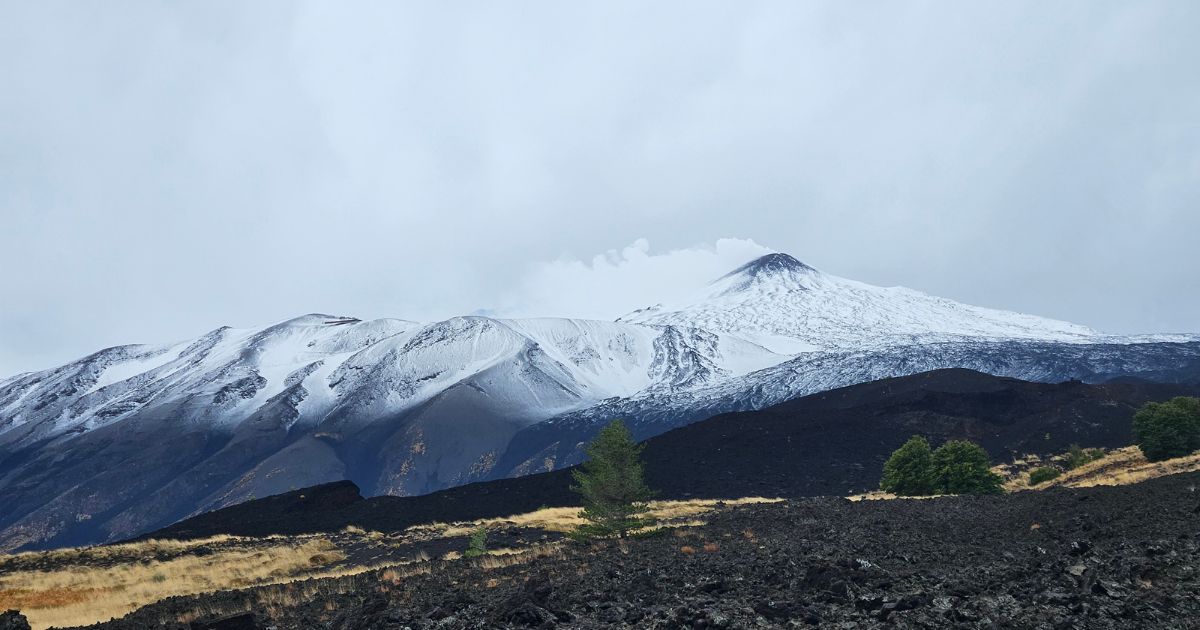
In short: Mount Etna and how to climb it
- Where: eastern Sicily, between Catania and Taormina. It is about an hour’s drive from Catania airport to the lower cable car station.
- Height: around 3,400 metres (11,000 ft), though it changes with every major eruption. The last measurement was 3,403 metres.
- Two sides: the south from Rifugio Sapienza (touristy, cable car, crowds) and the north from Piano Provenzana (quieter, 4×4s only).
- Highest without a guide: roughly 2,900 metres, up to the Barbagallo craters. Above that you may only go with an authorised mountain guide.
- When: May, June, September and October are best. In July and August it is hot up top and worse down below.
- What to expect: it is usually 15 to 20 °C colder at the summit than in Catania, and it is windy.
What Mount Etna is and why it differs from other volcanoes
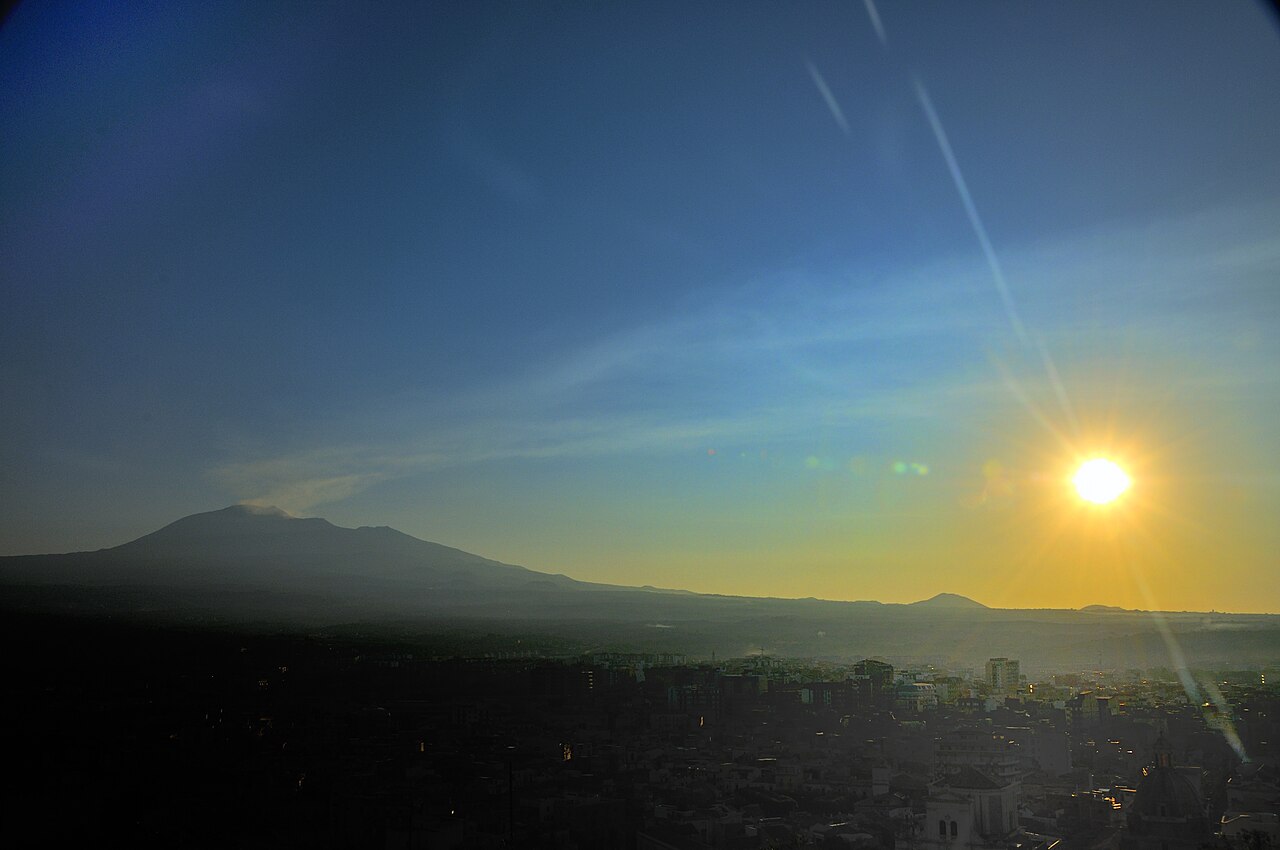
Etna sits on the east coast of Sicily and covers almost 1,200 square kilometres (460 sq mi), an area larger than Greater Manchester and Merseyside combined. Its circumference at the base is around 140 kilometres. It is not a single cone but an entire massif with four summit craters and hundreds of smaller flank cones left behind by earlier lava flows.
The height is usually given as roughly 3,400 metres, most recently 3,403 metres, but that figure has a short shelf life. Every major summit eruption pushes it up or down depending on whether the crater rim builds up or collapses. That is why different sources quote anything between 3,320 and 3,400 metres, and all of them were correct at the time of measuring.
Etna has been a UNESCO World Heritage Site since 2013, listed as a natural property. The reason is its unbroken, documented volcanic activity going back 2,700 years, one of the longest observed records anywhere in the world.
The eruptions that made Etna famous
Etna has erupted fairly often in recent years, sometimes several times in a single season. With a bit of luck you can go and watch glowing lava for yourself. So which eruptions from the volcano’s past are the best known?
- 1669. The most destructive eruption on record. The lava flow reached the sea near Catania and hit the city itself, whose houses were then rebuilt in black lava stone. It still defines how Catania looks today.
- 1928. Lava destroyed the town of Mascali on the eastern slope, which was later rebuilt somewhere else entirely.
- 1983. An eruption wrecked the cable car. The one running today is newer than the one you see in older photographs.
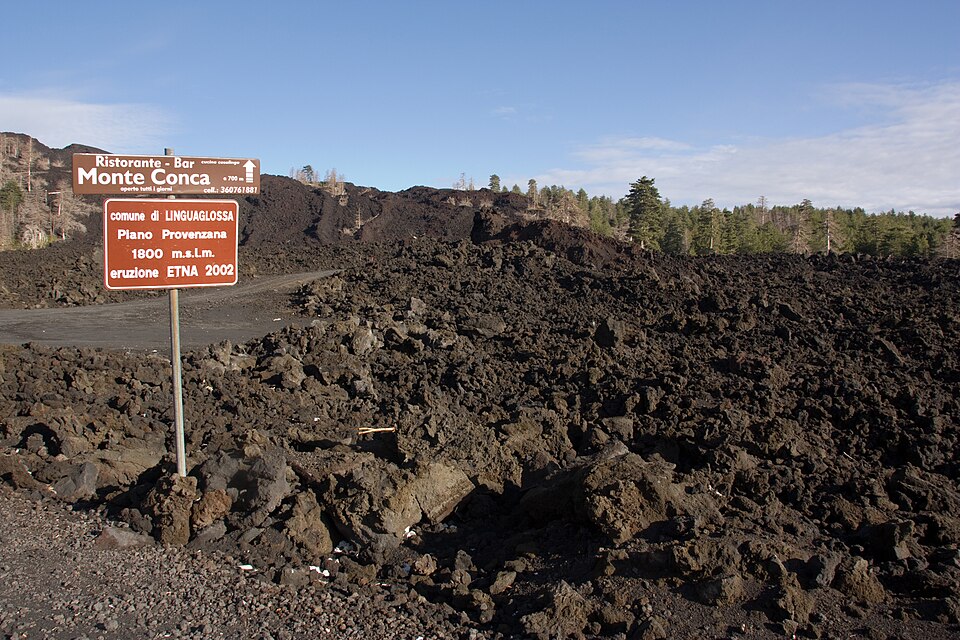
- October 2002. A lava flow damaged the Piano Provenzana resort on the north side, and the remains are still visible on site.
- Recent years. The eruptions of 2024, 2025 and 2026 were repeated but small in scale. For travellers the main consequence is ash, which occasionally closes Catania airport.
What sets Etna apart from most volcanoes a traveller might visit is that it is almost permanently in some phase of activity. Recent eruptions have mostly been Strombolian: lava flows and ash fountains that look spectacular but move slowly. For the villages on the lower slopes that mainly means ash on the roofs and the occasional airport closure, not an immediate threat.
Check the volcano’s status before you set off. Activity is monitored by the Italian institute INGV, whose Catania branch publishes bulletins continuously. When activity rises, the park authority and the cable car restrict access to the upper levels within hours. A tour you have already paid for will not protect you, and you will not automatically get your money back.
The south side: Etna Sud and Rifugio Sapienza
This is where most people go. The road runs from Catania through Nicolosi up to Rifugio Sapienza at roughly 1,900 metres, where you will find a large car park, a restaurant, stalls and the lower cable car station. From there you have three options:
1. Cable car to 2,500 metres
The Funivia dell’Etna takes just under fifteen minutes to reach the upper station at around 2,500 metres. Up there is a terrace looking out over the coast and the neighbouring cones, and marked paths lead off from it on foot. This is the easiest option and works even for people who have no intention of walking uphill.
2. Cable car plus a 4×4 bus to 2,900 metres
From the upper station, converted off-road buses continue across the volcanic scree to around 2,900 metres. A guide’s commentary and a short walk to the craters are usually included. This is the highest you can get without climbing yourself, and also the limit beyond which you may not go without an authorised guide.
3. On foot from Rifugio Sapienza
The cheapest and the hardest option. From the refuge a path climbs through volcanic sand parallel to the cable car, and the ascent takes roughly two to three hours. It is not technically demanding, but the ground is loose, there is no shade and the air thins out higher up. People who walk up usually take the cable car down, and vice versa.
The Silvestri craters are free. Right by the Rifugio Sapienza car park lie two extinct craters from the 1892 eruption, and you can walk a loop around them in twenty minutes. They cost nothing, the rim is even passable with a pushchair, and plenty of visitors are perfectly happy with just this. If you only have an hour and want to say you stood on Etna, this is enough.
The north side: Etna Nord and Piano Provenzana
This is the way we went, because the south side was closed at the time. The northern approach starts from Linguaglossa and ends at Piano Provenzana at around 1,800 metres. It is a former ski resort, largely destroyed by a lava flow in 2002, and the remains are still there to see.
There is no cable car here; you go up in 4×4s with a guide. The advantages of the north side:
- Far fewer people. Tours from Taormina and Catania head almost exclusively to the south.
- Greener scenery. The road runs through pine forest and past lava flows from different decades, so you get a much better sense of how the volcano changes.
- Better views of the summit craters, because the north side sits closer to them.
The downsides: it is harder to reach without a car, there are fewer services, and outside the main season nothing may be running at all. If you have one day on Etna and you are driving, the north side is the better choice. If you have no car and you are based in Catania, take the south.
How to get to Mount Etna
Planning this trip took us a fair amount of time. The easiest approach is to rent a car and drive to the check point yourself. There is a car park there, you find your tour operator and guide on the spot, and that is it. There are other ways, of course.
- By car. The most flexible option. It is about 45 kilometres and an hour of hairpin bends from Catania to Rifugio Sapienza. The car park is paid and in season it fills up by late morning.
- By bus from Catania. The AST company runs a service from central Catania to Rifugio Sapienza in the morning and back in the afternoon, usually once a day. That means you are tied to a single departure once you are up there, with no room to improvise.
- On an organised tour. These run from both Catania and Taormina, typically as a half day with the cable car and a jeep, a full day with wine tasting, or an evening sunset tour. It costs more, but you do not have to sort out transport or bookings.
- By Ferrovia Circumetnea train. This narrow-gauge line loops around the volcano from Catania via Randazzo, and it is a scenic ride rather than transport to a trailhead. It will not get you to the summit, but it is a lovely way to see Etna from every side.
Catania Fontanarossa airport has direct flights from most major European hubs, including London, and sits practically inside the city, so the car rental desks and the Etna bus stop are right there when you land.
What it costs
Prices change every year, so treat these as ballpark figures and check the current tariff on the cable car website. Roughly:
- Cable car return around €65 per person. It is the most expensive cable car you will meet in Sicily, and the queue at the ticket office can be long in season.
- The guided 4×4 bus from the upper station to 2,900 metres adds roughly €30.
- A climb with a mountain guide to the summit craters costs about €80 to €120 and is booked ahead, since group sizes are capped.
- An organised tour from Catania starts at around €35 for the half-day version; a full day with wine tasting costs more.
- Parking at Rifugio Sapienza is roughly €2 an hour or €5 for half a day, and it is usually free after seven in the evening.
- The Silvestri craters, park entry and the walking paths are free. There is no charge for setting foot on Etna as such — you pay for transport uphill.
Where you can save: walk up and ride the cable car down. You save half the cable car fare and still enjoy the climb, because descending through loose sand is harder on the knees than going up.
Cable car opening hours
The cable car does not run all day, and in winter it closes earlier than you would expect:
- Summer, roughly June to September: first departure around 8:30, running until about 17:30.
- Winter, October to May: first departure around 8:45, last one at about 16:00.
- The last ride down is always earlier than closing time. If you are planning to walk up and ride down, check the time of the final departure at the ticket office straight away.
The cable car also stops running in strong wind, even when the sky is otherwise clear. That is the single most common reason people never make it up.
When to visit Etna
Whatever the month, one thing holds: the weather at the summit is nothing like the weather at the foot. A difference of 15 to 20 °C is normal, and then there is the wind. It happens that Catania is bright and clear while above 2,000 metres you are in fog thick enough to hide anything ten metres away. The cable car webcams are therefore more useful than any forecast before you set off. Be ready for the possibility of driving all the way up and going nowhere because of weather that is genuinely unpredictable at altitude.
- April to June: the best window in our view. Patches of snow still lie up top, everything is in bloom lower down, and Catania is bearable.
- July and August: the most people and the worst conditions for climbing. Sicily hits 38 °C in the shade, and on the volcano there is no shade at all. You start at dawn or not at all.
- September and October: temperatures drop, the crowds thin out, and visibility is usually the best of the whole year. It is also harvest season on the volcano’s slopes.
- November to March: people ski on Etna. There are pistes on both sides, though they are short and depend on snow. The summit area is effectively off limits to visitors and the cable car runs on a reduced timetable.
What to bring to Etna
- A warm jacket and a hat. Even in August. Without them the time up top is miserable, and the cable car only lends jackets for a fee.
- Sturdy boots with ankle support. Volcanic sand pours into your shoes and sharp lava fragments will slice through light trainers.
- Sunglasses and a face scarf. The wind lifts fine ash that gets absolutely everywhere.
- Water and food. Up top there is only a snack bar at the upper station, with prices to match the altitude.
- High-factor sunscreen. Above two thousand metres in southern Italy you will burn even on a cloudy day.
- Cash. Most places take cards, but the small stalls by the car park are not a safe bet.
What to leave at home: a drone without a park permit, and any idea of walking up to the rim of an active crater. That is permanently closed, and the only legal route to the upper levels is with a guide.
The rules that apply up there
Etna is both a protected area and a working site for volcanologists, so the restrictions here are not a formality:
- Above roughly 2,900 metres, only with an authorised guide. The limit shifts with current activity and some sources quote lower figures, around 2,750 metres. What counts is whatever is posted on the day of your visit, and checks do happen. The reason is not only falling rock but volcanic gases, which linger close to the ground.
- Stick to the marked paths. The slope looks like solid ground, but there is often a void beneath it, and a fresh lava field stays hot inside for months after the flow.
- Taking rocks away is prohibited. This is a national park, and a lump of lava in your suitcase is something airport customs officers actually deal with.
- Closures are announced from one day to the next. When INGV raises the alert level, the cable car and the jeep runs both stop, however clear the sky is and however much you have paid.
What to combine with Etna
There is plenty to see around the volcano. For our money the best of it is a walk through Catania and a day in Taormina.
- Etna wines. The northern slopes around Randazzo and Linguaglossa hold the Etna DOC wine region, where the Nerello Mascalese and Carricante grapes produce wines that have earned an international reputation in recent years. Tastings are run by wineries sitting right among the lava fields.
- The Alcantara gorge. A canyon carved by the river into an old lava flow, with walls of neat basalt columns. It lies between Etna and Taormina and is often combined into a single day trip.
- Taormina. A clifftop town with a Greek theatre from which Etna appears as a backdrop. The best photograph of the volcano is taken from here, not from the volcano itself.
- Catania. A city built from black lava stone, with a fish market and a baroque centre on the UNESCO list. That black colour comes from the 1669 eruption, which reached the city too.
- Grotta del Gelo. A cave in a lava tube on the north side where ice survives all year round. The walk in is long and unmarked, so people go with a guide.
Beyond Etna: the volcanic Aeolian Islands
Etna is not the only volcano you will see in Sicily. Just off the north coast lie the Aeolian (Lipari) Islands, an archipelago of seven volcanic islands on the UNESCO list. Ferries and hydrofoils sail from Milazzo, about two hours by car from Catania, so they slot naturally onto an Etna trip.
- Stromboli is the most active of them and has erupted essentially without pause for thousands of years. The evening climb to the viewpoint above the crater, when the eruptions show up against the dark, is one of the strongest experiences in all of Italy.
- Vulcano greets you with sulphur, mud baths and hot springs bubbling up straight into the sea. The climb to the Gran Cratere is short and the reward is a view across the whole archipelago.
- Lipari is the largest and liveliest island and a good base for boat trips. The white pumice quarries above Canneto look like snow from the water.
- Salina, Panarea, Filicudi and Alicudi are the quieter end of the archipelago, where the tourists thin out and green slopes and empty coves take over.
Milazzo to Lipari takes about an hour by hydrofoil and two by ferry, with several sailings a day in season. It is worth giving the islands at least two nights — a day trip from Sicily spends most of its time on the water.
Etna with children
Up to about 2,500 metres it is straightforward. The loop around the Silvestri craters at roughly 1,900 metres can be walked with even the smallest children in about thirty minutes. The cable car and the upper terrace are safe, and what children enjoy most up there is the black sand and the view. The Silvestri craters by the car park are the best part of the whole mountain for families, because you can wander freely, there is no exhibition and no drop, and the loop takes half an hour.
What not to do with children: the walk up from Rifugio Sapienza, which is monotonous and exhausting in loose sand, and the jeep ride to 2,900 metres with younger ones, where cold, wind and altitude all pile on. A pushchair only makes sense in the car park and at the Silvestri craters, not higher.
Guided tours on Mount Etna
You can tackle Etna on your own, but above 2,900 metres you are no longer allowed to go unguided, and there is no other way to reach the upper craters. Organised tours also solve transport from Catania or Taormina, which is the biggest practical headache of the whole trip. These are the tour types most commonly offered on Etna, with indicative prices and durations:
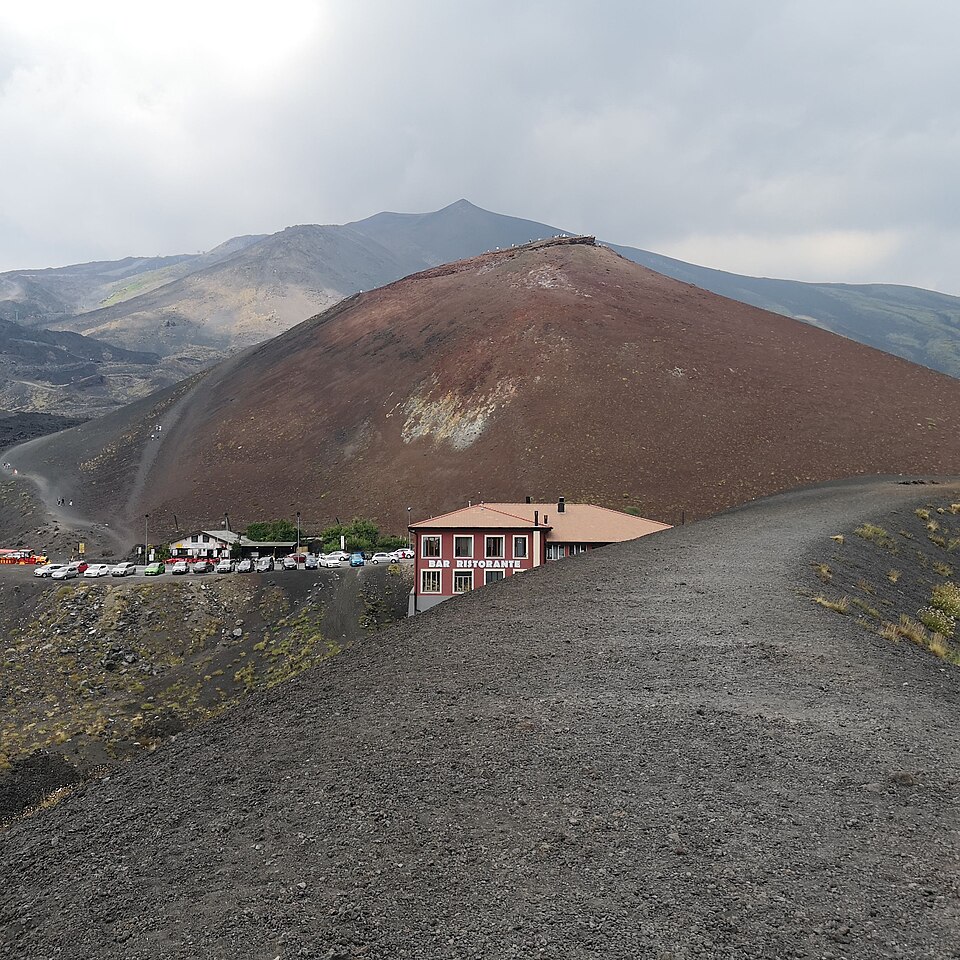
Guided trek up to 3,400 m
★ 4,6 (5 742 reviews)
The most popular option. For fit walkers who want the actual summit.
from €55 / person
See dates →Photo: Eleassar, Wikimedia Commons, CC BY-SA 4.0
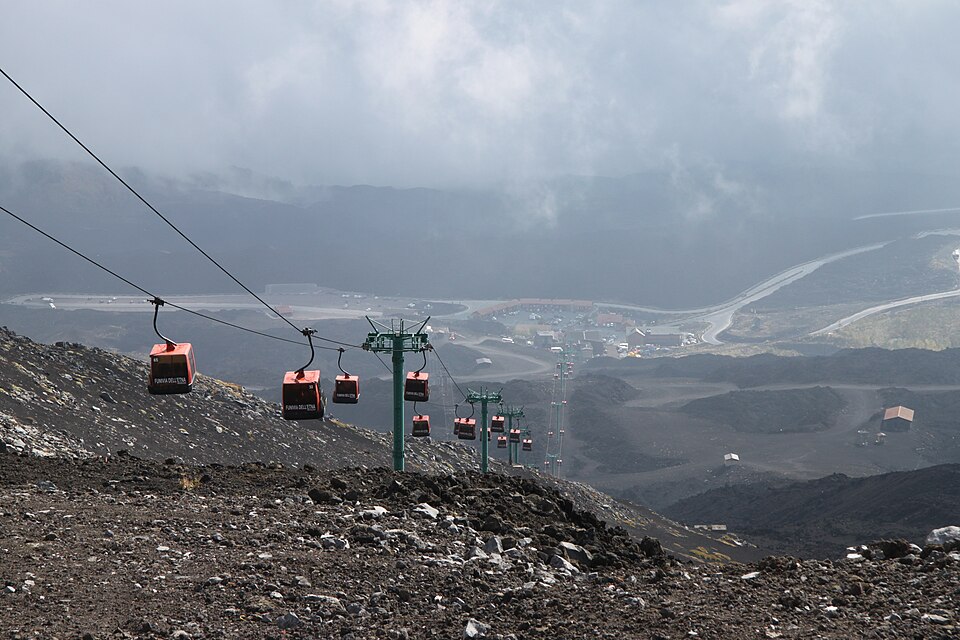
Cable car and 4×4 jeep to around 3,000 m
★ 4,6 (4 457 reviews)
When you would rather not slog through loose ash but still want the height.
from €55 / person
See dates →Photo: Richard Allaway, Wikimedia Commons, CC BY 2.0
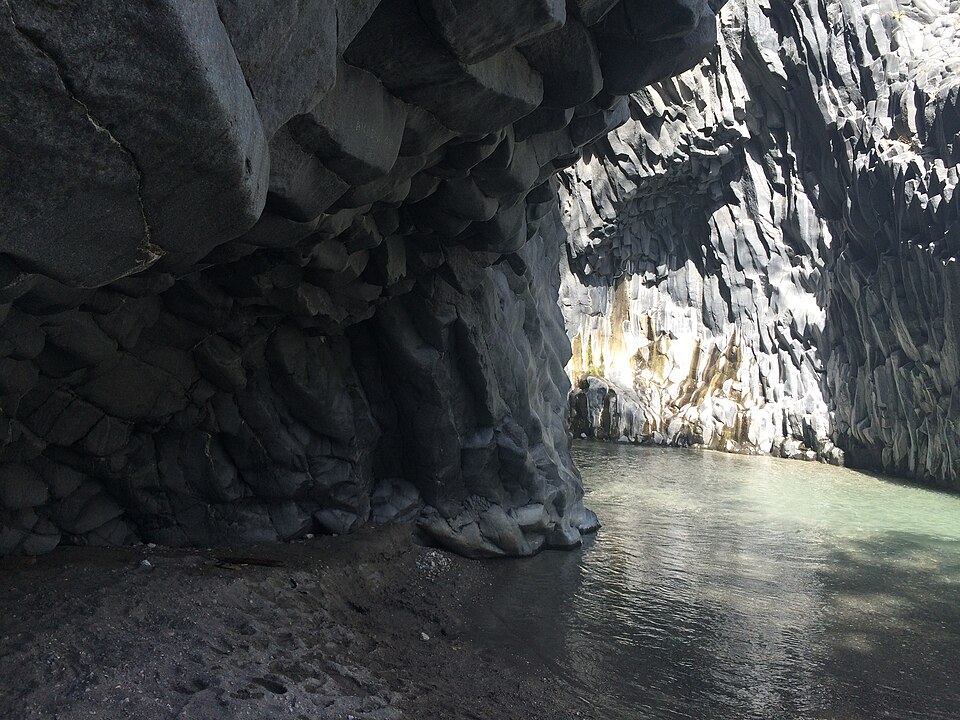
Etna and the Alcantara gorge, full day with lunch
★ 4,8 (2 709 reviews)
The two best things in the area in one day, transport sorted for you.
from €89 / person
See dates →Photo: kallerna, Wikimedia Commons, CC0
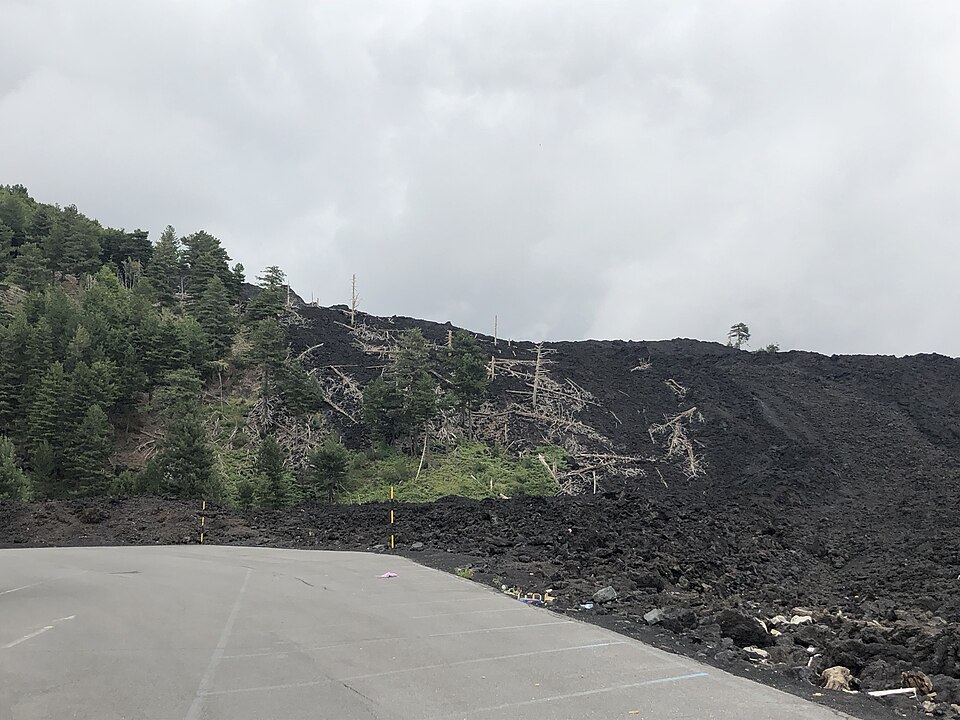
Northern craters by 4×4 with a short trek
★ 4,6 (385 reviews)
Etna Nord without the crowds, when time is short.
from €80 / person
See dates →Photo: Davide Mauro, Wikimedia Commons, CC BY-SA 4.0
Etna at sunset with a lava cave and tasting
★ 4,7 (461 reviews)
The best light of the day, plus a lava tube and Sicilian wine.
from €78 / person
See dates →Photo: gnuckx, Wikimedia Commons, CC BY 2.0
Quad bike ride across the lava fields
★ 4,7 (1 326 reviews)
Adrenaline instead of views. Works even when the weather does not.
from €100 / person
See dates →Photo: poudou99, Wikimedia Commons, CC BY-SA 3.0
Prices are indicative starting rates and vary with the season and the size of the group. Almost every tour includes hotel pickup in Catania or Taormina, which is worth having, because the car park at Rifugio Sapienza is full by late morning.
Where to stay near Mount Etna
The most logical base is Nicolosi, the last sizeable village on the road to Rifugio Sapienza. From here you are at the cable car in twenty minutes and can set off before the day trippers from Catania. If you want to combine the volcano with a city, stay in Catania; if you want the volcano with sea views, stay in Taormina.
- Backpackers: a hostel bed in Catania from roughly €25 to €35 a night. Nicolosi has no hostels, but you will find cheap guesthouses at a similar price for a whole room.
- Mid-range: a three-star hotel or an agriturismo on the volcano’s slopes from roughly €70 to €110 for a double with breakfast. An agriturismo among the vineyards is the best value-to-experience ratio here.
- Upper end: a hotel with volcano views in Taormina or a wine resort on the northern slopes from roughly €180 to €300 a night.
These prices are for peak season. In April and October they drop by about a third. Compare current rates and availability through accommodation options around Etna.
Frequently asked questions about Mount Etna
How high is Mount Etna?Around 3,400 metres, with 3,403 metres the most recent measurement. The height changes with every major summit eruption, though, because the crater rim either builds up or collapses. That is why different sources quote figures between 3,320 and 3,400 metres.
Is Etna the highest volcano in Europe?It is the highest active volcano on mainland Europe and the highest mountain in Italy south of the Alps. Teide on Tenerife is higher, but although Tenerife belongs to Spain it sits geographically off Africa, and there are higher volcanoes in the Caucasus.
Can you climb Mount Etna without a guide?Yes, but only up to about 2,900 metres and the Barbagallo craters. Above that you may go only with an authorised mountain guide, and the limit moves lower depending on current volcanic activity. Checks do take place on the route.
How much does the Etna cable car cost?Around €65 per person return as a guide price. The 4×4 bus from the upper station to 2,900 metres adds roughly €30. Prices change every year, so check the current tariff on the cable car website.
Which side of Etna is better?If you are driving and have one day, the north from Piano Provenzana: fewer people, greener scenery and closer to the summit craters. If you have no car and you are based in Catania, the south from Rifugio Sapienza with the cable car is more practical.
When is the best time to visit Etna?April to June and September to October. In July and August Sicily hits 38 °C in the shade and there is no shade at all on the volcano. In winter the summit area is effectively inaccessible and the cable car runs on a reduced timetable.
Is Mount Etna dangerous?Not if you follow the rules. The volcano is monitored continuously by the INGV institute, and when activity rises, access to the upper levels is restricted within hours. What is dangerous is leaving the marked paths and going above the permitted limit without a guide.
What should I take to Etna in summer?A warm jacket and a hat even in August, because it is 15 to 20 °C colder up top than in Catania. Add sturdy boots with ankle support, sunglasses against the ash, water, high-factor sunscreen and some cash.
How long does it take to climb Etna on foot?Roughly two to three hours from Rifugio Sapienza to the upper station across volcanic sand. It is not technically hard, but the ground is loose and there is no shade. Most people walk up and take the cable car back down.
Potřebujete pomoct s cestováním?
-
Ubytování 🏨
Vyberte si to nejlepší ubytování, ať už jste kdekoliv, přes Booking.com. -
Půjčení auta 🚗
Auto si snadno najdete přes Booking.com, kde máte často slevu díky ubytování, nebo Rentalcars.com, kde porovnáte nabídky většiny půjčoven. -
Zážitky 🎟️
Přes GetYourGuide.com si vyberete z nejrůznějších výletů i zážitků po celém světě, navíc se zrušením zdarma do 24 h předem.