Last updated 23.10.2026
The Polish seaside is one of Europe’s most underrated beach escapes — and it’s far easier to reach than most people think. Over 500 kilometres of soft, pale sand, pine forest running almost down to the waterline and, best of all, beaches that are completely free. Whether you’re after quiet dunes, buzzing resort towns or a proper city with a beach attached, the Polish coast has a stretch with your name on it. All you have to do is pick a spot and go.
Treat this article as a complete introduction and jumping-off point — we’ll explain what the Polish sea is actually like, how best to get there, walk the coast region by region from west to east, and show you what there is to do beyond lying on the sand, and what it all costs. When you’re ready to choose a specific resort or hunt down the loveliest corners, we’ll point you to more detailed guides. The aim is that by the time you finish, you’ll understand the whole Polish Baltic and know exactly which way to head.
The Polish seaside at a glance
- What it is: over 500 km of Baltic coast, long beaches of fine pale sand, pine forest right by the water — and beaches that are free the whole way along.
- Three main regions: the western coast (warmer, sunnier), the central coast (spa towns, calm) and the Tri-City with its sand spits in the east.
- Sea temperature: around 18–22°C in August, over 22°C in the sheltered bays; the swimming season runs July to mid-September.
- The wind is a lottery: an upwelling can knock the water temperature down by 5–8°C in a matter of hours.
- Getting there: Gdańsk has an international airport; you can also drive or take the train, and the SKM railway links the whole Tri-City.
- Budget: roughly €145–270 per person for 4 days / 3 nights; factor in the local tourist tax (opłata klimatyczna, ~3–6 PLN per night).
- Safety: follow the beach flags (red = no swimming); watch for blue-green algae in high summer — check beach status at sk.gis.gov.pl.
What the Polish sea is like (and when to go)
The Baltic here is a touch cooler — one for the hardy, perhaps — but in summer it’s a joy. Anyone arriving expecting a crystal lagoon will be mildly disappointed on day one. What the Baltic offers, and what the Mediterranean never will, are endless beaches of fine, pale sand, a gentle shelving entry into the water that’s perfect for children, and the scent of pine forest that often reaches right down to the beach itself. And one crucial bonus for backpackers: the beaches are free the entire length of the coast — no paid sections with sun loungers as you’d find in Italy.
The water is warmest in August, when it climbs to around 18–22°C — and in the shallow bays, above all the Bay of Gdańsk and the Bay of Puck, it happily tops 22°C. The swimming season lasts from early July to mid-September. If your priority is swimming, aim for July and August; if a beach, a stroll and fresh fish are enough for you, June and September are lovely too, with fewer people and lower prices.
Sea temperature month by month
So you know when to pack the swimsuit and when to pack a jumper — here’s a rough guide to the average water temperature on the Polish Baltic. These are averages, and any given day can be thrown around by the weather and the wind (more on that below):
| Month | Water temperature (approx.) | Good for |
|---|---|---|
| May | ~10°C | walks, not swimming |
| June | ~15–17°C | the hardy, paddling |
| July | ~17–20°C | swimming |
| August | ~20–22°C (bays up to 24°C) | the best swimming |
| September | ~16–18°C | swimming early in the month |
| October | below 15°C | walks |
It’s warmest in the west (Świnoujście) and in the shallow Bay of Puck near Gdynia, where in August the surface can warm to as much as 24°C.
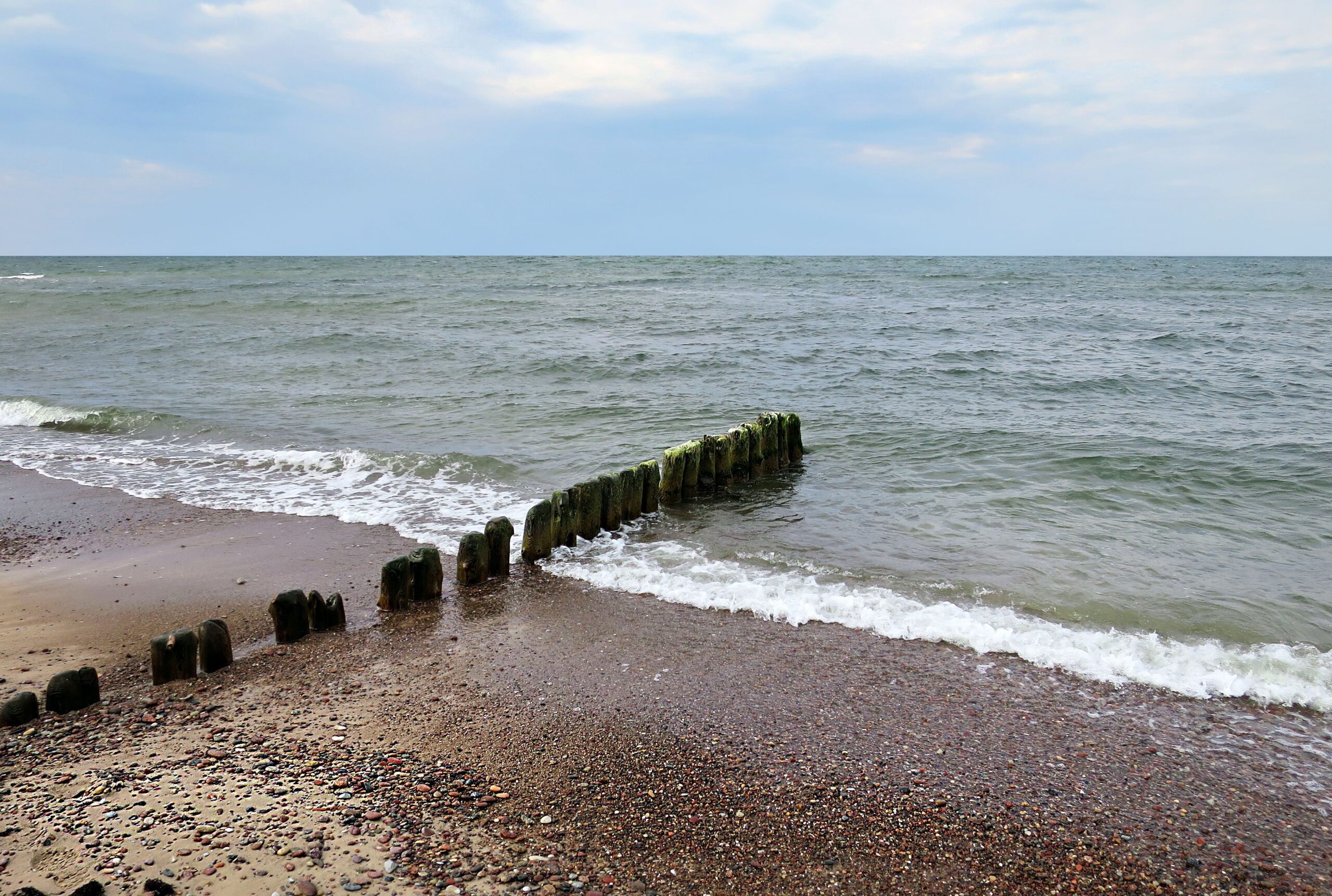 The Baltic Sea and the wooden groynes so typical of the Polish coast. Photo: Ivars / Pexels.
One thing worth knowing in advance: the Baltic’s weather is a lottery, and the chief culprit is the wind. When it starts blowing off the land it triggers what’s known as upwelling — cold water from the deep is pushed towards the shore and the temperature can plunge by 5–8°C in a couple of hours. 22°C in the morning, 15°C by the afternoon: it’s not unusual. There’s nothing to be done about it except take it in good humour and keep a plan B up your sleeve (we’ve got a few further down).
💡 Tip: Our favourite time to go is the turn of August into September. The sea is at its warmest after a summer of sun, the crowds have headed back to school and accommodation prices are tumbling — a hard combination to beat.
Safety: beach flags and algae
Polish beaches run on a flag system, and it pays to know it before you get in the water. A white flag means swimming is allowed and a lifeguard is on duty; a red flag means no swimming — whether because of high waves, a strong rip current, low water or, indeed, algae. If no flag is flying, there’s no lifeguard on duty and you swim at your own risk.
Blue-green algae (cyanobacteria) are a summer talking point on the Baltic — in hot, windless spells, mainly in late July and August, they occasionally bloom and the sanitary authorities then temporarily close certain bathing spots. In 2025 this affected beaches in Gdańsk, Sopot and on the Hel Peninsula, among others. It’s never a blanket problem along the whole coast; it’s always a specific beach and usually just a few days. Swimming in affected water can cause a rash, eye irritation or an upset stomach, so take that red flag seriously.
💡 Tip: You can check the current status of bathing spots across Poland online via the sanitary inspection service sk.gis.gov.pl. If your beach happens to be closed, the next resort along is usually fine — the coast runs for more than 500 km.
How to reach the Polish coast
By car
The most comfortable option, especially with children and luggage. Distances vary enormously depending on which part of the coast you’re aiming for:
- The western coast (Świnoujście, Międzyzdroje) sits right by the German border — an easy hop from Berlin and the closest stretch if you’re coming from the west.
- Gdańsk and the east (Hel Peninsula, Łeba) are a longer haul, but well served by the A1 motorway running north from the Czech and Slovak borders.
Good news for drivers: Poland scrapped the motorway vignette for cars. Tolls are charged only on selected sections of the A1, A2 and A4 — everywhere else you drive for free.
Without a car — by train and bus
You can absolutely do the Baltic as a car-free backpacker. Gdańsk has an international airport (Lech Wałęsa), with connections across Europe, which makes the Tri-City the obvious base if you’re flying in. Long-distance trains (PKP Intercity) and FlixBus coaches reach the coast from across Poland and its neighbours; the direct Baltic Express even runs from Prague via Wrocław and Poznań all the way to Gdańsk and Gdynia in around 8.5 hours, handy if you’re stitching together a longer Central European trip. Once you’re on the coast, the SKM commuter railway links Gdańsk, Sopot and Gdynia at frequent intervals.
Find routes and flights to Gdańsk here →
💡 Tip: Without a car, make the Tri-City your base without a second thought — everything that matters (Sopot, Gdańsk, Gdynia and the boat to Hel) is covered by public transport, and you never have to think about parking fees.
The Polish coast region by region
We’ll split the coast into four logical stretches from west to east. For each we’ll flag the main resorts and who they suit — for a detailed pick of the perfect resort, see our guide to where to go on the Polish coast, and for the most scenic tips, our piece on the prettiest spots on the Polish coast.
The western coast
The closest stretch if you’re arriving from the west, and it tends to be a shade warmer and sunnier. Its backbone is the island of Wolin, with its national park.
- Świnoujście — home to perhaps the widest beach on the entire coast, and the closest point if you’re coming from Germany. It suits families and anyone who’d rather not spend the whole journey getting there.
- Międzyzdroje — beaches beneath the cliffs of Wolin National Park, with a lively promenade and a pier. For those who want nature and a bit of buzz.
- Rewal, Pobierowo, Dziwnów — smaller, quieter resorts fringed by pine forest. A gentler pace, ideal for couples and families with very young children.
- Niechorze — a village with a striking 45-metre lighthouse whose viewing gallery lets you see far along the coast. A good target when you want a view and a slice of history alongside the beach.
- Trzęsacz — famous for the ruins of a Gothic church perched on the cliff edge. The sea gradually ate away the shore until only part of the southern wall remained. A wonderfully photogenic spot right by the beach.
Accommodation in Świnoujście →
The central coast
Classic Pomeranian spa country, and a rather calmer rhythm than the busy east.
- Kołobrzeg — a large spa town with a long promenade, a lighthouse and no shortage of wellness resorts. For lovers of comfort, spas and an evening out.
- Mielno — a lively resort where a single strip of land gives you the sea on one side and the calmer Lake Jamno on the other. Good for families.
- Ustka — smaller and quieter, with an old fishing harbour and all the charm of a seaside town. For those after a more authentic atmosphere.
- Darłowo and Darłówko — a historic town linked to a more laid-back seaside resort. Two beaches, east and west, are separated by the channel of the River Wieprza, over which a swing bridge turns several times a day to let boats through. For lovers of calm with a pinch of history.
- Rowy — a small resort right beside Słowiński National Park. Long sandy beaches, fewer crowds than the big centres, and the dunes just a short way off. For those who want nature and peace in one place.
The Tri-City and around
Gdańsk, Sopot and Gdynia form the cosmopolitan heart of the coast — come here when you want to combine the beach with culture and city life.
- Sopot — an elegant spa town with the longest wooden pier in Europe (over 511 m), fine beaches and a buzzing nightlife. The priciest and liveliest address on the coast.
- Gdańsk — a magnificent old town, the outstanding Museum of the Second World War, and Westerplatte, where the war began. The ideal car-free base.
- Gdynia — a modern port city with museum ships and an aquarium. A big draw when the weather turns.
The Hel Peninsula and the Vistula Spit
Two narrow sandy spits, each with a mood of its own:
- The Hel Peninsula — a paradise for surfers, kitesurfers and cyclists; right at its tip lies the little town of Hel with its Seal Sanctuary, where you can watch grey seals. In season a passenger ferry runs here from Gdańsk and Gdynia, which is a trip in itself.
- Jastarnia and Jurata on the Hel Peninsula — two neighbouring resorts hemmed between forest and sea, so you have water on both sides of the slender spit. Jastarnia is a fishing village popular with windsurfers thanks to the shallow Bay of Puck, while the smarter Jurata tempts you with quiet beaches and a promenade.
- Krynica Morska on the Vistula Spit — calm, clean beaches and far fewer people. For those who want to unwind well away from the crowds.
Spas and wellness
The Polish coast has a strong spa tradition — the word uzdrowisko (spa) turns up above all around Kołobrzeg, Świnoujście, Ustka and Kamień Pomorski. The draw is the therapeutic salt water, iodine springs and peat mud; in the spa towns you’ll find plenty of wellness hotels with pools, saunas and treatments. For a more comfortable holiday, or a trip outside the main season, it’s a pleasant choice — when the sea is cold, you can warm up in the thermal baths.
The Polish seaside with children
The Baltic is one of the best seas for families with young children that you can reach by car in this part of Europe. The reasons are simple: a gentle shelving entry into the water (it takes a good few metres to get out of your depth), fine sand perfect for building castles, and free beaches. Many of the loveliest beaches also fly the international Blue Flag eco-label, confirming clean water and good facilities — Trzęsacz, Ustka and Gdańsk’s Stogi beach among them.
Beyond the beach, there’s no chance of boredom with kids: water parks, dinosaur parks, funfairs, the seal sanctuary on Hel and the narrow-gauge railway in Rewal will fill any rainy day. We go into specific resorts and family tips in detail in our guide to where to go on the Polish coast.
What to do at the Polish seaside (beyond the beach)
Even if the sea sulks and stays cold for a week, boredom isn’t a risk on the Baltic. Here’s a pick of what we enjoy most on the coast:
The shifting dunes near Łeba
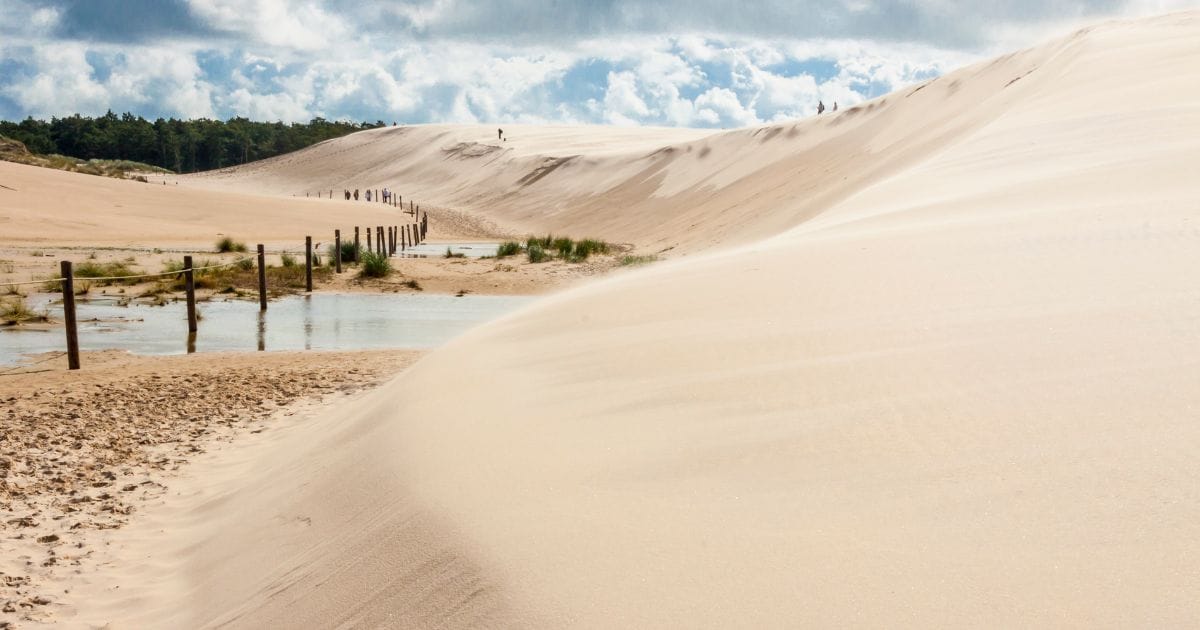
In Słowiński National Park you’ll find the largest shifting dunes in Europe. The star of the show, the Łącka Dune, rises to 42 metres and lies about 8 km from the centre of Łeba. From the Rąbka entrance it’s roughly 5 km on foot — or you can take a bike or one of the tourist buggies. Park admission is 9 PLN (≈ €2), or 4.50 PLN reduced, and is charged from 1 May to 30 September.
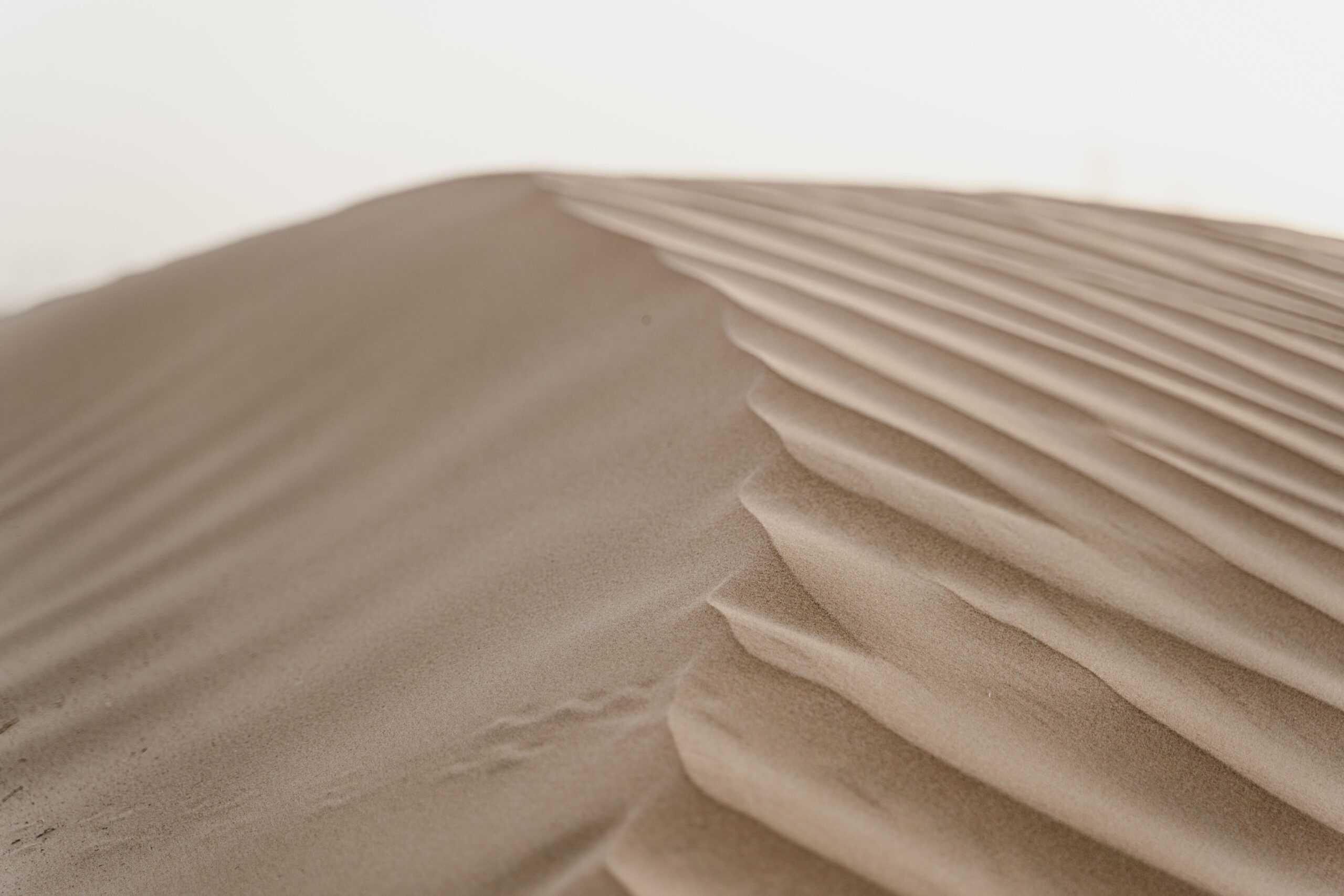 Shifting sand dunes — near Łeba you’ll find the largest in Europe. Photo: Mart Production / Pexels.
💡 Tip: There’s not a scrap of shade on the dunes. Take plenty of water, a cap and sun cream — the sand scorches at midday and the walk back is usually longer than you expect.
Amber hunting
The Baltic isn’t called the “amber sea” for nothing. Amber (bursztyn in Polish) is washed ashore mainly after storms — the richest pickings tend to be on the Vistula Spit, near a village aptly named Jantar. The best time to hunt is the morning after a windy night, when you comb the strip of surf and seaweed. Finding your own piece of amber is surprisingly addictive.
Smażalnie and fresh fish
A backpacker classic you mustn’t miss is the smażalnia ryb — a stall or bistro serving freshly fried fish. Cod (dorsz), halibut or mackerel with chips will set you back a handful of złoty and taste best down by the harbour, where the locals eat them too.
Cycle paths along the coast
The coast is beautifully flat and laced with trails. Our own favourite runs from Gdańsk via Puck and Władysławowo out to Hel (around 100 km, and easy along the spit even for non-athletes). In the west you can pedal pleasantly through Sarbinowo, Mielno and Łazy. The whole coast is also traced by the international EuroVelo 10 route (the Baltic Sea Cycle Route), so you can string together longer stages from one resort to the next.
Water parks in the rain
When the weather truly betrays you, water parks are the saviour — you’ll find them in Kołobrzeg, Świnoujście and elsewhere along the coast. With children they’re a sure bet for a whole wet day. We’ve put together a full rundown with prices in our article on Polish aquaparks. Other plan Bs include the lighthouses (there are 18 on the coast, most with a viewing platform), the aquarium in Gdynia and the Museum of the Second World War in Gdańsk.
What it costs (budget)
Poland remains pleasantly cheap, even if prices at the coast climb during the August peak. The cheapest option is camping — in season you’ll pay roughly 137–146 PLN for a tent, two people and a car per night. If you’d rather not be under canvas, there are cabins, hostels and pokoje gościnne (guest rooms). Budget too for beach parking, which runs 25–80 PLN a day.
The local tourist tax (opłata klimatyczna)
One item that catches visitors out: the tourist tax. Many coastal municipalities, and above all the spa towns, levy a so-called opłata klimatyczna (or uzdrowiskowa in the spas) for every night begun. It sits at roughly 3–6 PLN per person per night (≈ €0.70–1.40) — in Kołobrzeg in 2025, for example, it was 6.35 PLN. Your host usually adds it straight to the bill, so you don’t have to deal with it separately, but it’s worth allowing for in your budget. Children and some other groups are often exempt.
Here’s a rough budget for 4 days / 3 nights for one person:
| Item | Approx. (1 person, 4 days) |
|---|---|
| Transport (fuel / train) | €30–60 |
| Accommodation (camping to hostel) | €50–95 |
| Food (smażalnie, own breakfast) | €40–65 |
| Admissions (park, aquarium, pier) | €12–24 |
| Parking / public transport | €12–24 |
| Total | approx. €145–270 |
💡 Tip: The biggest savings are on parking — stay a little back from the beach and cycle the last stretch. A daily fee of 25–80 PLN adds up to an unpleasant sum over a week.
Where next
- Where to go on the Polish coast: the best resorts and family tips (2026)
- The prettiest places on the Polish coast: 11 resorts and Baltic corners
- Polish aquaparks: the best water parks near the coast (2026)
- The most beautiful places in Poland: 14 tips for the scenery
- What to see in Poland: 15 places you shouldn’t miss
Frequently asked questions: the Polish seaside
What is the Polish sea like, and is it worth it?
The Polish sea is the southern part of the Baltic — the water is cooler and less salty than the Mediterranean, and the colour is more grey-green. The draws are the long beaches of fine pale sand, the gentle shelving entry into the water, the pine forest by the beach and the fact that the beaches are free. For families and backpackers alike it’s well worth it — just don’t expect a turquoise lagoon.
How warm is the Polish sea in summer?
It’s warmest in August, when the water climbs to around 18–22°C, and above 22°C in the shallow bays (Gdańsk, Puck). Watch out for the wind, though: a phenomenon called upwelling can knock the water temperature down by 5–8°C in a few hours, so in that respect the Baltic is a lottery.
When is the best time to visit the Polish seaside?
For swimming, July and August. Our favourite time is the turn of August into September — the sea is at its warmest after summer, the crowds have gone and accommodation prices are falling. Out of season the coast is lovely for walks, but usually too cold for swimming.
How do I get around the Polish coast without a car?
Head for the Tri-City. The direct Baltic Express train runs from Prague to Gdańsk in around 8.5 hours, while the cheaper FlixBus covers the same route in about 12 hours. Once on the coast you get around on the SKM commuter railway, which links Gdańsk, Sopot and Gdynia.
Which part of the Polish coast is easiest to reach, and where should I fly?
The western coast around Świnoujście and Międzyzdroje is the closest if you’re coming from Germany, an easy hop from Berlin. If you’re flying, head for Gdańsk in the east — its Lech Wałęsa airport has connections across Europe, and the Tri-City makes the best car-free base.
Do you pay motorway tolls in Poland?
Not for cars. Tolls are charged only on selected sections of the A1, A2 and A4 motorways — everywhere else you drive across Poland toll-free.
What is there to do at the Polish seaside in bad weather?
There are plenty of plan Bs: water parks (in Kołobrzeg, Świnoujście and elsewhere), the aquarium in Gdynia, the Museum of the Second World War in Gdańsk, or one of the 18 lighthouses along the coast, most with a viewing platform. We’ve a detailed rundown of the water parks in our article on Polish aquaparks.
How much does a holiday at the Polish seaside cost?
For 4 days and 3 nights for one person, budget roughly €145–270 including transport, accommodation, food, admissions and parking. The cheapest option is camping (around 137–146 PLN for a tent, two people and a car per night); you’ll save most by cutting back on paid beach parking.
What is opłata klimatyczna and how much is it?
It’s a tourist tax that many coastal and spa municipalities charge for every night begun. It runs at roughly 3–6 PLN per person per night (≈ €0.70–1.40); in Kołobrzeg it was 6.35 PLN in 2025. Your host usually adds it straight to the bill, and children and some other groups are often exempt.
Are there blue-green algae in the Polish sea? Can I check where you can’t swim?
In hot, windless spells (mainly late July and August) blue-green algae occasionally bloom on the Baltic, and the sanitary authorities then temporarily close specific bathing spots — in 2025 this happened in Gdańsk, Sopot and on the Hel Peninsula, for instance. It’s always individual beaches, never the whole coast. You can check the current status online at sk.gis.gov.pl, and on the beach a simple rule applies: a red flag means no swimming.
Can I bring a dog to the Polish seaside?
Yes, but in high season (roughly 1 May to 30 September) many of the main beaches ban dogs. Almost every resort, however, sets aside a special dog beach, and out of season the rules are far more relaxed. Always check the specific stretch with the local municipality or your accommodation.
Potřebujete pomoct s cestováním?
-
Ubytování 🏨
Vyberte si to nejlepší ubytování, ať už jste kdekoliv, přes Booking.com. -
Půjčení auta 🚗
Auto si snadno najdete přes Booking.com, kde máte často slevu díky ubytování, nebo Rentalcars.com, kde porovnáte nabídky většiny půjčoven. -
Zážitky 🎟️
Přes GetYourGuide.com si vyberete z nejrůznějších výletů i zážitků po celém světě, navíc se zrušením zdarma do 24 h předem.