Last updated 23.10.2026
A wide sandy beach, a wooden pier running out into the Baltic and, behind your back, a spa park with a colonnade. Kołobrzeg is Poland’s best-known seaside spa town and one of the few places on the Baltic where a holiday still works when the weather does not. We went through 17 things to do in Kołobrzeg, added how to get there, what it costs, what to do with kids, and cleared up the one question people ask most: there is no direct ferry to Bornholm from here any more.
In short: Kołobrzeg and what to see there
- Kołobrzeg is a spa town, not just a resort. Treatment here is based on brine and peat, and the spa business has run since the 19th century.
- The lighthouse is 26 metres tall, you can climb it, and there is a mineral museum in its base.
- There has been no direct ferry to Bornholm since 2020. The seasonal catamaran was withdrawn and the announced Rønne route has not started.
- The Kołobrzeg pier is the second longest in West Pomerania, right after the one in Międzyzdroje.
- The beach is wide and sandy and ranks among the best stretches on the whole Polish coast.
- Szczecin is 134 km away, Gdańsk 270 km and Berlin about 290 km, so it is an easy add-on to a wider Baltic trip.
- Around 47,000 people live here, which means shops, services and things to do even when you are not on the beach.
Kołobrzeg: a thousand years in one place
Kołobrzeg is not a tourist invention of the last few decades. Slavic tribes built a fortified settlement here in the late 9th century, and at the Congress of Gniezno in the year 1000 a bishopric was founded in the town, one of the founding moments of the Polish church. The town then lived off the salt trade, and salt was something it had in abundance.
Salt is also the reason Kołobrzeg turned into a spa town during the 19th century. The local brine is still used to treat the airways and for inhalation, and peat mud is used alongside it. That is the key difference from an ordinary resort: Kołobrzeg has spa houses, sanatoriums and a programme that works in November too.
17 things to do in Kołobrzeg
Planning a stop here and not sure where to start? Here is what is worth your time in Kołobrzeg, enough to fill two or three days.
1. The lighthouse
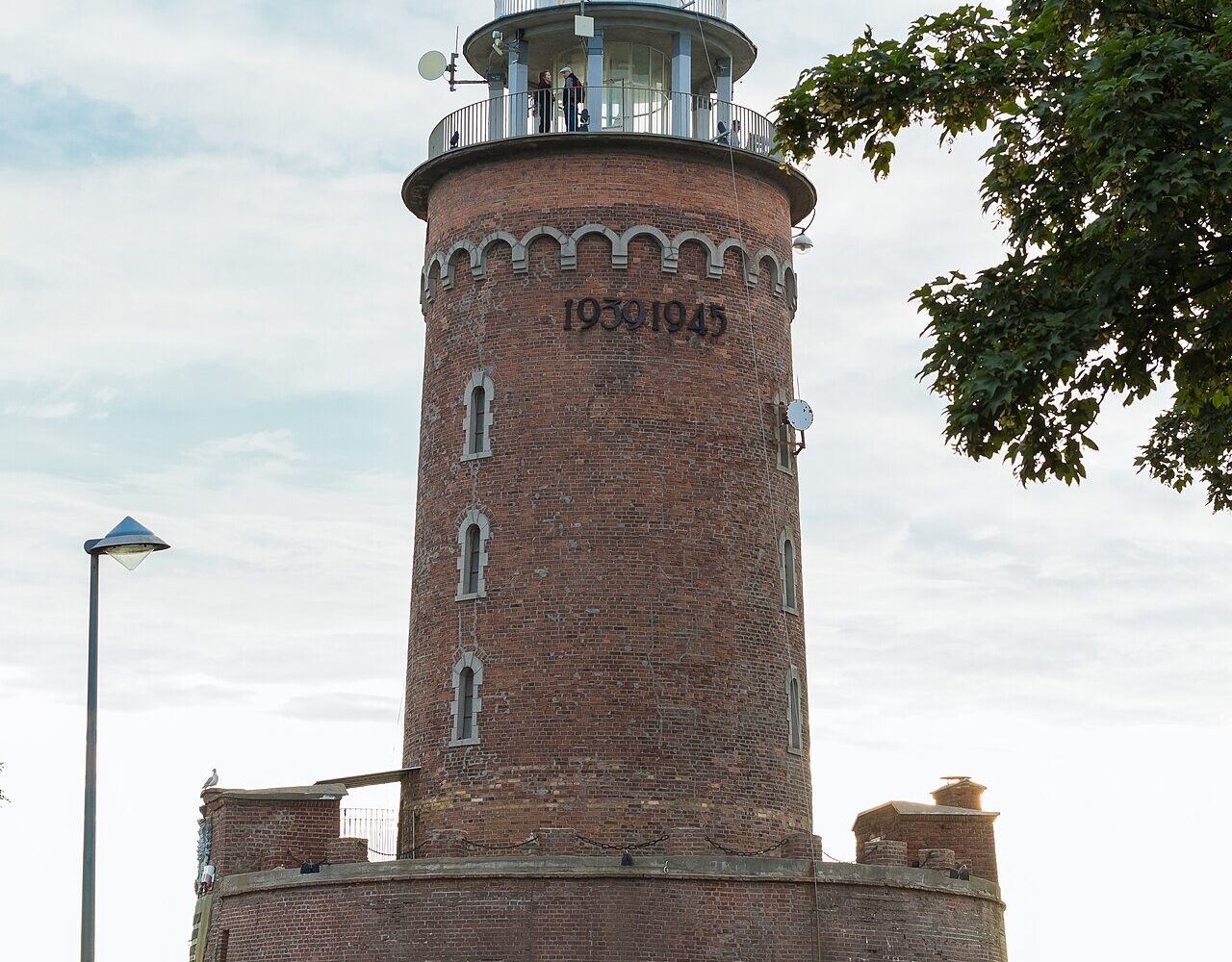
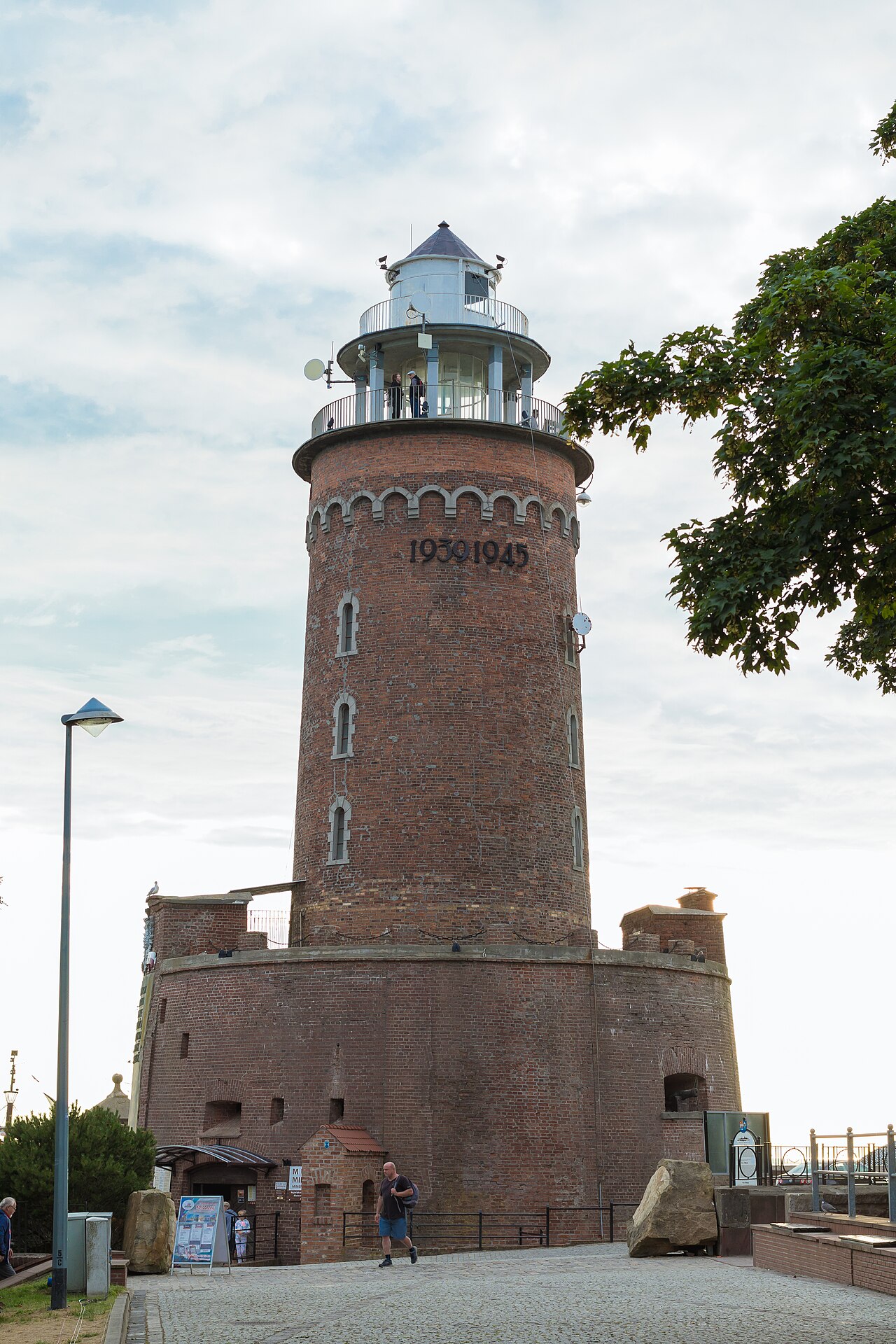
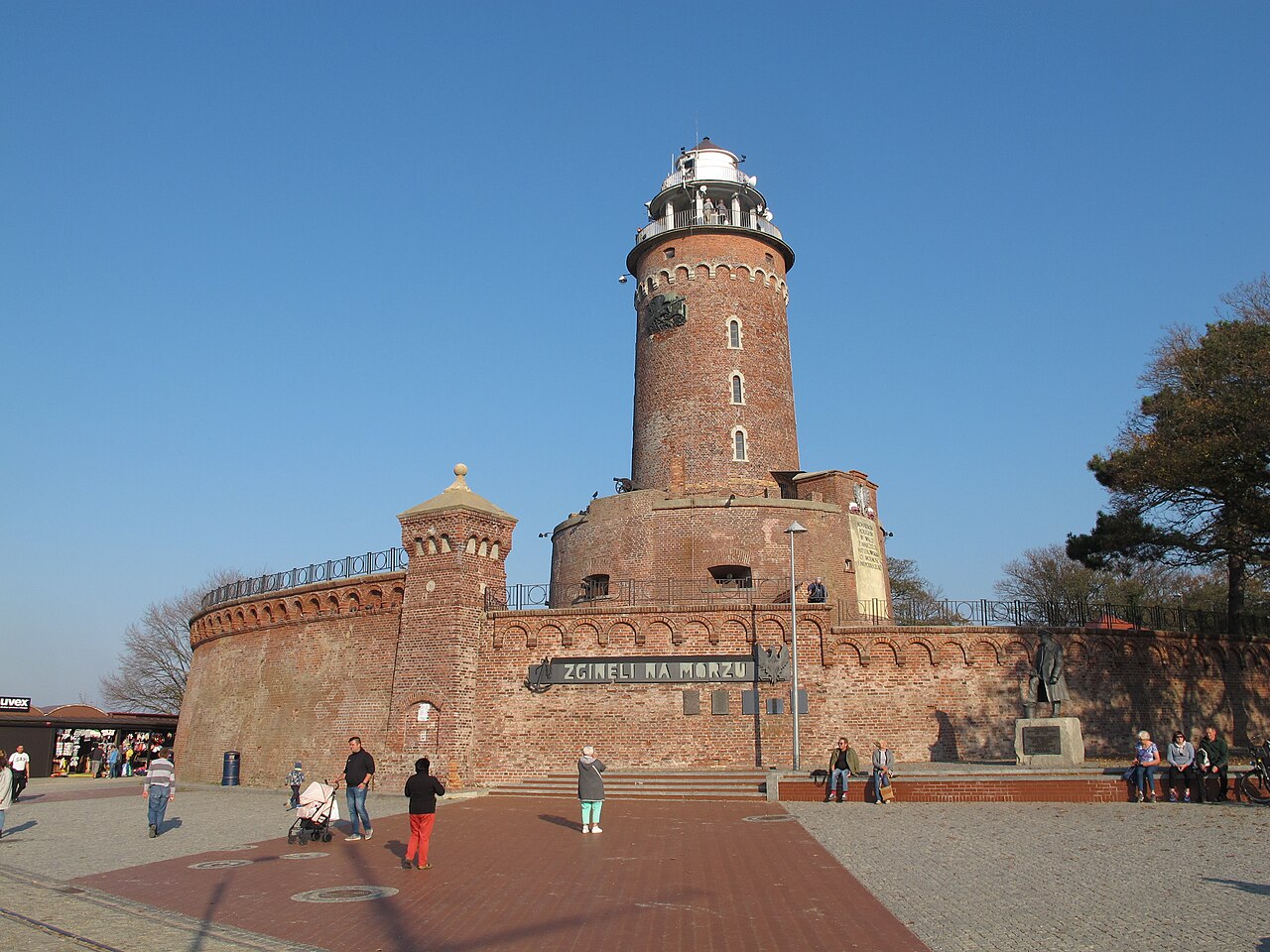
It is 26 metres tall with 109 steps to the top, and its light is visible for just under thirty kilometres. A lighthouse has stood on this spot since 1666; the current brick tower sits on the foundations of the old fortress and the light shines from 33 metres up. You can climb it and look out over the harbour, the pier and the beach. There is a mineral museum in the base, usually included in the ticket. It is the most photographed building in town.
2. The pier
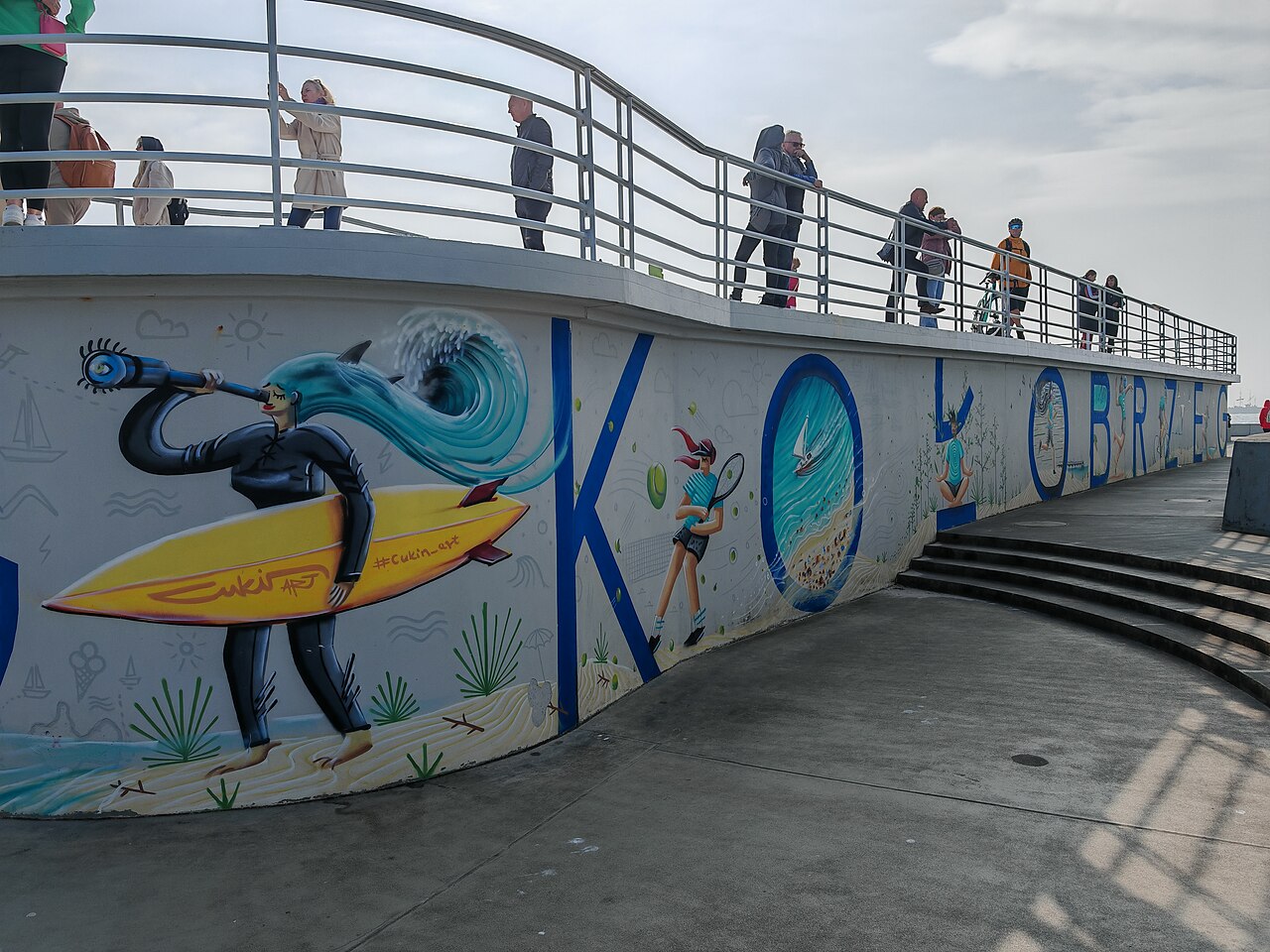
It is 220 metres long, 9 metres wide and sits roughly 4.5 metres above the water. In summer you pay separately to step onto the two-level platform at the far end. People walk the wooden pier in the morning and in the evening, and fish from it. It is the second longest pier in West Pomerania, beaten only by the one in Międzyzdroje, and it gives you the best beach photos and the best sunsets in town.
3. The harbour and the Parsęta waterfront
A fishing and yacht harbour at the river mouth where the boats tie up and the sightseeing cruises leave from. The quayside around it is lined with restaurants and fish stalls. The harbour is also why you can buy fresh fish here straight off the boat rather than out of a freezer.
4. A sightseeing cruise
Excursion boats leave the harbour, some of them dressed up as sailing ships, for an hour along the coast. It is a standard seaside attraction, but it works with children and the beach looks completely different from the water.
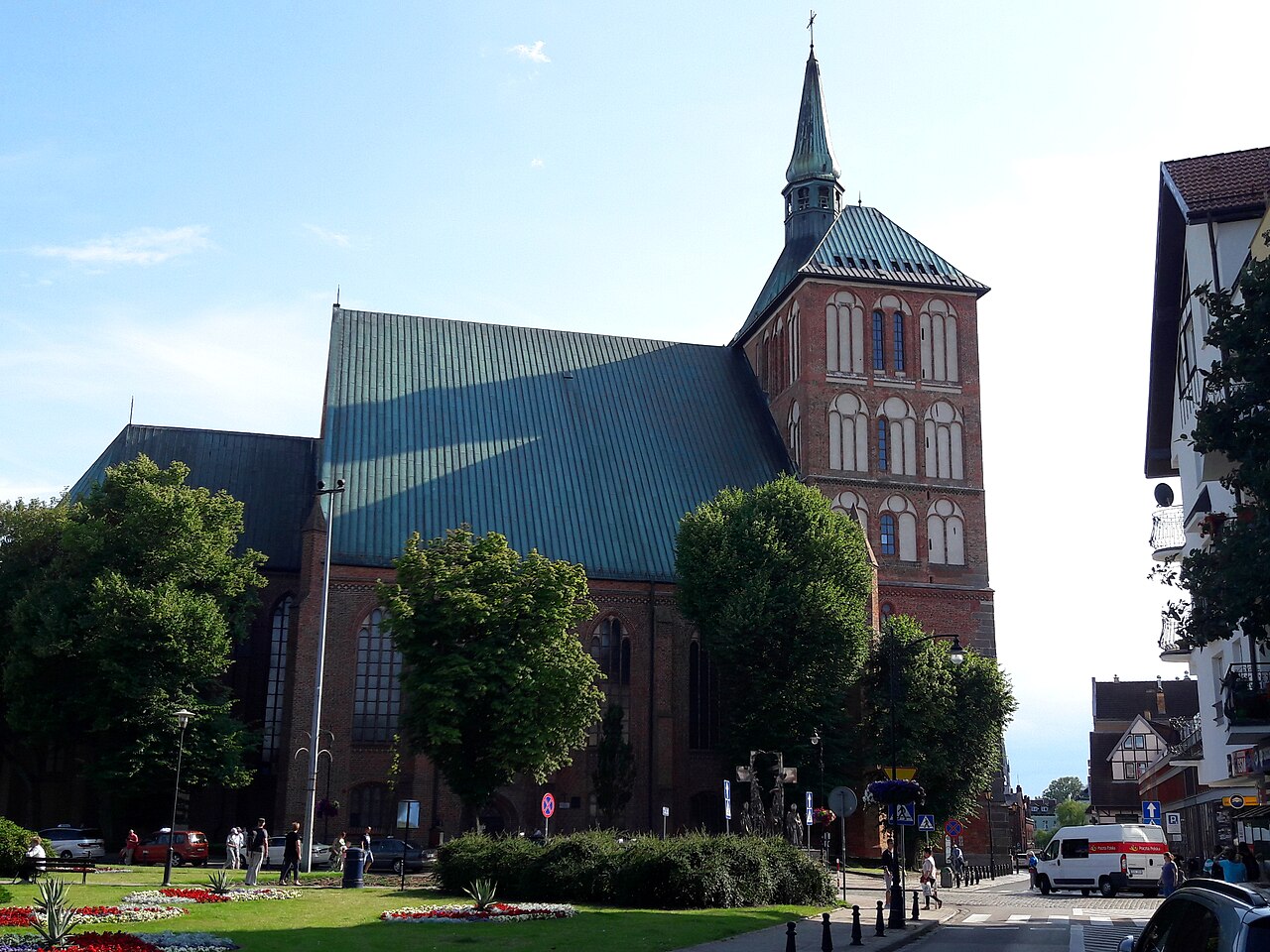
5. Basilica of the Assumption of the Virgin Mary
A Gothic brick co-cathedral in the centre and one of the most significant buildings on Poland’s northern coast. Inside are medieval chandeliers, a font and the so-called leaning pillars, visibly tilted after wartime damage. You can climb the tower for a view over the town and the sea.
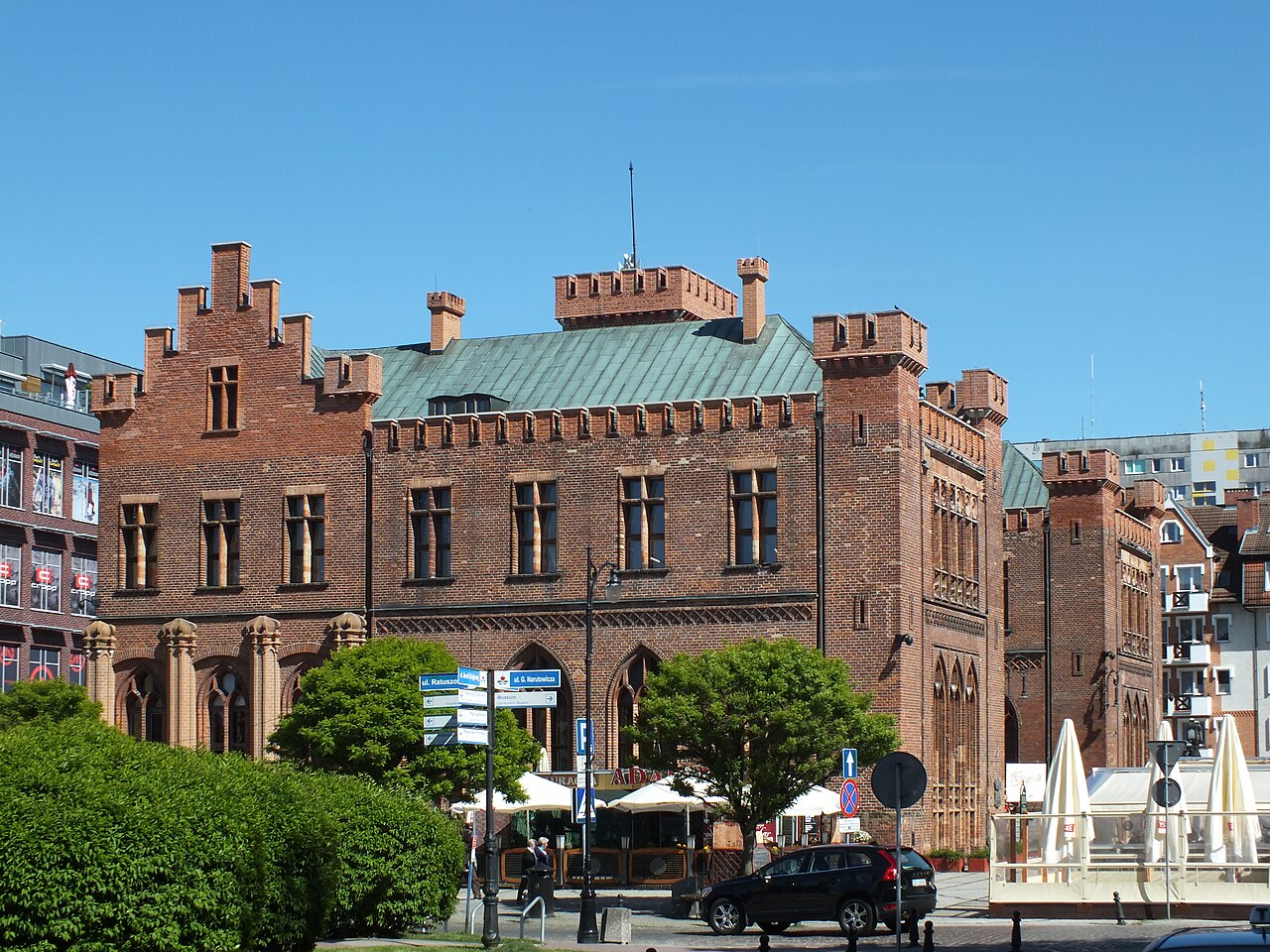
6. The town hall
A 19th-century neo-Gothic town hall built to a design from Karl Friedrich Schinkel’s circle, today housing a gallery and a restaurant. The square around it is the heart of the town and the point where Kołobrzeg stops being only a beach.
7. Museum of Polish Arms
One of Poland’s largest military museums, with an outdoor hardware display and indoor galleries covering the history of the Polish army and the 1945 battle for Kołobrzeg. History buffs will spend half a day here; everyone else at least gets the tanks and aircraft outside.
8. The three forts trail
Kołobrzeg was a heavily fortified town and the remains of its forts are still scattered around the area. A waymarked trail links them and you can walk it or ride it on a bike. It is a good way to get away from the beach and see something else.
9. Stefan Żeromski Spa Park
A green belt between the centre and the sea with tree-lined paths, benches, a bandstand and spa houses. This is where you can see that Kołobrzeg is a spa town: people come here to walk, not to sunbathe.
10. The brine graduation tower
In the spa district stands a graduation tower, a timber structure packed with blackthorn twigs over which brine trickles and evaporates into the air. You walk laps around it and breathe in the salty aerosol. It is the free version of what patients come to the sanatoriums for, and it genuinely helps children with breathing problems.
11. The seafront promenade
The promenade above the beach connects the pier, the spa district and the eastern stretches. In season it is the town’s main strip, with cafés and stalls, and people walk it well after dark.
12. The town beach
Kołobrzeg’s beach runs for twelve kilometres and the water gets deep gradually, which makes it a safe bet for families with small children. The section by the centre is wide and sandy with lifeguards and sunbed rentals. It is one of the best on the Polish coast and big enough that you will find a spot even in August.
13. The eastern beaches towards Podczele
The further east you go from the centre, the fewer people you meet. The stretches near Podczele are wider and wilder, with nothing behind them but the dune belt and forest. If you want quiet, this is the direction.
14. Ekopark Wschodni
A protected area on the eastern edge of town with a nature trail, wetlands and bird hides. You can walk here along the beach or ride out on a bike, and it is the quietest spot around.
15. The oceanarium
Usually open daily from about 9.30 am to 6 pm, with tickets around €7 for adults and €6 for children and seniors; under-twos go free. Inside are tanks of marine and freshwater species plus an exhibition about the Baltic. It is not a huge complex, but on a rainy morning with kids it is a safe bet.
16. The 6D museum and Miasto Myszy
Two classic family attractions in the centre: a motion cinema and an interactive play exhibition for younger children. Pure commercial fun, but on the third rainy day you will take it.
17. Cycling along the coast
Kołobrzeg sits on the coastal cycle route, which you can ride west or east along the sea and the dunes. There are plenty of rental shops in town, and a bike is the best way to see more than just the town beach.
The ferry to Bornholm: where things stand
This is the most common question about Kołobrzeg and the answer is unfortunately short: there has been no direct connection from Kołobrzeg to Bornholm since 2020. The seasonal catamaran Jantar, which used to cross to Nexø in about four and a half hours, was withdrawn and never came back.
Polska Żegluga Bałtycka has announced a seasonal Kołobrzeg to Rønne route, originally for 2025, but the plan stalled on port infrastructure and there is still no confirmed start date or timetable. Until that changes, you reach the island via Świnoujście and Ystad in Sweden or via Sassnitz in Germany, from where ferries to Rønne run regularly. Check the current schedules with the operators before you plan around it, because seasonal Baltic routes change from year to year.
How to get to Kołobrzeg
| From | Distance | Driving time |
|---|---|---|
| Szczecin | 134 km | about 1.5 hours |
| Poznań | 250 km | about 3 hours |
| Gdańsk | 270 km | about 3.5 hours |
| Berlin | 290 km | about 3.5 hours |
By car you come in on the S6 expressway that runs along the coast, or up the national road 11 from Poznań. Motorway tolls on the concession sections are paid at barriers or electronically. By air, the closest airport is Szczecin-Goleniów, about 100 km away; Gdańsk, Poznań and Berlin all work as well and all have car hire on site. By train, Kołobrzeg is one of very few Polish seaside towns with a station right by the centre, and direct PKP Intercity services run from Warsaw, Poznań, Wrocław and even Kraków.
Parking in the spa district and by the beach is paid in season, and by midday it is usually full. Most places to stay have their own parking, which is worth checking when you book.
Kołobrzeg or Łeba: Kołobrzeg is bigger and more urban and has spa infrastructure, so you can survive three rainy days here. Łeba is smaller and wilder and its main draw is the shifting dunes. With small children or outside the peak season, Kołobrzeg is the safer pick.
When to visit Kołobrzeg
In the main season from June to August, air temperatures sit roughly between 20 and 25 °C and the sea is 18 to 22 °C. This is the Baltic, so swimming is short and bracing rather than an all-day affair.
- July and August: warmest, busiest and most expensive. The sea still rarely gets past twenty degrees.
- June and September: the best compromise, with an emptier beach and lower room rates.
- May and October: not swimming weather, but the spa treatments, pier walks and cycling all run at full speed.
- Winter: unlike smaller resorts, Kołobrzeg does not close. The sanatoriums run year round, and a winter beach walk in a gale is an experience in itself.
Where to stay
- The spa district by the park and promenade: the best location, hotels with spa and pool, the highest prices.
- The centre around the town hall: cheaper, closer to shops and restaurants, ten minutes’ walk to the beach.
- The eastern side towards Podczele: quieter, newer apartments, further from the noise.
- Campsites and cabins in the surrounding area if you are travelling with a camper.
Rough prices per night in the main season:
- Budget: a guesthouse room or a private room in the eastern part of town from roughly €28 to €42. Kołobrzeg has few hostels; a cheap room with its own entrance is the more common option.
- Mid-range: an apartment or a three-star hotel ten minutes from the beach from about €70 to €105 for a double.
- Spa resort: a hotel with spa, pool and treatments right by the promenade from roughly €130 to €210 a night, usually with half board.
Outside July and August prices drop by about a third, and the spa hotels put out multi-night packages that work out better still.
You can compare places to stay in Kołobrzeg on a single map through Stay22. Our round-up of the best spa hotels in Poland is worth a look too, because Kołobrzeg is the textbook example of the genre.
Kołobrzeg with kids
- A wide beach with a gentle slope into the water and lifeguards, which is the main reason families come here.
- The oceanarium and Miasto Myszy for a rainy day.
- Climbing the lighthouse, because there are steps and a reward at the top.
- An hour-long boat cruise along the coast.
- The brine graduation tower, especially for children with allergies or breathing trouble.
- The outdoor military hardware at the arms museum.
What to see around Kołobrzeg
- Ustronie Morskie and Sianożęty, quieter beaches a short way east.
- Mrzeżyno and Dźwirzyno to the west, smaller resorts backed by dunes.
- Trzęsacz, where the ruined church is sliding off the cliff into the sea.
- Koszalin and Góra Chełmska with its viewing tower, about forty minutes away.
- A kayak trip on the Parsęta inland, when you want a day off the beach.
Frequently asked questions about Kołobrzeg
Is there a ferry from Kołobrzeg to Bornholm?No. The direct connection has not existed since 2020, when the seasonal catamaran Jantar was withdrawn. An announced Kołobrzeg to Rønne route still has no confirmed start date. You reach Bornholm today via Świnoujście and Ystad in Sweden or via Sassnitz in Germany, so check the current sailings with the operators.
How do you get to Kołobrzeg?Szczecin is 134 kilometres away and about ninety minutes by car, Poznań 250 kilometres, Gdańsk 270 kilometres and Berlin roughly 290 kilometres. The nearest airport is Szczecin-Goleniów, and direct PKP Intercity trains run from Warsaw, Poznań, Wrocław and Kraków to a station right by the centre.
Why is Kołobrzeg a spa town?Because of the brine. The town had large salt deposits and grew into a spa resort during the 19th century, using brine and peat mud mainly to treat the airways. That is why the sanatoriums run all year and the season does not end with the swimming.
Can you climb the Kołobrzeg lighthouse?Yes. The tower is 26 metres tall, stands on the foundations of the old fortress and has 109 steps. There is a mineral museum in its base, and from the gallery you can see the harbour, the pier and the beach.
What are the beaches in Kołobrzeg like?Wide and sandy with a gentle slope into the water, among the best on the Polish coast. The section by the centre has full facilities and lifeguards; the further east you go towards Podczele, the quieter and wilder it gets.
Kołobrzeg or Łeba for families?It depends what you want. Kołobrzeg is bigger and more urban, with spa infrastructure and things to do on rainy days. Łeba is smaller and wilder and its main draw is the shifting dunes. With small children and outside peak season, Kołobrzeg is the more practical choice.
When is the best time to visit Kołobrzeg?June and September, when the beach is emptier and prices are lower. July and August are the warmest but also the most expensive and the most crowded. Out of season Kołobrzeg has an advantage over other resorts, because the spa business keeps it open.
Is the Baltic Sea warm in Kołobrzeg?Not particularly. Even in the main season the water usually hovers around twenty degrees and drops when the wind comes off the sea. Treat it as a holiday by the water rather than in it, and expect your swims to be short.
Potřebujete pomoct s cestováním?
-
Ubytování 🏨
Vyberte si to nejlepší ubytování, ať už jste kdekoliv, přes Booking.com. -
Půjčení auta 🚗
Auto si snadno najdete přes Booking.com, kde máte často slevu díky ubytování, nebo Rentalcars.com, kde porovnáte nabídky většiny půjčoven. -
Zážitky 🎟️
Přes GetYourGuide.com si vyberete z nejrůznějších výletů i zážitků po celém světě, navíc se zrušením zdarma do 24 h předem.