Last updated 5.11.2026
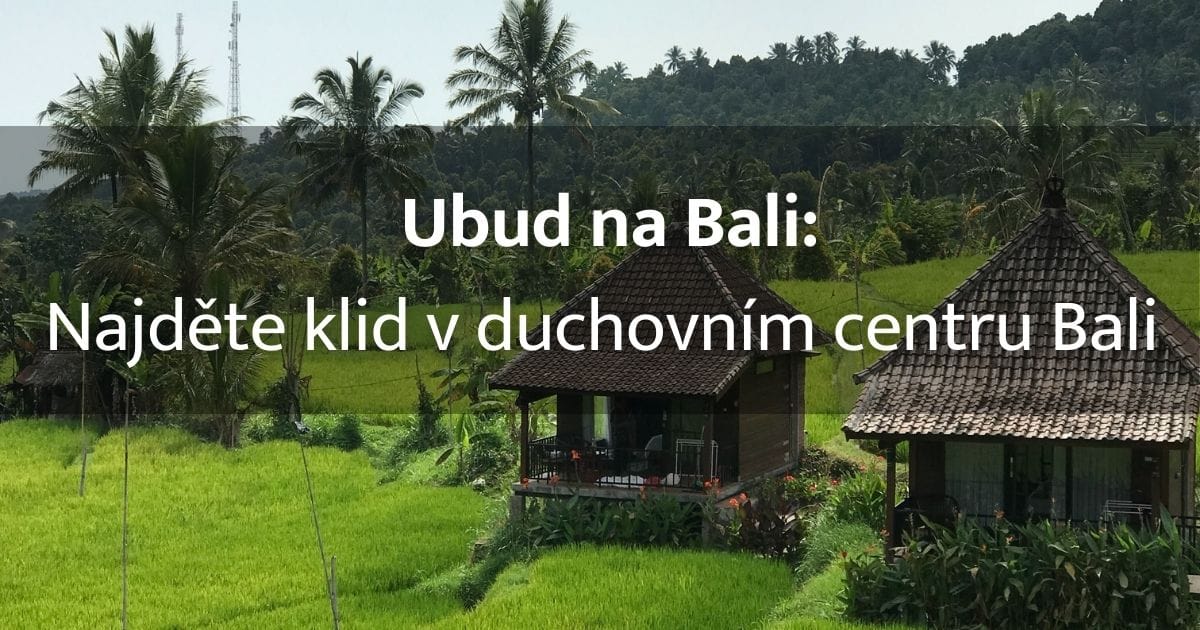
Looking for a corner of Bali where time slows down, your mind goes quiet and everything starts to make a little more sense? Ubud is the cultural and spiritual heart of the island — a green town in the interior, ringed by rice fields, rivers and gorges. It’s also a brilliant base for treks up Bali’s famous volcanoes. We came here for a couple of days and ended up staying more than a week, exploring the whole area. So what makes Ubud so special, and where should you go nearby?
A Little History: Why Ubud?
For centuries Ubud was part of the kingdom of Gianyar, and it has served as a cultural centre for Bali since the 18th century. The local king gathered artists, musicians and craftspeople here to keep traditional Balinese culture alive. In the 20th century European artists began arriving, finding both inspiration and a new home — and their influence is still felt in the town today. The name Ubud itself comes from the Balinese word ubad, meaning medicine, because the area was long known for its healing herbs. These days most people would say Ubud heals the mind and the soul above all.
TIP: Be sure to book your accommodation in Ubud well in advance. We left it to the last minute, which really narrowed our options and meant we had to keep moving from place to place.
Why You Have to Visit Ubud in Bali
What sets Ubud apart from the rest of Bali, and why do people keep coming back? It’s mostly the atmosphere, the everyday rhythm of village life and the way nature, culture and spirituality all blend together so naturally.
- Ubud is calmer than the south of Bali and moves at a completely different pace.
- It’s a hub of culture, temples, dance and traditional crafts.
- You’ll find jungle, rice fields and sacred springs all around.
- It’s a magnet for digital nomads, yogis and anyone looking for their community.
Where to Stay in Ubud, Bali
If you’re heading to Ubud, a lot depends on exactly what you have planned. Staying right in the centre, where everything is within walking distance, is a very different experience from staying in the quieter areas surrounded by rice fields and jungle. One of the great things about Ubud is that even lovely little hotels with a pool and breakfast come at very reasonable prices, especially outside the high season. We tried several places to stay, mostly in the centre, which suited us best for working.
Central Ubud
The centre is ideal if you want to walk to the market, see the royal palace and the temples, and have restaurants and cafés close by. Just be prepared for more hustle and bustle during the day (scooters, mostly). A great strategy is to spend a few nights in the centre and then move out into the greenery beyond the town.
TIP: Our favourite spot in the centre was this one, which also did a fantastic breakfast.
Staying Outside the Centre — Rice Fields and Jungle
If you’re after more peace and quiet and a bit of jungle, it’s lovely to stay just outside the centre — in areas like Peliatan, Sayan or near Campuhan. Mornings are wonderfully still, with nothing but green landscape around you, and in the evening it’s an easy trip back into Ubud for dinner or an evening out.
Tip: The ideal approach is to split your stay — a few nights in the centre and a few in a quieter spot out in nature. That way you get the best of both sides of Ubud.

Ubud, Bali: 14 Things to Do and See Nearby
Ubud isn’t just a pretty town — it’s also a brilliant base for trips out into the surrounding jungle and up to the volcanoes. Some places you can reach on foot straight from the centre, others are a short hop away by scooter or with a driver. Here are the spots we loved most in and around Ubud, and we’re sure you’ll love them too. For the sights nearby we’d recommend renting a scooter, and for the bigger day trips it’s worth booking a tour with GetYourGuide with a guide (usually required).
Mount Batur (Gunung Batur)
Batur is Bali’s most famous and most accessible volcano — it’s where we got engaged, and it was one of the most beautiful places we saw on the whole island.
The trek starts in the Kintamani area, specifically the villages of Toya Bungkah or Pura Jati, which a driver from Ubud will get you to in roughly 1.5 hours. The route is usually walked at night, setting off between 2 and 3 a.m. to catch sunrise from the summit — or, alternatively, for sunset, when you’ll have the place almost to yourselves (that’s what we chose, and we’re so glad we did). The path follows volcanic gravel and lava rock, with a steeper final section that’s still technically straightforward.
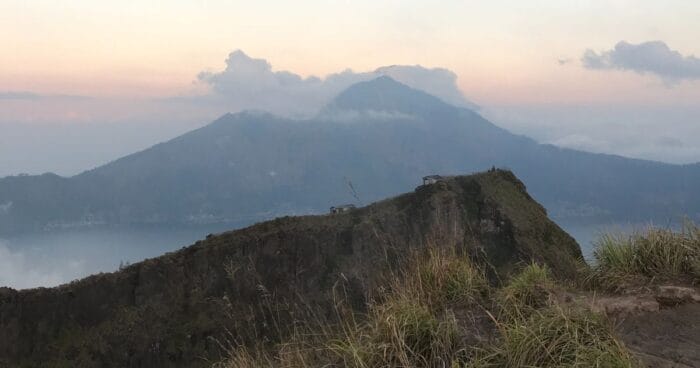
At the top you’re rewarded with sunrise or sunset over Lake Batur, a panorama of the surrounding mountains and often a view across to Mount Agung. On the way down you usually stop at the hot springs or for breakfast overlooking the caldera. It was one of the best excursions on all of Bali, so definitely go!

Mount Agung (Gunung Agung)
Bali’s highest and most sacred mountain, Agung, is a whole different level from Batur. From Ubud you’ll most often head to the trailheads at Pura Besakih or Pura Pasar Agung, depending on your chosen route. The climb is long, far more physically demanding and usually takes 6–8 hours just to reach the top. The trail crosses steep terrain, often over rocks and lava fields, with little in the way of shade.
Mount Abang
A lesser-known alternative to Mount Batur, and perfect if you want to head into the hills without the crowds. The trailhead is also in the Kintamani area, about an hour and a half from Ubud.
The trek is more peaceful, winding through forest and along a ridge with gorgeous views of Lake Batur and the surrounding volcanoes. It’s not technically difficult, though it’s longer than Batur. The upside is barely any other walkers and a wonderfully authentic feel.
Sacred Monkey Forest Sanctuary
Ubud’s monkey forest is far more than a tourist attraction — it’s a sacred woodland complex with temples, statues and ancient trees. The dense jungle, humid air and constant sounds of nature give it a powerful atmosphere. Hundreds of macaques roam freely among the temples; they’re used to people, but they’re still wild animals. It’s best to come early in the morning, when it’s quieter. It’s a lovely walk, but be warned — the monkeys are cheeky, and they’ll happily jump on people and pinch their belongings.
TIP: You can simply buy your tickets online and save yourself the hassle.

Pura Taman Saraswati
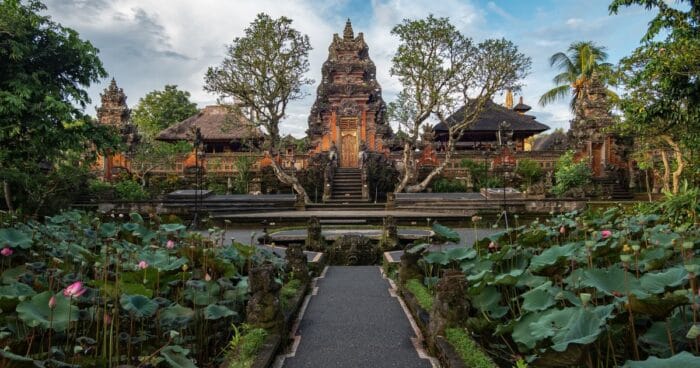
The Saraswati temple is one of the loveliest spots in Ubud. The approach leads across a pond brimming with lotus flowers, and the whole space feels calm and harmonious. The temple is dedicated to the goddess of wisdom and the arts — which sums up the character of Ubud perfectly.
Ubud Art Market
Ubud’s market is lively, colourful and gloriously chaotic. You’ll find clothes, jewellery, baskets, paintings and souvenirs. Haggling is expected and very much part of the local culture. The best time to visit is early in the morning, when there are fewer people and a more pleasant atmosphere.
Ubud Palace
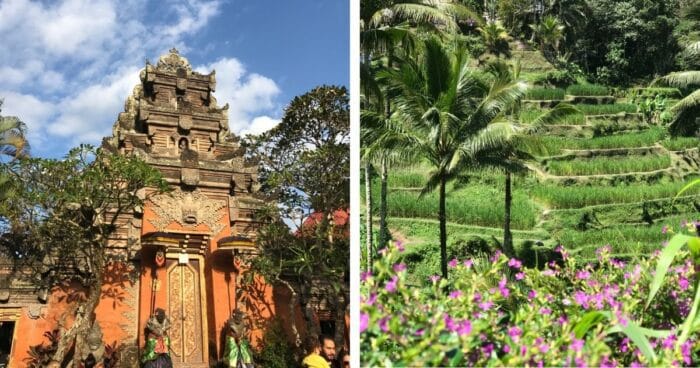
The royal palace in the centre of town is a symbol of historic Ubud. By day it’s worth a quick visit for its traditional architecture and decoration. In the evening, though, the palace transforms into a cultural venue hosting traditional Balinese dance performances accompanied by a gamelan orchestra.
A Civet Coffee Tasting (Kopi Luwak)
Love your coffee and enjoy trying new, out-of-the-ordinary treats? Then treat yourself to a civet coffee tasting. Around Ubud you’ll find plenty of smaller coffee plantations where you can taste traditional Balinese coffee, along with teas and herbal infusions. The most famous of the lot is kopi luwak. A visit usually includes a short talk on how the coffee is grown and processed, plus a tasting of several different drinks, often with a view over the jungle or rice fields.
The tasting takes place at a modern resort with pools and a restaurant, so you can linger and relax. Just be prepared for tourist prices.
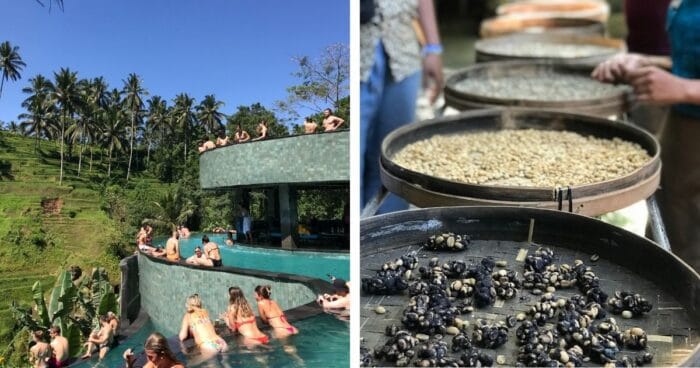
Campuhan Ridge Walk
This easy walk along the ridge above the confluence of two rivers is one of the nicest things to do around Ubud. The trail is perfect for the early morning or for sunset, when the light is at its loveliest and the temperatures are kinder. A great spot if you want to clear your head without travelling far.
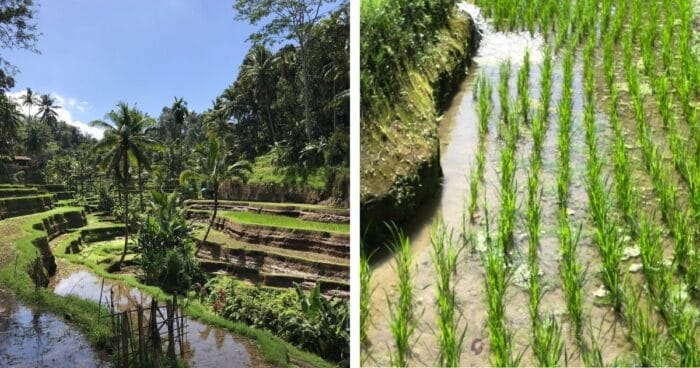
Tegalalang Rice Terraces
The Tegalalang Rice Terraces are the most famous rice terraces in Bali. Steep slopes, that intense green and a traditional irrigation system come together to create a picture-perfect landscape. It’s best to arrive first thing, before the place fills up with the crowds that inevitably turn up. Here rice isn’t just a crop — it’s woven into the beliefs and daily lives of the locals. And if you’re short on time, don’t worry: you’ll see rice fields everywhere around Ubud, so you needn’t make a special trip out to the touristy ones.
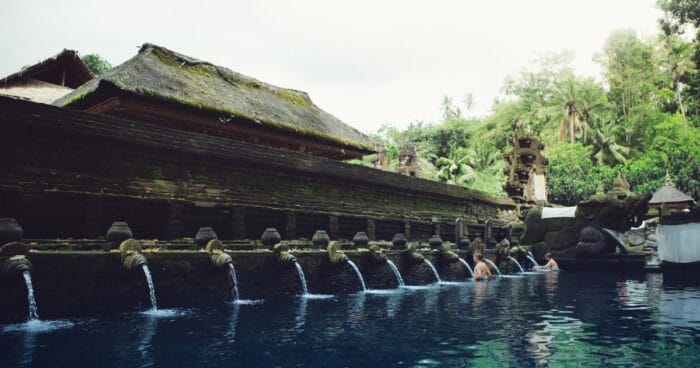
Tirta Empul
The sacred springs of Tirta Empul are among the most important Hindu sites in Bali. People come here to perform a purification ritual in the cool spring water. Even just watching the locals at prayer is a moving experience — and if you decide to take part in the ritual yourself, it’ll be one of the most authentic things you do on Bali. We’d been really looking forward to this, and it was magical. One of those experiences we still look back on fondly today.
Gunung Kawi
The monumental rock shrine of Gunung Kawi sits in a green valley, with reliefs carved straight into the rock face. The path to reach it leads down steps between rice fields and past a sacred river. It’s precisely that tougher approach that often means a calmer atmosphere and a strong spiritual feel.
Goa Gajah
The Elephant Cave is an ancient spiritual site combining both Hindu and Buddhist elements. The entrance to the cave alone has a mystical atmosphere, and the surrounding gardens, water features and smaller temples make it a pleasant place to stop and slow down for a while.
Tegenungan Waterfall
The Tegenungan waterfall is one of the most accessible waterfalls near Ubud. You can take a dip here or simply relax in nature for a while. It’s best to arrive in the morning, when there are fewer people and the light is nicer.
More Tips for the Area Around Ubud
If you have more time in Ubud, it’s well worth adding a few more stops nearby. Some are great for families, others for lovers of adventure, crafts or something sweet. You can tackle most of them in a single day with a private driver.
- Bali Bird Park and Bali Reptile Park
- the village of Celuk and its traditional silver jewellery
- the Hidden Canyon in Sukawati
- rafting on the Telaga Waja river
- Alas Harum (rice fields, viewpoints, swings)
- the POD Chocolate Factory
Food, Yoga and Relaxation in Ubud
Ubud is a hub not only of culture and traditional crafts, but of yoga too. There are interesting yoga classes, workshops and other activities everywhere you look. It is aimed at tourists, though, and the prices reflect that. As for food, you’ll find plenty of great restaurants offering far more than just fried rice and noodles. And what we’d recommend most of all: the massages, which cost next to nothing here.
Getting Around Ubud
A scooter gives you the most freedom, but if you don’t fancy that, private drivers for half-day or full-day trips work really well. Taxis in the centre often operate through a local association, with fares agreed in advance. The Grab and GoJek apps can be restricted in some parts of town, but tend to be easier to use outside the centre.
Weather in Ubud and When to Go
Ubud has a tropical climate with temperatures of around 25–30°C all year round. The drier season runs roughly from April to October, while the wetter months fall between November and March — though it often only rains for short spells. Thanks to its inland location, the climate in Ubud is usually more pleasant than on the coast.
Frequently Asked Questions (FAQ)
Is Ubud worth visiting in Bali?
Yes, Ubud is absolutely worth visiting, and for many travellers it’s the most interesting part of the whole of Bali. It’s the place to discover the island’s cultural and spiritual side — temples, traditional dance, rice fields and the everyday life of the locals. If you’re after peace and quiet, nature, good food, yoga and an authentic atmosphere, Ubud definitely shouldn’t be missing from your itinerary.
Which is better, Seminyak or Ubud?
It depends on the kind of holiday you’re after. Seminyak is a coastal resort focused on beaches, beach clubs, shopping, bars and restaurants, whereas Ubud lies inland and offers calm, nature, culture and spiritual experiences. If you want nightlife, sunsets by the sea and a livelier atmosphere, Seminyak will probably suit you better. But if you’re longing for rice fields, temples, yoga and a slower pace, Ubud is the better choice. Ideally, combine the two.
Is Ubud a party place?
No, Ubud isn’t a typical party place. There is some nightlife here in the form of bars and the occasional evening of live music, but you won’t find the wild parties or nightclubs you’d get in Seminyak or Canggu. Evenings in Ubud are more about a good dinner, a traditional dance performance or a relaxed drink. If you’re mainly after nightlife and partying, Ubud probably won’t be your main destination.
Potřebujete pomoct s cestováním?
-
Ubytování 🏨
Vyberte si to nejlepší ubytování, ať už jste kdekoliv, přes Booking.com. -
Půjčení auta 🚗
Auto si snadno najdete přes Booking.com, kde máte často slevu díky ubytování, nebo Rentalcars.com, kde porovnáte nabídky většiny půjčoven. -
Zážitky 🎟️
Přes GetYourGuide.com si vyberete z nejrůznějších výletů i zážitků po celém světě, navíc se zrušením zdarma do 24 h předem.