Ireland is the kind of place where a single day can take you from a buzzing Dublin pub, across impossibly green pastures, all the way to sea cliffs where Atlantic waves crash far below. If you’re trying to work out what to see in Ireland, you’ll quickly hit the same happy problem we did — there is simply so much of it, spread so far apart, that you’ll never cram it into a weekend. So we’ve pulled together 26 of the best things to see in Ireland, and for every spot we tell you why it’s worth your time, what the entry costs, and how to make the trip that little bit easier.
What to See in Ireland at a Glance
When to go: May to September, ideally June or September — long days and more bearable crowds.
How to get around: a hire car is best (they drive on the left) along the Wild Atlantic Way; carless, stick to Dublin and day tours from the cities.
Don’t miss: the Cliffs of Moher, the Ring of Kerry, Killarney, Galway, Connemara and Dingle.
Northern Ireland: the Giant’s Causeway and Belfast — a different currency (pounds), and well worth it.
Budget: backpacker-style from around €70 (£60) a day, comfortably €100–130 (£85–110).
When to Go and How to Get Around Ireland
Irish weather is famously changeable — you can get sunshine, drizzle and wind in a single day, quite possibly on a single walk. The best window is May to September, when the days are long (in June it stays light until around half past ten in the evening) and the countryside is at its greenest. Our own favourites are June and September — the weather still (or already) behaves, and there are fewer crowds and lower prices than in peak July and August.
By Car (Remember: They Drive on the Left)
Ireland is made for a road trip. A hire car unlocks the coastal roads and villages that public transport simply doesn’t reach. Just keep two things in mind: they drive on the left, and rural lanes tend to be narrow and hemmed in by stone walls. Take it slowly — the locals are patient. The flagship route is the Wild Atlantic Way, running more than 2,500 km down the west coast from Donegal to Cork.
💡 Tip: If driving on the left worries you, plan an easy stretch for your first day and avoid arriving into Dublin by car — city traffic is the trickiest part. Pick the car up on your way out of the city instead.
Tours and Popular Routes for What to See in Ireland
You can cover plenty even without a car. Full-day coach tours run from Dublin, Galway and Killarney to the Cliffs of Moher, the Ring of Kerry and Connemara. Around Dublin itself you’ll get about on foot and on the Luas tram.TIP: Find day trips and tickets on GetYourGuide →
26 Things to See in Ireland
We feel Ireland flies under a lot of people’s radar, and those who do come tend to stick to Dublin. Yet it’s a fascinating, beautiful country — and above all, a peaceful one. So here’s what to see in Ireland, and the places we loved most.
1. Dublin — Trinity College, Temple Bar and Guinness
The capital is the natural gateway into Ireland and deserves at least two days. Start at Trinity College, where the historic Long Room library holds the famous illuminated manuscript, the Book of Kells (adult ticket €25, around £21, free under 12, timed booking required). In the evening, head to the Temple Bar quarter for a pint and live music — it’s touristy and pricey, but one pint here is part of the Dublin ritual. And beer lovers shouldn’t skip the Guinness Storehouse, with its seven floors and the panoramic Gravity Bar (prices vary dynamically; reckon on roughly €26–36 / around £22–31).
💡 Tip: Book tickets for the Book of Kells and the Guinness Storehouse online in advance — queues form on the day and the popular slots sell out. Accommodation in Dublin →
2. The Cliffs of Moher
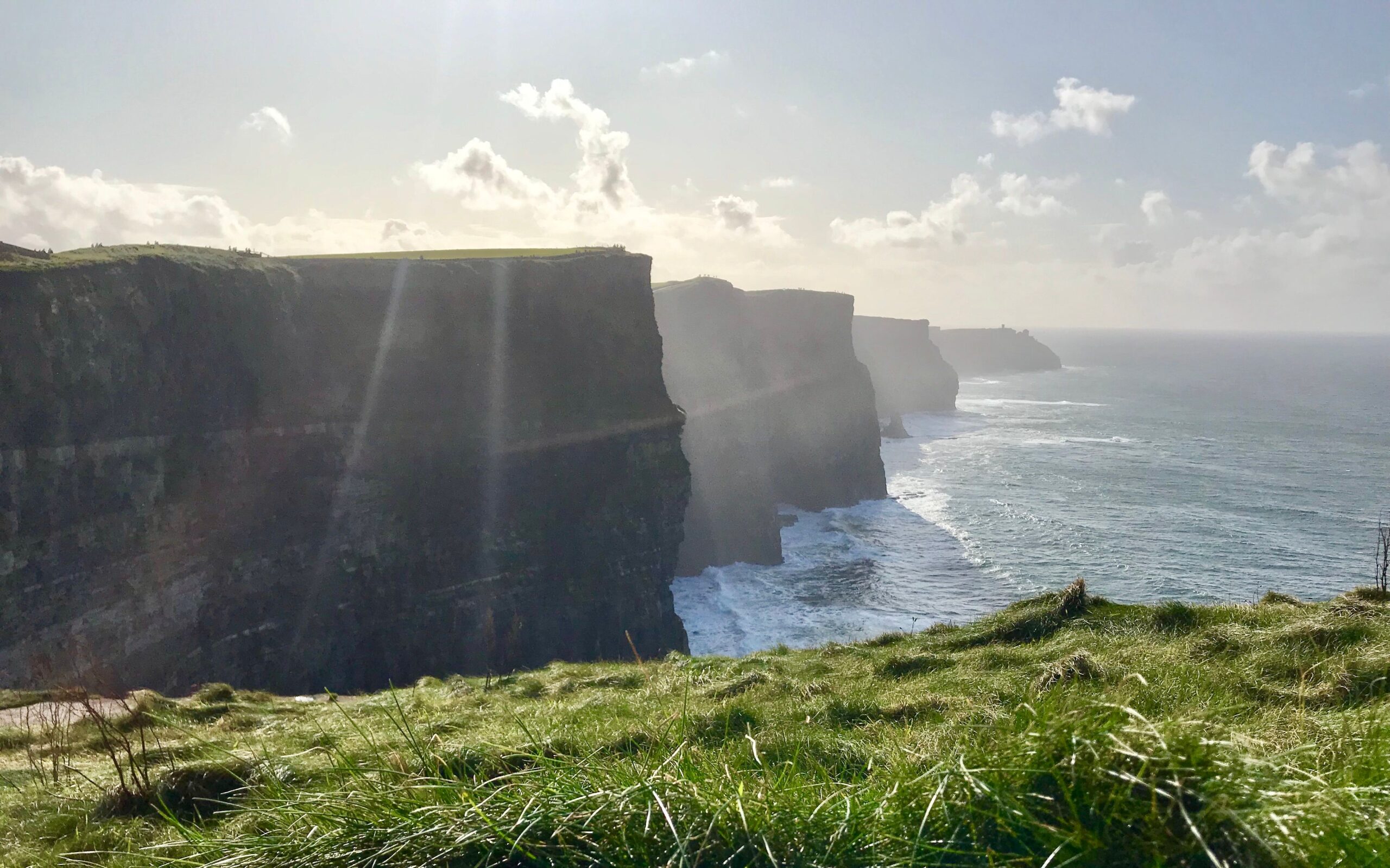
Ireland’s most celebrated natural sight. The cliffs run for around 8 km and rise 214 metres (about 700 ft) straight out of the Atlantic at their highest point. On a clear day you can see all the way to the Aran Islands. The cliffs themselves are free to reach, but there’s a charge for parking and the visitor centre — in high season (11am–4pm) it’s €10 / around £8.50 per adult, and cheaper online and off-peak (around €7).
💡 Tip: Come early in the morning or towards evening — around midday the coaches roll in and the car park fills up. A lovely, cheaper approach is along the coastal path from the little village of Doolin.
3. The Ring of Kerry
Probably Ireland’s best-known scenic loop — 179 km around the Iveragh Peninsula in the south-west. Along the way you pass wild coastline, green hills, stone circles and picture-perfect villages. You can drive it in a day, but we’d suggest at least two so you can fit in detours like the Kerry Cliffs or the Skellig Peninsula. Parking along the route is mostly free.
4. Killarney National Park
Right next to the Ring of Kerry lies one of the country’s oldest national parks — lakes, ancient woodland and the Torc Waterfall. Inside you’ll find Muckross House (a grand manor with gardens, paid entry) and Ross Castle on the lakeshore. Entry to the park itself is free, and it’s an easy visit even with children.
5. Galway
Our favourite Irish city. Galway, on the west coast, is smaller, colourful and gloriously alive — the cobbled lanes of the Latin Quarter, buskers on every corner, and pubs with live Irish music almost every night. It’s also the ideal base for trips into Connemara and out to the Aran Islands.
6. Connemara
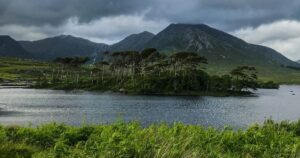
A rugged, romantic landscape of bogland, lakes and the Twelve Bens mountains, north-west of Galway. In Connemara National Park you can walk up Diamond Hill for views over the Atlantic (free), and a little further on stands the fairytale Kylemore Abbey with its Victorian gardens (paid entry).
7. The Giant’s Causeway (Northern Ireland)
Around 40,000 hexagonal basalt columns which, according to legend, were built by the giant Finn McCool. It’s a geological one-off on the coast of Northern Ireland. You can reach the columns themselves for free, though the National Trust visitor centre is paid (around £15 / about €17.50). Note — in Northern Ireland you pay in British pounds, not euros.
💡 Tip: While you’re in the area, don’t miss the iconic beech avenue of the Dark Hedges (of Game of Thrones fame) and the Carrick-a-Rede rope bridge — together they make up the stunning Causeway Coastal Route.
8. The Wild Atlantic Way
This isn’t a single place but the longest defined coastal touring route in the world — over 2,500 km down the entire west coast, from Donegal in the north to Kinsale in the south. It links most of the places on this list. You don’t have to drive the whole thing; pick a stretch (Galway to Dingle, say) and enjoy the stops at cliffs, beaches and fishing villages.
9. The Dingle Peninsula and Slea Head Drive
Our tip for coast lovers. The Slea Head Drive loop (around 47 km) takes you past cliffs, golden beaches (Inch Beach, Coumeenoole) and archaeological sites all the way to Dunmore Head — the westernmost point of mainland Ireland. In the harbour town of Dingle you can tuck into fresh seafood and experience a proper Irish pub.
10. The Rock of Cashel
The dramatic silhouette of a medieval complex on a limestone outcrop in County Tipperary — a Gothic cathedral, the Romanesque Cormac’s Chapel and a Round Tower. From a distance it looks like something out of a storybook. Entry is paid, and you’ll want around 1.5 hours for a visit. It sits roughly two hours south-west of Dublin.
11. Kilkenny
Ireland’s best-preserved medieval town, with narrow lanes, craft breweries and the mighty 13th-century Kilkenny Castle and its sprawling parkland (paid entry). It’s under two hours from Dublin by car or train — an ideal day out.
12. Glendalough
The “Valley of the Two Lakes” in the Wicklow Mountains, with the ruins of a 6th-century monastic settlement and its distinctive round tower. Nature and history in one spot, under an hour south of Dublin. Entry is free; the upper car park costs around €5 / about £4 a day. It’s great for longer walks, too.
13. The Aran Islands
Three islands in Galway Bay where time seems to have stopped — stone walls, the Irish language and total calm. On the largest, Inis Mór (Inishmore), the prehistoric fort of Dún Aonghasa perches on the edge of an 87-metre cliff. You get there by ferry from Doolin or Rossaveal, and you explore by hired bike.
14. Cork and Blarney Castle
Ireland’s second city and its food capital — don’t miss the covered English Market. Just outside town stands Blarney Castle with its famous “Stone of Eloquence”: kiss it (leaning backwards over the battlements) and you’re said to receive the gift of the gab. Nearby are the port of Cobh (the Titanic’s last stop) and the enchanting town of Kinsale.
15. Skellig Michael
A rugged rocky island 12 km off the coast, with 6th-century monastic beehive huts — and a Star Wars backdrop. Getting there is an adventure in itself: by boat only, from Portmagee, in season only, in good weather only, and with a booking made well ahead. It isn’t for everyone, but it’s unforgettable.
16. Brú na Bóinne (Newgrange)
A complex of Neolithic passage tombs older than the Egyptian pyramids and Stonehenge (over 5,000 years). The most famous, Newgrange, is renowned for the winter solstice, when a beam of the rising sun pierces its chamber. Visits are by guided tour from the visitor centre, booking required. Under an hour north of Dublin.
17. The Burren
A lunar limestone plateau in County Clare, right next to the Cliffs of Moher. Rare wildflowers bloom in the cracks in the rock, and here stands Poulnabrone — a dolmen over 5,000 years old. Entry and parking are free. The Burren pairs beautifully with the cliffs for a single day out.
18. Sliabh Liag and Donegal
For Ireland without the crowds, head to the north-west. The Sliabh Liag (Slieve League) cliffs are almost three times higher than the Cliffs of Moher, with a fraction of the visitors. Nearby you’ll find Donegal’s highest peak, Errigal, plus waterfalls and lonely beaches. Parking is usually free.
19. Belfast (Northern Ireland)
The capital of Northern Ireland has transformed itself and now draws visitors to the Titanic Belfast museum (the ship was built right here), the colourful political murals and the Peace Walls that recall a turbulent past. It’s a good base for trips to the Giant’s Causeway. Again — the currency here is pounds.
20. The Wicklow Mountains and Powerscourt
The “Garden of Ireland”, just south of Dublin — moorland, lakes and winding roads where countless films have been shot. Beyond Glendalough you’ll find the Powerscourt Estate, with some of the finest formal gardens in Ireland, and the nearby Powerscourt Waterfall, the country’s highest. A perfect day out if you have a car in Dublin.
21. Achill Island and Keem Beach
Ireland’s largest island is joined to the mainland by a bridge, so you can drive straight over. Achill’s crowning glory is Keem Bay, a beloved Blue Flag cove cradled between green cliffs, along with the deserted village of Slievemore, abandoned during the Great Famine. The island lies on the Wild Atlantic Way and is one of the most photogenic corners of the west coast.
22. Croagh Patrick (the pilgrim mountain)
A conical mountain above Clew Bay in County Mayo, known to locals simply as “the Reek”. Legend has it that St Patrick fasted here for forty days, and so every year on the last Sunday of July thousands of pilgrims make the climb, some of them barefoot. The ascent to the summit (764 m) takes roughly three to four hours there and back, rewarding you with views over dozens of little islands in the bay. The nearby town of Westport makes a pleasant base.
23. Sligo, Benbulben and Yeats Country
The north-western county of Sligo is W. B. Yeats country and one of the least touristy parts of Ireland. It’s dominated by the table mountain of Benbulben, with its distinctive flat top and steep flanks. At Drumcliff, at the foot of the mountain, you’ll find Yeats’s grave, and nearby the Glencar waterfall tumbles into its valley.
💡 Tip: Just outside Sligo lies the megalithic cemetery of Carrowmore, one of the largest and oldest in Ireland. Entry is paid, roughly €5 (about £4).
24. The Hill of Tara
An unassuming grassy hill in County Meath hides one of the most sacred sites in Irish history: for centuries this was the seat of the High Kings of Ireland. The Lia Fáil (Stone of Destiny) still stands here, and in the grass you can make out the outlines of ancient ramparts and mounds. Entry is free, and it pairs easily with nearby Newgrange.
25. Bunratty Castle and Folk Park
A mighty 15th-century tower house in County Clare, on the road between Limerick and Shannon Airport. Around the castle spreads the Folk Park, an open-air museum of 19th-century cottages, workshops and pubs that brings rural Ireland to life, and in the evening the castle hosts its popular medieval banquets. A great stop with children. Entry is roughly €18 (about £15).
26. Clonmacnoise
One of Ireland’s most important early Christian monasteries, set picturesquely on the banks of the River Shannon in County Offaly. Founded by St Ciarán in the 6th century, it still has its round towers, ruined churches and richly carved high crosses, such as the Cross of the Scriptures. It lies inland, roughly halfway between Dublin and Galway. Entry is around €8 (about £7).
Nature and the Wild Atlantic Way
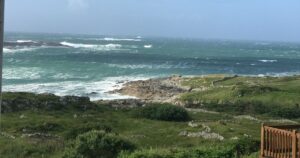
If you only see one thing in Ireland, make it the coast. The Wild Atlantic Way strings together the very best of it — the Cliffs of Moher, Connemara, Dingle, the Ring of Kerry and Sliabh Liag. There’s no need to rush: the magic of this route is in the stops, at a random beach, in a fishing village, or at a viewpoint where there happens to be nobody else.The national parks, what’s more, are mostly free and offer walks for everyone — from a gentle stroll around the lakes at Killarney to the climb up Diamond Hill in Connemara. Pack a waterproof jacket (the weather turns on a sixpence) and sturdy boots, and you’re sorted.
💡 Tip: Download offline maps — signal drops out often on the west coast and in the hills, and your sat nav would leave you stranded.
Food and the Irish Pub
Irish cooking isn’t about fine dining — it’s about honest, hearty feeding, and at that it’s superb. Try Irish stew (lamb slow-cooked with vegetables), boxty (potato pancakes), fresh fish and chips on the coast and a full Irish breakfast. And of course, a pint of Guinness — the locals will tell you it tastes best in Ireland, and they’re right.The heart of Irish social life is the pub. It’s not just somewhere to have a pint — people come for lunch, for a chat and, above all, for live traditional music (the “trad session”), which strikes up spontaneously in country pubs of an evening. Sitting over a pint listening to fiddle and bodhrán is an experience you’ll remember longer than any castle.
💡 Tip: A pint of Guinness in a pub costs around €6–7 (about £5–6), more in Dublin. A pub lunch (a carvery, say — roast meat with sides) tends to be cheaper and more filling than dinner in a restaurant.
How Much It Costs (Budget)
Ireland isn’t a cheap destination — accommodation, especially in Dublin, can catch you out. But you can still travel smart on a backpacker budget: hostels, self-catered breakfasts and free nature go a long way. A rough daily budget per person:
Item
Backpacker (per day)
Comfortable (per day)
Accommodation (hostel / B&B)
€25–40 (£21–34)
€60–90 (£51–77)
Food (self-catered breakfast, pub lunch)
€20–30 (£17–26)
€40–60 (£34–51)
Transport (shared car / buses)
€15–25 (£13–21)
€25–40 (£21–34)
Entry fees and attractions
€5–15 (£4–13)
€15–30 (£13–26)
Total
around €65–110 (£55–94)
around €140–220 (£120–188)
You’ll save the most on accommodation — book well ahead and stay outside the city centres. And a lot of the very best of Ireland (the cliffs, the coast, the national parks) is free anyway. Compare flights and routes to Dublin here →
💡 Tip: A hire car works out cheaper when you split the cost between two to four people. If you’re travelling solo, combine bases (Dublin, Galway, Killarney) with full-day coach tours — it often works out better than a car.
Where to stay in Ireland
Two bases cover most of the country: Dublin for the east coast and Wicklow, and Galway for the west, the Cliffs of Moher and Connemara. If you also want the Ring of Kerry, add a third stop in Killarney.
Budget: a hostel bed in Dublin or Galway roughly €30 to €50 per person per night.
Mid-range: a double room in a B&B €90 to €140 with breakfast. The Irish B&B is a genre of its own and often beats a hotel.
In the countryside: village guesthouses and farm stays are cheaper but hard to reach without a car.
Worth knowing: Dublin prices spike in summer and around big events, when it pays to sleep outside the city.
Prices and ratings are indicative (source: GetYourGuide); you’ll see the latest once you click through.
What should I see in Ireland if I only have a few days?
Pick one region. From Dublin you can do the Cliffs of Moher and Glendalough in a day each. With 4–5 days, take in the south and west — Dublin, Killarney with the Ring of Kerry, Dingle, and Galway with the Cliffs of Moher.How many days should I set aside for Ireland?
For a basic loop, ideally 7–10 days. In a week you can comfortably fit Dublin, the south (Cork, Killarney, the Ring of Kerry), the west (Dingle, Galway, the Cliffs of Moher) and a slice of Connemara. Add 2–3 more days for Northern Ireland.Is it worth hiring a car in Ireland?
For the best experience, yes — the coast and villages are far easier to reach by car. Just remember they drive on the left and the roads can be narrow. Without a car, rely on full-day tours from Dublin, Galway and Killarney.When is the best time to visit Ireland?
May to September. Our own favourites are June and September — long days, lush greenery and fewer crowds than in July and August. Expect changeable weather all year round, and always carry a waterproof jacket.Is Ireland expensive?
It’s one of the pricier destinations, mainly for accommodation in Dublin. On a backpacker budget you can get by from around €70 (£60) a day thanks to hostels, self-catered breakfasts and free nature. A more comfortable trip runs to €140 (£120) and up.What is there to see in Northern Ireland?
Above all the Giant’s Causeway with its basalt columns, the Dark Hedges avenue, the Carrick-a-Rede rope bridge and the city of Belfast with its Titanic museum. Note — Northern Ireland is part of the United Kingdom, so you pay in pounds.Do I need euros or pounds in Ireland?
In the Republic of Ireland (Dublin, Galway, Cork…) you pay in euros. In Northern Ireland (Belfast, the Giant’s Causeway) it’s British pounds. If you visit both, be ready for both currencies.Are the Cliffs of Moher free?
The cliffs themselves are freely accessible, but there’s a charge for parking and the visitor centre — around €10 (£8.50) per adult in high season, cheaper online and off-peak. You can reach them for free along the path from Doolin.What food should I try in Ireland?
Irish stew, fish and chips on the coast, a full Irish breakfast and potato boxty. And a pint of Guinness in a pub — ideally one with live Irish music playing.What is the Wild Atlantic Way?
The longest defined coastal touring route in the world, over 2,500 km down Ireland’s west coast from Donegal to Kinsale. It links most of the loveliest spots — the Cliffs of Moher, Connemara, Dingle and the Ring of Kerry.Is Skellig Michael worth it?
If you love adventure and the weather plays ball, absolutely. The island, with its 6th-century monastery (and Star Wars backdrop), is reachable only by boat from Portmagee, in season and with a booking made in advance. It’s a full-day trip and a once-in-a-lifetime experience.Can you travel around Ireland with children?
Yes. National parks like Killarney and Glendalough offer easy walks, castles (Blarney, Bunratty with its folk park) entertain children too, and the beaches on the Dingle Peninsula are perfect for a stop. Just be ready for the changeable weather.
Potřebujete pomoct s cestováním?
Ubytování 🏨
Vyberte si to nejlepší ubytování, ať už jste kdekoliv, přes Booking.com.
Půjčení auta 🚗
Auto si snadno najdete přes Booking.com, kde máte často slevu díky ubytování, nebo Rentalcars.com, kde porovnáte nabídky většiny půjčoven.
Zážitky 🎟️
Přes GetYourGuide.com si vyberete z nejrůznějších výletů i zážitků po celém světě, navíc se zrušením zdarma do 24 h předem.
Abychom poskytli co nejlepší služby, používáme k ukládání a/nebo přístupu k informacím o zařízení, technologie jako jsou soubory cookies. Souhlas s těmito technologiemi nám umožní zpracovávat údaje, jako je chování při procházení nebo jedinečná ID na tomto webu. Nesouhlas nebo odvolání souhlasu může nepříznivě ovlivnit určité vlastnosti a funkce.
Funkční
Always active
Technické uložení nebo přístup je nezbytně nutný pro legitimní účel umožnění použití konkrétní služby, kterou si odběratel nebo uživatel výslovně vyžádal, nebo pouze za účelem provedení přenosu sdělení prostřednictvím sítě elektronických komunikací.
Předvolby
Technické uložení nebo přístup je nezbytný pro legitimní účel ukládání preferencí, které nejsou požadovány odběratelem nebo uživatelem.
Statistiky
Technické uložení nebo přístup, který se používá výhradně pro statistické účely.Technické uložení nebo přístup, který se používá výhradně pro anonymní statistické účely. Bez předvolání, dobrovolného plnění ze strany vašeho Poskytovatele internetových služeb nebo dalších záznamů od třetí strany nelze informace, uložené nebo získané pouze pro tento účel, obvykle použít k vaší identifikaci.
Marketing
Technické uložení nebo přístup je nutný k vytvoření uživatelských profilů za účelem zasílání reklamy nebo sledování uživatele na webových stránkách nebo několika webových stránkách pro podobné marketingové účely.