Last updated 13.10.2026
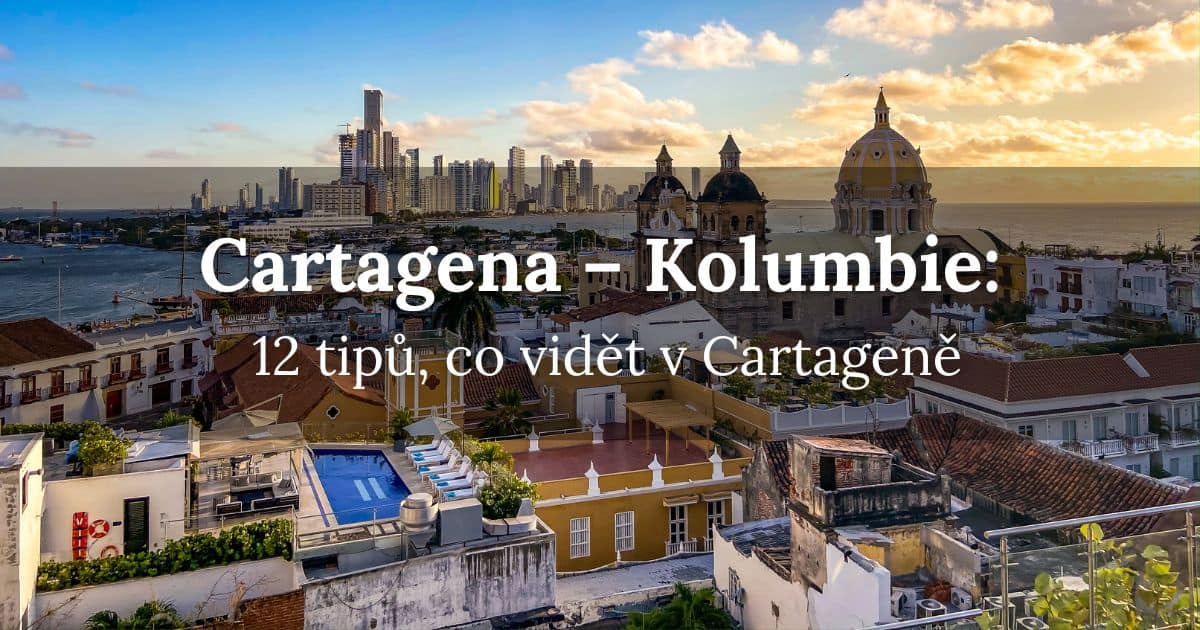
Cartagena, Colombia, completely won us over. It is one of the most beautiful colonial cities in South America, yet it mixes its history with a very modern face. On top of that, the area around it has sandy beaches, parrots flying over your head and a mud volcano you can actually bathe in. We wandered around it like Alice in Wonderland, so come along and see our pick of the best things to do in Cartagena, Colombia, both in the city and on day trips nearby.
Where is Cartagena de Indias?
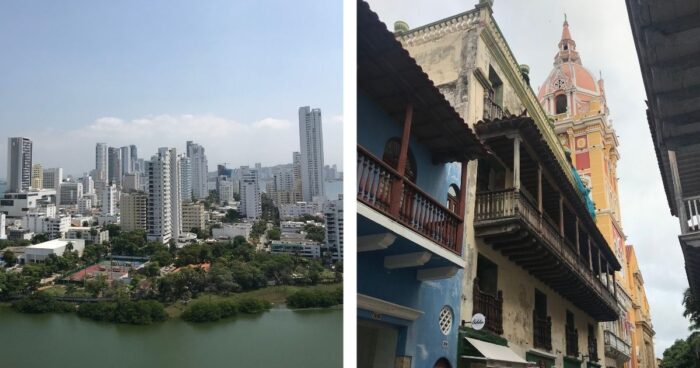
Cartagena de Indias sits on Colombia’s northern coast, right on the Caribbean Sea, and it is a strange and wonderful mix. Inside the walls you get colonial mansions and massive stone fortifications, while across the bay a skyline of high-rise towers has gone up. The historic centre is a UNESCO World Heritage Site and a living reminder of the era when Cartagena was a key base of the Spanish Empire. It made the list in 1984, and the old town is still wrapped in roughly 11 kilometres of stone walls.
TIP: Hungry yet? Here are 22 traditional dishes worth trying in our guide to Colombian cuisine
Cartagena as a base for day trips
Cartagena is surrounded by white-sand beaches, small Caribbean islands, hills and forest, which makes it an ideal base for excursions. That is why this guide covers not only what to see in Cartagena itself but also the trips you can do from it. Glowing plankton and a bathable mud volcano exist in only a handful of places on the planet, and this is one of them.
Best time to visit Cartagena, Colombia
The best months for Cartagena are December to April, when it is dry and the heat is easier to bear. Average temperatures sit between 29 and 31 °C all year round, and the wettest months are September to November, although the first showers arrive as early as May. Rain usually comes as short, heavy downpours rather than days of drizzle. Humidity is very high in that period, though, and the UK Foreign Office (FCDO) notes that hurricanes, while uncommon, can affect Colombia’s Caribbean coast, so keep an eye on the forecast between June and November.
Watch out for peak season. From mid-December to the end of January and around Easter (Semana Santa), Colombians are on holiday too. Hotels in the old town fill up and prices for rooms and island trips hit their yearly high. If your dates are flexible, go between February and April avoiding Easter, or in late November and early December, when the rains have mostly stopped and the crowds have not yet arrived.
TIP: Planning another trip somewhere warm? Check what the weather is like in Sri Lanka and when to go.
Getting to Cartagena and getting around
There is no direct flight from London to Cartagena. Most itineraries from the UK involve one or two connections, typically via Madrid, Bogotá or Panama City, and the whole journey including layovers takes roughly 18 to 24 hours. Bogotá and Medellín both have several daily flights to Cartagena (about an hour and a half), so it is easy to combine the coast with a trip through Colombia’s interior. Compare routings and check current schedules before you book, as connections change from season to season.
Rafael Núñez International Airport (CTG) is on the northern edge of the city, just 10 to 15 minutes by car from the old town. You pay for an official yellow taxi at the desk in the arrivals hall and get a slip with the fixed fare for your zone. To the historic centre or Getsemaní it costs roughly 16,000 to 20,000 COP (about €4–5, or £4), a little more to Bocagrande, with a surcharge at night and on public holidays. If the driver quotes a different price from the one on your slip, say so before you get in.
Around town, the walled city and Getsemaní are best explored on foot, as distances are short. For longer hops, say to Bocagrande, La Popa or the harbour, apps such as Uber, InDrive or Cabify work well. The FCDO advises against hailing taxis on the street, so book one through an app or your hotel. Transcaribe rapid buses also run across the city, but most visitors never need them.
From Santa Marta and Barranquilla, buses and minibuses run to Cartagena (Santa Marta is about 4 to 5 hours away). The FCDO recommends avoiding road travel after dark in Colombia, so plan your transfers for daytime. From Santa Marta you can carry on to Tayrona National Park.
Practical info before you go
- Entry requirements: British citizens can visit Colombia as tourists for up to 90 days without a visa. Your passport must be valid on arrival, and the Colombian authorities recommend at least six months’ validity beyond your departure. Before flying you can fill in the free online Check-MIG form on the Migración Colombia website, no earlier than 72 hours and no later than one hour before departure; it speeds up immigration. Expect to be asked for proof of an onward or return ticket and, sometimes, evidence that you have enough money for your stay. Websites charging a fee for Check-MIG are not official. Always check the current rules on the FCDO’s Colombia travel advice page before you travel.
- Money: the currency is the Colombian peso (COP). As a rough guide, 1,000 COP is about €0.27 (around 23p). Hotels and restaurants in the old town routinely take cards, but you will need cash for boats, harbour fees, street food and trips out of town. Use ATMs inside banks or shopping centres rather than on the street.
- VAT on accommodation: foreign tourists who are not Colombian residents are exempt from the 19% VAT (IVA) on rooms in registered hotels. The hotel will usually photocopy your passport with the entry stamp. Not every hotel deducts it automatically, so check your bill at checkout.
- Health: talk to your GP or a travel clinic about a yellow fever vaccination before travelling to Colombia; officials may ask for the certificate if you are heading to higher-risk areas. Dengue and other mosquito-borne diseases occur on the coast, so pack repellent even for the city. Travel insurance with solid medical cover is a must, as treatment in Colombia is usually paid for upfront.
- Time difference and plugs: Colombia is 6 hours behind the UK during British Summer Time and 5 hours behind in winter. The supply is 110 V with US-style sockets, so bring an adapter.
Is Cartagena, Colombia safe for tourists?
Cartagena de Indias is one of the most visited cities in Colombia, busy with locals and tourists alike. We felt comfortable in the walled city and in Getsemaní, even in the evening. Most travellers stick to these areas and Bocagrande, where there are plenty of police and people about. The thing that will wear you down most is the street vendors, who can be very persistent. Lots of locals make a living as touts and will try to sell you souvenirs, massages, street food or tours. A smile, a “no, gracias” and walking on is usually enough. For anything you do order (a beach massage, a photo with a palenquera, a cup of fruit), agree the price first, not afterwards.
That said, it is not a place to switch off completely. The FCDO lists the Caribbean coast among the areas where pickpocketing, mugging and armed robbery are a problem. Limit walking around late at night, leave valuables and your original passport in the hotel, and do not wave your phone about on the street. Travel advisories also warn about scopolamine, a drug criminals slip into drinks, food or cigarettes. Never leave your drink unattended, especially in bars or when meeting people from dating apps. Avoid wandering outside the tourist districts after dark, and do not walk up La Popa hill, as the route passes through poor neighbourhoods.
TIP: How safe is Colombia? 6 tips on what to do (and not do) in Colombia
12 things to do in Cartagena, Colombia and around
Enough build-up. The Cartagena area is where we spent more time than anywhere else in Colombia, and we loved it. We had real adventures there and a few rough moments too, but for us both are part of travelling. So what is there to see in Cartagena de Indias and nearby? The first 7 tips are sights in the city, the other 5 are adventures outside it. Here is what Cartagena has to offer:
- Nightlife: Cartagena is a lively city that really comes alive after dark. The walled city and Getsemaní are packed with bars where people dance salsa to music mixed with African rhythms.
- Beaches and swimming: the city has its own beaches, but the best ones, with white sand and clear water, are out on the islands and on Barú. That is where you go snorkelling and diving, with a boat trip thrown in.
- History and colonial atmosphere: history lovers can spend days on the city walls, in the museums and in the side streets of the old town.
1. Castillo San Felipe de Barajas
This fortress is one of Cartagena’s most important landmarks. Work on it began in 1657 on San Lázaro hill, and the Spanish kept enlarging it well into the 18th century. It protected the city from pirates and invading fleets and was never taken. You can walk along its ramparts, crawl through parts of the tunnels (they are low and seriously stuffy) and look out over the old town and the towers of Bocagrande from the top.
Entry for foreigners is currently around 36,000 COP (about €10, or £8), while Colombians pay less. The fort opens daily from morning until roughly 5 or 6 pm, and a visit takes one to two hours. Go right at opening time or late in the afternoon, because at midday there is nowhere to hide from the sun. On the last Sunday of the month (except January and December) Colombians get in free and the fort is packed; foreigners pay even then. From the centre it is about a 20-minute walk through Getsemaní.
2. Cartagena’s walled city (Ciudad Amurallada)
Cartagena’s historic centre is a UNESCO World Heritage Site, and simply walking around it is a joy. Narrow cobbled lanes take you back to colonial times, with brightly painted houses, flower-covered balconies and a photogenic corner at every turn. At its heart stands the Cathedral of St Catherine of Alexandria, one of the oldest cathedrals in South America.
Most people enter the old town through the yellow gate with the clock tower, the Torre del Reloj. Right behind it is Plaza de los Coches and the arcade of Portal de los Dulces, where vendors sell coconut cocadas and other Caribbean sweets. A short walk away is the shady Plaza de Bolívar, and on its corner the Museo del Oro Zenú. This small gold museum belongs to Banco de la República and is free to enter; it is usually open Tuesday to Saturday from 9 am to 5 pm and on Sunday until 2 pm, closed on Mondays. Plaza San Pedro Claver, with its church and metal sculptures of local craftsmen, is also worth a stop.
For sunset, climb up onto the city walls. The best-known spot is Café del Mar, but its prices match the view. You can just as easily sit on the wall next to it and buy a beer from a street vendor. Personally, we would save the walls for early morning or late afternoon: at midday the stones are scorching and there is no shade.
This is where most tourists gather, and with them street sellers offering just about anything. Keep an eye on your belongings and be ready for a lot of people approaching you.

3. Plaza Santo Domingo
Plaza Santo Domingo is a great place to take a break and soak up the atmosphere. Lined with cafés and restaurants, it is perfect for trying local food or a cold cocktail. The square is dominated by Gertrudis, a bronze reclining woman by Colombian artist Fernando Botero, and by the Church of Santo Domingo, one of the oldest in the city. Here you may well forget you are in South America at all, because so many of the colonial buildings look like something from southern Europe.
4. Palacio de la Inquisición
The Palace of the Inquisition was built in the 17th century as the seat of the Inquisition. Today it is a museum that explains how the Inquisition worked in Colombia and how it shaped society. The exhibition includes artefacts and accounts of the trials held during that dark period. The building now houses the Museo Histórico de Cartagena, so the upper floors also cover the history of the whole city. It stands right on Plaza de Bolívar, you pay at the door, and the labels are mostly in Spanish.
TIP: Love nature? Then head for Caribbean beaches backed by rainforest in Tayrona National Park.
5. Bocagrande, the modern district
Bocagrande is Cartagena’s modern face, full of upmarket hotels, high-rises and beaches. Here you will feel more like you are somewhere near Miami. We recommend booking a room on a high floor to enjoy the views and the contrast between old and new. There is plenty of beach to relax on, too. Just do not expect a brochure-style Caribbean paradise: the sand is darker, the water is often murky and a vendor will approach you every few minutes.
A popular city beach is Castillo Grande on the southern tip of the peninsula. It is long, calmer and mostly visited by local families. It is easy to reach by local transport or on foot. From Bocagrande to the old town is about a half-hour walk along the bay.
6. Convento de la Popa (Santa Cruz de la Popa)
This hilltop offers some of the best panoramic views over Cartagena and the coast. On top of Cerro de la Popa stands a 17th-century convent dedicated to the Virgin Mary. Up here you can enjoy the quiet, look around the convent and take in views across the Caribbean. The hill is about 150 metres high, and the first chapel was built around 1607.
Go up by taxi or on a guided tour, not on foot. The road climbs through poor neighbourhoods at the foot of the hill and walking it is not recommended. Ask your driver to wait for around half an hour, as few taxis hang around at the top. The convent is usually open daily from about 8 am to 5.30 pm, and entry is roughly 11,000 to 14,000 COP (about €3–4, or around £3).
TIP: You will probably pass through Bogotá at some point anyway. If you have a few days to spare, here are 13 tips on what to see in Bogotá and around.
7. Getsemaní, Cartagena’s cultural heart
Getsemaní, the neighbourhood just outside the walled city, is bursting with colour and life. Once home to labourers and enslaved people, it is now a buzzing, bohemian district with streets full of street art. It was from here, on 11 November 1811, that the uprising began which led Cartagena to declare independence from Spain. The focal point is Plaza de la Trinidad with the yellow Church of the Santísima Trinidad. In the evening locals and travellers gather here, music plays, and people buy street food and beer from the corner shops. There is a great night scene, cultural venues, small galleries and plenty of artsy corners.
During the day Getsemaní is quieter, with neighbours sitting outside their houses playing dominoes. Between Getsemaní and the old town lies Parque del Centenario, where you can spot sloths, small monkeys and iguanas in the trees. If you want to understand the murals, a guided street-art walk is well worth it. At night, stick to the lit streets around the square and watch your things in the crowds.
8. Rosario Islands (Islas del Rosario): coral islands of the Caribbean
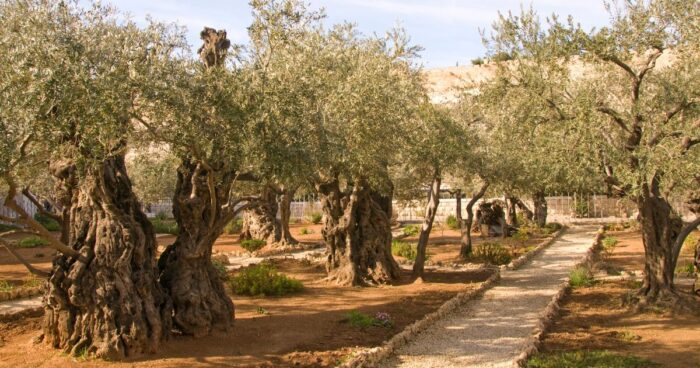
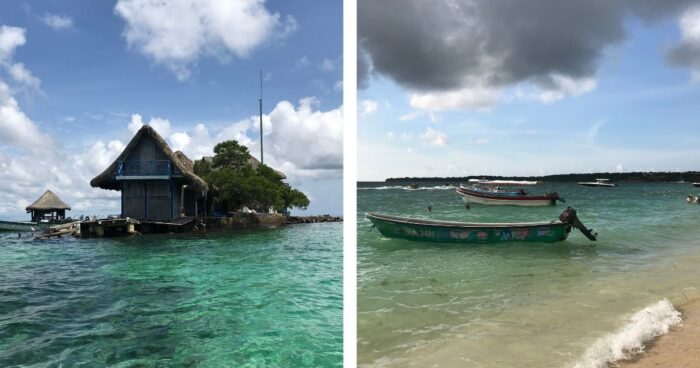
Now let’s head out of the city. Southwest of Cartagena, about an hour by speedboat, lies the Islas del Rosario archipelago. These coral islands are known for their reefs and turquoise sea, ideal for snorkelling and diving. They belong to the Corales del Rosario y de San Bernardo National Park, established in 1977. There are plenty of Rosario Islands day trips on offer, giving you a full day of sun and nature.
Watch out for fees that are not included in the tour price. Boats mostly leave from the Muelle de La Bodeguita pier next to the old town, and before boarding you pay the national park entry fee (currently 13,500 COP), the compulsory visitor insurance for the park (roughly 9,000 COP) and a pier fee. All together, budget around 40,000 COP (about €11, or £9) per person, in cash. Choose a tour on a smaller boat and leave as early as possible. In the afternoon the sea often picks up and the ride back can be very bumpy.
Instead of the crowded public beaches, you can buy a day pass at one of the beach clubs on the islands or on Tierra Bomba, just a few minutes by boat from Cartagena. It costs more, but you get a sun lounger, food and a break from the vendors.
9. Totumo mud volcano (Volcán del Totumo)
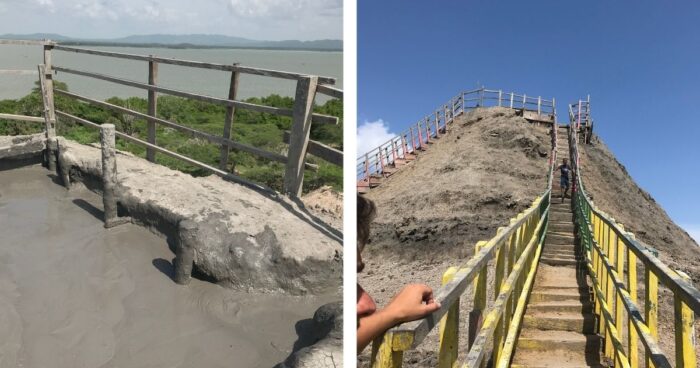
Bathing in a mud pool inside a small volcano is quite an experience, and I promise you will end up with mud behind your ears. Volcán del Totumo is about 50 km northeast of Cartagena, roughly an hour’s drive. It is only about 15 metres tall: you climb wooden steps to the top and lower yourself into a crater full of thick, warm mud in which it is impossible to sink. The volcano does not erupt, but locals consider the place sacred and believe the mud has healing properties, which draws both tourists and Colombians who come to relax and enjoy the benefits of a mud bath.
How to get to the Totumo mud volcano
The easiest way is a local bus to the village of Loma de Arena, where motorbike taxis will take you to the volcano for a few thousand pesos (ideally arrange for them to wait and bring you back). Alternatively, plenty of local agencies run tours: an organised trip from Cartagena including entry and lunch costs roughly 95,000 to 150,000 COP (about €26–40, or £22–34). Entry alone is around 20,000 COP (about €5.50, or £4.50) per person. Mud massages, photos and washing are paid separately, so bring small notes.
Where to wash the mud off
The first question most people ask is how you get clean afterwards. Once you are covered in mud from head to toe (and you will be if you go in), no bus or car will take you anywhere. Right next to the volcano is a lagoon where you can wash. Just be aware that local women will insist on helping you wash and then ask for money.
We said no several times, yet they still poured water over us from buckets and led us by the hand into the lagoon. They did not wash me much, they mostly threw bucketfuls of water in my face, and when we told them we had no money (we had to keep our cash for the ride back), they laughed at us. But it was all good-natured.
10. Playa Blanca and a proper Caribbean beach day
About 45 minutes by boat or roughly an hour by car from Cartagena, Playa Blanca on Barú island is often called one of the most beautiful beaches in the Caribbean. With fine white sand and turquoise water, it is a perfect place to relax in the sun. You can rent loungers or eat fresh seafood on the beach. Around midday, though, the boats and buses full of day-trippers arrive and the beach fills up. If you want Playa Blanca at its quietest, stay overnight in a simple cabin or a hammock and enjoy the morning and late afternoon after the crowds leave. Always agree prices (loungers, food, trips) in advance.
Corales del Rosario y de San Bernardo National Park
This national park protects one of the largest coral areas in Colombia and is a great spot for anyone who loves nature and marine life. It offers a wide range of activities, including diving, snorkelling and exploring unspoilt nature. It is also excellent for birdwatching and spotting marine wildlife.
Bioluminescent plankton: a night-time adventure
Did you know you can see bioluminescent plankton near Cartagena? These are tiny marine organisms that give off light through a chemical reaction involving enzymes. When you move in the water, they produce a soft blue-green glow (as if you had magic powers and a trail of light followed you like a comet’s tail). In Cartagena you can book various boat trips and, like us, combine a day at Playa Blanca with a night-time plankton tour. The plankton shows up best on moonless nights; under a full moon the glow is fainter.

11. San Basilio de Palenque
If you fancy a trip out of Cartagena and are interested in the colonial history of South America, you will love San Basilio de Palenque, whose cultural space has been on UNESCO’s list of Intangible Cultural Heritage since 2005. It is one of the most significant historical places in Colombia.
It lies about 50 kilometres southeast of Cartagena and was one of the first free towns in the Americas founded by Africans who had escaped slavery. Their descendants still live here, so you get to see a piece of Africa in Colombia, culture and all. The locals have kept their own language, Palenquero, as well as their music and traditions, and this is where the palenqueras come from, the women with bowls of fruit on their heads you will meet in central Cartagena. The drive takes about an hour and a half, and it is best to go with a guide from the community itself so the money stays in the village.
12. San Andrés Island: a Caribbean paradise
San Andrés is exactly the place you would want to teleport to when you picture a holiday under palm trees. It has crystal-clear water, white-sand beaches and stunning coral reefs that are made for diving and snorkelling. But San Andrés is not just about the sea. It is also a lively mix of Caribbean culture, because Colombians from all over the country holiday here, which gives the island a really buzzing atmosphere.
Unlike the other tips, though, this is not a day trip. San Andrés lies about 700 kilometres from Cartagena, closer to Nicaragua than to the Colombian mainland, and you can only get there by plane (the flight takes just over an hour). Visitors pay a compulsory tourist card to enter the island, which airlines often sell at check-in. Check the current price before you fly. Set aside at least 3 to 4 days for San Andrés.
TIP: Did you know that Colombia also has the world’s tallest palm trees, superb coffee and loads of hummingbirds? You can see all of them around the colourful mountain village of Salento, which has a wonderful atmosphere.
If you have time left: La Boquilla, Bazurto and museums
La Boquilla is a fishing village north of the airport where local fishermen paddle you through mangrove channels in a wooden canoe. The money goes straight to the community, and it is a completely different Cartagena from the one on the postcards. Bazurto market is huge, noisy and chaotic, and it is everyday life for locals. Go in the morning and with a guide, as pickpockets work the crowds. If it rains or the heat gets too much, take refuge in the Museo Naval del Caribe by the city walls (ships, pirates and the sieges of the city) or in the small chocolate museum in the old town, which ends with a tasting. For more on what to eat in Colombia, see our article on Colombian cuisine.
Where to stay in Cartagena, Colombia
In Cartagena, where you stay matters more than in most cities. For a first visit we recommend the walled city or Getsemaní, where everything is within walking distance. Bocagrande makes sense if you want a modern hotel with a pool by the sea and do not mind taking a taxi or a half-hour walk into the centre. Prices peak in December, January and at Easter, so book well ahead for those dates.
The walled city (Ciudad Amurallada and San Diego)
Staying inside the walls is the most expensive option, but the sights, the restaurants and the sunset on the ramparts are right on your doorstep. The northern San Diego area is quieter.
- Viajero Cartagena – Centro Hostel: an adults-only budget option in San Diego. Shared kitchen, bar, sunny terrace and 24-hour reception; all rooms have air conditioning and a safe. Marbella beach is about 800 metres away.
- Hotel Don Pedro de Heredia: mid-range, right in the historic centre. Outdoor pool, a roof terrace overlooking the colonial rooftops, rooms with wooden beams and antique furniture, and an American breakfast in the morning.
- Sofitel Legend Santa Clara Cartagena: luxury in the former 17th-century Santa Clara convent in San Diego. Outdoor pool, a large spa with sauna and gym, a restaurant in the courtyard and a breakfast guests rave about.
Getsemaní
Getsemaní is a little cheaper than the walled city, and in the evening Plaza de la Trinidad comes alive. If you like an early night, ask for a room facing the courtyard.
- Life is Good Cartagena Hostel: a hostel on Calle Larga with en-suite rooms, a terrace, bar and restaurant (Caribbean, Italian and Peruvian dishes). Breakfast includes vegetarian and vegan options.
- Posada La Fe: a small guesthouse on Callejón Ancho with an outdoor pool and air-conditioned rooms. San Felipe fort and the Gold Museum are both about 700 metres away on foot.
- Hotel Monterrey: a hotel in a colonial building directly opposite the Torre del Reloj clock tower, on the border between Getsemaní and the old town. Pool, restaurant and rooftop bar, with a buffet breakfast.
- Osh Hotel Cartagena: a pricier five-star hotel on Calle de la Magdalena with an outdoor pool, fitness centre and garden. It can also arrange airport transfers.
Bocagrande and El Laguito
High-rise hotels by the sea, shopping centres and a seafront promenade. The old town is a few minutes away by taxi.
- Hotel Dann Cartagena: a large hotel with a pool and direct beach access; some rooms have a balcony with sea views. Buffet breakfast included.
- Hyatt Regency Cartagena: a modern tower a few steps from Bocagrande beach. Outdoor pool, bar, restaurant and free parking.
- Hotel Caribe by Faranda Grand: a classic beachfront hotel set in a tropical garden. Large outdoor pool, spa, gym and three restaurants, and you can book diving trips on site.
Cartagena’s turbulent history
Cartagena was founded in 1533 by the Spanish conquistador Pedro de Heredia, although archaeologists have found that the area was settled thousands of years earlier. The city’s history is a wild one. It was the main port for shipping precious metals and enslaved people, which attracted pirates and anyone else hoping to grab a share of the wealth. That is exactly why the city is so heavily fortified. In 1586 the English privateer Francis Drake sacked the city, and only after that did work begin on a continuous ring of walls.
The remains of the Spanish fortifications and landmarks such as Castillo San Felipe de Barajas still dominate the cityscape and show how important Cartagena once was. Its biggest test came in 1741, when a huge British fleet under Admiral Vernon tried to take the city. The defenders, led by Blas de Lezo, drove it off. Then, on 11 November 1811, Getsemaní declared independence from Spain, which is why Cartagena is nicknamed “La Heroica”, the Heroic City.
The slave trade in Cartagena
Thanks to its strategic position in the Caribbean, in the 16th century Cartagena became the main port of the Spanish colonial empire in South America. The Spanish needed labour for their vast estates and mines, especially after the Indigenous population collapsed as a result of European diseases and enslavement. So they turned to Africa as a new source of labour.
From around the turn of the 17th century, Cartagena was one of only a few ports in South America through which the Spanish were legally allowed to import enslaved Africans. Thousands of people were shipped straight into Cartagena’s harbour, most of them from West and Central Africa. They were transported in appalling conditions, chained and crammed below deck, where they had to survive weeks at sea. Many died on the way from disease, malnutrition or abuse.
On arrival in Cartagena, the captives were unloaded and taken to the slave market at Plaza de los Coches, which is still one of the city’s main historic squares today. There they were put on display and sold like goods.
They were auctioned to Spanish plantation owners, mine owners and merchants who needed labour for the gold mines of Antioquia, the tobacco fields and other gruelling manual work. Some were also sold to the Church, where they worked in convents and church buildings. The Jesuit Peter Claver stood up for them and spent decades helping the enslaved people arriving in the port. The Church of San Pedro Claver in the old town bears his name.
The spirit of the past
The legacy of the slave trade is still visible in Cartagena. Its historic squares and fortresses are symbols of wealth built at an enormous cost in suffering and bloodshed. At the same time, the city’s culture is shaped by its African heritage, which you can hear and taste in its music, dance, food and spirituality. Cartagena is living proof of a history full of contrasts, where the beauty and wealth of the city sit alongside the memory of dark times and the fight for freedom and human dignity.
What we would do differently
If we went back to Cartagena, we would not try to tick off all twelve tips in a few days. The islands, the volcano, Palenque and San Andrés each take a full day, and in that heat, after two days of excursions you are dragging yourself around rather than enjoying it. Instead, we would spend one day in the old town and Getsemaní with no map and no plan, turn into the lanes without souvenir shops and sit down wherever the locals are sitting.
We would eat a lot more. Arepa de huevo from the stall on the corner, fresh lulo or passion fruit juice, fried fish with coconut rice and patacones in a little diner in Getsemaní with no English menu. Our best meals were in places we had never read about anywhere.
And in the evening on the walls we would leave the phone in our pocket. You do not need a hundred photos of every sunset. Just sit on the wall, listen to the city getting ready for the night below you, and do not rush anything.
Frequently asked questions (FAQ)
What are the best things to do in Cartagena, Colombia?
Cartagena de Indias itself has a beautiful walled old town and the Getsemaní neighbourhood, packed with sights such as Castillo San Felipe de Barajas, Plaza Santo Domingo, the Convento de la Popa and the Palacio de la Inquisición, plus the modern Bocagrande district with its high-rise towers. The best nature spots, such as beaches, Caribbean islands and the Totumo mud volcano, are a day trip away.
What are the best beaches near Cartagena, Colombia?
The prettiest beaches near Cartagena are Playa Blanca on Barú island and the beaches of the Rosario Islands, with white sand and crystal-clear water. In the city itself, Bocagrande beach is easy to reach, but the water is often murky and there are lots of vendors. Castillo Grande beach on the southern tip of the peninsula is calmer.
Is Cartagena, Colombia safe for tourists?
The walled city, Getsemaní and Bocagrande are full of tourists and police, and most visitors walk around them in the evening without problems. The UK Foreign Office (FCDO) does, however, warn about pickpocketing, mugging and robbery on Colombia’s Caribbean coast. Watch your belongings, leave valuables and your original passport at the hotel, never leave your drink unattended, and book taxis through an app or your hotel rather than hailing them on the street. Take a taxi up La Popa hill, do not walk.
When is the best time to visit Cartagena, Colombia?
Cartagena is hot and tropical all year round, and the best time to visit is the dry season from December to April. The wettest months are September to November. From mid-December to the end of January and at Easter prices and crowds peak, because Colombians are on holiday too.
How many days do you need in Cartagena?
Two to three days are enough for the old town, Getsemaní, San Felipe fort and La Popa. If you also want to visit the Rosario Islands, Playa Blanca or the Totumo mud volcano, allow five days. San Andrés is a separate trip by plane, worth at least 3 to 4 extra days.
Do British citizens need a visa for Colombia, and what is Check-MIG?
British citizens can visit Colombia as tourists for up to 90 days without a visa; your passport must be valid on arrival. Check-MIG is a free online migration form you can fill in on the Migración Colombia website between 72 hours and one hour before your flight, and it speeds up entry. You may also be asked for proof of an onward or return ticket.
How do I get from Cartagena airport to the old town?
Rafael Núñez Airport is just 10 to 15 minutes by car from the old town. You pay for an official taxi at the desk in the arrivals hall and receive a slip with a fixed fare for your zone. To the centre and Getsemaní it costs roughly 16,000 to 20,000 COP (about €4–5, or £4), with a surcharge at night and on public holidays.
Potřebujete pomoct s cestováním?
-
Ubytování 🏨
Vyberte si to nejlepší ubytování, ať už jste kdekoliv, přes Booking.com. -
Půjčení auta 🚗
Auto si snadno najdete přes Booking.com, kde máte často slevu díky ubytování, nebo Rentalcars.com, kde porovnáte nabídky většiny půjčoven. -
Zážitky 🎟️
Přes GetYourGuide.com si vyberete z nejrůznějších výletů i zážitků po celém světě, navíc se zrušením zdarma do 24 h předem.