Last updated 5.11.2026
Langkawi caught us off guard: it felt as though time had quietly slowed down here. In an otherwise hectic corner of Asia, this archipelago is wonderfully calm, with sandy beaches where the sea sits as still as a lake, jungle laced with waterfalls and natural swimming pools, buzzing night markets, cheap beer and sunsets you simply won’t see anywhere else. Planning a trip to Langkawi yourself? We’ll show you where to stay, what to see and what you really shouldn’t miss.
Langkawi and a Few Things You Might Not Know
Langkawi isn’t a single island but a whole archipelago of around a hundred islands in the Andaman Sea. Locals call it “the Jewel of Kedah” (Langkawi Permata Kedah) and it makes perfect sense, because in one small area you’ll find beaches, jungle, mountains, mangroves, a geopark and superb food for just a few ringgit.
Langkawi Was Once a Haven for Pirates and Smugglers
Langkawi has a rich history, from prehistoric times (there are archaeological finds) through the age of piracy to modern tourism. In the 18th and 19th centuries it sat on the maritime trade routes between China and India, and its hidden coves made an ideal refuge for pirates and smugglers. In 1821 Siam (today’s Thailand) held the island for a few years, until British pressure returned it to Kedah, which is why you’ll still come across a Thai community here today.
TIP: 13 things to pack for a long-haul flight so you actually enjoy it rather than just survive it
Weather in Langkawi and When to Go
Langkawi has a tropical, hot and humid climate pretty much all year round. Temperatures rarely drop below 25 °C, and the highs can climb steeply (up to around 40 °C in extremes). The real difference comes down to rainfall: the wet season is unpredictable and can catch you out more some years than others. As a rough guide, though:
The best time for a beach holiday is November to March, when it barely rains and the sea is calm, though temperatures can reach 35 °C, which won’t suit everyone. If you come in the wetter months, the reward is waterfalls in full flow and lush green jungle, just be ready for the odd downpour (they often roll in and out in the evening).
TIP: Don’t forget to book your accommodation in advance so you have time to track down somewhere you’ll genuinely feel at home.
Langkawi Weather (°C)
- January: 23–32
- February: 23–33
- March: 24–33
- April: 24–33
- May: 24–33
- June: 24–33
- July: 24–32
- August: 24–32
- September: 24–32
- October: 24–32
- November: 24–32
- December: 23–32
What’s the Sea Like in Langkawi
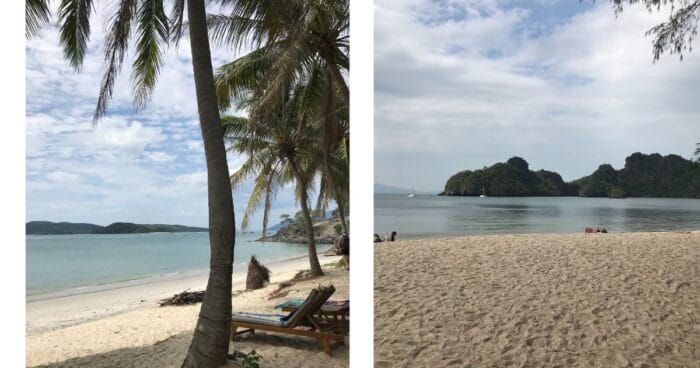
The sea around Langkawi is warm virtually all year round, and for many people that’s the main reason to fly out here even outside the European summer. The water stays at a reliably pleasant temperature, so swimming is comfortable even in the months when it’s freezing back home. The character of the beaches does vary by location, though: around Pantai Cenang and Pantai Tengah you’ll find the most amenities and buzz, while the north (Tanjung Rhu, for example) tends to be calmer and more natural. If you’re planning snorkelling or boat trips, it pays to aim for periods with calmer seas and better visibility.
Sea Temperature in Langkawi (°C)
- January: 28–29
- February: 28–29
- March: 29–30
- April: 29–30
- May: 29–30
- June: 29–30
- July: 28–29
- August: 28–29
- September: 28–29
- October: 28–29
- November: 28–29
- December: 28–29
Getting to Langkawi and How to Get Around
If a holiday in Malaysia is on the cards, Langkawi will probably be one of your stops. So what’s the best way to get here, and how do you get around the island?
- By air: The easiest option, with the most connections from Kuala Lumpur, Singapore and Bangkok, and often from nearby Malaysian cities too (typically Penang). Carriers include Malaysia Airlines, AirAsia, Batik Air and Firefly. From the UK, expect long-haul fares from roughly £450, occasionally as low as £350 in a sale, with total journey times of 15–20 hours depending on connections. It’s often better value to snap up a cheap fare to KL or Bangkok and add a local hop (roughly £10–25).
- By boat: Handy if you’re travelling across Malaysia or Thailand. Ferries run from Kuala Perlis, Kuala Kedah and Penang, and from Satun in Thailand. Fares range from around 18 RM (Kuala Kedah) to about 60 RM (Penang), and tickets are usually bought at the pier. Langkawi’s main port is Kuah Jetty, next to Eagle Square.
- Via Thailand: The Kuah Jetty–Satun ferry is a practical choice (a quick passport stamp, then bus, train or flight onwards), as are the seasonal boats to Koh Lipe.
TIP: 12 of the best places to see in Sri Lanka
Getting Around Langkawi
Getting around Langkawi is straightforward, but it’s worth knowing that public transport plays only a minor role here. There is an electric bus between Kuah and Padang Matsirat, but it runs just a few times a day and is used mainly by locals. The freedom you’re after comes from hiring a scooter, which is completely normal on the island, cheap and ideal for shorter and longer trips alike. Driving in Asia can generally be white-knuckle stuff, but here it’s genuinely relaxed. There’s no heavy traffic, the roads are good, and you can ride all the way up to the island’s highest mountain (we highly recommend it!).
If you don’t fancy a scooter, hiring a car works well (it’s easy to book through Booking), and it isn’t expensive while offering comfort and peace of mind. For shorter hops or airport transfers, taxis and the Grab app come in handy, just bear in mind they aren’t always available straight away in the evenings or in the more remote parts of the island.
Where to Stay in Langkawi
Langkawi can be budget-friendly or genuinely luxurious. As a rule, the tourist hub sits around Pantai Cenang and the adjoining Pantai Tengah , which is where you’ll find the most hotels, restaurants, money changers, ATMs and rental shops.
Cenang is the busiest and most practical base, because you have everything on your doorstep. If you want the same amenities but quieter evenings, Tengah tends to be the ideal compromise, with an emptier beach and the cheapest little hotels often turning up here. Pantai Kok is quieter and mostly makes sense for the smarter resorts (The Danna Langkawi, The Ritz-Carlton). Anyone after privacy and a crowd-free north heads to Pantai Pasir Hitam / Tanjung Rhu (home to the Four Seasons and Tanjung Rhu resorts). Kuah is a practical town, but for a classic beach holiday it lacks both the sand and the “island vibe”.
Since you’ll probably spend all day on the beaches or out on trips anyway, we’d suggest keeping the accommodation simple and saving your money. We stayed HERE and were absolutely delighted; the staff were wonderful and helped us with everything.
What to Eat in Langkawi and Where to Try the Best of It
Since Langkawi is an island, it would be a shame to skip the fish and seafood. A big local classic is Ikan Bakar (grilled fish). Among Malaysia’s traditional dishes, you’ll regularly come across Nasi Lemak, Satay, Rendang, Murtabak, Curry Ayam, Mee Goreng and Nasi Goreng. A brilliant way to taste lots of things at once is at a Nasi Campur place, a “buffet” style where you help yourself to whatever you fancy and pay according to your selection.
Night Markets That Move to a Different Spot Every Day
And then there are the night markets, which are practically compulsory in Langkawi. You’ll find fruit, seafood, grilled meat, noodles, rice done every which way and sweet pancakes. One important thing: the night market is in a different place every day.
- Monday: Ulu Melaka
- Tuesday: Kedawang (near Cenang) / the area behind the airport (Jalan Chandekura & Jalan Kedawang)
- Wednesday: Kuah
- Thursday: Temoyong (near Cenang) / around Jalan Bohor Tempoyak
- Friday: Ayer Hangat (towards Tanjung Rhu) / the area by Black Sand Beach
- Saturday: Kuah (some older listings say there’s no market, so it’s worth checking locally)
- Sunday: Padang Matsirat (near the airport)
20 Things to See and Do in Langkawi
Langkawi is exactly the kind of island where it pays to combine beaches, nature and a few iconic “wow” spots. What we loved most were the mountains and the wildlife. The area around the Langkawi Sky Bridge took us by surprise, along with the highest mountain and, above all, the nature trails and waterfalls.
Temurun Waterfall
Temurun is the tallest and most photogenic waterfall in Langkawi, especially in the period after the rains, when it’s in full force and worth the trip on its own. In the dry months it can shrink to a thin trickle, but the surrounding jungle and the sounds of nature make it worthwhile even then. It’s an easy drive along the road in the north of the island, between Pasir Tengkorak beach and the Pebble/nearby coves, and you usually park at a lay-by beside the road. Just be aware that the monkeys here can be cheeky, so it’s best not to leave food or belongings lying around.
Langkawi Sky Bridge
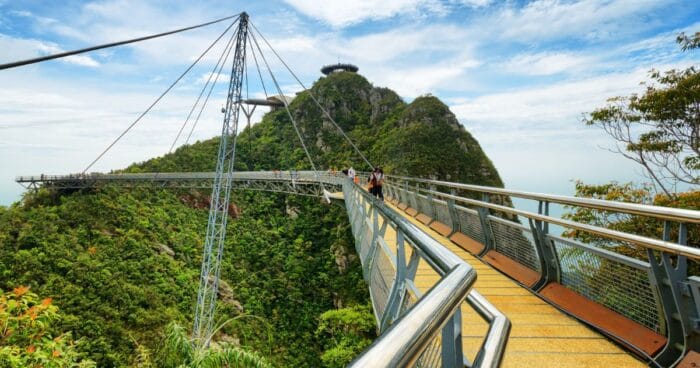
The Langkawi Sky Bridge is the island’s icon. First you pass through the Oriental Village (the tourist zone at the base station), then a steep cable car whisks you up onto the Mat Cincang ridge, and finally you reach a genuine feat of engineering: a suspended Sky Bridge held up by a single pylon, strung between the peaks. It’s best to go on a clear day, because the views are the whole point. You can get here by car or scooter to the Oriental Village (a short ride from Cenang), and tickets are sold on site or online (we usually book through GetYourGuide, so we know it’s sorted).
TIP: Skip the queues and buy your Sky Bridge tickets online in advance through GetYourGuide, so there’s nothing to worry about.
Seven Wells Waterfall (Telaga Tujuh)
Seven Wells is a natural “spa” of pools, slides and refreshment that tastes better in the tropical heat than anything from the fridge. Brace yourself for 638 steps, with the reward being natural pools you can bathe in, warm rocks to lie on, and, on good days, a slide down the smooth stone. It’s a few minutes’ ride from the Oriental Village, so it’s ideal to combine with the Sky Bridge. Pantai Kok
Pantai Kok is a welcome change from touristy Cenang. Two larger bays, a calm sea and the Telaga Harbour marina with sailing boats moored year-round. It’s one of the few beaches that doesn’t yet feel like an endless wall of hotels. It’s an easy drive along the road towards the Sky Bridge and the marina, ideally by scooter or car. If you’re lucky, you’ll stumble on a mobile bar and get to try a fruit salad where sweet wrestles with chilli, exactly the kind of combination that keeps you coming back to the night markets.
Laman Padi
A rice museum near Cenang that even works for people who “don’t really do museums”. It’s authentic, entry is usually free, and besides the air-conditioned section with tools and traps, you can walk the outdoor paddies with rice at various stages of growth. If you want to understand why rice fields matter so much to Kedah and Malaysia, this is where it clicks fastest. You can reach it on foot or with a short ride from Pantai Cenang; it’s exactly the sort of thing to save for midday, when you don’t fancy being out in the sun.
Underwater World
The aquarium near Cenang is great mainly for families, or as a plan B when it rains. If you’ve already seen the big aquariums in, say, Singapore, it won’t be the wow of the century, but as a laid-back attraction it does the job. A practical bonus: there’s usually a duty-free shop you can pop into from the street. It’s easy to reach within Cenang, on foot or by scooter, as it sits right in the tourist strip.
Pantai Cenang
The island’s best-known beach, with bars, water sports and sunsets that are treated as an evening ritual. The middle of the beach is the busiest, but just walk out to the northern tip and you leave the bustle behind; the beach is public and you can find calm even in season. It’s a quick taxi or Grab ride from the airport, and if you’re staying in Cenang, you’ll often walk everywhere. Cenang is the best base if you want everything close at hand.
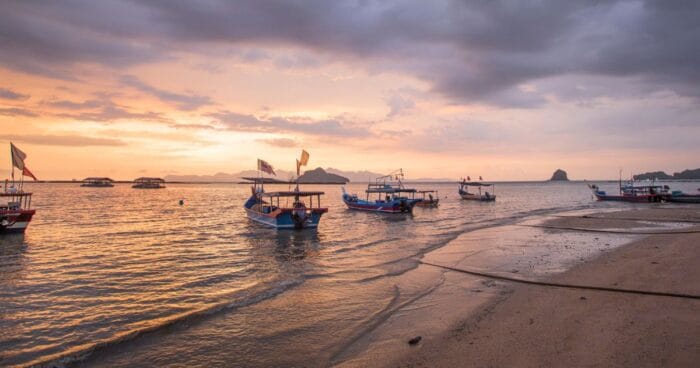
Pantai Tengah
Tengah is just a few dozen metres “next door” to Cenang, but the atmosphere is often a world calmer. Fewer people, fewer bars, more room to simply sit, gaze at the sea and wait for the sunset. The beach rarely gets crowded, and you’ll often meet mostly the guests of a few resorts. You can reach it on foot from Cenang or with a short ride, an ideal compromise for anyone who wants the amenities without being in the thick of it.
TIP: Sri Lanka: Ella and its tea plantations, mountains and waterfalls
Gunung Raya
The island’s highest mountain and the place where you’ll understand why the sunsets aren’t only talked about down at the beach. The ride up is an experience in itself; scooter rental places may warn you off, but the machines usually manage even with two people aboard. The key is not to overdo it on the way down: the bends, the brakes and the dust at the road’s edge can catch you out. At the top you’re met with a panorama and, sometimes, the feeling of a cloud drifting straight through you. This was one of our best experiences. Even though a few in our group were a bit nervous about the scooter, everyone ended up loving it.
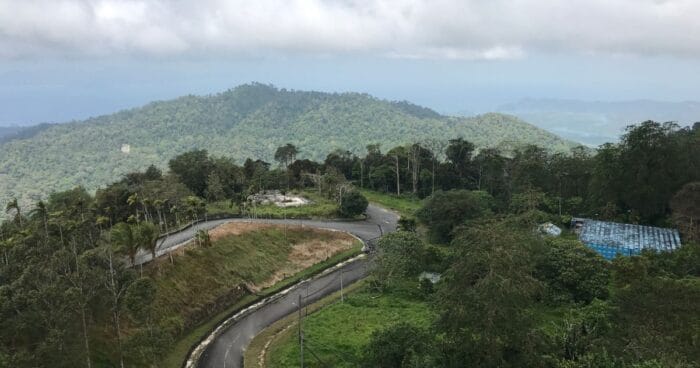
Mardi Agrotechnology Park
A place where tropical fruit isn’t just “something sweet” but a whole world of its own. The park showcases how local produce is grown, and a tasting is usually part of the visit, which is exactly the moment you realise the pineapple and papaya back home are a completely different discipline. It’s best reached by scooter or car, ideally combined with a trip through the island’s interior.
Eagle Square (Dataran Lang)
The eagle statue is the symbol of Langkawi, and even though we find the nature more interesting, it was still nice to see. The square is a stone’s throw from the port in Kuah, pleasant for its views and ideal as a quick stop when visiting the town. It’s easy to reach by taxi or scooter; driving around Kuah is straightforward, and it’s not far from the town’s other attractions.
Tanjung Rhu Beach
The northern beaches have a special knack for being beautiful and empty at the same time. Tanjung Rhu is often rated one of the loveliest on the island: fine sand, the shade of the trees, views out to little islets and hardly any mass tourism. The far northern part may be restricted in practice because of the luxury resorts, but the public beach is free. Get here by scooter or car, and if you want a bit more adventure, hire a kayak or paddleboard and explore the surroundings.
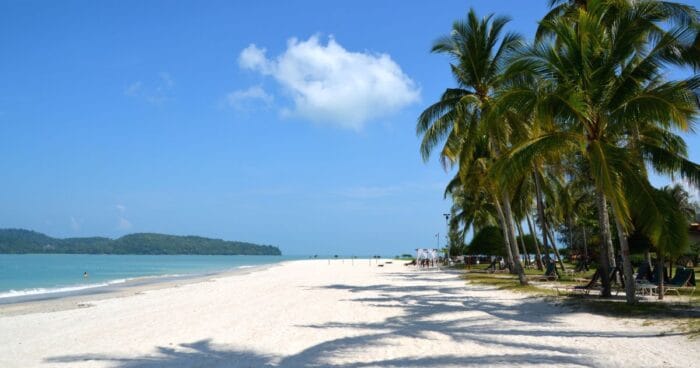
Cave of Bats
The Cave of Bats is typically part of trips into Kilim Geoforest Park (mangroves, limestone cliffs, wildlife). It works on a per-boat basis, so the more of you there are, the better the price. An hour-long outing costs around 250 RM (bat cave, fish farm, eagle feeding, mangroves) and the four-hour version around 500 RM. It’s usually open daily 9am–5pm. You can arrange it through agencies, at the pier in the Kilim area, or via your hotel.
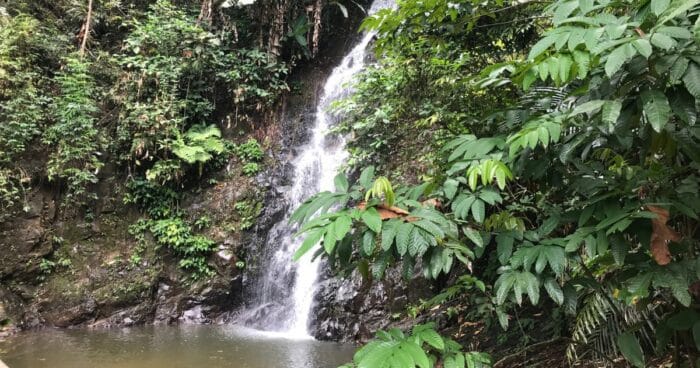
Durian Perangin Waterfall
Durian Perangin is the waterfall for when you want nature without much planning. It’s easy to reach along a maintained path, you can bathe here, and the surroundings are alive with the sounds of the jungle. The advantage is that, compared with Temurun and parts of Seven Wells, the water often holds up better outside the rainy season too. You may be asked for a small entry fee. The best way here is by scooter, and take your swimming gear!
Wildlife Park
An attraction mainly for families and animal lovers. If you like a hands-on zoo, this is the kind of place where you can spend a couple of hours and the children will still be talking about it back home. Get here by scooter or car; it works well combined with a trip to the northern beaches or the waterfalls.
Crocodile Adventure
The crocodile farm isn’t a reason to head north on its own, but as a stop on the way to the beaches or waterfalls it makes sense. Alongside dozens of crocodiles there are usually shows (times are listed on porosus.com), and entry works out at 25 RM. It’s best treated as a “bonus” rather than the main event of the day. Get here by scooter or car; parking is usually easy.
TIP: An animal rescue centre – where does tourists’ money go, and how does sea turtle conservation work?
Look Out Point
An unassuming picnic spot that’s ideal for sunset when you don’t fancy the beach. There are often just a few local couples here and a calm that can be hard to find in Cenang. The road runs along Jalan Padang Matsirat past the airport, and the turning is signposted. Great as a short evening ride, just keep an eye on getting back after dark if you’re not used to a scooter.
Lagenda Langkawi Dalam Taman (Lagenda Park)
A large park near Kuah, sometimes called a “garden museum”. You’ll find sculptures and replicas of local landmarks and legends, so it’s a pleasant break from the town and a way to piece together Langkawi’s stories in your head. Entry is around 5 RM. It’s easy to reach from the port and Eagle Square, and best rolled into a single afternoon in town.
Selera Lubuk Buaya
One of those places you go when you want to eat “like a local” and forget about tourist prices. It opens more in the afternoon, so it works for dinner. Portions are around 8 RM and the flavours are exactly the kind of cooking that makes night markets and local restaurants win. English may be a little limited, but the menu is usually simple and often in English too. The best way here is by scooter or taxi, depending on where you’re staying.
Roti Canai Black Pepper
The breakfast that makes having a scooter worthwhile. A few tables, a simple shelter, a single stove, and yet it’s packed every day, because roti canai for 2 RM and a sauce that can be gently spicy is exactly the sort of small joy that makes a journey a journey. You can even try the sweet versions with chocolate. Get here by scooter, and it’s best to arrive in the morning, when the whole place smells at its most tempting.
What to Do on Langkawi and Experiences You Can Have Too
Langkawi is ideal for anyone who wants to combine calm with a touch of adventure. The evenings here naturally belong to the sunsets: the Cenang and Tengah beaches both face west, so the day often ends sitting by the sea. If you want a change of perspective, it’s worth heading up to Look Out Point or Gunung Raya, and anyone after a truly iconic experience won’t want to miss the Sky Bridge, which delivers even without a dramatic sunset.
It helps to have realistic expectations of the sea. Langkawi isn’t the Caribbean: the water is usually as calm as a lake, but the sandy bottom means it’s often murkier than, say, in Thailand. Snorkelling straight off the main beaches isn’t the island’s strong suit; a far better bet is a boat trip to the surrounding islets, where the water is clearer and the nature more pristine.
A big part of the local atmosphere is the night markets, where you can taste fruit, seafood, grilled meats, noodles, rice and sweet pancakes. You often go “just for a moment” and leave with a full bag. Water sports are found mainly around Cenang and Tengah, while island hopping is a great way to remind yourself that Langkawi isn’t just one island but a whole archipelago full of hidden beaches and rock formations.
An interesting bonus is plane spotting: on the southern side of the runway you can watch the everyday traffic, from Boeing 737s to Airbus A320s in the colourful liveries of Malaysia Airlines and AirAsia. And if you feel like going further still, Koh Lipe in Thailand offers whiter beaches and clearer water. In high season you can get there by boat, usually for a bit over 100 RM one way.
TIP: 15 of the most beautiful places in Colombia you have to see
Practical Tips to Finish
In Langkawi it’s handy to combine card and cash. You can pay by card in the larger supermarkets, restaurants and bars, but at the night markets and in local eateries you’ll often need cash.
The currency is the Malaysian ringgit (MYR, RM). The exchange rate moves, so check it before you travel. ATMs often cap withdrawals at 1,500 RM, and the fee may be low (as little as 1 RM in some cases), though at certain machines (Euronet, for example) it can be considerably higher (up to 15 RM). ATMs have become more common in Cenang/Tengah, and a reliable bet is Cenang Mall.
SIM card: if you don’t want to rely on Wi-Fi, the most common advice is to buy one in 7-Eleven (for example, 45 RM for a month of unlimited data, or 18 RM for a week); there’s sometimes a similar deal at the airport (TuneTalk). An eSIM is an alternative.
What else is worth knowing?
- Tap water isn’t drinkable, so buy bottled.
- Alcohol is much cheaper here. You can pick up a beer for a little over £1, and the airport duty-free is well worth a browse.
- Officially, you’re not meant to drink alcohol in public spaces; in practice Langkawi tends to be tolerant, but during Ramadan we really wouldn’t recommend it in public.
Frequently Asked Questions (FAQ)
When is the best time to visit Langkawi?
Langkawi weather | when to go through the year?
If you’re heading to Langkawi mainly for the beaches and swimming, your best bet is the period from November to March. This is when the weather is driest, with minimal rain and reliable sunshine. Bear in mind, though, that temperatures can climb very high, often around 33–35 °C, which won’t suit everyone. If you struggle with the heat, consider the shoulder months, when it’s still lovely but a touch more bearable.
What is there to do in Langkawi?
Langkawi offers a mix of nature, beaches and attractions for families and solo travellers alike. Among the biggest draws are the Langkawi cable car with its panoramic views, the mangroves of Kilim Geoforest Park, the popular Pantai Cenang beach, the iconic Langkawi Sky Bridge, the evening light park Dream Forest Langkawi, Underwater World Langkawi, the Seven Wells Waterfall and the fun 3D Art in Paradise gallery, which is especially popular with families.
How do you get to Langkawi?
One of the quickest routes from Thailand to Langkawi is the ferry or speedboat from the island of Koh Lipe. This Thai island lies roughly 50–75 km from Langkawi and the crossing itself takes about 1 to 1.5 hours. Tickets for boats between Koh Lipe and Langkawi are easy to find and book online, which is the simplest and most reliable option.
What do you need to enter Malaysia?
To enter Malaysia, British citizens need a passport valid for at least 6 months from the date of entry and at least two blank pages. Travelling on a standard passport, you don’t need a visa for stays of up to 90 days. It’s also worth having a return or onward ticket to hand, and do check the latest entry requirements before you travel, as rules can change.
How do you get from Langkawi to Koh Lipe?
Connections between Langkawi and Koh Lipe are run mainly by Bundhaya Speed Boat. Boats depart from Kuah Jetty on Langkawi and arrive at Bundhaya Beach on Koh Lipe. Ticket prices vary by season and service and usually range from roughly €68 to €274. These prices generally don’t include service or port fees, which may be payable separately on the spot.
Potřebujete pomoct s cestováním?
-
Ubytování 🏨
Vyberte si to nejlepší ubytování, ať už jste kdekoliv, přes Booking.com. -
Půjčení auta 🚗
Auto si snadno najdete přes Booking.com, kde máte často slevu díky ubytování, nebo Rentalcars.com, kde porovnáte nabídky většiny půjčoven. -
Zážitky 🎟️
Přes GetYourGuide.com si vyberete z nejrůznějších výletů i zážitků po celém světě, navíc se zrušením zdarma do 24 h předem.