Last updated 5.11.2026
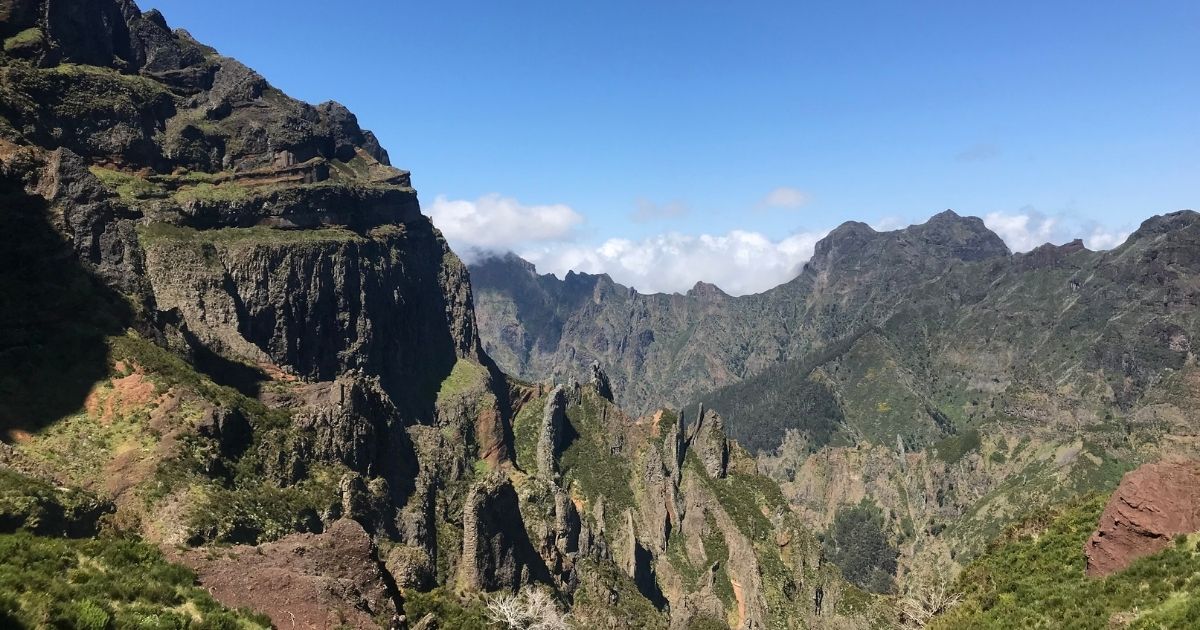
Madeira weather is the great unknown of many a trip here, and at the same time the main reason people come. The island isn’t called the “island of eternal spring” for nothing: even in January you’ll be in a T-shirt by the afternoon, and in August it never gets as fierce as on a mainland beach. But that’s only half the story. On the very same day you can be sunbathing by a pool on the south coast and, an hour later, standing shivering in the fog on a mountain ridge.
In this guide we’ll walk you through Madeira weather in real detail, month by month, with air temperatures, sea temperatures and rainfall, and above all the thing that surprised us most: the island’s microclimates. We’ll explain the difference between the dry south and the rainy north, why the mountains are a completely different world from the coast, and exactly when to go, whether you want to swim, walk the levadas, or stand above a sea of clouds on Pico do Arieiro at dawn.
Madeira weather at a glance
- Spring all year: in Funchal daytime highs sit around 19–20 °C in winter and 24–26 °C in summer, with extremes practically unheard of.
- Swimming: the sea is warmest from August to October (23–24 °C), with a swimming season that runs roughly May to December.
- Levadas and hiking: ideal in April–June and September–October, when the south is dry, the island is in bloom and temperatures are comfortable.
- Mind the north vs south: the south is dry and sunny, while the north (Porto Moniz, São Vicente) is noticeably rainier and windier.
- The mountains are another world: on Pico do Arieiro (1,818 m) it’s typically 8–12 °C colder than down at the coast, and below freezing in winter.
- Wettest months: November to February, though even then it rarely rains all day, more often just showers.
What Is Madeira’s Weather Like? (Eternal Spring, North vs South, Mountains vs Coast)
Madeira sits in the Atlantic at roughly the same latitude as Morocco, but thanks to the ocean all around it never gets either oppressively hot or genuinely cold. This is a subtropical oceanic climate, and in practice it means the difference between the warmest and coolest month in Funchal is only about 6–7 °C. Hence the nickname “island of eternal spring”, and it’s basically spot on.
The key thing to grasp, though, is that there is no single “Madeira weather”. The island is small but extraordinarily rugged: mountains over 1,800 metres rise up through the middle and act as a natural barrier. And it’s precisely that barrier that turns Madeira weather into a bit of a lottery, even over the course of a single day.
South versus north
This is rule number one. The south of the island (Funchal, Câmara de Lobos, Calheta) is dry and sunny, because the mountains catch the clouds driven in by the north-easterly wind. The north (Porto Moniz, São Vicente, Santana), by contrast, is greener, rainier and windier: the clouds pile up against the ridges and dump their rain right there. When it’s raining in the south, simply drive through a tunnel to the other side (or the other way round). More often than not, it works.
Coast versus mountains
Rule number two: for every hundred metres you climb, the temperature drops and the cloud builds. While the sun is blazing down by the sea, a band of cloud often hangs at around 1,000–1,500 metres. Sometimes all you have to do is climb above it and you find yourself in sunshine “above the clouds”, and that’s exactly the magic of Madeira’s peaks.
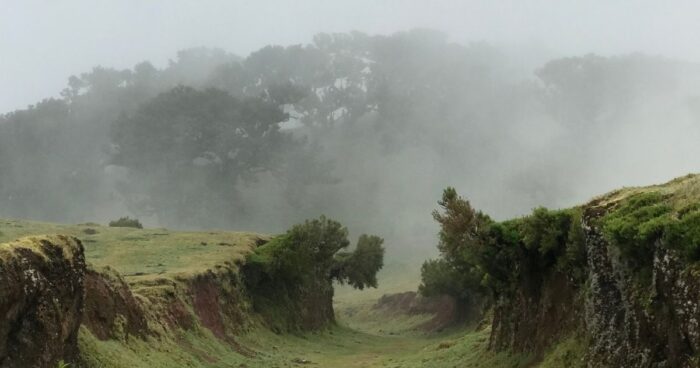
That same cloud band also means fog on the levadas, especially those in the mountains and the north. Routes such as Caldeirão Verde near Santana, 25 Fontes / Rabaçal or the forest stretches around Ribeiro Frio are often wrapped in mist even when the south is bathed in sun: sometimes it’s atmospheric (see the Fanal cloud forest), other times it robs you of the view. For scenic routes, then, set out in the morning when the sky is clearer.
Wind
The third factor, and one that’s easily underestimated, is the wind. Madeira lies in the trade-wind belt, and the north-easterly blows for most of the year. You’ll feel it most on the exposed ridges and the Ponta de São Lourenço peninsula, where there’s nowhere to hide, and along the north coast (Porto Moniz, São Vicente), where it even decides whether the natural sea pools are open. Strong wind can also close Funchal airport: delayed or diverted flights are part of local folklore, so factor that in especially in the winter half of the year. Pack a windproof jacket for the ridges and viewpoints even in summer.
Microclimates compared: south, north and the mountains
To make it clear just how much Madeira weather varies from place to place, we’ve pulled the three main zones together into a single table. The differences between them are often bigger than those between the seasons themselves.
| Area | Typical weather | Daytime temperatures | Good for |
|---|---|---|---|
| South (Funchal, Câmara de Lobos, Calheta) | Driest and sunniest; the mountains catch the clouds | approx. 19–25 °C | swimming, relaxing, the city |
| North (Santana, São Vicente, Porto Moniz) | Greener, wetter and windier, with more showers and fog | 1–3 °C cooler than the south | levadas, nature, natural sea pools |
| Mountains (Pico do Arieiro, Pico Ruivo, 1,800 m+) | Cold and changeable, frequent cloud and inversions, frost and snow in winter | 8–12 °C less than in Funchal | sunrises, ridge walks |
💡 Tip: Don’t trust a single forecast for “Madeira”. Check the weather separately for Funchal (south), Porto Moniz (north) and Pico do Arieiro (mountains). At the very same hour they can easily differ between glorious sunshine and steady rain.
Madeira Weather Month by Month
This table sums up what to expect from Madeira weather month by month. The temperatures are for Funchal and the south coast (in the north and at altitude, reckon on cooler and wetter). We’ve cross-checked the figures against several climate sources, so treat them as long-term averages rather than a guarantee.
| Month | Day (°C) | Night (°C) | Sea (°C) | Rainfall |
|---|---|---|---|---|
| January | 19 | 14 | 19 | high |
| February | 18 | 14 | 18.5 | high |
| March | 19 | 15 | 18 | moderate |
| April | 20 | 15 | 18.5 | low |
| May | 22 | 17 | 19.5 | low |
| June | 23 | 19 | 21 | very low |
| July | 24 | 20 | 22.5 | lowest (~10 mm) |
| August | 24 | 21 | 23.5 | very low |
| September | 23 | 20 | 24 | low |
| October | 22 | 18 | 23 | moderate |
| November | 20 | 16 | 21.5 | high |
| December | 19 | 15 | 20 | highest (~76 mm) |
So what does it all mean? The annual rainfall in Funchal is low, around 495 mm, which is less than London. The vast majority of it falls in the winter half of the year (December is wettest, ~76 mm), while July is almost bone dry (~10 mm). And even in the rainy months, it tends to come in showers rather than all-day downpours. On the south coast you’ll enjoy around 8 hours of sunshine a day in summer and roughly 5 in winter.
💡 Tip: If it’s purely swimming you’re after, aim for August, September or October, when the sea is at its warmest (23–24 °C). In spring (March–May), by contrast, the sea is paradoxically at its coldest, even though the air is already warm.
When to Visit Madeira (Hiking, Swimming, Levadas, Whales)
The lovely thing about Madeira is that there’s essentially no bad month, just different months for different things. Here’s what we’d suggest depending on what you want from your trip:
- Hiking and levadas: best in April–June and September–October. It’s dry, the island is green and in bloom, temperatures are ideal for walking (around 22–25 °C) and you avoid the peak-season crowds.
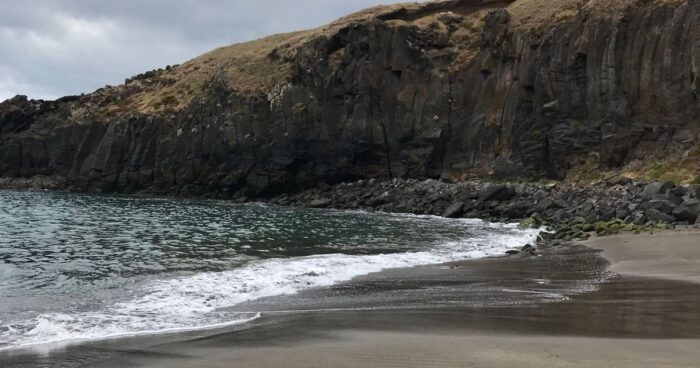
- Swimming and beaches: July–October, when the sea holds 22–24 °C. Madeira doesn’t have many sandy beaches (more pebbles and the natural pools at Porto Moniz), so you don’t come here primarily “for the sea”, but the swimming is genuinely pleasant.
- Whale and dolphin watching: year-round, but the peak is April–October. Dolphins and pilot whales are resident here all year, and spring adds migrating sperm and fin whales. Boats leave from Funchal, and the morning departures tend to have the best success rate.
- Peace and low prices: November–March. It’s wetter, but still 19–22 °C by day, the island is half-empty and accommodation is cheaper. On top of that, Funchal hosts its famous New Year’s Eve fireworks.
Late September is often a bullseye on Madeira: warm sea, clear days for hiking, and the marina in Funchal where you can sit out late into the evening. Book whale-watching trips and levada tours through GetYourGuide →
💡 Tip: Want to dodge both the crowds and the heat while still being fairly sure of dry weather? Bet on September: the sea is at its warmest of the year, rainfall is low, and once the August peak is over things quieten down.
Weather in the Mountains (Pico do Arieiro) and Cloud Cover
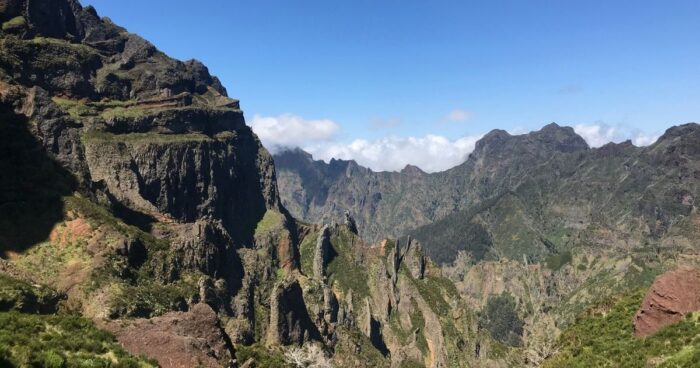
This is the part a lot of people underestimate, and then find themselves freezing in shorts. Pico do Arieiro is Madeira’s third-highest peak (1,818 m) and the weather up there is completely different from down by the sea. A simple rule applies: the summit is typically about 8–12 °C colder than Funchal. In summer you might see just 10–14 °C up top, while in winter temperatures hover around freezing or below, with the occasional dusting of snow or ice.
The second thing is cloud cover. The mountains “make” their own clouds: moist ocean air rises up their flanks, cools and condenses. The result is that the whole island can be under cloud, yet you drive up above the cloud band (roughly above 1,500 m) and suddenly you’re standing in the sun above a sea of clouds. This is the famous postcard view.
When are you most likely to catch it? Early in the morning, ideally at sunrise. Mornings tend to be clearest, and the inversion (clouds below you, peaks above) is at its most likely then. But mountain weather changes from one minute to the next: one morning it’s perfectly clear, the next you’re “in the milk” and can’t see five metres ahead.
💡 Tip: Before driving up Pico do Arieiro or tackling the Arieiro → Ruivo hike, check the mountain forecast and webcams (mountain-forecast.com, plus any live cameras at the summit). It’ll save you a pointless trip into the fog, and always pack layers, even in August.
What to Pack
The key word for Madeira is layering. The weather here changes with altitude and with which side of the island you’re on, so you want options with you. Here’s our tried-and-tested base kit for any time of year:
- A light waterproof jacket: even in summer, for the showers in the north and up in the mountains.
- Extra layers (a hoodie or fleece): for trips into the mountains, where it’s markedly colder.
- Comfortable hiking boots with good grip: the levadas are often damp and slippery.
- Swimwear and sun cream: the sun in the south is strong even in winter, and the UV is fiercer than you’d expect.
- A slim head torch: if you’re planning sunrise on Pico do Arieiro or the tunnels along the levadas.
- Long trousers and a long-sleeved top: for cooler evenings (nights can drop to 13–15 °C).
It pays to choose your accommodation around what you’re planning. For sun and comfort, go for the south around Funchal; for hiking and quiet, the north. Find places to stay in and around Funchal here →
Where Next
- What to See in Madeira (2026)
- Madeira: the Most Beautiful Places (2026)
- Where to Stay in Madeira (2026)
Frequently Asked Questions
What is Madeira’s weather like throughout the year? Subtropical and very mild, the island isn’t nicknamed the “island of eternal spring” for nothing. In Funchal, daytime highs stay around 19–20 °C in winter and 24–26 °C in summer, with significant extremes practically unheard of. The difference between the warmest and coolest month is only about 6–7 °C.
When is the best time to visit Madeira? It depends what you’re after. For hiking and levadas, April–June and September–October are ideal (dry, the island in bloom, comfortable temperatures). For swimming, August–October, when the sea is at its warmest. For peace and low prices, the winter months. There really is no bad month here.
How warm is the sea in Madeira? The sea is warmest from August to October, when it reaches 23–24 °C. It’s coldest in spring (March–April) at around 18 °C. The swimming season realistically runs from about May to December, when the water stays above 20 °C.
Does it rain a lot in Madeira? Less than you’d think, the annual rainfall in Funchal is around 495 mm, less than London. Most of it falls between November and February (December is the wettest), while summer is almost dry. And even in winter it rarely rains all day, tending to come in showers.
Why is the weather in northern Madeira different from the south? It comes down to the mountains in the middle of the island. The north-easterly wind drives moist air in from the ocean; it stalls against the high ridges and rains out over the north (Porto Moniz, São Vicente). By the time it reaches the south, the air is dry and sunny. That’s why the south is drier and warmer, the north greener and rainier.
What is the weather like in the mountains on Pico do Arieiro? Considerably colder than down below. The summit (1,818 m) is typically about 8–12 °C cooler than Funchal, often just 10–14 °C in summer and below freezing in winter, with snow or ice. Bear that in mind and pack warm layers and a windproof jacket even in summer.
What is the “sea of clouds” and when can I see it? It’s an inversion, where the cloud band lies below the mountain peaks and you stand above it in the sun. You’ll most often catch it early in the morning, ideally at sunrise on Pico do Arieiro. It’s not guaranteed, though, mountain weather changes within minutes, so keep an eye on the mountain forecast and webcams.
Is Madeira worth visiting in winter? Absolutely. Winter is wetter and the sea is cooler, but daytime temperatures hold around 19–22 °C, the island is half-empty and accommodation is cheaper. It’s a great time for hiking and for escaping the grey northern-European winter, just reckon on the odd shower and cold up in the mountains.
When should you avoid visiting Madeira? No month is outright bad, but if you want guaranteed swimming in a warm sea, avoid spring (March–April), when the water is at its coldest. And if you can’t stand crowds and higher prices, skip the August peak, September offers just as warm a sea in far more peace.
What is Madeira’s weather like for hiking and levadas? The best months for walking are April–June and September–October: it’s dry, a pleasant 22–25 °C, and the island is green. Remember that the levadas often run along the wetter northern side and through the mountains, so even on a sunny day in the south, carry a waterproof jacket and sturdy boots.
Does it snow in Madeira? Never at sea level, but yes in the highest mountains. On the summits around 1,800 metres (Pico do Arieiro, Pico Ruivo), snow and ice appear fairly regularly in the winter months. For the people of Funchal, where it’s over 18 °C at the same time, it’s a popular day-trip attraction.
Potřebujete pomoct s cestováním?
-
Ubytování 🏨
Vyberte si to nejlepší ubytování, ať už jste kdekoliv, přes Booking.com. -
Půjčení auta 🚗
Auto si snadno najdete přes Booking.com, kde máte často slevu díky ubytování, nebo Rentalcars.com, kde porovnáte nabídky většiny půjčoven. -
Zážitky 🎟️
Přes GetYourGuide.com si vyberete z nejrůznějších výletů i zážitků po celém světě, navíc se zrušením zdarma do 24 h předem.