
Last updated 5.11.2026
Picture yourself on a ridge at two thousand metres, clouds rolling below you and sharp volcanic peaks breaking through them like islands in a white sea. A few hours later you’re wandering through a laurel forest where gnarled, centuries-old trees loom out of the mist, and by evening you’re tucking into grilled fish in a little fishing village by the ocean. That’s Madeira — and this page is all about what to see in Madeira when it’s the mountains and the wild scenery that pull you in.
What to see in Madeira: the short version
- The big one: the ridge between Pico do Arieiro and Pico Ruivo — sunrise above the clouds is unforgettable.
- Easy wins, no trekking required: Cabo Girão, Funchal with its cable car, Monte Palace and the Balcões viewpoint.
- Water and the north: the natural pools at Porto Moniz and Seixal and the Véu da Noiva waterfall.
- Pure magic: the misty laurel forest of Fanal and the 25 Fontes and Caldeirão Verde levada walks.
- A car is basically a must — hire runs from around €30 to €50 a day.
- Heads-up for 2026: the official waymarked trails (the PR routes) now require a booking and a small fee (usually €4.50).
When to go and how to get around (yes, you’ll want a car)
Madeira isn’t called the island of eternal spring for nothing — temperatures hover somewhere between 17 and 25 °C all year, so you can happily come even in January. For hiking and viewpoints the sweet spots are May–June and September–October: it’s warmer, the days are long and the mountains are more often clear of mist. Summer is the driest season but the busiest on the south coast and in Funchal. The north of the island is generally wetter and greener than the dry, sunny south, and the weather can flip every few kilometres. We go into the detail in our guide to Madeira weather (2026).
Without a car, the best spots are genuinely hard to reach — public transport mostly runs along the coast and won’t get you up to the mountain viewpoints. Hiring a car costs roughly €30–50 a day, or budget around €250–350 for a week. The roads are excellent but narrow, twisty and full of tunnels, so if you’re used to flat motorways your first day will be a bit of a knuckle-whitener. From the airport into Funchal the Aerobus costs €5, while a taxi is around €35.
💡 Tip: Head for the mountains first thing. By ten or eleven the clouds usually pile over the ridges and those sweeping views turn into a wall of white. On Pico do Arieiro it’s well worth arriving in the dark for sunrise — two hours later you might not be able to see a thing.
You can compare flights and dates on Kayak →. And for where to lay your head, we cover it all in Where to stay in Madeira (2026).
22 things to see in Madeira
We’ve ordered them so they slot sensibly into day trips, working out from Funchal through the mountains to the north and west. For each spot you’ll find what’s there and roughly what it costs. Entry and parking prices may shift over the 2026 season, so treat them as a rough guide.
1. Funchal — old town, market, the Monte cable car and toboggans
The capital and the heart of the island. Start in the old town (Zona Velha) with its painted doors along Rua de Santa Maria, walk through the Mercado dos Lavradores market brimming with exotic fruit, and take in the Sé cathedral. Then hop on the cable car up to Monte — the cabin climbs above the city rooftops with views over the bay (a return ticket is around €12.50–18). From Monte you can ride back down in a wicker toboggan basket, pushed through the streets by two men dressed in white (roughly €35 for two, about 10 minutes).
💡 Tip: Treat the cable car and toboggans as the classic Funchal experience, but do the market in the morning — by the afternoon the stallholders are packing up. And always ask the price before you accept a fruit tasting; it can be surprisingly steep.
2. Pico do Arieiro and Pico Ruivo — the roof of the island
Pico do Arieiro (1,818 m) is the highest point you can drive to — the ridge panorama opens up the moment you step out of the car, making it the easiest place on the whole island for sunrise above the clouds. From here runs the famous PR1 ridge trail to Pico Ruivo (1,862 m), the island’s highest peak — a demanding 7 km each way (4–6 hours there and back) packed with steps, tunnels and drop-offs. You can also reach Pico Ruivo by a shorter, gentler route from Achada do Teixeira.
💡 Tip: PR1 was closed for a long time after landslides, so check the current state of the trail before you go and expect a compulsory booking (a higher fee is quoted for PR1 following its 2026 reopening). Bring a head torch, layers and water — it’s noticeably colder and windier up top.


3. Cabo Girão — the viewpoint with a glass floor
One of the highest sea cliffs in Europe (around 580–589 m). At the top sits the Skywalk — a viewing platform with a glass floor that looks straight down onto the tiny terraced fields by the sea and the waves below. It’s a quick but striking stop just outside Câmara de Lobos. Entry to the platform is usually nominal (around €2), with parking nearby.
4. Fanal — the misty laurel forest straight out of a fairy tale
A high plateau (around 1,150 m) in the middle of the Laurisilva forest (a UNESCO site), full of gnarled laurels that locals reckon are well over 500 years old. When the mist rolls in — and it often does — Fanal turns into a mysterious, faintly eerie backdrop that photographers absolutely adore. The site itself is free, and there’s a large free car park by the forest (it fills up by mid-morning in season). From Funchal it’s about an hour’s drive across the Paul da Serra plateau; bear in mind the weather is a lottery here, and early morning is your best bet for the mist.
💡 Tip: Oddly enough, the mist is a plus here, not a minus — without it Fanal loses half its magic. Leave some slack in your plan and go when the forecast says “cloudy in the north”.

5. Ponta de São Lourenço — the island’s easternmost tip
A completely different Madeira from the rest — no forest here, just bare, rust-coloured volcanic cliffs tumbling into a turquoise sea. The popular PR8 trail runs along it (about 7 km there and back, 2.5–3 hours), largely without shade. It’s one of the most photogenic walks on the island and a superb spot for sunset too.
💡 Tip: Bring a hat and plenty of water — there’s nowhere on the ridge to hide from the sun or the wind. As a PR route it falls under the booking system (usually €4.50).

6. Porto Moniz — natural lava pools
On the north-western tip of the island, lava has carved natural pools into the coast that fill with seawater — sea bathing, but sheltered from the waves. There are two options: the older free natural pools and a modern complex with showers and facilities (entry around €3, parking roughly €5 a day). The drive here is one of the loveliest stretches of the north coast.
7. Seixal — a black beach and pools beneath the waterfalls
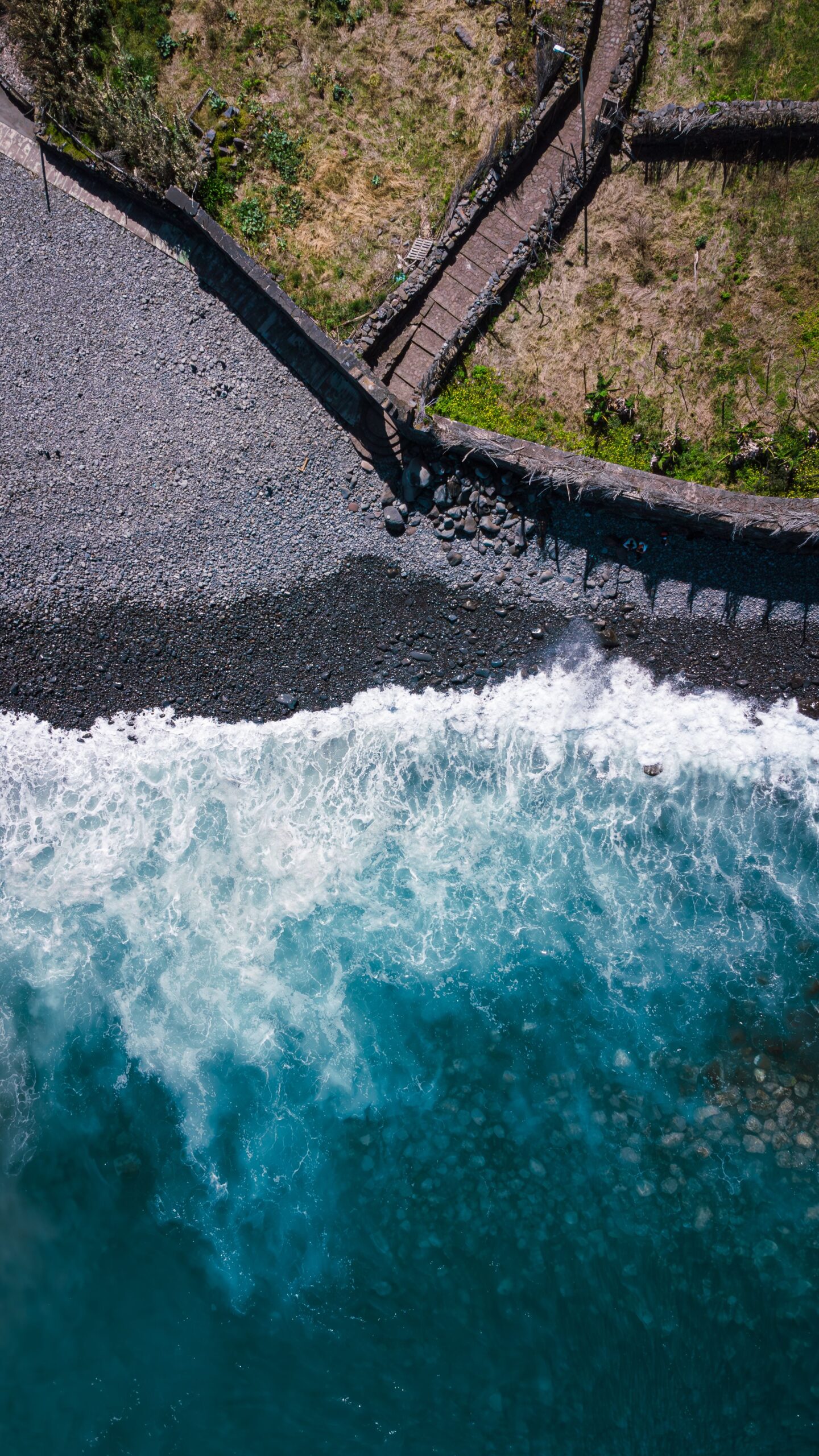
A short hop from Porto Moniz, Seixal has a black volcanic beach and more natural pools (Poças das Lesmas), this time looking out onto green cliffs down which waterfalls tumble after rain. Entry to the maintained section is usually nominal (around €2.50, check on site), with free parking nearby. It’s peaceful and far less crowded than Funchal — a great stop on a north-coast day.

8. The 25 Fontes and Caldeirão Verde levadas — iconic water trails
Levadas are old irrigation channels with level paths running alongside them right across the island — you walk beside the water through deep forest. The two most famous: 25 Fontes (PR6) in the Rabaçal area ends at a pool fed by dozens of little springs (about 11 km), while Caldeirão Verde (PR9) leads you through several tunnels to a waterfall pouring into a green cauldron (about 4–5 hours). Both are on the compulsory-booking list.
💡 Tip: Take a head torch for 25 Fontes — you’ll pass through tunnels. And set off early for both levadas: the car parks (at Caldeirão Verde, for instance) fill up by mid-morning in season. These aren’t the only levadas, either — more on them below.

9. Câmara de Lobos — the fishing village Churchill painted
Colourful fishing boats, steep little lanes and a harbour that Winston Churchill fell for (he used to come here to paint). Today it’s a lovely town for sampling the local fish dishes and the famous poncha cocktail. It sits just 9 km west of Funchal (15 minutes by car), right on the way to Cabo Girão, so the two pair up nicely. You park in paid bays (around €1.50–2 an hour); they fill quickly in season, so it’s worth stopping on the edge of town and walking down.
10. Curral das Freiras — the Valley of the Nuns in a volcanic bowl
A village hidden deep in a volcanic crater ringed by steep peaks — its name, the “Valley of the Nuns”, dates from the days when nuns from Funchal fled here to escape pirates. The best move is to stop at the Eira do Serrado viewpoint (20–30 minutes by car from Funchal), where there’s a free car park and a few minutes’ walk out to the platform for a view down over the village. The locals are fiercely proud of their edible chestnuts — try the chestnut liqueur or soup.
11. Santana — the traditional triangular houses
In the north you’ll come across the casas de colmo — tiny, colourful houses with thatched roofs sweeping right down to the ground, a symbol of old Madeira. A handful have been restored for visitors right in the centre of Santana by the town hall (the Núcleo de Casas Típicas; free to view from outside, open roughly 9 am–7 pm). It’s about a 45-minute drive over the mountains from Funchal — a quick but photogenic stop you can easily combine with a trip to Pico Ruivo or the north coast.

12. Monte Palace — the botanical garden above Funchal
Above Funchal (where the cable car from stop 1 drops you) lies the Monte Palace Tropical Garden — a terraced garden full of ponds, waterfalls, Japanese corners and collections from around the world. Entry is around €15, open roughly 9.30 am–6 pm. It slots beautifully onto a Funchal day out and a ride up on the cable car.
13. Ponta do Sol — the sunniest corner of the island
A cosy southern town wedged between cliffs, with a pebble beach and a reputation as the sunniest spot on Madeira. It makes a calm base on the western half of the island (about 30 minutes from Funchal on the motorway, with paid parking by the beach) and it’s a favourite with digital nomads. The pretty Levada do Moinho / Nova runs through the surrounding hills — you can do a shorter loop in 2–3 hours. Lovely for a slow afternoon by the sea.
14. Véu da Noiva — the “Bridal Veil” spilling down the cliff
One of the prettiest waterfalls in the north, streaming down a coastal cliff. You can take it in comfortably from the Véu da Noiva viewpoint (Miradouro dos Véu da Noiva) on the old coast road between Seixal and São Vicente — pull over, take your photo and drive on. There’s usually a café with a view nearby, too.
💡 Tip: Don’t confuse it with the Anjos waterfall (Cascata dos Anjos) near Ponta do Sol, which falls straight onto the old road — driving underneath it is a thrill in itself, though the road is often closed after heavy rain.
15. Machico — the first capital and a beach with yellow sand
Over in the east lies Machico, historically the first settled place on Madeira. It has one of the island’s few sandy beaches with yellow (imported) sand, a peaceful old core and the São Lourenço peninsula close by. A good stop on the way from the airport or heading east.
16. Balcões and Ribeiro Frio — a viewpoint for everyone
If you’d rather skip the demanding trek but still want a big view, the Balcões viewpoint (PR11) is ideal — from Ribeiro Frio it’s an easy 30-minute levada stroll to a view of the central peaks. Ribeiro Frio itself has an old laurel forest and a trout farm. Great with children and older walkers too.
17. São Vicente — a green valley and volcanic caves
A charming northern town with a white church in a narrow green valley. The main draw is the Grutas de São Vicente — lava caves you walk through with a guide (entry usually around €8–10). A good call when it’s raining in the north and you want something under cover.
18. Ponta do Pargo — the lighthouse on the westernmost point
Right out west stands the Farol da Ponta do Pargo lighthouse on cliffs more than 300 metres high. It’s quiet, with a huge outlook over the ocean and cracking sunsets — few tourists, because it’s a long way from Funchal. It pairs nicely with a loop around the western side of the island.
19. Madeira wine — a tasting in Funchal
The island gave its name to the famous fortified Madeira wine, which matures in the heat and keeps well for months even after opening. The easiest place to try it is right in Funchal at the historic Blandy’s Wine Lodge on Avenida Arriaga: a guided tour of the old cellars with a tasting runs to roughly €18–20 per person, open around 10 am–6.30 pm (shorter on Sundays). You can sample the dry Sercial and Verdelho as well as the sweet Bual and Malvasia.
💡 Tip: Madeira is one of the few wines that comes to no harm once opened, which makes it a practical, long-lasting souvenir to take home. You’ll find a bottle in an ordinary supermarket for a fraction of the tourist-shop price.
20. Jardim Botânico — the botanical garden above Funchal
Besides Monte Palace, Funchal also has the official Botanical Garden (Jardim Botânico da Madeira) on the slope above the city. Geometric beds of succulents form colourful mosaics here, alongside a collection of endemic plants and a wide view down the valley. From January 2026 entry costs €10, with children aged 6–12 paying €3, open daily from around 9 am to 6 pm. You can reach it by car, bus, taxi or the cable car from Monte.
21. Achadas da Cruz — one of Europe’s steepest cable cars
In the north-west, a short way from Porto Moniz, a small cable car drops down an almost vertical cliff face to the sea: it descends around 450 metres at a gradient of about 98% and sets you down on a fajã, a narrow strip of fields by the ocean. It’s a hair-raising yet cheap ride — a return ticket is around €5 and it’s open roughly 8 am–7 pm with a lunch break. There’s a viewpoint over the north coast at the top, too.
22. Praia da Calheta — a beach with golden sand
Madeira has almost no natural sandy beaches, so the two in the town of Calheta in the south-west were created artificially: the golden sand was shipped in from Morocco and mainland Portugal. Breakwaters shelter the bays, so the water is calm and fine for families with children, and there are bars, restaurants and a gear rental place nearby. A good stop when you fancy adding a day by the sea to all the mountains and levadas.
Levadas and treks: what you should know
Levadas are a Madeiran speciality — a network of 16th-century irrigation channels with more than 2,000 km of paths running alongside them. A good chunk is flat and easy-going, so even a less experienced walker can enjoy them. A few tips to make the most of them:
- Easier options: Balcões (PR11), the first section of the Levada do Caldeirão Verde, and the Levada do Rei.
- More demanding: PR1 Arieiro–Ruivo (ridge, steps, tunnels), PR6 25 Fontes and the full PR9 Caldeirão Verde.
- What to pack: a head torch (tunnels), a waterproof jacket and sturdy boots — even in summer the mountains can turn wet and chilly.
💡 Tip — important for 2026: The official waymarked trails (codes PR1–PR28, which includes the most famous levadas) now require a compulsory booking for a specific day and a 30-minute time slot via the regional SIMplifica portal. The fee is usually €4.50 per person, rising to €10.50 for the reopened PR1; children under 12 go free but must be on the booking. Book ahead — you can’t sort it out on the spot.

What to see in Madeira with kids
Madeira isn’t a classic “beach” destination, but children will love it here — just pick spots without sheer drops and long climbs:
- Funchal: the cable car up to Monte (the cabin ride is great fun), the fruit market and the seafront promenade.
- Porto Moniz and Seixal: a swim in the natural pools, sheltered from the waves.
- Balcões (PR11): a short, easy viewpoint walk where the birds often land right on your hand.
- Santana: the fairy-tale triangular houses — a quick, photogenic stop.
- Machico: a calm sandy beach with a gentle entry into the water.
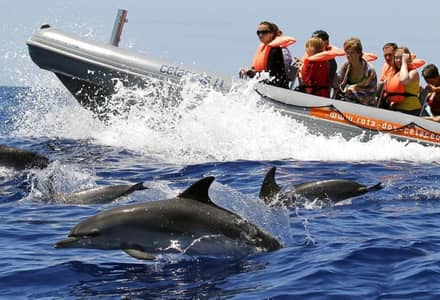
- Whale and dolphin watching: boat trips from Funchal or Machico.
💡 Tip: Save the PR1 ridge trail and the long levadas with their tunnels and drop-offs for another time if you’ve got little ones — go for Balcões or the pools instead. You can book experiences and tickets through GetYourGuide →.
What it costs (budget)
Madeira isn’t the cheapest island, but with a bit of smart planning it’s very doable on a budget — especially if you make your own breakfasts and stick to the natural (free) sights. A rough daily budget for a couple goes a long way here.
A lot of the best of it — the viewpoints, the levadas (bar the PR fee), the natural pools at Porto Moniz, Fanal — is free or nearly free. You’ll save most on food by shopping at the supermarket (Continente, say) and at least having breakfast “at home”. Compare places to stay through accommodation in Funchal →.
Where next
- Things to do in Madeira (2026)
- Madeira: the most beautiful places (2026)
- Madeira weather (2026)
- Where to stay in Madeira (2026)
Frequently asked questions: what to see in Madeira
Experiences and tickets in Madeira
traveller-approved · GetYourGuide
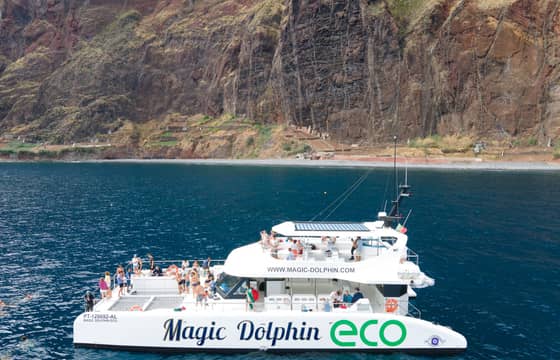
Funchal: Catamaran Cruise to Spot Dolphins and Whales
★ 4.5 · 9,486 reviews
from €34
I want this experience →
Prices and ratings are approximate (source: GetYourGuide); you’ll see the latest once you click through.
What should we see in Madeira if we only have a few days? Go for a mix: one day in the mountains (Pico do Arieiro for sunrise), one day in the north (Porto Moniz, Seixal, Fanal and the Véu da Noiva waterfall) and one day in Funchal with the Monte cable car and Cabo Girão. That way you’ll cover the peaks, the forest, the coast and the city.
What is there to see in Madeira without hard trekking? Plenty — Cabo Girão with its glass floor, the Balcões viewpoint (PR11) just 30 easy minutes away, Funchal and Monte Palace, the natural pools at Porto Moniz, Santana, or Curral das Freiras seen from the Eira do Serrado viewpoint. You can enjoy big views here without all-day climbs.
Do I need a car in Madeira? Pretty much, yes. Public transport mostly runs along the coast and barely reaches the mountain viewpoints and levadas. Hiring a car costs roughly €30–50 a day. Expect narrow, twisty roads and lots of tunnels.
Do I have to book to walk the levadas and trails? From 2026, yes, on all the official waymarked trails (codes PR1–PR28, which includes the most famous levadas). You book online in advance through the SIMplifica portal for a specific day and a 30-minute time slot. The fee is usually €4.50 per person, with children under 12 free.
When is the best time to visit Madeira? For viewpoints and treks, May–June and September–October — warmer, long days and mountains that are clearer of mist. Summer is the driest but busiest. Thanks to the mild climate (the “island of eternal spring”) you can really go all year round.
Where are the best natural pools in Madeira? The best known are the lava pools at Porto Moniz (the older section free, the modern complex around €3) and the quieter Seixal, with its black beach and pools beneath green cliffs. Both are on the north-west of the island.
Can you swim in the sea in Madeira? Only up to a point — the coast is mostly rocky and the sea can be rough. You’re better off swimming in the natural pools (Porto Moniz, Seixal) or at a couple of beaches like Machico (imported yellow sand) or Calheta. It’s not a place for classic long sandy beaches, though.
Are the Monte cable car and toboggans worth it? The cable car from Funchal up to Monte, yes — the views over the bay are superb (a return is around €12.50–18). The toboggan ride in a wicker basket (around €35 for two) is more of a touristy tradition and only covers a short stretch; take it as a bit of fun, not as transport.
What is there to see in Madeira when it rains? Go for indoor sights and the south of the island, where the weather is usually better: Funchal (the market, cathedral, museums), Monte Palace, the Grutas de São Vicente lava caves, or misty Fanal, which actually looks its best in poor weather. In the north it’s worth waiting — the weather changes fast here.
How many days should I set aside for Madeira? Ideally 5–7 days. You’ll manage the mountains, the north, the west and Funchal without rushing, and keep some slack for misty days when the views have to wait. You can cover the basic “what to see” in 4 days, but you’ll be pushing it.
Potřebujete pomoct s cestováním?
-
Ubytování 🏨
Vyberte si to nejlepší ubytování, ať už jste kdekoliv, přes Booking.com. -
Půjčení auta 🚗
Auto si snadno najdete přes Booking.com, kde máte často slevu díky ubytování, nebo Rentalcars.com, kde porovnáte nabídky většiny půjčoven. -
Zážitky 🎟️
Přes GetYourGuide.com si vyberete z nejrůznějších výletů i zážitků po celém světě, navíc se zrušením zdarma do 24 h předem.