Last updated 30.8.2026
Most people arrive in Prague, spend three days on the Charles Bridge and fly home convinced they have seen the country. They have seen one city. The most beautiful places in the Czech Republic are almost all somewhere else: sandstone labyrinths on the German and Polish border, a Renaissance square in Moravia that looks painted rather than built, a red château standing on an island in a pond. The country is roughly the size of Ireland, the trains are cheap and punctual, and nothing is more than a few hours from anything else.
Two names do the heavy lifting abroad, Prague and Český Krumlov, and everything in this list is an argument for the other twenty-eight. To keep your bearings: the country has two historic halves, Bohemia in the west (Prague, the sandstone country, the spa towns, the mountains along the Polish border) and Moravia in the east (Brno, the wine hills, the caves, the folk villages), with a sliver of Silesia in the north-east. Every entry below says which part of the country it sits in and how people usually get there.
The most beautiful places in the Czech Republic at a glance
- If it is your first visit: Prague, Český Krumlov, České Švýcarsko (Bohemian Switzerland), Adršpach.
- For nature: Bohemian Switzerland, Český ráj (the Bohemian Paradise), the Krkonoše (Giant Mountains), Šumava, Moravský kras (the Moravian Karst), Pálava, the Jeseníky, the Beskids.
- For towns and monuments: Telč, Kutná Hora, Olomouc, Brno, Karlovy Vary, Kroměříž, Slavonice, Štramberk, Holašovice.
- For castles and châteaux: Karlštejn, Hluboká, Bouzov, Křivoklát, Pernštejn, Červená Lhota, Lednice and Valtice.
- UNESCO: the country has 17 entries on the World Heritage list and a good share of them are in this selection.
- When to go: May, June and September are the sweet spot, with bearable weather, thinner crowds and lower prices.
- Money: the currency is the Czech koruna (CZK). The country is in the EU but does not use the euro.
How to travel the Czech Republic beyond Prague
The country is small and thoroughly stitched together by trains, coaches and motorways, so most of these places work as a day trip, and the far corners need a long weekend at most. We have a simple rule of our own: hills and rocks in spring and autumn, towns any time, winter included. Český Krumlov under snow is a different city altogether.
The best months are May, June and September. The landscape is either fresh green or turning gold, it is warm enough to walk all day, and the school holiday crowds and holiday prices have not arrived yet. July and August mean a queue under the Pravčická brána arch and a full car park at Adršpach. If summer is your only option, start early.
You can reach almost everything without a car. Prague, Kutná Hora, Olomouc, Karlovy Vary, Český Krumlov and Adršpach all have decent train connections, and Adršpach even has a station at the entrance to the rocks. A car earns its keep around Pálava, in the Lednice and Valtice estate, in the Jeseníky and in the Beskids, where the point is hopping between several stops in a day rather than parking yourself in one town.
One thing to sort out before you land: the currency is the Czech koruna (CZK, written Kč), not the euro. As a rough anchor, 100 Kč is about £3.50 and 1,000 Kč about £35. Card payment is normal almost everywhere, including small mountain huts, but carry a little cash for car parks, ferry-style boat rides and village bakeries. Ignore the exchange booths in central Prague with the enormous “0% commission” signs and use a bank ATM or your card instead.
💡 Tip: With the natural highlights the rule could not be simpler: the earlier you arrive, the fewer people you share it with. Get to Adršpach or the Pravčická brána before nine. After ten the coaches roll in and the magic drains out of the place.
30 most beautiful places in the Czech Republic
The order alternates between nature and towns rather than ranking anything by importance, so you can read straight through and still get a fair picture of the country. Each of the 30 tips says what makes the place worth the detour, which part of the country it sits in and how people usually get there.
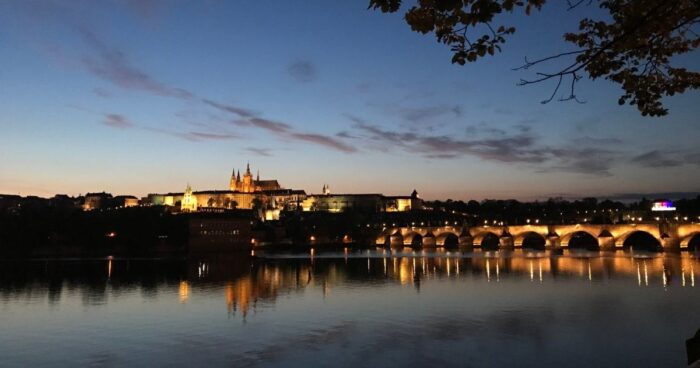
1. Prague
We may as well start with the obvious one, and it will still floor you. Prague Castle, the Charles Bridge at dawn, the Old Town Square, Vyšehrad on its cliff above the Vltava. The historic centre has been on the UNESCO list since 1992 and even on a tenth visit you keep finding courtyards and viewpoints you had walked past before.
Why it is beautiful: one of the best preserved historic cores in Europe and a skyline that hardly looks real. Where and how: central Bohemia, and the country’s only major international airport; every train and coach line ends up here, and the city itself runs on trams and metro. Find a place to stay in Prague →
2. Český Krumlov
If you get to show a visitor one single town outside the capital, make it Krumlov. A castle with a revolving open-air theatre, painted towers, and a bend in the Vltava tight enough to hold the whole old town inside it. UNESCO listed since 1992, same year as Prague.
Why it is beautiful: a compact Renaissance fairytale you can walk in half a day, then want to stay a week. Where and how: South Bohemia, near the Austrian border; trains and buses run from České Budějovice, and direct coaches connect it with Prague, Linz and Vienna. Find a place to stay in Český Krumlov →
💡 Tip: Sleep in the town itself and go out after seven in the evening, once the coach tours have left. The lanes are then more or less yours.
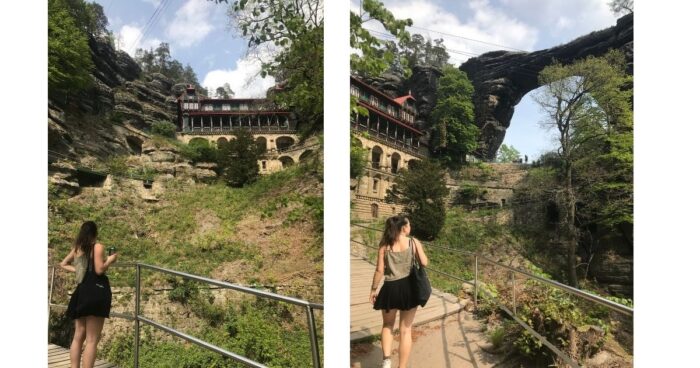
3. České Švýcarsko (Bohemian Switzerland) and the Pravčická brána
The largest natural rock arch in Central Europe, rising more than 20 metres above the forest. Below it run the gorges of the river Kamenice, which you cross in flat-bottomed boats in season. A landscape of sandstone towers, ravines and lookouts that has stood in for fantasy films more than once.
Why it is beautiful: the arch and the wild gorges fit into one loop walk. Where and how: the far north of Bohemia, on the German border, where it continues as Saxon Switzerland; take the train to Děčín and then a bus to Hřensko, or drive from Prague in about 1.5 hours.
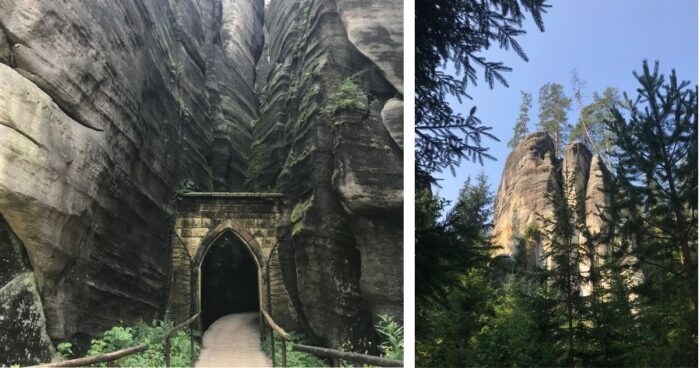
4. The Adršpach and Teplice rocks
A maze of rock towers, passages narrow enough to turn sideways in, a lake you row across and a waterfall that is dammed for a few minutes and then released on cue. The largest rock town in Central Europe.
Why it is beautiful: walking between hundred-metre sandstone walls, with the sky reduced to a strip overhead. Where and how: north-eastern Bohemia by the Polish border; the train stops right at the entrance (station Adršpach), or roughly 2.5 hours by car from Prague. There is an entrance fee, and in season we would arrive early.
5. Český ráj, the Bohemian Paradise
The oldest protected landscape in the country and its first UNESCO Geopark. The Prachovské skály rocks, Hrubá Skála, and the ruined castle of Trosky perched on two volcanic plugs, which is the single most photographed silhouette in Bohemia after Prague Castle.
Why it is beautiful: rock towns and castles packed into a small area, which makes it an easy weekend. Where and how: northern Bohemia, north-east of Prague; train to Turnov or Jičín and then a bus or your own legs, or about 1.5 hours by car from Prague.
6. The Krkonoše (Giant Mountains) and Sněžka
The highest range in the country, topped by Sněžka at 1,603 metres. In summer it is long views and waterfalls, including the Mumlava falls and the Pančava falls, the tallest in the country. In winter it is skiing above Špindlerův Mlýn and Pec pod Sněžkou.
One concrete target: ride the cable car from Pec pod Sněžkou to the summit of Sněžka and find the Polish post office up there, the highest post box in the country. The border runs across the top, so you can stand with one boot in each country. For a longer walk, head for the Sněžné jámy cirques above Špindlerova bouda.
Why it is beautiful: a genuine alpine feel at modest altitude, with treeless ridges and stone huts. Where and how: north-eastern Bohemia on the Polish border, about 2 hours by car from Prague; up Sněžka by cable car from Pec pod Sněžkou or on foot. If you like collecting summits, our guide to the highest mountains in the Czech Republic ranks the top 15 peaks and the routes up them.
7. Šumava and Lipno
The largest forest in the country, glacial lakes (Černé and Čertovo) and, above Lipno reservoir, a treetop walkway with a slide to get back down. This is the quiet the Krkonoše cannot give you.
One concrete target: walk the treetop walkway at Lipno nad Vltavou; for wilder ground climb Boubín through the old-growth Boubín forest, or hike to the Černé and Čertovo lakes.
Why it is beautiful: deep forest, dark lakes and long cycle routes around the reservoir. Where and how: south-western Bohemia along the German and Austrian border, about 2.5 hours by car from Prague; branch-line trains run to Lipno and Volary.
8. Moravský kras (the Moravian Karst) and the Macocha abyss
The Macocha abyss, 138 metres deep, which you look into from two bridges, and the Punkevní caves, where part of the tour is a boat ride along an underground river. This is the best known karst area in the country.
Why it is beautiful: an abyss, a cave system and a subterranean boat trip in a single outing. Where and how: Moravia, just north of Brno; about 30 minutes by car from Brno, or by train to Blansko and onwards. Book the caves in advance, they sell out in season.
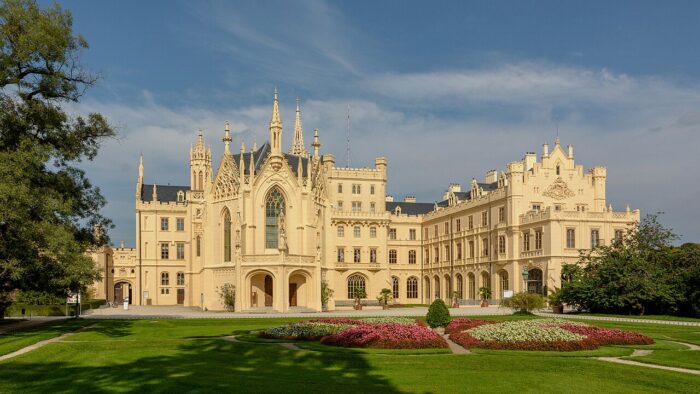
9. Pálava and the Lednice-Valtice estate
The limestone Pavlov Hills above Mikulov, vineyards to the horizon, and next door the largest designed landscape in Europe: the châteaux of Lednice and Valtice linked by avenues, plus a minaret, the mock-ruin of Janův hrad and the Three Graces colonnade. UNESCO listed, and best seen from a bicycle.
Why it is beautiful: southern warmth, wine cellars and château parks you can ride between. Where and how: South Moravia on the Austrian border, about 2.5 hours by car from Prague and roughly 50 minutes from Brno; a good cycle route connects Lednice and Valtice. Book tours and experiences across the country on GetYourGuide →
10. Telč
A Renaissance square lined with arcades and pastel gables, ringed by ponds and closed off by a château. One of the loveliest squares in the country, and UNESCO listed since 1992 as well.
Why it is beautiful: possibly the most photogenic town square in the country, and quiet outside the summer weekends. Where and how: the Vysočina highlands between Bohemia and Moravia, about 30 minutes off the D1 motorway; buses run from Jihlava.
11. Kutná Hora
A medieval silver town whose wealth paid for the cathedral of St Barbara, and whose oddest corner is the ossuary at Sedlec, decorated with the bones of tens of thousands of people. The historic core is on the UNESCO list.
Why it is beautiful: a world-class Gothic cathedral and a chapel that unsettles everyone who walks in. Where and how: central Bohemia, east of Prague; roughly an hour by train from the capital, which makes it the easiest car-free day trip in this list.
12. Olomouc
The most underrated city in the country, with the second largest heritage zone after Prague. The Holy Trinity Column on the UNESCO list, a student population that keeps the bars busy, and the local speciality nobody warns you about: olomoucké tvarůžky, a pungent ripened cheese best met with a beer in your other hand.
Why it is beautiful: a grand square without the grand-city crowds, plus baroque fountains on almost every corner. Where and how: Moravia, on the main east-west railway; about 2 hours by fast train from Prague and 1.5 hours from Brno. We have a separate guide to the best things to do in Olomouc if you decide to give it more than an afternoon.
13. Karlštejn
The most famous castle in the country, built by Emperor Charles IV to house the imperial crown jewels. That silhouette above the vineyards of the Bohemian Karst is on half the postcards sold in Prague.
Why it is beautiful: a properly majestic Gothic castle within commuting distance of the capital. Where and how: central Bohemia, south-west of Prague; about 40 minutes by train, then a 20-minute walk uphill from the station.
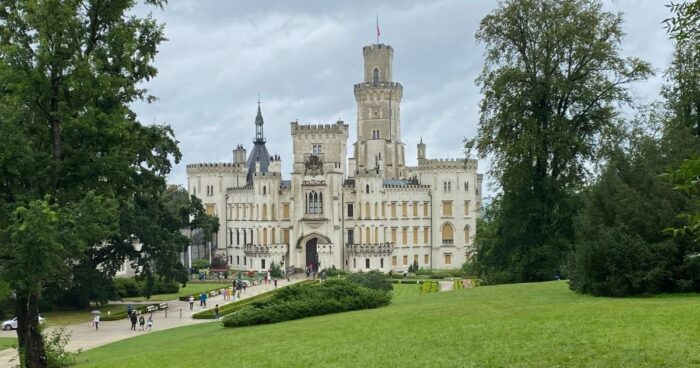
14. Hluboká nad Vltavou
A white neo-Gothic château modelled on Windsor, routinely called the most beautiful château in the country. The English park around it is free to wander and worth an hour on its own.
Why it is beautiful: a storybook white palace above the river, and the interiors match the exterior for once. Where and how: South Bohemia, about 15 minutes by car or bus from České Budějovice, the regional capital and home of the original Budweiser brewery; it pairs neatly with Krumlov on the same trip.
15. Bouzov
A romantic castle rebuilt at the turn of the twentieth century, and the backdrop of dozens of Czech fairytale films that every local grew up on. Towers and battlements straight out of a film set, dropped into forest on the edge of the Haná lowland.
Why it is beautiful: the most fairytale-looking castle in the country, and film crews agree. Where and how: Moravia, about 40 minutes from Olomouc; a car makes life much easier here.
16. The Jeseníky and Praděd
The highest mountains in Moravia, crowned by Praděd at 1,491 metres with its transmitter tower and viewing gallery on the summit. Add the Bílá Opava waterfalls, peat bogs and a silence you will not find in the Krkonoše.
One concrete target: climb to the summit of Praděd and up the tower’s viewing gallery, then come back down through the wild gorge of the Bílá Opava waterfalls rather than the way you came.
Why it is beautiful: bleak, windswept ridges and the emptiest high mountains in the country. Where and how: northern Moravia and Silesia near the Polish border; easiest by car, with Karlova Studánka or Ovčárna as trailheads.
17. The Beskids and Pustevny
Forested hills topped by Lysá hora at 1,323 metres, and on the Pustevny saddle the timber buildings of architect Dušan Jurkovič: the Art Nouveau lodges Maměnka and Libušín, plus the statue of the pagan god Radegast and the whole Wallachian folk tradition around them.
One concrete target: take the cable car from Trojanovice up to Pustevny and the Maměnka lodge, then follow the ridge path for about an hour to the Radegast statue, with Radhošť ahead of you.
Why it is beautiful: Wallachian atmosphere, wooden architecture and ridge views into Slovakia. Where and how: the north-eastern corner of the country, close to the Slovak border; cable car to Pustevny from Trojanovice, about an hour by car from Ostrava. Our full guide to what to see in the Beskids covers 18 more spots in the range.
18. Holašovice
A single village green surrounded by farmhouses in the style known as folk baroque, with curvy painted gables from the eighteenth and nineteenth centuries. The textbook South Bohemian village, and UNESCO listed for exactly that reason.
Why it is beautiful: one square, but a perfect one, and a quick stop rather than a whole day. Where and how: South Bohemia, about 20 minutes by car from České Budějovice and directly on the way to Český Krumlov.
19. Karlovy Vary
The most famous spa town in the country: colonnades, hot springs you drink from porcelain sipping cups, and Becherovka herbal liqueur with spa wafers. Since 2021 it has been part of the UNESCO entry “The Great Spa Towns of Europe”.
Why it is beautiful: nineteenth-century elegance in a narrow river valley, and the walk from spring to spring is the whole point. Where and how: western Bohemia, about 1.5 hours by car from Prague, and comfortable by coach too.
20. Kroměříž
An archbishop’s château and two gardens on the UNESCO list. The Flower Garden, with its rotunda and colonnade, is a survivor of a kind you will struggle to find anywhere else in Europe. Locals call the town the Athens of Haná.
Why it is beautiful: baroque garden design of a scale and precision found nowhere else in the country. Where and how: central Moravia; by train with a change at Hulín, or about 50 minutes by car from Brno.
21. Štramberk
A small town stacked up a hillside under the round tower called Trúba, with timber cottages leaning into the slope and the smell of štramberské uši, cone-shaped gingerbread “ears” baked here since the Middle Ages. The nickname is the Wallachian Bethlehem.
Why it is beautiful: wooden houses at every angle and a view from the tower over the whole Beskid foothills. Where and how: the north-east of the country, near the Beskids; by car or bus from Nový Jičín, about 45 minutes from Ostrava.
22. Litomyšl
A Renaissance château covered in sgraffito, the birthplace of the composer Bedřich Smetana, and a town that still lives on culture rather than on tourism. The château complex is UNESCO listed.
Why it is beautiful: one of the longest arcaded squares in the country and an aristocratic château above it. Where and how: eastern Bohemia; by car from the D35 motorway, or by bus from Svitavy or Česká Třebová.
23. Třeboň and the South Bohemian ponds
A spa town in the middle of a landscape of medieval fishponds, some of them dug in the sixteenth century and still farmed for carp. The Svět pond starts right behind the town walls, and the famous Rožmberk dam carries a path made for bikes and skates. Quiet, fish on every menu, and Regent beer brewed in the town.
Why it is beautiful: water, stillness and a Renaissance square you can reach on foot from the shore. Where and how: South Bohemia, about 2 hours by car from Prague; by train with a change at Veselí nad Lužnicí.
24. Žďár nad Sázavou and the Zelená hora church
The pilgrimage church of St John of Nepomuk on Zelená hora by the architect Jan Blažej Santini, a building designed from the ground up around the symbolism of the number five: five points, five chapels, five stars. It has a UNESCO entry of its own.
Why it is beautiful: baroque Gothic, a hybrid style that exists almost nowhere outside Bohemia and Moravia. Where and how: the Vysočina highlands halfway between Prague and Brno, about 15 minutes off the D1 motorway; trains stop at Žďár nad Sázavou.
25. Křivoklát
A massive Gothic castle of the Přemyslid kings and later of Charles IV, hidden in the deep woods of the Křivoklátsko biosphere reserve. A royal hunting residence with its chapel and library intact, reached along the river Berounka.
Why it is beautiful: an authentic medieval castle with the forest still around it rather than a car park. Where and how: central Bohemia, west of Prague; the train from Prague via Beroun runs along the river on one of the prettiest branch lines in the country and the Křivoklát stop is below the castle, or about an hour by car.
26. Kokořínsko: Kokořín and Bezděz
Sandstone country full of ravines and two very different castles. Kokořín sits low in a wooded valley, while the twin-towered Gothic Bezděz stands alone on a volcanic cone with a view across half of northern Bohemia. The poet Karel Hynek Mácha wrote about this landscape, which is why Czechs call it Mácha’s country.
Why it is beautiful: two striking castles and rocky forest within easy reach of Prague. Where and how: northern Bohemia, about an hour by car from Prague; there is a train to Bezděz station, followed by a stiff walk uphill.
27. Červená Lhota
A Renaissance water château painted fire red, standing on a rocky islet in the middle of a pond and reflected in it. One of the most photogenic buildings in the country, and another regular of Czech fairytale films.
Why it is beautiful: a small red château on water, ringed by woods, with a bridge as the only way in. Where and how: South Bohemia near Jindřichův Hradec; a car is by far the easiest option, since the train only gets you to Kardašova Řečice and onward buses are sparse at weekends.
28. Pernštejn
One of the best preserved Gothic and Renaissance castles in the country, nicknamed the marble castle for the pale stone of its window frames. A tangle of staircases, oriels and vaulted halls above the Svratka valley in the Vysočina highlands.
Why it is beautiful: a castle nobody ever captured, with the medieval atmosphere left more or less alone. Where and how: the Moravian side of the Vysočina; by train to Nedvědice and just under 2 km on foot, or about an hour by car from Brno.
29. Slavonice
A Renaissance town on the Austrian border whose square is lined with houses covered in fine sgraffito decoration, mostly untouched because the town spent the twentieth century behind the Iron Curtain and nobody modernised it. Underneath runs a network of medieval tunnels you can crawl through with a guide.
Why it is beautiful: intact Renaissance architecture with no crowds and the strange stillness of a forgotten border region. Where and how: the far south of Bohemia where it meets Moravia and Austria; by car via Dačice, or on the branch line from Kostelec u Jihlavy or Telč.
30. Brno
The second city and the capital of Moravia, where history and modern architecture sit side by side. The functionalist Villa Tugendhat by Mies van der Rohe is on the UNESCO list, Špilberk fortress looks down on the centre, the cathedral of St Peter and St Paul rings noon at eleven for reasons involving a siege, and náměstí Svobody is one long row of cafés.
Why it is beautiful: a relaxed student city with architecture running from Gothic to functionalism, and the best coffee in the country. Where and how: South Moravia, about 2.5 hours by train from Prague and roughly the same from Vienna and Bratislava; book Villa Tugendhat weeks ahead, tickets go fast.
Most beautiful places in the Czech Republic: nature or towns?
When you cannot decide where to go first, it helps to split the list by mood. For nature head to the rocks and the mountains; for atmosphere and history go to the towns and châteaux. We like combining the two best: a day in a town, a day in the hills.
| For nature | For towns and monuments |
|---|---|
| Bohemian Switzerland (rocks and gorges) | Prague (skyline, castle) |
| Adršpach and the Bohemian Paradise (rock towns) | Český Krumlov (Renaissance fairytale) |
| Krkonoše, Jeseníky, Beskids (mountains) | Telč, Litomyšl (Renaissance squares) |
| Šumava and Lipno (forests, lakes) | Kutná Hora, Olomouc (Gothic, baroque) |
| Pálava (vineyards and hills) | Karlovy Vary, Kroměříž (spas, gardens) |
| Moravian Karst (caves, abyss) | Karlštejn, Hluboká, Bouzov (castles and châteaux) |
| Kokořínsko (rocks, Kokořín and Bezděz castles) | Křivoklát, Pernštejn, Červená Lhota (castles and châteaux) |
| Třeboňsko (fishponds and wetlands) | Brno, Slavonice (city, Renaissance) |
💡 Tip: Group places that sit close together. Krumlov, Hluboká and Holašovice make one South Bohemian weekend; Pálava, Lednice and Mikulov make a Moravian one; Adršpach and the Bohemian Paradise pair up in the north of Bohemia.
💡 Tip: If you are travelling by train, buy tickets from the national carrier or one of the private operators online the day before. Fares on the Prague to Brno and Prague to Ostrava lines are cheap by British standards and seat reservations cost almost nothing, but the good trains do sell out on Friday afternoons and Sunday evenings.
UNESCO sites in the Czech Republic
Relative to its size, the country is one of the densest concentrations of World Heritage anywhere: 17 entries on the UNESCO list. Plenty of them are in this selection, so collecting UNESCO sites and planning a route through the prettiest corners of the country turn out to be the same exercise.
- Prague, historic centre (1992)
- Český Krumlov, historic centre (1992)
- Telč, historic centre (1992)
- Kutná Hora, the church of St Barbara and the cathedral at Sedlec
- The Lednice-Valtice estate, a designed cultural landscape
- Holašovice, a preserved village of folk baroque farmhouses
- Kroměříž, the château and its gardens
- Litomyšl, the château complex
- Olomouc, the Holy Trinity Column
- Žďár nad Sázavou, the church of St John of Nepomuk on Zelená hora
- Karlovy Vary, part of “The Great Spa Towns of Europe” (2021)
- Brno, Villa Tugendhat
- Třebíč, the Jewish quarter and the basilica of St Procopius
- Kladruby nad Labem, the landscape for breeding and training ceremonial carriage horses
- The Ore Mountains, a mining region shared with Germany
- Žatec, the Saaz hop-growing landscape
- The Jizera Mountains beech forests, the only natural site, part of the European ancient beech forest listing
That is 17 entries in total, sixteen cultural and one natural (the Jizera Mountains beech forests). If you want more nature and fewer coach parties, the guides below go deeper into the mountains and the ranges nobody outside the country has heard of.
Where to go next
- The highest mountains in the Czech Republic: top 15 peaks and how to climb them
- Ore Mountains, Czech Republic: 21 trips and hikes
- The 24 most beautiful places in the Czech Beskids
- 20 best things to do in Olomouc
- 17 beautiful things to see in České Budějovice (Budweis)
FAQ: most beautiful places in the Czech Republic
What are the most beautiful places in the Czech Republic? If we had to name four certainties, they would be Prague, Český Krumlov, Bohemian Switzerland with the Pravčická brána arch, and the rock town of Adršpach. Between them you get the whole range the country offers: a great capital, a Renaissance fairytale and wild sandstone country.
What is there to see in the Czech Republic other than Prague? A great deal, and most of it within a couple of hours of the capital. Group places by region and a weekend goes a long way: South Bohemia gives you Krumlov, Hluboká and Holašovice; South Moravia gives you Pálava, Lednice and Mikulov; northern Bohemia gives you Adršpach and the Bohemian Paradise; the north-east gives you Olomouc, Bouzov and Štramberk.
What is the most beautiful city in the Czech Republic besides Prague? Český Krumlov gets named most often, with Telč, Olomouc, Kutná Hora and Litomyšl close behind. For spa-town atmosphere it is Karlovy Vary, and for baroque gardens Kroměříž.
How many UNESCO sites does the Czech Republic have? There are 17 entries on the UNESCO World Heritage list. The most visited are Prague, Český Krumlov, Telč, Kutná Hora, Holašovice, the Lednice-Valtice estate and Zelená hora at Žďár nad Sázavou.
When is the best time to visit the Czech Republic? May, June and September. The countryside is either fresh or golden, the weather is comfortable, and both the holiday crowds and the peak prices are missing. Mountains and rocks are at their best in spring and autumn, while the towns work all year round, and Český Krumlov is at its most magical under snow.
Can you travel around the Czech Republic without a car? Largely yes. Prague, Kutná Hora, Olomouc, Karlovy Vary, Karlštejn, Český Krumlov and Adršpach all have good train connections. You will want a car mainly for Pálava, the Lednice-Valtice estate, the Jeseníky and the Beskids, where the whole point is moving between several stops in a day.
Which places are best with children? The rock towns of Adršpach and the Prachovské skály, with their boats and narrow passages, the treetop walkway at Lipno, the Punkevní caves in the Moravian Karst with their underground boat ride, and Hluboká or fairytale Bouzov among the castles. The cable car up to Pustevny is a hit as well.
Is travelling in the Czech Republic expensive? It does not have to be. Remember the currency is the Czech koruna, not the euro. Entry to natural sites is often free or costs a few tens of crowns, a pound or two (Adršpach does charge), while châteaux and caves are usually in the low hundreds of crowns, so roughly the price of a London pub lunch. Travelling outside the main season, in spring or autumn, also saves you money on accommodation.
Potřebujete pomoct s cestováním?
-
Ubytování 🏨
Vyberte si to nejlepší ubytování, ať už jste kdekoliv, přes Booking.com. -
Půjčení auta 🚗
Auto si snadno najdete přes Booking.com, kde máte často slevu díky ubytování, nebo Rentalcars.com, kde porovnáte nabídky většiny půjčoven. -
Zážitky 🎟️
Přes GetYourGuide.com si vyberete z nejrůznějších výletů i zážitků po celém světě, navíc se zrušením zdarma do 24 h předem.