When you start working out what to see in Ostrava, you quickly realise the city plays by its own rules. Where else can you climb inside a rusting blast furnace, ride a pit cage down a real coal mine, and stand on top of a smouldering slag heap for one of the finest views in the country?We have a real soft spot for Ostrava’s rough-around-the-edges charm, so we’ve pulled together 20 sights that are genuinely worth your time — from the iconic Lower Vítkovice ironworks and Silesian Ostrava Castle to the viewing tower of the New City Hall, the zoo, the planetarium and the churches in the centre. We’ve saved the nightlife and events for a separate guide; here we stick to what to see.
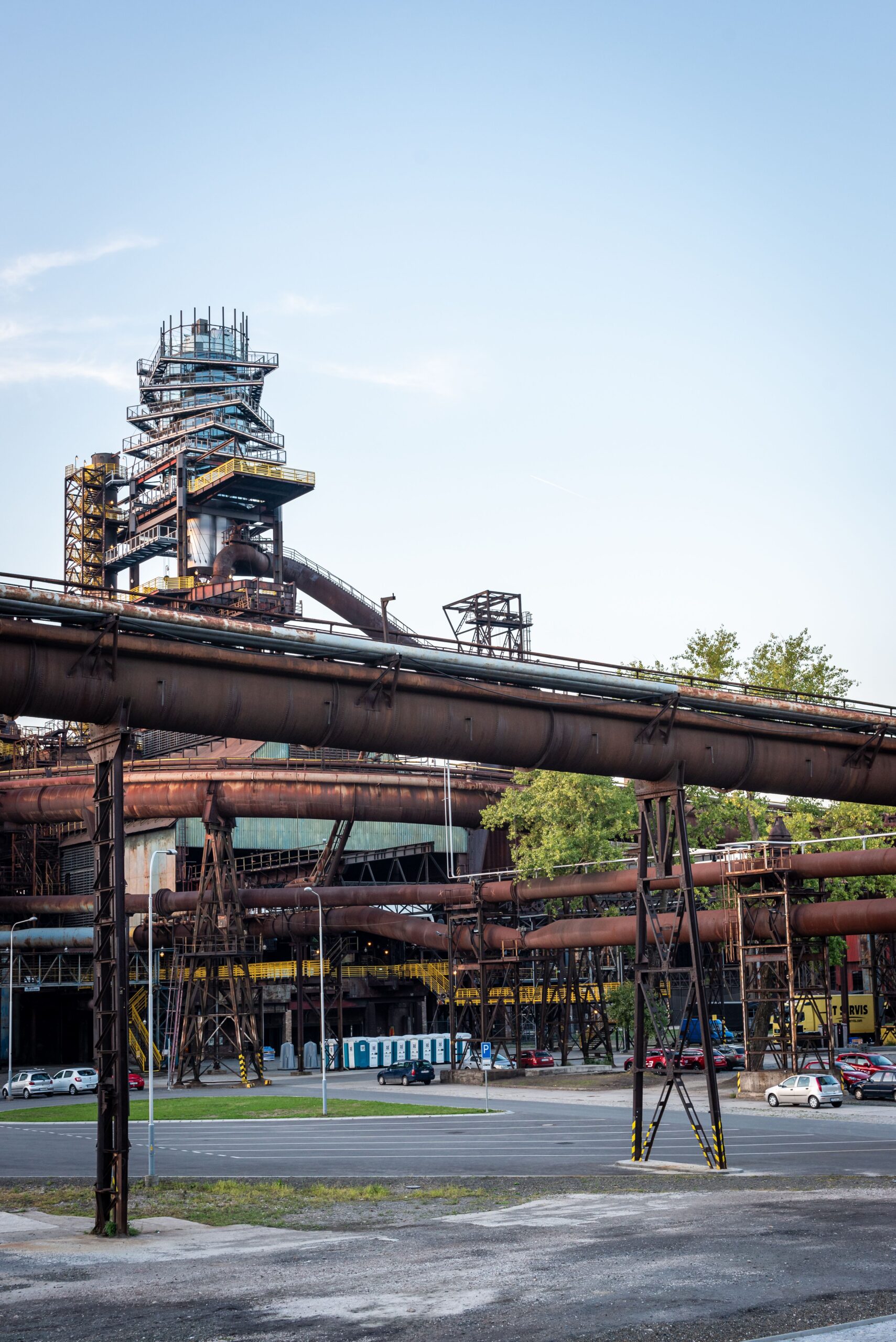
Number one must-see: Lower Vítkovice — the Bolt Tower (a former blast furnace) and the World of Technology.
Mining up close: Landek Park (descend into the Anselm Mine) and the Michal Mine.
Best views: the New City Hall viewing tower (73 m) and the Ema slag heap — on a clear day you can see the Beskids.
With kids: Ostrava Zoo, DinoPark, Miniuni, the planetarium.
The centre: Masaryk Square, the Cathedral of the Divine Saviour, Stodolní Street.
How long: two days is ideal; entry to the main attractions runs around 100–250 CZK (€4–10).
Getting to Ostrava and getting around
Ostrava sits in the north-east of the country, a short hop from both the Polish and Slovak borders, and it’s easy to reach from any direction.
By train: direct express services (ČD, RegioJet, Leo Express) run from Prague to Ostrava-Svinov and the main station in roughly 3–3.5 hours, with fares from around 200–350 CZK (€8–14) if you book early.
By car: it’s about 360 km from Prague along the D1 motorway (around 3.5 hours), or roughly 170 km from Brno via the D1/D48. You’ll need a motorway vignette for the motorways.
Public transport: the city runs trams, trolleybuses and buses (DPO). A single transfer ticket costs around 30 CZK (about €1.20), and a 24-hour ticket is good value. Public transport covers the centre, Lower Vítkovice and the zoo with no fuss.
💡 Tip: Most of the top sights lie outside the compact centre (Vítkovice, Landek in Petřkovice, the zoo in Silesian Ostrava). Plan your days so you’re not criss-crossing the city — for example, pair Vítkovice with the centre one day, and Landek with the zoo the next.
20 things to see in Ostrava
1. Lower Vítkovice — the Bolt Tower and the blast furnaces
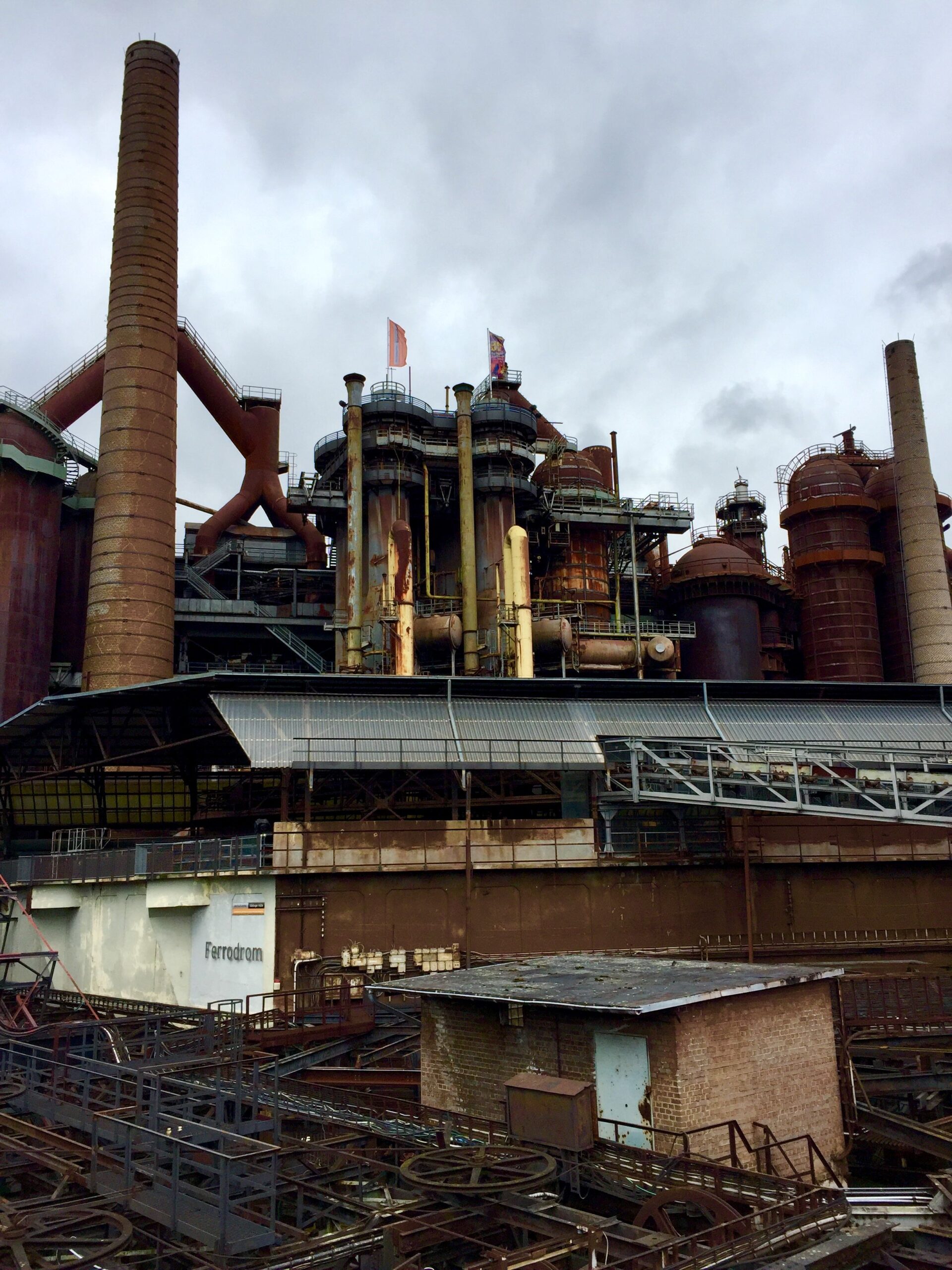
If you only have time for one thing, make it this. Lower Vítkovice is a former ironworks where iron was smelted for more than 150 years — and today it’s a European one-off, listed among the continent’s great industrial monuments. Walkways and stairs take you up to the Bolt Tower, an extension built on top of blast furnace no. 1 at roughly 78 metres, the highest point in the city, with views across the whole of Ostrava. We’d take the guided tour of the furnaces — without the commentary you’ll miss half of what makes the place special.
💡 Tip: There’s a café at the top of the Bolt Tower — grab a coffee with a view. Entry to the blast furnaces is usually around 150–230 CZK (€6–9), and it’s worth booking the guided tour ahead. Tours and tickets in Ostrava →
2. The Big and Small World of Technology
Right next to the blast furnaces stands the World of Technology science centre — an interactive museum where you’re meant to touch everything. The Big World of Technology has four themed sections (children, nature, civilisation, science), while the Small World of Technology (U6) shows off machines and inventions in a former power-station building. It’s a treat for kids and for grown-ups who love poking around to see how things work. Set aside a good half-day.
3. Landek Park — the largest mining museum in the country
On Landek hill in Petřkovice you’ll find the country’s largest mining museum. The big draw is the descent into the Anselm Mine — you go down into real galleries with a guide, often a former miner, who talks you through what a day underground was actually like. You can also ride the little mine train and walk through the mine-rescue exhibition. It’s chilly down there even in summer, so bring a jacket.
4. Silesian Ostrava Castle
The oldest surviving landmark in the city — a 13th-century Gothic castle, later rebuilt in Renaissance style, standing above the confluence of the Ostravice and Lučina rivers. Inside you’ll find exhibitions on the region’s history, a witches’ and castle cellar, and there’s always something on through the season: markets, concerts and events for children. Entry to the grounds is usually around 100–150 CZK (€4–6).
5. The New City Hall viewing tower
The functionalist New City Hall, built between 1925 and 1930, has the tallest town hall tower in the country — 73 metres, with a lift to take you up. From the gallery you can see the whole city, the slag heaps, the Vítkovice chimneys and, on a clear day, the ridges of the Beskids. Entry is cheap (around 60–90 CZK / €2.50–3.50) and it’s the best way to “read” Ostrava from above right at the start of your visit.
6. The Michal Mine
In Michálkovice stands the Michal Mine — a coal mine preserved exactly as it was on its last working day in 1994. It’s a national cultural monument, and you walk through the lamp room, the baths and the engine house just as the miners left them. A different experience from Landek: here you don’t go underground, but you see the surface workings in completely authentic condition.
7. The Ema slag heap
The Ema slag heap is a mountain of mining spoil — a mound of excavated material reaching over 315 metres above sea level and rising roughly 80 metres above the surrounding landscape. Coal still smoulders inside it, so the summit tends to be warmer than you’d expect and grows some unusual vegetation. It’s free and open, you walk up on foot, and you’re rewarded with one of the loveliest views over Ostrava and towards the Beskids. Perfect in the early-evening light.
8. Ostrava Zoo
One of the largest and prettiest zoos in the country, spread through woodland in Silesian Ostrava. It focuses on saving endangered species — you’ll see elephants, giraffes, red pandas and Derby elands — and it includes a botanical park with waymarked trails. Allow a good four hours to walk the lot. Adult entry is around 180–220 CZK (€7–9).
9. The Cathedral of the Divine Saviour
A short walk from Masaryk Square stands the Cathedral of the Divine Saviour — the second-largest church in Moravia and Silesia, a neo-Renaissance twin-towered cathedral. While you’re at it, the neo-Baroque Church of Our Lady Queen in Mariánské Hory is worth a stop too. Entry to the churches is usually free (outside services).
10. Miniuni — the world of miniatures
At Miniuni, by the Černá louka exhibition grounds, you’ll find more than thirty models of European landmarks at 1:25 scale — the Eiffel Tower, the Leaning Tower of Pisa, Big Ben and the Atomium. It’s great fun, especially with younger children, and you can pair it with the nearby Fairytale Cellar of Ghosts. Entry is around 100–140 CZK (€4–6).
11. Stodolní Street
Stodolní is Ostrava’s legendary street, lined with dozens of bars, pubs and clubs — low-key by day, alive after dark. Even if you’re not out for a big night, it’s worth walking through for the atmosphere and the street art. (We dig into what to do here after dark in our Things to Do in Ostrava guide.)
12. Masaryk Square and the Old Town Hall
The heart of the historic centre. Masaryk Square is ringed by townhouses, with a plague column at its centre and, on the corner, the Old Town Hall and the oldest tower in the city, now home to the Ostrava Museum and its exhibition on the city’s history. A good place to start a stroll through the centre.
13. The PLATO gallery and the House of Art
For lovers of modern art: PLATO is the city’s contemporary art gallery, set in a sensitively converted former abattoir with an open courtyard. A little further on is the functionalist House of Art (the Gallery of Fine Arts), with a collection running to tens of thousands of works. Two stops, two completely different worlds.
14. Ostrava Planetarium
One of the largest planetariums in the country, out in Krásné Pole. Alongside the digital planetarium with its projections of the night sky, there’s an observatory with telescopes and an interactive exhibition. The programmes are pitched at every age group — an ideal plan B when it’s raining outside.
15. DinoPark Ostrava
Over in Doubrava, DinoPark has dozens of moving robotic dinosaurs, a 3D cinema and a big model of a Mesozoic volcano. A family classic — and you can combine it with a walk in the surrounding area. Adult entry is usually around 180–230 CZK (€7–9).
16. Komenský Park and the Ostravice river
When you fancy a break from the industrial side and a bit of green, head to Komenský Park (Komenského sady) — the largest woodland park right in the city, running along the Ostravice river. Cycle paths, trees and calm; it’s a local favourite for running and picnics. A lovely way to round off a day in the centre.
17. The Moravian-Silesian Railway Museum
Just off the centre, housed in a historic station building, the Moravian-Silesian Railway Museum has historic steam and diesel locomotives, carriages and railway hardware. It’s a small but genuine museum that pleases more than just train buffs — children can often climb into the cab. Entry is roughly 100 CZK (€4); check the opening days, as it’s mainly open in season.
18. Sareza Water World
In Poruba you’ll find Sareza Water World, Ostrava’s biggest water park. There’s an indoor and outdoor pool, water slides, a lazy river and a wellness area with saunas. It’s a perfect rainy-day plan B, or an afternoon with the kids once your legs have had enough of industrial monuments. A full-day ticket comes to roughly 150–250 CZK (€6–10).
19. Papilonia butterfly house
In the Forum Nová Karolina shopping centre, right by the middle of town, sits Papilonia, a tropical butterfly house where hundreds of exotic butterflies flutter freely around your head. A visit only takes a little while, but it’s all the more memorable for it, especially with younger children. Entry is roughly 150–220 CZK (€6–9).
20. Funpark Žirafa
When the weather’s grim and the kids need to burn off some energy, make for the indoor Funpark Žirafa. Climbing frames, slides, trampolines and play features will keep younger and older children busy for a good half-day while the grown-ups enjoy a coffee. Entry is usually charged per child, roughly 100–180 CZK (€4–7).
💡 Tip: Planning to stay over? The handiest option is accommodation in the centre around Masaryk Square — walking distance to Stodolní and the tram to Vítkovice. Find accommodation in Ostrava →
What to eat, and Stodolní
Ostrava is proper pub-and-beer country, and the food follows suit. What to seek out:
Local beer: Ostravar is the hometown classic, though the most-poured pint here is Radegast, brewed in nearby Nošovice.
Silesian and miners’ classics: cabbage soup, breaded schnitzel, blueberry dumplings — and above all, track down a proper goulash somewhere, the classic miners’ dish.
Stodolní Street: the densest concentration of bars and pubs in the city. By day you walk it for the atmosphere; by night, for the buzz.
We cover specific venues, festivals and the night-time scene separately in our Things to Do in Ostrava (2026) guide — here we stick to what to see.
Day trips nearby (the Beskids)
Ostrava makes a great base for forays into the mountains. A few ideas within a day’s reach:
The Beskids — you’re at the foot of the mountains in under an hour by car from Ostrava. Lysá hora (1,323 m), Pustevny with the Maměnka lodge and the statue of Radegast, and Radhošť. There’s more in our guide What to See in the Beskids (2026).
Štramberk — a picturesque little town with the Trúba tower and the famous “Štramberk ears” gingerbread (about 50 minutes by car).
Hukvaldy — a ruined castle, a deer park with fallow deer, and the birthplace of composer Leoš Janáček.
Poland round the corner — the border is just a stone’s throw away; you can nip across to Cieszyn (Polish Těšín) for shopping or a day out, or to an amusement park.
How much it costs (budget)
Ostrava is noticeably cheaper than Prague. Here’s a rough daily budget for a couple who want to see the main attractions:
Item
Roughly per day (2 people)
Accommodation (guesthouse / 3★ hotel)
1,200–2,200 CZK (€48–88)
Food (pub lunch, dinner, coffee)
700–1,200 CZK (€28–48)
Public transport / parking
100–250 CZK (€4–10)
Entry fees (2–3 attractions)
500–900 CZK (€20–36)
Total
around 2,500–4,500 CZK / day (€100–180)
You’ll save by picking up a 24-hour public transport ticket, choosing a couple of paid attractions rather than all of them, and making the most of the free spots — the Ema slag heap, the churches, a walk through the centre and Komenský Park all cost nothing.
💡 Tip: For the paid tours (the blast furnaces, the descent at Landek) it pays to book ahead — capacity fills up in season and at weekends. Compare accommodation prices in Ostrava →
Prices and ratings are indicative (source: GetYourGuide); you’ll see current details after clicking.
What should you see first in Ostrava?
Start with the New City Hall viewing tower (73 m) — from the top you can “read” the whole city. Then head to Lower Vítkovice for the Bolt Tower and the blast furnaces, Ostrava’s greatest one-of-a-kind sight.How many days do you need for Ostrava?
One packed day is enough for the main sights, but two is ideal. Spend day one in the centre and Vítkovice, and day two at Landek Park (with the descent into the mine) and the zoo. Add a trip to the Beskids and you can easily fill three.What to see in Ostrava with kids?
The clear favourites are Ostrava Zoo, DinoPark, the Big and Small World of Technology, Miniuni and the planetarium. Children also love the descent into the mine at Landek and the little mine train.What can you see in Ostrava for free?
Plenty. Climbing the Ema slag heap for views of the Beskids, a stroll across Masaryk Square and the centre, the churches and the cathedral, Stodolní Street and Komenský Park along the Ostravice river — all free of charge.What is the best viewpoint in Ostrava?
Three options: the New City Hall viewing tower (the tallest town hall tower in the country, 73 m), the Bolt Tower above the blast furnaces in Vítkovice, and the free Ema slag heap. On a clear day you can see the Beskids from all three.Is a car worth it in Ostrava, or is public transport enough?
Public transport handles the city comfortably — trams and buses serve the centre, Vítkovice and the zoo. You’ll only really want a car when you head out to the Beskids or explore the surrounding area.When is the best time to visit Ostrava?
From spring to autumn (May to September), when the outdoor exhibitions, the castle and the zoo are in full swing and the festivals are on. That said, the industrial sights and museums are worth it year-round — the planetarium or the World of Technology are ideal even in the rain.How do you get from Prague to Ostrava?
The fastest way is by train — direct express services (ČD, RegioJet, Leo Express) take roughly 3 to 3.5 hours, with fares from about 200–350 CZK if you book early. By car it’s around 360 km along the D1 motorway and about 3.5 hours.What to see around Ostrava?
The closest is the Beskids (Lysá hora, Pustevny, Radhošť), then Štramberk with its Trúba tower, the castle and deer park at Hukvaldy, or a hop across the border into Poland. There’s more in our guide What to See in the Beskids.
Potřebujete pomoct s cestováním?
Ubytování 🏨
Vyberte si to nejlepší ubytování, ať už jste kdekoliv, přes Booking.com.
Půjčení auta 🚗
Auto si snadno najdete přes Booking.com, kde máte často slevu díky ubytování, nebo Rentalcars.com, kde porovnáte nabídky většiny půjčoven.
Zážitky 🎟️
Přes GetYourGuide.com si vyberete z nejrůznějších výletů i zážitků po celém světě, navíc se zrušením zdarma do 24 h předem.
Abychom poskytli co nejlepší služby, používáme k ukládání a/nebo přístupu k informacím o zařízení, technologie jako jsou soubory cookies. Souhlas s těmito technologiemi nám umožní zpracovávat údaje, jako je chování při procházení nebo jedinečná ID na tomto webu. Nesouhlas nebo odvolání souhlasu může nepříznivě ovlivnit určité vlastnosti a funkce.
Funkční
Always active
Technické uložení nebo přístup je nezbytně nutný pro legitimní účel umožnění použití konkrétní služby, kterou si odběratel nebo uživatel výslovně vyžádal, nebo pouze za účelem provedení přenosu sdělení prostřednictvím sítě elektronických komunikací.
Předvolby
Technické uložení nebo přístup je nezbytný pro legitimní účel ukládání preferencí, které nejsou požadovány odběratelem nebo uživatelem.
Statistiky
Technické uložení nebo přístup, který se používá výhradně pro statistické účely.Technické uložení nebo přístup, který se používá výhradně pro anonymní statistické účely. Bez předvolání, dobrovolného plnění ze strany vašeho Poskytovatele internetových služeb nebo dalších záznamů od třetí strany nelze informace, uložené nebo získané pouze pro tento účel, obvykle použít k vaší identifikaci.
Marketing
Technické uložení nebo přístup je nutný k vytvoření uživatelských profilů za účelem zasílání reklamy nebo sledování uživatele na webových stránkách nebo několika webových stránkách pro podobné marketingové účely.