Last updated 29.8.2026
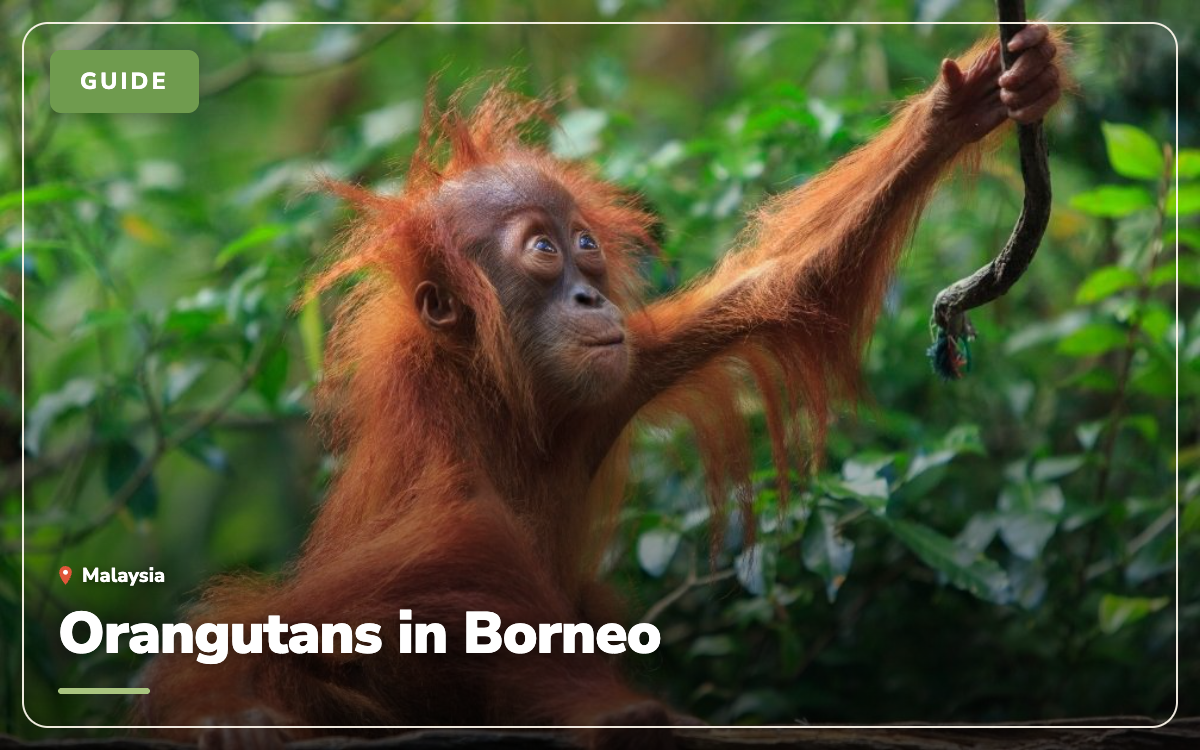
Borneo is one of only two places on Earth where you can still meet a wild orangutan in its own forest — and, happily, it is far easier than most people imagine. If you are planning a trip and the top line on your wish list is seeing orangutans in Borneo, here are five specific spots worth building your route around.
Between them you get two rehabilitation centres, a wild river, a slice of untouched rainforest and a national park over on the Indonesian side of the island. Each one works differently — at some you sit on a boardwalk beside a feeding platform, at others you drift along in a boat and hope.
Orangutans in Borneo at a glance
- Where to see orangutans in Borneo: Sepilok (Sabah) — a rehabilitation centre with a feeding platform, entry RM 30 (about £5).
- Cheapest: Semenggoh near Kuching (Sarawak) — entry just RM 10 (about £1.70), and in season up to 15 orangutans can turn up at once.
- The wild option: the Kinabatangan River — orangutans in the wild seen from a boat, plus Borneo’s “big five”.
- The most powerful experience: Tanjung Puting in Indonesian Kalimantan — several days aboard a wooden klotok boat and a visit to Camp Leakey.
- Primary rainforest: Danum Valley (Sabah) — wild orangutans in untouched jungle, luxury and budget lodges alike, for the determined only.
- When to go: roughly March to September (the drier season); in the centres, oddly, it is better outside the months when the forest fruit ripens.
- These are wild animals: even at the centres a sighting is never guaranteed — go in expecting that.
Rehabilitation centre or the wild — which is better?
Before we get to the specific spots, one practical distinction will save you a lot of disappointment. The places where you can see orangutans in Borneo fall into two camps, and each promises something quite different:
- Rehabilitation centres (Sepilok, Semenggoh): orphaned or rescued animals learn their way back to the wild here and get a top-up feed twice a day at a platform. Your odds of seeing an orangutan are high, access is easy and it is cheap. The catch is that the animals are semi-wild, and when the forest is heavy with ripe fruit they may simply not bother coming in to feed.
- The wild (Kinabatangan, Tanjung Puting): here you are looking for genuinely wild orangutans in their own habitat, from a boat, surrounded by plenty of other wildlife. The experience is in a different league, but it costs more, takes longer and there is never any promise you will actually see one.
Ideally you combine the two. The classic route on the Malaysian side is to fly into Kota Kinabalu, move on to Sandakan for Sepilok, and carry on from there to the Kinabatangan River. Anyone with more time and an appetite for adventure adds a boat trip in Indonesian Kalimantan.
💡 Tip: The best window for sightings is roughly March to September, when the weather is drier and there is less wild fruit around the centres (which raises the odds of the animals turning up to feed). The fruiting season shifts from year to year, so nobody can give you a cast-iron guarantee — an orangutan is not a zoo animal.
5 places to see orangutans in Borneo
We have ordered them from the easiest to the most adventurous. The first two are centres you can visit on a half-day trip; the other three are multi-day expeditions into the wild.
1. Sepilok Orangutan Rehabilitation Centre (Sabah) — the surest bet
The most famous spot, and the easiest place to see orangutans in Borneo. Sepilok sits about 25 km from Sandakan in north-eastern Sabah, and since the 1960s it has taken in orphaned and injured youngsters and taught them their way back into the forest. You sit on a wooden boardwalk and watch semi-wild orangutans swing along the ropes to the feeding platform. The same grounds hold a nursery with a glass-fronted viewing area where you can watch the youngest of the lot, and right next door the Bornean Sun Bear Conservation Centre is well worth a separate ticket.
- Entry: RM 30 for foreign visitors (about £5), valid all day and for both feedings. On top of that there is a compulsory camera fee of RM 10 (about £1.70) — and that includes phones.
- Feeding times: at the main platform 10:00 and 15:00, at the nursery 9:30 and 14:30. Open roughly 9:00–12:00 and 14:00–16:00.
- Getting there: from Sandakan take the local bus (route 14) or a taxi/Grab; it is under half an hour from town. Sandakan has direct flights from Kota Kinabalu.
💡 Tip: Come to the morning feeding at 10:00 and be at the gate early — mornings tend to bring more animals and fewer people than the afternoon, when the tour groups roll in. It is worth staying right in Sepilok so you are first at the gate; find a place to stay in Sepilok →.
2. Semenggoh Nature Reserve (Sarawak) — cheapest and least touristy
If you find yourself in western Borneo around Kuching, this is your spot — and it costs next to nothing. Semenggoh (officially the Semenggoh Wildlife Centre) lies about 20 km south of Kuching and is home to a colony of successfully released orangutans that roam the reserve freely and come to feed only when they feel like it. That is precisely what makes it feel more authentic than the busier spots — the animals wander in from the forest of their own accord. The flip side is less certainty: when the jungle is fruiting, they may not show up at all.
- Entry: RM 10 for a foreign adult (about £1.70), children 6–17 RM 5, under 6 free.
- Feeding times: 9:00 and 15:00 daily. Open to the public 8:00–10:00 and 14:00–16:00 — plan around the feedings.
- Getting there: from Kuching by bus, via Grab (around RM 30–40 one way) or on a half-day tour. Reckon on a 30–40 minute drive.
💡 Tip: Your best odds come in the non-fruiting months, roughly April to October, when the reserve says as many as fifteen orangutans can turn up at once. Kuching makes a comfortable base for the whole region — accommodation in Kuching →.
3. Kinabatangan River (Sabah) — wild orangutans from a boat
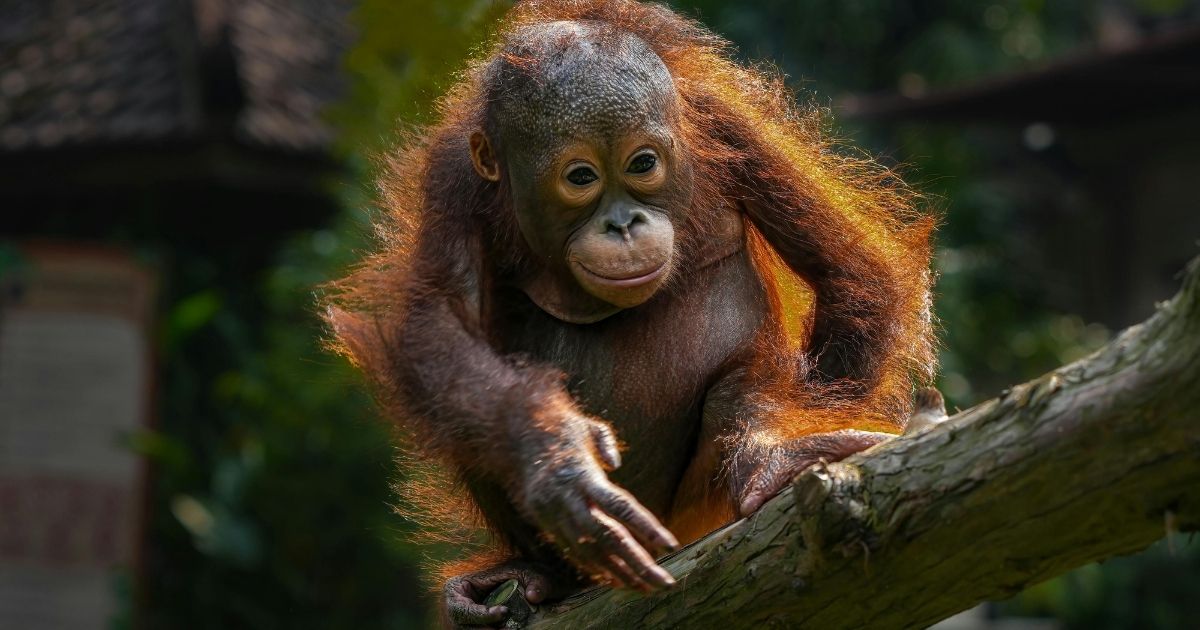
This is no longer a feeding platform — it is the real wild. The Kinabatangan is Sabah’s longest river, and its lower reaches are among the best wildlife-watching spots in South-East Asia. You head out by boat at dawn and dusk, and alongside the orangutans that build their nests in the treetops by the bank, you have a shot at the local “big five” — proboscis monkeys, pygmy elephants, macaques, hornbills and crocodiles. The village of Sukau and the surrounding lodges are your base.
- Cost: a single guided cruise of around 2.5 hours comes to roughly RM 55 (about £9). A two-night package with 3–4 cruises, accommodation and meals runs from around US$300 (about £235) at the mid-range end, and considerably more at a luxury lodge; the cheapest homestay options can be found from about US$140.
- Getting there: it is a 2–3 hour drive from Sandakan, and roughly 6 hours from Kota Kinabalu. Shared vans to Sukau (often with the option of a Sepilok stop) go for around RM 60 a head. The simplest route is to book a package and let the lodge pick you up.
- When to go: year-round, best in the drier March-to-September season.
💡 Tip: It pairs perfectly with Sepilok — the two are close together, and plenty of travellers do a two-day Sepilok + Kinabatangan package in one go. Cruises and trips can also be booked through GetYourGuide →, and accommodation in Sukau here →.
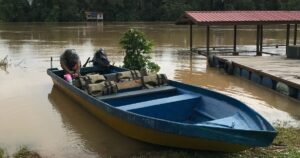
4. Tanjung Puting (Kalimantan, Indonesia) — the legendary Camp Leakey
The most powerful orangutan experience Borneo has to offer — and the hardest to reach, because it sits in the Indonesian part of the island (Central Kalimantan). In Tanjung Puting National Park you sleep for several days aboard a wooden boat known as a klotok, drifting slowly up the Sekonyer River through deep jungle and stopping at feeding stations along the way. The highlight is Camp Leakey, the research station founded by the celebrated primatologist Biruté Galdikas, where orangutans come to feed almost within arm’s reach. Sleeping on deck under a mosquito net, fireflies over the river at dusk — it is a different world from a half-day stop at a centre.
- Cost: a three-day/two-night klotok cruise starts from around US$350 per person (about £275), including the boat, meals, guide and entry fees; the exact price depends on group size and length. Park fees are usually rolled into the package.
- Feeding times: at Camp Leakey usually 14:00–16:00; the park has several feeding stations and you visit each one over the course of the cruise.
- Getting there: fly to Pangkalan Bun (direct flights from Jakarta, Surabaya and Semarang), then a few minutes by car to the port of Kumai, where you board the klotok and set off up the Sekonyer River into the park.
💡 Tip: The klotok is arranged with a local operator in advance, and the price is per boat — so with two to four people it works out far cheaper a head than going solo. You spend the night on the boat, moored in the jungle; anything you have forgotten can be picked up in Pangkalan Bun. Accommodation for your first and last night in Pangkalan Bun →.
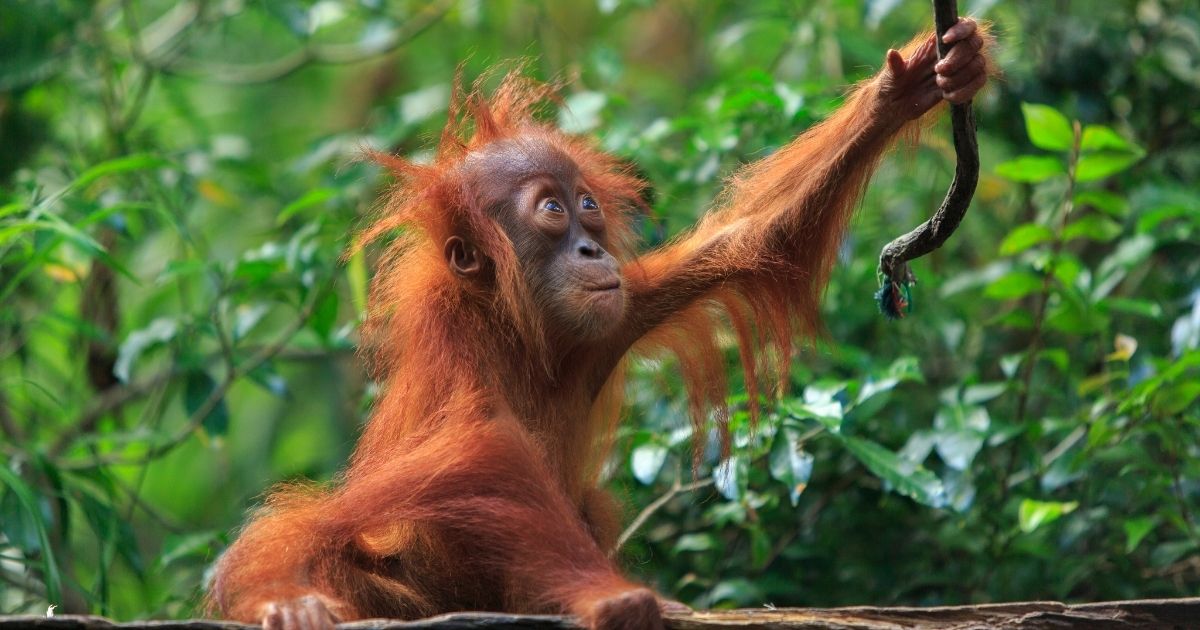
5. Danum Valley (Sabah) — wild orangutans in primary rainforest
When you want to see an orangutan living as it has for thousands of years — no feeding platform, no crowds — Danum Valley is the place. It is one of the largest unbroken stretches of primary lowland rainforest left in Borneo, protected since the 1980s, and research suggests around 500 wild orangutans live here. Alongside them you will come across gibbons, proboscis monkeys, herds of elephants and a whole cast of hornbill species. You track the orangutans on foot with a guide along forest trails, which also makes this the most physically demanding option on the list. For a decent chance of a sighting, allow at least three nights.
- Cost: in practice you can only get into the reserve on a package. The budget-friendly Danum Valley Field Centre research station comes to roughly RM 2,900 (about £480) for three days and two nights, while the luxurious Borneo Rainforest Lodge starts at around RM 5,000 (about £830) for the same stay. Prices usually cover transport from Lahad Datu, a guide, meals and entry.
- Getting there: first to the town of Lahad Datu (a flight from Kota Kinabalu, or by car from Sandakan or Tawau), then roughly two hours along a forest road into the reserve. Transport and accommodation are handled by the package — you cannot get in on your own.
- When to go: year-round, a touch more pleasant in the drier season from roughly March to September.
💡 Tip: Danum Valley is pricier and more remote than the others, but in return you get primary rainforest almost to yourself. It pays off when a wild orangutan is your priority and you do not mind a multi-day expedition. Accommodation in Lahad Datu for the night before you set off is here →.
Where else to find wild orangutans
If even five places are not enough and you want to get properly off the beaten track, Borneo has a few wilder addresses up its sleeve. They are neither as accessible nor as reliable, but the reward is rainforest without the crowds:
- Tabin Wildlife Reserve (Sabah): Sabah’s largest reserve, with mud volcanoes that draw the wildlife in. Plenty of orangutans live here, though a sighting is not guaranteed. Tabin Wildlife Resort is the base, and you reach it via Lahad Datu again.
- Batang Ai (Sarawak): a remote area near the Indonesian border, reached by boat and with overnight stays in Iban longhouse lodges. Specialist multi-day expeditions here have a high success rate, but budget five days or more.
- Deramakot Forest Reserve (Sabah): an exemplary sustainably managed forest, best known for its night-time wildlife, among which orangutans occasionally appear. More one for the wildlife-photography enthusiast.
Which place to choose
A quick summary so you can decide based on what you want from the trip:
| Place | Type | Entry / cost | Best for |
|---|---|---|---|
| Sepilok (Sabah) | rehab. centre | RM 30 + RM 10 camera (about £6.50) | first visit, certainty, little time |
| Semenggoh (Sarawak) | rehab. reserve | RM 10 (about £1.70) | budget, Kuching base |
| Kinabatangan (Sabah) | wild river | from ~RM 55 / package from ~US$300 | wildlife, the “big five” |
| Tanjung Puting (Kalimantan) | national park | package from ~US$350 (about £275) | the most powerful experience, more time |
| Danum Valley (Sabah) | primary rainforest | package from ~RM 2,900 (about £480) | wild forest, tracking on foot, adventurers |
Only a few days in Borneo and want a sure thing? Sepilok. Travelling on a budget around Kuching? Semenggoh. Longing to see genuinely wild orangutans, with elephants and proboscis monkeys thrown in? Kinabatangan. And if the orangutan is the whole reason for your trip and you have a week to give it, take the klotok up to Tanjung Puting. Set on truly wild orangutans in untouched forest and not put off by the price? Head for Danum Valley.
Where to next
- The Bornean orangutan
- Where orangutans live
- The island of Borneo — a guide
- Kota Kinabalu
- Semporna — gateway to diving in Borneo
FAQ: orangutans in Borneo
Experiences and tickets around orangutans in Borneo
traveller-verified · GetYourGuide


Kinabatangan: full-day wildlife cruise
from £112

Sandakan: mangroves, fireflies and an evening cruise
from £54
Prices and ratings are indicative (source: GetYourGuide); you will see the current ones after clicking through.
Where in Borneo are you most likely to see an orangutan?
Your best odds are at the Sepilok rehabilitation centre in Sabah, where semi-wild orangutans come to the feeding platform twice a day (10:00 and 15:00). Access is easy and entry is RM 30 (about £5). Even here a sighting is not fully guaranteed, though — these are animals on their way back to the wild.
How much does it cost to see orangutans in Borneo?
It varies from place to place. Sepilok: RM 30 (about £5) plus a compulsory camera fee of RM 10. Semenggoh near Kuching just RM 10 (about £1.70). A Kinabatangan cruise from around RM 55, a multi-day package from about US$300. A boat expedition to Tanjung Puting in Indonesia from roughly US$350 (about £275) for three days.
What is the difference between Sepilok and Semenggoh?
Both are centres with released orangutans, but Sepilok (Sabah) is bigger, more touristy, pricier and offers a higher chance of a sighting. Semenggoh (Sarawak, near Kuching) is smaller, cheaper (RM 10) and more authentic — the animals wander in from the forest of their own accord, so during the fruiting season they may not turn up.
Will I see orangutans genuinely in the wild in Borneo?
Yes, best of all on the Kinabatangan River in Sabah or in Tanjung Puting National Park in Indonesian Kalimantan. You watch them from a boat in their natural habitat. It is a more powerful experience than a centre, but pricier, more time-consuming and without any guarantee — you cannot direct a wild animal.
When is the best time to see orangutans in Borneo?
Generally the drier season, roughly March to September. At the rehabilitation centres it is also better outside the season when wild fruit ripens in the jungle — orangutans may not bother coming to feed when fruit is plentiful. Semenggoh cites April–October as best, with May and June the peak.
How do I get to Tanjung Puting in the Indonesian part of Borneo?
Fly to Pangkalan Bun (direct flights from Jakarta, Surabaya and Semarang), then a few minutes by car to the port of Kumai. There you board a wooden klotok boat and cruise up the Sekonyer River into the national park. You sleep and eat on the boat; the whole trip usually lasts 2–4 days.
Can you cover more than one place on a single trip?
Yes, especially in Sabah. A popular combination is Sepilok + the Kinabatangan River over two or three days, as they lie close together (2–3 hours apart). Semenggoh, by contrast, is at the opposite end of the island near Kuching, and Tanjung Puting is in another country (Indonesia) — those two will not fit into one short loop.
Is Danum Valley worth it for orangutans?
Yes, if you want to see genuinely wild orangutans in primary rainforest and do not mind the higher cost and remoteness. You can only reach the reserve on a package (from roughly RM 2,900, about £480, for three days) via the town of Lahad Datu. You track the orangutans on foot with a guide, so for a decent chance of a sighting allow at least three nights.
Can I touch or feed the orangutans in Borneo?
No, and rightly so. Contact with people harms the animals and spreads disease, which is why the centres and parks keep their distance and ban touching, feeding and close-up selfies. You watch from a boardwalk or a boat. Respect your guides’ instructions — it is in the interest of the species’ survival.
Potřebujete pomoct s cestováním?
-
Ubytování 🏨
Vyberte si to nejlepší ubytování, ať už jste kdekoliv, přes Booking.com. -
Půjčení auta 🚗
Auto si snadno najdete přes Booking.com, kde máte často slevu díky ubytování, nebo Rentalcars.com, kde porovnáte nabídky většiny půjčoven. -
Zážitky 🎟️
Přes GetYourGuide.com si vyberete z nejrůznějších výletů i zážitků po celém světě, navíc se zrušením zdarma do 24 h předem.