Last updated 26.7.2026
Few Asian capitals catch first-timers off guard quite like Kuala Lumpur. One minute you’re craning your neck at gleaming skyscrapers, the next you’re squeezing past weathered shophouses and steamy hawker stalls — and somehow it all fits together. That mix of glossy and gritty is exactly what we love about the place. Below we’ve rounded up 33 of the best things to do in Kuala Lumpur — from the Petronas Towers and Batu Caves to temples, night markets and some of the cheapest, tastiest street food anywhere on the planet.
Kuala Lumpur at a glance
- Why go: a cheap, safe and wonderfully mixed capital — Malay, Chinese and Indian cultures side by side, modern towers next to old temples, and superb food for next to nothing.
- How long: 2–3 days is plenty for the city itself, ideally as the launch pad for a longer trip around Malaysia.
- When: hot and humid all year (~27–33 °C); it’s a touch drier from May to July and wettest in October–November. Afternoon downpours are normal in any season.
- Getting around: the metro (MRT/LRT) is clean, cheap and air-conditioned — fares run RM 1.10–6.40 (roughly £0.20–1.15). Use Grab (the local ride-hailing app) for the rest.
- Budget: cheap — from around RM 120–180 (£22–32) per person per day, accommodation included.
- Don’t forget: light clothing, but pack something to cover shoulders and knees for temples and mosques, and book your Petronas tickets online in advance.
When to visit Kuala Lumpur
Kuala Lumpur sits just a few degrees north of the equator, so the seasons barely change — it’s roughly 27–33 °C all year, humid, and there’s a good chance of a tropical downpour most afternoons. The rain usually blows through in an hour, though, so it’s no real obstacle: just keep something indoors up your sleeve for those spells (shopping malls, museums, temples).
It tends to be drier and a little more comfortable from May to July, while October and November are usually the wettest months. If you’re after atmosphere, glance at the festival calendar first: during Thaipusam (January/February) hundreds of thousands of pilgrims stream up to Batu Caves — one of the most powerful sights in the whole country, though you’ll be sharing it with enormous crowds.
Getting to Kuala Lumpur and getting around (the metro)
Direct flights from Europe land at KLIA (Kuala Lumpur International Airport), around 45–70 minutes from the centre. The quickest way into town is the KLIA Ekspres train — about 33 minutes to the main KL Sentral station and around RM 40 (roughly £7) one way. The bus is cheaper but slower, or you can order a Grab through the app (the local equivalent of Uber, usually around RM 60–90 / £11–16 into the centre depending on traffic).
Around the city, the easiest way to get about is the metro — a mix of the MRT, LRT and monorail lines (Rapid KL). It’s clean, air-conditioned, safe and cheap: fares run between RM 1.10 and 6.40 (£0.20–1.15) depending on distance. Most of the main sights are either right by a station or a short walk away. For everything else — and especially in the heat or after dark — Grab is the comfiest option, with a short hop across the centre often coming in at just RM 8–15 (£1.50–2.70).
💡 Tip: Pick up a rechargeable Touch ‘n Go card right at the airport — it covers the metro, buses and plenty of stalls, so you won’t be fiddling with tokens at every station. Alternatively, you can just tap a contactless bank card at the gates.
Compare flights and dates over on Kayak →.
Where to stay in Kuala Lumpur
When it comes to accommodation, Kuala Lumpur is something of a paradise. For very little money you can book a gorgeous apartment high up with city views and a rooftop infinity pool (do give one a go — it’s a treat). So which areas should you aim for?
- Bukit Bintang — the liveliest part of town, with shopping malls, street food (Jalan Alor) and nightlife on the doorstep. Ideal for a first visit, with everything reachable on foot or by monorail.
- KLCC — the area around the Petronas Towers; pricier and smarter, with plenty of high-rise hotels sporting pools and tower views.
- Chinatown / Pasar Seni — the cheapest option, full of hostels and cafés, close to the historic core and superbly connected by metro. A backpacker classic.
A hostel bed usually starts from RM 30–60 (£5–11), and a decent three-star hotel with a pool from RM 150–250 (£27–45) a room (split between a few of us, it worked out at barely a few pounds each). For those Petronas Towers views and a rooftop pool, travellers often head to The Face Suites →. Compare what’s available by date and neighbourhood on the Bukit Bintang accommodation map →.
33 best things to do in Kuala Lumpur
Now for the big question: what to actually see. We’ve ordered these roughly by popularity and so they string together sensibly into walking routes. For each one you’ll find what’s there, what it costs to get in and how to reach it.
1. Petronas Twin Towers — the symbol of Malaysia
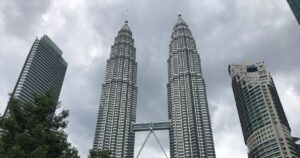
This is the obvious number one. Two 452-metre towers joined by a double-decker Skybridge are the icon of Kuala Lumpur and, until recently, the tallest twin towers in the world. You can head up: the tour crosses the Skybridge on the 41st–42nd floors and continues to the observation deck on the 86th floor. Adult admission for foreign visitors is roughly RM 100–135 (£18–24), with a discount for children. The best view, though — and it’s free — is of the towers from the outside, from KLCC Park below, where the Symphony Lake fountain puts on a light show in the evening.
💡 Tip: Book your tower tickets online in advance on the official website — daily numbers are capped, entry is by timed slot, and it often sells out on the day. For the classic photo, come to KLCC Park after dark, when the towers are lit up. Opening hours are usually Tuesday–Sunday, roughly 9am–9pm (limited on Mondays).
2. Batu Caves — colourful steps and a cave temple
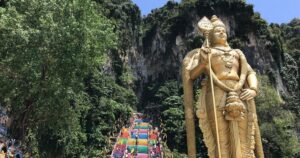
About 13 km north of the centre, tucked into a limestone massif, is the Hindu cave temple of Batu Caves — fronted by a giant golden statue of the god Murugan and 272 rainbow-coloured steps that rank among Malaysia’s most striking sights. Climb up to the main Temple Cave, where daylight pours in through an opening in the roof. Entry to the main cave is free. Only the extras cost money: the Dark Cave (a nature tour, around RM 35 / £6), Cave Villa (RM 15 / £2.70) and Ramayana Cave (RM 5 / £0.90). Getting here is easy on the KTM Komuter train, which runs right to Batu Caves station.
If it’s heaving, or there’s a local festival you weren’t expecting, we’d suggest wandering off to the left, where there are further caves that hardly anyone bothers with.
💡 Tip: Set off first thing in the morning — by nine it’s already sweltering and the steps are packed. Keep your shoulders and knees covered (it’s a sacred site) and watch out for the cheeky monkeys, which will happily nick food and phones. Don’t hand them anything.
3. Merdeka 118 and The View — the new tallest tower
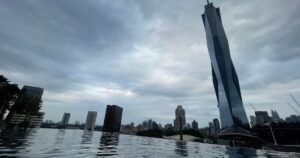
The spire-topped Merdeka 118, at 678.9 metres, has taken the crown as the tallest building in Southeast Asia (and the second tallest in the world). Its observation deck, The View at 118, sits at around 500 metres and is opening to the public in stages through 2026, set to become the highest viewpoint in the region. Admission isn’t confirmed yet — estimates put it at roughly RM 100–150 (£18–27) for foreign visitors, so about the same as Petronas. Check the latest status and opening hours before you go, so you don’t make the trip for nothing.
4. Menara KL (KL Tower) and the city-centre rainforest
The Menara Kuala Lumpur (KL Tower) telecoms tower stands on a hill, so its viewpoint is actually higher than the one on the Petronas Towers — and you get the towers themselves in your photos as a bonus. The Observation Deck costs foreign visitors around RM 80 (adult) / RM 50 (child) (£14 / £9), while the open-air Sky Deck with its glass Sky Box is about RM 140 (£25). At the foot of the tower you’ll also find KL Forest Eco Park — a genuine pocket of tropical rainforest right in the centre, complete with canopy walkways (free to enter).
5. Bukit Bintang and Jalan Alor after dark
Bukit Bintang is the beating heart of modern KL — shopping malls back to back, cafés, massage parlours and crowds pouring in every evening. The main draw, though, is Jalan Alor: a narrow street that turns into one big open-air kitchen after sundown. Plastic tables spill onto the road, smoke rises off the grills, and it’s all satay, grilled fish, steamed clams and fresh fruit juices. A meal costs a handful of ringgit, and it’s one of the best food experiences in the city.
💡 Tip: Prices at some Jalan Alor stalls can be nudged up for tourists — ask what things cost first, especially with seafood charged by weight. You’ll eat best wherever you see locals sitting down too.
6. Chinatown, Petaling Street and the Sri Mahamariamman temple
The historic Chinese quarter around Petaling Street is a classic Asian market under red lanterns — stalls of knock-offs, watches, clothes and fruit, with the smell of food drifting from every direction. Haggling is expected. Right beside it stands the city’s oldest and most ornate Hindu temple, Sri Mahamariamman, with a richly carved entrance tower (gopuram) — free to enter, you just slip your shoes off. A little further along you’ll find the colourful Chinese Taoist temple of Guan Di.
7. Central Market (Pasar Seni) — crafts and souvenirs
The blue Art Deco hall of Central Market (Pasar Seni), dating from 1888, is an air-conditioned refuge full of batik, wood carving, teas, souvenirs and Malaysian art — a pleasant antidote to the heat and chaos outside. Beside it runs the pedestrian Kasturi Walk, lined with food and fruit stalls. It’s the ideal stop if you want to take some gifts home or wait out an afternoon downpour. Free to enter, and right by Pasar Seni metro station.
8. Dataran Merdeka and Sultan Abdul Samad — the colonial heart
Independence Square (Dataran Merdeka) is where Malaysia declared independence from Britain in 1957. It’s fringed by one of the city’s finest colonial buildings — the Sultan Abdul Samad building, with its copper domes and clock tower, the one you’ll recognise from the postcards. Around it lies a green lawn where the British once played cricket, and a nearby quarter dotted with galleries and museums. The walk is free and loveliest at dusk, when the buildings are floodlit.
9. Masjid Negara and the Islamic Arts Museum
Masjid Negara (the National Mosque), with its modern star-shaped roof and 73-metre minaret, is one of the largest mosques in the region — and free for visitors (outside prayer times, with a robe lent at the door). A few steps away stands the excellent Islamic Arts Museum Malaysia — one of the best museums in the city, with mosque models, calligraphy and textiles (admission around RM 20 / £3.60). A great pairing for a quieter morning.
10. Masjid Jamek and the River of Life — where the city began
Right where the Klang and Gombak rivers meet stands the graceful Masjid Jamek mosque of 1909, with its onion domes — and it was here, in the 19th century, that Kuala Lumpur (“muddy confluence”) was literally born. The surroundings have been spruced up as part of the River of Life project: a floodlit riverfront and a confluence that “glows” in colour at night. A pleasant short stroll after dark, right by Masjid Jamek metro station. Free to enter.
11. Thean Hou Temple — a Chinese temple with a view
On a hill south of the centre sits the magnificent six-tier Thean Hou Chinese temple, dedicated to the sea goddess Mazu — all red lanterns, roof dragons and a view over the skyscraper skyline. It’s less touristy than the Chinatown temples and feels wonderfully calm. It looks especially stunning during Chinese New Year, when thousands of lanterns hang from the eaves. Free to enter; the easiest way here is by Grab.
12. Perdana Botanical Garden and KL Bird Park
A slice of green west of the centre — the sprawling Perdana Botanical Garden (formerly the Lake Gardens), with ponds, palms and an orchid garden, perfect for a morning wander before the heat kicks in. Inside is KL Bird Park, one of the world’s largest free-flight aviaries (admission for foreign visitors around RM 75 / £13). Nearby you’ll also find a butterfly park and a planetarium — a good option for a day with the kids.
13. Aquaria KLCC, an aquarium right beneath the towers
A few steps from the Petronas Towers, in the basement of the Kuala Lumpur Convention Centre, hides the modern Aquaria KLCC aquarium with its 90-metre glass tunnel, where sharks and rays glide overhead. There are otters, giant saltwater crocodiles, seahorses and colourful reef fish too. Adult admission for foreign visitors is roughly RM 69 (£12), children RM 59 (£10.50), and it’s usually open daily from around 10am to 8pm (last entry 7pm).
💡 Tip: Aquaria is a perfect bolt-hole from an afternoon downpour and a sure-fire winner with children. Try to catch shark feeding time — the schedule is posted at the entrance, and the diver among the fish is the highlight of the whole visit.
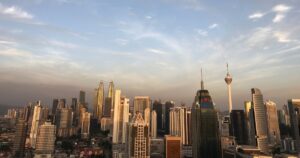
14. Little India in Brickfields, the Indian quarter by the station
Just off the main KL Sentral station lies the Brickfields district, Malaysia’s Little India. The main street, Jalan Tun Sambanthan, is lined with colourful arches and flower garlands, sari shops, sweet stalls and the scent of incense and Indian food. Tuck into thali served on a banana leaf, a crispy masala dosa or a sweet chai for a few ringgit. There’s an ornate Hindu temple here too, Sri Kandaswamy Kovil, with a tall gopuram. The quarter is free to explore and reachable by metro at KL Sentral.
💡 Tip: Brickfields is at its liveliest during the Indian festival of lights, Deepavali (Diwali, usually October/November), when the streets blaze with coloured lights and garlands. Even outside the festival, it’s a great spot for a cheap, authentic Indian lunch.
15. Kampung Baru, a Malay village amid the skyscrapers
A short hop from the Petronas Towers, in the shadow of the glass towers, hides Kampung Baru: the city’s oldest Malay quarter, with wooden stilt houses, gardens and a stillness that feels frozen in time. It’s one of the finest contrasts in all of KL — a traditional village with skyscrapers as the backdrop. In the evening the Malay food stalls fire up (the local nasi lemak is famous) and the atmosphere is far more authentic than the tourist core. Free to visit, with LRT Kampung Baru the nearest station.
16. Saloma Link, a floodlit bridge with tower views
The elegant pedestrian and cycle bridge Saloma Link connects Kampung Baru with the KLCC area, crossing the Klang river and a motorway. Its shape is inspired by the traditional Malay wedding gift “sireh junjung”, and after dark it lights up in changing colours. It’s one of the best spots for an evening photo of the Petronas Towers, free to cross, and ideal on the way from KLCC to dinner in Kampung Baru.
💡 Tip: Come to the bridge just before dusk (the “blue hour”), when both the bridge and the floodlit towers behind it come alight. That way you can roll two stops into one lovely evening stroll.
17. Sin Sze Si Ya, the oldest temple in Kuala Lumpur
Right in Chinatown, a few steps from Petaling Street, stands Sin Sze Si Ya Temple, the oldest Taoist (Chinese) temple in the city. It was founded in 1864 by Yap Ah Loy, the man regarded as the founder of modern Kuala Lumpur. Inside there’s the scent of incense, hanging red lanterns and a surprising calm just metres from the bustle of the market. Free to enter — just be respectful, as it’s an active shrine.
18. Masjid Wilayah Persekutuan, the city’s loveliest mosque
A little out from the centre stands the magnificent Federal Territory Mosque (Masjid Wilayah Persekutuan), a blue-and-white building with 22 domes, inspired by Ottoman architecture (it’s often likened to Istanbul’s Blue Mosque). It’s far less touristy than the National Mosque, yet arguably more impressive to look at. Entry is free, you can borrow a robe at the door, and free guided tours are often on offer. It’s usually open to visitors roughly Monday to Thursday and at weekends, around 10am–3.30pm (shorter on Fridays because of prayers); the easiest way here is by Grab.
💡 Tip: The mosque is a fair way from the metro, so plan a Grab out here and combine it with a visit to the nearby Lake Gardens. Keep your shoulders and knees covered, though you can pick up a robe on site.
19. The National Museum (Muzium Negara)
Not far from KL Sentral station and the Lake Gardens stands the National Museum of Malaysia (Muzium Negara), with its traditional Malay roof. It walks you through the country’s history from prehistory through the Hindu-Buddhist kingdoms and the colonial era to the birth of the modern state. It’s a great choice for a hot afternoon and admission is truly token — around RM 5 (£0.90) for an adult. It’s usually open daily, roughly 9am–5pm (last entry around 4.30pm).
20. Petrosains, The Discovery Centre — science and fun with kids
On the 4th floor of the Suria KLCC mall, right beneath the Petronas Towers, hides Petrosains, a big interactive science centre all about oil, energy and technology. Expect dozens of hands-on exhibits, simulators and the much-loved “Dark Ride” train. It’s a top pick for a day with the kids, especially when it’s raining outside. Adult admission for foreign visitors is roughly RM 35–40 (£6–7), and it’s usually open Tuesday–Sunday, around 9.30am–5.30pm (closed Mondays outside the holidays).
21. The malls, from Suria KLCC to Berjaya Times Square
Kuala Lumpur is one of Asia’s shopping capitals, and the giant air-conditioned malls double as the perfect shelter from heat and rain. Suria KLCC sits right beneath the towers, Pavilion KL and Lot 10 are the heart of Bukit Bintang, and Berjaya Times Square even packs in one of the world’s largest indoor theme parks, complete with a roller coaster. You don’t have to shop — it’s worth a wander and a bite in the food courts regardless.
22. A rooftop bar with a Petronas view (Heli Lounge Bar)
One of KL’s biggest thrills is a drink on a skyscraper rooftop with the towers as your panorama. The legend is the Heli Lounge Bar, set on a genuine helipad atop the Menara KH building, which turns into a bar with a 360° view after dark — and no railings around the edge. Entry (often including your first drink) is roughly RM 50 (£9), with cocktails around RM 33–40. It usually opens in the evening around 6pm, and sunset is the moment to aim for.
💡 Tip: There’s a smart-ish dress code for the helipad (no flip-flops or shorts) and it fills up at sunset, so come early. Other rooftops offer a similar experience — the Wet Deck at Hotel W, for instance.
23. Titiwangsa Lake Park, the finest city panorama
North of the centre lies Titiwangsa Lake Park, a sprawling lakeside park with perhaps the best unobstructed view of the whole KL skyline — the Petronas Towers, Merdeka 118 and the KL Tower all in one frame. Locals come here to jog, paddle boats on the lake or picnic, and there are barely any tourists. The park is free, and the easiest way here is by Grab or metro (LRT Titiwangsa).
💡 Tip: For the skyline photo, head to the lake at dusk, when the towers light up and reflect on the water. It’s a peaceful full stop to the day, far from the crowds.
24. Kwai Chai Hong, a nostalgic street-art lane in Chinatown
The hidden lane of Kwai Chai Hong (Lorong Panggung), right beside Petaling Street, is one of the most photogenic corners of the city. This restored back alley is painted with murals depicting the life of the local Chinese community in the 1960s, with props like a barber’s chair and a bench dotted about. Free to enter, usually open daily from around 9am to midnight. Pasar Seni is the nearest metro station, about a 5-minute walk.
💡 Tip: Beside each mural there’s a QR code — scan it to play the sound and story that go with the picture. Come in the morning, when the narrow lane is quieter and the light is better for photos.
25. Jalan Rembia, a street gallery right by Jalan Alor
Running parallel to the bustling Jalan Alor in Bukit Bintang is the unassuming Jalan Rembia, turned into an open-air street-art gallery. The walls are lined with colourful murals by local and international artists — the best-known being a playful kitten motif. It’s a pleasant and, above all, free stop on the way to dinner on Jalan Alor. The nicest light for photos is in the morning, before the heat and the crowds arrive.
26. The old railway station (KL Railway Station), a colonial gem
The white Kuala Lumpur Railway Station of 1910 ranks among the most beautiful station buildings in the world. It was designed by the British architect A. B. Hubback in the Indo-Saracenic style, blending Western forms with Moorish and Mughal touches (horseshoe arches and little domes). Across the road stands the equally ornate railway administration building. Admiring it from the outside is free, and the station is a short walk from the National Mosque, so the two combine into one easy stroll.
27. Istana Negara, the royal palace and changing of the guard
The residence of the Malaysian king, Istana Negara, boasts a grand gold-and-black gate flanked by guards on horseback. You can’t go inside, but you can walk up to the gate, get a photo with the guard and, with a bit of luck on timing, catch the changing of the guard (usually once a day, around 10am). The view from the gate is free. The easiest way here is by Grab; the palace is on Jalan Tuanku Abdul Halim.
💡 Tip: Arrive early, around 9.30am, so you can find a spot by the gate in peace and not miss the changing of the guard. Times can shift, though, so don’t count on it — the golden gate alone is worth the photo either way.
28. The National Monument (Tugu Negara), a memorial to the fallen
Above the Lake Gardens stands the National Monument (Tugu Negara), a mighty bronze sculpture commemorating those who died in the struggle for the country’s freedom. It’s one of the largest figurative bronze sculptures in the world, and the surrounding park, with its fountain and pergola, invites a stroll. Entry is free, and it’s usually open daily from around 7am to 6pm. It’s easily combined with the Perdana Botanical Garden and the Bird Park, which sit close by.
29. KL Butterfly Park, a butterfly garden in the centre
Right by the Lake Gardens and the Bird Park you’ll find KL Butterfly Park, one of the largest butterfly aviaries, where hundreds of vividly coloured butterflies flit around your head. Alongside them you’ll spot small reptiles and insects, and the whole setting evokes a tropical rainforest. Adult admission for foreign visitors is roughly RM 30 (£5.40), children RM 18 (£3.20), and it’s usually open daily from around 9am to 4.30pm.
💡 Tip: Payment here is usually cash or the local QR method (TnG eWallet) only — cards mostly aren’t accepted — so bring ringgit. The butterfly park and Bird Park pair up comfortably into a single morning.
30. Chow Kit, the city’s biggest market
The Chow Kit district north of Bukit Bintang is home to the Bazaar Baru Chow Kit, the largest “wet market” in Kuala Lumpur. Among the stalls of fruit, vegetables, fish and meat you’ll see the city as it lives away from the tourist trail. It’s a rawer, more authentic experience than the polished malls, and busiest in the morning. Free to enter, with Chow Kit monorail station the nearest.
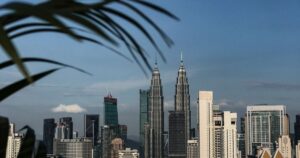
31. The Exchange TRX and its rooftop park, a new green oasis
The modern The Exchange TRX complex next to Bukit Bintang opened in 2023, and its biggest draw is the ten-acre rooftop park, TRX City Park, the first major greenery in the centre in two decades. Up on the roof there’s a broad lawn, a koi pond, children’s playgrounds and water features, all with a view of the skyscrapers. The park is free to enter. You can get here directly by metro to Tun Razak Exchange station.
💡 Tip: The rooftop park is a pleasant escape from the city’s bustle and a great spot for a snack or a breather with the kids. It’s loveliest in the late afternoon, once the worst of the heat has eased.
32. KL City Walk, a pedestrian promenade with food and art
Not far from the Petronas Towers runs the roughly half-kilometre pedestrian promenade KL City Walk (along Jalan Pinang), created by converting a former drainage channel. It’s lined with dozens of little shops, food stalls (from local specialities to Western fare) and art installations, and in the evening the area turns into a pleasant promenade. Free to enter, with shops usually running roughly 10am to 10pm. Handy as a quieter stroll a short way from KLCC.
33. The National Textile Museum, textiles in colonial splendour
Right by Merdeka Square and the Sultan Abdul Samad building stands the National Textile Museum (Muzium Tekstil Negara), in an ornate colonial building from the early 20th century. Inside you’ll learn about Malaysian fabrics, batik, songket and traditional dress and jewellery. Admission is token (around RM 5 / £0.90 for foreign visitors), and it’s usually open daily from around 9am to 6pm. It combines beautifully with a walk through the colonial centre around Dataran Merdeka.
Where to eat in Kuala Lumpur
Food is half the experience in KL — and among the cheapest on earth. Three cuisines meet here (Malay, Chinese and Indian), and you’ll eat best in the hawker centres and food courts, where a full meal often costs just RM 8–15 (£1.50–2.70). What to try:
- Nasi lemak — the national dish: rice cooked in coconut milk with spicy sambal, peanuts and egg.
- Char kuey teow — Chinese-style stir-fried flat noodles, a hawker-stall classic.
- Roti canai — an Indian flatbread for dunking in curry, a popular breakfast for pennies.
- Satay — grilled skewers with peanut sauce, perfect for an evening on Jalan Alor.
- Durian — the famously pungent “king of fruit”; you’ll either love it or flee. Give it a go at least once.
💡 Tip: For an air-conditioned, easy-to-navigate start, head to the food court in one of the malls (try Lot 10 Hutong in Bukit Bintang, where legendary stalls gather under one roof). Give the tap water a miss — bottled costs just a few ringgit.
Day trips from Kuala Lumpur
Kuala Lumpur is a superb base for day trips and longer excursions. The most popular:
- Batu Caves — technically already a trip out of town, but so close that we treat it as part of KL (see number 2).
- Genting Highlands — a mountain resort with a theme park and casinos, reached by the scenic Awana SkyWay cable car; it’s pleasantly cool up top. Around 1–1.5 hours from the city.
- Sunway Lagoon — a big amusement and water park in Petaling Jaya, about 15 km from the centre, with slides, a safari zone and adrenaline rides. Admission from around RM 79 (£14), brilliant for a day with the kids. Reachable by metro and the connecting Sunway BRT line.
- Putrajaya — the modern administrative capital with a pink mosque and broad boulevards, about 40 minutes south. Linked by the KLIA Transit train too.
- Melaka (Malacca) — a historic UNESCO-listed port city with colonial and Chinese architecture, roughly 2 hours by bus. Well worth an overnight.
- Kuala Selangor and the fireflies — an evening trip about 1–1.5 hours north-west of KL. At dusk you set off on a traditional boat (sampan) along the Selangor river, through mangroves where thousands of fireflies twinkle in the treetops. A boat for four is roughly RM 50 (£9) and it’s often combined with a fresh seafood dinner.
- Zoo Negara — the national zoo about 30 minutes north-east of the centre, home to giant pandas among others. A good choice for a day with the kids.
- Cameron Highlands — tea plantations and cool hills roughly 3–4 hours to the north; this one’s worth several days, so we cover it separately (see the links below).
💡 Tip: You can book organised trips and tickets (Genting, Batu Caves, Melaka) through GetYourGuide →. For travelling around Malaysia under your own steam, the long-distance buses are excellent — cheap, comfortable and frequent.
How much a stay in Kuala Lumpur costs (budget)
KL is one of the cheapest big capitals in Asia — largely thanks to inexpensive food and transport. A rough daily budget for a couple:
| Item | Roughly per day (2 people) |
|---|---|
| Accommodation (hostel to three-star with pool) | RM 60–250 (£11–45) |
| Food (hawker centres + cafés) | RM 50–120 (£9–21) |
| Transport (metro + Grab) | RM 20–50 (£3.60–9) |
| Admissions (towers, museums, trips) | RM 40–200 (£7–36) |
| Total | approx. RM 170–620 (£30–110) / day |
A big chunk of the best bits are free or almost free — KLCC Park with its fountain, Batu Caves, the mosques, the temples, the colonial centre and the rainforest below the KL Tower. You’ll save the most by eating in hawker centres and taking the metro. Compare accommodation on the Kuala Lumpur listings map →.
Where next
- Malaysia: what to see (2026)
- Penang: George Town, food and beaches
- Cameron Highlands: tea plantations and hills
- Malaysia: holidays and practical tips
- Langkawi Island: beaches and nature
Frequently asked questions about Kuala Lumpur
Experiences and tickets in Kuala Lumpur
verified by travellers · GetYourGuide


Prices and ratings are indicative (source: GetYourGuide); you’ll see the current details after clicking.
How many days should you set aside for Kuala Lumpur?
For the city’s main sights, 2–3 days is plenty — day one for the Petronas Towers, KLCC and Bukit Bintang, day two for Batu Caves, the temples and the colonial centre, day three for museums, a day trip or some shopping. KL also makes a brilliant launch pad for a longer trip around Malaysia (Penang, Cameron Highlands, Langkawi).
When is the best time to visit Kuala Lumpur?
Pretty much any time of year — it’s hot and humid throughout (27–33 °C). It’s a touch drier from May to July, and rains most in October and November. Afternoon downpours are common all year but usually pass quickly. If you want to catch the Thaipusam festival at Batu Caves, come in January or February (but expect crowds).
How do you get around Kuala Lumpur?
The metro is best — the MRT, LRT and monorail lines (Rapid KL) are clean, air-conditioned and cheap (RM 1.10–6.40 / £0.20–1.15). Grab a Touch ‘n Go card, or just pay with a contactless card. For everything else, use the Grab app; a short hop across the centre often comes in at just RM 8–15 (£1.50–2.70).
How much does it cost to visit the Petronas Twin Towers?
Adult admission for foreign visitors to the Skybridge and the 86th-floor deck is roughly RM 100–135 (£18–24), with a discount for children. Book online in advance — entry is by timed slot and it often sells out on the day. Photographing the towers from the outside, from KLCC Park, is free.
Is entry to Batu Caves free?
Yes — the main cave temple (Temple Cave) and the climb up the 272 steps are free. Only the extras cost money: the Dark Cave (around RM 35 / £6), Cave Villa (RM 15 / £2.70) and Ramayana Cave (RM 5 / £0.90). Get here on the KTM Komuter train, which runs right to Batu Caves station.
Is Kuala Lumpur expensive?
Quite the opposite — it’s one of the cheapest big cities in Asia. A meal in a hawker centre often costs just RM 8–15 (£1.50–2.70), and the metro is pennies. Two backpackers can get by on under RM 200 (about £36) a day, accommodation included. You’ll spend the most on skyscraper admissions and organised trips.
Is Kuala Lumpur safe?
Yes — by Asian standards KL is a very safe and easy-going city for travellers. As everywhere, keep an eye on valuables in the crowds at markets (Petaling Street) and on packed trains, and watch out for the cheeky monkeys at Batu Caves. Tap water isn’t recommended for drinking — buy bottled.
Is there a dress code for temples and mosques in Kuala Lumpur?
In Hindu and Chinese temples you take your shoes off and it helps to cover your shoulders and knees. At the mosques (Masjid Negara, Masjid Jamek) you’re given a robe at the door to throw over your clothes. Otherwise, light, breathable clothing is fine given the heat and humidity.
Potřebujete pomoct s cestováním?
-
Ubytování 🏨
Vyberte si to nejlepší ubytování, ať už jste kdekoliv, přes Booking.com. -
Půjčení auta 🚗
Auto si snadno najdete přes Booking.com, kde máte často slevu díky ubytování, nebo Rentalcars.com, kde porovnáte nabídky většiny půjčoven. -
Zážitky 🎟️
Přes GetYourGuide.com si vyberete z nejrůznějších výletů i zážitků po celém světě, navíc se zrušením zdarma do 24 h předem.