Last updated 29.8.2026
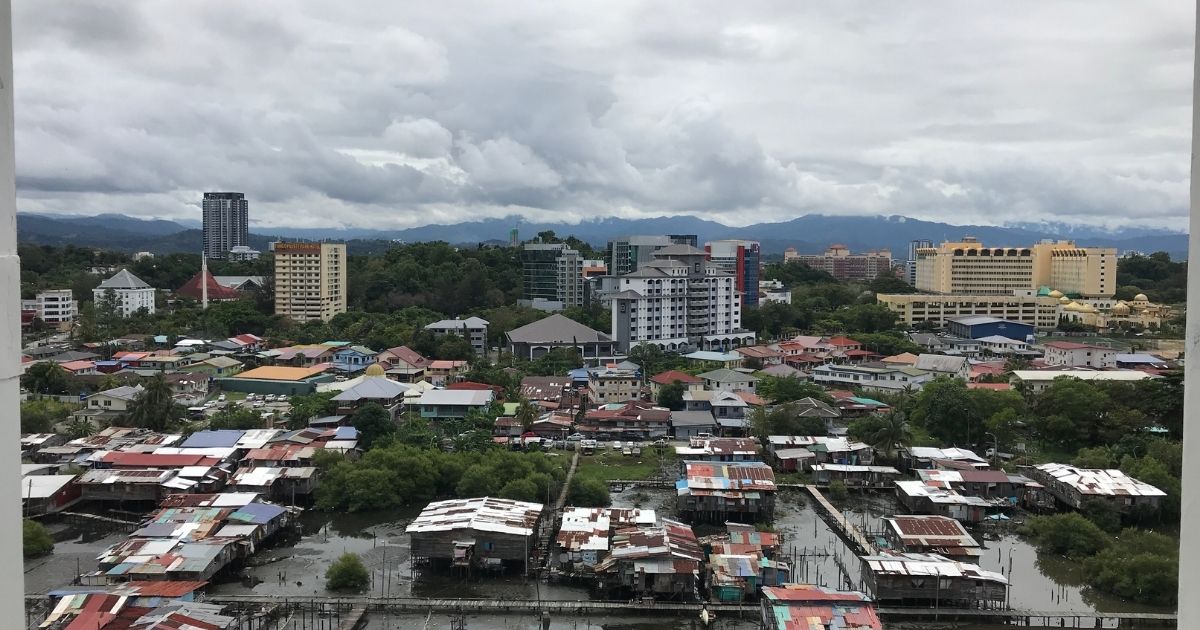
Kota Kinabalu is the capital of the Malaysian state of Sabah and the main gateway to northern Borneo. Most travellers land here only to change planes on their way to the orangutans or the sea, but it makes a brilliant base for a lot more besides.
We’ve pulled together 20 things to do in Kota Kinabalu — from the islands of Tunku Abdul Rahman marine park and day trips beneath Malaysia’s highest mountain to the seafood night market. For each one we tell you what’s there, roughly what it costs and when to go, so the crowds and the heat don’t spoil it.
Kota Kinabalu in brief
- What it is: the capital of Sabah, a modern port city and the main gateway to Borneo (BKI airport).
- Why come: coral-fringed islands 20 minutes away by boat, sunsets, cheap seafood and trips beneath Mount Kinabalu.
- Best time: March to September (drier season); the wettest months are October to January.
- How long: 2–3 days for the city and islands; add 2–3 more if you’re climbing Mount Kinabalu.
- Budget: backpackers get by on around 120 MYR a day (about £22), comfortable travel from around 250 MYR (£45).
- Getting around town: the Grab app — cheap, reliable and no haggling.
When to visit Kota Kinabalu
Kota Kinabalu sits just north of the equator, so it’s hot and humid all year — usually 30–32 °C by day. It isn’t the temperature that changes from month to month, it’s the rain. The driest, most pleasant window for the islands and the mountain runs roughly from March to September. The heaviest rain falls between October and January, when the sea can put paid to island boats for a day or two — though the showers tend to be short and sharp rather than the all-day drizzle we get back home.
If you’ve set your heart on sunrise from the summit of Mount Kinabalu, February to April statistically give you the clearest skies. It’s a year-round destination all the same; just bear in mind that during the monsoon your beach plans become a bit of a lottery.
How to get to Kota Kinabalu
Kota Kinabalu International Airport (BKI) is the second busiest in Malaysia and sits just 8 km or so from the centre. There are no direct flights from Europe — the usual route is a change in Kuala Lumpur (budget carrier AirAsia flies here many times a day, and a return domestic fare often starts around 150–300 MYR / £27–54), or sometimes in Singapore. Compare fares and dates via Kayak →.
From the airport into town, the easiest option is Grab (Asia’s answer to Uber) — the ride costs roughly 15–25 MYR (£3–4.50) and there’s no bartering with taxi drivers. The centre itself is a joy to explore on foot; for trips further afield you’ll either use Grab or take an organised tour (there were four of us, so we hired a car and it worked out well).
💡 Tip: Download Grab and add a payment card before you land — that way you just enter your destination at the airport and never touch cash or worry about the exchange rate. The app works right across Malaysia and is far cheaper than a street taxi.
Where to stay in Kota Kinabalu
Most travellers stay right in the centre, between the Waterfront promenade, Gaya Street and the Jesselton Point ferry terminal. From there you can walk to the markets, the island boats and the food. Options range from hostels for a few pounds a night to hotels with a pool and a sea view.
- Backpackers: a hostel dorm bed in the centre from around 40–60 MYR (£7–11). A reliable choice is Borneo Backpackers → near Australia Place.
- Mid-range: a three-star hotel with a pool from around 150–250 MYR (£27–45) for a double room.
- Beach resort: if you want sand right outside your door, head for the Tanjung Aru area south of the centre.
Compare current prices and availability through accommodation in Kota Kinabalu →.
20 things to do in Kota Kinabalu
We’ve ordered them roughly from the unmissable KK highlights down to the day trips further out. Set aside a whole day for the islands and the mountain; you can string the city sights together in a single afternoon.
1. The Tunku Abdul Rahman islands — coral 20 minutes from town
Kota Kinabalu’s biggest draw lies just a few kilometres offshore: Tunku Abdul Rahman marine park is made up of five islands — Gaya, Sapi, Manukan, Mamutik and Sulug — with white beaches, turquoise water and coral right off the shore. Boats leave from the Jesselton Point terminal and reach the nearest islands in 15–20 minutes. The best snorkelling is off Sapi and Mamutik, while Manukan has the largest beach.
Expect several separate fees: a park entry fee of 10 MYR (about £1.80) for foreigners, a terminal fee and the return boat (together roughly 30–50 MYR / £5.50–9 depending on how many islands you visit). It’s simpler to take an island-hopping package covering two islands and lunch — book through GetYourGuide →.
💡 Tip: Catch the first morning boat to the islands (around 8am). By midday the crowds arrive and the tour groups claim the best spots on the beach and under the water. Sulug is the least visited — but few boats go there, so arrange your pick-up in advance.
2. Mount Kinabalu — Malaysia’s highest peak
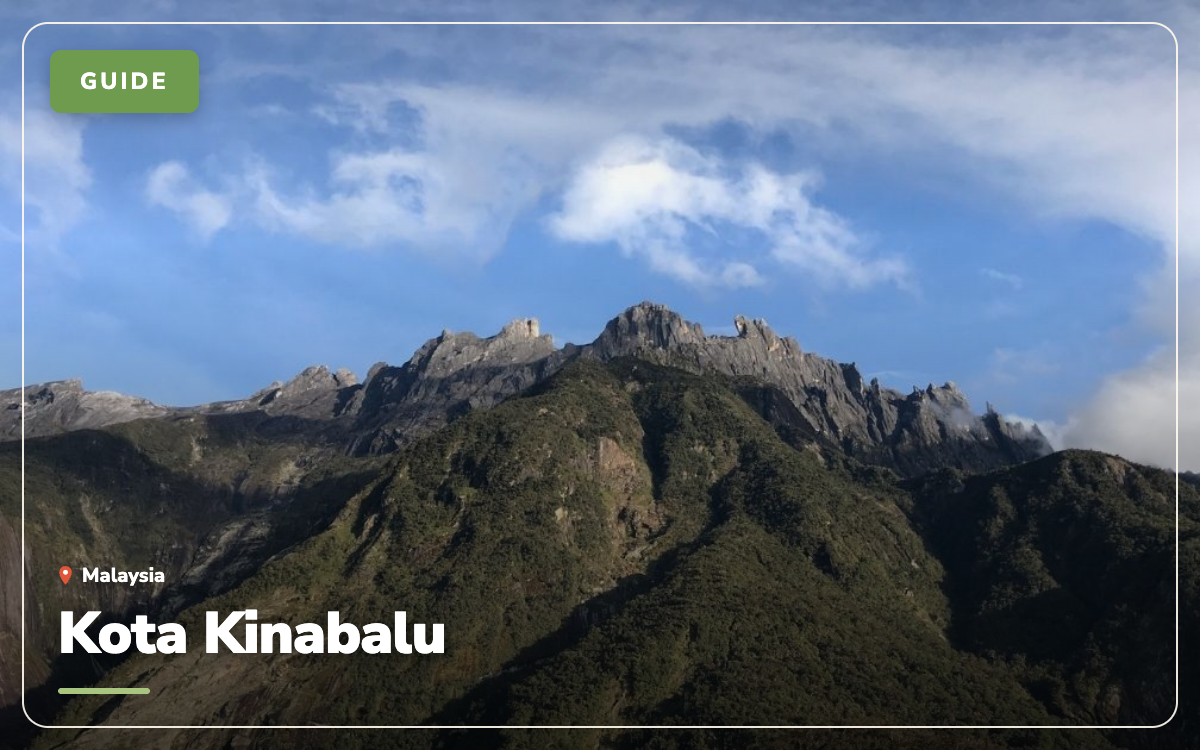
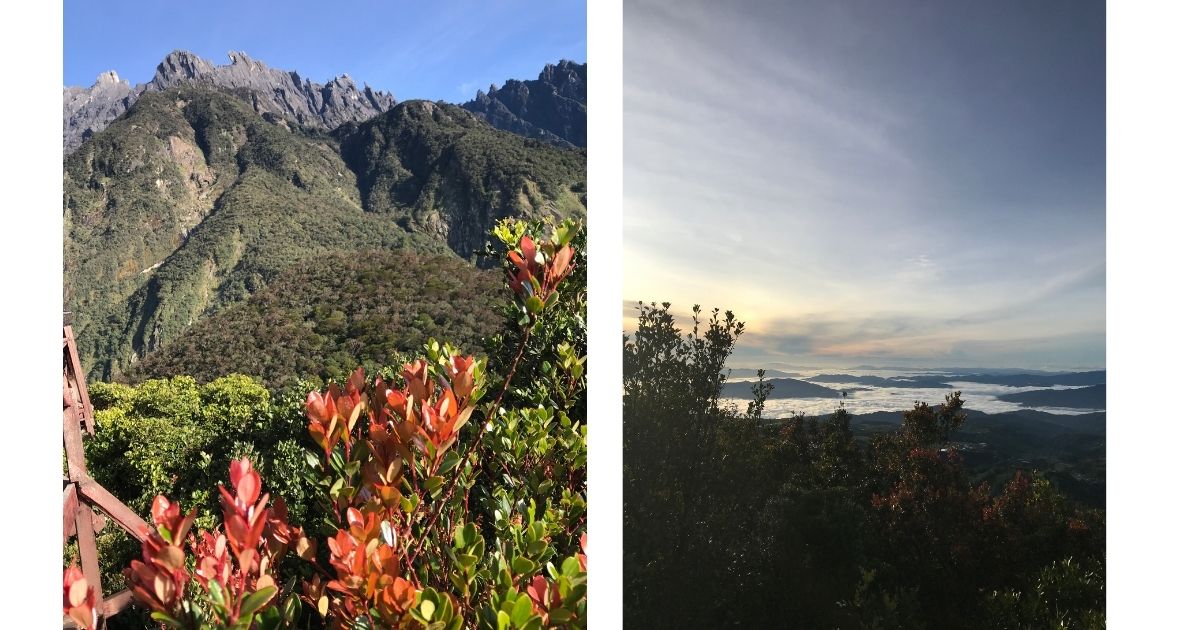
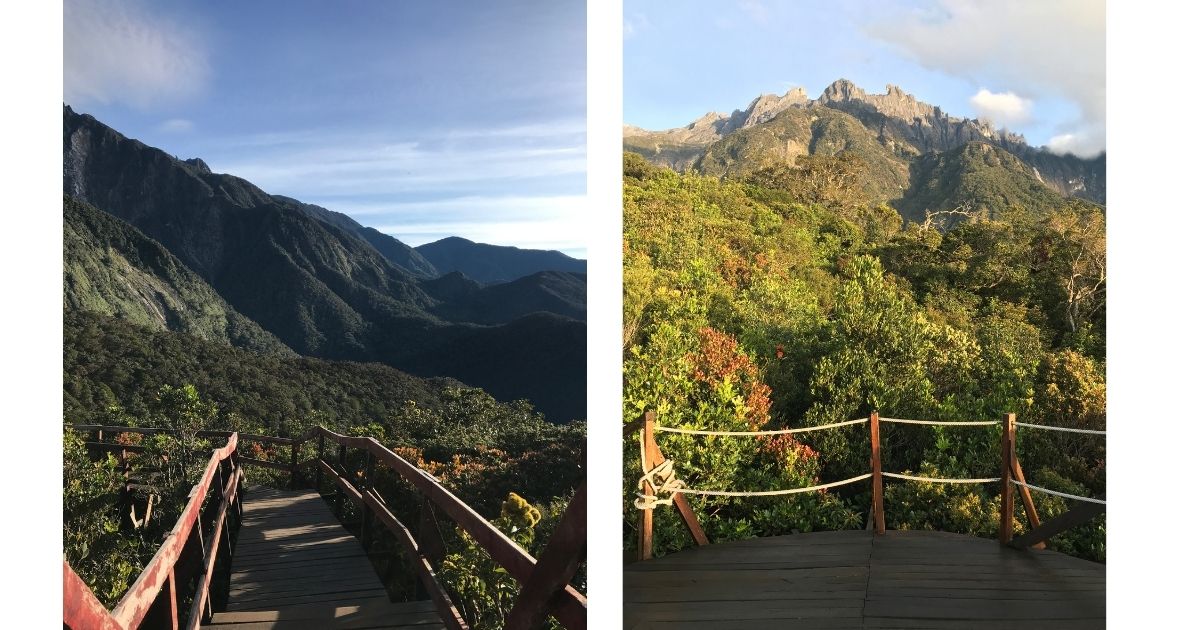
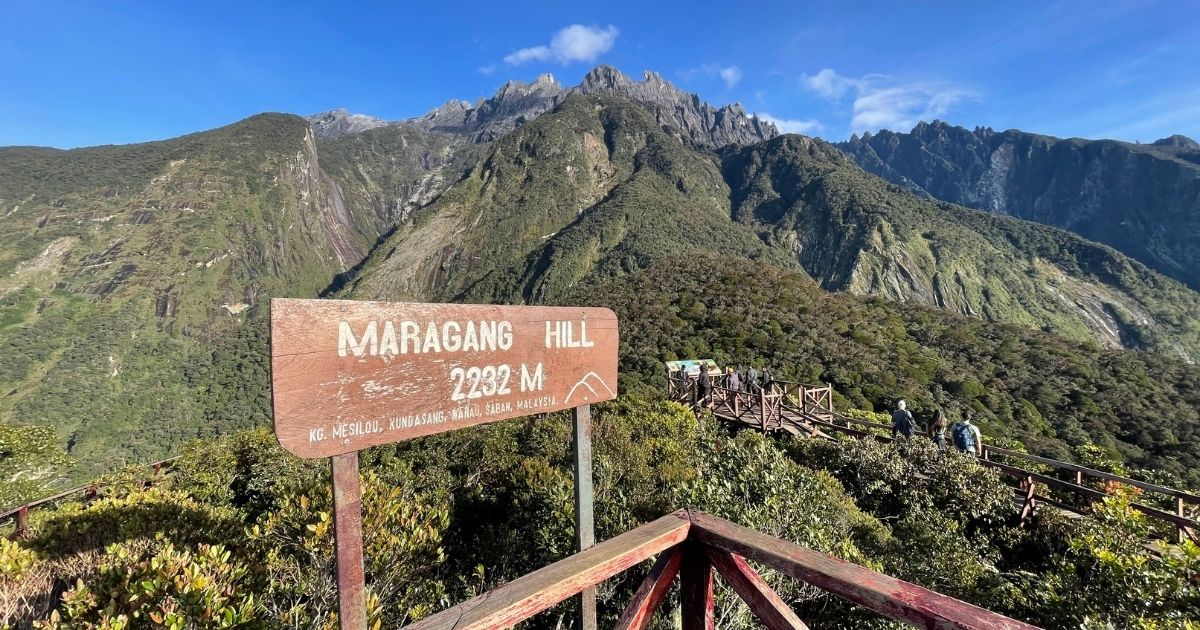
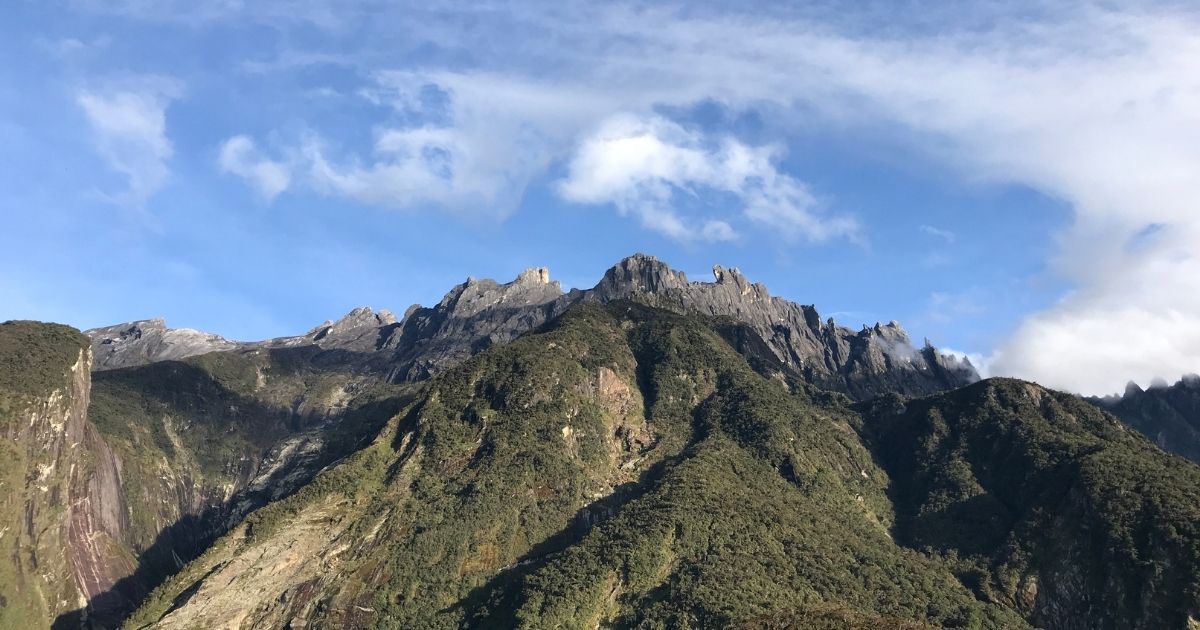
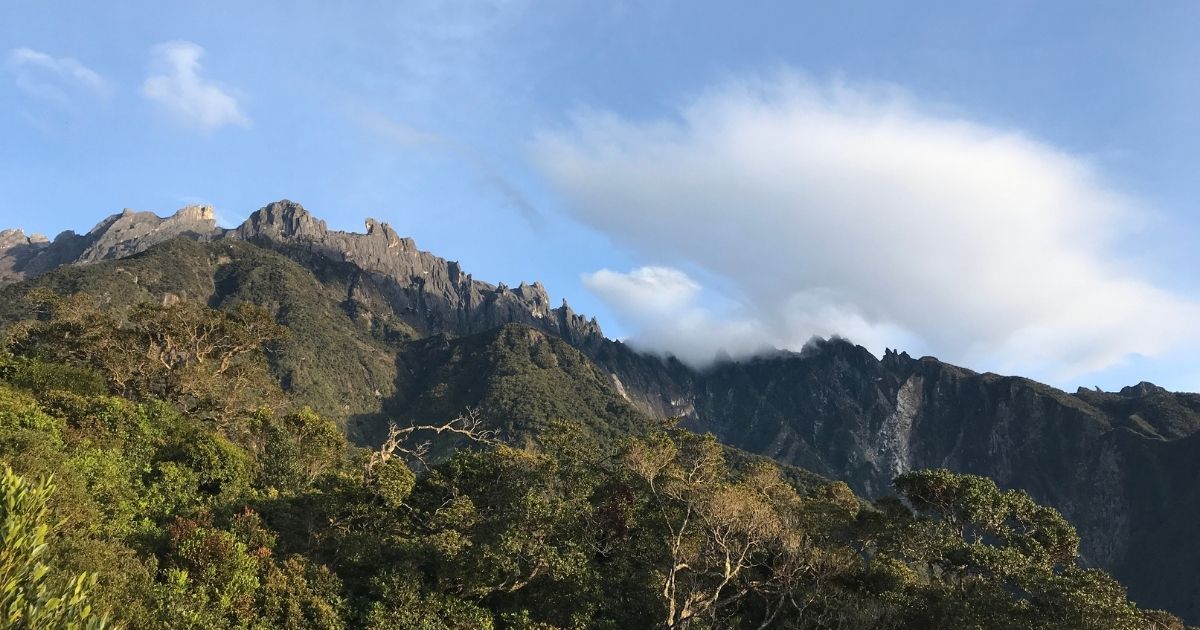
Mount Kinabalu (4,095 m) is the highest mountain in Malaysia and in the whole region between the Himalayas and New Guinea, a landmark you can see from the city on a clear morning. The surrounding Kinabalu Park is a UNESCO World Heritage Site and lies about 2 hours’ drive away — and this was where we were mainly headed.
The climb to the summit takes two days (with a night in a mountain lodge) and you must have a permit and a mountain guide — two-day packages for foreigners, including lodging, meals, the permit and transfers, start at around 2,690–2,890 MYR (£485–520) per person. Permit numbers are capped each day, so book months ahead. If you’d rather do it in a single day, you’ll need to find a guide willing to go with you.
💡 Tip: You can enjoy the mountain without summiting. A day trip into Kinabalu Park lets you walk the entrance gardens and trails, drop by the Poring hot springs and visit the farms in cool Kundasang. You get the mountain experience for a fraction of the cost and none of the months of planning.
3. Kinabalu City Mosque — the floating mosque
The Kinabalu City Mosque (Masjid Bandaraya) is the city’s most photogenic building — a white mosque with blue-and-gold domes standing in the middle of a man-made lagoon, so on a still day it mirrors on the water and looks as if it’s floating. It sits a little north of the centre (a few minutes by Grab). Non-Muslims can go inside outside prayer times for a token fee (around 5 MYR / £0.90, robe hire included).
💡 Tip: The reflection in the lagoon is best early in the morning before the wind picks up — and dress modestly (shoulders and knees covered); you can borrow a robe at the entrance. Don’t confuse it with the Sabah State Mosque (Masjid Negeri), which is a different building closer to the centre.
4. Sunset on Tanjung Aru beach
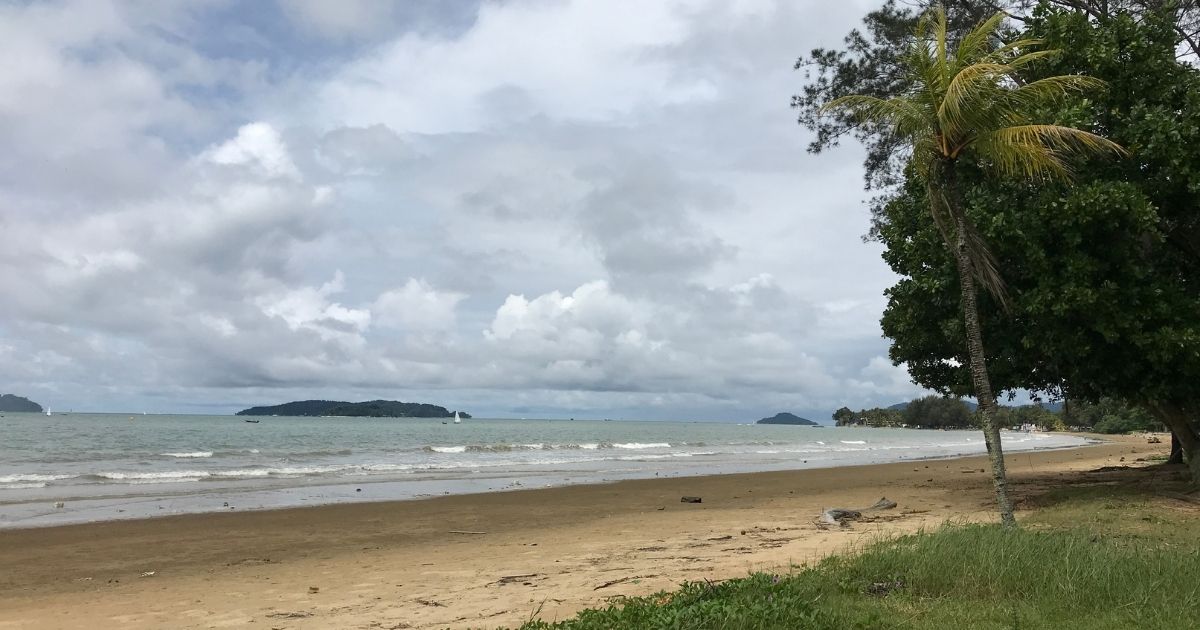
Tanjung Aru beach, south of the centre, is the classic spot where locals come to sit and watch the sunset — the sky over the South China Sea turns pink and orange and it really is quite a show. The best window is roughly 6pm–7.15pm. The beach comes with stalls selling grilled corn and coconuts, and locals gather to hang out. Grab gets you here in a few minutes.
5. Signal Hill — the viewpoint over town
A short walk from the centre leads up to Signal Hill Observatory on the hill above the old town, opening up a view over the rooftops of KK, the harbour and the islands beyond. It’s a quick, easy and free stop — nicest either mid-morning or towards evening. You can walk up the hill in 15–20 minutes, or take a Grab.
6. Bukit Bonduk (Sepanggar) — a lookout hill over the bay
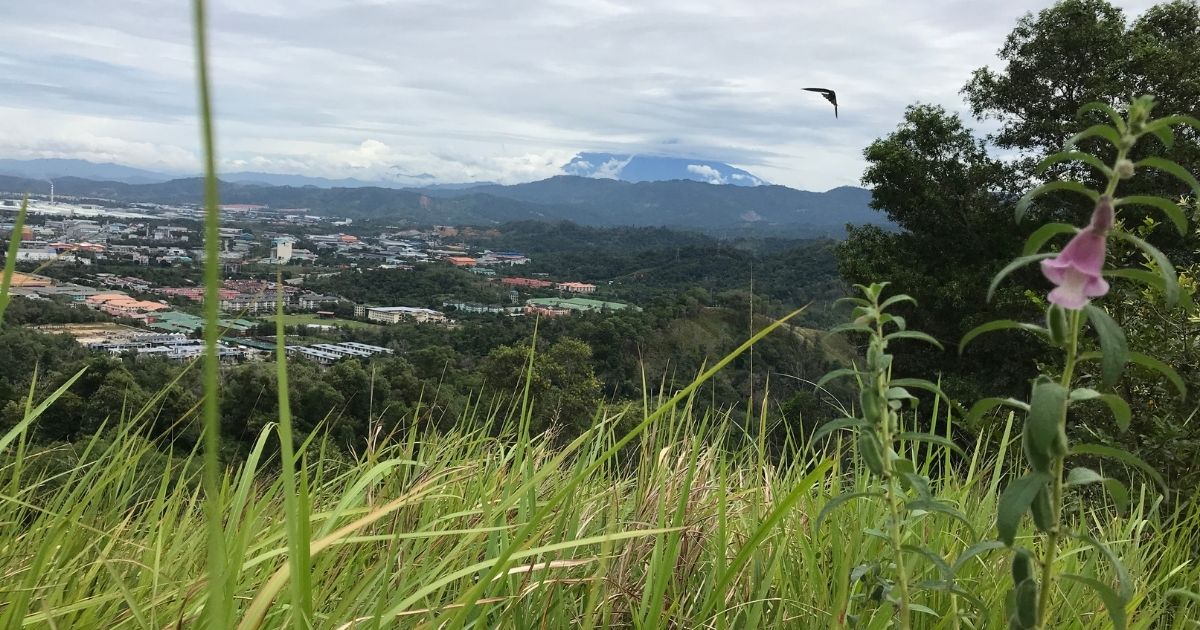
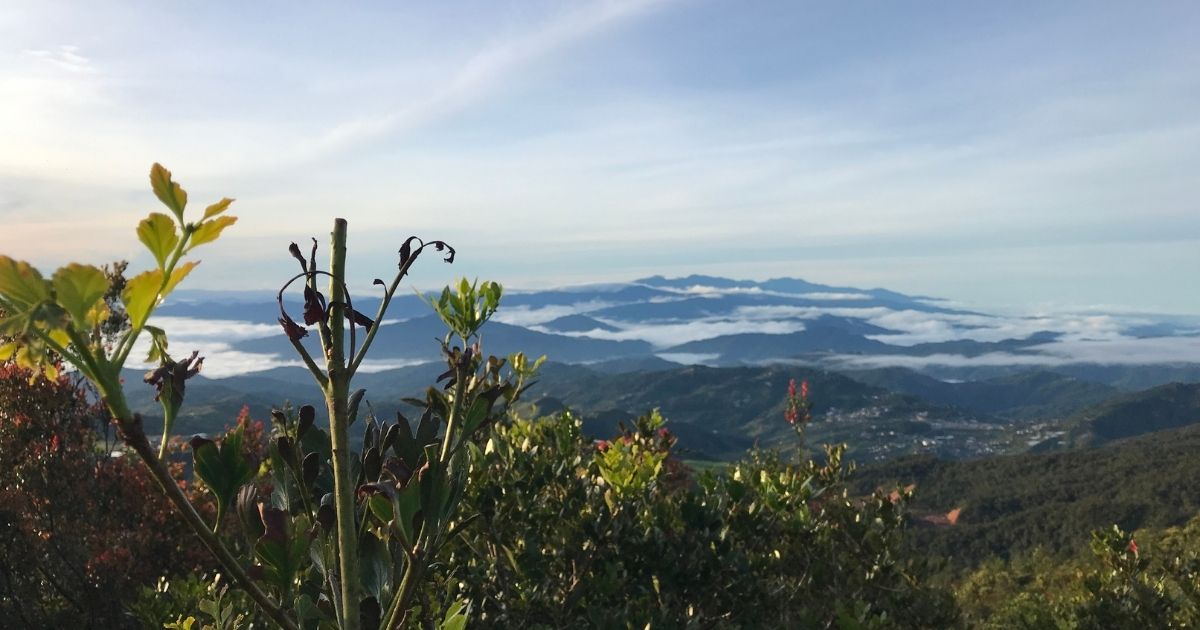
Just under half an hour’s drive (about 21 km) north of Kota Kinabalu is the hill of Bukit Bonduk, known to locals as Bukit Botak. The climb is short but steep: around 1.5 km one way, roughly an hour up. The reward is a panorama of Sepanggar Bay, the islands and the sea, and on a clear day a view of Mount Kinabalu too. About halfway up there’s a fork where you choose between the “sea” and the “mountain” viewpoint. Just make sure you’ve sorted how to get back down and away — we ended up hitching.
7. The Night Market and Filipino Market — seafood and street food
When darkness falls in KK, the best eating begins. At the Night Market on Jln Tun Fuad Stephens by the waterfront you’ll find stalls of fresh fish and seafood grilled to order on the spot — you pick from the ice, pay by weight and you’re eating within minutes. Next door is the Filipino Market (Pasar Filipino / Handicraft Market) with souvenirs, pearls and dried fruit. The markets come alive from around 5.30pm to 11pm.
💡 Tip: With seafood, always ask the price per 100 g up front and have it shown to you on the scales — otherwise the bill for prawns or lobster can come as a nasty surprise. Simple grilled fish and satay, meanwhile, are cheap and excellent.
8. Gaya Street and the Sunday Market
Gaya Street is the main artery of the old centre, lined with cafés, little shops and breakfast spots. Every Sunday morning (roughly 6.30am–1pm) the whole street turns into the Sunday Market — everything from fruit, flowers and herbs to clothes, handicrafts, puppies and parrots. It’s a great place to soak up the bustle and grab a fresh breakfast among the locals.
9. Sabah State Museum — Borneo’s cultures under one roof
To get a sense of just how many different peoples call Borneo home, head to the Sabah State Museum. The main building, styled like a traditional stilt house, covers the ethnography of the indigenous groups (Kadazan-Dusun, Bajau, Murut), natural history and history; the grounds also hold an open-air museum of traditional dwellings and an ethnobotanical garden. Foreign entry is around 15 MYR (£2.70) as a guide, and it’s usually closed on Fridays.
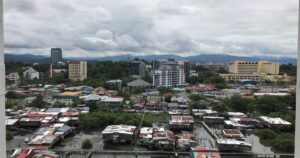
10. Mari Mari Cultural Village — tribal life brought to life
Mari Mari Cultural Village is an open-air museum in the forest on the edge of town, where you’re guided through five traditional houses of Sabah’s tribes — they demonstrate fire-making, tattooing, rice liquor and hunting, and it ends with dinner and a dance performance. It’s touristy, yes, but informative and lively, ideal for a half-day trip with hotel pick-up. Book the experience through GetYourGuide →.
11. Proboscis monkeys and fireflies — wetlands and the Klias river
Wild Borneo starts just outside the city. The Kota Kinabalu Wetlands (formerly a bird sanctuary) is a 24-hectare mangrove forest only a few kilometres from the centre, with a boardwalk nature trail. For the classic experience, though, people take an afternoon river cruise — usually on the Klias or Garama river (about 2 hours’ drive), where at dusk you’ll spot the endemic proboscis monkeys and, after dark, trees flickering with thousands of fireflies.
12. Poring — hot springs and treetops
On the eastern edge of Kinabalu Park lie the Poring Hot Springs — sulphur thermal baths under the trees where climbers come to soak weary legs. Above the springs runs a canopy walk, a suspended walkway through the rainforest treetops more than 40 metres up. You can reach it on a full-day trip to Kundasang and the foot of the mountain — a lovely alternative if you’re not aiming for the summit itself.
13. Atkinson Clock Tower and the historic centre
The Atkinson Clock Tower is the oldest surviving structure in the city, a wooden clock tower just under 16 metres tall dating from 1905. It carries the name of the first district officer of what was then Jesselton, Francis George Atkinson, who died in the city of malaria aged 28. The tower is one of the few buildings to survive the Allied bombing of the Second World War. It stands at the foot of Signal Hill, is free to visit and pairs nicely with the walk up to the viewpoint.
14. Che Sui Khor Pagoda — a colourful Chinese pagoda
The Che Sui Khor Pagoda is a bright, multi-storey pagoda just northeast of the centre (a few minutes by Grab). Completed in 2006, it takes its inspiration from the famous Leifeng Pagoda in Hangzhou, China. The orange-and-green structure is a nod to Sabah’s Chinese community and makes a rewarding photo stop. The interior tends to have limited access, so the main experience is from the outside.
15. Lok Kawi Wildlife Park — Borneo’s animals for families
Lok Kawi Wildlife Park is a zoological and botanical park about 20–25 km south of the centre (30–45 minutes by Grab), split into a zoo and a botanical section. Here you can see Borneo’s species without a full day in the jungle: orangutans, proboscis monkeys, sun bears, elephants and plenty of birds. It’s an ideal option for families with children, especially when the weather rules out the sea. It’s open daily 9.30am–5.30pm (last tickets 4.30pm), and foreign entry is roughly 20 MYR adult and 10 MYR child (£3.60 / £1.80).
💡 Tip: Arrive right on opening — the animals are most active in the morning and take shelter in the midday heat. Some feeds happen at set times, with the schedule posted at the entrance.
16. The Kinabatangan river — safari for Borneo’s “big five”
If you have more days in Sabah and want to see wildlife at its fullest, head for the Kinabatangan river, Sabah’s longest (around 560 km). It ranks among the best wildlife-watching spots in Southeast Asia: from the boat you can often see orangutans, pygmy elephants, proboscis monkeys, hornbills and crocodiles.
From Kota Kinabalu it’s a multi-day trip; the easiest way is to fly to Sandakan (a domestic flight of under an hour) and then continue 2–3 hours by car to the river — the road from KK takes around 6 hours. Either way, it’s a chance to see animals in the wild. We loved this trip and got lucky enough to see an orangutan too.
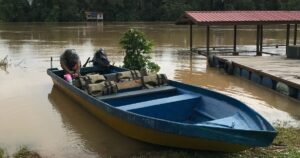
💡 Tip: Bring binoculars and a light rain jacket — the weather on the river changes fast. Most animals appear on the morning and evening cruises; the middle of the day is quiet.
17. Rafting on the Kiulu and Padas rivers — jungle adrenaline
Sabah’s interior is cut through by rivers that rank among the best in Southeast Asia for rafting. For families and beginners, the Kiulu river is ideal (grade 1 to 2 rapids), about an hour’s drive from KK. The more seasoned head for the wild Padas river (grade 3 to 4) deep in the interior, reached by narrow-gauge train through the rainforest. A half-day trip with hotel pick-up, gear, guide and lunch costs roughly 200–300 MYR (£36–54).
💡 Tip: Wear water shoes or sturdy sandals with a heel strap, and pack your things in a dry bag. Leave money and documents at the hotel and take only what you need onto the river. Check the date and water levels beforehand — you can book through GetYourGuide →.
18. Monsopiad Cultural Village — the house of the head-hunters’ skulls
Monsopiad Heritage Village in Penampang (about 16 km south of the centre, under half an hour by Grab) is smaller and more personal than Mari Mari, and it’s built on a real story: the village carries the name of a legendary Kadazan warrior, and at its heart is the House of Skulls, holding 42 skulls from the head-hunting days. The visit includes traditional dances and a taste of rice wine. It’s usually open daily around 9am–5pm, and foreign entry is roughly 55 MYR adult and 25 MYR child (£10 / £4.50), tour and performance included.
19. The Waterfront and street art — an evening stroll through the centre
The seafront Waterfront promenade wakes up in the evening: a row of bars and restaurants runs along the sea with sunset views, and you’ll find the photogenic “I Love KK” sign by the Todak jetty. Wandering through the old centre you’ll come across the street-art murals of local artists that brighten the side lanes around Gaya Street and Australia Place. It’s a pleasant way to round off the day, and it costs nothing.
20. Sabah cuisine — what to try
The food is a reason to visit KK in its own right, and it’s cheap — a meal at a local canteen (kedai kopi) runs to 8–15 MYR (£1.50–2.70). Don’t miss:
- Tuaran mee — Sabah-style egg noodles, the local speciality.
- Sabah laksa and ngiu chap (beef noodle soup) — proper breakfasts.
- Ikan bakar — grilled fish from the night market.
- Roti canai with curry and sweet teh tarik tea for breakfast.
💡 Tip: For sit-down seafood, Welcome Seafood is a firm traveller favourite — go early or you’ll be queuing. You pick live fish and crab from the tanks and tell them how you’d like it cooked.
How much does a trip to Kota Kinabalu cost (budget)
By Malaysian standards Kota Kinabalu is a touch pricier than the mainland (everything has to be shipped in), but it’s still a budget destination. Your biggest spend goes on the trips — the islands and above all the mountain climb. A rough daily budget per person:
| Travel style | Roughly per day / 1 person |
|---|---|
| Backpacker (hostel, canteens, public transport/Grab) | 120–180 MYR (£22–32) |
| Mid-range (3* hotel, restaurants, 1 trip) | 250–400 MYR (£45–72) |
| TAR park entry + boat to the islands | 40–60 MYR (£7–11) |
| Island hopping with 2 islands and lunch | from around 150 MYR (£27) |
| Mount Kinabalu climb (2 days, package) | 2,690–2,890 MYR (£485–520) |
You’ll save the most on food — eat where the locals eat (kedai kopi and the night market) — and on transport by using Grab rather than taxis. And plenty of the very best of it is free or nearly so: the sunsets, Signal Hill, a walk along the Waterfront and the Sunday market.
Photo gallery
Where to next
- The island of Borneo: the complete guide
- A Borneo holiday: how to plan it
- Getting to Borneo: transport and practical info
- Borneo and orangutans: where to see them
- Semporna: the gateway to diving in Borneo
Frequently asked questions about Kota Kinabalu
Tours and tickets in and around Kota Kinabalu
traveller-verified · GetYourGuide

Tunku Abdul Rahman: Snorkelling off Sapi & Manukan Islands
★ 4.8 · 243 reviews
from £47


Prices and ratings are indicative (source: GetYourGuide); you’ll see the latest after clicking.
How many days should you set aside for Kota Kinabalu?
For the city itself and the Tunku Abdul Rahman islands, 2–3 days is enough — you’ll fit in island hopping, the markets, the sunset and the mosque. If you want to climb Mount Kinabalu, add 2–3 more days and book your permit well ahead. KK is often used as a launch base before heading further on around Sabah.
When is the best time to visit Kota Kinabalu?
The driest and most pleasant window is roughly March to September. The heaviest rain comes between October and January, when the sea can put paid to island boats for a day or two. Temperatures stay around 30–32 °C all year, so warmth is never in short supply.
Is climbing Mount Kinabalu worth it?
If you’re fit and have the time and the budget, it’s a one-of-a-kind experience — sunrise above the clouds from 4,095 metres. But the climb takes two days, with a compulsory guide and permit, and packages for foreigners start at around 2,690 MYR (£485). If you don’t fancy the summit, you can do a day trip into the national park and to the Poring hot springs for a fraction of the price.
How do I get to the Tunku Abdul Rahman islands?
Boats leave from the Jesselton Point terminal in the centre and reach the nearest islands (Sapi, Mamutik, Manukan) in 15–20 minutes. You pay separately for park entry (10 MYR for foreigners), a terminal fee and the return boat. The simplest option is an island-hopping package covering two islands and lunch.
Is Kota Kinabalu safe and expensive?
The city itself is safe and friendly, and ordinary caution is enough. By Malaysian standards it’s a touch pricier (everything has to be shipped in), but it’s still a budget destination — a backpacker gets by on around 120 MYR (£22) a day including accommodation and food. The trips cost the most, above all the mountain climb.
How do you get around Kota Kinabalu?
The centre is a joy to explore on foot — the markets, the promenade and the harbour are all close together. For the airport and trips further out, use the Grab app; it’s cheap, reliable and there’s no haggling. The ride from the airport to the centre costs roughly 15–25 MYR (£3–4.50).
What should you eat in Kota Kinabalu?
Sabah specialities: Tuaran mee (egg noodles), Sabah laksa, ngiu chap (beef noodle soup), grilled fish from the night market, and roti canai with teh tarik for breakfast. The seafood is fresh and cheap — at the night market you pick it from the ice and have it grilled for you.
Where can you see proboscis monkeys and fireflies near Kota Kinabalu?
On an afternoon river cruise on the Klias or Garama river (about 2 hours’ drive from KK). At dusk you’ll see the endemic proboscis monkeys, and after dark trees full of fireflies. Closer to the city there’s also the KK Wetlands mangrove reserve with a nature trail.
Potřebujete pomoct s cestováním?
-
Ubytování 🏨
Vyberte si to nejlepší ubytování, ať už jste kdekoliv, přes Booking.com. -
Půjčení auta 🚗
Auto si snadno najdete přes Booking.com, kde máte často slevu díky ubytování, nebo Rentalcars.com, kde porovnáte nabídky většiny půjčoven. -
Zážitky 🎟️
Přes GetYourGuide.com si vyberete z nejrůznějších výletů i zážitků po celém světě, navíc se zrušením zdarma do 24 h předem.