Last updated 1.9.2026
Camping in Slovakia is still one of the cheapest ways to spend a week under proper mountains without booking a single hotel night. Two people with a tent pay somewhere around 16 to 25 € a night at an ordinary campsite (roughly £13 to £21), a caravan pitch runs 30 to 50 € (£25 to £42), and you can be a few minutes’ walk from a beach on the Liptovská Mara reservoir or from the entrance to the gorges of Slovenský raj. Slovakia is in the eurozone, which surprises a fair number of visitors, so every price below is in euros with an approximate pound figure at a rate of 0.84 GBP to the euro.
There is one thing to settle before anything else, because it is the question British and American visitors ask most often and get wrong most often: wild camping is not legal here the way it is in Scotland. Slovakia has no right-to-roam law. In the national parks, pitching a tent outside a campsite is a straightforward offence with a fine attached, and that is dealt with in the first section below.
After that, this guide covers 17 specific campsites by water, in the mountains and next to thermal pools: where each one is, what is on site, what a tent, a caravan and an electric hook-up cost, how long the season runs, and whether you can reach it without a car. There is a full comparison table near the end.
Camping in Slovakia at a glance
- Wild camping: banned by law in every national park. Fines run up to 3,319.39 € (about £2,790), with on-the-spot fines up to 300 € (about £250).
- Prices: tent roughly 4 to 11 € (£3.40 to £9), caravan pitch 8 to 60 € (£7 to £50), electricity 5 to 8 € (£4 to £7) a night. Add a local tax of 1 to 3 € per person, plus parking and dogs.
- Realistic total: 25 to 40 € a night (£21 to £34) for two adults with a tent, a car and a hook-up.
- Season: lakeside sites May to September, mountain sites roughly June to mid-September. Open all year: Bystrina, Oravice, Zlaté piesky and Villa Betula.
- Booking: essential on the Liptov reservoirs and at the thermal resorts, ideally by late spring. Smaller mountain sites take walk-ins, and a few refuse bookings entirely.
- Where: by water at Liptovská Mara, Oravská priehrada, Zemplínska šírava, Domaša and Senec. In the mountains at Malá Fatra, Slovenský raj, the Tatras and Demänovská dolina.
- Without a car: perfectly doable. Trenčín, Štúrovo, Senec, Bratislava and Tatranská Štrba all sit within walking distance of a station or a bus stop.
Is wild camping legal in Slovakia? No, and here is the law
Wild camping and bivouacking are banned in Slovakia’s national parks. This is not park etiquette or a guideline that everybody quietly ignores. It is written into Act 543/2002 Coll. on nature and landscape protection, and breaking it is a punishable offence.
The mechanism is worth understanding, because it explains where the ban does and does not apply. Slovak law grades the whole country into five degrees of protection. The first degree is the ordinary countryside. The third degree, set out in Section 14, prohibits a specific list of activities on land outside the built-up area of a village, and the list reads: “táboriť, stanovať, bivakovať, jazdiť na koni, zakladať oheň mimo uzavretých stavieb” — to camp, to pitch a tent, to bivouac, to ride a horse and to light a fire outside enclosed buildings.
Section 19 of the same act then says that the third degree applies across the whole territory of a national park, with stricter zones carrying the fourth and fifth degree. That covers all nine of them: the Vysoké Tatry (High Tatras), Nízke Tatry (Low Tatras), Malá Fatra, Veľká Fatra, Slovenský raj (Slovak Paradise), Muránska planina, Pieniny, Poloniny and Slovenský kras. In other words, every mountain range you would actually want to wild camp in is off limits.
The third degree carries a second restriction that catches people out even more often than the tent ban: you must stay on marked hiking or educational trails outside built-up areas. There is no off-path wandering and no scrambling up to a nice flat spot to sleep. If you are used to Scottish hill days, this is the single biggest adjustment.
What a fine for wild camping in Slovakia actually costs
Pitching a tent in a third-degree area is an offence under Section 92 of the act, in the tier that covers activities banned by Section 14. The penalties available to the nature protection authority are:
- Up to 3,319.39 € (about £2,790), plus forfeiture of the equipment involved, as the statutory maximum.
- Up to 300 € (about £250) as an on-the-spot fine issued in summary proceedings, which is what a ranger in the field will normally reach for.
- Double the upper limit if you commit another offence under the same act within two years.
Breaching a park’s own visitor rules is listed separately in the same section and carries the same ceiling. Enforcement is real: Slovakia has a professional and volunteer stráž prírody (nature guard) whose job is checking compliance, and they work the popular valleys in season.
💡 Tip: If you have read that Slovakia is relaxed about wild camping because it is “less regulated than the Alps”, ignore it. The opposite is true. The Alps have huts and tolerated bivouac zones above a certain altitude. Slovakia has a blanket statutory ban across every national park, and a fine schedule to go with it.
Slovakia is not Scotland: what changes for British campers
In Scotland the Land Reform (Scotland) Act 2003 gives you a statutory right of responsible access, which is why lightweight wild camping there is legal in most places. In England and Wales it is not, and you need the landowner’s permission outside a handful of Dartmoor commons. Slovakia sits at the stricter end of that spectrum, not the freer one.
Two things stack on top of each other here. First the protection degree, which in a national park bans camping outright. Second the ordinary fact that land belongs to somebody: even well outside any protected area, camping on private ground without the owner’s consent is a problem, and much of the Slovak countryside is privately or co-operatively owned forest and pasture.
Protected landscape areas, the chránené krajinné oblasti or CHKO, sit at the second degree of protection and are a partial exception. Section 13 does not ban camping there. What it does ban is driving or parking a motor vehicle on land outside the built-up area of a village, away from a road, an access track or a car park. So a van or a motorhome legally cannot be taken onto that inviting meadow, and even for a tent you are still back to needing the landowner’s agreement.
Free camping in Slovakia: the honest answer
There is no legal free-camping tier in Slovakia in the sense that Scandinavian allemansrätten provides one. What exists instead is a set of cheap legal alternatives, and they are genuinely cheap:
- A basic campsite pitch. A small tent at Autocamping Trenčín is 4 € (£3.40) and at Autocamp Stará Hora on the Oravská priehrada 5 to 6 €, before the per-person charge. That is less than a pint in most of Britain.
- An official táborisko. Some municipalities run marked camping grounds outside the campsite system, such as the one at Hôrka on Zemplínska šírava, where 10 € covers a tent and everyone in it.
- A mountain hut. Slovak chaty in the high mountains are the legal way to sleep at altitude, and they are the reason the tent ban is enforceable at all.
The practical conclusion is short: sleep at a campsite, at an official camping ground or in a mountain hut. Everything else in a national park is an offence.
Camping rules in Slovakia: fires, vans and overnight parking
Beyond the wild camping ban, a handful of rules decide whether a trip goes smoothly or ends in an argument at a barrier at half past ten at night.
Fires and stoves
Lighting a fire outside enclosed buildings is part of the same Section 14 prohibition, so in a national park the answer is a flat no unless you are at a fireplace that has been provided for the purpose. Park administrations also issue their own visitor rules, which tighten things further, and breaking those rules is itself a listed offence. The Slovenský raj administration, for example, permits a fire only at designated fire rings next to existing buildings and within ten metres of the structure. At campsites the picture is friendlier: many sites, including Camping Marina Liptov and Villa Betula, have a fire pit or a gazebo with a hearth you can use.
Tent camping and car camping in practice
Slovak sites are mostly flat grass with trees, and pitches are rarely numbered for tents, so you park the car alongside the tent and that is that. Two details catch first-timers out. Many smaller sites take cash only and have no card terminal, and showers frequently run on tokens bought at reception. Gates are the second: a good number of sites lock the barrier overnight, typically from 22:00 to 06:00, so a late arrival off a delayed train means sleeping in the car park.
Caravans, motorhomes and overnight parking
The dedicated aire or Stellplatz network is only just getting going in Slovakia, and what exists tends to sit at wineries, guesthouses and inside campsites rather than standing alone. Full motorhome service — a chemical toilet point, water filling and an electric hook-up — is standard at the larger sites such as Vadaš, Mara Camping and Podhájska, and patchy elsewhere.
Sleeping in a vehicle at a trailhead or a mountain car park is, at best, tolerated. In a national park it is at worst a fine, because parking off the road network in a third-degree area is banned in the same section as the tent.
Season, booking and opening hours
Most lakeside sites open around the first of May and close at the end of September, and mountain sites keep a shorter season than that. Book ahead for the Liptov reservoirs and the thermal resorts, which fill up from mid-July onwards. RIJO Camping at Stará Lesná goes the other way and takes guests strictly without reservations. Seasonal closures also apply to the high trails in the Tatras, roughly from the start of November to mid-June, so check the current position with the TANAP administration before planning anything above the tree line.
How much does camping in Slovakia cost?
Slovak campsites almost never quote one price for a pitch. The bill is assembled from separate items, and that is exactly where budgets built on the tent price fall apart.
- Per person: the most common model. At Mara Camping on Liptovská Mara, tent campers pay 8 € per adult out of season and 11 € in high season (£6.70 and £9.20).
- Per tent or vehicle: elsewhere you pay by the unit. Autocamping Trenčín charges 4 € for a small tent, 6 € for a large one and 8 € for a caravan, plus 8 € per adult on top.
- Electricity: usually 5 € a night, rising to 8 € on Zemplínska šírava and in the Tatras. It is only included in the price on caravan pitches with their own hook-up.
- Parking: watch this one on Liptov. Mara Camping bills tent campers 10 € (£8.40) per car per night.
- Local tax and dogs: the municipal tourist tax is 1 to 3 € per person, and dogs cost anywhere from 1.50 € to 10 €.
Realistically, two adults with a tent, a car and an electric hook-up will spend around 25 to 40 € a night, or roughly £21 to £34. Caravanners should budget 35 to 50 € (£29 to £42), and considerably more at the thermal resorts. Price lists change during the season, so confirm with the site before you travel.
💡 Tip: Smaller mountain campsites frequently take cash only and have no card terminal. Arrive with a few tens of euros in your wallet and some small change for shower tokens, or your first evening will be spent driving to the nearest cashpoint in town.
Getting to Slovakia, and camping without a car
Most visitors arrive through Bratislava (BTS) or, more often in practice, through Vienna Schwechat, which is about 60 km from Bratislava and has far more routes. Budapest, Kraków and Katowice all work as entry points depending on which corner of the country you are heading for, and Košice (KSC) has seasonal connections that put you within striking distance of the east. Poprad, the natural gateway to the Tatras, has almost no scheduled flights, so you get there overland.
Trains are the sensible way to cross the country. Bratislava to Poprad-Tatry takes roughly four hours and Bratislava to Košice about five. From Poprad the narrow-gauge Tatra Electric Railway runs up to Starý Smokovec and on to Štrbské Pleso, with a branch to Tatranská Lomnica, and a separate rack railway climbs from Štrba to Štrbské Pleso. Between them they reach almost every Tatra resort, which is why camping in the High Tatras without a car is genuinely straightforward.
For each campsite below there is a note on whether public transport gets you there. The short version: Bratislava, Senec, Trenčín, Štúrovo and Tatranská Štrba are easy without a car, the Tatra sites are workable, and the reservoir campsites on Orava, Zemplín and Domaša are the ones where a car earns its keep.
💡 Tip: If you do drive, Slovakia’s motorway vignette is electronic only and costs 10.80 € for ten days (about £9) from eznamka.sk. There is no sticker to buy at the border and, crucially, hire cars usually do not come with one included — check before you pull onto the D1. A motorhome registered as category M1 uses a vignette regardless of its weight, so even over 3.5 tonnes you buy a vignette rather than paying tolls. Electronic tolls apply only to vehicles over 3.5 tonnes that are not category M1. If you tow a caravan and the combined weight exceeds 3.5 tonnes, the combination has to be registered separately.
Slovakia lake camping: the best campsites by water
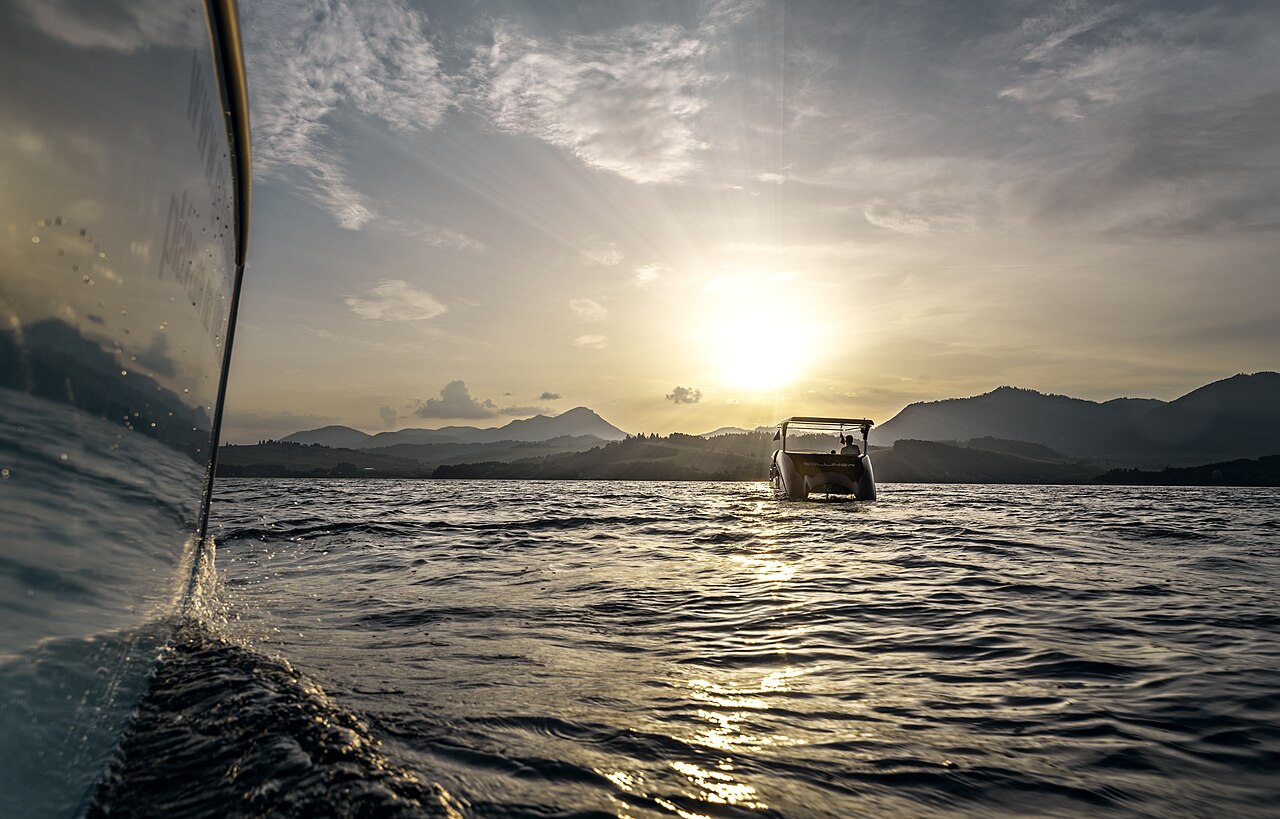
Slovakia has no coast, so its summer water culture happens on reservoirs, and the big ones have proper beaches, boat hire and campsites on the shore.
1. Mara Camping, Liptovský Trnovec (Liptovská Mara)
The largest campsite on the northern shore of the Liptovská Mara reservoir, with its own beach and a view across to the Západné Tatry (Western Tatras). There are more than 180 pitches, an activity programme for children, watersports hire and a sightseeing boat. Prices: tent camping is 8 € per adult out of season and 11 € in high season, children under 12 pay 5 € and 7 €, caravanners pay 15 € and 18 € per adult, and VIP pitches start at 30 €. Electricity 5 €, car 10 €, dog 10 €, local tax 1.50 €. Season: May to September, with high season from 26 June to 31 August. This is the one for families who want the water and the entertainment in the same place. Without a car: local buses run out along the reservoir from Liptovský Mikuláš, the nearest town on the main railway line. Places to stay around Liptovský Trnovec →
2. Camping Marina Liptov, Bobrovník
The quieter option, about 300 metres back from the water on Liptovská Mara. Caravan pitches have 220 V electricity and a water point at the pitch, and the site has a fitted kitchen, a laundry, wi-fi and a fire pit. Prices per pitch per night: small tent 25.60 €, large four-person tent 37.20 €, caravan 38 € including utilities, touring caravan 45.20 €, mobile home 129.20 €. Dogs are free. Note: the site states that its 2026 season does not start until 10 July because of building work, so do not plan an earlier trip here. Without a car: the same bus corridor from Liptovský Mikuláš, though Bobrovník is a quieter stop with a thinner timetable.
3. Villa Betula Camping, Liptovská Sielnica
A resort-style campsite on the southern shore of Liptovská Mara that stays open all year round. The pitch price includes the electric hook-up, heated-floor washrooms and entry to the Babyland children’s area, and in summer to the heated pool as well. On site there is a restaurant, a laundry and a gazebo with a fire pit. Booking is online only, and anyone who turns up without a reservation pays a surcharge. A good choice for families with small children and for camping outside the summer months. Without a car: reachable by bus from Liptovský Mikuláš, but the year-round appeal here really assumes you are driving.
4. Autocamp Stará Hora, Ústie nad Priehradou (Oravská priehrada)
A campsite on the Oravská priehrada reservoir, close to Námestovo, and the departure point for boats out to Slanický ostrov umenia, the island of art. It is one of the cheapest sites in northern Slovakia. Prices: adult 6 €, child 4 €, tent 5 or 6 € depending on size, car 4 to 5 €, caravan 8 €, motorhome 10 to 12 €, motorbike 3 €, boat 10 €, dog 3 €. Electricity 5 € for an 8 kW supply, shower token 1 €, municipal tax 1 €. The water in Orava is colder than on Liptov, but you get quiet and a lot of space in exchange. Without a car: Orava is the thinnest corner of the country for public transport. Regional buses serve the reservoir from Trstená and Námestovo, and connections thin out considerably in the evening. Places to stay by the Oravská priehrada →
5. Camping at Slnečné jazerá, Senec
A big site twenty minutes from Bratislava. The Slnečné jazerá (Sunny Lakes) complex covers ten hectares with around 200 camping pitches, hire outlets, sports pitches and serviced beaches. According to the ACSI inspection it is open all year, and an indicative price for two with a pitch, a car and electricity works out at 29 to 37 € a night (about £24 to £31). People come here for swimming and a festival-flavoured summer, not for peace and quiet. Without a car: one of the easiest. Senec is 25 km north-east of Bratislava on the main railway corridor out of the capital, so trains and buses run frequently. Places to stay in Senec →
6. Camping Zlaté piesky, Bratislava
A city campsite on the Zlaté piesky lake, run by STARZ, the Bratislava municipal sports and recreation service. It runs all year and splits its prices between high season (1 June to 30 September) and the rest of the year. Out of season: adult 5 €, child aged 3 to 18 2.50 €, tent 6 €, caravan or motorhome 8 € including electricity, electricity on its own 5 €, dog 1.50 €. In high season an adult is 7 € and a caravan 12 €. Add 3 € city tax per person per night. The price covers the washrooms and access to the lido and sports facilities. A practical base if you want to see Bratislava without paying hotel rates. Without a car: the best-connected campsite in Slovakia. It sits inside the city on Bratislava’s public transport network, so you can be in the old town without touching a car.
7. Táborisko Zemplínska šírava, Hôrka resort
Zemplínska šírava is eleven kilometres long and has the warmest water in the east of the country. The camping ground at Hôrka lies seven kilometres from Michalovce beside the harbour used by the sightseeing boats. There are marked tent areas, a beach, washrooms, a kitchen without utensils and an electric hook-up. Prices: a tent including everyone in it is 10 € a day, caravan 15 €, trailer 10 €, car 4 €, motorbike 2 €, electricity 8 €, shower 3 € per use. The season is short, only 1 July to 31 August. If you want a pool as well, head for Kaluža, where Kemp Kamenec runs from roughly June to the end of August right next to the swimming complex. Without a car: Michalovce is on the rail network and regional buses run out to the Šírava resorts in summer, but services are seasonal and thin in the evenings. Places to stay by Zemplínska šírava →
8. Domaša: Dobrá pláž and year-round Tíšava
The Domaša reservoir is fourteen kilometres long and lies well away from the main tourist routes. Autocamping Domaša Dobrá pláž claims the warmest water on the whole reservoir and has mown grass for tents, public toilets and hot showers, a kitchen, a children’s playground, wi-fi and accessible washrooms, with a season running from 1 May to 30 September. A few kilometres away at Bžany, the Tíšava resort has a sand beach and stays open all year. Eastern Slovakia is cheaper than Liptov, but the facilities tend to be plainer. Without a car: this is the hardest group in the guide to reach on public transport. Buses serve the villages around the reservoir from the towns either side of it, but the timetables assume you live there.
9. Autocamping Trenčín na Ostrove
A campsite on the island in the river Váh, a few minutes on foot below Trenčiansky hrad (Trenčín Castle). It is not a holiday destination in itself, but it is an excellent stopover when crossing the country. Prices: adult 8 €, child aged 3 to 12 5 €, small tent 4 €, large tent 6 €, caravan or trailer 8 €, car 4 €, motorbike 3 €, dog 3 €, electricity 5 €, city tax 2.50 € per person. Cabins are 18 € per adult, and a refurbished three-bed cabin is 65 € for the whole thing. Without a car: excellent. Trenčín sits on the main railway line between Bratislava and Žilina, and the island is walkable from the station.
Camping in Slovakia’s mountains: Malá Fatra, Slovenský raj and the Tatras
Would you rather be under the peaks than beside a reservoir? These five sites put you at a trailhead, and all of them sit at the edge of a national park rather than inside it, which is precisely why they exist.
10. ATC Trusalová, Turany (Malá Fatra)
A forest campsite at around 490 metres beside a stream below Malá Fatra, with a sports pitch and roughly 160 places for tents and caravans. It is one of the best starting points for walks into both the Krivánska and the Lúčanská half of the range. The sanitary block works, but the site visibly has some years on it. The site only publishes its 2026 prices in a downloadable PDF; the ACSI inspection puts it at roughly 24 to 32 € a night (about £20 to £27) for two with a pitch and electricity. The season is short, roughly June to mid-September. Without a car: workable. Turany has a station on the Žilina to Poprad main line and the site is a walk of a couple of kilometres from the village. Places to stay around Malá Fatra →
11. Autocamping Podlesok, Hrabušice (Slovenský raj)
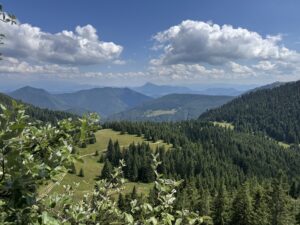
The most practical address in Slovenský raj. The campsite sits at about 540 metres in the valley of the Veľká Biela voda, right at the mouth of the Suchá Belá gorge and at the start of the Prielom Hornádu river gorge. It covers four hectares, takes up to 600 tents and has 32 caravan pitches with electricity. There are showers, a washroom, fire pits, a playground, table tennis and a drying room. Reception sells tickets for the gorges and hires out via ferrata sets, and in high season it is open from 06:00 to 23:00. Season: roughly April to the end of November, at an indicative 27 to 35 € a night for two (about £23 to £29). Without a car: reachable. Regional buses run to Hrabušice from Poprad and Spišská Nová Ves, both of them on the main railway line, and the campsite is at the end of the village.
💡 Tip: The gorges of Slovenský raj are one-way, and a queue builds up at the first ladders in Suchá Belá by mid-morning. If you are sleeping at Podlesok, set off just after seven. A few hundred metres of head start turns it into a completely different day.
12. RIJO Camping, Stará Lesná (High Tatras)
A family-run campsite a kilometre from the village of Stará Lesná and three kilometres from Tatranská Lomnica, looking straight up at Lomnický štít. There is ground for tents and caravans, 220 V hook-ups, showers, toilets, a fitted kitchen, a snack bar with a garden terrace and a small shop selling fresh bread. The site can also arrange a mountain guide. Individual items are priced between 3.50 and 11 €, with electricity at 8 € and dogs at 4 €. In 2026 it opens on 29 May and takes guests strictly without reservations. Without a car: good. The Tatra Electric Railway runs to Tatranská Lomnica from Starý Smokovec and Poprad, leaving a short local hop to the site. Places to stay in the High Tatras →
13. ATC Tatranská Štrba
A campsite at around 970 metres, eight kilometres from Štrbské Pleso. Its real asset is transport: the long-distance coach stop is about 150 metres from the gate, and the rack railway takes you up to Štrbské Pleso. If you are doing Slovakia without a car, this is the base for the whole of the High Tatras. Season: roughly 1 May to 30 September, and expect cold nights even in midsummer at this altitude.
14. Kemping Bystrina, Demänovská dolina (Low Tatras)
A year-round campsite in the Demänovská valley at around 713 metres, spread over five hectares with 150 pitches and a few mobile homes. The Demänovské caves and the lifts up to Jasná are both close, which makes it a rare Slovak site that works for a winter trip with a caravan. The ACSI indicative price is 40 to 50 € a night for two (about £34 to £42), which is expensive by Slovak standards. Reviewers praise the location and are less kind about the ageing sanitary block. Without a car: feasible. Buses run up the valley from Liptovský Mikuláš, with a much denser timetable in the ski season than in summer.
Thermal spa camping: pitching next to the hot pools
If the phrase means nothing to you: a termál is an open-air swimming complex fed by naturally hot mineral water pumped up from deep underground, with pools kept anywhere between warm-bath and hot-tub temperature, usually alongside ordinary cold pools and slides. Central Europe is full of them, they are outdoor and they run in winter, with steam coming off the water while you sit in it.
Pitching a tent with a thermal complex on the other side of the fence is a popular formula in Slovakia, and it makes most sense in spring and autumn, when the reservoirs are too cold for swimming. Slovakia’s thermal pools and aquaparks are a subject in their own right and we cover them in a separate guide. Here we are staying with the campsites.
15. Kemp Oravice, next to Meanderpark (Western Tatras)
The northernmost campsite in Slovakia and one of the very few that runs all year. It lies at Oravice below the Roháče peaks, takes up to 300 people in tents and caravans, and has electric hook-ups on both areas plus hot water, showers and a shared kitchen. The reason to come is the Meanderpark thermal complex immediately next door, where you swim outdoors through the winter. Without a car: difficult. Oravice is a small settlement at the end of a valley and bus services are sparse, so this is one to drive to.
16. Vadaš Thermal Resort, Štúrovo
The largest thermal complex in southern Slovakia has its own campsite with around 41 marked pitches and room for about 600 people. The hard-standing pitches have 16 A electric hook-ups and water, and there are showers, toilets, waste points, wi-fi and direct access into the pools and water slides. The complex also has a ropes course, go-karts and mini golf. The 2026 campsite season runs 1 May to 20 September, with arrivals accepted between 15:00 and 20:00. Holders of a CCI card get 5 % off in July and August and 10 % in May, June and September. Without a car: very good. Štúrovo has a station on the main Bratislava to Budapest railway, and the Mária Valéria bridge crosses the Danube straight into Esztergom in Hungary.
17. Kemping u Svätého Urbana, Podhájska
A campsite right beside the famous thermal baths at Podhájska, where the water has an unusually high mineral content and the pools range from 18 to 40 °C. The site is rated four stars and the price list reflects it: a 10 by 10 metre caravan pitch for two adults costs 60 € a night (about £50), a smaller 10 by 5 metre pitch 50 €, a tent on its own 8 €, an adult 15 €, a child aged 3 to 15 12 €, a dog 5 €, and parking on departure day 6 €. Season: roughly mid-May to early October. It is one of the most expensive campsites in the country, and in exchange the thermal water is thirty seconds from your pitch. Without a car: possible but fiddly. Regional buses reach the village from Nové Zámky and Nitra, and the baths are the main reason anything runs at all.
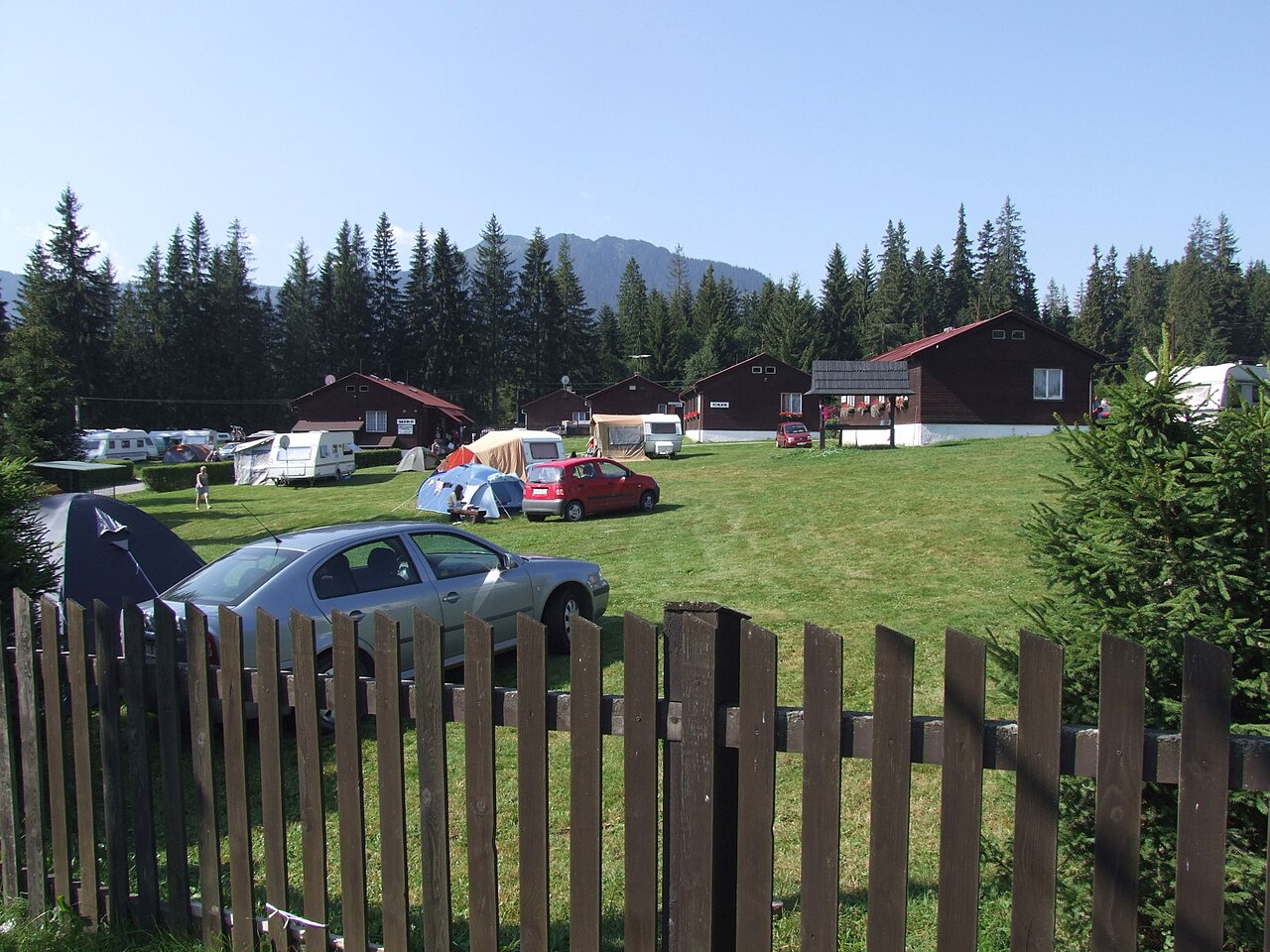
The campsite at Oravice below the Roháče, with the Meanderpark thermal baths next door. Photo: Jerzy Opioła, Wikimedia Commons, CC BY-SA 3.0
Campsites in Slovakia: the full list
Slovakia is small enough that the regions below double as a rough map. Liptov, Orava and the Tatras form the northern belt, Bratislava and Trenčín sit in the west along the motorway, Zemplín is the far east, and the thermal sites are down on the southern lowland near the Hungarian border.
| Campsite | Region | Sits by | Indicative price per night | Season |
|---|---|---|---|---|
| Mara Camping | Liptov | Liptovská Mara | tent 8 to 11 € per person, caravan 15 to 18 € | May to September |
| Camping Marina Liptov | Liptov | Liptovská Mara | tent from 25.60 €, caravan 38 € per pitch | 2026 only from 10 July |
| Villa Betula Camping | Liptov | Liptovská Mara | electricity and Babyland entry included | all year |
| Autocamp Stará Hora | Orava | Oravská priehrada | person 6 €, tent 5 to 6 €, caravan 8 € | summer season |
| Slnečné jazerá | Bratislava region | the lakes at Senec | roughly 29 to 37 € for two | all year |
| Zlaté piesky | Bratislava | Zlaté piesky lake | tent 6 €, caravan 8 to 12 €, person 5 to 7 € | all year |
| Táborisko Hôrka | Zemplín | Zemplínska šírava | tent 10 €, caravan 15 €, electricity 8 € | 1 July to 31 August |
| Domaša Dobrá pláž | Zemplín | Domaša reservoir | lower eastern Slovak prices | 1 May to 30 September |
| Autocamping Trenčín | Považie | island in the Váh | person 8 €, tent 4 to 6 €, caravan 8 € | summer season |
| ATC Trusalová | Turiec | Malá Fatra | roughly 24 to 32 € for two | June to mid-September |
| Autocamping Podlesok | Spiš | Slovenský raj | roughly 27 to 35 € for two | April to November |
| RIJO Camping | High Tatras | Stará Lesná | items 3.50 to 11 €, electricity 8 € | from 29 May 2026 |
| ATC Tatranská Štrba | High Tatras | 8 km from Štrbské Pleso | mid-range | 1 May to 30 September |
| Kemping Bystrina | Low Tatras | Demänovská dolina | roughly 40 to 50 € for two | all year |
| Kemp Oravice | Western Tatras | Meanderpark thermal baths | ask at reception | all year |
| Vadaš Štúrovo | southern Slovakia | thermal resort | pitches with 16 A electricity | 1 May to 20 September 2026 |
| Kemping u Svätého Urbana | southern Slovakia | Podhájska thermal baths | caravan 50 to 60 €, tent 8 € plus persons | mid-May to October |
Year-round campsites and camping out of season
Only a handful of Slovak campsites run all year: Bystrina in the Demänovská valley, Villa Betula on Liptovská Mara, Zlaté piesky in Bratislava, Kemp Oravice below the Roháče and the Tíšava resort on Domaša. The campsites at Slnečné jazerá in Senec are also listed as year-round by the ACSI inspection.
There is money to be saved outside the summer: at Zlaté piesky an adult pays 5 € instead of 7 € and a caravan 8 € instead of 12 €. Be aware, though, that part of the facilities is usually shut, and that night temperatures in the mountains drop below freezing even in September. Seasonal closures also affect the high trails in the Tatras, roughly from the beginning of November to mid-June, and the TANAP administration is the place to check the current position.
💡 Tip: A caravan without heating is a trap in the Slovak mountains in autumn. If you want to camp after the season, choose a site with heated washrooms such as Villa Betula and pay the extra for electricity. An electric heater in the awning still costs less than one night in a guesthouse.
The mistakes people make camping in Slovakia
- Budgeting on the tent price alone. The person, the car, the electricity and the municipal tax all get added on top.
- Assuming you can pay by card. Smaller sites take cash, and showers often run on tokens.
- Pitching outside a campsite in a national park. In a third-degree protection area that is an offence, with an on-the-spot fine of up to 300 €.
- Driving a hire car onto the motorway without a vignette. It is electronic, it is not usually included in the rental, and enforcement is automatic.
- Turning up late. Plenty of sites lock the barrier at 22:00, and by mid-August Liptov is full.
Where to go next
- What to see in Slovakia: highlights region by region
- Thermal baths and aquaparks in Slovakia: pools, prices and opening times
- Lakes in Slovakia: where you can swim and where you cannot
- Castles in Slovakia: admission, seasons and how to reach them
- Slovakia by train: planning a trip without a car
- Where to stay in Slovakia: the most beautiful places to sleep
- Malá Fatra: hikes, ridges and where to base yourself
- Súľovské skaly: the circuit and the practical details
Camping in Slovakia: frequently asked questions
Is wild camping legal in Slovakia?
No, not in the national parks. Act 543/2002 Coll. on nature and landscape protection prohibits camping, pitching a tent, bivouacking and lighting a fire outside enclosed buildings on land beyond the built-up area of a village wherever the third degree of protection applies, and the third degree applies across the whole of every Slovak national park. The same rule requires you to stay on marked trails. In protected landscape areas, which carry the second degree, the act does not ban camping itself, but it does ban driving or parking a motor vehicle away from roads and car parks, and you still need the landowner’s consent.
What is the fine for wild camping in Slovakia?
The nature protection authority can impose a fine of up to 3,319.39 €, about £2,790, together with forfeiture of the equipment, and in summary proceedings a ranger can issue an on-the-spot fine of up to 300 €, about £250. If you commit another offence under the same act within two years, the upper limit doubles. Breaking a national park’s own visitor rules carries the same ceiling.
How much does camping in Slovakia cost?
Budget roughly 25 to 40 € a night for two adults with a tent, a car and an electric hook-up, which is about £21 to £34. The price is assembled from several items: a charge per person or per tent, the vehicle, electricity at usually 5 to 8 €, parking, and a local tax of 1 to 3 € per person. A caravan pitch comes to 30 to 50 €, and up to 60 € at the thermal baths in Podhájska.
Can you camp for free in Slovakia?
There is no legal free-camping right in Slovakia comparable to Scotland’s or Scandinavia’s. What there is instead is very cheap legal camping: a small tent costs 4 € at Autocamping Trenčín and 5 to 6 € at Autocamp Stará Hora on the Oravská priehrada before the per-person charge, and a tent with everyone in it is 10 € a day at the municipal camping ground at Hôrka on Zemplínska šírava.
Which are the best campsites in Slovakia by water?
For families the best equipped is Mara Camping at Liptovský Trnovec on Liptovská Mara, with Camping Marina Liptov at Bobrovník as the quieter alternative. Autocamp Stará Hora on the Oravská priehrada is the cheaper option, in the east there is Táborisko Hôrka on Zemplínska šírava and the sites on Domaša, and near Bratislava you have Zlaté piesky and Slnečné jazerá at Senec.
Which campsites in Slovakia are open all year?
Year-round operation is stated by Kemping Bystrina in the Demänovská valley, Villa Betula on Liptovská Mara, Kemp Oravice below the Roháče, Camping Zlaté piesky in Bratislava and the Tíšava resort on Domaša. The sites at Slnečné jazerá in Senec are also listed as year-round by the ACSI inspection. Outside summer, expect part of the facilities to be closed.
Can you go camping in Slovakia without a car?
Yes, and it is easier than most people expect. Camping Zlaté piesky is inside Bratislava on the city transport network, Senec and Trenčín sit on main railway lines within walking distance of their campsites, Štúrovo is on the Bratislava to Budapest line, and ATC Tatranská Štrba has a long-distance coach stop about 150 metres away plus the rack railway up to Štrbské Pleso. The Tatra Electric Railway from Poprad covers most of the High Tatras. The reservoir sites on Orava, Zemplín and Domaša are the ones where a car really helps.
How much is electricity at a Slovak campsite?
Most often 5 € a night, rising to 8 € at Táborisko Hôrka on Zemplínska šírava and at RIJO Camping in the High Tatras. At Autocamp Stará Hora, 5 € buys you an 8 kW supply. On some caravan pitches, for instance at Camping Marina Liptov, electricity is included in the pitch price.
Are there campsites next to thermal baths in Slovakia?
Yes. Vadaš Thermal Resort in Štúrovo has its own campsite, with a 2026 season from 1 May to 20 September, the thermal baths at Podhájska are served by Kemping u Svätého Urbana, and the year-round Kemp Oravice sits next to the Meanderpark thermal complex. These are the best choice in spring and autumn, when the reservoirs are too cold for swimming.
Do you need to book a campsite in Slovakia in advance?
On Liptov and at the thermal resorts, definitely, especially between mid-July and the end of August. Villa Betula accepts online bookings only and charges a surcharge without one. RIJO Camping at Stará Lesná works the other way and takes guests strictly without reservations, and ATC Trusalová does not arrange bookings in advance either, so arrival time decides.
Potřebujete pomoct s cestováním?
-
Ubytování 🏨
Vyberte si to nejlepší ubytování, ať už jste kdekoliv, přes Booking.com. -
Půjčení auta 🚗
Auto si snadno najdete přes Booking.com, kde máte často slevu díky ubytování, nebo Rentalcars.com, kde porovnáte nabídky většiny půjčoven. -
Zážitky 🎟️
Přes GetYourGuide.com si vyberete z nejrůznějších výletů i zážitků po celém světě, navíc se zrušením zdarma do 24 h předem.