Last updated 23.10.2026
Australia is the flattest inhabited continent on Earth, and its highest summit would barely register as a foothill in the Alps. That is exactly why the question of the highest mountains in Australia is trickier than it looks. Almost everything depends on where you draw the line. Are we talking about the mainland only? About the offshore islands Australia governs? About the slice of Antarctica Canberra claims? Or about the whole Australian plate, which is what mountaineers mean when they tick off the Seven Summits?
This guide settles it. You get a verified list of Australia’s highest peaks, from Mount Kosciuszko (2,228 m) and the cluster of two-thousanders along the Main Range, through volcanic Mawson Peak on a subantarctic island, to the mountain in the Australian Antarctic Territory that is technically higher than all of them. Plus the high point of every state and territory, and an honest word on which of these you can actually walk up.
The highest mountains in Australia at a glance
- Highest mountain on the Australian mainland: Mount Kosciuszko, 2,228 m (7,310 ft), Snowy Mountains, NSW.
- Highest point on Australian territory outside Antarctica: Mawson Peak, 2,745 m — an active volcano on Heard Island, deep in the southern Indian Ocean.
- Highest mountain on all territory Australia claims: Mount McClintock, 3,490 m, in the Australian Antarctic Territory. The highest point down there is Dome Argus, an ice dome at 4,093 m.
- Highest mountain in Oceania: Puncak Jaya, 4,884 m (New Guinea) — the Seven Summits peak.
- The five highest mainland peaks all sit within a few kilometres of each other on the Main Range.
- Kosciuszko is the easiest of the Seven Summits — a marked track, half a day, no climbing.
- Best season: the Australian summer, December to March.
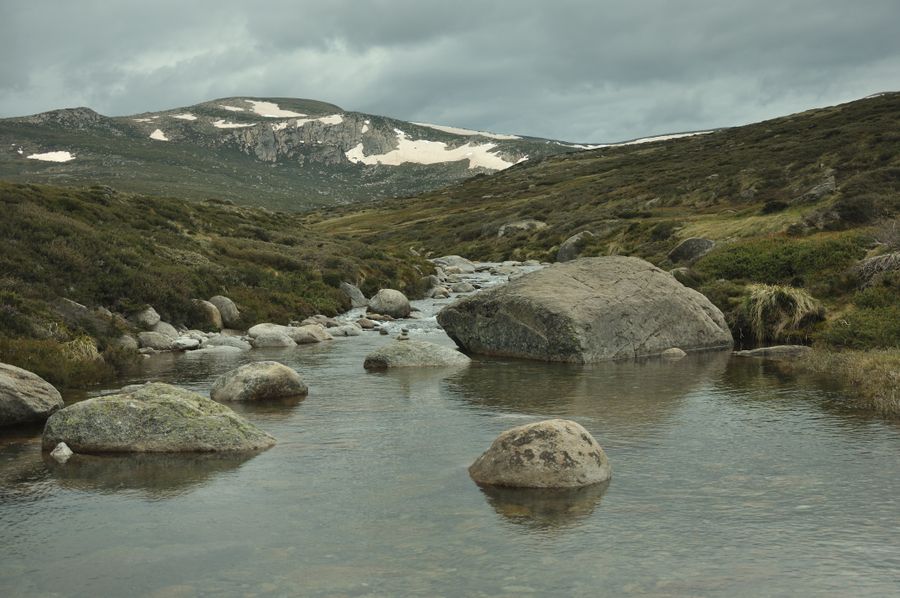
Australia vs Oceania: what actually counts
Before the ranking, we need to agree on the playing field — otherwise the numbers swing by thousands of metres depending on who you ask. In practice, “the highest mountain in Australia” is used in four different senses:
- Mainland (continental) Australia — what most people mean. The winner is Mount Kosciuszko (2,228 m), and it is the main focus of this article.
- Australia including its external island territories — then the crown goes to Mawson Peak (2,745 m) on Heard Island. It is Australian territory politically, but geographically it is a subantarctic outpost 4,100 km south-west of Perth.
- Australia including the Antarctic claim — and this is the answer almost every list gets wrong. Geoscience Australia states plainly that the highest point on Australian territory lies in the Australian Antarctic Territory: Mount McClintock (3,490 m) in the Britannia Range is the highest mountain, and the ice dome of Dome Argus (4,093 m) is the highest point of all. The catch is that the claim is recognised by only a handful of countries and is frozen under the Antarctic Treaty, so most rankings quietly leave it out.
- Australia as a continent, or Oceania — geologically New Guinea sits on the same continental plate, and there Puncak Jaya (4,884 m) towers above everything else. It is the official “Australian” summit in the Seven Summits challenge.
A simple rule of thumb: ask about the highest mountain you can drive to in Australia and the answer is Kosciuszko. Ask about the highest point on land Australia administers and it is in Antarctica. Ask about the highest mountain of the continent or the region of Oceania and it is Puncak Jaya. All three answers are right — they are just answering different questions.
💡 Tip: If you are collecting the Seven Summits, you will run into two versions of the list. The “Messner” list takes Puncak Jaya for Australia/Oceania; the “Bass” list takes the gentler Mount Kosciuszko. Most mountaineers today treat Puncak Jaya as the harder and more prestigious option — which is why plenty of people walk up Kosciuszko and still never get to call the set complete.
The 12 highest mountains in Australia, one by one
Here is the verified list. The first eight peaks all stand in the Snowy Mountains (Australian Alps) in New South Wales, strung along the Main Range within a few kilometres of one another — which is why their elevations are so close together. Then comes Mawson Peak out in the Indian Ocean, and finally the high points of the other states. One warning about ranks: Geoscience Australia counts several unnamed summits on the Main Range, so a peak’s “position” shifts by a place or two depending on whether nameless bumps make the cut.
1. Mount Kosciuszko — 2,228 m
The king of the mainland and its highest point. It sits on the Main Range of the Snowy Mountains in Kosciuszko National Park, NSW, not far from the Victorian border. The Polish explorer Paweł Edmund Strzelecki named it in 1840 after the national hero Tadeusz Kościuszko; the spelling was officially corrected to “Kosciuszko” only in 1997. For a walker it is the most forgiving 2,000-metre peak imaginable — gentle grassy slopes, an obvious track and not a single move of climbing.
2. Mount Townsend — 2,209 m
The second-highest mountain on the mainland, just 19 metres shy of Kosciuszko and only 3.7 km away. You will often hear that the two names were simply swapped once surveyors realised the wrong summit had been christened — that version is a myth, and the real story is better. Strzelecki’s party actually stood on this peak first, on 12 March 1840; he took his measurements here, worked out that the neighbouring dome was slightly higher, named that one after Kościuszko and walked over to it alone. Then in 1870 a Victorian survey mislabelled its map and pinned the name Kosciusko onto Townsend. In 1885 the Austrian alpinist Robert von Lendenfeld, working from that faulty map, announced he had discovered Australia’s highest mountain and named it after the surveyor Thomas Scott Townsend. New South Wales kept Kosciuszko on the true summit and gave Lendenfeld’s name to the runner-up — which is where the confusion has lived ever since. A 1940 study by B. T. Dowd of the NSW Lands Department settled the record. What is undeniably true is that Townsend looks the part: a sharper, rockier profile that fools the eye into reading it as the bigger mountain.
3. Mount Twynam — 2,195 m
The third-highest summit in the country, again on the Main Range, listed as 2,195 m by Geoscience Australia and 2,196 m in most other sources. It is far quieter than Kosciuszko and popular with backcountry skiers. Below it lies Blue Lake, one of the handful of glacial lakes on mainland Australia — a leftover from the days when there really were glaciers here.
4. Rams Head — 2,190 m
Fourth on the list, south of Kosciuszko. This is a rockier, more broken summit strung along the Ramshead Range, and among the Snowy Mountains two-thousanders it is one of the rougher and emptier ones. The surrounding ridge is studded with striking stacks of giant granite boulders, and it links neatly into a walk from Dead Horse Gap above Thredbo.
5. Mount Etheridge — 2,180 m
The fifth-highest point on the mainland is, officially, an unnamed peak on Etheridge Ridge right next to Kosciuszko — Geoscience Australia lists it exactly like that. The ridge carries the name of the English geologist Robert Etheridge, who worked for the Geological Survey of New South Wales in the late 19th century. The Kosciuszko summit walk skirts around it, so most people pass within a few hundred metres of the continent’s fifth-highest summit without knowing it. That completes the top five, all of them in the Australian Alps.
6. Rams Head North — 2,177 m
The sixth-highest summit sits at the northern end of the Ramshead Range, close to its namesake. It is a rocky, boulder-strewn top off the main tourist track, so the people who get there are usually the ones deliberately ticking off the highest points of the Snowy Mountains. The view along the whole Main Range from up here is among the best in the area.
7. Alice Rawson Peak — 2,160 m
Seventh, standing on the Main Range west of Mount Townsend above the deep trench of Wilkinsons Creek. It is barely visited: the only way up is an unmarked route across alpine tundra, which makes it a target for confident walkers with a map rather than a casual afternoon out. Handily for peak-baggers, it can be combined with Townsend in a single long day.
8. Carruthers Peak — 2,145 m
One of the best viewpoints on the entire Main Range, and the one high summit on this list you reach without leaving a marked track — the Main Range walk goes straight over it between Blue Lake and the Clarke Range. Depending on how you count, it is ranked seventh or ninth: the unnamed 2,159 m top near Byatts Camp and Abbott Peak (2,145 m, level with Carruthers) sit in between. It was named after Joseph Carruthers, the NSW premier who as Minister for Lands pushed through the Summit Road. From the top you look down into glacial cirques holding Blue Lake and Club Lake.
💡 Tip: The highest summits of the Snowy Mountains lie within roughly 12 km of one another, so they can be strung into a single trip. The multi-day circuit over Australia’s highest peaks (known as the Highest Peaks Track) runs to about 50 km, starts and finishes at Charlotte Pass and takes three to four days. A good chunk of it is off-track, so it is for experienced walkers with map and compass — and with a plan for weather that changes fast.
9. Mawson Peak — 2,745 m (Heard Island)
Here we leave the mainland behind. Mawson Peak is 517 metres higher than Kosciuszko and, outside the Antarctic claim, the highest point on Australian territory. It is an active volcano — the summit of the Big Ben massif — on uninhabited Heard Island, some 4,100 km south-west of Perth and closer to Antarctica than to Australia. Lava flows have been observed almost every year since 2008, which makes it the only volcano on a subantarctic island with essentially continuous activity. Getting there means a research vessel or a private expedition yacht: there have been just three successful ascents, in 1965, 1983 and over the summer of 1999–2000. For an ordinary traveller it is a statistic, not a destination.
10. Mount Bogong — 1,986 m (Victoria)
The highest mountain in Victoria and the heart of the Alpine National Park. Among Australian walkers it has a reputation as the real thing: from the Kiewa Valley the mountain rises 1,650 metres to the summit, which is a bigger continuous climb than anything in the Snowy Mountains. Steep spurs, exposed ridgelines and weather that turns without warning — the memorial huts on the Staircase Spur exist for a reason. In winter it is a favourite with ski tourers. The name comes from a local Aboriginal word for the bogong moth, which migrates here in its millions every summer.
11. Mount Bartle Frere — 1,622 m (Queensland)
The highest mountain in Queensland, hidden in tropical rainforest in Wooroonooran National Park about 51 km south of Cairns. Its Ngadjonji name is Choorechillum. Geoscience Australia records the South Peak at 1,611 m while Queensland sources give 1,622 m, so treat the figure as a range. Either way the atmosphere is nothing like the Alps: humidity, vines, cloud forest and leeches, with the summit routinely a good ten degrees cooler than the coast. The climb is a full, sweaty day, rewarded — when the cloud lifts — by a view over the canopy to the Coral Sea.
12. Mount Ossa — 1,617 m (Tasmania)
The highest mountain on Tasmania, in the middle of Cradle Mountain–Lake St Clair National Park. It stands right beside the legendary Overland Track, so plenty of through-walkers take it as a side trip from Pelion Gap. Jurassic dolerite columns, buttongrass moorland and raw Tasmanian weather — for many people this is the finest mountain on the whole list, whatever the numbers say.
If you are collecting state high points rather than raw elevation, here is the full set:
| State / territory | Highest point | Elevation |
|---|---|---|
| New South Wales | Mount Kosciuszko | 2,228 m (7,310 ft) |
| Victoria | Mount Bogong | 1,986 m (6,516 ft) |
| Australian Capital Territory | Bimberi Peak | 1,913 m (6,276 ft) |
| Queensland | Mount Bartle Frere | 1,611–1,622 m (5,286–5,322 ft) |
| Tasmania | Mount Ossa | 1,617 m (5,305 ft) |
| Northern Territory | Mount Zeil | 1,531 m (5,023 ft) |
| South Australia | Mount Woodroffe (Ngarutjaranya) | 1,435 m (4,708 ft) |
| Western Australia | Mount Meharry | 1,253 m (4,111 ft) |
| Heard Island and McDonald Islands | Mawson Peak | 2,745 m (9,006 ft) |
| Australian Antarctic Territory (claimed) | Mount McClintock | 3,490 m (11,450 ft) |
And what about Puncak Jaya (4,884 m)?
Puncak Jaya, also known as the Carstensz Pyramid, rises on the island of New Guinea and is at 4,884 metres the highest mountain in Oceania — and the official “Australian” summit in the Seven Summits project. Politically it is in Indonesia; geologically it belongs to the same continental plate as Australia. Unlike Kosciuszko it is a technical climb: rock pitches at altitude, extreme remoteness and permits that come and go with the security situation in Papua. It is among the hardest of the Seven Summits despite being the lowest of them.
Mount Kosciuszko: the easiest of the Seven Summits
Among the seven continental high points, Kosciuszko is in a class of its own: it is by far the easiest. No rope, no crampons, no acclimatisation. A marked track leads to the top and a reasonably fit visitor walks it in half a day. That is precisely why people who would never take on technical Puncak Jaya put Kosciuszko on their “Bass” version of the list.
The usual starting point is the resort village of Thredbo. The Kosciuszko Express chairlift lifts you to the Eagle’s Nest top station at roughly 1,937 m and turns the climb into a walk. From there a raised metal walkway protects the fragile alpine herbfield all the way to Rawson Pass, then a short path finishes the job — about 13 km return, four to five hours at a relaxed pace. Budget for two costs: the chairlift ticket and the national park vehicle entry fee, which runs at roughly A$17 per car per day outside the snow season and around A$29 in winter.
💡 Tip: The second classic option starts from Charlotte Pass along the old Summit Road — 9 km each way, no chairlift, and it passes the glacial lakes. Take it if you want the summit without the Thredbo crowds. Driving times to the trailheads: Canberra–Thredbo 213 km (about 3 hours), Sydney–Thredbo 493 km (about 6 hours), Melbourne–Thredbo 559 km (about 8 hours). Jindabyne, the nearest town of any size, is 36 km away.
Can you climb them as an ordinary walker?
On the mainland, absolutely — and that is what makes Australia such a rewarding “mountain” destination for people who are not mountaineers. Here is the realistic difficulty:
| Mountain | Elevation | Difficulty for a walker |
|---|---|---|
| Mount Kosciuszko | 2,228 m | Easy — marked track, half a day, family-friendly with the chairlift |
| Mount Townsend | 2,209 m | Moderate — a detour off the main track, a longer day |
| Mount Kosciuszko in winter | 2,228 m | Harder — snow, whiteout, wind chill; winter kit required |
| Mount Bogong | 1,986 m | Hard — 1,650 m of continuous climbing, volatile weather |
| Mount Bartle Frere | 1,622 m | Hard — steep, wet, rainforest scramble, a full day |
| Mount Ossa | 1,617 m | Moderate — side trip from the Overland Track |
| Mawson Peak | 2,745 m | Expedition — remote island, active volcano, three ascents ever |
| Puncak Jaya | 4,884 m | Technical — rock climbing, altitude, permits; not for walkers |
The practical rules for the mainland are simple. The best window is the Australian summer, December to March, when the Alps are clear of snow and the tracks are open. Outside the season — roughly June to September — the Snowy Mountains hold real snow and Kosciuszko becomes a genuine winter ascent: beautiful, but only with the right gear and navigation skills, because the summit plateau is featureless in cloud. Even in midsummer the weather up here can turn within an hour, so layers, a waterproof shell and plenty of water are not optional. Snow can fall in any month of the year.
💡 Tip: The Kosciuszko summit walk and the surrounding treks can be booked as guided trips. Browse tours and hikes in the Snowy Mountains →
Where next
Planning the trip and looking for a base? Most visitors to the Snowy Mountains fly into Sydney or Canberra — Canberra is much closer, but Sydney has far more long-haul connections. Compare flights and fares to Sydney here →
And if you like comparing the roofs of the world, here are our other mountain rankings:
Frequently asked questions
What is the highest mountain in Australia? It depends on the definition. The highest mountain on mainland Australia is Mount Kosciuszko at 2,228 m. Counting the external island territories, the highest point is Mawson Peak (2,745 m) on Heard Island. Counting the Australian Antarctic Territory, the highest mountain is Mount McClintock (3,490 m) and the highest point of all is the ice dome of Dome Argus (4,093 m). The highest mountain in Oceania is Puncak Jaya (4,884 m) in New Guinea.
How high is Mount Kosciuszko? Mount Kosciuszko is 2,228 metres above sea level, or 7,310 feet. It stands on the Main Range of the Snowy Mountains (Australian Alps) in Kosciuszko National Park, New South Wales, close to the Victorian border.
What is the second highest mountain in Australia? Mount Townsend at 2,209 m, only 19 metres lower than Kosciuszko and 3.7 km away from it. Its sharper profile makes it look like the bigger of the two, which is where the persistent story about the names being swapped comes from.
Were the names of Mount Kosciuszko and Mount Townsend really swapped? No. The confusion is real but the swap is not. Strzelecki named the higher of the two summits after Kościuszko in 1840 and NSW maps showed it correctly; a Victorian survey mislabelled the pair in 1870, and Robert von Lendenfeld unknowingly repeated the error in 1885. New South Wales resolved it by keeping the name Kosciuszko on the true high point and giving Townsend’s name to the second peak. A 1940 study by the NSW Lands Department cartographer B. T. Dowd confirmed all of this.
Is Puncak Jaya part of Australia? Politically no — Puncak Jaya lies in Indonesia, on the island of New Guinea. Geologically it sits on the Australian continental plate, which is why the Seven Summits project lists it as the high point of the Australian continent and of Oceania.
Can you walk up Mount Kosciuszko without climbing experience? Yes, easily. A marked track leads to the summit, and the Kosciuszko Express chairlift from Thredbo takes care of the first 570 metres of ascent. From the top station a raised metal walkway carries you almost all the way — about 13 km return and four to five hours, with no technical ground at all.
When is the best time to climb Kosciuszko? The Australian summer, December to March. That is when the Snowy Mountains are clear of snow and the tracks are open. From June to September there is real snow up high and the walk becomes a winter ascent needing proper equipment and navigation skills.
Which are the five highest mountains in Australia? All five highest mainland summits are in the Snowy Mountains: Mount Kosciuszko (2,228 m), Mount Townsend (2,209 m), Mount Twynam (2,195 m), Rams Head (2,190 m) and the unnamed peak on Etheridge Ridge usually called Mount Etheridge (2,180 m).
What is the difference between Mount Kosciuszko and Puncak Jaya in the Seven Summits? They belong to two versions of the list. The “Bass” list takes the easy Mount Kosciuszko for Australia; the “Messner” list takes the demanding Puncak Jaya as the high point of Oceania. Puncak Jaya is far harder technically and most mountaineers now treat it as the more credible option.
Are there any glaciers in Australia? Not any more. Mainland Australia has no permanent glaciers — the Snowy Mountains keep only glacial lakes such as Blue Lake below Mount Twynam as evidence of the last ice age. Permanent ice on Australian territory survives only on remote subantarctic Heard Island around Mawson Peak, and in the Australian Antarctic Territory.
Where should you stay to climb Kosciuszko? Thredbo is the most practical base, right at the bottom of the chairlift. Jindabyne, 36 km down the valley, has a wider choice and lower prices, and Charlotte Pass suits longer walks across the Main Range. Canberra is the closest airport at about three hours’ drive.
Potřebujete pomoct s cestováním?
-
Ubytování 🏨
Vyberte si to nejlepší ubytování, ať už jste kdekoliv, přes Booking.com. -
Půjčení auta 🚗
Auto si snadno najdete přes Booking.com, kde máte často slevu díky ubytování, nebo Rentalcars.com, kde porovnáte nabídky většiny půjčoven. -
Zážitky 🎟️
Přes GetYourGuide.com si vyberete z nejrůznějších výletů i zážitků po celém světě, navíc se zrušením zdarma do 24 h předem.