Last updated 29.8.2026
The road runs out at the southern end of Istria and thirty kilometres of broken, bay-riddled coastline begin, reached down dusty tracks that thread between the scrub. Cape Kamenjak is one of the last stretches of the Croatian coast with no promenade, no hotel complex and no paid sunbed, which is precisely why people keep coming back. Here are 18 things to see and do at Cape Kamenjak, from the prettiest coves to a bar built inside an old quarry and the cliff jumps above it, along with the practical side: what you pay to drive in, where to leave the car and what is not allowed.
In short: what to know about Cape Kamenjak
- Cape Kamenjak sits at the southernmost point of the Istrian peninsula in Croatia, just below the village of Premantura and 12 km from Pula, the nearest city and airport.
- Kamenjak is not a national park, even though half the internet says it is. It is a protected landscape area, and has been since 1966.
- Walking in and cycling in are free; you pay to bring a vehicle. The fee is collected at the barrier by the entrance during the main season.
- The peninsula is 9.5 km long, between 400 and 1,600 metres wide, and its ragged shoreline adds up to roughly 30 kilometres.
- There is no infrastructure. Almost no shade anywhere, no showers, just a handful of bars. Bring your own water and food.
- Water shoes are essential kit here. The beaches are stony and rocky. Do not expect sand.
- Over 550 plant species grow here, including five orchid species found nowhere else in the world.
Cape Kamenjak: what it actually is
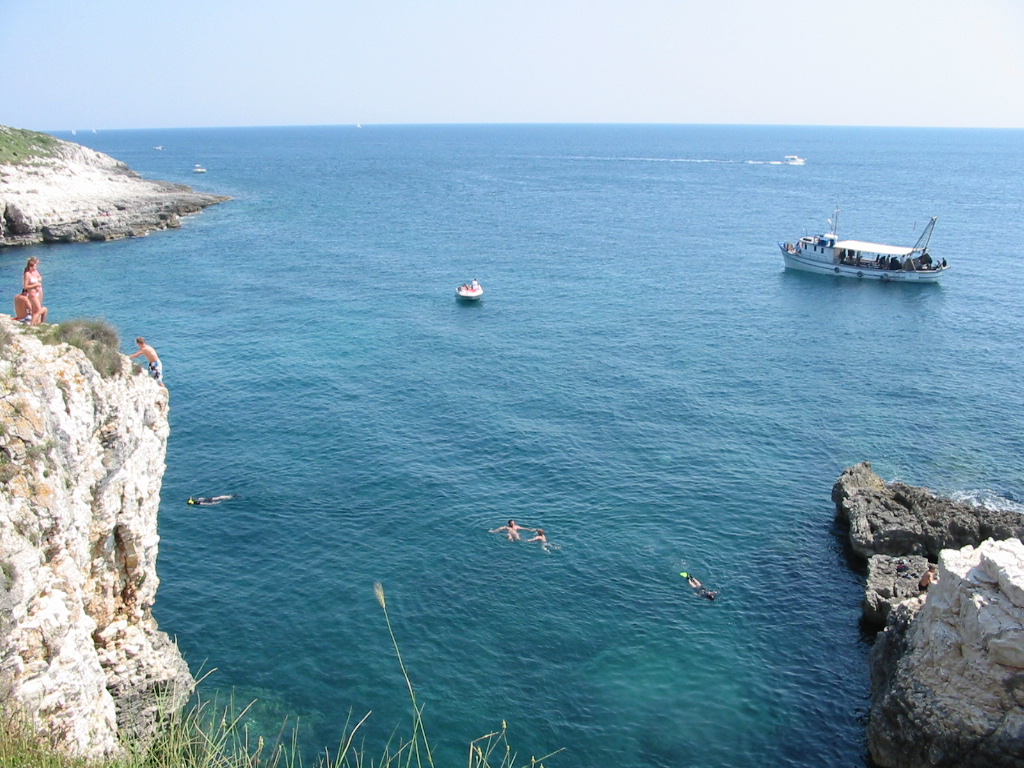
Cape Kamenjak, or Rt Kamenjak in Croatian, is the southernmost cape of Istria, the big triangular peninsula in the northern Adriatic that Croatia shares with Slovenia and Italy. From the village of Premantura the land reaches nine and a half kilometres out to sea and finishes in a point, beyond which there is nothing but open Adriatic and a scattering of islets. The whole area covers roughly four square kilometres, yet because the coast is torn into so many coves and headlands, the shoreline itself runs to about thirty kilometres.
One correction first, because the mistake is everywhere: Kamenjak is not a national park. Croatia has eight of those and this is not one of them. Kamenjak is a protected landscape area, designated in 1966, a different and gentler category of protection, managed by a public body called Javna ustanova Kamenjak. In practice that means you are welcome to come, swim and cycle, but there are rules and they are enforced.
More interesting than the paperwork is what grows here. On this small patch of land botanists have counted over 550 plant species, among them five endemic orchids that occur nowhere else on Earth. That is why picking plants and driving off the marked tracks are both banned.
Where Cape Kamenjak is and how to get there
Kamenjak has no bus stop, no station and no ferry pier of its own, so every route ends the same way: you arrive in Pula and continue south. The good news is that Pula is easy to reach.
- By air. Pula Airport (PUY) is the closest, a small seasonal airport a short drive north-east of the city, with summer flights from the UK and much of Europe. Outside the summer schedule the choice thins out fast and many travellers fly to Zagreb, Trieste, Venice or Ljubljana instead and drive the rest.
- By sea. In summer, passenger catamarans link Pula and other Istrian ports with Venice and Trieste, and Croatian coastal lines connect the peninsula with the islands of the Kvarner gulf. Sailings are seasonal and timetables change every year, so check the operator before you plan around one.
- By car. This is what most people do, and it is the option that makes Kamenjak comfortable. From Pula it is 12 kilometres to Premantura, about twenty minutes, on a single road through Medulin’s hinterland. Driving down from central Europe you will come through Slovenia and enter Istria from the north.
- Local buses. Pula’s city and suburban buses serve Premantura in season, which is enough to get you to the entrance without a car. Beyond the barrier there is no public transport at all, so you walk or cycle from there.
Once you are in Premantura you are already at the gate. The village is the last settlement before the protected area begins, and everything you might need before a day on the rocks, a bakery, a shop, bike hire, a cash machine, is in those few streets.
Cape Kamenjak entrance fee: what you pay and where
The system is simple: walkers and cyclists go in free, motor vehicles pay. The fee is collected at a barrier at the start of the peninsula just past Premantura, and it is charged per vehicle rather than per person, with different rates for a car, a motorbike and a campervan. Collection runs through the main season; outside it the barrier is usually up.
Prices and season dates change every year, which is why we do not quote figures here. You will find the current price list at kamenjak.hr, where you can also buy entry online in advance.
The clever way to do it: leave the car in Premantura and take a bike. You save the entry fee, the peninsula is flat, and you can ride tracks you would rather not take a car down. There are several bike hire places in Premantura, all of them within a couple of minutes of the entrance. Driving in is worth it mainly if you are travelling with small children and a pile of gear.
18 things to see and do at Cape Kamenjak
1. Njive bay
One of the first coves after the barrier and one of the easiest to use. It is a wide bay of flat stone slabs you can spread a towel on, with a gradual walk-in. It draws the biggest crowd on the peninsula simply because it is nearest the entrance, and even so it is nothing like what counts as a busy beach elsewhere on the Adriatic.
2. Polje bay
A broad bay on the eastern side of the peninsula, sheltered from the wind and shallow a long way out. This is the one to pick if you have small children with you, because you can stand up far from shore and there is no current pulling at anyone.
3. Debeljak bay
A stony cove with big flat shelves of rock that work as natural sunloungers. The water is deep from the edge here, which makes it one of the better spots on Cape Kamenjak for snorkelling.
4. Kolumbarica and the Safari Bar
The most photographed corner of the whole cape. Kolumbarica bay is pinched between cliffs, and above it stands the Safari Bar, built from driftwood, netting and old boats into the slope of a disused quarry. You sit in hammocks and on wooden platforms above the sea while reggae plays. Yes, it is touristy, and it still works: on this particular stretch of coast it fits the Adriatic better than a proper restaurant would.
5. Cliff jumping at Kolumbarica
This is where people jump. The cliffs above the bay come in several heights, from a couple of metres to genuinely high, and in season a queue of volunteers forms at the top. Nobody here checks the depth or what is on the bottom. Before you jump, swim out, put your head under and look. Somebody gets hurt here every season.
6. Portić bay
A small, neatly enclosed cove of turquoise water that you reach on foot down a path. It is usually quiet, because you cannot see it from the track.
7. Pinižule and Kršine
Two smaller bays on the western side, where you can crawl into the shade of low pines. The west side faces open sea, so when the wind blows there are waves here, which turns it into the best place on the peninsula for a proper swim in moving water.
8. Plovanija and Školjić
Coves at the southern end, towards the tip of the cape. The further along the peninsula you go, the fewer people there are and the wilder the landscape gets, so these two are often close to empty.
9. The tip of the cape and the view towards Kvarner
The end of the peninsula, where the track simply stops. From here you look out over open sea and, when visibility is good, as far as the islands of the Kvarner gulf. Only low, wind-bent vegetation grows out here, and it is the best place on Cape Kamenjak to watch the sun go down.
10. Fenoliga islet and the dinosaur footprints
Several islets lie off the southern tip, and on one of them, Fenoliga, the rock preserves impressions widely taken to be dinosaur tracks. This is not an organised attraction: nothing to pay, nobody with a ticket booth. You paddle or sail across and hunt for them from a description. Treat it as a bonus for the curious rather than the reason for the trip.
11. Snorkelling
The water around Cape Kamenjak is clear and the seabed is rock, so there is considerably more to look at than off a sandy beach. The best stretches are along the steeper shores, around Debeljak and on the western side. Bring your own mask; there is nowhere on the peninsula to hire one.
12. Kayaking around the peninsula
The best way to see Cape Kamenjak whole. Hire places and guided trips set out from Premantura, following the coastline, stopping at the islets and paddling to caves you cannot reach from land. Reckon on half a day.
13. The sea caves
The cliffs on the southern side hide caves and overhangs you can swim through, reached by swimming or by kayak. The best known is one you can swim into and then climb out onto rock inside. Without a local guide, approach them carefully and never swim into them alone.
14. Windsurfing and kitesurfing at Medulin
East of Kamenjak the shallow bay at Medulin begins, and conditions there suit beginners. It is 13 kilometres, about twenty minutes by car. Both Premantura and Medulin have surf schools.
15. Cycling and running the peninsula
A network of gravel tracks and paths crosses Cape Kamenjak and you can ride the lot in a morning. The terrain is flat, so an ordinary trekking bike handles it. The best plan is to follow the perimeter and stop at whichever coves take your fancy on the way.
16. Sunset from Premantura
The village itself is small, with a church, a few konobas and a little square, but thanks to its position on the western side of the peninsula you can watch the sun drop into the sea from its edge. After a day on the rocks it is the simplest possible full stop.
17. Radovica bay
A small cove on the south-western side that most people drive straight past, because it is reached by a turning off the main gravel track and is invisible from anywhere. You get in over flat slabs, the bottom drops away quickly, and it stays calm even in August. There is no shade at all, so people tend to come here in the afternoon.
18. Dražice and the eastern headlands
A chain of tiny bays between Njive and the tip of the peninsula, reachable on foot along the coastal path. They are not signposted and have no name on the map, which is exactly why they are usually free. The entries are rocky and a southerly pushes waves straight in, so in wind you are better off crossing to the other side.
Where to eat and drink at Cape Kamenjak
There is no shop on the peninsula and no restaurant in the usual sense. What operates here are seasonal bars, open roughly from June to September:
- Safari Bar above Kolumbarica, built from driftwood and palm fronds, with swings and hammocks slung between the trees. It is the best-known spot on Cape Kamenjak and the only one where you can spend a whole afternoon in the shade.
- The bar at Njive bay, with a simple drinks list and basic food, right beside the busiest beach on the cape.
- Restaurants and konobas in Premantura, just outside the barrier. This is where you can eat a real meal, buy ice and top up your water before you go in.
There are no showers, no drinking water and no bins on the peninsula. Bring enough water to last you the whole day, and take your rubbish back out to Premantura with you.
What to pack for Cape Kamenjak
This is probably the most useful section of the article, because Cape Kamenjak does not work like an ordinary beach:
- Water shoes. Not a suggestion, a necessity. Both the seabed and the shore are stony and sharp, and there are sea urchins.
- Plenty of water, and food. You cannot buy anything down in the coves; the bars are in a few places only.
- A parasol or a tarp. There is essentially no shade, the pines are low and thin on the ground.
- Cash. The smaller bars and the barrier may not take cards.
- A rubbish bag. There are almost no bins, and whatever you carry in you carry out.
Watch the wind. When the bura blows, the western side of the peninsula is unusable and the sea is dangerous. On a day like that, head for the bays on the eastern side, Polje for instance, where it stays calm. Croatian forecasts name the wind by direction, and it is worth reading one before you set off for Kamenjak.
Timing beats everything. The barrier queue and the scramble for a spot at Njive both happen between about ten and two. Arrive before nine or after four and you will find the same coves with a fraction of the people, and the light on the rocks is better at both ends of the day anyway.
Where to stay near Cape Kamenjak
You cannot sleep or camp on Cape Kamenjak itself. Accommodation is in Premantura or the surrounding area:
- Premantura: apartments and private rooms right by the entrance to the peninsula. The best choice if Kamenjak is what you came for.
- Campsites near Premantura: large sites directly on the sea on the eastern side, popular with campervans.
- Medulin: a bigger resort with more restaurants and beaches, 13 kilometres away.
- Pula: a city with a Roman amphitheatre and something to do in the evening, 12 kilometres and about twenty minutes’ drive.
You can compare places to stay around Cape Kamenjak on a single map via Stay22.
Day trips from Cape Kamenjak
- Pula, whose Roman amphitheatre is among the best preserved in the world, is twenty minutes away.
- Brijuni National Park, an archipelago with Tito’s former residence and a safari park, reached by boat from Fažana.
- Rovinj, the prettiest town in Istria, is 51 kilometres and just under an hour north.
- Medulin and Nesactium for archaeology and quieter beaches.
When to visit Cape Kamenjak
The season at Cape Kamenjak follows the Istrian one: June and September are the best months, because it is warm, the sea has had time to heat up and there is room in the coves. July and August mean a full car park at the entrance, and even then Kamenjak stays far emptier than a standard Istrian beach simply because of its size. If you do come in peak season, go first thing in the morning or after four in the afternoon.
Out of season the peninsula is open and free, and it is a different landscape, still a good one: orchids in flower in spring, empty paths, wind. It is not swimming weather, though.
Cape Kamenjak: frequently asked questions
Is Kamenjak a national park?No, although it is often described as one. Kamenjak is a protected landscape area, and has been since 1966, a gentler category of protection than a national park. Croatia has eight national parks and Kamenjak is not among them.
Is there an entrance fee for Cape Kamenjak?Walkers and cyclists go in free. Motor vehicles pay a fee at the barrier past Premantura during the main season, charged per vehicle rather than per person. Prices change every year; the current list is on kamenjak.hr.
What are the beaches at Cape Kamenjak like?Stony and rocky, with no sand. The coast is broken into dozens of small coves and at most of them you get into the water over flat rock. Water shoes are effectively compulsory here.
Is Cape Kamenjak worth visiting with children?Yes, but come prepared. The shallow sheltered bays on the eastern side, Polje for example, are the best of them. Bear in mind there is no shade, no showers and no shop, so you need to bring water, food and a parasol.
Can you camp at Cape Kamenjak?No. Camping and sleeping overnight are both banned inside the protected landscape area. The campsites are in and around Premantura, immediately outside the protected boundary.
How do you get to Cape Kamenjak from Pula?It is 12 kilometres from Pula to Premantura, the last village before the entrance, and roughly a twenty-minute drive. From there you carry on onto the peninsula by car through the barrier, or on foot and by bike for free. Pula’s seasonal buses also run to Premantura.
What should I take to Cape Kamenjak?Water shoes, plenty of drinking water, food, a parasol or tarp because of the missing shade, cash for the barrier and the smaller bars, and a bag for your own rubbish. A snorkel is worth it, as the seabed is rock and there is something to look at.
Where is the Safari Bar at Kamenjak?Above Kolumbarica bay, in the southern part of the peninsula. It is built from driftwood and old boats into the slope of a disused quarry, and you sit in hammocks above the sea. It is also the place where people jump from the cliffs.
Potřebujete pomoct s cestováním?
-
Ubytování 🏨
Vyberte si to nejlepší ubytování, ať už jste kdekoliv, přes Booking.com. -
Půjčení auta 🚗
Auto si snadno najdete přes Booking.com, kde máte často slevu díky ubytování, nebo Rentalcars.com, kde porovnáte nabídky většiny půjčoven. -
Zážitky 🎟️
Přes GetYourGuide.com si vyberete z nejrůznějších výletů i zážitků po celém světě, navíc se zrušením zdarma do 24 h předem.