Last updated 2.10.2026
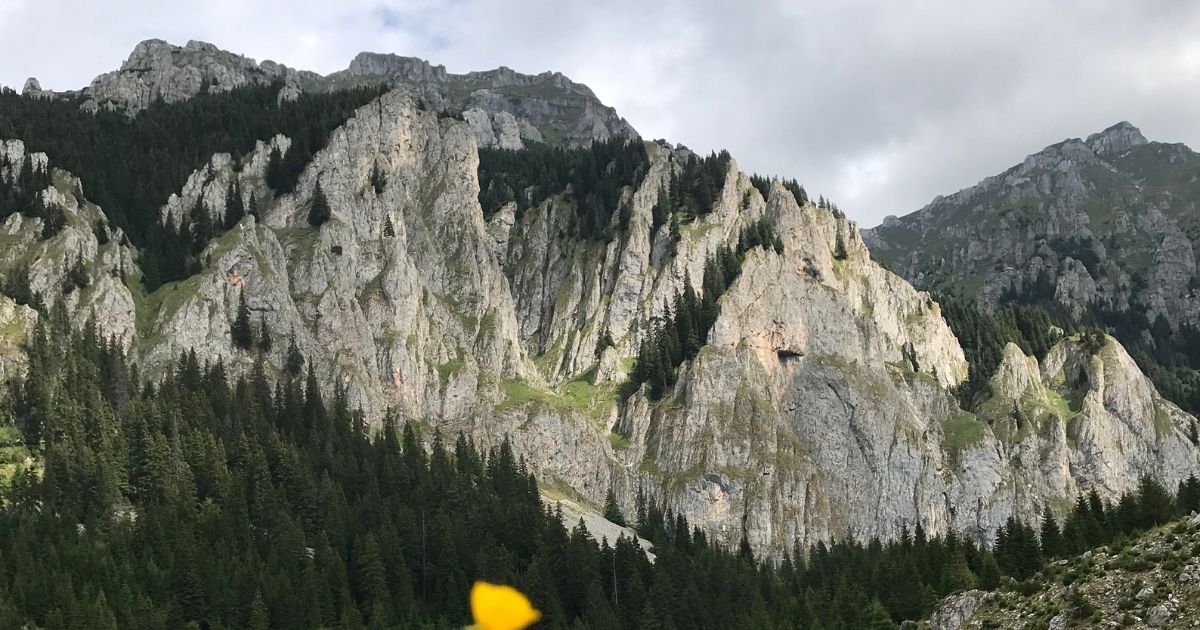
Romania owns the biggest share of the Carpathian arc of any country the range runs through, and its ridges are still emptier than almost anything comparable in the Alps. The mountains in Romania hand you 2,000 metre summits above glacial lakes, high plateaus grazed by sheep and cattle, limestone crests shaped like knife blades and karst plateaus riddled with caves. We have gone through 12 Romanian mountain ranges, added the highest peaks, the best routes, the huts and the three things the Carpathians will genuinely test you on: bears, weather and shepherd dogs. So what are the mountains in Romania actually like?
Mountains in Romania in short
- The highest mountain in Romania is Moldoveanu, 2,544 metres, and it stands in the Făgăraș range.
- Făgăraș is the highest and the busiest range, and its main ridge traverse ranks among the best in Europe.
- The Romanian Carpathians split into three big blocks: the Eastern, the Southern and the Western Carpathians, the last of these known as the Apuseni.
- The mountains in Romania hold the largest brown bear population in Europe. The estimates, however, differ wildly.
- Shepherd dogs are a more realistic hazard than bears. A flock can be guarded by five of them and they read you as a threat.
- Waymarking exists, but it is sparser than in the Alps or the Tatras and hard to follow in mist. A map and offline navigation are not optional.
- The season runs roughly from July to September. Snow lingers on the high ground well into June.
- Getting there: fly into Bucharest, Cluj, Sibiu or Timișoara, then hire a car. Public transport between the ranges is slow.
How the mountains in Romania are divided
The Carpathians enter Romania from Ukraine in the north, curve south through Transylvania and swing west again towards the Danube, so the range forms a rough arc around the Transylvanian plateau. Mountains cover about a third of the country, which is why almost every Romanian city has high ground within a couple of hours’ drive. The Romanian Carpathians break down into three groups:
- The Southern Carpathians, also called the Transylvanian Alps. The highest and wildest part, holding Făgăraș, Retezat, Bucegi, Parâng and Piatra Craiului.
- The Eastern Carpathians, running south from the Ukrainian border. Lower, far more forested, with a volcanic past you can still read in the landscape.
- The Western Romanian Carpathians, the Apuseni. The lowest of the three, but full of caves, karst features and scattered mountain hamlets.
12 mountain ranges and mountains in Romania worth the trip
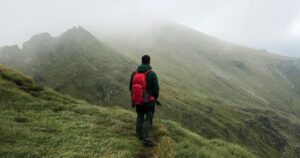
Love mountains, and love them best when there is nobody on them? That is the case for Romania. On some ridges you stand a fair chance of meeting more bears than people, though of course it depends entirely on where you go.
1. Făgăraș Mountains
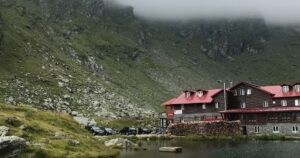
Romania’s highest range and the obvious number one. This is where Moldoveanu stands, at 2,544 metres the highest mountain in Romania, with Negoiu right beside it. The main ridge runs for tens of kilometres above the treeline and traversing it is one of the finest multi day walks in Europe. Glacial lakes sit below the crest, among them Bâlea Lac, reached both by the Transfăgărășan road and by cable car.
Făgăraș is not a soft option. The ridge is long, the escape routes are far apart and the weather turns fast. Allow five to eight days for the traverse and accept that some of those nights will be spent in a tent.
2. Retezat
The range with the densest concentration of glacial lakes in Romania, dozens of them, the largest being Bucura. It is a national park with stricter rules and genuinely wild country, and your chances of seeing chamois are real. Quieter than Făgăraș, but harder to reach.
3. Bucegi Mountains
The most visited range in the country, thanks to easy access from Sinaia and Bușteni, both served by cable car. Up on the plateau stand the Babele rock formations and the Sfinxul, the Sphinx, along with the monumental cross on Caraiman. This is where day trips from Brașov and Bucharest head.
4. Piatra Craiului
A narrow limestone ridge more than twenty kilometres long that looks like a knife stood on its edge. The ridge traverse is exposed and fitted with cables, so it is the closest thing here to a via ferrata. It sits a short drive from Brașov and Bran.
5. Apuseni Mountains
The Western Carpathians, full of caves, shafts and karst plateaus. This is where you find the Scărișoara ice cave with its underground glacier, and gorges you walk through in the water. The peaks are lower, but the landscape is the most varied in Romania.
6. Parâng
Neighbours of Făgăraș, crossed by the Transalpina, the highest surfaced road in Romania. Broad ridges, glacial lakes and considerably fewer people than on Făgăraș.
7. Ceahlău
A solitary mountain in the Eastern Carpathians that Romanians treat as sacred. It rises above the Bicaz reservoir and gives one of the finest views in the country.
8. Rodna Mountains
The highest range of the Eastern Carpathians, topped by Pietrosul at over 2,300 metres. It lies in the north, next to Maramureș, and the quiet up here is the real thing.
9. Maramureș and the Rodna foothills
Not high mountain country, but a landscape of UNESCO listed wooden churches, hay barns and villages where the grass is still cut by scythe. If you want mountains combined with landscape and with people, this is the best part of Romania.
10. The Harghita and Călimani Mountains
The volcanic stretch of the Eastern Carpathians, with craters, mineral springs and peat bogs. It also holds Lake Sfânta Ana, the only volcanic crater lake in Eastern Europe.
11. The Bicaz Gorge and the Red Lake
A gorge with a road squeezed between vertical walls, and close by Lacu Roșu, a landslide dammed lake with the remains of a drowned forest still standing out of the water.
12. The Danube Gorges and Almăj
The southernmost mountains, down by the Danube, where the river forces its way through the Kazan gorge. The Czech villages of the Banat lie not far from here, so the two combine well.
What to watch out for in the Romanian Carpathians
You do not simply wander off into these hills. Trails are not uniformly well marked, and you will regularly meet animals you would rather have avoided. None of it makes the mountains in Romania dangerous, but all of it rewards preparation.
Shepherd dogs
We start with them deliberately, because they are a more realistic hazard than bears and hardly anyone arrives ready for them. A single flock of sheep can be guarded by five big dogs whose job is to drive off anything that approaches. They do not distinguish between a wolf and a walker.
- Never run and do not shout.
- Stop, turn and face the dogs, then walk slowly around the flock in a wide arc.
- Keep a stick or your trekking poles in hand, but do not wave them about.
- Call out to the shepherd. He is usually nearby and will call the dogs off.
Bears
The Romanian Carpathians hold the largest brown bear population in Europe. The actual figures, though, differ sharply: international sources talk about more than six thousand bears, while the Romanian authorities work with a substantially higher number after their own count, one that is disputed on both scientific and political grounds. Wherever the truth sits, the practical advice for a walker is identical.
- Make noise as you walk. Most encounters happen because both sides are surprised.
- Do not walk at dusk or after dark.
- Never leave food by the tent, not even in the porch.
- Never feed a bear and do not stop at the roadside for a photograph. That habit is exactly what created the problem on the Transfăgărășan.
- If you do meet one, do not run. Back away slowly and keep talking in a calm voice.
We have covered bears in the Romanian mountains in more detail in a separate article on bears in Romania.
Weather
On the ridges of the Southern Carpathians the weather changes within the hour, and afternoon thunderstorms are the summer rule rather than the exception. On Făgăraș there is nowhere to run to either, because the ridge is long and the escape routes are far apart. You set off early and you want to be heading down, or at a hut, by midday.
Waymarking and maps
Romanian waymarking works on much the same principle as elsewhere in Central Europe, with coloured stripes, crosses and triangles on rocks and trees, but it is sparser and less well maintained. In mist it is easy to lose, and some older marks lead somewhere other than the map promises. Carry a paper map as well as offline navigation and do not count on a phone signal.
Where to stay in the Romanian mountains
A system of mountain huts, cabana in Romanian, does exist, but it is thinner than in the Alps and the huts themselves are simpler places. The main ridges also have refuges and shelters whose condition varies enormously. What that means in practice:
- Plan a longer traverse around a tent and a sleeping bag, even if you intend to sleep in huts. Capacity is limited and booking frequently does not work.
- Sort your water as you go. There are springs on the ridges, but not everywhere, and they dry up in a hot summer.
- Huts are paid for in cash, in lei.
- Wild camping is restricted inside the national parks, so follow the rules of the particular park.
Pick your base according to the range, because distances in Romania are long: Brașov covers Bucegi and Piatra Craiului, Sibiu covers Făgăraș, Cluj covers the Apuseni, and Baia Mare covers Maramureș and Rodna. A hostel bed runs at roughly 75 to 125 lei per person per night (about £13 to £21), a double room in a guesthouse at roughly 225 to 375 lei with breakfast (about £38 to £64), which makes Romania markedly cheaper than the Alps. Many guesthouses quote in euros as well, so carry both. Compare current rates through accommodation in the Romanian mountains.
Best time to visit the mountains in Romania
- July to September: the main season, when the ridges are clear of snow and the huts are open. September is the pick of it, with fewer storms and fewer people.
- June: snow still lies on the higher ground and the glacial lakes are often frozen.
- October: glorious colour and real quiet, but short days and the risk of the first snow.
- Winter: experienced walkers only, with proper winter mountaineering kit. Bucegi and Postăvaru have ski resorts.
How to get to the Romanian Carpathians
Romania is served by flights into Bucharest, Cluj, Sibiu and Timișoara, and from any of them a hire car is the sensible next step, because public transport between the mountain regions is slow. Bucharest is the busiest airport and usually the cheapest to reach, Cluj puts you closest to the Apuseni, and Sibiu is the natural door to Făgăraș. Check current routes before you commit to a base, as the smaller airports change their schedules from season to season.
Without a car you are not stuck, but you are limited. The rail line running north from Bucharest towards Brașov passes through Sinaia and Bușteni, both of which have cable cars up onto the Bucegi plateau, so that one range can be done entirely on public transport. Everywhere else, expect connections to involve a change and a wait, and budget generously for the transfer. If you are driving your own car from elsewhere in Europe, keep in mind that the country is large and that mountain roads, the Transfăgărășan included, are far slower than the distance suggests.
| Base | Ranges within reach | Good for |
|---|---|---|
| Brașov | Bucegi, Piatra Craiului | First visit, day walks, cable car access |
| Sibiu | Făgăraș | The ridge traverse, Bâlea Lac, the Transfăgărășan |
| Cluj | Apuseni | Caves, gorges, karst plateaus |
| Baia Mare | Maramureș, Rodna | Quiet ridges, wooden churches, village life |
Which Romanian mountains to start with: if this is your first trip, do not open with the Făgăraș traverse. Bucegi makes far more sense, with a cable car up and the option of dropping down at any point, or the Piatra Craiului ridge with Brașov as your base. Save Făgăraș for the second visit, once you know what the Romanian mountains ask of you.
Cash, lei and cards: Romania uses the leu, not the euro, and while cards work fine in Brașov or Sibiu, mountain huts, shepherds selling cheese and small village guesthouses will want cash. Draw lei before you leave the valley, because there are no cash machines on the ridge.
Frequently asked questions about the mountains in Romania
What is the highest mountain in Romania?Moldoveanu, at 2,544 metres, standing in the Făgăraș range in the Southern Carpathians. Negoiu rises right next to it, and the whole Făgăraș ridge runs for tens of kilometres above the treeline.
Which mountain range in Romania is best for hiking?Făgăraș for a multi day ridge traverse, Retezat for glacial lakes and wild country, Bucegi for easy cable car access and Piatra Craiului for an exposed limestone crest. For a first visit, Bucegi or Piatra Craiului is the sensible choice.
Are there bears in the Romanian mountains?Yes. Romania holds the largest brown bear population in Europe, although the individual estimates differ sharply. The rules for walkers are simple: make noise, avoid dusk and darkness, never leave food by the tent and never feed a bear.
Is it safe to hike in Romania?Yes, provided you prepare. The real hazards are shepherd dogs, fast changing weather on the high ridges and sparse waymarking in mist, rather than crime or bears. Walk early, carry a map and offline navigation, and treat every flock of sheep as something to go around in a wide arc.
What are shepherd dogs and how should you behave around them?Sheep flocks can be guarded by five large dogs that read you as a threat, and they are a more realistic hazard than bears. Do not run and do not shout. Stop, face them and walk around the flock in a wide arc. Call out to the shepherd, who is usually nearby and will call the dogs off.
When is the best time to visit the Carpathian mountains in Romania?July to September, with September the best of the three, when there are fewer storms and fewer people. In June snow still lies on the higher ground and the glacial lakes are often frozen. October brings colour and quiet, but short days and the risk of the first snow.
How does waymarking work in the Romanian mountains?On much the same principle as elsewhere in Central Europe, but it is sparser and less well maintained, and easy to lose in mist. Some older marks also lead somewhere other than the map shows. Carry a paper map as well as offline navigation and do not rely on a mobile signal.
Can you sleep in mountain huts in Romania?Yes. A hut system exists, but it is thinner than in the Alps and the huts are simpler. Capacity is limited and booking often does not work, so plan a longer traverse around a tent and sleeping bag even if you hope to sleep under a roof. Huts are paid for in cash, in lei.
How are the Romanian Carpathians divided?Into the Southern Carpathians, known as the Transylvanian Alps and home to the highest ranges of Făgăraș, Retezat and Bucegi, the Eastern Carpathians running south from the Ukrainian border, and the Western Romanian Carpathians, the Apuseni, which are lower but full of caves and karst features.
Potřebujete pomoct s cestováním?
-
Ubytování 🏨
Vyberte si to nejlepší ubytování, ať už jste kdekoliv, přes Booking.com. -
Půjčení auta 🚗
Auto si snadno najdete přes Booking.com, kde máte často slevu díky ubytování, nebo Rentalcars.com, kde porovnáte nabídky většiny půjčoven. -
Zážitky 🎟️
Přes GetYourGuide.com si vyberete z nejrůznějších výletů i zážitků po celém světě, navíc se zrušením zdarma do 24 h předem.