Last updated 30.8.2026
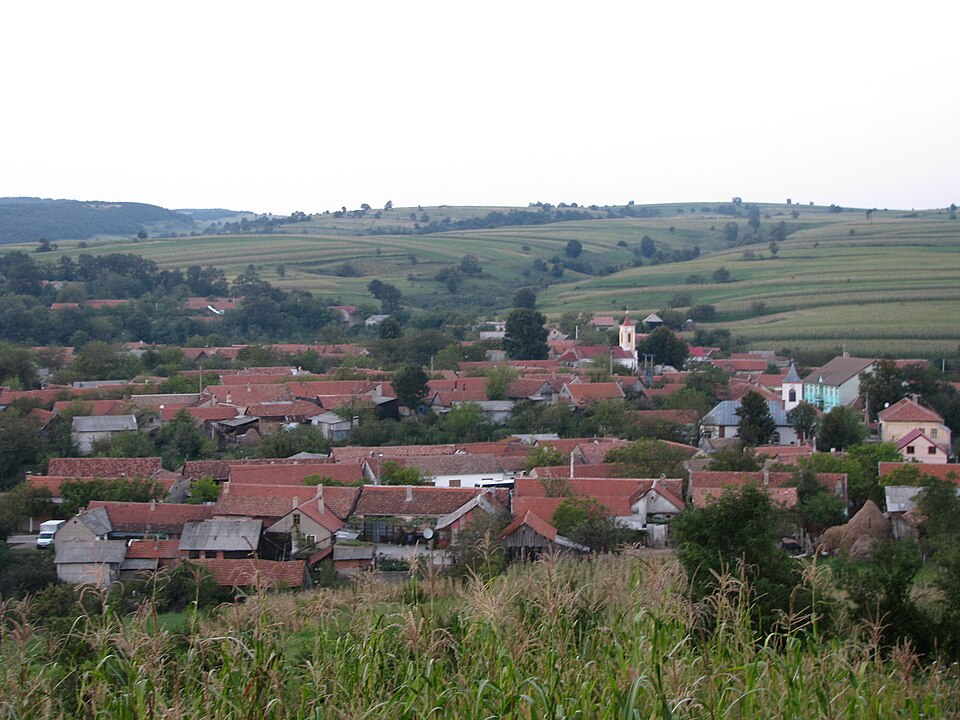
A village where the shop signs are in Czech, the pub talk is in Czech and the graveyard is full of Czech names. Except you are not in Bohemia. You are roughly eight hundred kilometres away, in the hills above the Danube in the far south west of Romania. The Czech villages in Romania, scattered across the region known as the Banat, are sometimes called the Czech island, and they are one of the last places in Europe where a language and a way of farming survived exactly as they were a century ago. Here are all six surviving villages, how to reach them, where to sleep, and the one number that explains the whole area better than anything else.
In short: the Czech villages in Romania
- Czech settlers arrived in the first half of the 19th century, as part of the wave of colonisation that populated the Banat.
- They founded six villages that still exist today: Gerník, Rovensko, Svatá Helena, Bígr, Eibenthal and Šumice.
- The Czech population of Romania is collapsing. There were 3,938 Czechs in the 2002 census and only 1,576 in 2021. Nearly two thirds gone in under twenty years.
- A seventh village, Svatá Alžběta, was abandoned back in 1847.
- People come here mainly to walk. The villages are linked by marked trails and it takes several hours to walk from one to the next.
- You sleep in villagers’ homes, which also happens to be the single most useful thing you can do for the area.
- The usual way in is a flight to Timișoara, a hire car and a final stretch on narrow, patchy mountain roads.
- Bring cash in lei. Cards do not work in the villages and the nearest cash machine is in a proper town.
Who the Banat Czechs are and why there are Czech villages in Romania
Start with the map, because the name confuses people. The Banat is a historic region split today between Romania, Serbia and a corner of Hungary. The Romanian part sits in the south west of the country, bounded by the Danube on the south, and in the 19th century it was frontier land on the southern edge of the Habsburg monarchy. Frontier land needed people, and the monarchy went looking for them.
Most of the Banat Czechs arrived in the first half of the 19th century, as part of that wider wave of colonisation. Settlers were promised land and tax relief and they came from the Czech lands to claim it. The reality turned out to be harsher than the offer: the soil in the hills above the Danube was stony, the climate rough, and the new villages were cut off from everything.
Those settlers founded Gerník, Rovensko, Svatá Helena, Bígr, Eibenthal and Šumice, plus one more settlement, Svatá Alžběta, which was abandoned as early as 1847. Some of them later moved on again and founded Češko Selo in what is now Serbia. German colonists from the Czech lands settled further north, which is where villages such as Weidenthal and Lindenfeld came from.
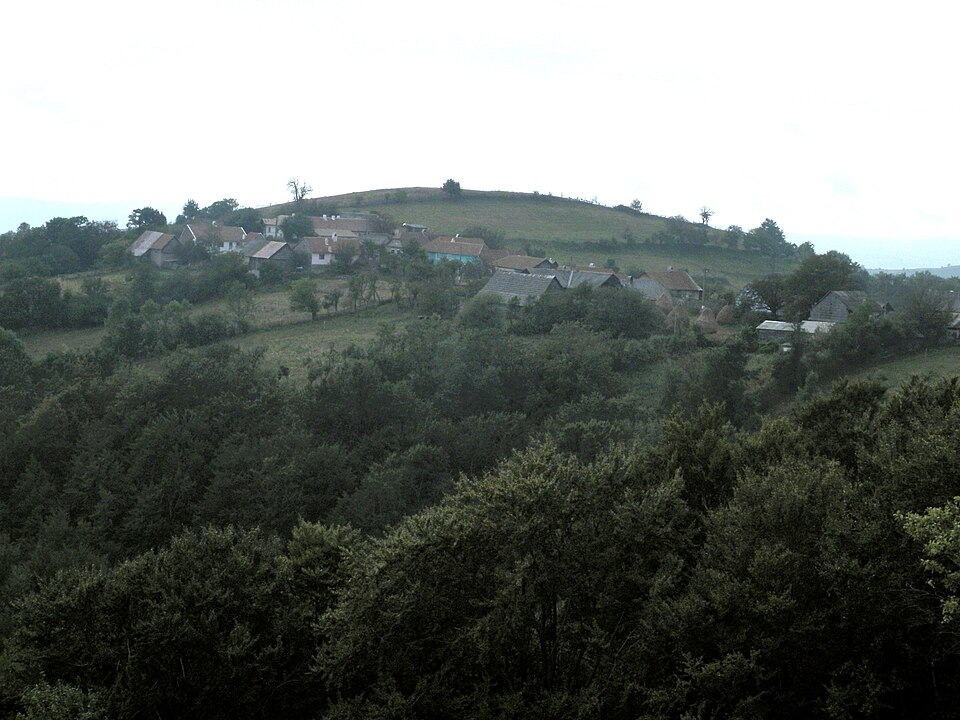
The interesting part is what the isolation did. For generations it was a curse: bad roads, no work, no way out. Because almost nobody reached these hills for a hundred years, the Czech language, the customs and the whole system of farming stayed put long after they had disappeared in the Czech Republic itself. Fields are still worked with horses in places and hay is still dried on wooden racks. The Czech you hear in the pub sounds archaic to a modern Czech ear, full of words that fell out of use elsewhere generations ago. Nobody engineered this. It simply never changed.
That is also why the villages are worth the detour even if you have no connection to Czech culture at all. This is not a heritage park with staff in costume. It is a living pocket of 19th century Central Europe that ended up on the wrong side of several borders and was left alone.
How many Czechs still live in the Czech villages in Romania
Here is the number that frames everything else. The census recorded 3,938 Czechs in Romania in 2002. The 2021 census found 1,576. That is nearly two thirds gone in under twenty years, and the trend has not stopped.
The reason has nothing to do with tourism. Young people leave for work, either to Czech cities or to Romanian ones, and the villages are left with the older generation. For anyone planning a trip, that means two things. First, you are going to see something that is disappearing, and the version you see will not be the version somebody sees in ten years. Second, money spent inside the villages actually matters, because a room in a family home and a meal bought from the people who cooked it are real income for households that have very little else.
How to behave in the Banat: this is not an open air museum. These are inhabited villages where people live and work. Do not photograph anyone without asking, do not wander onto private land, and expect the whole village to be at church on Sunday morning. If you get talking to somebody, you will learn more in half an hour than from any guidebook.
All six Czech villages in Romania, one by one
Six villages survive, and they are not interchangeable. They differ in size, in altitude, in how easy they are to reach and in how many other visitors you will meet. Pick according to how much time you have.
1. Gerník, the largest of the Czech villages in Romania
Gerník (Gârnic on Romanian maps and road signs) is the biggest and best known of the villages, and for most people the first stop. It has a church, a school, a shop, a bakery and a pub, and by some distance the widest choice of rooms in family homes. It is also the trailhead: most walking loops to the other villages start and finish here. If the Banat is only getting two days of your itinerary, spend them in Gerník.
2. Rovensko, the highest one
The highest of the Czech villages, ringed by meadows. Smaller and quieter than Gerník, and the best place to see traditional farming happening in front of you rather than described on a board. The walk up here is worth the effort on its own.
3. Svatá Helena, the one above the Danube
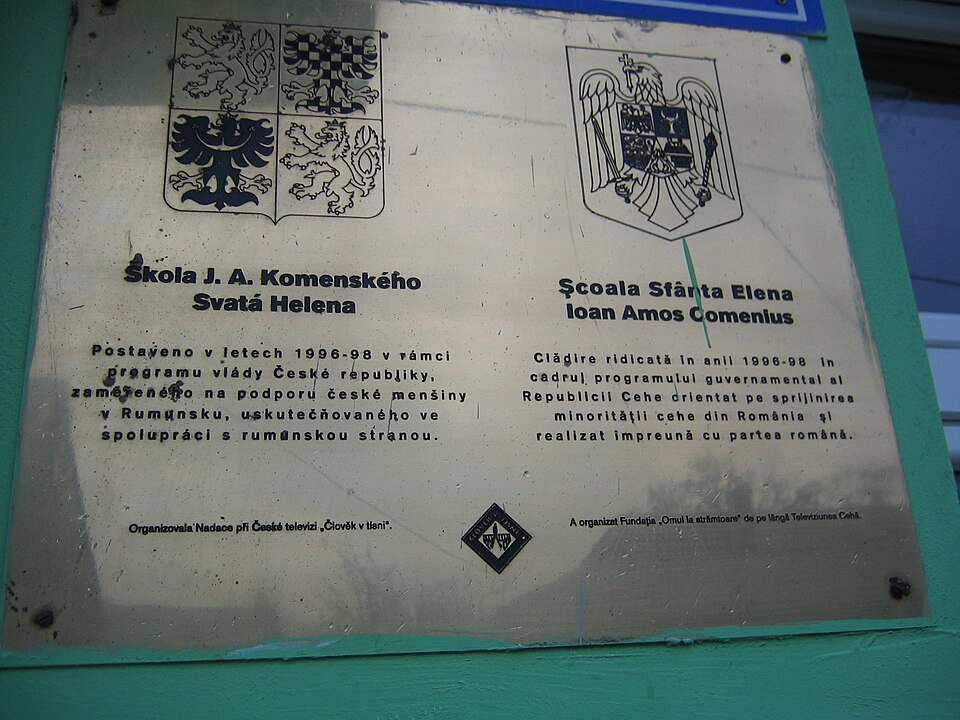
Svatá Helena (Sfânta Elena) is the village closest to the Danube, looking down into the valley, and it has an atmosphere the others do not, because Catholics and Baptists live here side by side. It is also within reach of the Danube gorges, so it slots neatly into a longer route along the river.
4. Bígr, the one most people skip
A smaller village off the main routes, and only a fraction of visitors bother. Which is exactly the argument for going, if you have a spare day and want the Banat without anybody else in it.
5. Eibenthal, the mining village
Eibenthal has an industrial past: this was a coal village, and the mine kept it alive for generations. It sits close to the Danube and it is the shortest hop from any of the villages to the Kazan gorge. In recent years it has also become the festival village, which brings music, visitors and a bit of money in late summer.
6. Šumice, the end of the road
The smallest and hardest to reach of the surviving villages, set apart from the rest. If you want to stand at the actual end of the line, this is the address.
Faith and daily life in the villages
For settlements this small, the religious make up is surprisingly varied, and it shapes the rhythm of the week. Most of the villages are Catholic, and the church is still what holds the community together. On Sunday morning the village is in church and the streets are empty. Plan around it rather than turning up expecting to buy bread.
The exception is Svatá Helena, where Catholics and Baptists live alongside each other. That has a practical consequence for visitors too: Baptist households do not drink, so the shot of home distilled spirit that counts as a greeting elsewhere in the Banat simply will not appear. Nobody will explain this in advance, so it helps to know.
The same religious continuity is why customs survive here that vanished in the Czech Republic decades ago. Pilgrimages, the village feast day and the pre Lent carnival are not revived folklore staged for outsiders. They are just what happens in that month of the year.
What the villages live on today
Originally it was farming and forestry, and later mining was added to the mix. Most visibly in Eibenthal, where coal was dug and where work underground supported the village for generations. When the mine closed, the main source of income went with it and the exodus of young people accelerated.
Today the local economy stands on three legs:
- Subsistence farming. A field, an orchard, a cow and a pig, in other words the way of life that ended in the Czech Republic decades ago. This is why you see hay drying on racks and fields ploughed with horses.
- Tourism. A good number of families have converted part of the house into guest rooms, and it is genuine income. Some former miners set themselves up in the business after the pit closed.
- Work abroad. A large share of the younger generation works in the Czech Republic and comes back seasonally or for the holidays.
Why this matters to you: paying a family for a bed and dinner instead of checking into a hotel in Oravița puts that money inside the village. It is the simplest way to help the Czech villages of the Banat last a little longer.
How to get to the Banat
The Banat is not somewhere you pass through on the way to somewhere else. You have to decide to go.
- Fly to Timișoara. It is the nearest airport of any size and the obvious entry point, and it is worth checking which airlines are flying there in your travel window, because the route map changes from season to season. From the city it is a few hours south by road to the villages.
- Fly to Bucharest if the fares or the timings work better, but be honest about the map: the Banat is at the opposite end of the country, so this only makes sense as part of a longer Romanian trip.
- Hire a car. Public transport in this corner of Romania is thin, and without your own wheels you will spend the trip waiting rather than walking. Pick up the car at the airport and take the smallest bookable class you are comfortable with, but not the lowest slung one, see below.
- Expect the last stretch to be slow. The final few dozen kilometres run on narrow roads in patchy condition, and some villages are only reachable by car in dry weather. Low clearance vehicles are a bad idea here. Whatever your satnav says the driving time is, add to it.
- By train and then locally. You can reach Oravița or Moldova Nouă by rail and continue with local transport or on foot. It works, but it eats a day in each direction.
- Seasonal coaches from the Czech Republic run in summer all the way into the villages. Niche for most readers, but worth knowing if your route happens to go via Prague, and the fares support local operators.
Do your admin in the last proper town. Fill the tank, buy any pharmacy items you might need and draw cash in lei before you turn off towards the villages. There is no cash machine up there and cards are not accepted, so arrive with enough notes for accommodation, meals and anything you buy locally.
Walking between the Czech villages in Romania
This is the best way to experience the Banat, and the reason most people who come once come back. The villages are linked by waymarked hiking trails, and each leg takes several hours through country where you will meet almost nobody. The classic plan is to drive to Gerník, leave the car there and spend a few days walking from village to village, sleeping somewhere different each night.
Things to be aware of before you set off:
- The waymarking is not Alpine standard. Marks are sparser and less maintained than you may be used to in Western Europe, so carry a paper map and an offline navigation app with the route downloaded.
- Distances are longer than they look. The terrain is hilly and the paths wind, so a short line on the map turns into a long afternoon.
- Carry your water. There is nowhere to refill between villages.
- There are bears and wolves in these hills. The chance of an encounter is small, but the usual Carpathian rules apply: make noise as you walk, avoid being out at dusk and never leave food outside.
- Phone signal is weak and in places non existent. Tell your hosts roughly when to expect you.
Where to sleep and what you will eat
You stay in villagers’ homes. This is not a hotel arrangement: you get a room in the house, breakfast, usually dinner made from what the family grows, and the company of people who speak Czech, just not quite the Czech you would hear in Prague. For most visitors that is the whole point of the trip, and it is also the most direct way to put money into the villages.
- Book ahead, especially in summer and around public holidays. Capacity is genuinely limited and a village can fill up with one group.
- Pay cash in lei. Cards do not work in the villages and the nearest cash machine is in a bigger town.
- Expect home cooking, not a restaurant menu. Vegetarians and anyone with an allergy should say so when booking, not on arrival.
- The home distilled spirit will be offered and declining it takes some doing.
- Bring a bit of English patience. Your hosts speak Czech and Romanian, and English is far from guaranteed, so a translation app that works offline earns its keep.
Where to stay in each village
The supply of rooms varies a lot from village to village, and it is worth planning the route around that rather than the other way round:
- Gerník has by far the largest capacity and the most families taking guests. With a shop, a pub and a bakery it is the most comfortable base and the logical place to start and finish.
- Svatá Helena is the second best bet, with views towards the Danube and a decent choice of rooms in private houses.
- Eibenthal has the most infrastructure of the smaller villages, thanks to the festival and the local associations, including a campsite.
- Rovensko, Bígr and Šumice have very little. You can walk in for lunch and move on, but arrange any overnight stay in advance and accept that you may not get a confirmation.
How to book a room in the Banat
This part works differently from anywhere else you have probably booked. In most cases the rooms are not sold through the usual booking sites. You ring the household directly, message them on Facebook, or go through one of the Czech associations and Banat information websites that act as intermediaries.
- Start early, particularly for August and for the festival week, when the entire Banat is full.
- Say up front how many of you there are and how many nights, and whether you want dinner included.
- Reconfirm the day before you arrive. Signal is poor and an arrangement made a month ago may not have stuck.
- Camping is a realistic option mainly in Eibenthal. Anywhere else, ask the landowner first.
What it costs: a room in a family home with home cooking is among the cheapest accommodation in Europe, in the region of 60 to 100 lei (roughly £10 to £17) per person per night. Keep in mind where that money goes: straight to the families who stayed. Do not haggle, and pay for the dinner even on the night you are not hungry.
Events in the Banat: when the villages come alive
The Banat does not run a year round programme, but there are a handful of dates in the season worth building a trip around.
Festival Banát
The biggest and best known event. It is a multi day festival in Eibenthal mixing Czech music with theatre, talks and folklore, and its whole purpose is to support the emigrant villages that people keep leaving. The 2026 edition runs from 19 to 23 August and is the fifteenth.
Even the travel is part of it. The organisers put on several options, including a special train from the Czech Republic that carries hundreds of people to Orșova in Romania, from where the journey continues by boat and coach to Eibenthal. You can also arrive by plane, by coach, by bike or in your own car, and the packages include accommodation and food.
If you want the Banat quiet, do not come for the festival. For those few days the village is packed and the atmosphere is nothing like it is the rest of the year. If you want the Banat at full volume with a programme attached, this is your week. Current dates and prices are on festivalbanat.cz.
The goulash festival in Svatá Helena
A smaller summer event built around a goulash cooking competition, and in practice a village fete. It usually lands in August and the date shifts from year to year.
Feast days and pilgrimages
Every village has its own feast day, the celebration of its patron saint, and it is the most authentic thing you will see in the Banat. There is baking, there is church, there is music and there is dancing. None of it is staged for visitors, so turn up as a guest rather than as an audience.
Beer festivals and smaller events
Eibenthal and the surrounding villages hold smaller events through the season, beer festivals among them. Over in the Serbian part of the Czech Banat there is a paprikash cook off, along the same lines as the goulash competition.
Check dates right before you travel. Small village events move every year and are rarely published anywhere in advance. The reliable method is to ask the family you are staying with, or to follow the pages of the associations that work with the Banat.
What to combine with the Banat
- The Kazan gorge, where the Danube forces its way between sheer rock walls. It is one of the most striking stretches of river in this part of Europe and it is close to Svatá Helena and Eibenthal.
- The rock carving of Decebalus, an enormous face cut into the cliff above the Danube.
- Iron Gates National Park on the Romanian bank, which protects the whole gorge section of the river.
- Băile Herculane, a spa town full of Austro Hungarian architecture that is beautiful and half collapsing at the same time.
- Timișoara, the nearest big city, with a café scene worth a day at either end of the trip.
- The Carpathians further east. If you have longer, the Banat pairs well with the mountain ranges of Romania and with a drive over the Transfăgărășan, although that is a serious amount of driving away.
When to visit the Czech villages in Romania
- May and June: meadows in flower, green hills and comfortable walking temperatures. The best window in our view.
- September and October: harvest, autumn colour and settled weather. A close second.
- July and August: hot, and you feel it on the climbs, plus the highest number of visitors. On the other hand this is when the Czech community from abroad is around and the villages are lively.
- Winter: the villages under snow are gorgeous, but roads are often impassable and very little accommodation stays open.
How many days: one village fills a day, but the Banat only starts to make sense at three to four days. The ideal version is to leave the car in Gerník and walk at least three villages with nights in local homes. Turn up for a single afternoon and all you will see is houses.
Frequently asked questions about the Czech villages in Romania
How many Czech villages are there in the Romanian Banat?Six survive: Gerník, Rovensko, Svatá Helena, Bígr, Eibenthal and Šumice. A seventh, Svatá Alžběta, was abandoned as early as 1847. Some of the settlers later moved on and founded Češko Selo in what is now Serbia.
Why are there Czech villages in Romania?Most of the settlers arrived in the first half of the 19th century as part of the colonisation of the Banat, then frontier territory of the Habsburg monarchy. They were drawn by promises of land and tax relief, but the reality in the stony hills above the Danube turned out to be far harder than the offer.
How many Czechs live in Romania today?The census counted 3,938 in 2002 and only 1,576 in 2021. Nearly two thirds disappeared in under twenty years, because young people leave for work in Czech and Romanian cities.
Do people still speak Czech in the Banat villages?Yes. Isolation preserved both the language and customs that vanished in the Czech Republic long ago. The dialect sounds archaic and contains words that have fallen out of use elsewhere. Inside the villages, Czech is simply the everyday language.
How do you get to the Czech villages in Romania?Fly to Timișoara, the nearest sizeable airport, and hire a car for the few hours south. The last stretch runs on narrow roads in poor condition and some villages are only reachable in dry weather, so avoid a low slung car. You can also reach Oravița or Moldova Nouă by train and continue locally, but it is slow.
Where do you stay in the Banat?In villagers’ homes. You get a room in the house, breakfast and usually dinner made from home grown ingredients. Book well ahead, because capacity is limited, and bring cash in lei, as cards are not accepted in the villages.
How many days do you need in the Banat?Three to four. The ideal plan is to leave the car in Gerník and walk at least three villages, sleeping in local homes, since the villages are linked by waymarked trails. A single afternoon gets you houses and nothing else.
Are there bears in the Banat?Yes, there are bears and wolves in these hills. The chance of an encounter is small, but the same rules apply as anywhere in the Carpathians: make noise while walking, do not be out at dusk and never leave food outside your accommodation.
Potřebujete pomoct s cestováním?
-
Ubytování 🏨
Vyberte si to nejlepší ubytování, ať už jste kdekoliv, přes Booking.com. -
Půjčení auta 🚗
Auto si snadno najdete přes Booking.com, kde máte často slevu díky ubytování, nebo Rentalcars.com, kde porovnáte nabídky většiny půjčoven. -
Zážitky 🎟️
Přes GetYourGuide.com si vyberete z nejrůznějších výletů i zážitků po celém světě, navíc se zrušením zdarma do 24 h předem.