Last updated 30.8.2026
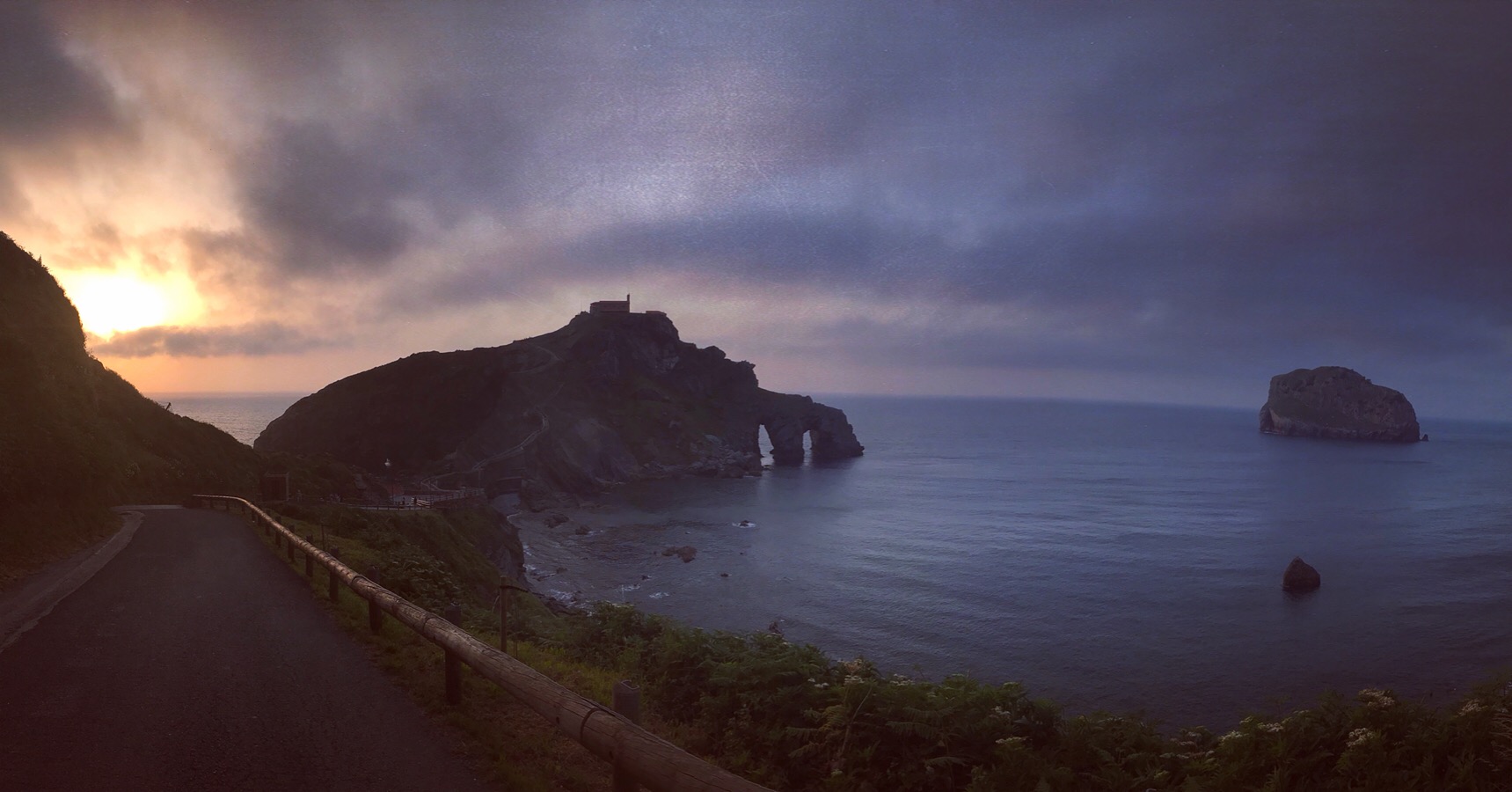
A rocky islet off the Basque coast, a lone hermitage on top of it, a double-arched stone bridge and 241 steps zigzagging above the Bay of Biscay: that is San Juan de Gaztelugatxe, and photographs really do not oversell it. Game of Thrones fans will recognise it instantly as Dragonstone, the ancestral seat of House Targaryen. This guide covers the practical side: how the free timed-entry booking works, how to get there from Bilbao by car and by bus, where to park, when to go and what else is worth seeing along the coast.
San Juan de Gaztelugatxe at a glance
- What it is: an islet crowned by the hermitage of St John, on the Basque coast between the villages of Bakio and Bermeo, joined to the mainland by a bridge and 241 steps.
- Why go: it is one of the most photogenic spots in northern Spain, and the real-life Dragonstone from Game of Thrones.
- Entry: free, but in high season you need a timed booking through the official site tiketa.eus (maximum 10 tickets per person).
- How hard it is: reasonably fit walkers manage the descent and climb in roughly 1.5 to 2 hours, but the path is steep and proper footwear is essential.
- Getting there: about 45 minutes by car from Bilbao, or by Bizkaibus in season. Parking at the trailhead is very limited.
- When to go: spring and autumn are best, ideally on a weekday and either early in the morning or towards evening, when it is quieter and cooler.
What is San Juan de Gaztelugatxe?
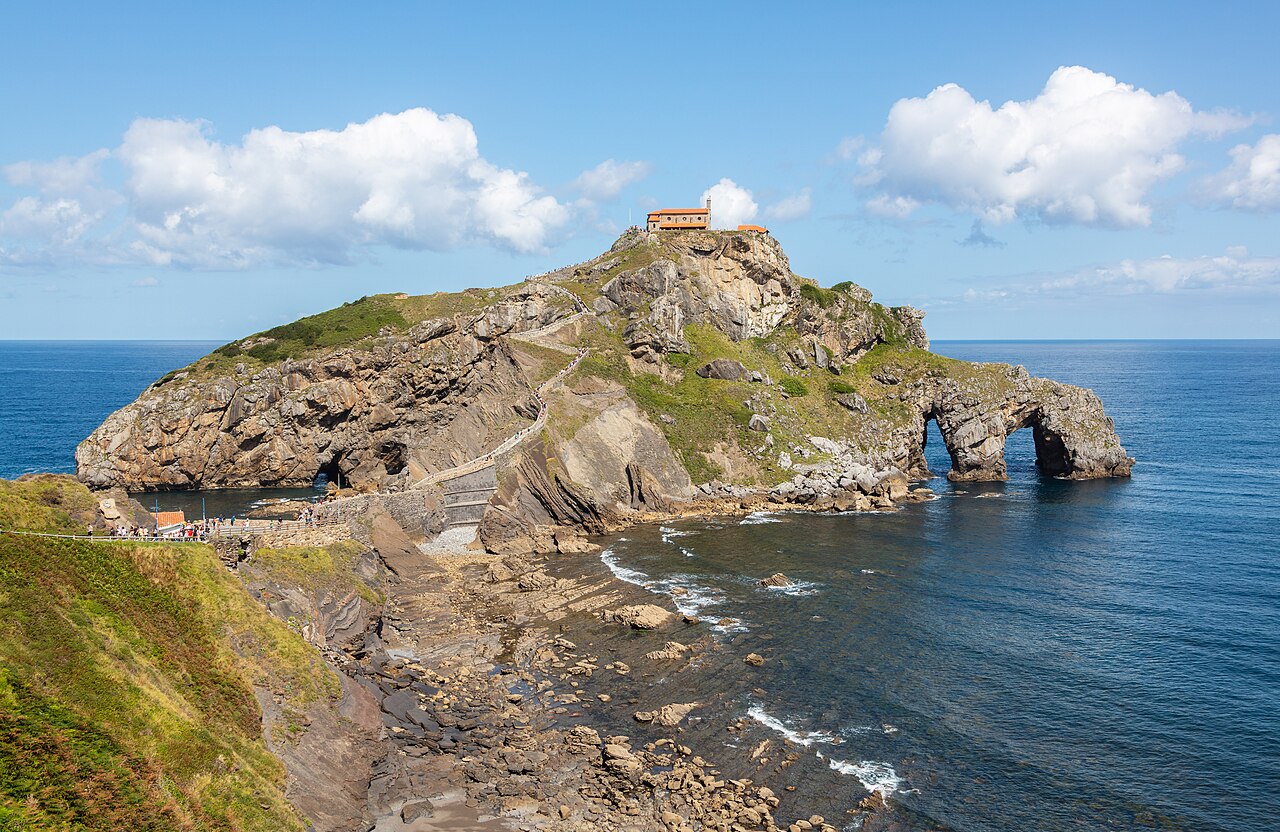
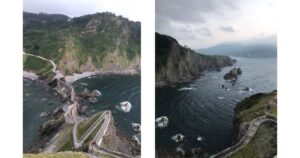
In Basque, Gaztelugatxe means something close to “castle rock”, which is exactly what it looks like. The islet rises roughly 100 metres (around 330 ft) above the sea and is linked to the mainland by a narrow stone bridge with two tiers of arches. At the very top stands a plain little chapel dedicated to St John the Baptist.
Historians date the first hermitage here to somewhere around the 9th or 10th century, and by the 12th century the site had become a monastery. The chapel has burned down and been attacked more times than anyone would like to count; in 1596 the English privateer Francis Drake raided it. What you see today mostly dates from the end of the 19th century. Modest as it is, it remains an active place of pilgrimage, with the main romería held on 24 June, the feast of St John.
💡 Tip: There is a bell beside the chapel, and tradition says that if you ring it three times and make a wish, the wish comes true. The bell is not always accessible, though, and the chapel interior is usually locked, so most visitors only peer in through the windows.
Booking a ticket: when you need one and how to get it
Sort this out before you go, because it is the one thing that can ruin the day: entry to San Juan de Gaztelugatxe is free, but for much of the year you will not get past the barrier without a timed booking. The provincial authority of Bizkaia introduced the system to cap visitor numbers (the daily limit is somewhere in the region of 1,460 people) so that neither the path nor the chapel gets swamped.
Bookings are made only through the official site tiketa.eus, and the process takes a couple of minutes. You choose the booking type (individual, group, tour operator) and the number of people, pick a date and a time slot, then enter your contact details. A voucher with a QR code lands in your inbox; show it on your phone at the entrance, no printing needed. One person can book a maximum of 10 free tickets.
💡 Tip: In summer and over public holidays the slots go quickly, often weeks ahead. As soon as your dates are fixed, book. And do turn up on time: arrive at the barrier too late (roughly more than 15 minutes after your slot) and you forfeit your place.
When a booking is compulsory and when you can just turn up
Bookings are only required in the busier periods; outside those, you can simply walk in. The exact calendar shifts a little from year to year, so always check the current dates on tiketa.eus. As a rough guide, the pattern looks like this:
| Period | Booking |
|---|---|
| Easter week | compulsory |
| Weekends and holidays from roughly mid-April to mid-June | compulsory |
| Summer (approx. mid-June to mid or late September), every day | compulsory |
| Weekends and holidays in September and October | compulsory |
| Selected holidays (All Saints, the December “puente”, Christmas) | compulsory |
| Weekdays out of season | usually not needed |
In high season the site is generally open from about 9:30 to 19:00, while in the winter months (from late October or thereabouts) it closes earlier, around 17:00. Bookings can be cancelled or changed free of charge, ideally more than two hours before your slot so that someone else can take it.
How to get to San Juan de Gaztelugatxe from Bilbao
The islet sits on the Basque coast between the villages of Bakio and Bermeo, some 35 km (22 miles) north-east of Bilbao. A car of your own or a hire car is by far the easiest option, but in season the bus works too. Bilbao airport is the natural gateway: several airlines fly there directly from London, and it is a 30-minute drive from the terminal to Bakio.
By car from Bilbao
Allow about 45 minutes behind the wheel. You take the BI-631 towards the airport and carry on to Bakio; from there the turning for Gaztelugatxe is a few kilometres along the coast road. Remember that Spain drives on the right, and that the last stretch is a narrow, twisting coastal road best not rushed.
By bus from Bilbao
Without a car, the network to use is Bizkaibus. Lines run from central Bilbao to Bakio and Bermeo (A3518 and A3527 respectively), and in season they connect with the local A3524 (Bermeo, Bakio, Gaztelugatxe) service, which stops right by the turning for the islet. Frequencies drop sharply out of season, so check the timetables before you set off rather than at the stop.
From San Sebastián
From San Sebastián it is a longer run: reckon on roughly 120 km (75 miles) and 1 hour 45 minutes by motorway. Public transport from that side involves awkward connections and a lot of waiting, so a car or an organised day trip makes far more sense.
💡 Tip: Full-day tours from Bilbao are popular and usually combine Gaztelugatxe with the fishing port of Bermeo, the surf town of Mundaka, Gernika and a txakoli wine tasting. You can compare tours and tickets through GetYourGuide →.
Parking
Parking is the weak point here: capacity is small and in season it fills up early. You have a few options:
- The small car park at the entrance, right at the start of the path, has only a few dozen spaces and goes quickly.
- The car park by the Eneperi restaurant sits a little higher up, closer to the entrance, and is usually paid (around €3 to €3.50, roughly £2.50 to £3).
- Harrigorri car park, on the Bermeo side, is free, has toilets and leaves you about a 20-minute walk from the start of the trail.
- You can also park in Bakio and walk in along a lovely coastal path of about 2 km.
The 241 steps: how hard is the climb?
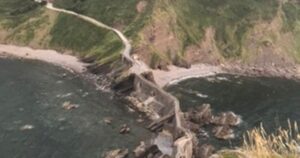
The walk is short but not to be underestimated. From the car park you first drop down towards the sea, then cross the bridge, and finally tackle those 241 steps up to the top of the rock. It is the return leg, uphill all the way, that hurts.
Two routes lead down to the bridge: the shorter, steeper Urizarreta path (about 1.2 km, gradients up to 35%, with steps) and the longer but gentler paved Ermu route (about 1.6 km, around 15%, no steps). Set aside 1.5 to 2 hours for the whole loop including a pause at the top: roughly 30 minutes down, a while at the chapel and 40 minutes back up.
💡 Tip: Wear proper footwear with decent grip. Flip-flops and heels are a bad idea and staff may turn you away in them. Take plenty of water, as there is little shade in summer, plus a light waterproof, because coastal weather here changes fast. Anyone with limited mobility or a serious health condition will find the route hard going.
When to visit
Spring and autumn are the sweet spot: less heat, far fewer people than in high summer. July and August are the busiest months by a distance, with bookings required every single day and slots disappearing weeks ahead.
Whenever you come, two rules pay off. First, come on a weekday if you possibly can, as weekends are noticeably busier; Mondays and Tuesdays tend to be quietest, and the Eneperi restaurant is closed then anyway. Second, aim for early morning or late afternoon. Coach groups pile in around midday, which in summer is also the hottest part of the day, and the light for photographs is at its best first thing and towards evening.
San Juan de Gaztelugatxe and Game of Thrones (Dragonstone)
For a good share of visitors, Gaztelugatxe is first and foremost Dragonstone, the ancestral seat of House Targaryen. The islet appeared in season seven of Game of Thrones (2017): this is where Daenerys Targaryen comes ashore and climbs the winding stone stairway to the castle gates for her first meeting with Jon Snow. The steps and bridge are real; the fortress and the dragonglass cave were added digitally.
If you want to tick off more filming locations, head east to Itzurun beach in Zumaia, which stood in for the shoreline of Dragonstone. That said, you do not need to have watched a single episode. The combination of wild sea, rock and a solitary chapel does the work on its own.
16 things to see nearby
Gaztelugatxe pairs easily with other stops along the Basque coast, turning the trip into a full day or a long weekend. Here are sixteen ideas, from the nearest villages through the Urdaibai reserve to Bilbao itself.
1. Bakio — surf and txakoli wine
The closest village, with the longest beach in the area and a loyal surf crowd. Bakio is also the heart of txakoli country, the slightly sparkling Basque white. Taste it and learn the background at the Txakolingune txakoli museum. Gaztelugatxe is about 10 minutes away by car.
2. Bermeo — the fishing harbour
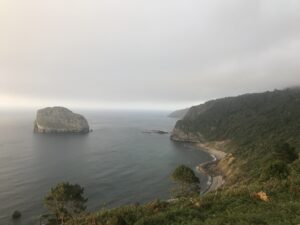
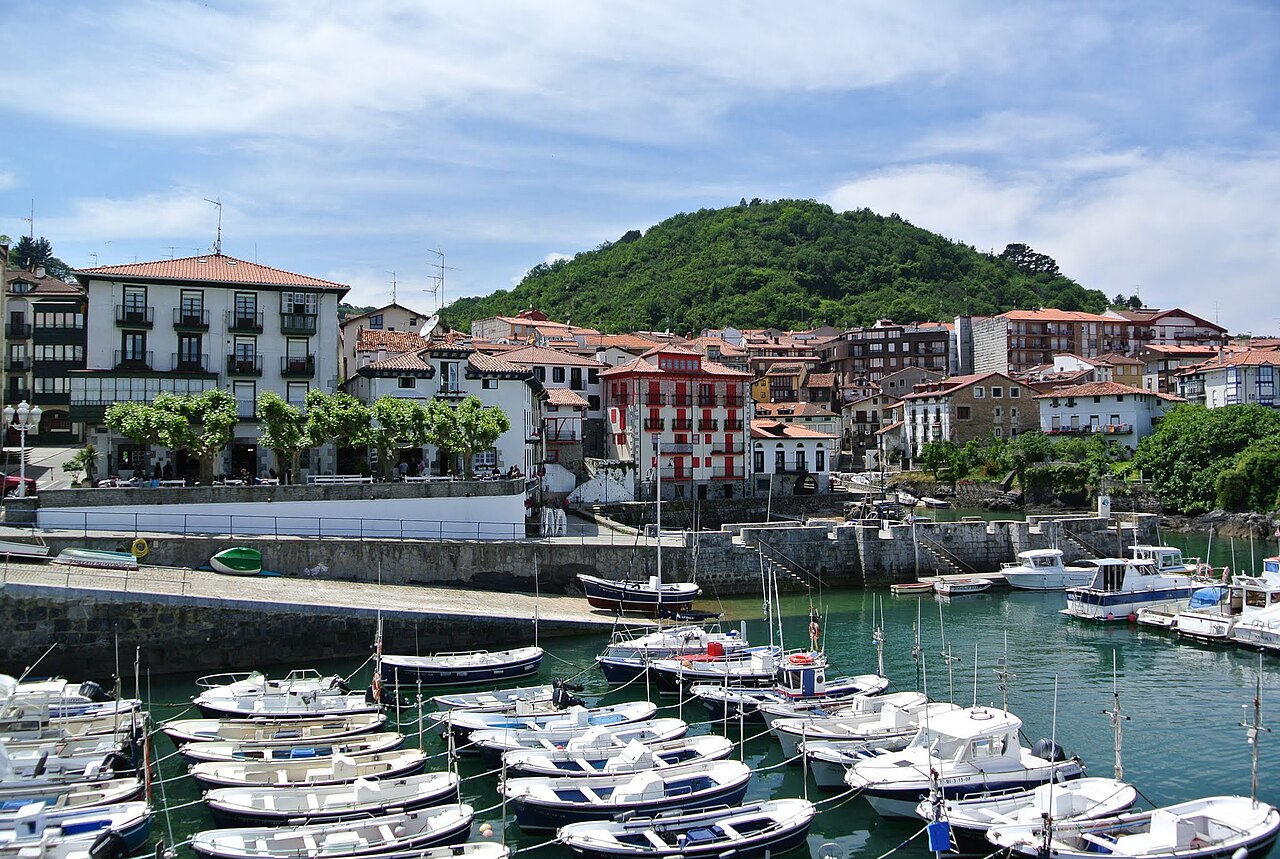
A colourful port with a long fishing tradition, a picturesque old town and the small beach of Aritzatxu. Bermeo has one of the largest fishing fleets in the region, which makes it an excellent place for a lunch of fresh fish and seafood.
3. Matxitxako lighthouse — the northern tip of Bizkaia
Just beyond Bermeo lies Cabo Machichaco (Matxitxako in Basque), a headland with two lighthouses and one of the finest views of the surrounding cliffs and open sea. From the car park at the Ermualde viewpoint it is a 15-minute walk to the lighthouse. Keener walkers can carry on along the coastal path all the way to Gaztelugatxe (a loop of roughly 6 to 7 km, allow 2.5 to 3 hours).
4. Mundaka — a surfing mecca
A small town at a river mouth, famous for one of the best left-hand waves in Europe, which draws surfers from all over the world. Even if you never touch a board, the walk along the Urdaibai estuary and through the old centre is worth the detour.
5. Urdaibai Biosphere Reserve
A UNESCO biosphere reserve since 1984, taking in the estuary, marshes, beaches, dunes and cliffs. It is a paradise for birdwatchers and walkers alike, forms the natural hinterland of the whole Gaztelugatxe area and ties together most of the places listed below.
6. Laga and Laida beaches
The two prettiest beaches in the reserve. Wild Laga runs for about 600 metres beneath the bulk of Cape Ogoño and takes the full force of the Bay of Biscay. Across the estuary lies Laida, the longest beach in Urdaibai with almost a kilometre of fine sand, whose shape changes dramatically with the tide.
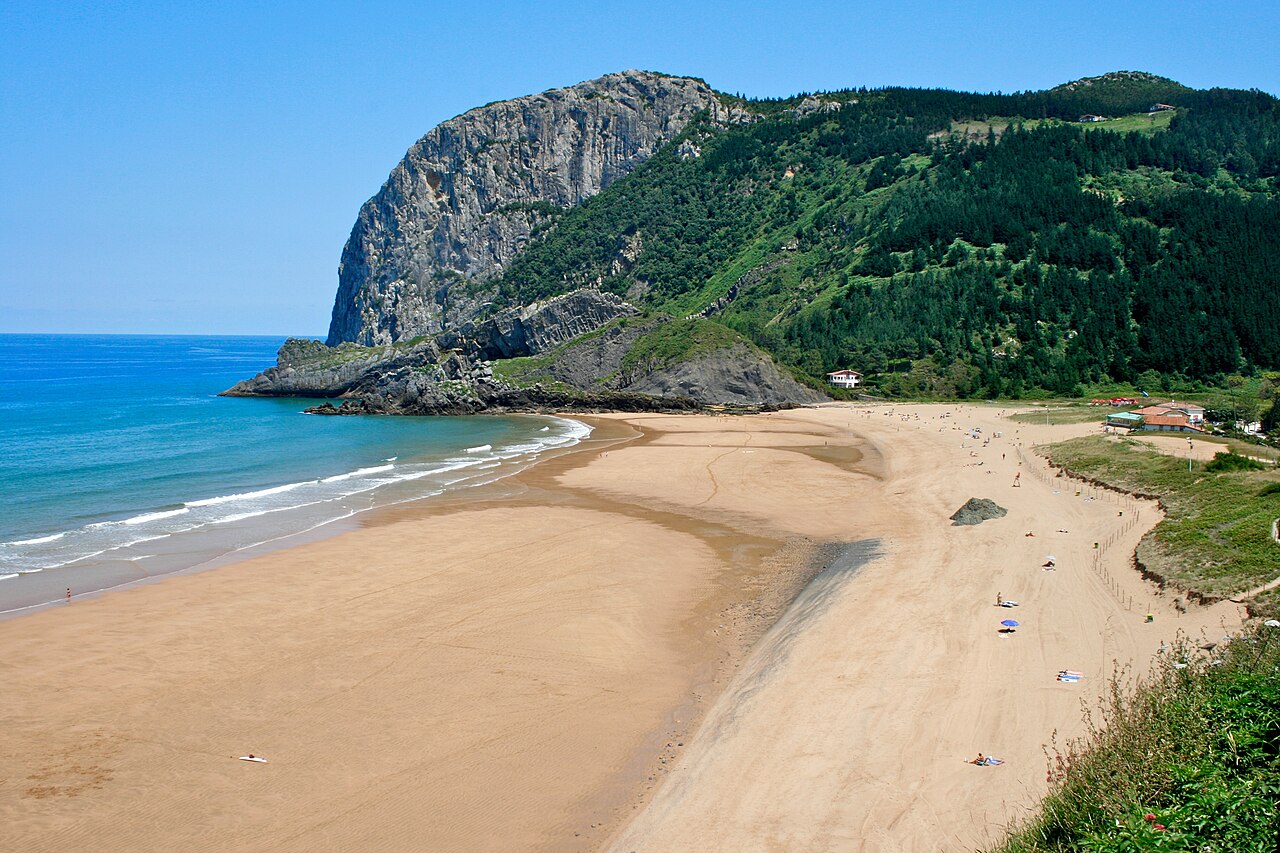
7. Elantxobe and Cabo Ogoño
The pretty fishing village of Elantxobe clings to a steep slope between the cliffs, its lanes dropping straight down to the harbour. Above it rises Cabo Ogoño, one of the highest cliffs on the Basque coast at around 280 metres, with a walking route to the top and one of the best panoramas in the area.
8. Lekeitio — the port and San Nicolás islet
A classic fishing town with a colourful harbour and a grand Gothic basilica of the Assumption. At low tide you can walk out across a sandbar to the little island of San Nicolás in the middle of the bay.
9. Ea and Ondarroa — the villages the coaches miss
Two genuinely unhurried fishing settlements further east. Ea is a tiny place hemmed in by hills, with a single lane running down to its cove. Ondarroa turns its back to the mountains and its face to the sea, with a busy fishing port and the church of Santa María, decorated with gargoyles and statues.
10. Urdaibai Bird Center
In the heart of the marshes near Gautegiz Arteaga stands a birdwatching centre run by the Aranzadi science society. The reserve is an important stop on migration routes. Admission is around €5 for adults (about £4) and €2 for children.
11. Santimamiñe cave
The most important archaeological site in Bizkaia and a UNESCO listing since 2008, with traces of occupation going back more than 14,000 years and Magdalenian cave paintings of bison, horses and deer. The painted chamber is closed for conservation, so the visit covers the entrance halls plus a 3D virtual tour of the whole cave.
12. The painted forest of Oma
Not far from Santimamiñe, the artist Agustín Ibarrola began work in 1982 on the so-called painted forest, covering pine trunks in colour so that from certain angles they assemble into shapes and figures. The loop from the car park is about 2.8 km and takes around 50 minutes. Entry now requires a booking, so check before you go.
13. Gernika
The symbolic town of the Basque Country, written into history by the bombing during the Spanish Civil War and by Picasso’s painting Guernica. You will also find the Assembly House with its sacred Basque oak, and the Peace Museum.
14. Itzurun beach in Zumaia
A dramatic beach backed by layered flysch cliffs, where further Game of Thrones scenes were filmed. It lies further along towards San Sebastián, but for fans and for anyone who likes geology it is a tempting stop.
15. Bilbao and the Guggenheim
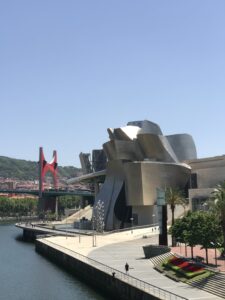
The Basque capital is roughly 40 minutes by car from Gaztelugatxe. Beyond the celebrated Guggenheim Museum, make time for the Casco Viejo old town, the banks of the Nervión and a proper crawl through the pintxos bars. From here, Gaztelugatxe works as a half-day or full-day trip.
16. Eneperi restaurant
Right above the start of the trail sits the Eneperi restaurant, looking straight out at the islet. It is a good spot to refuel on Basque cooking after the climb, or just to sit with a coffee and take in the view. The coast faces west here, so the viewpoints above the path often deliver a fine sunset.
Where to eat and stay
Eneperi is the only place to eat at Gaztelugatxe itself, so for meals and beds you want the surrounding villages. Bakio and Bermeo both have guesthouses, apartments and small hotels, and put you minutes from the islet. If you would rather have restaurants, bars and a bit of evening life, base yourself in Bilbao and treat Gaztelugatxe as a half-day or full-day excursion.
You can compare places to stay in the area on this interactive accommodation map → (Bakio and around). Bilbao is the airport to fly into, with direct flights from the UK as well as connections through Madrid; compare fares and dates on Kayak →.
What it costs. A hostel bed in Bilbao runs roughly €25 to €40 per person per night, a double room in a guesthouse in Bakio or Bermeo €70 to €110, and a mid-range hotel in central Bilbao €100 to €160. Staying in Bakio is the move if you want to be at the gate early, Bilbao if you want dinner and a city evening. Compare current prices through accommodation around Gaztelugatxe.
Frequently asked questions
Is San Juan de Gaztelugatxe free to visit?
Yes, entry is free. In high season you still need a free timed booking through the official site tiketa.eus. The only thing you may pay for is parking (around €3, roughly £2.50, at the Eneperi restaurant; the smaller car parks are usually free).
Do I need to book tickets in advance?
Yes, during Easter week, on public holidays, at weekends in spring and autumn, and every day in summer, a timed booking is compulsory. On weekdays out of season it is usually not needed. The calendar changes from year to year, so check the current dates on tiketa.eus and book early: in July and August, weeks ahead is normal.
How many steps are there at San Juan de Gaztelugatxe?
There are 241 steps up to the hermitage on top of the islet. You first walk down from the car park to the sea, cross the stone bridge and then climb the zigzag stairway to the top. The return leg, uphill all the way, is the hardest part.
How difficult is the climb and how long does it take?
Allow around 1.5 to 2 hours for the whole loop including a stop at the top. The distance is short but steep, so proper footwear and plenty of water matter. Anyone with limited mobility will find it demanding.
How do I get to San Juan de Gaztelugatxe from Bilbao?
By car it is about 45 minutes (roughly 35 km) via Bakio. Without a car, take the Bizkaibus service from Bilbao to Bakio or Bermeo; in season the local A3524 line connects with it and stops right by the turning for Gaztelugatxe. Organised full-day tours from Bilbao are popular too.
Can I get to Gaztelugatxe from San Sebastián?
You can, but it is a longer trip: about 120 km and 1 hour 45 minutes by car. Public transport from that direction means several changes and long waits, so most visitors drive or join a guided day trip.
Why is San Juan de Gaztelugatxe famous from Game of Thrones?
The islet played Dragonstone, the ancestral seat of Daenerys Targaryen, in season seven of the series (2017). The steps and the bridge are real; the fortress above them was added with computer graphics. Further Dragonstone shoreline scenes were filmed at Itzurun beach in Zumaia.
Is San Juan de Gaztelugatxe worth visiting?
For most people, yes, provided they are happy with a steep 241-step climb and book a slot in advance. Even without the Game of Thrones connection, the bridge, the wild coastline and the lone chapel make it one of the most striking sights in northern Spain, and it combines easily with Bakio, Bermeo and the Urdaibai reserve.
Potřebujete pomoct s cestováním?
-
Ubytování 🏨
Vyberte si to nejlepší ubytování, ať už jste kdekoliv, přes Booking.com. -
Půjčení auta 🚗
Auto si snadno najdete přes Booking.com, kde máte často slevu díky ubytování, nebo Rentalcars.com, kde porovnáte nabídky většiny půjčoven. -
Zážitky 🎟️
Přes GetYourGuide.com si vyberete z nejrůznějších výletů i zážitků po celém světě, navíc se zrušením zdarma do 24 h předem.