Last updated 30.8.2026
San Sebastián, or Donostia if you say it in Basque, is one of those cities you fall for in a single afternoon. A shell-shaped beach right in the middle of town, green headlands guarding both ends of the bay and rows of handsome belle époque buildings behind the promenade. We loved the place, and not just for the food: it has a completely different feel from the rest of Spain, and we are already working out when to go back. Here are 25 things to do in San Sebastián, from the postcard sights to the quieter corners the locals keep to themselves.
Things to do in San Sebastián: the short version
- What it is: a coastal city in northern Spain, the beating heart of the Basque Country, and a food destination with one of the highest concentrations of Michelin stars anywhere on earth.
- Why go: La Concha beach, the views from Monte Igueldo and Monte Urgull, the Parte Vieja old town and a legendary pintxos bar scene.
- When to go: May, June and September are the sweet spot — warm enough, far quieter. July and August are the hottest but also the busiest.
- How long: three days for the city itself, four or five if you want to add day trips along the coast.
- Getting there: most visitors from the UK fly to Bilbao and take the direct coach (roughly 75 minutes). Biarritz in France works too, and there are good rail links from Madrid, Barcelona and Paris.
25 best things to do in San Sebastián
San Sebastián is compact, so you can reach almost everything below on foot. We have roughly ordered the list from the unmissable headline sights down to the quieter, more local suggestions, so you can build your own itinerary around however much time you have.
1. La Concha beach — arguably Europe’s finest city beach
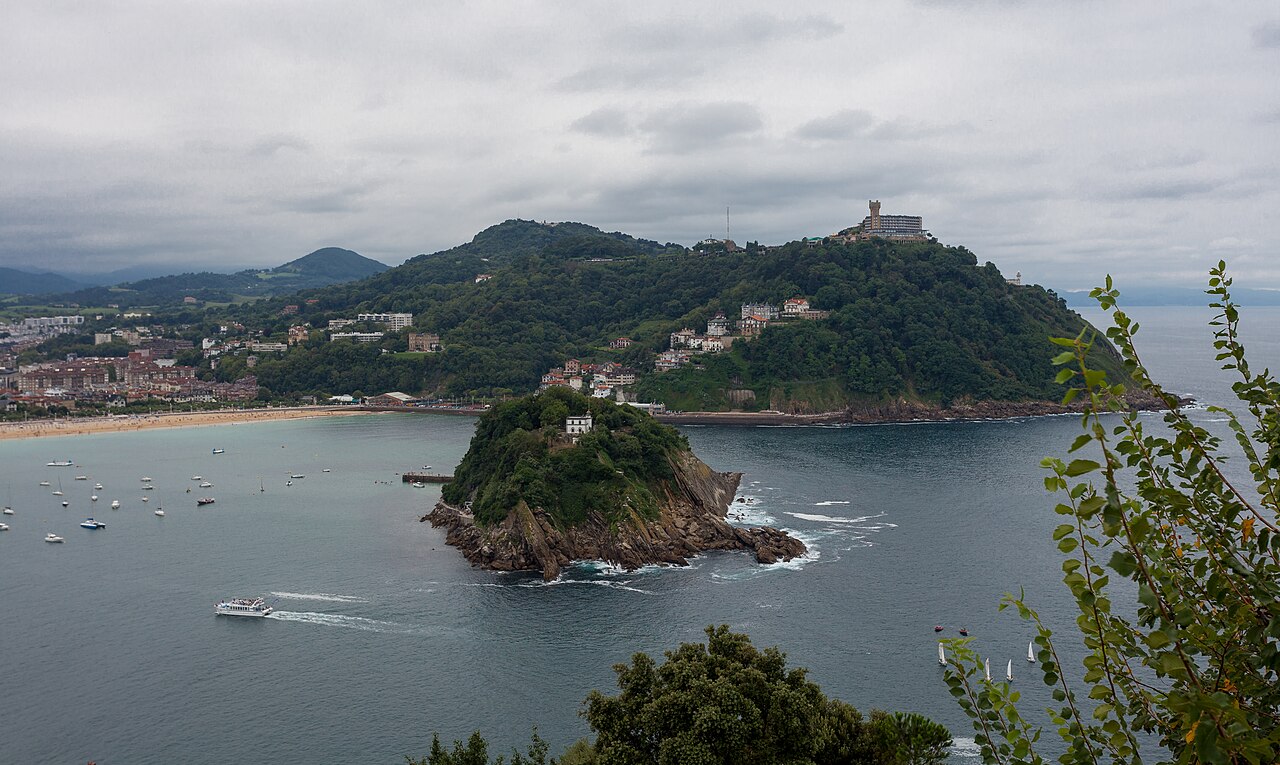
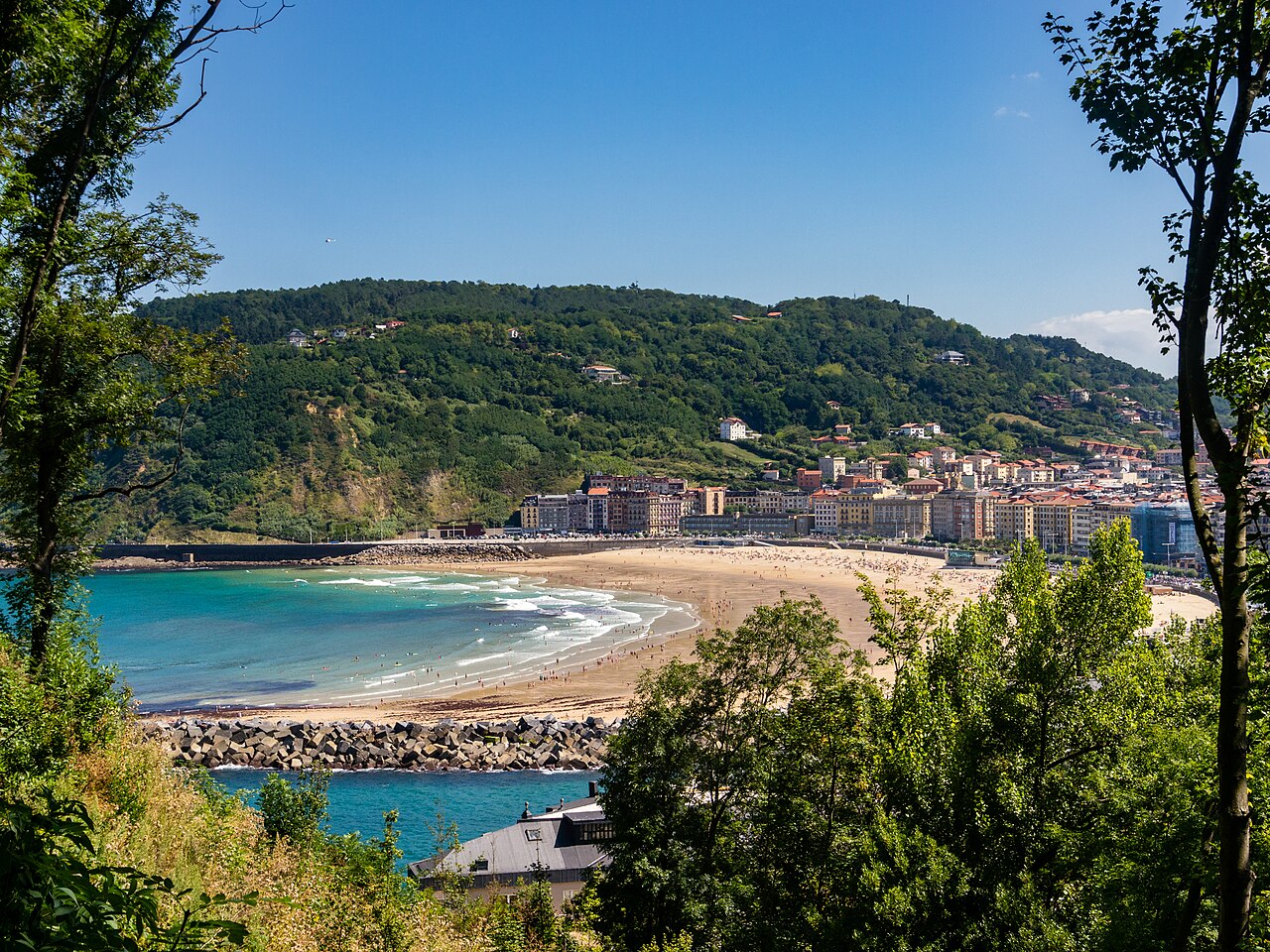
La Concha is the image everyone carries home. Golden sand curves in an almost perfect arc for about 1,350 metres, right in the centre of the city, framed by the little island of Santa Clara and the two hills that close off the bay. The water is calm and shallow, which makes it a genuinely good beach for families rather than just a pretty one. Even if you never get in the sea, walk the length of the promenade with its famous white railings — it is the single most photographed thing in the Basque Country.
💡 Tip: The tide changes La Concha dramatically — at low water the beach is several times wider. If you are planning a long sunbathe or a walk along the sand, check the tide times the night before.
2. Monte Igueldo — the best view over the whole city
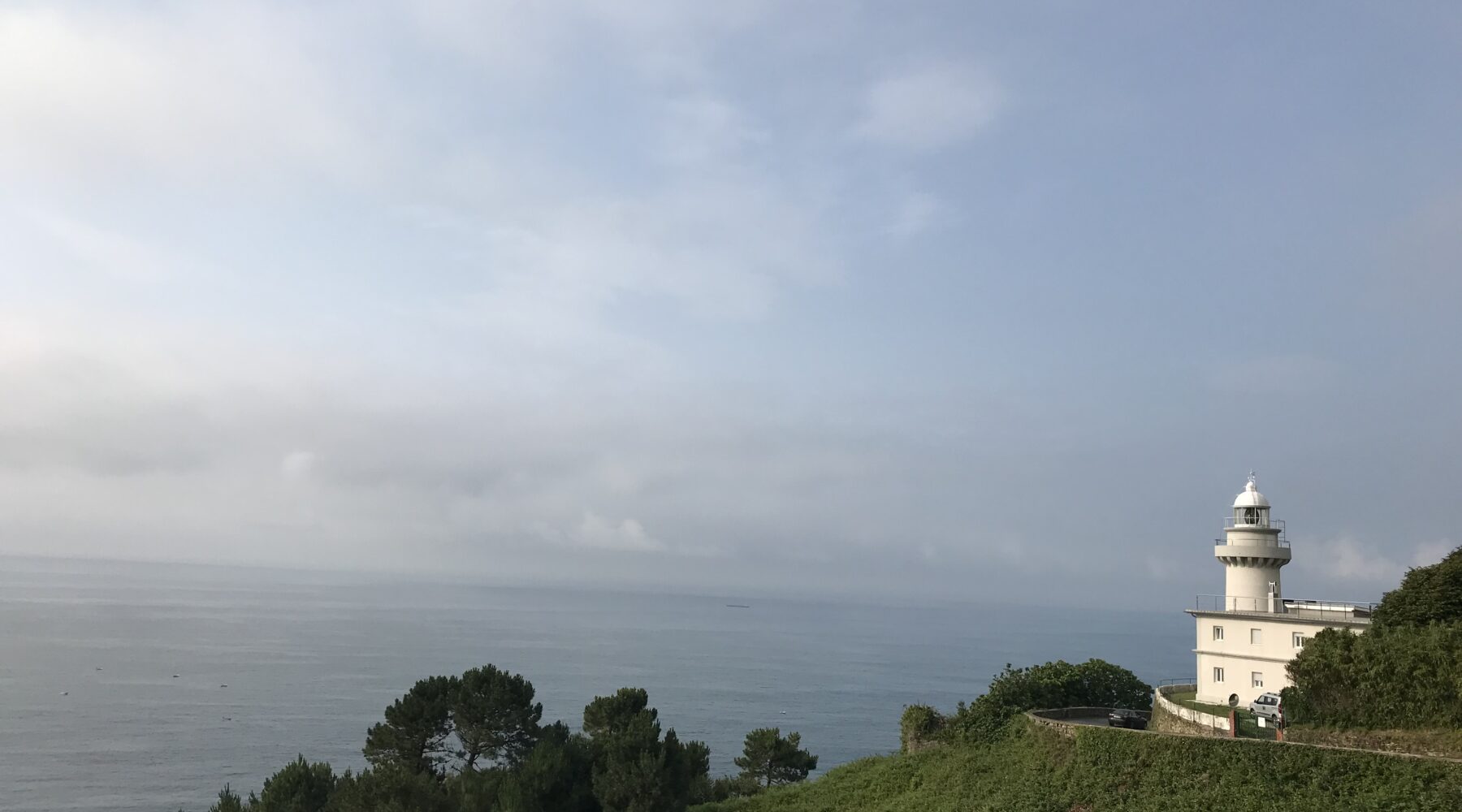
The hill at the western end of the bay gives you that postcard panorama of La Concha you have already seen a hundred times online. A wonderfully creaky funicular railway from 1912 does the climbing for you; a return ticket costs around €4.50 (roughly £3.80) for adults, with a reduced fare for children. At the top, alongside the viewpoint, sits an old-fashioned funfair with a carousel and a rickety rollercoaster that comes into its own in the evening light.
💡 Tip: Igueldo is at its best at sunset, when the whole bay turns gold. Just remember the funicular keeps limited hours — check the time of the last car down before you settle in.
3. Monte Urgull — fortress and statue above the old town
The green hill rising straight out of the Parte Vieja takes about 30 to 40 minutes to walk up, and it costs nothing. On top you will find Castillo de la Mota, a fortress with 12th-century origins, and the enormous statue of the Sacred Heart of Christ (Cristo de la Mota) that watches over the whole city. The path winds up through shady woodland, and the reward is a sweeping view across the old town, the fishing harbour and the open sea.
4. Parte Vieja — the old town after dark
The historic core is a warren of narrow pedestrian lanes that comes alive in the evening like few places in Spain. Most of the best pintxos bars are here, along with small shops, churches and the arcaded Plaza de la Constitución, whose balconies are still numbered from the days when they were rented out as seats for bullfights. For an evening of eating, drinking and aimless wandering, nowhere else comes close.
5. A pintxos crawl — Basque food, one bite at a time
Going out for pintxos in San Sebastián is closer to a ritual than a meal. The idea is not to settle in one place but to work your way round several bars, having one or two bites and a small glass of wine in each before moving on. The classic you have to try is the Gilda (anchovy, olive and pickled guindilla pepper on a stick), along with the famously runny tortilla, croquetas or salt cod. Expect to pay somewhere around €2 to €5 (about £1.70 to £4.20) per bite.
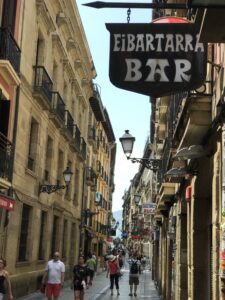
💡 Tip: Plenty of bars still charge by the number of cocktail sticks left on your plate, so hang on to them. And mind the etiquette: ask the bar staff before helping yourself to anything from the counter.
6. Peine del Viento — the Comb of the Wind
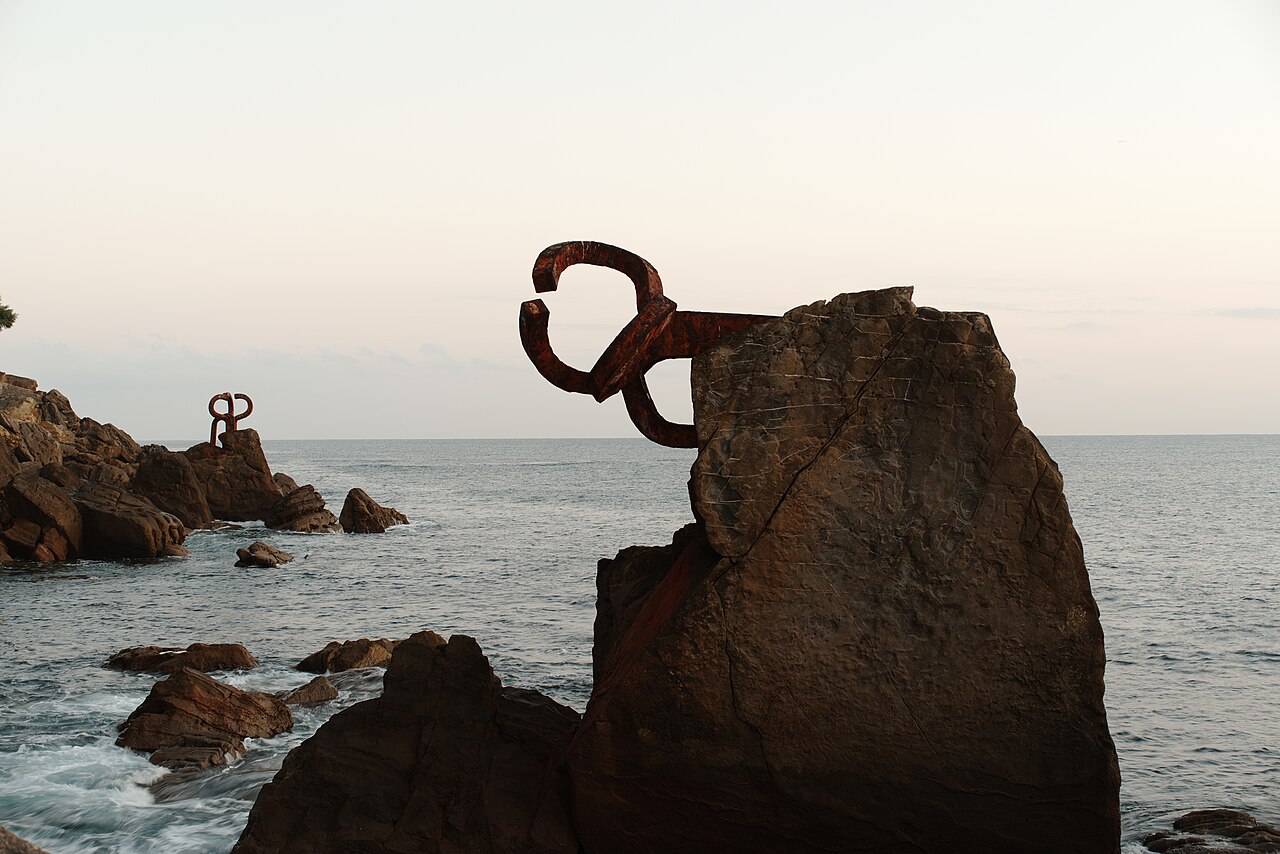
Where Ondarreta beach ends and the open Atlantic begins, three rusting steel sculptures are wedged into the rocks. This is Peine del Viento (the Comb of the Wind) by the Basque sculptor Eduardo Chillida, and it is one of the city’s favourite sunset spots. In rough weather, air vents built into the paving fire spouts of spray up through the stone as the swell hits. Free to visit.
7. Kursaal — the modern landmark on the river mouth
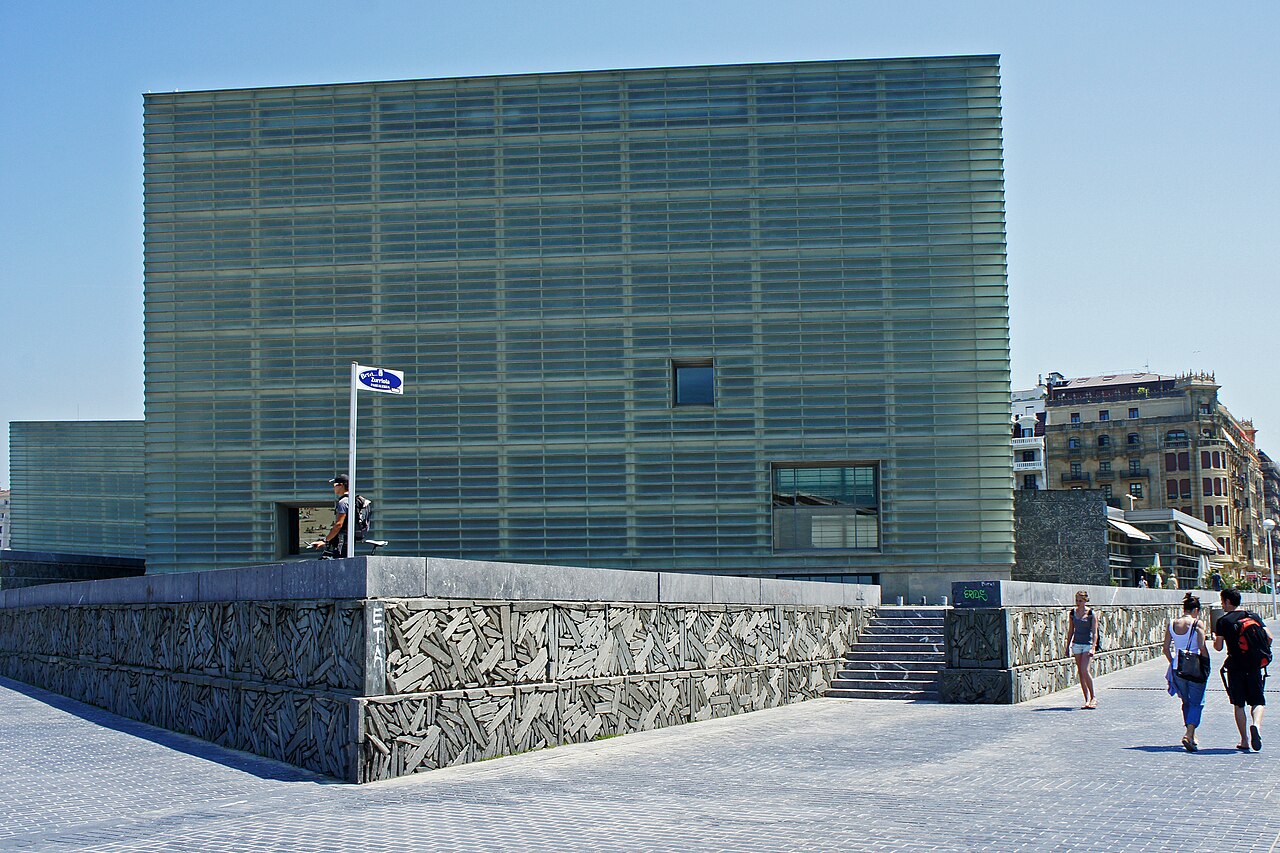
The two translucent glass cubes standing at the mouth of the River Urumea are the work of architect Rafael Moneo and have become the symbol of modern San Sebastián. The Kursaal hosts concerts and conferences all year, and above all the city’s celebrated International Film Festival in late September. Even if you never go inside, it is worth walking round the outside after dark, when the cubes glow like lanterns.
8. Zurriola beach and the Gros district — the surfers’ side of town
Cross the river behind the Kursaal and you reach Zurriola, a beach that faces the open ocean and gets proper waves. This is surf territory: lessons run at roughly €40 to €50 (about £34 to £42) and boards are easy to hire. The Gros neighbourhood behind it is younger, more relaxed and full of excellent pintxos bars without the old town’s tourist mark-up.
9. Ondarreta beach — the calmer alternative to La Concha
Past the rocky spur crowned by the Miramar gardens, the sand picks up again as Ondarreta, a quieter and more family-minded beach than its famous neighbour. There is usually more room to spread a towel, fewer crowds, and you are within a short walk of both Peine del Viento and the Igueldo funicular. The obvious choice if you want beach time without the scrum.
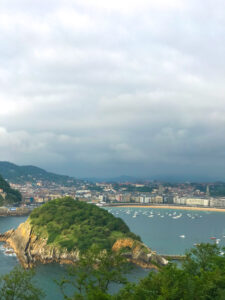
10. Santa Clara island — the green dot in the middle of the bay
The small island of Santa Clara sits right in the mouth of La Concha bay. In summer (broadly June to September) little boats run out from the harbour for around €30 (about £25) return, and at low tide the island reveals a tiny beach of its own. It makes a very pleasant half-day outing and gives you an entirely different angle on the city.
11. San Telmo Museoa — Basque culture below Monte Urgull
The oldest museum in the Basque Country occupies a 16th-century former convent tucked in below Monte Urgull, and it tells the story of Basque history, art and society in a way that actually holds your attention. Admission runs to roughly €6 to €10, and Tuesdays are usually free. A good card to have up your sleeve when the rain arrives — which in San Sebastián it can, even in July.
12. The Aquarium — a 360-degree shark tunnel
At the end of the harbour beneath Monte Urgull, the Aquarium holds more than two hundred marine species and a glass tunnel with sharks gliding overhead. Adult tickets are around €13 to €14, with reduced rates for children. One of the best things to do in San Sebastián with kids in tow.
13. La Bretxa and Mercado de San Martín — where the chefs shop
Curious about where all that celebrated Basque produce actually comes from? Head to the La Bretxa market or the San Martín market hall, both of which supply the city’s own chefs. Fish landed that morning, Basque cheeses, cured meats and whatever is in season — ideal for putting together a picnic or picking up something edible to take home.
14. Buen Pastor cathedral and Santa María basilica — two faces of faith
The neo-Gothic Buen Pastor cathedral is the tallest building in the city and a useful landmark in the newer part of the centre. Its opposite number is the baroque Basilica of Santa María del Coro, planted at the head of the old town’s main street, with a footpath climbing to Monte Urgull from just behind it. Both are free to enter.
15. Paseo Nuevo and Paseo de la Concha — walking the whole bay
One of the loveliest things to do in San Sebastián costs nothing at all: walk the seafront promenades. Paseo Nuevo loops around Monte Urgull on the ocean side, while Paseo de la Concha and its white railings trace the famous beach. In stormy weather the Paseo Nuevo becomes a theatre of exploding waves — thrilling, but keep an eye on the tide.
16. Tabakalera — contemporary art in an old cigarette factory
If contemporary culture is your thing, make time for Tabakalera, a vast arts centre housed in a former tobacco factory near the main railway station. Most of the building and many of the exhibitions are free, and the roof terrace gives you a fine view over the rooftops. A quieter, more local suggestion well off the main tourist circuit.
17. Miramar Palace and gardens — royal views over the bay
On the headland between La Concha and Ondarreta stands the former summer residence of Queen María Cristina, built in an English style in 1893. The palace itself is generally closed to visitors — it belongs to the university and hosts music events — but the sloping lawns that run down towards the sea are open to everyone and free. The view from the top of them is one of the best in the city.
18. Alderdi Eder gardens and the town hall — a carousel by the sand
Right beside La Concha, the small park of Alderdi Eder offers shady tamarisk trees, a fountain and an antique carousel that will keep smaller travellers happy for a good half hour. Behind it stands the grand town hall, which opened in 1897 as the city casino. A pleasant place to sit down for a while in the middle of everything.
19. Cristina Enea park — a green retreat with peacocks
A short walk from the station lies the prettiest park in the city, laid out in the late 19th century by the Duke of Mandas. Peacocks and ducks wander freely between mature redwoods and a Lebanon cedar, and there are meadows to sit on and shaded paths to amble along. Free to enter and a proper escape from the bustle of the centre.
20. San Vicente church — the oldest building in town
In the heart of the Parte Vieja stands the church of San Vicente, generally reckoned to be the oldest surviving building in San Sebastián. It took its present Basque Gothic form in the early 16th century, and inside you will find a lavishly gilded altarpiece from 1586 and fine rose windows. Entry is free, and the path up Monte Urgull starts just outside.
21. La Perla — seawater spa on La Concha itself
Sitting on the promenade at beach level, the La Perla thalassotherapy centre has been going since the early 1900s, when belle époque Europe came here to take the waters. Today it offers heated seawater pools, jets, hydro circuits and a spa looking straight out over the bay. Superb on a wet day; the thalasso circuit costs around €25 (roughly £21).
22. Michelin-starred restaurants — stars by the square mile
San Sebastián and its surroundings sit at the very top of the culinary world: three restaurants here hold three Michelin stars (Arzak, Akelarre and Martín Berasategui), while others, Mugaritz among them, hold two. For a region this small that is one of the highest concentrations of stars on the planet. A tasting menu is an entire evening’s entertainment, but book a long way ahead and reckon on around €250 (about £210) per person and up.
23. Sidrerías and Basque cider — the txotx season
The Basque Country is cider country (sagardo in Basque), and the most authentic way to experience it is at a cider house, or sidrería, in the village of Astigarraga, a few kilometres inland. During the txotx season, roughly mid-January to the end of April, cider is poured straight from enormous barrels whenever someone shouts txotx, and it comes with a set menu of cod omelette and grilled steak. Outside the season the cider is served from bottles.
24. María Cristina bridge — belle époque over the Urumea
The grandest of the bridges spanning the Urumea dates from 1905 and is guarded by four hefty obelisks topped with sculptures. It links the centre with the railway station and shows just how elegantly San Sebastián built itself at the turn of the century. You will cross it on the way to Cristina Enea park.
25. Jazzaldia and Semana Grande — a summer of music and fireworks
Come in summer and you may well land in the middle of a festival. Late July brings Jazzaldia, one of Europe’s oldest jazz festivals, with a string of free concerts on Zurriola beach and in Plaza de la Trinidad. In mid-August the city gives itself over to Semana Grande (Aste Nagusia), a week of celebrations built around an international fireworks competition over La Concha bay.
How to get to San Sebastián
San Sebastián has its own small airport (EAS) near Hondarribia, only about 23 km from the centre, but it handles domestic Spanish routes rather than flights from the UK. In practice most British visitors arrive via Bilbao airport, which has direct flights from Gatwick, Stansted, Southend, Bristol, Manchester and Edinburgh. From there, a Pesa/Alsa coach runs straight to the bus station in San Sebastián in about 75 minutes, with a one-way ticket costing roughly €17 (around £14). The French airport at Biarritz is another option, about 45 to 60 minutes away by bus.
If you are already in Spain, Renfe runs long-distance trains to Donostia from Madrid and Barcelona. Coming from France, the neatest route is the TGV from Paris Montparnasse to Hendaye on the border, then the Euskotren narrow-gauge line known as El Topo, which takes about 37 minutes and costs €2.90 to Amara station in the centre of town.
From EAS airport, the direct E30 bus runs hourly in summer (roughly 20 June to the end of September) and takes about 30 minutes; for the rest of the year the E21 covers the route in around 45 minutes. Once you are in the city, walking is genuinely the easiest way to get around, backed up by the Dbus city buses and taxis.
💡 Tip: Compare fares to Bilbao and Biarritz well in advance, because prices swing wildly with the season. And leave yourself a buffer for the airport coach from Bilbao — it only runs once an hour.
When to visit San Sebastián
San Sebastián has an oceanic climate that will feel oddly familiar to anyone from the UK: mild, green, and rain spread fairly evenly across the year at an average of about 12 wet days a month. Summers are comfortable rather than scorching, with temperatures around 22 to 25 °C, and winters stay mild at roughly 9 to 10 °C. Pack a light waterproof even in August.
The best balance of weather and elbow room comes in May, June and September. It is pleasantly warm, there are noticeably fewer people about, and accommodation costs less than at peak. July and especially August are the hottest and liveliest months, but also the priciest and most crowded — and August brings the huge Semana Grande festivities. Late September belongs to the film festival, when the city fills up all over again.
How many days do you need in San Sebastián
For the city itself, plus a proper evening on the pintxos, two to three days is plenty. Add day trips along the coast (see below) or simply give yourself room to enjoy the beach and the food without rushing, and four to five days is about right.
Where to eat pintxos in San Sebastián
Pintxos are the reason a lot of people come here in the first place. The greatest density of bars is in the Parte Vieja, but some of the best places, minus the tourist premium, are over in Gros. A handful of addresses that come up again and again:
- La Cuchara de San Telmo — hot pintxos cooked to order, one of the most loved bars in the old town.
- Bar Néstor — legendary tortilla and a steak worth queuing for; both are made in strictly limited quantities, so turn up early.
- Gandarias and Ganbara — classic old-town bars with a wide spread on the counter.
- La Viña — birthplace of the famous burnt Basque cheesecake.
- Atari — a friendly spot beside the Santa María basilica, good for starting the evening.
Drink what the locals drink: txakoli, the slightly sparkling white wine poured from a height, or Basque sidra cider.
💡 Tip: Resist the urge to settle in at the first bar. Move from one to the next and order a single speciality in each. Steer clear of anywhere with a menu in five languages — those are aimed squarely at visitors.
Day trips from San Sebastián
San Sebastián makes an excellent base for exploring the Basque coast and the hills behind it, and almost all of these day trips work perfectly well on public transport.
| Where | Journey time | Transport | What it is for |
|---|---|---|---|
| Pasaia (Pasajes) | about 15 min | bus / walk | picture-perfect fishing village, small ferry across the inlet |
| Hondarribia | about 45 min | bus E21/E28 | walled old town, castle and pintxos on the French border |
| Getaria and Zarautz | 30 to 40 min | bus / train | txakoli wine, grilled fish, a long sandy beach |
| Zumaia | about 1 hr | Euskotren train | dramatic flysch cliffs, popular walking country |
| Chillida-Leku (Hernani) | about 20 to 30 min | bus | Eduardo Chillida’s sculptures in open parkland |
| Bilbao | 1 hr 15 min | Alsa/Pesa coach | the Guggenheim and the Casco Viejo |
| San Juan de Gaztelugatxe | about 1 hr 45 min | car / organised tour | island hermitage, Dragonstone in Game of Thrones |
With a hire car you can just as easily cross into the French Basque Country: Biarritz, Saint-Jean-de-Luz and Bayonne are all between 30 and 60 minutes away. Carry your passport for the border, even though there are rarely checks.
Where to stay in San Sebastián
Accommodation costs more here than in most of Spain and sells out fast in season, so book well ahead. Choose your neighbourhood according to what you want from the trip:
- Parte Vieja (old town) — in the thick of the pintxos bars and the noise that comes with them. For food lovers and night owls.
- Centro — the elegant grid between the cathedral and the beach, ideal for a first visit or a couple.
- Gros — younger and more laid-back, next to Zurriola surf beach, good value for the atmosphere.
- Antiguo — a quieter residential area near Ondarreta, sensible for families.
Compare current prices and availability through accommodation options in San Sebastian.
Frequently asked questions
How many days do you need in San Sebastián?
Two to three days covers the city comfortably: La Concha beach, the Igueldo and Urgull viewpoints, the old town and at least one long evening on the pintxos. If you want to add day trips along the Basque coast, allow four to five days.
Is San Sebastián worth visiting?
Yes, and it rewards more than a flying visit. You get one of Europe’s most beautiful city beaches, two hilltop viewpoints, an old town made for wandering and a food scene with three restaurants holding three Michelin stars. The city is small enough to explore entirely on foot.
When is the best time to visit San Sebastián?
May, June and September strike the best balance between weather and crowds: warm enough, quieter, and cheaper for accommodation. July and August are the hottest but the busiest and priciest. Bring a waterproof whatever the month, because rain falls fairly evenly all year.
How do you get to San Sebastián from the UK?
Most people fly to Bilbao, which has direct flights from Gatwick, Stansted, Southend, Bristol, Manchester and Edinburgh, then take the direct coach to San Sebastián in about 75 minutes for roughly €17. Biarritz in France is another option, and San Sebastián’s own airport at Hondarribia handles domestic Spanish routes only.
What are pintxos and how much do they cost?
Pintxos are the Basque answer to tapas: small, carefully built bites served on the bar counter. The way to eat them is to move from bar to bar rather than settle in one place. Expect around €2 to €5 a bite, and note that many bars still charge by the number of cocktail sticks left on your plate.
Is Monte Igueldo worth the trip?
Yes. It gives you the finest view over the bay and La Concha beach. A historic funicular does the climb for you at about €4.50 return, and there is an old-fashioned funfair at the top. Go at sunset if you can, but check the time of the last car down.
What is there to do in San Sebastián when it rains?
Plenty. The San Telmo Museoa tells the story of Basque culture and is free on Tuesdays, the Aquarium has a shark tunnel that keeps children happy, Tabakalera arts centre is largely free to wander, and the La Perla seawater spa on the promenade is designed for exactly this weather. Failing all that, the pintxos bars are indoors.
What are the best day trips from San Sebastián?
The most popular are the fishing village of Pasaia, the walled town of Hondarribia, the wine village of Getaria, the flysch cliffs at Zumaia, Bilbao for the Guggenheim, and the island hermitage of San Juan de Gaztelugatxe, better known as Dragonstone in Game of Thrones. The Chillida-Leku sculpture park in nearby Hernani is another easy half day.
Potřebujete pomoct s cestováním?
-
Ubytování 🏨
Vyberte si to nejlepší ubytování, ať už jste kdekoliv, přes Booking.com. -
Půjčení auta 🚗
Auto si snadno najdete přes Booking.com, kde máte často slevu díky ubytování, nebo Rentalcars.com, kde porovnáte nabídky většiny půjčoven. -
Zážitky 🎟️
Přes GetYourGuide.com si vyberete z nejrůznějších výletů i zážitků po celém světě, navíc se zrušením zdarma do 24 h předem.