Last updated 9.10.2026
Sri Lanka is usually sold as temples, tea and elephants, but after a week of early starts and long bus rides you will want the sea. Golden sand, warm Indian Ocean water and jungle right behind the palms: that is what a few days on the coast here look like. Below are the best beaches in Sri Lanka as we know them, from busy resort strips to bays where you will share the sand with a few fishermen, plus the one thing most guides skip: which coast is actually swimmable in which month.
What are Sri Lanka’s beaches like?
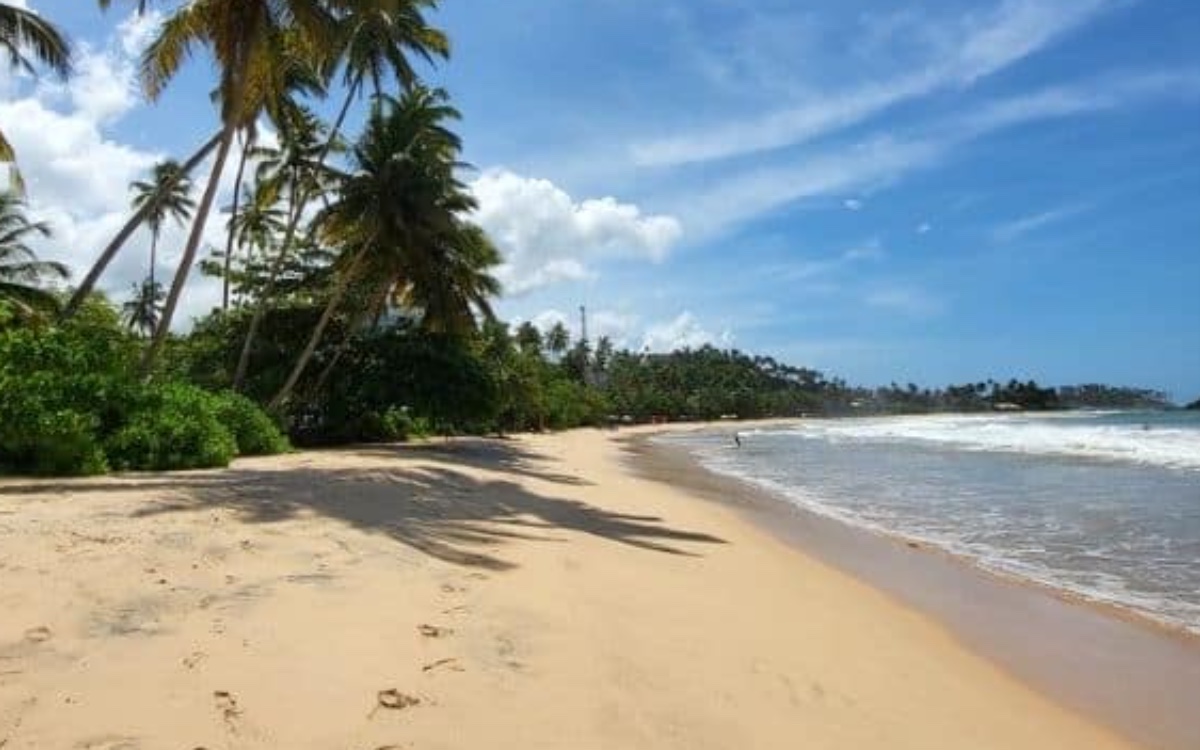
Picture long stretches of yellow sand, coconut palms leaning over the water and Indian Ocean swell that keeps divers and surfers busy. Someone will happily hack open a fresh king coconut for you right on the beach for well under a pound, and then you can just sit in the shade. The best beaches in Sri Lanka are on the south coast, where you can dive, snorkel, surf and, in season, go out to see whales and dolphins.
TIP: 12 best things to see in Sri Lanka
Busy resort beaches
The closer you are to Colombo and the bigger coastal towns, the busier the beaches get, simply because that is where almost everyone lands first. Expect bigger hotels, sunbeds and parasols, plenty of restaurants and more people. They are still beautiful beaches, though, and nothing like a packed Mediterranean resort in August where you struggle to find a patch of sand for your towel unless you pay for a lounger.
Quiet and empty beaches
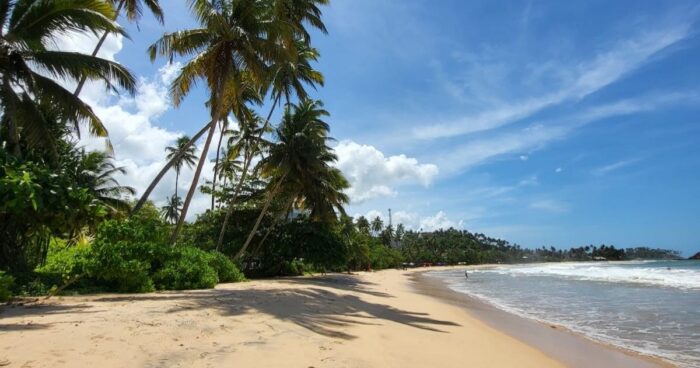
If you want more space and don’t mind travelling a bit further (which on local transport is an experience in itself), Sri Lanka also has quiet beaches and some that are completely empty (for example around Yala National Park). Just bear in mind that in smaller places the beaches are less looked after and there are fewer places to stay and eat. On the plus side, you see much more of everyday local life.
When to go: two coasts, two beach seasons
Sri Lanka gets two monsoons, so there is no single “beach season” for the whole island. The southwest monsoon brings rain and rough seas to the west and south roughly from May to September, while the northeast monsoon soaks mainly the east and north from about October to January. In practice that means there is always a coast with good beach weather somewhere; you just need to know which one.
| Coast | Beaches | Best months | Off season |
|---|---|---|---|
| West and southwest | Negombo, Bentota, Beruwala, Hikkaduwa | December to April | May to September: big waves, red flags, some places close |
| South | Unawatuna, Mirissa, Weligama, Hiriketiya, Tangalle | December to April (November is often a transition month) | May to September: heavy surf and currents, swimming often dangerous |
| East | Arugam Bay, Pasikudah, Trincomalee, Nilaveli | May to September | roughly October to January: monsoon rain, choppy sea |
| Northwest | Kalpitiya | November to April (dolphins), May to September (kiteboarding) | kitesurfers come during the monsoon for the wind |
Treat the months in the table as a guide: the monsoon doesn’t follow the calendar and has been shifting in recent years. For a month-by-month breakdown with temperatures, see our guide to the weather in Sri Lanka. For a UK reader that means the classic winter-sun escape (December to March) belongs to the south and west, while the British summer holidays fit the east coast.
20 best beaches in Sri Lanka
The only real way to find out how good Sri Lanka’s beaches are is to go. The best of them are in the south: there are lots of them close together, they are easy to reach, and you can surf or head out to see whales from several of them. The east coast has a few gorgeous beaches too, but they are a long way from everything else, so if you are short on time, stick to the south.
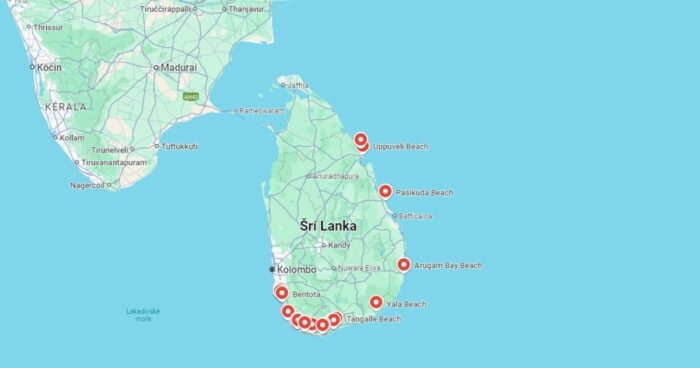
Open the map of all the beaches HERE
Beruwala and Bentota beaches
Beruwala and Bentota beaches are on Sri Lanka’s west coast, about 65 km from Colombo (around 2 hours’ drive). They are town beaches, yet still long, sandy and lovely. You can also take a river safari on the Bentota River. The easiest way here is by bus or train from Colombo (quickest and most comfortable). Do try a tuk-tuk too, but we would keep those for shorter hops, such as getting around town.
Bentota is more of a resort: large hotels sit right on the sand, there are water sports, and quieter Induruwa continues to the south. The coastal railway from Colombo Fort takes roughly 1.5 to 2.5 hours depending on the train. From May to September the sea here is often rough and swimming is frequently banned, so come in the winter months if you want to swim.
Hikkaduwa Beach
Hikkaduwa Beach lies 100 km south of Colombo and 20 km north of Galle. It is fairly lively at night, so if you like a drink at a beach bar in the evening, you’ll enjoy it here. It is a popular surf spot with coral reefs close to shore. Again, you get here by train or bus from Colombo.
The shallow coral reef right in front of the main beach is protected as Hikkaduwa Marine National Park. Sea turtles swim up to the shore and locals will offer you seaweed to feed them. Please don’t: it gets the turtles used to people and to the wrong food. The southern end of the beach, Narigama, is busier and full of bars, while the northern end by the reef is calmer.
TIP: Fancy a Caribbean beach instead? We spent a month wandering around Colombia and found a few, so here are our 15 tips on what to see in Colombia and how to enjoy an adventurous trip by the Caribbean Sea.
Unawatuna Beach and Galle
Unawatuna is one of the calmer beaches, without big waves. The larger town of Galle is close by, yet you can still enjoy the quiet of the suburbs. Nearby is the popular Dewata Beach, which is good for beginner surfers.
Unawatuna sits in a bay sheltered by a reef, so in season the sea is calmer here than elsewhere on the south coast. A path over Rumassala hill leads to little Jungle Beach, hidden among the trees, and to the white Japanese Peace Pagoda, with views along the coast to Galle Fort. Get to Jungle Beach in the morning; by the afternoon it fills up.
Galle town
Galle is one of Sri Lanka’s historic towns, with an old fort that is a UNESCO World Heritage Site. Because Galle is a bigger, busier town, its own beaches aren’t the nicest, so most people head to the beaches around it, such as Unawatuna, Dewata or Jungle Beach.
Dalawella Beach
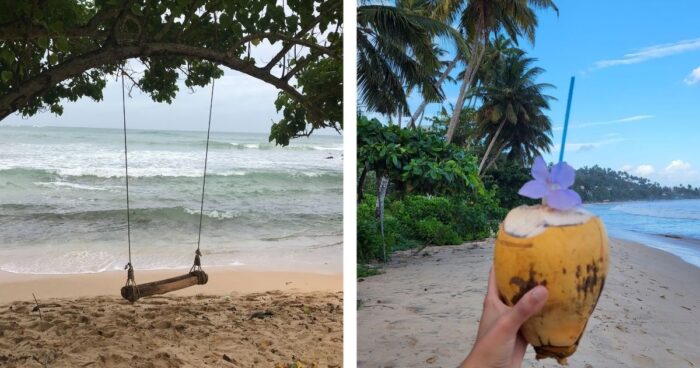
Dalawella lies between Unawatuna and Koggala and is famous for the rope swing hanging from a palm over the sea, which you have almost certainly seen on Instagram. The person who looks after the swing charges a small fee for a go and a photo, and there is a queue for it, especially in the late afternoon. The beach itself is quieter than Unawatuna, and behind the reef you can swim in shallow water even when the sea is a bit higher. If you want a photo without other people in it, come straight after sunrise.
Kabalana Beach
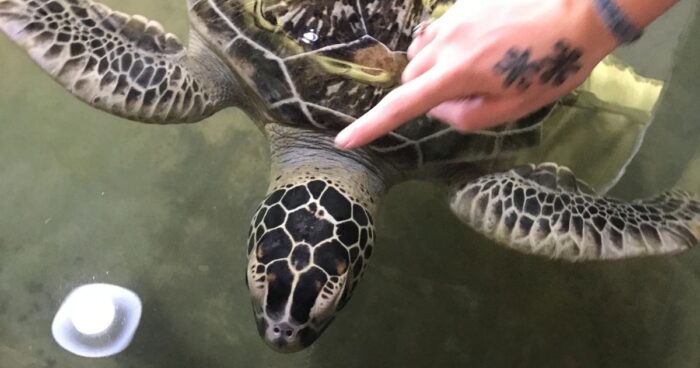
Not far from Galle is Kabalana Beach, with a beautiful sea and clean sand. It is an easy place for kids to get in, because the water stays shallow for a long way out. Further out, though, the waves are big, so stay close to the shore. Nearby you can also visit a turtle rescue centre that cares for sick sea turtles and helps baby turtles hatch (Sea Turtle Farm Hatchery & Koggala).
Mirissa Beach
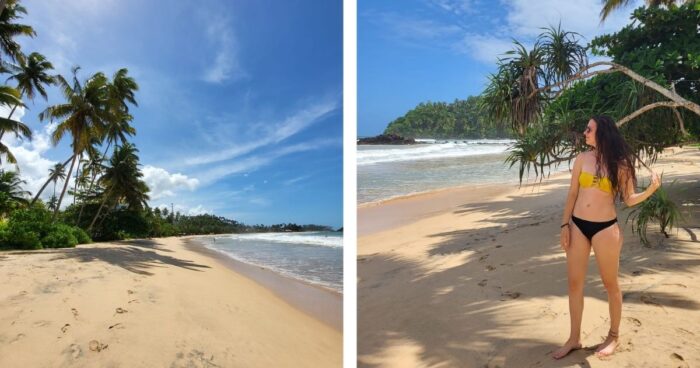
Mirissa Beach is on Sri Lanka’s south coast, about 150 km from Colombo, and it was our favourite, simply because it was so beautiful. You can watch the sunset, and in season (roughly December to April, with some boats starting in November) take a whale-watching trip during the migration, learn to surf, or just enjoy the golden sand, the palms and the calm.
What makes Mirissa special is that two beaches join together here, and close by is Coconut Tree Hill (a small hill covered in palms), which you really shouldn’t miss. You can get here by bus from Colombo heading to Matara (the beach there isn’t as nice), which is next door, and then on to Mirissa by local bus or tuk-tuk. Alternatively, take the coastal train to Weligama or Matara station.
Besides the main beach, check out Parrot Rock (a rock at the end of the beach you can climb when the sea is calm) and little Secret Beach, about a kilometre to the east, reached by tuk-tuk and a short walk. Whale-watching boats leave the fishing harbour early in the morning and the trips last 3 to 5 hours. Shared boats cost roughly USD 45 per person (around £35), private ones much more. Whale watching is governed by Sri Lanka’s 2012 marine mammal regulations, which set out licensing and a minimum distance between boats and animals, so don’t hesitate to ask the operator about their licence. If you get seasick, take a tablet: it’s a rough ride on the open ocean.
TIP: Animal rescue centres in Sri Lanka: where does tourists’ money go and how does sea turtle protection work?
Polhena Beach
Polhena is on the edge of Matara and is one of the few beaches in the south where, on a calm day, you can snorkel easily straight from the shore. A reef just off the beach creates a shallow lagoon where sea turtles often graze. It’s mostly local families who come here, there are few tourists, and accommodation is mainly small guesthouses. With children it is one of the safest spots in the south, but even here, don’t swim out beyond the reef.
Talalla Beach
Also near Matara is Talalla Beach, one of the quieter ones. There are enough places to stay and eat nearby that you won’t go hungry. In the evening you can watch the local fishermen at work, explore the smaller coves around, or simply laze on the beach.
Weligama and Coconut Beach
A short way from Mirissa is the lovely Weligama Bay and Coconut Beach, both popular for surfing. The waves are good and the sunsets are worth staying for. At low tide in Weligama Bay you can wade out to the tiny island of Taprobane, only about 100 m from the shore. There’s a private villa on it, so you can walk over, but you can’t go in.
Weligama is probably the best place in Sri Lanka to learn to surf. The long sandy beach with gentle waves and no rocks is lined with surf schools and board rental shops. If you already surf, you’ll have more fun on the reef breaks around Mirissa or at Hiriketiya.
Hiriketiya Beach
This small horseshoe-shaped bay near the little town of Dikwella, about 20 km past Matara, has become one of the most popular spots in the south in just a few years. The wave breaks off a rocky point at one side of the bay and peels right across it towards the sand. Experienced surfers sit at the point, beginners on the sandy side opposite. Around the beach you’ll find cafés, yoga studios and small guesthouses. From midday until sunset the water gets crowded; early morning is the quietest time.
Tangalle
The town and beach of Tangalle are on Sri Lanka’s southeast coast, about 200 km from Colombo. Because it’s further from the capital, there are far fewer tourists and it is much quieter. The beaches are long and sandy, and you can go on a night trip to watch turtles laying their eggs (see Rekawa Beach below). It’s easy to get here from Ella or from Colombo.
Goyambokka Beach
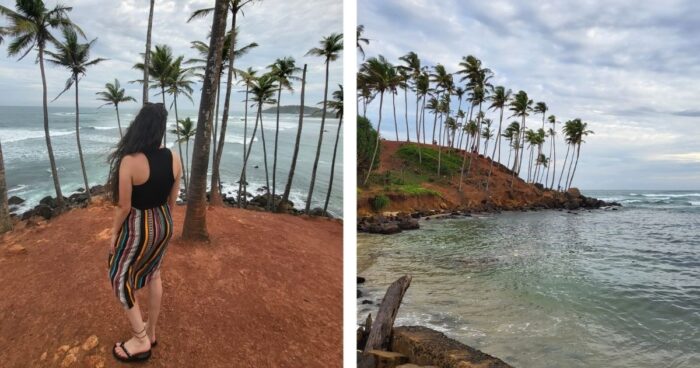
Close to Tangalle is Goyambokka Beach, one of the less-known gems of the Sri Lankan coast. This beautiful beach is well tucked away, so it never gets crowded and you’ll have plenty of peace, yet you can still get a drink or a coconut at the beach bar. Day trips to Ella or Yala National Park also leave from here.
TIP: The mountain town of Ella surrounded by tea plantations is a place you shouldn’t miss.
Rekawa Beach
Rekawa, about 10 km east of Tangalle, is one of the most important nesting beaches for sea turtles in Sri Lanka. The nesting site is protected by a local non-profit, the Turtle Conservation Project, which runs evening turtle watching: the beach wardens call you over when a turtle comes out of the water. According to the information available, the fee is roughly LKR 1,000 (about €3, or £2.50) and goes towards protecting the nests. No torches and no flash: turtles are easily disturbed.
The difference compared with the roadside “turtle farms” in the south is that here you see the animals in the wild. How rescue centres and hatcheries work, and what to ask before you give them your money, is covered in our article on animal rescue centres in Sri Lanka.
Yala Beach
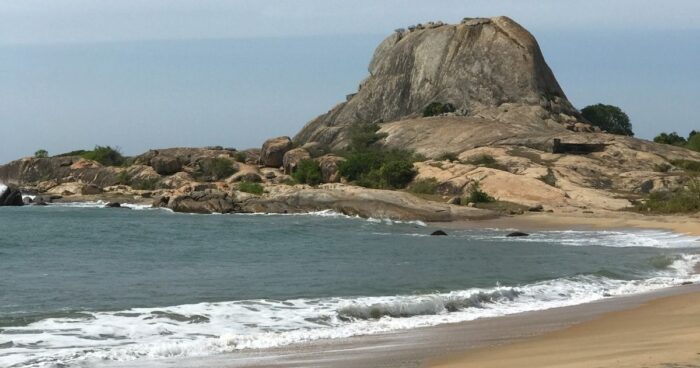
Yala Beach is on the southeast coast, right next to the popular Yala National Park. It’s one of the deserted beaches where you’ll probably be alone, but it isn’t that easy to get to. If you go on a safari in Yala, where you can see elephants, leopards and crocodiles, it will very likely be one of the stops. You can also stay nearby and have the beach almost to yourself.
Be careful, though: the currents here are strong, so it’s not really a swimming beach. The nearest town is Tissamaharama, from where you can get here by tuk-tuk, for example. The main part of the national park (Block 1) closes for several weeks every year, roughly in September and early October, because of the drought, so check the dates before you travel.
Arugam Bay
The town and beach of Arugam Bay are on the east coast, in the island’s dry zone, and the main season runs from May to October. Arugam Bay and the coast around it are among the most popular places in Sri Lanka for surfing. In the sea you can see coral reefs and sea turtles. If you’re just starting out, the waves at Whisky Point north of Pottuvil or Baby Point right in Arugam Bay will suit you better. The main wave, Main Point, is for experienced surfers. It’s 7 to 8 hours by car from Colombo and around 3 to 4 hours from Ella, so Arugam Bay works well combined with the hill country.
In season the area gets quite busy and is pricier than the rest of Sri Lanka. The area around Pottuvil is also mainly Muslim, so away from the beach, in town and in shops, dress more modestly (shoulders and knees covered). On the tourist beach itself swimwear is normal, but topless sunbathing is banned throughout Sri Lanka.
TIP: While you’re in Sri Lanka, don’t miss the Sigiriya rock fortress!
Uppuveli, Nilaveli & Trincomalee
This part of Sri Lanka is rather off the beaten track. The beaches are quiet, and one of the most popular trips is a boat ride to Pigeon Island and its coral reefs, probably the best place for snorkelling in the whole of Sri Lanka. You can also go whale and dolphin watching here, at a time of year when the season in the south is over. Off Trincomalee, whales are seen roughly from March to September, most often in spring and at the end of summer, but you won’t see them as reliably as off Mirissa.
Pigeon Island is a national park managed by Sri Lanka’s Department of Wildlife Conservation. Tickets are sold at a booth on Nilaveli beach; for foreigners, according to the current price list, they cost roughly USD 25 plus taxes, and the boat is paid separately. On the island you mustn’t stand on the coral or collect it, and keep your distance from the blacktip reef sharks that regularly show up close to shore. Instead of sunscreen, wear a UV-protective rash top: sunscreen damages the coral.
You can reach Trincomalee by direct train from Colombo, and from there it’s only a short tuk-tuk ride to the beaches of Uppuveli and Nilaveli. Local buses work fine too and will get you pretty much anywhere.
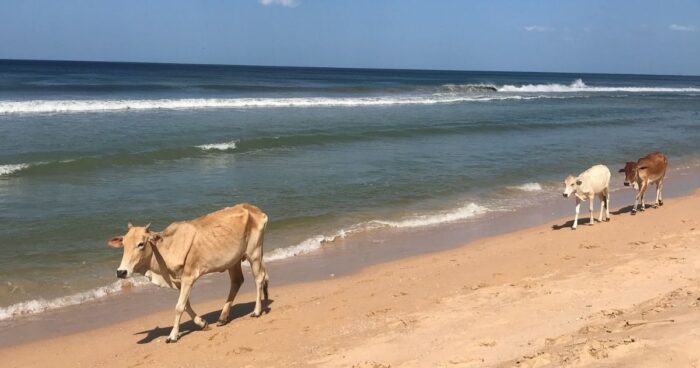
Trincomalee and whale watching
We came here mainly for the whales, and because we didn’t want to book an expensive tour online, we asked around a few locals and at our guesthouse, where we arranged a private whale-watching trip. We were taken out by what was probably a local fisherman, on a boat that was not built for the open sea at all. We sat on a narrow plank and I was clinging on for dear life, genuinely scared we were going to capsize.
Still, we did see a whale and lots of dolphins too, which was a beautiful experience. On the way back we also arranged some snorkelling over the coral reefs, which was great. Next time, though, I would rather pay more for a trip on a better boat. So haggle, but find out every detail of the trip first.
TIP: 13 things to take on a long-haul flight, so you actually enjoy the long-haul flight from the UK rather than just survive it
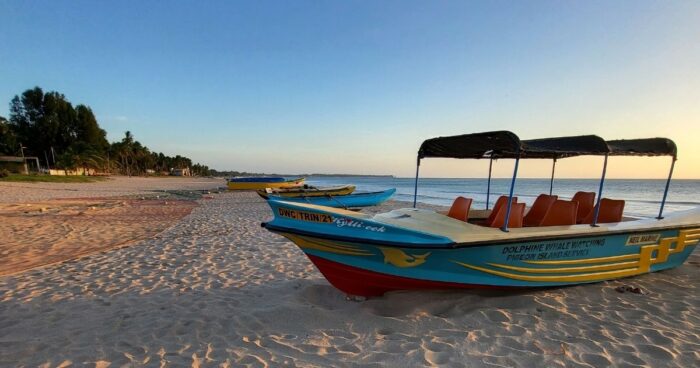
Marble Beach
Marble Beach lies south of Trincomalee in the bay by the China Bay air base and is run by the Sri Lanka Air Force. As a result it is clean and quiet, with mostly locals coming at weekends. In season the water is as clear as a swimming pool, hence the name. There’s a small entry fee, and the last stretch of the road runs through a military area where you’re not allowed on foot, so come by tuk-tuk or car. There’s hardly any accommodation right by the beach; people visit on a day trip from Trincomalee.
Pasikudah Beach
On the east coast, about 35 kilometres from Batticaloa, is the lovely sandy beach of Pasikudah (also spelt Passikudah). The best time to come is May to September, when it should rain least. The bay is sheltered by a reef, so the water stays shallow far out and in calm weather there are no waves. For families with small children it’s one of the best beaches on the island. Much of the shore, however, is taken up by resorts and there are only a few points of public access. You can try plenty of water activities here, such as kitesurfing, boogie boarding, surfing, or simply renting a canoe to explore the area.
Negombo and nearby beaches
Negombo is just a few kilometres from the airport, which makes it a popular place where most people stay at the start or end of their trip. Negombo has wide sandy beaches and options for diving and snorkelling. You can also visit the local fish market or take a boat trip on the lagoon and the old Dutch canal.
For swimming, though, Negombo is nothing special: the beach is wide, but the sand is darker, the sea tends to be murkier and the streets around the hotels are fairly busy. We see it as a practical place for the first or last night near the airport after or before the long flight home; for a beach holiday we would head further south.
Kalpitiya
The Kalpitiya peninsula in the northwest, roughly 3 to 4 hours by car from the airport, is Sri Lanka’s kiteboarding hub. Strong, steady wind blows mainly from May to September and again roughly from December to February, and the kite camps sit right on the lagoon. From November to April people also come for the huge pods of spinner dolphins, with boat trips leaving Kalpitiya in the morning. The beaches are wild, with no sunbeds or bars, so this isn’t a place to come just to lie by the sea.
Are Sri Lanka’s beaches safe? What to watch out for
Before you hit the beach, there are a few things worth knowing in advance.
- Strong currents: Sri Lanka is surrounded by the open Indian Ocean, and many beaches have strong rip currents, so don’t swim far out. If in doubt, ask the locals.
- Big waves: Unless you’re a surfer who goes looking for big waves, some beaches can be unpredictable and the swell can pick up quickly when the weather changes. Stay close to the shore and keep an eye on the waves. I got properly knocked over a few times.
- Sun and UV: The sun in Sri Lanka is much fiercer than at home. On our first day on the beach it burned us badly in a very short time, even though it was partly cloudy. Always carry high-factor sunscreen, ideally water-resistant.
- Respect local culture: Nudity is illegal in Sri Lanka and some areas (on the east coast, for example) are predominantly Muslim, so be respectful of local customs. Topless sunbathing is banned everywhere.
- Red flags and lifeguards: Lifeguards patrol only a handful of the most touristy beaches; everywhere else there’s nobody. A red flag means no swimming, and outside the season it flies almost every day in the west and south. Don’t swim alone, at night or after drinking.
- Reefs and sea urchins: On beaches with a coral reef (Hikkaduwa, Polhena, Pigeon Island) water shoes are useful. Don’t stand on the reef: it destroys the coral and you can easily cut yourself.
- Your belongings: Don’t leave your phone and money on your towel unattended when you go into the water. Theft isn’t common, but it does happen, mostly on busy beaches.
Getting between the beaches
- Train: The coastal line runs from Colombo Fort via Bentota, Hikkaduwa, Galle and Weligama to Matara and on to Beliatta. The ride along the sea is an experience in its own right, and a 2nd or 3rd class ticket costs just a few hundred rupees (a pound or two). Direct trains also run east to Trincomalee and Batticaloa (for Pasikudah). Reserved seats in 1st class and on selected express trains are sold on the official Sri Lanka Railways booking website.
- Bus: The cheapest option. Ordinary buses run every few minutes between the towns in the south, and fast air-conditioned buses go from Colombo (Makumbura or Kadawatha) along the Southern Expressway to Galle and Matara.
- Tuk-tuk: For short hops between beaches. Agree the price before you set off, or use the PickMe or Uber apps, which work in Colombo and the larger towns in the south and show the fare upfront.
- Private driver for the whole route: The comfortable option if you want to do the south coast and then carry on to the hills or the east. You pay per day or per route, and it mainly makes sense for two or more people.
- Money: You pay in Sri Lankan rupees (LKR); very roughly, €1 is about 375 LKR and £1 about 440 LKR. There are cash machines in the beach resorts, but cash comes in handy for boats, tuk-tuks and beach bars.
Where to stay for a beach holiday in Sri Lanka
For the beaches, it’s best to pick one or two bases and do day trips from there; distances in the south are short. Below are tried-and-tested places to stay by area, from cheaper guesthouses to resorts. Prices vary a lot through the year, and in season (December to April in the south and west) it’s worth booking ahead.
- Bentota and Induruwa: Cinnamon Bentota Beach (large resort with a pool and kids’ club, 300 m from the beach), Shandaru Blue Bentota (five-star hotel with a private beach near Induruwa) and EKHO Surf Bentota (hotel right on Bentota’s long beach).
- Hikkaduwa: Roman Beach Hotel (on the beach, with a pool and sea-view rooms) and Sea Salt Society (smaller hotel with a bar, 50 m from Narigama beach, where the evenings are lively).
- Unawatuna: Araliya Beach Resort & Spa (resort with a pool 20 m from the beach, good for families too) and Galawatta Beach Resort (simple rooms with a fan and balcony right on the beach, the budget option).
- Mirissa: Paradise Beach Club (beachfront hotel with a pool, close to the harbour where the whale-watching boats leave) and The Secret Guesthouse (guesthouse with a pool and shared kitchen, 400 m from the beach).
- Weligama: Weligama Bay Marriott Resort & Spa (large resort right on the beach with several pools) and Lucky’s Surf Camp (surf camp 70 m from the beach, ideal for a surf course).
- Tangalle and Rekawa: Anantara Peace Haven Tangalle Resort (luxury resort on a rocky headland in a coconut grove), Buckingham Place (boutique hotel on Rekawa beach with a 33-metre pool, close to the turtle nesting sites) and Seven Turtles (smaller hotel with a pool a few steps from a quiet beach).
- Arugam Bay: Waypoint Arugam Bay (hotel with a bar and restaurant 60 m from the beach) and Hangten’s Surf Skate Hostel (surfers’ hostel, the cheap option).
- Trincomalee, Uppuveli and Nilaveli: Trinco Blu by Cinnamon (resort on Uppuveli beach with a PADI dive centre), Nilaveli Beach Resort (wooden cabins 50 m from Nilaveli beach, where the boats to Pigeon Island leave) and Trinco Beach Bunks (hostel right on Uppuveli beach).
- Pasikudah: The Bay an Uga Experience (resort with a large pool right on the beach) and Amaya Beach Passikudah (beachside resort with a spa).
- Negombo (first or last night): Jetwing Beach (five-star hotel on Ethukala beach, 12 km from the airport), Sentido Heritance Negombo (ocean-view hotel 100 m from the beach) and Serendib Village Guest House (cheaper guesthouse with a pool, 400 m from the beach).
A little history of Sri Lanka’s coast
For centuries Sri Lanka’s coast was above all a trading crossroads. Arab, Indian and Chinese merchants sailed into the harbours of Galle and Trincomalee for cinnamon, gemstones and elephants. The Portuguese arrived at the beginning of the 16th century and took control of the coastal strips, the Dutch replaced them in the mid-17th century, and the British followed from the end of the 18th century. Galle shows the most traces: the fort, which the Dutch rebuilt into its present form from 1663, has been a UNESCO World Heritage Site since 1988. Dutch canals still run around Negombo, and in Trincomalee Fort Frederick stands alongside the Hindu Koneswaram temple on the cliff.
The modern history of the beaches was split in two on 26 December 2004. The tsunami triggered by the earthquake off Sumatra hit the east and south coasts, and more than 30,000 people died in Sri Lanka. At Peraliya, just outside Hikkaduwa, the wave swept away the Queen of the Sea train, and a memorial still stands there. Many hotels and fishing villages in the south had to be rebuilt from scratch. The east coast (Trincomalee, Pasikudah, Arugam Bay) only really opened up to tourists after the civil war ended in 2009, which is why it is still less built up than the south.
What we would do differently
We would give the beaches more time and move around less. It’s tempting to do the whole coast and tick off all twenty beaches on this list, but in Sri Lanka it pays to stay a few days in one place, walk along the water in the morning while the fishermen haul in their nets, and have a coconut in the shade in the afternoon. We’d rather choose two bases, say Mirissa and one quieter beach further along the south coast such as Talalla or Tangalle, than sleep somewhere different every night.
We would also try more of the places where locals eat: small rice and curry canteens a short walk from the beach with no English menu, kottu roti from a street griddle, fruit from roadside stalls. They won’t be in any guidebook, and that’s exactly their charm. In the same way, we wouldn’t hesitate to turn off towards a beach we’d never heard of; the south coast is full of small nameless coves.
And we’d go whale watching with a licensed, proper boat, even if it costs more. The money saved on a cheap trip with a fisherman wasn’t worth the fear out on the open sea. We’d also keep the phone in the pocket: you won’t get a decent photo of a whale anyway, and you’ll remember the moment it surfaces next to the boat better without a screen in front of your eyes.
Sri Lanka beaches: frequently asked questions (FAQ)
Where are the best surf beaches in Sri Lanka?
The most popular surf beaches in Sri Lanka are Arugam Bay on the east coast and Hikkaduwa on the west coast. Other well-known surf spots are Mirissa, Weligama and Kabalana Beach. Beginners do best in Weligama, experienced surfers on the reef breaks around Mirissa, at Hiriketiya or at Main Point in Arugam Bay.
Which is the best beach in Sri Lanka for families?
Families with children are best off at beaches with calmer water, such as Bentota, Beruwala or Unawatuna in the southwest (in season, December to April), Polhena near Matara with its reef-protected lagoon, and in summer Pasikudah on the east coast, where the water stays shallow far from the shore. Always follow the flags and check the state of the sea.
When is the best time to visit Sri Lanka’s beaches?
The best time for beaches on the west and south coasts is roughly December to April, when the weather is drier and the sea calmer. On the east coast the best months are May to September, when it rains least there. In practice you can enjoy Sri Lanka’s beaches all year round, because it is always the season on either the south or the east coast.
Are Sri Lanka’s beaches safe for swimming?
Some beaches in Sri Lanka are safe for swimming, but many have strong rip currents and big waves, especially outside the season. Lifeguards are on duty only on a few tourist beaches, so respect the red flags, don’t swim far from the shore and ask locals about sea conditions.
Which are the quietest beaches in Sri Lanka?
For quieter, less touristy beaches, head to Tangalle, Talalla Beach, Goyambokka Beach or Rekawa in the south, or Marble Beach and Nilaveli in the east. They are less crowded, though usually a bit further from Colombo.
Does Sri Lanka have nice beaches?
Yes. The best beaches in Sri Lanka are mainly on the south coast: long, sandy and lined with palms. Among the most beautiful are Mirissa, Hiriketiya, Talalla, Unawatuna and Tangalle, and in summer Pasikudah, Nilaveli and Arugam Bay on the east coast.
Where and when can you see whales in Sri Lanka?
In the south, whale-watching boats leave Mirissa from roughly December to April (some as early as November), and in the northwest boats go out from Kalpitiya to see whales and large pods of dolphins from November to April. In the east, off Trincomalee, the season runs roughly from March to September, but sightings there are less reliable. Choose a licensed operator that keeps its distance from the animals.
Where can you swim in Sri Lanka in summer (July, August)?
In summer the monsoon hits the west and south coasts and the sea is often rough, so head to the east coast: Arugam Bay (surfing), Pasikudah (shallow, calm bay), and Trincomalee with Uppuveli, Nilaveli and Marble Beach. In the south, summer swimming is only possible now and then in sheltered spots, such as Polhena on a calm day.
Potřebujete pomoct s cestováním?
-
Ubytování 🏨
Vyberte si to nejlepší ubytování, ať už jste kdekoliv, přes Booking.com. -
Půjčení auta 🚗
Auto si snadno najdete přes Booking.com, kde máte často slevu díky ubytování, nebo Rentalcars.com, kde porovnáte nabídky většiny půjčoven. -
Zážitky 🎟️
Přes GetYourGuide.com si vyberete z nejrůznějších výletů i zážitků po celém světě, navíc se zrušením zdarma do 24 h předem.