Last updated 8.10.2026
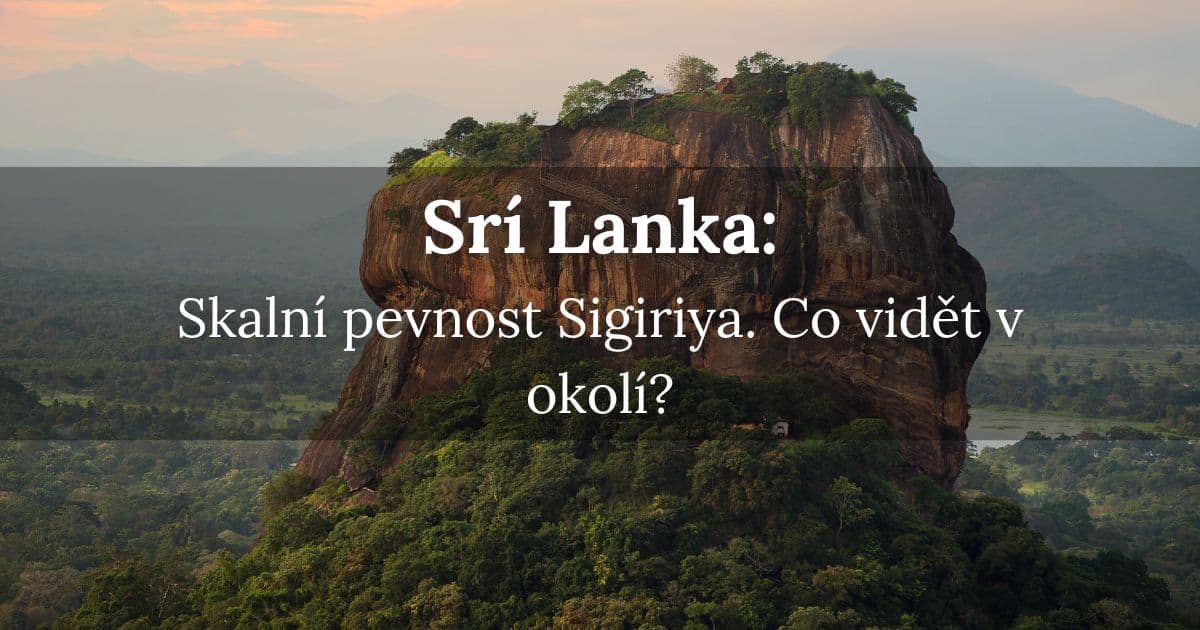
Sri Lanka gives you a long list of things to tick off, from dolphin watching on the south coast to hikes up to thundering waterfalls in the hills. If you are after the high point of the trip, in every sense of the word, it is Sigiriya. The legendary Lion Rock, with the ruins of a royal palace on its summit, reminded us of Machu Picchu the moment we saw it: history and a view that stretches for miles, all in one place. Sigiriya Rock Fortress was one of the most remarkable places we saw anywhere in Sri Lanka. Below you will find what Sigiriya actually is, what the ticket costs, how to get there and what you should not miss on the way up.
- Ticket: 35 USD for foreign adults (currently about 11,760 LKR, roughly £26 or €30), 20 USD for children aged 6 to 12, free for children under 6. The museum is included.
- Opening hours: the ticket office sells tickets until 5 pm, the site usually opens at 7 am and at certain times of year it opens at dawn so visitors can catch the sunrise.
- The climb: roughly 1,200 steps, 30 to 60 minutes to the top, and 2 to 3 hours for the whole site.
- Where to stay: in Sigiriya village itself or near the neighbouring Pidurangala Rock; hotel tips are further down.
What is Sigiriya Rock Fortress and why is it worth seeing?
Sigiriya, also known as Lion Rock, is a block of rock about 200 m high, and it is far from an ordinary hill. History and legend overlap here, royal vanity sits right next to Buddhist modesty, and a natural landmark has been shaped by some very skilled builders. The summit once held a royal palace built by King Kassapa I, and you can still walk among its remains today.
Sigiriya is one of the most important historical sites in Asia, which is why it was added to the UNESCO World Heritage List in 1982 (and why the ticket is so steep, though it is well worth paying). It lies in Sri Lanka’s Cultural Triangle together with Anuradhapura, Polonnaruwa and Dambulla, so it combines easily with the other big sights.
TIP: 12 things to see in Sri Lanka, including the ones that drew us there
What to see at Sigiriya Rock
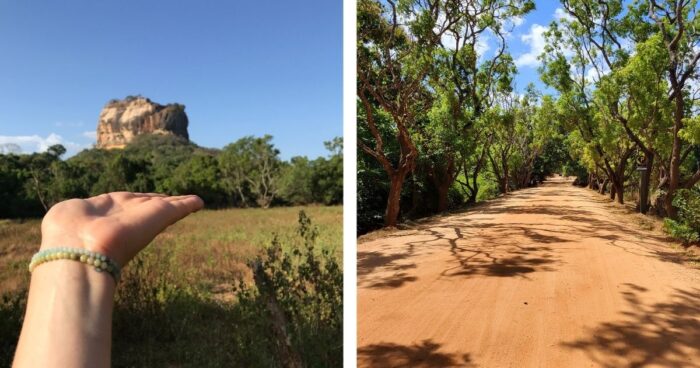
The rock rises straight out of the surrounding jungle, as if someone had simply set it down there like a chess piece. Around its base lie royal gardens with a remarkable water system, and on the rock face you will find frescoes and inscriptions more than a thousand years old.
The layout of Sigiriya, step by step
From a distance Sigiriya may look like nothing more than a giant boulder, but there is a lot packed in around it. The list below follows the order of the route, so you can use it as a map of the climb.
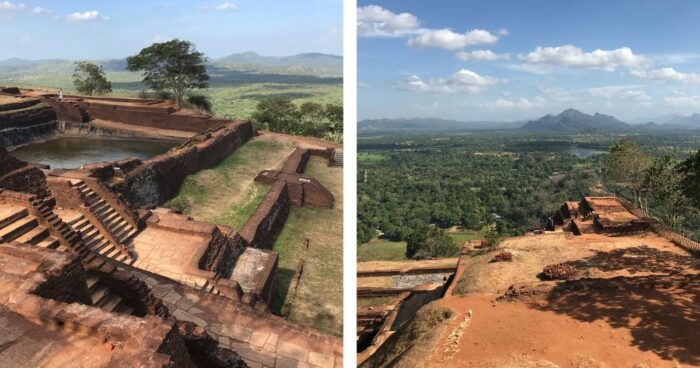
- Water gardens: The rock is ringed by gardens with an unusual irrigation system, regarded as some of the oldest surviving landscaped gardens in the world. Water reached them through an intricate network of channels and underground pipes, and some of the fountains still spurt in the rainy season.
- Boulder and terrace gardens: Pavilions and monasteries once stood among the huge boulders at the foot of the rock, and you can still see the foundations and stairways cut into the stone. This is where the actual climb begins.
- The Sigiriya frescoes: These ancient paintings are tucked under an overhang in the rock face, reached by a metal spiral staircase. There may once have been as many as 500 of them; around twenty survive. They date from the 5th century and were painted on plaster applied directly to the rock. They show women (perhaps queens, perhaps celestial maidens) and are a fine example of Sinhalese art. Photography is not allowed and the staff do check.
- The Mirror Wall: Just below the frescoes a walkway runs along a wall that was once polished so smooth you could see your reflection in it. From the 8th century onwards visitors scratched verses about the frescoes into it, and these graffiti are now among the oldest surviving examples of Sinhalese poetry. Do not touch the wall, it is protected.
- The Lion Gate, the way to the summit: The Lion Gate is one of the best-known symbols of Sigiriya. All that is left of a colossal lion statue are its paws, which still frame the entrance to the final stretch of the climb. People once walked up through the lion’s open mouth. The lion was meant to scare off the king’s enemies and show off his power.
- The summit: The plateau covers about 1.6 hectares. Up here you will find the palace foundations, terraces, a stone throne and a large cistern cut into the rock to collect rainwater. The view opens up in every direction, and on a clear day you can see as far as the mountains of the interior.
- Sigiriya Museum: It stands by the main entrance and is included in the ticket. Go before you climb: it shows what the palace may have looked like, so that at the top you see more than a pile of old stones.
TIP: Animal rescue station: where does tourists’ money go and how are sea turtles protected?
TIP: The frescoes have kept their original colours to this day. And nobody actually knows who the women in them are.
Where is Sigiriya and how to get there
Sigiriya Rock Fortress sits in the centre of the island, about 15 km as the crow flies from Dambulla and roughly 90 km by road from Kandy. Local buses stop right by the site at Sigiriya Rock Bus Station (local bus). Most long-distance buses from Colombo, Kandy or Anuradhapura only go as far as Dambulla, which is worth a stop anyway for its beautiful cave temples. From Dambulla you continue to Sigiriya on local bus 549 or by tuk-tuk, and the ride takes about half an hour. Buses also stop regularly in the nearby village of Kimbissa.
If you would rather take the train, the nearest station is Habarana, around 15 to 20 km from Sigiriya. Trains are infrequent, though, so for most people the bus is easier. Once you get off the local bus, you will probably need to walk or take a tuk-tuk to your accommodation. Both tuk-tuks and cars with a driver can be booked through the PickMe app; with a tuk-tuk flagged down on the street, agree the fare before you get in.
Many visitors travel around Sri Lanka with a hired driver. From Bandaranaike International Airport near Colombo (Katunayake), where flights from the UK land, it is about 4 hours by car to Sigiriya, and around 2.5 hours from Kandy. The route we took and how we linked the places together is in our Sri Lanka travelogue.
TIP: Ella, Sri Lanka: tea plantations, mountains and waterfalls
Climbing Sigiriya Rock: what it is really like
We tackled the 1,270 steps (sources give anything from 1,200 to 1,270) in the worst of the midday heat, which was not our smartest move. The climb itself is not difficult, but the sun and heat during the day are brutal. Take plenty of water and something to cover your head, or you will bake up there. Fit walkers who do not stop much reach the top in half an hour; with photos and breathers, allow closer to an hour.
Best time to visit Sigiriya
Sigiriya is lovely all year round, but the most pleasant weather usually runs from January to September. The rock lies in the island’s dry zone, and according to Sri Lanka’s Department of Meteorology the wettest months here are October to December, when the inter-monsoon period is followed by the northeast monsoon. The steps can then be slippery and the summit lost in cloud. We go into more detail in our article on the weather in Sri Lanka.
As for the time of day, go as early in the morning as you can, or wait until around 3 pm. Midday is when the rock is hottest and when the coach tours roll in. Weekends and Buddhist holidays (the full-moon poya days) bring crowds of Sri Lankan day-trippers. Tickets are sold until 5 pm, the site normally opens at 7 am, and the Central Cultural Fund, which runs Sigiriya, at some times of year lets visitors in at dawn so they can watch the sunrise from the top. Check the current times before you go.
Sigiriya entrance fee for foreigners and the route
It may come as an unpleasant surprise that entry to the site and the summit costs 35 USD. According to the Central Cultural Fund’s official price list, that is currently about 11,760 LKR, roughly £26 or €30. Children aged 6 to 12 pay 20 USD and under-6s go free. In Sri Lanka that sum would cover accommodation and food for several days. Even so, it was worth it, because you will not see anything like this many other places (as a rule, entry fees for foreign visitors in Sri Lanka are high, especially at UNESCO sites).
Tickets are sold at a kiosk a short way from the entrance to the site (you will not miss it). The price is set in dollars but paid in rupees at the day’s rate, and cards are usually accepted. Bring cash anyway, because the card machines do not always work. You can also buy your ticket in advance through the official Central Cultural Fund e-ticketing site and swap the confirmation for a paper ticket on arrival. A ticket is valid only on the day of issue and for a single entry, so keep your passport on you.
Inside, the path leads you around Sigiriya Rock: from the entrance past the irrigation channels and gardens, between the boulders and up to the Lion Gate, where the stairs to the summit begin. The frescoes and the Mirror Wall are on the way up. You come down by a different route, and signs point you to the exit for foreign visitors, with stalls, snacks and the car park.
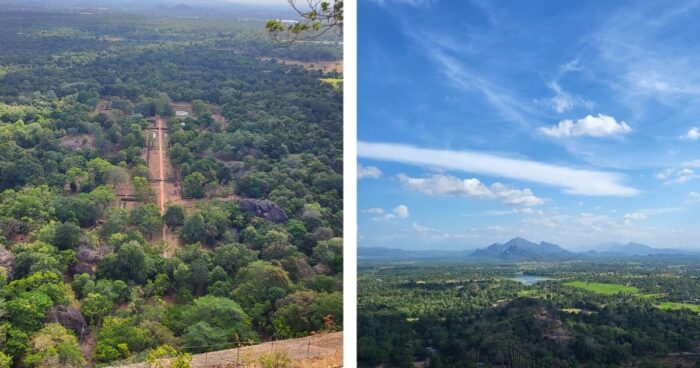
How long does Sigiriya take?
Set aside at least 2 to 3 hours for the visit (depending on how fast you get yourself up all those steps), and half a day if you add the museum and gardens. There are often guides waiting inside who will offer their services for a fee (as well as men with flutes and live snakes, whom you are unlikely to walk past unnoticed). You do not need a guide; if you do take one, agree the price and length of the tour first. And the views from the top reach far and wide.
What to know before you climb
- Water and toilets: There is nothing to buy at the top, and the only toilets are at the entrance and the exit. Take at least a litre and a half of water per person.
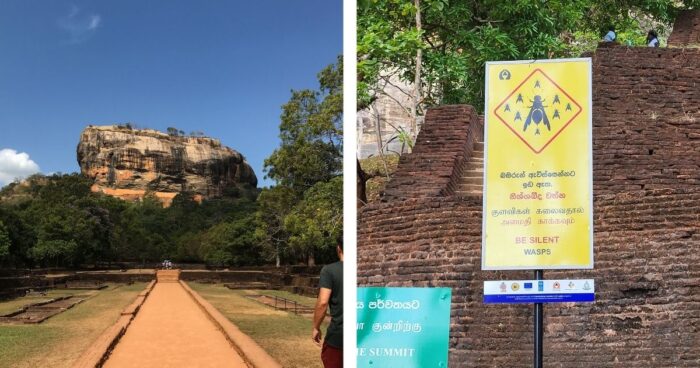
- Wasps: Giant wasps and hornets live on the rock. When they are disturbed, the staff halt the climb and people wait inside mesh shelters. Skip the perfume, do not shout and avoid sudden movements. On windy days part of the route is sometimes closed because of them.
- Fear of heights: The last section runs up metal stairs bolted to the rock, and you can see the drop through them. If heights are a problem, you can turn back at the Lion Gate and still see the gardens, the frescoes and the Mirror Wall.
- Clothes and shoes: Light clothing, a hat, sun cream and sturdy shoes. Flip-flops are awkward on the steps.
- Monkeys: Macaques roam the gardens. Do not carry food in a plastic bag or in your pockets.
- Drones: Flying over the site is banned without written permission from the Central Cultural Fund.
TIP: 13 things to take on a plane for a long-haul flight
The history of Sigiriya and why the place feels so unusual
Sigiriya’s story goes back to the 5th century AD. According to the Culavamsa chronicle, King Kassapa I seized power by overthrowing his father, King Dhatusena, and having him killed. He then moved his seat from Anuradhapura to the top of this rock, for its strategic advantage and protection. Kassapa was known for his appetite for power and luxury, and Sigiriya was meant to be a showcase of his wealth and might. Yet the fortress was about more than prestige: Kassapa feared the revenge of his brother Moggallana, the rightful heir to the throne, who had fled to India.
Kassapa ruled here roughly from 477 to 495. Then Moggallana returned with an army, Kassapa lost the battle and, according to the chronicle, took his own life. Moggallana moved the capital back to Anuradhapura and handed the rock over to Buddhist monks.
After Kassapa’s death, Sigiriya gradually lost its role as a royal seat. It remained an important place for Buddhist monks, who lived here until the 14th century. After that the jungle swallowed it, and it was rediscovered by the British in the 19th century. Major Jonathan Forbes came across it in 1831, and systematic excavations were started at the end of the 19th century by the archaeologist H. C. P. Bell. Some historians also doubt that it was mainly a fortress and see Sigiriya rather as a monastery and palace complex. Nobody knows for certain, which only adds to the mystery of the place.
TIP: Fancy wild nature and a proper adventure? How about a holiday in Colombia? We have 15 brilliant places to see in Colombia that might tempt you too 😉
Sunset from Pidurangala Rock
Since Sigiriya is one of Sri Lanka’s most visited sights, it is well worth staying nearby overnight and heading up Pidurangala Rock for the sunset; it lies about a kilometre north of Sigiriya. Pidurangala has the best views of Sigiriya itself, and far fewer people climb it, so you can enjoy the scenery in peace at sunrise or sunset.
The trail starts at the Buddhist temple of Pidurangala Vihara, where you pay an entrance fee of 1,000 LKR (about £2.20 or €2.60). As the path goes through the temple grounds, cover your shoulders and knees; you can wrap a scarf around yourself on the spot. The climb takes 30 to 45 minutes, first up stone steps, past a reclining brick Buddha, and the last few metres are a scramble over boulders where you will want both hands free. Sunrise tends to be crowded at the top, sunset is calmer. Wild elephants roam the area, so do not walk along the road after dark; arrange a tuk-tuk there and back instead.
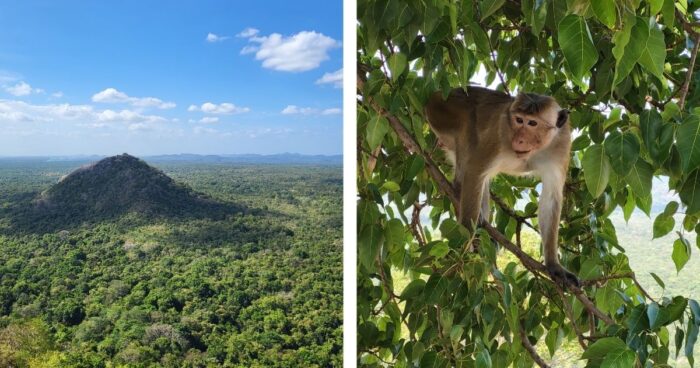
Things to do near Sigiriya: Dambulla cave temples
If you have a spare day or afternoon around Sigiriya, the large Dambulla cave temple complex, also a UNESCO site, is close by. Its five caves hold ancient statues and paintings that are a unique record of Sri Lanka’s spiritual history. The most important are the Cave of the Divine King, with a 14 m reclining Buddha, and the Great Monastery, with dozens of Buddha statues.
The caves sit on a hill above the town, about 15 minutes up a flight of steps. Entry for foreign visitors is roughly 2,000 LKR (about £4.40 or €5), although figures vary, and it is mostly paid in cash. Tickets are sold until 5 pm, you take your shoes off before entering the caves, and shoulders and knees must be covered. The ticket office is down by the entrance next to the Golden Temple with its large Buddha statue, so do not walk past it.
Elephant safari near Sigiriya
Sigiriya also makes a good base for a safari. Within 45 minutes’ drive are Minneriya and Kaudulla national parks and the smaller Hurulu Eco Park near Habarana. In the dry season, roughly July to September, hundreds of elephants gather at the reservoir in Minneriya at the same time, an event locals call “The Gathering”. Which park has the most elephants at any given moment depends on the water, so follow the advice of the jeep drivers who go out every day. Your accommodation can arrange a jeep; the park entry fee is paid separately.
Where to stay in Sigiriya
The best option is to sleep in Sigiriya village itself or close to Pidurangala. That way you can walk to the rock in the morning before the coaches arrive and still make the sunset in the evening. Here are a few tried-and-tested picks for different budgets:
- Flower Inn (budget): A simple guesthouse in Sigiriya village with a garden, private bathroom, Wi-Fi and free parking. For anyone who mainly needs a good night’s sleep and an early start up the rock.
- Back of Beyond, Jungle Hideaway Pidurangala (mid-range): A place in the middle of the forest, a kilometre from Sigiriya Rock, with traditional-style rooms and wooden furniture. Pidurangala is just round the corner, and they can also arrange a safari to Minneriya or Kaudulla.
- Hotel Sigiriya (mid-range to upper): Air-conditioned rooms, an outdoor pool, a view of Lion Rock, an Ayurvedic spa and a buffet breakfast. The right choice if you want somewhere to cool off after the climb.
- Jetwing Vil Uyana (luxury): Villas with balconies and teak floors set in a man-made wetland, plus a spa, gym and indoor pool. For a special night or a honeymoon.
If you would rather not change hotels again, Sigiriya can also be done as a day trip from Dambulla or Kandy. You will miss the best part, though: the early mornings and evenings at the rock.
What we would do differently
We would not climb Lion Rock at midday. That heat was our own fault, and next time we would set off first thing in the morning, sit down on a rock at the top and take our time. We would also stay in Sigiriya for at least two nights, because Lion Rock, Pidurangala, Dambulla and a safari are far too much for a single day.
We would also worry less about the plan. The best moments here are not on any list: rice and curry at a family guesthouse where the host brings out eight little bowls and you have no idea what is in them, a tuk-tuk ride through the paddy fields, or a glimpse of Sigiriya from an ordinary lane outside the village where nobody is taking photos. We would happily drop one of the sights and spend an afternoon by the pool instead.
And at the top of Pidurangala we would put the phone away for a while. Everyone on the internet has a photo of Sigiriya at sunset, but the moment the jungle below you turns orange and the birds start calling is something no camera captures the same way.
Sigiriya Rock Fortress: frequently asked questions (FAQ)
What is Sigiriya in Sri Lanka?
Sigiriya, also known as Lion Rock, is a rock formation about 200 m high in central Sri Lanka, with the remains of a 5th-century royal palace on its summit. It is a UNESCO World Heritage Site, and around it you will find a large complex of royal gardens, an ancient irrigation system and a route that climbs all the way to the top.
How many steps does Sigiriya have?
Roughly 1,200 steps lead to the top of Sigiriya Rock Fortress; sources give anything from 1,200 to 1,270. The final stretch from the Lion Gate runs up metal stairs fixed to the rock. The climb takes 30 to 60 minutes depending on your pace and how often you stop.
How much is the Sigiriya entrance fee for foreigners?
Foreign adults pay 35 USD, children aged 6 to 12 pay 20 USD and children under 6 go free. The price is paid in rupees at the day’s rate, currently about 11,760 LKR, roughly £26 or €30. Entry to the Sigiriya Museum is included. The neighbouring Pidurangala Rock costs 1,000 LKR.
How long does it take to climb Sigiriya?
The climb to the summit takes 30 to 60 minutes and the descent about half an hour. With the gardens, frescoes, summit and museum, allow 2 to 3 hours in total. The best times are first thing in the morning or in the afternoon after 3 pm; tickets are sold until 5 pm.
Sigiriya or Pidurangala: which should I climb?
If you are interested in the history, the frescoes and the palace on the summit, go for Sigiriya. If you mainly want a view of Lion Rock itself, the cheaper Pidurangala is the better choice. Best of all, do both: Sigiriya in the morning and sunset on Pidurangala in the evening.
What is there to do near Sigiriya?
Around Sigiriya Rock Fortress you can explore the jungle and countryside, go on an elephant safari in Minneriya or Kaudulla national parks, visit the nearby Dambulla cave temple complex, or climb Pidurangala Rock for a great view of Sigiriya at sunrise or sunset.
Where is Sigiriya and how do you get there?
Sigiriya lies in the centre of the island, in the Cultural Triangle, about 15 km from Dambulla and 90 km from Kandy. Long-distance buses mostly go to Dambulla, from where you continue by local bus or tuk-tuk. The nearest train station is Habarana, about 15 to 20 km from Sigiriya. Right by the UNESCO site itself is the Sigiriya Rock Bus Station (local bus).
Potřebujete pomoct s cestováním?
-
Ubytování 🏨
Vyberte si to nejlepší ubytování, ať už jste kdekoliv, přes Booking.com. -
Půjčení auta 🚗
Auto si snadno najdete přes Booking.com, kde máte často slevu díky ubytování, nebo Rentalcars.com, kde porovnáte nabídky většiny půjčoven. -
Zážitky 🎟️
Přes GetYourGuide.com si vyberete z nejrůznějších výletů i zážitků po celém světě, navíc se zrušením zdarma do 24 h předem.