Last updated 1.9.2026
Ask what the best things to do in Slovakia are and you run into a pleasant problem: the country is small, but nothing in it is spread thin. Bratislava to Košice is about 400 km end to end, and in between you get alpine summits, caves that hold ice through August, painted timber cottages, a UNESCO silver-mining town in a collapsed volcano, and a flat, vine-covered south that feels closer to Hungary than to the mountains. It is, in short, the Austria-shaped holiday at roughly two thirds of the price and a fraction of the crowds.
Below are 30 places worth your time, grouped by region, so it is obvious what sits next to what and what can be strung together into one trip. Around them is the practical scaffolding a first-time visitor actually needs: which airport to fly into, whether you can do this by train, when the mountain paths are legally shut, and what a day on the ground costs.
Best things to do in Slovakia at a glance
- The unmissable three: the Vysoké Tatry (High Tatras), Slovenský raj (Slovak Paradise) and Spišský hrad castle with the town of Levoča. One week, one trip, done.
- Flying in: Bratislava airport is the obvious one, but Vienna is roughly an hour away by bus and often cheaper. Kraków and Katowice serve the north, Budapest the south-east. Poprad has seasonal flights only.
- Regions: the west is cities, castles and wine; the centre is mountains and mining history; the east is gorges, open-air museums, UNESCO towns and the cheapest beds in the country.
- When to go: mountains from mid-June to October, cities and the southern lowlands from May, caves almost all year. High-altitude paths in the Tatras are closed for around seven months from 1 November.
- Without a car: yes, along the spine. The ZSSK line Bratislava–Žilina–Poprad–Košice hits most of the highlights; remote valleys are harder.
- Driving: a motorway e-vignette costs €10.80 for 10 days (about £9) or €90 a year, bought online, no sticker.
- Budget: roughly €45–70 per person per day (about £38–59) including a bed, food and one admission. The east is noticeably cheaper than Bratislava and Liptov.
- Two rules that catch people out: swimming is banned in every Tatra lake, and the gorges in Slovenský raj are one-way — you walk upstream only.
Getting to Slovakia and moving around it
There is no single obvious airport, which is the first thing to understand. Bratislava (BTS) is the national gateway and puts you in the Old Town in 25 minutes, but the flight choice is thin. Vienna (VIE) is the smarter option surprisingly often — it sits about an hour from Bratislava by direct coach, the fares are usually lower and the timetable is far denser. For the northern mountains, Kraków or Katowice are the sensible entry points; for the south-east, Budapest. Poprad-Tatry has an airport right under the High Tatras, but services are seasonal and mostly charter, so do not build a plan around it.
The train genuinely works here. The ZSSK main line runs Bratislava–Trenčín–Žilina–Poprad–Košice, which happens to be exactly the axis most visitors want, and an InterCity or fast train covers the full length in around five and a half hours. Under the Tatras you change onto the Tatranská elektrická železnica, a narrow-gauge electric railway, plus a rack railway up to Štrbské Pleso — enough to spend a week in the mountains with no car at all. Tickets are cheap by British standards and you can buy them on the day.
Where the railway stops helping is the side valleys. Slovenský raj, the smaller castles and most trailheads need a regional bus, and rural services thin out badly at weekends. If your trip is mountain-heavy, hire a car — and buy the electronic motorway vignette before you cross the border. It is €10.80 for ten days (about £9) or €90 for the year, sold online only, and enforcement is by camera, so a missing one reaches you by post weeks later.
Two more practicalities. Slovakia uses the euro, cards are accepted almost everywhere including mountain huts, and cash is worth carrying only for parking machines and small village stalls. And English is reliable in Bratislava and across the Tatra resorts, patchier elsewhere — in eastern villages and at rural castle ticket desks, expect a phone translator to do some of the talking.
When to visit Slovakia
The country runs on three separate seasons depending on how high you are going. The high mountains have a short window, from mid-June to the end of September. The Tatra National Park (TANAP) closes its high-altitude paths every year for roughly seven months from the start of November; in 2026 the closure lifted on 1 June, but mid-June is the more typical reopening once snow clears from the gullies. Plan a ridge day for July, August or September and nothing earlier.
Cities, castles and the southern lowlands are open from April to October, and May, June and September are the best of it — nearly everything is running, the weather is settled and the car parks are not yet a competitive sport. July and August mean full car parks under the Tatras and in Slovenský raj well before nine in the morning. Winter is not a write-off either: the caves, the towns and the thermal baths carry the season perfectly well, and lift-served skiing in Jasná is cheaper than anything comparable in the Alps.
💡 Tip: Assume that most castles and museums run a main season from May to September and either close or go to weekend-only hours from November to March. Spišský hrad is the textbook case: daily 9:00–19:00 in high summer, shut in winter depending on the weather. Check opening hours the week you travel, not the month before.
Things to do in Bratislava
Most trips start here, and the capital rewards a day and a half rather than three. It is small, walkable, cheaper than Vienna an hour up the river, and quietly good at food and coffee. What it is not is a mountain town — treat it as the bookend of the trip, not the point of it.
1. Bratislava Castle and the Old Town
The white, four-towered block above the Danube is the city’s signature, and the castle grounds and gardens are free to walk through without a ticket. Inside sits the Slovak National Museum’s historical collection; admission starts at €6 (about £5), concessions from €3, and it opens Tuesday to Sunday. The Old Town below can be crossed in two hours, but you will happily lose a day to the cafés on Hlavné námestie and the riverbank promenade.
2. Devín Castle
A ruin on a crag directly above the confluence of the Danube and the Morava, ten kilometres from the city centre and once a watchtower on the Iron Curtain. Admission runs roughly €4 to €8 (about £3.50 to £6.50) depending on the season and ticket type, with cheaper concessions. The nicest way to arrive in season is by boat from the Bratislava landing stage and back by bus. Check in advance which parts of the site are open — the upper castle spent years closed while the masonry was stabilised.
3. Červený Kameň and the Malé Karpaty wine road
The best-preserved castle in western Slovakia stands above the village of Častá and hides colossal Renaissance cellars and painted ceilings under a fairly plain exterior. It opens daily 9:00–17:00 with guided tours leaving on the hour, and there is a long and a short circuit. Around it winds the Malokarpatská vínna cesta (Small Carpathian wine road) through Svätý Jur, Pezinok and Modrá, where most cellars will pour for you without a booking — this is Slovakia’s answer to a day in the Wachau, at half the price.
Western Slovakia beyond the capital
4. Trnava
Nicknamed “little Rome” for the sheer number of churches packed inside one brick-walled historic core. It is calm, cheap, handsomely restored, and half a day is plenty unless one of the breweries detains you. If you like Český Krumlov but not the queues outside it, this is the sort of place that scratches the same itch with nobody in the way.
5. Komárno and Štúrovo
The southern strip along the Hungarian border is a different country altogether: flat, hot, covered in maize, with bilingual road signs and the warmest weather in Slovakia. Komárno has a vast star-shaped fortress and the frankly odd Nádvorie Európy (Courtyard of Europe), a square of buildings each built in a different national style. From Štúrovo you look across the Danube at the basilica in Esztergom, and the Mária Valéria bridge is an easy walk into Hungary and back.
Things to do in Trenčín and along the river Váh
The Váh valley is the corridor every train and motorway follows north, and it is lined with castles on rocks. If you are travelling Bratislava to the mountains by rail, these are the stops that justify breaking the journey.
6. Trenčín Castle
One of the largest castles in the country, planted on a rock directly above the town centre and visible from the motorway long before you arrive. It opens daily 9:00–18:30; the short circuit costs €10 (about £8.50) and the guided version €12. Cut into the rock below the castle is a Roman inscription from AD 179, carved by the II Legion — the northernmost evidence of Roman legions anywhere in central Europe, and a genuinely strange thing to find this far from Hadrian’s Wall.
7. Bojnice Castle
The most visited castle in Slovakia, a romantic pile of turrets that looks lifted from the Loire, with a cave system beneath the courtyard and a zoo next door. The combined castle-and-cave circuit costs €16 (about £13.50), the state rooms alone €14, and children aged 6 to 15 pay €8. Book online in season or you will spend an hour in the queue.
Things to do in Žilina and the Malá Fatra
Žilina is the northern rail hub and the natural base for anyone whose trip is really about mountains. The town itself is a pleasant hour — a colonnaded main square, a good beer scene, a compact centre — and everything below is within forty minutes of it.
8. Čičmany and the Rajec valley
A village where the log houses are painted with white geometric patterns, the motif that ends up on every Slovak souvenir and on the national team’s shirts. The protected reserve holds 136 houses, and the two best-preserved (the Radenov and Gregorov houses) work as a museum. Admission is €5 (about £4), concessions €2.50, family €12.50. An hour is enough, and it pairs neatly with a day in the Malá Fatra.
9. Jánošíkove diery and the Malá Fatra
The Malá Fatra (Little Fatra) is where most Slovaks take their first proper mountain walk, and it is the single best-value day in this article. From Štefanová a chain of gorges known as Jánošíkove diery climbs through ladders, catwalks and dozens of small waterfalls, with the horn of Veľký Rozsutec above and a ridge walk running west to Veľký Kriváň. There is no admission charge for the gorges — only a voluntary contribution box on the trail, plus parking. Terchová is the base village, and you could walk somewhere different every day for a week.
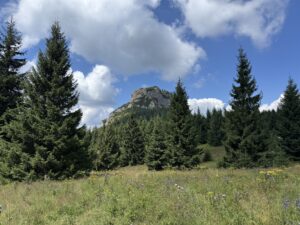
10. Súľovské skaly and Manínska tiesňava
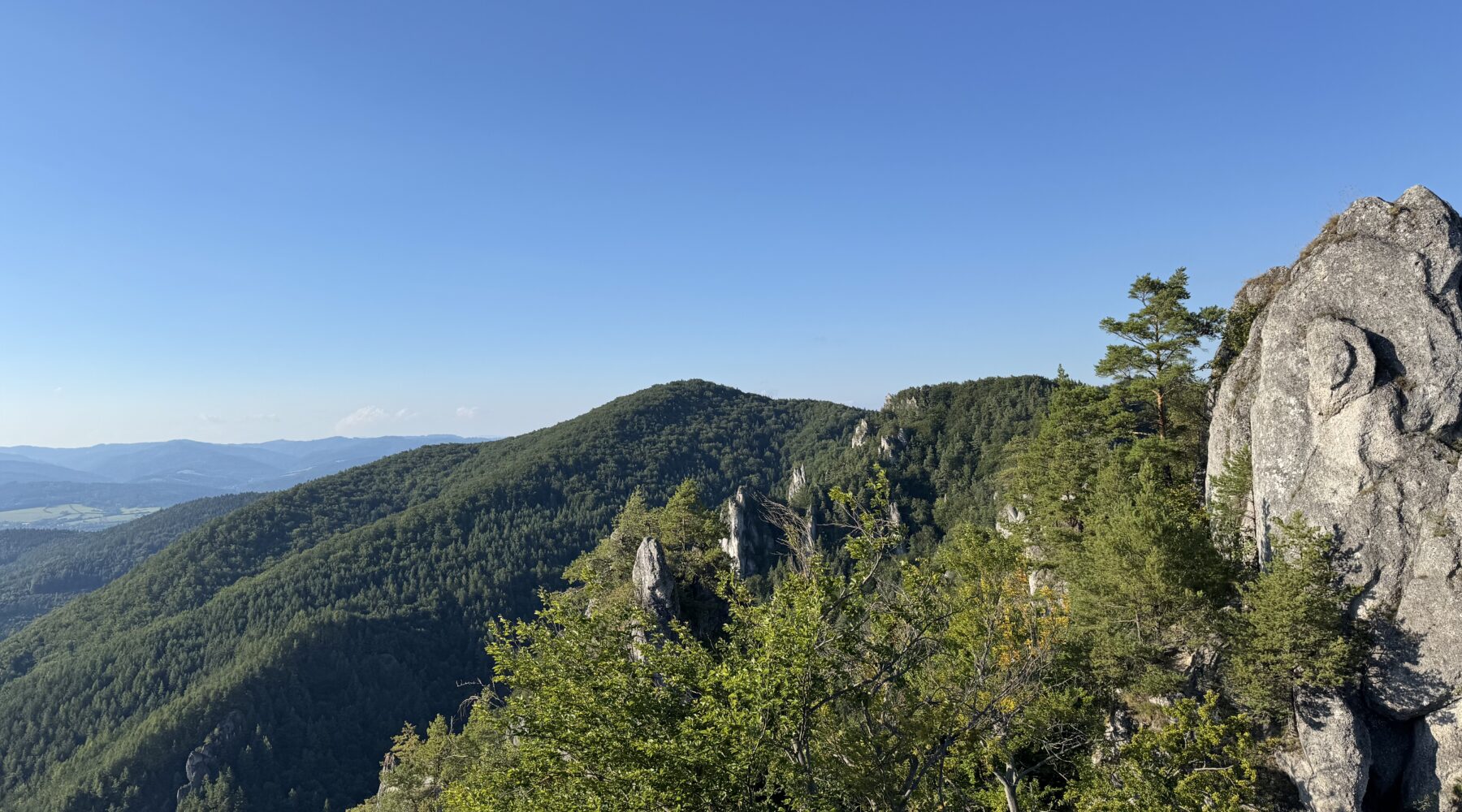
A rock town of conglomerate towers, windows and natural arches between Bytča and Žilina, on a scale that makes it feel like a miniature Dolomites. The loop past the Gotická brána (Gothic Gate) and the ruins of Súľov Castle is about six kilometres, entry is free and you pay only for parking. Next door lies Manínska tiesňava, the narrowest gorge in Slovakia, walkable in half an hour on a road with almost no traffic.
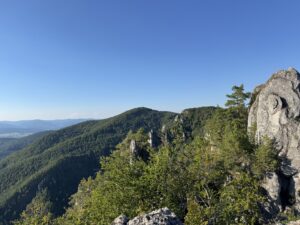
Central Slovakia: mining towns and a volcano
This is the part of the country foreign visitors skip and then regret skipping. It is also the least served by public transport, so it works best as a driving day between the west and the mountains.
11. Banská Štiavnica and the tajchy
A former silver-mining town built inside the caldera of an extinct volcano, UNESCO-listed and, for my money, one of the loveliest small towns in central Europe. It has two castles — Starý zámok and Nový zámok — a baroque Kalvária on the hill above, and a ring of tajchy, eighteenth-century reservoirs built to power the mines that now serve as swimming lakes. At the open-air mining museum you go underground in a helmet and lamp. Come midweek and you will have the steep lanes largely to yourself, which is more than Krumlov can offer.
12. Kremnica
Half an hour away sits a walled gold-mining town with a fortified church complex on a rise in the middle of it and the oldest continuously operating mint in the world, striking coins since 1328. It still produces euro coins today, and the mint museum is the reason to stop rather than the square, pretty as that is.
Orava and the far north
13. Oravský hrad
A castle stacked up a 112-metre crag above the river Orava, so improbably vertical that Murnau shot the original Nosferatu here in 1922 — and it still looks the part. Inside are 154 rooms, 754 steps and three separate tour circuits, with tickets at €7, €9 and €13 (about £6, £7.50 and £11) depending on how much of it you want. The climb through the castle is genuinely strenuous and there is no version of this that works with a pushchair.
14. Orava dam and Slanický ostrov
The largest body of water in northern Slovakia was created by flooding five villages, of which only a hilltop church survives on Slanický ostrov umenia (the Slanica Island of Art), now housing a collection of folk sculpture. Pleasure boats run out to it in season from the Slanická Osada jetty. The water stays cold even in August, so come for the boat trip and the view of the Tatras, not for a swim.
Liptov and the Nízke Tatry (Low Tatras)
Liptov is Slovakia’s resort belt — the biggest ski area, the busiest thermal parks and the highest prices outside Bratislava. It is also the easiest place in the country to get high into the mountains without walking uphill at all.
15. Vlkolínec
A hillside hamlet above Ružomberok on the UNESCO list, with 45 log houses from the eighteenth century and around thirty people still living in them. Admission starts at €2 (about £1.70) and it opens Tuesday to Sunday, mornings and afternoons. The key thing to grasp is that this is a working village rather than an open-air museum — people’s kitchens are behind those shutters, so keep the camera pointed outwards.
16. Demänovská jaskyňa slobody
The most visited cave in the country, and deservedly so. The standard circuit is 1,150 metres long, takes about an hour and involves 913 steps; admission is €15 (about £12.50). The long circuit doubles it: 2,150 metres, 100 minutes, 1,118 steps and €24. Take a jacket — it holds a steady 6–7 °C inside. The neighbouring Demänovská ľadová jaskyňa (Demänová Ice Cave) opens only in the warmer half of the year.
17. Chopok and the Low Tatras ridge
Cable cars run up to Chopok (2,024 m) from both sides of the range — from Jasná on the north, from Srdiečko on the south — which means a summit at Ben Nevis-plus altitude for the price of a ticket and no ascent. On top is a broad grassy ridge with the High Tatras laid out across the horizon and an easy walk to the M. R. Štefánik hut. Weather here turns inside half an hour, and even in August the summit runs ten degrees colder than the valley.
18. Liptovská Mara and Havránok
The largest reservoir in Slovakia is the centre of gravity for Liptov’s summer, and on its shore stands the Havránok archaeological open-air museum, built around a reconstructed Celtic hill fort. The water is bearable in high summer but this is a sailing and paddleboarding lake rather than a family bathing one — for warm water, the thermal parks at Bešeňová and Liptovský Ján are three minutes down the road.
Things to do in Poprad and the Vysoké Tatry (High Tatras)
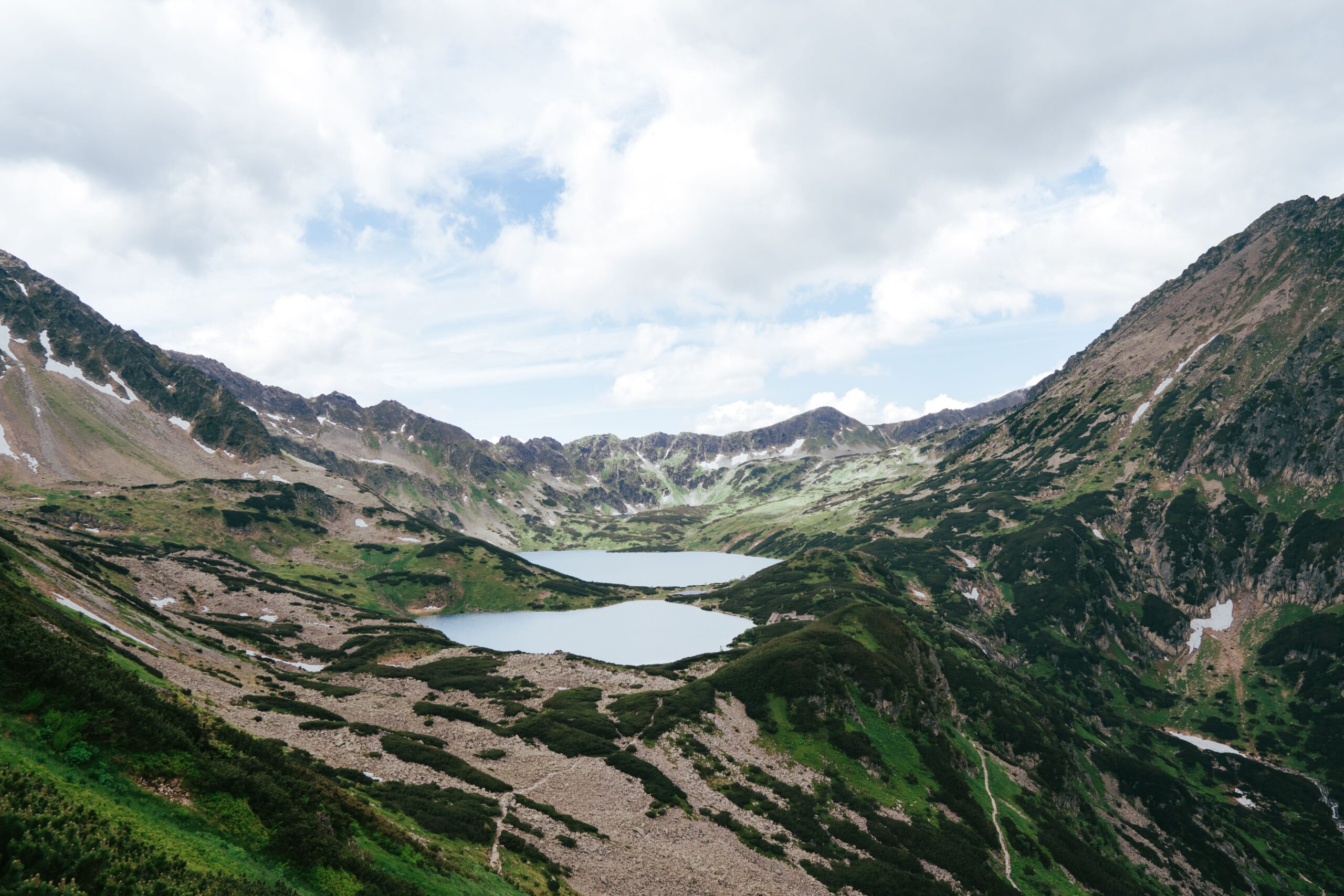
The smallest high mountain range on earth fits into a 26-kilometre band and contains everything you would want from mountains, including weather that does not forgive mistakes. Poprad is the gateway town: an airport, the main railway station, the terminus of the electric railway up to the resorts, and beds that cost a good deal less than in Štrbské Pleso itself. The high-altitude paths are closed from 1 November until mid-June, which is the single most important sentence in this section.
A word on grading, because Slovak signage will not do it for you. The waymarked valley walks are ordinary hill paths. The chained sections higher up — Priečne sedlo, the approach to Rysy — sit somewhere between Striding Edge and Crib Goch in exposure, but are far longer, and above the tree line a rescue is measured in hours. Mountain rescue is 18 300 from a Slovak number, or 112 from anywhere; save both before you set off.
19. Poprad and Spišská Sobota
Poprad is usually written off as a transit town, unfairly. Its old quarter of Spišská Sobota is a complete Renaissance square of burgher houses ten minutes from the station, and the AquaCity thermal complex next to the railway is the best possible use of a day when the summits are in cloud. Stay here and you are half an hour from the Tatras and half an hour from Spišský hrad.
20. Štrbské Pleso
The most accessible of the Tatra tarns sits beside a rack-railway station, so you can arrive from the motorway without a single extra step. The loop around the water is flat and pushchair-friendly, and more waymarked routes start here than anywhere else in the range — the Skok waterfall and Popradské pleso among them. It is also the busiest place in the mountains by mid-afternoon, so walk it early.
21. Skalnaté pleso and Lomnický štít
From Tatranská Lomnica a gondola lifts you to Skalnaté pleso at 1,751 m, and from there a small cable car continues to Lomnický štít (2,634 m), the second-highest summit in Slovakia. The summit leg is booked for a fixed time slot and your stay at the top is capped, so buy online days ahead. It is the most expensive single item on a Tatra trip and the view down into Poland justifies it.
22. Zelené pleso
The classic full-day walk in the eastern Tatras, from Tatranská Lomnica or Biela voda up to the hut at Zelené pleso, where green water sits beneath the north face of Malý Kežmarský štít. It is long but technically undemanding — older children manage it fine. Swimming is prohibited in all of these lakes: they are protected glacial tarns and rangers do issue fines.
23. Belianska jaskyňa and Ždiar
The only show cave inside the High Tatras lies above Tatranská Kotlina. The tour runs 70 minutes over 1,370 metres and 874 steps, costs €15 (about £12.50), and the interior sits at 5–6 °C. There is also a kilometre of uphill from the car park before you even start. Nearby Ždiar, a Goral village of painted timber houses, is the cheapest base under the mountains and a far more characterful place to sleep than the resorts.
Slovenský raj (Slovak Paradise) and Gemer
24. Slovenský raj
A national park built around gorges that you climb inside, on ladders, catwalks and iron foot pegs bolted into the stream bed itself, with water running under your boots the whole way. The best known are Suchá Belá, Piecky, Veľký Sokol and Sokolia dolina; the via ferrata-style Kyseľ opens only from mid-June. There is nothing quite like it in Britain, and it costs a few euros.
One rule matters more than all the others, and it is the one foreign visitors break: the gorges are one-way, and the direction is upstream. This is not a suggestion about crowd flow — the ladders are pitched for climbing, several are near-vertical, and coming down them backwards while a queue climbs towards you is how people get hurt. If you want to make a loop, you go up a gorge and come back along a ridge path. Signs at the entrances say the same thing, but only in Slovak in places, so take it from here. For the view without any of the ladders, walk to Tomášovský výhľad above the Hornád.
💡 Tip: Start the gorges first thing in the morning. You cannot overtake on a ladder, and if a school group forms up ahead of you, you will stand still for twenty minutes. Stiff boots are essential and wet feet are guaranteed — the route runs in the stream, not beside it.
25. Dobšinská ľadová jaskyňa
An ice cave on the UNESCO list since 2000, remarkable because the ice survives all year at just 920 metres above sea level. The tour lasts 30 minutes and covers 515 of its 1,491 metres; admission is €14 (about £12), children €7. Inside it hovers around freezing, so a jacket and hat are not over-preparation, and there is another kilometre uphill from the car park, about 25 minutes.
26. Betliar and Krásna Hôrka
Kaštieľ Betliar is one of the very few Slovak country houses to come through the twentieth century with its furniture, its library and its enormous English landscape park intact — closer to a National Trust property than to anything else in this article. The nearby castle of Krásna Hôrka burned down in 2012 and restoration is still going on, so check what is open before you drive out to it.
Things to do in Košice and eastern Slovakia
The east is the poorest part of the country and the most rewarding to travel in. Beds and meals cost meaningfully less than in the west, the density of UNESCO sites is the highest anywhere in Slovakia, and you will hear very little English — which is rather the point.
27. Spišský hrad, Spišská Kapitula and Levoča
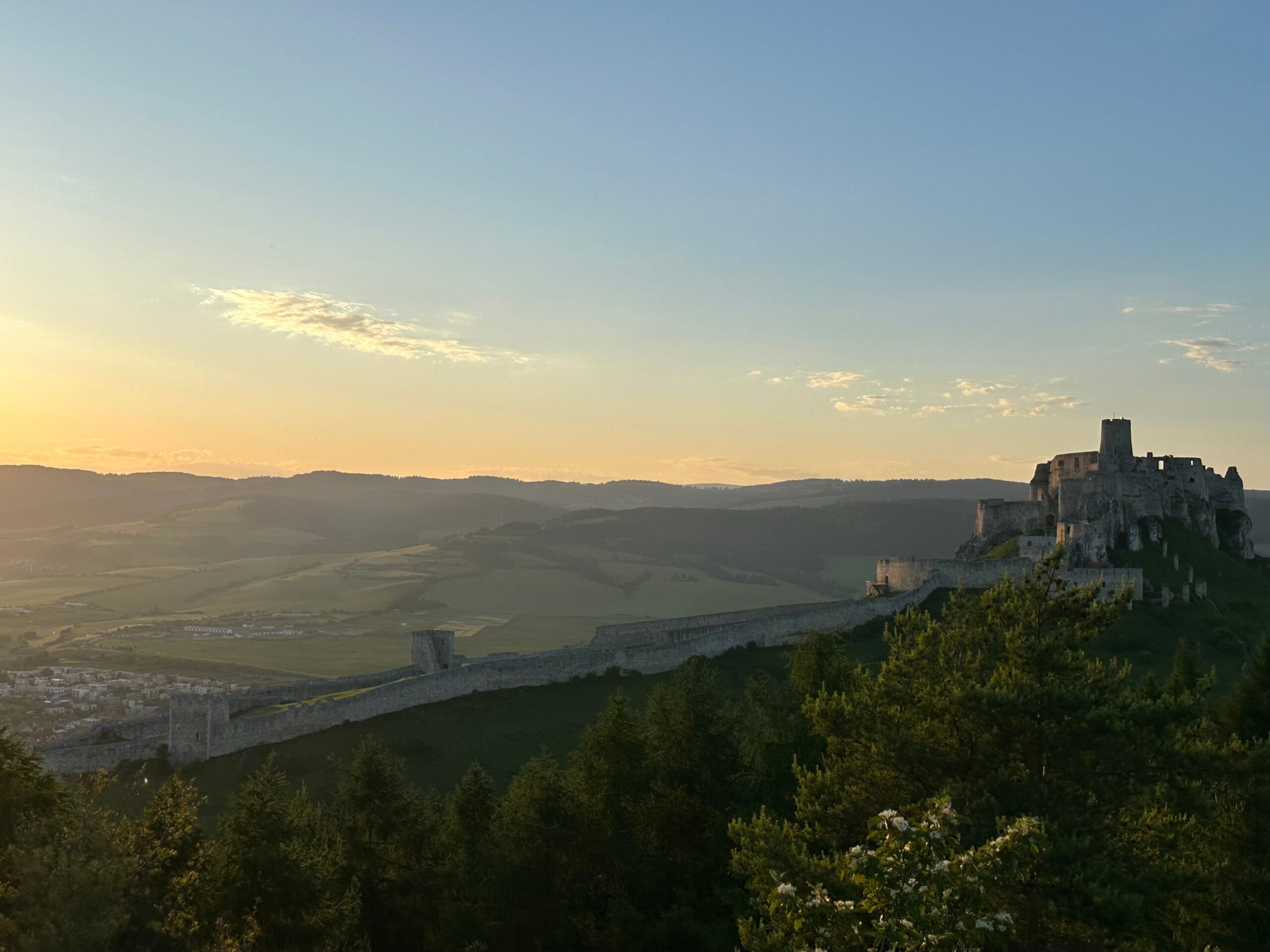
Spišský hrad is the largest castle complex in Slovakia and one of the largest in central Europe, sprawling across a limestone ridge you can see from ten kilometres away. Together with the ecclesiastical town of Spišská Kapitula, the church at Žehra and the town of Levoča it forms a single UNESCO listing. Admission is currently reduced to €12 (about £10) because the upper castle is closed for restoration; a family ticket is €25. In Levoča, added to the listing in 2009, the church of St James holds the tallest wooden Gothic altar in the world — 18.6 metres, carved by Master Pavol.
28. Košice
Slovakia’s second city has the longest protected historic centre in the country and St Elisabeth’s Cathedral, the largest church in Slovakia and the easternmost Gothic cathedral of the western type in Europe. The main street is entirely pedestrianised, with a singing fountain, a working theatre and more good cafés per hundred metres than Bratislava. In the East Slovak Museum you can see the Košice Gold Treasure: eleven kilograms of coins from 81 European mints, found walled up in 1935. Two nights here is not too many.
29. Bardejov and the wooden churches of Šariš
Bardejov joined the UNESCO list in 2000, and its town hall square, ringed by intact burgher houses, is among the best-preserved Gothic ensembles in central Europe. The basilica of St Giles contains eleven late Gothic altarpieces from the fifteenth and sixteenth centuries. In nearby Bardejovské kúpele there is an open-air museum of 28 vernacular buildings, and scattered through the surrounding villages are the wooden churches of the Carpathians, another Slovak UNESCO listing — dark, shingled, built without a single nail.
30. Zemplínska šírava and Morské oko
The reservoir near Michalovce is nicknamed the “east Slovak sea”: 22 to 35 km² depending on the water level, with an average depth of just 3.5 metres, which is why it warms up so fast in summer. The resorts of Hôrka, Kaluža and Kamenec rent boats and run windsurfing; the eastern end is a bird reserve. Above it rises the Vihorlat range and the lake of Morské oko, reached on foot through beech forest — no swimming there either.
Things to do in Slovakia with kids
Slovakia is an easy country to travel with children — short distances, cheap food, and mountains you can reach by lift rather than by slog. The trick is choosing well. These work without tears and without carrying anyone on your back:
- Bojnice Castle and the zoo next to it. Turrets, a cave and animals in a single afternoon.
- Jánošíkove diery in the Malá Fatra. The ladders and catwalks over the water are the highlight of the holiday for most children, and the lower gorge is manageable from about five.
- Štrbské Pleso. The lakeside loop is flat, takes a pushchair and you arrive by train.
- Demänovská jaskyňa slobody. The standard circuit is fine from around six; skip the long one.
- Tomášovský výhľad in Slovenský raj instead of a gorge, if the children are small or ladders are not your thing.
- Thermal parks in Liptov and at Podhájska as the rainy-day rescue. Tatralandia and Bešeňová are the big ones; Podhájska has water saltier than the Dead Sea.
- Campsites by water are far cheaper than hotels with a family and usually have a pool attached.
💡 Tip: With children under about eight, do not overestimate the gorges or the high mountains. Slovakia has a dense network of nature trails and cable cars that put you in genuine mountain scenery without a full day of climbing. Lift up, walk down is the compromise that works.
Slovakia in winter
Winter changes what is worth doing rather than shutting the country down. The high-altitude Tatra paths are closed from 1 November, so ridge walking is off the table, but almost everything else is not.
Skiing is the obvious draw and the value is extraordinary by Alpine standards: Jasná in the Low Tatras is the biggest and best-linked area, with Vysoké Tatry (Tatranská Lomnica and Štrbské Pleso) and Donovaly behind it. Lift passes run at roughly half what you would pay in Austria, and the mountains are quieter midweek. Thermal baths are the other winter fixture — outdoor pools at 36–38 °C with snow on the railings, at Bešeňová, Tatralandia, Vrbov or Podhájska.
Beyond that, the caves stay open nearly all year and are the same temperature in January as in July, the cities are at their best in December when Bratislava and Košice run proper Christmas markets, and Banská Štiavnica under snow is worth the drive on its own. What does not work in winter: the gorges of Slovenský raj (technically walkable, but iced ladders make it a serious undertaking), most castles, and Orava and the northern lakes, which simply freeze.
How much does a trip to Slovakia cost
Slovakia is no longer the bargain it was a decade ago, and admission prices in particular have caught up with the west — a big castle now costs what a mid-sized English heritage property does. Where it still wins comfortably is accommodation, food and lift passes. Treat the figures below as indicative; sterling equivalents use a rate of roughly £0.84 to the euro.
| Item | Typical price | Notes |
|---|---|---|
| Guesthouse room, 2 people | €50–90 (about £42–76) | East cheapest, Liptov and the Tatras dearest |
| Campsite pitch, 2 people with a tent | €15–30 (about £13–25) | Most campsites open in season only |
| Lunch in a koliba or restaurant | €10–16 (about £8.50–13.50) | The weekday set menu is around €8 |
| Admission to a major castle | €10–16 (about £8.50–13.50) | Trenčín €10, Spišský hrad €12, Bojnice €16 |
| Admission to a show cave | €10–15 (about £8.50–12.50) | Dobšinská ľadová €14, Demänovská slobody €15 |
| Cable car, return | €20–45 (about £17–38) | Lomnický štít is the priciest, book ahead |
| Parking at a trailhead | €3–8 per day (about £2.50–6.50) | Standard in the Tatras and Slovenský raj |
| Motorway e-vignette | €10.80 for 10 days (about £9) | €90 for a year; online only, no sticker |
| Total per person per day | €45–70 (about £38–59) | Bed, food and one admission included |
Can you travel Slovakia without a car?
Along the spine, yes, comfortably. The ZSSK main line Bratislava–Trenčín–Žilina–Poprad–Košice passes within reach of most of what is in this article, trains are frequent and cheap, and long-distance coaches (RegioJet, Flixbus) cover the same route for even less. From Poprad the electric railway and the rack railway distribute you around the Tatra resorts, and Košice, Bardejov, Banská Štiavnica and Trenčín are all straightforward by public transport.
The mountains are where it gets harder. Terchová and the Malá Fatra need a bus from Žilina; Slovenský raj needs a bus from Poprad or Spišská Nová Ves and then a walk to the gorge entrance; Čičmany, Vlkolínec and the wooden churches of Šariš run on a handful of services a day and far fewer at weekends. A workable compromise is train between regions and a hire car for two or three mountain days — you avoid the vignette on the days you do not drive and you skip the worst of the trailhead parking.
Where to stay, region by region
Your choice of base decides how much of the holiday you spend in transit. For the mountains, Slovenský raj and the Spiš castles, the most practical option is accommodation in Poprad →, which puts you half an hour from the Tatras and half an hour from Spišský hrad. For the west, the castles and a city break, look at accommodation in Bratislava →. The cheapest beds in the country are in Terchová, Ždiar and the east — in Bardejov or beside Zemplínska šírava you pay a fraction of Liptov prices. Guided tours, cave slots and cable-car tickets can be booked through GetYourGuide →.
Common mistakes to avoid
- Planning a ridge walk for May. The high paths in the Tatras are usually shut until mid-June and snow lingers in the gullies long after it has gone from the valleys.
- Treating Slovakia as one destination. Bratislava to Košice is over four hours by car. Pick one or two regions rather than trying to sweep the country in a week.
- Buying a Lomnický štít ticket on the day. Capacity is limited and in season it sells out two days ahead.
- Descending a gorge in Slovenský raj. One way only, upstream. Going against it blocks everyone behind you and is the commonest cause of falls from the ladders.
- Swimming in the tarns. Banned in every lake in the Tatra National Park, and it is enforced.
- Forgetting the e-vignette. There is no sticker and no toll booth — you buy online, cameras check, and the fine arrives in the post, including to a hire company that will pass it on with a fee.
- Assuming English everywhere. Fine in Bratislava and the Tatra resorts, thin on the ground in rural areas. German is often more useful than English in the west, and a translation app is worth having offline.
Where to go next
- Malá Fatra: the best hiking trails and how to plan a week there
- Jánošíkove diery: the gorge loops, the ladders and the practical detail
- Veľký and Malý Rozsutec: routes up both summits
- The Malá Fatra ridge walk from Rozsutec to Veľký Kriváň
- Súľovské skaly: the loop through the Gothic Gate
- Veľká Fatra: trails, the ridge traverse and where to sleep
- Hotels and guesthouses in the Veľká Fatra
- Accommodation in the Malá Fatra: Terchová, Štefanová and the valleys
Things to do in Slovakia: frequently asked questions
What are the best things to do in Slovakia?
If you only do three things, make them the Vysoké Tatry (High Tatras), the gorges of Slovenský raj and Spišský hrad castle with the town of Levoča. After that, add Banská Štiavnica, the Malá Fatra with Jánošíkove diery, the Demänovská caves in Liptov, and Košice or Bratislava for a city day. One rule to remember on any of it: swimming is banned in all the Tatra tarns, and rangers do issue fines.
Which airport should you fly into for Slovakia?
Bratislava is the national airport and the closest to the capital, but the choice of flights is limited and Vienna is often cheaper and better connected, roughly an hour away by direct coach. For the northern mountains, Kraków and Katowice work well; for the south-east and Košice, Budapest. Poprad-Tatry sits right under the High Tatras but has only seasonal and charter services, so do not plan a trip around it.
Can you travel around Slovakia without a car?
Along the main axis, easily. The ZSSK railway runs Bratislava, Trenčín, Žilina, Poprad and Košice, which is exactly where most visitors want to go, and under the Tatras the Tatranská elektrická železnica and the rack railway to Štrbské Pleso take over. What is harder are the remote valleys, Slovenský raj and the smaller castles, which need regional buses that thin out badly at weekends. Train between regions and a hire car for two or three mountain days is the usual compromise.
What are the best things to do in Slovakia with kids?
Bojnice Castle with the zoo next door, the lower section of Jánošíkove diery in the Malá Fatra, the flat loop around Štrbské Pleso, the standard circuit in Demänovská jaskyňa slobody and the Tomášovský výhľad viewpoint in Slovenský raj. With children under about eight, skip the harder gorges and the high mountain routes and use the cable cars instead, which get you into real mountain scenery without a full day of climbing.
What is there to do in Slovakia in winter?
Skiing is the main draw and it is far cheaper than the Alps, with Jasná in the Low Tatras the largest area, plus Tatranská Lomnica, Štrbské Pleso and Donovaly. Beyond that, the thermal baths at Bešeňová, Tatralandia, Vrbov and Podhájska run outdoor pools at 36 to 38 degrees in the snow, the show caves stay open, and Bratislava and Košice hold proper Christmas markets. The high-altitude paths in the Tatras are closed from 1 November for about seven months.
What are the best things to do in Bratislava?
Walk up to Bratislava Castle for the view over the Danube, spend a couple of hours in the compact Old Town around Hlavné námestie, and take a half day out to the ruined castle at Devín above the confluence of the Danube and the Morava. With a second day, drive or take the train into the Malé Karpaty for Červený Kameň castle and the wine cellars at Pezinok and Modrá. A day and a half is about right before moving on.
What is there to do in Košice and eastern Slovakia?
Košice has the longest protected historic centre in the country, St Elisabeth’s Cathedral and the Košice Gold Treasure in the East Slovak Museum. Around it lie Spišský hrad with Spišská Kapitula and Levoča, the gorges of Slovenský raj, the Dobšinská ice cave, Bardejov with its UNESCO square, the wooden churches of Šariš and the Zemplínska šírava reservoir. The east is also the cheapest part of Slovakia to eat and sleep in.
How much does a week in Slovakia cost?
Budget roughly 45 to 70 euros per person per day including accommodation, food and one admission, which is about 38 to 59 pounds. A week for two therefore comes to somewhere between 630 and 980 euros before travel to the country. Eastern Slovakia is noticeably cheaper than Bratislava, Liptov and the High Tatras, and a campsite or a guesthouse in Ždiar or Terchová will cut the figure further.
Read next
Potřebujete pomoct s cestováním?
-
Ubytování 🏨
Vyberte si to nejlepší ubytování, ať už jste kdekoliv, přes Booking.com. -
Půjčení auta 🚗
Auto si snadno najdete přes Booking.com, kde máte často slevu díky ubytování, nebo Rentalcars.com, kde porovnáte nabídky většiny půjčoven. -
Zážitky 🎟️
Přes GetYourGuide.com si vyberete z nejrůznějších výletů i zážitků po celém světě, navíc se zrušením zdarma do 24 h předem.