Last updated 14.11.2026
Austria has hundreds of ski resorts, and the gap between them is huge. One has thirty kilometres of pistes and a village feel, the next has three hundred kilometres, a glacier above 3,000 metres and prices that start to look Swiss. For a skier flying in from the UK, the useful questions are simpler than any ranking: which airport do you land at, how high is the snow, and who is coming with you?
That is how we built this list of the best ski resorts in Austria. We picked fifteen ski areas, from the giant Ski Arlberg to little Hochficht on the Czech border, and for each one we noted the length of the pistes, the altitude, the price of an adult day pass for the 2026/27 season and the nearest airports. All figures come from the official websites and price lists of the lift operators. Where we have an opinion on who a resort suits, we say so.
Best ski resorts in Austria at a glance
- A day pass in the big ski areas costs around €80 to €85 in the 2026/27 high season, roughly £68 to £72. Ski Arlberg (€85) and Sölden (€84.50) are the most expensive, smaller areas are noticeably cheaper.
- Buy online and early. Most resorts now use dynamic pricing. Sölden states openly that the price keeps rising until the fifth day before your first ski day. At the ticket office you pay the top rate.
- Salzburg and Innsbruck are the two key airports. Salzburg is the gateway to Ski amadé, Saalbach, Kaprun and Obertauern, Innsbruck to the Zillertal, Stubai, Sölden and Serfaus. The Stubai Glacier is only 40 minutes from Innsbruck.
- If you drive, you need a vignette. A 10-day digital vignette costs €12.80 (about £11) and is valid straight away. A two-month or annual vignette bought online only becomes valid on the 18th day after purchase.
- Young children often ski free, typically those born in 2021 or later when skiing with a parent (Saalbach, Kitzbühel). On the Stubai Glacier, children under 10 ski free with a paying parent.
- In autumn you ski on glaciers. Hintertux runs all year round, the Stubai Glacier’s autumn rate applies from 9 October 2026 and Sölden opens the whole area on 12 November 2026.
- Big regional passes pay off on a week’s holiday. Six days on the Zillertal Superskipass cost €399 (€66.50 a day) for 546 km of pistes, and the Alpin Card links Saalbach, Zell am See and Kaprun.
How to choose a ski resort in Austria
In our view three things decide a ski holiday in Austria far more than whether one area has ten kilometres more than another.
Which airport. Salzburgerland and Styria (Schladming, Flachau, Obertauern, Saalbach, Kaprun) are the natural choice when you fly to Salzburg. Tyrol (Zillertal, Stubai, Sölden, Serfaus, Kitzbühel) is easiest from Innsbruck, and the far west, Ischgl and the Arlberg, also works from Zurich. Munich is a common alternative for Kitzbühel and the SkiWelt. For a long weekend we would stay close to the airport you land at, for a full week the Arlberg is worth the longer transfer.
Altitude. Resorts that start high (Obertauern from 1,630 m, Sölden, Ischgl, the glaciers) have more reliable snow at the start and end of the season. Lower areas such as the SkiWelt or Snow Space Salzburg rely on snowmaking early on, and in spring the valley runs melt sooner.
Who you are skiing with. Families appreciate wide blue and red runs, children’s areas and free passes for kids (Serfaus-Fiss-Ladis, SkiWelt, Snow Space Salzburg). Strong skiers and freeriders head to the Arlberg, Ischgl or Sölden. If après-ski matters, Saalbach, Ischgl and St. Anton are the places.
| Ski area | Pistes | Altitude | Adult day pass (2026/27) | Nearest airports |
|---|---|---|---|---|
| Ski Arlberg | 302 km | 1,280–2,811 m | €85 | Innsbruck, Zurich |
| Saalbach Hinterglemm Leogang Fieberbrunn | 270 km | 830–2,096 m | €82 | Salzburg |
| Ischgl / Samnaun | 239 km | 1,360–2,872 m | €83 | Innsbruck, Zurich |
| KitzSki Kitzbühel | 233 km | 800–2,000 m | €69–83 | Salzburg, Innsbruck, Munich |
| Zillertal (Mayrhofen) | 142 km (valley 546 km) | 630–2,500 m | €82 | Innsbruck |
| Sölden | 144 km | 1,350–3,340 m | €81–86.50 | Innsbruck |
| Schladming-Dachstein | 123 km | 728–2,015 m | €81.50 | Salzburg |
| Snow Space Salzburg (Flachau) | 120 km | 740–1,980 m | around €81.50 | Salzburg |
| Obertauern | 100 km | 1,630–2,313 m | €72 | Salzburg |
| SkiWelt Wilder Kaiser-Brixental | 275 km | 620–1,869 m | €79.50 | Innsbruck, Salzburg, Munich |
| Serfaus-Fiss-Ladis | 186 km | 1,200–2,828 m | €80.50 | Innsbruck |
| Kitzsteinhorn Kaprun | 62.5 km | 768–3,029 m | €82 (Alpin Card) | Salzburg |
| Stubai Glacier | 65 km | 1,695–3,210 m | €75.50 | Innsbruck |
| Nassfeld | 110 km | 600–2,002 m | €73 | Klagenfurt, Ljubljana |
| Hochficht | 28 km | 866–1,338 m | from €44.50 online | Linz, Prague |
Prices are high-season ticket office rates from the operators’ official price lists. Where a resort has several seasonal bands, we give the range. The airports are the most practical ones for each area, not a guarantee of direct flights from your home airport. On Saturdays, when the weekly changeover happens across the Alps, transfers from the airport can take an hour longer than usual.
The 15 best ski resorts in Austria
The order is not a quality ranking. We start with the big ski areas in the west, carry on through Salzburgerland and Styria and finish in Carinthia and the Bohemian Forest. For each area we say who we think it suits, and the numbers come from the lift operators’ official websites.
1. Ski Arlberg (St. Anton, Lech, Zürs, Warth-Schröcken)
Austria’s largest linked ski area, and the place where modern downhill skiing was, to a large extent, invented. Ski Arlberg has 302 km of pistes (130 km blue, 121 km red and 51 km black), 85 lifts and runs from 1,280 to 2,811 m. On top of that there are roughly two hundred kilometres of off-piste terrain, which is why freeriders come here from all over Europe. The Flexenbahn gondola links St. Anton and St. Christoph in Tyrol with Lech, Zürs and Warth in Vorarlberg, so you can tour the whole region in a single day.
The 2026/27 season starts on 2 December 2026 (Warth/Schröcken on 4 December) and ends on 18 April 2027. A day pass in high season (19 December 2026 to 2 April 2027) costs €85, about £72. Children born between 2011 and 2018 pay €51, youths and seniors €78. A half-day ticket from noon costs €65, and there is a €5 deposit on the chip card on top (skiarlberg.at).
Who it suits: confident skiers who want steep runs and powder, and anyone who does not mind paying for them. St. Anton is loud and sporty, Lech and Zürs are polished and expensive. Our favourite thing on the Arlberg is Der Weiße Ring, a circuit around Lech and Zürs that makes a perfect full-day outing. We would not bring small children here; quieter Warth-Schröcken is friendlier for them. St. Anton has its own railway station, and the nearest airports are Innsbruck and Zurich.
2. Skicircus Saalbach Hinterglemm Leogang Fieberbrunn
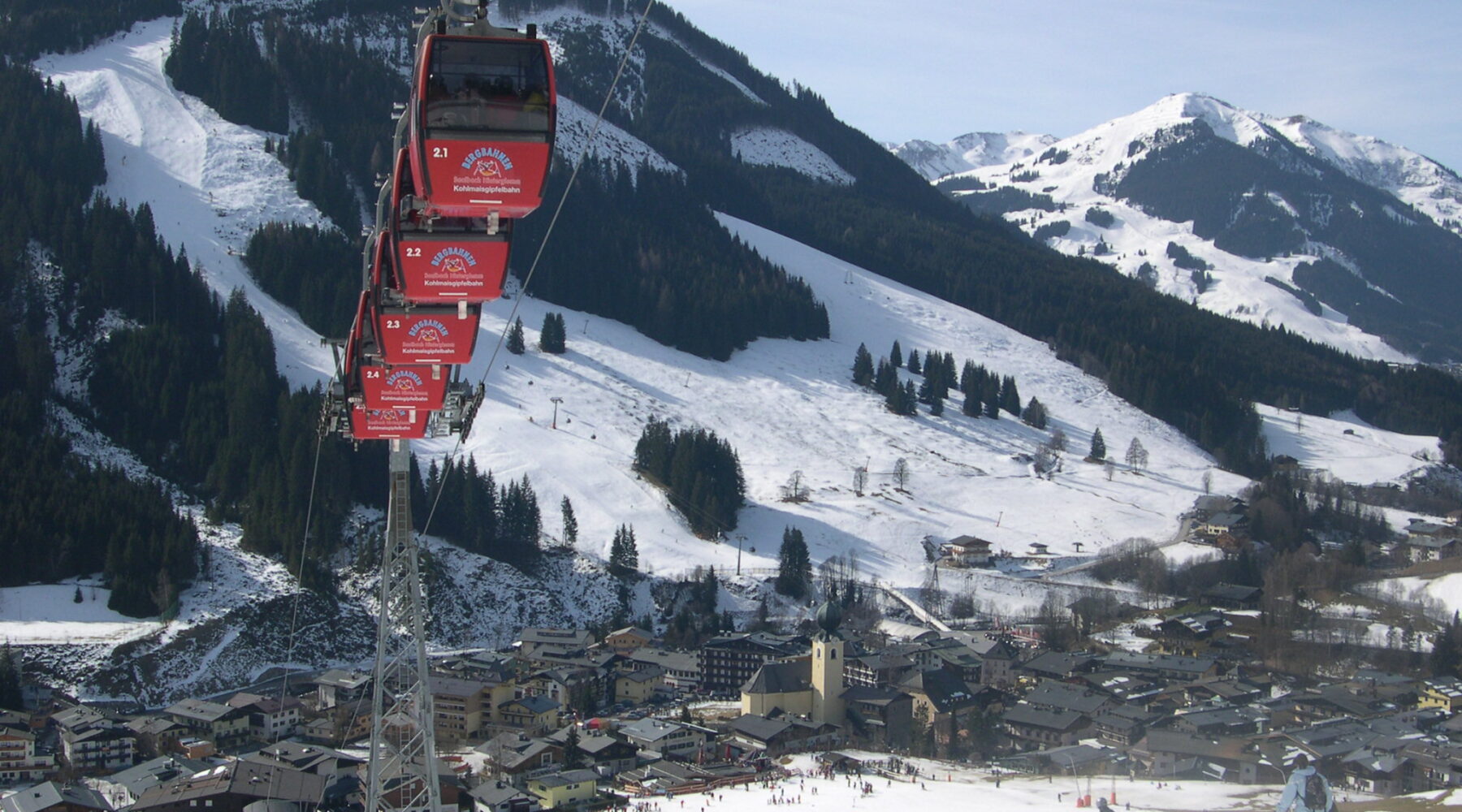
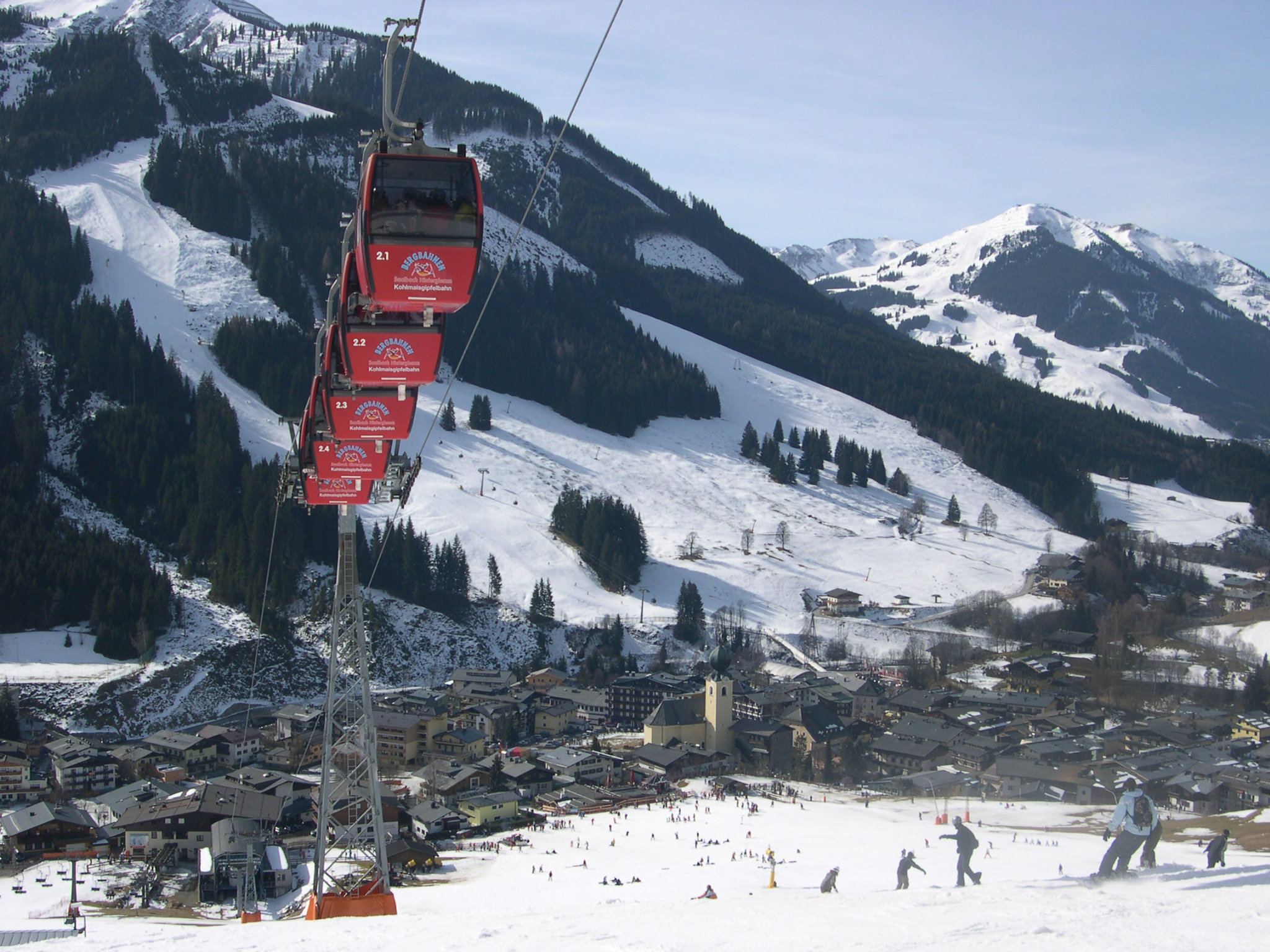
Four villages, two federal states and one lift pass. The Skicircus has 270 km of pistes (140 km blue, 112 km red, 18 km black), 69 lifts and skiing between 830 and 2,096 m. You can ski a complete loop around the Glemmtal valley, and Fieberbrunn adds the best freeride terrain in the area. The Alpine World Ski Championships were held here in February 2025.
A high-season pass (19 December 2026 to 12 March 2027) costs €82 a day, youths pay €61.50 and children born 2011 to 2020 €41. Children born in 2021 or later ski free with an adult. Six days cost €440. This pass is also the Alpin Card, so it works on the Schmittenhöhe in Zell am See and on the Kitzsteinhorn in Kaprun (the only exception is the morning ticket, which is not valid on the Kitzsteinhorn). Night skiing is included in the lift pass, and a day pass is valid from 3 pm the day before (saalbach.com).
Who it suits: anyone who wants plenty of kilometres and après-ski in the evening. Saalbach and Hinterglemm are the party centre, while Leogang and Fieberbrunn are calmer and, in our view, better for a good night’s sleep. Salzburg is the obvious airport.
3. Silvretta Arena Ischgl / Samnaun
Ischgl has a reputation as the “Ibiza of the Alps”, and it has earned it. Underneath the concerts and the bars, though, is an excellent high-altitude ski area: 239 km of pistes and 15 km of ski routes, 45 lifts and an altitude of 1,360 to 2,872 m. Most of the runs are red (around 140 km), and there are fewer blues than elsewhere, so complete beginners will not get much out of it. Over the ridge you ski down into Samnaun in Switzerland, a duty-free zone.
The season runs from 26 November 2026 to 2 May 2027, longer than in most of Austria. A day pass for Ischgl/Samnaun costs €83, children pay €51. The multi-day Silvretta pass covers 75 lifts in Ischgl, Samnaun, Galtür, Kappl and See. Children under 8 ski free with a parent (ischgl.com).
Who it suits: sporty skiers and party crowds. We would stay a little further down the Paznaun valley and drive up to Ischgl, which saves a lot on accommodation. Innsbruck is the usual airport, Zurich is an option too, and the last stretch up the valley always takes longer than the map suggests.
4. KitzSki Kitzbühel and Kirchberg
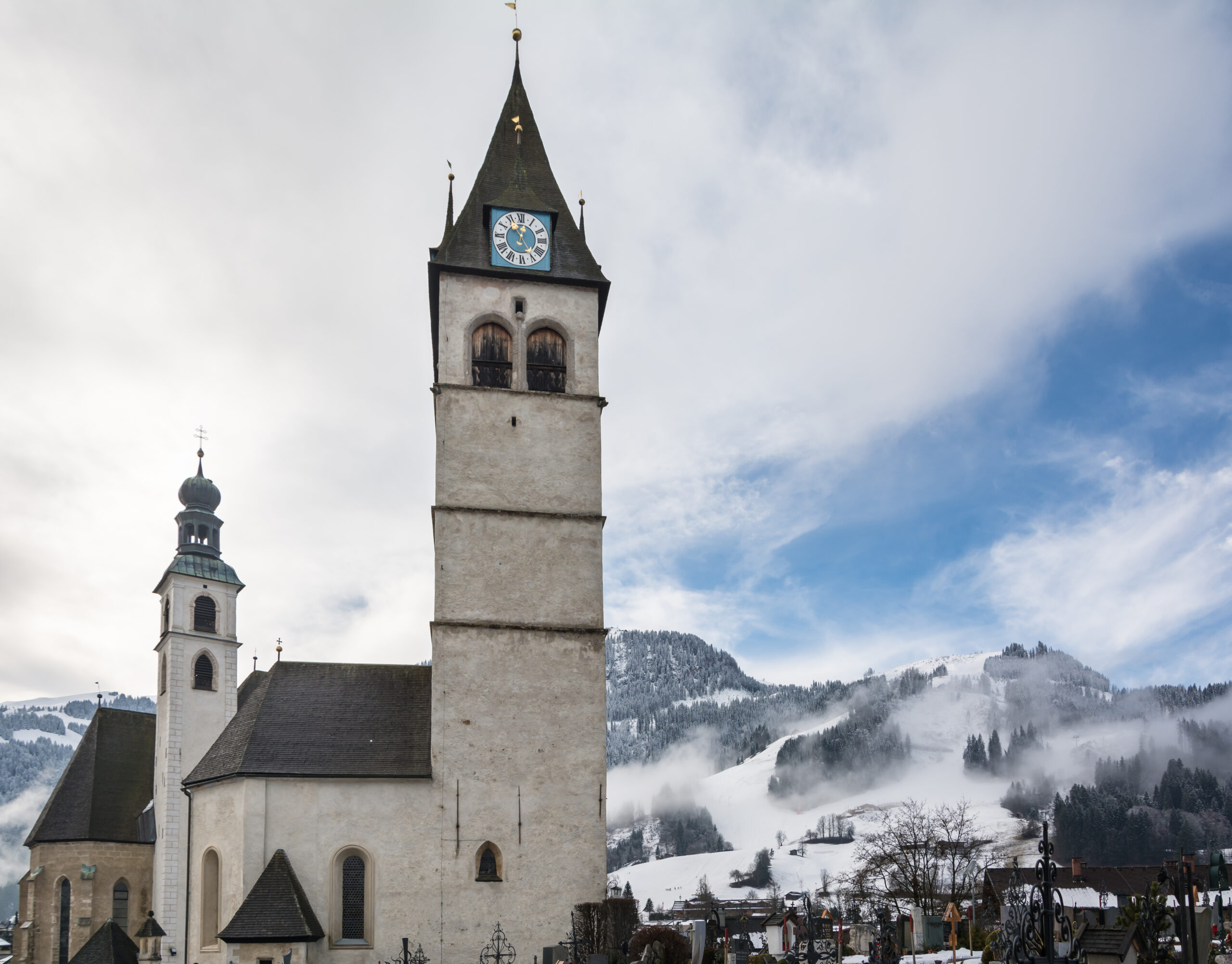
Kitzbühel is famous for the Streif, the run on the Hahnenkamm where the most celebrated downhill of the World Cup is raced every January. Outside race week anyone can ski it, and the lower section really is as steep as it looks on television. The ski area is not only for racers, though: 233 km of pistes and ski routes, 57 lifts and an altitude of 800 to 2,000 m. The grassy slopes need little snow, and snowmaking covers the rest. The town itself, with its medieval centre, is in our opinion the prettiest of all fifteen.
KitzSki has three price bands. A day pass costs €69 in the “Spar” season (until 5 December 2026 and from 30 March 2027), €76 from 6 to 19 December and from 14 to 29 March, and €83 in the high season from 20 December 2026 to 13 March 2027. Children (born 2011 to 2020) pay half, €41.50 in high season, and children born in 2021 or later get a free pass. These are ticket office prices; online is cheaper (kitzski.at).
Who it suits: anyone who wants serious skiing with a lovely town attached. Kirchberg and Jochberg are cheaper places to stay. Kitzbühel has a railway station, and Salzburg, Innsbruck and Munich all work as arrival airports.
5. Zillertal: Mayrhofen and the Zillertal Superskipass
The Zillertal is a valley with four big ski areas and one shared lift pass. Mayrhofen alone (Mountopolis, with Penken, Ahorn, Rastkogel and Eggalm) has 142 km of pistes and 61 lifts, and the operator says 89% of the terrain lies above 1,700 m. At the head of the valley is the Hintertux Glacier, which we cover in the glacier section.
A day pass for Mayrhofen costs €82, youths pay €65.50 and children €37. If you are staying longer, get the Zillertal Superskipass. It is valid from 4 December 2026 to 11 April 2027 on 546 km of pistes and 180 lifts in Mayrhofen, Zillertal Arena, Hochzillertal-Hochfügen-Spieljoch and Zillertal 3000, glacier included. Two days cost €163.50, six days €399, about £340 (mayrhofen.at). That works out at €66.50 a day, the best ratio of price to kilometres in this whole guide.
Who it suits: a week-long holiday where you want a different area every day. Mayrhofen has lively evenings; for something quieter, stay further down the valley in Fügen or Zell am Ziller. Innsbruck is the nearest airport.
6. Sölden (Ötztal)
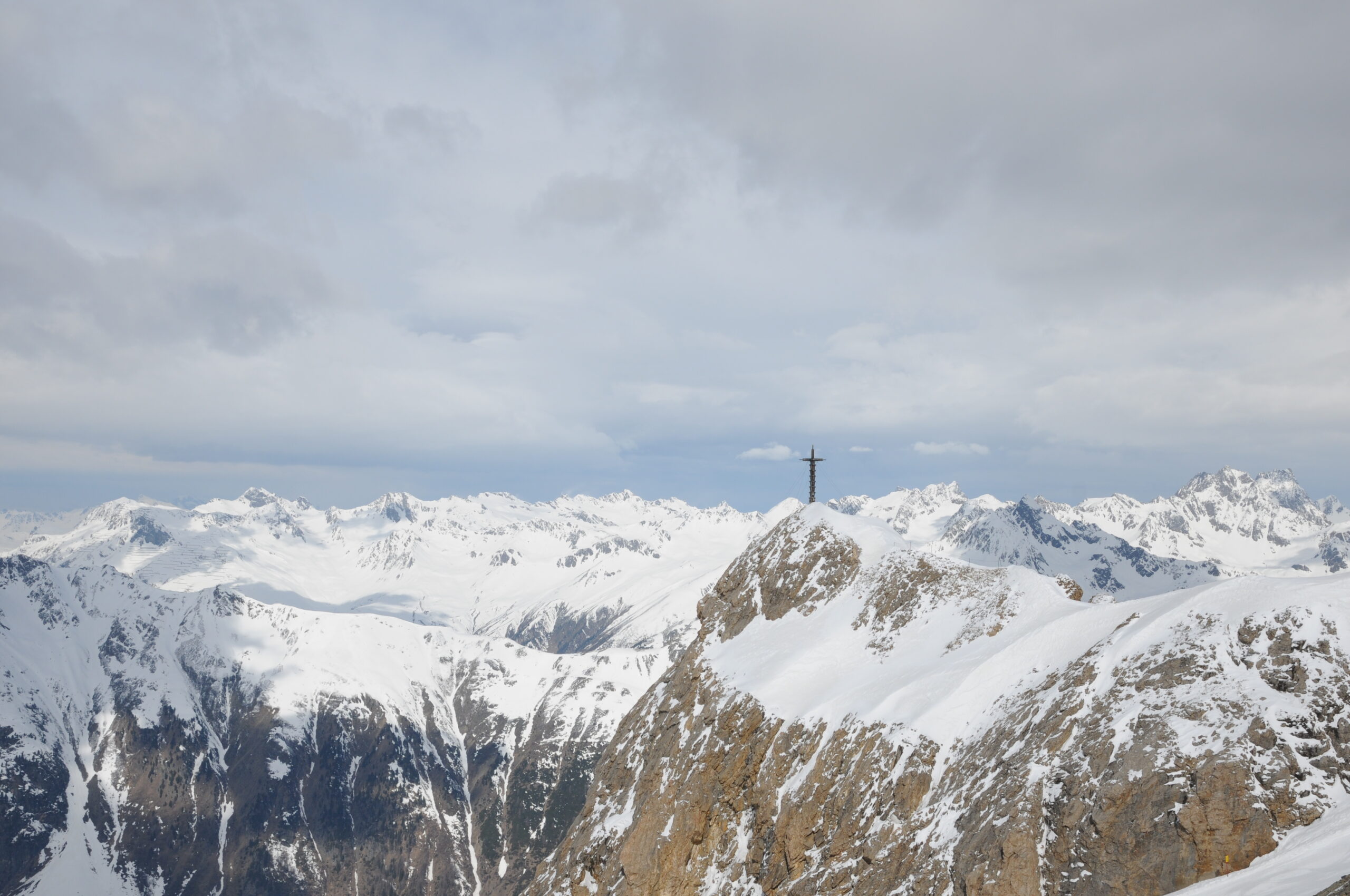
Sölden has two glaciers, Rettenbach and Tiefenbach, three peaks above 3,000 metres, and it is one of the first resorts in the Alps to open. There are 144 km of pistes and 8.4 km of ski routes, 31 lifts and an altitude of 1,350 to 3,340 m. The opening race of the World Cup takes place here at the end of October, and the Bond film Spectre was shot on the Gaislachkogl (the 007 ELEMENTS exhibition is included in lift passes of six days or more).
Winter 2026/27 runs across the whole resort from 12 November 2026 to 18 April 2027. A day pass at the ticket office costs €84.50 in high season, €86.50 in the busiest weeks (19 December to 6 January and 30 January to 26 February) and €81 in the pre-season until 4 December. Children (born 2012 to 2018) pay €46.50. Passes of three days or more work as the Ötztal Superskipass in Obergurgl and Hochoetz too. Online is cheaper, and the price rises the closer you get to your dates (soelden.com).
Who it suits: anyone who wants guaranteed skiing at the start and end of the season, and strong skiers. With small children, the altitude and the sporty character work against it. Innsbruck is the nearest airport.
7. Schladming-Dachstein (Planai, Hochwurzen, Hauser Kaibling, Reiteralm)
Four linked mountains above Schladming in Styria with 123 km of pistes (46 km blue, 68 km red, 8 km black), 47 lifts and an altitude of 728 to 2,015 m. The Planai hosts the World Cup night slalom every January, and by day the race course is an ordinary piste.
Schladming belongs to Ski amadé. A day pass in high season (19 December 2026 to 26 March 2027) costs €81.50 at the ticket office, online from €69.50; youths pay €61 and children €41. The ticket is valid across the whole Schladming-Dachstein region, including Fageralm, Galsterberg and Ramsau. Planai points out that you cannot ski on the Dachstein Glacier; the cable car there only takes sightseers up to the viewpoints (planai.at).
Who it suits: a long weekend and families who want a big area without a long transfer. Schladming sits on the railway, and Salzburg is the natural airport. Most runs are red, so very young skiers will stick to the children’s areas and the blue runs higher up.
8. Snow Space Salzburg (Flachau, Wagrain, St. Johann-Alpendorf)
Another big Ski amadé area, right by the A10 motorway. 120 km of pistes, 44 lifts and an altitude of 740 to 1,980 m. Most runs are red and wide, ideal for carving. Flachau is the home of Hermann Maier, and you can tell from the pistes: they are fast and well groomed.
Snow Space sells the same Ski amadé tickets as Schladming. According to the published price lists, a high-season day pass costs around €81.50 at the ticket office, and less if you buy online in advance. Multi-day passes are valid across the whole of Ski amadé, including Schladming, Gastein, Hochkönig and Großarl.
Who it suits: families and intermediate skiers who want a big area that is easy to reach from Salzburg Airport. In our view it is the most comfortable choice for a first ski trip to Austria when you do not want to take any risks.
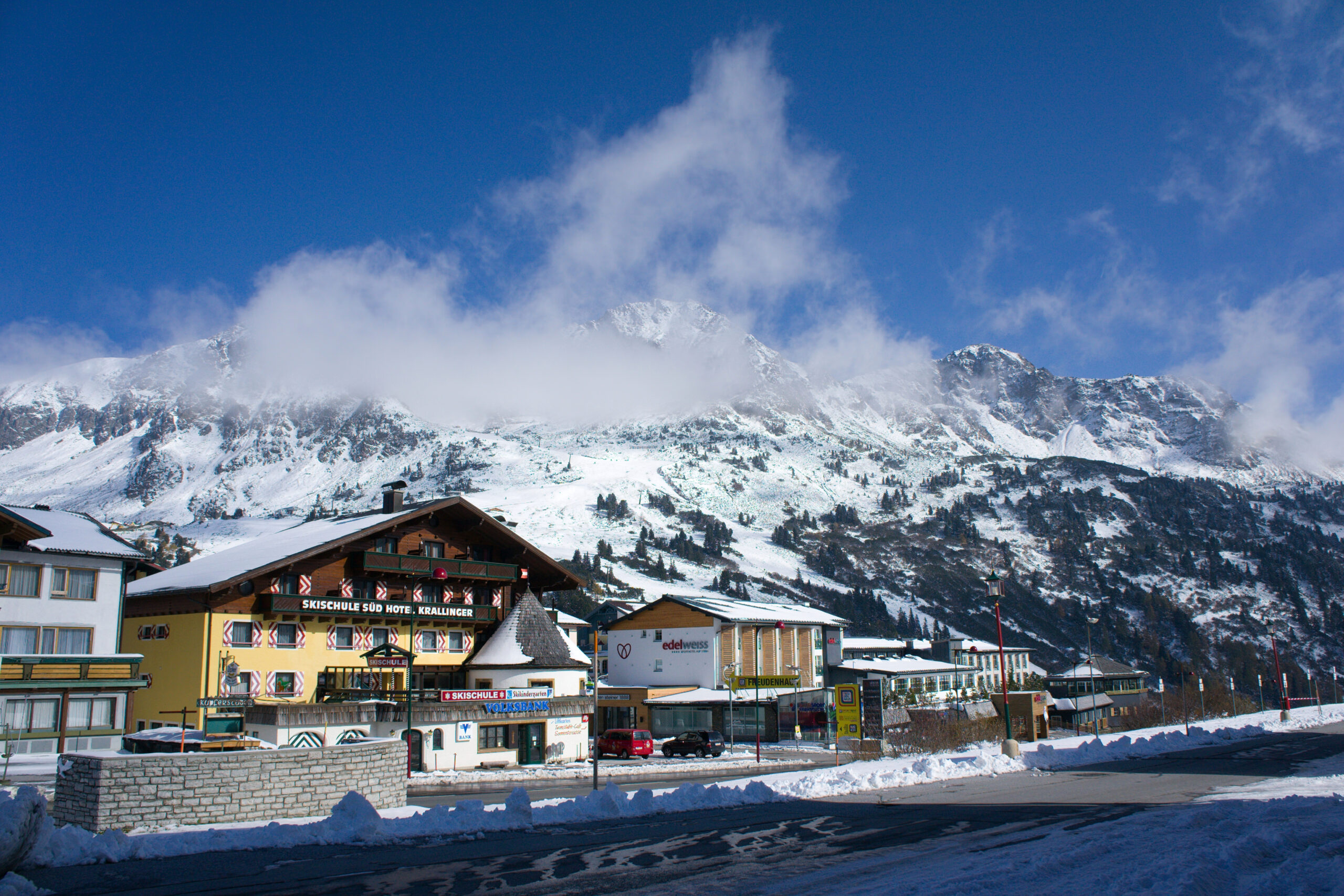
9. Obertauern
Obertauern is a village built right inside the ski area. It sits in a bowl on a pass in the Radstadt Tauern, the pistes start at 1,630 m and from most hotels you can ski straight out of the door. The area has 100 km of pistes (61 km blue, 35 km red, 4 km black), 26 lifts and goes up to 2,313 m. You can ski the Tauernrunde circuit around the whole bowl in either direction.
A day pass for the 2026/27 season costs €72, about £61. Youths (born 2008 to 2010) pay €54 and children born in 2011 or later €36. Children under six ski free with a parent. Passes of one and a half days or more are also valid in the Speiereck area and for night skiing in Obertauern on Mondays and Thursdays from 7 pm to 10 pm at the Edelweißbahn lift (ski-obertauern.at).
Who it suits: families and anyone who wants reliable snow without a glacier. There is usually plenty of snow here even in years when lower resorts struggle. The evenings are lively, but on a smaller scale than Saalbach. Salzburg is the nearest airport.
10. SkiWelt Wilder Kaiser-Brixental
The SkiWelt links nine villages, from Ellmau and Going via Söll and Scheffau to Brixen im Thale and Westendorf. It has 275 km of pistes (115 km blue, 121 km red, 39 km black), 81 lifts and an altitude of 620 to 1,869 m. It is the lowest of the big areas in this guide, so it depends on snowmaking, and in spring the valley runs melt earlier.
A day pass in high season (19 December 2026 to 12 March 2027) costs €79.50, youths pay €59.50 and children €40. At the start and end of the season (5 to 18 December 2026 and 13 to 29 March 2027) it comes down to €71.50 (skiwelt.at).
Who it suits: families and relaxed skiing on long blue and red runs. We would stay in the smaller villages such as Scheffau or Brixen; Söll is the noisier one. Innsbruck, Salzburg and Munich are all within reach.
11. Serfaus-Fiss-Ladis
Three villages on a sunny terrace above the Inn valley, and one of the best family ski areas in the Alps. 186 km of pistes and 28 km of ski routes, 38 lifts and an altitude of 1,200 to 2,828 m. Serfaus is car-free, and an underground railway runs from the car park through the village to the lifts. The children’s areas are not just a magic carpet with a few cartoon figures, but whole zones with their own lifts and ski school.
The price list distinguishes between guests with and without the local guest card. Without a guest card, a high-season day pass costs €80.50 and €52 for children (born 2012 to 2020); with the guest card, which you get from your accommodation, it is cheaper. Children born in 2021 or later ski free (serfaus-fiss-ladis.at).
Who it suits: families whose children can already ski, and anyone who wants sunshine and wide runs. It is not a cheap place, but for the money you get a carefully thought-out ski area. Innsbruck is the nearest airport.
12. Kitzsteinhorn and Maiskogel (Kaprun)
The Kitzsteinhorn glacier above Kaprun is the nearest glacier you can ski on if you fly into Salzburg. Together with the Maiskogel above the village, it has 62.5 km of pistes and 8.9 km of ski routes, 24 lifts and skiing from 768 m all the way up to 3,029 m. From Kaprun you can ride the lifts from the valley floor right up to the glacier without a car. In autumn you ski on the glacier; in winter the whole link with the Maiskogel is open.
The Kitzsteinhorn is part of the Alpin Card, so in the 2026/27 high season the same price list applies as in Saalbach: €82 a day, children €41, and the pass also works on the Schmittenhöhe in Zell am See and across the whole Skicircus. One exception: the morning ticket is not valid on the Kitzsteinhorn (saalbach.com).
Who it suits: anyone who wants to combine a glacier, Zell am See with its lake and the huge Skicircus on one pass. Zell am See has a railway station with buses to Kaprun, and Salzburg is the airport to aim for.
13. Stubai Glacier (Stubaier Gletscher)
Austria’s largest glacier ski area is just 40 minutes from Innsbruck. It has 65 km of pistes plus another 30.6 km of ski routes, 26 lifts and skiing from 1,695 to 3,210 m. Unlike other glaciers, it has a lot of blue runs (almost 60%), so it also suits children and skiers who are only just finding their feet.
The autumn rate applies from 9 to 23 October 2026, when a day pass costs €64.20. From 24 October 2026 to 16 April 2027 the winter price list applies: €75.50 a day and €37.80 for children. A big plus for families: children under 10 ski free with a paying parent. Passes of four days or more work as the Stubai Skipass in the Schlick 2000, Serlesbahnen and Elferbahnen areas too, and the bus to the lifts is included in every pass (stubaier-gletscher.com).
Who it suits: autumn and spring skiing, families, and a ski trip combined with a city break in Innsbruck. It is the easiest glacier to reach from Innsbruck Airport.
14. Nassfeld (Carinthia)
Nassfeld sits on the Italian border and is the southernmost big ski area in this guide. 110 km of pistes (30 km blue, 69 km red, 11 km black), 30 lifts and an altitude of 600 to 2,002 m. The Millennium-Express gondola runs up from Tröpolach in the valley, so you can stay down below and get up the mountain without a car. The weather here often differs from the northern Alps: sometimes more sunshine, sometimes more snow from the south.
The season runs from 4 December 2026 to 4 April 2027. A day pass costs €73 in high season (25 December 2026 to 13 March 2027), children pay €36.50, and in the low season it is €67.50. According to the Nassfeld price list, night skiing runs every Saturday from 3 January to 7 March 2027 on selected floodlit runs for €10 (children €5).
Who it suits: anyone who wants cheaper skiing with Italian cooking just over the ridge, and a different side of Austria from the classic Tyrol and Salzburg trips. The nearest airports are Klagenfurt and, across the border, Ljubljana.
15. Hochficht (Bohemian Forest, Upper Austria)
The smallest area in the list and the odd one out. Hochficht sits on the Austrian side of the Bohemian Forest (Böhmerwald), right on the Czech border near Lake Lipno. It has 28 km of pistes of all grades, nine lifts and skiing from 866 to 1,338 m. Compared with the Alps it is tiny, but for a day or a weekend it is modern and easy to find your way around.
The 2026/27 season is planned from 5 December 2026 to 29 March 2027. Prices are dynamic: an adult day pass bought online starts at €44.50, about £38, and the earlier you buy, the less you pay. Children born in 2021 or later get a day ticket for €5. Night skiing is planned for 30 December 2026 and from 6 January to 26 February 2027 on Wednesdays and Fridays from 4 pm to 7 pm on the Wenzelwiese at the Reischlbergbahn I lift, with tickets only online or from the machine (hochficht.at).
Who it suits: families on a day trip, and anyone spending the winter in Linz, Český Krumlov or Prague who fancies a day on Austrian snow. You will find more about it in our guide to the Hochficht ski resort. It combines well with the Czech resort of Lipno on the other side of the border.
Smaller ski resorts in Austria for a day trip from Vienna or Linz
Not every ski trip to Austria has to be a week in the high Alps. If you are on a city break in Vienna or Linz, or spending the winter in Prague, look at Upper and Lower Austria and eastern Styria. These areas do not have hundreds of kilometres of pistes, but they are good for a day or two on the snow.
- Hochficht (see above), on the Czech border north of Linz.
- Sternstein near Bad Leonfelden, just south of the Czech border: a small family area for beginners and children.
- Hinterstoder and Wurzeralm in Upper Austria: a sportier mountain with a World Cup course.
- Hochkar in Lower Austria: real mountain terrain in eastern Austria, steeper and sporty.
- Stuhleck near the Semmering in Styria: the biggest ski area in eastern Austria, with wide runs.
Check lift pass prices for these smaller areas on their own websites; most of them sell online with dynamic pricing. We cover them in more detail in our guide to ski resorts near Vienna.
Glacier skiing in Austria: where to ski in autumn
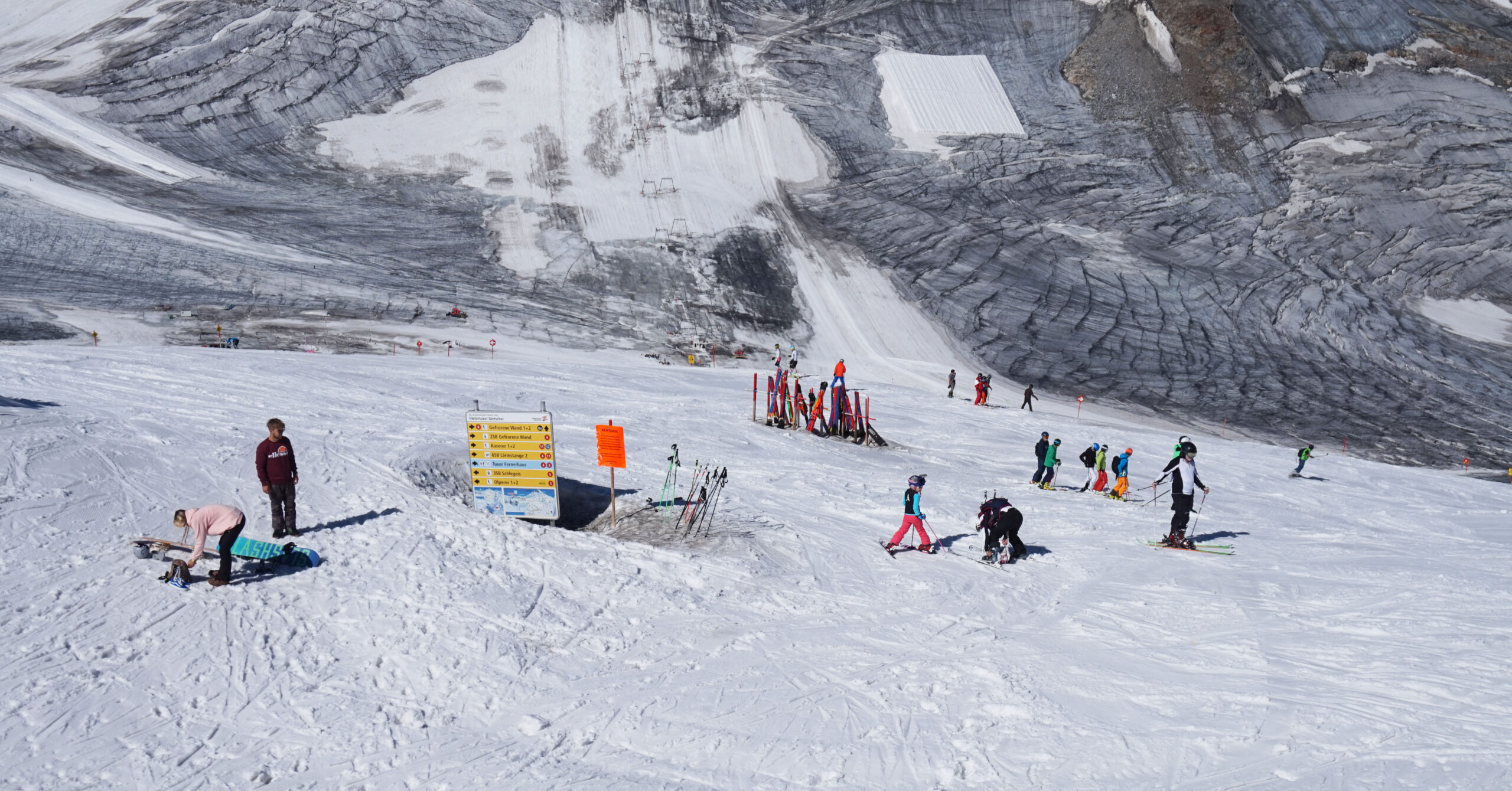
If you do not want to wait until December, head for a glacier. Austria has more glacier ski areas than any other Alpine country, and some open as early as September or October. In autumn, though, expect only part of the pistes to be open, cold and wind at the top, and a lift ride rather than a ski run back down to the valley.
- Hintertux Glacier (Zillertal): the only Austrian ski area where you can ski all year round. It has 64 km of pistes, 21 lifts and an altitude of 1,500 to 3,250 m. The Zillertal Superskipass is valid here too.
- Stubai Glacier: autumn rate from 9 October 2026, winter price list from 24 October (see above). The largest glacier ski area in the country and the most family-friendly.
- Sölden: the Rettenbach and Tiefenbach glaciers are the first to open, and the whole area including Giggijoch and Gaislachkogl runs from 12 November 2026.
- Kitzsteinhorn (Kaprun): the glacier for anyone flying into Salzburg. In autumn you ski on the glacier, in winter with the link to the Maiskogel.
- Pitztal Glacier, Kaunertal Glacier and Mölltal Glacier: smaller, quieter glaciers that people visit mainly for the snow rather than the kilometres.
The Dachstein does not belong on the glacier list, even though a cable car goes up there. The operator states clearly that there is no skiing on the glacier (planai.at).
How much is a ski pass in Austria and how to save
A day pass in the big ski areas costs between €80 and €86.50 at the ticket office in the 2026/27 season. Six days in a big area will set you back roughly €370 to €470, about £315 to £400. The differences between resorts are smaller than you might expect; you save more by choosing when and how you buy. For a full comparison of the regional passes, see our guide to Austria ski pass prices.
| Six-day adult ski pass (2026/27) | Price | Approx. in £ |
|---|---|---|
| Zillertal Superskipass (546 km) | €399 | £340 |
| KitzSki, high season | €423 | £360 |
| Saalbach / Alpin Card, high season | €440 | £375 |
| Ischgl / Samnaun | €451 | £385 |
| Sölden, high season | €469 | £400 |
| Obertauern, season A | €368 | £315 |
| SkiWelt, high season | €413.50 | £350 |
| Nassfeld, high season | €381 | £325 |
Pounds are converted at €1 ≈ £0.85 and rounded. Prices are ticket office rates from the official price lists; online is usually cheaper.
How to save:
- Buy online, in advance. Sölden, Hochficht, Ski amadé and others use dynamic pricing. In Ski amadé a day ticket bought online starts at €69.50, against €81.50 at the ticket office.
- Avoid the high season. Early December and the second half of March are €5 to €14 a day cheaper in Kitzbühel, the SkiWelt or Nassfeld. And the slopes are emptier.
- Use the children’s rates. Children born in 2021 or later ski free in Saalbach, Kitzbühel and Serfaus, and on the Stubai Glacier children under 10 ski free with a paying parent. In Obertauern children under six ski free.
- For a week, take a regional pass. The Zillertal Superskipass, the Alpin Card for Saalbach and Kaprun, the Stubai Skipass from four days or the Ötztal Superskipass from three days give you more kilometres for the same money.
- Ask about a guest card. In Serfaus, Fiss and Ladis your accommodation gives you a card that makes the lift pass cheaper. Other regions have similar perks, so ask when you book.
💡 Your pass works the afternoon before. In Saalbach a day pass is valid from 3 pm the previous day, on the Arlberg from 4 pm. If you arrive on Friday afternoon with a pass starting on Saturday, you can squeeze in a couple of runs on the day you arrive. And in Saalbach night skiing is included in the pass.
How to get to the Austrian ski resorts from the UK
By air is how most British skiers get to Austria. Salzburg and Innsbruck are the two airports closest to the big ski areas, and both add seasonal winter flights from the UK. Which UK airports and airlines fly there changes from season to season, so check the current schedule before you pick a resort. Munich is a useful alternative for Kitzbühel and the SkiWelt, and Zurich for the Arlberg and Ischgl. From the airport you continue by shared shuttle, private transfer, train or hire car. On Saturdays, when the weekly changeover happens, expect queues before Kufstein, on the Tauern motorway and in the valleys leading up to the lifts.
By train you can reach the resorts with a station in the valley: St. Anton am Arlberg, Kitzbühel, Zell am See (with a bus on to Kaprun) and Schladming all lie right on the railway, and you can bring your skis with you. Salzburg and Innsbruck main stations are the usual places to change. Travelling all the way from London by rail is possible too, but it takes a long day with several changes. For Ischgl, Sölden or Obertauern you need a bus from the nearest station.
By car, whether you drive from home or pick up a hire car in Munich or Zurich, you need a vignette, which is compulsory on all Austrian motorways and expressways. If you hire a car in Austria, ask at the desk whether a vignette is already included.
| Car vignette | Price |
|---|---|
| 1 day (digital only) | €9.60 |
| 10 days | €12.80 |
| 2 months | €32 |
| 1 year | €106.80 |
Source: ASFINAG. The 10-day and 1-day digital vignettes can be bought valid immediately, while a two-month or annual vignette bought online only becomes valid on the 18th day after purchase. For 2027, ASFINAG will no longer issue a sticker vignette; it will be digital only. A few short motorway stretches near the borders are toll-free, and some of them matter to skiers: the A12 from the German border to Kufstein-Süd, the A1 from Walserberg to Salzburg-Nord and the A14 from Hörbranz to Hohenems. A separate toll is charged on the Tauern motorway (A10), the Pyhrn motorway (A9), the Brenner motorway (A13) and in the Arlberg road tunnel.
Ski buses are free in most of the big ski areas with a lift pass or a guest card. On the Stubai Glacier the bus to the lifts is included in every pass.
💡 Sort out the vignette before you set off. If you want a two-month or annual vignette online, you have to buy it at least 18 days in advance. For a week’s skiing, the 10-day digital vignette for €12.80 (about £11) is enough, and it is valid as soon as you buy it.
Where to stay
In Austria you usually do not stay in huge purpose-built resorts on the piste, as in France, but in guesthouses, apartments and family-run hotels in the villages below the lifts. In our view it pays to stay one village away from the main centre: in Leogang rather than Saalbach, in Kirchberg rather than Kitzbühel, in the Paznaun valley below Ischgl. You save money and the evenings are quieter. A few specific tips at different price levels:
- Hotel Planai by Alpeffect Hotels in Schladming (Coburgstraße), with a location that guests on Booking rate 9.8 out of 10. A short walk to the Planai lift, and an easy base when you fly into Salzburg.
- Strass Sport & Spa Hotel on the main street in Mayrhofen, for anyone who wants the Zillertal, the Superskipass and the village nightlife.
- HAIDVOGL MAVIDA Zell am See by the lake in Zell am See, a base for the Alpin Card: Schmittenhöhe, Kitzsteinhorn and the Skicircus on one pass.
- Sportlers Lodge Sölden in Sölden, for autumn and spring skiing on the Ötztal glaciers.
- Falkensteiner Hotel & Spa Carinzia in Tröpolach, a few steps from the Millennium-Express gondola up to Nassfeld, with a large spa.
If you would rather search yourself, here is accommodation in the main bases: Schladming, Flachau, Leogang, Kirchberg in Tirol, Obertauern, Kappl in the Paznaun valley and St. Anton am Arlberg.
A little history
Austrian skiing has roots that reach well beyond the Alps. Mathias Zdarsky, whom Austrians regard as the father of Alpine skiing, was born in Moravia, near Třebíč in today’s Czech Republic. In Lilienfeld in Lower Austria he designed a metal binding that held the heel of the boot to the ski firmly enough to turn even on steep terrain, and he patented it in 1896.
The second big name is Hannes Schneider from Stuben on the Arlberg. As an instructor in St. Anton, he built ski teaching around a fixed progression from the snowplough to stem turns, and this “Arlberg technique” grew into the ski schools we know today. That is why the Arlberg is called the cradle of downhill skiing.
The 1930s brought races that are still held today, among them the Hahnenkamm in Kitzbühel. After the war, valley villages began building lifts, and within two generations mountain communities that had lived off farming became resorts where winter tourism supports almost every family. Over the last twenty years resorts have been linking up into big ski areas: Saalbach with Fieberbrunn, Lech with St. Anton via the Flexenbahn, the Maiskogel with the Kitzsteinhorn.
What we would do differently
We would not chase kilometres. Most people remember three or four runs from a week in Saalbach or the Zillertal, not the whole circuit. We would rather take a day or two more slowly: catch the first lift up to empty corduroy, stop at noon in a small hut nobody recommended, and finish early in the afternoon once the snow turns to slush.
We would try more local food. Everyone knows Kaiserschmarrn, but on the mountain huts Kasspatzln, bacon dumplings or soup with liver dumplings are worth ordering too, and in Carinthia the cooking is already almost Italian. In Nassfeld we would happily ski over to the Italian side for lunch one day.
We would not push ourselves with a fixed plan. When it is windy, foggy at the top and raining at the bottom, there is no shame in skipping a day and going to a thermal spa or walking along the valley. And for once we would leave the phone in our pocket and, instead of filming yet another chairlift ride, simply look around.
And we would travel at a different time from everyone else. Not on Saturday morning, but on Friday evening or Sunday if your flights allow it. The hours you save in the queue before Kufstein or at the airport transfer desk are the cheapest extra holiday you can buy.
Frequently asked questions
What are the best ski resorts in Austria?
For sheer size and challenge, Ski Arlberg (302 km), the Skicircus Saalbach (270 km), the SkiWelt (275 km) and Ischgl (239 km) lead the way. For families, Serfaus-Fiss-Ladis, Snow Space Salzburg and the Stubai Glacier stand out. Kitzbühel has the prettiest town, Obertauern the most reliable snow without a glacier, and the Zillertal Superskipass offers the best value for a week, with 546 km for €399.
How much is a ski pass in Austria for 2026/27?
A day pass in the big ski areas costs roughly €80 to €86.50 at the ticket office: Arlberg €85, Sölden €84.50, Ischgl €83, Saalbach €82, Schladming €81.50. Smaller areas are cheaper, Obertauern €72, Nassfeld €73, Hochficht online from €44.50. A six-day pass in the big areas costs €370 to €470 (about £315 to £400), and the best value is the Zillertal Superskipass at €399 for 546 km of pistes.
Which ski resorts are closest to Salzburg and Innsbruck airports?
From Salzburg the natural choices are Snow Space Salzburg in Flachau right by the A10 motorway, Schladming-Dachstein, Obertauern, Saalbach and Kaprun with the Kitzsteinhorn glacier. From Innsbruck the closest big area is the Stubai Glacier, just 40 minutes from the city, followed by the Zillertal, Sölden and Serfaus-Fiss-Ladis.
What are the best ski resorts in Austria for families?
In our view the best for families are Serfaus-Fiss-Ladis, SkiWelt Wilder Kaiser, Snow Space Salzburg and the Stubai Glacier, where children under 10 ski free with a paying parent. Children born in 2021 or later get a free pass in Saalbach, Kitzbühel and Serfaus, and in Obertauern children under six ski free. For a short trip with small children, Hochficht is enough.
Do I need a vignette to drive to Austrian ski resorts?
Yes, on all motorways and expressways. A car vignette costs €9.60 for 1 day, €12.80 for 10 days, €32 for two months and €106.80 for a year. The 1-day and 10-day digital vignettes are valid immediately after purchase, while a two-month or annual vignette bought online only becomes valid on the 18th day. From 2027 the vignette will be digital only.
Where can you go glacier skiing in Austria in autumn?
In autumn the glaciers open are Hintertux (all year round), the Stubai Glacier (autumn rate from 9 October 2026), Sölden (whole area from 12 November 2026), the Kitzsteinhorn in Kaprun and the smaller Pitztal, Kaunertal and Mölltal glaciers. There is no skiing on the Dachstein Glacier; the cable car only takes sightseers.
Is skiing in Austria more expensive than in Italy?
Lift passes in the big Austrian ski areas cost around €80 to €85 a day in the 2026/27 season, similar to the best-known Italian areas. The real difference is in accommodation and food on the mountain. On price, Austria sits between Italy and Switzerland.
When does the ski season in Austria start and end?
The glaciers run from September and October, and the big resorts usually open in late November or early December: Ischgl on 26 November 2026, the Arlberg on 2 December, the Zillertal and Nassfeld on 4 December, Hochficht on 5 December. The season usually ends in early or mid-April, while Ischgl runs until 2 May 2027. The main and most expensive season is from Christmas to mid-March.
Where next
- Austria ski pass prices: twelve regional lift passes compared, from Ski amadé to the SuperSkiCard, with children’s rates and season passes.
- Skiing in Italy: the Dolomites, Livigno and other areas, if Austria is not enough or you want to compare prices.
- Ski resorts near Vienna: smaller Austrian areas for a day or a weekend from Vienna, Linz or Prague.
- Salzburg Christmas market: if you are flying into Salzburg in December, combine the ski trip with Advent in the city.
- Via ferrata in Austria: the same mountains in summer, this time on a cable with iron rungs.
Potřebujete pomoct s cestováním?
-
Ubytování 🏨
Vyberte si to nejlepší ubytování, ať už jste kdekoliv, přes Booking.com. -
Půjčení auta 🚗
Auto si snadno najdete přes Booking.com, kde máte často slevu díky ubytování, nebo Rentalcars.com, kde porovnáte nabídky většiny půjčoven. -
Zážitky 🎟️
Přes GetYourGuide.com si vyberete z nejrůznějších výletů i zážitků po celém světě, navíc se zrušením zdarma do 24 h předem.