Last updated 10.11.2026
For a lot of people in the UK, Thailand is the first long-haul trip that feels exotic without feeling difficult. That ease is exactly what trips people up. The problem is rarely safety or food. It is the weather and the distances. Thailand has two coastlines, the rain arrives on each of them at a different time of year, and from the hills of the north to the Malaysian border it is more than 1,800 km. Book Ko Samui for November and Phuket for August and you could spend both weeks under cloud.
So a Thailand holiday works best when you plan it in this order: dates first, then the coast that suits those dates, then the length of the trip, and only at the very end the hotel. This guide covers that planning side: when and where to go, what you need at the border, how to get there from the UK and around the country, what things cost in baht and in pounds, what to watch out for, and two ready-made routes for two weeks and three weeks. The individual places are written up separately in our guide to the best places to visit in Thailand.
Your Thailand holiday at a glance
- Since 15 September 2026, British passport holders can stay visa-free for up to 30 days for tourism, no longer 60. Before you fly you must fill in the online Thailand Digital Arrival Card (TDAC). It is free and can be submitted no earlier than three days before arrival.
- The Andaman Sea and the Gulf of Thailand have their dry seasons at different times. Phuket, Krabi, Phi Phi and Ko Lanta are driest from December to March, while Ko Samui, Ko Pha Ngan and Ko Tao get most of their rain from October to December.
- Your passport must be valid for at least six months after you arrive. Immigration can ask to see proof of funds. GOV.UK gives at least 10,000 baht per person or 20,000 per family (roughly £220 and £440); some other governments quote twice that.
- Most journeys from the UK involve one change, typically in the Gulf, in Istanbul or in Bangkok, and take around 13 to 16 hours including the connection. Non-stop services from London to Bangkok come and go, so check current schedules.
- One Thai baht is worth roughly 2p (100 THB ≈ £2.20). Thai cashpoints charge foreign cards about 220 baht (around £5) per withdrawal, so take out larger sums less often.
- For a first trip, two regions are enough for two weeks. Bangkok plus the beach, or Bangkok plus the north. North, south and the islands together really need three weeks.
- The biggest risk is the roads, not crime. To ride a scooter legally you need a full UK motorcycle licence and the 1968 International Driving Permit. Without them your travel insurance may pay nothing after an accident.
- Cannabis is no longer freely available. Since 23 June 2025 tourists may buy or hold cannabis flower only with a prescription issued in Thailand.
Best time for a holiday in Thailand
Thailand is warm all year round. On the coast, daytime temperatures sit between about 29 and 34 °C whatever the month, so the real question is not “when is it hot?” but “where is it dry right now?”. And for that you need to think of the country as three areas, each with its own rhythm.
The Andaman Sea (Phuket, Krabi, Phi Phi, Ko Lanta, Khao Lak). The west coast of the peninsula is in season roughly from November to April. It is usually driest from December to March, and April is the hottest month. From about May to October the south-west monsoon brings heavy rain, bigger waves and strong currents. Some boat trips are cancelled and the Similan Islands National Park closes (for the 2026/27 season it reopened on 15 October).
The Gulf of Thailand (Ko Samui, Ko Pha Ngan, Ko Tao). The islands on the east side of the peninsula are sheltered from the south-west monsoon by the mainland, so during the British summer they tend to be drier than Phuket. Their wettest stretch runs from October to December, peaking in November. That makes Samui a gamble for Christmas but, in our view, a good bet for July and August.
Bangkok, central Thailand and the north (Chiang Mai, Chiang Rai, Pai). Here the year splits into three: cooler and dry from November to February, hot from March to May, and rainy from around mid-May to October. Bangkok is at its most pleasant between November and February. In the north, December and January nights are surprisingly cool, with the average low in Chiang Mai dropping to around 16 °C, so pack a jumper for evenings in the hills.
The table below shows long-term average rainfall and the number of rainy days per month at four weather stations, one for each of the main areas. These are the 1991–2020 climate normals from the Thai Meteorological Department (TMD), published by the World Meteorological Organization.
| Month | Phuket (Andaman Sea) | Ko Samui (Gulf of Thailand) | Bangkok | Chiang Mai (north) |
|---|---|---|---|---|
| January | 50 mm, 4 days | 127 mm, 9 days | 24 mm, 2 days | 11 mm, 1 day |
| February | 24 mm, 2 days | 64 mm, 4 days | 21 mm, 2 days | 10 mm, 1 day |
| March | 81 mm, 6 days | 116 mm, 5 days | 51 mm, 3 days | 20 mm, 2 days |
| April | 135 mm, 10 days | 83 mm, 6 days | 93 mm, 5 days | 54 mm, 5 days |
| May | 237 mm, 16 days | 132 mm, 11 days | 217 mm, 12 days | 168 mm, 12 days |
| June | 249 mm, 16 days | 134 mm, 10 days | 199 mm, 13 days | 118 mm, 12 days |
| July | 240 mm, 16 days | 117 mm, 11 days | 190 mm, 14 days | 149 mm, 14 days |
| August | 309 mm, 17 days | 102 mm, 11 days | 227 mm, 16 days | 223 mm, 17 days |
| September | 350 mm, 19 days | 118 mm, 11 days | 336 mm, 18 days | 207 mm, 15 days |
| October | 336 mm, 19 days | 295 mm, 16 days | 289 mm, 14 days | 124 mm, 9 days |
| November | 178 mm, 13 days | 445 mm, 17 days | 45 mm, 4 days | 41 mm, 3 days |
| December | 82 mm, 8 days | 263 mm, 12 days | 12 mm, 1 day | 14 mm, 1 day |
The numbers boil down to a simple rule. From December to March, head for the Andaman Sea, Bangkok and the north: the whole country is at its best (and at its most expensive). From June to September, the Gulf of Thailand is the only sensible choice for a beach. In November Phuket is still shaking off the end of the monsoon while Samui is at the peak of its rains, so we would spend November in Bangkok and the north instead. April is hot everywhere, but the Andaman coast is still dry and hotels there are often cheaper.
A few dates worth knowing. Songkran, the Thai New Year, falls on 13 to 15 April and the whole country turns into one big water fight. Loi Krathong, the festival of lights, and Yi Peng, the lantern festival in the north, are held at the November full moon, and accommodation in Chiang Mai for those nights needs booking months ahead. The Full Moon Party on Ko Pha Ngan takes place, as the name suggests, every full moon.
💡 Rainy season does not mean rain all day. In Bangkok and the north it usually comes as an afternoon storm and the rest of the day is fine. By the sea, though, the wind and waves are a bigger problem than the rain itself. On the Andaman coast during the monsoon red flags go up on the beaches, the currents are strong and foreign tourists drown there every year. If the red flag is flying, stay out of the water, even if other people are swimming.
Where to go in Thailand: pick the holiday first
Thailand is not one destination. Beaches, temples, jungle and a megacity are hundreds of kilometres apart, so decide what kind of trip you want before you start choosing places. Our full list of fifty places, region by region, is in the guide to the best places to visit in Thailand. Here is the short version to help you decide.
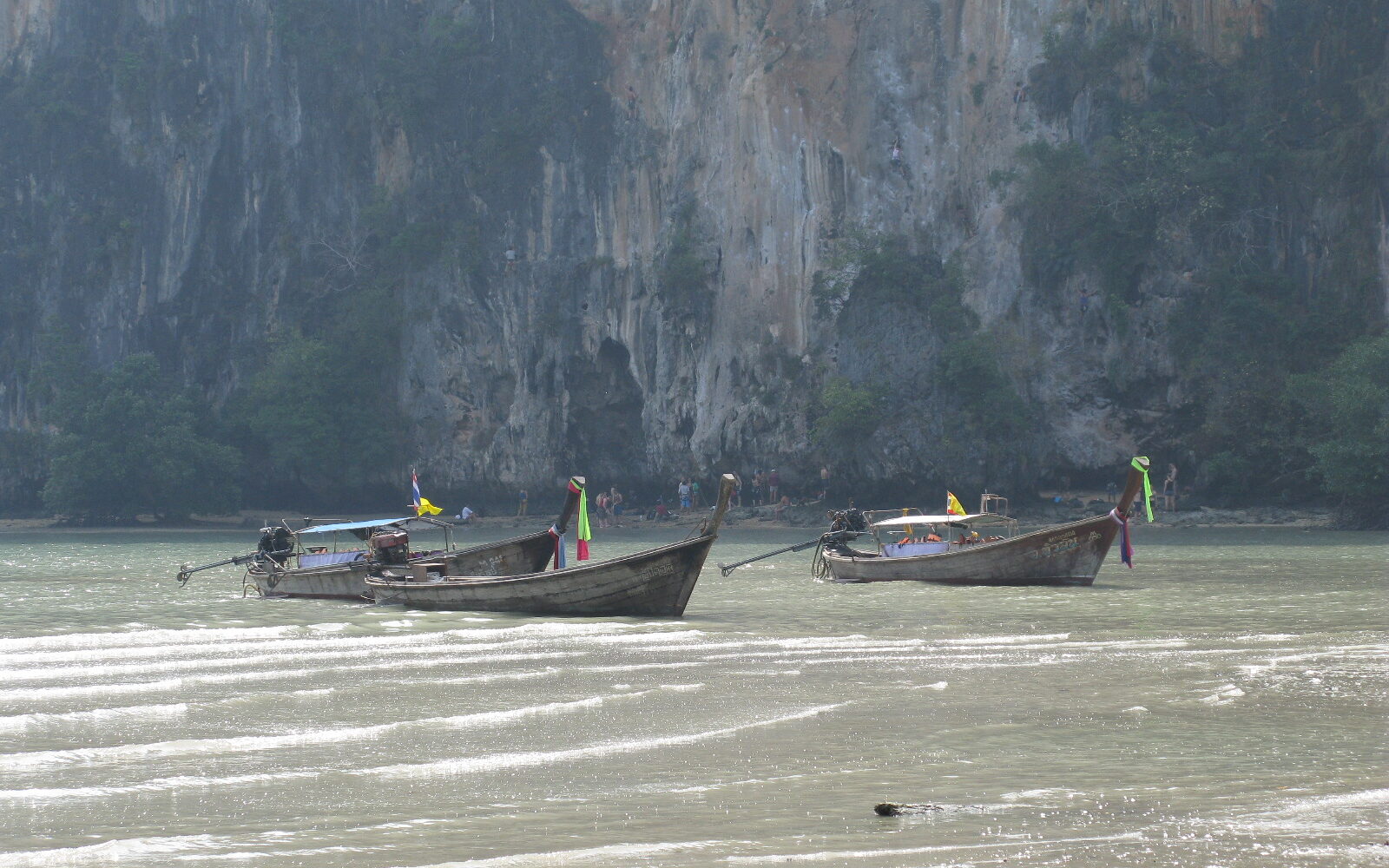
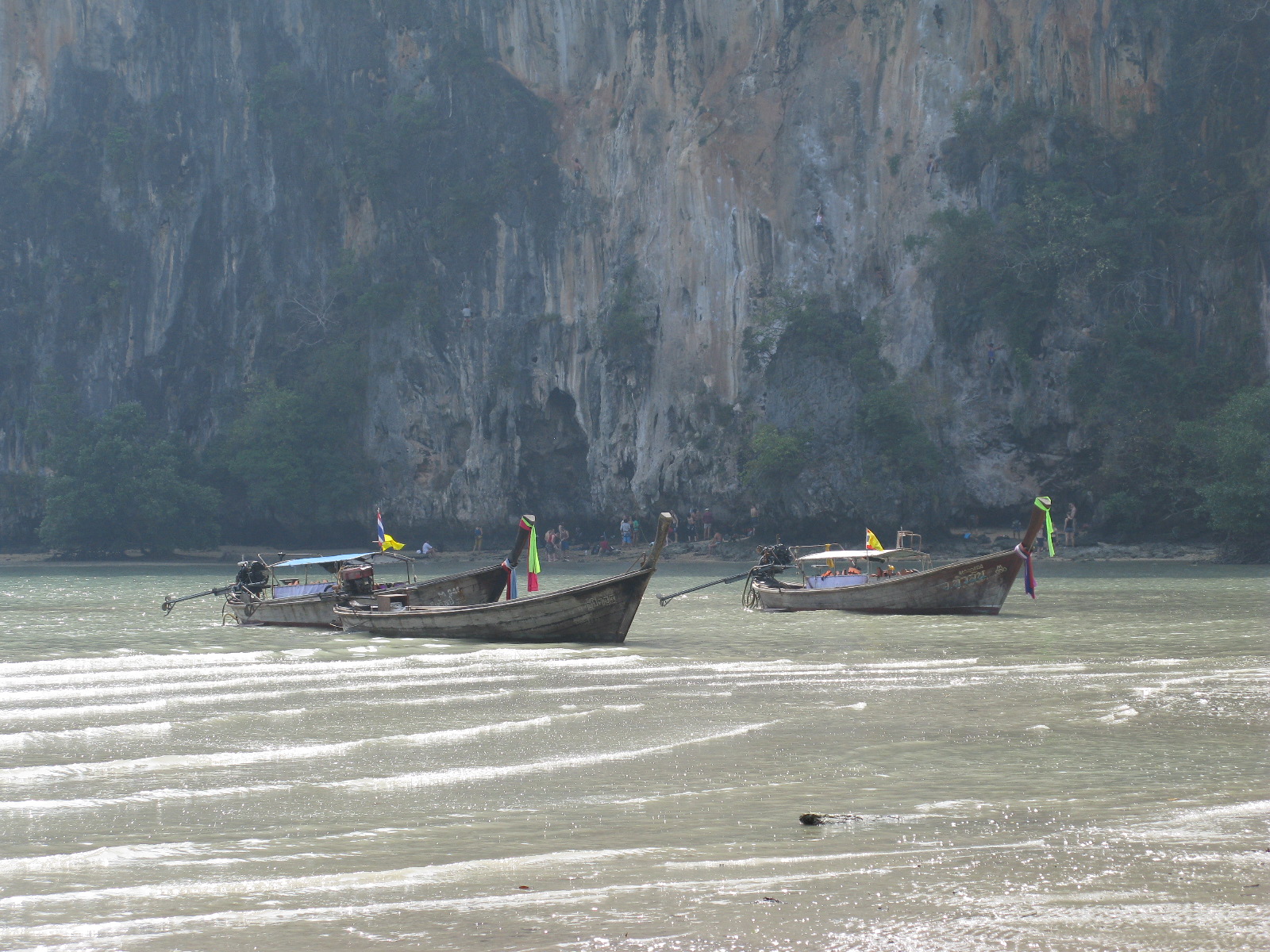
Beaches on the Andaman Sea. This is the Thailand of the travel posters: limestone cliffs rising out of the sea, longtail boats pulled up on the sand, island-hopping by boat. Phuket is the biggest island, with an international airport, the widest choice of hotels and the loudest nightlife (Patong and Bangla Road), but it also has quiet beaches in the south and north. Krabi, with the resort town of Ao Nang and the Railay peninsula, which you can only reach by boat, is calmer and more about nature and rock climbing. Ko Phi Phi is small, pretty, car-free and packed. Ko Lanta is its opposite: long beaches, a slow pace and plenty of families. Khao Lak, north of Phuket, has low-rise hotels and long beaches, and it is the base for trips to the Similan Islands and Khao Sok National Park.
Beaches on the Gulf of Thailand. Ko Samui has its own airport, palm-lined beaches and hotels in every category, from busy Chaweng to quieter Bophut and Mae Nam. Ko Pha Ngan is famous for its full moon parties. Ko Tao is the divers’ island. All three are linked by boat, and in our view they are the only big Thai islands that make sense in July and August.
Islands near the Cambodian border. Ko Chang and Ko Kut, in the east of the Gulf, are green and less built-up, and you can get there from Bangkok by bus and ferry. They belong to Trat province, however, which borders Cambodia. The FCDO advises against all but essential travel within 20 km of the land border with Cambodia, and Thai authorities have had a night-time curfew in place in five mainland districts since December 2025. Before you book anything here, read the current FCDO travel advice for Thailand and check that your route and ferry pier are outside the zone.
Pattaya, Hua Hin and Ko Samet. The nearest beaches to Bangkok. Pattaya is about two hours’ drive from the capital, a big urban resort with a very visible nightlife, and it is usually the cheapest option in package deals. Hua Hin is calmer and Ko Samet is a small island, the closest one to Bangkok. They work well as a few extra days on a longer trip, not as the main event, unless you only have a week.
The north: mountains, temples and cooler nights. Chiang Mai is the country’s second most important city: an old town with dozens of temples, cafés, markets and the Doi Suthep mountain above it. Chiang Rai has the White Temple and the Blue Temple, and Pai is a mountain town where people go to unwind for a few nights. The north is also where you can see elephants, but only go to sanctuaries where nobody rides them.
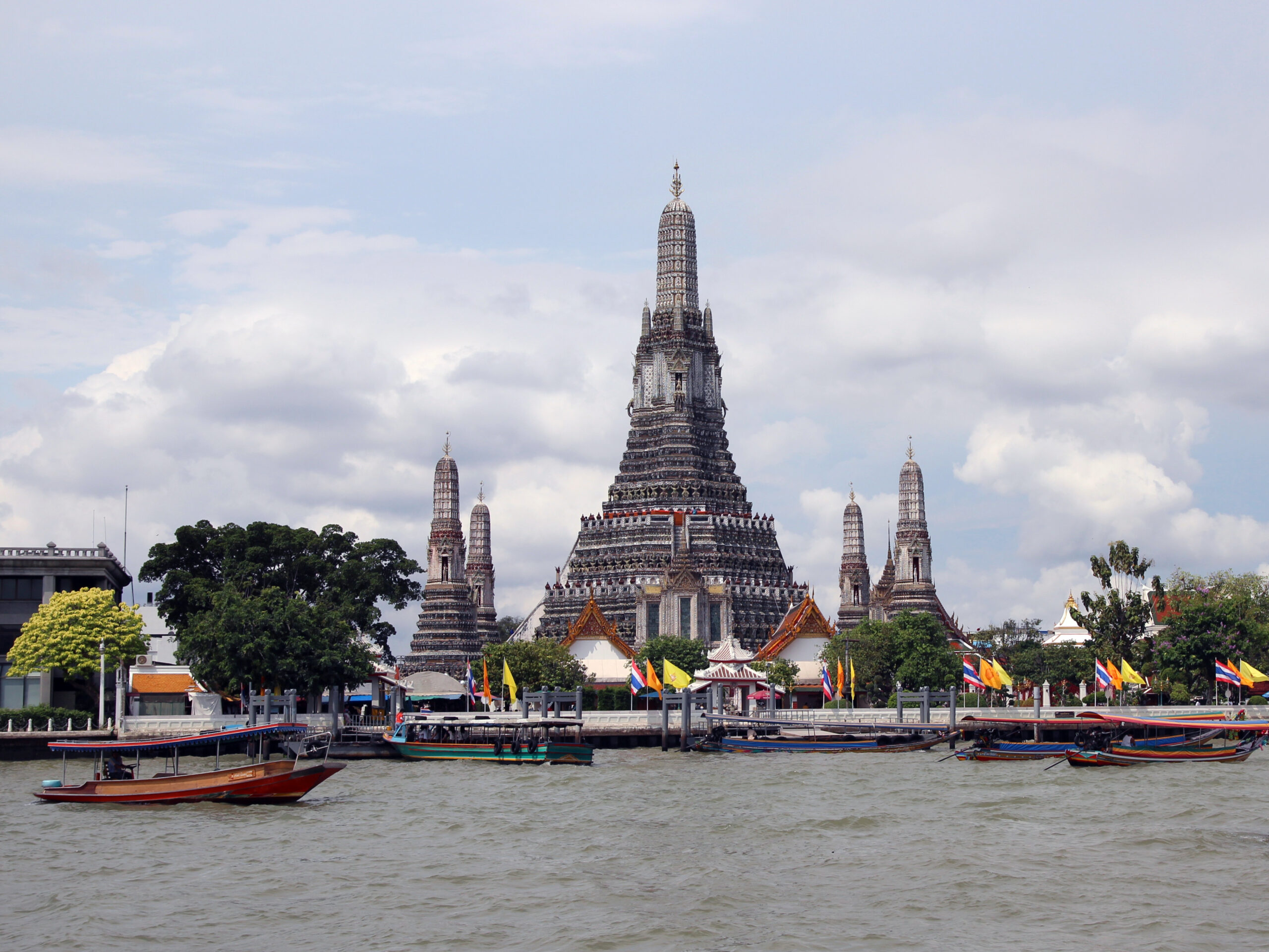
Culture: Bangkok, Ayutthaya, Sukhothai. Bangkok, with the Grand Palace, Wat Pho and Wat Arun, deserves two or three days at the start or end of your trip. Ayutthaya, the former capital destroyed in 1767, is just to the north and easy to do as a day trip by train. Sukhothai, the oldest Thai capital with its park of ruins, lies roughly halfway to the north.
| Type of holiday | Where | Best time | Who it suits |
|---|---|---|---|
| Beach and boat trips | Phuket, Krabi, Phi Phi, Ko Lanta, Khao Lak | December to March | couples, families, first-timers |
| Beach during the UK summer | Ko Samui, Ko Pha Ngan, Ko Tao | January to August | summer holidays, divers |
| Quiet islands | Ko Lanta, Ko Kut, Ko Chang, Ko Yao Yai | December to March | anyone after fewer people and a slow pace |
| Mountains and nature | Chiang Mai, Chiang Rai, Pai, Khao Sok | November to February | active travellers, anyone who does not just want to lie down |
| Cities and sights | Bangkok, Ayutthaya, Sukhothai | November to February | everyone, for at least two days |
| Short beach break | Pattaya, Hua Hin, Ko Samet | November to March | combined with Bangkok, one week |
With children we would choose quiet beaches with a gentle slope into the water and a short transfer: Kata and Karon or the north of Phuket, Khao Lak, Ko Lanta, and Ko Samui in summer. We would skip the party spots such as Patong or Haad Rin on Ko Pha Ngan with small children, and long road transfers too. Bear in mind that the long flight and the time difference will knock young children off balance for a few days, so with kids it pays to go for longer rather than for just a week.
Entering Thailand: 30 days visa-free, TDAC and your passport
The entry rules have changed so often in recent years that plenty of websites still talk about 60 days. That no longer applies. The Thai government has scrapped the 60-day visa exemption and, according to GOV.UK entry requirements for Thailand, from 15 September 2026 British nationals entering under the visa exemption can stay for up to 30 days, for tourism only. The Tourism Authority of Thailand announced the change after the decree was published in the Royal Gazette on 31 August 2026. Thirty days is plenty for a holiday, but if you want to spend the winter there you will need a visa, which you apply for through the official Thai e-Visa website. Rules depend on your nationality, so if you travel on another passport, check the advice of your own government.
What you need at the border:
- A passport valid for at least six months after the date you arrive, with at least one blank page. GOV.UK warns that you will be refused entry with a passport reported lost or stolen, and travellers have been turned away because their passport did not have enough validity left. An emergency travel document will not get you in.
- Your TDAC confirmation. The Thailand Digital Arrival Card has been compulsory since 1 May 2025 for all foreign nationals arriving by air, sea or land. You fill it in on the official portal tdac.immigration.go.th no earlier than three days before you arrive: personal details, passport number, flight, accommodation address and a health declaration. It is free. Websites that charge for it are just middlemen.
- Money for your stay. On request you must be able to show you can support yourself. GOV.UK states at least 10,000 baht per person or 20,000 per family (about £220 or £440), while other governments quote 20,000 and 40,000 baht in cash or the equivalent in euros or dollars. Checks are random, but if you are picked, money on a card may not be accepted, so carrying the higher amount in cash is the safe option.
- A return or onward ticket and an accommodation booking. The officer may want to see them, especially if you have entered Thailand recently. GOV.UK notes that British nationals have been refused entry for not having this evidence.
The length of stay is decided by the immigration officer and can be shorter than 30 days, so check the date in your entry stamp as soon as you land. An extension of up to 30 more days is available at an immigration office. Overstaying costs 500 baht a day (at least 1,000, at most 20,000), and longer overstays can lead to detention and deportation. Your stays must not add up to more than 90 days in six months, and you can enter visa-free over land no more than twice a calendar year.
The 300-baht tourist fee is not being collected yet. Thailand has been talking about it since 2023. It is supposed to be a charge on arrivals by air, probably added to the price of the ticket. No official start date has been set, though, and it does not appear among the entry requirements on GOV.UK. Check again before you fly: rules here change faster than elsewhere.
💡 Watch the duty-free limits on alcohol and cigarettes. You can bring in only 1 litre of alcohol and 200 cigarettes per person, and customs enforce this strictly. If you go over, the whole amount is confiscated, not just the excess, and GOV.UK warns that fines for cigarettes can reach ten times their value. Leave e-cigarettes and vapes at home altogether: possessing or using them is illegal in Thailand, with no exception for tourists, and the penalties range from heavy fines to as much as five years in prison.
Getting to Thailand from the UK
As the crow flies, London to Bangkok is roughly 9,600 km, and from most of the UK you will be changing planes at least once. There are three ways to do it.
With one change. This is the most common option from London, Manchester, Birmingham, Edinburgh and other UK airports. You connect in Dubai, Doha, Abu Dhabi or Istanbul, or sometimes in a European hub such as Frankfurt, Munich, Zurich or Helsinki. Depending on the connection, the whole journey takes around 13 to 16 hours. If you are heading for Phuket, Krabi or Chiang Mai, you can often get there with one change and skip Bangkok altogether, for example via Doha.
Non-stop from London. Some airlines have run non-stop flights between London and Bangkok, but routes and frequencies change from season to season. Compare current schedules from Heathrow before you book rather than assuming there is a direct option for your dates. From regional airports you will almost always change.
On a package holiday. UK tour operators sell Thailand packages with flights, transfers and a hotel in one price. These usually use scheduled flights with a connection, so the journey time is similar. The upside is that packages including flights are ATOL protected if the company goes bust.
How much is a flight? Fares from the UK vary a great deal by season and airline, so we will not quote a figure that would be out of date by the time you read this. What is consistent: for the high season from November to February, book well in advance. Thailand is seven hours ahead of the UK in winter (GMT) and six hours ahead while British Summer Time is in force. Expect jet lag after a flight that long; we have some advice in our article on beating jet lag.
Bangkok has two airports. Suvarnabhumi (BKK) handles almost all long-haul flights as well as domestic flights with Thai Airways and Bangkok Airways. Don Mueang (DMK) handles most low-cost domestic routes, AirAsia among them. If you have to transfer between the two, allow one to two hours by road. A shuttle bus runs between them and is free for passengers with a connecting ticket. If you would rather avoid changing in Bangkok entirely, buy a ticket from Europe all the way to your final destination on a single booking (Thai Airways is in Star Alliance, and Bangkok Airways partners with Emirates). Your bags are then checked through, and you clear immigration only at the end.
Getting around Thailand
Thailand stretches about 1,800 km from north to south, further than London to Lisbon. That is why we think it makes sense to fly the long legs and save trains and buses for routes where the journey is part of the experience or saves you a night in a hotel.
Domestic flights. Cheap, frequent and good quality. Between Bangkok and Chiang Mai or Phuket there are, at some times of day, several flights an hour, and a one-way ticket costs roughly 770 to 1,080 baht (about £17 to £24), usually without checked luggage. Thai AirAsia, Nok Air, Thai Lion Air, Thai Vietjet, Thai Airways and Bangkok Airways all fly domestically. Only Bangkok Airways flies to Ko Samui, because it owns the airport there, and the fares reflect that. The cheaper way to Samui is to fly to Surat Thani and continue by bus and boat; Nok Air, for example, sells combined tickets.
The night train. Sleeper trains run overnight between Bangkok and Chiang Mai. You save a hotel night and sleep better than you might expect. Tickets are sold by the State Railway of Thailand (SRT) on its website and at stations, and in high season and around holidays they sell out sooner than flights. Buy from the railway, not from agencies that add hefty mark-ups. And take a jumper: the air conditioning in the carriages can be freezing. For short hops, such as Bangkok to Ayutthaya, an ordinary third-class train costing a few baht is all you need.
Long-distance buses and minivans. The cheapest option. VIP buses have only around 32 seats and plenty of legroom. Minivans are faster, but the drivers can be aggressive. Big cities have several bus stations, so always check exactly where your bus leaves from.
Boats and ferries. You reach the islands on slow ferries or fast speedboats. Most routes are run by private companies, prices vary, and you often pay more buying through a hotel or agency than at the pier. On the Andaman Sea during the monsoon, expect some services not to run.
Grab, Bolt and taxis. In cities and tourist areas the Grab app works like Uber (you know the price in advance), and Bolt is available too. Note that Grab also offers motorbike taxis, so if you do not want to ride pillion, choose GrabCar. Grab does not operate on Ko Lanta, which is why local taxis and tuk-tuks there are expensive. Bangkok taxis are required by law to use the meter. If the driver refuses to switch it on, get out and flag down another one.
Scooters and cars. Thailand drives on the left, which at least feels familiar. Almost everyone hires a scooter on the islands, but this is where you need to slow down. A UK car licence on its own does not entitle you to ride a scooter in Thailand. You need motorcycle entitlement on your UK licence plus the 1968 International Driving Permit, which you can only get before you leave the UK. Police check foreigners often and you will be fined without the right documents, but the bigger problem is that your insurer can refuse to pay out after an accident. Thailand has one of the highest rates of motorcycle deaths in the world, and people on motorbikes account for up to 70% of the country’s road fatalities. Never leave your passport as a deposit at a rental shop, and film the scooter or jet ski when you pick it up, including the person renting it to you.
How much does a Thailand holiday cost?
The flight is the biggest single expense. Once you are there, food, transport and anything short of a luxury resort cost less than at home. There are two exceptions: alcohol and imported food are expensive because of high taxes, and boat trips to the islands can blow a hole in your budget. As a rule, everything is cheaper in the north and away from the tourist trail, and pricier on the best-known beaches and islands.
The table sums up typical prices reported by independent travellers who have lived in Thailand or travelled around it on their own. Treat them as a guide. Pound figures are rounded, at roughly 1 THB ≈ £0.022.
| Item | Price in baht | Roughly in pounds |
|---|---|---|
| Hostel bed | from 100 THB | from £2 |
| Bungalow or guesthouse | from 200 THB | from £4.50 |
| Room in a three-star hotel | from 600 THB | from £13 |
| Street food dish | 30 to 60 THB | 65p to £1.30 |
| Thai dish in a restaurant | 50 to 120 THB | £1.10 to £2.60 |
| Western dish in a restaurant | 150 to 500 THB | £3.30 to £11 |
| 1.5 l bottle of water in a shop | around 12 THB | about 25p |
| Thai beer in a shop / in a bar | 30 THB / from 60 THB | 65p / from £1.30 |
| Domestic flight Bangkok–Chiang Mai or Phuket | roughly 770 to 1,080 THB | £17 to £24 |
| Grab from the airport to central Bangkok | 350 to 600 THB | £8 to £13 |
| Scooter hire per day | from 250 THB | from £5.50 |
| Cashpoint withdrawal with a foreign card (fee) | about 220 THB | about £5 |
What it adds up to. Independent travellers typically budget around 600 to 1,250 baht a night for accommodation (about £13 to £27) and 300 to 600 baht a day for food (about £7 to £13). For two weeks on your own, that puts the on-the-ground cost for one person at roughly 11,000 to 15,000 baht (£240 to £340) before flights. Three weeks at a mid-range level, meaning private rooms and a mix of Thai and Western food, comes to around 34,000 to 54,000 baht per person (roughly £750 to £1,200) on top of the flight. If you mostly eat Thai food, expect to spend around 460 baht (£10) a day on meals; with Western food it easily doubles.
Package holidays for comparison. UK tour operators and online travel agents sell Thailand packages year-round, from a week in Pattaya or Phuket to escorted tours of two weeks or more. Last-minute deals for late November and early December are often cheaper than putting the same trip together yourself, especially for a single beach stay. Package prices change daily and depend heavily on your departure airport and the school holidays, so compare a few providers for your exact dates.
Package holiday or independent travel?
In our view, Thailand is the best country in Asia for a first trip without a tour operator. Accommodation can be booked online, transport works, you can get by in English in the tourist areas, and if something goes wrong, the next bus or flight is an hour away. If you have already travelled independently in southern Europe, you can handle Thailand.
A package makes sense if you only want one place by the sea, you are going for a week to ten days and you do not want to organise anything. Flight, transfer and hotel in one price is a convenience worth paying for on a short stay, and last-minute offers are often cheaper than building the same thing yourself. You also get ATOL protection if the operator fails and a rep on the spot.
Going independently makes sense if you want to see several regions, include the north, travel for longer or simply keep your freedom. You save mainly on accommodation and food, and you choose hotels by location rather than from a brochure. Just remember that you will be piecing together the transfers between airports, piers and islands yourself, and that takes time.
The compromise many people use: buy the flight separately, sort out accommodation and domestic travel online, and book only the first two nights in advance. The rest can be arranged on the spot, except over Christmas, New Year and Chinese New Year.
Money, cashpoints and mobile data
Thailand uses the Thai baht (THB), worth roughly 2p. You can pay by card in hotels, larger restaurants, shopping centres and almost everywhere in Bangkok, but you will need cash at markets, food stalls, in tuk-tuks and on the smaller islands. Some shops add a few per cent for card payments.
There are cashpoints everywhere, but foreign cards pay a fee, usually 220 baht per withdrawal. Even a fee-free travel card will not save you from it, because it is charged by the Thai bank, not yours. So withdraw less often and take out larger amounts. When paying by card or withdrawing cash, always decline the offer to convert into pounds (dynamic currency conversion): the rate is much worse. You can also buy baht from a bureau de change in the UK, although larger amounts may need ordering in advance. Do not change money at the airport, and never with strangers in the street. You may not take more than 50,000 THB per person out of the country, and foreign currency worth 20,000 USD or more must be declared to customs.
Mobile data. The easiest option is an eSIM bought before you leave: your phone loads it without swapping SIM cards and you are online as soon as you land. The alternative is a Thai SIM from AIS, dtac or TrueMove, sold at the airport and in 7-Eleven shops; tourist packages cost a few hundred baht. A Thai number is handy for Grab and for booking trips. Roaming with a UK network outside Europe is usually expensive.
Thai sockets take two-pin plugs, so UK three-pin plugs will not fit and you need a travel adapter; earthing is often missing too. Tap water is not drinkable, but there are filtered-water vending machines on the streets where you can refill your own bottle for a few baht.
Health, vaccinations and travel insurance
No vaccinations are compulsory for Thailand unless you are arriving from a country with a risk of yellow fever (parts of sub-Saharan Africa and Latin America), in which case you need a certificate. There are recommended vaccinations, though, and which ones you need depends on how long you are going for and how you travel, so book a travel clinic or your GP practice nurse well ahead: some vaccines are given in several doses. The UK’s TravelHealthPro guide to Thailand recommends hepatitis A and an up-to-date tetanus jab for most travellers. Others, including hepatitis B, typhoid, rabies, Japanese encephalitis and dengue, are advised for some travellers depending on the trip. Japanese encephalitis is mainly a consideration for longer stays in rural areas, especially in the rainy season, and a dengue vaccine is now available for people at higher risk.
Mosquitoes are the main health risk. Dengue fever is very common in Thailand and the vaccine does not solve it entirely. You can buy repellent on arrival (local brands work and cost little). Wear long trousers and sleeves in the evening and sleep under a net or in an air-conditioned room. If you develop a high fever during the trip or after you get home, see a doctor and tell them where you have been.
Dogs and monkeys. Stray dogs carry a risk of rabies, in Ayutthaya for example. Do not feed the monkeys on beaches and around temples, and back away if one attacks: injuring or killing an animal, even in self-defence, can get you prosecuted.
Travel insurance is essential, not optional. Private hospitals are excellent but expensive, and without payment you may not be treated; you can even be stopped from leaving the country until the bill is settled. Choose a policy with a high limit for medical expenses and check whether it covers scooters (and what it requires in terms of licence), diving and any other activities you are planning. The sun is strong as well: on boat trips you will burn even under cloud.
Is Thailand safe? Risks and scams
By South-East Asian standards Thailand is a safe country, and violent crime against tourists is rare. The FCDO travel advice for Thailand does, however, single out a few areas:
- The Thailand–Cambodia border. The FCDO advises against all but essential travel within 20 km of the land border with Cambodia. Fighting broke out along parts of the border in July 2025 and again in December. A ceasefire has been in place since 27 December 2025, but the situation remains unstable, martial law applies in selected districts of Sa Kaeo, Chanthaburi and Trat provinces, and land crossings into Cambodia have been closed, to tourists as well, since 24 June 2025. Flights to Cambodia still operate.
- The southernmost provinces of Yala, Pattani and Narathiwat by the Malaysian border, where separatist attacks take place. The FCDO also advises against all but essential travel to four districts of southern Songkhla. Hardly any tourists go there anyway.
- Flooding. Local floods are common during the monsoon from June to October, and on Ko Samui and in south-eastern Thailand they can also come between November and March after several days of heavy rain.
For tourists, the everyday tricks and scams matter more:
- Jet skis and scooters. Rental businesses in Phuket, Pattaya and Krabi are known for demanding absurd sums for alleged damage when you return the vehicle. Film it when you pick it up and never leave your passport as a deposit.
- Tuk-tuks and “the palace is closed today”. A Bangkok classic: a friendly stranger near a sight tells you it is closed and sends you off for a few baht by tuk-tuk on a “special” tour that ends in a jewellery shop. Check opening times at the official ticket office.
- Gems, gold and “today only” discounts. Street offers of bargain purchases are an organised scam, and you will not get your money back.
- Drinks. There have been cases in Pattaya, Krabi, Ko Samui and Ko Pha Ngan of drinks spiked with drugs or sedatives. Never leave your glass unattended.
- Pickpockets and bag snatchers on motorbikes, who grab bags from pedestrians and even people in tuk-tuks. Keep an eye on your cards on night buses too.
Useful numbers: tourist police 1155 (free, English spoken), police 191. If something happens to you, the British Embassy in Bangkok can help, and family in the UK can call the FCDO in London 24 hours a day on 020 7008 5000. Before you go, sign up for email alerts on the FCDO travel advice page so you hear about changes straight away. Keep a scan of your passport on your phone or in the cloud; if you lose it, an emergency travel document is issued by the British Embassy in Bangkok.
Etiquette and the law: the king, temples and dress
Thais are tolerant and will forgive a lot, but there are some lines you do not cross. Some are a matter of manners, others are laws with penalties most Europeans would not expect.
- The king and the royal family. Insulting the monarchy (lèse-majesté) is a criminal offence that carries a prison sentence. Do not joke about the monarchy and do not take silly photos with portraits of the king. When the national anthem plays in public places at 8 am and 6 pm, Thais stop and stand still; do the same.
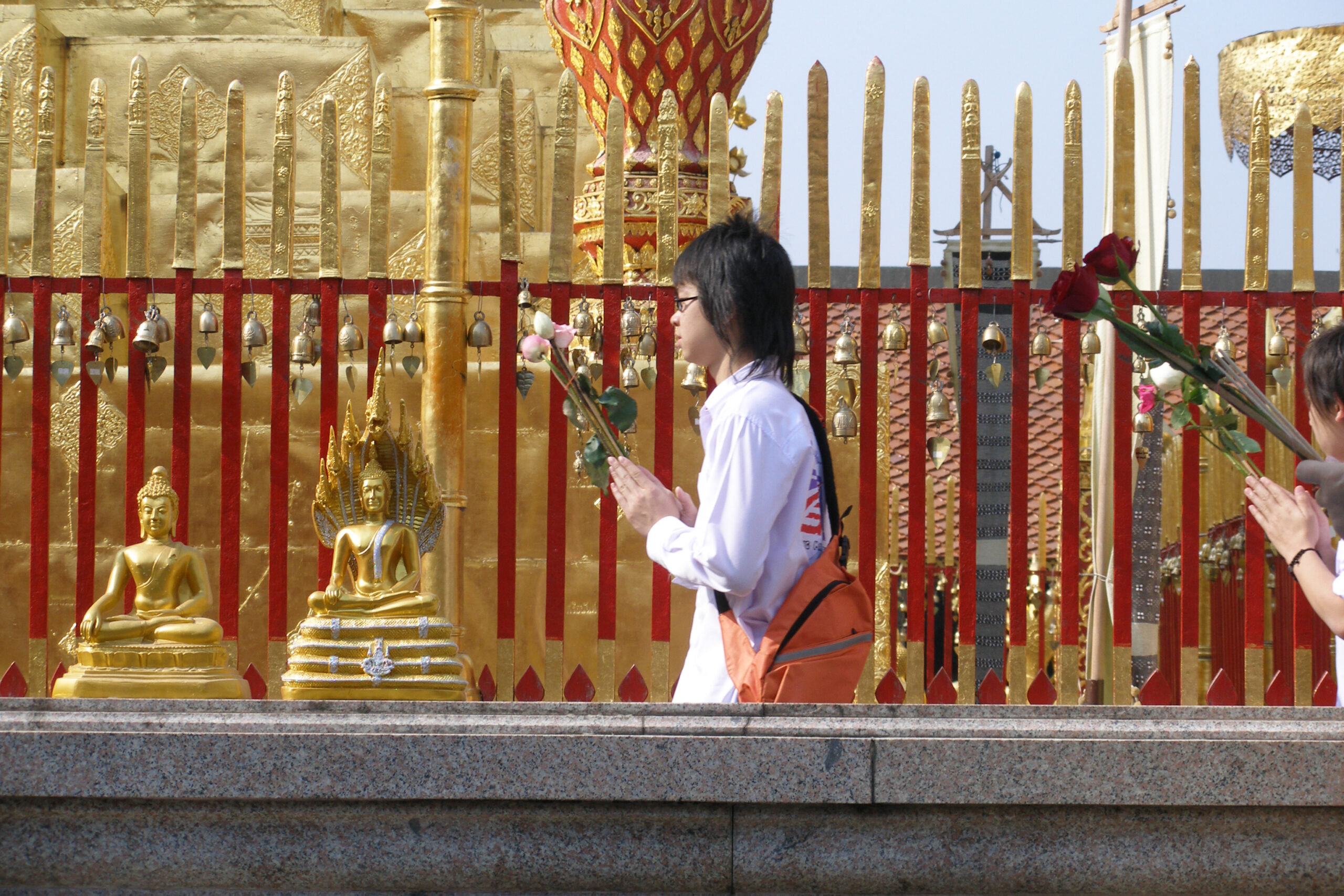
- Temples. Cover your shoulders and knees, no miniskirts or shorts, and take your shoes off before entering buildings. Do not point your feet at Buddha images, and women should not touch monks. A scarf in your daypack to throw over your shoulders comes in handy every day.
- Buddha is not a souvenir. Images of the Buddha are sacred. To export Buddha statues or antiques you need a permit from the Fine Arts Department; without one they will be confiscated at the airport.
- Head and feet. The head is sacred, so do not pat anyone on the head, not even children. Feet are considered unclean: do not put them on tables or point them at people.
- Clothing away from the beach. Going shirtless is for the beach only. In town or in a shop it is considered rude, for men too.
- Alcohol. The legal drinking age is 20. Drinking is banned in temples, parks, government offices, petrol stations and on public transport. Shops and restaurants may sell alcohol only at set times, and between midnight and 11 am you may not drink it where it is sold. The fine is up to 10,000 THB.
- Smoking and litter on beaches. On beaches in tourist areas (Phuket, Krabi, Ko Samui) smoking and dropping litter are banned, with fines of up to 100,000 THB or a year in prison. The case also goes to court, and you are not allowed to leave the country until it is over.
- Cannabis. After a brief period from 2022 when cannabis was sold almost freely in Thailand, cannabis flower has been regulated again since 23 June 2025. According to the Thai government’s official notice, tourists may not buy, possess or use it without a prescription from a Thai-licensed doctor, and even then only a 30-day supply. Do not trust shops with windows full of cannabis; many of them operate outside the law. Penalties for other drugs go up to life imprisonment and the death penalty.
- Shells and coral. Without a permit you may not export any animals or their remains, and that includes shells and coral from the beach.
A few words of Thai will do more for you than any dress code. “Sawasdee” (hello; men add “khrap”, women “kha”), “khop khun” (thank you) and “mai phet” (not spicy, which you will need). Above all, problems in Thailand are solved with a smile and patience. Whoever raises their voice has lost.
Where to stay on a Thailand holiday
Accommodation is one of the areas where Thailand gives you real choice: from a bamboo bungalow on the beach and a guesthouse whose owner will point you to the best soup in the neighbourhood, to resorts with your own villa and pool. Away from the best-known beaches, prices are pleasantly low by UK standards, but by the sea in high season expect them to be much higher. For Christmas and New Year, book months ahead. We cover hotels and neighbourhoods in detail in the guides to individual places; below are the bases that work.
Bangkok. On a first visit we recommend staying near the river or close to the BTS Skytrain and MRT metro, not on the outskirts, from where it can take an hour to reach the centre in traffic. More on the neighbourhoods in our guide to things to do in Bangkok.
- Riva Surya Bangkok: a boutique hotel on the riverfront on Phra Athit Road in Banglamphu, with two pools. You can walk to the river and Khao San Road, and take the boat to the Grand Palace.
- Shanghai Mansion Bangkok: a hotel in a building more than a century old in the Yaowarat Chinatown district, decorated in the style of 1930s Shanghai. In the evening you just step out of the door to eat on the street.
More options: hotels in Bangkok.
Chiang Mai. Stay in the old town inside the walls or near Tha Phae Gate, from where you can walk to the temples and the night markets.
- Tamarind Village: a hotel with a pool and spa among tamarind trees in the old town, within walking distance of Wat Chedi Luang and Tha Phae Gate. Every Sunday the Sunday Walking Street market sets up right outside.
- Raming Lodge Hotel: a more affordable hotel with an outdoor pool, a five-minute walk from the Night Bazaar and Tha Phae Gate.
More options: hotels in Chiang Mai.
Phuket. Choose your hotel by the beach rather than the price, because every beach is different: Patong for nightlife, Kata and Karon for families, Bang Tao and the north for peace and quiet. Our beach-by-beach breakdown is in the guide to things to do in Phuket.
- Katathani Phuket Beach Resort: a large resort on Kata Noi beach in the south-west of the island, with a water park and family rooms. It is about an hour’s drive from the airport.
- Novotel Phuket Kata Avista Resort and Spa: a five-minute walk from Kata beach and close to Karon, with rooms overlooking the sea, the pool or the garden.
- The Slate, Phuket: a design resort by Nai Yang beach in the north of the island, five minutes’ drive from the airport. A good choice for your first or last night.
More options: hotels in Phuket.
Krabi. Ao Nang is the practical base, with restaurants and boats to the islands; Railay is prettier and quieter, but has no road. More in our guide to things to do in Krabi, and for Phi Phi see things to do in Koh Phi Phi.
- Avani Ao Nang Cliff Krabi Resort: a resort right in Ao Nang, where the boats leave for the islands and for Railay.
- Railay Bay Resort & Spa: a resort on the Railay peninsula, which you reach only by longtail boat. In the evening, once the day-trip boats have gone, it is peaceful.
More options: hotels in Ao Nang.
Ko Lanta. Long beaches on the west coast, peace and quiet, and lots of families.
- Pimalai Resort & Spa: a luxury resort on Kantiang Bay in the south of the island.
- Layana Resort & Spa: an adults-only resort for couples who want real peace and quiet.
More options: hotels on Ko Lanta.
Ko Samui. Chaweng is busy and has the longest beach; Bophut, with its former fishing village, is quieter.
- Chaweng Regent Beach Resort: a resort right on Chaweng beach, within walking distance of the action.
- Bandara Spa Resort & Pool Villas, Samui: a resort with three pools and villas a few steps from the beach in Bophut, a five-minute walk from Fisherman’s Village.
More options: hotels on Ko Samui.
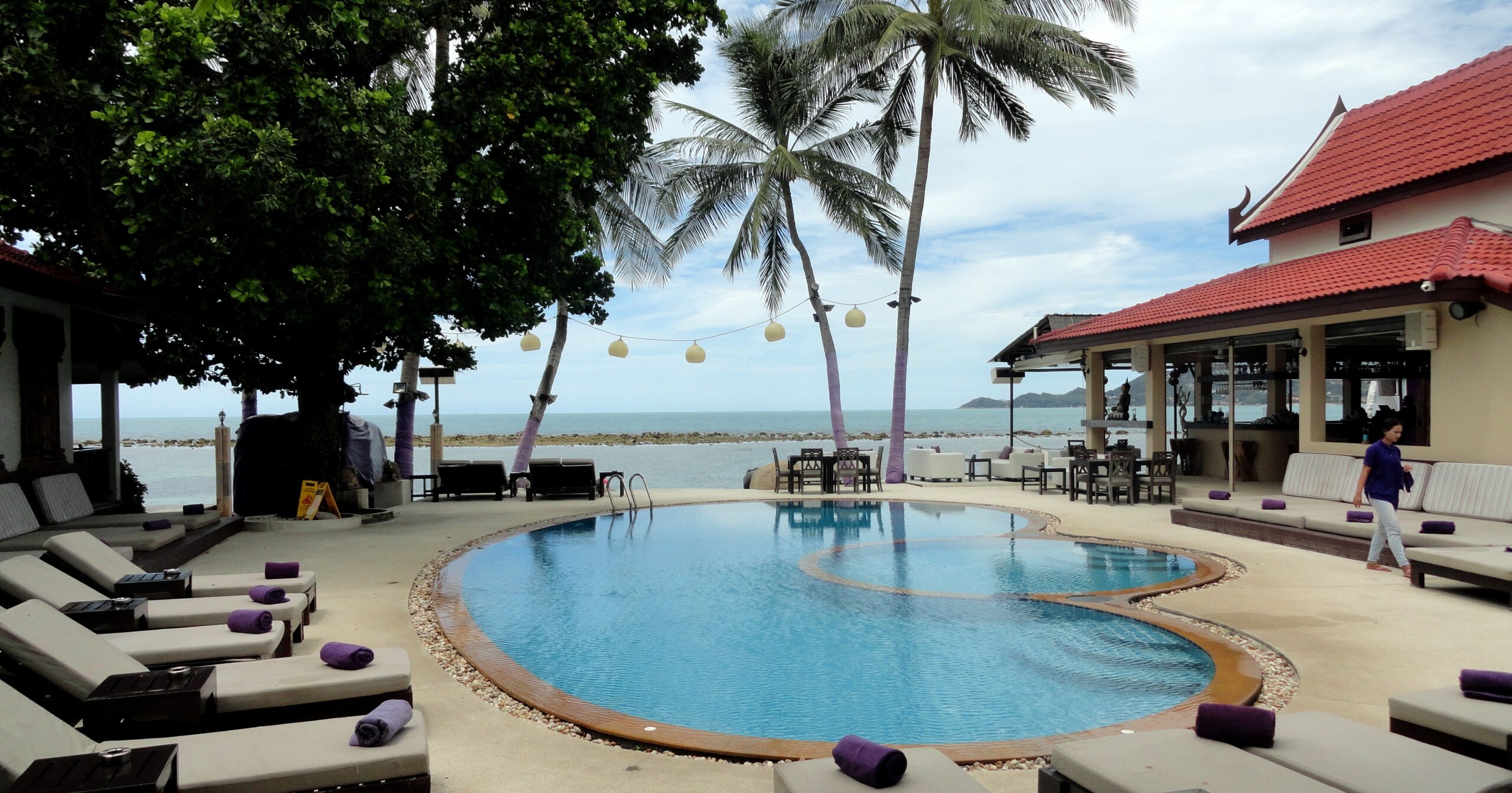
Thailand itineraries: 2 weeks and 3 weeks
Thailand is big, and if you try to squeeze the north, Bangkok, the Andaman Sea and the Gulf into one trip, you will spend your holiday in airports. For two weeks we would therefore pick two regions, for three weeks three. Both routes are designed for December to March, when the whole country is in season.
2 weeks: Bangkok, the north and the Andaman Sea
- Days 1 to 3, Bangkok. Arrival, the Grand Palace, Wat Pho and Wat Arun, Chinatown or a rooftop bar in the evening. Keep one day for Ayutthaya, which you reach by train.
- Days 4 to 7, Chiang Mai. Fly or take the night train. The old town and its temples, Doi Suthep, the night markets, and one day at an ethical elephant sanctuary or the waterfalls. If you like, add a day trip to the White Temple in Chiang Rai.
- Days 8 to 13, Krabi. Fly from Chiang Mai to Krabi or Phuket. Base yourself in Ao Nang or on Railay, do an island-hopping boat trip and spend two days on Ko Phi Phi or Ko Lanta.
- Day 14, home. Fly to Bangkok and on to the UK. Leave a buffer: in high season there are plenty of flights between Krabi and Bangkok, but you do not want to be racing for your long-haul connection.
Summer version for 2 weeks: three days in Bangkok, then fly to Ko Samui or Surat Thani and spend ten days on the Gulf islands (Samui, Ko Pha Ngan, Ko Tao), with the last night back in Bangkok.
3 weeks: the north, Bangkok and the southern islands
- Days 1 to 3, Bangkok and a trip to Ayutthaya.
- Days 4 to 5, Sukhothai. The ruins of the oldest Thai capital, best explored by bike.
- Days 6 to 9, Chiang Mai.
- Days 10 to 11, Pai or Chiang Rai. Pai for a rest in the mountains, Chiang Rai for the temples. Travellers who have done it recommend a minibus rather than a scooter for getting around the north; the road to Pai is long and full of bends.
- Days 12 to 20, the Andaman Sea. Fly to Krabi. Railay or Ao Nang, Ko Phi Phi and finally Ko Lanta, all linked by boat. For the last night you can simply cross over to Phuket.
- Day 21, home via Bangkok.
Where exactly to stay and what to see at each stop is covered in our guides to Bangkok, Krabi, Phuket and Koh Phi Phi. If you plan to carry on around South-East Asia, you can extend the route into neighbouring Malaysia, for example to Langkawi; see our guide to a Malaysia holiday.
A little history
Thailand is the only country in South-East Asia never ruled by a European colonial power. Thais are proud of that, and the word “thai” is usually translated as “free”. Until 1939, though, the country was called Siam, and that is the name Europe knew it by.
The first great Thai kingdom was Sukhothai in the 13th century, whose ruins are now among the most beautiful places in the country. It was succeeded by Ayutthaya, which for more than four hundred years was one of the richest cities in Asia, trading with the Portuguese, the Dutch and the Japanese. In 1767 the Burmese army burned it to the ground. General Taksin then founded a new capital at Thonburi on the banks of the Chao Phraya, and in 1782 his successor Rama I moved it to the opposite bank, to what is now Bangkok. That was the start of the Chakri dynasty, which still reigns today.
Siam kept its independence in the 19th century mainly through diplomacy. It lay between British Burma and Malaya on one side and French Indochina on the other, and both powers found it useful as a buffer. Kings Mongkut and his son Chulalongkorn modernised the country, built railways, abolished slavery and sent princes to study in Europe, but they also had to cede territory to both the British and the French. Absolute monarchy ended in 1932 and Thailand has been a constitutional monarchy ever since, although governments have changed often and the army has taken power several times. The current king, Vajiralongkorn (Rama X), came to the throne in 2016 after his father Bhumibol, who reigned for seventy years.
Knowing this helps explain why there is a portrait of the king in every shop and why insulting the monarchy is punished so harshly. For Thais the king is not just the head of state but the symbol of that unbroken independence.
What we would do differently
Thailand tempts you to do “everything”. It is cheap, well connected, and every island looks better in photos than the last. Next time, though, we would take it slower. Three places in two weeks, not six. Every island-to-island transfer eats up almost an entire day: the transfer to the pier, waiting for the boat, the crossing, another transfer. That is not a recipe for rest.
In our experience the best food in Thailand is found where there is no English menu. Plastic stools, a soup we cannot pronounce, and four little pots of seasoning on the table so you can adjust it yourself. Try dishes you do not know, point at whatever the next table is eating, and do not be afraid of stalls full of locals. You can have pad thai at home.
And you do not have to see everything. You do not have to visit five islands on one boat trip, catch the sunrise on Doi Suthep or tick off every temple in Chiang Mai. Sometimes the best day in Thailand is the one when you put your phone away in the morning, sit down with a coffee by the beach or on the guesthouse veranda, and just watch the longtail boats go by. That, too, is why you fly halfway round the world.
Thailand holiday FAQs
How much does a holiday to Thailand cost from the UK?
It depends mainly on the flight and the type of accommodation. Return fares from the UK vary a lot by season, so book early for November to February. On the ground, independent travellers typically spend 600 to 1,250 baht a night on accommodation (about £13 to £27) and 300 to 600 baht a day on food (about £7 to £13). Two weeks on your own comes to roughly £240 to £340 per person before flights; three weeks at a mid-range level around £750 to £1,200 plus the flight. Package deals for late November and early December are often good value for a single beach stay.
When is the best time for a Thailand holiday?
For most of the country, December to March. That is when the Andaman coast (Phuket, Krabi, Phi Phi, Ko Lanta), Bangkok and the north are dry. The Gulf islands (Ko Samui, Ko Pha Ngan, Ko Tao) get most of their rain from October to December and are better from January to August. That makes Ko Samui the safest bet for a beach holiday in Thailand during the British summer.
Do UK citizens need a visa for Thailand?
Not for a tourist stay of up to 30 days. Since 15 September 2026, British nationals entering under the visa exemption can stay for up to 30 days (previously 60). Before you arrive you must complete the free Thailand Digital Arrival Card (TDAC), no earlier than three days ahead, and your passport must be valid for at least six months after you arrive. You can extend your stay by up to 30 days at an immigration office; for a longer trip you need a visa. Always check GOV.UK before you travel.
What vaccinations do I need for Thailand?
None are compulsory unless you are arriving from a country with a yellow fever risk. TravelHealthPro recommends hepatitis A and an up-to-date tetanus jab for most travellers, and hepatitis B, typhoid, rabies, Japanese encephalitis or dengue for some, depending on the length and style of your trip. A dengue vaccine is now available for people at higher risk. A travel clinic or your GP practice nurse will decide on the right combination for you.
Is Thailand safe for tourists?
Yes, violent crime against tourists is rare. The FCDO advises against all but essential travel within 20 km of the land border with Cambodia and to the southernmost provinces of Yala, Pattani and Narathiwat. The biggest risks for tourists are scooter accidents, jet-ski rental scams, pickpockets and strong currents on the beaches during the rainy season.
Where to go in Thailand with kids?
With children, choose quiet beaches with a short airport transfer: Kata and Karon on Phuket, Khao Lak, Ko Lanta, or Ko Samui in summer. We would avoid busy areas such as Patong or Haad Rin on Ko Pha Ngan with small children. Because of the long flight and the time difference, it is worth going for longer with kids.
How long is the flight to Thailand from the UK?
With one change, typically in the Gulf or Istanbul, the journey takes around 13 to 16 hours. Non-stop flights from London to Bangkok have been offered by some airlines, but schedules change, so check what is running for your dates. From regional airports you will almost always change. Thailand is seven hours ahead of the UK in winter and six hours ahead during British Summer Time.
Where to go in Thailand in December?
In December head for the Andaman Sea: Phuket, Krabi, Phi Phi, Ko Lanta or Khao Lak. The dry weather and calm seas last until March. December is also a good month for Bangkok and the north, where the nights are cooler. Ko Samui and the Gulf islands are less reliable in December, as it still rains a fair amount. For Christmas and New Year, book accommodation and flights months in advance.
Where next
- Best places to visit in Thailand: fifty places region by region, from Bangkok’s temples to the islands. You have the plan, here are the destinations.
- Things to do in Bangkok: what to see in the capital, where to stay, how to get in from the airport and how not to get taken for a ride by tuk-tuk drivers.
- Things to do in Phuket: beaches from Patong to Mai Khao, boat trips and what to watch out for.
- Things to do in Krabi: Ao Nang, Railay, island trips and where to stay in Krabi.
- Things to do in Koh Phi Phi: Maya Bay, ferries, and whether to do a day trip or stay the night.
- Malaysia holiday: if you want to carry on south from Thailand.
Potřebujete pomoct s cestováním?
-
Ubytování 🏨
Vyberte si to nejlepší ubytování, ať už jste kdekoliv, přes Booking.com. -
Půjčení auta 🚗
Auto si snadno najdete přes Booking.com, kde máte často slevu díky ubytování, nebo Rentalcars.com, kde porovnáte nabídky většiny půjčoven. -
Zážitky 🎟️
Přes GetYourGuide.com si vyberete z nejrůznějších výletů i zážitků po celém světě, navíc se zrušením zdarma do 24 h předem.