Last updated 14.11.2026
Most people book a weekend in Kraków or Wrocław for the old town and the food, and only later notice that the city has one of the best zoos in Central Europe a tram ride away. Zoos in Poland are bigger, newer and cheaper than many visitors expect, and two of them have something you won’t find anywhere else nearby: Wrocław’s Afrykarium, an oceanarium devoted entirely to African wildlife, and the Orientarium in Łódź, a huge Southeast Asian complex where you watch elephants swim past a glass wall. Which zoo in Poland is worth your time depends mostly on which city you fly into. We’ve picked twelve that we think justify the trip and added ticket prices from the official price lists, opening times, parking and how each one fits into a city break. Because the same questions about dogs, sharks and the cable car come up again and again, we answer those too.
Zoos in Poland at a glance
- Most rankings name Wrocław as the best zoo in Poland: more than 12,000 animals of over 1,100 species on 32 hectares, plus the Afrykarium with its underwater tunnel. It is also the oldest zoo in the country (1865).
- The largest by area is Gdańsk-Oliwa, with 124 hectares of forest. The biggest “wow” moment is the Orientarium in Łódź, home to what the zoo says is Europe’s largest elephant enclosure.
- Easiest on a city break: Wrocław and Kraków zoos are both inside the city, the Silesian Zoo in Chorzów sits right next to Katowice, and Warsaw Zoo is just across the river from the Old Town.
- Tickets cost between 19 and 99 zł (roughly £4 to £20). The big zoos have separate summer and winter prices, and in winter entry is often about half price.
- Dogs are not allowed in Polish zoos. Wrocław, Opole, Chorzów, Gdańsk and Ustroń all ban them in their visitor rules; only assistance dogs are exempt. Older articles online that say otherwise are out of date.
- There is no dolphinarium in Poland. For sharks and rays, go to the Afrykarium, the Orientarium or the Wodny Świat aquarium in Opole.
- The zoo with a cable car is Chorzów: the Elka gondola in Silesian Park (Park Śląski) runs straight over the enclosures and the Dinosaur Valley.
- Most big zoos are open every day of the year, but in winter they close at 3 or 4 pm, and the ticket offices an hour earlier.
Zoos in Poland: 12 worth travelling for
We’ve grouped them roughly by the airport you’re likely to use, starting in the south-west (Wrocław, Silesia, Kraków), then moving to central Poland and Warsaw, and ending in the north and east. This isn’t a ranking. Prices are taken from the zoos’ official price lists; the pound figures are only a rough guide (1 zł ≈ £0.20). If you’re driving, allow extra time on Friday afternoons on the A4 motorway around Wrocław and Katowice.
1. Wrocław Zoo and the Afrykarium
If Poland could keep only one zoo, it would be this one. According to the zoo, more than 12,000 animals of over 1,100 species live on its 32 hectares just east of Wrocław city centre, which is more species than any other zoo in the country. It was founded in 1865 and celebrated its 160th anniversary in 2025.
The main reason most visitors come, though, is the Afrykarium, an oceanarium dedicated solely to Africa. The route takes you from the Red Sea to the Mozambique Channel, where an acrylic tunnel runs beneath sharks, rays and a sea turtle, then along the “Skeleton Coast” with African penguins and fur seals, and finally into the Congo rainforest with Nile crocodiles and manatees. Some 15 million litres of water circulate through the tanks and pipes, about as much as six Olympic swimming pools, and the building has almost 9,000 m² of usable floor space. You can even sleep in the tunnel: the zoo sells paid overnight stays in the Afrykarium.
Outside the Afrykarium, look out for the historic elephant house, the Terai pavilion with orangutans and Indian rhinos, Madagascar with its lemurs, the Odrarium with fish from the Oder river, and the butterfly house. Our advice is to do the Afrykarium first thing, before the tunnel fills up, and then wander the rest of the zoo without a plan.
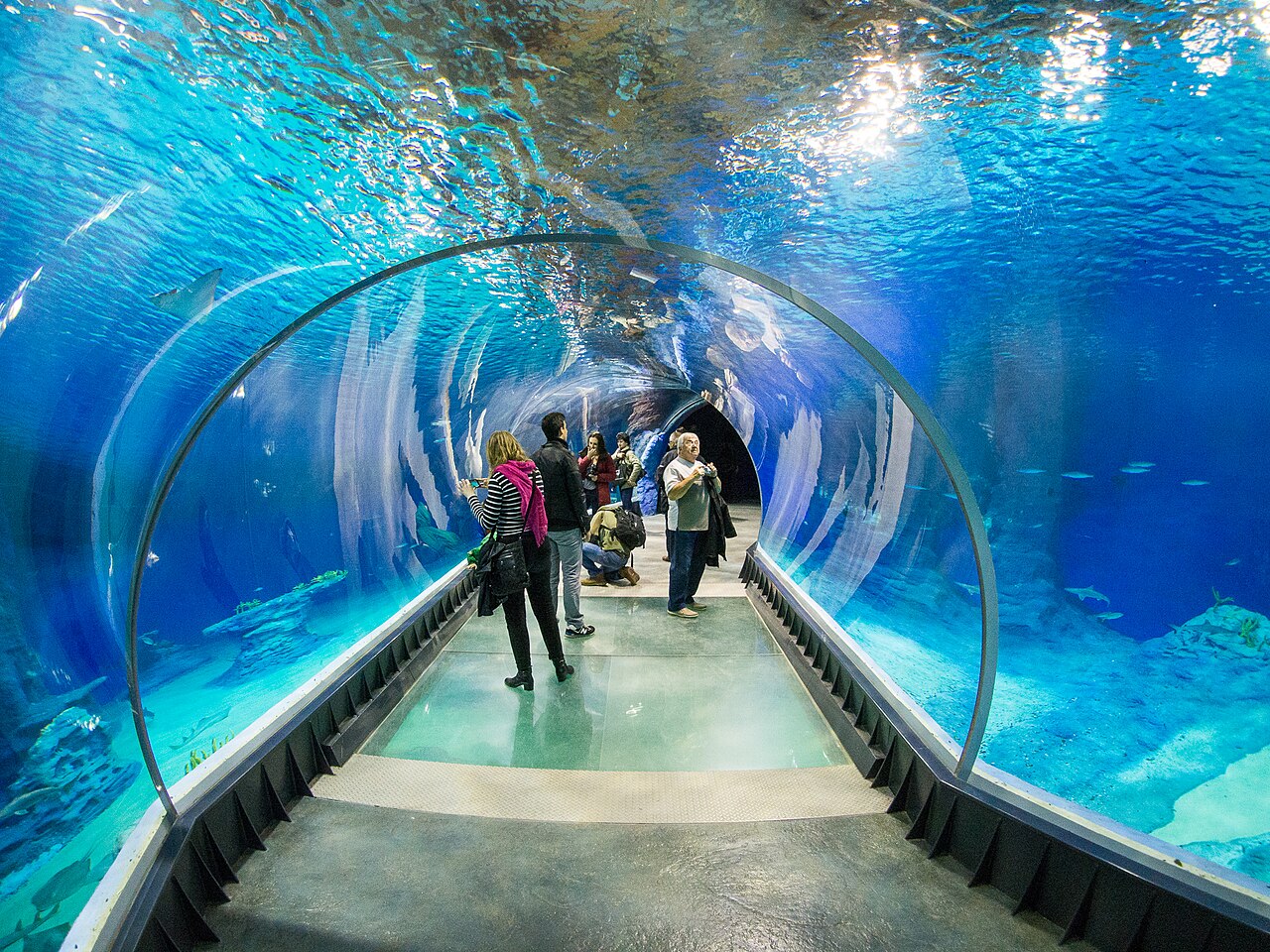
Tickets: Wrocław uses dynamic pricing. A standard ticket costs from 69 zł online (about £14) and 99 zł at the gate (about £20). Reduced tickets for children aged 3 to 7 are from 59 zł online and 89 zł at the gate. A family ticket for two adults and two children is from 225 zł online (about £44) and 329 zł at the gate (about £65). You can add a voluntary 2 zł per ticket for the DODO foundation, which supports more than 30 conservation projects. Children under 3 and seniors aged 75 and over get in free. The ticket includes the Afrykarium. Buying online really does pay off here: a family saves over a hundred złoty.
Opening times: April to September 9:00 to 18:00 on weekdays and until 19:00 on Fridays, weekends and public holidays. In March and October until 17:00 and 18:00 respectively, and from November to February until 16:00. Ticket offices close an hour before the grounds, and the pavilions a quarter of an hour before.
Getting there and parking: the zoo has no car park of its own. Opposite, by the Centennial Hall (Hala Stulecia, a UNESCO World Heritage Site), there’s a paid underground car park with more than 800 spaces, three minutes’ walk from the zoo via a footbridge. From the main railway station, take bus 145 or 146 or tram 2. If you’re flying in, Wrocław airport is on the western edge of the city, so the zoo works well even on a short weekend.
How long to allow: a full day. With small children we wouldn’t try to see every enclosure and would save most of the energy for the Afrykarium.
2. Opole Zoo on Bolko Island
Opole is a small zoo that regularly gets called the “prettiest” in Poland by people who have done the rounds. It sits on Bolko Island between two arms of the Oder and covers about 19 hectares. Instead of wide avenues, narrow paths, little bridges over the water and steps lead between the enclosures, so it feels more like a botanical garden than a zoo. The animals are arranged by zoogeographical region, and several enclosures house more than one species together. Opole was the first zoo in Poland to keep California sea lions (their pool opened in 2007), and their feeding at 13:00 is the highlight of the day for most children.
The zoo has had a turbulent history. It opened to the public in 1936, disappeared during the war, was revived in 1953 and in 1997 was so badly damaged by flooding that much of it had to be rebuilt. The newest addition is the Wodny Świat (Water World) aquarium, with fish from the Amazon and the Congo, rays and sharks. It was built as part of a joint Czech-Polish project with a zoo just across the border, and entry costs 46 zł.
For us, Opole is the best compromise for families: enough animals to fill a day, but not so many that the children are exhausted by lunchtime.
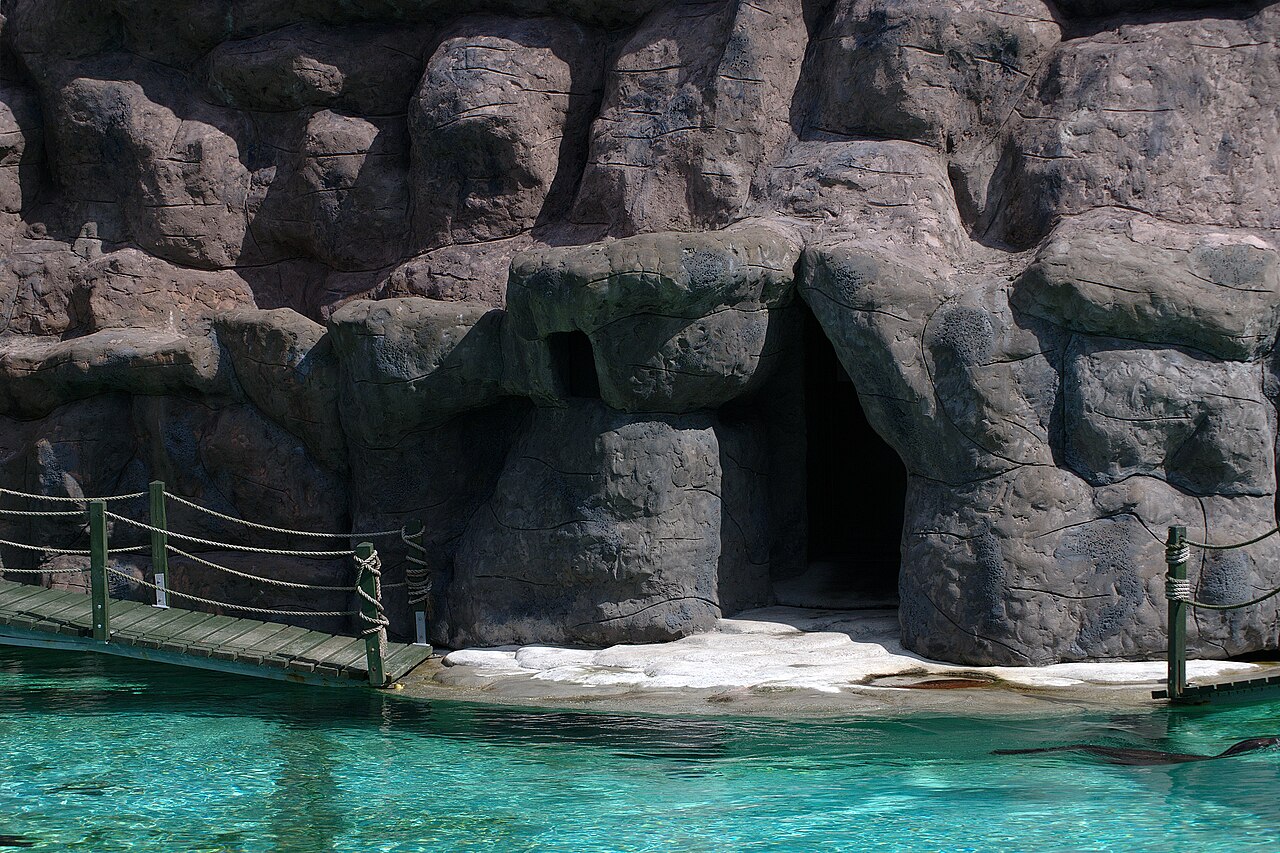
Tickets: standard 46 zł (about £9), reduced 35 zł (about £7), family ticket (at least 3 people, no more than 2 of them adults) 38 zł per person. The Zoolandia rope park for children aged 3 and up is paid separately.
Opening times: every day, all year. From May 9:00 to 18:00, from March and from October 9:00 to 16:00, from December 9:00 to 15:00. These times apply to the ticket offices; you can stay in the grounds for another hour after they close.
Getting there: Opole lies about an hour east of Wrocław along the A4 motorway, so it makes an easy second day on a Wrocław trip. Katowice airport is the other sensible option.
How long to allow: 4 to 5 hours.
3. Silesian Zoo in Chorzów (Śląski Ogród Zoologiczny)
If you’re flying into Katowice, this is your zoo. It lies inside the vast Silesian Park (Park Śląski) on the border between Chorzów and Katowice, a green space created in the 1950s on reclaimed former mining land. The zoo covers around 50 hectares, opened in 1958 and welcomed more than half a million visitors in its very first year. It feels more like a large park with mature trees and ponds than a modern concrete zoo, and some of the pavilions are showing their age. In recent years, though, it has added new enclosures for giraffes, tigers, rhinos, cheetahs and crocodiles, as well as a house for Humboldt penguins.
The thing children actually come for is the Dinosaur Valley (Kotlina Dinozaurów), built in the 1970s. It holds 16 life-size models of seven species, sculpted from fossil skeletons found by a Polish palaeontological expedition in the Gobi Desert. When the models were made, they were the first reconstructions ever of these newly described species.
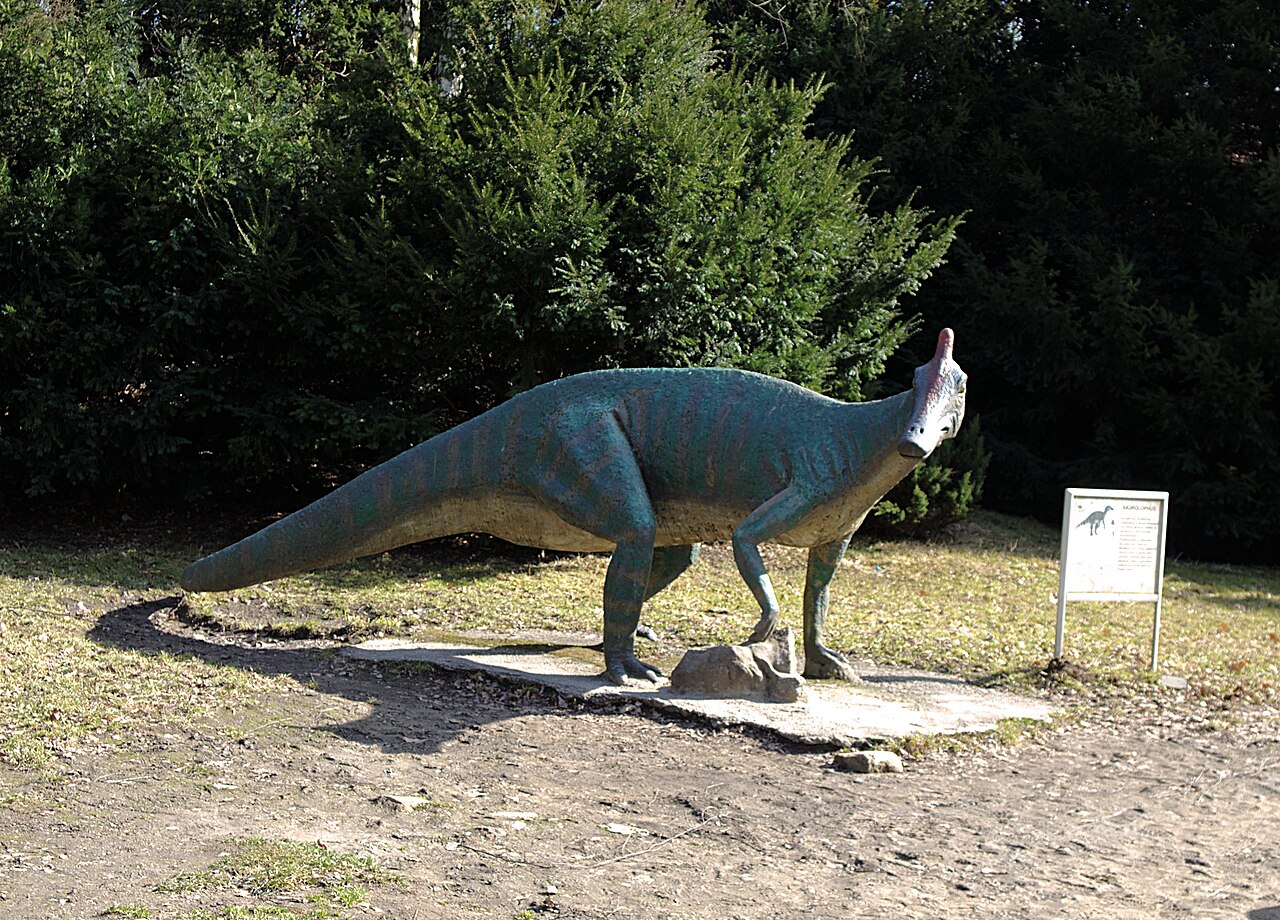
Now for the cable car everyone asks about. The zoo itself doesn’t have one, but the Elka gondola and chairlift runs across Silesian Park. Its second section, from the funfair to the Planetarium (1,840 metres, about 15 minutes), passes directly over the zoo enclosures and the Dinosaur Valley. It’s the best view of the whole zoo, and children often enjoy it almost more than the zoo itself.
Tickets: in the summer season 40 zł (about £8), reduced 20 zł, family ticket for two adults and two children 110 zł. From 2 November 2026 to 28 February 2027 the winter price of 19 zł per person applies (about £4), which makes Chorzów the cheapest big zoo in Poland in winter.
Opening times: May to September 9:00 to 19:00; April and October 9:00 to 17:00 on weekdays and until 18:00 at weekends; November to March 9:00 to 16:00. Ticket offices and the entrance close an hour before closing time. The zoo is closed on 1 November and on 24 and 31 December.
Parking: the zoo has no car park of its own. The nearest are the Silesian Park car parks in the ZŁOTA zone and on Złota street on the Katowice side.
Getting there: Chorzów and Katowice have grown into each other, so the zoo is only a short drive or tram ride from central Katowice. Katowice airport (Pyrzowice) is north of the city, and Kraków is close enough to combine the two on a longer trip.
How long to allow: the zoo says at least an hour; realistically 3 to 4 hours. You can easily spend the rest of the day in the park, which also has the Legendia amusement park, the Planetarium, an open-air museum and a water playground.
4. Leśny Park Niespodzianek in Ustroń
This isn’t a classic zoo but a forest park on a hillside above the spa town of Ustroń in the Silesian Beskids, in Poland’s far south. The animals here are mainly native woodland species, owls and birds of prey, and the biggest draw is the flying displays. In summer the birds of prey fly at 11:00, 14:00 and 16:00 and the owls at 12:00 and 15:00; in winter there are fewer shows. For small children there’s a fairy-tale path with moving scenes and a playground. It works best for families who are already in the mountains, or as a half-day trip from Katowice or Kraków.
Tickets: summer prices (April to the end of October) on weekdays 50 zł for adults (about £10) and 40 zł for children aged 3 to 18; at weekends and on public holidays 60 and 50 zł. The displays are included and parking is free.
Opening times: all year, 9:00 to 18:00 in season and 10:00 to 16:00 in winter.
How long to allow: half a day. It combines well with the mountain resort of Wisła a little further up the valley, or with an afternoon walk in the Beskids.
5. Kraków Zoo in Las Wolski
Kraków’s zoo sits on a hill in the Las Wolski forest park on the western edge of the city, and it’s the only big Polish zoo where the shade keeps you cool even in August. On 20 hectares it keeps around 1,500 animals of more than 270 species, over a hundred of which are endangered. The headline residents are Indian elephants, lions, jaguars, red pandas and sea lions. The newest feature is a treetop walkway linking three aviaries near the main entrance, from where you can watch sloths and small monkeys. There’s also a petting zoo for children.
In size it can’t compete with Wrocław or Łódź, and we see it more as a half-day add-on to a Kraków city break than as a destination in its own right. But if you’re in Kraków anyway with children, it’s an easy and pleasant morning away from the crowds in the Old Town.
Tickets: from 1 April to 31 October 48 zł (about £9.50), reduced 40 zł, family ticket for two adults and two children 160 zł. From November to March 46 zł, reduced 38 zł, family 152 zł. Seniors aged 70 and over pay 30 zł on weekdays.
Opening times: daily; in the winter season the ticket office is open 9:00 to 15:00 and you can stay until 16:00. Longer hours in summer.
Parking and getting there: worth knowing in advance. Right by the gate there’s a small car park for just 35 cars at 30 zł, and at weekends and on public holidays cars aren’t allowed into Las Wolski at all. The larger car park (480 spaces) is at Łysa Góra on Kukułcza street, about a kilometre from the zoo: 5 zł an hour on weekdays, 25 zł for 5 hours at weekends. Part of it is a park-and-ride (32 zł for 5 hours) that includes a return bus to the zoo for up to 7 people. Without a car, take bus 134 from the Cracovia stadium, which is within walking distance of the Old Town.
6. Orientarium Zoo Łódź
For a long time Łódź had a fairly average zoo, until in 2022 it opened the Orientarium, a complex devoted to Southeast Asia that the zoo describes as the most modern in Europe. The enclosures and aviaries cover an area of roughly ten football pitches, are home to 35 species of land animals and 180 species of fish, and let you watch the animals from three angles: underwater, at ground level and from above. The Indian elephants have a 2,000 m² enclosure with a pool, according to the zoo the largest in Europe, and through a glass wall you can watch them swimming below the surface. The first resident was Aleksander, an elephant from Münster born in 1978 and, says the zoo, the oldest and largest elephant of his kind in Europe.
The aquariums hold 3 million litres of water, with a shark and ray tunnel running through the middle. Beyond the Orientarium there’s the rest of the zoo: more than 5,000 animals of over 625 species in total, including several you won’t see anywhere else in Poland, such as giant otters, Sumatran orangutans and false gharials. Asiatic lions were brought here in 1996, the first in Poland.
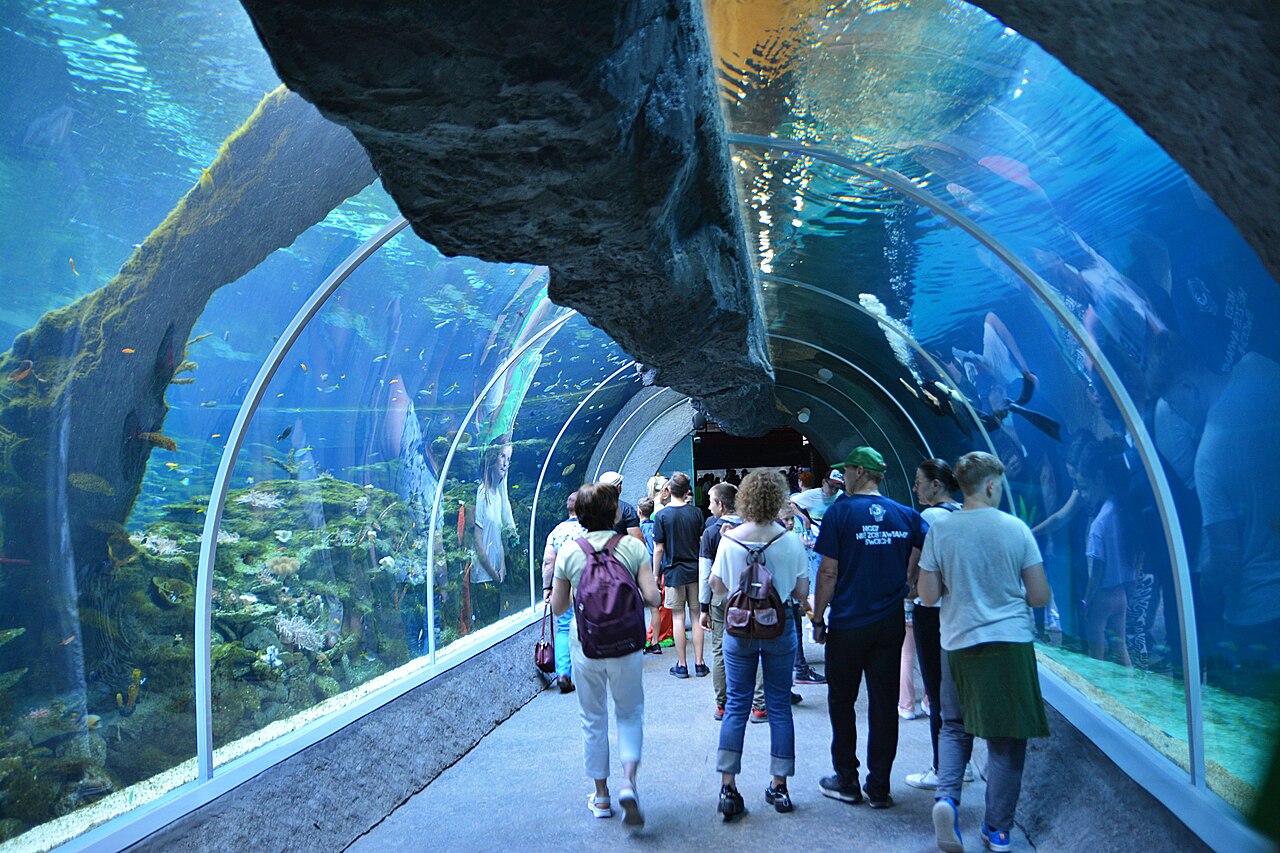
If we had to cross half of Poland for a single exhibit, this would be it. The Afrykarium is beautiful, but the Orientarium is bigger, and you won’t see elephants underwater anywhere else.
Tickets: normally 90 zł (about £18), but since 12 October 2026 a seasonal offer has been running until further notice: a flat 69 zł (about £14) for adults and children from age 3, with the ticket valid until 15 April 2027. Children under 3 go free. An annual pass costs 300 zł.
Opening times (winter): the Orientarium building 9:00 to 17:00, last entry 16:00; the outdoor area until 15:30. At weekends the zoo warns of queues of around 30 minutes at the entrance; with an online ticket you go straight to the turnstiles.
Parking: five car parks, the largest with 260 spaces. The zoo recommends the one by Atlas Arena, from where a free electric shuttle takes you to the entrance.
Getting there: Łódź is in the middle of the country, so most visitors from abroad come via Warsaw, either by train or by car. It’s too far for a quick detour, but a night in Łódź makes an ideal weekend in its own right.
7. Zoo Safari Borysew
This privately run safari zoo in the village of Borysew near Poddębice, about 45 kilometres west of Łódź, works well as a second day after the Orientarium. It’s smaller and more family-oriented: white tigers and white lions, giraffes, lemurs, a water world with alligators, a petting zoo with ponies and a covered roller coaster from which you can watch the animals even when it rains. Some attractions, such as the 7D cinema, cost extra.
Tickets: standard 75 zł (about £15), reduced for children from age 3 62 zł, family tickets 11% cheaper. In winter the zoo sells a winter ticket for 60 zł for everyone aged 3 and up. Parking costs 20 zł per day.
Getting there: you’ll need a car. From Łódź it’s a short drive west, which is why we’d always pair it with the Orientarium.
8. Warsaw Zoo
Warsaw Zoo lies on the right bank of the Vistula in the Praga district, a short walk from the Old Town across the Gdański Bridge. It opened on 11 March 1928 and today bears the names of Antonina and Jan Żabiński. During the war, director Jan Żabiński and his wife hid Jews who had escaped from the ghetto in their villa on the zoo grounds and in empty animal houses, a story the world knows from the 2017 film The Zookeeper’s Wife. The Żabiński Villa is now a museum that can only be visited on a guided tour, so book ahead.
The main animal attractions are elephants, hippos, gorillas and chimpanzees, and the zoo is preparing a new polar bear enclosure with glass-walled pools so you’ll be able to watch them underwater. We wouldn’t travel to Warsaw for the zoo alone, but as an afternoon on a city weekend it’s excellent, and for anyone who has seen the film the villa is the real reason to come.
Tickets: April to September 45 zł (about £9), reduced 35 zł, family 35 zł per person (at least 3 people). October to March 35 zł, reduced 30 zł, family 30 zł per person.
Opening times: daily from 9:00. Until 16:00 in January, February, November and December; until 17:00 in March and October; until 18:00 in April and September; and from May to August until 18:00 on weekdays and 19:00 at weekends. With a valid zoo ticket you can park for free at the Galeria Wileńska shopping centre.
Getting there: from central Warsaw you can walk or take a tram across the river. Warsaw Chopin Airport has the widest choice of flights in Poland, which also makes the city a good base for Łódź and Płock.
9. Nowe Zoo Poznań (and the free Old Zoo)
Poznań has two zoos. The Old Zoo (Stare Zoo) in the centre, on Zwierzyniecka street, dates from 1874; it’s small, historic and free to enter. The New Zoo (Nowe Zoo) on the eastern edge of the city by Lake Malta is the opposite: one of the largest zoos in Poland by area, with more than a hundred hectares of woodland and a little train running through it. Expect big enclosures, an elephant house and a sanctuary for bears rescued from circuses and poor conditions. If you like long walks in the woods you’ll be happy here; with small children, use the train.
Tickets: from March to the end of October 45 zł on weekdays (about £9), reduced 30 zł, family 80 zł. At weekends and on public holidays 55 zł, reduced 35 zł, family 115 zł, and on 1 and 3 May, Corpus Christi and 15 August as much as 60 zł. From November to the end of February a ticket costs 20 zł for everyone and a family ticket 35 zł. Children under 3 go free.
Opening times: 9:00 to 16:00 in winter, up to 19:00 in summer. The large car park 150 metres from the gate is paid from April to October and free in winter.
Getting there: Poznań has its own airport, and the zoo is easy to combine with the Termy Maltańskie thermal baths on the same lake.
10. Płock Zoo on the Vistula
A little-known but rewarding zoo on the high bank of the Vistula in Płock, about 120 kilometres north-west of Warsaw. The zoo says it keeps more than 580 species, including a number of rare ones you won’t find elsewhere in Poland. The view from the escarpment over the river is a bonus. It’s a long way to come just for the zoo, but if you’re driving from Warsaw towards Toruń and the Baltic coast, it’s a good stop.
Tickets: standard 45 zł (about £9), reduced 35 zł.
Opening times: 9:00 to 16:00 in winter.
11. Gdańsk-Oliwa Zoo
The largest zoo in Poland by area: 124 hectares in a wooded valley of the Tricity Landscape Park in Gdańsk’s Oliwa district. It was founded in 1954 and has more than 500 mammals of 66 species, plus birds and reptiles. You’ll see giraffes, rhinos, hippos, Bornean orangutans and Andean condors, and the zoo takes part in conservation programmes for the lynx, the grey seal and the scimitar oryx. The enclosures are large and the paths long, so even in August it feels like a quiet walk in the forest.
For us it’s the perfect plan for a rainy day by the sea. For ideas on where to go on the Baltic coast, see our guide to the Polish seaside.
Tickets: April to September 45 zł (about £9), reduced 35 zł, family 140 zł. October to March 30 zł, reduced 20 zł, family 90 zł. You can pay by card or cash, and no booking is needed.
Opening times: daily, all year. In January and February only 9:00 to 15:00 (ticket offices until 14:00), from April until the evening. The car park is on Karwieńska street, about 300 metres before the entrance.
Getting there: Gdańsk airport is on the western edge of the city, so the zoo is a good fit for a Gdańsk city break or a seaside holiday on the Baltic.
12. Zamość Zoo
The easternmost entry on our list, in a town that is itself a UNESCO World Heritage Site as a Renaissance “ideal city”. The zoo is named after Stefan Miler, a grammar school teacher who in 1918 set up a small nature garden measuring 20 × 12 metres with his students. It grew into one of the oldest zoos in Poland. Today it’s medium-sized and pleasantly quiet.
Tickets: 50 zł (about £10), reduced 40 zł, children under 3 pay 1 zł. The main car park on Szczebrzeska street is free.
Opening times: April to September 9:00 to 18:00, March and October until 16:00, November to February until 15:00. You can stay in the grounds for an hour and a half after the ticket offices close. Closed on 1 January and 25 December.
Getting there: it only makes sense as part of a trip around eastern Poland, for example with Lublin (the nearest airport) and Kazimierz Dolny.
Other zoos and animal parks in Poland
They didn’t make our main list, but they do appear in other rankings: Bałtowski Zwierzyniec in Bałtów (a safari you drive through in an American school bus, part of the JuraPark complex), the animal park at Adventure Park Wilkowice near Bielsko-Biała (seasonal, with animal feeding), the Polish wildlife garden in Bydgoszcz in the Myślęcinek forest park, and Legnica Zoo in Lower Silesia. We haven’t checked their prices and opening times, so look them up on their websites before you go.
Zoos in Poland compared
Prices are for a standard adult ticket in the main season, with the winter price in brackets where it differs. The airport column shows the most convenient airport, not necessarily the closest one with flights from your home town.
| Zoo | Adult ticket | Nearest airport | Best combined with | Main draw |
|---|---|---|---|---|
| Wrocław | online from 69 zł, gate 99 zł (£14–20) | Wrocław | Wrocław city break | Afrykarium, most species in Poland |
| Opole | 46 zł (£9) | Wrocław or Katowice | Wrocław (1 h on the A4) | Bolko Island, sea lions, Wodny Świat |
| Chorzów | 40 zł (winter 19 zł) | Katowice | Katowice, Silesian Park | Dinosaur Valley, Elka cable car |
| Ustroń (Leśny Park Niespodzianek) | 50–60 zł | Katowice or Kraków | Beskid mountains, Wisła | birds of prey and owls, flying displays |
| Kraków | 48 zł (winter 46 zł) | Kraków | Kraków city break | zoo in the woods, treetop walkway |
| Łódź (Orientarium) | 69 zł offer, otherwise 90 zł | Warsaw or Łódź | weekend in Łódź | underwater elephants, shark tunnel |
| Borysew | 75 zł (winter 60 zł) | Warsaw or Łódź | Orientarium in Łódź | white tigers and lions, family safari |
| Warsaw | 45 zł (winter 35 zł) | Warsaw | Warsaw city break | Żabiński Villa |
| Poznań (Nowe Zoo) | 45–55 zł (winter 20 zł) | Poznań | Termy Maltańskie | forest by Lake Malta, little train |
| Płock | 45 zł | Warsaw | drive from Warsaw to the north | 580 species, views over the Vistula |
| Gdańsk-Oliwa | 45 zł (winter 30 zł) | Gdańsk | Baltic coast, Tricity | largest area (124 ha) |
| Zamość | 50 zł | Lublin | Lublin, Kazimierz Dolny | history since 1918, UNESCO town |
Which zoo in Poland for which city break
Most visitors from the UK come to Poland for a long weekend in one city, not on a zoo tour. So here’s the short version, depending on where you land:
- Kraków: Kraków Zoo in Las Wolski for a relaxed half day. If you have a car and an extra day, the Silesian Zoo in Chorzów or the bird-of-prey park in Ustroń are within reach.
- Katowice: the Silesian Zoo in Chorzów for a full day, with the Elka cable car, the Planetarium and the Legendia amusement park next door. Ustroń makes a good half-day trip into the mountains.
- Wrocław: Wrocław Zoo and the Afrykarium, the best combination of a great city and a great zoo in Poland. Opole is about an hour away if you have a second day.
- Warsaw: Warsaw Zoo and the Żabiński Villa in the city, the Orientarium in Łódź as a day trip or an overnight stay, and Płock on the way north.
- Gdańsk and Poznań: both have big forest zoos that are best on a day when the weather or the children need a change of plan.
Most of these cities have airports with flights from the UK, but routes and frequencies change from season to season, so check current schedules before you plan the trip around a particular zoo.
💡 Wrocław and Opole in one weekend. Fly into Wrocław, spend Saturday morning in the Afrykarium and the evening in the Old Town hunting for the bronze dwarfs. On Sunday morning, drive an hour along the A4 to Opole and finish with the sea lions before heading back to the airport. Don’t try two big zoos in a single day: the children won’t manage it, and neither will you.
Practical tips for visiting a zoo in Poland
Dogs. Dogs are not allowed in Polish zoos. Wrocław, Opole, Chorzów, Gdańsk and Leśny Park Niespodzianek all ban dogs and other pets in their visitor rules; the only exception is certified assistance dogs. Some older articles claim that dogs on a lead and wearing a muzzle are allowed in Chorzów and Gdańsk. According to the current rules, that’s no longer the case.
Sharks and dolphins. A zoo in Poland with sharks means the Afrykarium in Wrocław, the Orientarium in Łódź and the smaller Wodny Świat in Opole. There is no dolphinarium anywhere in Poland.
Cable car. The only zoo with a cable car running over it is Chorzów (the Elka line in Silesian Park, on the section between the funfair and the Planetarium). There’s no cable car at Wrocław or Kraków zoo.
Online tickets. In Wrocław you save up to 30 zł per person by buying online, and in Łódź you skip the queue. Watch out for fake websites: Wrocław Zoo explicitly warns on its site about scam pages selling non-existent tickets. Only buy through the link on the zoo’s official website.
Winter. Polish zoos are open all year, and in winter tickets are often about half price (Chorzów 19 zł, Poznań 20 zł). Big indoor pavilions such as the Afrykarium and the Orientarium are heated, so a winter trip makes sense, especially combined with one of the Christmas markets in Poland. Just remember that the gates close at 3 or 4 pm.
Paying. You can pay for tickets, parking and food by card everywhere. A few złoty in cash are handy for vending machines and small attractions. Poland uses the złoty, not the euro, and visitors from the UK need a passport.
Feeding times. All the big zoos have talks at feeding time, and the times are posted at the entrance and on the website. In Opole: sea lions at 13:00, gorillas at 12:30. For children this is often the best part of the day, so plan your route around it.
How to combine a zoo with a city trip
The zoo is the highlight for children, but adults usually get more out of the city around it:
- Wrocław: the zoo is next to the Centennial Hall (UNESCO), the Japanese Garden and Szczytnicki Park, and the Market Square with its dwarfs is twenty minutes away by tram. For what to see in the city, read our guide to things to do in Wrocław.
- Chorzów: the Legendia amusement park is right inside Silesian Park, along with the Planetarium and the Silesian open-air museum.
- Kraków: zoo in the morning, Wawel Castle after lunch, then a swim or a walk at the Zakrzówek quarry lake. For more ideas around the country, see what to see in Poland.
- Poznań and Wrocław: both zoos are close to big water parks and thermal baths; our picks are in water parks in Poland.
- Gdańsk: the zoo is your back-up plan for a rainy day by the sea.
Where to stay
For Wrocław, Katowice or Łódź we’d plan at least one night, so you’re not rushing the zoo to make the flight home. Here are a few hotels we’ve checked in the two most popular bases.
Wrocław:
- PURO Wrocław Stare Miasto: a modern hotel a short walk from the Market Square, ideal if you want to head out into town in the evening.
- Novotel Wrocław Centrum: a large chain hotel south of the centre, a practical base if you’ve hired a car.
- Haston City Hotel: a cheaper option in the north-east of the city.
More options: hotels in Wrocław.
Chorzów and Katowice:
- Hotel Diament Arsenal Palace: in Chorzów, the closest of the three to Silesian Park.
- Novotel Katowice Centrum: in central Katowice, a few minutes’ drive from the zoo.
- Hotel Monopol: a historic hotel in the centre of Katowice for those who want an evening in town.
More options: hotels in Chorzów.
Łódź: if you’re coming for the Orientarium, you can stay at Vienna House by Wyndham Andel’s Lodz, set in a former textile mill next to the Manufaktura shopping and cultural centre; the zoo is about ten minutes away by car.
A short history of Polish zoos
The oldest zoo on what is now Polish territory is Wrocław. It opened in 1865, when the city was part of Prussia and called Breslau, and was one of the oldest zoos in the German-speaking world. It was badly damaged during the siege of the city in 1945 and was rebuilt by Polish Wrocław after the war. It became famous thanks to Hanna and Antoni Gucwiński, a married couple who ran the zoo for more than thirty years and for decades presented a television programme about animals that several generations of Poles grew up with.
Around the same time, other zoos were starting from nothing. In Zamość, Professor Stefan Miler and his students set up a nature garden the size of a living room in 1918, and in Opole a corner of a private park on Bolko Island became the municipal zoo in 1936. Warsaw Zoo opened in 1928, and during the occupation its director Jan Żabiński and his wife Antonina hid people who had escaped from the ghetto in their villa and in empty animal houses. Both are now recognised as Righteous Among the Nations.
After the war came a wave of large socialist-era projects. The Silesian Zoo in Chorzów grew from the mid-1950s on disused mining land as part of Silesian Park, a project pushed through by the regional governor Jerzy Ziętek, and it replaced two smaller zoos in Bytom and Katowice. Gdańsk-Oliwa was founded in 1954 in the forest outside the city, and in the 1970s Poznań moved its animals from the cramped centre to the woods by Lake Malta. The latest chapter is the huge investment of recent years: the Afrykarium (2014), the Orientarium (2022) and the aquarium in Opole show that Polish zoos can now stand comparison with the best zoos in Germany.
FAQs about zoos in Poland
What is the best zoo in Poland?
Most comparisons name Wrocław Zoo. It’s the oldest in the country (1865), keeps more than 12,000 animals of over 1,100 species and has the Afrykarium with its underwater tunnel. As a single exhibit, we were even more impressed by the Orientarium in Łódź. For families with younger children, Opole is the most pleasant.
What is the biggest zoo in Poland?
By area, Gdańsk-Oliwa Zoo with 124 hectares. Second is the Nowe Zoo in Poznań, with more than a hundred hectares of forest by Lake Malta. Wrocław has the most animal species.
Is there a zoo in Kraków, and is it worth visiting?
Yes. Kraków Zoo is in the Las Wolski forest park on the western edge of the city, with around 1,500 animals of more than 270 species, including Indian elephants, lions and red pandas. It’s smaller than Wrocław or Łódź, so plan it as a half-day trip; bus 134 runs there from the Cracovia stadium. For a bigger zoo, the Silesian Zoo in Chorzów near Katowice is the nearest alternative.
Can I take my dog to a zoo in Poland?
No. Wrocław, Opole, Chorzów, Gdańsk and Leśny Park Niespodzianek all prohibit dogs and other animals in their visitor rules. The only exception is certified assistance dogs. Older information saying that dogs on a lead and wearing a muzzle are allowed in Chorzów or Gdańsk no longer applies under the current rules.
Which zoo in Poland has sharks?
The Afrykarium in Wrocław and the Orientarium in Łódź. Both have an underwater tunnel where you walk beneath sharks and rays. Opole Zoo also has a smaller aquarium with sharks. There is no dolphinarium in Poland.
Which zoo in Poland has a cable car?
The Silesian Zoo in Chorzów. The Elka gondola runs across Silesian Park, and its section between the funfair and the Planetarium passes directly over the zoo enclosures and the Dinosaur Valley. The zoo doesn’t own the cable car, and you pay for it separately.
How much is a ticket to Wrocław Zoo?
A standard ticket costs from 69 zł online (about £14) and 99 zł at the gate (about £20); a family ticket for two adults and two children is from 225 zł online. Children under 3 and seniors aged 75 and over get in free. The ticket includes the Afrykarium.
Is it worth visiting a Polish zoo in winter?
Yes, as long as you don’t mind shorter days. All the big zoos are open all year, winter tickets are cheaper (Chorzów 19 zł, Poznań 20 zł) and the Afrykarium and Orientarium are heated pavilions where you’ll spend most of your time anyway. Just note that they close at 3 or 4 pm.
Where to next
- Things to do in Wrocław: what to see in the city that’s home to Poland’s oldest and best-known zoo.
- Water parks in Poland: where to take the children when you’ve done the zoo and want a day in the water.
- Thermal baths in Poland: warm pools and spas for a winter weekend after a day at the zoo.
- The Polish seaside: Baltic resorts within reach of Gdańsk-Oliwa Zoo.
- What to see in Poland: cities and places that are worth staying longer for.
- Most beautiful places in Poland: nature, mountains and coastline from the Tatras to the Baltic Sea.
Potřebujete pomoct s cestováním?
-
Ubytování 🏨
Vyberte si to nejlepší ubytování, ať už jste kdekoliv, přes Booking.com. -
Půjčení auta 🚗
Auto si snadno najdete přes Booking.com, kde máte často slevu díky ubytování, nebo Rentalcars.com, kde porovnáte nabídky většiny půjčoven. -
Zážitky 🎟️
Přes GetYourGuide.com si vyberete z nejrůznějších výletů i zážitků po celém světě, navíc se zrušením zdarma do 24 h předem.