Last updated 14.11.2026
For a country you can cross by car in a day, Slovakia has a remarkable number of spa towns. The Slovak Spa Association counts more than 1,600 mineral springs, and some of the spa villages already appear in charters of King Béla IV from the 1240s. Yet most lists of spas in Slovakia quietly mix in water parks: the slides at Tatralandia, the outdoor pools at Podhájska. We went the other way. This guide covers only the real healing spas, the places where people go for treatments, drinking cures, mud wraps and thermal baths prescribed by a doctor. There are nineteen of them, from the Záhorie region near the Austrian border to Bardejov in the far east, and for each one you get what it treats, what flows out of its spring, what you can book without staying a full week, and how far it is from Bratislava, Vienna or Košice airport.
Spas in Slovakia at a glance
- The best-known spa in Slovakia is Piešťany: sulphurous thermal water at 67 to 69 °C and a living sulphur mud that people travel for mainly with joint, spine and rheumatic problems.
- The closest spas to Bratislava airport are Piešťany and Smrdáky, about 80 and 105 km away, both reachable in roughly an hour to an hour and a half by car. Vienna airport adds about 40 minutes.
- In the east, Štós and Bardejovské Kúpele are the closest to Košice airport, 40 and 95 km respectively.
- The oldest written records belong to Sliač (1244) and Trenčianske Teplice (1247). Empress Elisabeth of Austria, better known as Sisi, came to Bardejovské Kúpele in 1895.
- Not every Slovak spa is thermal. Bardejov, Nimnica, Brusno, Číž and Smerdžonka treat with cold mineral water, while the High Tatras and Štós treat with mountain climate and time spent in caves.
- You can bathe without booking a stay, for example at Aphrodite in Rajecké Teplice (2 hours from 22 €, about £19), in the Grand pool at Trenčianske Teplice (10 € an hour, about £8.50) or at the Spa & Aquapark in Turčianske Teplice (2 hours for 21 €, about £18).
- Plan to pay for a spa stay yourself. The UK GHIC covers state healthcare that cannot wait until you get home, not a planned week of treatments, and it does not work in private facilities.
- Korytnica in the Liptov region has been closed since 2002 and the buildings are falling apart. Only the mineral water bottling plant still runs.
Spa or thermal bath? What the difference is in Slovakia
In Slovakia the two get mixed up all the time, because warm water comes out of the ground almost everywhere. A thermal swimming pool or aquapark (Bešeňová, Tatralandia, Veľký Meder, Podhájska) is a leisure complex: you buy a ticket for a few hours and get slides, a lawn and a snack bar. A healing spa (in Slovak kúpele) is a medical facility with official status as a natural healing spa. It has doctors, prescribed treatments and a list of conditions it is licensed to treat, and a stay usually begins with a medical check-up.
In practice the line has blurred. Many spas now let the public into their pools and sell weekend “relax” packages with no doctor involved, and some aquaparks have added a spa wing. What matters is knowing what you want. If you mostly want to sit in hot water, a thermal pool is cheaper and more fun, and you will find those in our guide to thermal baths in Slovakia. If your back hurts and you want a week of treatments, read on.
19 spa towns in Slovakia, from west to east
We have ordered them by location rather than by any kind of ranking, because with spas what counts is what you need treated and how far you are willing to drive. Indications and spring descriptions come from the Slovak Spa Association profiles and the spas’ own websites, prices from their official price lists. Driving distances and times are from the nearest airport, without stops or traffic, so allow some extra time.
Getting to Slovakia from the UK: most visitors fly into Vienna Schwechat, which has by far the most routes and is only about 60 km from Bratislava, or straight into Bratislava (BTS). For the spas in the east, Košice (KSC) is the closer airport, but it has fewer flights. Routes and frequencies change from season to season, so check current schedules before you build a trip around a particular spa. Renting a car makes the smaller spa villages much easier to reach.
1. Smrdáky: the strongest sulphur water in central Europe
A small spa village in the Záhorie region, just under 7 km from Senica, in a valley between orchards. The name, which roughly means “the stinkers”, is honest: the water contains 680 mg of hydrogen sulphide per litre, which according to the spa makes it the most concentrated sulphur water in Slovakia and in central Europe. On top of that there is a fine sulphur mud that cools four times more slowly than water and warms up even the deep tissues.
Smrdáky specialise in skin conditions such as psoriasis and eczema, and also treat the musculoskeletal system and occupational diseases. Treatments are mostly tub baths in sulphur water and sulphur mud or paraffin wraps. The spa is run by the Ensana group, the same company that operates Piešťany. Do not come here for water-park fun: it is a quiet place for people who have come to get better.
Getting there: from Bratislava airport about 105 km (around 1.5 hours), from Vienna airport about 150 km (around 2 hours). For western Slovakia it is one of the easiest spas to reach.
2. Piešťany spa: sulphur mud and thermal water from the Spa Island
The largest and best-known spa in Slovakia. Most of the springs rise on the Spa Island between the Váh river and its dead arm, at 67 to 69 °C, with hydrogen sulphide and 1,500 mg of minerals per litre. Piešťany’s real treasure, though, is the sulphur mud: a living ecosystem in which thermal water, cyanobacteria and sulphur bacteria work together. It is used on joints, cartilage and intervertebral discs. The main indications are musculoskeletal disorders, occupational diseases and neurological conditions.
The finest part of Piešťany is the Art Nouveau complex of the Thermia Palace and the Irma spa house from 1912. Irma has a mud pool and a “mirror pool” of thermal water built directly over the springs, and both are listed national cultural monuments. Treatments, mud included, can be booked by guests who are not staying at the spa. According to Ensana, Irma offers more than 60 treatments and is open Monday to Wednesday from 8:00 to 16:30 and Thursday to Sunday until 18:30. You can book online or by phone, and the treatment price list is on ensanahotels.com.
Outside your treatment slots, Piešťany is a pleasant place to spend a day. The covered Colonnade Bridge crosses the Váh with the statue of the Crutch Breaker, the symbol of the spa, the town has the Imrich Winter Balneological Museum, and long parks run along the river. We would go to Piešťany outside the summer holidays, when the island is quiet enough for a calm walk and the hotels are cheaper.
Getting there: from Bratislava airport about 80 km (around an hour), from Vienna airport about 145 km (1 hour 40 minutes). It is the easiest major spa to combine with a few days in Bratislava.
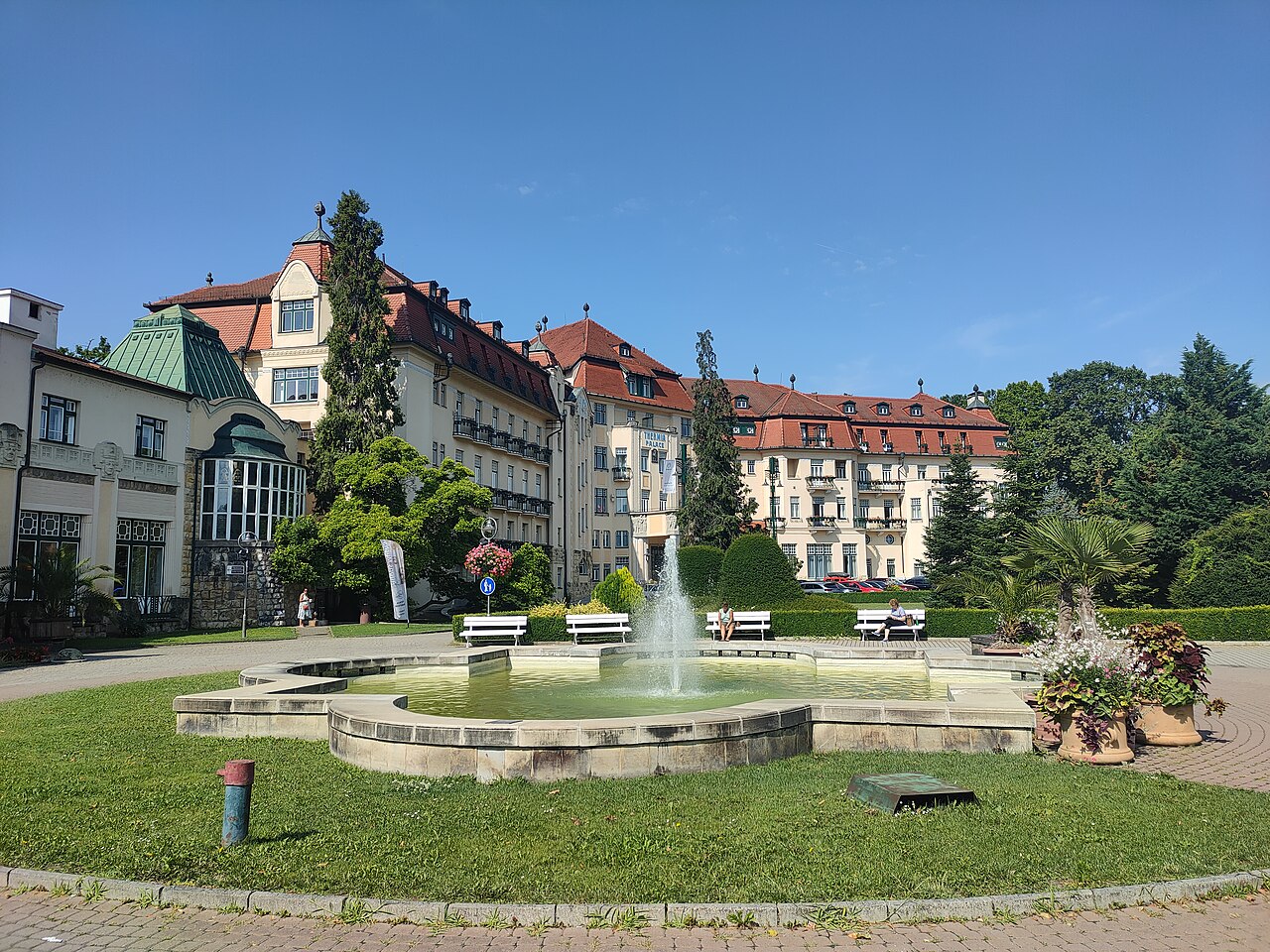
3. Trenčianske Teplice: the Hammam and the sulphur springs
A small spa town 14 km from Trenčín in the valley of the Teplička stream, in the Strážov Hills. The Spa Association lists five springs of sulphurous healing water at 37 to 40 °C (some websites say six, and the spa itself talks about “true spa” water from five springs plus a drinking spring). The water comes out at exactly the right temperature for bathing, so it does not need to be heated or cooled. The spa treats musculoskeletal, neurological, skin and gynaecological conditions, digestive and metabolic disorders, and runs its own psoriasis programme called TOMESA.
The jewel of the spa is the Hammam, an oriental bath house from 1888. Its owner at the time, Iphigénie d’Harcourt, saw a model of Turkish baths at the World’s Fair in Paris, travelled to Egypt to ask the Khedive for permission to build a copy, and he sent his court architect František Schmoranz the Younger back with her. The hall has three domes with glazed openings, a marble fountain and Iphigénie’s monogram on every other tile. Today it serves as a rest room and massage space, and there are guided tours open to the public every Tuesday.
One thing we did not expect: one of the thermal pools is named after Dr Čapek, father of the Czech writer Karel Čapek and the painter Josef Čapek, who worked here as a spa doctor for 13 years.
For day visitors: the heated outdoor Grand pool (25 × 10 m, water at 28 to 31 °C, plus a round relaxation pool at 32 to 35 °C) is open every day from 10:00 to 20:00. One hour (plus 20 minutes for the changing room) costs 10 € (about £8.50), children aged 3 to 14 pay 5 €, and each extra hour is 6 €. Over-60s pay 8 € on weekdays from 10:00 to 12:00 (except in July and August). Children under 3 are not allowed in.
Getting there: from Bratislava airport about 140 km (1 hour 40 minutes), from Vienna airport about 205 km (around 2 hours 15 minutes). The motorway runs almost all the way, which makes this one of the most convenient of the larger spa towns.
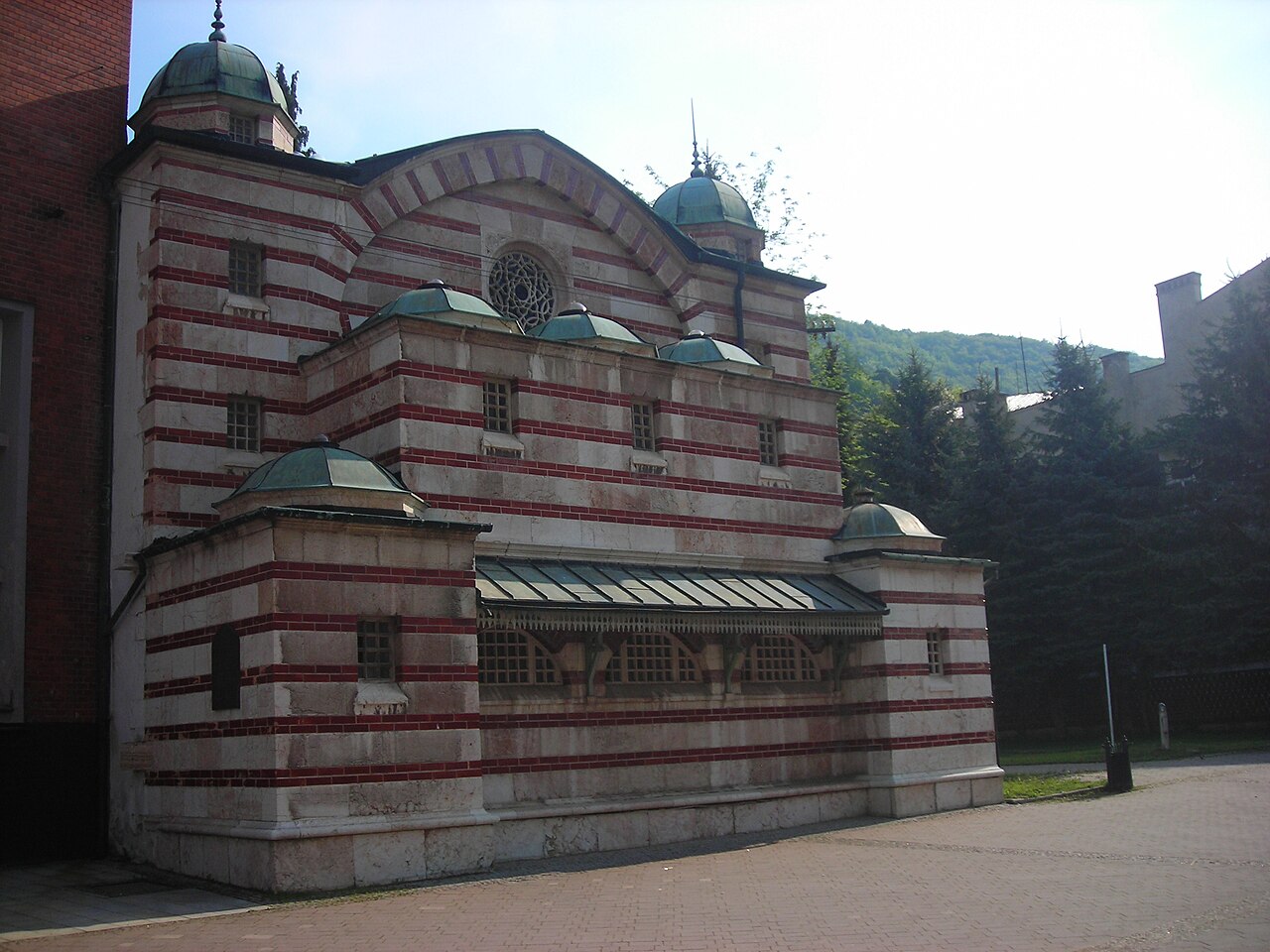
4. Nimnica: the youngest spa, above the Nosice reservoir
Nimnica sits 4 km from Púchov above the Nosice reservoir, with its spa buildings scattered through a wooded park. The spring was found in 1952 by workers building the dam, which makes this one of the youngest spas in the country. The water is cold and carbonated, highly mineralised, with trace elements including potassium, magnesium, iodine, sodium, iron and free carbon dioxide. If you are hoping for a hot outdoor pool, you will be disappointed. Nimnica is about treatments, carbonated baths and peace and quiet.
The list of indications is long: oncological conditions, circulatory and digestive disorders, metabolic diseases, respiratory, neurological and gynaecological conditions, and the musculoskeletal system. There is also a salt cave for the upper and lower airways. We like Nimnica as a place where you can genuinely switch off for a week: forest, water, walks around the reservoir and nothing to rush for.
Getting there: from Bratislava airport about 160 km (just under 2 hours), from Vienna airport about 230 km (around 2.5 hours).
5. Rajecké Teplice and Spa Aphrodite
Rajecké Teplice lies 14 km from Žilina in the Rajčanka valley, between the Lúčanská Malá Fatra hills and the Martinské hole ridge. The thermal springs reach 37 to 39 °C and the water is of the bicarbonate, calcium and magnesium type. Indications are musculoskeletal, neurological and oncological conditions and occupational diseases. The spa now trades as Spa Aphrodite and leans heavily on a stylised antiquity look: columns, statues, marble, Turkish baths and an outdoor Natural Spa.
In our view it is the best place in Slovakia for anyone who wants the spa atmosphere without committing to a week of treatments. Eleven pools of thermal healing water are open all year, and the public is welcome. The indoor healing pool is for over-12s only, the Natural Spa is for over-16s after 17:00, and the Natural Spa saunas are swimwear-free.
Admission for day visitors: the thermal pools cost 28 € (about £24) for 2 hours, or 22 € (about £19) Monday to Thursday outside public holidays and school holidays, and 50 € (about £43) for a full day. Children under 12 pay 16 €, 14 € on weekdays and 30 € for the full day. The Sauna World including the pools costs 40 € for 2 hours. It is open daily from 9:00 to 22:00. Towels and bathrobes are not included.
What is interesting is that Aphrodite also offers outpatient spa treatment without accommodation: a medical consultation and 3 treatments a day for 47 € (about £40) a day, or 69 € for the premium version, for at least 5 consecutive working days, with no referral from your own doctor needed. If you can find somewhere cheaper to sleep nearby, this is the least expensive route to genuine spa treatment in Slovakia.
Getting there: from Bratislava airport about 190 km (around 2 hours 20 minutes), from Košice airport about 265 km (around 3 hours 45 minutes). Žilina, 14 km away, is on the main railway line across the country.
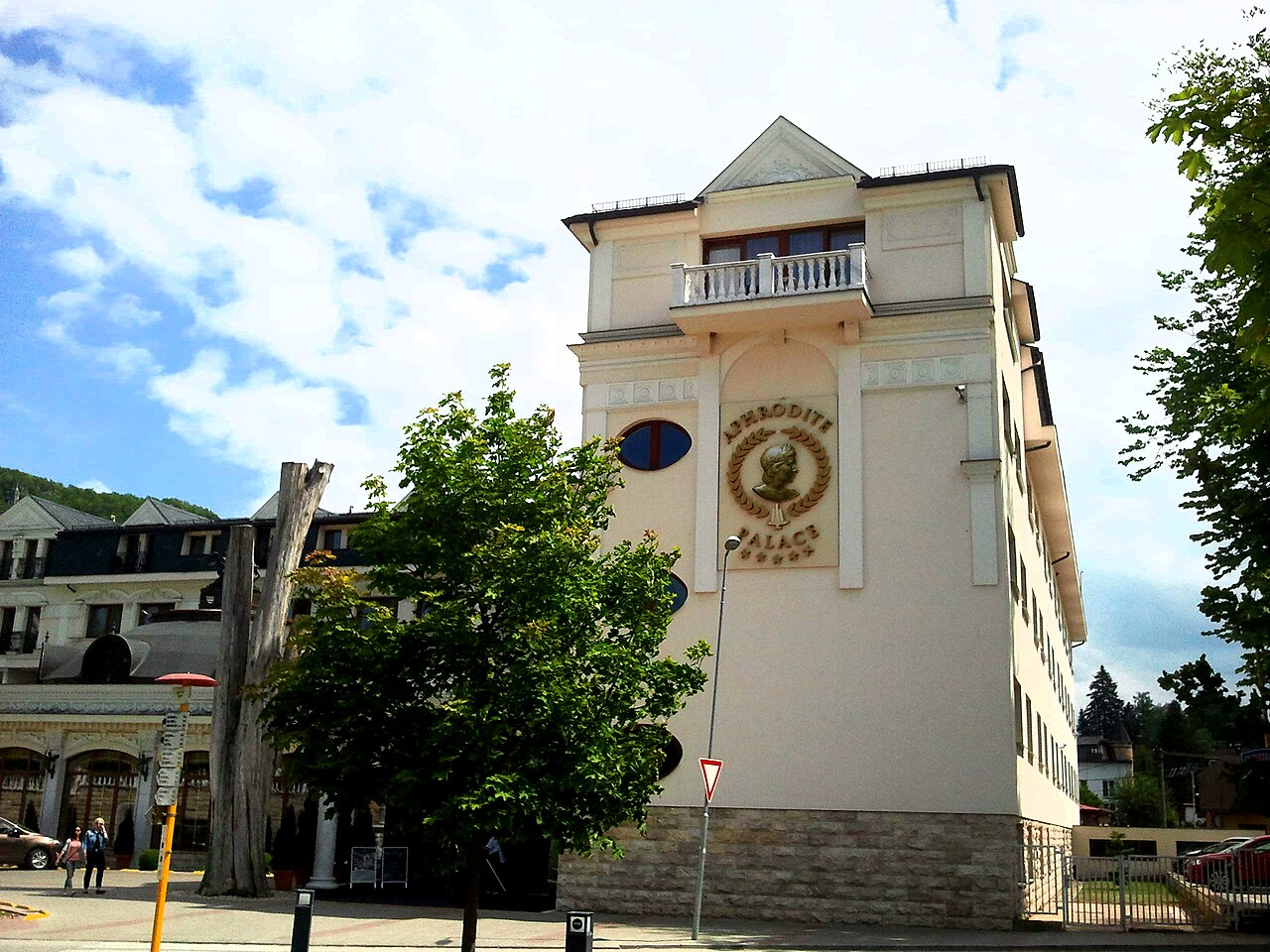
6. Turčianske Teplice: spa and aquapark in one
A small district town in the southern part of the Turiec basin, below the Veľká Fatra mountains. The thermal water reaches 38 to 47 °C, carries 1,524 mg of minerals per litre and is rich in calcium, magnesium and fluorine. The spa treats the musculoskeletal system, kidneys and urinary tract, and neurological, digestive, gynaecological and oncological conditions. You will sometimes read that this is the only spa in Slovakia for kidney problems. It is not: Bojnice, Kováčová, Bardejov and Vyšné Ružbachy all list the kidneys and urinary tract among their indications too.
The spa’s reputation was built by the nobility. According to the spa, Sigismund of Luxembourg, King of Hungary and Holy Roman Emperor, came here to treat his gout and always climbed into the water wearing his golden crown. Countess Mária Széchy, nicknamed the Venus of Muráň, was another devotee. Today’s “gold treatment” is a nod to that tradition. The historic Blue Bath (Modrý kúpeľ) and the Kollár and Malá Fatra houses now form the five-star Royal Palace hotel.
For families there is an advantage no other healing spa offers: the Spa & Aquapark, with a quiet indoor section and an outdoor aquapark with slides, all filled with thermal water. Inside is the Red Bath (Červený kúpeľ), built directly over the spring. One of you can go for treatments, the other can take the children down the slides, and in the evening everyone meets up in the warm water.
Spa & Aquapark admission: 2 hours 21 € (about £18), 3 hours 23 €, a full day 28 €. On Mondays and Thursdays a full-day ticket costs 12 € (about £10), which is one of the best deals in the country. One hour after 16:00 costs 9 €. The Sauna World is extra.
Getting there: from Bratislava airport about 200 km (around 2 hours 20 minutes), from Košice airport about 265 km (around 3 hours 45 minutes).
7. Bojnice: the spa below the castle
The spa lies 3 km west of Prievidza on the southern slopes of the Malá Magura hills. Warm water rises from nine springs at a rate of 40 litres per second, and it is of the bicarbonate-sulphate, calcium-magnesium type. Bojnice treats the musculoskeletal system, kidneys and urinary tract, neurological and gynaecological conditions and occupational diseases. For balneotherapy there are three hyperthermal pools, three rehabilitation pools and two outdoor pools, plus bubble and carbonated baths and underwater massage.
Bojnice is not somewhere you would come just for the pool. Its strength is the combination: a treatment in the morning, the fairy-tale Bojnice Castle in the afternoon (more about it in our guide to castles in Slovakia) and the oldest zoo in Slovakia right next door. We would come here for a long weekend with our parents, because everyone finds something to enjoy.
Getting there: from Bratislava airport about 175 km (around 2 hours 15 minutes), from Vienna airport about 240 km (around 3 hours).
8. Lúčky: the women’s spa below Choč
A village on the border between the Liptov and Orava regions, 14 km north-east of Ružomberok, at the southern foot of the Choč Hills. The water comes from two boreholes, Valentína (32 °C) and HGL-3 (37 °C), and is high in calcium. It is used in pools, in tubs and for drinking. In Slovakia, Lúčky is known above all for gynaecological problems and fertility treatment, and it also treats the musculoskeletal system, osteoporosis, and neurological, digestive and respiratory conditions. Guests who are not staying at the spa can book treatments too.
The tradition goes back a long way: in 2012 the spa marked 300 years since the first written mention. According to a Liptov legend, it was discovered by a shepherd whose lame sheep was healed at the hot spring. A travertine waterfall tumbles right through the village, and people come to see it even if they have no interest in the spa.
Getting there: from Bratislava airport about 260 km (around 3 hours), from Košice airport about 195 km (around 2 hours 45 minutes).
9. Sklené Teplice: bathing in a cave
A small spa in the Štiavnica Mountains between Hliník nad Hronom and Banská Štiavnica. The water is high in calcium and magnesium, and the spa stresses that every pool is filled each day with fresh water straight from the spring, with no chemical treatment. Sklené Teplice treats the musculoskeletal system, digestive, neurological, gynaecological and oncological conditions, and metabolic disorders.
The main reason to come is Parenica, a cave steam bath. Thermal water at around 42 °C flows into a natural cave, where you sit in the steam and the water. Your time inside is limited to 20 minutes, followed by a 20-minute dry wrap in the rest room. Entry is booked for a specific time slot, and according to the spa it is not suitable for children under 12, people with heart conditions or high blood pressure. Slots fill up fast, so book well ahead.
Sklené Teplice pairs beautifully with Banská Štiavnica. That is exactly what we would do: Parenica in the morning, then the lanes and the Calvary of Štiavnica in the afternoon.
Getting there: from Bratislava airport about 160 km (around 2 hours), from Vienna airport about 230 km (around 2.5 hours).
10. Kováčová: hot water below the Kremnica Mountains
A village at the foot of the hills north-west of Zvolen. The spring reaches 49.2 °C and yet holds up to 800 mg of carbon dioxide, with a yield of up to 6,000 litres a minute. The water is moderately mineralised, of the sulphate-bicarbonate type, with raised fluoride levels. Kováčová is known mainly for rehabilitation: the musculoskeletal system, neurological conditions (including neurological conditions in children up to 18), the digestive tract, kidneys and gynaecological conditions. Besides pool and tub baths, the spa offers exercise in thermal water and comprehensive rehabilitation programmes.
Getting there: from Bratislava airport about 185 km (around 2 hours), from Košice airport about 215 km (around 3.5 hours).
11. Sliač: the spa for the heart
A spa 15 km from Banská Bystrica, between the Slovak Ore Mountains and the Kremnica Mountains. The first written mention of the springs dates from 1244, in the charter in which Béla IV made Zvolen a free royal town. The water is of the sulphate-bicarbonate type, rich in carbon dioxide, and its isothermal temperature of 33.3 °C is exactly the temperature of human skin. Just as unusual is the spring gas, which is 99.7 % natural CO2. Sliač specialises in the heart and blood vessels (its motto is “Vaše srdce je tu na správnom mieste”, your heart is in the right place here), and also treats the musculoskeletal system and oncological and gynaecological conditions.
In summer (roughly June to September) there is an open-air thermal pool with flow-through water that is completely replaced every 24 hours and gets its brown colour from iron. A full-day adult ticket costs 11 € (about £9.50), 10 € from mid-August, and a family ticket for two adults and two children 28 €. Tuesday is the cleaning day.
Getting there: from Bratislava airport about 190 km (just over 2 hours), from Košice airport about 215 km (around 3.5 hours).
12. Brusno: a quiet spa below the Low Tatras
Brusno lies in the Hron valley 20 km east of Banská Bystrica, on the southern edge of the Low Tatras National Park. The healing water is cold, carbonated, and of the sulphate-bicarbonate type. The main indications are circulatory disorders, metabolic and endocrine disorders, the digestive tract and occupational diseases. It is a quiet place in the woods where people come for drinking cures, mineral baths and walks.
Getting there: from Bratislava airport about 225 km (around 2.5 hours), from Košice airport about 220 km (around 3 hours 20 minutes).
13. Dudince: water like Vichy’s
Dudince is the smallest town in Slovakia, in the south of the Krupina district, about 18 km from the Hungarian border. The local water, nicknamed “Prdľavka”, is highly mineralised. What makes it unusual is the combination of carbon dioxide and hydrogen sulphide, which lets it treat several problems at once. According to the spa, the only other water of similar composition in Europe is at Vichy in France. Dudince treats the musculoskeletal system, the circulatory system, neurological conditions and occupational diseases.
The spa has three hotels (Rubín, Smaragd and Minerál), and southern Slovakia also means more sunny days than in the mountain spas. We would pick Dudince for spring or autumn, when the south is pleasant and not as baking hot as in summer.
Getting there: from Bratislava airport about 165 km (around 2 hours 15 minutes), from Vienna airport about 230 km (around 3 hours). Budapest is another option for this part of the country.
14. Číž: iodine water in the south
Číž lies in southern Slovakia near the Hungarian border, in the Rimavská Sobota district. The water is cold (14 °C), strongly mineralised, iodine-bromine and sodium-chloride, and is used for tub baths and drinking cures. The spa treats the musculoskeletal system, neurological conditions, metabolic and endocrine disorders, oncological conditions and occupational diseases, in both adults and children. In summer the complex has an outdoor swimming pool with a water play area.
Getting there: from Košice airport about 115 km (around 2 hours 20 minutes), from Bratislava airport about 295 km (around 3.5 hours).
15. The Tatra climatic spas: Smokovec, Tatranská Kotlina and Lučivná
In the High Tatras the healing comes from the air, not the water. The climatic spas in Nový and Horný Smokovec, the sanatorium in Tatranská Kotlina and the Lučivná spa near Poprad all rely on clean mountain air, strong sunlight and UV, lower air pressure and an atmosphere full of ozone and the scent of pine. The main indications are non-tuberculous respiratory diseases: asthma, chronic bronchitis, allergic rhinitis and recovery after lung surgery. Nový Smokovec and Tatranská Kotlina also treat some mental health conditions and neuroses.
Tatranská Kotlina (765 m) adds speleotherapy, breathing exercises inside the nearby Belianska Cave. Lučivná (816 m, 12 km from Poprad) is one of the few places that treats children aged 3 to 18 with respiratory problems. The climatic spas make most sense as a treatment stay, but plenty of people simply book a week in the Tatras with treatments and hikes. For what to look up at while you are there, see our guide to the highest mountains in Slovakia.
Getting there (Nový Smokovec): from Košice airport about 135 km (around 2 hours 10 minutes), from Bratislava airport about 325 km (around 3 hours 40 minutes). Poprad has its own airport, but almost nothing flies into it.
16. Vyšné Ružbachy: the travertine Crater and a pool with a spruce tree
A spa in north-eastern Spiš below the Spišská Magura hills, 13 km from Stará Ľubovňa and 32 km from Poprad, with views of the Belianske Tatras. The treatment combines the sub-alpine climate with mineral water from the Izabela spring: bicarbonate, calcium-magnesium, with more than 1,200 mg of CO2 and lithium, and only up to 23 °C. It is drunk as part of drinking cures, and another 14 mineral springs rise around the spa. The list of indications is long, from the musculoskeletal system to the heart and blood vessels, gynaecological conditions, kidneys and mental health. The speciality is hippotherapy, therapeutic horse riding.
Ružbachy is worth a stop even without a stay. In the middle of the spa is the Crater (Kráter), a protected natural feature: a travertine pool constantly fed by 7.5 litres of water a second at 23 °C. Next to it is a park of travertine sculptures from an international sculpture symposium, listed as a national cultural monument. In summer there is a mountain lido with 4 outdoor pools fed by the Izabela spring (the swimming pool is 50 metres long) and a spruce tree growing in the middle of one pool. An adult day ticket costs 10 € (about £8.50), half price after 15:00, and under-6s go free. Be aware, though, that the water is lukewarm, not thermal in the sense you would know from the southern pools.
Getting there: from Košice airport about 125 km (around 2.5 hours), from Bratislava airport about 360 km (around 4 hours 10 minutes). Kraków is another option, especially if you are combining Slovakia with southern Poland.
17. Červený Kláštor: the sulphurous Smerdžonka in the Pieniny
A small natural and climatic spa right inside the Pieniny National Park, 35 km north of Kežmarok. The Smerdžonka spring takes its name from the smell of hydrogen sulphide and has been known since the 14th century. It is cold and slightly alkaline, with 11 mg of sulphane per litre. Hydrogen sulphide is easily absorbed through the skin, so the spa mainly treats skin and respiratory conditions, along with the musculoskeletal system, the digestive tract and recovery after thyroid surgery. Children are treated here as outpatients.
The grounds, the wellness area with its pool and the restaurant are open to non-residents. It makes a great combination: a sulphur bath in the morning, then rafting down the Dunajec on traditional wooden rafts in the afternoon.
Getting there: from Košice airport about 140 km (around 2 hours 45 minutes), from Bratislava airport about 370 km (around 4.5 hours).
18. Štós: treatment in a UNESCO-listed cave
The spa settlement of Štós-kúpele sits in the forests between the Volovské Hills and the Slovak Karst, in the Košice-okolie district. It is a climatic spa with the mildest grade of climatic stimulation (grade 1 on the Swiss scale). The climate treatment is complemented by speleotherapy in Jasovská Cave, which is part of a UNESCO World Heritage Site. The spa treats respiratory, metabolic, mental health, gynaecological and oncological conditions and occupational diseases.
The complex is a national cultural monument and the spa has announced its renovation. It is the most remote place in this guide, and people come here mainly to have their breathing treated, not for a day out.
Getting there: from Košice airport only about 40 km (around 1 hour 15 minutes). From Bratislava it is the other end of the country, about 365 km.
19. Bardejovské Kúpele: the colonnade and Empress Sisi
The spa lies in the coniferous forests of upper Šariš, 5 km from Bardejov, whose historic centre is a UNESCO World Heritage Site. It is not thermal: its wealth is cold mineral water, bicarbonate, sodium-chloride and ferruginous, with a raised boric acid content. In terms of minerals and CO2 it ranks among the strongest springs in Slovakia. Eight healing springs are piped into a covered, temperature-controlled colonnade, the only one of its kind in Slovakia, and the water is drunk three times a day before meals in doses set by a doctor.
The main indication is the digestive tract, followed by oncological and circulatory conditions, metabolism, respiratory problems, kidneys, gynaecological conditions and the musculoskeletal system. In the 19th century Bardejovské Kúpele was one of the most visited spas in the Kingdom of Hungary, and in 1895 Empress Elisabeth, Sisi, came here for treatment. The Alžbeta hotel now has a suite decorated in her style, an educational trail runs through the spa, and the grounds include an open-air museum of folk architecture. We would combine Bardejov with a few days in eastern Slovakia, because flying in just for a weekend at the spa does not make much sense.
Getting there: from Košice airport about 95 km (around 2 hours), from Bratislava airport about 445 km (around 5 hours).
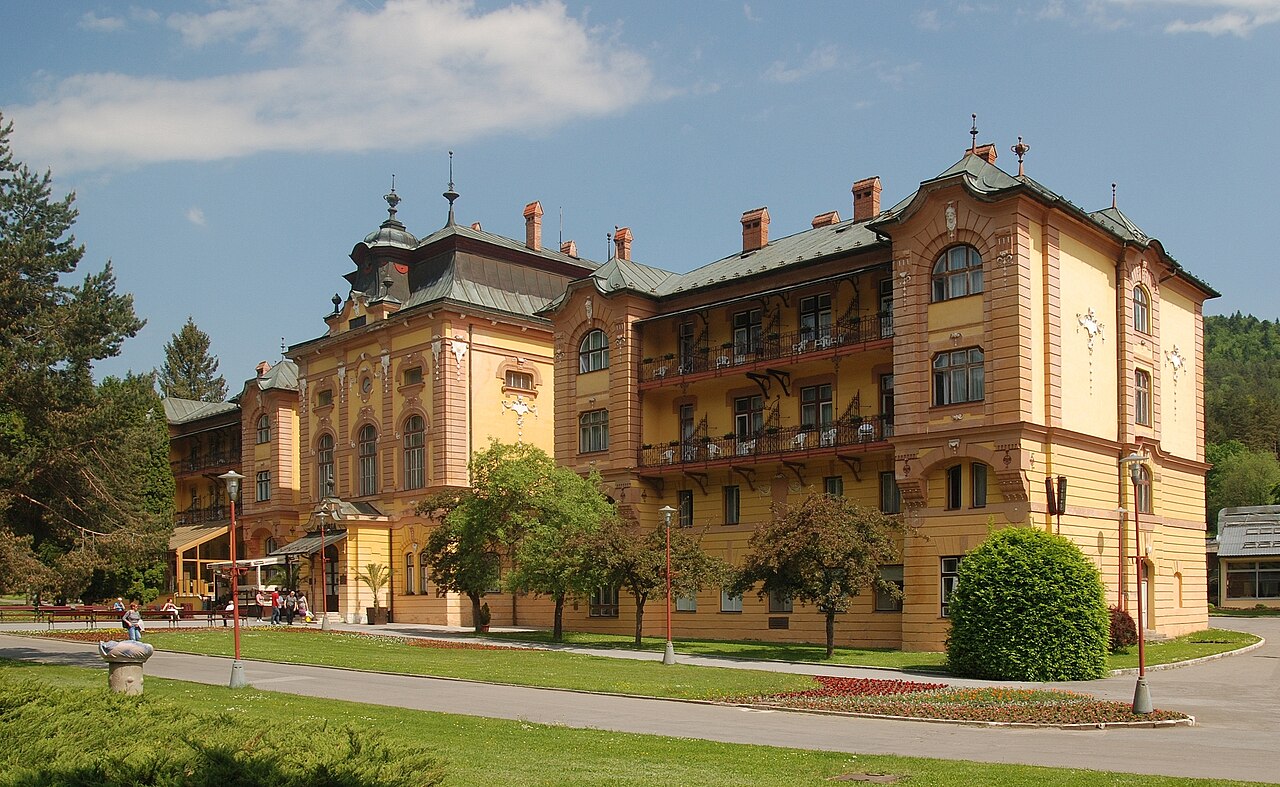
Closed spa: many older lists still include Korytnica in the Liptov region, famous for the coldest mineral water in Slovakia. The spa, however, has been closed since 2002 and the buildings are decaying. A new owner has restarted bottling the mineral water but so far only talks about reviving the spa. Several springs are open to the public, but do not come here for treatment.
Spas in Slovakia compared: the table
| Spa | Water / healing source | Main indications | From Bratislava airport | From Košice airport |
|---|---|---|---|---|
| Smrdáky | cold sulphur water, sulphur mud | skin, joints | 1.5 h | 5.5 h |
| Piešťany | thermal sulphur water 67–69 °C, mud | musculoskeletal, nerves | 1 h | 4.5 h |
| Trenčianske Teplice | sulphur water 37–40 °C | musculoskeletal, skin, psoriasis | 1.5 h | 4 h |
| Nimnica | cold carbonated water | digestion, breathing, oncology | 2 h | 4 h |
| Rajecké Teplice | thermal 37–39 °C | musculoskeletal, nerves | 2.5 h | 4 h |
| Turčianske Teplice | thermal 38–47 °C | musculoskeletal, kidneys | 2.5 h | 4 h |
| Bojnice | warm water, 9 springs | musculoskeletal, kidneys | 2.5 h | 4.5 h |
| Lúčky | thermal 32–37 °C, calcium | gynaecology, osteoporosis | 3 h | 3 h |
| Sklené Teplice | thermal, cave at 42 °C | musculoskeletal | 2 h | 4 h |
| Kováčová | thermal 49 °C | rehabilitation, nerves | 2 h | 3.5 h |
| Sliač | 33.3 °C, CO2 | heart and blood vessels | 2 h | 3.5 h |
| Brusno | cold carbonated water | circulation, metabolism | 2.5 h | 3.5 h |
| Dudince | CO2 + hydrogen sulphide | musculoskeletal, circulation | 2.5 h | 4.5 h |
| Číž | cold iodine-bromine water | musculoskeletal, glands | 3.5 h | 2.5 h |
| High Tatras (Smokovec, Kotlina, Lučivná) | climate, cave | respiratory | 3.5 h | 2 h |
| Vyšné Ružbachy | lukewarm up to 23 °C, lithium | heart, nerves, musculoskeletal | 4 h | 2.5 h |
| Červený Kláštor | cold sulphur water (Smerdžonka) | skin, breathing | 4.5 h | 3 h |
| Štós | climate, Jasovská Cave | respiratory | 4.5 h | 1.5 h |
| Bardejovské Kúpele | cold, 8 springs in the colonnade | digestive tract | 5 h | 2 h |
Vienna airport adds roughly 65 km and 40 minutes to every Bratislava figure. Times are driving estimates without stops or traffic.
Will insurance pay for a spa stay in Slovakia?
This is the question we hear most often, and the short answer is no, not automatically. Slovak spas have contracts with Slovak health insurers, and the stays advertised on their websites “s poukazom zo zdravotnej poisťovne” (with a voucher from the health insurer) are meant for people insured in Slovakia. For a visitor from the UK, a spa week is a planned, self-funded trip.
The GHIC is not designed for this. According to the NHS, the UK Global Health Insurance Card covers state healthcare that cannot reasonably wait until you return to the UK, such as emergency treatment or care for an existing condition that flares up while you are away. It does not cover treatment in a private medical facility, and it is not a replacement for travel insurance. A week of mud wraps and mineral baths booked months in advance does not fit any of that. Carry the card anyway, in case something happens during your trip, and read the details on the NHS GHIC page.
Travel insurance. Standard policies cover the unexpected, not the treatment you are travelling for. If you have a medical condition and are going specifically for spa treatment, tell your insurer before you leave and check what is and is not covered.
Our advice: count on paying for the stay yourself, and choose accordingly. The upside is that as a self-funded guest you can choose freely, from a relaxing weekend to a full week of treatment. Before you travel with any hope of getting money back, ask your insurer or the NHS and get the answer in writing.
Treatment stay or spa break? How to choose
A week of treatment. This is the classic Slovak spa experience. Most spas offer stays of 7 nights or more, starting with a medical check-up and followed by roughly three treatments a day (Turčianske Teplice quotes a minimum of 21 treatments a week). Choose by indication: for joints and back problems Piešťany, Trenčianske Teplice, Rajecké Teplice or Sklené Teplice; for skin Smrdáky and Smerdžonka; for the heart Sliač; for digestion Bardejov; for breathing the Tatras and Štós; for gynaecological problems Lúčky.
A weekend spa break. For two people on a two- or three-night break, the best choices are places with something to do outside the hotel: Piešťany (the island, the town, the colonnade), Trenčianske Teplice (the Hammam, festivals and Trenčín 14 km away), Rajecké Teplice (Aphrodite, Žilina and the Malá Fatra mountains) and Bojnice (the castle and the zoo). All four sell weekend packages with half board and pool access. If you are planning a couples’ trip across the region, we also have tips on couples’ spa breaks in the Czech Republic.
Older travellers. Piešťany and Trenčianske Teplice are ideal: flat ground, short distances, colonnades and benches. Sliač and Dudince offer peace and a mild climate. Trenčianske Teplice gives over-60s a discount at the Grand pool on weekday mornings.
With children. Healing spas are not a children’s destination, but there are exceptions. Lučivná in the Tatras treats children aged 3 to 18 with respiratory problems, Kováčová treats children with neurological conditions, Číž accepts young patients, and at Smerdžonka children are treated as outpatients. For a purely family trip, Turčianske Teplice with its Spa & Aquapark is the best bet: parents fit in their treatments and the children get the slides. Watch the age limits: children are only allowed into the indoor healing pool at Aphrodite from the age of 12, and the same applies to Parenica in Sklené Teplice.
How much do spas in Slovakia cost?
Prices for stays vary with the season, the hotel and whether you book a “relax” package or treatment with a doctor, and the spas change them during the year. That is why we only quote prices the spas publish in their official price lists. The pound figures are approximate.
| What | Price | Approx. in £ |
|---|---|---|
| Aphrodite Rajecké Teplice, thermal pools 2 h (Mon–Thu) | 22 € | £19 |
| Aphrodite Rajecké Teplice, thermal pools 2 h (other days) | 28 € | £24 |
| Aphrodite Rajecké Teplice, full day | 50 € | £43 |
| Aphrodite, outpatient spa treatment (3 treatments, per day) | 47 € | £40 |
| Aphrodite, relaxation packages (without accommodation, per person per night) | from 68 € | from £58 |
| Trenčianske Teplice, Grand pool 1 h | 10 € | £8.50 |
| Turčianske Teplice, Spa & Aquapark 2 h | 21 € | £18 |
| Turčianske Teplice, Spa & Aquapark full day (Mon and Thu) | 12 € | £10 |
| Sliač, summer thermal pool, full day | 10–11 € | £8.50–9.50 |
| Vyšné Ružbachy, summer mountain lido, full day | 10 € | £8.50 |
As a guide for longer stays: Aphrodite sells relaxation and treatment packages from 68 to 126 € (about £58 to £107) per person per night, with accommodation charged on top depending on the hotel you choose. The other spas publish their stay prices in PDFs or only calculate them in their booking systems for specific dates, and we deliberately do not copy those here. It is worth watching for special offers on the spas’ own websites, as they often cut prices out of season and during the working week.
Where to stay at the spas in Slovakia
At a spa, the most comfortable option is to sleep in the spa hotel itself, because pool access is usually included and you can walk to your treatments in a bathrobe along an indoor corridor. We have picked hotels at the four most visited spa towns and one in Bardejov. We found all of them on Booking.com, but prices change with the dates, so we do not quote them.
Piešťany
- Ensana Thermia Palace: an Art Nouveau hotel from 1912 on the Spa Island, connected to the Irma spa house. For us, the most beautiful spa hotel in Slovakia.
- Ensana Esplanade: a large spa hotel on the island, linked to the Balnea treatment centre.
- Ensana Splendid: another hotel in the Balnea complex, a more affordable option with both indoor and outdoor pools.
More options: accommodation in Piešťany.
Trenčianske Teplice
- Hotel Most Slávy: a hotel by Most Slávy with a spa pool, popular for short half-board stays.
- Hotel Slovakia: a hotel in the centre of the spa town with its own wellness area.
More options: accommodation in Trenčianske Teplice.
Rajecké Teplice
- Aphrodite Palace: right next to Spa Aphrodite, and guests get unlimited access to the pools, the Sauna World and the Natural Spa.
- Wellness Hotel Diplomat: a wellness hotel a short walk from the spa, if you would rather stay outside the big complex.
More options: accommodation in Rajecké Teplice.
Turčianske Teplice
- Royal Palace: a five-star spa hotel in the historic buildings of the Blue Bath and the Kollár and Malá Fatra houses.
- Veľká Fatra: a spa house with entry to the Spa & Aquapark, practical for families.
More options: accommodation in Turčianske Teplice.
Bardejovské Kúpele: the largest spa hotel is Hotel Alexander, connected by a covered walkway to the wellness area and the spa house where treatments take place. More options: accommodation in Bardejovské Kúpele.
If you would rather find a beautiful place to sleep away from the spas, have a look at our guide on where to stay in Slovakia.
A short history of Slovak spa towns
Slovak spa culture is as old as the Kingdom of Hungary itself. Warm springs at Trenčianske Teplice and around Sliač are mentioned in charters of King Béla IV from 1244 and 1247, and according to the spas the hot water was probably known to the Quadi and the Roman legions before that. The first person to study the healing effects of Hungarian waters systematically was, according to the Slovak Spa Association, the humanist Georg Wernher in 1548.
The golden age came in the 18th and 19th centuries, when the spas belonged to noble families and Viennese financiers. The Illésházy family held Trenčianske Teplice for 241 years, the Viennese banker Georg Sina bought it in 1835, and in 1888 his daughter Iphigénie added the Hammam. In the 19th century Bardejovské Kúpele was one of the most visited spas in the Kingdom of Hungary, and its guest book holds the signatures of crowned heads, including Empress Sisi (1895). Korytnica collected medals for its mineral water at the world’s fairs in Vienna and in St. Louis in the United States. In the early 20th century Piešťany became an international spa with the Art Nouveau Thermia and Irma, and the interwar years of the First Czechoslovak Republic are still remembered locally as “the golden era of the Piešťany spa”.
After 1948 the spas and healing springs were nationalised, and the state began building large spa blocks that turned many places into socialist “sanatoria”. Some spas were only born then: Nimnica owes its existence to the spring that dam builders hit in 1952. After 1989 came privatisation, which helped some spas modernise and sent others, like Korytnica, into bankruptcy. Today the Slovak Spa Association brings together more than twenty healing spas and sanatoria.
What we would do differently
We would not go to a spa with a checklist. Slovak spas tempt you to fit in the mud at Piešťany, the Hammam at Trenčianske Teplice and the cave at Sklené Teplice all on one trip, but spas work the other way round: the less you plan, the more you get out of them. One place, one week, three treatments a day and the rest of the day for walks along the colonnade.
We would try more of the local things. Drink the mineral water straight from the spring in the Bardejov colonnade, even though it tastes of iron, have a spa wafer in Piešťany and slow down for at least an hour in the café in the Hammam. And we would happily turn off the main route to spas we had never heard of, like Smerdžonka or Štós. Memories of a small spa in the forest tend to last longer than those of a big hotel.
And we would put the phone away. At Irma they ask you to switch it off for your treatments anyway, and you cannot sit in the steam at Parenica for twenty minutes with a phone in your hand either. So why not carry that over into the rest of the day?
Spas in Slovakia: frequently asked questions
It depends on what you need treated. For joints, the spine and rheumatism the best known is Piešťany with its sulphur mud, for skin Smrdáky, for the heart Sliač, for digestion Bardejovské Kúpele and for the airways the climatic spas of the High Tatras. For a weekend for two and bathing in thermal water, our favourites are Spa Aphrodite in Rajecké Teplice and Trenčianske Teplice with its Hammam.
What is the oldest spa town in Slovakia?
The oldest written records belong to Sliač (1244) and Trenčianske Teplice (1247), both from charters of King Béla IV. The history of Bardejovské Kúpele also goes back to the 13th century. Regular spa treatment, however, only took off in most places in the 18th and 19th centuries.
Does the GHIC cover spa treatment in Slovakia?
No. The UK GHIC covers state healthcare that cannot reasonably wait until you get home, not a planned spa stay, and it does not cover treatment in private facilities. Slovak spa packages “with a voucher from the health insurer” are for people insured in Slovakia. Plan to pay for the stay yourself, take out travel insurance and tell your insurer if you are travelling for treatment.
Which spas in Slovakia are closest to Bratislava and Vienna?
The closest are Piešťany (about 80 km from Bratislava airport, around an hour by car) and Smrdáky (about 105 km, around 1.5 hours), followed by Trenčianske Teplice (about 140 km). From Vienna airport add roughly 65 km and 40 minutes. In the east, Štós and Bardejovské Kúpele are the closest spas to Košice airport.
Which spas in Slovakia are near the Hungarian border?
The healing spas near the Hungarian border are Dudince (about 18 km from the border) and Číž in the Rimavská Sobota district. Thermal pools in the south, such as Veľký Meder, Štúrovo and Patince, are covered in our guide to thermal baths in Slovakia.
Where is the Aphrodite spa in Slovakia?
Spa Aphrodite is in Rajecké Teplice, 14 km from Žilina. It has 11 pools of thermal water at 37 to 39 °C, a Sauna World and a Natural Spa, and is open daily from 9:00 to 22:00. A two-hour ticket costs 28 € (about £24), or 22 € (about £19) from Monday to Thursday.
Which spas in Slovakia treat joint and back problems?
Most Slovak spas list the musculoskeletal system among their indications. The ones that specialise in it most are Piešťany (sulphur mud and thermal water), Trenčianske Teplice, Rajecké Teplice, Sklené Teplice with the Parenica cave bath, Kováčová, Bojnice and Dudince.
Can you visit a spa in Slovakia for just a day?
Yes. Without staying overnight you can bathe at Aphrodite in Rajecké Teplice, in the Grand pool at Trenčianske Teplice, at the Spa & Aquapark in Turčianske Teplice or, in summer, at the pools in Sliač and Vyšné Ružbachy. In Piešťany you can book individual treatments at the Irma spa house, and at Sklené Teplice a session in the Parenica cave.
Where next
- Thermal baths in Slovakia: aquaparks and thermal pools from Bešeňová to Veľký Meder.
- Things to do in Slovakia: day trips that combine well with a spa stay.
- Castles in Slovakia: Bojnice, Trenčín and other castles close to the spas.
- Lakes in Slovakia: where to swim when you have had enough of pools.
- Where to stay in Slovakia: our favourite places to sleep around the country.
- Spa hotels in Poland: the same kind of break on the other side of the Tatras.
Potřebujete pomoct s cestováním?
-
Ubytování 🏨
Vyberte si to nejlepší ubytování, ať už jste kdekoliv, přes Booking.com. -
Půjčení auta 🚗
Auto si snadno najdete přes Booking.com, kde máte často slevu díky ubytování, nebo Rentalcars.com, kde porovnáte nabídky většiny půjčoven. -
Zážitky 🎟️
Přes GetYourGuide.com si vyberete z nejrůznějších výletů i zážitků po celém světě, navíc se zrušením zdarma do 24 h předem.