Last updated 14.11.2026
Polish markets are one of the easiest ways to see how the country actually eats and shops. On a city break in Kraków, Wrocław or Warsaw you can spend a morning among stalls of pickles, smoked cheese and sausages, then walk ten minutes back to the Old Town for coffee. Out in the countryside the weekly market is still the main event of the week, with traders arriving before dawn and packing up by lunchtime.
This guide covers the best markets in Poland in two groups. The first are the big regional markets in the south, from the Tatra foothills to Silesia and Lower Silesia, which work well as day trips from Kraków, Katowice or Wrocław. The second are the city markets and historic market halls in Kraków, Wrocław, Warsaw, Gdańsk and Poznań, which you can simply add to a city break. For each one you will find the opening days, what is sold there and what to watch out for. We took the opening times from the websites of the towns and market operators rather than from forums, because forum threads are exactly where outdated information from five years ago keeps circulating.
Markets in Poland at a glance
- Best city markets: Stary Kleparz and Plac Nowy in Kraków, the Hala Targowa market hall in Wrocław, Hala Mirowska in Warsaw, the market hall in Gdańsk and Rynek Jeżycki in Poznań.
- The biggest regional market is the Nowy Targ fair below the Tatras: Thursday and Saturday 6:00–15:00, with a car market on Sunday. Easy to combine with a trip to Zakopane.
- Cieszyn on the Czech border has over 600 trading pitches across two market sites, open on Wednesday and Saturday from 5:00 to 12:30.
- For flea markets and antiques head to Plac Nowy in Kraków (Monday to Saturday), the Sunday book and antiques fair at Kraków’s Hala Targowa, or the Saturday antiques fair on the main square in Wałbrzych.
- Most shops in Poland close on Sundays and public holidays by law. Markets have their own rules, but do not count on Sunday shopping. Watch out for 11 November (Independence Day).
- You pay in Polish złoty (1 PLN is roughly 20p or €0.23), mostly in cash at outdoor stalls. Cards work in the market halls.
- Bringing food back to the UK: pork, beef, sausages, cheese and other dairy products from the EU cannot currently be brought into Great Britain. Eat the kabanos in Poland, take home honey, ceramics and cosmetics.
How Polish markets work
A few Polish words will help a lot when you search on a map. A market is a targowisko or targ, a covered market hall is a hala targowa, a big market selling clothes and anything else is a jarmark or bazar, and a flea market is a pchli targ or giełda staroci. Typing these into Google Maps usually gives better results than the English terms.
Most outdoor markets run only on certain days of the week and wind down around midday. Traders arrive in the dark, the serious shopping happens between seven and ten, and by eleven many stalls are already being packed away. City market halls stay open longer, often into the evening. The rule of thumb is simple: the more food a market sells, the earlier you need to get there.
The thing that catches most visitors out is the Sunday trading ban. Poland introduced it in 2018 and it covers Sundays and public holidays, apart from a handful of “trading Sundays”. In 2026 the remaining ones are 6, 13 and 20 December (the full list for the year was published by, among others, TVP). The ban does not apply to pharmacies, petrol stations, bakeries or cafés, for example, and some markets run their own Sunday events, typically antiques fairs. Treat the regional markets as closed, though. Everything shuts on public holidays, including 1 and 11 November and 25 and 26 December (gov.pl). If your city break falls on a long weekend, plan your market visits for the Friday or Saturday.
16 best markets in Poland
We have grouped them the way you are most likely to use them: first the regional markets in southern Poland, from the Tatras through Silesia to the edge of the Sudetes, then the markets in the big cities. The first eight are mainly about shopping and local life, the rest are more of an experience, although you can shop very well there too.
Regional markets in southern Poland: day trips from Kraków, Katowice and Wrocław
These are the markets where people from the surrounding villages, and from across the Czech and Slovak borders, come to do their weekly shopping. We have only included the ones whose opening days we could confirm on the website of the town, the market operator or the organiser. There are plenty of others mentioned online (Jelenia Góra, Bogatynia and Sieniawka, Kłodzko, Głuchołazy, Nysa), and they do exist, but we could not confirm current days and size from official sources, and according to shoppers themselves several have shrunk to a handful of stalls. Keep that in mind if you go. All the driving times below are approximate and assume normal traffic.
1. Nowy Targ: the biggest market fair in the Polish mountains
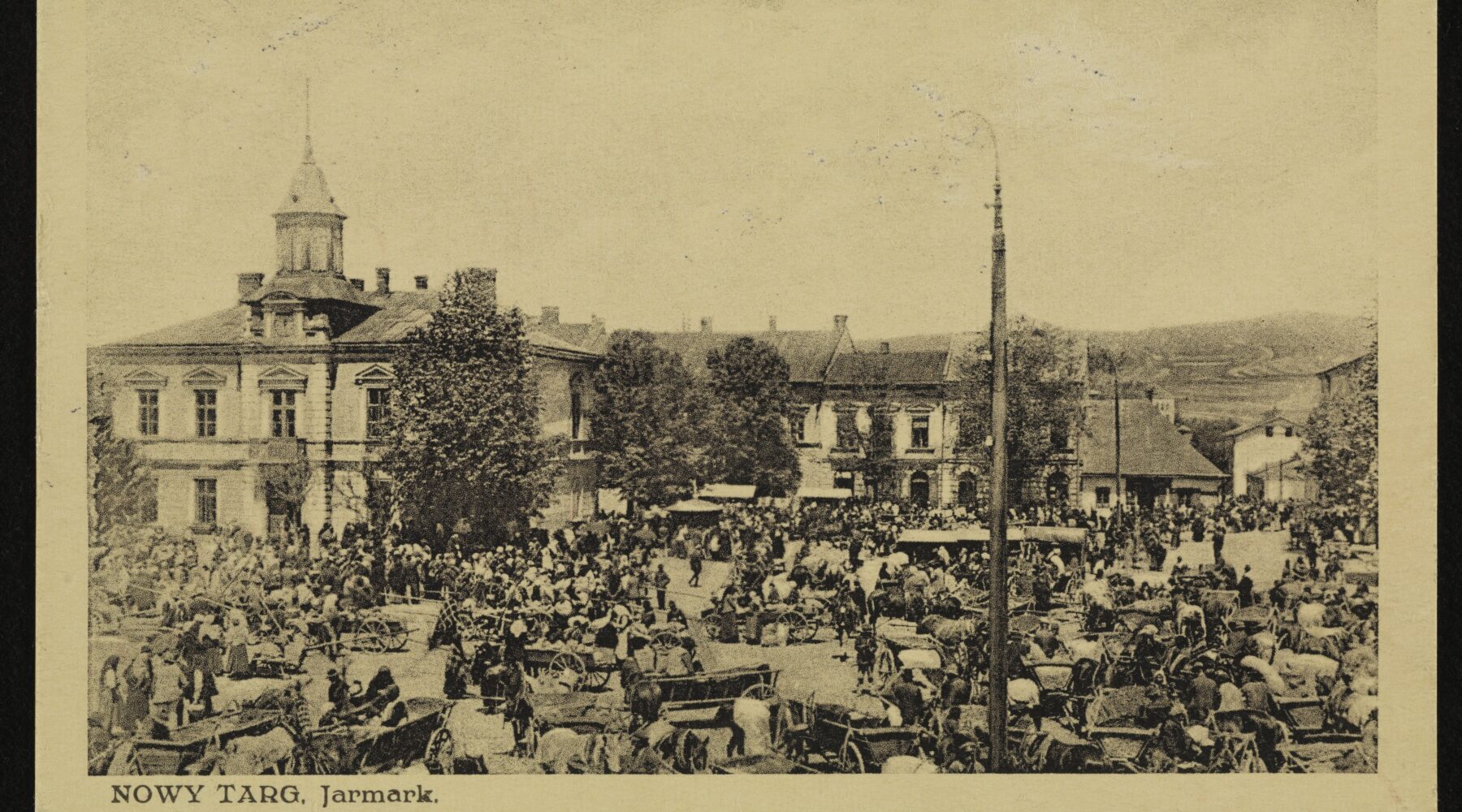
The Nowy Targ fair at the foot of the Tatras is famous across the whole Podhale region, and Slovaks from nearby Orava come over for it too. Kraków is about 85 km away, roughly an hour and a quarter by car, and Zakopane only around half an hour, so it fits neatly into a trip to the mountains. Today the fair takes place on a purpose-built market site called Nowa Targowica on Targowa street, with decorated gates, numbered sectors and a covered “Merchants’ Court”. According to the operator, the opening times are:
- Fair (jarmark): Thursday and Saturday 6:00–15:00.
- Car market (giełda samochodowa): Sunday 6:00–14:00, which the operator describes as the largest in the region.
- Dwór Kupiecki (the covered section with shops): Thursday and Saturday 6:00–15:00, Sunday 6:00–14:00.
You can buy almost anything here, from vegetables, shoes and pushchairs to sheepskin coats and highlander souvenirs. And of course oscypek, the smoked sheep’s cheese of the Tatras. We would go on a Thursday, because by the operator’s own account Saturday brings the biggest crowds, and then carry on in the afternoon to the Polish Tatras or to the thermal baths in Białka Tatrzańska or Chochołów.
2. Jabłonka: the Wednesday market in Polish Orava
Jabłonka is a village about ten kilometres from the Slovak border crossing at Chyżne–Trstená, and its market is held every Wednesday. It is a proper country fair: livestock, farm tools, folk crafts and produce straight from local farms, surrounded by stalls with clothes, shoes and household goods. Polish and Slovak websites both describe whole coachloads of Slovak shoppers coming over for it.
From Kraków it is about an hour and a half by car and from Zakopane roughly an hour, so it is not worth the drive just for shopping. As a stop on the way to or from Zakopane, though, it is the kind of scene you will not see in any city. The village does not list the market hours on its website, so come early in the morning.
3. Cieszyn: the biggest market on the Czech border
Cieszyn is a pretty town on the Olza river, split by the border: the Czech half on the other bank is Český Těšín. It is about an hour and ten minutes by car from Katowice and around two hours from Kraków. Its markets draw shoppers from both sides of the border and are run by the town’s roads and markets authority (MZD Cieszyn). There are three parts:
- Industrial goods market on Katowicka street: 443 trading pitches on more than 16,000 m². Clothes, shoes, household goods, textiles and seasonal goods.
- Farm and food market on św. Jana Sarkandra street: 189 pitches. Fruit, vegetables, cheese, cured meats, eggs and flowers.
- Municipal market halls at Stawowa 6: 31 covered units.
The markets are open on Wednesday and Saturday from 5:00 to 12:30. Saturday is busier and livelier, Wednesday calmer. The best time to arrive is between seven and nine, because parking near the market on a Saturday morning is a lottery. What we like most about Cieszyn is that the shopping goes well with a coffee on the Rynek, the main square, and a walk to the Well of the Three Brothers and up to Castle Hill. Walking across the bridge over the Olza into the Czech half of town takes a couple of minutes.
4. Zabełków: a small farmers’ market near the Czech border
The village of Zabełków lies between Chałupki and Olza in the far south of Silesia, right by the Czech border and about an hour by car from Katowice. Its market at Nowa 2 is popular mainly with people from the area and from the Czech towns of Bohumín and Ostrava across the river. It is much smaller than Cieszyn and more agricultural: meat, cured meats, vegetables and fruit, plus shoes, clothes and household goods.
The market runs on Tuesday, Thursday and Saturday mornings, usually from around six until roughly midday. The municipality’s website does not list opening hours, so treat the finishing time as a rough guide and try to arrive before nine. If you need anything else, the nearest bigger shop (a Biedronka supermarket) is in neighbouring Gorzyce.
5. Chałupki: the Jarmark na Granicy flea market
Chałupki used to be known for the stalls by the border crossing to the Czech Republic. Today the most interesting thing here is the Jarmark na Granicy (“Fair on the Border”), a flea market with antiques organised by the Krzyżanowice municipality right on the former border crossing. It takes place twice a year, in spring (May) and autumn (September), always on a Sunday, and entry is free. The 2026 autumn edition took place on 20 September, and the municipality publishes the 2027 dates on krzyzanowice.pl roughly a month in advance.
The stalls are full of old porcelain, books, records, collectibles, handmade goods and plenty of objects nobody can quite identify. Both Polish and Czech sellers take part. It is not for everyday shopping, but for a Sunday morning of rummaging through boxes with a coffee in hand it is ideal. From Katowice it is about an hour by car.
6. Wałbrzych: the Saturday antiques fair on the Rynek
Wałbrzych is about an hour and a half by car from Wrocław, and every Saturday from 6:00 to 14:00 its main square hosts the Antiques, Crafts and Regional Products Fair (Giełda Staroci, Rękodzieła i Produktów Regionalnych). According to an announcement on the town’s website, the town does not charge sellers the usual market fee while the fair is on, which brings in small-scale collectors and people clearing out their attics.
This is not the place for grocery shopping. It is a market for people who like to browse slowly and leave with something they did not know they wanted that morning. We would combine it with Książ Castle on the edge of Wałbrzych, or with the former coal mine Stara Kopalnia, which is now a museum.
7. Bolesławiec: the town market and the home of Polish pottery
Bolesławiec, roughly an hour and a half west of Wrocław by car, makes a good full-day trip. The town market on Jeleniogórska street is run by the municipal company MZGK Bolesławiec, and sells farm produce, food, clothes, household goods and handmade items, with permanent pavilions and a paid car park. The operator does not give exact market hours on its website, and its office is open on weekday mornings.
The main reason to come, though, is Bolesławiec pottery, the stoneware with blue dots and stamped patterns that you may have seen in kitchen shops at home. The makers’ shops are spread across the town, and choosing a piece here is far more fun than ordering it online. Buy food at the market, pottery in the centre, and walk around the main square with its town hall in between.
8. Kudowa-Zdrój: a year-round market on the Czech border
Kudowa-Zdrój is a small spa town in the far south-west of Poland, right on the Czech border and a bit over two hours by car from Wrocław. Its market is at Łąkowa 1, close to the border crossing, and is a classic shopping destination for people from the Czech side. The operator says it is open all year round and lists the range on its website trznicekudowa.cz (aimed at Czech shoppers): fruit and vegetables, meat, fish, cheese, cured meats, ready meals, clothes and shoes, cosmetics, toiletries, household goods, tools, garden supplies, fishing gear and toys.
Practical details: the large guarded car park costs 5 PLN per car (about £1) and you pay once, however long you stay. Coaches park for free. Exact hours are not given on the website, so if you are coming from far away, call the number listed there (+48 723 173 777). Saturdays are the busiest. We would go on a weekday morning and combine the market with a walk in Kudowa’s spa park or a visit to the Chapel of Skulls in Czermna, on the edge of town.
Best markets in Poland’s cities
City markets are not about finding a jacket that is a few złoty cheaper. They are where you taste oscypek, buy home-made sauerkraut, eat a zapiekanka and watch how locals do their shopping. We would visit the following eight even if we did not need anything at all.
9. Stary Kleparz, Kraków
Kraków’s oldest market is a few minutes’ walk from St Florian’s Gate and the Barbican, so it slots easily into a walk around the Old Town. According to its own website, it sells fruit, vegetables, herbs, cured meats, fresh meat, dairy, regional products, bread and sweets all year round. Small farmers and organic farms join in, along with stalls selling Greek, Spanish, Lithuanian and Italian specialities, and there are a few cafés. In May there is usually a spring flower and plant market.
It is open Monday to Saturday, and on Sunday only selected stalls and cafés open. We like it best early in the morning, when the shoppers are mostly Kraków locals and the stalls with pickled cucumbers and sauerkraut are still full.
10. Hala Targowa and the Sunday flea market, Kraków
A kilometre from the centre, in the Grzegórzki district, stands a historic market hall with an open market square next to it, Unitarg. On weekdays and Saturdays, according to the city’s Magiczny Kraków portal, it sells bread from local bakeries, traditionally made cured meats, dairy from family farms and fruit and vegetables direct from growers, along with flowers, clothes and shoes. Depending on the season it is usually open from around 6:00 to 18:00.
The main reason to come, though, is Sunday. Every Sunday there is a book and antiques fair here, and it is one of the few places in Poland where people genuinely go shopping on a Sunday. If you like old photographs, badges, porcelain or Soviet cameras, you can easily lose a whole morning. For anyone searching for a flea market in Kraków on a Sunday, this is the answer.
11. Plac Nowy in Kazimierz, Kraków
The round market building in the middle of the square in Kazimierz, which locals call the Okrąglak, is best known today for its hatches selling zapiekanki, Poland’s take on the open-faced toasted baguette. Trading still goes on around it, though. According to the square’s operator, a traditional flea market runs here Monday to Saturday from 9:00 to 18:00, with antiques, books, old photographs and postcards, coins, stamps, porcelain, lamps and kilims.
Kazimierz was founded in 1335 by King Casimir the Great as a separate town with its own square, town hall and walls (Kraków only absorbed it at the end of the 18th century), and the square still feels like a market rather than a stage set for tourists. We would come in the morning for the market and again in the evening for a zapiekanka and a drink in one of the bars around the square.
12. Hala Targowa, Wrocław
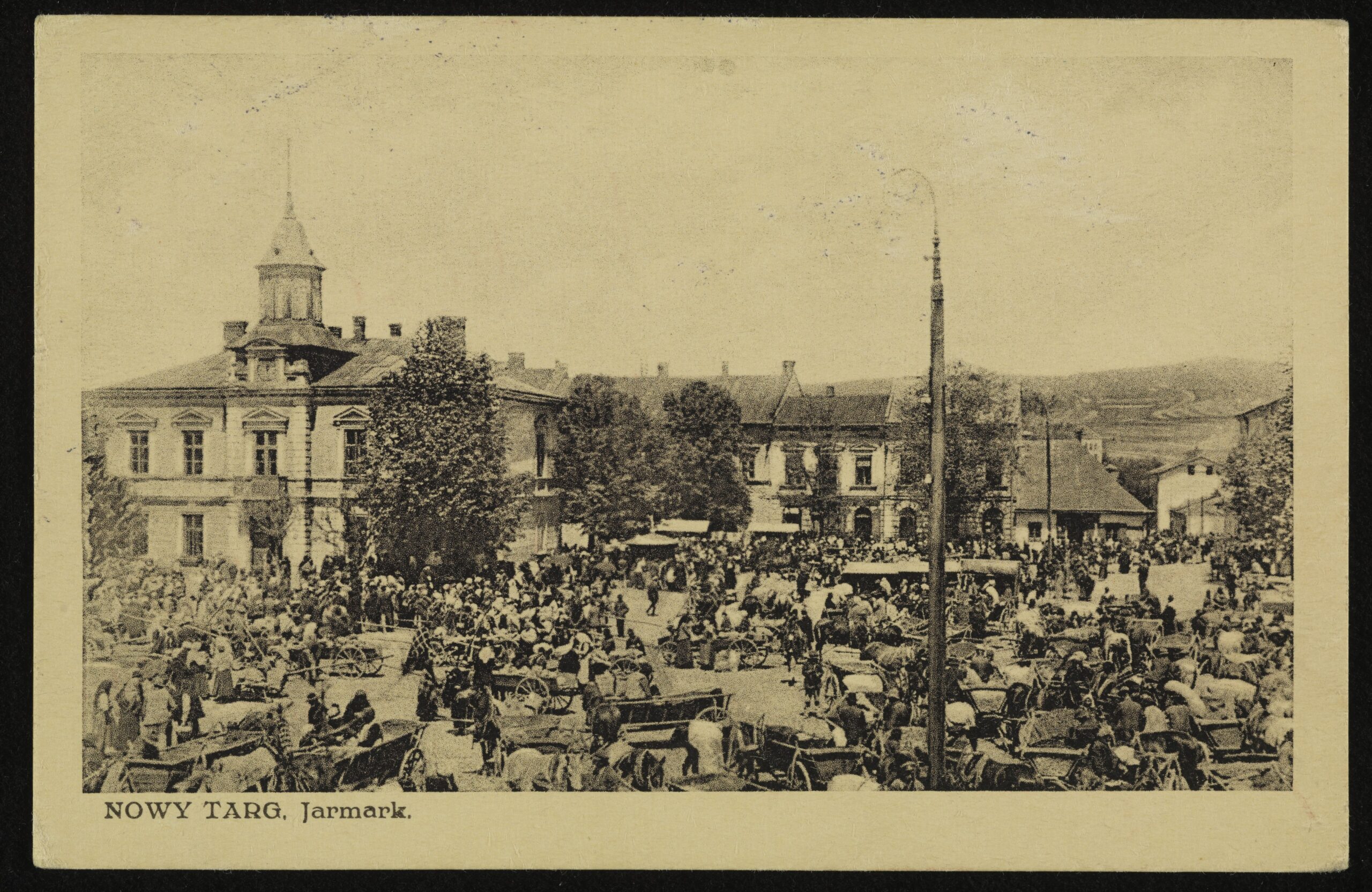
The finest market hall we know in Poland. Wrocław Market Hall stands on Piaskowa street by the Oder, close to Ostrów Tumski and a ten-minute walk from the Rynek. It was built in 1908–1909 to a design by the city’s building councillor Richard Plüdemann, and its whole roof rests on parabolic reinforced-concrete arches, so daring for their time that similar halls only appeared in Paris around 1920 (history on the hall’s website).
Downstairs you will find fish, meat and cured meats from local producers, fruit, vegetables, bread, sweets and flowers. The gallery has clothes and small services: a cobbler, a leather goods repairer, a watchmaker and a hairdresser. The hall is open Monday to Saturday from 8:00 to 18:30 and closed on Sunday. If you are in Wrocław for a weekend, come on Saturday morning. There is more about the city in our guide to things to do in Wrocław.
13. Hala Mirowska, Warsaw
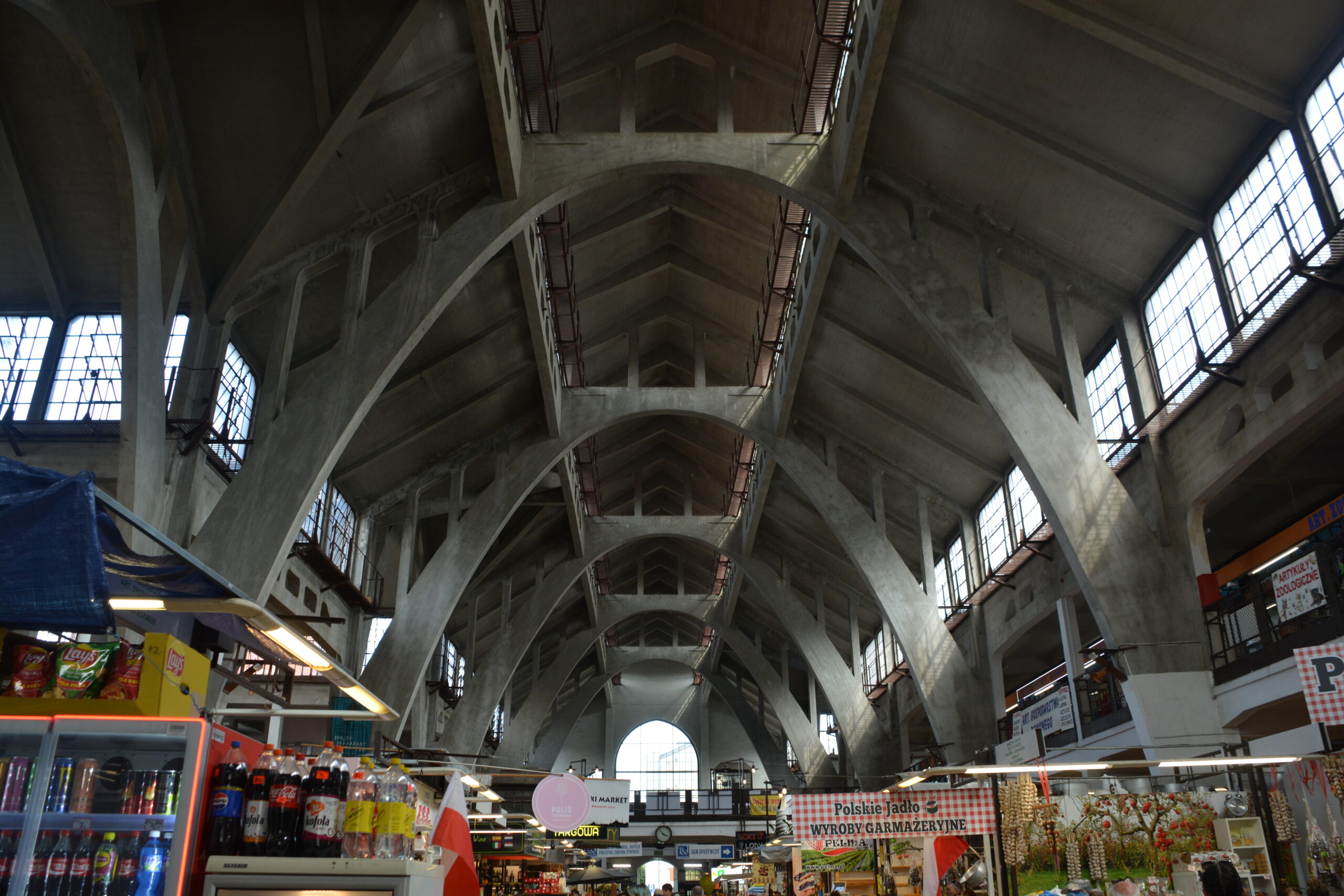
The pair of brick halls, Mirowska and Gwardii, stands in central Warsaw, about a quarter of an hour’s walk from the Palace of Culture and Science. They were built in 1899–1901 and until 1944 were the largest commercial building in Warsaw. During the Warsaw Uprising the Germans burned them down, and a plaque at the north-west corner of Hala Mirowska commemorates 510 Varsovians executed there. The rebuilt hall belongs to the Społem cooperative, which gives the opening hours as Monday to Friday 7:00–20:00, Saturday 7:00–18:00 (Społem).
Inside there is a supermarket and stalls with toiletries, clothes and household goods. The most interesting part, though, is outside around the hall: pavilions and tables piled with vegetables, fruit, mushrooms, cheese, eggs and flowers. This is how Warsaw shops “the old way”. We like it best in autumn, when the tables are covered in wild mushrooms and apples.
14. Bazar Różyckiego and Hala Koszyki, Warsaw
Two faces of the same city. Bazar Różyckiego in Praga, on the right bank of the Vistula, was founded in 1882 by the pharmacist Juliusz Różycki and for a long time was the main market for the whole district. Before the war around 300 Jewish families made their living trading here, under communism you could get “anything” here, and the surrounding district had a reputation as the roughest part of Warsaw (Stacja Praga). Today the bazaar is smaller and sleepier but still alive, and a walk through Praga that includes it is one of the best things you can do in Warsaw.
Hala Koszyki on Koszykowa street is the opposite: a historic market hall from the early 20th century turned into a food hall with restaurants and bars. You will not do much shopping here, but you will eat very well. If you want to see how a Polish market hall became a modern food hall, this is the place.
15. Hala Targowa and St Dominic’s Fair, Gdańsk
Gdańsk’s market hall stands on Dominikański Square, right on the boundary between the Old Town and the Main Town. Since its renovation it is more of a place to eat: the ground floor has 17 food outlets serving dishes from around the world as well as local cooking, and the basement has a DELI zone with 10 stalls of fresh produce (halatargowa.pl).
Gdańsk also has one of the oldest fairs in Europe. St Dominic’s Fair (Jarmark św. Dominika) continues a tradition dating back to the 13th century, and every summer it fills the whole old town with stalls of amber, antiques, crafts and food. The organiser has already published dates several years ahead: 24 July–15 August 2027 and 22 July–15 August 2028 (jarmarkswdominika.pl). If you are heading to the Polish seaside in summer, it is a short hop from anywhere in the Tricity.
16. Rynek Jeżycki, Poznań
One of the oldest and best-loved markets in Poznań sits in the middle of Jeżyce, a district now full of cafés and bistros. It sells vegetables, fruit, bread, dairy and cured meats, organic cheeses, herbs and honey from family apiaries, plus clothes, small household goods and second-hand books. It is open Monday to Saturday from 6:00 to 20:00, and some of the flower stalls open on Sunday too (Targowiska Poznań). We would come on a Saturday morning to shop and then have breakfast in one of the cafés around the square.
When are markets in Poland open? Opening times at a glance
Days and hours are taken from the websites of the towns and market operators. Where the official source gives no hours, we only list the days.
| Market | Where | Days | Hours | Getting there |
|---|---|---|---|---|
| Nowy Targ fair | Nowa Targowica, Targowa | Thursday, Saturday (car market on Sunday) | 6:00–15:00 (Sunday 6:00–14:00) | about 1¼ h from Kraków, 30 min from Zakopane |
| Jabłonka market | village centre | Wednesday | early morning | about 1½ h from Kraków, 1 h from Zakopane |
| Cieszyn markets | Katowicka, Sarkandra, Stawowa 6 | Wednesday, Saturday | 5:00–12:30 | about 1¼ h from Katowice, 2 h from Kraków |
| Zabełków | Nowa 2 | Tuesday, Thursday, Saturday | mornings | about 1 h from Katowice |
| Jarmark na Granicy, Chałupki | former border crossing | twice a year on a Sunday (May, September) | all day | about 1 h from Katowice |
| Wałbrzych antiques fair | Rynek | Saturday | 6:00–14:00 | about 1½ h from Wrocław |
| Bolesławiec town market | Jeleniogórska | not listed online | not listed online | about 1½ h from Wrocław |
| Kudowa-Zdrój market | Łąkowa 1 | all year | not listed online | just over 2 h from Wrocław |
| Stary Kleparz, Kraków | by the Barbican | Monday–Saturday (Sunday only some stalls) | not listed online | city centre |
| Hala Targowa / Unitarg, Kraków | Grzegórzecka | daily, flea market on Sunday | roughly 6:00–18:00 | 1 km from the centre |
| Plac Nowy, Kraków | Kazimierz | Monday–Saturday | 9:00–18:00 | Kazimierz |
| Hala Targowa, Wrocław | Piaskowa | Monday–Saturday | 8:00–18:30 | city centre |
| Hala Mirowska, Warsaw | plac Mirowski 1 | Monday–Saturday | 7:00–20:00 (Saturday until 18:00) | city centre |
| Hala Targowa, Gdańsk | plac Dominikański 1 | not listed online | not listed online | Old Town |
| St Dominic’s Fair, Gdańsk | Old Town | 24 July–15 August 2027 | all day | Old Town |
| Rynek Jeżycki, Poznań | Jeżyce | Monday–Saturday | 6:00–20:00 | Jeżyce |
For the markets where hours are missing, one simple rule applies: arrive by nine and you will not miss anything.
What to buy at Polish markets (and what to skip)
We deliberately do not quote prices. At markets they change from week to week and above all with the seasons, and prices copied from forums tend to be out of date. Instead, here is what we think is worth your time. One thing to keep in mind from the start: if you are flying back to Great Britain, most meat and all dairy products cannot come home with you (more on that below), so the cured meats and cheeses are for eating in Poland.
Worth buying
- Cured meats and sausages from small producers. Kabanos, kiełbasa, smoked bacon, pâtés. At the market you can taste before you buy and get a single piece rather than a whole pack, which is perfect for a picnic or a hotel-room supper.
- Pickled cucumbers and sauerkraut, mushrooms, honey. Home-made ogórki kiszone and kapusta kiszona straight from the barrel taste nothing like the jars in a British supermarket. In autumn there are wild mushrooms, and all year round honey from smaller apiaries. Honey is one of the few animal products you can still take back to the UK.
- Cheese. Above all oscypek, a smoked sheep’s milk cheese from Podhale with EU protected designation of origin. Be careful: markets also sell plenty of “oscypki” made from cow’s milk without the label, which share little more than the shape with the real thing. Besides oscypek, look for twaróg (curd cheese), bundz and bryndza podhalańska. Eat them in Poland; dairy cannot currently be taken into Great Britain.
- Seasonal fruit and vegetables. Strawberries, blueberries and cherries in summer, apples and plums in autumn. At the market they come from the grower, not from a warehouse.
- Bolesławiec pottery, ideally bought in Bolesławiec itself. It packs well in a suitcase if you wrap it in clothes.
- Polish cosmetics (Ziaja, Bielenda, Eveline and others) are usually cheaper in Poland than in the UK. You will often get a better deal than at a market stall in the Rossmann or Hebe chains, where you can also be sure the products are within their use-by date.
- Christmas decorations and artificial trees in Kudowa, which shoppers praise year after year in online forums.
Probably not worth it
- Designer clothes and perfumes. Markets are full of cheap copies of well-known brands. Counterfeits are not legal to sell, the quality matches the price, and you have no chance of a refund at a market stall.
- Electronics. Without a receipt and warranty it is a gamble. If you do buy, ask for a receipt: according to the Polish consumer protection office (UOKiK), a receipt or card payment confirmation is proof of purchase when you make a complaint.
- Cigarettes and alcohol from stalls. Without a receipt you have no idea where the goods came from. If you want to buy them, do it in a shop and keep an eye on the UK allowances (see below).
- Anything “to haggle over”. You can bargain a little on clothes and small items, but only gently. Polish markets are not a souk.
💡 Bring a shopping bag and a small cool bag. Plastic bags are handed out at markets, but not always. A cool bag is useful if you are buying for a picnic or a self-catering apartment: cured meat and cheese do not like a hot car or a sunny hotel windowsill in summer.
Paying, money and taking things home
The currency is the Polish złoty (PLN); roughly, 1 PLN is about 20p or €0.23. At markets you mostly pay in cash. Cards work in permanent pavilions and market halls, but only at some outdoor stalls. Take money out of bank ATMs and always choose to be charged in PLN, not in pounds or euros. If an ATM or card terminal offers to convert the amount for you (“dynamic currency conversion”), decline: it always costs more.
Bringing goods back to Great Britain. Since Brexit, Poland is outside the UK customs area, so the British personal allowances apply. Within them you pay no tax or duty, above them you have to declare the goods and pay tax and duty on everything in that category. According to GOV.UK, the allowances per adult are:
| Goods | Allowance per person |
|---|---|
| Tobacco (one of the following, or a split) | 200 cigarettes, 100 cigarillos, 50 cigars or 250 g of tobacco |
| Spirits and other drinks over 22% ABV | 4 litres |
| Fortified wine and other drinks up to 22% ABV (not beer, cider or wine) | 9 litres (can be split with the spirits allowance) |
| Wine (still or sparkling) | 18 litres |
| Beer and cider | 42 litres |
| Other goods | up to £390 in total value |
Food is the bigger catch. Because of animal disease outbreaks in the EU, travellers currently cannot bring cheese, milk, butter, yoghurt or other dairy products, pork, beef, lamb or goat, or products made from them such as sausages into Great Britain from the EU (GOV.UK). That rules out kabanos, kiełbasa and oscypek. Fruit, vegetables, honey, eggs and poultry are allowed, and so are bread, cakes, biscuits, chocolate and packaged soups. The rules change with the disease situation, so check GOV.UK shortly before you travel. If you live in Ireland or elsewhere in the EU, none of this applies: goods for personal use move freely within the EU, with only guide levels for alcohol and tobacco (Your Europe).
Christmas markets in Poland
Advent markets are a completely different category: Wrocław, Kraków, Katowice, Gdańsk and Poznań have hundreds of wooden stalls, mulled wine and a full programme. You will find dates, opening times and tips for 2026 in our separate guide to Christmas markets in Poland, and in more detail for Wrocław, Kraków and Katowice.
Where to stay for a market weekend in the city
The regional markets are easy day trips, but in the cities it is worth staying overnight so you can hit the market first thing in the morning, before the crowds arrive. We picked hotels within walking distance of the best markets.
Kraków
- Hotel Polski Pod Białym Orłem: a historic hotel on Pijarska street right by St Florian’s Gate, a few minutes’ walk from Stary Kleparz.
- Hotel Saski Krakow Curio Collection by Hilton: a more upmarket option on Sławkowska street, between the Rynek and Kleparz.
- More options: places to stay in Kraków.
Wrocław
- Great Polonia Wrocław Tumski: on Słodowa Island, across the river from Hala Targowa, just a few minutes from the market.
- PURO Wrocław Stare Miasto: a modern hotel in the centre, close to the Rynek.
- More options: places to stay in Wrocław.
A little history: why markets are in Poland’s blood
Polish towns grew up around their marketplaces. Kraków’s Rynek is one of the largest medieval squares in Europe, and like Wrocław’s Rynek or Gdańsk’s Long Market (Długi Targ) it was laid out as a place to trade. When Kazimierz near Kraków was founded in 1335 it got its own square and town hall, and its Plac Nowy is still a market today. Gdańsk’s St Dominic’s Fair continues a tradition from the 13th century, and in 2027 it will hold its 767th edition.
The turn of the 19th and 20th centuries brought the era of covered market halls. Warsaw built the Mirowska and Gwardii halls in 1899–1901, and Wrocław its Hala Targowa with its bold concrete structure in 1908–1909. Warsaw’s Bazar Różyckiego had already been opened in 1882 by the pharmacist Juliusz Różycki, and before the war around 300 Jewish families made their living there. The war destroyed most of this: Hala Mirowska burned during the Warsaw Uprising and the Wrocław hall lost part of its roof. Rebuilding was slow, and for a while after the war the Mirowska hall served as a bus garage.
Then came the era many Poles still remember. Under communism and in the 1990s, the Polish bazaar was the place where you could find anything from jeans to video cassettes, and the border markets in Cieszyn, Kudowa and Chałupki enjoyed a golden age when coachloads of Czech shoppers poured in. Those days are over. The border markets have shrunk and some have disappeared, but the ones that survived have gone back to what markets were always for: food, seasonal vegetables and people selling what they have grown or made themselves.
FAQ
What are the best markets in Poland?
In the cities: Stary Kleparz and Plac Nowy in Kraków, Hala Targowa in Wrocław, Hala Mirowska in Warsaw, the market hall in Gdańsk and Rynek Jeżycki in Poznań. For a day trip: the Nowy Targ fair below the Tatras (Thursday and Saturday 6:00–15:00), Cieszyn on the Czech border (Wednesday and Saturday 5:00–12:30) and the Saturday antiques fair in Wałbrzych near Wrocław.
When are markets in Poland open?
Every market has different days. Cieszyn on Wednesday and Saturday, Zabełków on Tuesday, Thursday and Saturday, Nowy Targ on Thursday and Saturday, Jabłonka on Wednesday, and Kudowa, according to the operator, all year round. Outdoor markets usually finish around midday, while city market halls stay open into the evening. Arrive as early in the morning as you can.
Are markets in Poland open on Sunday?
Mostly not. Since 2018 Poland has banned trading on Sundays and public holidays, except for a few trading Sundays (in December 2026 these are 6, 13 and 20 December). The regional markets do not run on Sundays. The exceptions are antiques and flea markets, such as the Sunday book and antiques fair at Hala Targowa in Kraków, the car market in Nowy Targ and the Jarmark na Granicy in Chałupki.
What are the opening hours of Wrocław Market Hall?
Hala Targowa on Piaskowa street is open Monday to Saturday from 8:00 to 18:30 and closed on Sunday. Food is sold on the ground floor, with clothes and small services such as a cobbler and a watchmaker on the gallery. It is about ten minutes’ walk from the Rynek.
Where is the flea market in Krakow?
On weekdays and Saturdays head to Plac Nowy in Kazimierz, where the flea market with antiques, books, old photographs and porcelain runs Monday to Saturday from 9:00 to 18:00. On Sunday the place to go is the book and antiques fair at Hala Targowa in the Grzegórzki district, about a kilometre from the centre.
Can I pay by card at Polish markets?
In the market halls and permanent pavilions, yes. At outdoor stalls you will mostly need cash in złoty (1 PLN is roughly 20p or €0.23). When paying by card or using an ATM, always choose to be charged in PLN, not in pounds or euros.
What is worth buying at a Polish market?
Cured meats and kabanos from small producers, pickled cucumbers and sauerkraut from the barrel, honey, mushrooms, seasonal fruit, cheese (genuine oscypek made from sheep’s milk has protected designation of origin), Bolesławiec pottery and Polish cosmetics. If you are going back to Great Britain, eat the meat and cheese in Poland, because they cannot currently be brought into the UK. Skip designer clothes and electronics: counterfeits and missing warranties are not worth it.
What can I bring back to the UK from Poland?
Per adult: 200 cigarettes (or 250 g of tobacco), 4 litres of spirits, 18 litres of wine, 42 litres of beer or cider and other goods worth up to £390, without paying tax or duty. Cheese and other dairy products, pork, beef and sausages from the EU are currently not allowed into Great Britain. Honey, fruit, vegetables and pottery are fine.
Where next
- Christmas markets in Poland: dates and tips for Advent markets from Wrocław to Gdańsk.
- Things to do in Wrocław: what to see in the city with Poland’s most beautiful market hall.
- What to see in Poland: trip ideas you can combine with a market visit.
- Most beautiful places in Poland: for turning a market trip into a longer weekend.
- Polish Tatras: Zakopane and around, half an hour from Nowy Targ.
- Karkonosze, Poland: Karpacz and Szklarska Poręba, close to Jelenia Góra and Bolesławiec.
Potřebujete pomoct s cestováním?
-
Ubytování 🏨
Vyberte si to nejlepší ubytování, ať už jste kdekoliv, přes Booking.com. -
Půjčení auta 🚗
Auto si snadno najdete přes Booking.com, kde máte často slevu díky ubytování, nebo Rentalcars.com, kde porovnáte nabídky většiny půjčoven. -
Zážitky 🎟️
Přes GetYourGuide.com si vyberete z nejrůznějších výletů i zážitků po celém světě, navíc se zrušením zdarma do 24 h předem.