Last updated 27.11.2026
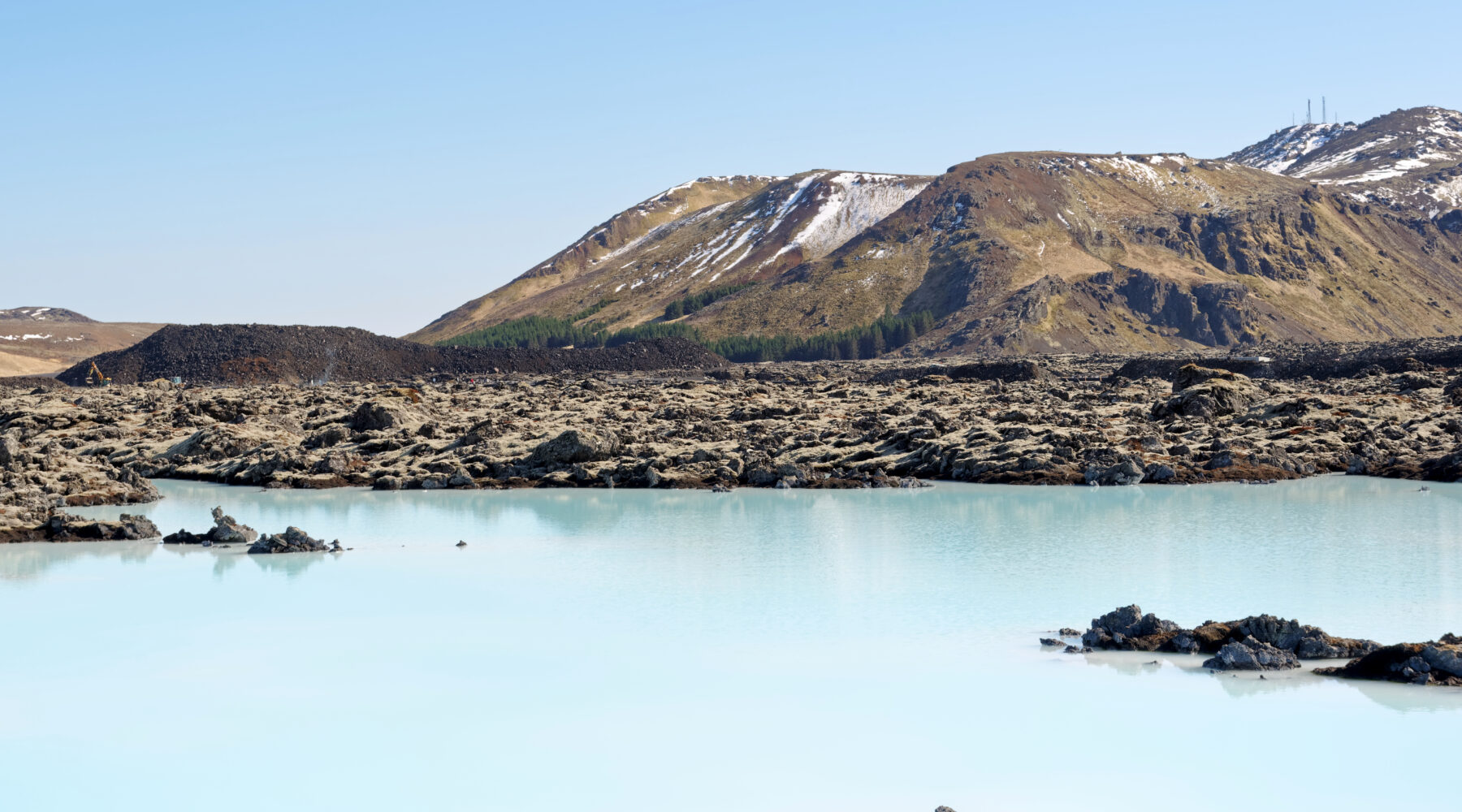
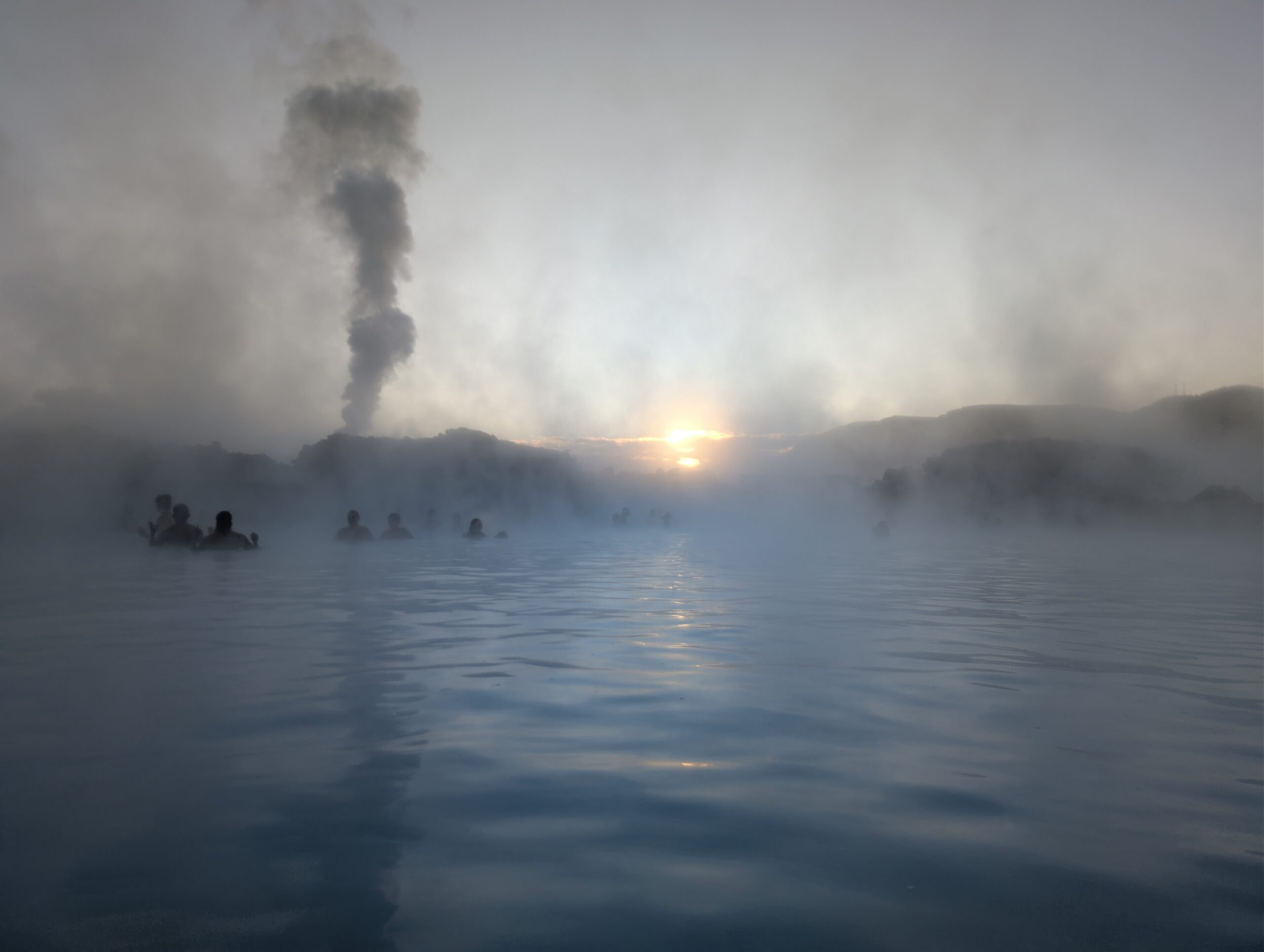
If you have ever looked up Iceland online, you have almost certainly seen the Blue Lagoon: milky blue water, black lava all around, steam rolling across the surface in winter and people wearing white mud masks. In Icelandic it is Bláa lónið, and it is the most famous place to bathe in the country. It is also the place travellers argue about most. For some, Blue Lagoon Iceland is a must. For others, it is an overpriced tourist trap next to a power station.
The truth sits somewhere in between. The Blue Lagoon in Iceland really did start life as run-off from a geothermal power plant, it really is not cheap and you really will not have it to yourself. On the other hand, it is twenty minutes from the airport, so it fits neatly around your arrival or departure, and sitting in water at around 38 °C in the middle of a lava field is something you will struggle to find anywhere else. Below we cover what the tickets cost, which package makes sense, how to get there without a car, what the eruptions near Grindavík mean for your visit and where to go instead if the price or the crowds put you off.
Blue Lagoon Iceland at a glance
- Where it is: on the Reykjanes Peninsula, in a lava field near Grindavík, about 20 minutes by car from Keflavík Airport and 45 minutes from Reykjavík. The address is Norðurljósavegur 9, 240 Grindavík.
- Tickets must be booked in advance for a specific date and time. Prices are dynamic: the basic Comfort package starts at roughly 12,000 ISK (about £70), Premium at 15,000 ISK and Signature at 18,000 ISK.
- Children can go in the water from the age of 2. Ages 2 to 11 pay a reduced rate, and under-8s must wear armbands, which are handed out at the entrance.
- It is open every day of the year. In winter from 8:00 to 22:00 (until 20:00 from January to May), in summer from 7:00 to 23:00.
- You can stay as long as you like. Your time slot only applies to arrival, not departure. Most people find two to three hours enough.
- Parking is free, and direct buses run from both the airport and Reykjavík.
- Eruptions closed the lagoon several times between 2023 and 2025. Magma is still building up under nearby Svartsengi, so check the current situation before you travel.
- Cheaper and quieter alternatives exist: Sky Lagoon near Reykjavík, the Secret Lagoon in Flúðir, Hvammsvík in Hvalfjörður fjord or Earth Lagoon by Lake Mývatn.
What is the Blue Lagoon in Iceland and where does the water come from?
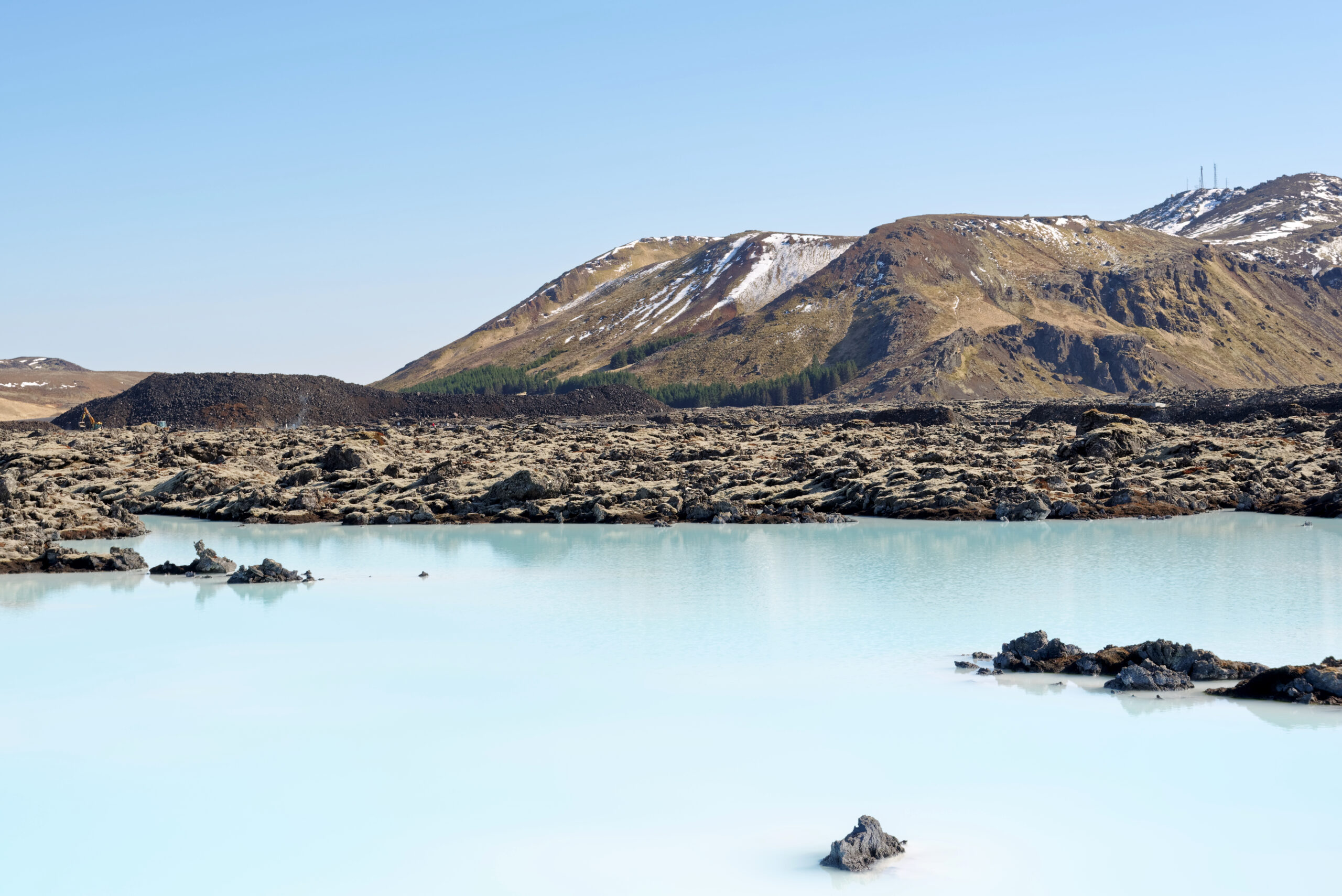
Forget the idea of a natural hot spring bubbling out of the ground. Right next door stands the Svartsengi geothermal power plant, which went into operation in 1976. It pumps a hot mixture of seawater and fresh water from boreholes around two kilometres deep, uses the heat, and lets what is left flow out into the lava field. There, white silica began to settle out of the water, sealed the porous lava, and the run-off turned into a pool.
The first person to bathe in it regularly was Valur Margeirsson in 1981. He had psoriasis and found that the water helped. Things moved quickly after that: the first bathing facilities opened in 1987, the Blue Lagoon company was founded in 1992, and a few years later came a psoriasis clinic and the lagoon’s own skincare range. Psoriasis treatment is still offered today, kept separate from the tourist side.
A few numbers worth knowing:
- Water temperature averages 37 to 40 °C, reaching 42 °C in places.
- Depth averages 1.2 metres and never goes much beyond 1.4 metres, so even non-swimmers have nothing to worry about.
- The lagoon covers about 8,700 m² and holds roughly six million litres of water, which renews itself in about 40 hours (another document from the operator says 48 hours).
- No chlorine is used. Regular testing shows that outside bacteria cannot survive in water this salty and mineral-rich. Salinity is given as around 2.5%, slightly lower than seawater.
- The colour is not dye. It comes from silica, which scatters the light: in sunshine the water looks turquoise, under cloud it is more of a greyish white.
In 2012 National Geographic named the Blue Lagoon one of the 25 wonders of the world, and the whole Reykjanes Peninsula is a UNESCO Global Geopark. The first is mostly a marketing badge. The second makes real sense: the lagoon sits in one of the most geologically active landscapes in Europe, and recent years have shown just how literally that is meant.
Blue Lagoon Iceland tickets and prices
You cannot get in without a booking. Tickets are sold for a specific date and time slot. The operator uses dynamic pricing: the more demand, the higher the price, so the same package costs something different on a Tuesday morning in January than on a Saturday afternoon in August. The figures below are the lowest “from” prices in the official price list. They change often, so treat them as a rough guide and check with the operator before you buy.
| Package | Price from (approx.) | What you get on top of the cheaper option |
|---|---|---|
| Comfort | 12,000 ISK (about £70) | Entry to the lagoon, sauna, steam room and cold plunge pool, Silica mud mask at the mask bar, towel, shampoo and conditioner, locker, one soft drink |
| Premium | 15,000 ISK (about £90) | Bathrobe, two extra masks (algae, mineral or lava), any drink including alcohol, a small 10 ml Silica mask to take home |
| Signature | 18,000 ISK (about £110) | Two drinks and a set of Blue Lagoon skincare worth around 14,000 ISK (about £85) |
| Retreat Spa (5 hours) | 89,000–109,000 ISK (about £530–650) per changing suite for 1–2 people | Private changing suite, subterranean spa, the separate Retreat Lagoon, the Blue Lagoon Ritual and access to the main lagoon too; age 12 and over only |
| Retreat Spa (full day) | 159,000 ISK (about £950) per changing suite | Arrive from 8:00 and leave by 20:00 |
| Children 2–11 | 2,000 ISK (about £12) | Entry, mask, towel and a drink; no locker or bathrobe |
The operator’s website shows prices based on where you are connecting from, often in US dollars (Comfort from roughly 100 USD). You can switch the currency at the bottom of the page. Besides the three main packages, seasonal offers come and go, such as “Lagoon and Lava”, which is Premium plus a two-course lunch at Lava restaurant.
A few rules worth knowing before you buy:
- You have roughly an hour’s leeway on arrival. If your flight is late or the bus is held up, they will usually still let you in, but that is not guaranteed.
- Cancelling more than 24 hours ahead is free for individual bookings; after that you will not get your money back. Changing the date can cost more, because the dynamic price is recalculated.
- Buy directly from bluelagoon.com. Travel agents and tour sites sell tickets too, but they have no way of discounting the entry itself. Going through them only makes sense for packages that include transport or another excursion.
- Some older guides say children under 13 get in free. The operator’s current price list charges a reduced rate for children aged 2 to 11.
- Swimwear hire costs around 1,000 ISK according to the price list, a bathrobe around 1,900 ISK. You can also buy swimwear in the shop.
💡 Comfort or Premium? We would go for Comfort. The main event, meaning the lagoon, sauna, steam room and mud mask, is the same in both. With Premium you are mostly paying extra for a bathrobe and two more masks. The robe is welcome in winter, when nobody wants to get out of the water, but you can hire one separately. If you would rather have a beer or a glass of wine at the in-water bar than a juice, bear in mind that Comfort only includes a soft drink.
Where to stay near the Blue Lagoon
The operator runs two hotels right next to the Blue Lagoon, both expensive and both with their own access to the spa. For cheaper beds, people head to Keflavík (Reykjanesbær) by the airport or to Reykjavík. We do not recommend Grindavík, the nearest town, as a base: it was evacuated several times during the eruptions between 2023 and 2025. It is open again, but cracks in the streets are still a fact of life and access can change overnight if activity picks up again.
- Silica Hotel at Blue Lagoon Iceland (by the lagoon): a boutique hotel about 500 metres from the Blue Lagoon with its own private lagoon for guests, a bar, a gym and free parking. It is rated 9.5 on Booking.com, and guests particularly praise the breakfast and the location. Good for one special night, not for a whole stay.
- The Retreat at Blue Lagoon Iceland (by the lagoon): a luxury hotel with 60 suites surrounded by the lagoon’s water. Unlimited access to the Retreat Spa, the Retreat Lagoon and the main Blue Lagoon is included, and breakfast is served à la carte. Rated 9.3. If you are planning the Retreat Spa anyway, you might as well sleep here.
- Hotel Berg by Keflavik Airport (Keflavík): a boutique hotel by the harbour in central Keflavík, 3.5 km from the airport, with a rooftop hot tub, free parking and airport transfers included. Breakfast is extra. Rated 8.5. A good choice for your first or last night.
- Courtyard by Marriott Reykjavik Keflavik Airport (Keflavík): a four-star hotel 3.2 km from the airport and about 20 km from the lagoon, with a restaurant, bar, gym and free private parking. Rated 8.4; guests like the airport shuttle and the small food shop on site.
More options: hotels in Keflavík and Reykjanesbær or hotels in Reykjavík, from where buses run to the lagoon several times a day. If you are staying in Reykjavík, have a look at our guide to things to do in Reykjavík as well.
Blue Lagoon Iceland opening hours and the best time to go
The Blue Lagoon is open every day of the year, including Christmas and New Year’s Eve. You need to be out of the water half an hour before closing time.
| Period | Open |
|---|---|
| 1 January – 31 May | 8:00–20:00 |
| 1–14 June | 8:00–22:00 |
| 15 June – 20 August | 7:00–23:00 |
| 21 August – 31 December | 8:00–22:00 |
| Christmas Eve / New Year’s Eve | 8:00–16:00 / 8:00–18:00 |
The official bus operator lists slightly different winter cut-off dates on its website (open until 22:00 right up to the end of January). If you are planning an evening visit in January, go by what the lagoon’s booking system shows.
When is it best? The busiest time is between midday and late afternoon, when the buses from Reykjavík meet everyone who has just landed. We would go either first thing in the morning or in the evening. In winter the evening has an extra perk: from September to April it gets dark early, and on a clear night with an active sun you might catch the northern lights from the water. Do not count on it, though; the floodlit complex and the steam over the surface tend to hide them.
Mornings have their own winter magic. In December and January the sun does not rise until around eleven, so a morning dip comes with a sunrise.
Winter or summer? The water is the same temperature all year; only the surroundings change. In winter the contrast between frost, steam and hot water is at its strongest, and the short dash from the changing rooms to the water in freezing air gets the heart going. In summer it is light all the time, there are more people and the lagoon feels more like a big swimming pool. You do not need to worry about weather closures: according to the operator, it has happened only three times in the past ten years, and that was because of hurricane-force winds, not snow or frost.
Where does it fit in your itinerary? The first or last day works best. The lagoon lies between the airport and Reykjavík, buses run straight from the airport and there is luggage storage on site. After an overnight or early flight, two hours soaking in warm water beats hanging around waiting for your hotel room.
How to get to the Blue Lagoon from Keflavík and Reykjavík
The lagoon is about 23 kilometres from Keflavík Airport and about 50 kilometres from Reykjavík. Iceland has no trains, so your options are car, bus or taxi.
By car
From Reykjavík or the airport, take Route 41 (Reykjanesbraut) to the turn-off for Grindavík and the Blue Lagoon, then follow Route 43 for about ten kilometres to Norðurljósavegur. It is well signposted. From the airport it takes about 20 minutes, from Reykjavík around 45 minutes. Parking is free, and from the car park a short paved path leads through the lava field to the main building. According to the operator, wheelchair users and people with walking frames may need some help along the path.
In winter, expect ice and strong wind. You can check road conditions before setting off at umferdin.is. During eruptions, nearby roads are closed and stopping on the Reykjanesbraut is not allowed; more on that below.
By bus from Reykjavík and the airport
The lagoon’s official transport partner is Destination Blue Lagoon, with buses from central Reykjavík and from the airport. It sells either transport only or a ticket-plus-transfer package. Reykjavik Excursions runs a similar service from the BSÍ terminal; a return ticket without entry costs from about 7,000 ISK (about £40), and for an extra fee they will pick you up from your hotel. Both companies want you to have your lagoon ticket booked in advance.
Destination Blue Lagoon timetable in the winter season (1 November to the end of April):
- Reykjavík → lagoon: every hour from 8:00 to 11:00, then at 13:00, 14:00, 16:00 and 18:00
- Lagoon → Reykjavík: 12:15, 13:15, 15:15, 16:15, 18:15, 20:15 and 22:15
- Airport → lagoon: all year at 7:30, 9:30, 12:30 and 16:30
- Lagoon → airport: all year at 12:00, 14:30 and 16:00
From 15 June to 20 August, buses leave Reykjavík every hour from 7:00 to 19:00 and return every hour from 11:15 to 23:15. The 7:30 departure from the airport suits early-morning arrivals from Europe, UK flights included: you are at the lagoon around eight, leave your case in storage and carry on into town in the afternoon. Check your own flight times against the timetable, as schedules vary by airline and season.
Taxis and tours
Taxis do go to the lagoon, but the fare depends on the size of the car and the distance, and in Iceland that is never cheap. More popular are full-day tours from Reykjavík that combine the lagoon with the Golden Circle or the lava fields of Reykjanes. They make sense if you do not have a car and want to see more in a day. If you have a car, you do not need one.
Eruptions near Grindavík: is the Blue Lagoon in Iceland open?
After roughly eight hundred quiet years, the volcanoes of the Reykjanes Peninsula have woken up again. First, between 2021 and 2023, around Mount Fagradalsfjall in uninhabited countryside, then from December 2023 along the Sundhnúkur crater row, which lies just a few kilometres from the lagoon and right above Grindavík.
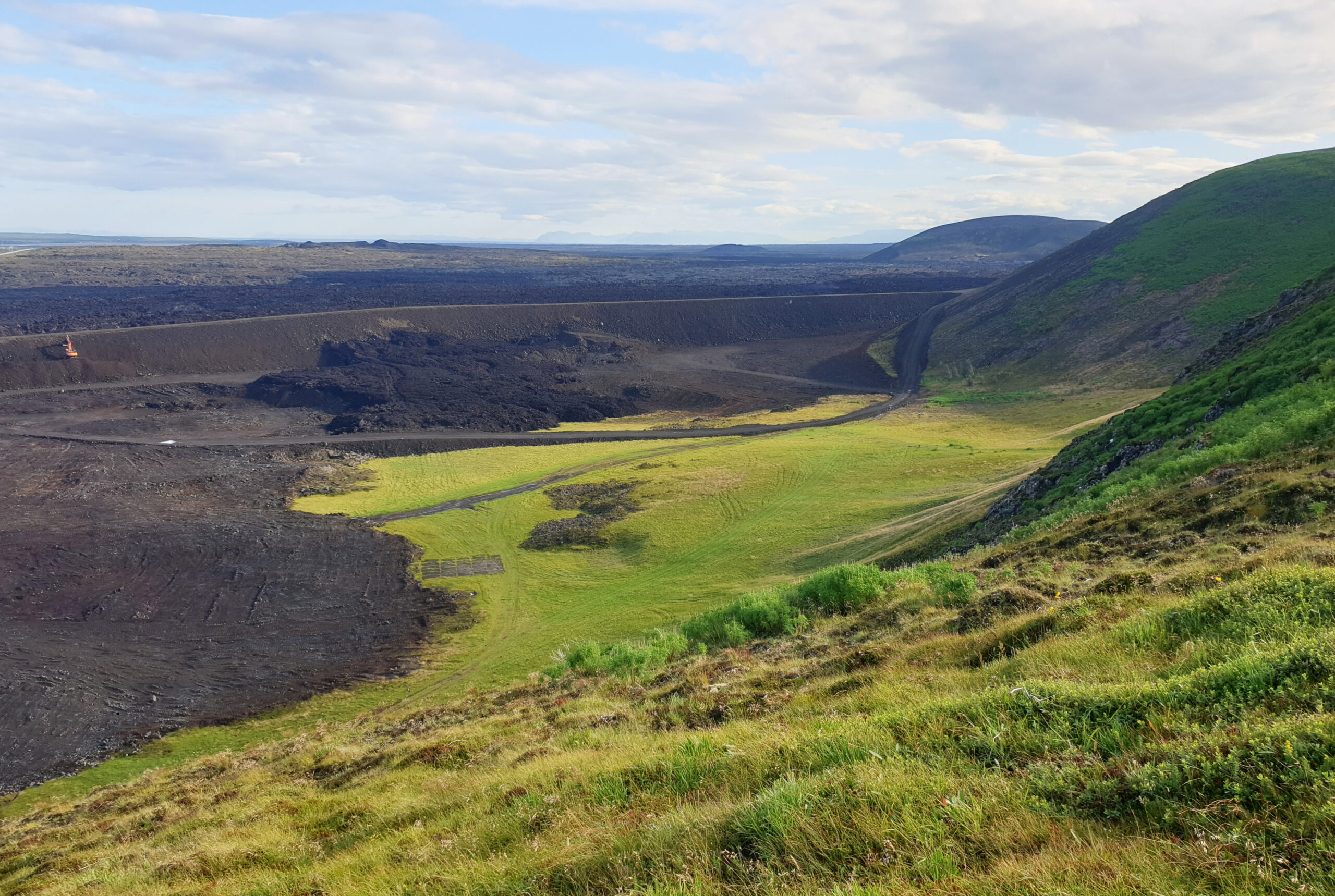
For the Blue Lagoon, that meant a series of closures. The first precautionary closure came in November 2023, when earthquakes preceded the evacuation of Grindavík, and throughout 2024 the lagoon shut after every eruption for anything from a few days to several weeks. In November 2024, lava flowed over and destroyed the car park, but the lagoon itself and its buildings were protected by earth barriers that had gradually been built up around Svartsengi and the lagoon. There were also short closures in 2025. The most recent eruption lasted from 16 July to 5 August 2025.
What is the situation now? At the time of writing there is no eruption under way, and both the lagoon and Grindavík are open. However, the Icelandic Meteorological Office reports that the ground under Svartsengi is still rising at a fairly steady rate as magma accumulates a few kilometres down. It considers another magma intrusion towards the Sundhnúkur crater row the most likely scenario, and that could end in an eruption. When, nobody can say. Before previous eruptions the warning was short, from about twenty minutes to just over four hours.
What this means in practice:
- Before you go, check vedur.is (the Met Office: volcanoes and earthquakes), safetravel.is (current alerts for visitors) and the lagoon’s own website.
- If an eruption starts, the lagoon is evacuated and closed, usually for at least a few days. Sort out what happens to your ticket directly with the operator, or with the travel company if you booked through one.
- The airport has carried on as normal during the eruptions so far, and flights were not cancelled. During an eruption, though, nearby roads may close, and stopping or parking on the Reykjanesbraut between Reykjavík and the airport is not allowed.
- Do not go and look at the lava on your own in closed areas. The ground around new lava fields is unstable, and volcanic gases can build up near an eruption site.
Inside the Blue Lagoon: how it works and what to bring
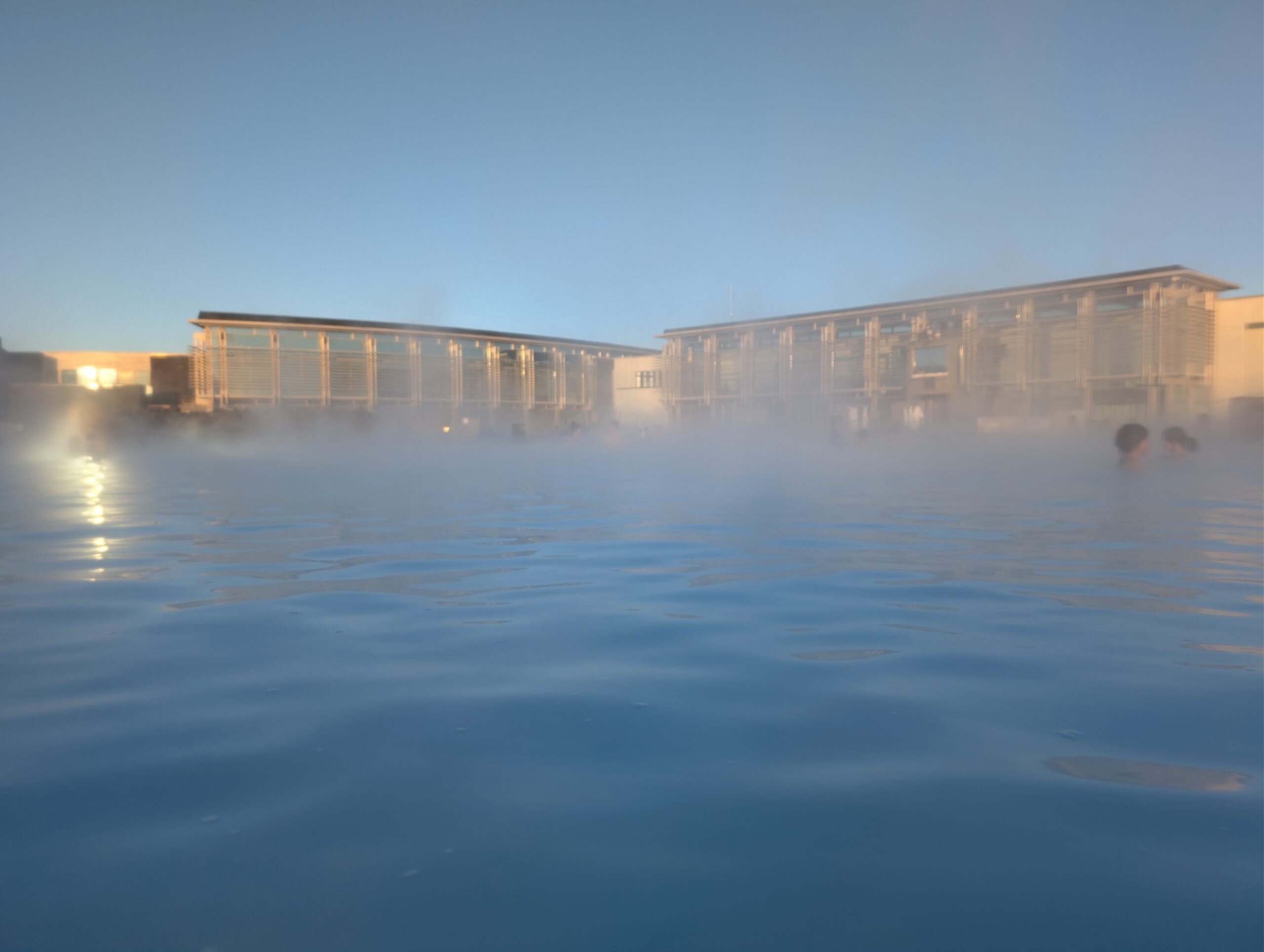
At the entrance you get a wristband that locks your locker and pays for extra drinks and masks, so your wallet can stay locked away. There are separate changing rooms for women and men, plus a gender-neutral changing room and changing rooms for guests with disabilities. In the lagoon you will find an in-water bar, the mask bar, a waterfall with a water-jet massage, a sauna, a steam cave, a cold plunge pool and a quiet zone where phones are not allowed. Twice a day, staff give a talk in the water about the history and science of the lagoon.
A few things worth knowing in advance:
- Showering without your swimsuit is compulsory. Icelandic pool rules are strict: you wash all over, without swimwear, before getting in the water. There are private shower cubicles in the changing rooms, so it is less awkward than it sounds.
- Protect your hair with conditioner. The water does wonders for your skin, but it can leave hair stiff and tangled. The operator’s advice is to wet your hair in the shower, apply conditioner, leave it in and tie long hair up. Conditioner is free in the showers.
- Leave jewellery in your locker. The mineral water is not kind to silver or other metals.
- Drink plenty. Time in hot water dehydrates you, and the drink in your package is not enough. There is a drinks bar by the entrance to the lagoon as well as the one in the water.
- A phone in a waterproof pouch is handy for photos, just not in the quiet zone. On sunny days sunglasses are useful too, as the white surface is quite dazzling.
- Your swimwear will survive. Just rinse it in cold water with a bit of soap when you get home.
- Children: they can go in the water from the age of 2; younger children cannot because of their sensitivity to the minerals. You can bring a child under two into the complex, but one adult will have to stay out of the water with them, in the café for example. Children aged 2 to 8 must wear armbands, which are provided free. Guests under 15 must be accompanied by an adult.
Food: there is the Blue Café for snacks, Lava restaurant (daily 11:30–21:00) serving Icelandic food in a dining room built into the lava, and Moss, a Michelin-starred restaurant open Wednesday to Sunday from 18:00. You can book Lava together with your entry ticket.
Alternatives to the Blue Lagoon in Iceland
The Blue Lagoon is far from the only place in Iceland where you can sit in warm water under the open sky. Here is how it compares with the four most common alternatives. Prices are the lowest “from” rates on the operators’ websites, and here too they vary by day and time.
| Place | Where | Entry from (approx.) | Age | Best for |
|---|---|---|---|---|
| Blue Lagoon | Reykjanes, 20 min from the airport | 12,000 ISK (about £70) | 2 and over | Anyone who wants that famous milky blue water and is passing on the way from or to the airport |
| Sky Lagoon | Kópavogur, about 15 min by car from central Reykjavík | 15,000 ISK (about £90), Saman package | 12 and over | An infinity-edge pool with ocean views and the seven-step Skjól ritual with sauna; a good choice if you are staying in the city |
| Secret Lagoon (Gamla Laugin) | Flúðir, about 100 km and 1.5 hours from Reykjavík | 4,500 ISK (about £27) | children under 14 around 300 ISK | Iceland’s oldest swimming pool, dating from 1891, with water at 38–40 °C and no frills; pairs well with a Golden Circle trip |
| Hvammsvík | Hvalfjörður fjord, about 45 min from Reykjavík | 6,900 ISK (about £40) | 10 and over | Eight natural pools right on the shore, some flooded by the tide, with the cold ocean in between |
| Earth Lagoon Mývatn (formerly Mývatn Nature Baths) | by Lake Mývatn in the north, about an hour from Akureyri | 7,900 ISK (about £47) | under-5s free | The “Blue Lagoon of the North”, with similarly milky water and smaller crowds; worth it on a trip round the island |
A few notes on the table. Sky Lagoon does not admit children under 12, so families with young children are left with the Blue Lagoon or the Secret Lagoon. Hvammsvík prices by time slot and evenings tend to be cheaper; non-swimmers should stay out of the sea pools, because the depth changes with the tide. The baths at Mývatn were recently renamed Earth Lagoon Mývatn, so you will find them under both names in sat-navs and on older maps. And the Secret Lagoon is anything but secret these days: coaches come out from Reykjavík, but it is still the most basic and the cheapest of the five.
If you are driving the Golden Circle, the Secret Lagoon is close at hand: from Flúðir it is a short hop to the Strokkur geyser in the Geysir area and to Gullfoss waterfall.
💡 How to choose: if you only have time for one soak and you are flying via Keflavík, the Blue Lagoon wins on logistics because it is on your way. If you are staying in Reykjavík and do not want to travel far, Sky Lagoon is more practical. And if what you really want is warm water rather than a brand, the Secret Lagoon or Hvammsvík will cost you roughly a half to a third as much.
What to see near the Blue Lagoon
The lagoon lies in the Reykjanes Geopark, and with a car you can combine your swim with a half-day loop of the peninsula. Closest to hand are Mount Þorbjörn above the lagoon and the town of Grindavík (stick to the marked paths because of the cracks). At the south-western tip of the peninsula you will find the bubbling Gunnuhver geothermal area, the Reykjanesviti lighthouse and the Bridge Between Continents, a footbridge across the rift between the North American and Eurasian plates. In the other direction, towards Reykjavík, lie Lake Kleifarvatn and the hot springs and mud pots of Seltún.
The 2021–2023 lava fields at Fagradalsfjall are a short way east of here. Whether and how you can walk to them depends on the current situation and any closures.
Is the Blue Lagoon worth it? What we would do differently
The Blue Lagoon tempts you to make it the highlight of the whole trip. You have paid for an expensive ticket, so you want to squeeze out every minute: tick off every mask, get the photo with a drink at the bar and fit in lunch at Lava as well. We would approach it differently, as two or three hours in warm water after a long flight and nothing more. The best moments there are not at the mask bar but in a steamy corner of the lagoon where nobody is queuing and all you can hear is the wind over the lava.
We would leave the phone in the locker. There are a million photos of the Blue Lagoon online, and every one of them is better than yours through a fogged-up pouch. The phone-free quiet zone is, in our view, the best idea in the whole place.
And we would not shy away from an ordinary Icelandic swimming pool either. Almost every small town has a municipal pool with hot tubs, where locals go after work to talk about the weather and politics, and entry costs a fraction of the lagoon’s price. That is where you learn the most about Iceland, not in a spa with a Michelin-starred restaurant. And if the Blue Lagoon does not work out because lava is flowing again, no harm done: the island has more hot water than you can get round in one trip.
Blue Lagoon Iceland FAQ
How much does it cost to go to the Blue Lagoon in Iceland?
Prices are dynamic and change with the day and time. The basic Comfort package starts at roughly 12,000 ISK (about £70), Premium with a bathrobe and extra masks at 15,000 ISK (about £90) and Signature with skincare to take home at 18,000 ISK (about £110). Children aged 2 to 11 pay a reduced rate of around 2,000 ISK. The five-hour Retreat Spa costs roughly 89,000 to 109,000 ISK per changing suite for one or two people.
Is the Blue Lagoon in Iceland open or closed because of the volcano?
At the time of writing it is open and there is no eruption under way. Magma is still building up under nearby Svartsengi, though, and the Met Office expects another eruption along the Sundhnúkur crater row; it just cannot say when. If an eruption starts, the lagoon is evacuated and closed. Check vedur.is, safetravel.is and the lagoon’s website before you travel.
Do I need to book Blue Lagoon tickets in advance?
Yes. Tickets are only sold with a booking for a specific date and time, ideally directly on bluelagoon.com. You have roughly an hour’s leeway on arrival, and cancelling more than 24 hours ahead is free for individual bookings.
How long can you stay in the Blue Lagoon?
As long as you like; your time slot only sets your arrival. You need to be out of the water half an hour before closing. Most people find two to three hours enough; with lunch or a massage, allow half a day.
How do I get to the Blue Lagoon from Keflavík Airport?
By car it is about 20 minutes and 23 kilometres, and parking is free. Destination Blue Lagoon buses run from the airport all year at 7:30, 9:30, 12:30 and 16:30, and back to the airport at 12:00, 14:30 and 16:00. You can leave your luggage in the storage area by the car park.
Can children go to the Blue Lagoon in Iceland?
Yes, they can go in the water from the age of 2. Younger children are not allowed in the water because of the high mineral content, but you can bring them into the complex as long as one adult stays out of the water with them. Children aged 2 to 8 must wear armbands, which are provided free, and guests under 15 must be accompanied by an adult.
Blue Lagoon or Sky Lagoon: which is better?
It depends on where you are coming from. The Blue Lagoon is 20 minutes from the airport, so it fits around your arrival or departure, and it admits children from the age of 2. Sky Lagoon is 15 minutes from central Reykjavík and offers ocean views and a sauna ritual, but children under 12 are not allowed. Prices are similar.
Where exactly is the Blue Lagoon in Iceland?
On the Reykjanes Peninsula in south-west Iceland, in a lava field a few kilometres north of Grindavík, next to the Svartsengi geothermal power plant. The address is Norðurljósavegur 9, 240 Grindavík. It is about 50 kilometres and 45 minutes by car from Reykjavík.
Where to next
- Things to do in Reykjavík: neighbourhoods, Harpa, Perlan, museums, the city’s swimming pools and how to get into town from the airport.
- Gullfoss waterfall: the Golden Circle’s big two-tier waterfall, a short drive from the Secret Lagoon.
- Reynisfjara black sand beach: basalt columns, sea stacks and the sneaker waves you need to watch out for on the south coast.
- Jökulsárlón glacier lagoon: icebergs drifting out to sea and the nearby Diamond Beach.
- Spa hotels in the Czech Republic: if Iceland gives you a taste for hot water and you are heading to Central Europe next.
Potřebujete pomoct s cestováním?
-
Ubytování 🏨
Vyberte si to nejlepší ubytování, ať už jste kdekoliv, přes Booking.com. -
Půjčení auta 🚗
Auto si snadno najdete přes Booking.com, kde máte často slevu díky ubytování, nebo Rentalcars.com, kde porovnáte nabídky většiny půjčoven. -
Zážitky 🎟️
Přes GetYourGuide.com si vyberete z nejrůznějších výletů i zážitků po celém světě, navíc se zrušením zdarma do 24 h předem.