Last updated 27.11.2026
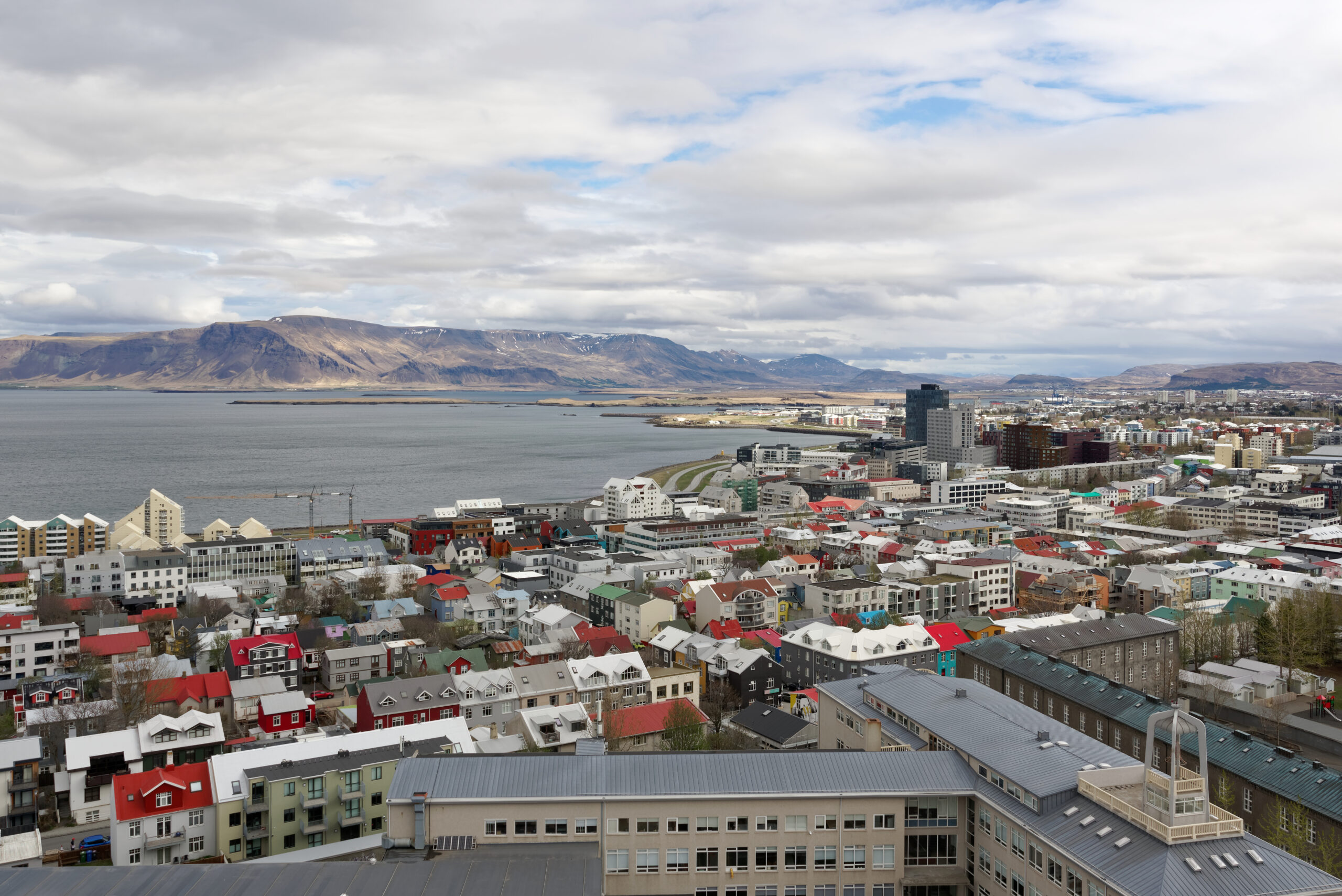
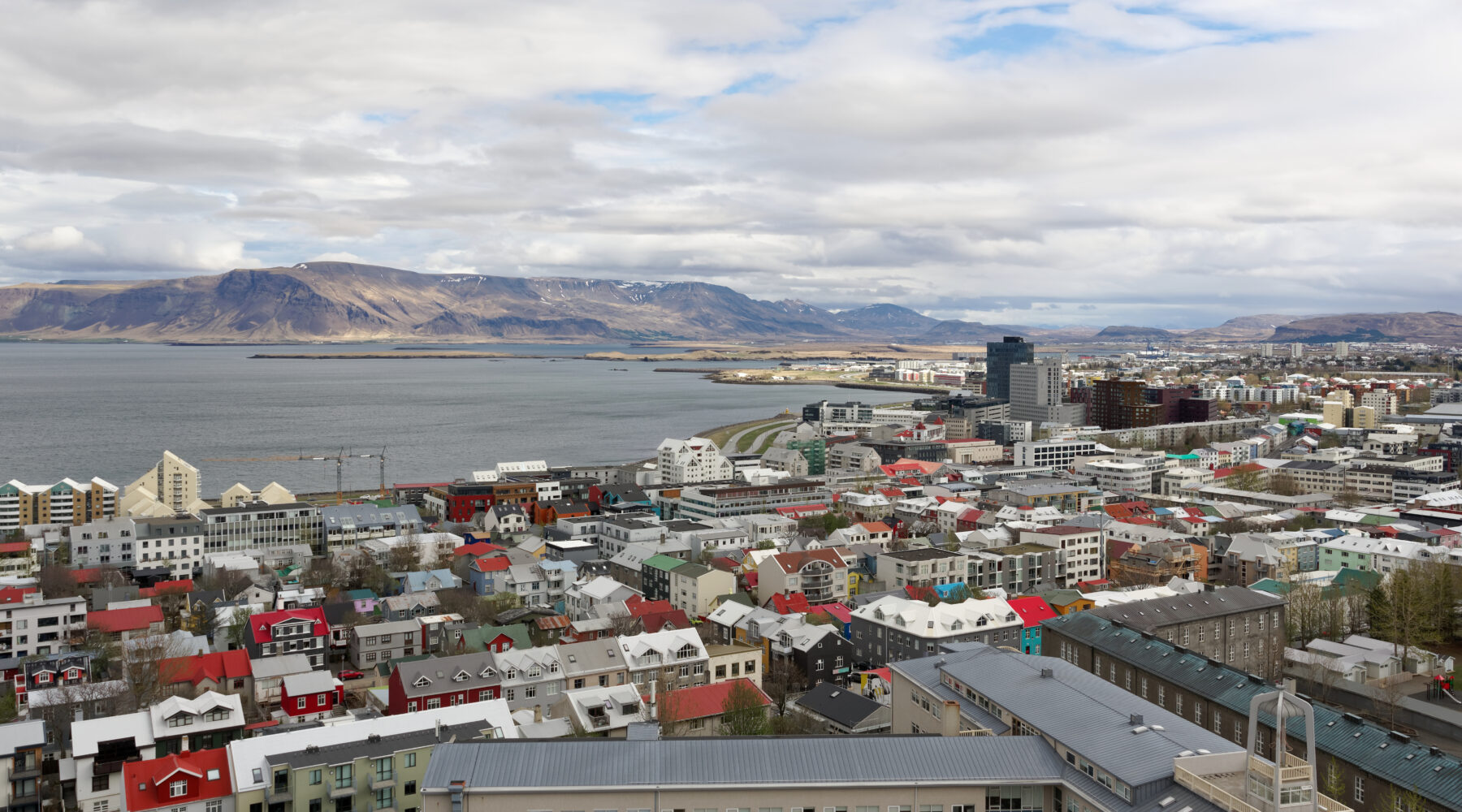
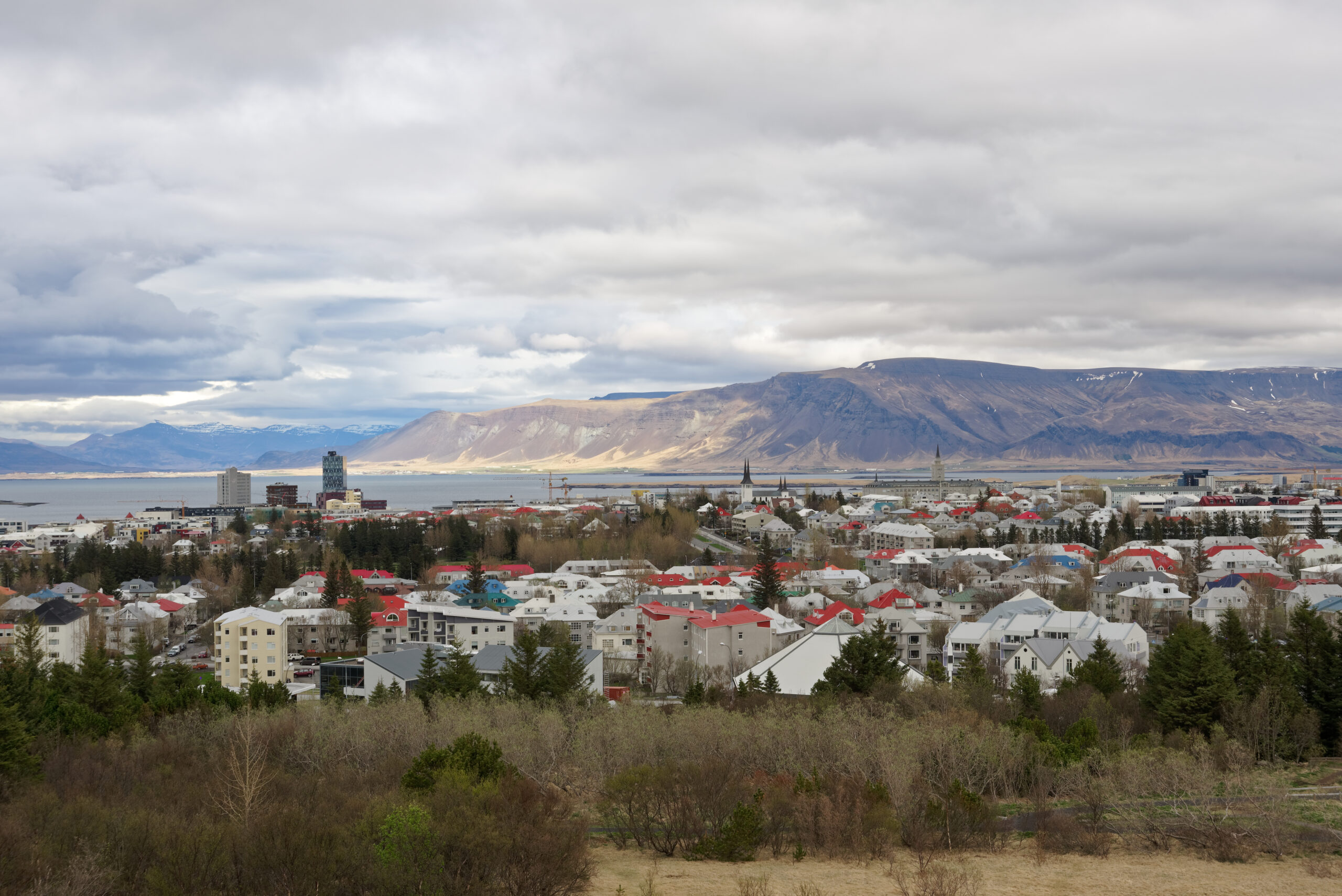
You can walk from one end of Reykjavik’s centre to the other in an afternoon, yet three days here pass without trying. Houses are clad in corrugated iron painted yellow, red and turquoise, the pavements in the middle of town are heated by geothermal water, and in the evening locals meet not in the pub but in a hot tub at the public pool. The church on the hill looks like a cliff of basalt columns, the concert hall on the waterfront like a pile of ice crystals, and from the seafront you can see across the bay to a mountain you can climb in half a day in summer.
Most lists of things to do in Reykjavik are long, but the city itself isn’t. The real trick is fitting museums, pools, the harbour and viewpoints into a day without letting the wind and the prices get the better of you. We’ve put together 25 ideas, from Harpa and the Sun Voyager to the neighbourhood pools, Viðey island and Mount Esja, with prices in Icelandic krónur and pounds, the bus from Keflavík airport, the best areas to stay and a plan for one to three days.
Things to do in Reykjavik at a glance
- One day covers the centre; give the city and its surroundings two or three. Most of the places below are within a 20-minute walk of Hallgrímskirkja church.
- The Flybus from Keflavík costs around 4,000 ISK (about £24) to the BSÍ bus terminal and takes about 45 minutes. Strætó bus 55 is cheaper at around 2,400 ISK (about £14), but runs less often.
- The Hallgrímskirkja tower costs around 1,500 ISK (about £9). Tickets are sold on the spot only, and the tower closes on Sunday mornings during mass.
- The city swimming pools are the cheapest Icelandic experience going. A single entry is around 1,500 ISK, and children under ten go free with an adult.
- Harpa, the Sun Voyager, Tjörnin lake, the City Hall with its relief map of Iceland and the Einar Jónsson sculpture garden are all free.
- The Reykjavik City Card costs around 6,100 ISK (about £37) for 24 hours and covers 17 museums, eight city pools, Strætó buses and the ferry to Viðey. The church tower and the airport bus are not included.
- The currency is the Icelandic króna (ISK): 100 ISK is roughly 70 cents or 60p. Cards are accepted absolutely everywhere, so you’ll hardly need cash.
- In December you get about four hours of daylight, in June almost none of the night. That changes what you can fit into a day in Reykjavik.
Things to do in Reykjavik: 25 sights, museums and pools
We’ve ordered the ideas the way you’d naturally walk the city: first the old centre around the church and the lake, then the waterfront with Harpa, the Old Harbour and the Grandi district, and finally the places you reach by bus or car. Prices are in Icelandic krónur, with rounded conversions to pounds at roughly 100 ISK to 60p.
Around Hallgrímskirkja and Tjörnin lake
The old centre is small and hilly. From the church at the top it’s a 15-minute walk down to the harbour, past most of the shops, cafés and museums. In winter, expect icy pavements wherever they aren’t heated, and a sea wind that can turn a short stroll into a long one.
1. Hallgrímskirkja and the view from the tower
The white concrete church on Skólavörðuholt hill is visible from almost anywhere in town, which makes it the best landmark for finding your way. State architect Guðjón Samúelsson designed the façade to evoke the basalt columns you see all over Iceland. Building started in 1945 and the church wasn’t consecrated until 1986. The nave is free to enter and holds a huge organ with more than 5,000 pipes. Outside stands a statue of Leif Erikson, a gift from the United States for the 1,000th anniversary of the Althing.
A lift takes you up the tower, and a ticket costs around 1,500 ISK (about £9), with children aged 7 to 16 paying roughly 200 ISK. You can only buy it at the little shop to the left of the entrance; there’s no booking in advance. In winter the tower is open 10:00 to 17:00, last lift up at 16:45, and on Sundays the church and tower close for mass from about 10:30 to 12:30 (current hours on the church website). We’d only go up when visibility is good. With low cloud you’ll mostly see fog, and that isn’t worth the queue for the lift.
2. Skólavörðustígur and Laugavegur
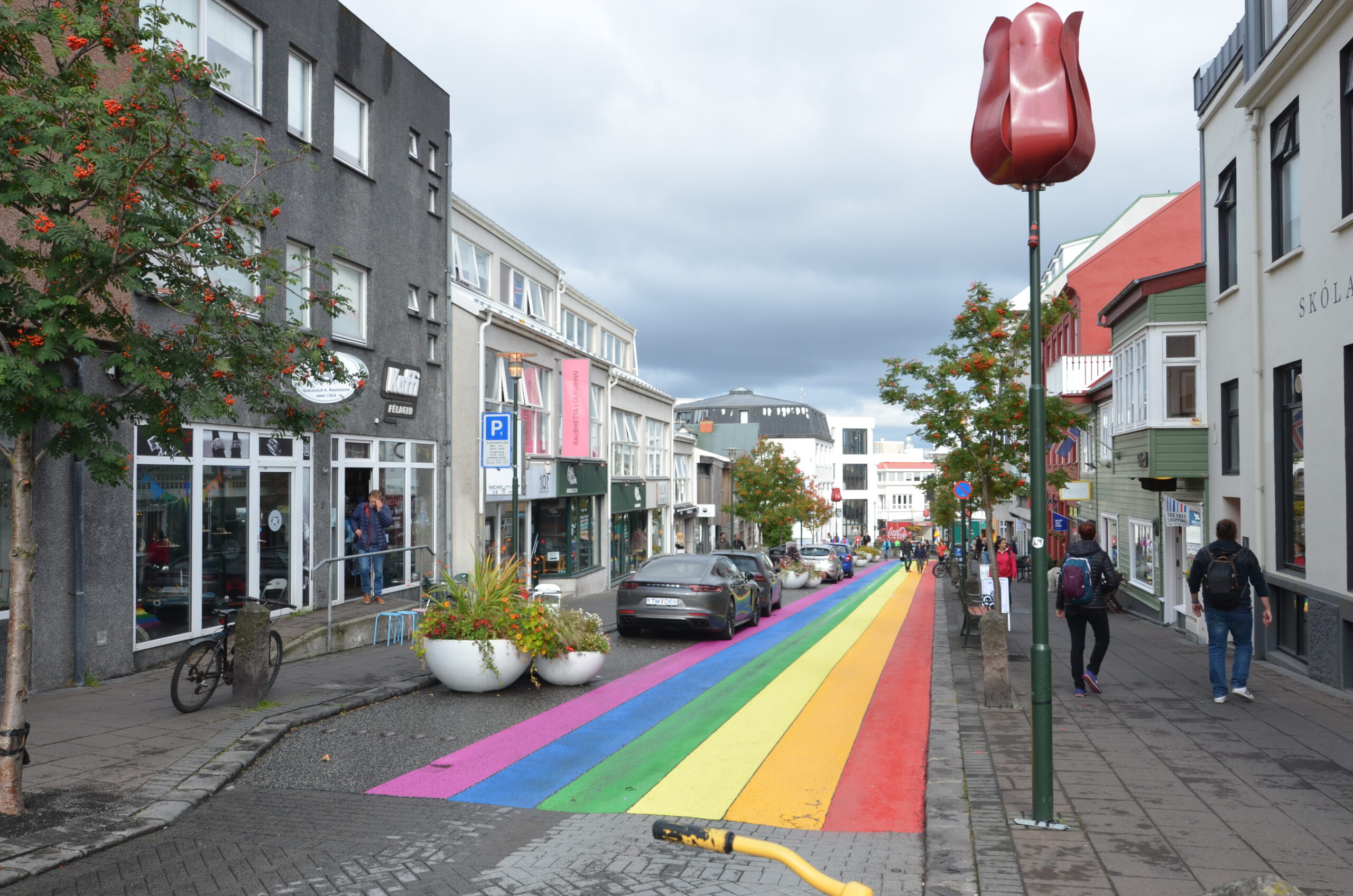
Downhill from the church runs Skólavörðustígur, with a rainbow stripe painted across the whole road. It’s the most photographed stretch of the city, so morning and afternoon you’ll be weaving between people holding up phones. At the bottom it joins Laugavegur, the main shopping street, lined with shops selling lopapeysa wool jumpers, outdoor gear, bookshops and cafés.
What we enjoy most are the side streets, with giant murals on the walls and cafés where locals sit with a laptop rather than a coachload of tourists. At weekends Laugavegur changes after dark: locals don’t head out to the bars until around midnight, because alcohol is expensive and the drinking starts at home.
3. Einar Jónsson Museum and sculpture garden
Right behind the church is an unusual building that Iceland’s first sculptor, Einar Jónsson, had built as his studio, home and museum all in one. Inside is his life’s work, full of figures from Icelandic folklore and mythology. Outside is a sculpture garden that’s free to wander, and one of the few quiet spots near Hallgrímskirkja. Einar Jónsson also made the statue of Ingólfur Arnarson on Arnarhóll hill (idea 8).
4. Tjörnin lake and the City Hall map of Iceland
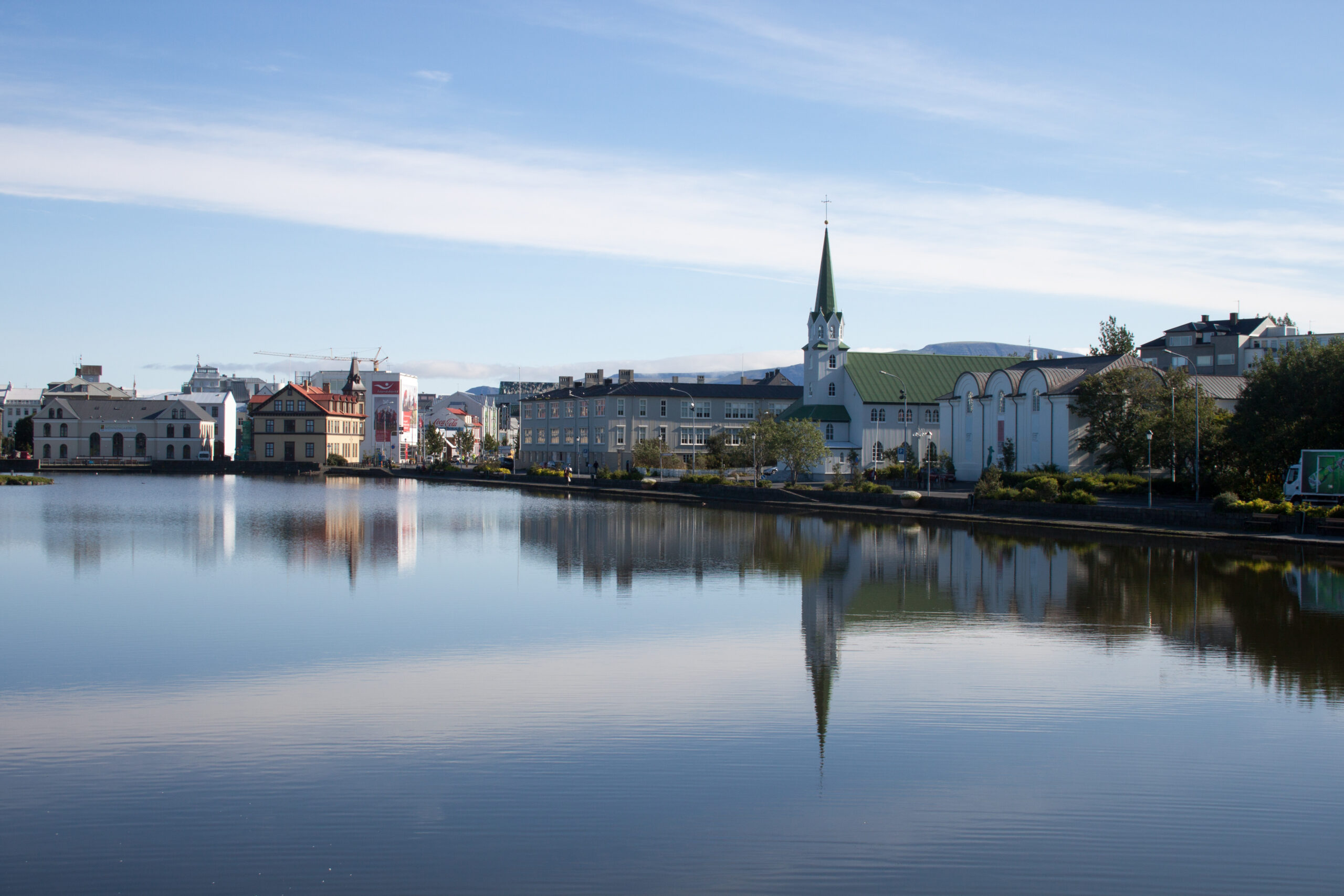
Tjörnin is a shallow lake in the middle of town, ringed by wooden houses, the white Free Church (Fríkirkjan) and the National Gallery. It’s busy with ducks, geese and swans, and when it freezes in winter, locals skate on it. On the northern shore stands the modern City Hall, which seems to rise straight out of the water.
On the ground floor of the City Hall is a large 3D relief map of Iceland, free to visit while the building is open. We think it’s the best place to get a feel, at the start of your trip, for how mountainous the island is and where the glaciers you’re heading for actually lie. On the south side of the lake the Hljómskálagarður park has a children’s playground.
5. Austurvöllur, the Althing and Dómkirkjan
This small grassy square a short walk from Tjörnin is the political heart of the country. On it stand the modest parliament building of the Althing, built of dressed stone in 1880–1881, the Dómkirkjan cathedral next door, the city’s main Lutheran church, and in the middle a statue of Jón Sigurðsson, leader of Iceland’s struggle for independence. The assembly itself is far older: it first met in 930 on the plain at Þingvellir, the first stop on the Golden Circle.
On a sunny day half the city seems to be sitting on the grass here, and in winter people come to see the Christmas tree. On the corner of the square is Hotel Borg, where you can drop in for a coffee even if you’re not staying.
6. Reykjavik 871±2: a Viking-age house beneath the pavement
The Settlement Exhibition at Aðalstræti 16 is built around the remains of a 10th-century longhouse discovered during construction of a hotel. The name refers to a layer of volcanic ash laid down around the year 871 (give or take two years), which archaeologists use to date the earliest settlement. The exhibition is underground, short and very well done, and it’s the best hour of history you can spend in Reykjavik. It’s included in the City Card, and under-18s go free.
7. National Museum of Iceland
If one house isn’t enough, head to the National Museum at Suðurgata 41. The permanent exhibition takes you through the island’s history from the first settlers to the present day: Viking swords, medieval manuscripts, the carved church door from Valþjófsstaður, fishing boats and a 20th-century living room. Admission is around 3,300 ISK (about £20), students and seniors pay roughly half, and under-18s go free. It’s open daily from 10:00 to 17:00 (thjodminjasafn.is).
8. Arnarhóll hill and the statue of Ingólfur Arnarson
A green hill between the centre and Harpa, topped by a bronze statue of Ingólfur Arnarson, the Norwegian whom the sagas regard as Iceland’s first permanent settler and the founder of Reykjavik. From the top you look out over the harbour, Harpa and Mount Esja, and on clear winter nights people come here to watch for the northern lights, because the hill sits a little away from the street lamps. Don’t expect to see them as well here as you would outside the city, though.
9. Harpa concert hall
The glass building on the waterfront is Reykjavik’s most striking piece of modern architecture. It opened in 2011, and its façade of geometric glass cells was designed by artist Ólafur Elíasson together with Henning Larsen Architects. In 2013 it won the Mies van der Rohe Award for European architecture. At night the façade lights up with coloured LEDs.
The foyer is free to enter, and it’s exactly where to escape when the rain starts coming in sideways. Climb the stairs to the upper floors, where you look through the glass to the harbour and Esja, and watch the light on the walls shift with every passing cloud. You’ll only see the halls themselves at a concert or on a guided tour. The programme includes the Iceland Symphony Orchestra, jazz and short shows aimed at visitors.
10. The Sun Voyager and the coastal path
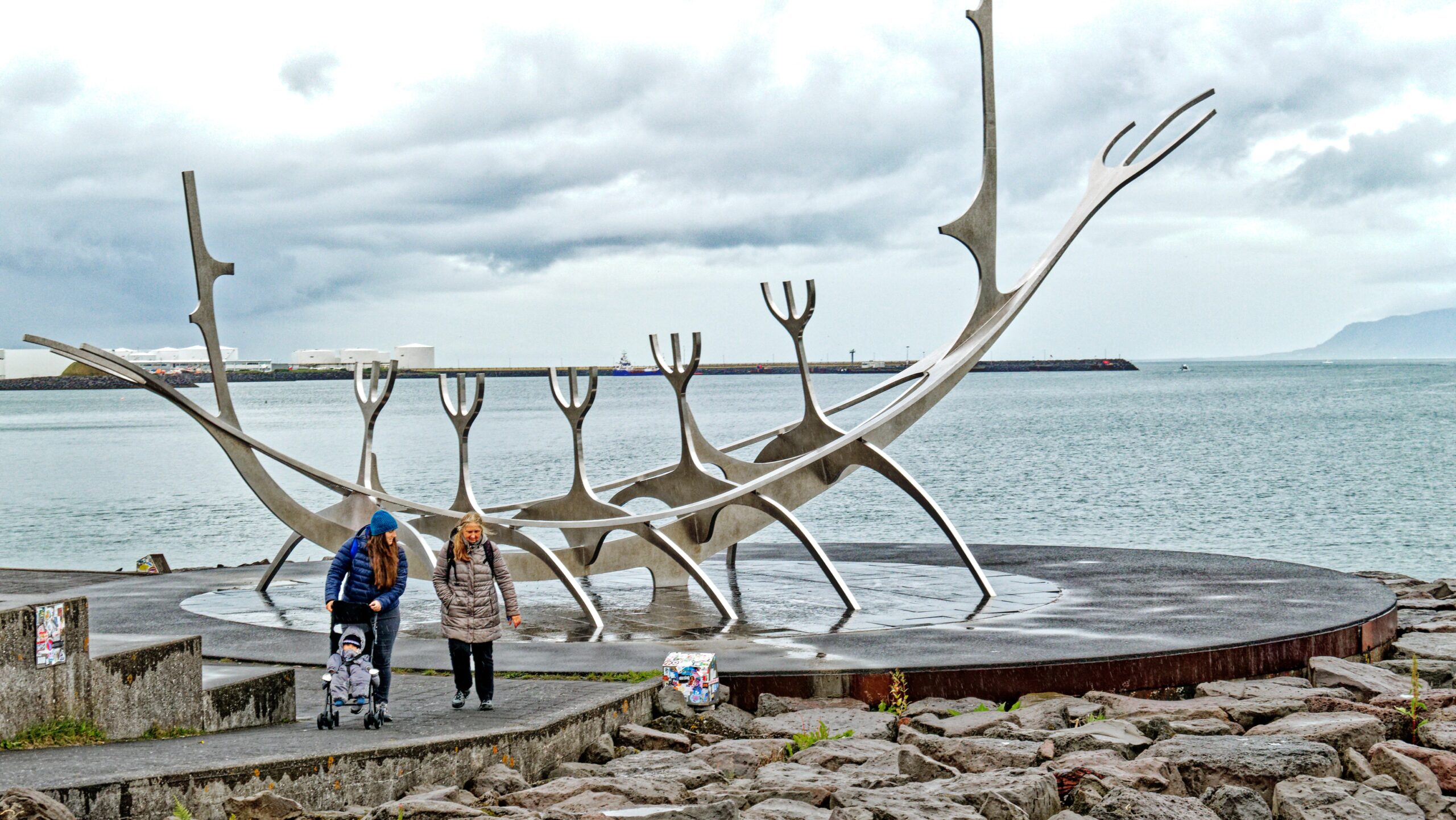
The steel sculpture Sólfar, the Sun Voyager, stands on the seafront path along Sæbraut road, a ten-minute walk from Harpa. It’s the work of Jón Gunnar Árnason and was unveiled in 1990 for the city’s 200th anniversary. It looks like the skeleton of a Viking ship, but the artist described it as a dream boat and an ode to the sun.
During the day there’s almost always a crowd around it. We’d come early in the morning or late in the evening, then carry on east along the path. The bay and Mount Esja stay on your left all the way, modern buildings on your right, and in half an hour you reach Höfði House.
11. Höfði House, where the end of the Cold War began
This white wooden house from 1909 stands alone on a lawn by the sea. It was built for the French consul, and in October 1986 Ronald Reagan and Mikhail Gorbachev met here. The summit ended without an agreement, but today it’s seen as one of the steps towards the end of the Cold War. The house belongs to the city and is used for official receptions, so you can’t go inside. Allow five minutes and a photo, ideally as the end point of the walk from the Sun Voyager. A short way from the house stands a section of the Berlin Wall.
12. The Icelandic Phallological Museum
Yes, it’s a penis museum, and yes, it’s one of the most visited museums in town. The collection of animal members, from hamster to whale, started as one teacher’s hobby and now lives in the new Hafnartorg quarter (Reykjastræti 4). Admission is around 3,900 ISK (about £23), and it’s open daily from 10:00 to 19:00. If you have a sense of humour and some slack in the budget, you’ll enjoy it. If not, you’re not missing much.
13. Reykjavik Art Museum: three galleries, one ticket
The city art museum is spread across three buildings, and one ticket for about 2,600 ISK (about £16) gets you into all of them for 24 hours (students around 1,600 ISK, under-18s free). Hafnarhús by the harbour shows contemporary art and the work of Erró, Iceland’s best-known pop artist. Kjarvalsstaðir in Klambratún park is devoted to the painter Jóhannes Kjarval and his landscapes of lava fields. Ásmundarsafn in Laugardalur is the former home and studio of sculptor Ásmundur Sveinsson, with a white dome and a sculpture garden you can explore without a ticket.
14. National Gallery of Iceland
The National Gallery on the shore of Tjörnin holds the largest collection of Icelandic art from the 19th century to the present. It’s smaller than you’d expect a national gallery to be, which is exactly why you can see it in an hour. For us the highlight is the Icelandic landscape painting from a time when hardly anyone travelled to the island. Entry is included in the City Card.
The Old Harbour and the Grandi district
The Old Harbour (Gamla höfnin) is a five-minute walk from Harpa. Whale-watching boats leave from its eastern side, and to the west lies Grandi, a former fishing and industrial district. The old fish-processing sheds now house museums, a food hall, a coffee roastery and a chocolate factory.
15. Whale watching from the Old Harbour
On Ægisgarður pier there’s a row of kiosks run by several companies that take you out into Faxaflói Bay to look for humpback whales, minke whales and dolphins. The classic Elding tour, for example, lasts 2.5 to 3.5 hours and costs around 15,000 ISK (about £90) per adult. From February to November it sails at 9:00 and 13:00, in December and January at 13:00 only (elding.is). In summer there are also shorter trips to the islets of Lundey and Akurey, where puffins nest, and in winter evening cruises to look for the northern lights.
Whales can’t be guaranteed, and out on the open water it’s cold even in July, so bring every layer you have and then one more. If you’re also heading to the north of Iceland, we’d save whale watching for Húsavík or Eyjafjörður, where the boats go out on calmer water.
16. Grandi: museums, life-size whales and FlyOver Iceland
Within one district, and walking distance of each other, you’ll find several museums that are ideal for a rainy afternoon or with kids:
- The Maritime Museum (Grandagarður 8), in a former fish freezing plant, tells how fishing built modern Iceland. Moored at the pier is the coast guard ship Óðinn, which took part in the Cod Wars with Britain and can be visited on a guided tour. Entry is included in the City Card.
- Whales of Iceland (Fiskislóð 23–25) has 23 life-size whale models, including a blue whale. The standard ticket is around 4,300 ISK (about £26), sometimes discounted, and children aged 7 to 15 pay half. Open daily from 10:00 to 17:00.
- FlyOver Iceland is a ride where you sit in moving seats in front of a dome screen and “fly” over glaciers and volcanoes. Online it costs around 5,700 ISK (about £34), a bit more at the desk. Children must be at least 100 cm tall.
- The Saga Museum (Grandagarður 2) brings figures from the sagas and Icelandic history to life as waxworks. Open daily from 10:00 to 17:00.
Between museums, stop at the Grandi Mathöll food hall or at the Omnom chocolate factory, which makes chocolate from Icelandic milk with flavours like liquorice and salted caramel.
Viewpoints, pools and nature on the edge of town
You can walk to the next few places, but most people take a Strætó bus or drive. Each of them is worth half a day.
17. Perlan and the Öskjuhlíð woods
Perlan sits on a wooded hill south of the centre: a glass dome perched on six tanks that once stored hot water for the whole city. Inside is the Wonders of Iceland exhibition, with a man-made ice cave, displays on volcanoes and glaciers, and a planetarium showing a film about the northern lights. Up top, a wraparound viewing deck looks out over the whole city, the bay and the Reykjanes peninsula.
The exhibitions are open daily from 9:00 to 21:00. We couldn’t find a clear admission price on the official website: it depends on what you choose, and you’ll see it best when booking on perlan.is. From the hill, trails lead down through the woods to the sea and Nauthólsvík beach. In good weather it’s one of the nicest walks in Reykjavik, and it costs nothing.
18. Nauthólsvík geothermal beach
A small cove below Perlan, with imported pale sand and warm water piped into the sea. In summer the water in the lagoon reaches roughly 15 to 19 °C, and the beach has a hot tub plus changing rooms with showers. Entry is free in summer; in winter there’s a small fee and shorter opening hours: Tuesday to Friday 11:00 to 19:00, Saturday 11:00 to 16:00, closed on Sundays and Mondays (reykjavik.is). In winter it’s the haunt of cold-water swimmers, who jump into the icy sea and then warm up in the hot tub. If you fancy trying it, there’s no better set-up in Iceland.
19. Sky Lagoon
A geothermal lagoon in Kópavogur, about a quarter of an hour by car from the centre, with a 75-metre infinity edge where the water seems to flow straight into the ocean. Entry includes the seven-step Skjól ritual: hot water, a cold plunge, a sauna with a sea-view window, a cool mist, a body scrub, steam and a drink. Children under 12 are not allowed.
Prices vary by day and time, and the official price list only appears in the booking system. According to Guide to Iceland, basic tickets start at roughly 13,000 to 14,000 ISK (about £78 to £84), with private changing rooms costing more (skylagoon.com). It’s closer and cheaper than the Blue Lagoon, and we’d save it for the end of a trip rather than the start. We compare it with other spas in our guide to the Blue Lagoon in Iceland.
20. City swimming pools: Sundhöll, Laugardalslaug and Vesturbæjarlaug
This is what we were looking forward to most in Reykjavik, and in our view it’s the best value experience in the whole of Iceland. There are eight city pools, and a single entry costs around 1,500 ISK (about £9); young people aged 10 to 17 pay about 400 ISK and children under ten with an adult go free. Towel hire is around 900 ISK and swimsuit hire around 1,300 ISK (current city price list). All of them are included in the City Card.
- Sundhöll (Barónsstígur 45) is the oldest, opened in 1937 and designed by Guðjón Samúelsson, the architect of Hallgrímskirkja. It has an indoor pool with its original tiling and outdoor hot tubs. Five minutes’ walk from the centre.
- Laugardalslaug in Laugardalur is the biggest: an outdoor 50-metre pool, water slides, several hot tubs, a seawater tub and a steam bath. The best choice with kids.
- Vesturbæjarlaug in Vesturbær is the neighbourhood pool. It sees the fewest tourists, and in the hot tub the talk is of politics and the weather.
One rule nobody breaks: before getting in the water, you must shower naked and wash with soap, and attendants in the changing rooms keep an eye on it. Locals take this seriously because the water is only lightly chlorinated. After the first slightly awkward attempt, it stops feeling strange.
21. Laugardalur: botanic garden and family zoo
The valley east of the centre is the city’s largest park. Besides the pool, it has a free botanic garden with hundreds of plants that cope with the Icelandic climate, and right next door the Family Park and Zoo with Icelandic animals: horses, sheep, reindeer and Arctic foxes. With kids you can easily spend a whole day here and finish the evening at Laugardalslaug. Ásmundarsafn and the city campsite are here too.
22. Grótta lighthouse and the Seltjarnarnes peninsula
A white lighthouse at the western tip of the peninsula, about an hour’s walk from the centre along the coastal path, or a short bus ride. It’s a favourite spot for sunsets and, on clear winter nights, for the northern lights, because it’s properly dark out here. The islet with the lighthouse is reached by a rocky causeway that floods at high tide, so go only at low tide, with a tide table on your phone. From 1 May to 15 July the islet is closed for nesting birds (ust.is). On the shore there’s a small stone foot bath filled with warm water.
23. Viðey island and the Imagine Peace Tower
A grassy island in the bay, a few minutes away by boat. It has an 18th-century church and house, coastal trails, sculptures by Richard Serra and the Imagine Peace Tower, a memorial of light that Yoko Ono created in memory of John Lennon. The beam shines into the sky every year from his birthday on 9 October to the anniversary of his death on 8 December, and on a few other dates as well.
The Elding ferry costs around 2,500 ISK (about £15) return and is included in the City Card. In winter, from September to mid-May, it runs at weekends only, at 13:15, 14:15 and 15:15 from Skarfabakki pier, and sailings are cancelled when it’s windy (elding.is). In summer there are more sailings, some from the Old Harbour.
24. Árbær Open Air Museum
An open-air museum on the eastern edge of the city, made up of old houses moved here from Reykjavik and the surrounding area. There are turf-roofed houses, a small church, a smithy and a shop from the days when Reykjavik was still a fishing village. In summer, staff in period costume demonstrate old crafts; in winter opening is limited, so check the hours before you go. Entry is included in the City Card.
25. Hiking Mount Esja
The mountain you see from every point on the seafront lies about 20 km north of the centre and is the locals’ favourite day out. A marked trail starts from the car park at Esjustofa. Most people walk to the Steinn boulder at about 600 metres, and fitter hikers carry on to the rocky summit of Þverfellshorn. Allow two to four hours there and back. In summer anyone with sturdy boots can manage it; in winter the trail is icy, and without crampons and experience you shouldn’t go. Check the forecast and conditions on safetravel.is.
Where to stay in Reykjavik
Accommodation is the biggest single cost of a trip to Iceland, so it pays to choose mainly by location. Without a car, you want to stay in the centre, postcode 101, where you can walk everywhere and catch the morning tour buses. If you’re arriving by car, you’ll save on both the room and parking by staying just outside the centre.
- Miðborg (101, city centre). Around Laugavegur, Skólavörðustígur and the harbour. Everything on foot and cafés on the doorstep, but noisy around the bars on Friday and Saturday nights. Best for a first visit and for travellers without a car.
- Around Hallgrímskirkja (Þingholt). Quieter streets above the centre, ten minutes downhill to the harbour. In our view the best compromise between price and location.
- Vesturbær. West of the centre, a residential area with its own pool, Vesturbæjarlaug, and close to Grandi. For anyone who wants to live a little like a local.
- Around the BSÍ terminal and Hlíðar. Handy for an early-morning flight, because this is where the Flybus stops. The centre is about 15 minutes’ walk away.
- Laugardalur. The biggest pool, the botanic garden and the city campsite. Cheaper hotels and easier parking; you take the bus into the centre.
A few addresses that make sense for their location:
- Loft HI Eco Hostel (Bankastræti, centre): a hostel right on the main shopping street, with dorms and private rooms. The cheapest way to stay in 101.
- Hotel Leifur Eiriksson (Skólavörðustígur): a small hotel directly opposite Hallgrímskirkja; some rooms look out on the church.
- Center Hotels Plaza (Aðalstræti): on Ingólfstorg square in the oldest part of town, a few minutes from both the harbour and Tjörnin.
- Sand Hotel by Keahotels (Laugavegur): a boutique hotel halfway along the main street, for couples who want cafés right outside the door.
- Canopy by Hilton Reykjavik City Centre (Smiðjustígur): a larger hotel between Laugavegur and Harpa, a good choice for families.
- Hotel Borg by Keahotels (Austurvöllur): a historic 1930 art deco hotel opposite the parliament, for when you want to treat yourself for a night.
For more options, try this search for accommodation in Reykjavik.
💡 A kitchen saves more than an extra star. Dinner out in Reykjavik is among the most expensive in Europe, and so is hotel breakfast. An apartment or guesthouse with a shared kitchen, plus shopping at the Bónus, Krónan or Nettó supermarkets, cuts your budget far more than a cheaper room does. Don’t buy bottled water; the tap water is excellent. Just run the cold tap, because the hot water is geothermal and smells faintly of sulphur.
Reykjavik itinerary: 1, 2 or 3 days
Reykjavik in one day
Start with Hallgrímskirkja and its tower, then walk down Skólavörðustígur and Laugavegur. Before lunch, Reykjavik 871±2 or the National Museum; in the afternoon, Tjörnin and the City Hall, Austurvöllur square and over Arnarhóll to Harpa. At dusk, walk along the seafront to the Sun Voyager, and finish the evening at Sundhöll, the pool closest to the centre.
Reykjavik in 2 days
Day one as above. Day two is for the Old Harbour and Grandi: a whale-watching trip or the Maritime Museum and Whales of Iceland in the morning, lunch at Grandi Mathöll, then on foot or by bus to Grótta lighthouse in the afternoon. In the evening, Perlan and its view over the city, or Sky Lagoon.
Reykjavik in 3 days
Keep day three for a trip out of town (see below), or stay put and do Laugardalur with the botanic garden, the zoo and Laugardalslaug. In summer, climb Esja or take the ferry to Viðey instead. With a 72-hour City Card, three days is enough to get round every museum on this list and try a different pool each evening.
Getting from Keflavík airport to Reykjavik
Flights from the UK land at Keflavík International Airport (KEF), on the Reykjanes peninsula about 50 km from the centre. Reykjavik’s own city airport only handles domestic flights and flights to Greenland. From Keflavík into town there are two bus services, taxis and hire cars.
| Service | Where it goes | Adult (approx.) | Children |
|---|---|---|---|
| Flybus | BSÍ terminal, about 45 minutes | 4,000 ISK (about £24) | ages 6 to 15: 2,000 ISK, under 6 free |
| Flybus to hotel | BSÍ, then a minibus to your hotel | 5,300 ISK (about £32) | ages 6 to 15: 2,600 ISK, under 6 free |
| Strætó bus 55 | BSÍ; some services only go as far as Hafnarfjörður | 2,400 ISK (about £14) | ages 12 to 17: 1,200 ISK, under 12 free |
Prices in the table are approximate and change, so check with the operator before you travel. The Flybus leaves after every arrival, even if your flight is delayed, and your ticket is valid for the next departure. You can buy it online or at the airport, and return tickets and groups of four or more get a discount (Flybus prices). From BSÍ it’s about a 15-minute walk into the centre. Bus 55 is cheaper but runs to a timetable, and only some services end at BSÍ; the rest terminate in Hafnarfjörður, where you change. You pay the driver by card or cash, and the City Card isn’t valid on it (straeto.is).
If you’re carrying on round the island after Reykjavik, pick up a hire car at the airport. You won’t need it in the city for the first few days, and you’d only be paying for parking.
Getting around, the City Card and parking
The centre is easy to walk. For Perlan, Laugardalur, Grótta or Árbær, take the yellow Strætó buses. A single fare is around 700 ISK (about £4), and young people and seniors pay half (Strætó fares). You pay by tapping a contactless card on the bus or through the Klapp app.
| Reykjavik City Card | Price (approx.) | What’s included |
|---|---|---|
| 24 hours | 6,100 ISK (about £37) | 17 museums and attractions (including the National Museum, the National Gallery, the three Reykjavik Art Museum buildings, Reykjavik 871±2, the Maritime Museum, Árbær and the zoo), eight city pools, Strætó buses in the capital area and the ferry to Viðey. Under-18s get into museums free with an adult cardholder. |
| 48 hours | 8,500 ISK (about £51) | |
| 72 hours | 11,000 ISK (about £66) |
The card starts running when you activate it, not when you buy it. You buy it online and exchange the voucher for the card at city museum branches or at the Elding desk in the Old Harbour (visitreykjavik.is). It doesn’t cover the Hallgrímskirkja tower, Perlan, Sky Lagoon, Whales of Iceland, FlyOver or bus 55 to the airport.
💡 Is the Reykjavik City Card worth it? The National Museum (around 3,300 ISK), one pool (1,500 ISK) and two bus rides (about 1,400 ISK) add up to roughly 6,200 ISK, a little more than the 24-hour card. Add a second museum or the Viðey ferry and you’re clearly ahead. If all you want is the church tower, Harpa and a walk along the seafront, you won’t get your money’s worth.
Parking. The centre is divided into paid zones. In the most expensive, P1, an hour costs around 700 ISK and you can stay three hours at most; in zones P2 and P4 an hour is about 200 ISK, and in P3 the first two hours cost about 200 ISK and each extra hour around 100 ISK. You pay at the machine or with the Parka and EasyPark apps, and the zones also differ in their charging hours (reykjavik.is). If you’re staying in the centre, look for accommodation with its own parking, or collect your car on the day you leave the city.
Reykjavik prices: what the attractions cost
Admission to the places in this guide at a glance. Pound conversions are rounded.
| Place | Adult (approx.) | Notes |
|---|---|---|
| Harpa, Sun Voyager, Tjörnin, City Hall, Einar Jónsson garden, botanic garden | free | Harpa’s halls only at a concert or on a guided tour |
| Hallgrímskirkja tower | 1,500 ISK (about £9) | ages 7 to 16 around 200 ISK, on the spot only, not in the City Card |
| National Museum | 3,300 ISK (about £20) | under 18 free, in the City Card |
| Reykjavik Art Museum (3 buildings) | 2,600 ISK (about £16) | valid 24 hours, under 18 free, in the City Card |
| City swimming pools | 1,500 ISK (about £9) | ages 10 to 17 around 400 ISK, under 10 free, in the City Card |
| Whales of Iceland | 4,300 ISK (about £26) | sometimes discounted |
| FlyOver Iceland | 5,700 ISK online (about £34) | a bit more at the desk, children from 100 cm |
| Phallological Museum | 3,900 ISK (about £23) | daily 10:00 to 19:00 |
| Whale watching (Elding) | 15,000 ISK (about £90) | 2.5 to 3.5 hours |
| Viðey ferry | 2,500 ISK return (about £15) | in the City Card, weekends only in winter |
What to eat in Reykjavik and where
Eating out in Reykjavik is expensive, so it helps to know where you can eat well for a sensible price. A few things we wouldn’t want to miss:
- Pylsa, the Icelandic hot dog. The most famous stand, Bæjarins Beztu Pylsur, has been selling hot dogs by the harbour since 1937. Order “eina með öllu”, one with everything: raw and crispy fried onions, ketchup, sweet mustard and remoulade.
- Fish soup and fresh fish. Cod, plaice or wolffish in the restaurants around the harbour and in Grandi. Soup with bread is usually the cheapest hot dish on the menu.
- Kjötsúpa, lamb soup with root vegetables. Just the thing after a whole day in the wind.
- Skyr, the thick Icelandic dairy product you’ll find in every supermarket.
- Food halls. Grandi Mathöll at the harbour has stalls from different cuisines under one roof, with no booking needed.
- Cafés and bakeries. Coffee refills are often free, and a cinnamon bun from a bakery is the cheapest breakfast in town.
Outside bars, alcohol is only sold in the state-run Vínbúðin shops; supermarkets sell only low-strength beer. In bars, look out for happy hour, when beer is much cheaper. The weekend Kolaportið flea market by the harbour is the place for second-hand jumpers and harðfiskur, dried fish you can taste before you buy.
When to visit Reykjavik
Thanks to the Gulf Stream, Reykjavik doesn’t get severe frosts: winter temperatures hover around freezing, summer ones around 10 to 15 °C. The weather changes several times a day, though, and the wind hardly ever lets up.
- June to August. Midnight sun, the warmest weather, everything open including Esja hikes and the Viðey ferry, puffins on the islets. Also the highest accommodation prices and the biggest crowds.
- September to October and April to May. In our view the best compromise. Fewer people, lower prices, the first northern lights in autumn and enough daylight for day trips.
- November to March. Short days, with only about four hours of daylight around the winter solstice. In return: northern lights, steaming pools and Christmas lights. In February the Winter Lights Festival (Vetrarhátíð) includes a night of open museums and pools, in November there’s the Iceland Airwaves music festival, and on New Year’s Eve bonfires burn across the neighbourhoods while the city lets off fireworks all night.
In August there’s also Culture Night (Menningarnótt), with music all over the city and fireworks to close the evening.
Day trips from Reykjavik
Reykjavik is the best base for day trips if you don’t have a car: tour buses leave every morning from hotels and from BSÍ. With a car, you can do most of them on your own.
- The Golden Circle. The most popular full-day trip, a loop of about 250 km: Þingvellir National Park with snorkelling in Silfra, the Geysir and Strokkur hot springs, and the Gullfoss waterfall.
- The south coast. A longer day: the Seljalandsfoss and Skógafoss waterfalls, the Reynisfjara black sand beach and the village of Vík.
- The Reykjanes peninsula. The Blue Lagoon near the airport and the lava fields left by the eruptions at Fagradalsfjall. Volcanic activity changes, so check safetravel.is and vedur.is before you go.
- The Highlands. The rainbow-coloured mountains of Landmannalaugar can only be reached in summer, by bus or 4×4, about three to four hours’ drive from Reykjavik.
What we’d do differently
We wouldn’t tick off museums. Reykjavik has so many that you could spend two rainy days going from one to the next. We’d pick one on history and one on nature, and leave the rest of the time for the streets. You get to know the city best by wandering aimlessly through Þingholt and Vesturbær, between tin-clad houses with cats in the windows and giant murals on the gable walls.
We’d go to a pool every evening. And a different one each time. An hour in a hot tub with neighbours discussing football and the forecast tells you more about Icelanders than the entire National Museum, and costs about the same as a coffee and a slice of cake.
We’d try what we don’t know. Dried fish with butter, liquorice chocolate, skyr with blueberries, soup in a bistro no guidebook mentions. Everyone has a hot dog at Bæjarins Beztu, and they’re right to, but our best meals in Reykjavik were where we expected nothing.
We’d keep the phone in our pocket. You can skip the photo queue at the Sun Voyager by sitting down on the rocks a little further along and just watching the clouds roll over Esja. Five minutes later it all looks different anyway.
Things to do in Reykjavik: frequently asked questions
What are the best things to do in Reykjavik?
In the centre: Hallgrímskirkja church and its viewing tower, Skólavörðustígur and Laugavegur, Tjörnin lake and the City Hall, Austurvöllur square with the parliament, the Reykjavik 871±2 exhibition, the National Museum, Harpa concert hall and the Sun Voyager sculpture. Further out: the Old Harbour and Grandi, Perlan, the city pools, Nauthólsvík beach, Grótta lighthouse, Viðey island and, in summer, Mount Esja.
What can you see in Iceland from Reykjavik?
The most popular trip from Reykjavik is the Golden Circle, with Þingvellir National Park, the Geysir hot spring area and the Gullfoss waterfall. On the south coast are Skógafoss waterfall and the Reynisfjara black sand beach, and further east the Vatnajökull glacier. Near the airport you’ll find the Blue Lagoon and the Fagradalsfjall volcano, and in the Highlands the rainbow mountains of Landmannalaugar.
How do I get from Keflavík airport to Reykjavik?
The easiest option is the Flybus, which leaves after every arrival and reaches the BSÍ terminal in about 45 minutes. A ticket costs around 4,000 ISK (about £24), or around 5,300 ISK with a hotel drop-off. Strætó bus 55 is cheaper at around 2,400 ISK, but runs to a timetable and only some services end at BSÍ.
How many days in Reykjavik is enough?
One day is enough for the centre. With two days you can add the harbour, Grandi, Perlan and a pool, and a third day is ideal for a trip out of town, such as the Golden Circle.
How much does the Hallgrímskirkja tower cost?
Adults pay around 1,500 ISK, roughly £9, and children aged 7 to 16 around 200 ISK. Tickets are only sold on the spot, in the shop by the entrance. In winter the tower is open from 10:00 to 17:00, and it closes on Sunday mornings for mass.
Is the Reykjavik City Card worth it?
If you visit at least one museum and one pool and take the bus, the 24-hour card at around 6,100 ISK (about £37) pays for itself. It covers 17 museums, eight city pools, Strætó buses and the ferry to Viðey. It isn’t valid for the Hallgrímskirkja tower, Perlan or the airport bus.
Is Reykjavik expensive for tourists?
Yes, it’s one of the most expensive cities in Europe. Accommodation and restaurant meals cost the most. You’ll save with a kitchen and shopping at Bónus or Krónan, drinking tap water, choosing city pools over lagoons, and enjoying free sights like Harpa, Tjörnin and the Sun Voyager.
Can you see the northern lights in Reykjavik?
Yes, from September to April on clear nights with enough solar activity. Street lighting gets in the way in the city, so it’s better to head out to Grótta lighthouse or right out of town. It can never be guaranteed.
Where to next
- Blue Lagoon Iceland: tickets, packages, getting there from the airport and how it compares with Sky Lagoon and other spas.
- Gullfoss waterfall: the Golden Falls, the viewpoints and visiting in winter.
- Reynisfjara black sand beach: the black beach near Vík on the south coast.
- Jökulsárlón glacier lagoon: the iceberg lagoon at the foot of Vatnajökull.
Potřebujete pomoct s cestováním?
-
Ubytování 🏨
Vyberte si to nejlepší ubytování, ať už jste kdekoliv, přes Booking.com. -
Půjčení auta 🚗
Auto si snadno najdete přes Booking.com, kde máte často slevu díky ubytování, nebo Rentalcars.com, kde porovnáte nabídky většiny půjčoven. -
Zážitky 🎟️
Přes GetYourGuide.com si vyberete z nejrůznějších výletů i zážitků po celém světě, navíc se zrušením zdarma do 24 h předem.