
Last updated 5.11.2026
Do you love volcanoes as much as we do? This one was our very first, on our very first trip together. Mount Teide (Pico del Teide) is a dormant volcano at the heart of Tenerife, the largest of the seven Canary Islands off the north-west coast of Africa. It’s the natural emblem of the island and, at 3,715 metres, the highest peak in all of Spain. How do you get there, where do you pick up your permit, and what will it all cost? We’ll walk you through everything, and share how to make the most of the day too.
Why Mount Teide Is a Must-See
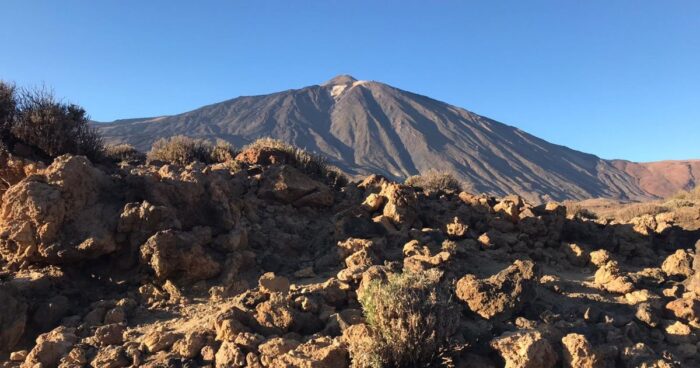
Mount Teide is genuinely spectacular and quite unlike anywhere else. Geologically it’s a pair of volcanoes — Pico del Teide and its neighbour Pico Viejo (3,134 m) — rising from the vast Las Cañadas caldera. It’s the caldera that gives the whole area the feel of an enormous amphitheatre: its walls form a long ring, and the surrounding landscape looks like something from another planet, all lava formations, ash fields and rock strata in wildly different colours. Stand in the middle of it and you could easily believe you’d landed on Mars.
The Essentials at a Glance
If you’re already packing and just want the key facts, here they are. The main thing is to book your summit access in good time. Mount Teide isn’t a trip to leave to chance. Without a permit you won’t reach the very top, and without a cable car booking you’ll likely end up in a very long queue with no guarantee of getting up at all.
- Permit: To reach the very summit (the final 160 vertical metres) you need a free permit, and it sells out months in advance.
- Cable car: It carries you from 2,356 m up to 3,555 m. Buy tickets online well ahead — on the day it’s usually sold out.
- What to wear: Even if it’s 25 °C down by the sea, up top it can be below freezing with a fierce wind — it really is bitterly cold.
- Fitness: If you walk the whole route on foot, it’s a demanding full-day climb with over 1,300 metres of ascent, so plan accordingly.
Where to Stay if You Want to Be Close to Teide
You obviously can’t stay at the summit itself, but if you want to set off early or you’re planning to hike up on foot, it makes sense to spend the night as close to the national park as you can.
- Parador de Las Cañadas del Teide – the nearest proper hotel, right inside the national park. A brilliant choice if you want a head start in the morning and to soak up the calm of the volcanic landscape.
- Casa Tajinastes del Teide – accommodation near the park, a handy base for exploring the area and for an early start towards Teide.
- Refugio Altavista – a mountain hut for those who want to do the climb “properly” and break it up with a night at altitude. You’ll need to book a long way ahead.
Climbing Teide and the Summit Permit
If the idea of climbing Teide appeals to you, the permit is essential. The national park authority strictly limits the number of people allowed onto trail no. 10 (Telesforo Bravo), both to protect the volcano’s fragile ecosystem and to keep everyone safe around the escaping sulphurous gases. Permits are issued for specific two-hour slots, and rangers check them — along with your ID — at the gate just above the upper cable car station.
- Where to get it: Only via the official national parks website (reservasparquesnacionales.es).
- Price: The permit is completely free, which is exactly why it disappears so quickly.
- When to book: Ideally three to four months ahead. In peak season the slots vanish in a flash.
- If it’s fully booked: You can try your luck with an organised tour through a certified operator (such as Volcano Teide), which holds its own quota for clients. Or simply explore around the main crater instead, which is wonderful in its own right.
TIP: Lanzarote: What to See + the 20 Most Beautiful Places on the Island
How to Get to Mount Teide and Teide National Park
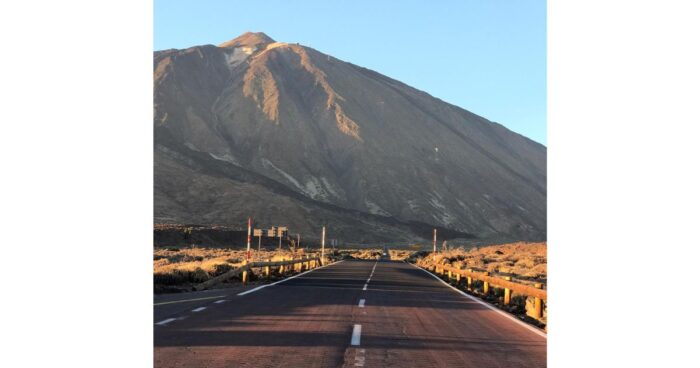
The easiest way to reach Mount Teide is by hire car (we book ours through Booking, where we get discounts). The drive itself is part of the experience: you climb steadily through band after band of vegetation until you emerge into volcanic wilderness. The road most people use is the TF-21, which passes the lower cable car station and the main trailheads. The car parks by the cable car and nearby are free, but in high season they fill up fast, so it pays to set off early.
How to Reach Teide National Park Without a Car
If you don’t have a car, you can take the bus, but there are limits to bear in mind. Only two lines serve the area, and each usually runs just once a day (up in the morning, back in the afternoon): line 342 from the south (Los Cristianos, Costa Adeje) and line 348 from the north (Puerto de la Cruz, La Orotava). The alternative is an organised tour, which is handy if you’d rather not juggle the logistics, the parking and the cable car availability yourself. In season it saves you time and a good deal of stress.
TIP: We’d suggest picking a tour with GetYourGuide so there’s nothing complicated to plan (and if something crops up, you can cancel free of charge up to 24 hours beforehand).

3 Ways to Reach Mount Teide
There are several ways to get close to the summit, and each offers a completely different experience. The cable car is all about comfort and views, while the walking routes let you drink in the atmosphere of the volcanic landscape. Choose your approach based on how fit you’re feeling.
- The easy way, by cable car: The ride takes about 8 minutes and spares you most of the ascent. The upper station (La Rambleta) is a great starting point for shorter walks to the miradores (viewpoints).
- The classic route from Montaña Blanca: The most popular walking route (trail no. 7). It’s roughly 8.5 km one way and climbs more than 1,300 metres. Reckon on 5–7 hours of demanding walking.
- An overnight climb for sunrise: A popular option for those who didn’t manage to get a permit. If you reach the summit gate before 9 a.m. (before the cable car and the checks start up), you can legally step onto the crater without a permit. The catch is that you have to start climbing in the dark with a head torch.
Practical Info: Price, Access and Parking
Visiting Teide National Park calls for a bit of preparation you might not expect on a seaside holiday. Above 3,000 metres the air is thinner, the UV is intense and the weather is unpredictable. Prices for services change over time, so treat these as a rough guide, and always aim to arrive as early in the morning as you can — the cable car car park is often full by 10 a.m.
- Cable car prices: A return ticket for an adult costs around €27, and a one-way ticket about €13.50.
- Kit and footwear: Sturdy walking boots are a must (the rangers actually check, and they can turn you back — honestly!). Don’t forget a windproof jacket, a hat and gloves — even in summer there’s an icy wind up top.
- Water and food: There’s no refreshment hut up top. Take at least 2 litres of water per person and some energy-rich snacks (nuts, chocolate).
- Parking: The main car park is by the cable car, with another smaller one at Montaña Blanca. Both are free, but capacity is limited.

Visiting Mount Teide with Children
Visiting with children is perfectly possible, but it calls for a bit of common sense. The altitude can leave younger children feeling queasy or give them a headache, simply because their bodies can’t adjust to it quickly enough. The cable car whisks you more than a thousand metres higher in a matter of minutes, which is a real shock to the system. If you have older children who love to explore, the park’s Mars-like landscape will stay with them regardless. And from the park itself you’ll enjoy gorgeous views of the volcano.
- Age limits: The cable car officially advises against the ride for children under 3 and for pregnant women, because of the risk of altitude sickness.
- Suitable routes: Short walks from the upper station to the La Fortaleza or Pico Viejo viewpoints are manageable with children from around 6–7 years (they’re more or less level, along well-kept paths).
- Pushchair or carrier: Leave the pushchair behind — the terrain is completely unsuitable for it. A baby carrier is your only option, but remember that carrying a child on your back makes breathing at that altitude even harder.
TIP: Timanfaya National Park on Lanzarote: How to Get There and What Not to Miss
A History of Eruptions and the Birth of the Las Cañadas Caldera
Behind today’s massif lies a long history of volcanic activity. Around 150,000 years ago there was probably a colossal explosion that created the Las Cañadas caldera at roughly 2,000 metres. The caldera is enormous (about 15 km east to west and 10 km north to south) and forms the basic “bowl” from which the Teide and Viejo peaks later grew.
The most famous historic event linked to the volcano is the eruption that, in 1706 (some accounts give 1709), sent a lava flow over much of the port of Garachico on the north coast. Volcanic activity was last recorded on the slopes in 1909, when a lava flow around 5 kilometres long poured down the north-western flank. According to local lore, Christopher Columbus is said to have witnessed similar activity here on one of his voyages.
When to Visit Mount Teide
You can visit Teide National Park all year round, but spring and autumn are the loveliest. You’ll dodge the biggest crowds and the fierce summer sun, and visibility is often more reliable too. In summer, expect strong sun and very little shade, while winter brings more cold, wind and the chance of snow (which is genuinely beautiful). Whatever the season, one simple rule holds: it will be markedly colder up top than by the sea, so a warm layer and sun protection are always worth packing.
If you’d rather stay by the ocean, a practical base is either the north (Puerto de la Cruz, La Orotava) or the south (Costa Adeje, Los Cristianos). You can drive to Teide from both sides, just bear in mind the journey will take longer than from accommodation right by the park.
TIP: Fuerteventura Review: Tips, Experiences and What You Should Know Before You Go
What to See Around Teide
Teide is far more than just a summit. The surrounding area is full of places worth a trip of their own, or at least a stop along the way.
- Roques de García – iconic rock formations in the caldera and among the most photogenic spots in the whole park.
- Paisaje Lunar – a “lunar landscape” of sculpted volcanic formations, perfect for a quieter walk away from the crowds.
- Cueva del Viento – a lava tube that’s one of the most fascinating underground volcanic features on Tenerife.
- Chinyero volcano – the site of the most recent historic eruption on Tenerife; gentle trails lead across the lava fields.
- El Drago Milenario – the famous “thousand-year-old” dragon tree, one of the island’s emblems.
- Garachico – a town bound up with the history of the eruptions, known today for its natural lava rock pools along the shore.
What Would We Do Differently?
We drove to Mount Teide straight after breakfast, setting off from Puerto de la Cruz, which turned out to be quite a distance. If I went again, I’d definitely want more time there. We took in the summit area and had a wander round the park, but it all went by so fast that it felt like we’d only been there for a moment. So I’d stay somewhere close by and give the whole national park the proper time it deserves.
TIP: Fuerteventura: What to See + 30 of the Most Beautiful Places
Frequently Asked Questions (FAQ)
How do you get to Mount Teide?
You essentially have two main options: earn it on foot, or let the cable car do the work. Either way, your journey starts in a car or bus that gets you into the central caldera. The cable car car park sits at 2,356 metres, and this is where the decision is made: you either step into the cabin or shoulder your rucksack and set off on foot.
How long does it take to climb Teide?
A lot depends on how big your breakfast was and how fit you are. The main route from Montaña Blanca is just under 10 km, but don’t be fooled — there’s a solid 1,200 metres of ascent. For the average walker, the climb up takes 4 to 5 hours. It isn’t that the route is technically hard; it’s that above 3,000 metres the air is noticeably thinner, so you’ll get out of breath far more quickly.
What exactly is Mount Teide?
Mainland Spain has its high peaks in the Pyrenees, but at 3,715 m Mount Teide leaves them in the shade. It’s also the third-largest volcano in the world (measured from its base on the ocean floor, it stands an astonishing 7 kilometres tall!). For locals it’s the island’s emblem, and for us travellers it’s a place that reminds you just how small we are next to the forces of nature.
Can you visit Mount Teide without a car?
Green TITSA buses run to the national park from the tourist resorts — line 342 from the south or line 348 from Puerto de la Cruz. They only go up once a day and back once a day, though, so keep an eye on the time unless you fancy spending the night up there in your shorts. Hitchhiking is fairly common on Tenerife too, and locals or fellow travellers are often happy to give you a lift towards the cable car.
Potřebujete pomoct s cestováním?
-
Ubytování 🏨
Vyberte si to nejlepší ubytování, ať už jste kdekoliv, přes Booking.com. -
Půjčení auta 🚗
Auto si snadno najdete přes Booking.com, kde máte často slevu díky ubytování, nebo Rentalcars.com, kde porovnáte nabídky většiny půjčoven. -
Zážitky 🎟️
Přes GetYourGuide.com si vyberete z nejrůznějších výletů i zážitků po celém světě, navíc se zrušením zdarma do 24 h předem.