Last updated 27.10.2026
Geneva has a reputation as a city of bankers, diplomats and watches that cost as much as a flat. There is some truth in it, but once you arrive you find that most of the best things to do in Geneva are free or nearly free: the Jet d’Eau fountain, the Old Town on its hill, a lakefront with views of Mont Blanc, a lake bath on a pier for two francs, CERN and the permanent collections of the city’s largest museum. Stay in a hotel or hostel and you get free public transport for your whole visit on top. Geneva, Switzerland is a city you can do on a normal budget, as long as you know where the savings are. Below are 16 things to do in Geneva, what they cost in 2026, how to get there from the UK, where to stay and where to go when, after two days, the mountains start calling.
Things to do in Geneva at a glance
- Switzerland’s second-largest city (about 211,000 people) sits at the south-western tip of Lake Geneva, where the Rhône flows out of it. People speak French and pay in Swiss francs.
- Direct flights from London and from other UK airports take roughly an hour and a half. By train it is Eurostar to Paris and a TGV Lyria straight to Geneva. Drivers need a Swiss motorway vignette for 40 CHF (about £36).
- Free transport for overnight guests. Anyone staying in registered accommodation in the canton of Geneva gets the Geneva Transport Card for buses, trams, trains and the Mouettes boats for their whole stay.
- Plenty is free: the Jet d’Eau, the Old Town, the parks, the cathedral (but not its towers), the permanent collections of the Musée d’art et d’histoire and CERN Science Gateway after registering online.
- What you pay for: cathedral towers 7 CHF, UN tour 25 CHF, Red Cross museum 15 CHF, Patek Philippe Museum 10 CHF, the Bains des Pâquis pier 2 CHF (roughly £6.40, £23, £14, £9 and £1.80).
- Tours of the Palais des Nations sell out. The UN releases next month’s slots on the 20th of each month, and you need a passport or national ID card.
- Two days are enough for the city, a third is for a day trip: Mont Salève, Lausanne, Montreux and Chillon Castle, or Annecy across the border in France.
How to get to Geneva from the UK
Geneva sits right on the French border. The canton is surrounded by France on three sides and joined to the rest of Switzerland only by a narrow strip along the lake. For British travellers that is actually good news: Geneva is one of the easiest Swiss cities to reach, either on a short flight or by rail through France without going anywhere near Zurich.
By plane
The quickest option. Geneva Airport (GVA) has direct flights from several London airports and from many other UK airports, and the flight takes around an hour and a half. Fares depend a lot on the dates. Winter weekends are the most expensive, because half of Britain’s skiers fly to the Alps through Geneva, and cheap seats turn up mostly in spring and autumn. Low-cost fares usually include only a small cabin bag.
The airport is a few kilometres from the centre and the railway station is right below the arrivals hall. The train to the main station, Genève-Cornavin, takes about seven minutes. In the baggage reclaim hall there is a machine that, according to the airport and the transport operator, issues a free ticket valid for 80 minutes anywhere in Geneva, as long as you have your boarding pass. Note that the machine is before the exit, and once you are through you cannot go back for a ticket. If your accommodation has already sent you a Geneva Transport Card (see below), just use that.
By train
There is no through train from the UK, but the route is simple: Eurostar from London St Pancras to Paris, then a high-speed TGV Lyria from Paris Gare de Lyon direct to Geneva-Cornavin. Allow most of a day including the change of station in Paris. It makes most sense if you combine Geneva with other Swiss cities such as Zurich, Bern or Lucerne. Trains from Lausanne to Geneva run every few minutes and take 40 to 50 minutes.
Long-distance coaches (FlixBus and others) are the cheapest option but by far the slowest, usually with a change and well over 15 hours on the road. Services do not run every day, so plan ahead.
By car
Driving from the UK means a Channel crossing and a long day on French motorways, most of which are tolled. We would split the journey with a night somewhere in Burgundy or the Jura. On Swiss motorways you need a motorway vignette for 40 CHF (about £36). Only an annual one exists: the 2026 vignette is valid from 1 December 2025 to 31 January 2027 and can also be bought electronically, linked to your number plate. Driving without one costs a 200 CHF fine, and you still have to buy the vignette.
Parking in central Geneva is expensive and scarce. It is smarter to leave the car at your accommodation if it has its own parking, or at one of the P+R car parks on the edge of the city. The largest is Genève-Plage by the lake with just under 900 spaces, and the canton sells a day ticket that combines parking with a full day of public transport. Current P+R prices are on the Fondation des Parkings website.
Getting around Geneva and the Geneva Transport Card
The centre is small. From Cornavin station it is five minutes on foot to the lake and twenty to the Old Town. For CERN, the UN or Carouge, though, take the tram.
Geneva Transport Card: free public transport for guests
This is the biggest saving of the whole trip. Anyone staying in accommodation registered with Geneva Tourism (hotels, hostels and some other types of lodging) gets a personal Geneva Transport Card for free. About three days before arrival your host sends you a link or a form, and once you fill it in, the card arrives on your phone. If you booked through Booking.com, the email goes to the anonymised address Booking uses, so check your spam folder too. Guests without email get the card at reception.
According to Geneva Tourism and the operator TPG, the card is valid for your whole stay in zone 10, which is the entire canton of Geneva except the Céligny exclave, on TPG buses and trams, CFF trains and the Mouettes genevoises boats. It already covers the trip from the airport to your accommodation, and several people travelling together can share one card. Apartments and private rentals qualify only if the host is registered, so ask before you book.
The card does not include admission or discounts. For those there is the paid Geneva City Pass.
TPG tickets if you don’t have the card
Under the canton’s fares, a 60-minute ticket for zone 10 costs 3 CHF (about £2.70), a day ticket 10 CHF (about £9) and a day ticket from 9 am 8 CHF. The day ticket is valid until 5 am the next morning, and at weekends one 10 CHF ticket covers two people travelling together. Tickets are sold at machines at the stops (cards accepted) or in the TPG app, and you don’t need to validate them. The trams visitors use most are the 12 and 18 to Carouge, and the 18 continues to its terminus at CERN.
Mouettes: the yellow boats across the harbour
The Mouettes genevoises have been crossing Geneva harbour since 1897, 365 days a year, on four lines between the Molard, Pâquis, Eaux-Vives, Port Noir and De-Chateaubriand stops. They are part of the same fare system as the trams, so a TPG ticket or the Geneva Transport Card gets you on at no extra cost. In our opinion this is the prettiest public transport in Switzerland: five minutes on the water, the Jet d’Eau close by, and you reach the other shore faster than walking round over the bridge.
Geneva City Pass
A paid card from Geneva Tourism for 24, 48 or 72 hours, with or without transport. It gives free or discounted entry to roughly 50 to 60 attractions. Examples listed on the official website include the Museum of the Reformation (normally 13 CHF), the return cable car up the Salève (normally €18), the Geneva Tour sightseeing cruise (normally 20 CHF) and half an hour on a pedal boat (normally 16 CHF). The Red Cross museum is also free with it. Check current pass prices on geneve.com, as there are often discounts in winter.
Is it worth it? Yes, if you fit in at least three paid things in one or two days, for example the Salève, a museum and a cruise. If you mainly want to walk around the city and visit the UN, you don’t need it (the UN tour isn’t included). If you have a Swiss Travel Pass, it already gets you into the Red Cross museum and the other museums in the Swiss Museum Pass scheme for free.
16 things to do in Geneva
We have ordered them roughly by location: first the lake, then the Old Town on the hill, then the international district to the north with the UN and the Red Cross, CERN outside the city and finally Carouge and the meeting of the rivers to the south. On day one you can cover the lake and the Old Town, on day two the UN, CERN and Carouge.
1. Jet d’Eau, the fountain over the lake
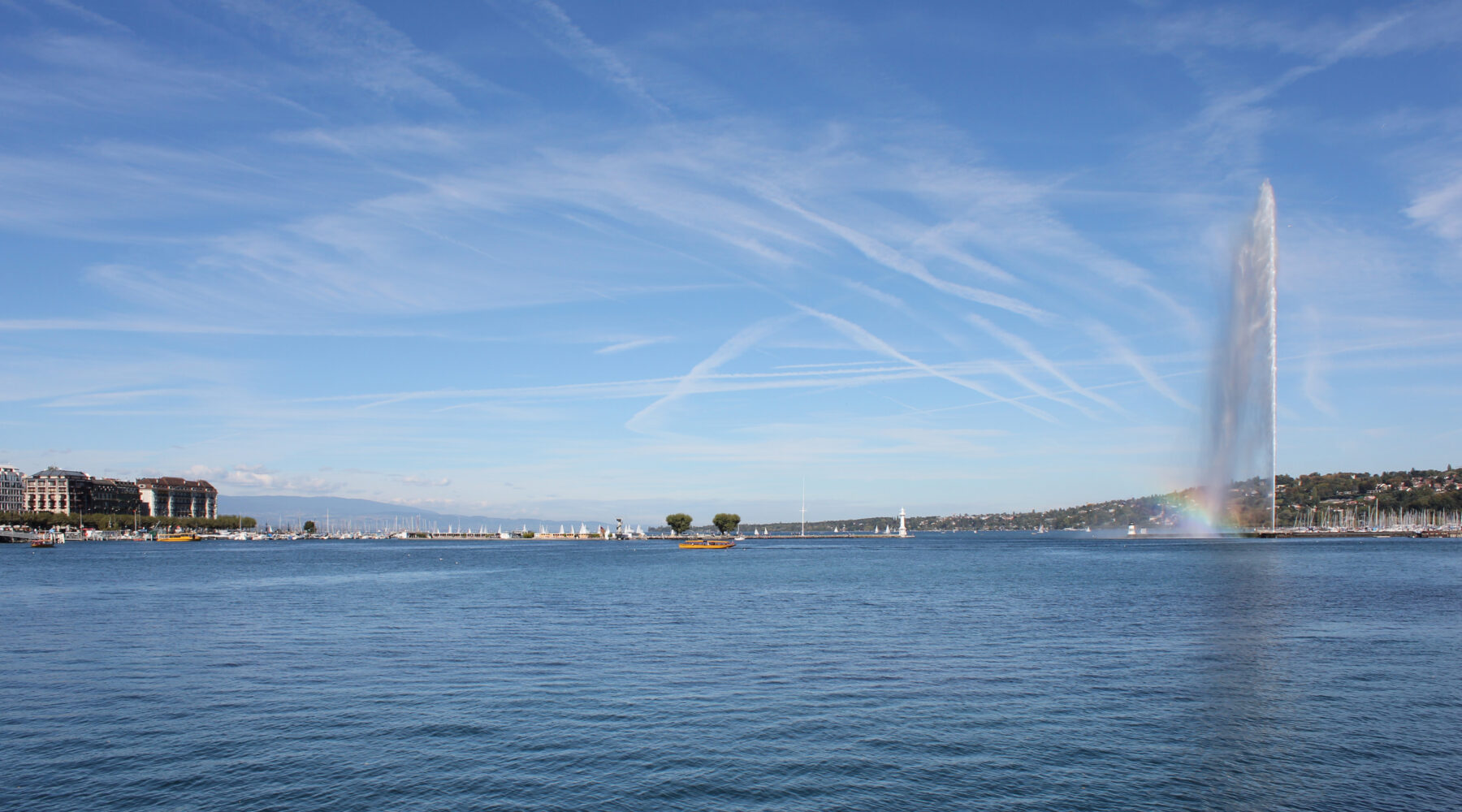
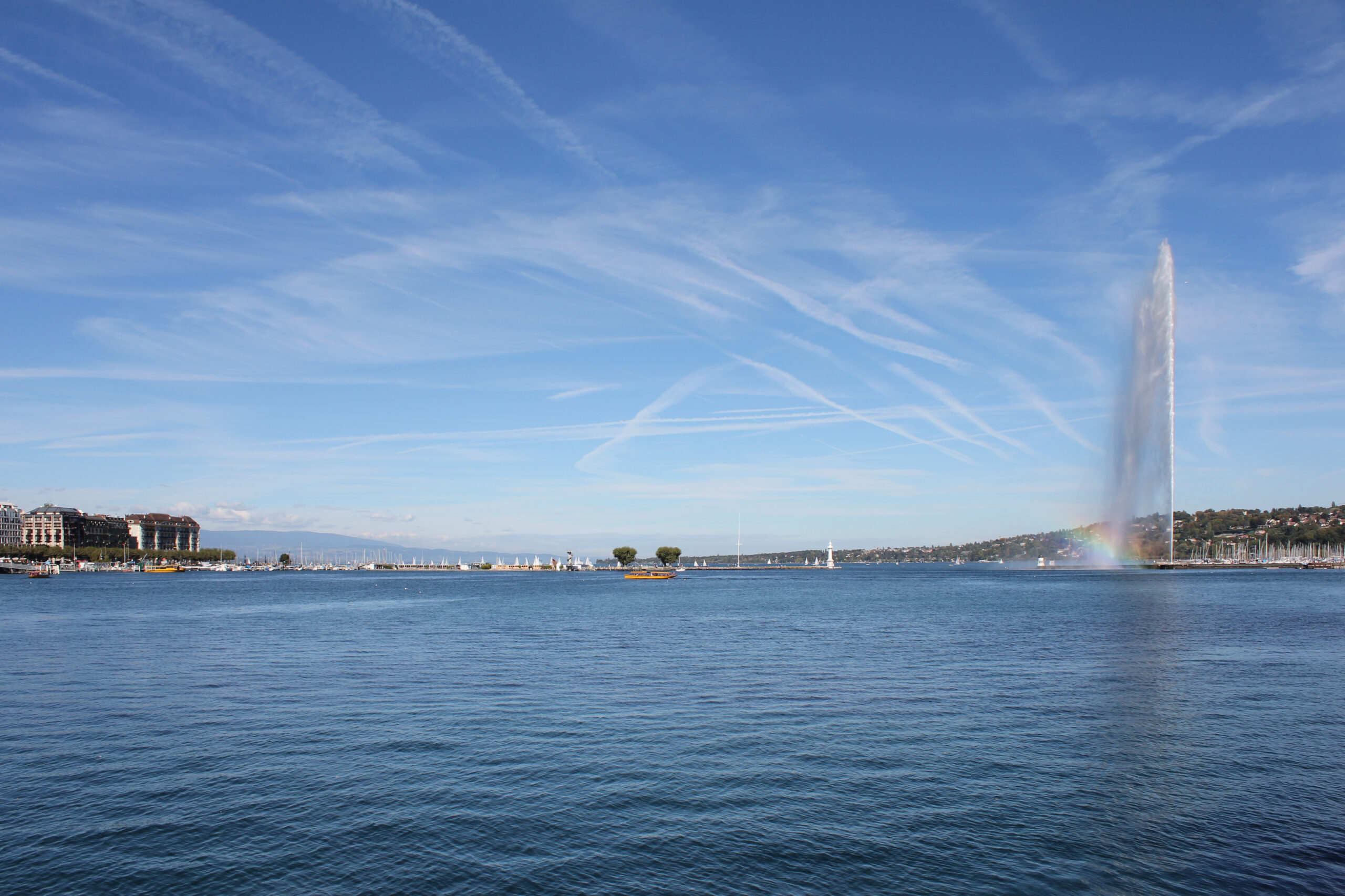
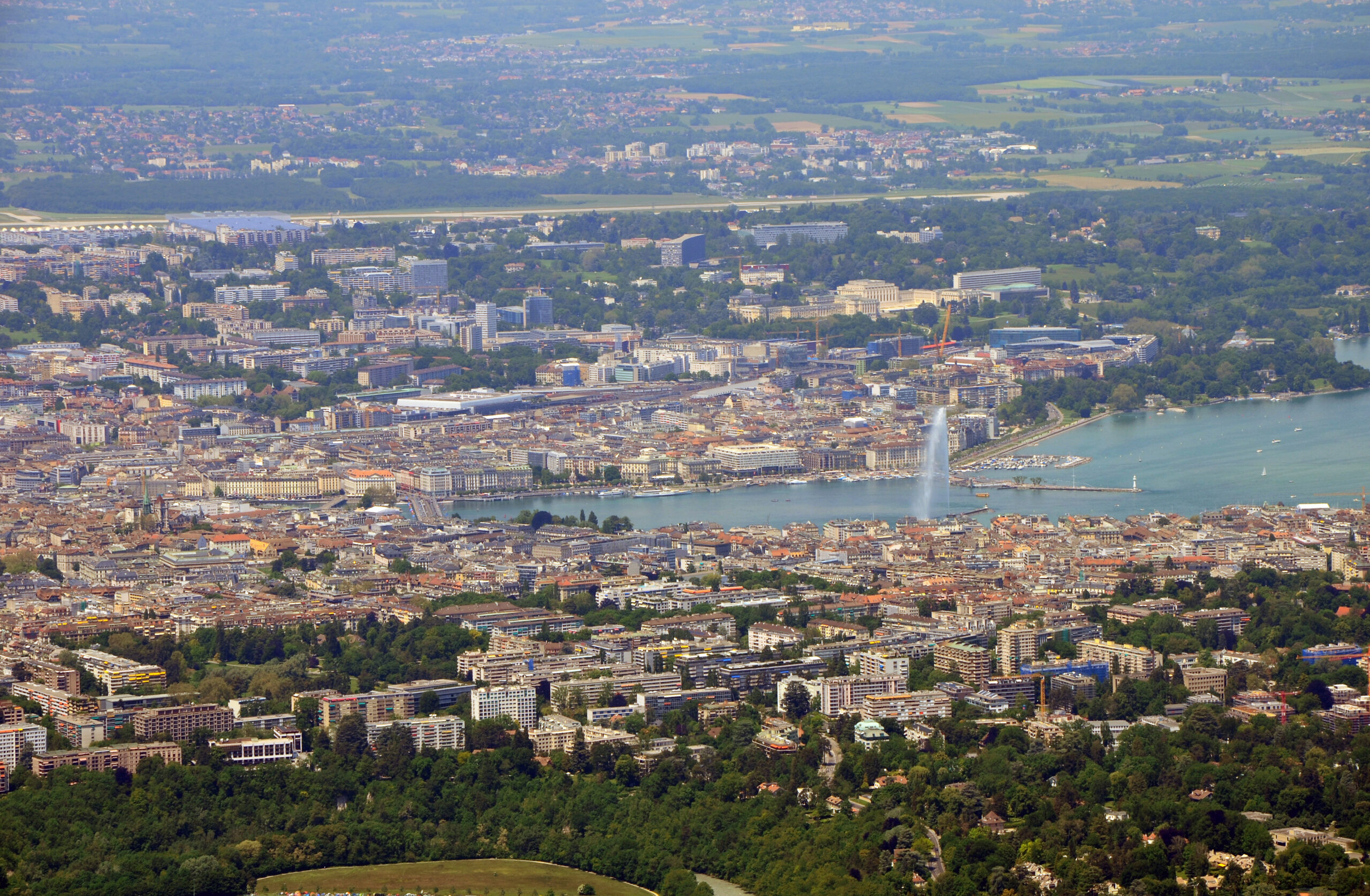
The city’s symbol, and one of the few things you can see from almost anywhere. The fountain shoots around 500 litres of water a second up to 140 metres, and the water leaves the nozzle at roughly 200 km/h. It started out in 1886 as something quite mundane: a safety valve on the water network that released excess pressure. People liked it so much that the city kept it after the valve was no longer needed and gradually turned it into an attraction.
You reach the fountain along the Jetée des Eaux-Vives pier from the Jardin Anglais park. Access is free, and on a windy day expect a shower before you have time to put your phone away. In our view it looks best from a distance, though: from the Mont-Blanc bridge, from the deck of a Mouette, or early in the morning from the Quai du Mont-Blanc while the promenade is still quiet.
The Jet d’Eau is run by Geneva’s utility company SIG. It is switched off in strong wind and frost, and every autumn it is turned off for several weeks of maintenance. In 2025 it was out of service from 29 October to 21 November. If you are travelling in November or in winter, check its status on the SIG or city website; we couldn’t find the 2026 schedule in official sources.
2. Jardin Anglais and the Flower Clock
A lakeside park right next to the pier leading to the fountain. The main attraction is the Flower Clock (L’horloge fleurie) from 1955, a clock face made of thousands of plants that the gardeners replant several times a year, so it never looks the same twice. It keeps exact time, as a Swiss clock should. It is a quick photo stop rather than a half-day outing, but you walk past it on the way to the Jet d’Eau anyway.
3. A Mouette ride across the harbour
The cheapest boat trip on Lake Geneva, because it is really just public transport. We recommend the M2 line from Pâquis to Eaux-Vives: it takes you past the fountain and drops you by the Jardin Anglais on the other side. For a longer cruise, the CGN excursion boats and paddle steamers leave from the quays and sail the whole lake as far as Lausanne and Montreux.
4. Bains des Pâquis
This stone pier with lake baths from 1932 juts out into the lake from the Quai du Mont-Blanc, and for Genevans it is something like a shared living room. In summer people swim and sunbathe here, and all year round the Buvette des Bains café serves breakfast with a view of the Jet d’Eau and fondue in the colder months. Entry to the pier costs 2 CHF (about £1.80) and it is open every day, with hours depending on the weather.
From mid-September to mid-May the baths turn into a sauna, hammam and Turkish bath. According to the official website entry to this part costs 22 CHF (15 CHF on Mondays), and you need two large towels (or rent them for 5 CHF each). Hardy swimmers cool off straight in the lake. We like the pier best in the evening, when it gets dark over the Salève and the hotels along the promenade light up.
5. The Old Town and Place du Bourg-de-Four
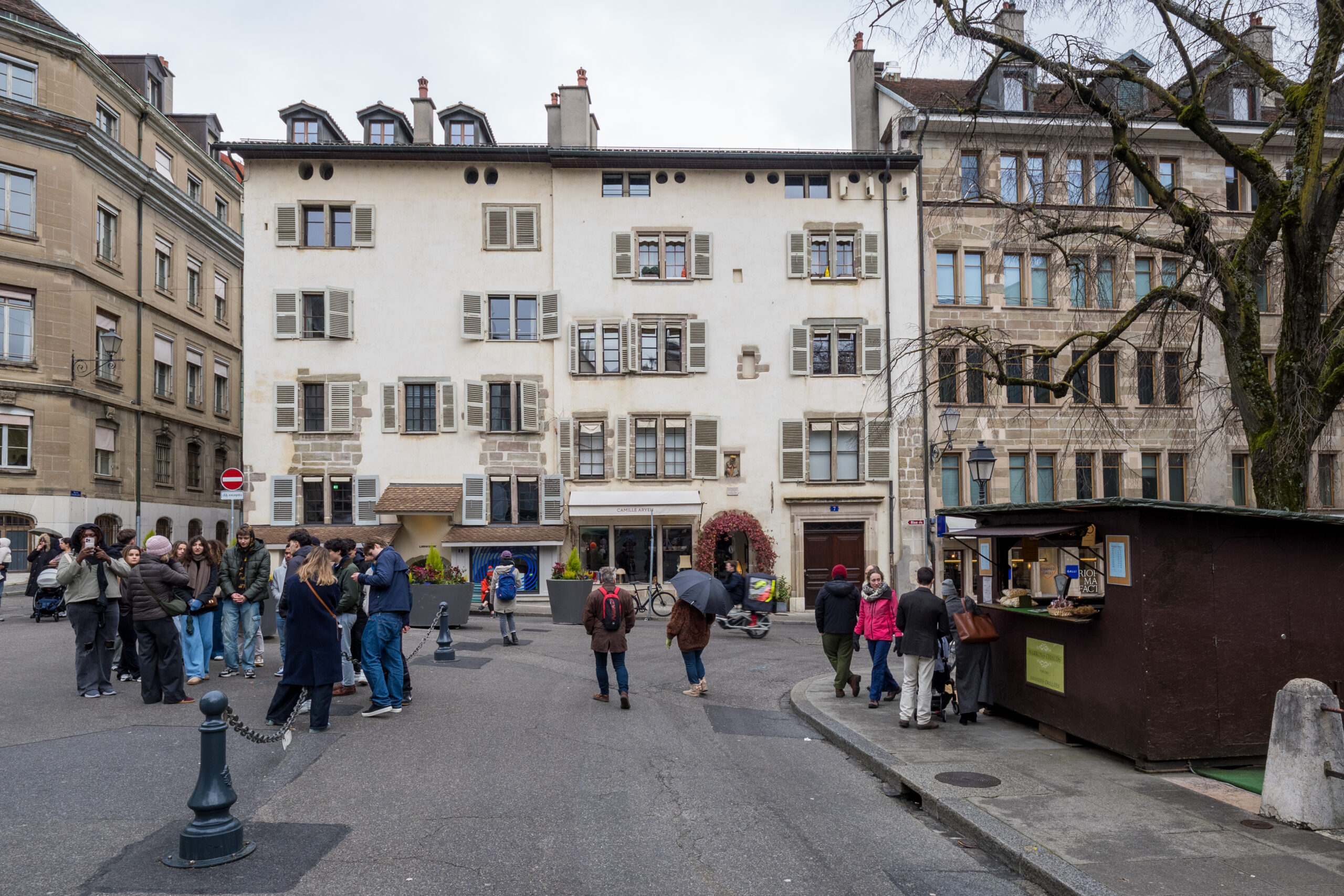
The Vieille Ville sits on a hill above the lake, and this is where Geneva stops looking like a banking centre. Cobbled streets climbing uphill, stairways, passages between houses, and in the middle Place du Bourg-de-Four, the oldest square in the city and once a Roman market. Today it is a square of cafés around a fountain and the best place for a morning coffee before the tour groups wake up.
A short walk away is the town hall, the Hôtel de Ville, which has a sloping cobbled ramp instead of stairs so you could ride a horse up to the first floor, and below it the Promenade de la Treille. There stands a bench the city officially lists as the longest historic wooden bench in the world: it is 120.21 metres long. It looks out over Parc des Bastions and, on a clear day, the Salève. The Old Town is also home to Maison Tavel, the oldest surviving house in the city, now a city museum with a large model of Geneva as it looked before its walls came down.
6. St Pierre Cathedral
The towers of the Cathédrale Saint-Pierre rise above the Old Town. Construction began in the 12th century on the site of much older churches. In 1536 it became Protestant, and John Calvin preached here. That is why the interior is surprisingly bare: the Protestants removed the altars and paintings, leaving stone walls, stained glass and a simple wooden seat known as Calvin’s chair. The columned façade, which looks more like an ancient temple, was only added in the 18th century.
Entry to the cathedral is free. The towers are 157 steps up and cost 7 CHF (about £6.40; seniors 5 CHF, young people 4 CHF). From October to the end of May they are open Monday to Saturday from 10 am to 5.30 pm and on Sundays from noon, longer in summer, with last entry half an hour before closing. The view takes in the whole city, the lake, the Jura and the Alps. Beneath the cathedral is an archaeological site with the remains of earlier churches and the bishop’s residence; admission is 8 CHF including an audio guide.
A footnote for history fans: attached to the side of the cathedral is the Gothic Maccabees Chapel (Chapelle des Macchabées), built by Cardinal Jean de Brogny, who is also buried there. From 1414 to 1418 he presided over the Council of Constance, the assembly that in 1415 condemned the Czech reformer Jan Hus to be burned at the stake.
7. Museum of the Reformation and Auditoire de Calvin
Right next to the cathedral is the Musée international de la Réforme (MIR). It is small but cleverly done, showing how the Reformation changed Geneva and Europe: twelve rooms, portraits of Luther by Cranach, a letter from Calvin, and a free audio guide in fourteen languages. Admission is 13 CHF and free with the Geneva City Pass. An exhibition on the painter Ferdinand Hodler runs until 24 January 2027. Opposite stands the Auditoire de Calvin, a plain Gothic chapel where Calvin gave his lectures.
8. Parc des Bastions and the Reformation Wall
Below the Old Town walls lies a park with the university and giant chessboards, where games go on all year with a ring of onlookers offering advice. Along the former moat runs the Reformation Wall (Mur des Réformateurs), a monument about 100 metres long with five-metre statues of Calvin, Farel, Beza and the Scotsman John Knox. The foundation stone was laid in 1909 for the 400th anniversary of Calvin’s birth, and the monument was finished in 1917. In December there is usually a Christmas market here.
9. Musée d’art et d’histoire
The largest museum in Geneva and one of the largest in Switzerland, covering everything from prehistory, Egyptian and Roman finds, arms and musical instruments to paintings. One highlight is Konrad Witz’s altarpiece The Miraculous Draught of Fishes, in which Christ walks on Lake Geneva with the Salève recognisable in the background. The permanent collections are free: the museum runs on a pay-what-you-wish basis with a suggested 5 to 20 CHF. It is open Tuesday to Sunday from 11 am to 6 pm, later on Thursdays, and closed on Mondays. It is the perfect plan B for a rainy day.
10. Patek Philippe Museum
Even if you have no plans to buy a watch costing as much as a house, this museum is worth an afternoon. Its four floors in the Plainpalais district hold around 2,500 watches, automata and enamel miniatures from five centuries, from the first portable watches of around 1500 to the present day. Admission is 10 CHF (about £9), and under-18s go free. Watch the opening hours: Tuesday to Friday only from 2 pm to 6 pm, Saturday from 10 am to 6 pm, closed on Sundays and Mondays.
11. Palais des Nations (UN) and the Broken Chair
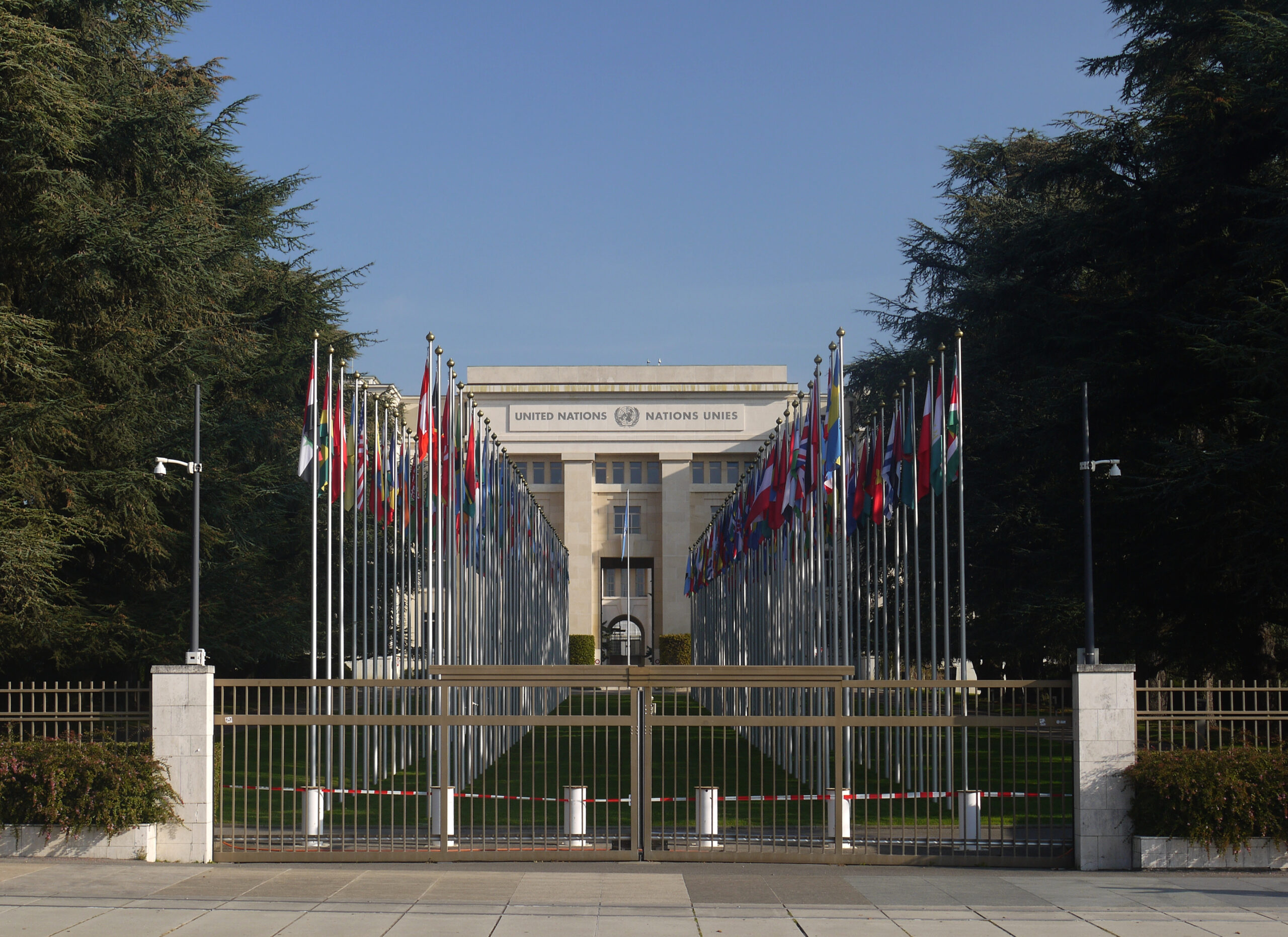
The Palais des Nations was built in the 1930s for the League of Nations and is now the UN’s European headquarters. The guided tour lasts about an hour and takes you into the assembly halls, including the Human Rights room with its ceiling by Miquel Barceló. According to the official UN website a UN Geneva tour costs 25 CHF for adults (about £23), 22 CHF for students and seniors, 14 CHF for young people aged 14 to 17 and 13 CHF for children aged 6 to 13, plus a booking system fee.
Tours for individual visitors are limited and go fast. Slots for the following month are released on the 20th of each month. Every visitor needs a valid passport (an ID card from a Schengen country is also fine), and you must arrive 30 minutes early for an airport-style security check. Visitors enter through the Pregny Gate at Avenue de la Paix 14, opposite the Red Cross building. The palace is being renovated, so the route may change and some rooms can be closed without notice.
On Place des Nations in front of the palace stands the Broken Chair, a 12-metre wooden chair with one leg snapped off. Handicap International put it up as a protest against landmines and cluster munitions, and it was only meant to stay for a few months. It never left. Looking at it is free, as is the view of the avenue of flags behind the fence.
12. International Red Cross and Red Crescent Museum
A few minutes’ walk through Ariana Park from the UN. The Red Cross was founded in 1863 by Geneva-born Henri Dunant, and the museum shows what humanitarian work means in practice, in three sections on human dignity, restoring family links and natural disasters. The part that hit us hardest is the card index of prisoners of war from the First World War, millions of index cards on the shelves. It is not a light visit and may catch out anyone who came to Geneva mainly to relax.
According to the official website admission is 15 CHF (about £14), reduced 10 CHF (ages 12 to 22 and over 65), and children under 12 go free. It is also free with the Geneva City Pass or the Swiss Travel Pass. Open Tuesday to Sunday from 10 am to 5 pm, Thursdays until 8 pm, closed on Mondays. Buses 8 and 20 run from Cornavin station to the Appia stop.
13. Botanical Garden
Between the UN and the lake lie the Conservatoire et Jardin botaniques, one of the oldest botanical gardens in Switzerland, founded in 1817. Glasshouses, a rock garden, an arboretum and a small animal enclosure, and entry to the garden is free. It combines well with the UN and the Red Cross into one day and makes a good break between museums.
14. CERN Science Gateway
The world’s largest particle physics laboratory, where scientists discovered the Higgs boson and where the web was born. The Science Gateway visitor centre was designed by Renzo Piano and houses interactive exhibitions on the universe and the quantum world. Entry is free, but you need to register in advance at visit.cern. It is open Tuesday to Sunday, with exhibitions from 9 am to 5 pm (last entry 4.30 pm), closed on Mondays. Guided tours and workshops have limited capacity and some places are only handed out on the day, so it pays to arrive first thing in the morning.
Take tram 18 to its terminus, CERN, about half an hour from the centre. You won’t see the 27-kilometre underground collider itself, but even so we think it is one of the best things Geneva has to offer, even for people who barely scraped through physics at school.
15. Carouge
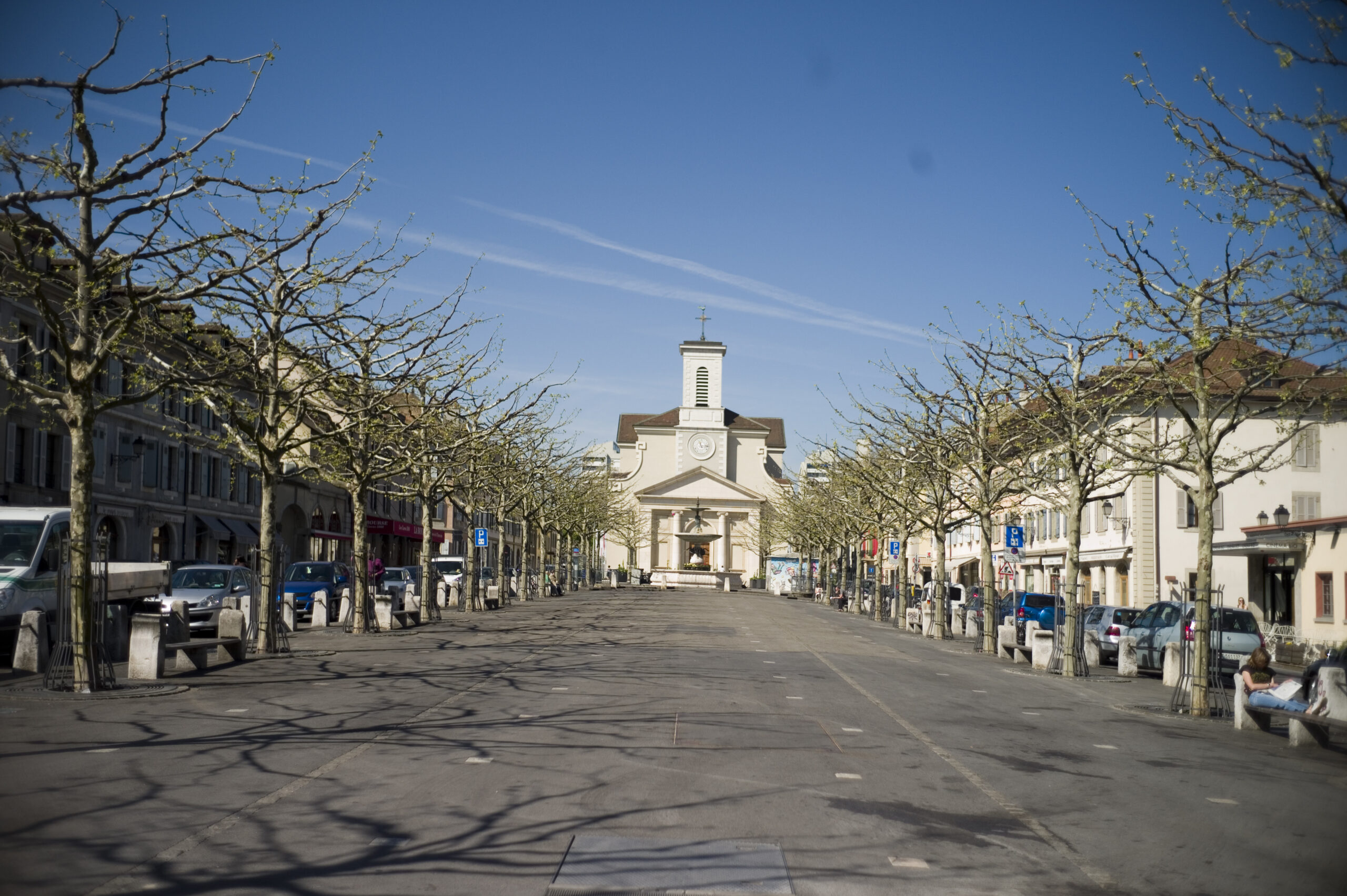
A few stops on tram 12 or 18 across the River Arve and you are in a different town. Carouge was built in the 18th century by the Kingdom of Sardinia as a rival to Calvinist Geneva, and it shows: low houses with shutters, courtyards with little gardens, squares with plane trees and a church. It only became part of Geneva in 1816. Today it is a district of craft workshops, vintage shops, cafés and bars, and there is a market on Place du Marché on Wednesday and Saturday mornings. In the evening there are more locals than tourists, which is exactly why we like coming here for dinner.
16. Pointe de la Jonction, where two colours meet
At the western end of the city, the murky grey-brown Arve, which comes down from the glaciers around Chamonix, flows into the clear blue-green Rhône. For a stretch below the confluence the two colours run side by side before they mix. You can walk to the tip of the peninsula along the quays or the riverbank from the centre in about half an hour. In summer Genevans swim here and let the Rhône’s current carry them downstream, but we would leave that to locals who know the river.
The walk passes the Plaine de Plainpalais, a huge square with a food market on Tuesday, Friday and Sunday mornings and a flea market on Wednesdays and Saturdays. You can spend half a morning at the flea market and hardly spend anything, which is more than can be said for the rest of Geneva.
Is Geneva expensive? Prices and how to save
Geneva is one of the most expensive cities in the world, and you will notice it the moment you sit down in a restaurant. The good news is that admission and transport are cheap compared with food and accommodation, and half of the things to do in Geneva listed above cost nothing. The prices in the table come from the operators’ official websites; the conversion to pounds is approximate (1 CHF ≈ £0.91).
| What | Price (2026) | Approx. in £ |
|---|---|---|
| Public transport, 60-minute ticket (zone 10) | 3 CHF | £2.70 |
| Public transport, day ticket / from 9 am | 10 CHF / 8 CHF | £9 / £7.30 |
| Geneva Transport Card (overnight guests) | free | £0 |
| Jet d’Eau, Old Town, parks, cathedral | free | £0 |
| St Pierre Cathedral towers | 7 CHF | £6.40 |
| Archaeological site beneath the cathedral | 8 CHF | £7.30 |
| Museum of the Reformation (MIR) | 13 CHF | £12 |
| Palais des Nations (UN) tour | 25 CHF | £23 |
| Red Cross museum | 15 CHF | £14 |
| Patek Philippe Museum | 10 CHF | £9 |
| Musée d’art et d’histoire, permanent collections | pay what you wish | from £0 |
| CERN Science Gateway | free (registration) | £0 |
| Bains des Pâquis pier / sauna in the winter season | 2 CHF / 22 CHF | £1.80 / £20 |
| Salève cable car, return (France) | €18 | about £15, paid in euros |
| Swiss motorway vignette 2026 | 40 CHF | £36 |
We have deliberately left restaurant prices out of the table, because they vary from place to place and can’t be checked reliably. Expect dinner in a restaurant to be expensive, and even fast food isn’t cheap. How to keep costs down:
- Coop and Migros supermarkets sell ready meals, salads and bread, and Migros also has self-service restaurants. A picnic on the lakefront or in Parc des Bastions is the cheapest lunch in town.
- The lunch menu (plat du jour) is much cheaper than dinner in the same restaurant, so make lunch your main meal.
- Don’t buy water. The fountains in Swiss towns run with drinking water, and the exceptions are marked “eau non potable”. Carrying a bottle saves a few francs a day.
- Stay in registered accommodation and transport is free. Bern, Basel and Lucerne have similar schemes, but by no means every Swiss city does.
- You can pay by card almost everywhere. Some places take euros, but they give change in francs at a poor rate. Pounds are not accepted.
💡 Put the UN tour in your calendar. If you want to visit the Palais des Nations in June, for example, the booking system opens the June slots on 20 May. On release day almost everything is available; a week later only scraps are left. And remember that without a passport or ID card you won’t get in, even with a ticket.
Day trips from Geneva
Geneva makes a good base. In an hour the train takes you to the far end of the lake, in under an hour the bus gets you to France, and the local mountain is just across the border. If you only have three days, give two to the city and the third to one of these trips.
Mont Salève, Geneva’s balcony
A limestone ridge south of the city that Genevans call their home mountain, even though it lies entirely in France. The cable car climbs to 1,100 metres in under five minutes, and at the top there is a view over the whole of Geneva, the lake and the Mont Blanc massif, plus a panoramic restaurant, hiking trails and a paragliding launch. According to Geneva Tourism, a return ticket for an adult costs €18 (about £15), and it is free with the Geneva City Pass.
Take bus 8 to the Veyrier-Douane stop and walk a few minutes across the border to the valley station. Bring your passport or ID card and remember that you pay in euros at the top. From 2 to 26 November 2026 the cable car is closed for maintenance and reopens on 27 November. Our favourite is to go up in the afternoon and wait for the city lights to come on over the lake.
Lausanne and the Lavaux vineyards
About 40 to 50 minutes by train from Cornavin station, with several departures an hour. Lausanne clings to a steep slope above the lake, with a Gothic cathedral, an Old Town climbing uphill and the Olympic Museum on the lakeshore. Just beyond the city begin the terraced Lavaux vineyards, a UNESCO World Heritage Site, where you can walk between wine villages and catch the train back.
Montreux and Chillon Castle
Montreux, at the eastern end of the lake, is famous for its jazz festival and the Freddie Mercury statue on the waterfront. Nearby, on a rock right in the water, stands Chillon Castle, the most visited castle in Switzerland. From Geneva you go by train via Lausanne, and in summer you can also take a CGN boat the length of the lake, which is slower but far more beautiful. Check castle admission on chillon.ch; we couldn’t find the 2026 price list.
Annecy (France)
A small town with canals, an old prison on an island in the middle of the river and a lake that is among the cleanest in Europe. It is roughly 40 to 45 km from Geneva, about 50 minutes by coach (FlixBus, BlaBlaCar Bus). It is in France, so take your passport and some euros.
Yvoire and Chamonix
The medieval village of Yvoire on the French shore of the lake is full of flowers, and in season you can get there by boat from Geneva. Chamonix at the foot of Mont Blanc is about an hour and a half from Geneva by car and makes a good full-day trip, ideally with the cable car up the Aiguille du Midi.
If you are heading on into the mountains, the train takes you from Geneva along the lake and up the Rhône valley to Zermatt at the foot of the Matterhorn.
Where to stay in Geneva
Accommodation is the most expensive part of a trip to Geneva, and since public transport comes free with your room, you don’t have to stay right in the centre. Which district suits whom:
- Pâquis and around Cornavin station: the most practical. A few minutes from the lake, the airport train round the corner and lots of cheaper places serving food from all over the world. Lively in the evening and a bit rough around the edges in places.
- Old Town: the prettiest, but the most expensive, with few hotels.
- Eaux-Vives: on the other side of the lake, quieter, with the La Grange and Eaux-Vives parks.
- Carouge and the suburbs (Lancy, Petit-Lancy): cheaper and a few minutes from the centre by tram.
Tried-and-tested picks on Booking.com at different price levels:
- City Hostel Geneva (Pâquis): a hostel near the station, about 750 metres from the lake, with a shared kitchen, dorms and private rooms with shared bathrooms. Guests get a public transport pass and a discount for the Red Cross museum. The cheapest decent bed in the centre.
- Geneva Hostel (Pâquis): a hostel in a 19th-century building about 250 metres from the lake, with breakfast every day, a kitchenette and rooms with private or shared bathrooms. The Geneva Transport Card is included.
- Hotel Rousseau (centre, Saint-Gervais): a hotel in a historic building renovated in 2015, 300 metres from Cornavin station and 200 metres from the lake. Modern rooms, breakfast at extra cost. Mid-range and within walking distance of everything.
- Hotel Cornavin (by the station): a four-star hotel directly opposite the station, with a dining room on the eighth floor overlooking the city and a giant pendulum hanging through nine floors in the lobby. Tintin fans may recognise it from one of his comic-book adventures. Guests get a public transport ticket.
- Hôtel Les Armures (Old Town): a luxury hotel in a 17th-century house right by the cathedral, with historic interiors and its own restaurant. If you are going to splash out once in a lifetime, this is the place.
For more options across the city, browse accommodation in Geneva. Before booking an apartment, check with the host that they will issue you a Geneva Transport Card, otherwise you will be paying for public transport.
A little history
Geneva is older than it looks. The Celtic Allobroges had a fortified settlement called Genava by a ford across the Rhône. The Romans took it around 120 BC, and in 58 BC Julius Caesar stopped the Helvetii here as they tried to cross the river into Gaul. In the Middle Ages the city was ruled by its bishops, who competed for influence with the Dukes of Savoy.
The turning point came in the 16th century. Geneva’s citizens allied themselves with Bern and Fribourg, adopted the Reformation in 1536 and declared a republic. That same year the French reformer John Calvin arrived and turned Geneva into the “Protestant Rome”, a strict city without dancing or luxury, and a refuge for persecuted Protestants from France, Italy and Germany. They brought their crafts with them, watchmaking among them, which is why Geneva is still all about watches today. Calvin’s Geneva had a dark side too: in 1553 Calvin had the theologian Michael Servetus burned at the stake in the city.
On the night of 11 to 12 December 1602, the Duke of Savoy tried to take the city by surprise, and his soldiers were already climbing ladders up the walls. The defenders drove them off, and Geneva still celebrates the victory with the festival of L’Escalade, when people parade through the streets in historical costume and smash chocolate cauldrons filled with marzipan.
After the Napoleonic Wars, during which Geneva briefly belonged to France, it became the 22nd canton of Switzerland in 1815. In the 19th century the city pulled down its walls and expanded. In 1863 Henri Dunant founded the Red Cross here, and in 1920 the League of Nations arrived. It left behind the Palais des Nations and with it the role Geneva still plays: neutral ground where states come to the negotiating table. Around 210,000 people live here, and almost half of them are not Swiss citizens.
Best time to visit Geneva
May, June, September and October are the best months in our view: pleasantly warm for walking, fewer crowds and hotels a little cheaper than in summer. In summer the whole waterfront comes alive, you can swim in the lake and at the Bains des Pâquis, and there are more open-air concerts in town, but accommodation prices are at their highest.
Autumn and winter have their own charm: fondue on the Bains des Pâquis pier, a sauna followed by a dip in the lake, the Escalade festival around 11 December and then the Christmas markets. Just bear in mind that the Jet d’Eau and the Salève cable car close for several weeks of maintenance in autumn (the Salève from 2 to 26 November in 2026), and the fountain is also switched off in strong wind and frost. In December, skiers heading for the Alps pour through the city and the airport, so weekend flights and hotels go up in price.
💡 Go to CERN on a Tuesday to Friday morning. Science Gateway is closed on Mondays and full of families at weekends. Free registration is compulsory, and if you want a guided tour you need to be early, because some places are only handed out on site and capacity is small.
What we would do differently
We wouldn’t try to fit in every institution. The UN, the Red Cross, CERN, the Reformation, the watches. Each one is interesting, but five “serious” museums in two days is too many. We would pick two and give the rest of the time to the lake.
We would wander more without a plan. For us the best of Geneva isn’t the sights but the Old Town lanes that lead nowhere, the courtyards in Carouge and the places in Pâquis cooking Lebanese, Eritrean or Portuguese food, where people sit outside in the evening. None of them appear in guidebooks, and that is exactly why they are worth seeking out.
We would try the local food and drink. Perch fillets from the lake, Geneva’s longeole sausage, white wine from the Chasselas grape grown right here in the canton, and plum tart in September. After Valais and Vaud, Geneva is Switzerland’s third-largest wine-growing canton, and few people know it.
And we would just sit more. On the Bains des Pâquis pier, on the bench on the Treille or up on the Salève, with the phone in a pocket. The Jet d’Eau keeps spouting whether or not you photograph it for the twentieth time.
FAQ
Is Geneva expensive to visit?
Yes, it is one of the most expensive cities in the world, especially for accommodation and restaurants. But there is a lot you can save: guests in registered accommodation get free public transport, many sights cost nothing and museum tickets are around 10 to 15 CHF (roughly £9 to £14). For food, Coop and Migros supermarkets, lunch menus and water from public fountains keep costs down.
How do I get to Geneva from the UK?
The quickest way is a direct flight from London or another UK airport, which takes around an hour and a half. By rail you take the Eurostar to Paris and a TGV Lyria direct to Geneva, which takes most of a day. Driving means a Channel crossing and a long day through France, and Swiss motorways require a 40 CHF vignette.
How do I get from Geneva Airport to the city centre?
By train from the station below the arrivals hall; it takes about seven minutes to Cornavin, the main station. In the baggage reclaim hall there is usually a machine issuing a free 80-minute ticket for Geneva, and with a Geneva Transport Card you travel for free as well.
What is the Geneva Transport Card and who gets it?
A personal card for all public transport in the canton of Geneva (buses, trams, trains and the Mouettes boats) for your whole stay. Everyone staying in accommodation registered with Geneva Tourism gets it free. Your host emails it about three days before arrival.
What language is spoken in Geneva?
The official language is French, as Geneva is in French-speaking Switzerland. You can get by in English in hotels, museums and most restaurants, but the labels in smaller museums are often in French only.
How many days do you need in Geneva?
Two days for the city itself: the first for the lake and the Old Town, the second for the UN, the Red Cross or CERN, and Carouge. A third day is good for a trip to the Salève, Lausanne, Montreux or Annecy in France.
When is the Jet d’Eau switched on?
Every day for most of the year, from morning until dusk in the warmer months, and it is usually lit up in the evening. It is switched off in strong wind and frost, and every autumn for several weeks of maintenance (in 2025 from 29 October to 21 November). SIG, Geneva’s utility company, publishes the current status.
Can you swim in Lake Geneva in Geneva?
Yes. The most popular spot is the Bains des Pâquis on a pier by the quay, with entry at 2 CHF, and locals also swim at other beaches around the lake and in the Rhône. The water is pleasant in summer, hardy swimmers go in all year, and after the sauna people cool off straight in the lake.
Where next
Potřebujete pomoct s cestováním?
-
Ubytování 🏨
Vyberte si to nejlepší ubytování, ať už jste kdekoliv, přes Booking.com. -
Půjčení auta 🚗
Auto si snadno najdete přes Booking.com, kde máte často slevu díky ubytování, nebo Rentalcars.com, kde porovnáte nabídky většiny půjčoven. -
Zážitky 🎟️
Přes GetYourGuide.com si vyberete z nejrůznějších výletů i zážitků po celém světě, navíc se zrušením zdarma do 24 h předem.