Last updated 13.10.2026
Arriving in Medellín felt like landing in another world. Many travellers come here because of the city’s dark past and its link to Pablo Escobar, but the list of things to do in Medellín goes far beyond narco history. Below we cover what to see in the city and on day trips, how to get around, where to stay and what to watch out for, so you can plan your own visit to Medellín, Colombia.
Where Medellín is and how to get there
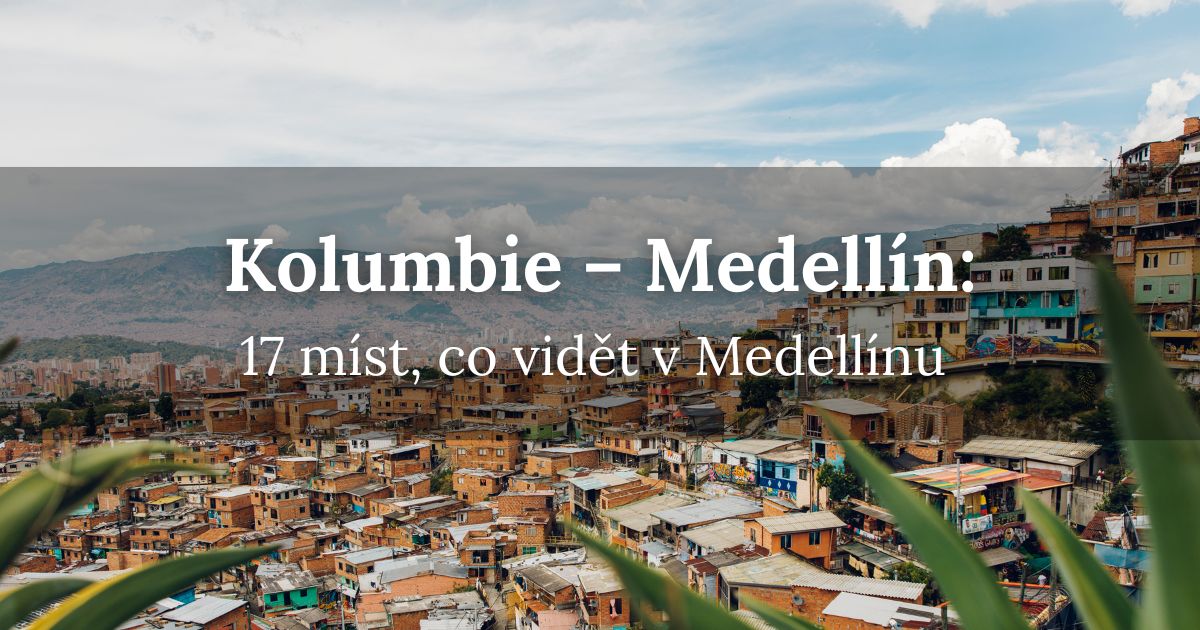
Medellín sits in the Aburrá Valley, hemmed in by the green slopes of the Andes in north-western Colombia, and it is the capital of the department of Antioquia. Counting the whole metropolitan area, it is the second-largest city in the country. Even the drive in, as the valley opens up below you, is a good introduction to the “City of Eternal Spring”.
Flying is by far the easiest way in. Most routes from London to Medellín involve at least one connection, usually in Bogotá or Madrid, so compare routings and check current schedules before booking. Bear in mind that José María Córdova International Airport (MDE) is not in Medellín itself: it is up in the hills at Rionegro, about 35 km from the centre, and the drive through the Túnel de Oriente takes 45 minutes to an hour. Taxis from the airport to the city charge a fixed fare, currently 132,000 COP (about €34, or £29). The cheaper option is the Combuses airport bus, which runs around the clock from outside the arrivals hall to San Diego station for 20,000 COP (about €5, or £4.50); from there you can continue by metro or taxi. Uber and Didi also work here. The city has a second, smaller airport, Olaya Herrera, used mainly for regional domestic flights.
You can also arrive by long-distance bus. The buses themselves are fine, with air conditioning and Wi-Fi, but even fairly short distances take a very long time. Medellín has two bus terminals: Terminal del Norte (next to Caribe metro station) serves the north and east, including Guatapé and Santa Fe de Antioquia, while Terminal del Sur handles routes south, among them the coffee region.
We came to Medellín from Armenia, near Salento. The 280 km or so was supposed to take 6 to 8 hours; in reality it took us 10 to 11. So it depends how much time you have.
British citizens don’t need a visa for a tourist stay of up to 90 days. Before you fly in and again before you fly out, fill in the free online Check-MIG form on the Migración Colombia website, no earlier than 72 hours and no later than one hour before your flight. The UK Foreign Office (FCDO) describes it as optional, but it speeds up immigration, and you may be asked for proof of an onward or return ticket. We go into more detail in our guide to travelling in Colombia.

Best time to visit Medellín and how many days you need
Medellín lies at roughly 1,500 metres and is ringed by mountains, so the climate is pleasant all year round, which is where the “City of Eternal Spring” nickname comes from. Average temperatures sit at 22–24 °C throughout the year, never really hot and never cold. It does rain fairly often, though: most in April and May and again from September to November, while December to March and July to August tend to be drier. Rain usually arrives in the afternoon or evening as a short, heavy downpour, so an umbrella or a light jacket in your daypack is always worth it.
To catch the city at its liveliest, time your trip for the Feria de las Flores, the flower festival with its famous parade of silleteros, held every year in early August. In December, the Alumbrados Christmas lights line the river. Accommodation is pricier on both occasions, so book ahead.
Two to four days in Medellín is enough, depending on whether you also want to explore the surrounding area. A three-day plan could look like this:
- Day 1: the centre (Plaza Botero, Museo de Antioquia, Plaza Cisneros), then Pueblito Paisa on Nutibara hill in the afternoon.
- Day 2: Comuna 13 in the morning, the Metrocable up to Parque Arví in the afternoon (note that line L doesn’t run on Tuesdays), and El Poblado in the evening.
- Day 3: a full day in Guatapé and up El Peñol rock, ideally with an overnight stay.
TIP: Colombia: the 15 most beautiful places to visit, which we hope you’ll love as much as we did.
Getting around Medellín
Public transport in Medellín is genuinely impressive, and it is still the only Colombian city with a metro (mostly above ground), running since 1995. It has two lines, A and B, and is well connected with the rest of the network, including the tram, Metroplús buses and Metrocable cable cars, so getting anywhere is quick and easy. Everything runs on the contactless Cívica card. Visitors buy the Cívica Eventual (al portador) for 12,100 COP (about €3.20, or £2.70) at ticket offices in larger stations such as San Antonio, Acevedo or San Javier. You top it up with cash in pesos and off you go: a single ride with this card currently costs 4,400 COP (about €1.20, or £1). Be aware that the balance is not refunded if the card is lost or stolen, so don’t load more than you need.
The cable cars are part of the same system and give you a great view over the whole city. The exception is the tourist line L to Parque Arví, which has its own, higher fare (24,500 COP for foreigners, about €6.40, or £5.50) and doesn’t run on Tuesdays because of maintenance. In the evening and for longer journeys, Uber or Didi is worth using: you know the price up front and can share the trip. From the bus terminals, long-distance buses will take you easily to places around the city.
Money and typical prices
Colombia uses the peso (COP). At current rates, 1,000 COP is roughly €0.26 (about £0.22), so £1 gets you around 4,500 pesos. In El Poblado and in shopping centres cards are accepted almost everywhere, but at markets, street stalls, on buses and at the ticket office of El Peñol you pay cash. Use ATMs inside banks or shopping centres rather than on the street. To give you an idea of costs:
- metro ride with a Cívica Eventual card: 4,400 COP (about €1.20 / £1)
- taxi from the airport to the city: 132,000 COP (about €34 / £29); Combuses airport bus 20,000 COP (about €5 / £4.50)
- line L cable car to Parque Arví for foreigners: 24,500 COP (about €6.40 / £5.50)
- climbing El Peñol rock: 35,000 COP (about €9 / £8)
- Museo de Antioquia for foreigners: roughly 40,000 COP (about €10.50 / £9)
- botanical garden and Museo Casa de la Memoria: free
Is Medellín safe for tourists? What to watch out for
The first question most people ask before coming here is whether Medellín is safe and how worried they should be. The honest answer is that the city has changed radically since the Escobar years. You still need to keep your wits about you, though, because there are plenty of thieves and pickpockets. The UK Foreign Office (FCDO) lists Medellín among the major Colombian cities where pickpocketing, mugging and armed robbery are a problem, and advises staying vigilant in public places and not carrying large amounts of cash or expensive jewellery, especially after dark. Leave your original passport in the hotel and keep your phone out of sight on the street.
We recommend sticking to a few basic rules: don’t walk alone at night in neighbourhoods you don’t know, keep valuables out of sight, avoid dodgy-looking side streets, and don’t wear your backpack on your back (in a crowd it is easy to empty). In Medellín, the general rule is to stay out of the neighbourhoods on the edge of the city (for example San Javier apart from the metro and cable car, 12 de Octubre, Santa Cruz and Manrique, Bello, Comunas 1, 3 and 8; in Comuna 13, stick to the tourist routes).
Locals have a saying for this, “no dar papaya”, which roughly means don’t give anyone the chance. Never accept drinks or cigarettes from strangers and don’t leave your glass unattended: cases of drugging, including with scopolamine, do happen in bars and clubs. Be careful with dating-app meet-ups too, and arrange a first date somewhere busy and public. If someone does try to rob you, don’t resist; no amount of cash and no phone is worth it. In the evening, get back to your accommodation by Uber or an app-booked taxi, even if it is only a short distance.
TIP: Is Colombia safe? 6 tips on what to do (and not do) in Colombia

Where to stay in Medellín
Not every part of Medellín is safe, so choose your accommodation carefully.
So where should you stay in Medellín? Most visitors base themselves in El Poblado, a fairly well-off district packed with shops, cafés, restaurants and bars. The nightlife is loud, so you may not sleep much, but then the whole of Colombia is noisy. For a quieter night, look a little further from Parque Lleras, for example in the streets around Provenza or higher up the hillside.
- Los Patios Hostel Medellin: the budget option, a stylish hostel 400 metres from Parque El Poblado and a five-minute walk from Parque Lleras, with the metro 500 metres away. The rooftop terrace has a bar with views over the city and the mountains, and the rooms are themed after different Colombian regions.
- Hotel Dix: mid-range, 150 metres from Parque Lleras. Rooms come with air conditioning and a minibar, there is a 24-hour front desk and free parking. Ideal if you want the nightlife right around the corner.
- The Charlee Hotel: a more expensive design hotel across the street from Parque Lleras, with a rooftop pool, gym and steam room. Every room looks out over the city, and some have a large balcony with a hot tub.
A quieter but still safe alternative is Laureles (including the Conquistadores and Estadio areas) on the west side of the river. It has wide, tree-lined streets, lots of cafés and restaurants and more of a local feel than El Poblado, and it is closer to the centre and to Comuna 13.
- Terra Biohotel: a smaller hotel in Conquistadores, 500 metres from Pueblito Paisa. Vertical gardens, a restaurant serving traditional dishes, a bar and a 24-hour front desk.
- Hotel Laureles Plaza: a four-star hotel in Laureles-Estadio with a terrace overlooking the city, a hot tub, restaurant, bar and buffet breakfast.
Compare current prices and availability in our list of places to stay in Medellín.
TIP: Heading to Cartagena afterwards? Here’s what to see in Cartagena and which places are the most beautiful.
21 best things to do in Medellín and around
Medellín is a stop few travellers in Colombia want to skip. The city itself is full of interesting places, many of them tied to Pablo Escobar and to the way Medellín recovered from his era. And because it is surrounded by mountains and countryside, there are plenty of things to do just outside the city too, whether you are after a rest or an adventure away from the traffic. The first 13 tips are in the city, the other 8 in the surrounding area. Our favourites were Comuna 13 and Guatapé, where we spent two days.
Comuna 13: once the most dangerous neighbourhood in the world
What was once Medellín’s most dangerous district has become a symbol of hope and renewal. Comuna 13 is covered in street art that tells the stories of the people who live here. Walk its streets and you’ll find colourful murals on every wall, street musicians and dancers performing. The main attraction is the outdoor escalators, six double sections opened at the end of 2011, which climb the neighbourhood’s steep slopes and made daily life much easier for residents. Together with the cable cars, they were part of the projects that won Medellín the title of the world’s most innovative city in 2013, awarded by the Urban Land Institute and The Wall Street Journal.

How to get to Comuna 13
Comuna 13 isn’t far from the centre, so the metro is the easiest way there. Take line B to the end of the line at San Javier, then either walk up to the escalators (about 20 minutes uphill) or hop in a taxi or local bus. Colourful and lively as Comuna 13 is, don’t stray far from the tourist trail. Mornings are the quietest time; in the afternoon and at weekends tour groups pour through the alleys. If you want to learn as much as possible about the place, join a guided tour. Graffiti tours are often led by people who grew up here and who also talk about Operation Orión, the 2002 military operation that is still a sensitive subject in the neighbourhood.
Plaza Botero: a square full of chubby bronze figures
Plaza Botero is the cultural heart of Medellín, home to 23 bronze sculptures by the famous Colombian artist Fernando Botero. His voluptuous, rounded animals and people are unlike anything you have seen before. Next to the square is the Museo de Antioquia, with a large collection of Botero’s work as well as pieces by other major artists. Admission for foreigners is roughly 40,000 COP (about €10.50, or £9). Behind the sculptures stands the black-and-white neo-Gothic Palacio de la Cultura Rafael Uribe Uribe, and a little further on is Parque Berrío square with La Candelaria basilica.
Medellín’s centre also has a darker side, with poverty and drugs, which in Colombia are most visible right in the centres of big cities, so take care here. At the moment Plaza Botero is patrolled by police who won’t let anyone suspicious in, so you can look at the sculptures in peace. But don’t wander off alone around the surrounding streets. We did, and we’d rather not have seen what we saw (we have no photos, we were too scared to take our phones out). The centre is best explored during the day, ideally on one of the several free walking tours that run here.
TIP: Enjoying Fernando Botero’s art? A whole museum dedicated to him is in Colombia’s capital, Bogotá. What else to see in Bogotá?
La Catedral: Pablo Escobar’s luxury prison
La Catedral was the prison Pablo Escobar had built to his own specifications (it even had a casino). Officially it was a jail, but it was more like a luxury residence with a view over Medellín. It sits in the hills above Envigado, about an hour from the centre along a narrow, partly potholed road. Today the site is home to a Benedictine monastery and a care home for the elderly, the buildings are generally closed to visitors, and what is left of the original complex is mostly ruins and a helipad. Most people come on themed guided tours; we wouldn’t make the trip for the place itself, and the main reward is the view over the valley.

Museo Casa de la Memoria instead of the Escobar museum
The private Pablo Escobar museum in El Poblado, run by his brother Roberto, no longer exists. The city sealed it off several times and in July 2023 demolished the house under a police order; the city council has long opposed so-called narco tours. Escobar is still a divisive figure here. Some locals remember his era fondly because he helped build infrastructure and looked after “his” people, while others see above all the horror his cocaine business caused. Most Colombians would rather not talk about him, so leave any T-shirts with his face on them at home.
If this chapter of history interests you, visit the Museo Casa de la Memoria in Parque Bicentenario instead. It covers Colombia’s armed conflict and its victims, including the drug war, using sound, images and personal testimonies. Admission is free; it is open Tuesday to Friday 9:00–18:00, weekends and public holidays 10:00–16:00, and closed on Mondays. Most texts are in Spanish, so a translation app on your phone helps.
El Poblado: luxury and nightlife
El Poblado is the Medellín neighbourhood where just about every tourist stays. It has modern architecture, upmarket restaurants, shops and, above all, busy nightlife. It is full of boutique hotels, cafés and shopping centres such as Centro Comercial Santa Fe and Oviedo Mall. One of the liveliest spots is Parque Lleras, where the bars and nightclubs are concentrated. Close by is Provenza, a tree-lined street of cafés, restaurants and bars where people go to eat and have a drink rather than to dance.
In recent years, though, things here have been getting a bit out of hand. The streets are really busy in the evening, and you’ll come across sex workers, mothers begging with children and all sorts of characters. At the same time, the neighbourhood is a good base for digital nomads, for example.
Pueblito Paisa: a replica Colombian village
Pueblito Paisa is a replica of a traditional Antioquian village on Nutibara hill, right in the middle of busy Medellín. Up here it feels as if you have stepped back in time. There is a tiny square with a church, a museum, little shops and pretty, colourful houses all around. Pueblito Paisa was officially opened in 1978 and keeps traditional crafts, art and culture alive. Entry is free. It is very touristy and full of souvenir stalls, but the view over the whole valley makes the trip worthwhile, especially late in the afternoon when the city lights start to come on.
Medellín Botanical Garden
If you have some spare time and like plants, you’ll enjoy the botanical garden. The Joaquín Antonio Uribe Botanical Garden is a calm place full of tropical plants, ponds and trees, with iguanas strolling between them. The highlights are the Orquideorama, a wooden pavilion with an orchid collection, and the Mariposario butterfly house. Entry is free (you may be asked for ID at the gate). Take metro line A to Universidad station. A walk through the garden is a welcome break from the noise of the city.
TIP: Love nature? Then head for the Caribbean beaches and rainforest of Tayrona National Park.

Medellín’s markets: from La Minorista to Mercado del Río
The best-known market in the city itself is Plaza Minorista in the centre, selling fruit, vegetables, flowers and cheap lunches. Try fruit you won’t find in Europe, such as lulo, granadilla or mamoncillo. The biggest wholesale market in the region is the Central Mayorista de Antioquia in neighbouring Itagüí, at the southern end of the valley, where you’ll find just about everything. If you would rather sit down and try several things at once, go to Mercado del Río, an indoor food hall with dozens of stalls serving everything from Colombian dishes to sushi. Keep an eye on your phone and wallet at the markets, especially in the centre.
Plaza Cisneros: the square of hundreds of light columns
Plaza Cisneros, also known as Plaza de las Luces (Square of Lights), is one of the most interesting spots in the centre. The square is filled with 300 tall columns that light up at night and create a striking atmosphere. It stands as a symbol of Medellín’s transformation from a dangerous city into a modern metropolis. On the edge of the square is the modern EPM library, where you can sit for free and shelter from the rain. The area is unwelcoming after dark, though, so come during the day.
Parque Telemedellín
Canal Parque Telemedellín (Parque Gabriel García Márquez) is a modern park in El Poblado, in the Villa Carlota area, on the site of a former municipal plant nursery. Across 28,000 m² it brings nature and technology together: there is an educational trail, almost a thousand trees, playgrounds, picnic spots, a food court and a visitor centre on the history of television, which you visit with a guide. Entry to the park is free and it is open daily from 7:00 to 19:00. Locals and visitors alike come here for a break from the city.
Parque Explora and the Planetarium
Right opposite the botanical garden (Universidad metro station) stands the striking red building of Parque Explora, an interactive science centre with hundreds of exhibits on physics, biology and technology. It includes a large freshwater aquarium focused on the Amazon and a vivarium with snakes and frogs. Next door is the Planetario de Medellín with shows in its dome. It is the best plan for a rainy afternoon, and with children you can easily spend half a day here. It is usually closed on Mondays, and labels and shows are mostly in Spanish.
Riding the Metrocable cable car over the city
Medellín was the first city in the world to use cable cars as everyday public transport. The first line, K, opened in 2004 and runs from Acevedo metro station up to the Santo Domingo Savio neighbourhood. For the price of a metro ride you glide over the rooftops of poor hillside districts you would otherwise never see, and at the top the whole valley is spread out below you. Above the last station rise the three black blocks of the Parque Biblioteca España library, which became a symbol of the area’s transformation. Line J, from San Javier station to La Aurora, also has great views. You change onto the cable car without passing through another turnstile, so you only pay once.
Laureles: cafés and local life
Laureles is a neighbourhood on the west side of the river, home mostly to Medellín’s middle class. Don’t expect sights; expect wide tree-lined streets, roundabouts, small cafés, bakeries and restaurants charging Colombian prices. In the evening the action is around La 70 street and the Atanasio Girardot stadium, where Atlético Nacional and Independiente Medellín play. If you want to see Medellín more through locals’ eyes than in touristy El Poblado, we think it is well worth a visit.
Guatapé: Colombia’s most colourful town
Guatapé is one of the most picturesque little towns in Colombia, known for its colourful architecture and its streets strung with umbrellas. The houses are painted in bright colours, and the lower part of each façade is decorated with relief panels called zócalos, so simply wandering the streets is a treat. Guatapé also sits among the lakes of a large reservoir. The main attraction, though, is El Peñol rock, which you can climb via 740 steps. From the top there are superb views over the lakes and islands below.

How to get from Medellín to Guatapé
Buses leave Medellín regularly from Terminal del Norte (the northern bus terminal, at Caribe metro station). The journey takes about two hours and costs roughly 16,000 to 24,000 COP (about €4–6.50, or £3.50–5.50) depending on the company. Tell the driver you want to get off at the rock (“La Piedra”), or ride all the way to Guatapé and take a tuk-tuk or taxi to the rock a few kilometres away. You could also book an organised day trip, but this is one excursion you can easily do on your own. Buy your return ticket as soon as you arrive, as afternoon buses fill up at weekends.
El Peñol rock
El Peñol, also called La Piedra del Peñol or El Peñón de Guatapé, is a gigantic monolith formed naturally by geological processes. This huge mass of granite is about 70 million years old and is the result of magma slowly cooling and crystallising deep underground. Thanks to erosion of the surrounding rock, it now towers more than 200 m above the landscape.
Climb the 740 steps to the top and enjoy the views over a landscape dotted with small lakes. The climb takes 20 to 40 minutes. Admission is currently 35,000 COP (about €9, or £8), paid at the ticket office at the foot of the steps, so bring cash. Go as early in the morning as you can, before the tour buses from Medellín arrive.
TIP: Did you know Colombia also has the world’s tallest palm trees, some of the best coffee and lots of hummingbirds? You can see them all from the mountain village of Salento, which is bursting with colour and has a wonderful atmosphere.
Waterfalls near Medellín: El Salto del Tequendamita
There are several beautiful waterfalls around Medellín that make a good escape into nature from the city. One of the most popular is El Salto del Tequendamita, a waterfall about 20 metres high beside the road from El Retiro to La Ceja, roughly 7 km past El Retiro. From Medellín it is about 33 km via Las Palmas, an hour’s drive. Below the falls is the Parador Tequendamita restaurant, so you can combine the trip with lunch. Bring swimwear and a towel, as the spray carries.
Parque Arví: nature on the edge of the city
Parque Arví is a nature reserve covering more than 16,000 hectares in the rural area of Santa Elena. It has more than 54 km of hiking trails, and you can cycle, picnic or go horse riding here. Over 70 bird species, 72 butterfly species and 19 mammal species live in the park. Some paths, such as the Camino Cieza de León, are more than 1,500 years old. By the cable car exit there is a small market selling fruit, cheese and local produce. It is noticeably cooler up here than in the city, so bring a sweater.
How to get to Parque Arví
From Medellín, take metro line A to Acevedo station and change to cable car line K. At the end of the line, Santo Domingo Savio, switch to the tourist line L, which takes you straight to the park. Line L has a separate fare, 24,500 COP for foreigners (about €6.40, or £5.50), runs roughly from 9:00 to 18:00 and doesn’t operate on Tuesdays because of maintenance. Alternatively, buses run from the city centre towards Santa Elena, from where you can continue on foot.

ATV tour: off-road adrenaline in the hills
Like adventure and a bit of adrenaline? Then sign up for an ATV (quad bike) tour through the hills and forests. You’ll ride past several viewpoints and see a good slice of the countryside. A guide usually leads the group. Rides are booked through local agencies and tour operators, and you can also book online. Most tours start from the town of Guarne.
Café de la Cima: a coffee farm in the mountains
Café de la Cima is a family-run coffee farm high in the mountains near Fredonia (in the La Toscana area), about 60 km south-west of Medellín. The trip takes most of the day: a bus to Fredonia, then an old jeep up a steep, narrow road. At the farm they show you how coffee is grown, harvested and roasted, and you get a tinto (black Colombian coffee) and lunch in the main house with views of the mountains around Fredonia. If you are heading to the coffee region around Salento anyway, you can skip this one; otherwise it is the closest way to see a coffee farm up close from Medellín.
Parque El Salado: a green escape in Envigado
Parque El Salado is a smaller nature park on the outskirts of Envigado. It has plenty of walking trails, streams and lovely scenery all around. From Medellín, take the metro to Envigado station (line A), then continue by local bus or on foot. The park is well signposted and easy to reach.
Santa Fe de Antioquia: a colonial town by the Cauca River
Santa Fe de Antioquia, founded in 1541, was once the capital of the region and has kept its colonial look: cobbled lanes, white houses with wooden balconies, and churches. It is about 1.5 to 2 hours by bus from Terminal del Norte and lies lower than Medellín, so it is much warmer. Just outside town, the Puente de Occidente suspension bridge from the late 19th century crosses the Cauca River; it was once one of the longest suspension bridges in South America. A perfect day trip when you’ve had enough of the big city.
Why Medellín was once the most dangerous city on the planet
Medellín was founded by colonists in the early 17th century, yet many people remember it mainly because it ranked among the most dangerous places on Earth not so long ago (in the 1980s and 1990s). Back then it became the main hub of the cocaine trade thanks to the Medellín Cartel, led by the notorious Pablo Escobar. Escobar and his organisation controlled most of the global cocaine trade, which brought enormous wealth but also a wave of violence.
A little history for context: the first settlement in the Aburrá Valley was founded in 1616 as San Lorenzo de Aburrá, and it received town status as Villa de la Candelaria de Medellín in 1675. Wealth arrived only with coffee in the 19th century and with textile mills in the early 20th century, when Medellín became Colombia’s industrial centre. Thousands of people moved to the city from the countryside, fleeing the violence of the armed conflict, and built homes on the slopes around the valley. It was in these poor neighbourhoods that the cartel later recruited young hitmen. In the early 1990s the city had one of the highest murder rates in the world. Escobar was shot dead on a rooftop in the Los Olivos neighbourhood on 2 December 1993, but the violence didn’t end. Militias, guerrillas and paramilitary groups kept fighting in the outlying comunas, and the army pushed them out with heavy-handed operations such as Orión in Comuna 13 in 2002.

Medellín today
Today Medellín is a completely different city from the one you know from Narcos, although caution still pays off. Since the early 2000s the city has gone through a major transformation built on innovation, education and urban development, and it is now a modern metropolis and a city full of colour and life. Cable cars and escalators reach the poorest neighbourhoods, which have gained libraries, parks and schools, and in 2013 Medellín was named the world’s most innovative city. Its public infrastructure is among the most modern in Latin America, with a metro, tram, cable cars and escalators.
TIP: Our next adventure took us to wild Sri Lanka, with its tea plantations, breathtaking beaches and historic sights such as Sigiriya.
What to eat in Medellín
Medellín is the capital of Antioquia, and the locals (paisas) are proud of their food. The best-known dish is bandeja paisa, a huge platter of beans, rice, minced meat, chicharrón (fried pork belly), sausage, a fried egg, plantain and avocado that will keep you going all day. For breakfast people eat arepa, a corn flatbread, ideally with cheese, washed down with tinto, a small black coffee costing a few hundred pesos. Try the fresh fruit juices at the markets, mazamorra (cooked corn with milk) and, in the cafés of El Poblado and Laureles, Colombian specialty coffee. For more dishes worth tasting, see our article on Colombian food.
What we would do differently in Medellín
Next time we wouldn’t come to Medellín with a checklist. You really don’t need to see most of the 21 places above. We’d rather spend a whole morning in Comuna 13 than rush through it between two other stops, and we’d leave one day completely free: sit in a café in Laureles where the menu isn’t in English and just watch how people live here.
At the market we’d buy fruit we don’t know the name of and ask the stallholder to show us how to eat it. And we’d have lunch in an ordinary canteen serving a menú del día, where tourists don’t go, instead of yet another burger in El Poblado. In our experience the best food is found where nobody is taking photos.
In Guatapé we’d stay the night. In the evening, once the last day-trip buses have left, the town feels completely different, and in the morning you can be among the first up El Peñol. And if we were going to wander around Medellín, it would be in El Poblado or Laureles, not in the centre around Plaza Botero. After dark we’d keep our phones in our pockets, even at the cost of a few missed photos. And we’d allow more time for the journey from the coffee region than the timetable promises.
Frequently asked questions about Medellín (FAQ)
What was Pablo Escobar’s cartel called?
Pablo Escobar’s cartel was called the Medellín Cartel. Besides Escobar, its founders included Juan David Ochoa Vásquez, Jorge Luis Ochoa Vásquez and Fabio Ochoa Vásquez. It was founded in 1975 and collapsed in 1993, when Escobar was shot dead in Medellín.
Is Medellín safe for tourists?
Medellín was once one of the most dangerous cities in the world, but today its tourist areas are relatively safe. Even so, avoid outlying neighbourhoods and don’t wander around the centre near Plaza Botero after dark. The main risks are thieves and pickpockets: keep your phone out of sight on the street, never accept drinks from strangers and use Uber or an app-booked taxi in the evening. Stick to the main tourist routes.
What is Medellín known for?
Medellín is Colombia’s second-largest city and the capital of the department of Antioquia. It became famous above all for Pablo Escobar’s criminal empire and the drug trade. Today it is a popular destination with excellent public transport, full of colour, music and life.
What are the best things to do in Medellín?
Top of our list is Comuna 13, once one of the most dangerous neighbourhoods in the world, followed by Plaza Botero, a ride on the Metrocable, the botanical garden and museums such as the Museo de Antioquia or the Museo Casa de la Memoria. Around Medellín, the colourful town of Guatapé with El Peñol rock is a favourite, along with plenty of nature reserves for relaxing, hiking or an ATV ride.
How many days do you need in Medellín?
Two to three days are enough for the city itself: one day for the centre and Pueblito Paisa, one for Comuna 13 and the cable car to Parque Arví. If you also want a trip to Guatapé and El Peñol, add another day, ideally with a night in Guatapé.
How do I get from Medellín airport to the city centre?
José María Córdova International Airport is in Rionegro, about 35 km from the centre, and the drive takes 45 minutes to an hour. Taxis charge a fixed fare of 132,000 COP (about €34, or £29). The cheaper option is the Combuses bus for 20,000 COP (about €5, or £4.50), which runs around the clock to San Diego station. Uber and Didi also operate.
How much does it cost to climb El Peñol, and how do you get there?
Climbing El Peñol rock currently costs 35,000 COP (about €9, or £8), paid in cash at the ticket office at the foot of the steps. There are 740 steps to the top. Buses leave Medellín from Terminal del Norte; the journey takes about two hours and costs roughly 16,000 to 24,000 COP.
Potřebujete pomoct s cestováním?
-
Ubytování 🏨
Vyberte si to nejlepší ubytování, ať už jste kdekoliv, přes Booking.com. -
Půjčení auta 🚗
Auto si snadno najdete přes Booking.com, kde máte často slevu díky ubytování, nebo Rentalcars.com, kde porovnáte nabídky většiny půjčoven. -
Zážitky 🎟️
Přes GetYourGuide.com si vyberete z nejrůznějších výletů i zážitků po celém světě, navíc se zrušením zdarma do 24 h předem.