Last updated 13.10.2026
Our Colombia holidays began with a one-way ticket and a detour nobody had planned. We missed a connection, ended up in Chile and only reached Colombia after roughly 50 hours on the move. Then we spent five brilliant weeks crossing a big part of the country, which still feels a little mysterious to most Europeans and is far from everyone’s first choice. It shouldn’t be: there are colonial towns, rainforest and a clear Caribbean sea. Below you’ll find 19 places to visit in Colombia, practical advice on entry, money and getting around, a route for two to three weeks and tips on where to stay.
Why Colombia holidays are worth it and what the country offers
Few countries pack this much into one map. Colombia has handsome colonial cities, rainforest, desert, two coastlines (the Pacific and the Caribbean), high Andean peaks and, above all, some of the friendliest and most cheerful people we’ve met anywhere. It’s also inexpensive, so it works whether you’re after beaches, hiking, cities or food.
Our trip to Colombia and what it cost us
It wasn’t exactly a textbook holiday. We flew out on a one-way ticket (we only found out by chance that our return flight had been cancelled), with the plan of visiting friends and having an adventure. We stayed about five weeks, and the whole thing cost us roughly €1,200 (around £1,000) each, all in, which mattered a lot to us as broke students. It was a fantastic trip, and it seems a pity that so few travellers make it there. That’s exactly why we want to tempt you to go and see these places for yourself.
TIP: Is Colombia safe? 6 tips on what to do (and not do) in Colombia

A short history of Colombia
Advanced cultures lived here long before the Spanish arrived. The Muisca held the high plateau around today’s Bogotá, the Tayrona lived in the Sierra Nevada de Santa Marta and built the Lost City, and in the south a culture we still know little about left behind the stone statues of San Agustín. A Muisca ritual on Lake Guatavita, where a chief covered in gold dust offered gold to the gods, gave birth to the legend of El Dorado, which Europeans chased for centuries.
Spanish ships reached the Caribbean coast in 1499. Santa Marta was founded in 1525, Cartagena in 1533 and Bogotá in 1538. Cartagena became the main port for shipping gold to Spain and enslaved people to the colonies, which is why it was ringed with massive walls that are now protected by UNESCO. The whole territory was known as New Granada.
Colombians declared independence on 20 July 1810, and Simón Bolívar sealed it at the Battle of Boyacá on 7 August 1819. The result was Gran Colombia, which also covered today’s Venezuela, Ecuador and Panama. It fell apart within a few years, and Panama broke away in 1903.
The 20th century brought La Violencia, a period that began after the politician Jorge Eliécer Gaitán was assassinated in 1948, then guerrilla groups including the FARC (1964) and, in the 1980s and 1990s, the drug cartels. Pablo Escobar died in Medellín in 1993. The government signed a peace agreement with the FARC in 2016, and President Juan Manuel Santos received the Nobel Peace Prize for it. Visitor numbers have grown year after year since then, although armed groups are still active in some remote areas (more in our article on safety in Colombia).
Climate and weather in Colombia
Colombia runs from Caribbean and Pacific beaches through rainforest up to the high Andes, so the weather depends far more on where you are than on the month. The coast stays warm all year, while altitude in the Andes means pleasant, cooler days and cold nights. The Amazon has a classic tropical climate with high humidity and dense vegetation. In practice that means packing a warm jacket and walking boots alongside swimwear, plenty of sun cream and insect repellent.
Best time to visit Colombia
Thanks to its tropical climate, Colombia is a year-round destination. For the coast, December to March is the best window: it’s hot and drier than the rest of the year. Hikers can go most of the year, but it’s worth avoiding the rainy seasons (April to May and October to November). Besides the heavy rain, some rivers become impossible to wade across, for example on the popular trek to the Lost City, La Ciudad Perdida.
TIP: What’s the weather like in Sri Lanka and when should you go?
Colombia holidays: practical information before you go
Entry requirements and the Check-MIG form
British citizens don’t need a visa for a holiday in Colombia. On arrival you get a stamp for up to 90 days (the officer at the border decides the exact length), and the stay can be extended, up to a maximum of 180 days a year. Colombian authorities recommend that your passport is valid for at least six months beyond your planned departure. Airlines may check this at check-in, so don’t cut it fine.
Before you fly in and again before you fly out, fill in the online Check-MIG form on the Migración Colombia website, no earlier than 72 hours and no later than one hour before your flight. It’s free, so steer clear of agency websites that charge for it. Border officers may ask to see a ticket out of Colombia (or a bus ticket to a neighbouring country), where you’re staying and how you’ll support yourself, so keep your bookings on your phone.
Vaccinations and health
No vaccination is compulsory to enter Colombia. However, because of a declared yellow fever health emergency, the national parks authority, Parques Nacionales Naturales de Colombia, requires a yellow fever vaccination certificate (issued at least 10 days before entry) in protected areas, explicitly in Tayrona National Park, the Sierra Nevada de Santa Marta and Los Nevados. We also recommend the jab if you’re heading to the Amazon or Caño Cristales. Expect the certificate to be checked, and look up the current situation before you travel. Bogotá sits at 2,640 m, so take your first day in the city and the Andes slowly, drink plenty of water and don’t rush up hills.
Money, exchange rate and paying
The currency is the Colombian peso (COP). At current rates, 1,000 COP is roughly £0.22 (about €0.26), so £1 gets you around 4,500 pesos. Ordinary shops won’t take dollars, euros or pounds. The easiest option is to withdraw cash from ATMs (preferably inside banks or shopping centres) and to pay by card in cities. You’ll need cash at markets, on buses, in taxis and in small villages. Restaurant bills often include a voluntary 10% tip (propina voluntaria); the waiter should ask whether you want to pay it, and you’re free to say no.
How to get to Colombia and how to get around
From the UK, the most convenient option is a flight from London to Bogotá; direct services operate on some routes, but schedules change, so check what’s currently on sale. Otherwise you’ll connect in Madrid, Amsterdam, Paris, Frankfurt or Istanbul. The main international airports are El Dorado in Bogotá, José María Córdova near Medellín (it’s in Rionegro, about 40 minutes from the city) and Rafael Núñez in Cartagena.
- From Bogotá airport into the city, a free TransMilenio shuttle bus runs to Portal El Dorado, where you change to lines heading into the centre. A TransMilenio ride currently costs 3,550 COP (about £0.80) and you pay with a TuLlave card. After dark or with big bags, a taxi from the official rank or via an app is more comfortable.
- In Medellín the metro and the Metrocable cable cars that connect to it are the best way around. A single journey with a Cívica card costs visitors about 4,400 COP (roughly £1).
- Between cities, flying pays off for longer distances: buses across the Andes are slow, and we don’t recommend night buses. For shorter hops (Cartagena to Santa Marta, Medellín to Guatapé, Pereira or Armenia to Salento) buses and minibuses are cheap and frequent.
- Taxis in cities are best booked through an app or called by your hotel. Don’t hail them on the street.
Is Colombia safe for tourists?
The places on this list are visited by tourists every day, but the UK Foreign Office (FCDO) still advises caution. It advises against all but essential travel to parts of the country, including areas near the borders with Venezuela and Ecuador, much of the Pacific coast and several remote departments, for example the whole of Norte de Santander. In cities the main risks are pickpocketing and robbery, and drinks spiked with scopolamine are a known problem. Keep your phone out of sight on the street, leave jewellery at home, don’t accept drinks from strangers and use app taxis at night. Before you go, read the current FCDO travel advice for Colombia and sign up for its email alerts. We cover all of this in detail in our article on safety in Colombia.
How much does a holiday in Colombia cost?
We spent around €1,200 (about £1,000) each over five weeks, all in, but we were backpacking on a student budget. The biggest single cost is usually the return flight from Europe, followed by domestic flights and organised tours. To give you an idea, here are the entrance fees for places on this list (approximate, based on current price lists):
- Tayrona National Park: 81,000 COP in low season and 96,500 COP in high season (about £18 to £21, or €21 to €25), plus compulsory accident insurance.
- Gold Museum in Bogotá: 10,000 COP (about £2), free on Sundays, closed on Mondays.
- Monserrate: return trip by cable car or funicular 35,000 COP from Monday to Saturday (about £8), cheaper on Sundays, free on foot.
- Salt Cathedral in Zipaquirá: from 125,000 COP for foreign visitors (about £28).
- Laguna de Guatavita: roughly 28,000 COP for foreign visitors (about £6), cash only.
- El Peñol in Guatapé: roughly 35,000 COP (about £8).
- San Andrés tourist card: 153,000 COP (about £34).
- Lost City trek with an agency: from 1,860,000 COP for four days (about £410, or €480), including food, accommodation and a guide.
Other useful things to know
- Time: Colombia is 5 hours behind the UK in winter and 6 hours behind in summer (it doesn’t use daylight saving time).
- Electricity: 110 V with type A/B sockets (flat American-style pins), so bring a travel adapter for UK plugs.
- Language: outside hostels and tourist businesses, English won’t get you far. A few Spanish phrases and a translation app on your phone help a lot.
Colombia holidays: 19 best places to visit in Colombia
Five weeks sounds like a lot, but it was nowhere near enough to cover the whole country. We travel slowly because we want to properly explore a place and get to know it, not just turn up for a photo. So we’ve picked a bit of everything for you: cities, nature and the sea. Here’s what to see in Colombia.
1. Cartagena de Indias: the treasure of the Caribbean
Cartagena de Indias is one of the most beautiful colonial cities in South America. It sits on the Caribbean coast, its walled old town is a UNESCO World Heritage Site, and the modern district looks a bit like Miami. Wherever you walk, you’re surrounded by colourful houses with balconies spilling over with flowers. It’s also the perfect base for trips to nearby islands and the kind of remote beaches you see in magazines.
When to visit Cartagena
The best period is December to April, when temperatures are pleasant and there’s very little rain. All year round, temperatures stay at around 29 to 31 °C. The wettest months are September to November, but the rain usually comes in short, heavy showers, so you’re very unlikely to get several wet days in a row.

Things to do around Cartagena
With Cartagena de Indias right on the Caribbean coast, there are plenty of boat trips to small islands and day trips into the surrounding area, where you’ll find a mud volcano and gorgeous sandy beaches with parrots flying overhead (really).
- Islas del Rosario, the coral islands of the Caribbean: Some 35 to 45 kilometres south-west of Cartagena lies the Rosario archipelago, with coral reefs and turquoise water. Boats leave in the morning from the La Bodeguita pier and the crossing takes about an hour.
- Volcán del Totumo, the mud volcano: 50 km from Cartagena is the Totumo mud volcano, where you can climb in for a mud bath. The mud is said to have healing properties, and afterwards you rinse off in the lagoon next door.
- Playa Blanca: About an hour’s drive from Cartagena, Playa Blanca on the island of Barú is one of the prettiest beaches in the area. It gets very busy at weekends and in high season.
- Corales del Rosario y San Bernardo National Park: This national park protects one of the largest coral areas in Colombia and is ideal if you love nature and marine life.
- San Basilio de Palenque: This small town, listed by UNESCO, is one of the most important historical sites in Colombia. It lies about 50 kilometres south-east of Cartagena and was one of the first free towns in the Americas founded by Africans who had escaped slavery.
TIP: 12 things to see in Sri Lanka and what drew us there too
2. Tayrona National Park
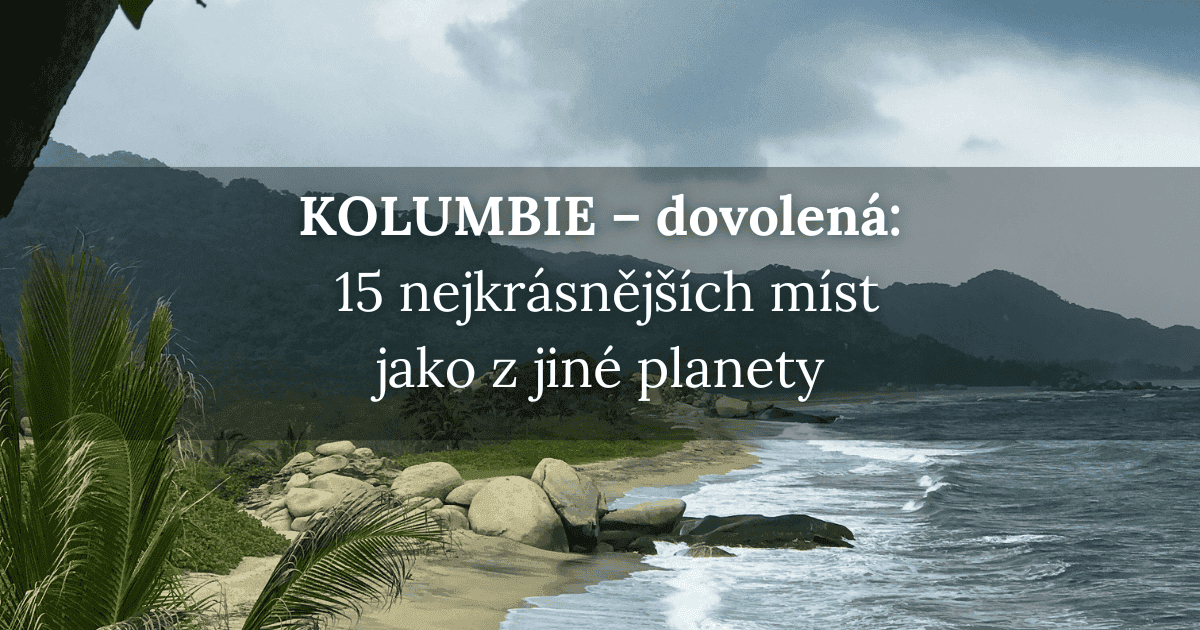
In the far north of Colombia, at the foot of the Sierra Nevada de Santa Marta, Tayrona National Park combines Caribbean beaches with rainforest in a way that’s hard to beat. You can stay overnight inside the park and explore the jungle on foot. Tayrona was one of our absolute favourite places in Colombia. The best-known beaches include Playa Cristal and Cabo San Juan.
How to get to Tayrona National Park
Tayrona is about an hour from the city of Santa Marta by bus or taxi. The bus drops you near the park entrance, where you pay the entry fee, and if you plan to stay several days you have to show your accommodation booking at the gate. From the El Zaino gate, minibuses take you a short way into the park, and from there you walk. Entry for foreign visitors is currently 81,000 COP in low season and 96,500 COP in high season (about £18 to £21), plus compulsory insurance. The park closes three times a year, from 1 to 15 February, 1 to 15 June and 19 October to 2 November, to let nature recover and for ceremonies of the Indigenous peoples of the Sierra Nevada. A yellow fever vaccination certificate is also required.
TIP: Because Tayrona was one of the places we loved most, we’ve written a complete guide to Tayrona National Park.

3. The world’s tallest palms in Valle de Cocora
Valle de Cocora, in the Quindío region, is home to the wax palm, Colombia’s national tree and the tallest palm in the world. Some reach up to 60 metres, and walking among them feels like stepping into a fairy tale. There are several mountain hikes and loop trails to choose from. Along the way you’ll spot hummingbirds, cross rivers and wander through cloud forest.
How to get to Valle de Cocora
The best base is the small town of Salento, easy to reach from the bigger nearby cities of Pereira and Armenia (Armenia is where we missed another flight). Salento itself is a lovely, colourful little town with local food, coffee farms all around and a great viewpoint.
TIP: Did you know Colombia also has the world’s tallest palms, some of the best coffee and loads of hummingbirds? You can see all of them around the mountain village of Salento, which is bursting with colour and a wonderful atmosphere.

TIP: Coffee in Colombia, tea in Sri Lanka. Where are Sri Lanka’s most beautiful tea plantations?
4. Visiting a coffee farm
If you drink coffee, you already know Colombia grows a huge amount of it, and some of the best. The coffee-growing cities are Manizales, Pereira and Armenia, and around them you can tour plantations, taste freshly brewed coffee straight from the farmers and see how it’s processed from bean to cup. Beyond coffee tourism, the region has beautiful mountain scenery, waterfalls and charming villages such as Salento.
5. Medellín: once Colombia’s most dangerous city
Medellín, Colombia’s second-largest city, was once notorious for crime and Pablo Escobar’s drug cartel. Today it’s a completely different place and well worth a visit, though the usual big-city caution still applies. If you’re interested in the history of the drug trade, you can see the houses linked to Pablo Escobar and walk through Comuna 13, where some of the worst violence happened just a few decades ago.
Comuna 13
Comuna 13 is a fascinating district that has gone from one of the most dangerous places in Colombia to a symbol of hope, art and community. Thanks to its street art, culture and the changes of the last two decades, it’s now one of the most visited sights in the city. It’s built on a steep hillside, so you get up on outdoor escalators. We recommend going with a local guide who grew up there; you’ll learn far more. Getting around the city is easy on the metro and the Metrocable cable cars, which are part of public transport.

6. La Guajira: where the desert meets the sea
The La Guajira peninsula sits on Colombia’s north-eastern tip. This is where desert runs straight into the Caribbean. The wild landscape is home to the Indigenous Wayuu people, who still keep much of their traditional way of life. The highlight is Cabo de la Vela, a great spot for windsurfing and for sunsets that turn the desert sand gold.
How to get to La Guajira
La Guajira is remote, and the easiest way in is from the town of Riohacha, where tours are organised. You could hire a car and go on your own, but travelling with a guide is strongly recommended: the area is isolated, infrastructure is basic and it borders Venezuela, where the FCDO advises against all but essential travel within 5 km of the border.
TIP: What is Colombian food like? 22 traditional dishes to try in Colombia
7. Bogotá: the capital of Colombia
Bogotá, the capital of Colombia, lies 2,640 metres above sea level on a high Andean plateau. Alongside historic sights such as the Catedral Primada and Plaza de Bolívar, it has several major museums: the Gold Museum (Museo del Oro) and the Botero Museum, dedicated to the famous Colombian painter and sculptor Fernando Botero (you won’t have seen anything quite like his work).
When to visit Bogotá
Bogotá has a mild climate all year, but the best time to visit is the dry season from December to March. The average temperature hovers around 20 °C throughout the year. The driest months are December to February and July to August, and the wettest are April and May, then October and November.
What to see around Bogotá
Two days are enough for the main sights in Bogotá, but the surrounding area is full of places worth the trip.
- Monserrate: Rising right above the city centre, Monserrate reaches 3,152 metres and gives you a view over the whole of Bogotá. You can get to the top on a footpath, by cable car or by funicular. At the summit stands the pilgrimage church of Santuario del Señor Caído, with hummingbirds darting around.
- Zipaquirá Salt Cathedral: About 50 kilometres north of Bogotá are the salt mines with the Salt Cathedral (Catedral de Sal). The underground church is carved straight into the salt, and you follow the Stations of the Cross down to the main nave, lit in changing colours.
- Laguna de Guatavita and the legend of El Dorado: About 75 kilometres north-east of Bogotá lies Laguna de Guatavita, a pretty lake linked to the legend of El Dorado. You reach it on a short guided walk, and swimming is not allowed.
- Villa de Leyva, a colonial gem: Roughly three hours’ drive from Bogotá, the historic colonial town of Villa de Leyva has cobbled streets, whitewashed houses and the huge stone-paved Plaza Mayor, one of the largest squares in South America.
TIP: You’ll almost certainly pass through Bogotá anyway. If you have a few days to spare, here are 13 great tips on what to see in Bogotá and around.

8. Los Nevados National Park
For keen hikers, Los Nevados National Park in central Colombia has superb treks. It’s full of volcanoes, including the well-known Nevado del Ruiz, and with altitudes above 5,000 metres you’ll find glaciers, lagoons and unusual wildlife. Besides hiking and volcano climbs, there are hot springs, which are very welcome after a cold day up high. Nevado del Ruiz is an active volcano, though, and depending on the current alert level part of the park around it may be closed to visitors, so check the situation with the park authority (Parques Nacionales Naturales de Colombia) before you go.
When to visit Los Nevados National Park
If you want to add Los Nevados to your itinerary, come during the dry months from December to February, when hiking conditions are best. The main starting points for treks are Manizales and Pereira. Go to the higher sections with a guide, bring warm gear and give yourself time to acclimatise.
9. Cali
Cali, officially Santiago de Cali, is Colombia’s third-largest city and is known as the “salsa capital of the world”. It sits in the Cauca Valley surrounded by green mountains and is famous for a lively atmosphere full of music and dancing. The city has dozens of dance schools and annual festivals celebrating salsa and other Latin rhythms. The historic centre has colonial buildings, squares and churches, and in the evening people head to the salsa clubs (salsotecas), for example in the Juanchito area. The biggest party, the Feria de Cali, takes place every year between Christmas and New Year’s Eve.
10. San Andrés: a Caribbean island paradise
San Andrés lies in the Caribbean about 750 km from the Colombian mainland and much closer to Nicaragua. It’s surrounded by clear water, sandy beaches and coral reefs, and locals call it the sea of seven colours. Besides the sea, San Andrés has a rich Caribbean culture that mixes Spanish, British and African influences. Plenty of Colombians come here to relax and have fun, and there’s no shortage of either.
How to get to San Andrés
You fly to San Andrés, most often from Bogotá, Medellín or Cartagena. Before departure, every visitor has to buy the tourist card (tarjeta de turismo), without which you won’t be allowed to board; you buy it from the airline or at the airport when you check in. The best time to go is December to April, when the weather is dry and perfect for the beach.

TIP: You’ll find Caribbean-style beaches in Sri Lanka too, so what are Sri Lanka’s beaches like and which are the most beautiful?
11. La Ciudad Perdida: the mysterious Lost City
Into adventure, nature and a bit of mystery? Then set off on the multi-day trek to La Ciudad Perdida, the Lost City. This archaeological site, hidden deep in the mountains of the Sierra Nevada de Santa Marta, is considered one of the most important Indigenous cities of the pre-Columbian era. The walk through the jungle takes several days, but the reward is mountain views and the chance to explore a place that lay forgotten for centuries.
How to get to La Ciudad Perdida
The Lost City trek starts in the village of El Mamey, which you reach from Santa Marta. It takes four to five days, and you’re not allowed to do it without a licensed agency and guide. In total you’ll walk around 45 to 50 km, and the final approach to the Lost City climbs more than 1,200 stone steps.
When to go
The best time for the Lost City trek is December to March and July to August, when rainfall is at its lowest and the trails are easier going. Avoid the rainy seasons, which usually run from April to June and September to November, when paths turn to mud and rivers swell. The archaeological park also closes for a few weeks every year (usually in September or October), so check the dates with your agency.
12. Leticia: gateway to the Amazon rainforest
Leticia lies where Colombia, Brazil and Peru meet, and it’s the gateway to the Colombian Amazon. This is one of the most biodiverse places on Earth, teeming with animals and plants. You can go on jungle excursions, take boat trips on the Amazon and look out for rare wildlife such as pink river dolphins and parrots.
How to get to the Colombian Amazon
Leticia can only be reached by air, usually on a direct flight from Bogotá. The best time to visit is the dry season from July to November, when jungle trips are most pleasant. Leave enough time for Amacayacu National Park, where you can meet Indigenous communities and get a real feel for life in the Amazon.
13. Guatapé: a rainbow-coloured town and El Peñol
Guatapé is a gorgeous, brightly painted little town about 80 km from Medellín. The main attraction is El Peñol, a rock about 200 m high. It formed millions of years ago as a granite pluton, when magma pushed into the Earth’s crust and slowly solidified deep underground. Over millions of years the surrounding rock eroded away, exposing this huge monolith, which now looks out over a sprawling reservoir and the countryside around it. It looks like a giant egg laid by an enormous dragon.
Around 700 steps lead to the top, but the panoramic view is among the best in Colombia.

14. Las Lajas Sanctuary: a church on a bridge over a canyon
Santuario de Las Lajas, the Sanctuary of Our Lady of Las Lajas, stands in a scenic valley near Ipiales, about 10 kilometres from Colombia’s border with Ecuador. This striking church is built on a bridge spanning the deep canyon of the Guáitara River. Its Gothic Revival style and the engineering behind it are genuinely impressive. The church is dedicated to the Virgin Mary, is an important pilgrimage site and is surrounded by beautiful scenery.
15. Barichara: a colonial town where time stands still
Barichara is one of the loveliest colonial towns in Colombia. It lies in the Santander region near San Gil and is known for its whitewashed houses, red-tiled roofs and cobbled streets. It can feel as if time has stopped here. Come for the calm and the local atmosphere and culture. A popular walk follows the Camino Real, an old stone trail from Barichara to the nearby village of Guane.
TIP: Sigiriya, Sri Lanka’s rock fortress: what to see in the area?
16. Minca: coffee and waterfalls above Santa Marta
Minca is a mountain village in the Sierra Nevada de Santa Marta, a little under an hour from Santa Marta by shared taxi or motorbike taxi. It’s cooler than the coast, surrounded by coffee and cocoa farms, waterfalls with swimming pools and lots of birdlife. It makes a good breather between Tayrona and the Lost City trek. We think it’s worth staying at least two nights, because the mornings are the best part, before the hills disappear into the clouds.
17. Tatacoa Desert: red and grey canyons
Despite its name, the Desierto de la Tatacoa in the Huila department isn’t really a desert but a dry tropical forest that erosion has turned into a maze of gullies. It covers more than 330 km² about 38 km from the city of Neiva, and the village of Villavieja is the base. The ochre section is called El Cusco and the grey one Los Hoyos. Days are seriously hot, so explore the gullies in the morning or late afternoon. At night there’s no light pollution, and a small astronomical observatory operates in El Cusco.
18. San Agustín: stone statues in the mountains
In the south of Colombia, in the mountains near the source of the Magdalena River, lies San Agustín Archaeological Park, a UNESCO World Heritage Site since 1995. It holds hundreds of stone statues, tombs and ceremonial sites from the pre-Columbian era, made by a culture about which very little is known even today. Besides the main park, you can visit other sites and the Magdalena canyon on horseback or by jeep. It’s well off the main tourist trail, so expect a long bus journey from Bogotá, Cali or Neiva.
19. Caño Cristales: the river of five colours
In the rainy season, the Caño Cristales river in the Serranía de la Macarena turns red, yellow, green and blue thanks to an aquatic plant growing on its bed. You can only visit in season, roughly from June to November (the park authority announces the exact dates every year), and only with a registered agency and a local guide. You fly into the small town of La Macarena, usually from Bogotá or Villavicencio. You mustn’t wear sun cream or insect repellent when you go into the water, and yellow fever vaccination is required. It’s one of the pricier trips, usually sold as a three- to four-day package.
Colombia itinerary for 2 to 3 weeks
Colombia is big and the roads over the Andes are slow, so it’s worth flying for the longer legs. Domestic flights are usually cheap if you book early, and they’ll save you a whole day on a bus. This route links the mountains, the coffee region and the Caribbean, and you can shorten or extend it:
- Days 1 to 3, Bogotá: La Candelaria, the Gold Museum, Monserrate and a day trip to Zipaquirá or Guatavita.
- Days 4 to 7, Medellín and Guatapé: Comuna 13, a ride on the Metrocable and a day trip to El Peñol (or one night in Guatapé).
- Days 8 to 11, Salento and the coffee region: Valle de Cocora, a coffee farm tour and perhaps Filandia (by bus from Medellín, or fly to Pereira or Armenia).
- Days 12 to 15, Cartagena: the old town and Getsemaní, plus a trip to the Islas del Rosario or the Totumo mud volcano (fly from Pereira or Armenia, often with a connection).
- Days 16 to 20, Santa Marta, Minca and Tayrona: about four to five hours by bus from Cartagena. If you have extra time, add the four-day Lost City trek.
For three weeks this is plenty, with room to rest. With two weeks we’d drop either Medellín or Santa Marta and Tayrona. The Amazon, San Andrés, Caño Cristales and the south (San Agustín, Tatacoa, Las Lajas) are better saved for another trip or swapped for another part of the route.
Where to stay in Colombia
Most routes through Colombia revolve around five bases: Bogotá, Medellín, Salento, Cartagena and Santa Marta. All of them have hostels with dorms as well as boutique hotels in colonial houses. In high season (December to January, Easter and July), book Cartagena and the coast well ahead; inland you can usually find something at the last minute. Here are a few tried-and-tested places at different price levels.
Bogotá
For your first nights after landing we recommend the historic La Candelaria district (close to the museums and Monserrate, but take a taxi in the evening) or the quieter north around Parque de la 93 and the Zona T. You’ll find more tips in our article on what to see in Bogotá.
- Hotel Casa Deco: a small hotel in La Candelaria between the Museo del Oro and Las Aguas TransMilenio stops, with a terrace looking out to the hills, a restaurant and a bar. The Gold Museum is within walking distance.
- Hotel De La Opera: next to the Cristóbal Colón Theatre and opposite the Palacio de San Carlos, with an indoor pool, a spa and two restaurants. Some rooms have a balcony overlooking La Candelaria.
- The Click Clack Hotel Bogotá: a modern hotel in the north of the city, a two-minute walk from Parque de la 93 and ten minutes from the Zona T, with a restaurant and room service. El Dorado Airport is about half an hour’s drive away.
Medellín
Most visitors stay in El Poblado, which has the most restaurants and bars and good metro connections to everywhere else. Neighbouring Laureles is quieter and less touristy. There’s more detail in our Medellín guide.
- Los Patios Hostel Medellin: a stylish hostel 400 metres from Parque El Poblado with a terrace bar overlooking the city and the mountains. Each room is themed on a different region of Colombia, and the nearest metro station is 500 metres away.
- The Click Clack Hotel Medellín: a hotel in El Poblado 800 metres from Parque Lleras, with a restaurant and breakfast; some rooms have a balcony.
- The Charlee Hotel: right on Parque Lleras, with a rooftop pool, a gym with a steam room and city views from every room. Some balconies have their own hot tub.
Salento and the coffee region
Salento is the best base for Valle de Cocora and the coffee farms. It’s small, everything is walkable and the jeeps to Cocora leave from the main square. Read more about the town in our article on Salento.
- Viajero Salento Hostel: a popular hostel with a garden, terrace, bar and restaurant. Rooms have private bathrooms and there’s a shared kitchen.
- Hotel Salento Real Eje Cafetero: a hotel a short walk from the centre with breakfast and free parking; hot water comes from solar panels. Reception can arrange birdwatching or horse riding, and Cocora is 11 km away.
- Terrazas de Salento: a quieter hotel with mountain-view or garden-view rooms, free parking and bike hire.
Cartagena
The nicest place to stay is inside the walls or in neighbouring Getsemaní, which is livelier and a little cheaper. Modern Bocagrande has beaches and high-rise hotels, but none of the old-town atmosphere. Find out more in our Cartagena guide.
- Hotel Casa Lola Deluxe Gallery: two colonial buildings from the 17th and 19th centuries in Getsemaní, with rooms full of antiques and handcrafted details, a rooftop bar with a view and small plunge pools on the terrace.
- Hotel Capellán de Getsemaní: a boutique hotel in Getsemaní within walking distance of the city walls, Plaza de Bolívar and the Palace of the Inquisition.
- Hotel Bantu by Faranda Boutique: a five-star hotel in the heart of the old town, set in 18th-century buildings around a leafy courtyard, with a pool, hot tub, sauna and a restaurant serving Caribbean and Colombian food.
Santa Marta and around Tayrona
Santa Marta is the jumping-off point for Tayrona, Minca and the Lost City trek. The city itself is more practical than pretty, so most people only stay a couple of nights. If you’d rather be closer to the beaches, carry on east to Palomino or Buritaca. How to spend the night inside the park is covered in our Tayrona National Park guide.
- Masaya Santa Marta: a modern hostel in the centre, 400 metres from the bay, with two pools, a terrace, a shared kitchen and breakfast. Dorm beds have privacy curtains, and there are salsa classes too.
- Hotel Boutique Don Pepe: a small vintage-style boutique hotel 150 metres from the beach, with a pool, spa, restaurant and à la carte breakfast.
- Viajero Tayrona Hostel & Ecohabs: a beachfront hostel in Buritaca, east of the park, with its own beach, a pool, private rooms with terraces as well as dorms, and a daily programme (yoga, dance classes, cinema on the beach).
What we’d do differently
If we went back to Colombia, we’d plan fewer places and spend more time in each. Five weeks sounds like a lot, but the journeys between the Caribbean, the Andes and the coffee region eat up more days than you’d ever guess looking at a map at home. We’d rather skip one city and stay two nights longer in Salento or on the coast.
Many of the best experiences aren’t on any list. Order the lunchtime menú del día in an ordinary place where nobody speaks English. Buy a fruit at the market that you can’t name, and try it. Wander through Getsemaní in the evening, when people often dance right in the street. Turn down the side street nobody else takes, and eat things you’ve never heard of.
And you don’t have to see everything. Colombia is huge, and this list can’t be done in one trip, nor should it be. When you’re in Tayrona, leave your phone in your bag and just lie in a hammock. When you’re in Valle de Cocora, let the group rushing for a photo overtake you and walk slowly. Those are the moments you’ll remember longer than a ticked-off list.
Frequently asked questions about Colombia holidays (FAQ)
When is the best time to visit Colombia?
If you’re not sure when to go to Colombia, we recommend December to February, the main tourist season, because the weather is dry. Colombia’s altitude and weather vary so much from region to region that you can really come at any time of year and head for the places where it’s almost always fine.
What is Colombia famous for?
Colombia wins people over with its huge variety: Amazon rainforest, the high Andes, mud volcanoes, the Caribbean, coffee plantations and snowy peaks. It has plenty of historic colonial towns, a rich heritage of music and dance, excellent coffee and, above all, warm and friendly people.
What are the best places to visit in Colombia?
Colombia has a lot to offer and there’s something for everyone, from nature, mountains and the sea to beautiful historic towns and culture. Popular places to visit in Colombia include:
Bogotá: A city where you breathe mountain mist in the morning and drink superb coffee in the evening.
Medellín: Once the most dangerous city in the world, now full of colour, culture and visitors.
Cartagena: Half historic colonial town, half modern “second Miami”.
Valle de Cocora: A fairy-tale valley wrapped in mist and the world’s tallest palms.
Tayrona National Park: A tropical paradise where mountains and jungle meet the beach.
Los Nevados National Park: Mountains, volcanoes, glaciers and more mountains.
Guatapé: Colombia’s most colourful town, with a giant rock that looks like it’s from another planet.
Barichara: A place where time stands still.
Leticia: The Amazon rainforest and plenty of adventure.
San Andrés: An island with the clearest turquoise water.
Cali: The city of dance and music.
La Ciudad Perdida: The Lost City in the middle of the jungle.
La Guajira: Where the desert meets the sea.
Minca: A mountain village with coffee and waterfalls above Santa Marta.
Tatacoa: Red and grey canyons under a starry sky.
San Agustín: Hundreds of stone statues in the mountains.
Caño Cristales: A river that turns red in season.
Las Lajas Sanctuary: A Gothic church suspended between cliffs.
What currency is used in Colombia?
Colombia uses the Colombian peso (COP). At current rates, 1,000 COP is roughly £0.22 (about €0.26), so £1 gets you around 4,500 pesos. Ordinary shops won’t take dollars, euros or pounds; the easiest option is to withdraw cash from an ATM inside a bank or shopping centre and pay by card in cities. Cash comes in handy at markets, on buses and in small villages.
What language is spoken in Colombia?
Colombians speak Spanish, though it differs quite a bit from the Spanish spoken in Spain. Every region has its own accent and its own typical expressions.
Do UK citizens need a visa for Colombia?
No. British citizens can visit Colombia without a visa for up to 90 days, and the stay can be extended up to a maximum of 180 days a year. Before you fly in and again before you fly out, fill in the free online Check-MIG form on the Migración Colombia website (no earlier than 72 hours and no later than one hour before your flight), and carry proof of your onward travel out of Colombia.
Is Colombia safe for tourists?
On the usual tourist route (Bogotá, Medellín, the coffee region, Cartagena, Santa Marta and Tayrona) travellers get around without problems, but you do need to be careful. The UK Foreign Office (FCDO) advises against all but essential travel to areas near the borders with Venezuela and Ecuador and to much of the Pacific coast. In cities, keep your phone out of sight on the street, don’t accept drinks from strangers and use app taxis at night.
How much does a holiday to Colombia cost?
The most expensive part is the flight from Europe. On the ground, Colombia is cheaper than the UK: we spent around €1,200 (about £1,000) each over five weeks, all in, backpacking on a student budget. Add entrance fees on top, for example Tayrona National Park costs foreign visitors 81,000 to 96,500 COP (about £18 to £21) and the Lost City trek with an agency starts at 1,860,000 COP (about £410).
Potřebujete pomoct s cestováním?
-
Ubytování 🏨
Vyberte si to nejlepší ubytování, ať už jste kdekoliv, přes Booking.com. -
Půjčení auta 🚗
Auto si snadno najdete přes Booking.com, kde máte často slevu díky ubytování, nebo Rentalcars.com, kde porovnáte nabídky většiny půjčoven. -
Zážitky 🎟️
Přes GetYourGuide.com si vyberete z nejrůznějších výletů i zážitků po celém světě, navíc se zrušením zdarma do 24 h předem.