Last updated 29.8.2026
Mallorca is one of Spain’s most popular destinations for a year-round holiday. It’s the largest of the Balearic Islands, covering just 3,648 km², yet it hides so much that it will amaze you. And if you want to experience its true, authentic character, skip the crowds and fly there outside the peak season. How to plan a holiday in Mallorca? Mallorca – what to see and 51 places across the entire island that are worth visiting.
Mallorca – what to see at a glance
Before we dive in and describe all the interesting places to see in Mallorca, here’s a shorter overview for you in case you don’t have time to read the whole article.
Towns and history
Among the prettiest historic towns and villages in Mallorca are:
- Palma de Mallorca – the old town, tapas bars, and the island’s main hub.
- Valldemossa – a stone village in the Tramuntana mountains with a famous Carthusian monastery.
- Deià – a picturesque artists’ village on the west coast.
- Sóller – a town in a valley of orange groves (and a great base for Tramuntana).
- Port de Sóller – the harbour area of Sóller with a promenade and beach.
- Banyalbufar – a terraced village above the sea with beautiful views.
- Alcúdia (old town) – a fortified historic centre in the north of the island.
- Pollensa – an ancient town full of alleys, cafés, and markets.
- Santanyí – the “authentic south” with markets, galleries, and stone architecture.
- Magaluf – a lively (party) resort in the southwest.
- Palmanova – a quieter resort right next to Magaluf.
- El Arenal (S’Arenal) – a large, easily accessible resort near the airport.
- Paguera (Peguera) – a calmer resort and a good base in the southwest.
- Santa Ponsa (Santa Ponça) – a bay and a laid-back resort in a rugged landscape.
- Capdepera – a small town dominated by a fortress with views over the surroundings.
Landmarks, castles and “must-see” places
The largest concentration of sights is in Mallorca’s capital.
- La Seu Cathedral – an iconic Gothic cathedral by the sea.
- Almudaina Palace – the royal palace next to the cathedral (Moorish + Gothic traces).
- Bellver Castle – a circular castle with a top view over Palma.
- Pueblo Español – “Spain in a nutshell” (an open-air architecture museum).
- Mercat d’Olivar – a large market hall in Palma (local life + food).
- Celler Sa Premsa – a traditional spot in Palma (local cuisine).
What Mallorca’s beaches are like
Among the most popular beaches, coves and coastal spots are:
- Es Trenc – a long natural beach with a Caribbean look.
- Playa de Muro – a huge sandy beach with a gentle entry (great for families).
- Cala Formentor – a beautiful beach in the north near the Formentor peninsula.
- Cala S’Amarador – a sandy cove in the Mondragó nature park.
- Es Calo des Moro – a small dramatic cove “straight out of photos”.
- Cala Llombards – a narrow cove with calm water (often good for snorkelling too).
- Cala Mesquida – a large beach with dunes in a more remote part of the east.
- Cala Pi – a long, narrow cove in the south of the island.
- Sa Coma – a clean beach and a laid-back resort in the east.
- Cala Millor – a large beach + a busier resort in the east.
- Portixol – a coastal neighbourhood near Palma with a promenade and harbour.
- Cales de Mallorca (cove area) – a stretch of coastline full of “cales” between Porto Cristo and Cala d’Or.
- Porto Cristo – a harbour town in the east (a starting point for the caves).
- Cala d’Or – a well-known resort / cove area in the southeast.
- Cala Gat (Cala Ratjada) – a small picture-perfect beach in a popular resort town.
- Cala Ratjada Lighthouse – a viewpoint above the coast (especially for sunset).
Nature, mountains, viewpoints
Do you love nature as much as we do? Mallorca has the popular GR221 cross-island route and plenty of beautiful spots.
- Cap de Formentor – a dramatic headland and the “end” of Mallorca.
- Es Colomer viewpoint (Mirador Es Colomer) – the most famous Formentor panorama.
- Torrent de Pareis – a famous gorge (a more challenging trek).
- Sa Calobra – a coastal spot at the mouth of the gorge (iconic road down).
- Mondragó Natural Park – protected nature, trails, cliffs and beaches.
- S’Albufera Natural Park – wetlands and a paradise for birdwatching.
- Cúber Reservoir – a mountain reservoir in Tramuntana (views + walks).
- Gorg Blau Reservoir – a second reservoir not far from Cúber.
- Sa Dragonera – an uninhabited island nature reserve off the southwest coast.
- Orient – a tiny historic village “outside of time” in the mountains.

Caves and fortresses
- Dragon Caves (Cuevas del Drach) – a large cave system on the east coast.
- Castell d’Alaró – a castle ruin on a mountain above the town of Alaró (great views).
- Santuari de Lluc Monastery – the spiritual heart of the island in Tramuntana.
Smaller but iconic places within towns
- Plaça de la Constitució (Sóller) – Sóller’s main square (the heart of the town).
- Pont Romà (Pollensa) – a Roman stone bridge.
- Calvari Steps (Pollensa) – 365 steps up to a chapel with a view.
TIP:What is Slow Travel? 10 tips on how to travel slow and sustainable
Where to stay in Mallorca
Mallorca is an incredibly diverse island, and it mainly depends on what type of holiday you’re looking for. A couple seeking peace and nature will enjoy it differently than a family with kids, and differently again than those who want beaches and nightlife. In general, the southwest and south of the island are the most popular, while the north and inland feel more authentic and quieter. If you really want to get to know Mallorca, we recommend renting a car, because many beautiful places are outside the main resorts.
We most often book accommodation via Booking. We stayed in the Palma Nova area, which we really liked, and it was close to most places we wanted to visit.
- Palma de Mallorca: If you like cities, Palma is a sure bet. You’ll find a beautiful historic centre, narrow streets, a cathedral, great restaurants and bars. We recommend Puro Grand Hotel – a hotel right in the centre, and Protur Naisa Palma Hotel – a modern hotel with wellness facilities.
- Palma Nova and Magaluf: Two neighbouring areas, each a bit different. In Palma Nova you’ll enjoy a quieter holiday that’s also suitable for families, while Magaluf is known mainly for nightlife and entertainment. Both share nice beaches and good infrastructure. We stayed in Palma Nova HERE, and it was one of the best places we’ve stayed.
- Playa de Palma / Can Pastilla: Here you’ll get a classic seaside holiday. A long sandy beach, a promenade full of restaurants, cafés and bars—everything close, and just a few minutes from the airport.
We recommend Hipotels Playa de Palma Palace & Spa. - Alcúdia / Playa de Muro: One of the most popular areas, especially for families. The beaches are wide, with fine sand and a very gradual entry into the sea—ideal for children too. Iberostar Selection Playa de Muro Village and Hotel Astoria Playa – a popular adults-only hotel.
- Cala d’Or: A smaller, lovely resort in the southeast of the island. Instead of long beaches, you’ll find smaller coves with turquoise water that are ideal for swimming. Inturotel Cala Esmeralda is great.
- Port de Sóller: If you’re looking for peace, beautiful nature and a slightly different Mallorca, Port de Sóller is ideal. Try Hotel Esplendido.
Compare current prices and availability through accommodation options in Mallorca.
What the sea is like in Mallorca
The sea around Mallorca is among the most beautiful in the Mediterranean and is one of the main reasons the island is so popular. The best-known areas are the south and southeast, where you’ll find white sandy beaches and turquoise water, such as Es Trenc or Cala Pi. These areas, however, tend to be busier in season.
On the east coast you’ll find the famous Mallorcan coves – cales – which are smaller, often sheltered by rocks, and ideal for swimming and snorkelling. The north and northwest offer more dramatic coastline, a mix of mountains and sea, and more pebbly or smaller beaches, but the water here is often exceptionally clear. Each part of the island has a different character, which is a big advantage of Mallorca.
TIP: 13 things to bring on a long flight

What the weather is like in Mallorca and when to go
Mallorca has a typical Mediterranean climate, so you can enjoy sunshine for most of the year. If you’re travelling mainly for swimming, the best time is the summer months, but expect high temperatures and more tourists. Personally, we recommend May, June, September and October, when the weather is still beautiful, the sea is warm, and there are significantly fewer people.
In spring and autumn, Mallorca is also ideal for hiking, day trips, and exploring towns. Even in winter, it’s pleasant to be here – temperatures rarely drop below 12–15 °C – making it a great place to escape the Central European winter.
TIP: We even went to Mallorca in January.What is Mallorca like in January and what should you be prepared for?
Sea temperature in Mallorca (°C)
- January: 14–15
- February: 14–15
- March: 15–16
- April: 16–17
- May: 18–20
- June: 21–23
- July: 24–26
- August: 25–27
- September: 24–25
- October: 22–23
- November: 19–20
- December: 16–17
Air temperature in Mallorca (°C)
- January: 12–16
- February: 13–17
- March: 15–19
- April: 17–22
- May: 20–25
- June: 24–29
- July: 28–33
- August: 29–34
- September: 25–30
- October: 21–26
- November: 17–21
- December: 14–18
Mallorca – what to see + 51 beautiful places across the island
If you’re heading to any of these places and want to learn a bit more about them, we also have a slightly longer story for you. What to see in Mallorca?
Palma de Mallorca (City)
A walk through Palma’s old town is an experience you simply can’t miss. Narrow streets naturally alternate with squares that buzz from morning to night, and the atmosphere feels very authentic. From the airport, you can easily reach the centre by bus A1 for €5 one way, which makes Palma an ideal city even without a car. Plaza España serves as the main transport hub and a good reference point for exploring on foot. Practical note: tap water is not drinkable, so you need to buy bottled water.
La Seu Cathedral (Cathedral of Light)
Palma’s landmark standing right by the sea is one of the most impressive Gothic cathedrals in the Mediterranean. From the outside it wows with its size and location; inside, with its monumental space and light. A unique light phenomenon occurs on February 2 and November 11 at 8:00, when the stained glass forms a perfect figure-eight. Standard admission is €10, but morning mass allows free entry. It’s worth visiting even just for the sense of calm in the middle of a busy city.
TIP: You can easily buy cathedral tickets online on GetYourGuide for a few euros and avoid the queues.

Valldemossa
One of the island’s most photographed villages lies in the Serra de Tramuntana mountains and charms you at first sight. Stone houses, flower-decorated façades and narrow alleys create a very romantic atmosphere. The biggest draw is the Carthusian monastery, where Fryderyk Chopin stayed in 1838. Expect heavy tourist traffic, especially in peak season. It’s best to arrive early in the morning or outside peak hours.
TIP: 15 tips for the best Polish campsites by the sea
Sóller
Sóller is a lively town set in a valley full of orange trees that give it a distinctive character. The most famous experience is the historic wooden train “Red Arrow”, which runs here from Palma through 14 tunnels. The town itself has a pleasant pace and is ideal for sitting down and observing local life. Plaça de la Constitució is the natural centre, where tourists and locals mix. Sóller is also a great starting point for reaching the sea at Port de Sóller.
Cap de Formentor (Headland)
Cap de Formentor is considered the island’s most dramatic spot and rightfully ranks among Mallorca’s absolute icons. The road here is one of the most beautiful on the island, with constant views of cliffs and sea. Be prepared for strong wind—locals call it the “Meeting place of winds”. On a clear day, you can see all the way to Menorca. The lighthouse at the tip feels like the symbolic end of the island.

Es Colomer viewpoint
One of Mallorca’s best-known viewpoints, often featured on postcards and in brochures. It sits high above the sea and offers a panoramic view of the northern coastline. The viewpoint is safely fenced, yet it still feels airy and dramatic. In season it can get very crowded, so it’s worth arriving early in the morning. Photographers will love it in any weather.
Dragon Caves (Cuevas del Drach)
One of the island’s most visited natural attractions is located near Porto Cristo. The caves have been known since the 14th century, and were extensively explored by E. A. Martel in 1896. The system consists of four connected caves full of stalactites and stalagmites. The highlight of the tour is Martel Lake, often described as the largest underground lake in Europe. The visit ends with a live classical music concert, which creates a powerful atmosphere.
Tickets can be bought on site, but it’s often sold out, so don’t wait—reserve online with GetYourGuide to secure your spot.
TIP: You absolutely have to visit the Dragon Caves in Mallorca. How to get there and what to expect?

Alcúdia (Old Town)
A historic town in the north of the island surrounded by well-preserved medieval walls. A walk along the walls offers beautiful views of the town and the surrounding countryside. It’s liveliest during the markets, which take place on Tuesdays and Sundays. Inside the walls you’ll find narrow streets, cafés and small shops. The atmosphere is very different from the modern seaside resorts.
Cala Millor
The largest resort on the east coast is lively and dynamic. During the day it draws people to its long sandy beach; in the evening it turns into an entertainment hub. A big advantage is the wide selection of restaurants, bars and shops. The town is also popular with families thanks to good facilities. If you want a mix of beach and town life, Cala Millor works very well.
Magaluf
Magaluf is synonymous with Mallorca’s nightlife and party scene. Clubs and bars stay open until morning and attract mostly younger visitors. During the day, though, it also offers a wide sandy beach where you can relax normally. The resort is part of a larger built-up area with Torrenova and Palmanova. It’s not a place for a quiet holiday, but you won’t have to look far for fun.
Palmanova
Palmanova lies just a few hundred metres from Magaluf, but the atmosphere is much calmer. It offers a wide, well-kept beach and more greenery around. It’s suitable for families and couples who want a quieter base—while still having the party centre of Magaluf within easy reach. A good balance between peace and entertainment options.
TIP: What are Sri Lanka’s beaches like? 14 of the most beautiful beaches

El Arenal (S’Arenal)
The largest resort in Mallorca lies very close to the airport, making it an easily accessible destination. It’s popular for lower prices and full tourist services. The beach is long and well equipped, but in season it can be very busy. El Arenal feels functional and straightforward. It’s suitable for an undemanding beach holiday.
Playa de Muro
The island’s largest continuous sandy beach is located in the north. It’s famous for an extremely gentle entry into the sea, which makes it ideal for families with children. The beach holds a Blue Flag for cleanliness. Along the beach you’ll find plenty of sun loungers, umbrellas and beach bars. A very comfortable place to spend a whole day.
Es Trenc Beach
One of Mallorca’s most famous natural beaches, with an almost three-kilometre strip of white sand. The water has a typical turquoise colour that resembles the Caribbean. The beach is part of a nature reserve, which is why there’s no major infrastructure. There are no showers or sun loungers, so you need to bring your own water. Thanks to this, the place has kept its natural character.
Almudaina Palace
The historic palace right next to the cathedral shows how Palma developed from Moorish times to the present. Once the seat of viziers, later of kings, today it is an official royal residence. Part of the palace may be closed when the royal family is in residence. The interiors feel majestic and cool. The throne hall is the most striking part of the tour.
TIP: 12 tips on what to see in Sri Lanka and what tempted us too
Bellver Castle
A Gothic castle with a unique circular floor plan stands on a hill above Palma. It offers one of the best views of the city and the bay. It served as a royal residence and also a prison. Admission is €4, but entry is free every Sunday. A perfect trip if you want to see the city from above.
Port de Sóller
The harbour part of Sóller, reachable by the historic tram. It has its own beach and a very pleasant atmosphere. It’s great for an afternoon swim and dinner with a view of the boats. Compared to Palma it feels calmer and more intimate. An ideal way to end a day in the mountains.

Santanyí
An authentic town in the south of the island with a distinctive stone-built character. Narrow streets are full of galleries, cafés and craft shops. The Saturday morning market is among the prettiest in Mallorca. It’s recommended to taste the local almonds. The atmosphere is calm and very local.
Pollensa
A historic town in the north of the island with a rich past. A stroll through the old centre offers a beautiful square, cafés and a relaxed pace. A point of interest is the Roman bridge Pont Romà. The Sunday markets are among the most sought-after in the area. The town has a strong cultural feel.
TIP: What to pack for a holiday? We’ve put together the best holiday packing list, no matter where you’re going.
Cala Formentor (Beach)
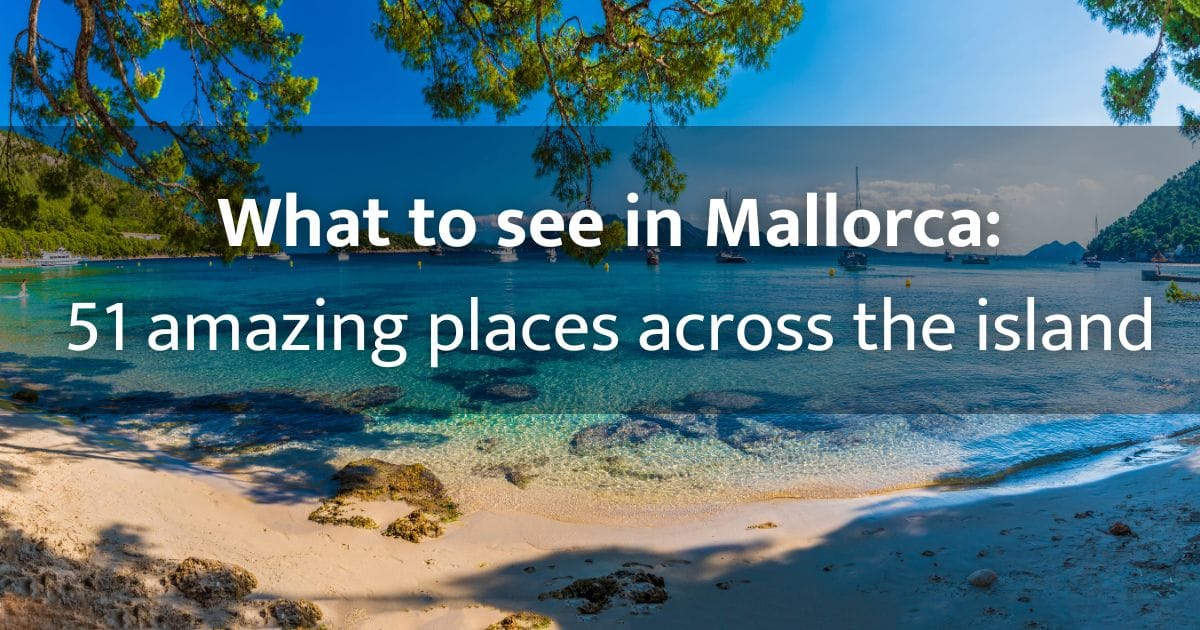
One of the most beautiful beaches in the north of the island. Fine sand, crystal-clear water and pine trees providing shade create the perfect combination. The beach is popular, so there can be more people, especially in summer. Sun loungers and umbrellas are available for rent. A great place for swimming and relaxation.
Paguera (Peguera)
A quieter resort with good access from Palma (approx. 30 km). It offers full amenities, but without intense nightlife. Popular with couples and families. Paguera is a good base for exploring the southwest. It combines comfort and tranquillity.
Santa Ponsa (Santa Ponça)
A resort set in a calm bay with photogenic coastline. The atmosphere is relaxed and less hectic than in the main entertainment centres. Suitable for families as well. It offers good swimming thanks to the sheltered bay location. The surrounding landscape is very beautiful.
Mercat d´Olivar
The main city market in Palma, where locals shop. You’ll find fresh fish, seafood, fruit and meat. Many stalls offer tapas you can eat on the spot. Ideal if you want to see the city’s everyday rhythm. It’s also good for stocking up for an apartment stay.
TIP: 23 great places to go to the sea in Europe in April
La Ruta Martiana (Travel hack)
Every Tuesday evening, Palma’s historic centre turns into a tapas route. Participating bars offer beer or wine + a tapa for €2–2.50. The atmosphere is lively and friendly. A great chance to meet locals and travellers alike. One of the best ways to spend an evening cheaply and authentically.
Festes de Sant Sebastia / Correfoc
January celebrations of Palma’s patron saint are among the year’s most intense events. Correfoc is a parade full of fire, sparks and loud music. People dressed as devils run through the streets, creating a powerful atmosphere. Long sleeves and sturdy shoes are recommended. An experience you won’t forget.
Pueblo Español
An open-air architecture museum in the western part of Palma. It offers scaled replicas of important Spanish buildings and squares. A good spot if you want a quick overview of architectural styles. Exhibitions and cultural events are often held here. More of an add-on than a main attraction.
Portixol
A former fishing village that has become a favourite with locals. It’s just a short distance from Palma and is connected by a long seaside promenade. Perfect for a walk, a run, or cycling. The waterfront restaurants are very pleasant. A great place for lunch or an evening drink.
Sa Coma
An east-coast resort known for its clean, wide beach. The water is crystal clear and suitable even for less confident swimmers. Especially popular with families. Facilities are modern and well maintained. A good choice for a relaxed holiday.

Cala S’Amarador
A smaller beach in the Mondragó Natural Park surrounded by pine trees. It feels calm and natural. The water is very clean and great for swimming. Thanks to its sheltered location, there’s no dense development nearby. Ideal for a quiet day by the sea.
Mondragó Natural Park
A protected area combining beaches, cliffs and forest trails. It allows for easy hiking as well as swimming in natural coves. You’ll find traditional dry-stone walls. The park feels preserved and calm. Great for a half-day trip too.
S’Albufera Natural Park
Extensive wetlands in the north of the island protected since 1985. The area is important for migratory birds and biodiversity. It offers flat trails ideal for easy walks. Great for nature lovers. A completely different face of Mallorca.
TIP: Sri Lanka travel diary: How much did a month in Sri Lanka cost us and what did we experience?
Cales de Mallorca (Coves)
The east coast of the island is dotted with dozens of small coves. The area between Porto Cristo and Cala d’Or is ideal for exploring by car. Many coves are small, quiet and good for snorkelling. Each one has a slightly different character. Great for those who love discovering new places.
Cala Llombards Beach
A beautiful cove near Santanyí with calm water. The entry into the sea is gentle and suitable for children too. Thanks to the rocks on both sides, it’s ideal for snorkelling. The beach isn’t very long, but it’s very photogenic. The atmosphere is peaceful.
Cala Mesquida Beach
A beach surrounded by nature in the east of the island. It stands out for clear water and an open setting. Even in season there are usually fewer people than at more famous beaches. The entry into the sea is relatively gentle. It feels very natural.
Cala Pi Beach
A narrow and long cove in the south of the island, well sheltered from the wind. It often appears in rankings of beautiful beaches. The water is usually calm and clean. Easily accessible by car. Great for relaxed swimming.
Es Calo des Moro
A small, secluded beach without any services. The descent to the beach is more demanding, but manageable. The water is exceptionally clear and ideal for snorkelling. You need to bring your own supplies. Very popular among more experienced travellers.
Banyalbufar
A quiet village between the sea and the Tramuntana mountains. Known for a historic irrigation system from the Islamic era. It offers beautiful coastal viewpoints. The atmosphere is very quiet and local. A good place to slow down.
Castell d’Alaró
A castle ruin high above the town of Alaró. The hike is moderately challenging, but the views are worth it. The history goes back to Moorish times, with surviving parts dating mainly to the 15th century. The site is linked to a local legend about two knights. A strong experience for history lovers.
Deiá
A small village in the west of the island, long associated with an artistic community. Honey-coloured houses and lush surroundings create a very aesthetic setting. Thanks to building regulations, it has preserved its authentic look. It feels calm and refined. Better for slow exploration than a quick visit.
Alfabia Gardens
Arab-style gardens on the road from Palma to Sóller. Water features are the main motif here and give the place a unique atmosphere. The biggest attraction is a pergola with 24 spouts. The complex also includes a historic hacienda. A pleasant stop during a day trip.
Calvari Steps (Stairway)
An iconic climb in Pollensa up 365 stone steps. The path is lined with cypresses and crosses. A small chapel stands at the top. The view over the town and surrounding mountains is your reward. It’s best to go outside the midday heat.
What to eat in Mallorca
Now you know what to see in Mallorca. But what delicious food should you try there? Typical Spanish cuisine definitely won’t pass you by.
- Coca de patata: You have to try this sweet potato bun in Valldemossa. It pairs well with tea or coffee and is a great source of energy for more travelling.
- Pa amb oli: Pa amb oli (pronounced “pamboli”) is a brilliant Mallorcan specialty you’ll fall in love with. It’s slices of bread with olive oil and tomato, served with toppings such as ham or cheese. It’s the best energy boost for an active day and a light but filling dinner.
- Ensaïmada: You have to try this! Ensaïmada is an iconic sweet yeasted pastry you won’t find anywhere else. Traditionally it’s unfilled, but you can also buy it with cream or chocolate. It’s a perfect start to the day and an ideal souvenir—bakeries will pack it for you in a box.
- Sangria: A refreshing light alcoholic drink typical of the Iberian Peninsula. It’s made from red wine, fruit, brandy and sweetener, and it’s a great match for tapas.
- Paella: The famous rice dish originally from Valencia. The base is rice (not rinsed) cooked with various ingredients such as seafood, chicken or vegetables. You have to try it in Mallorca, but most restaurants serve it for at least two people.
- Jamón: Besides sweets and wine, Spain is also famous for cured ham—Jamón. You can buy it in supermarkets or markets, and it’s great as a topping for Pa amb oli or with wine.
- Sobrasada: A traditional Mallorcan sausage that’s soft and spreadable, often with a pronounced paprika flavour. It’s great on bread and a typical local product you can take home.
- Almonds (Mallorcan): Around Santanyí and in the island’s valleys, almond trees bloom beautifully in February. Mallorcan almonds are delicious and a local specialty worth buying at markets.
- Salt (Flor de Es Trenc): Flavoured sea salt from the Flor de Es Trenc brand is harvested by hand from nearby salt lakes. It’s a great gourmet souvenir—especially the olive- or hibiscus-flavoured versions.
Mallorca with a tour operator or independently?
Mallorca is an ideal destination for independent travel. Roads are good, navigation is easy, and renting a car is very straightforward. Thanks to that, you can reach lesser-known places, hidden beaches and inland villages that tour operators typically don’t visit.
Of course, there are also plenty of package holidays with travel agencies, mainly to large resorts, which can suit people who want comfort without planning. But if you want to explore Mallorca in depth, your own pace and a car give you much more freedom. The island is safe, clear, and suitable even for less experienced travellers.
Frequently asked questions (FAQ)
Which part of Mallorca is the most beautiful?
The most beautiful part is often considered to be the south and southwest of the island, where clear sea, light sand and a diverse coastline come together. You’ll find both long sandy beaches and smaller rocky coves that feel more natural and quieter. An iconic place is Es Trenc Beach near Colònia de Sant Jordi, located in a protected nature reserve. Thanks to its white sand and turquoise water, it has earned the nickname “Mallorca’s Caribbean.”
What should you definitely see in Mallorca?
Mallorca isn’t just about beaches—it’s also about towns, mountains and historic sights. It’s definitely worth visiting Palma de Mallorca with its famous La Seu Cathedral and old town. Nature lovers shouldn’t miss the Serra de Tramuntana mountain range, which is listed as a UNESCO World Heritage site. A great experience are also the Cuevas del Drach caves or the viewpoints at Cap de Formentor. The island is diverse and each part offers something different.
What should you watch out for in Mallorca?
Mallorca is generally a safe destination, but it’s still wise to follow basic precautions. In larger cities, tourist areas and on beaches, keep an eye on your personal belongings. Don’t carry your documents, cash and payment cards together and keep only a small amount of cash with you. It’s recommended to note down your card numbers separately in case of loss. Pay particular attention to pickpockets who target inattentive tourists.
What to do in Mallorca when it rains?
Even a rainy day doesn’t have to mean wasted time. A great tip is to visit the historic estate La Granja in Esporles, where you’ll learn more about traditional island life. The Dragon Caves are also very popular and accessible in any weather. If you want something more active, you can try a taster dive or an escape game in Palma. A pleasant option is also a tapas tour with wine or a long dinner in a restaurant—rain outside won’t matter at all.
When is the best time to fly to Mallorca?
It depends on what you expect from your trip. For hiking, sightseeing and active exploration, spring is ideal, with pleasantly warm weather and less rainfall than in autumn. Summer is great for swimming, but it can be very hot. Surprisingly, Mallorca is also very usable in winter—in January and February temperatures hover around 15 °C. Thanks to that, it’s possible to do outdoor activities practically all year round.
What not to miss in Palma de Mallorca?
Palma offers an ideal mix of history, culture and city life. The key landmark is La Seu Cathedral, which dominates the city skyline. Right below it lies Parque del Mar, perfect for a short walk. Next to the cathedral stands the royal palace Palau de l’Almudaina, and nearby you’ll find the S’Hort del Rei gardens. For modern art, head to the Es Baluard museum; to soak up the city atmosphere, visit Plaza Mayor and Passeig des Born. History lovers shouldn’t miss the Arab Baths (Banys Àrabs) either.
“`
Potřebujete pomoct s cestováním?
-
Ubytování 🏨
Vyberte si to nejlepší ubytování, ať už jste kdekoliv, přes Booking.com. -
Půjčení auta 🚗
Auto si snadno najdete přes Booking.com, kde máte často slevu díky ubytování, nebo Rentalcars.com, kde porovnáte nabídky většiny půjčoven. -
Zážitky 🎟️
Přes GetYourGuide.com si vyberete z nejrůznějších výletů i zážitků po celém světě, navíc se zrušením zdarma do 24 h předem.