Last updated 1.11.2026
Price up a day on the slopes in the Alps, then do the same sum for the Polish mountains, and the difference is hard to ignore. Skiing in Poland is one of the cheapest ways to get proper runs under your skis in Central Europe: lift passes cost roughly half of what you pay in Austria, food and accommodation are far cheaper too, and the main ski areas sit within two hours of the airports in Kraków, Katowice and Wrocław. Fly out on Friday morning and you can be on the slopes after lunch.
The catch is choice. Poland has dozens of ski resorts, from a single drag lift on a village hill to modern areas with ten-seater gondolas, and they are spread across four separate mountain ranges. This guide covers the whole country. We compare the best ski resorts in Poland region by region, from the Beskids and the Tatras to the Polish side of the Giant Mountains (Karkonosze) and the hills of the Kłodzko Valley, and we look at where to go with kids, where to stay and what a ski trip to Poland really costs. By the end you should know which resort suits you, and which airport to book.
Skiing in Poland at a glance
- Biggest ski area: Szczyrk Mountain Resort in the Silesian Beskids, 36.6 km of pistes, about 1.5 hours by road from Katowice airport.
- Closest to an airport: the Beskids (Szczyrk, Wisła) from Katowice or Kraków, the Polish Giant Mountains (Szklarska Poręba, Karpacz) from Wrocław.
- Real high mountains: Kasprowy Wierch and Zakopane in the Tatras, see our detailed guide to the Polish Tatras.
- For kids and beginners: Białka Tatrzańska / Kotelnica, Czarna Góra, Zieleniec: wide blue runs and water parks nearby.
- Lift pass prices: a day pass at the ticket office costs roughly 140–220 PLN (about £28–44), less online and on weekdays. The 2026/27 season is just getting going; where the new price list isn’t out yet, we quote 2025/26.
- Polish school holidays 2027: Lower Silesia and Silesia 18–31 January, Lesser Poland (the Tatras) 15–28 February. That’s when the slopes are busiest.
- Currency: prices are in Polish złoty (PLN); 1 PLN is roughly £0.20. Cards are accepted almost everywhere.
Is Poland good for skiing?
It depends on what you expect. If you want 300 km of linked pistes and glacier snow in April, go to the Alps. If you want good, well-groomed runs at a fraction of the price and a long weekend that doesn’t need a week’s planning, Poland is hard to beat. Three things make it worth a look.
First, the money. A day lift pass in Poland costs around 140–220 PLN at the ticket office, roughly £28–44, while the same day in the Austrian Alps can easily cost double. Accommodation, food and ski hire are much cheaper too, so a whole weekend of skiing in Poland often costs about as much as a single day somewhere in the Alps.
Second, the investment. Polish resorts have spent heavily in recent years. Szczyrk Mountain Resort now has a ten-seater gondola and 36.6 km of runs, and it feels much closer to an Alpine resort than most people expect. Powerful snowmaking covers the main pistes, so even in a thin winter you can usually ski.
Third, how easy it is to get there. The ski areas cluster in the south of the country, along the borders with Czechia and Slovakia, in three ranges: the Beskids, the Tatras and the Sudetes (the Giant Mountains and the Kłodzko area). All of them are within about two to three hours of a Polish airport with direct flights from the UK, and the Tatras sit right next to Kraków, which makes a city break and a few days on the slopes an easy combination.
💡 Tip: The easiest saving is to buy your lift pass online in advance. In Szczyrk, for example, an online ticket is noticeably cheaper than one from the ticket office. Night skiing is worth it too: it usually costs less and the pistes are half empty.
How skiing in Poland works (lift passes, getting there)
A few practical things worth knowing before your first trip.
Lift passes and paying
You can buy a lift pass at the ticket office or online through the resort’s website, which often knocks a few złoty off. Besides the full-day pass, most areas sell time-based tickets (2 or 4 hours, or a set number of rides), handy if you arrive after lunch or are skiing with small children. Paying by card is normal. Expect a deposit of about 10–20 PLN (£2–4) for the chip card, which you get back when you return it.
The big bonus is shared lift passes. In the Tatras, Tatry Super Ski is one ticket valid at around 19 Polish and Slovak resorts, with over 80 km of runs in total. In the Kłodzko area, Zieleniec links more than twenty drag lifts and several chairlifts on one pass, and Czarna Góra belongs to the Śnieżnik regional pass (Czarna Góra + Kamienica + Lądek-Zdrój).
Getting there from the UK
Most skiers fly into one of three airports and then drive or take a transfer. There are direct flights to Kraków, Katowice and Wrocław from London and several regional UK airports; routes and frequencies change by season, so check current schedules before you book. Which airport to pick depends on the range you’re heading for. A hire car is the most flexible option, since skis and luggage don’t travel well on buses. The good news for drivers: there is no vignette for cars in Poland. Tolls apply only on certain motorway sections (A1, A2, A4), and you can reach most ski resorts on ordinary toll-free roads. Rough driving times:
- Beskids (Szczyrk, Wisła, Korbielów): about 1.5–2 hours from Katowice or Kraków.
- Tatras (Zakopane, Białka): about 2 hours from Kraków, more on winter weekends when the road to Zakopane clogs up. Zakopane is also easy to reach by bus or train from Kraków.
- Polish Giant Mountains (Szklarska Poręba, Karpacz): about 2 hours from Wrocław.
- Kłodzko area (Zieleniec, Czarna Góra): about 2 hours from Wrocław.
These are our rough estimates for normal winter conditions, not timetabled journeys, so allow extra time after heavy snowfall.
💡 Tip: Don’t forget travel insurance that covers winter sports. Mountain rescue and helicopter transfers cost money, and the UK Global Health Insurance Card (GHIC) only covers state healthcare, not rescue from the slopes. Carry both the card and your policy details.
9 best ski resorts in Poland
We’ve grouped them by region, starting with the biggest ski area in the Beskids, then the Tatras and the Polish Giant Mountains, and finishing with the smaller, quieter resorts in the Kłodzko area. For each one you’ll find kilometres of pistes, who it suits and a guide price for an adult day pass in high season.
1. Szczyrk Mountain Resort (Silesian Beskids)
The flagship of Polish skiing and the largest ski area in the country. After heavy investment it now offers 36.6 km of pistes between Szczyrk and the hamlets of Czyrna, Solisko and Salmopol (524–1,257 m), a ten-seater gondola from Czyrna up to Hala Skrzyczeńska, wide blues, properly long reds and modern facilities. It’s the closest thing Poland has to an Alpine resort, and from Katowice airport you can be here in about an hour and a half, which makes it the obvious pick for a long weekend.
- Pistes: 36.6 km (all levels); the shared pass also covers the neighbouring areas COS Skrzyczne and Beskid Sport Arena
- Best for: everyone, from families to advanced skiers, who wants a “big” resort without a long transfer
- Lift pass (2025/26 season): day pass 219 PLN at the ticket office (about £43), juniors and seniors 176 PLN, children 6–11 154 PLN, under 6 free. Online via Gopass with dynamic pricing from around 150 PLN. Pre-sale for the 2026/27 season starts on 29 October 2026.
- Night skiing: 18:00–21:00 on a separate evening ticket.
Stay in Szczyrk itself or in one of the surrounding Beskid villages: find accommodation in Szczyrk here →.
2. Białka Tatrzańska / Kotelnica (Podhale, below the Tatras)
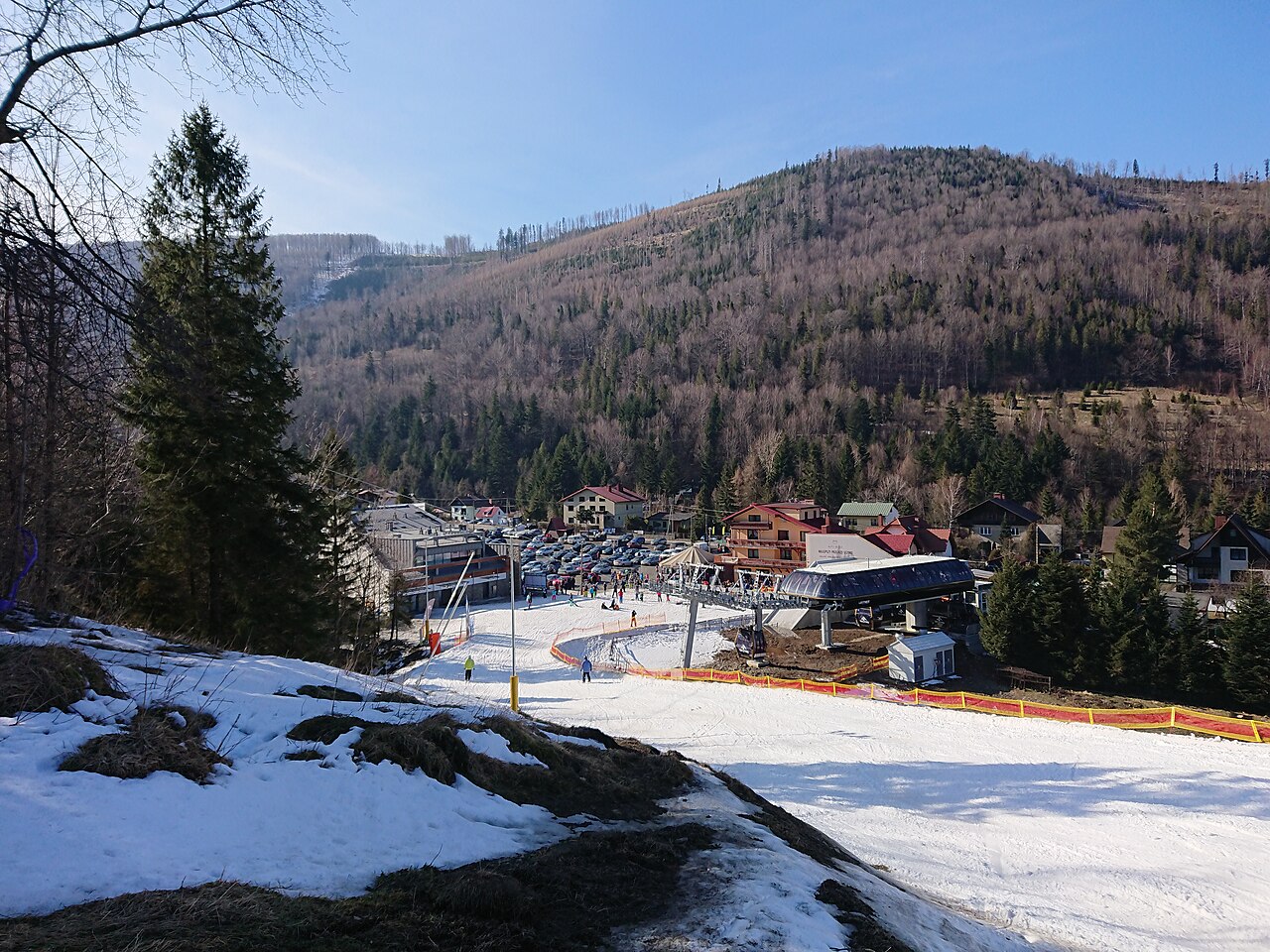
The most popular family resort below the Tatras. Kotelnica Białczańska has around 21 km of runs served by seven chairlifts, mostly easy and intermediate pistes and immaculately groomed snow. The big plus for families is right next door: thermal baths (the Terma Bania water park), ideal for when the kids have finished skiing for the day. If you like the idea of combining skiing with a soak, have a look at our guide to thermal baths in Poland.
- Pistes: ~21 km
- Best for: families, beginners to intermediates, anyone who likes skiing plus a spa
- Lift pass (2025/26 season): day pass 170 PLN (about £34), youth 6–15 and seniors 160 PLN; the shared Tatry Super Ski pass is valid too
Accommodation in Białka Tatrzańska →
3. Kasprowy Wierch and Zakopane (High Tatras)
This is Polish skiing in high-mountain form. Kasprowy Wierch (1,987 m) is the highest summit in Poland you can ski from. A cable car from Kuźnice takes you right to the top, and from there long, more demanding runs drop into the Gąsienicowa and Goryczkowa valleys, each served by a chairlift. It isn’t a place for complete beginners, but skiing above the tree line here is something you’ll remember. For après-ski, restaurants and a couple of smaller ski areas (Nosal, Polana Szymoszkowa), head down to Zakopane.
- Pistes: about 15 km of runs (bergfex, SnowTrex) between 1,014 and 1,987 m, over 900 m of vertical; the long run down the valley to Kuźnice has no snowmaking
- Best for: advanced skiers who want real mountains and the Zakopane atmosphere
- Lift pass: day pass 199 PLN at the ticket office (about £39), online 169 PLN if you buy at least 7 days ahead, otherwise 189 PLN; reduced 135–159 PLN. It includes one ride on the cable car and a time-based pass for the chairlifts in the Gąsienicowa and Goryczkowa valleys.
- Watch out for queues: in winter the cable car from Kuźnice carries only 360 people an hour, so an online ticket with a set departure time is well worth it.
We’ve written a separate guide to Zakopane, Morskie Oko and the whole region, so read our tips for the Polish Tatras. Stay in town: accommodation in Zakopane →.
4. Szrenica – Szklarska Poręba and Karpacz (Polish Giant Mountains)
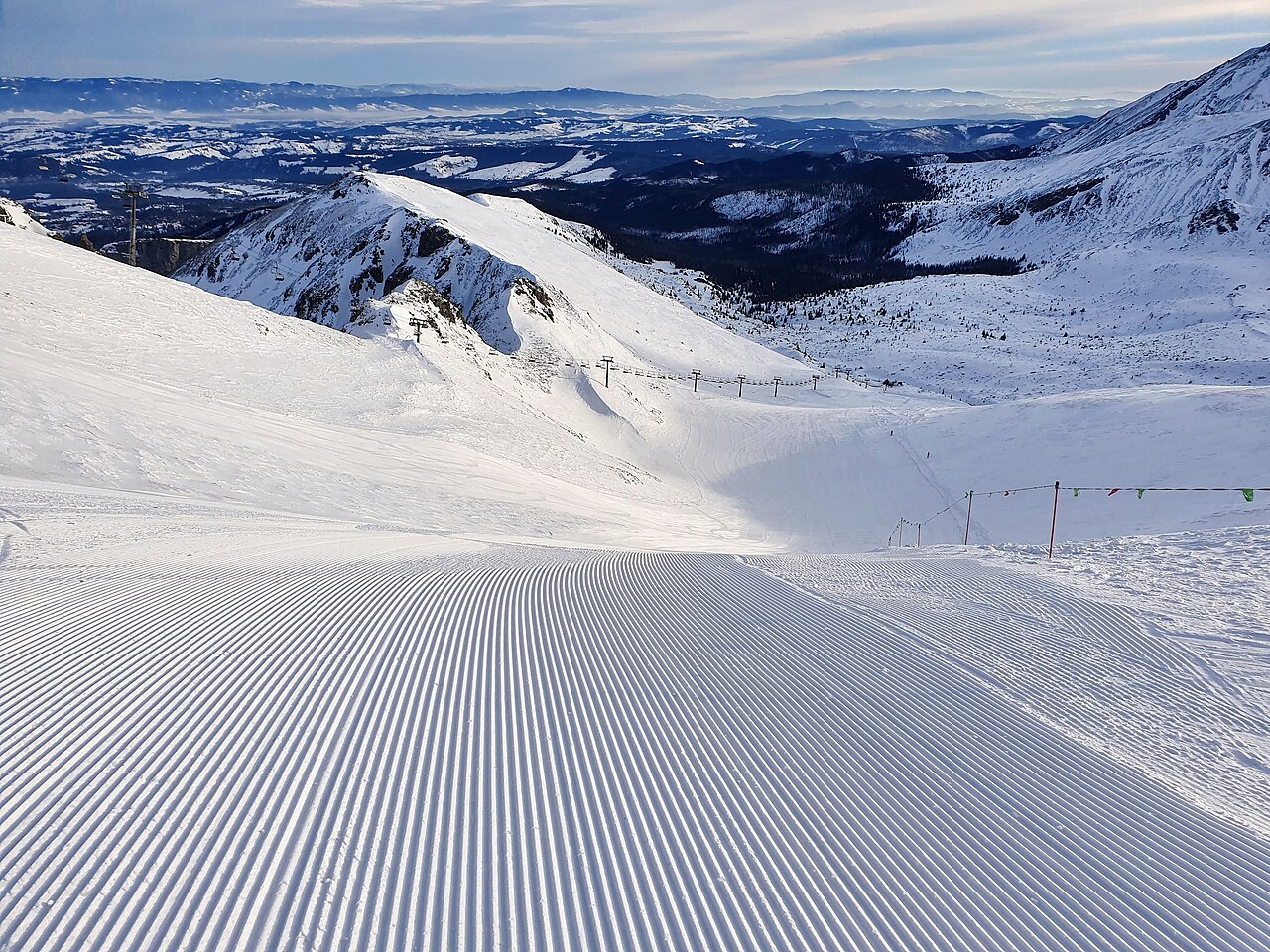
If you fly into Wrocław, the Polish side of the Giant Mountains (Karkonosze) is the natural choice. SkiArena Szrenica in Szklarska Poręba offers 12 km of pistes, including long classic runs from the summit of Szrenica (1,362 m) and the Lolobrygida run, which is over 4 km long and lies just a few hundred metres from the Czech border. The second big draw in the range is Karpacz below Śnieżka: smaller, more family-friendly areas (Kopa, Biały Jar, Karpacz Ski Arena) with shorter runs and a great base for days off the skis.
- Pistes: Szrenica ~12 km; Karpacz Ski Arena ~5–6 km
- Best for: families, skiers arriving via Wrocław, anyone combining Poland with a trip to Czechia
- Lift pass (2025/26 season): Szrenica day pass 185 PLN (about £37), youth and seniors 150 PLN, children 7–14 105 PLN, under 6 free; Karpacz Ski Arena 140 PLN Mon–Thu and 150 PLN Fri–Sun
For ideas on what to do in the area away from the pistes, see our guide to the Karkonosze Mountains in Poland.
5. Czarna Góra (Stronie Śląskie, Kłodzko area)
A hidden gem in the Śnieżnik massif, in the Kłodzko area close to the Czech border. Czarna Góra Resort has 14 km of pistes (20 runs, 10 drag lifts and chairlifts) of all grades, six of them over a kilometre long, and the longest floodlit run is more than 1.5 km. Thanks to the Śnieżnik regional lift pass, you can also ski the neighbouring resorts of Kamienica and Lądek-Zdrój. A great choice for families and stronger skiers who want peace and quiet rather than crowds.
- Pistes: ~14 km
- Best for: families, relaxed skiers, anyone who’d rather avoid packed resorts
- Lift pass (2026/27 season): 7-hour 160 PLN (about £32), reduced 145 PLN; 4-hour 140 PLN, 2-hour 110 PLN
6. Zieleniec (Orlické / Bystrzyckie Mountains)
One of the highest and most snow-sure resorts in the Polish Sudetes, just over the ridge from Czechia’s Orlické Mountains. Zieleniec Ski Arena links more than twenty drag lifts and several chairlifts on one pass and offers around 20+ km of runs spread across several slopes. The pistes are mostly easy to intermediate, perfect for warming up and for children, and thanks to the altitude the snow lasts well into spring.
- Pistes: ~20+ km on one pass (23 drag lifts and 7 chairlifts)
- Best for: families, beginners, skiers flying into Wrocław
- Lift pass (2026/27 season): 7-hour 165 PLN (about £33) in high season, 19 December 2026 – 28 February 2027, 135 PLN outside it; 4-hour evening pass from 16:00 for 110 PLN. Children under 5 ride the chairlifts free with an adult.
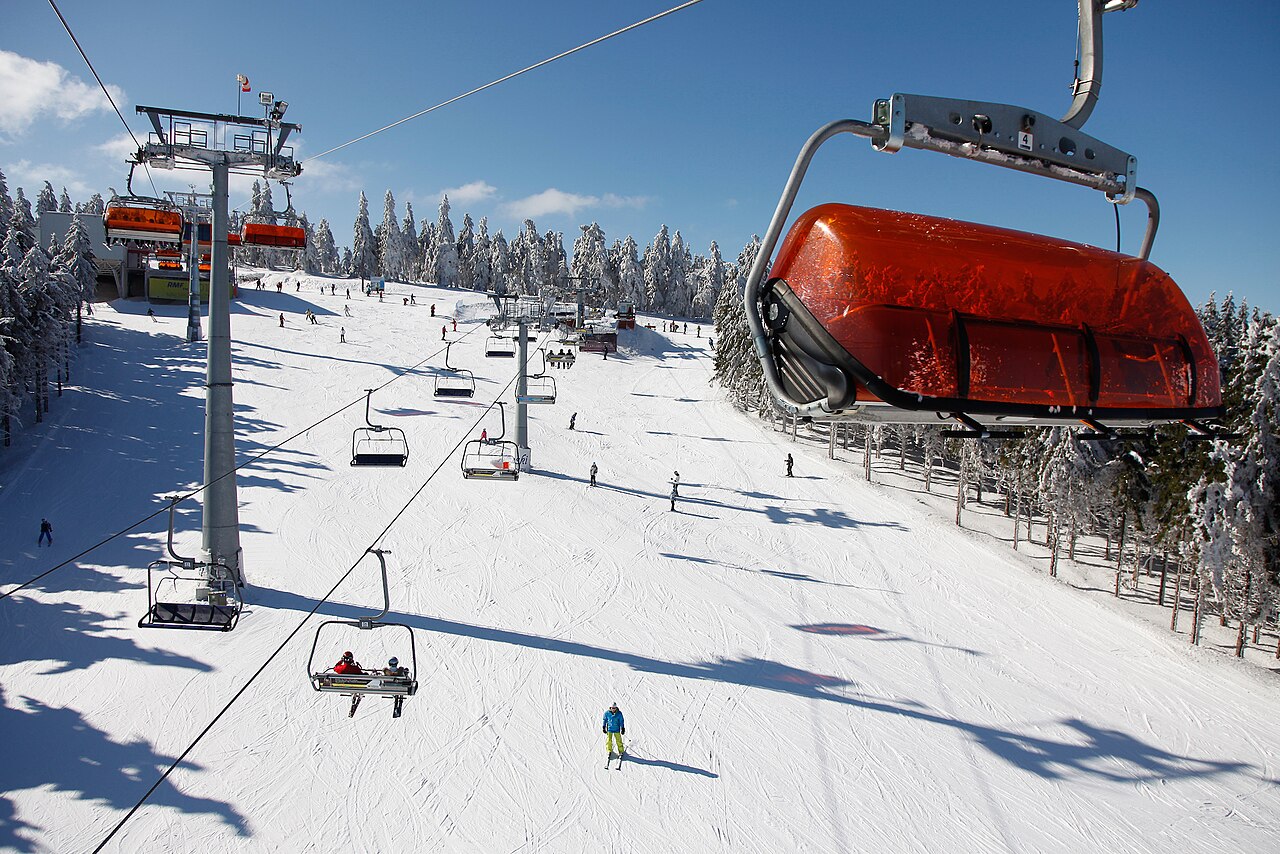
7. Korbielów / Pilsko (Żywiec Beskids)
If you’re after quieter, sportier skiing and don’t mind a smaller area, head to Korbielów below Pilsko. The Pilsko-Jontek complex has roughly 10–12 km of runs, mainly easy and intermediate slopes, most with snowmaking and some floodlit. The pistes start at around 700 m and top out below the summit of Pilsko at over 1,400 m, giving one of the biggest verticals in the Polish Beskids. It’s also only a short drive from the rest of the Beskids.
- Pistes: ~10–12 km
- Best for: families, beginners and anyone who wants longer runs
- Lift pass: day pass around 170 PLN (about £34) based on the 2025/26 season; the resort hasn’t published its official price list for the new season yet
8. Wisła (Silesian Beskids)
The best-known ski town in the Beskids, about an hour and a half by road from Katowice. You ski on several slopes scattered around the town, the biggest being SkiArena Cieńków with a long run from the top. The big advantage is the shared Wispass, which links 11 smaller ski areas in Wisła, Ustroń and Istebna (such as Cieńków, Stok, Soszów, Klepki and Zagroń), so one ticket lets you switch between several slopes. Most pistes are easy to intermediate, ideal for families and less experienced skiers.
- Pistes: Cieńków around 6 km, the other areas are smaller; Wispass is valid at 11 ski areas
- Best for: families, beginners to intermediates, day trips from Katowice or Kraków
- Lift pass (2025/26 season): full-day Wispass 170 PLN (about £34), children under 12 and seniors 65+ 145 PLN; 5% off online with the code RABAT5
Look for accommodation in Wisła itself or in neighbouring Ustroń: accommodation in Wisła →.
9. Jaworzyna Krynicka (Sącz Beskids)
A modern ski area above the spa town of Krynica-Zdrój in south-eastern Poland. A gondola over 2 km long takes you to the top of Jaworzyna (1,114 m), and 8 runs totalling around 10 km lead back down, four of them FIS-homologated. Thanks to its location and strong snowmaking, the snow here typically lasts four to five months a year, making it one of the most snow-sure resorts in the country. You can also pair the skiing with a stroll along Krynica’s famous spa promenade. It’s further from the airports, though: allow roughly two and a half hours from Kraków.
- Pistes: ~10 km (8 runs, gondola)
- Best for: beginners to intermediates, fans of longer runs and spa towns
- Lift pass (2025/26 season): day pass 145 PLN at the ticket office (about £29), online 140 PLN, or 120 PLN if bought at least 7 days ahead; night skiing 18:00–21:00 on a separate ticket
Polish ski resorts compared
For a quick overview, here are all nine resorts in one table. Prices are for an adult day pass at the ticket office based on the latest published price list; online tickets are usually cheaper. Travel times are rough estimates by car.
| Resort | Region | Pistes | Day pass (PLN) | Best for | Getting there |
|---|---|---|---|---|---|
| Szczyrk Mountain Resort | Silesian Beskids | 36.6 km | 219 (online from ~150) | everyone, “big” resort | ~1.5 h from Katowice |
| Białka / Kotelnica | Podhale (below the Tatras) | ~21 km | 170 | families, spa | ~2 h from Kraków |
| Kasprowy Wierch / Zakopane | High Tatras | ~15 km (high mountains) | 199 (online 169–189) | advanced, high mountains | ~2 h from Kraków |
| Szrenica – Szklarska Poręba | Giant Mountains | ~12 km | 185 | families, Wrocław arrivals | ~2 h from Wrocław |
| Karpacz | Giant Mountains | ~5–6 km | 140–150 | families, sightseeing | ~2 h from Wrocław |
| Czarna Góra | Stronie Śląskie / Kłodzko | ~14 km | 160 (7 h) | families, quiet | ~2 h from Wrocław |
| Zieleniec | Orlické / Bystrzyckie Mts | ~20+ km | 165 (7 h) | families, beginners | ~2 h from Wrocław |
| Korbielów / Pilsko | Żywiec Beskids | ~10–12 km | ~170 | families, longer runs | ~2 h from Kraków |
| Wisła (Cieńków + Wispass) | Silesian Beskids | 11 areas (Wispass) | 170 | families, day trips | ~1.5 h from Katowice |
| Jaworzyna Krynicka | Sącz Beskids | ~10 km | 145 (online 120–140) | longer runs, spa town | ~2.5 h from Kraków |
Smaller ski areas worth a detour
The nine resorts above cover almost everything most visitors look for in Poland. We still wouldn’t skip a few smaller areas, especially if you’re already in the region. Prices are for an adult day pass in the 2025/26 season, based on an overview published by the Czech news site Seznam Zprávy.
- Polana Szymoszkowa (Zakopane): about 4 km of pistes below Gubałówka, red runs with an average gradient of around 20% and a kids’ park. Day pass 170 PLN, and the same ticket lets you hop over to Harenda or to Suche near Poronin.
- Bukowina Tatrzańska, Rusiń-Ski: a family area with a six-seater chairlift, snowmaking and night skiing, part of the Tatry Super Ski network. After skiing, everyone heads to the Terma Bukovina baths.
- Kasina Ski (Kasina Wielka): only 2.9 km of runs, but a six-seater chairlift to just below the summit of Śnieżnica, a 1,450 m blue run and views of the Tatras. Day pass 195 PLN.
- Słotwiny Arena (Krynica-Zdrój): nearly 10 km of pistes, two six-seater chairlifts and a snowpark, although the vertical is only about 160 m. Day pass 195 PLN.
- Master-Ski (Tylicz): 9.5 km of wide runs for beginners and families, a short drive from Krynica. Day pass 125 PLN, the cheapest of the larger areas.
- Dwie Doliny Muszyna–Wierchomla: around 11 km of pistes on two sides of one mountain, partly floodlit, with a practice slope by the Stonaga lift.
- Świeradów-Zdrój (Jizera Mountains): a spa town just over the Czech border, with about 2.5 km of pistes. Better for an afternoon and a spa visit than for a week’s skiing.
Night skiing in Poland
In the evening, Polish slopes are noticeably quieter and lift passes are usually cheaper. These resorts keep their lifts running the longest:
- Szczyrk Mountain Resort: 18:00–21:00, with neighbouring Beskid Sport Arena open 17:00–20:00. The evening ticket is cheapest online at least 5 days in advance.
- Zieleniec: in high season the lifts run daily 9:00–21:00, outside it until 20:00 from Friday to Sunday. A 4-hour ticket from 16:00 costs 110 PLN.
- Jaworzyna Krynicka: 18:00–21:00 on run no. 6 and the lower part of run no. 1, served only by the Jaworzyna Express chairlift.
- Szrenica: night skiing 18:00–21:00 on the Puchatek piste in Szklarska Poręba.
- Wisła (Wispass): the evening pass is valid from 17:00 until closing.
- Kotelnica, Czarna Góra, Rusiń-Ski: have floodlit runs, with hours varying by day of the week.
If you’re also skiing across the border, we’ve put together a guide to night skiing in Czechia.
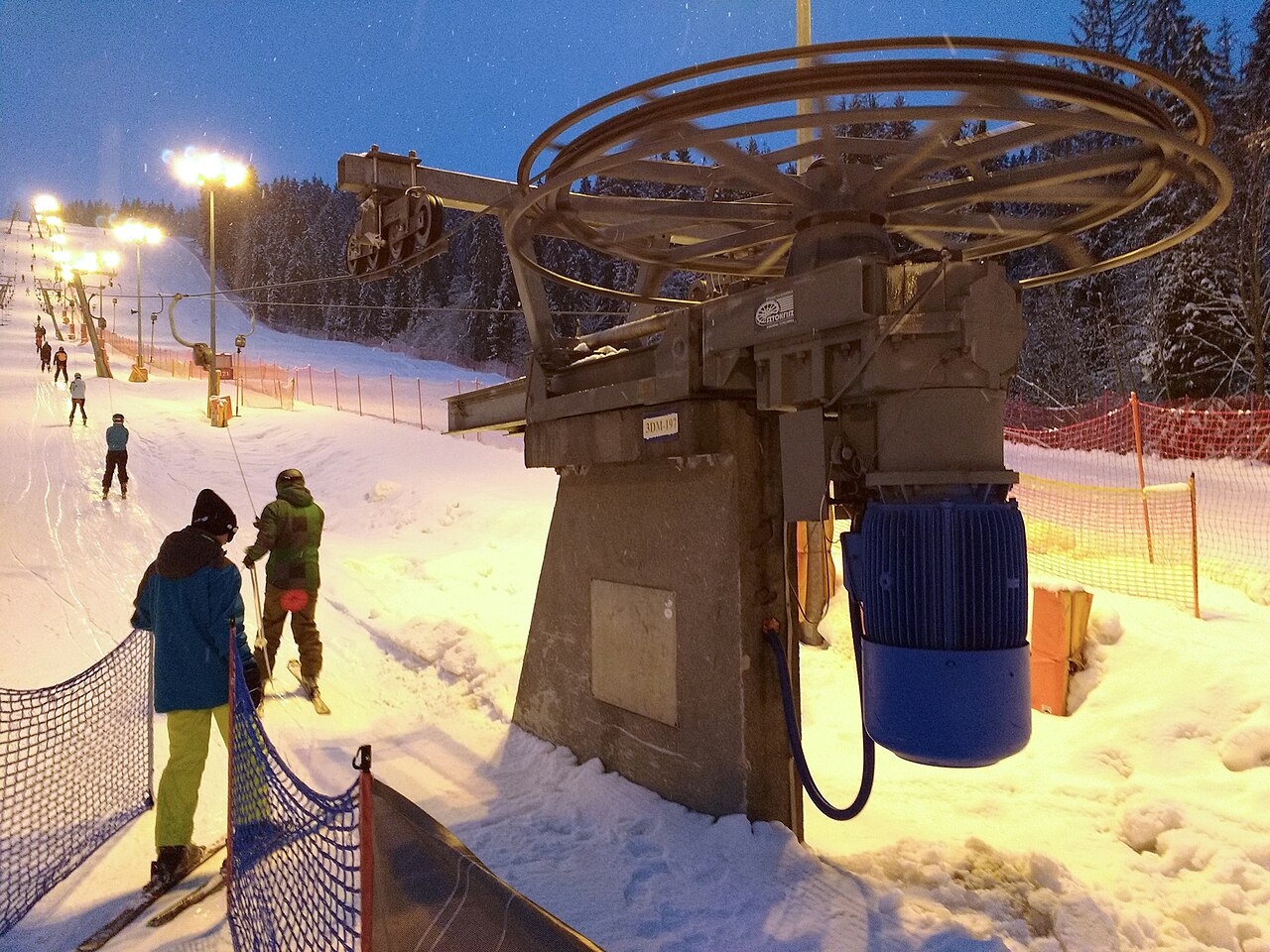
When to go: ski season, snow and Polish school holidays
The big resorts open in early December, depending on snow and snowmaking (Szrenica’s 2025/26 price list ran from 6 December 2025 to 6 April 2026), and the highest areas, Kasprowy Wierch and Szrenica, keep going into April. The most reliable snow is from January to early March.
The thing to watch out for is Polish winter school holidays (ferie). Each province has them at a different time, and in 2027 they fall like this:
| Ferie dates 2027 | Provinces | Which resorts it affects |
|---|---|---|
| 18–31 January 2027 | Lower Silesian, Silesian, Opole, Subcarpathian, Podlaskie, Łódź | Giant Mountains, Zieleniec, Czarna Góra, Szczyrk, Wisła, Pilsko |
| 1–14 February 2027 | Masovian (Warsaw), Pomeranian, Świętokrzyskie, Lublin | busier everywhere, especially at weekends |
| 15–28 February 2027 | Lesser Poland, Greater Poland, Lubusz, Kuyavian-Pomeranian, Warmian-Masurian, West Pomeranian | Zakopane, Białka, Krynica, Kasina |
We’d go to the Beskids and the Giant Mountains in December or February, and to the Tatras in January or March. Weekends are always busy, so if you can, ski on weekdays. If you’re tied to UK school holidays, check whether your February half-term overlaps with the Lesser Poland ferie in the second half of February, and if it does, the Beskids or the Sudetes will be the calmer choice.
Skiing in Poland with kids and for beginners
Poland is a rewarding place for families and first-timers. There are plenty of gentle blue runs, kids’ parks with magic carpets and ski schools. If you’re just starting out or bringing small children, these are the resorts we’d recommend:
- Białka Tatrzańska / Kotelnica: wide blue runs, kids’ zones and a thermal water park next door for the afternoon. Our number one tip for families.
- Zieleniec: mostly gentle slopes, reliable snow and an easy-to-navigate layout where you won’t lose the kids.
- Czarna Góra: family-friendly facilities, a ski school and long floodlit blue runs for evening skiing.
- Korbielów / Pilsko: quiet, with gentle slopes at the bottom and longer runs higher up, and no crowds.
💡 Tip: With kids, hourly lift passes are better value than full-day ones, since little skiers usually run out of steam after a few hours anyway. And choose accommodation as close to the slope as possible, so you don’t have to haul all the gear anywhere.
Where to stay
Accommodation in Poland is much cheaper than in the Alps, and you can choose anything from private rooms and apartments (often with a kitchenette, so you save on breakfast) to guesthouses and hotels with a spa. The cheapest options are in small villages a short drive from the resort; the most expensive are right by the lifts and in Zakopane.
Where to look, region by region:
- Beskids: accommodation in Szczyrk →: a private room or apartment in town or in the surrounding villages.
- Tatras: accommodation in Zakopane →: from cheap guesthouse rooms to hotels with a pool.
- Podhale with kids: accommodation in Białka Tatrzańska →: family apartments close to the water park.
Hotels right by the slopes
If you’d rather not deal with private rentals, here are hotels located right in the resorts we’ve picked. We looked them all up on Booking.com and checked the names and addresses. They’re mostly upper mid-range; cheaper apartments are easier to find through the general links above.
- Szczyrk: Hotel META Resort & Vine SPA (Skośna street) and Hotel Klimczok Resort & Spa (Poziomkowa street), both with a spa, a little above the town centre.
- Białka Tatrzańska: Hotel Bania Thermal & Ski, next to the Bania piste and the thermal complex. For families, probably the most convenient address below the Tatras.
- Zakopane: Aries Hotel & SPA a short walk from the centre on Zaruskiego street, or Hotel Belvedere Resort & SPA on the edge of town towards the Białego valley.
- Szklarska Poręba: Interferie Sport Hotel Bornit (Mickiewicza street) or Hotel Kryształ Conference & Spa on 1 Maja street.
- Karpacz: Hotel Gołębiewski Karpacz, a huge hotel with a water park that kids will happily walk to after skiing, even in freezing weather.
- Wisła: Hotel Gołębiewski Wisła, its sister hotel in the same chain, with pools and a spa.
- Zieleniec and Czarna Góra: Skałka Zieleniec right in Zieleniec and Hotel Górski Czarna Góra in Sienna below Czarna Góra.
General links for the other resorts: accommodation in Szklarska Poręba, in Karpacz, in Sienna near Czarna Góra, in Korbielów and in Krynica-Zdrój.
💡 Tip: Book early. During the winter school holidays (Polish ones as well as those in neighbouring countries), the best apartments near the slopes are gone by autumn. Outside the holiday peaks you can easily save a third, and the pistes are emptier.
How much does skiing in Poland cost?
Poland is still cheap, but accommodation prices climb during the school holidays. A rough daily budget for a couple on a ski trip:
| Item | Approx. per day (2 adults) |
|---|---|
| Lift passes (2× day pass) | 280–440 PLN (about £55–87) |
| Accommodation (apartment / guesthouse) | 200–400 PLN (about £40–79) |
| Food (bistro, own breakfast) | 100–180 PLN |
| Transport (fuel, parking) | 50–120 PLN |
| Equipment hire (optional) | 50–90 PLN / person |
| Total | approx. 630–1,140 PLN (about £125–225) / day |
Flights and car hire come on top. You’ll save the most by buying lift passes online, choosing an apartment with a kitchen and travelling outside the peak weeks. Bring your own kit and the hire line disappears from the budget altogether.
A bit of history: how skiing began in Poland
Polish skiing was born in Zakopane. In 1894 Stanisław Barabasz arrived there with skis made to a Norwegian pattern, and that same year he set off on them with Jan Fischer as far as Czarny Staw Gąsienicowy.
In February 1907 Barabasz, together with the composer Mieczysław Karłowicz and the mountaineer Mariusz Zaruski, founded the ski section of the Tatra Society, the second ski club in Poland. Two years later Karłowicz was killed by an avalanche below Mały Kościelec, and Zaruski went on to found the Tatra mountain rescue service.
The breakthrough came in the 1930s. The cable car from Kuźnice to Kasprowy Wierch was built in 227 days between August 1935 and February 1936 and carried its first passengers to the summit on 15 March 1936. Three years later, in February 1939, Kasprowy hosted the FIS Alpine World Ski Championships, just months before the outbreak of war. The cable car was completely replaced in 2007.
The current wave of investment is recent. In March 2014 Szczyrk was bought by the Slovak group Tatry Mountain Resorts, which also runs Jasná and Tatranská Lomnica, and it built a gondola and new chairlifts there. That’s why Szczyrk today looks more like an Alpine resort than a Beskid hill with a T-bar.
What we’d do differently
When planning, it’s easy to cram Szczyrk, Białka, Kasprowy and the thermal baths into four days. On the map it all looks close; in practice you’d spend half the holiday in traffic on the zakopianka, the main road from Kraków to Zakopane. We’d pick one mountain range and stay there.
You don’t need to tick off all 19 areas on the Tatry Super Ski pass. Kotelnica plus one day at Rusiń-Ski or Szymoszkowa is plenty, and if you can’t get up Kasprowy because of the wind, don’t worry, the mountain will still be there next year.
Try the food that never makes it into the reviews. Grilled oscypek with cranberries from a stall by the car park, żurek in a mountain hut by the piste, pierogi in a local canteen where the lift staff eat. The best dinners we’ve had were always recommended by someone who works there, not by a top-ten list.
And keep one day free of skis. Stroll along Krupówki in Zakopane or the spa promenade in Krynica, sit in the thermal pools and leave your phone in the locker. The Polish mountains aren’t a contest in kilometres; nobody on the piste is counting how much you’ve skied.
Where next
- Polish Tatras: the best places to see and things to do
- Karkonosze Mountains, Poland: things to see and do
- Polish Beskids: the best places to hike and visit
- Skiing in Italy: best ski resorts and tips
- Austria ski pass prices: regional lift passes compared
- Night skiing in Czechia: where to ski under floodlights
Skiing in Poland: FAQ
What is the best ski resort in Poland?
The largest and most modern ski area is Szczyrk Mountain Resort in the Beskids (36.6 km of pistes), about an hour and a half by road from Katowice airport. For real high mountains, head to Kasprowy Wierch in the Tatras; for families, Białka Tatrzańska or Zieleniec are ideal.
How much is a ski pass in Poland?
An adult day pass at the ticket office costs roughly 140–220 PLN (about £28–44). The most expensive are Szczyrk (219 PLN in the 2025/26 season) and Kasprowy Wierch (199 PLN), while Kotelnica and Wisła cost 170 PLN. It’s usually cheaper online and on weekdays, and hourly and evening tickets are good value too.
Can you ski near Kraków?
Yes. The Tatras are about two hours by road from Kraków: Białka Tatrzańska / Kotelnica for families and Kasprowy Wierch above Zakopane for advanced skiers. The Beskids (Szczyrk, Wisła, Korbielów) are around 1.5–2 hours from Kraków or Katowice. If you fly into Wrocław, the Giant Mountains (Szklarska Poręba, Karpacz) and Zieleniec are the closest.
Where to ski in Poland with kids?
Go for resorts with gentle blue runs and kids’ parks: Białka Tatrzańska (with a thermal water park right next door), Zieleniec, Czarna Góra or quiet Korbielów. Stay close to the slope and buy the children an hourly lift pass.
Do you need a vignette to drive in Poland?
Not for cars. Tolls are charged only on certain sections of the A1, A2 and A4 motorways, and you can reach most ski resorts on ordinary roads without paying anything.
Is skiing in Poland better value than Austria?
If you want good value for money and a short trip, Poland wins: lift passes and accommodation cost roughly half of what you pay in Austria. For the biggest ski areas and the most reliable snow, the Alps are still the better choice.
When is the ski season in Poland?
The main season runs roughly from late December to early March, and the higher resorts (Zieleniec, Kasprowy Wierch, Czarna Góra) are skiable into March too. Weekdays outside the holidays are the quietest. Watch out for Polish winter school holidays: in 2027 Lower Silesia and Silesia have them 18–31 January and Lesser Poland (the Tatras) 15–28 February.
Is there one ski pass for several resorts in Poland?
Yes. In the Tatras, the Tatry Super Ski card links around 19 Polish and Slovak resorts (over 80 km of runs), in the Kłodzko area the Śnieżnik regional pass covers Czarna Góra, Kamienica and Lądek-Zdrój, and Zieleniec has one pass for all its lifts.
What are the cheapest ski resorts in Poland?
The cheapest include Master-Ski in Tylicz near Krynica (day pass 125 PLN in the 2025/26 season), Karpacz Ski Arena on weekdays (140 PLN) and Jaworzyna Krynicka with an online ticket bought a week ahead (120 PLN). As a rule, the smaller the area and the further from Szczyrk and Zakopane, the lower the price.
Can you night ski in Poland?
Yes, many resorts offer night skiing under floodlights, including Szrenica, Czarna Góra and Szczyrk. It’s usually cheaper than a day pass and the pistes are much quieter.
Potřebujete pomoct s cestováním?
-
Ubytování 🏨
Vyberte si to nejlepší ubytování, ať už jste kdekoliv, přes Booking.com. -
Půjčení auta 🚗
Auto si snadno najdete přes Booking.com, kde máte často slevu díky ubytování, nebo Rentalcars.com, kde porovnáte nabídky většiny půjčoven. -
Zážitky 🎟️
Přes GetYourGuide.com si vyberete z nejrůznějších výletů i zážitků po celém světě, navíc se zrušením zdarma do 24 h předem.