Last updated 30.8.2026
If you are working out what to see in Malaga, you have an easier job here than in most Spanish cities. Almost everything that matters sits inside a twenty minute walk: the Moorish Alcazaba, the Roman theatre below it, a cathedral missing one tower, the Picasso museum, and around the corner a harbour with a city beach. Malaga works as a day trip. Give it three days and it pays you back.
The surprising thing about Malaga is how little effort it asks of you. You land at AGP, you are in the centre half an hour later, and by evening you are sitting on Muelle Uno watching the yachts. Even a long layover is enough for a first look around. Below you will find 22 things to do in Malaga itself plus 10 day trips nearby, so 32 tips in total, two ready made itineraries (one day and three days), a section for families, where to stay, what to eat, and how to move around without a car.
What to see in Malaga: the short version
- All 32 tips in this article are ordered the way you meet them on the ground: fortresses and the old town first, then museums, then beaches, then the day trips.
- How many days: one day covers the centre, three days cover the beach and one trip out of the city as well.
- The essentials: the Alcazaba and Gibralfaro castle, the Roman theatre, the La Manquita cathedral, the Picasso museum.
- Admission: Alcazaba 7 € (about £6), combined ticket with Gibralfaro 10 € (about £8.50), cathedral 10 €, Picasso museum 13 € (about £11).
- Free: the Alcazaba and Gibralfaro every Sunday from 14:00, the Picasso museum on Sundays for the last two hours, the Pompidou on Sundays from 16:00, the cathedral every morning from 8:30.
- Getting around: walk the centre, a single city bus ticket costs 1.40 € (about £1.20), the airport bus line A costs 4 €.
- Airport: 8 km from the centre, served by bus and train, but neither runs overnight.
- Where to stay: Centro Histórico for a short visit, Soho as the compromise, La Malagueta for the sea.
- When to go: April to June and September to October. In July and August the centre is hot and shade is hard to find.
What to see in Malaga: the whole centre is one walk
The historic core of Malaga is small and flat. The cathedral to the Alcazaba is a five minute walk, the cathedral to Malagueta beach about twenty. The only real climb is up to Gibralfaro castle, and even that can be done by bus.
The simplest route looks like this. Start on Calle Larios, turn off into Plaza de la Constitución, pass the cathedral and come out on Calle Alcazabilla, where the excavated Roman theatre lies on your right with the walls of the Alcazaba rising above it. From there either go up to Gibralfaro, or down through Parque de Málaga to the harbour and Muelle Uno. The full loop without stops takes an hour. With the entrances, it takes half a day.
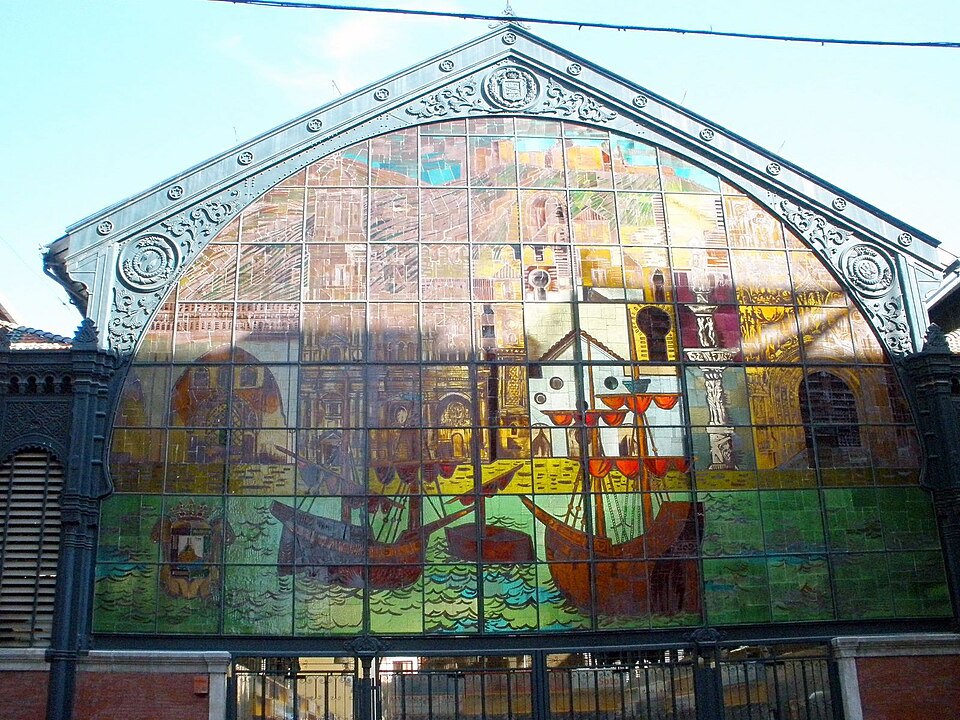
💡 Tip: Save Mercado Atarazanas for the morning, the stalls start shutting in the afternoon. The entrance arch is what remains of the Moorish shipyard and the stained glass window on the back wall is one of the most photographed things in the city. Entry is free.
The Alcazaba, Gibralfaro and the Roman theatre
These three sit stacked on one hillside and together they are the strongest hour or two Malaga has. It is worth taking them as a single block, ideally in the morning before the heat arrives.
1. The Alcazaba
A Moorish fortress from the early 11th century, built by the Hammudid dynasty, probably under the emir Yahya I. It is not one building but several rings of walls, gates and gardens climbing the slope. Inside you get horseshoe arches, fountains and water channels, and above all a series of views over the harbour that improve with every courtyard you pass through. The major rebuild came from the Nasrid emir Muhammad II in the early 14th century.
2. Gibralfaro castle
Above the Alcazaba, on a hill 130 metres high, stands Gibralfaro castle. There have been defences here since the Phoenicians founded Malaga roughly 770 years BC, caliph Abd al-Rahman III built on the site in 929, and the castle got its present shape from Yusuf I in the early 14th century. He also linked the castle to the lower citadel with a walled corridor, so the garrison could move between them under cover. In 1487 the castle survived a three month siege by the Catholic Monarchs and fell only to hunger.
Plenty of people come up here without going inside, purely for the view. The panorama over the city and the Plaza de Toros bullring is the best in Malaga, full stop. There is also a Parador up here, a state run hotel with a terrace and a café.
💡 Tip: You do not have to walk up. City bus 35 runs to Gibralfaro from Avenida de Andalucía, and according to the city’s open data the first services leave around 7:20 and the last around 21:10. Our advice: take the bus up and walk down the path along the walls. Doing it the other way round in the heat is pointless suffering.
3. The Roman theatre
It lies directly below the Alcazaba and dates from the 1st century AD. It fits into the slope so naturally that a lot of visitors assume it is part of the fortress. It was only rediscovered in the 20th century, and today you can see the whole thing from the pavement on Calle Alcazabilla, so even if you never step inside you do not miss the semicircle of seating. It is floodlit in the evening and it is one of the best looking corners of the centre.
Tickets and opening hours
Prices and hours are set by the city and as of August 2026 they look like this:
| Ticket | Price |
|---|---|
| Alcazaba or Gibralfaro separately | 7 € (about £6) |
| Combined ticket (Alcazaba + Gibralfaro) | 10 € (about £8.50) |
| Reduced admission | 3 €, combined 5 € |
| Groups of 10 or more | 5 €, combined 8 € |
| Sundays from 14:00 | free for everyone |
Opening hours are 9:00 to 20:00 from 1 April to 31 October and 9:00 to 18:00 from 1 November to 31 March, with last admission always an hour before closing. Children under 6 go free. Check the current situation at alcazabaygibralfaro.malaga.eu.
The cathedral with a missing tower
4. Málaga Cathedral, known as La Manquita
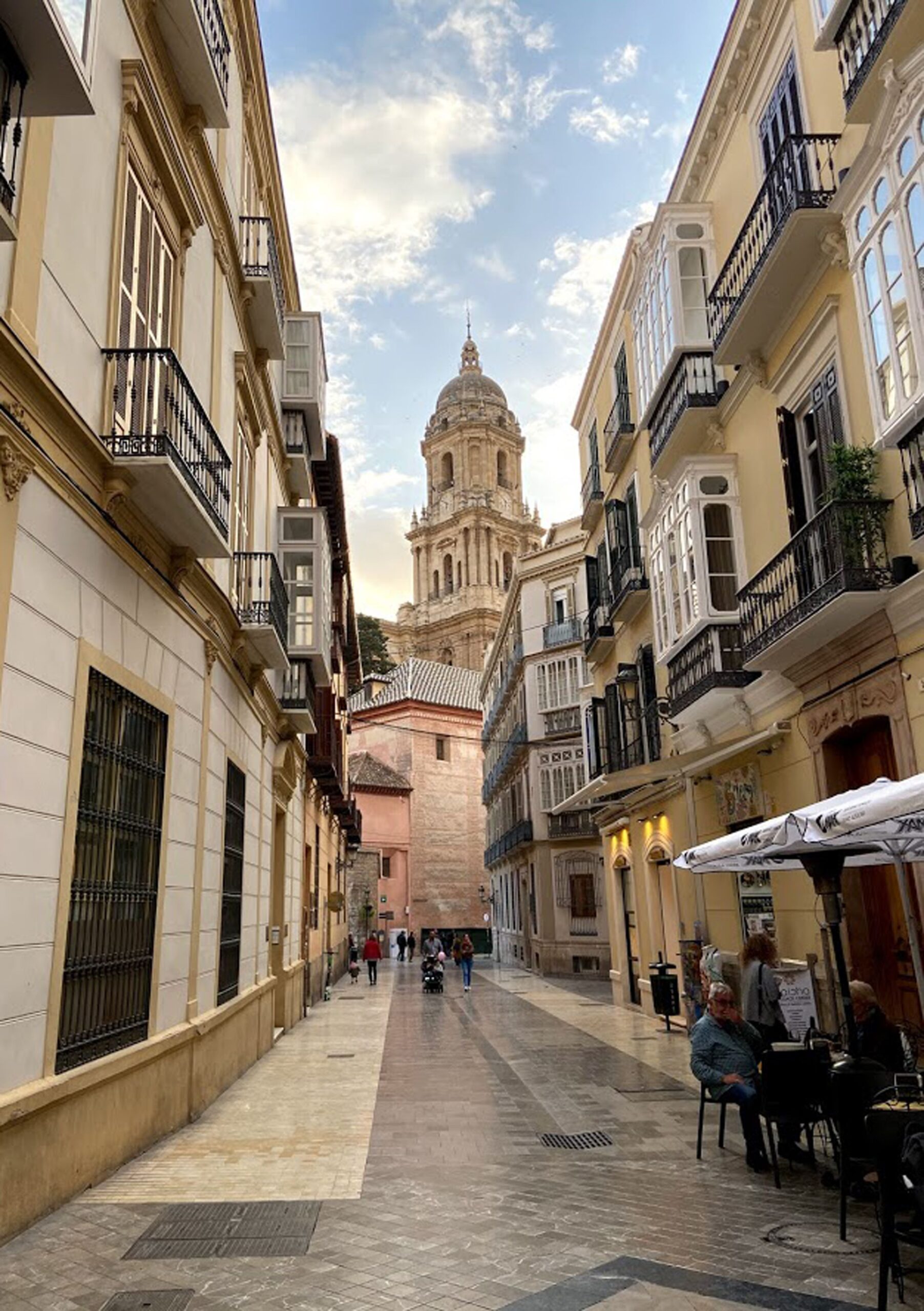
Malaga’s cathedral was under construction from 1528 to 1782, which is 254 years, and it is still not finished. The south tower was left cut off halfway up because the money ran out. Hence the nickname La Manquita, the one armed lady. According to a plaque inside, the funds went instead to support the American colonies in their fight against Britain.
The plans came from Diego de Siloe and the result is an odd hybrid: a Renaissance interior behind a Baroque facade with three arches and portals divided by marble columns. The tower that was finished, the north tower, is 84 metres tall, which makes this the second highest cathedral in Andalusia after the Giralda in Seville. Inside, look out for the 18th century organs with their horizontal pipes and the sculptures by Juan Salazar Palomino.
Admission is 10 € (about £8.50) including an audio guide, with reductions of 9 € for over 65s, 7 € for students, 6 € for 13 to 17 year olds and 4 € for children under 12. Combined with the virtual tour it costs 15 €. Opening hours from 1 June to 25 October are 10:30 to 20:00 Monday to Friday, until 18:00 on Saturdays, and on Sundays only from 14:00 to 18:00. In the winter half of the year it closes earlier, and last admission is always 45 minutes before closing.
💡 Tip: The rooftop tour (cubiertas) is the most interesting thing the cathedral offers: roughly 200 steps up a spiral staircase and nearly 50 metres above the ground. As of August 2026 it is suspended while the roofs are repaired. Before you set your heart on it, check the status at malagacatedral.com.
Museums in Malaga: Picasso, Pompidou and the rest (tips 5 to 8)
Malaga is Picasso’s birthplace and it has built a whole civic identity on that. There are enough museums here to fill an entire rainy day indoors, which on this coast is a rarer problem than you might think.
5. Museo Picasso Málaga
It occupies the Palacio de Buenavista a few steps from the cathedral and it is the city’s main cultural draw. A ticket for the full collection costs 13 € (about £11), reduced 11 €, and the price includes an audio guide that runs as a web app on your phone, so there is nothing to download. Children and teenagers under 18 go free.
Opening hours shift with the seasons: March to June 10:00 to 19:00, July and August 10:00 to 20:00, September and October 10:00 to 19:00, November to February 10:00 to 18:00. Last admission is 30 minutes before closing.
Buy your ticket online in advance. In peak season it sells out, and queuing on San Agustín in the midday sun is nobody’s idea of a holiday.
6. Centre Pompidou Málaga
The glass cube on Muelle Uno, known locally as El Cubo, is an outpost of the Paris Pompidou sitting right in the harbour. A combined ticket for the permanent and temporary exhibitions costs 9 €, the permanent collection alone 7 €, the temporary show alone 4 €. It opens 9:30 to 20:00, but it is closed on Tuesdays, which is the single most common reason people walk down here for nothing.
💡 Tip: Planning more than one museum? There is a pass called Bono Art Experience for 16.50 €, valid for a week, covering the Centre Pompidou, Museo Casa Natal Picasso and the Colección Museo Ruso.
7. Museo Carmen Thyssen Málaga
A museum that opened in March 2011 in the 16th century Renaissance Palacio de Villalón, a short walk from the market. The collection holds roughly 285 paintings and concentrates on Spanish and Andalusian painting from the early 19th century to the beginnings of modernism, with the emphasis on romantic landscapes and scenes of everyday life. It is the best place in Malaga to understand how painters saw Andalusia before Picasso came along.
Admission is 12 €, it opens Tuesday to Sunday 10:00 to 20:00, and it is closed on Mondays. Between 14:30 and 16:00 you get in for 6 €.
8. Museo de Málaga in the Palacio de la Aduana
The largest museum in the city lives in the neoclassical Palacio de la Aduana, a former customs house built between 1788 and 1826, and it opened in December 2016 after almost twenty years in which the collections had nowhere to go. It brings two institutions under one roof: a fine art gallery with some two thousand paintings from the 19th and 20th centuries and an archaeological collection of more than fifteen thousand objects spanning the 8th century BC to the Middle Ages.
The best part: admission is free for EU citizens. You just show your ID. If it rains in Malaga, this is the first place to head for.
More places in the centre worth a stop
The fortresses, the cathedral and Picasso are the compulsory items. What follows is the rest of Malaga, the part that makes a second visit worthwhile, and most of it is free or nearly free.
9. Calle Marqués de Larios and Plaza de la Constitución
Malaga’s main artery, which everybody shortens to Calle Larios. It opened on 27 August 1891, runs 350 metres, and connects Plaza de la Constitución at the north end with the Alameda Principal in the south. Every building has rounded corners, borrowed from the Chicago school, and the lines of balconies and cornices converge on a single point at the end of the street. It is an effect you only notice once you stop in the middle and look straight ahead. The street has been pedestrianised since 2002.
At the northern end it opens into Plaza de la Constitución with the Fuente de Génova fountain, the city’s main social space. Around Christmas, Calle Larios is hung with a light installation that pulls people in from all over Andalusia, and in August the Feria de Málaga parades through here.
10. Mercado Central de Atarazanas
The city market, in a building that began life as a Moorish shipyard. What survives from it is the huge white marble horseshoe arch you walk in through, and the back wall is filled by a large coloured stained glass window showing Malaga scenes. Inside are counters of fish, olives, cured meat and nuts, and among them several bars where people stand at the counter and eat.
Come in the morning. The stalls close down gradually through the afternoon and there is no trading on Sundays. Entry is free and this is one of the few big attractions in Malaga with no queue.
11. Muelle Uno and the harbour promenade
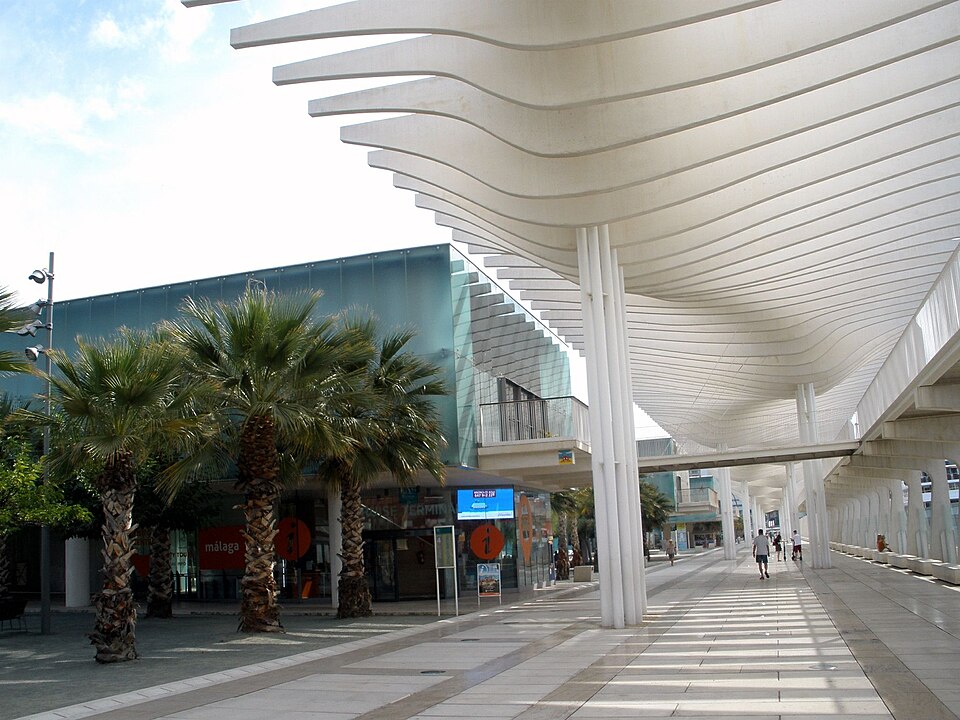
Malaga rebuilt its port as a promenade with a rippling white canopy, shops and restaurants at the water’s edge. A level path runs along it from the park all the way to the La Farola lighthouse and flows on into Palmeral de las Sorpresas, a covered pergola planted with palms. The glass cube of the Centre Pompidou stands here too, and a giant observation wheel a little further along.
Muelle Uno is, we would say, the best place in Malaga for the early evening. Nothing costs anything, you can get here with a pushchair, and the sun sets directly in front of you.
12. Casa Natal de Picasso on Plaza de la Merced
The house where Pablo Picasso was born in 1881 stands on Plaza de la Merced, a few minutes from the Alcazaba. It is a completely different experience from the big museum: smaller, more personal, full of family photographs and household objects. On the square outside, a bronze Picasso sits on a bench, and next to him there is a children’s playground.
Admission is 3 € for the birthplace alone, 3 € for the temporary exhibition and 4 € for a combined ticket to both, with reductions of 2 to 2.50 €. It opens daily 9:30 to 20:00 including public holidays, with last admission 15 minutes before closing, and shuts on 1 January and 25 December. Children and teenagers under 18 go free, and on Sundays between 16:00 and 20:00 nobody pays anything at all.
13. Soho and the street art
South of the Alameda, between the avenue and the harbour, lies the district known as Soho. For years it was a neglected part of the centre, and the city let it fill up with large format murals on the gable walls. Today you walk through it with your head up: giant paintings appear between the blocks, and between them sit galleries, cafés and independent shops.
This is our favourite part of the city, mostly because it is the one place in the centre where you will not walk into a tour group. Half an hour covers it, and it leads straight onto the promenade towards the Centre Pompidou.
14. Parque de Málaga and the Jardines de Picasso
Between the city hall and the harbour runs Parque de Málaga, a narrow band of subtropical planting several hundred metres long. There are so many palms, fig trees and exotic species that at midday you can walk almost the whole way from the Alcazaba to Muelle Uno in the shade. At its northern edge it joins the Jardines de Picasso and the Paseo del Parque, with sculptures and fountains.
It is free, always open, and in summer it is the most practical connection in the city. The airport bus, line A, terminates here at the Paseo del Parque stop.
15. La Concepción botanical garden
A historic garden on the northern edge of the city, laid out in the 19th century by the Loring family. It holds a collection of tropical and subtropical plants more than a century old, plus a bamboo forest, ponds and a viewpoint over the valley. It is the only place around Malaga where you genuinely do not cook in August.
Admission is 5.20 €, reduced 3.10 € (under 16s, students under 26, seniors, large families). It opens 9:30 to 20:30 from 1 April to 30 September and 9:30 to 17:30 from 1 October to 31 March, and it is closed on Mondays, as well as on 25 December and 1 January.
💡 Tip: The garden is free every Sunday: from 14:00 to 17:30 in the winter half of the year, from 16:30 to 20:30 in the summer half. Get here on city bus 20, which leaves you about a fifteen minute walk short, or on the sightseeing line 91 from the train and bus stations for 1.40 €.
16. Hammam Al Ándalus Arab baths
Below the centre, on Plaza de los Mártires, there is a recreation of Andalusian bath houses: warm, hot and cold pools, steam, marble, and light falling through star shaped openings in the ceiling. You book a specific time slot and you can add a massage to the basic entry.
It strikes us as the best possible answer to the question of what to do in Malaga on a day when it rains or the thermometer hits forty. Prices and availability change with the season and the time of day, so check current rates at malaga.hammamalandalus.com. Bring swimwear and book a few days ahead.
17. Plaza de toros de La Malagueta
The bullring next to the beach of the same name was designed by Joaquín Rucoba, the same architect who did the Atarazanas market, and it opened on 11 June 1876. It is built in neo Mudéjar style as a sixteen sided ring and, after the 2010 rebuild, it holds 9,032 spectators. Inside there is a visitor centre devoted to bullfighting.
Even if you have no intention of going to a corrida, the ring is worth a look from outside, and above all you can see straight down into the whole circle from the walls of Gibralfaro. It is one of the best photographs you will take in Malaga.
18. Cementerio Inglés: a cemetery built as a botanical garden
On Avenida de Príes lies the first Protestant cemetery in Spain, founded in 1831 by the British consul William Mark on the strength of a royal decree from 1830. Until then non Catholics could not be buried in consecrated ground and were disposed of on the beach at night. The cemetery was laid out as a botanical garden on terraces sloping towards the sea, with exotic plants, the Doric chapel of St George from 1850 and graves covered in seashells. It has been a protected cultural monument since 2012, and the writer Gerald Brenan and the poet Jorge Guillén are among those buried here.
It is the quietest place in central Malaga and the complete opposite of what anyone expects from a cemetery.
19. The view from a rooftop bar by the cathedral
Malaga has several hotels around the cathedral with roof terraces, and the bars on them are open to people who are not staying in the hotel. The reward is the cathedral’s dome and truncated tower seen from above, the walls of Gibralfaro behind them and the sea behind that. It is the only vantage point from which you see the cathedral whole.
Expect to have to order something, and expect it to be busy in high season. Most terraces open in the afternoon and the best hour is the one before sunset.
Free things to do in Malaga
This is something Malaga does better than most Spanish cities and it is well worth planning around. Nearly every major sight here has a window in which you do not pay. Build your programme around those windows and two people can easily save fifty euros, roughly £43.
| Place | When it is free | Worth knowing |
|---|---|---|
| Alcazaba | every Sunday from 14:00 | applies to all visitors, no booking needed |
| Gibralfaro castle | every Sunday from 14:00 | same rules as the Alcazaba, both are run by the city |
| Cathedral | Monday to Saturday 8:30 to 9:00, Sunday 8:30 to 9:30 | no audio guide, the cathedral only |
| Museo Picasso Málaga | every Sunday, the last two hours before closing | plus 28 February, 18 May, 27 September and 27 October |
| Centre Pompidou | every Sunday from 16:00 until closing | group bookings are not accepted in this window |
| Casa Natal de Picasso | every Sunday 16:00 to 20:00 | and free all year for under 18s |
| La Concepción botanical garden | Sunday 14:00 to 17:30 (October to March), 16:30 to 20:30 (April to September) | closed altogether on Mondays |
| Murals in Soho | always | an open air gallery between the Alameda and the harbour |
| Roman theatre | visible from Calle Alcazabilla | the entire semicircle of seating is open to the sky |
| Mercado Atarazanas | always | the Moorish arch and the big stained glass window, mornings only |
| Parque de Málaga and Muelle Uno | always | subtropical park and harbour promenade |
| Malagueta beach | always | you pay for loungers and umbrellas, not for the sand |
If you want a day in Malaga that costs nothing, the answer is simple: make it a Sunday. Cathedral at half eight, a walk through the centre and the market in the morning, the Alcazaba and Gibralfaro at two, the Pompidou at four. Your only outlay is a bus ticket and a set lunch.
💡 Tip on free parking: do not count on it in the centre itself. The blue and green zones are paid and so are the underground car parks. What works is leaving the car at one of the big shopping centres on the edge of town and taking a bus in. If you are arriving for a weekend, read the signs for the zone you are in, because Sundays and public holidays are handled differently from weekdays and the rules are not the same everywhere.
On top of the free windows, children get in free almost everywhere: under 6 at the Alcazaba, under 18 at the Picasso museum. In practice a family with younger children only pays for the adults.
Malaga’s beaches and the gateway to the Costa del Sol
Fancy a day doing nothing by the sea? That is straightforward here. Malaga has a whole string of beaches, from a busy city strip to old fishing quarters where you can walk, swim or just listen to the water.
20. Playa de la Malagueta
Malaga is one of the few big Spanish cities where you can walk from the centre to the beach. La Malagueta starts immediately behind the harbour, about fifteen minutes from the cathedral, and it is a classic city beach: darker, coarser sand, rows of loungers, a promenade of bars and apartment blocks behind. Its icon is the Malagueta sign spelled out in letters in the sand, which everyone photographs.
21. Pedregalejo and El Palo: espeto on the sand
If you want quiet, keep going east to the districts of Pedregalejo and El Palo. These are former fishing villages that the city grew into, their beaches split by breakwaters into small bays, and along them stand the chiringuitos, beach restaurants that grill espeto de sardinas, sardines skewered on a cane and cooked over a fire burning inside an old boat filled with sand. This is the most Malagueño thing you can eat and it justifies the trip on its own.
22. Playa de la Misericordia
In the other direction, west of the centre, is Playa de la Misericordia. It is a long city beach used mainly by people who live here, which means more room, lower prices in the bars and far fewer cameras. It scores nothing for looks, and that is exactly why you will find somewhere to put your towel in August.
From here onto the Costa del Sol
Malaga also works as the gateway to the Costa del Sol. The Cercanías coastal train takes you west past the airport to Torremolinos, Benalmádena and Fuengirola, and buses carry on to Marbella. According to Wikipedia the train between Malaga and Fuengirola runs roughly every 20 minutes, so a beach day needs no planning at all.
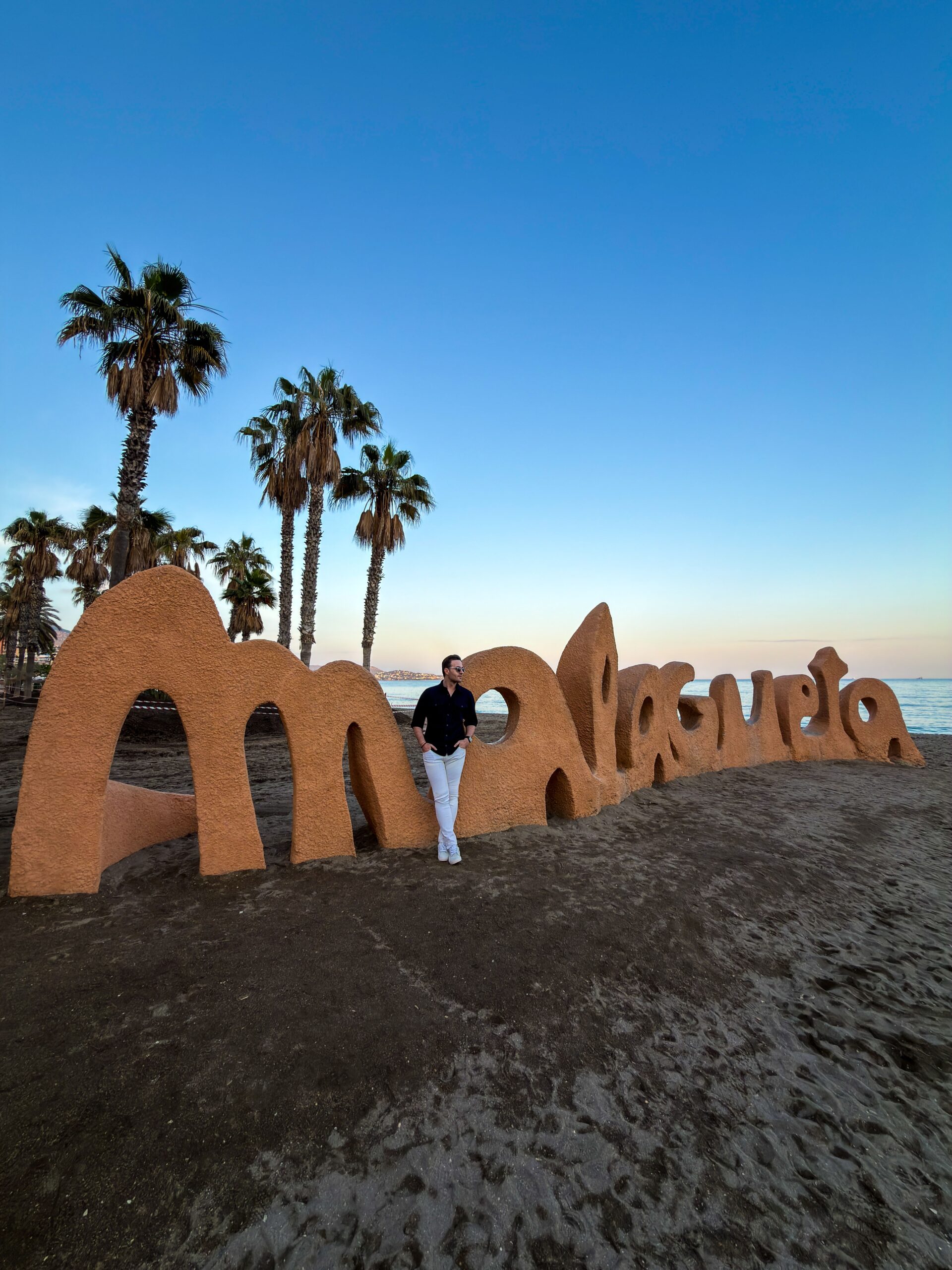
💡 Tip: The best beaches near Malaga are not the closest ones. The stretches around Nerja and Maro east of the city, where the coast turns to rocky cliffs, are generally reckoned the prettiest. Buses to Nerja leave from the coach station next to María Zambrano railway station.
What to eat in Malaga and where to eat it
Malaga is a fishing town wearing the clothes of a city, and the food follows suit: fish, frying and charcoal, not elaborate sauces. These five things are worth leaving room in the budget for.
- Espeto de sardinas. Sardines threaded onto a cane and cooked over a fire that burns in an old boat filled with sand. The only correct setting is a chiringuito, a beach restaurant standing on the sand itself. It is the most Malagueño dish there is, and without it you have not really been here.
- Pescaíto frito. A plate of small fried fish and squid rings, eaten with your fingers all over Andalusia. Order it as fritura malagueña and it is a safe bet in any place by the water.
- Tapas. Best eaten in the old bodegas around Calle Larios and Plaza de la Constitución, where you stand at the counter and the bill goes up in chalk on the wood. The classics are boquerones (anchovies in vinegar), ensaladilla rusa and ham.
- Churros with hot chocolate. Breakfast, not dessert. They are served in the morning in cafés around the historic centre and dipped into chocolate thick enough to slice.
- Sweet Malaga wine. Vino dulce made from Pedro Ximénez and Moscatel grapes is poured straight from the barrel in traditional bodegas and served in small glasses. It is not a drink to have with a meal, it is a stop between meals.
Where to eat in Malaga
- Mercado Central de Atarazanas. The best ratio of price to experience in the city. Between the fish counters there are bars that will fry whatever you point at. Come in the morning, and around midday the atmosphere is at its best.
- Pedregalejo and El Palo. The old fishing quarters east of the centre and the best address for espeto. The places stand directly on the sand, prices are lower than in the centre and most of the customers are local.
- The historic centre. Tapas bars in the lanes around the cathedral. The further you get from Calle Larios, the better the value.
- Soho and the harbour. More modern cooking, brunch and coffee. On Muelle Uno you are paying for the view, the food is average and the prices are the highest in the city.
💡 Tip: On weekdays look for the sign saying menú del día, a two course set lunch with a drink. It is usually far cheaper than the evening à la carte menu and in Andalusia it is completely normal, not a tourist trap. Bear in mind that lunch here is late, around 14:00, and dinner starts after 21:00. Turn up at seven in the evening and you will often find the kitchen shut.
Malaga in one day: what to fit in
One day in Malaga is the most common scenario. Either you land here and carry on down the Costa del Sol, or you come in for the day from somewhere else in Andalusia. It works, as long as you do not let yourself drift.
- 9:00 Alcazaba. It opens at nine and the first hour is the only one without heat or crowds. Allow an hour and a half.
- 10:30 Roman theatre. It sits right below the fortress exit, fifteen minutes is enough.
- 11:00 Cathedral. It opens at 10:30 and you will spend about an hour inside with the audio guide.
- 12:15 Mercado Atarazanas and Calle Larios. The market, the stained glass, a few tapas at the counter.
- 14:00 Picasso museum. The longest item of the day, two hours is the minimum.
- 16:30 Muelle Uno and the harbour. The promenade, the Pompidou (unless it is Tuesday) and the La Farola lighthouse.
- 18:00 Gibralfaro for sunset. Bus up, walk down. In summer this is the best hour of the day.
- 20:00 Dinner in El Palo or Pedregalejo. Espeto de sardinas by the water.
If your day is shorter than that, cut in this order: Pompidou, cathedral, Picasso museum. The Alcazaba and Gibralfaro are what people come to Malaga for.
💡 Tip: Only got one day, and is it a Sunday? Turn the plan upside down. Cathedral free at 8:30, museums and the market in the morning, Alcazaba and Gibralfaro at 14:00 with no admission to pay. Sunday afternoon is the cheapest slot of the week in Malaga.
What to see in Malaga in 3 days
Three days is, in our view, the right portion for Malaga. One day for the city, one for the beach and the food, one for a trip out. Nothing is rushed and you get to the things one day visitors never reach.
Day 1: old town and fortresses
Exactly the one day itinerary above, only at a calmer pace. Add the Museo Carmen Thyssen or the Casa Natal de Picasso on Plaza de la Merced, where the painter was born in 1881, and finish with a drink on Plaza de la Constitución.
Day 2: beach, harbour and food
Malagueta in the morning, or a bus east to Pedregalejo, then Muelle Uno and the Centre Pompidou in the afternoon and a walk back through Soho for the murals. If you like gardens, take the bus up to Jardín Botánico La Concepción on the northern edge of the city, one of very few genuinely tropical gardens on mainland Europe. If two days of walking have finished you off, book an early evening slot at Hammam Al Ándalus instead. Back to the promenade in the evening.
Day 3: a day trip
Pick one place and give it the whole day. The strongest three are Ronda, the Caminito del Rey and Nerja, all covered further down. With a car and an early start, Granada is possible too, but it is a long haul.
💡 Tip: Allocate your days by the forecast, not by the plan. If you can see one overcast day coming, put the museums on it and save the fortresses for sunshine. There is almost no shade at the Alcazaba or on Gibralfaro, and in July you do not want to be up there after eleven.
Malaga with kids
Malaga is one of the easiest Spanish cities to bring children to. It is flat, it is small, the beach is within walking distance and there are plenty of places to let off steam.
- Alcazaba. It works like an enormous playground of walls, steps and fountains. Under 6s go free. Do not bring a pushchair though, the whole site is steps and cobbles.
- Malagueta beach. Shallow entry, a promenade, ice cream within reach. The default move for an afternoon.
- Muelle Uno and the harbour. A level promenade, a giant observation wheel and the coloured canopy of Palmeral de las Sorpresas. Good for the early evening.
- Picasso museum. Free for under 18s, so if it does not hold their attention you have lost nothing.
- Jardín Botánico La Concepción. Shade, a bamboo forest, ponds. The one place in the city where you do not overheat in summer.
- A train ride along the coast. The Cercanías to Fuengirola is an outing in itself for small children and it costs next to nothing.
What not to do with children: the walk up to Gibralfaro at midday, and the Caminito del Rey. Children under 8 are not allowed on the Caminito at all, and that is the operator’s rule, not a suggestion.
💡 Tip: Malaga with children works surprisingly well in winter. Swimming is out, but the sun is up, you can walk the centre in a jumper, and the museums and fortresses are empty. Flights from UK airports run all year to AGP, which is part of why the city fills up with British families at half term.
Day trips from Malaga (tips 23 to 32)
The area around Malaga is stronger than the city itself, and it is the main argument for staying longer than a day.
23. Ronda
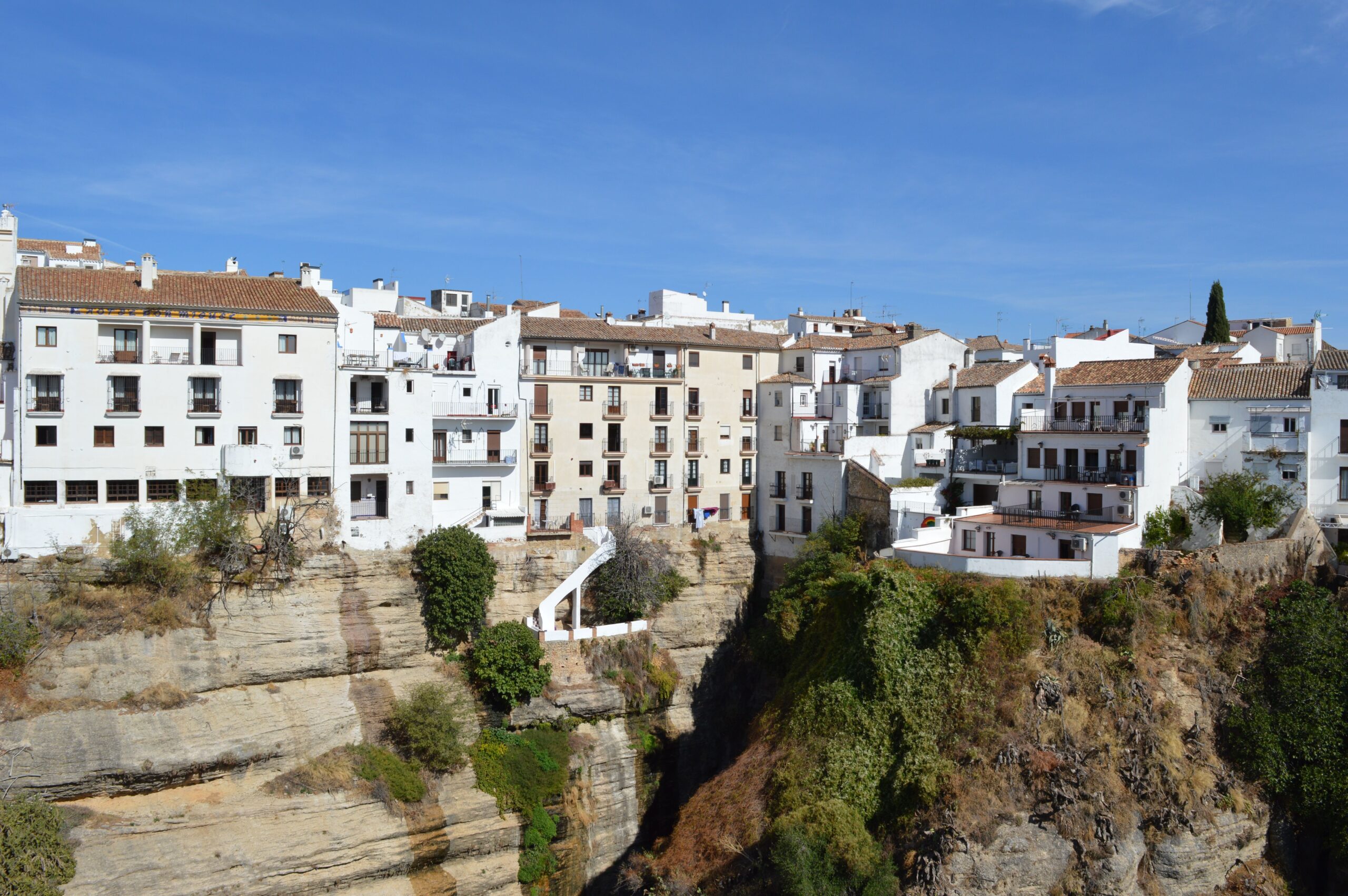
A town split by a hundred metre gorge, crossed by the stone Puente Nuevo bridge. It is one of the most photographed scenes in Spain and it works even better in person than in pictures, because you can walk down below the bridge and look up at it. There is a direct train and a direct bus from Malaga, and it fills a whole day.
24. Caminito del Rey
A walkway pinned to the wall of the Desfiladero de los Gaitanes gorge, a hundred metres above the river. It used to be the most dangerous path in Europe, and now it is a safe one way route with a helmet. A ticket costs 10 € (about £8.50), a tour with an official guide 18 €, the shuttle bus 2.50 € and parking 2 €. It is roughly 58 km from Malaga.
The crucial thing: book ahead. Capacity is capped and in season it sells out weeks in advance. And again, children under 8 are not admitted and ID is checked at the entrance.
25. Nerja
A seaside town east of Malaga, known for the Balcón de Europa viewpoint and above all for the Cueva de Nerja caves. The caves open 9:15 to 16:30, extended to 17:30 in summer, at Christmas, during Holy Week and over long weekends. They close on 1 and 6 January, 15 May and 25 December. The beaches around Nerja and neighbouring Maro are among the finest on the whole coast.
26. Granada
The Alhambra is the biggest draw within reach of Malaga, even if it is a stretch for a single day. One warning: Alhambra tickets sell out a long way ahead and without a booking you will not get in. If you decide on Granada at the last minute, expect to see the city and the Generalife gardens rather than the Nasrid palaces.
27. Gibraltar
A British Overseas Territory on a rock above the strait, done as a full day from Malaga. The draws are the view across to Africa, the colony of Barbary macaques and the glass Skywalk. It is also the one trip in the area where you cross an international border, so bring photo ID and expect a queue at the crossing, particularly in the afternoon.
One thing to know before you go: the cable car up the Rock is closed. The operator’s website says a complete rebuild is under way and the new cable car is due to open in 2027, with completion planned for the end of that year. For now you get up the Rock by minibus tour or on foot, which in the heat is a serious undertaking. Check the status before you travel at gibraltarinfo.gi.
28. Frigiliana
A white village in the hills above Nerja and, we would argue, the prettiest pueblo blanco within reach of Malaga. The lanes are so narrow two people cannot pass, the houses have blue doors and boxes of geraniums, and between them runs a stone mosaic trail telling the story of the Moriscos who lived here. Most visitors combine it with Nerja in one day, which makes sense, since they are only a few kilometres apart.
29. Marbella and Mijas
Two stops west along the coast, and completely different from each other. Marbella is the most expensive address on the Costa del Sol, but its old town is surprisingly small, white and pleasant, and the Puerto Banús marina is a masterclass in yacht spotting. Mijas Pueblo hangs on a hillside above the coast, is white from end to end and looks out over the sea across the whole slope. You can do both in one day if you are driving.
30. Setenil de las Bodegas
A village built under an overhanging cliff, so that some streets have rock instead of sky above them and the houses are set directly into the stone. It is one of the strangest settlements in Andalusia and it combines best with Ronda, which is not far away. Without a car it is awkward, as the bus service is thin.
31. Córdoba and Seville
Two great Andalusian cities that are doable in a day from Malaga, because there is a high speed train between them. Córdoba has the Mezquita, a mosque with a forest of red and white arches and a cathedral built inside it. Seville has the largest Gothic cathedral in the world, the Alcázar palace and the Santa Cruz quarter.
Either one in a single day is at the outer limit of what is enjoyable. If you can, give Seville an overnight stay, because it is at its best in the evening.
32. Cueva del Tesoro and Castillo de Colomares
Two smaller targets for anyone who has already covered Malaga. Cueva del Tesoro in Rincón de la Victoria, east of the city, is a cave carved out by the sea, which is a rarity in Europe, and it comes with a legend about hidden treasure. Castillo de Colomares in Benalmádena looks like a castle but is in fact a 20th century monument to Christopher Columbus, mixing Gothic, Romanesque and Moorish elements together. Opening hours at both change with the season, so check before you set off.
💡 Tip: The simplest way to handle the day trips without a car is an organised day tour from the city. You can browse what is running through GetYourGuide in Malaga →.
Where to stay in Malaga
Malaga is a forgiving city to book in, because it is small. Whichever of these districts you pick, you will be no more than twenty minutes’ walk from the Alcazaba. The difference is noise, price, and whether you want to step out into the lanes in the morning or onto the sand.
- Centro Histórico. The best choice for a short visit. You are staying between the cathedral, the market and the Picasso museum and you never need transport. The price is noise until late and the highest rates in the city, especially around Calle Larios and Plaza de la Merced. Light sleepers should check that the room does not face a street full of bars.
- Soho. The compromise that makes the most sense to us. It is just behind the Alameda, five minutes from the centre and ten from the harbour, prices are a notch lower and the evenings are quiet. You also get murals out of the window.
- La Malagueta. For people who came mainly for the sea. The beach is below the building and the old town is a quarter of an hour along the park. In July and August it is the priciest area, and in winter it is the deadest part of the city.
- The harbour and around Muelle Uno. Newer buildings, views of the yachts, close to the Centre Pompidou. It suits couples and anyone who wants the evening promenade on the doorstep. The smallest choice of budget options.
- Pedregalejo and El Palo. The cheapest option by the water and the best food. You do need a bus into the centre, so it makes more sense for a week than for two nights.
If you are driving, watch one thing: parking in the historic centre. Most places in the lanes have no parking of their own and will point you at a paid garage. Before you book, check whether parking is included, or budget for an extra charge per night.
💡 Tip: Book accommodation in Malaga early, above all around the Feria de Málaga in mid August and over Easter, when the city is full. You can compare prices and availability across booking sites on the Malaga accommodation map →.
Malaga airport to the city centre
Malaga airport (AGP) lies 8 km south west of the centre and it is one of the easiest airports in Spain to use. It is also one of the best connected to the UK, with flights from London, Manchester, Birmingham, Bristol, Edinburgh, Glasgow and Belfast among others, so check current routes for your nearest airport rather than assuming. From the terminal there are three ways into town.
- Cercanías train. The station is right by the terminal and trains run roughly every 20 minutes according to Wikipedia, on the Malaga to Fuengirola line. Northbound they take you to María Zambrano station and the centre, southbound to Torremolinos and on down the coast. The cheapest and most predictable option.
- Bus line A (Aeropuerto Exprés). It runs between the airport and the Paseo del Parque stop in the centre, a short walk from the cathedral and the Alcazaba. Large luggage fits and there is no changing.
- Taxi or a prepaid transfer. The most expensive, but it works at any hour and with children and suitcases it earns its money.
Getting from Malaga airport at night
This is the thing most guides quietly skip over, and it affects almost everyone flying on a budget airline. There is no public transport from the airport overnight.
According to timetables published in the city’s open data, the last line A bus from the airport into the centre leaves around 1:10 in the morning (on some days around 1:15) and the first morning service is at 7:00. In the other direction, from Paseo del Parque to the airport, the first bus goes at 6:25 and the last around 0:26. The Cercanías trains do not run overnight either, and the city night buses N1 to N4 do not serve the airport at all.
In practice that means one thing: if you land between one and six in the morning, plan on a taxi or a transfer booked in advance. There is a taxi rank outside the terminal and cars do wait there at night, but this belongs in your budget beforehand rather than as a surprise in the arrivals hall. Check current times at emtmalaga.es and for trains at renfe.com.
💡 Tip: You need nothing at all to get around central Malaga. Everything in this article apart from Gibralfaro, the botanical garden and Pedregalejo is walkable. Hire a car only for the day you leave the city, and definitely not for days you will spend in town: parking in the centre is expensive and finding a space takes forever.
Getting around Malaga: buses, metro, bikes and parking
Let us be blunt: you do not need to travel around central Malaga. Everything between the cathedral, the Alcazaba, the market and the harbour is walkable, and your own feet are the fastest option. You need transport for four things only: Gibralfaro, the botanical garden, Pedregalejo, and trips out of the city.
EMT city buses
The backbone of city transport. A single ticket costs 1.40 € (about £1.20) and is bought from the driver, payable in cash, by card or as a QR ticket, but it does not include a transfer. Anyone travelling more should buy a rechargeable card: ten journeys for 5 € with free transfers within the hour, or a monthly pass for 23.95 €. Children aged 3 to 14 travel free, and younger ones need no ticket at all.
The most useful lines for a visitor are 35 to Gibralfaro, 11 and the eastbound services to Pedregalejo and El Palo, 20 to the botanical garden, and A (Aeropuerto Exprés) to the airport. The airport line has its own fare, 4 € one way (about £3.40).
Metro
The Malaga metro has two lines: L1 runs from the Atarazanas terminus to the Andalucía Tech university campus, L2 from Guadalmedina to the Palacio de los Deportes. The metro only reached the centre on 27 March 2023, when the extension with Guadalmedina and Atarazanas stations opened.
For an ordinary visit the metro is marginal: it does not go to the airport, it does not go to the fortresses or the beach, and it mainly heads for the western suburbs. You will use it if you are staying further out or travelling to María Zambrano railway station.
The Cercanías coastal train
Line C1 links Malaga with the airport, Torremolinos, Benalmádena and Fuengirola, and it is the cheapest way to reach the beaches west of the city. In town it stops at María Zambrano station and, in the centre, at Centro-Alameda. It does not run east, so for Nerja you take the bus.
Taxis
Malaga taxis are white with a blue stripe, they have ranks at the station, the airport and the larger squares, and they run on the meter. At night their main use is the airport, since public transport stops between one and six in the morning. There is usually a fixed fare to the airport, but we would still agree the price before setting off.
Bikes
Malaga is ideally flat for cycling and there is a continuous cycle path along the coast from the harbour east to Pedregalejo. Bikes and e-bikes are hired from private shops in the centre and in Soho, usually by the hour or by the day. In the historic core, though, a bike is more hindrance than help: it is a pedestrian zone full of people and cobbles.
Cars and parking
Hire a car in Malaga only for the day you head out of town. In the city it is useless and parking is the single most irritating item of the whole trip. The historic centre is largely pedestrianised, some streets you cannot enter at all, on the surface the blue and green zones are paid, and the underground garages charge by the hour.
There are three sensible approaches: leave the car in an underground garage on the edge of the centre and walk, park at a big shopping centre on the outskirts and take a bus in, or choose accommodation with its own space. The hire companies are concentrated at the airport, where the choice is widest and the prices lowest.
💡 Tip: Most of the day trips work without a car. Ronda has a direct train, Nerja, Frigiliana and Marbella are served by buses from the coach station at María Zambrano, and Córdoba and Seville by high speed train. A car earns its keep mainly for the Caminito del Rey, the white villages, and places where public transport shows up once a day.
Best time to visit Malaga and how many days you need
Malaga has the longest usable season of any city on mainland Spain. The sun shines here in January and average winter temperatures sit at a level much of northern Europe does not reach until May.
- April to June. The best combination in our view. Warm, the jacarandas in flower, the sea just about swimmable and the Alcazaba not yet packed.
- July and August. The warmest sea, but the city is hot and full. Save the fortresses for the morning and spend afternoons by the water. The Feria de Málaga falls in mid August and the city looks completely different then, louder and far more cheerful.
- September and October. The most underrated slot. The sea is at its warmest of the year after the summer and the crowds have gone.
- November to March. Not for swimming, ideal for the city. Cheap flights, empty monuments and enough warmth to sit outside.
How many days in Malaga: one day covers the centre, two days give you the centre plus the beach, three days add one trip out of the city. At four days and more Malaga starts to work as a base, with Ronda, Nerja and Granada all in range.
Malaga, or somewhere else?
Malaga tends to get compared with a handful of other Spanish destinations. Here is the short version.
- Malaga or Marbella? Malaga has the history, the museums and a life of its own all year. Marbella has better beaches and a more expensive promenade. For three days, Malaga without hesitation. For a week by the sea, Marbella.
- Malaga or Seville? Seville is the more impressive city, Malaga is the more comfortable base, because it has the sea and better flight connections. Ideally both, they are a couple of hours apart by train.
- Malaga or an island? If beaches are the whole point, you will be happier on Ibiza, Mallorca or in the Canaries. Malaga is a city by the sea, not a beach destination.
- Malaga for a long weekend? One of the best choices in Europe, precisely because the airport is close to the centre and everything else is on foot.
Further reading on Malaga and Spain
- San Sebastián: what to see in the capital of pintxos
- Bilbao: the Guggenheim and the old town
- Mallorca: what to see on the island
- What to see on Ibiza
Frequently asked questions about what to see in Malaga
What should I see in Malaga in one day?
Stick to the line of the Alcazaba, the Roman theatre, the cathedral, the Atarazanas market and the Picasso museum, and go up to Gibralfaro in the evening for sunset. Everything sits within a twenty minute walk, so the day works without rushing. If you have to cut something, keep the Alcazaba and Gibralfaro, they are the heart of Malaga.
How much do Alcazaba and Gibralfaro tickets cost?
A single ticket for either the Alcazaba or Gibralfaro castle costs 7 €, and a combined ticket for both is 10 €, roughly £6 and £8.50. Reduced admission is 3 €, or 5 € combined. Groups of ten or more pay 5 € and 8 € respectively. Children under six go free.
What is free in Malaga?
The Alcazaba and Gibralfaro castle are free every Sunday from 14:00. The cathedral has free entry daily from 8:30 to 9:00, and until 9:30 on Sundays, though without the audio guide. The Picasso museum lets people in free every Sunday for the last two hours before closing, and the Centre Pompidou every Sunday from 16:00 until closing. The Atarazanas market, the park, the harbour promenade and the beach cost nothing at any time.
How do I get from Malaga airport to the city centre at night?
You cannot, not by public transport. The last line A bus from the airport into the centre leaves around 1:10 and the first morning service is at 7:00. The Cercanías trains do not run overnight and the city night buses do not serve the airport. If you land between one and six in the morning you need a taxi or a transfer booked in advance.
Is the Picasso museum in Malaga worth it?
Yes, if Picasso interests you even slightly. A ticket costs 13 €, reduced 11 €, and the price includes an audio guide on your phone. Under 18s go free, and every Sunday admission is free for the last two hours before closing. Buy online, because it sells out in peak season.
What is there to do in Malaga in 3 days?
Day one for the old town and the fortresses, day two for the beach, the harbour and the museums by the water, day three for one trip out of the city. For that trip we would suggest Ronda with its bridge over the gorge, the Caminito del Rey walkway, or Nerja with its caves. Granada is a long day from Malaga and the Alhambra has to be booked well in advance.
Is Malaga good with kids?
Yes, it is one of the easiest Spanish cities for families. The centre is flat and small, Malagueta beach is fifteen minutes from the cathedral, the Alcazaba works like a giant castle playground, and under 18s get into the Picasso museum free. Children under eight, however, are not allowed on the Caminito del Rey at all.
When is the best time to visit Malaga?
April to June and September to October. Spring gives you pleasant heat without the crowds, autumn gives you the warmest sea of the year. July and August mean a hot centre and full beaches, while winter suits the city and its monuments rather than swimming.
How many days in Malaga is enough?
One day covers the centre, two days add the beach and the harbour, and three days are in our view the right portion, because one day trip fits in. From four days upwards Malaga functions as a base for Ronda, Nerja, Granada and the Caminito del Rey.
Is Malaga safe?
Malaga is one of the calmer Spanish cities and the centre is busy well into the night. The main risk is pickpocketing in crowds, which means Calle Larios, the Atarazanas market, Malagueta beach and packed buses. Keep documents and money on you, leave nothing valuable in the back of a rucksack, and never leave your things unattended on the beach.
Can you drink the tap water in Malaga?
Yes. The public water supply is run by the municipal utility EMASA, which publishes regular analyses of the water it delivers on its website. In restaurants, though, tap water is not a given and you will usually be brought bottled water unless you ask specifically for tap.
Do shops in Malaga close for siesta?
Smaller shops and family businesses shut roughly between two and five in the afternoon and reopen into the evening. Department stores, chains and monuments do not observe a siesta. The Atarazanas market, by contrast, is a morning affair and you will find it closed in the afternoon. Lunch here is around two and dinner after nine.
Do I need to buy tickets for Malaga attractions in advance?
Booking is compulsory only for the Caminito del Rey and the Alhambra in Granada, and both sell out weeks ahead. For the Picasso museum, buy online to skip the queue. The Alcazaba, Gibralfaro, the cathedral and the Casa Natal can all be bought on the door, though on Sundays, when entry is free, expect a queue.
Potřebujete pomoct s cestováním?
-
Ubytování 🏨
Vyberte si to nejlepší ubytování, ať už jste kdekoliv, přes Booking.com. -
Půjčení auta 🚗
Auto si snadno najdete přes Booking.com, kde máte často slevu díky ubytování, nebo Rentalcars.com, kde porovnáte nabídky většiny půjčoven. -
Zážitky 🎟️
Přes GetYourGuide.com si vyberete z nejrůznějších výletů i zážitků po celém světě, navíc se zrušením zdarma do 24 h předem.