
Last updated 5.11.2026
Romania might just be the last great European country that most travellers still know only from Dracula clichés and horror stories about the roads. And that’s a real shame, because the reality is something else entirely. Once you start wondering what to see in Romania, you keep stumbling onto fairy-tale Saxon towns, the wildest mountain road on the continent, bears roaming the Carpathian forests and prices that feel like a step back in time. This is a country made for a road trip, and it manages to surprise you almost every single day.
What to See in Romania at a Glance
- The heart of the country: Transylvania — Brașov, Bran Castle, Sibiu, Sighișoara and Peleș Castle.
- For drivers: two legendary roads — the Transfăgărășan and the Transalpina (both summer-only).
- Nature: the Carpathians with their bears, the Danube Delta (UNESCO) and the volcanic Lake Sfânta Ana.
- One-offs: the Salina Turda salt mine, the wooden churches of Maramureș and the painted monasteries of Bukovina.
- When to go: June to September is best; the high mountain roads open roughly July to October.
When to Go and How to Get Around Romania (car, Transfăgărășan)
The best time for Romania runs from late May to the end of September. June is when everything is in bloom and the mountains are a lush green; July and August are the warmest (and busiest on the coast); September brings calm. But here’s the key thing: if you want to drive the country’s most famous mountain roads, you have to work around the season. The Transfăgărășan is usually fully open from around 1 July to 1 November — outside those months the top section is closed because of snow. The Transalpina follows a similar rhythm.
Romania is best explored by car. The distances are big, the sights are scattered and public transport is slow, so your own car (or a hire car) opens up far more of the country. The roads have improved dramatically in recent years, though there are still few motorways and the main routes over the mountains are twisty and slow going. Expect a lower average speed than you’re used to.
💡 Tip: To use the motorways and expressways you need an electronic road tax sticker called the “rovinietă”. For a car, seven days costs around €3.30 — buy it online in advance or at the first petrol station after the border, so you don’t pick up a fine.
For flights and connections it’s worth checking Kayak – find flights to Bucharest here →. If you’d rather start from the heart of Transylvania, take a look at accommodation in Brașov →, which puts most of the top sights within easy reach.
25 Things to See in Romania
We’ve roughly ordered them by region to make planning your route easier — we start in Transylvania, cross the mountains south to Bucharest, head north to Maramureș and Bukovina, and finish at the Danube and the sea. So, what should you see in Romania?
1. Brașov — the gateway to Transylvania
Brașov is the ideal base and one of the prettiest towns in the country. Its Saxon centre has the handsome Piața Sfatului square, the Gothic Black Church (the largest Gothic church between Vienna and Istanbul) and the narrow Strada Sforii — one of the slimmest streets in Europe. A Hollywood-style “BRASOV” sign glows above town on Mount Tâmpa, reached by cable car. Give Brașov a couple of days: from here Bran Castle, Râșnov and Peleș are all close by.
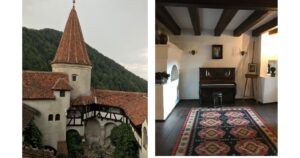
2. Bran Castle — “Dracula’s Castle”
Romania’s most famous attraction. Bram Stoker never actually set foot here and Vlad the Impaler may have visited only briefly, but none of that spoils the atmosphere. Bran is narrow, steep and perched on its rock exactly the way a vampire’s castle should be. Just be ready for the crowds and the souvenir market at the foot of the hill.
Standard adult admission is 70 lei (about €14), with students paying 40 lei and seniors 50 lei. For a little extra you can add tours of the torture chambers and the “time tunnel”. In season it’s open Tue–Sun 9am–6pm, and from noon on Mondays.
💡 Tip: Come right on opening at 9am or towards the evening — around midday the coach parties roll in. Tours and tickets via GetYourGuide →
3. Sibiu — the town with “eyes”
Sibiu is, in our view, the loveliest town in Romania, and it was a European Capital of Culture back in 2007. Three linked squares, colourful Saxon houses and their famous roof dormers shaped like half-closed eyes that seem to watch you from the façades. Don’t miss the Liar’s Bridge and a walk along the old ramparts. Just outside town lies the ASTRA open-air museum — one of the largest ethnographic collections under the open sky in Europe.
4. Sighișoara — a medieval town straight out of a fairy tale
Sighișoara is the best-preserved inhabited medieval citadel in Europe and a UNESCO World Heritage Site. It’s dominated by its clock tower with moving figurines, and its cobbled lanes are lined with colourful houses. In one of them, Vlad the Impaler — the model for Dracula — was born. It’s small, and you can walk it in a few hours, but in the evening, once the day-trippers have gone, it’s pure magic.
5. Bucharest and the Palace of the Parliament
The capital comes as a surprise — grand “Little Paris” boulevards, a lively old town full of bars, and vast Communist-era heritage. The biggest piece of that legacy is the Palace of the Parliament, the second-largest administrative building in the world (after the Pentagon), commissioned by the dictator Ceaușescu. The numbers are staggering: thousands of rooms and tonnes of marble and crystal.
You can only go inside on a guided tour — standard admission is 60 lei (about €12), students 30 lei. Book ahead (and bring your passport). Don’t skip the Romanian Athenaeum concert hall or the buzzing Lipscani street either.

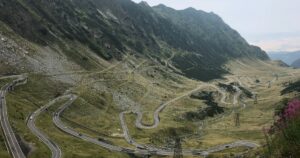
6. The Transfăgărășan — Europe’s most dramatic road
The DN7C hauls itself over the Făgăraș Mountains in a series of hairpins to more than 2,000 metres above sea level. Jeremy Clarkson called it “the best road in the world” on Top Gear — and having driven it, we won’t argue. At the top sits the glacial Bâlea Lake, reached by cable car in winter. It’s only drivable in season (roughly July to October).
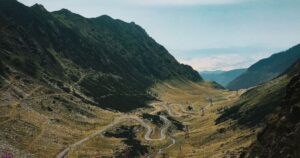
💡 Tip: Set off first thing — by the afternoon the ridges often cloud over and the mist steals both your views and the fun of the drive. Allow plenty of time for the viewpoints and photos; the hairpins alone are a crawl.
7. The Transalpina — Romania’s highest road
Less famous, but for many people an even more beautiful sibling to the Transfăgărășan. The Transalpina (DN67C) climbs over the Parâng Mountains even higher — past 2,100 m — winding through open mountain country full of sheep and shepherds’ huts rather than forest tunnels. It’s quieter and wilder. Ideally, string the two roads together into one big mountain loop.
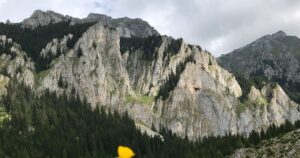
8. The Carpathians — Făgăraș, Retezat, Piatra Craiului
The Romanian Carpathians cover a third of the country and are a paradise for walkers. The highest peak, Moldoveanu (2,544 m), sits in the Făgăraș Mountains, whose ridge is among the most demanding in Europe. Retezat National Park tempts you with dozens of glacial lakes, while Piatra Craiului offers a sharp limestone ridge above Brașov. The landscape here is raw and, in places, genuinely wild.
9. Peleș Castle in Sinaia
If Bran has the reputation, Peleș has the beauty. This neo-Renaissance castle in the mountain town of Sinaia was the summer residence of the Romanian kings, and its interiors — wood-panelled rooms, an armoury and hundreds of chambers — are among the finest in Europe. It stands in the forest beneath the peaks, in surroundings that are gorgeous in their own right. Tickets are sold for timed slots, so book online in advance (capacity is limited).
10. Maramureș — wooden churches and the Merry Cemetery
Up in the north, time has slowed right down. In Maramureș you’ll still see hay cut by hand, horse-drawn carts and villages full of steep-roofed wooden churches (eight of them are UNESCO-listed). Unforgettable is the Merry Cemetery in Săpânța — colourful wooden headstones carved with witty verses about the lives of the departed. Nowhere else in the world does death look this cheerful.
11. The painted monasteries of Bukovina (Voroneț)
In the northeast, in the Bukovina region, stands a cluster of Orthodox monasteries with frescoes painted on their outer walls — something you won’t find anywhere else. The most famous is Voroneț Monastery, nicknamed the “Sistine Chapel of the East” for its deep blue (the celebrated “Voroneț blue”). Along with the others (Humor, Moldovița, Sucevița), they’re on the UNESCO list.
12. The Danube Delta — wilderness for birdwatchers
Where the Danube spills into the Black Sea lies its delta — the second largest in Europe, a UNESCO biosphere reserve and one of the last great wildernesses on the continent. Over 300 bird species live here, pelicans among them. You explore it by boat from the town of Tulcea, through a maze of channels, lakes and reed beds. It’s a completely different Romania — flat, quiet and teeming with life.
13. Salina Turda — a salt mine like a spaceship
One of the most bizarre and jaw-dropping experiences in the country. The former salt mine of Salina Turda, near Cluj, has been reborn as an underground amusement park — deep below ground, a vast chamber holds a giant wheel, a Ferris wheel, mini-golf and a little lake with rowing boats, all lit by futuristic lamps. It looks like the set of a sci-fi film. Admission is 70 lei (about €14) on weekdays and 85 lei at weekends and on holidays; children and seniors pay less.
14. Corvin Castle in Hunedoara
If Romania has one truly fairy-tale castle, it’s Corvin Castle (Castelul Corvinilor) in Hunedoara. This mighty Gothic fortress, with its drawbridge, towers and colourful roofs, looks exactly the way a child would imagine Dracula’s castle. It’s often ranked among the most beautiful castles in Europe — and rightly so, we’d say.
15. The volcanic Lake Sfânta Ana
Romania’s only volcanic lake, hidden in a crater in the Eastern Carpathians. Lacul Sfânta Ana is almost perfectly round, its water as clean as a rain barrel’s (it’s fed by rainfall alone), ringed by dense forest. It’s a calm, faintly mysterious spot away from the crowds — an ideal stop as you head east out of Transylvania.
16. Timișoara — “Little Vienna” and the cradle of the revolution
Timișoara, in the west of the country, was a European Capital of Culture in 2023. It has opulent Art Nouveau and Baroque squares, the distinction of being the first European city with public electric street lighting, and it’s where the 1989 revolution against Ceaușescu began. For anyone driving in from the west, it’s often the first big stop after the border.
17. The Saxon fortified churches (Viscri, Biertan, Prejmer)
The Transylvanian landscape is dotted with dozens of fortified churches, built by Saxon settlers as refuges from raiders. Seven of them are UNESCO-listed. The finest are Biertan, Prejmer with its ingenious little storage cells, and the picturesque Viscri — a village helped by none other than Britain’s King Charles III, where time has stood still.
18. Cluj-Napoca — the student heart of Transylvania
Romania’s second-largest city is young, lively and packed with cafés — home to a big university. Cluj-Napoca has an attractive old centre with the Gothic St Michael’s Church, a botanical garden and a superb restaurant scene. It makes a good base for a trip to Salina Turda and the Apuseni Mountains.
19. Bigăr Waterfall and the Cheile Nerei gorge
In the southwest, in the Banat, lies Bigăr Waterfall — where water spills over a mossy dome like a natural fountain. (A word of warning: part of the formation collapsed in 2021, but the spot is still photogenic.) The surrounding Cheile Nerei-Beușnița National Park offers turquoise pools and canyons — a wild corner that far fewer tourists reach.
20. The Banat, Decebalus’ Head and the Vișeu de Sus forest railway
Three smaller but unforgettable tips rolled into one. Decebalus’ Head, above the Danube near Orșova, is the tallest rock sculpture in Europe (55 m) — the face of the last Dacian king carved into the cliff. The Banat hides old Czech villages (Sfânta Elena, Gârnic) founded by settlers, where Czech is still spoken today. And the Vișeu de Sus forest railway in Maramureș takes you deep into the Vaser Valley aboard a steam train.
21. The Black Sea — Constanța and Mamaia
Romania has a coast, too. Constanța is the country’s oldest city (founded by the Greeks as Tomis), with a handsome if slightly crumbling old casino and an archaeology museum. Next door is the resort of Mamaia, with its long sandy beach and lively nightlife. It’s no Adriatic, but as a finale to your trip, or a stop near the Danube Delta, it makes sense.

22. The Apuseni Mountains — the Scărișoara ice cave and the Ponor Fortresses
The northwest of the country is home to the Apuseni Mountains, a quiet karst landscape threaded with caves, gorges and underground rivers. The Scărișoara ice cave (Peștera Ghețarul de la Scărișoara) holds one of the largest underground glaciers in Europe, with ice more than 15 metres thick in places that has lain there for thousands of years. Nearby are the Cetățile Ponorului (“Ponor Fortresses”), entered through the largest rock gate in Europe (around 70 metres at its highest point). It’s a wild spot for nature lovers, not for anyone in a hurry.
23. Horezu Monastery — a jewel of the Brâncovenesc style
Down in the Wallachian lowlands, south of the mountains, stands Horezu Monastery (Mănăstirea Hurezi), one of the most beautiful Orthodox buildings in the country and UNESCO-listed since 1993. It was founded in 1690 by Prince Constantin Brâncoveanu, who lent his name to an entire artistic style: the richly carved stone columns, sculpted portals and delicate frescoes are all hallmarks of the “Brâncovenesc style”. If you’re coming down off the Transalpina heading south, it’s practically on your way.
24. The Berca mud volcanoes — a piece of another planet
The Vulcanii Noroioși near the village of Berca, close to Buzău, look like a set from a sci-fi film. Cold grey mud and gas seep up through small cones, so the surrounding landscape resembles a lunar surface stripped of greenery. It’s an easy stop for a couple of hours and, among children and photographers alike, one of Romania’s most-loved “weird” places. Admission is only a token amount.
25. Lake Ursu, the heliothermal lake in Sovata
In the spa town of Sovata lies the salt lake of Ursu (Bear Lake), whose shape faintly recalls an outstretched bearskin. It’s one of the largest heliothermal lakes in Europe: layers of differently salted water trap the sun’s heat, so in summer the water below the surface warms to over 30°C. Bathing in the dense salt water is said to do you good, and the season runs roughly from May to September.
Nature and the Carpathians (bears)
The Carpathians are home to the largest population of brown bears in Europe outside Russia — estimates put it at roughly 6,000–8,000 animals. Encountering a bear in the mountains (and, sadly, by the roads, where rubbish lures them in) is a real possibility, especially on the Transfăgărășan, where the bears have learned to beg food from tourists.
The rule is clear: never feed the bears and never approach them — it’s dangerous for you and for them. In the car, stay inside; on the trail, make noise and don’t keep food in your tent. If you want to see bears safely, you can head out with a local guide to a bear hide near Brașov. Alongside bears, the Romanian mountains are home to wolves and lynx too — this is one of the last true wildernesses in Europe.

Food
Romanian cooking is hearty, cheap and surprisingly good. Things you really should try:
- Sarmale — cabbage (or vine) rolls stuffed with minced meat and rice, the national dish.
- Mămăligă — cornmeal porridge (like polenta), often with cheese and soured cream; a side dish with everything.
- Mici / mititei — grilled skinless meat rolls, a classic with any beer.
- Ciorbă — a sour soup (such as ciorbă de burtă, tripe soup), the cornerstone of a Romanian lunch.
- Papanași — fried curd-cheese doughnuts with cream and blueberry jam; the country’s finest dessert.
To drink, try the local wine (Romania has a long winemaking tradition) or țuică, a plum brandy — out in the villages you’ll be offered it just about everywhere. A main course in an ordinary tavern often comes to around 30–50 lei (about €6–10).
How Much It Costs (budget)
Romania is one of the cheapest countries in the EU. A rough daily budget for a couple travelling by car (outside the absolute peak):
| Item | Roughly per day (2 people) |
|---|---|
| Accommodation (guesthouse / apartment) | 150–300 lei (≈ €30–60) |
| Food (taverns + your own breakfast) | 100–180 lei (≈ €20–36) |
| Transport (fuel, parking) | 80–150 lei (≈ €16–30) |
| Admissions (castles, Salina Turda…) | 60–160 lei (≈ €12–32) |
| Total | around 390–790 lei (≈ €80–160) per day |
Backpackers sleeping in hostels and travelling by bus can comfortably come in under €35 a day. Admission to the top attractions stays pleasantly low — even the most famous, Bran Castle, is only 70 lei, about €14.
💡 Tip: You can pay by card almost everywhere, but keep a little cash (lei) on you for small taverns, parking and village markets. Skip the “Euronet” ATMs with their dubious fees and withdraw from a bank instead.
Where Next
- What to See in Ireland (2026)
- What to See in Portugal (2026)
- What to See in Barcelona (2026)
Frequently Asked Questions
Experiences and tickets in Romania
traveller-tested · GetYourGuide

From Bucharest: Dracula’s Castle, Peleș Castle and Brașov
★ 4.8 · 256 reviews
from €55


Prices and ratings are indicative (source: GetYourGuide); you’ll see the current details after clicking.
What to see in Romania if I only have a week?
Focus on Transylvania and the mountains. A classic week-long loop: Brașov (with Bran Castle and Peleș Castle) → Sibiu → Sighișoara → Salina Turda near Cluj → and back over the Transfăgărășan. It fits comfortably into 7 days by car and shows you the very best.
When is the best time to visit Romania?
Late May to the end of September is best. If you want to drive the Transfăgărășan or the Transalpina, aim for July to October — outside those months the upper sections are usually closed by snow.
Is a car worth it in Romania?
Absolutely. The sights are scattered, public transport is slow, and you simply can’t experience the finest roads (the Transfăgărășan and Transalpina) without one. Don’t forget the electronic road-tax sticker, the “rovinietă” — seven days for a car costs around €3.30.
Is Bran Castle really Dracula’s Castle?
It’s just a legend. Bram Stoker was never here and Vlad the Impaler (the model for Dracula) may have visited only briefly. It’s perfect for a vampire atmosphere, though — and Corvin Castle in Hunedoara plays the part of the “real” fairy-tale castle just as well.
How much does entry to Bran Castle cost?
Standard adult admission is 70 lei (about €14), students pay 40 lei and seniors 50 lei. For a little extra you can add tours of the torture chambers and the “time tunnel”. In season it’s usually open Tue–Sun 9am–6pm, and from noon on Mondays.
Is Romania safe?
Yes, Romania is a safe country for tourists. The main risks are poorly signposted mountain roads and encountering a bear by the roadside — don’t feed or approach stray dogs or bears. In the cities, take the usual care against pickpockets, just as you would anywhere.
Am I likely to encounter a bear in Romania?
The Carpathians hold the largest population of brown bears in Europe (outside Russia). By the roads, especially on the Transfăgărășan, the bears have learned to beg for food. Never feed them, stay inside your car, and make noise on the trail. To see them safely, visit a bear hide with a guide.
What currency is used in Romania?
The Romanian leu (RON, “lei” for short). Euros aren’t accepted here. The rate is roughly €1 ≈ 5 lei. Card payments work almost everywhere, but a little cash is handy for villages and small taverns.
What is there to see in Romania besides castles?
Plenty: the Salina Turda salt mine that feels like sci-fi, the wooden churches and the Merry Cemetery in Maramureș, the painted monasteries of Bukovina, the bird-filled Danube Delta, the volcanic Lake Sfânta Ana and the wild Carpathians with their bears.
Potřebujete pomoct s cestováním?
-
Ubytování 🏨
Vyberte si to nejlepší ubytování, ať už jste kdekoliv, přes Booking.com. -
Půjčení auta 🚗
Auto si snadno najdete přes Booking.com, kde máte často slevu díky ubytování, nebo Rentalcars.com, kde porovnáte nabídky většiny půjčoven. -
Zážitky 🎟️
Přes GetYourGuide.com si vyberete z nejrůznějších výletů i zážitků po celém světě, navíc se zrušením zdarma do 24 h předem.